



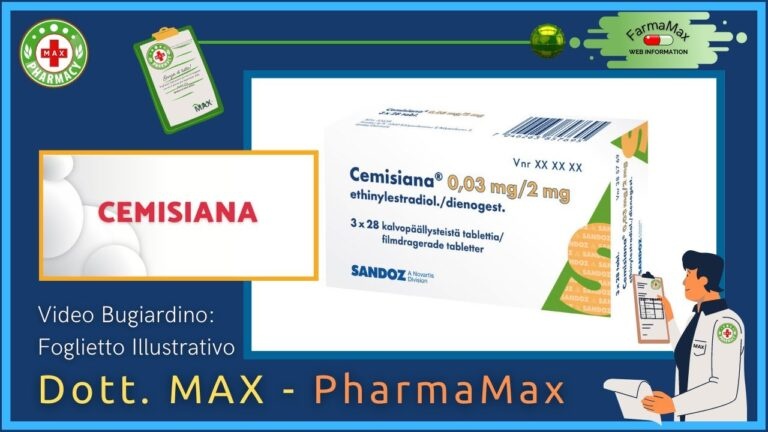
CEMISIANA 0.030 MG/2 MG Tabletki powlekane

Ocena recepty online
Lekarz przeanalizuje Twój przypadek i zdecyduje, czy wystawienie recepty jest medycznie uzasadnione.

Porozmawiaj z lekarzem o tym leku
Omów swoje objawy i opcje leczenia podczas szybkiej konsultacji online.



Jak stosować KEMISIANA
Treść ulotki
Cemisiana 0.030 mg/2 mg film-coated tablets
Ethinylestradiol/dienogest
Generic medicine
Read this leaflet carefully before you start taking this medicine because it contains
important information for you.
- Keep this leaflet. You may need to read it again.
- If you have any questions, ask your doctor or pharmacist.
- This medicine has been prescribed for you only. Do not pass it on to others, even if their symptoms are the same as yours, as it could be harmful.
- If you get any side effects, even those not listed in this leaflet, tell your doctor or pharmacist. See section 4.
Important things to know about combined hormonal contraceptives (CHCs):
- They are one of the most reliable reversible methods of contraception, if used correctly
- They slightly increase the risk of blood clots forming in veins and arteries, especially during the first year of use or when restarting a combined hormonal contraceptive after a break of 4 or more weeks
- Pay attention and see your doctor if you think you may have symptoms of a blood clot (see section 2 “Blood clots”)
Contents of this leaflet:
- 1. What Cemisiana is and what it is used for
- 2. What you need to know before you take Cemisiana
- 3. How to take Cemisiana
- 4. Possible side effects
- 5. How to store Cemisiana
- 6. Contents of the pack and other information
1. What Cemisiana is and what it is used for
Cemisiana is a medicine used
either to prevent pregnancy (“pill” contraceptive)
or for the treatment of moderate acne in women who agree to take a contraceptive pill after the failure of appropriate topical treatments or oral antibiotics.
- Each of the 21 white coated tabletscontains a small amount of the female hormones ethinylestradiol and dienogest
- The 7 green coated tabletsdo not contain any active ingredients and are also called placebo tablets
- Contraceptive pills that contain two hormones are called “combined” pills or “combined hormonal contraceptives”
In women, where a pronounced effect of male hormones (so-called “androgens”) causes acne,
clinical trials have shown that Cemisiana alleviates this condition.
2. Cosa deve sapere prima di prendere Cemisiana
Note generali
Before starting to use Cemisiana, read the information on blood clots in paragraph 2.
It is particularly important that you read the symptoms of a blood clot (see paragraph 2
“Blood clots”).
Before taking Cemisiana, your doctor will ask you some questions about your personal health history and that of your family. The doctor will also measure your blood pressure and, depending on
your personal situation, may also perform other tests.
This leaflet describes various situations that require stopping Cemisiana, or
in which the safety of Cemisiana may be reduced. In such situations, you should refrain from
sexual intercourse or use additional non-hormonal contraceptive measures, for example, using
a condom or another barrier method. Do not use the rhythm method or basal temperature method.
These methods may be unreliable as Cemisiana alters the monthly variations in
body temperature and cervical mucus.
Cemisiana, like other hormonal contraceptives, offers no protection against HIV (AIDS) or other sexually transmitted diseases.
Acne usually improves after three to six months of treatment and may continue to improve
even after six months of treatment. Discuss with your doctor the need to continue the
treatment three to six months after starting therapy and subsequently at periodic intervals.
When you should not take Cemisiana
Do not use Cemisiana if you have any of the conditions listed below. If you have any of the
conditions listed below, consult your doctor. The doctor will discuss with you other methods of
birth control that may be more suitable for your case.
Do not take Cemisiana:
- If you have (or have ever had) a blood clotin a leg vessel (deep vein thrombosis, DVT), in the lung (pulmonary embolism, PE) or in other organs;
- if you know you have a disorder affecting blood coagulation, such as protein C deficiency, protein S deficiency, antithrombin-III deficiency, Factor V Leiden or antiphospholipid antibodies;
- if you are going to have surgery or if you will be bedridden for a long period (see paragraph “Blood clots”);
- if you have ever had a heart attackor a stroke;
- if you have (or have ever had) angina pectoris(a condition that causes severe chest pain and may be a first sign of a heart attack) or a transient ischemic attack(TIA - symptoms of a temporary stroke);
- if you have one of the following diseases, which may increase the risk of blood clots forming in the arteries:
- severe diabetes with damage to blood vessels
- very high blood pressure
- very high levels of fats(cholesterol or triglycerides) in the blood
- a disease known as hyperhomocysteinemia
- if you have (or have ever had) a type of migrainecalled “migraine with aura”
- if you have (or have ever had) inflammation of the pancreas (pancreatitis) associated with high levels of fats (lipids) in the blood (hypertriglyceridemia)
- if you have (or have ever had) a severe liver diseaseand liver function is still abnormal
- if you have (or have ever had) liver tumorsbenign or malignant
- if you have (or have ever had) or suspect you have cancer of the genital organs or the breast influenced by sex hormones (e.g. cancerof the breast or the lining of the uterus)
- if you have vaginal bleeding of unexplained origin
- if you are allergic (hypersensitive) to ethinylestradiol, to dienogest, or to any of the other ingredients of this medicine (listed in paragraph 6).
- Do not use Cemisiana if you have hepatitis C and are taking medicines containing ombitasvir/paritaprevir/ritonavir and dasabuvir (see also paragraph “Other medicines and Cemisiana”).
If any of the situations described above occur during your use of Cemisiana, you should
immediately stop taking the medicine and consult your doctor. In the meantime, you should
use a different non-hormonal method of contraception. For further information, see also
the section "Warnings and precautions".
Warnings and precautions
When to be particularly careful with Cemisiana
When should you contact a doctor?
Contact your doctor urgently
- if you notice possible signs of a blood clot that may indicate that you have a blood clot in the leg (deep vein thrombosis), a blood clot in the lung (pulmonary embolism), a heart attack or a stroke (see the following paragraph “Blood clots”). For a description of the symptoms of these serious side effects, see the paragraph “How to recognize a blood clot”.
Contact your doctor or pharmacist before taking Cemisiana. Tell your doctor if any
of the following conditions apply to you.
In some cases, particular care is required when taking Cemisiana or any other combined pill and your doctor may ask you to undergo regular examinations.
If this condition appears or worsens while you are using Cemisiana, you should inform your doctor:
- if you have Crohn's disease or ulcerative colitis (chronic inflammatory bowel disease);
- if you have systemic lupus erythematosus (SLE, a disease that affects the body's defense system);
- if you have hemolytic uremic syndrome (HUS, a blood clotting disorder that causes kidney failure);
- if you have sickle cell anemia (an inherited red blood cell disease);
- if you have high levels of fats in the blood (hypertriglyceridemia) or a family history of this condition. Hypertriglyceridemia has been associated with an increased risk of developing pancreatitis (inflammation of the pancreas);
- if you are going to have surgery or if you will be bedridden for a long period (see paragraph 2 “Blood clots”);
- if you have recently given birth, your risk of developing blood clots is higher. Ask your doctor how long after childbirth you can start taking Cemisiana;
- if you have inflammation of the veins under the skin (superficial thrombophlebitis);
- if you have varicose veins.
- if you have heart valve defects, heart rhythm disorders
- if there are cases of breast cancer in close relatives;
- if you have liver or gallbladder disease, gallstones;
- if you have jaundice or itching due to bile congestion;
- if you have spots, yellow-brown discoloration of the skin, especially on the face (chloasma), or if they occurred during a previous pregnancy; in this case avoid exposure to strong sunlight and UV radiation
- if you have problems with hemoglobin formation (porphyria);
- if you suffer from depression;
- if you suffer from epilepsy
- if you have St. Vitus' dance (Sydenham's chorea)
- if you have had blistering rashes during a previous pregnancy (herpes gestationis);
- if you have hearing loss in the inner ear (otosclerosis hearing loss)
- if you suffer from angioedema from birth, estrogen-containing products can induce or worsen symptoms. You should consult your doctor immediately if you experience symptoms of angioedema, such as swelling of the face, tongue and/or throat and/or difficulty swallowing or hives with difficulty breathing.
BLOOD CLOTS
The use of a combined hormonal contraceptive like Cemisiana causes an increased risk of
developing a blood clot compared to not using it. In rare cases, a blood clot can
block blood vessels and cause serious problems.
Blood clots can develop
- in the veins (a condition called “venous thrombosis”, “venous thromboembolism” or VTE)
- in the arteries (a condition called “arterial thrombosis”, “arterial thromboembolism” or ATE).
Recovery from blood clots is not always complete. Rarely, serious long-term effects may occur, or, very rarely, such effects may be fatal.
It is important to remember that the overall risk of a harmful blood clot associated with
Cemisiana is low.
HOW TO RECOGNIZE A BLOOD CLOT
Contact your doctor immediately if you notice any of the following signs or symptoms.
Do you have one of these signs?
What do you probably have?
- swelling in one leg or along a vein in the leg or foot, especially if accompanied by: o pain or tenderness in the leg that can only be felt when standing or walking o increased warmth in the affected leg o change in skin color of the leg, such as Deep vein thrombosis
paleness, reddish or bluish discoloration
- sudden, unexplained shortness of breath or rapid breathing;
- sudden cough, possibly with blood;
- sharp chest pain that may worsen when breathing deeply;
- severe dizziness or lightheadedness;
- rapid or irregular heartbeat;
- severe stomach pain
If you are unsure, inform your doctor as some of these
symptoms such as cough or shortness of breath may be
mistaken for a milder condition such as a respiratory
infection (e.g. a “common cold”).
Pulmonary embolism
Symptoms that occur more frequently in one eye:
| or Retinal vein thrombosis (blood clot c in the eye) |
| a m r Heart attack a F |
| l Stroke |
t
| Blood clots that block other blood vessels |
BLOOD CLOTS IN A VEIN
What can happen if a blood clot forms in a vein?
- The use of combined hormonal contraceptives has been linked to an increased risk of blood clots in the veins (venous thrombosis). However, these side effects are rare. In most cases, they occur in the first year of using a combined hormonal contraceptive.
- If a blood clot forms in a vein in the leg or foot, it can cause deep vein thrombosis (DVT).
- If a blood clot moves from the leg and lodges in the lung, it can cause a pulmonary embolism.
- Very rarely, the clot can form in another organ such as the eye (retinal vein thrombosis).
When is the risk of developing a blood clot in a vein highest?
The risk of developing a blood clot in a vein is highest during the first year you
take a combined hormonal contraceptive for the first time. The risk may also be higher
if you restart a combined hormonal contraceptive (the same medicine or a different medicine) after a break of 4 or more weeks.
After the first year, the risk decreases but is still slightly higher than if you were not
using a combined hormonal contraceptive.
When you stop taking Cemisiana, the risk of developing a blood clot returns to
normal levels within a few weeks.
What is the risk of developing a blood clot?
The risk depends on your natural risk of TEV and the type of combined hormonal contraceptive you are taking.
The overall risk of developing a blood clot in the leg or lung (DVT or PE) with Cemisiana is low.
- Out of 10,000 women who do not use any combined hormonal contraceptive and are not pregnant, about 2 will develop a blood clot in a year.
- Out of 10,000 women who use a combined hormonal contraceptive containing levonorgestrel, norethisterone or norgestimate, about 5-7 will develop a blood clot in a year.
- It is not yet known how the risk of developing a blood clot with Cemisiana compares to the risk associated with a combined hormonal contraceptive containing levonorgestrel
- The risk of a blood clot forming depends on your medical history (see below “Factors that increase the risk of developing a blood clot in a vein”)
| Risk of developing a blood clot in one year | |
| Women who do not use a pill/patch/hormonal ring and are not pregnant | About 2 women out of 10,000 |
| Women who use a combined hormonal contraceptive pill containing levonorgestrel, norethisterone or norgestimate | About 5-7 women out of 10,000 |
| Women who use Cemisiana | Not yet known. |
Factors that increase the risk of developing a blood clot in a vein
The risk of developing a blood clot with Cemisiana is low but some conditions increase it.
Your risk is higher:
- if you are strongly overweight (body mass index or BMI greater than 30 kg/m²);
- if a close relative of yours has had a blood clot in a leg, lung or other organ at a young age (under about 50 years). In this case you may have an inherited blood clotting disorder;
- if you need to undergo surgery or if you need to be bedridden for a long period due to an injury or illness or if you have a leg in plaster. You may need to stop taking Cemisiana a few weeks before surgery or during the period when you are less mobile. If you need to stop taking Cemisiana, ask your doctor when you can start taking it again;
- with age (especially over 35 years);
- if you have given birth less than a few weeks ago.
The risk of developing a blood clot increases when you have more than one of these conditions.
Air travel (duration >4 hours) can temporarily increase the risk of a blood clot forming, especially if you have some of the other risk factors listed.
It is important that you inform your doctor if any of these conditions apply to you, even if you are not sure. Your doctor may decide to stop you from taking Cemisiana.
If any of the conditions listed above change while you are using Cemisiana, for example if a close relative develops a thrombosis for no known reason or if you gain a lot of weight, contact your doctor.
BLOOD CLOTS IN AN ARTERY
What can happen if a blood clot forms in an artery?
Like blood clots in a vein, clots in an artery can cause serious problems, for example, they can cause a heart attack or stroke.
Factors that increase the risk of developing a blood clot in an artery
It is important to note that the risk of heart attack or stroke associated with the use of Cemisiana is very low but can increase:
- with increasing age (over 35 years);
- if you smoke. When using a combined hormonal contraceptive like Cemisiana it is advisable to quit smoking. If you cannot quit smoking and you are over 35 years old, your doctor may advise you to use a different type of contraceptive;
- if you are overweight;
- if you have high blood pressure;
- if a close relative of yours has had a heart attack or stroke at a young age (under about 50 years). In this case you may also be at high risk of heart attack or stroke;
- if you, or a close relative, have high levels of fats in the blood (cholesterol or triglycerides);
- if you suffer from migraine, especially migraine with aura;
- if you have any heart problems (valve defect, a heart rhythm disorder called atrial fibrillation);
- if you have diabetes.
If you have more than one of these conditions or if one of them is particularly severe, the risk of developing a blood clot may be even higher.
If any of the conditions listed above change while you are using Cemisiana, for example if you start smoking, if a close relative develops a thrombosis for no known reason or if you gain a lot of weight, contact your doctor.
Cemisiana and cancer
Breast canceris diagnosed slightly more frequently in women who take the pill but it is not known whether this is attributable to the treatment. For example, it is possible that more cancers are diagnosed in women treated with combined pills because they undergo more frequent medical examinations. The risk of breast cancer decreases gradually after stopping combined hormonal contraception. It is important that you regularly check your breasts and contact your doctor if you feel a lump.
In rare cases, benign liver tumorsand, even more rarely, malignant liver tumorshave been diagnosed in women using the pill. In isolated cases, these tumors have caused internal bleeding potentially fatal. Contact your doctor if you have severe abdominal pain.
Some studies suggest that long-term use of the pill increases a woman's risk of developing
cervical cancer. However, the extent to which this risk is influenced by sexual behavior (e.g. frequent change of partner) and other factors such as the human papillomavirus (HPV) is unclear.
When to consult your doctor?
Periodic checks:
If you are taking the pill, your doctor will ask you to undergo periodic checks. Normally, you should consult your doctor at least once a year.
Also, consult your doctor immediately if:
- you notice any change in your health, especially those mentioned in the paragraph “Do not take Cemisiana”. Do not forget about diseases that affect your family
- you feel a lump in your breast
- you are also taking other medicines (see also the section “Other medicines and Cemisiana”)
- you are confined to bed for a prolonged period of time or are going to undergo surgery (contact your doctor at least four weeks before)
- you have unusual vaginal bleeding, severe between periods
- you have forgotten to take the white tablets in the first week of taking the pill and have had sexual intercourse in the 7 days before
- you have not had two consecutive periods despite regular taking of the white tablets and suspect you are pregnant.
If you have unexpected bleeding between periods:
During the first few months of treatment with Cemisiana, you may have unexpected bleeding. Irregular vaginal bleeding stops when the body has adapted to taking the pill (usually after about 3 cycles of tablets). If you experience vaginal bleeding more intense than a normal period or light vaginal bleeding that lasts for several days, consult your doctor.
If your normal monthly period does not occur:
If you have taken the tablets correctly, you have not had vomiting or severe diarrhea and you have not taken any other medicine, the probability that you are pregnant is extremely low. Continue taking Cemisiana as usual.
If two consecutive periods do not occur, or if you have not taken Cemisiana as prescribed in the period before the missed period, you may be pregnant. Consult your doctor immediately. Do not take Cemisiana until your doctor has ruled out pregnancy.
Children and adolescents
Cemisiana can only be used after the first menstruation (menarche)
Other medicines and Cemisiana
Tell your doctor or pharmacist if you are taking, have recently taken or might take any other medicines.
Effect of other medicines on Cemisiana
Always tell your doctor if you are taking other medicines or herbal products. Also, inform any other doctor or dentist who has prescribed you other medicines (or the pharmacist) that you are taking Cemisiana. They will tell you if you need to take additional contraceptive measures (for example a condom) and, if so, for how long, or if you need to change the medicine you need.
Some medicines
- can affect the levels of Cemisiana in the blood
- can make Cemisiana less effective in preventing pregnancy
- can cause unexpected bleeding.
These medicines include:
o medicines for the treatment of:
- epilepsy (for example primidone, phenytoin, barbiturates, carbamazepine, oxcarbazepine, topiramate, felbamate)
- high blood pressure in the blood vessels of the lungs (bosentan)
- tuberculosis (for example rifampicin)
- HIV and hepatitis C infections (so-called protease inhibitors and non-nucleoside reverse transcriptase inhibitors such as ritonavir, nevirapine, efavirenz)
- fungal infections (griseofulvin, ketoconazole)
- arthritis, osteoarthritis (etoricoxib)
- the herbal remedy St. John's wort
If you are being treated with any of the medicines listed above, you must also use a barrier contraceptive method temporarily (for example a condom) or choose another method of contraception. Use additional local contraceptives if you are taking other medicines together with Cemisiana and also for 28 days after stopping treatment with other medicines.
If the treatment lasts longer than the duration of the Cemisiana blister, start the next Cemisiana blister immediately, without the interval of taking the green tablets.
If prolonged treatment with any of the medicines listed above is required, you should choose another non-hormonal reliable method of contraception.
Effect of Cemisiana on other medicines
Cemisiana can affect the effectof other medicines, such as:
- the antiepileptic lamotrigine (this may lead to an increase in the frequency of seizures)
- cyclosporine
- theophylline (used for the treatment of breathing problems)
- tizanidine (used to treat muscle pain or cramps).
Do not take Cemisiana if you have hepatitis C and are taking medicines containing ombitasvir/paritaprevir/ritonavir and dasabuvir as this may cause increases in liver function test results (increased liver enzyme ALT). Your doctor will prescribe you another type of contraceptive before starting treatment with these medicines.
Cemisiana can be resumed about 2 weeks after completion of this treatment. See the paragraph “Do not take Cemisiana”.
Interaction with laboratory tests
The use of Cemisiana may affect the results of some laboratory tests, including liver function values, adrenal cortex, kidney and thyroid, and also the amount of certain proteins in the blood, such as those that affect the digestion of fats, carbohydrate metabolism, blood clotting and fibrinolysis. However, such variations are generally within the normal range. Inform your doctor or laboratory personnel that you are taking the pill.
Cemisiana with food and drink
Cemisiana can be taken with or without food, if necessary, with a small amount of water.
Pregnancy and breastfeeding
If you are pregnant, suspect you are pregnant or are planning a pregnancy, or if you are breastfeeding, ask your doctor or pharmacist for advice before taking this medicine.
Pregnancy
If you are pregnant, you should not use Cemisiana. If pregnancy occurs during treatment with Cemisiana, you should stop taking the medicine immediately and consult your doctor. If you want to become pregnant, you can stop taking Cemisiana at any time (see also “If you want to stop taking Cemisiana”)
Breastfeeding
In general you should not take Cemisiana if you are breastfeeding, as it may reduce milk production and small amounts of the active ingredient may pass into breast milk.
Driving and using machines
There is no evidence that the use of Cemisiana affects the ability to drive vehicles or use machinery.
Cemisiana contains lactose
If your doctor has diagnosed you with intolerance to some sugars, contact him before taking this medicine.
3. How to take Cemisiana
Take this medicine always exactly as your doctor or pharmacist has told you. If you
have any doubts ask your doctor or pharmacist.
Take one tablet of Cemisiana every day, if necessary, with a small amount of water and swallow it
whole. You can take the tablets with or without food, but you must take them at about the same time
each day. The time of day does not matter, but, once selected, you must adhere to this schedule.
Blister with arrows
Follow the directions of the black arrows on the blister until you have taken all 21 white tablets.
Then follow the directions of the red arrows and take one green tablet a day for 7 days.
Blister with weekly stickers
To help you keep to the correct sequence, there are 7 adhesive labels, each with the 7 days of the
week for each Cemisiana blister. Choose the adhesive label of the week that starts with the
day of the week you start taking the tablets. For example, if you start on Wednesday,
use the weekly adhesive label that starts with “WED”
Apply the weekly adhesive label along the top of the Cemisiana blister where it says
“Apply weekly sticker here”, so that the first day is above the tablet
marked with “Start”.
In this way, there is a day indicated above each tablet and therefore you can check if on a given
day you have taken the tablet. The arrows indicate the order in which to take the tablets.
During the 7 days you take the green tablets, menstrual bleeding (withdrawal bleeding) should begin 2-3 days after taking the last white tablet.
On the 8th day after taking the last white Cemisiana tablet (i.e., after the 7 days of
taking the green tablets), you must start the next blister, regardless of whether the
bleeding has ended or not. This means that you must start each blister on the same day
of the week and that the withdrawal bleeding must start on the same day each month.
If you use Cemisiana in this way, you will be protected from pregnancy even during the 7 days you take the
placebo tablets.
When can you start the first Cemisiana blister?
- If you have not used a hormonal contraceptive in the previous monthStart taking Cemisiana on the first day of your cycle, i.e. the first day of your period.
- Switching from another combined hormonal contraceptive pillStart taking Cemisiana preferably the day after the last active pill of the previous pill, or at the latest the day after the pill-free interval or after the last inactive pill of the previous pill.
- Switching from a vaginal ring or a transdermal patch to CemisianaStart taking Cemisiana preferably on the day the last vaginal ring or patch is removed according to the treatment cycle, or at the latest on the day the next application is due.
- Switching from a progestin-only method (mini-pill, implant, injection) or from aprogestin-releasing intrauterine system (IUS, hormonal coil) to CemisianaYou can switch any day from the progestin-only pill (from an implant or IUS on the day of its removal, from an injectable when the next injection is due), but in all these cases you must use additional contraceptive measures for the first 7 days of taking Cemisiana.
- If you want to take Cemisiana after a first-trimester abortionTalk to your doctor. In principle, you can start taking Cemisiana immediately.
- If you want to take Cemisiana after a second-trimester abortion or afterhaving a babyIf you want to take Cemisiana, your doctor will advise you to start taking it between the 21st and 28th day after delivery or second-trimester abortion. If you start later, you must use a barrier method (e.g. a condom) for the first 7 days of taking Cemisiana.
However, if you have already had sexual intercourse, you should make sure you are not pregnant before
starting to take Cemisiana, or wait until your next period.
- If you want to breastfeed and want to start taking Cemisiana after delivery.Read the section “Breastfeeding”.
If you take more Cemisiana than you should
There are no reports of serious harmful effects after taking too many Cemisiana tablets.
If you have taken a large number of tablets at once, you may have symptoms of nausea, vomiting or may
experience vaginal bleeding. Even girls who have not yet had their first
period and have taken the tablets by mistake may experience such bleeding. If a
child has taken Cemisiana, consult a doctor.
If you have taken too many Cemisiana tablets, or if you find that a child has taken some tablets,
ask your doctor or pharmacist for advice.
If you forget to take Cemisiana
The green tablets in the fourth row of the blister are placebo tablets. If you forget to take
one of these green tablets, this has no effect on the reliability of this medicine. Throw away the
forgotten placebo tablet.
- If you are less than 12 hourslate in taking a white tablet, the contraceptive effect is not reduced. Take the forgotten tablet as soon as you remember and then continue taking the tablets at the usual time.
- If you are more than 12 hourslate in taking a white tablet, the contraceptive effect may be reduced. The more tablets you have forgotten, the higher the risk of becoming pregnant.
The risk of incomplete protection against pregnancy is greater if you forget a
white tablet at the beginning or end of the blister. In this case you must follow the
following rules:
More than one white tablet forgotten in this blister:
Contact your doctor.
One white tablet forgotten in week 1:
Take the forgotten tablet as soon as you remember, even if this means taking two tablets
at the same time. Then continue taking the tablets as usual and use other methods
of contraceptionfor the next 7 days, for example a condom. If you have had sexual
intercourse in the week before forgetting the tablet, there is a possibility that you are pregnant.
In this case, contact your doctor.
One white tablet forgotten in week 2:
Take the forgotten tablet as soon as you remember, even if this means taking two tablets
at the same time. Continue taking the tablets at the usual time. If you have taken
Cemisiana correctly for the 7 days before forgetting the tablet, the contraceptive
effect is not reduced. You do not need to use additional barrier methods of contraception.
However, if you have forgotten more than 1 tablet, use additional contraceptive methods for 7 days.
One white tablet forgotten in week 3:
You can choose one of the two options below without the need to use additional contraceptive
measures, provided you have taken Cemisiana correctly for the 7 days before forgetting
the tablet.
- 1. Take the forgotten white tablet as soon as you remember, even if this means taking two tablets at the same time. Continue taking the tablets at the usual time. Instead of taking the green tablets, start the next blister. It is unlikely that you will have a period at the end of the second blister; however you may experience spotting or breakthrough bleeding during the days of taking the white tablets of the second blister. OR
- 2. You can immediately stop taking the white tablets from the blister in use and start taking the green tablets ( record the day you forgot thetablet). If you want to start a new blister on your usual day of the week, make the period of taking the green tablets less than 7 days. If you have forgotten any of the tablets in the blister, and you do not have bleeding during the first period of taking the green tablets, you may be pregnant. See your doctor before starting the next blister.
What you need to know if you have severe diarrhea or vomiting
If you vomit within 3 or 4 hours of taking a tablet or have severe diarrhea, there is a risk
that the active ingredients contained in the tablet are not fully absorbed by the body. The situation
is similar to forgetting a tablet. After vomiting or diarrhea, take another tablet from a
reserve blister as soon as possible. If possible, take the tablet within 12 hoursof the usual
time of taking it. If this is not possible or 12 hours have passed, you must follow the instructions
described in “If you forget to take Cemisiana”.
Postponing your period: what you need to know
Although not recommended, you can delay your monthly period by starting a new blister
of Cemisiana instead of taking the green tablets. You can continue taking the tablets until
when you want your period to start. However, stop taking the pill by and no
later than the end of the second blister. You may experience light bleeding or period-like bleeding
during the taking of this second blister. After the usual 7-day period of taking
the green tablets, startthe next blister.
Ask your doctor for advice before deciding to delay your period
Changing the day of the week your periods start: what you need to know
If you take the tablets as indicated, you will have your menstrual cycle every 4 weeks or so on the same
day. If you want to change this day, simply shorten (never lengthen) the interval of
taking the green tablets. If you make the interval of taking the green tablets very short (for example, 3 days or less)
you may not have any bleeding on these days. You may then experience
light bleeding or period-like bleeding.
If you are not sure what to do, consult your doctor.
If you want to stop taking Cemisiana
You can stop taking Cemisiana at any time. If you do not want to become pregnant, you
should consult your doctor for advice on other reliable methods of birth control.
If you want to become pregnant, stop taking Cemisiana and wait for your menstrual
bleeding before trying to start a pregnancy. You will be able to calculate more easily the
possible date of delivery.
After stopping treatment, it may take some time before you have a
normal menstrual cycle.
Further information on particular groups of patients
Use in children and adolescents
Cemisiana can only be used after the first menstrual period (menarche).
Elderly patients
Cemisiana can only be used in women before menopause.
Patients with impaired liver function
Cemisiana should not be used in women with severe liver disorders (see section 2 “Do not
take Cemisiana”).
Patients with impaired kidney function
The use of Cemisiana in women with impaired kidney function has not been studied. The data
available do not suggest any change in treatment for this group of patients.
If you have any further questions on the use of this medicine, ask your doctor or pharmacist.
4. Possible side effects
Like all medicines, this medicine can cause side effects, although not everyone will experience them.
If you experience any side effect, especially if severe and persistent, or if any change in your health
occurs that you think may be due to Cemisiana, inform your doctor.
A greater risk of developing blood clots in the veins (venous thromboembolism (VTE)) or blood clots in
the arteries (arterial thromboembolism (ATE)) is present in all women who take combined hormonal
contraceptives. For more detailed information on the different risks associated with taking combined
hormonal contraceptives, see paragraph 2 “What you need to know before taking Cemisiana”.
Serious side effects associated with the use of Cemisiana are described in the section “What you need
to know before taking Cemisiana”. Read this paragraph carefully and consult your doctor
immediately if necessary.
The following side effects have been observed in clinical studies with ethinylestradiol/dienogest:
Common side effects(may affect up to 1 in 10 people):
- headache
- breast pain, including breast discomfort and mammary tenderness
Uncommon side effects(may affect up to 1 in 100 people):
- inflammation of the vagina and/or external genitals (vaginitis/vulvovaginitis), vaginal yeast infections (candidiasis, other vulvovaginal infections)
- increased appetite
- depressed mood
- migraine, dizziness
- high or low blood pressure
- abdominal pain (including flatulence), nausea, vomiting or diarrhea
- acne, hair loss (alopecia), skin rash, itching
- abnormal menstrual bleeding, including heavy bleeding (menorrhagia), light bleeding (hypomenorrhea), irregular bleeding (oligomenorrhea) and absence of bleeding (amenorrhea)
- Bleeding between periods consisting of vaginal hemorrhage and irregular bleeding between periods (metrorrhagia), painful menstruation (dysmenorrhea)
- genital/vaginal discharge, fluid-filled structures (cysts) in the ovaries, pain in the internal genital organs, breast enlargement, mammary edema
- fatigue, weakness and general feeling of discomfort
- weight gain
Rare side effects(may affect up to 1 in 1,000 people):
- inflammation of the ovaries or fallopian tubes, urinary tract infection, inflammation of the bladder (cystitis), breast inflammation (mastitis), inflammation of the cervix lining (cervicitis), fungal infections (e.g. Candida), viral infections (e.g. herpes labialis), influenza, bronchitis, sinus infection (sinusitis), upper respiratory tract infections
- benign growths of the uterus (fibroids), benign growths in breast fatty tissue (lipoma)
- reduced number of red blood cells in the blood (anemia)
- allergic reactions
- masculinization (virilization)
- loss of appetite (anorexia)
- depression, psychiatric disorders, insomnia, sleep disorders, aggressiveness
- problems with blood circulation in the brain or heart, muscle disorders that, for example, can cause an abnormal posture (dystonia)
- dry or irritated eyes, visual disturbances, blurred vision
- sudden hearing loss, ringing or other noise in the ears (tinnitus), dizziness, hearing impairment
- fast heartbeat
- inflammation of the veins, elevated diastolic blood pressure, dizziness or fainting when getting up from a sitting or lying position (orthostatic hypotension), hot flashes, varicose veins, venous disorders, pain in the veins
- harmful blood clots in a vein or an artery, for example: in a leg or foot (DVT) or in a lung (PE) or heart attack or stroke
or mini-stroke or transient stroke-like symptoms, known as transient ischemic attack (TIA)
or blood clots in the liver, stomach/intestines, kidneys or eye.
The possibility of developing a blood clot may be higher if you have any other condition that
increases this risk (see paragraph 2 for more information on conditions that increase the risk of
blood clots and the symptoms of a blood clot).
- asthma, rapid or deep breathing (hyperventilation)
- inflammation of the stomach lining (gastritis), intestinal inflammation (enteritis), stomach disorders (dyspepsia)
- allergic skin inflammation (dermatitis), skin rash (e.g. neurodermatitis), itching, redness, rash (eczema), skin disease with thickened, reddened skin patches (psoriasis), excessive sweating (hyperhidrosis), changes or disorders in skin color (e.g. chloasma), overproduction of fat by the sebaceous glands (seborrhea), dandruff, excessive hair on the body and face (hirsutism), skin lesions, orange peel skin (cellulite), spider-like blood vessels with a red spot in the center on the skin (spider nevi)
- back pain, bone, joint and muscle pain (e.g. myalgia), pain in arms and legs
- abnormal growth of cells on the surface of the cervix (cervical dysplasia), pain or fluid-filled structures in the fallopian tubes and ovaries, fluid-filled structures in the breast, pain/spasms during sexual intercourse (dyspareunia), secretion of breast milk from the mammary glands (galactorrhea), menstrual disorders
- chest pain, swelling of hands, ankles or feet (peripheral edema), flu-like symptoms, inflammation, fever, irritability
- increased levels of fats in the blood (increased levels of triglycerides and cholesterol), weight loss, weight changes
- swelling of accessory breast glands congenitally outside the breast area (accessory breasts)
Other side effects observed in users of ethinylestradiol/dienogest, but whose exact
frequency is unknown, are:
Changes in mood, increased or decreased sexual desire (libido), intolerance to contact lenses,
skin and/or mucous membrane reaction with rash, nodules, blisters or tissue death (erythema nodosum or multiforme); breast secretion, fluid accumulation
in the body (edema).
Tumors
- the incidence of breast cancer diagnosis is slightly increased with the use of ethinylestradiol/dienogest. Because breast cancer occurs rarely in women under 40 years of age, the risk of developing breast cancer in relation to the overall risk is low. For more information, see the section “Cemisiana and cancer”.
- liver tumors (benign and malignant)
- cervical cancer
Other conditions
- women with hypertriglyceridemia (increased fats in the blood with a consequent increased risk of pancreatitis during the use of combined oral contraceptives)
- high blood pressure
- onset or worsening of conditions for which a link to combined oral contraceptives is not defined: jaundice and/or pruritus from cholestasis (blocked bile flow); formation of gallstones; a metabolic condition called porphyria; systemic lupus erythematosus (a chronic autoimmune disease); hemolytic uremic syndrome (a blood clotting disorder); a neurological condition called Sydenham's chorea, herpes gestationis (a type of skin condition that occurs during pregnancy); hearing loss due to otosclerosis
- in women with hereditary angioedema (characterized by sudden swelling, for example of eyes, mouth, throat, etc.) external estrogens can induce or worsen the symptoms of angioedema
- impaired liver function
- changes in glucose tolerance or effect on peripheral insulin resistance
- Crohn's disease, ulcerative colitis
- chloasma
Interactions
- Unexpected bleeding and/or contraceptive failure may result from interactions of other medicines with oral contraceptives (e.g. the herbal remedy St. John's wort, or medicines for epilepsy, tuberculosis, HIV and other infections). See the section “Effect of other medicines on Cemisiana”.
Other serious reactions following the intake of ethinylestradiol/dienogest, as well as related
symptoms, are described in the paragraph “Warnings and precautions”.
Reporting of side effects
If you experience any side effect, including those not listed in this leaflet, tell your
doctor or pharmacist. You can also report side effects directly through the
national reporting system at http://www.agenziafarmaco.gov.it/content/come-
segnalare-una-sospetta-reazione-avversa. By reporting side effects you can help
provide more information on the safety of this medicine.
5. How to store Cemisiana
Keep this medicine out of the sight and reach of children.
Do not use this medicine after the expiry date which is stated on the package and blister after
EXP. The expiry date refers to the last day of that month.
Do not store at a temperature above 25ºC. Store in the original packaging to protect
the medicine from light.
Do not dispose of any medicine in wastewater or household waste. Ask your pharmacist how to
dispose of medicines you no longer use. This will help protect the environment.
6. Contents of the pack and other information
What Cemisiana contains
A blister of Cemisiana contains 21 white active tablets in the first, second and third
rows and 7 green placebo tablets in the fourth row.
Active tablets
- The active ingredients are ethinylestradiol and dienogest. One white active tablet contains 0.03 mg of ethinylestradiol and 2 mg of dienogest.
- The other ingredients are: Tablet core: lactose monohydrate, magnesium stearate, corn starch, povidone K-
- 30. Film coating: hypromellose 2910, macrogol 400 and titanium dioxide (E171).
Placebo tablets
Tablet core: lactose monohydrate, magnesium stearate, corn starch, povidone K-30, colloidal anhydrous
silica.
Film coating: hypromellose 2910, triacetin, polysorbate 80, titanium dioxide (E171), FD & C
blue 2 aluminium pigment (E132) and yellow iron oxide (E172).
Description of the appearance of Cemisiana and contents of the pack
The active tablets are white, round, film-coated with a diameter of approximately 5.0
mm.
The placebo tablets are green, round, film-coated with a diameter of approximately 5.0
mm.
Cemisiana is available in packs containing 28, 3x28, 4x28 and 6x28 film-coated tablets
(21 active tablets plus 7 placebo tablets).
The blister may be inserted into a bag.
Not all pack sizes may be marketed.
Marketing authorisation holder
Sandoz S.p.A.
L.go U. Boccioni 1
21040 Origgio (VA)
Italy
Manufacturer
Salutas Pharma GmbH
Otto-von-Guericke-Allee 1, Sachsen-Anhalt, 39179 Barleben, Germany
This medicinal product is authorised in the Member States of the European Economic Area with the
following denominations:
Austria Foxinette 0.03 mg/2 mg 21+7 – Filmtabletten
Belgium Cemisiana 2 mg/0.03 mg filmomhulde tabletten
Finland Cemisiana 0.03 mg/ 2 mg tabletti, kalvopäällysteinen
Germany Starletta HEXAL 21+7
Italy Cemisiana
Slovenia Etinilestradiol/dienogest Sandoz 0.03 mg/2 mg filmsko obložene tablete

Nie jesteś pewien, czy ten lek jest odpowiedni dla ciebie?
Omów swoje objawy i leczenie z lekarzem online.

Zacząłeś przyjmować lek i masz pytania?
Omów swoje objawy i leczenie z lekarzem online.
- Kraj rejestracji
- Postać farmaceutycznaFilm-coated tablet, 0.030 MG/2 MG
- Kod ATCG03AA16
- Substancja czynna
- Wymaga receptyTak
- Producent
- Te treści mają charakter wyłącznie informacyjny i nie zastępują konsultacji lekarskiej.
- Zamienniki KEMISIANAPostać farmaceutyczna: Film-coated tablet, 2 MG/0,03 MGSubstancja czynna: dienogest and ethinylestradiolProducent: DOC GENERICI SRLWymaga receptyPostać farmaceutyczna: Film-coated tablet, 2 MG/0,03 MGSubstancja czynna: dienogest and ethinylestradiolProducent: EFFIK ITALIA S.P.A.Wymaga receptyPostać farmaceutyczna: Extended-release tablet, 2 MG/0.02 MGSubstancja czynna: dienogest and ethinylestradiolProducent: EXELTIS ITALIA S.R.L.Wymaga recepty
Odpowiedniki KEMISIANA w innych krajach
Leki z tą samą substancją czynną dostępne w innych krajach.
Odpowiednik KEMISIANA w Hiszpania
Odpowiednik KEMISIANA w Polska
Odpowiednik KEMISIANA w Ukraina
Lekarze online w sprawie KEMISIANA
Omów stosowanie KEMISIANA, bezpieczeństwo i ocenę zasadności recepty zgodnie z obowiązującymi przepisami.
Uzyskaj receptę na KEMISIANA online
Wypełnij 2-minutowy formularz
Opisz swoje objawy, historię choroby i lek, o który prosisz.
Wybierz lekarza lub pozwól nam przydzielić
Wybierz specjalistę lub dopasujemy Cię do najbliższego dostępnego lekarza.
Lekarz analizuje Twój przypadek
Zazwyczaj w ciągu 30 minut. Może zadawać dodatkowe pytania przez czat.
Odbierz w dowolnej aptece
Recepta elektroniczna wysłana na Twój e-mail — ważna w całej Polsce.
Często zadawane pytania
KEMISIANA wymaga recepty w Włochy. Możesz skonsultować się z lekarzem online, aby sprawdzić, czy ten lek może być odpowiedni w Twojej sytuacji.
Substancją czynną w KEMISIANA jest dienogest and ethinylestradiol. Informacja ta pomaga rozpoznać leki o tym samym składzie, ale pod różnymi nazwami handlowymi.
KEMISIANA jest produkowany przez SANDOZ S.P.A.. Nazwy handlowe i opakowania mogą się różnić w zależności od dystrybutora.
Lekarze, tacy jak Lekarze rodzinni, Psychiatrzy, Dermatolodzy, Kardiolodzy, Endokrynolodzy, Gastroenterolodzy, Pulmonolodzy, Nefrolodzy, Reumatolodzy, Hematolodzy, Zakaźnicy, Alergolodzy, Geriatrzy, Pediatrzy, Onkolodzy, mogą ocenić, czy stosowanie KEMISIANA jest odpowiednie w Twoim przypadku, w zależności od sytuacji klinicznej i lokalnych przepisów. Możesz umówić konsultację online, aby omówić objawy i możliwe dalsze kroki.
Polska posiada dobrze rozwiniętą infrastrukturę ochrony zdrowia w dużych miastach, takich jak Warszawa, Kraków, Wrocław i Gdańsk. Apteki są łatwo dostępne i działają zgodnie z obowiązującymi przepisami, zapewniając dostęp do leków na receptę.
Możesz kupić KEMISIANA w Warszawie, Krakowie, Wrocławiu lub Gdańsku w każdej aptece, posiadając ważną receptę.
Aby uzyskać receptę, możesz skorzystać z Oladoctor:
Inne leki zawierające tę samą substancję czynną (dienogest and ethinylestradiol) to m.in. DIENOJEST E ETINILESTRADIOLO DOK, EFFIPREV, KELSEE. Mogą one różnić się nazwą handlową lub postacią, ale zawierają ten sam składnik terapeutyczny. Przed zmianą lub rozpoczęciem nowego leku skonsultuj się z lekarzem.
