



CEFTAZIDIMA 1 G Roztwór do wstrzykiwań

Ocena recepty online
Lekarz przeanalizuje Twój przypadek i zdecyduje, czy wystawienie recepty jest medycznie uzasadnione.

Porozmawiaj z lekarzem o tym leku
Omów swoje objawy i opcje leczenia podczas szybkiej konsultacji online.



Jak stosować KEFTATSIDIMA QILU
Treść ulotki
Ceftazidima Qilu 500 mg powder for injectable solution, 1 g powder for injectable solution/for infusion, 2 g powder for injectable solution/for infusion
ceftazidima
The name of your medicine is Ceftazidima Qilu 500 mg powder for injectable solution and Ceftazidima
Qilu 1 g and 2 g powder for injectable solution/for infusion, which will be called “ceftazidima” in the rest
of this document.
Read this leaflet carefully before you start to receive this medicine as it contains
important information for you.
- Keep this leaflet. You may need to read it again.
- If you have any questions, ask your doctor or nurse.
- If you get any side effects, even those not listed in this leaflet, tell your doctor or nurse. See section 4.
Contents of this leaflet
- 1. What Ceftazidima Qilu is and what it is used for
- 2. What you need to know before Ceftazidima Qilu is given to you
- 3. How Ceftazidima Qilu is given to you
- 4. Possible side effects
- 5. How to store Ceftazidima Qilu
- 6. Contents of the pack and other information
1. What is Ceftazidima Qilu and what is it used for
Ceftazidima is an antibiotic used in adults and children (including newborns). It works by killing the bacteria that cause infections. It belongs to a group of medicines called
cephalosporins.
Ceftazidima is used to treat serious bacterial infections of:
- lungs or chest
- lungs and bronchi in patients suffering from cystic fibrosis
- brain (meningitis)
- ear
- urinary tract
- skin and soft tissues
- abdomen and abdominal wall (peritonitis)
- bones and joints.
Ceftazidima can also be used:
- to prevent infections during surgery on the prostate in men
- to treat patients with a low number of white blood cells (neutropenia) who have a fever due to a bacterial infection.
2. What you need to know before you are given Ceftazidima Qilu
You must not be given ceftazidima:
- if you are allergicto ceftazidimaor to any of the other ingredients of this medicine (listed in section 6).
- if you have had a severe allergic reactionto any other antibiotic(penicillins, monobactams and carbapenems) as you may also be allergic to ceftazidima.
→ Tell your doctor beforeyou are given Ceftazidima Qilu if you think this applies to you. In this case, you must not be given this medicine.
Warnings and precautions
Talk to your doctor or nurse before you are given Ceftazidima Qilu:
Pay attention to some symptoms such as allergic reactions, nervous system disorders and gastrointestinal disorders, such as diarrhoea, while you are being treated with this medicine. This will reduce the risk of
possible problems. See “Conditions you need to be careful about” in section 4. If you have had an
allergic reaction to other antibiotics you may also be allergic to ceftazidima.
If you need blood or urine tests
Ceftazidima may affect the results of tests for the presence of sugar in the urine and a
blood test known as the Coombs test. If you are undergoing these tests:
→ Tell the person taking the samplethat you have been treated with Ceftazidima Qilu.
Other medicines and Ceftazidima Qilu
Tell your doctor if you are taking, have recently taken or might take any other
medicines. This includes medicines without a prescription.
You must not be given ceftazidima without consulting your doctor if you are also taking
:
- an antibiotic called chloramphenicol
- a type of antibiotics called aminoglycosides, for example gentamicin, tobramycin
- diuretic tablets called furosemide → Tell your doctorif this applies to you.
Pregnancy and breastfeeding
If you are pregnant, suspect you may be pregnant or are planning to become pregnant, or if you are breastfeeding with breast
milk, ask your doctor for advice before taking this medicine.
The doctor will assess the benefit of treatment with ceftazidima against the risk to the child.
Driving and using machines
This medicine can cause side effects that affect the ability to drive, such as
dizziness. Do not drive or operate machinery unless you are sure you are not experiencing any effects.
Ceftazidima Qilu contains sodium
This needs to be taken into consideration if you are on a low sodium diet.
Dosage of Ceftazidima QiluQuantity per vial
Ceftazidima Qilu 500 mg This medicine contains 28 mg of sodium (the main
component of table salt) in each vial.
This amount is equivalent to 1.4% of the maximum daily
recommended intake of sodium for an adult.
Ceftazidima Qilu 1 g This medicine contains 56 mg of sodium (the main
component of table salt) in each vial.
This amount is equivalent to 2.8% of the maximum daily
recommended intake of sodium for an adult.
Ceftazidima Qilu 2 g This medicine contains 111 mg of sodium (the main
component of table salt) in each vial.
This amount is equivalent to 5.55% of the maximum daily
recommended intake of sodium for an adult.
3. How Ceftazidima Qilu is administered
Ceftazidima Qilu is generally administered by a doctor or nurse.
Ceftazidima Qilu 500 mg can be administered by intravenous injection or by deep intramuscular injection.
Ceftazidima Qilu 1 g can be administered by intravenous injection or by intramuscular injection.
Ceftazidima Qilu 2 g can be administered by intravenous injection or by infusion.
Ceftazidima Qilu is prepared by the doctor, pharmacist or nurse using water for injectable preparations or an appropriate infusion fluid.
Recommended dose
The appropriate dose of ceftazidime will be decided by the doctor and depends on: the severity and type of
infection; whether you are undergoing treatment with other antibiotics; your body weight and age; the condition of your
kidneys.
Newborns (0-2 months)
For each kg of the child's body weight, 25 to 60 mg of ceftazidime will be administered per
day, divided into two doses.
Infants (over 2 months) and childrenweighing less than 40 kg
For each kg of the child's body weight, 100 to 150 mg of ceftazidime will be administered per
day, divided into three doses. The maximum dose is 6 g per day.
Adults and adolescentsweighing 40 kg or more
1 to 2 g of ceftazidime three times a day. The maximum dose is 9 g per day.
Patients over 65 years of age
The daily dose should generally not exceed 3 g per day, especially if you are over 80 years of
age.
Patients with kidney problems
You may be given a different dose than usual. The doctor or nurse will decide how much Ceftazidima Qilu you need based on the severity of the kidney disease. The doctor will monitor you
carefully and may perform more kidney function tests at regular intervals.
If you are given more Ceftazidima Qilu than you should
If you believe that you have accidentally been given a higher dose than prescribed, contact
your doctor or the nearest hospital immediately.
If you forget to use Ceftazidima Qilu
If you forget an injection of this medicine, you should take it as soon as possible. Do not take a double
dose (two injections at the same time) to make up for the missed dose
If you stop treatment with Ceftazidima Qilu
Do not stop treatment with Ceftazidima Qilu unless your doctor decides to.
If you have any doubts about the use of this medicine, ask your doctor or nurse.
4. Possible side effects
Like all medicines, this medicine can cause side effects, although not everyone will experience them.
Conditions for which you should be careful
The following serious side effects have occurred in a small number of people (their exact
frequency is unknown):
- Severe allergic reaction.Signs include: raised and itchy rash, swelling, sometimes on the face or in the mouth, causing difficulty breathing.
- Skin rashthat may appear with blistersthat look like small targets(dark spots in the center surrounded by a lighter area, with a dark ring around the edge).
- Widespread rashwith blistersand skin peeling. (These may be signs of Stevens-Johnson syndromeor toxic epidermal necrolysis).
- Nervous system disorders:tremors, convulsions, and, in some cases, coma. These have occurred in people for whom the administered dose was too high, especially in people with kidney disease.
- There have been rare reports of severe hypersensitivity reactions with a severe rash, which may be accompanied by fever, fatigue, facial swelling or enlarged lymph nodes, increased eosinophils (a type of white blood cell), effects on the liver, kidneys or lungs (a reaction called DRESS).
→ Contact your doctor or nurse immediatelyif you experience any of these
symptoms.
Other side effects:
- diarrhea
- swelling and redness along a vein
- raised, itchy red rash
- pain, burning, swelling, or inflammation at the injection site.
→ Tell your doctorif any of these situations apply to you.
Common side effects that can be detected by blood tests are:
- an increase in a type of white blood cells (eosinophilia)
- an increase in the number of cells that help blood clotting
- an increase in liver enzymes.
Uncommon:may affect up to 1 in 100 people
- inflammation of the intestine, which can cause pain, or diarrhea that may contain blood
- candidiasis (fungal infections in the mouth or vagina)
- headache
- dizziness
- stomach pain
- nausea or vomiting
- fever and chills.
→ Tell your doctorif you experience any of these conditions.
Uncommon side effects that can be detected by blood tests are:
- a decrease in the number of white blood cells
- a decrease in the number of platelets (cells that help blood clotting)
- an increase in the level of urea, azotemia or serum creatinine in the blood.
Very rare:may affect up to 1 in 10,000 people
- inflammation or kidney failure
Not known: the frequency cannot be estimated based on available data
- inflammation or kidney failure
- pins and needles sensation
- unpleasant taste in the mouth
- yellowing of the whites of the eyes or skin.
Side effects with unknown frequency that can be detected by blood tests are:
- too fast destruction of red blood cells
- an increase in a certain type of white blood cells
- severe decrease in the number of white blood cells.
Reporting of side effects
If you get any side effect, talk to your doctor, pharmacist or nurse.
report side effects directly through the national reporting system reported in
Website:
http://www.agenziafarmaco.gov.it/content/come-segnalare-una-sospetta-reazione-avversa .
By reporting side effects you can help provide more information on the safety of
this medicine.
5. How to store Ceftazidima Qilu
Keep this medicine out of the sight and reach of children.
- Do not use this medicine after the expiry date which is stated on the vial and the package after Scad.. The expiry date refers to the last day of that month.
- Store at a temperature below 25 ºC.
- Keep the vials in the outer packaging to protect them from light.
- Reconstituted and diluted solution: your doctor, pharmacist or nurse will prepare your medicine using water for injectable preparations or compatible infusion fluids.
- The chemical and physical stability during use has been demonstrated for 24 hours at 2 °C - 8 ºC and for 2 hours at 25 °C.
- From a microbiological point of view, unless the opening/reconstitution/dilution method of the product precludes the risk of microbial contamination, the product must be used immediately. If it is not used immediately, the storage conditions and times of use are the responsibility of the user.
- Do not dispose of any medicine in the wastewater or household waste. Your doctor or nurse will dispose of the medicine that is no longer needed. This will help protect the environment.
6. Contents of the pack and other information
What Ceftazidima Qilu contains
- Ceftazidima Qilu is available in the following dosages: 2 g, 1 g and 500 mg. The active ingredient is ceftazidime 2 g, 1 g or 500 mg (present as ceftazidime pentahydrate).
- The only other component is sodium carbonate. See paragraph 2 for further important information about sodium, one of the components of Ceftazidima Qilu.
Description of the appearance of Ceftazidima Qilu and contents of the pack
Ceftazidima Qilu 500 mg powder for solution for injection is a sterile crystalline powder of white or almost white colour contained in a 15 ml glass vial with a butyl rubber stopper and
aluminium crimp cap.
Available in packs of 1, 10 or 50 vials.
Ceftazidima Qilu 1 g powder for solution for injection is a sterile crystalline powder of white or almost white colour contained in a 15 ml glass vial with a butyl rubber stopper and aluminium
crimp cap.
Available in packs of 1, 10 or 50 vials.
Ceftazidima Qilu 2 g powder for solution for injection is a sterile crystalline powder of white or almost white colour contained in a 50 ml glass vial with a butyl rubber stopper and aluminium
crimp cap.
Available in packs of 1, 10 or 50 vials.
Not all pack sizes may be marketed.
Your doctor, pharmacist or nurse will prepare the injectable solution or infusion solution with water for
injections or with an appropriate infusion fluid. Once prepared, the colour of Ceftazidima Qilu may vary from pale yellow to amber. This is
perfectly normal.
Marketing Authorisation Holder and Manufacturer
Marketing Authorisation Holder
QILU PHARMA SPAIN S.L.,
Paseo de la Castellana 40
planta 8, 28046 - Madrid
Spain
Manufacturer:
KYMOS PHARMA SERVICES, S.L
Ronda de Can Fatjó,
7B (Parque Tecnológico del Vallès),
Cerdanyola del Valles, 08290,
Barcelona, Spain
This medicinal product is authorised in the Member States of the EEA with the following denominations:
Ceftazidime 500 mg powder for solution for injection
Ceftazidime 1 g powder for solution for injection/infusion
Ceftazidime 2 g powder for solution for injection/infusion
UK
Ceftazidim Qilu 500 mg Pulver zur Herstellung einer Injektionslösung
Ceftazidim Qilu 1 g Pulver zur Herstellung einer Injektions-/Infusionslösung
Ceftazidim Qilu 2 g Pulver zur Herstellung einer Injektions-/Infusionslösung
DE
Ceftazidima Qilu 500 mg polvo para solucion inyectable
Ceftazidima Qilu 1 g polvo para solución inyectable y para perfusión
Ceftazidima Qilu 2 g polvo para solución inyectable y para perfusión
ES
CEFTAZIDIME QILU 500 mg, poudre pour solution injectable (IM, IV)
CEFTAZIDIME QILU 1 g, poudre pour solution injectable (IM, IV)
CEFTAZIDIME QILU 2 g, poudre pour solution injectable (IM, IV)
IT Ceftazidima Qilu
FR
Ceftazidim Qilu 500 mg pulver till injektionsvätska, lösning
Ceftazidim Qilu 1 g pulver till injektions-/infusionsvätska, lösning
Ceftazidim Qilu 2 g pulver till injektions-/infusionsvätska, lösning
<------------------------------------------------------------------------------------------------------------------------>
The following information is intended for healthcare professionals:
SE
Ceftazidima Qilu 500 mg powder for solution for injection
Ceftazidima Qilu 1 g powder for solution for injection/for infusion
Ceftazidima Qilu 2 g powder for solution for injection/for infusion
ceftazidime
For further information, refer to the Summary of Product Characteristics
After reconstitution:
Chemical and physical stability during use has been demonstrated for 24 hours at 2 °C - 8 ºC and for 2 hours at 25 °C
in water for injections or in compatible fluids listed below.
From a microbiological point of view, unless the opening/reconstitution/dilution procedure excludes the risk of
microbial contamination, the product must be used immediately.
If not used immediately, the conditions and storage times in use are the responsibility of the user.
After dilution:
Chemical and physical stability during use has been demonstrated for 24 hours at 2 °C - 8 ºC and for 2 hours at 25 °C
in water for injections or in compatible fluids listed below.
From a microbiological point of view, unless the opening/reconstitution/dilution procedure excludes the risk of
microbial contamination, the product must be used immediately.
If not used immediately, the conditions and storage times in use are the responsibility of the user.
Special precautions for storage
Store below 25 ºC.
Keep the vials in the outer packaging to protect from light.
Special precautions for disposal and handling
When the product dissolves, carbon dioxide is released and positive pressure develops.
Small bubbles of carbon dioxide in the reconstituted solution can be ignored.
Instructions for reconstitution
See Table 1 and Table 2 for the volumes to be added and the concentrations of the solution that
may be useful if fractional doses are required.
Table 1: Powder for solution for injection
| Presentation | l e Volume of diluent to add (ml) | Approximate concentration (mg/ml) | |
| d 500 mg | |||
| Intramuscular Intravenous bolus | 1.5 ml 5 ml | 260 90 | |
| a 1 g | |||
| Intramuscular Intravenous bolus | n 3 ml 10 ml | 260 90 | |
| 2 g | |||
| a Intravenous bolus | 10 ml | 170 | |
Note:
- The resulting volume of the ceftazidime solution in the reconstitution medium increases due to the displacement factor of the medicinal product which results in the concentrations listed in mg/ml reported in the table above.
Table 2: Powder for solution for infusion
| a Presentation i | Volume of diluent to add (ml) | Approximate concentration (mg/ml) | |
| 1 g | |||
| z Intravenous infusion | 50 ml* | 20 | |
| n 2 g | |||
| Intravenous infusion | 50 ml* | 40 | |
* The addition must be done in two steps.
Note:
- The resulting volume of the ceftazidime solution in the reconstitution medium increases due to the displacement factor of the medicinal product which results in the concentrations listed in mg/ml reported in the table above.
The colour of the solutions may vary from pale yellow to amber, depending on the
concentration, the type of diluent and the storage conditions used. Within the
recommendations given, the activity of the product is not affected by these colour variations.
Ceftazidime at concentrations between 1 mg/ml and 40 mg/ml is compatible with:
- sodium chloride 9 mg/ml (0.9%) solution for injection
- sodium lactate M/6 for injection
- compound sodium lactate for injection (Hartmann’s solution)
- glucose 50 mg/ml (5%) for injection
- sodium chloride 2.25 mg/ml (0.225%) and glucose 50 mg/ml (5%) for injection
- sodium chloride 4.5 mg/ml (0.45%) and glucose 50 mg/ml (5%) for injection
- sodium chloride 9 mg/ml (0.9%) and glucose 50 mg/ml (5%) for injection
- sodium chloride 1.8 mg/ml (0.18%) and glucose 40 mg/ml (4%) for injection
- glucose 100 mg/ml (10%) for injection
- Dextran 40 100 mg/ml (10%) for injection in sodium chloride 9 mg/ml (0.9%) for injection
- Dextran 40 100 mg/ml (10%) for injection in glucose 50 mg/ml (5%) for injection
- Dextran 70 60 mg/ml (6%) for injection in sodium chloride 9 mg/ml (0.9%) for injection
- Dextran 70 60 mg/ml (6%) for injection in glucose 50 mg/ml (5%) for injection
Ceftazidime at concentrations between 0.05 mg/ml (0.005%) and 0.25 mg/ml (0.025%) is
compatible with lactate solution for peritoneal dialysis.
Ceftazidime at concentrations listed in Table 1 can be reconstituted for intramuscular use
with lidocaine hydrochloride 5 mg/ml (0.5%) or 10 mg/ml (1%) for injection.
The contents of a 500 mg vial of Ceftazidima Qilu, reconstituted with 1.5 ml of water for
injections, can be added to solutions of metronidazole for injection
(500 mg in 100 ml) and both maintain their activity.
500 mg powder for solution for injection, 1 g 2 g powder for solution for injection or for infusion:
THIS SECTION WILL BE ILLUSTRATED BY PICTOGRAMS, AS PER PREVIOUS GRAPHICS
Preparation of solution for bolus injection
- 1. Insert the needle of the syringe through the vial closure and inject the recommended amount of diluent. Remove the syringe needle.
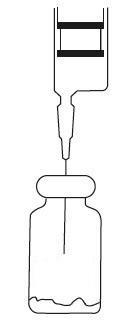
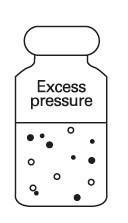
- 2. Shake to dissolve: carbon dioxide is released and a clear solution will be obtained in 1-2 minutes.
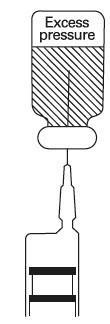
- 3. Turn the vial upside down. With the syringe plunger fully depressed, insert the needle through the vial closure and draw up the total volume of solution inside the syringe (pressure in the vial may assist aspiration). Ensure the needle remains within the solution and does not enter the upper space. The drawn solution may contain small bubbles of carbon dioxide; these can be ignored.
These solutions can be administered directly into a vein or introduced into the
tubing of an infusion set if the patient is receiving fluids parenterally. Ceftazidime is
compatible with the intravenous fluids listed above.
1 g 2 g powder for solution for injection/for infusion:
Preparation of solutions for i.v. infusion from Ceftazidima Qilu in standard vial presentation
(mini bags or burette-type infusion sets):
Prepare the solution using a total volume of compatible diluent (from those listed above)
of 50 ml (for 1 g and 2 g vials), added in TWO steps, as follows.
- 1. Insert the needle of the syringe through the vial closure and inject 10 ml of diluent for 1 g and 2 g vials.
- 2. Withdraw the needle and shake the vial to make the solution clear.
- 3. Do not insert a needle to remove gas before the product has dissolved. Insert a needle to remove the pressure inside through the vial closure.
- 4. Transfer the reconstituted solution to the final delivery device (e.g. mini bag or burette-type infusion set) preparing a total volume of at least 50 ml and administer through intravenous infusion over a period of 15 to 30 minutes.
Note: to maintain the sterility of the product it is important that the needle for removing gas is not
inserted through the vial closure before the product has dissolved.
Any unused medicinal product or waste material should be disposed of in accordance with local
requirements.

Nie jesteś pewien, czy ten lek jest odpowiedni dla ciebie?
Omów swoje objawy i leczenie z lekarzem online.

Zacząłeś przyjmować lek i masz pytania?
Omów swoje objawy i leczenie z lekarzem online.
- Kraj rejestracji
- Postać farmaceutycznaInjectable solution, 1 G
- Kod ATCJ01DD02
- Substancja czynna
- Wymaga receptyTak
- Producent
- Te treści mają charakter wyłącznie informacyjny i nie zastępują konsultacji lekarskiej.
- Zamienniki KEFTATSIDIMA QILUPostać farmaceutyczna: Injectable solution, 1 G/ 3 MLSubstancja czynna: ceftazidimeProducent: ALMUS S.R.L.Wymaga receptyPostać farmaceutyczna: Powder and solvent for injectable solution, 250 MGSubstancja czynna: ceftazidimeProducent: BIOPHARMA S.R.L.Wymaga receptyPostać farmaceutyczna: Injectable solution, 1 G/ 3 MLSubstancja czynna: ceftazidimeProducent: DOC GENERICI SRLWymaga recepty
Odpowiedniki KEFTATSIDIMA QILU w innych krajach
Leki z tą samą substancją czynną dostępne w innych krajach.
Odpowiednik KEFTATSIDIMA QILU w Hiszpania
Odpowiednik KEFTATSIDIMA QILU w Polska
Odpowiednik KEFTATSIDIMA QILU w Ukraina
Lekarze online w sprawie KEFTATSIDIMA QILU
Omów stosowanie KEFTATSIDIMA QILU, bezpieczeństwo i ocenę zasadności recepty zgodnie z obowiązującymi przepisami.









Uzyskaj receptę na KEFTATSIDIMA QILU online
Wypełnij 2-minutowy formularz
Opisz swoje objawy, historię choroby i lek, o który prosisz.
Wybierz lekarza lub pozwól nam przydzielić
Wybierz specjalistę lub dopasujemy Cię do najbliższego dostępnego lekarza.
Lekarz analizuje Twój przypadek
Zazwyczaj w ciągu 30 minut. Może zadawać dodatkowe pytania przez czat.
Odbierz w dowolnej aptece
Recepta elektroniczna wysłana na Twój e-mail — ważna w całej Polsce.
Często zadawane pytania
KEFTATSIDIMA QILU wymaga recepty w Włochy. Możesz skonsultować się z lekarzem online, aby sprawdzić, czy ten lek może być odpowiedni w Twojej sytuacji.
Substancją czynną w KEFTATSIDIMA QILU jest ceftazidime. Informacja ta pomaga rozpoznać leki o tym samym składzie, ale pod różnymi nazwami handlowymi.
KEFTATSIDIMA QILU jest produkowany przez QILU PHARMA SPAIN S.L.. Nazwy handlowe i opakowania mogą się różnić w zależności od dystrybutora.
Lekarze, tacy jak Lekarze rodzinni, Psychiatrzy, Dermatolodzy, Kardiolodzy, Endokrynolodzy, Gastroenterolodzy, Pulmonolodzy, Nefrolodzy, Reumatolodzy, Hematolodzy, Zakaźnicy, Alergolodzy, Geriatrzy, Pediatrzy, Onkolodzy, mogą ocenić, czy stosowanie KEFTATSIDIMA QILU jest odpowiednie w Twoim przypadku, w zależności od sytuacji klinicznej i lokalnych przepisów. Możesz umówić konsultację online, aby omówić objawy i możliwe dalsze kroki.
Polska posiada dobrze rozwiniętą infrastrukturę ochrony zdrowia w dużych miastach, takich jak Warszawa, Kraków, Wrocław i Gdańsk. Apteki są łatwo dostępne i działają zgodnie z obowiązującymi przepisami, zapewniając dostęp do leków na receptę.
Możesz kupić KEFTATSIDIMA QILU w Warszawie, Krakowie, Wrocławiu lub Gdańsku w każdej aptece, posiadając ważną receptę.
Aby uzyskać receptę, możesz skorzystać z Oladoctor:
Inne leki zawierające tę samą substancję czynną (ceftazidime) to m.in. KEFTATSIDIMA ALMUS, KEFTATSIDIMA BIOPARMA, KEFTATSIDIMA DOK. Mogą one różnić się nazwą handlową lub postacią, ale zawierają ten sam składnik terapeutyczny. Przed zmianą lub rozpoczęciem nowego leku skonsultuj się z lekarzem.
