



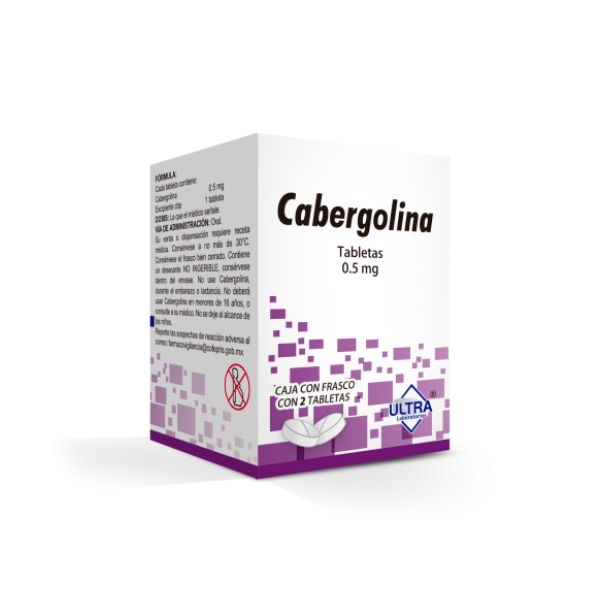
CABERGOLINA 0.5 MG Tabletki

Ocena recepty online
Lekarz przeanalizuje Twój przypadek i zdecyduje, czy wystawienie recepty jest medycznie uzasadnione.

Porozmawiaj z lekarzem o tym leku
Omów swoje objawy i opcje leczenia podczas szybkiej konsultacji online.



Jak stosować KABERGOLINA RENATA
Treść ulotki
Cabergolina Renata 0.5 mg tablets
cabergolina
Read this leaflet carefully before taking this medicine as it contains important information for you.
- Keep this leaflet. You may need to read it again.
- If you have any questions, ask your doctor or pharmacist.
- This medicine has been prescribed for you only. Do not pass it on to others, even if their symptoms are the same as yours, as it could be harmful.
- If you get any side effects, even those not listed in this leaflet, tell your doctor or pharmacist. See section 4.
Contents of this leaflet
- 1. What Cabergolina Renata is and what it is used for
- 2. What you need to know before you take Cabergolina Renata
- 3. How to take Cabergolina Renata
- 4. Possible side effects 5 How to store Cabergolina Renata
- 6. Contents of the pack and other information
1. What is Cabergolina Renata and what is it used for
Cabergolina Renata contains cabergoline which belongs to a group of medicines known as prolactin inhibitors.
Prolactin is a hormone that is formed in the pituitary gland of the brain. Cabergoline reduces the levels
of the hormone prolactin.
Cabergolina Renata is used to:
- stop/inhibit lactation (milk production) for medical reasons.
- treat hormonal disorders that are consequences of elevated prolactin levels such as missing or irregular menstrual cycles, infertility or milk flow not associated with childbirth, in female patients.
- treat elevated levels of prolactin due to a pituitary tumor.
Cabergoline should only be used in adults. It is not suitable for children and adolescents under the age
of 16 years.
Consult your doctor or pharmacist if you do not feel better or if you feel worse.
2. What you need to know before taking Cabergolina Renata
Do not take Cabergolina Renata if
- you are allergic to cabergoline, to other ergot alkaloids (e.g. bromocriptine) or to any of the other ingredients of this medicine (listed in section 6)
- you have (or have had in the past) psychosis or are at risk of psychosis after childbirth
- you experience swelling of the hands and feet and high blood pressure during pregnancy (pre-eclampsia, eclampsia)
- you experience uncontrolled high blood pressure or high blood pressure after childbirth
- you have been diagnosed in the past with problems such as fibrosis (scar tissue) affecting the lungs, the back of the abdomen and kidneys, or the heart
- you will be treated with cabergoline for a long period and have or have had fibrotic reactions (scar tissue) affecting the heart.
Warnings and precautions
Talk to your doctor or pharmacist before taking Cabergolina Renata if you have or have had
any of the following conditions:
- Disease affecting the heart and blood vessels (cardiovascular disease).
- Cold hands and feet (Raynaud's syndrome).
- Stabbing pain in the abdomen when hungry (peptic ulcer) or bleeding from the stomach and intestines (gastrointestinal bleeding).
- A history of severe mental illness, especially psychotic disorders.
- Liver or kidney problems.
- Fibrotic reactions (scar tissue) affecting the heart, lungs or abdomen. If you are treated with cabergoline for a long period, your doctor will check before starting treatment if your heart, lungs and kidneys are in good condition. You will also undergo an echocardiogram (heart ultrasound) before starting treatment and at regular intervals during treatment. If fibrotic reactions occur, treatment must be stopped.
- Low blood pressure (postural hypotension) or taking medicines to lower blood pressure.
- Severe chest disease (e.g., chest pain during breathing, fluid in the lungs, inflammation or infection of the lungs)
If you have recently given birth, you may be at increased risk for certain conditions. These may include
high blood pressure, heart attack, seizures, stroke, or mental health problems. Therefore, your
doctor will need to regularly check your blood pressure during treatment. Contact
your doctor immediately if you experience high blood pressure, chest pain, or unusually severe or persistent headache (with or without vision problems).
Tell your doctor if you or your family/caregiver notices that you are developing urges or
desires to behave in ways that are unusual for you and you cannot resist the impulse, urge, or
temptation to perform certain activities that could harm you or others. These are called
impulse control disorders and may include behaviors such as gambling addiction,
excessive eating or spending, an excessively high sexual drive, or an
increase in sexual thoughts or feelings.
Your doctor may need to adjust or stop your dose.
During treatment, your doctor may need to check your blood pressure, in
particular during the first few days of treatment. A gynecological assessment may also be performed
on the cells of the cervix or uterine lining.
Infertility can be corrected in women taking cabergoline and pregnancy can occur
before the menstrual cycle returns to normal. Therefore, a pregnancy test is recommended
at least every 4 weeks until menstruation resumes and, from that point on, every
time the menstrual cycle is delayed by more than 3 days. Therefore, during treatment and for at least one
month after stopping cabergoline, suitable contraceptive methods should be used (see
section “Pregnancy, breastfeeding and fertility”).
Children and adolescents
The safety and efficacy of cabergoline have not been established in children and adolescents under 16 years of age.
Other medicines and Cabergolina Renata
Tell your doctor or pharmacist if you are taking, have recently taken or might take
any other medicines, including those available without a prescription.
Some medicines can reduce the effectiveness of cabergoline, including:
- Medicines to lower blood pressure.
- Medicines used to treat mental illnesses (e.g. phenothiazines, butyrophenes or thioxanthenes).
- Medicines for nausea and vomiting (e.g. metoclopramide).
Some medicines can increase the side effects of cabergoline, including:
- Medicines used in the treatment of Parkinson's disease or severe migraine headaches called ergot alkaloids, such as ergotamine or dihydroergotamine, ergotmetrine or methysergide. Antibiotics (e.g. erythromycin).
Cabergolina Renata with food and drink
This medicine should be taken with food to reduce some side effects. See
section 3 for details.
Pregnancy, breastfeeding and fertility
If you are pregnant, suspect you are pregnant, are planning to become pregnant, or are breastfeeding
with breast milk, ask your doctor for advice before taking this medicine.
Pregnancy
Experience with the use of cabergoline during pregnancy is limited.
If you are planning a pregnancy, cabergoline should be stopped at least one month before
the expected pregnancy. Therefore, you should consult your doctor if you are pregnant or planning a
pregnancy before starting treatment.
Before starting to take cabergoline, you should have a check to make sure you are not
pregnant. You should also be careful not to become pregnant during treatment and for at least one
month after stopping treatment. A non-hormonal effective contraceptive method should be used; discuss the choice of contraceptive method with your doctor.
If you are being treated with cabergoline and become pregnant during this period, you should stop the
treatment and contact your doctor as soon as possible.
Breastfeeding
It is not known whether cabergoline passes into breast milk. Because cabergoline will prevent you from producing milk
for your baby, you should not take this medicine if you plan to breastfeed. If you need to
take cabergoline, you should use another method to feed your baby.
Cabergoline is used to suppress milk production (lactation) where it is
considered essential.
Fertility
Infertility can be corrected and pregnancy can occur before the menstrual cycle has
normalized in women taking cabergoline (see section “Warnings and precautions”).
Driving and operating machinery
Caution is needed when performing actions that require a quick and accurate reaction
during the start of treatment.
Cabergoline can cause drowsiness (excessive sleepiness) and a sudden onset of sleep. People affected by this disorder should therefore not drive or participate in activities where reduced alertness could pose a risk of serious harm (e.g. operating machinery) until
such recurrent episodes and drowsiness have resolved. If you are affected, consult your doctor.
Cabergolina Renata contains lactose
If your doctor has told you that you have an intolerance to some sugars, contact your doctor before
taking this medicine.
3. How to take Cabergolina Renata
Take this medicine following exactly the instructions of your doctor or pharmacist. If you have
any doubts, consult your doctor or pharmacist.
The dose is determined by your doctor who adjusts it for you on an individual basis.
The tablets should be taken orally and with a meal to reduce some undesirable effects
such as nausea, vomiting and stomach pain.
- To prevent/inhibit milk productionYou must take 2 tablets (1 mg of cabergoline) as a single dose within 24 hours of delivery.
- To stop lactation once breastfeeding has startedYou must take 0.25 mg (half of a 0.5 mg tablet) every 12 hours for two days.
- To reduce prolactin concentration in the bodyInitially, you must take 0.5 mg of cabergoline per week in one or two doses (half of a 0.5 mg tablet) distributed over a week (e.g. half a tablet on Monday and the other half of the tablet on Thursday). Your dose will be increased to a maximum of 4.5 mg per week or until you have fully responded to treatment.
The tablet can be divided into equal parts.
You must not take more than 3 mg of cabergoline in one day.
If you take more Cabergolina Renata than you should
If you take too many tablets, contact your doctor immediately or go to the nearest hospital. The
symptoms of overdose may include nausea, vomiting, gastrointestinal disorders, low blood
pressure when standing up, confusion/psychosis or hallucinations.
If you forget to take Cabergolina Renata
If you forget to take a dose, take the next one as usual and inform your doctor if you
have difficulty remembering to take the tablets. Do not take a double dose to make up for a
missed dose.
If you stop taking Cabergolina Renata
Your doctor will tell you how long to take cabergoline. Do not stop until
your doctor tells you to do so.
If you have any doubts about the use of this medicine, ask your doctor or pharmacist.
4. Possible side effects
Like all medicines, this medicine can cause side effects, although not everybody gets them.
Immediately inform your doctor if you experience any of the following symptoms after
taking this medicine. These symptoms may be serious:
- Very common side effects (may affect more than 1 in 10 people): heart valve problems and related disorders, e.g. inflammation (pericarditis) or fluid accumulation in the pericardium (pericardial effusion). Early symptoms may include one or more of the following: shortness of breath, wheezing, feeling a racing heartbeat, feeling faint, chest pain, back pain, pelvic pain or swelling in the legs. These may be the first signs of a condition called pulmonary fibrosis, which can affect the heart/heart valves or the back.
- Development of a widespread itchy rash, difficulty breathing with or without wheezing, feeling faint, unexplained swelling of the body or tongue, or any other symptom that seems to come on quickly after taking this medicine and makes you feel unwell. These may be indicative of an allergic reaction.
- Inability to resist the impulse, urge or temptation to perform an action that could be harmful to you or others, which may include:
o A strong urge to gamble excessively despite serious personal or family consequences.
o Aggression and altered or increased sexual interest and behavior that is of significant
concern to you or others, for example an increase in sexual desire.
o Uncontrollable excessive shopping or spending.
o Eating uncontrollably (eating large amounts of food in a short period of
time) or compulsive eating (eating more food than normal and more than is
needed to satisfy hunger).
Inform your doctor if you experience any of these behaviors; your doctor will discuss ways
to manage or reduce the symptoms.
Other side effects that may occur are:
- Very common (may affect more than 1 in 10 people)feeling unwell (nausea), stomach discomfort, stomach pain, headache, dizziness or lightheadedness, feeling weak or tired, inflammation of the stomach lining, muscle weakness.
- Common (may affect up to 1 in 10 people)constipation, a decrease in blood pressure for the first 3-4 days after childbirth, breast pain, depression, sleep disorders, low blood pressure (long-term treatment), low blood pressure when getting up, hot flushes, feeling sick (vomiting), drowsiness, tingling in the fingers or toes.
- Uncommon (may affect up to 1 in 100 people)loss of half of vision in one or both eyes, fainting, a sensation of tingling or “pins and needles” (digital vasospasm or paraesthesia), altered awareness of heartbeat (palpitations), reduced levels of the part of the blood that carries oxygen (haemoglobin) in women whose periods have stopped and then restarted; hair loss, severe itching, wheezing; leg cramps, nosebleeds, swelling due to fluid accumulation in the tissues (oedema), rash, skin reactions, loss of consciousness, lung scarring, fluid in the lungs.
- Rare(may affect up to 1 in 1,000 people)allergic skin reactions, fingers or toes become white or blue with a feeling of numbness after exposure to the cold.
- Very rare (may affect up to 1 in 10,000 people)scarring of tissues (fibrosis). Not known (frequency cannot be estimated from available data)changes to the liver and abnormal liver function tests, breathing problems with inadequate oxygen supply, increased levels of certain enzymes in the blood, changes in vision, breathing difficulties, sudden onset of sleep, seeing or hearing things that are not really there (hallucinations), delusions, psychotic disorder, allergic reaction, changes in blood tests.
Reporting of side effects
If you get any side effects, even those not listed in this leaflet, tell your
doctor or pharmacist. You can also report side effects directly through the national
system www.aifa.gov.it/content/segnalazioni-reazioni-avverse.
By reporting side effects you can help provide more information on the safety of
this medicine.
5. How to store Cabergolina Renata
- Keep this medicine out of the sight and reach of children.
- Do not use this medicine after the expiry date which is stated on the package and on the bottle label after Scad.. The expiry date refers to the last day of that month.
- Do not store at a temperature above 25°C. Keep the bottle tightly closed to protect the medicine from moisture.
- Each bottle contains 2 pieces of 1 g silica gel cushions. The silica gel cushions must not be removed from the bottles after opening.
Do not dispose of any medicine in wastewater or household waste. Ask your pharmacist how to
dispose of medicines you no longer use. This will help protect the environment.
6. Contents of the pack and other information
What Cabergolina Renata contains
The active ingredient is cabergoline 0.5 mg.
The other ingredients are anhydrous lactose, l-leucine and magnesium stearate.
Description of the appearance of Cabergolina Renataand contents of the pack
Cabergolina Renata tablets are white in colour, oval in shape, and measure 7.5 × 4 mm. On one side they are imprinted with
a “c” on the left and “1” on the right, and are smooth on the other side.
The tablets are contained in high-density polyethylene bottles with a child-resistant polypropylene cap
and silica gel cushions inside.
Not all pack sizes may be marketed.
Marketing Authorisation Holder and Manufacturer
Marketing Authorisation Holder
Renata Pharmaceuticals (Ireland) Limited
12 Crowe Street, Dundalk, Co. Louth
Ireland
Manufacturer
Alterno Labs d.o.o.
Brnčičeva ulica 29, Ljubljana-Črnuče, 1231
Slovenia
This medicinal product is authorised in the Member States of the European Economic Area under the
following denominations:
| Ireland | l Cabergoline 500 microgram Tablets |
| Denmark | Cabenex 0,5 mg tabletter |
| Spain | a Cabergolina Renata 0.5 mg comprimidos |
| France | t CABERGOLINE ZENTIVA 0,5 mg, comprimé sécable |
| Italy | I Cabergolina Renata |
| Netherlands | Cabergoline Renata, tabletten 0,5 mg |
| Norway | Cabenex |
| Portugal | a Cabergoline Renata 0.5 mg comprimidos |
| Sweden | Cabenex 0,5 mg tabletter |

Nie jesteś pewien, czy ten lek jest odpowiedni dla ciebie?
Omów swoje objawy i leczenie z lekarzem online.

Zacząłeś przyjmować lek i masz pytania?
Omów swoje objawy i leczenie z lekarzem online.
- Kraj rejestracji
- Postać farmaceutycznaTablet, 0.5 MG
- Kod ATCG02CB03
- Substancja czynna
- Wymaga receptyTak
- Producent
- Te treści mają charakter wyłącznie informacyjny i nie zastępują konsultacji lekarskiej.
- Zamienniki KABERGOLINA RENATAPostać farmaceutyczna: Tablet, 0.5 MGSubstancja czynna: cabergolineProducent: PFIZER ITALIA S.R.L.Wymaga receptyPostać farmaceutyczna: Tablet, 0.5 MGSubstancja czynna: cabergolineProducent: DOC GENERICI SRLWymaga receptyPostać farmaceutyczna: Tablet, 0.5 MGSubstancja czynna: cabergolineProducent: RATIOPHARM GMBHWymaga recepty
Odpowiedniki KABERGOLINA RENATA w innych krajach
Leki z tą samą substancją czynną dostępne w innych krajach.
Odpowiednik KABERGOLINA RENATA w Polska
Odpowiednik KABERGOLINA RENATA w Ukraina
Odpowiednik KABERGOLINA RENATA w Hiszpania
Lekarze online w sprawie KABERGOLINA RENATA
Omów stosowanie KABERGOLINA RENATA, bezpieczeństwo i ocenę zasadności recepty zgodnie z obowiązującymi przepisami.
Uzyskaj receptę na KABERGOLINA RENATA online
Wypełnij 2-minutowy formularz
Opisz swoje objawy, historię choroby i lek, o który prosisz.
Wybierz lekarza lub pozwól nam przydzielić
Wybierz specjalistę lub dopasujemy Cię do najbliższego dostępnego lekarza.
Lekarz analizuje Twój przypadek
Zazwyczaj w ciągu 30 minut. Może zadawać dodatkowe pytania przez czat.
Odbierz w dowolnej aptece
Recepta elektroniczna wysłana na Twój e-mail — ważna w całej Polsce.
Często zadawane pytania
KABERGOLINA RENATA wymaga recepty w Włochy. Możesz skonsultować się z lekarzem online, aby sprawdzić, czy ten lek może być odpowiedni w Twojej sytuacji.
Substancją czynną w KABERGOLINA RENATA jest cabergoline. Informacja ta pomaga rozpoznać leki o tym samym składzie, ale pod różnymi nazwami handlowymi.
KABERGOLINA RENATA jest produkowany przez RENATA PHARMACEUTICALS (IRELAND) LIMITED. Nazwy handlowe i opakowania mogą się różnić w zależności od dystrybutora.
Lekarze, tacy jak Lekarze rodzinni, Psychiatrzy, Dermatolodzy, Kardiolodzy, Endokrynolodzy, Gastroenterolodzy, Pulmonolodzy, Nefrolodzy, Reumatolodzy, Hematolodzy, Zakaźnicy, Alergolodzy, Geriatrzy, Pediatrzy, Onkolodzy, mogą ocenić, czy stosowanie KABERGOLINA RENATA jest odpowiednie w Twoim przypadku, w zależności od sytuacji klinicznej i lokalnych przepisów. Możesz umówić konsultację online, aby omówić objawy i możliwe dalsze kroki.
Polska posiada dobrze rozwiniętą infrastrukturę ochrony zdrowia w dużych miastach, takich jak Warszawa, Kraków, Wrocław i Gdańsk. Apteki są łatwo dostępne i działają zgodnie z obowiązującymi przepisami, zapewniając dostęp do leków na receptę.
Możesz kupić KABERGOLINA RENATA w Warszawie, Krakowie, Wrocławiu lub Gdańsku w każdej aptece, posiadając ważną receptę.
Aby uzyskać receptę, możesz skorzystać z Oladoctor:
Inne leki zawierające tę samą substancję czynną (cabergoline) to m.in. AKTUALENE, KABERGOLINA DOK, KABERGOLINA RATIOPARM. Mogą one różnić się nazwą handlową lub postacią, ale zawierają ten sam składnik terapeutyczny. Przed zmianą lub rozpoczęciem nowego leku skonsultuj się z lekarzem.
