



BRUNIZINA 0.1% Krople do oczu, roztwór

Ocena recepty online
Lekarz przeanalizuje Twój przypadek i zdecyduje, czy wystawienie recepty jest medycznie uzasadnione.

Porozmawiaj z lekarzem o tym leku
Omów swoje objawy i opcje leczenia podczas szybkiej konsultacji online.



Jak stosować BRUNITSINA
Treść ulotki
- BRUNIZINA 1 mg/ml eye drops, solution
- BRUNIZINA 2 mg/ml nasal drops, solution, 2 mg/ml nasal spray, solution
BRUNIZINA 1 mg/ml eye drops, solution
Naphazoline hydrochloride
Read this leaflet carefully before using this medicine as it contains important information for you.
Always use this medicine exactly as described in this leaflet or as your doctor or pharmacist has told you.
- Keep this leaflet. You may need to read it again.
- If you would like more information or advice, ask your pharmacist.
- If any side effects occur, including those not listed in this leaflet, tell your doctor or pharmacist. See section 4.
- See a doctor if you do not feel better or if your symptoms get worse after 4 days.
Contents of this leaflet:
- 1. What BRUNIZINA eye drops is and what it is used for
- 2. What you need to know before using BRUNIZINA eye drops
- 3. How to use BRUNIZINA eye drops
- 4. Possible side effects of eye drops
- 5. How to store BRUNIZINA eye drops
- 6. Contents of the pack and other information
1. What is BRUNIZINA eye drops and what are they for
BRUNIZINA eye drops contain the active ingredient naphazoline hydrochloride, which belongs to a group of
medicines called decongestants that reduce blood circulation at the level of the nasal and ocular mucosa
reducing congestion.
BRUNIZINA eye drops are indicated to reduce redness and swelling of the conjunctiva (the membrane that
lines the surface of the eyes) and in the treatment of burning, itching or irritation of the eyes.
See your doctor if you do not feel better or if you feel worse after 4 days.
2. What you need to know before using BRUNIZINA eye drops
Do not use BRUNIZINA eye drops
- if you are allergic to naphazoline hydrochloride or any of the other ingredients of this medicine (listed in section 6);
- if you have a disease due to high pressure inside the eye (narrow-angle glaucoma) or if you have other serious eye diseases
- in children under 10 years of age (See section “Children”).
Warnings and precautions
Consult your doctor or pharmacist before using BRUNIZINA eye drops.
Do not exceed the recommended doses and do not use the medicine for more than 4 consecutive days, as
undesirable effects may occur.
Stop treatment and consult your doctor if, after using BRUNIZINA eye drops for a short
period of time, eye irritation persists or worsens.
Consult your doctor before using this medicine in the following cases:
- if you have infections, pus or foreign bodies in the eye;
- if you have suffered an eye injury (mechanical damage);
- if your eyes have come into contact with chemicals or heat (chemical or heat damage).
Use BRUNIZINA eye drops with caution and inform your doctor if any of the following conditions apply to you:
- you have high blood pressure (hypertension);
- you suffer from thyroid problems (hyperthyroidism);
- you have heart problems (cardiac disorders);
- you suffer from diabetes.
Children
The use of BRUNIZINA eye drops is contraindicated in children under 10 years of age (See section
“Do not use BRUNIZINA eye drops”).
Other medicines and BRUNIZINA eye drops
Tell your doctor or pharmacist if you are taking, have recently taken or might take any other
medicines.
Do not use BRUNIZINA eye drops if you are taking medicines used to treat depression
(antidepressants).
Pregnancy and breastfeeding
If you are pregnant, suspect you may be pregnant or are planning to become pregnant, or if you are breastfeeding
with breast milk, ask your doctor or pharmacist for advice before using this medicine.
If you are pregnant or breastfeeding, you can only use BRUNIZINA eye drops after
consulting your doctor and weighing the risks and benefits of treatment with him.
Driving and operating machinery
The effects of this medicine on the ability to drive and operate machinery are not known.
BRUNIZINA eye drops contains benzalkonium chloride
This medicine contains approximately 0.003 mg of benzalkonium chloride per drop, equivalent to 0.1 mg/ml.
Benzalkonium chloride can be absorbed by soft contact lenses and can lead to a change in
their color. Remove contact lenses before using this medicine and wait 15 minutes before
reapplying them.
Benzalkonium chloride can also cause eye irritation, especially if you have dry eyes or corneal disorders (the
outermost transparent layer of the eye). If you experience an abnormal sensation in your eye, burning or pain
after using this medicine, talk to your doctor.
BRUNIZINA eye drops contains methyl-parahydroxybenzoate and propyl-parahydroxybenzoate
This medicine contains methyl-parahydroxybenzoate and propyl-parahydroxybenzoate, which can cause
allergic reactions (including delayed reactions).
3. How to use BRUNIZINA eye drops
Use this medicine following exactly the instructions in this leaflet or as directed by your doctor or pharmacist. If you have any doubts, ask your doctor or pharmacist.
The recommended dose is 1-2 eye drops, 2-3 times a day.
Apply the eye drops to the lower part of the eye, between the lower eyelid and the eye (inferior conjunctival fornix).
Do not exceed the recommended doses.
If you exceed the recommended doses, even if BRUNIZINA eye drops is a medicine applied locally to the eyes (topically) and if you use it for a short time, it may be absorbed throughout the body and cause serious undesirable effects (serious systemic effects) (See the section “Possible side effects”).
If you use more BRUNIZINA eye drops than you should
A significantly higher use than the recommended dose of BRUNIZINA, for example in case of accidental ingestion of BRUNIZINA, may cause serious side effects on the heart and blood circulation. Symptoms may include: slowed heart rate (bradycardia), severe headache, nausea, vomiting, breathing problems, increased heart rate (tachycardia) and chest pain.
If side effects occur or in case of accidental intake/ingestion of an overdose of BRUNIZINA eye drops, seek immediate medical attention.
If you forget to use BRUNIZINA eye drops
Do not use a double dose to make up for a missed dose.
If you have any doubts about the use of this medicine, ask your doctor or pharmacist.
4. Possible side effects
Like all medicines, this medicine can cause side effects, although not everybody gets them.
The following side effects may occur:
- allergic reactions (hypersensitivity reactions). In this case, it is necessary to stop treatment and consult a doctor who will establish suitable therapy.
- increase in pupil size (pupil dilation);
- increase in blood pressure (hypertension), heart disorders (cardiac disturbances), increase in blood sugar level (hyperglycemia) due to the absorption of the medicine throughout the body;
- increase in pressure inside the eye (intraocular pressure) in predisposed individuals;
- nausea;
- headache (cephalalgia);
Reporting of side effects
If you experience any side effects, including those not listed in this leaflet, please inform your
doctor or pharmacist. You can also report side effects directly through the national reporting system
at https://www.aifa.gov.it/content/segnalazioni-reazioni-avverse . By reporting side effects you can help
provide more information on the safety of this medicine.
5. How to store BRUNIZINA eye drops
Keep this medicine out of the sight and reach of children.
Do not use this medicine after the expiry date which is stated on the packaging after “Exp.”.
The expiry date refers to the last day of that month and the product in intact packaging,
correctly stored.
Store at a temperature not exceeding 25 °C.
Do not use BRUNIZINA eye drops after 30 days from the first opening of the container.
Do not dispose of any medicine in wastewater or household waste. Ask your pharmacist how to eliminate
medicines that you no longer use. This will help protect the environment.
6. Contents of the pack and other information
What BRUNIZINA eye drops contain
- The active ingredient is naphazoline hydrochloride. 100 ml of solution contains 100 mg of naphazoline hydrochloride.
- The other ingredients are: sodium chloride, p-hydroxybenzoic acid esters, benzalkonium chloride, purified water.
Description of the appearance of BRUNIZINA eye drops and contents of the pack
Bottle with dropper, 10 ml.
Marketing authorisation holder and manufacturer
BRUSCHETTINI S.r.l. – Via Isonzo 6 – 16147 Genova – Italy
BRUNIZINA 2 mg/ml nasal drops, solution, 2 mg/ml nasal spray, solution
Nafazoline hydrochloride
Read this leaflet carefully before using this medicine as it contains important information for you.
Always use this medicine exactly as described in this leaflet or as your doctor or pharmacist has told you.
- Keep this leaflet. You may need to read it again.
- If you want more information or advice, ask your pharmacist.
- If any side effects occur, including those not listed in this leaflet, tell your doctor or pharmacist. See section 4.
- See a doctor if you do not feel better or if your symptoms get worse after 4 days.
Contents of this leaflet:
- 1. What BRUNIZINA is and what it is used for
- 2. What you need to know before using BRUNIZINA
- 3. How to use BRUNIZINA
- 4. Possible side effects
- 5. How to store BRUNIZINA
- 6. Contents of the pack and other information
1. What is BRUNIZINA and what is it used for
BRUNIZINA contains the active ingredient naphazoline hydrochloride, which belongs to a group of medicines
called decongestants that reduce blood circulation at the level of the nasal and eye mucosa and reduce
congestion.
This topical medicine is used to clear the nose in case of a cold or other conditions of
nasal congestion, such as sinusitis and allergic rhinitis (inflammatory processes of the nose, paranasal sinuses and nasopharynx).
See a doctor if you do not feel better or if you feel worse after 4 days.
2. What you need to know before using BRUNIZINA
Do not use BRUNIZINA
- if you are allergic to naphazoline hydrochloride, to similar substances (sympathomimetic imidazolines) or to any of the ingredients of this medicine (listed in section 6);
- if you have nasal inflammation that persists over time (chronic rhinitis);
- if you suffer from serious heart conditions or a marked increase in blood pressure (severe arterial hypertension);
- if your thyroid gland is overactive (hyperthyroidism);
- if you have a disease due to high pressure inside the eye (narrow-angle glaucoma) or if you have other serious eye conditions
- if you suffer from an enlarged prostate (prostatic hypertrophy);
- in children under the age of 12 years (See section “Children”);
- if you are taking monoamine oxidase inhibitors, medicines used to treat depression, or if you have taken them in the last 2 weeks (See section “Other medicines and BRUNIZINA”).
Do not take BRUNIZINA orally (by mouth).
Do not use this medicine for more than 4 consecutive days.
Warnings and precautions
Consult your doctor or pharmacist before using BRUNIZINA.
Before using this medicine, consult your doctor if you suffer or have suffered from heart and
circulation problems (heart failure, cardiovascular diseases), especially if you have high blood
pressure (hypertension), he will assess the potential risks and benefits of therapy with BRUNIZINA.
If you use BRUNIZINA for a long time, the normal function of the nasal mucosa and the mucous membranes around the
nose (paranasal sinuses) may be altered and your body may become accustomed to this medicine (habituation) and the
dose taken will be less effective.
If you repeat applications for a long time, damage to the mucous membranes may occur. Therefore, stop the
treatment and consult your doctor if you do not see any improvement after using BRUNIZINA for a few days.
The use of BRUNIZINA or similar decongestant products can cause congestion of the mucous membranes
(rebound congestion) triggering a vicious circle that can lead to excessive use of the medicine.
Therefore, never exceed the recommended doses.
Use BRUNIZINA with caution and inform your doctor if any of the following conditions apply to you:
- if you are elderly;
- if you are in the first months of pregnancy (See section “Pregnancy and breastfeeding”);
- if you are a sensitive individual. In this case, use a lower concentration of naphazoline, equal to 0.50 per thousand, which is obtained by diluting 1 part of BRUNIZINA with 3 parts of water.
Children
The use of BRUNIZINA is contraindicated in children under the age of 12 years(See section “Do not use
BRUNIZINA”).
Use this medicine with particular caution in children and at a lower concentration of naphazoline, as
overdose is more frequent and presents with more serious symptoms (See sections “Use in
children” and “If you use more BRUNIZINA than you should”).
Other medicines and BRUNIZINA
Tell your doctor or pharmacist if you are taking, have recently taken or might take any other
medicines.
Do not use BRUNIZINA if you are taking monoamine oxidase inhibitors (See section “Do not use
BRUNIZINA”).
Pregnancy and breastfeeding
If you are pregnant, suspect or are planning a pregnancy, or if you are breastfeeding, ask your doctor or
pharmacist for advice before using this medicine. The doctor, after
assessing the potential risks and benefits of therapy with BRUNIZINA, will determine whether this medicine is
suitable for you. Particular caution in the use of the product must be exercised during the first months of pregnancy and
during the breastfeeding period.
Driving and operating machinery
The effects of this medicine on the ability to drive and operate machinery are not known.
BRUNIZINA contains methyl-parahydroxybenzoate and propyl-parahydroxybenzoate
which may cause allergic reactions (including delayed reactions).
3. How to use BRUNIZINA
Use this medicine following exactly as described in this leaflet or as instructed by your doctor or pharmacist. If you have any doubts, ask your doctor or pharmacist.
Do not exceed the recommended doses.
If you exceed the recommended doses, even if BRUNIZINA is a medicine applied locally in the nose (topical route) and if you use it for a short time, it may be absorbed throughout the body and cause serious side effects
(serious systemic effects) (See sections “If you use more BRUNIZINA than you should” and “Possible side
effects”).
BRUNIZINA 2 mg/ml nasal drops, solution
The recommended dose is 3-4 drops of solution, 2-3 times a day, applied to the nose (endo-nasal instillations).
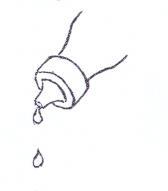
Tilt the bottle and press gently allowing the drops to fall into the nose (See Figure 1).
This medicine can also be used for aerosol (nasal and pharyngeal aerosol). In this case, dilute 1
part of solution with 2 parts of water.
BRUNIZINA 2 mg/ml nasal spray, solution
The recommended dose is 3 sprays, 2-3 times a day, applied to the nose (endo-nasal nebulizations).
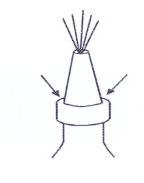
Press on the walls of the bottle, bringing the tip of the applicator as close as possible to the nose (See Figure 2).
Method of use:
Figure 1 Figure 2
Use in children over 12 years of age
Use a lower concentration of naphazoline, equal to 0.50 per thousand, which is obtained by diluting 1 part of
BRUNIZINA with 3 parts of water.
If you use more BRUNIZINA than you should
A significantly greater use than the recommended dose of BRUNIZINA, for example in case of accidental ingestion
of BRUNIZINA, can cause serious side effects on the heart and blood circulation. Symptoms may include: slowed heart rate (bradycardia), severe headache, nausea,
vomiting, breathing problems, increased heart rate (tachycardia) and chest pain.
Following the use of high doses of this medicine, the following effects may also occur:
- drowsiness;
- damage to the nasal mucosa;
If you exceed the recommended doses, or if you use the medicine for more than 4 days it may be absorbed and cause serious
side effects (serious systemic effects) (See section “Possible side effects”).
If side effects occur or in case of accidental intake/ingestion of an overdose of
BRUNIZINA, seek immediate medical attention.
The doctor will establish the most appropriate therapy, based on the severity of the symptoms.
If you forget to use BRUNIZINA
Do not use a double dose to make up for a missed dose.
If you have any doubts about the use of this medicine, ask your doctor or pharmacist.
4. Possible side effects
Like all medicines, this medicine can cause side effects, although not everybody gets them.
The following side effects may occur:
local intolerance reactions to the medicine;
mucosal congestion (rebound congestion);
increased blood pressure (arterial hypertension), slowed heartbeat
(reflex bradycardia), headache, difficulty urinating (urinary disorders), especially if
you use this medicine at high doses or for more than 4 days, as naphazoline can pass throughout the
body through inflamed mucous membranes (systemic effects).
If you accidentally ingest this medicine or if you take it in high doses, you may experience an increase
in blood pressure (arterial hypertension), increased heart rate (tachycardia), a feeling of
chest tightness, severe headache. In addition, in children, a
decrease in body temperature (hypothermia) and depression of brain activity (central nervous
system) with marked sedation may occur, phenomena that require the application of adequate emergency measures.
Reporting of side effects
If you experience any side effects, including those not listed in this leaflet, please inform your
doctor or pharmacist. You can also report side effects directly through the national
reporting system at https://www.aifa.gov.it/content/segnalazioni-reazioni-avverse . By reporting
side effects, you can contribute to providing more information on the safety of this medicine.
5. How to store BRUNIZINA
Keep this medicine out of the sight and reach of children.
Do not use this medicine after the expiry date which is stated on the packaging after “Scad.”.
The expiry date refers to the last day of that month and the product in intact packaging,
correctly stored.
Store at a temperature below 30 °C.
The medicine must not be used for more than 30 days after first opening the container.
Do not dispose of any medicine in wastewater or household waste. Ask your pharmacist how to dispose of
medicines you no longer use. This will help protect the environment.
6. Contents of the pack and other information
What BRUNIZINA contains
BRUNIZINA 2 mg/ml nasal drops, solution
- The active ingredient is naphazoline hydrochloride. 100 ml of drops contain 0.200 g of naphazoline hydrochloride.
- The other ingredients are: p-hydroxybenzoic acid esters, purified water.
BRUNIZINA 2 mg/ml nasal spray, solution
- The active ingredient is naphazoline hydrochloride. 100 ml of nebulized solution contain 0.200 g of naphazoline hydrochloride.
- The other ingredients are: p-hydroxybenzoic acid esters, purified water.
Description of the appearance of BRUNIZINA and contents of the pack
BRUNIZINA 2 mg/ml nasal drops, solution
Bottle with dropper, 10 ml.
BRUNIZINA 2 mg/ml nasal spray, solution
Bottle with spray device, 10 ml.
Marketing authorisation holder and manufacturer
BRUSCHETTINI S.r.l. – Via Isonzo 6 – 16147 Genova – Italy

Nie jesteś pewien, czy ten lek jest odpowiedni dla ciebie?
Omów swoje objawy i leczenie z lekarzem online.

Zacząłeś przyjmować lek i masz pytania?
Omów swoje objawy i leczenie z lekarzem online.
- Kraj rejestracji
- Postać farmaceutycznaEye drops, solution, 0.1%
- Kod ATCS01GA01
- Substancja czynna
- Wymaga receptyNie
- Producent
- Te treści mają charakter wyłącznie informacyjny i nie zastępują konsultacji lekarskiej.
- Zamienniki BRUNITSINAPostać farmaceutyczna: Eye drops, solution, 0.8 MG/MLSubstancja czynna: naphazolineProducent: DOMPE' FARMACEUTICI S.P.A.Bez receptyPostać farmaceutyczna: Eye drops, solution, 1 MG/MLSubstancja czynna: naphazolineBez receptyPostać farmaceutyczna: Eye drops, solution, 0.5 MG/MLSubstancja czynna: naphazolineProducent: MONTEFARMACO OTC S.P.A.Bez recepty
Odpowiedniki BRUNITSINA w innych krajach
Leki z tą samą substancją czynną dostępne w innych krajach.
Odpowiednik BRUNITSINA w Hiszpania
Lekarze online w sprawie BRUNITSINA
Omów stosowanie BRUNITSINA, bezpieczeństwo i ocenę zasadności recepty zgodnie z obowiązującymi przepisami.









Uzyskaj receptę na BRUNITSINA online
Wypełnij 2-minutowy formularz
Opisz swoje objawy, historię choroby i lek, o który prosisz.
Wybierz lekarza lub pozwól nam przydzielić
Wybierz specjalistę lub dopasujemy Cię do najbliższego dostępnego lekarza.
Lekarz analizuje Twój przypadek
Zazwyczaj w ciągu 30 minut. Może zadawać dodatkowe pytania przez czat.
Odbierz w dowolnej aptece
Recepta elektroniczna wysłana na Twój e-mail — ważna w całej Polsce.
Często zadawane pytania
BRUNITSINA nie wymaga recepty w Włochy. Możesz skonsultować się z lekarzem online, aby sprawdzić, czy ten lek może być odpowiedni w Twojej sytuacji.
Substancją czynną w BRUNITSINA jest naphazoline. Informacja ta pomaga rozpoznać leki o tym samym składzie, ale pod różnymi nazwami handlowymi.
BRUNITSINA jest produkowany przez BRUSCHETTINI S.R.L.. Nazwy handlowe i opakowania mogą się różnić w zależności od dystrybutora.
Lekarze, tacy jak Lekarze rodzinni, Psychiatrzy, Dermatolodzy, Kardiolodzy, Endokrynolodzy, Gastroenterolodzy, Pulmonolodzy, Nefrolodzy, Reumatolodzy, Hematolodzy, Zakaźnicy, Alergolodzy, Geriatrzy, Pediatrzy, Onkolodzy, mogą ocenić, czy stosowanie BRUNITSINA jest odpowiednie w Twoim przypadku, w zależności od sytuacji klinicznej i lokalnych przepisów. Możesz umówić konsultację online, aby omówić objawy i możliwe dalsze kroki.
Polska posiada dobrze rozwiniętą infrastrukturę ochrony zdrowia w dużych miastach, takich jak Warszawa, Kraków, Wrocław i Gdańsk. Apteki są łatwo dostępne i działają zgodnie z obowiązującymi przepisami, zapewniając dostęp do leków na receptę.
Możesz kupić BRUNITSINA w Warszawie, Krakowie, Wrocławiu lub Gdańsku w każdej aptece, posiadając ważną receptę.
Aby uzyskać receptę, możesz skorzystać z Oladoctor:
Inne leki zawierające tę samą substancję czynną (naphazoline) to m.in. KOLLIRIO ALFA DEKONJESTIONANTE, IMIDATSYL, IRIDINA DUE. Mogą one różnić się nazwą handlową lub postacią, ale zawierają ten sam składnik terapeutyczny. Przed zmianą lub rozpoczęciem nowego leku skonsultuj się z lekarzem.
