



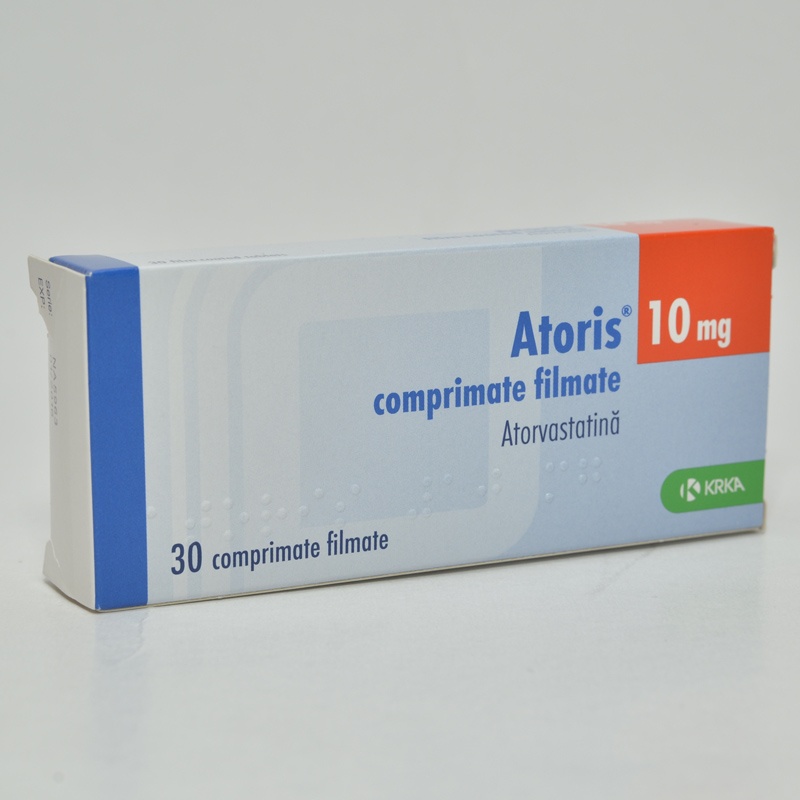
ATORIS 10 mg Tabletki Powlekane

Ocena recepty online
Lekarz przeanalizuje Twój przypadek i zdecyduje, czy wystawienie recepty jest medycznie uzasadnione.

Porozmawiaj z lekarzem o tym leku
Omów swoje objawy i opcje leczenia podczas szybkiej konsultacji online.



Jak stosować ATORIS
Treść ulotki
- Atoris 10 mg film-coated tablets, 20 mg film-coated tablets, 40 mg film-coated tablets
- Atoris 30 mg film-coated tablets, 60 mg film-coated tablets, 80 mg film-coated tablets
Atoris 10 mg film-coated tablets, 20 mg film-coated tablets, 40 mg film-coated tablets
Atorvastatin
Generic medicine
Read this leaflet carefully before you start taking this medicine as it contains
important information for you.
- Keep this leaflet. You may need to read it again.
- If you have any questions, ask your doctor or pharmacist.
- This medicine has been prescribed for you only. Do not pass it on to others. It may be harmful to people even if their symptoms are the same as yours. If any of the side effects gets serious, or if you notice any side effects not listed in this leaflet, tell your doctor or pharmacist. See section 4.
Contents of this leaflet
- 1. What Atoris is and what it is used for
- 2. What you need to know before you take Atoris
- 3. How to take Atoris
- 4. Possible side effects
- 5. How to store Atoris
- 6. Contents of the pack and other information
1. What is Atoris and what it is used for
Atoris belongs to a group of medicines called statins, which are lipid-regulating drugs
(fat).
Atoris is used to reduce lipids known as cholesterol and triglycerides in the blood when a diet
low in fat and lifestyle changes without other measures have failed. If you are in a
situation of increased risk of heart disease, Atoris can also be used to reduce this
risk even if your cholesterol levels are normal. During treatment, a standard diet for cholesterol reduction must be continued.
2. What you need to know before taking Atoris
Do not take Atoris:
- If you are allergic to atorvastatin or similar medicines used to reduce blood fats or any of the excipients of this medicine (listed in section 6).
- If you suffer from or have suffered from any disease affecting the liver.
- If you have had any blood tests with abnormally high liver function results.
- If you are a woman who could become pregnant and are not using reliable contraception.
- If you are pregnant or trying to become pregnant.
- If you are breastfeeding.
- If you are using the combination of glecaprevir/pibrentasvir in the treatment of hepatitis C.
Warnings and precautions
Talk to your doctor or pharmacist before taking Atoris.
Atoris may not be suitable for you for the following reasons:
- If you have had a previous stroke with bleeding in the brain, or have small pockets of fluid in the brain following previous strokes.
- If you have problems with your kidneys.
- If your thyroid gland has reduced activity (hypothyroidism).
- If you suffer from recurrent or unexplained muscle pain, or if you or a family member have suffered from muscle problems. Also, inform your doctor or pharmacist if you experience muscle weakness that is constant. Further checks and medications may be necessary to diagnose and treat this condition.
- If you have had previous muscle problems while taking other medicines that lower fats (e.g. other medicines called “statins” or “fibrates”).
- If you regularly consume large amounts of alcohol.
- If you have a history of liver disease.
- If you are over 70 years old.
Checks with your doctor or pharmacist before taking Atoris
- if you suffer from severe breathing difficulties.
If any of the above applies to you, your doctor may need to perform blood tests before
and probably during your treatment with Atoris, to be able to predict the risk of side effects
related to the muscles. The risk of muscle-related side effects, for example rhabdomyolysis, is known to
increase when certain medicines are taken at the same time (see section 2 “Other
medicines and Atoris”).
During treatment with this medicine, your doctor will carefully check that you do not have diabetes or are not at risk of developing diabetes. You are at risk of developing diabetes if you have high
levels of sugars and fats in your blood, if you are overweight and have high blood pressure.
Other medicines and Atoris
Some medicines can change the effect of Atoris, or their effect can be changed by
Atoris. This type of interaction can make one or both medicines less effective. Alternatively, this could also increase the risk or severity of unwanted effects, including a
serious condition of muscle breakdown known as rhabdomyolysis described in section 4:
- Medicines used to alter the activity of the immune system, e.g. cyclosporine.
- Some antibiotic and antifungal medicines, e.g. erythromycin, clarithromycin, telithromycin, ketoconazole, itraconazole, voriconazole, fluconazole, posaconazole, rifampicin, fusidic acid.
- Other medicines to regulate lipid levels, for example gemfibrozil, other fibrates, colestipol
- Some calcium channel blockers, used for angina or high blood pressure, e.g. amlodipine, diltiazem.
- Medicines to regulate heart rhythm, e.g. digoxin, verapamil, amiodarone.
- Medicines used in the treatment of HIV, e.g. ritonavir, lopinavir, atazanavir, indinavir, darunavir, the combination tipranavir/ritonavir etc.
- Some medicines used to treat hepatitis C such as telaprevir, boceprevir and the combination of elbasvir/grazoprevir.
- Other medicines known to interact with Atoris, include ezetimibe (which lowers cholesterol), warfarin (which reduces blood clotting), oral contraceptives, stiripentol (an anti-convulsant for epilepsy), cimetidine (used for heartburn and peptic ulcers), phenazone (a painkiller), colchicine (used to treat gout) and antacids (products for indigestion containing aluminium or magnesium).
- Over-the-counter medicines: St John's Wort.
Tell your doctor or pharmacist if you are taking, have recently taken or might take
any other medicines.
Taking Atoris with food and drink
See section 3 for instructions on how to take Atoris. Keep the following in mind:
Grapefruit juice
Do not take more than one or two small glasses of grapefruit juice a day as large amounts
of grapefruit juice can cause changes in the effects of Atoris.
Alcohol
Avoid drinking too much alcohol while taking this medicine. See section 2 “Warnings and
precautions” for further information.
Pregnancy and breastfeeding
Do not take Atoris if you are pregnant or trying to become pregnant.
Do not take Atoris if you are of childbearing potential unless you are using reliable contraception.
Do not take Atoris while breastfeeding.
The safety of Atoris during pregnancy and breastfeeding has not yet been demonstrated.
Ask your doctor or pharmacist for advice before taking this medicine.
Driving and using machines
This medicine usually does not affect your ability to drive or operate machinery. Do not drive
if this medicine affects your ability to drive. Do not use any tools or machinery
if your ability to use them is affected by this medicine.
Atoris contains lactose and sodium
If you have been told by your doctor that you have an intolerance to some sugars, contact your doctor
before taking this medicine.
This medicine contains less than 1 mmol of sodium (23 mg) per dose, that is to say essentially “sodium-free”.
3. How to take Atoris
Always take this medicine exactly as your doctor or pharmacist has told you. If you
have any doubts, ask your doctor or pharmacist.
Before starting treatment, your doctor will prescribe you a low-cholesterol diet, which you should also
follow during therapy with Atoris.
The usual starting dose of Atoris is 10 mg once a day in adults and in children over
10 years of age. This, if necessary, may be increased by your doctor until you take
the amount you need. Your doctor will adjust the dosage at intervals of 4 weeks or more. The
maximum dose of Atoris is 80 mg once a day in adults and 20 mg once a day in
children.
Atoris tablets should be swallowed whole with a glass of water, and can be taken
at any time of the day, independently of meals. However, try to take your
tablet at the same time each day.
The duration of treatment with Atoris will be established by your doctor.
Contact your doctor if you think the effect of Atoris is too strong or too weak.
If you take more Atoris than you should
If you accidentally take too many Atoris tablets (more than your usual daily dose), contact
your doctor or the nearest hospital immediately.
If you forget to take Atoris
If you forget to take a dose, simply take the next dose at the right time.
Do not take a double dose to make up for a missed dose.
If you have any further questions about the use of this medicine or wish to stop treatment, ask
your doctor or pharmacist.
4. Possible side effects
Like all medicines, this medicine can cause side effects, although not everybody gets them.
If you notice any of the following serious side effects or symptoms, stop taking the tablets and tell your doctor immediately or go to the nearest hospital emergency room.
Rare (may affect up to 1 in 1,000 people):
- Severe allergic reaction causing swelling of the face, tongue and throat which can cause great difficulty in breathing.
- Severe illness with severe peeling and blistering of the skin, formation of blisters on the skin, mouth, eyes and genitals and fever. Skin rash with reddish spots especially on the palm of the hand and soles of the feet, which may turn into blisters.
- Muscle weakness, fragility, pain, rupture or reddish-brown discoloration of the urine, especially if you also feel unwell and have a high temperature, this may be caused by abnormal muscle damage (rhabdomyolysis). Abnormal muscle damage does not always go away, even after stopping atorvastatin, and can be life-threatening and lead to kidney problems.
Very rare (may affect up to 1 in 10,000 people):
- If you experience problems with unexpected or unusual bleeding or bruising, this may indicate a liver disorder. You should consult your doctor as soon as possible.
- Lupus-like syndrome (including skin rash, joint disorders and effects on blood cells).
Other possible side effects with Atoris:
Common side effects (may affect up to 1 in 10 people) include:
- inflammation of the nasal passages, sore throat, nosebleed
- allergic reactions
- increase in blood glucose levels (if you have diabetes you should continue to carefully monitor your blood sugar levels), increase in creatine phosphokinase
- headache
- nausea, constipation, flatulence, indigestion, diarrhea
- joint pain, muscle pain and back pain
- alteration of blood parameters showing abnormal liver function
Uncommon side effects (may affect up to 1 in 100 people) include:
- anorexia (loss of appetite), weight gain, decrease in blood glucose levels (if you have diabetes you should continue to carefully monitor your blood sugar levels)
- nightmares, insomnia
- dizziness, numbness or tingling in the fingers and toes, reduced sensitivity to pain or pressure, change in taste sensation, memory loss
- blurred vision
- ringing in the ears and/or head
- vomiting, belching, upper and lower abdominal pain, pancreatitis (inflammation of the pancreas leading to stomach pain)
- hepatitis (inflammation of the liver)
- rash, skin eruption and itching, hives, hair loss
- neck pain, muscle fatigue
- fatigue, feeling unwell, weakness, chest pain, swelling especially of the ankles (edema), high temperature
- urine tests positive for white blood cells Uncommon side effects (may affect up to 1 in 100 people) include:
- vision impairment
- unexpected bleeding or bruising
- cholestasis (yellowing of the skin and whites of the eyes)
- tendon injury
Very rare side effects (may affect up to 1 in 10,000 people) include:
- allergic reaction - symptoms may include shortness of breath and chest pain and chest tightness, swelling of the eyelids, face, lips, mouth, tongue or throat, difficulty breathing, collapse
- hearing loss
- gynecomastia (breast enlargement in men)
Not known (frequency cannot be estimated from the available data):
- persistent muscle weakness. Possible side effects reported with some statins (medicines of the same type):
- sexual dysfunction
- depression
- breathing problems including persistent cough and/or shortness of breath or fever
- diabetes. This is more likely if you have high blood sugar and fat levels, are overweight and have high blood pressure. Your doctor will monitor you during treatment with this medicine.
Reporting of side effects
If you get any side effects, talk to your doctor or pharmacist. You can also report side effects directly through the national reporting system at https://www.aifa.gov.it/content/segnalazioni-reazioni-avverse .
By reporting side effects you can help provide more information on the safety of this medicine.
5. How to store Atoris
Keep this medicine out of the sight and reach of children.
Do not use Atoris after the expiry date which is stated on the packaging and on the blister after EXP. The
expiry date refers to the last day of that month.
Store in the original package to protect the medicine from light and moisture.
This medicine does not require any particular storage temperature.
No medicine should be disposed of via wastewater or household waste. Ask your
pharmacist how to dispose of medicines you no longer use. This will help protect the environment.
6. Contents of the pack and other information
What Atoris contains:
- The active ingredient is atorvastatin. Each film-coated tablet of Atoris contains 10 mg, 20 mg or 40 mg atorvastatin as Atorvastatin-calcium.
- Other ingredients are: Tablet core:sodium hydroxide, sodium lauryl sulfate, hydroxypropylcellulose, lactose monohydrate (see section 2 "Atoris contains lactose and sodium"), microcrystalline cellulose, sodium croscarmellose, crospovidone, magnesium stearate. Film coating:polyvinyl alcohol, titanium dioxide (E171), macrogol 3000 and talc in the film coating.
Description of the appearance of Atoris and contents of the pack
The 10 mg film-coated tablets are white, round, slightly convex, with bevelled edges, with a diameter of 6 mm.
The 20 mg film-coated tablets are white, round, slightly convex, with bevelled edges, with a diameter of 8 mm.
The 40 mg film-coated tablets are white, round, slightly convex, with bevelled edges with a diameter of 10 mm.
Packs with blisters containing 4, 7, 10, 14, 20, 28, 30, 50, 56, 60, 84, 90, 98 and 100 film-coated tablets are available.
Not all pack sizes may be marketed.
Marketing Authorisation Holder and Manufacturer
KRKA, d.d., Novo mesto, Šmarješka cesta 6, 8501 Novo mesto, Slovenia
Local representative for Italy:
KRKA Farmaceutici Milano S.r.l. Viale Achille Papa 30, 20149 Milano, Italy
Manufacturer
KRKA, d.d., Novo mesto, Šmarješka cesta 6, 8501 Novo mesto, Slovenia
Atoris 30 mg film-coated tablets, 60 mg film-coated tablets, 80 mg film-coated tablets
Atorvastatin
Generic medicine
Read this leaflet carefully before you start taking this medicine as it contains
important information for you.
- Keep this leaflet. You may need to read it again.
- If you have any questions, ask your doctor or pharmacist.
- This medicine has been prescribed for you only. Do not pass it on to others, even if their symptoms are the same as yours, as it could be harmful.
- If you get any side effects, even those not listed in this leaflet, tell your doctor or pharmacist. See section 4.
Contents of this leaflet:
- 1. What Atoris is and what it is used for
- 2. What you need to know before you take Atoris
- 3. How to take Atoris
- 4. Possible side effects
- 6. How to store Atoris
- 6. Contents of the pack and other information
1. What is Atoris and what is it used for
Atoris belongs to a group of medicines called statins, which are lipid-regulating drugs (fat).
Atoris is used to reduce lipids known as cholesterol and triglycerides in the blood when a low-fat diet and lifestyle changes without other measures have failed. If you are in a situation of increased risk of heart disease, Atoris can also be used to reduce this risk even if your cholesterol levels are normal. During treatment, a standard cholesterol-lowering diet should be continued.
2. What you need to know before taking Atoris
Do not take Atoris:
- If you are allergic to atorvastatin or similar medicines used to reduce blood fats or to any of the other ingredients of this medicine (listed in section 6).
- If you suffer from or have suffered from any liver disease.
- If you have had any blood tests with abnormally high liver function results.
- If you are a woman who could become pregnant and are not using reliable contraception.
- If you are pregnant or trying to become pregnant.
- If you are breastfeeding.
- If you are using the combination of glecaprevir/pibrentasvir in the treatment of hepatitis C.
Warnings and precautions
Talk to your doctor or pharmacist before taking Atoris.
Atoris may not be suitable for you for the following reasons:
- If you have had a previous stroke with bleeding in the brain, or have small pockets of fluid in the
brain following previous strokes.
- If you have problems with your kidneys.
- If your thyroid gland has reduced activity (hypothyroidism).
- If you suffer from recurring or unexplained muscle pain, or if you or a family member have suffered from muscle problems. Also, inform your doctor or pharmacist if you experience muscle weakness that is constant. Further checks and medicines may be necessary to diagnose and treat this condition.
- If you have had previous muscle problems while taking other medicines that reduce fats (e.g. other medicines called “statins” or “fibrates”).
- If you regularly consume large amounts of alcohol.
- If you have a history of liver disease.
- If you are over 70 years old.
- If you are taking or have taken in the last 7 days a medicine called fusidic acid, (a medicine for bacterial infections) by mouth or by injection. The combination of fusidic acid and Atoris can lead to serious muscle problems (rhabdomyolysis).
Checks with your doctor or pharmacist before taking Atoris
- if you suffer from severe breathing difficulties. If any of the above applies to you, your doctor may need to carry out blood tests before and probably during your treatment with Atoris, to be able to predict the risk of side effects related to the muscles. The risk of muscle-related side effects, for example rhabdomyolysis, is known to increase when certain medicines are taken at the same time (see section 2 “Other medicines and Atoris”).
Other medicines and Atoris
Some medicines can change the effect of Atoris, or their effect can be changed by
Atoris. This type of interaction can make one or both medicines less effective. Alternatively, this could also increase the risk or severity of unwanted effects, including a
serious condition of muscle deterioration known as rhabdomyolysis described in section 4:
- Medicines used to alter the activity of the immune system, e.g. cyclosporine.
- Some antibiotic and antifungal medicines, e.g. erythromycin, clarithromycin, telithromycin, ketoconazole, itraconazole, voriconazole, fluconazole, posaconazole, rifampicin, fusidic acid.
- Other medicines to regulate lipid levels, for example gemfibrozil, other fibrates, colestipol.
- Some calcium channel blockers, used for angina or high blood pressure, e.g. amlodipine, diltiazem; medicines to regulate heart rhythm, e.g. digoxin, verapamil, amiodarone.
- Medicines used in the treatment of HIV, e.g. ritonavir, lopinavir, atazanavir, indinavir, darunavir, the combination tipranavir/ritonavir etc.
- Some medicines used in the treatment of hepatitis C, for example telaprevir, boceprevir and the combination of elbasvir/grazoprevir
- Other medicines known to interact with Atoris include ezetimibe (which lowers cholesterol), warfarin (which reduces blood clotting), oral contraceptives, stiripentol (an anti-convulsant for epilepsy), cimetidine (used for heartburn and peptic ulcers), phenazone (a painkiller), colchicine (used to treat gout), and antacids (products for indigestion containing aluminum or magnesium).
- Over-the-counter medicines: St John's Wort.
- If you need to take fusidic acid by mouth to treat bacterial infections, you will temporarily need to stop taking this medicine. Your doctor will tell you when to restart Atoris. Taking Atoris with fusidic acid can lead to symptoms of weakness, pain or tenderness in the muscles (rhabdomyolysis). See more information about rhabdomyolysis in section 4. Tell your doctor or pharmacist if you are taking or have recently taken any other
medicine.
During treatment with this medicine your doctor will carefully check that you do not have
diabetes or are at risk of developing diabetes. You are at risk of developing diabetes if you have
high levels of sugars and fats in your blood, if you are overweight and have high blood pressure.
Taking Atoris with food, drinks and alcohol
See section 3 for instructions on how to take Atoris. Keep the following in mind:
Grapefruit juice
Do not take more than one or two small glasses of grapefruit juice a day as large amounts of
grapefruit juice can cause changes to the effects of Atoris.
Alcohol
Avoid drinking too much alcohol while taking this medicine. See section 2 “Warnings and
precautions” for further information.
Pregnancy and breastfeeding
Do not take Atoris if you are pregnant or trying to become pregnant.
Do not take Atoris if you are of childbearing potential unless you are using reliable contraception.
Do not take Atoris while breastfeeding.
The safety of Atoris during pregnancy and breastfeeding has not yet been demonstrated. Ask
your doctor or pharmacist for advice before taking this medicine.
Driving and using machines
This medicine usually does not affect your ability to drive or operate machinery. Do not drive
if this medicine affects your ability to drive. Do not use any tools or machinery
if your ability to use them is affected by this medicine.
Atoris contains lactose and sodium
If you have been told by your doctor that you have an intolerance to some sugars, contact your doctor
before taking this medicine.
This medicine contains less than 1 mmol of sodium (23 mg) per dose, that is to say essentially “sodium free”.
3. How to take Atoris
Always take this medicine exactly as your doctor or pharmacist has told you. If
you have any doubts, ask your doctor or pharmacist.
Before starting treatment, your doctor will prescribe you a low-cholesterol diet, which you should also
follow during therapy with Atoris.
The usual starting dose of atorvastatin is 10 mg once a day in adults and in children over
10 years of age. This, if necessary, can be increased by your doctor until you
take the amount you need. Your doctor will adjust the dosage at intervals of 4 weeks or
more. The maximum dose of Atoris is 80 mg once a day in adults and 20 mg once a day
in children.
Atoris tablets should be swallowed whole with a glass of water, and can be taken
at any time of day, independently of meals. However, try to take your
tablet at the same time each day.
The duration of treatment with Atoris will be established by your doctor.
Contact your doctor if you think the effect of Atoris is too strong or too weak.
If you take more Atoris than you should
If you accidentally take too many Atoris tablets (more than your usual daily dose), contact
your doctor or the nearest hospital immediately.
If you forget to take Atoris
If you forget to take a dose, simply take the next dose at the right time.
Do not take a double dose to make up for a missed dose.
If you have any further questions about the use of this medicine or wish to stop treatment, ask
your doctor or pharmacist.
4. Possible side effects
Like all medicines, this medicine can cause side effects, although not everybody gets them.
manifest.
If you notice any of the following serious side effects or symptoms, stop taking the tablets and tell your doctor immediately or go to the nearest hospital emergency room.
Rare: may affect up to 1 in 1,000 people:
- Severe allergic reaction causing swelling of the face, tongue and throat which can cause great difficulty in breathing.
- Severe illness with severe peeling and swelling of the skin, formation of blisters on the skin, mouth, eyes and genitals and fever. Skin rash with reddish spots especially on the palm of the hand and soles of the feet, which may turn into blisters.
- Muscle weakness, fragility, pain, breakage or reddish-brown discoloration of the urine, especially if at the same time you feel unwell and have a high temperature, this may be caused by abnormal muscle damage (rhabdomyolysis). Abnormal muscle damage does not always disappear, even after you have stopped taking atorvastatin, and can be life-threatening and lead to kidney problems.
Very rare: may affect up to 1 in 10,000 people:
- If you experience problems with unexpected or unusual bleeding or bruising, this may indicate a liver disorder. You should consult your doctor as soon as possible.
- Lupus-like syndrome (including rash, joint disorders and effects on blood cells).
Other possible side effects with Atoris:
Common side effects (may affect up to 1 in 10 people):
- nasal inflammation, sore throat, nosebleeds
- allergic reactions
- increased glucose levels in the blood (if you have diabetes, you should continue to carefully monitor your blood sugar levels), increased creatine kinase
- migraine
- nausea, constipation, flatulence, indigestion, diarrhea
- joint pain, muscle pain and back pain
- alteration of blood parameters showing abnormal liver function Uncommon side effects (may affect up to 1 in 100 people):
- anorexia (loss of appetite), weight gain, decreased glucose levels in the blood (if you have diabetes, you should continue to carefully monitor your blood sugar levels)
- nightmares, insomnia
- dizziness, numbness or tingling in the fingers and toes, decreased sensitivity to pain or pressure, change in taste sensation, memory loss
- blurred vision
- ringing in the ears and/or head
- vomiting, belching, upper and lower abdominal pain, pancreatitis (inflammation of the pancreas leading to stomach pain)
- hepatitis (inflammation of the liver)
- rash, skin eruption and itching, hives, hair loss
- neck pain, muscle fatigue
- fatigue, feeling unwell, weakness chest pain, swelling especially of the ankles (edema), high temperature
- urine tests positive for white blood cells
Rare side effects (may affect up to 1 in 1,000 people):
- vision impairment
- unexpected bleeding or bruising
- cholestasis (yellowing of the skin and whites of the eyes)
- tendon injury
Very rare side effects (may affect up to 1 in 10,000 people):
- allergic reaction - symptoms may include shortness of breath and chest pain and chest tightness, swelling of the eyelids, face, lips, mouth, tongue or throat, difficulty breathing, collapse
- hearing loss
- gynecomastia (breast enlargement in men)
Not known (frequency cannot be estimated from available data):
- Constant muscle weakness. Possible side effects reported with some statins (medicines of the same type):
- sexual difficulties
- depression
- breathing problems including persistent cough and/or shortness of breath or fever
- Diabetes. This is more likely if you have high sugar and fat levels in your blood, if you are overweight and have high blood pressure. Your doctor will monitor you during treatment with this medicine.
Reporting of side effects
If you get any side effects, even those not listed in this leaflet, tell your
doctor or pharmacist. You can also report side effects directly through
https://www.aifa.gov.it/content/segnalazioni-reazioni-avverse . By reporting side
effects you can help provide more information on the safety of this medicine.
5. How to store Atoris
Keep this medicine out of the sight and reach of children.
Store in the original packaging to protect the medicine from moisture.
This medicine does not require special storage temperature conditions.
Do not use this medicine after the expiry date which is stated on the packaging and on the blister after
EXP. The expiry date refers to the last day of the month.
Do not dispose of any medicine in wastewater or household waste. Ask your pharmacist how to
dispose of medicines you no longer use. This will help protect the environment.
6. Contents of the pack and other information
What Atoris contains:
- The active ingredient is atorvastatin. Each film-coated tablet of Atoris 30 mg, 60 mg or 80 mg contains 30 mg, 60 mg or 80 mg of atorvastatin as atorvastatin-calcium, respectively.
- The other ingredients are: sodium hydroxide, hydroxypropylcellulose (E463), lactose monohydrate (see section 2 "Atoris contains lactose and sodium"), microcrystalline cellulose (E460), sodium croscarmellose, crospovidone type A, magnesium stearate (E470b) and polysorbate 80 in the tablet core and polyvinyl alcohol, titanium dioxide (E171), macrogol 3000 and talc (E553b) in the film coating.
Description of the appearance of Atoris and contents of the pack
The 30mg film-coated tablets are white to almost white in colour, round,
slightly convex, with bevelled edges, with a diameter of 9 mm.
The 60 mg film-coated tablets are white to almost white in colour, oval, biconvex,
measuring 16 mm x 8.5 mm.
The 80 mg film-coated tablets are white to almost white in colour, capsule-shaped,
biconvex measuring 18 mm x 9 mm.
Packs of blister strips are available containing 4, 7, 10, 14, 20, 28, 30, 50, 56, 60, 84, 90, 98 and 100 film-coated tablets.
Not all pack sizes may be marketed.
Marketing Authorisation Holder
KRKA, d.d., Novo mesto, Šmarješka cesta 6, 8501 Novo mesto, Slovenia
Local Representative for Italy:
KRKA Farmaceutici Milano S.r.l. Viale Achille Papa 30, 20149 Milano, Italia
Manufacturers
KRKA, d.d., Novo mesto, Šmarješka cesta 6, 8501 Novo mesto, Slovenia
TAD Pharma GmbH, Heinz-Lohmann-Str. 5, 27472 Cuxhaven, Germany

Nie jesteś pewien, czy ten lek jest odpowiedni dla ciebie?
Omów swoje objawy i leczenie z lekarzem online.

Zacząłeś przyjmować lek i masz pytania?
Omów swoje objawy i leczenie z lekarzem online.
- Kraj rejestracji
- Postać farmaceutycznaFilm-coated tablet, 10MG
- Kod ATCC10AA05
- Substancja czynna
- Wymaga receptyTak
- Producent
- Te treści mają charakter wyłącznie informacyjny i nie zastępują konsultacji lekarskiej.
- Zamienniki ATORISPostać farmaceutyczna: Film-coated tablet, 10 MGSubstancja czynna: atorvastatinProducent: PHARMACARE S.R.L.Wymaga receptyPostać farmaceutyczna: Film-coated tablet, 10 MGSubstancja czynna: atorvastatinProducent: ACCORD HEALTHCARE, S.L.U.Wymaga receptyPostać farmaceutyczna: Film-coated tablet, 10 MGSubstancja czynna: atorvastatinProducent: ALMUS S.R.L.Wymaga recepty
Odpowiedniki ATORIS w innych krajach
Leki z tą samą substancją czynną dostępne w innych krajach.
Odpowiednik ATORIS w Hiszpania
Odpowiednik ATORIS w Polska
Odpowiednik ATORIS w Ukraina
Lekarze online w sprawie ATORIS
Omów stosowanie ATORIS, bezpieczeństwo i ocenę zasadności recepty zgodnie z obowiązującymi przepisami.
Uzyskaj receptę na ATORIS online
Wypełnij 2-minutowy formularz
Opisz swoje objawy, historię choroby i lek, o który prosisz.
Wybierz lekarza lub pozwól nam przydzielić
Wybierz specjalistę lub dopasujemy Cię do najbliższego dostępnego lekarza.
Lekarz analizuje Twój przypadek
Zazwyczaj w ciągu 30 minut. Może zadawać dodatkowe pytania przez czat.
Odbierz w dowolnej aptece
Recepta elektroniczna wysłana na Twój e-mail — ważna w całej Polsce.
Często zadawane pytania
ATORIS wymaga recepty w Włochy. Możesz skonsultować się z lekarzem online, aby sprawdzić, czy ten lek może być odpowiedni w Twojej sytuacji.
Substancją czynną w ATORIS jest atorvastatin. Informacja ta pomaga rozpoznać leki o tym samym składzie, ale pod różnymi nazwami handlowymi.
ATORIS jest produkowany przez KRKA D.D. NOVO MESTO. Nazwy handlowe i opakowania mogą się różnić w zależności od dystrybutora.
Lekarze, tacy jak Lekarze rodzinni, Psychiatrzy, Dermatolodzy, Kardiolodzy, Endokrynolodzy, Gastroenterolodzy, Pulmonolodzy, Nefrolodzy, Reumatolodzy, Hematolodzy, Zakaźnicy, Alergolodzy, Geriatrzy, Pediatrzy, Onkolodzy, mogą ocenić, czy stosowanie ATORIS jest odpowiednie w Twoim przypadku, w zależności od sytuacji klinicznej i lokalnych przepisów. Możesz umówić konsultację online, aby omówić objawy i możliwe dalsze kroki.
Polska posiada dobrze rozwiniętą infrastrukturę ochrony zdrowia w dużych miastach, takich jak Warszawa, Kraków, Wrocław i Gdańsk. Apteki są łatwo dostępne i działają zgodnie z obowiązującymi przepisami, zapewniając dostęp do leków na receptę.
Możesz kupić ATORIS w Warszawie, Krakowie, Wrocławiu lub Gdańsku w każdej aptece, posiadając ważną receptę.
Aby uzyskać receptę, możesz skorzystać z Oladoctor:
Inne leki zawierające tę samą substancję czynną (atorvastatin) to m.in. ATORVASTATINA ABK, ATORVASTATINA AKKORD, ATORVASTATINA ALMUS PARMA. Mogą one różnić się nazwą handlową lub postacią, ale zawierają ten sam składnik terapeutyczny. Przed zmianą lub rozpoczęciem nowego leku skonsultuj się z lekarzem.
