



ARTISS 1 ML Klej tkankowy

Ocena recepty online
Lekarz przeanalizuje Twój przypadek i zdecyduje, czy wystawienie recepty jest medycznie uzasadnione.

Porozmawiaj z lekarzem o tym leku
Omów swoje objawy i opcje leczenia podczas szybkiej konsultacji online.



Jak stosować ARTISS
Treść ulotki
ARTISS
Tissue adhesive solution
Frozen
Human fibrinogen, Human thrombin, Aprotinin, Calcium chloride Dihydrate
Read this leaflet carefully before using this medicine as it contains
important information for you.
Keep this leaflet. You may need to read it again.
If you have any questions, ask your doctor or pharmacist.
If any side effects occur, including those not listed in this
leaflet, tell your doctor or pharmacist. See section 4.
Contents of this leaflet
- 1. What ARTISS is and what it is used for
- 2. What you need to know before using ARTISS
- 3. How to use ARTISS
- 4. Possible side effects
- 5. How to store ARTISS
- 6. Contents of the pack and other information
1. What is ARTISS and what is it used for
What is ARTISS
ARTISS is a two-component fibrin glue containing two of the proteins that allow
blood coagulation. These proteins are called fibrinogen and thrombin. When
these proteins are mixed during application, they form a clot at the point where the
surgeon applies them.
ARTISS is prepared in the form of two solutions (Sealing Protein Solution and Thrombin
Solution), which are mixed at the time of application.
What is ARTISS used for
ARTISS is a tissue adhesive.
ARTISS is used for the adhesion of soft tissues in plastic surgery, reconstructive surgery and
burn surgery. For example, ARTISS can be used to glue
skin grafts or skin flaps to burn wounds or to glue the skin to the underlying tissues
in plastic surgery.
ARTISS can also be used to glue artificial skin to wounds.
The clot produced by ARTISS is very similar to that of natural blood. This means that
it will dissolve naturally without leaving any residue. However, aprotinin (a
protein that delays the degradation of a clot) is added to increase the duration of the clot and
prevent its premature degradation.
2. What you need to know before using ARTISS
Do not use ARTISS:
- if you are allergic to any of the active ingredients or any of the other ingredients of this medicine (listed in section 6)
- ARTISS must not be used in the presence of massive or profuse bleeding.
- ARTISS is not indicated to replace skin sutures used to close surgical wounds.
- ARTISS MUST NOT be injected into blood vessels (veins or arteries) or into tissues. Because ARTISS forms a clot at the application site, injection of ARTISS may cause serious reactions (for example, vascular occlusion). ARTISS must be applied exclusively to the surface of tissues in order to obtain a thin layer at the point where it is needed.
- Do not be treated with ARTISS if you are allergic (hypersensitive) to the active ingredients, bovine proteins or any of the other ingredients (see section 6) of ARTISS. It may cause serious allergic reactions. Inform your doctor or surgeon if you know you are allergic to aprotinin or any bovine protein.
- The spray application of ARTISS must not be used in endoscopic procedures. For laparoscopy (minimally invasive surgery), see the section “Warnings and precautions”.
Warnings and precautions
- Talk to your doctor, pharmacist or nurse before using ARTISS.
- Cases of air embolism or potentially life-threatening/lethal gas embolism (entry of air into the bloodstream, which can be serious or life-threatening) have occurred with the use of spray devices that utilize pressure regulators for the delivery of fibrin glues. This event appears to be related to the use of the spray device at pressures higher than those recommended and/or too close to the tissue surface. The risk appears to be greater when fibrin glues are nebulized with air rather than with CO, therefore it cannot be excluded with ARTISS.
When applying ARTISS using a spray device, the pressure and spray distance must be within the range recommended by the spray manufacturer. ARTISS must be administered strictly following the instructions provided and only with the devices recommended for this product.
- When spraying ARTISS, any changes in blood pressure, pulse, oxygen saturation and end-tidal COlevels must be monitored, as gas embolism may occur.
- ARTISS must not be used with the Easy Spray / Spray Set systems in areas of the body closed for serious safety reasons
- ARTISS is not recommended for laparoscopic surgery (minimally invasive surgery).
- ARTISS must only be applied with CE-marked application devices.
- If you are using accessory tips with this product, follow the instructions for use of the tips.
- If you have been previously treated with ARTISS or aprotinin, it is possible that your body has become sensitized to it. You may be allergic to this product, even if you did not have any reaction on the first application. If you think you have been treated with one or both of these products during a previous operation, you must inform your doctor.
- If any symptoms of an allergic reaction occur, the doctor will immediately stop using ARTISS and adopt appropriate treatment.
- ARTISS is not indicated to stop bleeding and to seal in situations where rapid coagulation of the sealant is required. Especially in cardiothoracic procedures where sealing of surgical connections between blood vessels is planned, ARTISS must not be used.
- ARTISS is not indicated for use in neurosurgery and as support for gastrointestinal or vascular anastomoses as there is no data to support these indications.
- Before administering ARTISS, the body parts external to the product application area must be adequately protected/covered to prevent unwanted tissue adhesion.
- ARTISS is applied in such a way as to obtain a thin layer. Excessive clot thickness may negatively interfere with the product’s effectiveness and the wound healing process.
- The doctor will not use preparations containing oxycellulose as a support material as they may reduce the effectiveness of ARTISS.
When medicines are produced from human blood or plasma, certain measures are taken to prevent the transmission of infections to patients. These include:
- careful selection of blood and plasma donors, to ensure exclusion of those who are at risk of carrying infections,
- testing of each donation and plasma pool for signs of viruses/infections,
- inclusion of blood and plasma processing steps that can inactivate or remove viruses.
However, when medicines prepared from human blood or plasma are administered, the possibility of transmitting infections cannot be completely excluded. This also applies to unknown or emerging viruses or other types of infection. The measures taken are considered effective for enveloped viruses, such as the human immunodeficiency virus (HIV), the hepatitis B virus (HBV) and the hepatitis C virus (HCV), and for the non-enveloped hepatitis A virus (HAV). The measures taken may be of limited value for non-enveloped viruses, such as parvovirus B19. Infection with parvovirus B19 can be severe for pregnant women (fetal infection), and for individuals with a weakened immune system or with some type of anemia (e.g. sickle cell anemia or hemolytic anemia). It is strongly recommended that the name and batch number of the product are recorded each time ARTISS is administered, to track the batches used.
Other medicines and ARTISS
Tell your doctor or pharmacist if you are taking, have recently taken or might take any other medicines.
ARTISS can be used if you are taking other medicinal products. No known interactions between ARTISS and other medicinal products exist.
As with comparable products or thrombin solutions, the product may be destroyed by contact with solutions containing alcohol, iodine or heavy metals (e.g. antiseptic solutions). Care should be taken to remove these substances as much as possible before applying the product.
ARTISS with food and drink
Ask your doctor for advice. They will decide whether you are allowed to eat or drink before the application of ARTISS.
Pregnancy and breastfeeding
If you are pregnant or breastfeeding, if you suspect or are planning a pregnancy, ask your doctor for advice before taking this medicine.
The doctor will decide whether you can use ARTISS during pregnancy or breastfeeding.
Driving and operating machinery
ARTISS does not impair your ability to drive or operate other machinery.
ARTISS contains Polysorbate 80
Polysorbate 80 may cause skin allergies (e.g. rash, itching).
3. How to use ARTISS
- ARTISS is applied exclusively during a surgical operation. The use of ARTISS is limited to experienced surgeons, specialized in the use of ARTISS.
- The amount of ARTISS used depends on several factors, such as the type of surgical intervention, the area of tissue surface to be treated during the operation, and the method of ARTISS application. The surgeon will decide the appropriate dosage.
- During the operation, the surgeon will apply ARTISS to the surface of the target tissue using the dedicated application device provided. This device ensures that the same amount of both fibrin glue components is applied simultaneously. This is important for an optimal effect of ARTISS.
- Before applying ARTISS, the wound surface must be dried using standard techniques (e.g., intermittent application of gauze, swabs, use of suction devices).
- ARTISS must only be sprayed onto application areas that are visible.
- It is recommended that the initial amount of product to be applied covers the entire area intended for treatment. When applying ARTISS using a spray device, be sure to use thepressure and distance from the tissue within the ranges recommended by the manufactureras indicated below:
| Recommended pressure, distance and devices for ARTISS spray application | |||||
| Spray to use | Applicator tips to use | Pressure regulator to use | Recommended distance from tissue | c Recommended spray pressure | |
| Open wound due to surgery on subcutaneous tissue | Tisseel/Artiss Spray Set | n.a. | EasySpray | m r 10-15 cm a | 1.5-2.0 bar (21.5-28.5 psi) |
| Package of 10 of Tisseel/Artiss Spray Set | n.a. | EasySpray | |||
When spraying ARTISS, any variations in blood pressure, pulse rate, oxygen saturation and end-tidal COmust be monitored, as air embolism or gas embolism may occur (see
section 2).
If you use more ARTISS than you should
ARTISS is applied only during a surgical operation and it is the surgeon who applies it and
determines the dosage of ARTISS to be applied.
If you have any doubts about the use of this product, ask your doctor or pharmacist for advice.
4. Possible side effects
Like all medicines, this medicine can cause side effects, although not everyone will experience them.
The following table explains the meaning of the frequencies reported in the list provided below:
- There is a small possibility of an allergic reaction to one of the components of ARTISS (see section 6). This is more likely if you have already been treated with ARTISS or aprotinin
during a previous surgery. Allergic reactions can be serious and it is very
important to discuss this possibility in detail with your doctor.
- Anaphylactic or anaphylactoid allergic reactions may occur. The frequency with which this may occur is unknown. Early symptoms of allergic reactions may include: redness, drop in blood pressure, increase or decrease in pulse rate, nausea (feeling unwell), hives, itching, difficulty breathing.
- The surgical team will be aware of the risk of this type of reaction. If symptoms are detected, the application of ARTISS will be stopped immediately. Severe symptoms may require emergency treatment. The frequency of allergic reactions is unknown.
- If ARTISS is injected into soft tissues, it may cause local tissue damage. The frequency is unknown.
- If ARTISS is injected into blood vessels (veins or arteries) it may cause blood clot formation (thrombosis). The frequency is unknown.
- Because ARTISS is produced from plasma obtained from blood donations, the risk of infections cannot be completely excluded. The manufacturer takes numerous measures to reduce this risk (see section 2).
- Air embolism or gas embolism potentially lethal/fatal (air entering the bloodstream which can be serious or life-threatening) has occurred with the use of spray devices using pressure regulators to administer fibrin-based sealants. This appears to be related to the use of the spray device at pressures higher than recommended and/or near the tissue surface.
Adverse reactions reported from clinical studies of ARTISS and post-
marketing experience with Baxter fibrin glue are summarized below. The known frequencies
of these adverse reactions are based on a controlled clinical study conducted on 138
patients, in which skin grafts were fixed to excised burn wounds using ARTISS.
None of the events observed during clinical studies were classified as serious.
| z Table 1 Adverse Reactions | |
| n Adverse Reaction | Frequency |
| Epidermal cyst | Uncommon |
| Pruritus | Common |
| Skin graft rejection | Common |
| Gas bubbles in the vascular system (air embolism)* | Not known |
The following adverse reactions have been reported for other fibrin glues, whose frequencies cannot
be provided: allergy, severe allergic reaction, slowed heartbeat, accelerated heartbeat, low blood
pressure, hematoma, shortness of breath,
feeling unwell, hives, redness, difficulty healing, swelling, fever and
accumulation of lymph and other clear body fluids under the skin, near the
surgical site.
Reporting of side effects
If you get any side effects, even if not listed in this leaflet, tell your doctor or pharmacist or nurse. You can also report side effects
directly through the national reporting system at:
https://www.aifa.gov.it/content/segnalazioni-reazioni-avverse .
By reporting side effects you can help provide more information on the
safety of this medicine.
5. How to store ARTISS
- Keep this medicine out of the sight and reach of children.
- Do not use this medicine after the expiry date stated on the label after “Scad.”
- Store and transport in a freezer (at a temperature -20°C) without interruption until preparation for use.
- Keep the syringe in the original packaging to protect the medicine from light.
Storage after thawing:
Unopened packs, thawed at room temperature, can be stored
for a maximum of 14 days at controlled room temperature (not exceeding +25°C).
After thawing, the solutions must not be refrozen or refrigerated!
Do not dispose of any medicine in wastewater or household waste. Ask your
pharmacist how to dispose of medicines you no longer use. This will help protect
the environment.
6. Content of the pack and other information
What ARTISS contains
ARTISS contains two components:
Component 1 = Sealing protein solution
The active ingredients contained in 1 ml of Sealing protein solution are:
Human Fibrinogen, 91 mg/ml produced from the plasma of human donors;
Synthetic Aprotinin 3000 KIU/ml.
The excipients are Human Albumin, L-histidine, Niacinamide, Polysorbate 80, Sodium citrate
dihydrate and Water for injections;
Component 2 = Thrombin solution
The active ingredients contained in 1 ml of Thrombin solution are:
Human Thrombin, 4 IU/ml produced from the plasma of human donors;
Calcium Chloride Dihydrate, 40 mol/ml.
The excipients are Human Albumin, Sodium Chloride and Water for injections.
| a After mixing | 1 ml | 2 ml | 4 ml | 10 ml |
| t Component 1: Sealing protein I solution Fibrinogen Human (as a a coagulable protein) i Aprotinin (synthetic) z | 45.5 mg 1500 KIU | 91 mg 3000 KIU | 182 mg 6000 KIU | 455 mg 15000 KIU |
| n Component 2: Thrombin solution e Thrombin Human g Calcium Chloride Dihydrate | 2 IU 20 mol | 4 IU 40 mol | 8 IU 80 mol | 20 IU 200 mol |
ARTISS contains Human Factor XIII co-purified with Human Fibrinogen in a
range of 0.6 – 5 IU/ml.
Description of the appearance of ARTISS and contents of the pack
Tissue adhesive solution
Frozen tissue adhesive solution (1 ml, 2 ml or 5 ml of Sealing protein solution
and 1 ml, 2 ml or 5 ml of Thrombin solution in a single-chamber disposable syringe, in a
pack).
Pack of 1.
Content of the pack with the AST syringe:
1 ml, 2 ml or 5 ml of sealing protein solution and 1 ml, 2 ml or 5 ml of thrombin solution in a prefilled single-chamber disposable syringe (polypropylene) closed with a
protective cap packaged in two wrappers, and a set of instruments with a single plunger
of the double-chamber syringe, 2 connecting elements and 4 application cannulae.
The solution is colourless or light yellow.
Not all pack sizes may be marketed.
Marketing Authorisation Holder and Manufacturer
Marketing Authorisation Holder: Baxter S.p.A. –Via del Serafico, 89 – 00142 Rome
Manufacturer:
Baxter AG
Industriestraße 67
A-1221 Vienna
Austria
This medicinal product is authorised in the Member States of the European Economic Area
with the following denominations:
ARTISSin the following countries: Austria, Belgium, Czech Republic, Germany, Greece, Spain,
Finland, France, Ireland, Italy, Luxembourg, Netherlands, Norway, Poland, Portugal, Great
Britain
Artissin Denmark, Iceland, Sweden
------------------------------------------------------------------------------------------------------------
The following information is intended exclusively for physicians or healthcare
professionals:
Fertility, pregnancy and lactation
Clinical controlled studies to demonstrate the safety of fibrin/haemostatic adhesives for use in
pregnancy or during breastfeeding have not been conducted. Furthermore, animal studies have not
been performed.
Therefore, the product should only be administered to pregnant and breastfeeding women if
absolutely necessary.
The effects of ARTISS on fertility have not been established.
Dosage and mode of administration
ARTISS is intended for hospital use only. The use of ARTISS is limited to experienced surgeons,
specialised in the use of ARTISS.
Dosage
The amount of ARTISS to be applied and the frequency of application must always be
established based on the actual clinical needs of the patient.
The dose to be applied depends on several variables such as, but not limited to, the type of
surgical intervention, the extent of the area to be treated, the mode of application and the
number of applications.
The application of the product must always be decided on a case-by-case basis by the treating
physician.
In clinical trials, the range of individual doses was generally between 0.2 and
12 ml .For some procedures (e.g. repair of extensive burn areas), larger volumes may be
necessary.
The initial amount of product to be applied to a given anatomical site or target area must be
sufficient to cover the entire area intended for
treatment. If necessary, the application can be repeated on each small area not
previously treated. However, avoid reapplying ARTISS to a pre-existing polymerised ARTISS
layer as ARTISS will not adhere to a polymerised layer.
It is recommended that the initial amount of product to be applied covers the entire area intended
for treatment.
As a guide for tissue bonding, 1 pack of ARTISS 2 ml (i.e. 1 ml of
Sealing protein solution plus 1 ml of Thrombin solution) will be sufficient for an area
of at least 10 cm .
Skin grafts must be fixed to the wound bed immediately after application
of ARTISS. The surgeon has up to 60 seconds to manipulate and position
the graft before polymerisation. After the skin flap or skin graft has been
positioned, hold it in the desired position with gentle compression for at least 3
minutes, to ensure that ARTISS fixes correctly and that the skin flap or
skin graft adheres firmly to the underlying tissue.
The amount of ARTISS required depends on the size of the surface that must be
covered. Approximately the surfaces covered by each pack of ARTISS
using spray application are:
| Approximate area requiring tissue adhesion | Required pack of ARTISS with |
| n 100 cm2 200 cm2 to 500 cm2 | 2 ml 4 ml 10 ml |
To avoid the formation of excessive granulation tissue and ensure gradual
absorption of the solidified fibrin glue, apply only a thin layer of the mixed solution of
coagulable proteins and thrombin.
ARTISS has not been administered to patients over 65 years of age in clinical studies.
Paediatric population
The currently available data are described in section 5.1 of the Summary of
Product Characteristics, but no recommendation can be made regarding a
dosage.
Mode of administration
For epilesional (topical) use. Do not inject.
For subcutaneous use only. ARTISS is not recommended for laparoscopic surgery.
To ensure optimal safety of ARTISS use, it must be nebulised using a
pressure regulating device that delivers a maximum pressure not exceeding 2.0 bar
(28.5 psi).
Before applying ARTISS, the wound surface must be dried using standard techniques
(e.g. intermittent application of gauze, swabs, use of suction devices). Do not use air or pressurised gas to dry the area.
ARTISS must only be sprayed onto application areas that are visible.
ARTISS must be reconstituted and administered following the instructions given and only with the
devices recommended for this product.
For spray application, see below the section Administration.
Before administering ARTISS, ensure that body parts external to the application area are adequately protected/covered, to prevent tissue adhesion in unwanted sites.
Special precautions for disposal and handling (final container:
AST syringe)
General information
- Before administering ARTISS, cover all parts of the body outside the area to be treated in order to prevent tissue adhesion in unwanted sites.
- To prevent ARTISS from adhering to gloves and instruments, moisten them with saline solution before contact.
- As a guide for tissue bonding, 1 pack of ARTISS 2 ml (i.e. 1 ml of Sealing protein solution plus 1 ml of Thrombin solution) will be sufficient for an area of at least 10 cm .
- The required dose depends on the size of the surface to be covered.
- DO NOT apply the two components of ARTISS separately. Both components must be applied together.
- DO NOT expose ARTISS to temperatures above 37°C. DO NOT use the microwave.
- DO NOT thaw the product by holding it in your hands.
- DO NOT use ARTISS until it is completely thawed and warmed to 33°C - 37°C.
- Remove the protective cap of the syringe only after thawing and warming.
- Expel all air from the syringe, then connect the connecting element and the application cannula.
Instructions for handling and preparation of the product
The inner wrapper and its contents are sterile, unless the integrity of the outer packaging
is compromised. Using sterile technique, transfer the sterile inner wrapper and its
contents to the sterile field.
The ready-to-use syringe can be thawed AND warmed using one of the following
methods:
1. Rapid thawing/warming (with sterile water bath) – Method
recommended
- 2. Thawing / warming with non-sterile water bath
- 3. Thawing / warming in incubator
- 4. The ready-to-use syringe can also be thawed and kept at room temperature (not exceeding 25 ° C) for a maximum of 14 days. Warming is necessary before use.
- 1) Rapid thawing/warming (with sterile water bath) – Methodrecommended
It is recommended to thaw and warm the two components of the sealant using a
sterile water bath at a temperature of 33 – 37°C.
- The water bath must not exceed a temperature of 37°C. To monitor the specified temperature range, check the water temperature using a thermometer and change the water if necessary.
- When using a sterile water bath for thawing and warming, remove the pre-filled syringe from the packaging before placing it in the sterile water bath.
Instructions:
Bring the inner packaging into the sterile area, remove the ready-to-use syringe
from the inner packaging and place it directly into the sterile water bath. Ensure that the
contents of the ready-to-use syringe are completely immersed in the water.
Table 1: Minimum thawing and warming times with a sterile water bath
| Package | Minimum thawing / warming times 33°C – 37°C, Sterile water bath, Product without packaging |
| 2 ml | 5 minutes |
| 4 ml | m 5 minutes |
| 10 ml | 12 minutes |
- 2) Thawing / warming with non-sterile water bath
Instructions:
Leave the ready-to-use syringe inside both packages and place it in a
water bath outside the sterile area for the time required (see Table 2).
Ensure that the packages remain immersed in the water throughout the thawing time. After thawing, remove the packages from the water bath, dry
the outer packaging and bring the inner packaging with the ready-to-use syringe into the sterile area.
Table 2 - Minimum thawing and warming times with a non-sterile water bath
| Package | n Minimum thawing / a warming 33°C – 37°C, Non-sterile water bath, i Product in packaging l |
| 2 ml | a 30 minutes |
| 4 ml | t 40 minutes |
| 10 ml | I 80 minutes |
- 3) Thawing / warming in incubator
Instructions:
Leave the ready-to-use syringe inside both packages and place it in an
incubator outside the sterile area for the appropriate period of time (see Table
3). After thawing / warming, remove the packages from the incubator,
remove the outer packaging and bring the inner packaging with the ready-to-use syringe
into the sterile area.
Table 3: Minimum thawing and warming times in incubator
- 4) Thawing at room temperature (not exceeding 25°C) BEFOREwarming:
Instructions:
Leave the ready-to-use syringe inside both packages and thaw it at
room temperature outside the sterile area for the appropriate period of time (see the
Table 4). Once thawed, to warm the product for use, warm it in the
outer packaging in an incubator. After thawing at room temperature, the maximum storage time of the product (in both packages) at room temperature is
14 days.
Table 4: Minimum thawing times at room temperature (= RT) outside the sterile area
and additional warming in incubator from 33°C to 37°C.
| Package | Minimum thawing / warming 33°C – 37°C, Incubator, Product in packaging |
| 2 ml | 40 minutes |
| 4 ml | m 85 minutes |
| 10 ml | r 105 minutes |
| Packages i z n | l Minimum thawing time of the product at a temperature ambiente (not exceeding 25°C) followed by t additional warming, before use, in I incubator from 33°C to a maximum of 37°C a Product in packaging |
| Thawing at Warming in incubator temperature ambiente (33-37°C) (not exceeding 25°C) | |
| e 2 ml | 60 minutes +15 minutes |
| g 4 ml | 110 minutes +25 minutes |
| 10 ml | 160 minutes +35 minutes |
Stability after thawing
After thawing and warming(at temperatures between 33 ° C and 37 ° C,
methods 1, 2 and 3), the chemical and physical stability of the product has been demonstrated for 4 hours between 33 ° C
and 37 ° C.
For the product thawedat room temperature in the unopened packaging (method 4), the
chemical and physical stability of the product has been demonstrated for 14 days at temperatures not
exceeding 25 ° C. Warm to temperatures between 33 ° C and 37 ° C immediately before
use.
From a microbiological point of view, unless the opening / thawing method
precludes the risk of microbial contamination, the product must be used immediately
after being warmed between 33 ° C and 37 ° C.
If not used immediately, the storage times and conditions during use are
the responsibility of the user.
Do not refreeze or refrigerate once thawing has begun.
Handling after thawing / before application
To obtain optimal mixing of the two solutions and optimal solidification of the
fibrin-based sealant, keep the two components of the sealant at 33°C – 37°C until
application.
The proteins of the sealant and the thrombin solutions must be clear or slightly
opalescent. Do not use solutions that are cloudy or with deposits. Before use, visually check
that the thawed product does not contain particles, discoloration or other
changes in its appearance. If any of the above conditions occur, discard the
solutions.
The thawed sealed protein solution must be liquid but slightly viscous. If the
solution has the consistency of a solidified gel, it should be assumed that it has denatured
(probably due to a break in the cold chain or overheating during warming). In this case, DO NOT use ARTISS in any
case.
- Remove the syringe from the packaging immediately before use.
- Use ARTISS only when it is completely thawed and warmed (liquid consistency).
- Remove the protective cap from the syringe immediately before application.
Administration without spray:
For application, connect the ready-to-use double-chamber syringe with the sealant protein solution and the thrombin solution to a joining element and an application cannula - both are supplied with the application devices. The common plunger of the ready-to-use double-chamber syringe, also supplied with the application devices, ensures that equal volumes of the two components of the sealant are fed
through the joining element into the application cannula where they are mixed and
then applied.
Instructions for use:
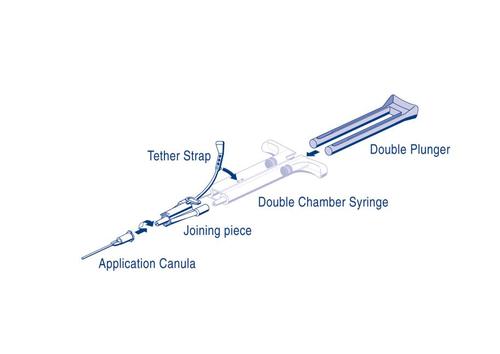
- Expel all air from the syringe before connecting any application device.
- Align the joining element and attach it to the side of the syringe with the tab hole.
- Connect the nozzles of the ready-to-use double-chamber syringe to the joining element, making sure they are securely attached. o Secure the joining element by attaching the tab to the ready-to-use double-chamber syringe. o If the tab tears, use the replacement joining element provided in the kit. o If a replacement piece is not available, the system can still be used if care is taken to ensure that the connection is secure and leak-proof. o DO NOT expel any remaining air inside the joining element.
- • Insert an application cannula into the joining element. o DO NOT expel any remaining air inside the joining element and inside the application cannula until you start the actual application as this may clog the application cannula.
Administration
Before applying ARTISS, the wound surface must be dried using standard techniques
(e.g. intermittent application of compresses, swabs, use of suction devices). Do not use air or pressurized gas to dry the site.
- Apply the mixed protein-thrombin sealant solution to the receiving surface or the surfaces to be glued by slowly pressing on the back of the common plunger.
- In surgical procedures requiring the use of minimal volumes of fibrin-based sealant, it is recommended to expel and discard the first drops of product.
- After applying ARTISS, wait at least 3 minutes to obtain sufficient polymerization
Note:
If the application of the fibrin-based sealant components is interrupted, blockages may occur in the application cannula. In this case, replace the application cannula with a new one immediately before resuming application. If the openings
of the joining element are blocked, use the joining element provided in the
package.
Application is also possible with other accessories provided by BAXTER that are
particularly suitable, e.g. application in large or difficult-to-access areas. When
using these application devices, strictly follow the instructions for use of the
devices.
For further instructions regarding preparation, please refer to the responsible nurse/a
or doctor.
Spray application
The pressure regulator must be used according to the manufacturer's instructions.
When applying ARTISS using a spray device, make sure to use the pressure and
distance from the tissue within the ranges recommended by the manufacturer as indicated below:
When spraying ARTISS, any changes in blood pressure, pulsations, oxygen saturation and end-tidal COmust be monitored, as air or gas embolism may occur (see
paragraphs 4.2 and 4.4 of the Summary of Product Characteristics)
When using accessory tips with this product, the instructions for use of the tips must be followed.
Disposal
Unused medicinal product and waste derived from such medicinal product must be disposed of in
accordance with local regulations.
| Recommended pressure, distance and devices for spray application of ARTISS | |||||
| Spray to use | Applicator tips to use | Pressure regulator to use | Recommended distance from tissue | o c Recommended spray pressure | |
| Open wound due to surgery on subcutaneous tissue | Tisseel/Artiss Spray Set | n.a. | EasySpray | 10-15 cm r | a m 1.5-2.0 bar (21.5-28.5 psi) |
| Package of 10 of Tisseel/Artiss Spray Set | n.a. | EasySpray | |||
ARTISS
Tissue adhesive solution
Frozen
Human fibrinogen, Human thrombin, Aprotinin, Calcium chloride Dihydrate
Read this leaflet carefully before using this medicine because it contains
important information for you.
Keep this leaflet. You may need to read it again.
If you have any questions, ask your doctor or pharmacist.
If any side effects occur, including those not listed in this
leaflet, tell your doctor or pharmacist. See section 4.
Contents of this leaflet
- 1. What ARTISS is and what it is used for
- 2. What you need to know before using ARTISS
- 3. How to use ARTISS
- 4. Possible side effects
- 5. How to store ARTISS
- 6. Contents of the pack and other information
1. What is ARTISS and what is it used for
What is ARTISS
ARTISS is a two-component fibrin glue containing two of the proteins that allow
blood coagulation. These proteins are called fibrinogen and thrombin. When
these proteins are mixed during application, they form a clot at the point where the
surgeon applies them.
ARTISS is prepared in the form of two solutions (Sealing Protein Solution and Thrombin
Solution), which are mixed at the time of application.
What is ARTISS used for
ARTISS is a tissue adhesive.
ARTISS is used for the adhesion of soft tissues in plastic surgery, reconstructive surgery and
burn surgery. For example, ARTISS can be used to glue
skin grafts or skin flaps to burn wounds or to glue the skin to the underlying tissues
in plastic surgery.
ARTISS can also be used to glue artificial skin to wounds.
The clot produced by ARTISS is very similar to that of natural blood. This means that
it will dissolve naturally without leaving any residue. However, aprotinin (a
protein that delays the degradation of a clot) is added to increase the duration of the clot and
prevent its premature degradation.
2. What you need to know before using ARTISS
Do not use ARTISS:
- if you are allergic to any of the active ingredients or any of the other ingredients of this medicine (listed in section 6)
- ARTISS must not be used in the presence of massive or profuse bleeding.
- ARTISS is not indicated to replace skin sutures used to close surgical wounds.
- ARTISS MUST NOT be injected into blood vessels (veins or arteries) or into tissues. Because ARTISS forms a clot at the application site, injection of ARTISS may cause serious reactions (for example, vascular occlusion). ARTISS must be applied exclusively to the surface of tissues in order to obtain a thin layer at the point where it is needed.
- Do not be treated with ARTISS if you are allergic (hypersensitive) to the active ingredients, bovine proteins, or any of the other ingredients (see section 6) of ARTISS. It may cause serious allergic reactions. Tell your doctor or surgeon if you know you are allergic to aprotinin or any bovine protein.
- The spray application of ARTISS must not be used in endoscopic procedures. For laparoscopy (minimally invasive surgery), see the section “Warnings and precautions”.
Warnings and precautions
- Consult your doctor, pharmacist or nurse before using ARTISS.
- Cases of potentially lethal/fatal air embolism or gas embolism (entry of air into the bloodstream, which can be serious or
life-threatening) have occurred with the use of spray devices that use pressure regulators for the administration of fibrin sealants. This event appears
to be related to the use of the spray device at pressures higher than those
recommended and/or too close to the tissue surface. The risk appears to be
higher when fibrin sealants are nebulized with air rather than with
CO, therefore cannot be ruled out with ARTISS.
- When applying ARTISS using a spray device, the pressure andspray distance must be within the range recommended by thespray manufacturer. ARTISS must be administered strictly followingthe instructions provided and only with the devices recommended for this product.
- When spraying ARTISS, any changes in blood pressure, pulse, oxygen saturation and end-tidal COmust be monitored, as gas embolism may occur.
- ARTISS must not be used with Easy Spray / Spray Set systems in areas of the body closed for serious safety reasons.
- ARTISS is not recommended for laparoscopic surgery (minimally invasive surgery).
- ARTISS must only be applied with CE-marked application devices.
- If you are using accessory tips with this product, follow the instructions for use of the tips.
- If you have been previously treated with ARTISS or aprotinin, it is possible that your body has become sensitized to it. You may be allergic to this product, even if you did not have any reaction to the first application. If you think you have been treated with one or both of these products during a previous operation, you must inform your doctor.
- If any symptoms of an allergic reaction occur, the doctor will immediately stop using ARTISS and adopt appropriate treatment.
- ARTISS is not indicated to stop bleeding and to seal in situations where rapid coagulation of the sealant is required. Especially in cardiothoracic procedures where sealing of surgical connections between blood vessels is planned, ARTISS must not be used.
- ARTISS is not indicated for use in neurosurgery and as a support for gastrointestinal or vascular anastomoses as there is no data to support these indications.
- Before administering ARTISS, the body parts external to the product application area must be adequately protected/covered to prevent unwanted tissue adhesion.
- ARTISS is applied in such a way as to obtain a thin layer. Excessive clot thickness may negatively interfere with the effectiveness of the product and the wound healing process.
- The doctor will not use preparations containing oxycellulose as a support material as they may reduce the effectiveness of ARTISS.
When medicines are produced with human blood or plasma, certain
measures are taken to prevent the transmission of infections to patients. These include:
- careful selection of blood and plasma donors, to ensure the exclusion of those who are at risk of carrying infections,
- testing of each donation and plasma pool for signs of viruses/infections,
- inclusion of blood or plasma processing steps that can inactivate or remove viruses.
However, when medicines prepared from human blood or plasma
are administered, the possibility of transmitting infections cannot be completely excluded. This
also applies to unknown or emerging viruses or other types of infection.
The measures taken are considered effective for enveloped viruses, such as the human
immunodeficiency virus (HIV), hepatitis B virus (HBV) and hepatitis C virus (HCV),
and for the non-enveloped hepatitis A virus (HAV).
The measures taken may be of limited value for non-enveloped viruses, such as the
parvovirus B19. Parvovirus B19 infection can be severe for pregnant women
(fetal infection), and for individuals with a weakened immune system or with some type of
anemia (e.g. sickle cell anemia or hemolytic anemia).
It is strongly recommended that, whenever you receive an ARTISS application, the name and batch number of the product are recorded to track the batches used.
Other medicines and ARTISS
Tell your doctor or pharmacist if you are taking, have recently taken or might
take any other medicines.
ARTISS can be used if you are taking other medicinal products. There are no known interactions
between ARTISS and other medicinal products.
As with comparable products or thrombin solutions, the product may be destroyed by
contact with solutions containing alcohol, iodine or heavy metals (e.g. antiseptic solutions).
Care should be taken to remove such substances as much as possible before applying the
product.
ARTISS with food and drink
Ask your doctor for advice. They will decide whether you are allowed to eat or drink
before applying ARTISS.
Pregnancy and breastfeeding
If you are pregnant or breastfeeding, if you suspect you are pregnant or are
planning a pregnancy, ask your doctor for advice before taking this medicine.
The doctor will decide whether you can use ARTISS during pregnancy or breastfeeding.
Driving and operating machinery
ARTISS does not impair your ability to drive or operate other machinery.
ARTISS contains Polysorbate 80
Polysorbate 80 may cause skin allergies (e.g. rash, itching).
3. How to use ARTISS
- ARTISS is applied exclusively during a surgical operation. The use of ARTISS is limited to experienced surgeons, specialized in the use of ARTISS.
- The amount of ARTISS used depends on several factors, such as the type of surgical intervention, the area of tissue surface to be treated during the operation, and the method of ARTISS application. The surgeon will decide the appropriate dosage.
- During the operation, the surgeon will apply ARTISS to the surface of the target tissue using the dedicated application device provided. This device ensures that the same amount of both fibrin glue components is applied simultaneously. This is important for an optimal effect of ARTISS.
- Before applying ARTISS, the wound surface must be dried using standard techniques (e.g., intermittent application of gauze, swabs, use of suction devices).
- ARTISS must only be sprayed onto application areas that are visible.
- It is recommended that the initial amount of product to be applied covers the entire area intended for treatment. When applying ARTISS using a spray device, be sure to use thepressure and distance from the tissue within the ranges recommended by the manufactureras indicated below:
| m Pressure, distance and recommended devices for spray application of ARTISS | |||||
| Spray to use | Applicator tips to use | Pressure regulator to use | r Distance from tissue to recommended | Spray pressure recommended | |
| Open wound due to surgery on subcutaneous tissue | Tisseel/Artiss Spray Set | n.a. | EasySpray | F 10-15 cm l | 1.5-2.0 bar (21.5-28.5 psi) |
| Package of 10 of Tisseel/Artiss Spray Set | n.a. | EasySpray | |||
When spraying ARTISS, any changes in blood pressure, pulse, oxygen saturation and end-tidal COconcentration must be monitored, as air embolism or gas embolism may occur (seesection 2).
If you use more ARTISS than you should
ARTISS is applied only during a surgical operation and it is the surgeon who applies it and
determines the dosage of ARTISS to be applied.
If you have any doubts about the use of this product, ask your doctor or pharmacist for advice.
4. Possible side effects
Like all medicines, this medicine can cause side effects, although not everyone will experience them.
The following table explains the meaning of the frequencies reported in the list provided below:
- There is a small possibility of an allergic reaction to one of the components of ARTISS (see section 6). This is more likely if you have already been treated with ARTISS or aprotinin during a previous surgery. Allergic reactions can be serious and it is very important to discuss this possibility in detail with your doctor.
- Allergic reactions of the anaphylactic or anaphylactoid type may occur. The frequency with which this may occur is unknown. Early symptoms of allergic reactions may include: redness, drop in blood pressure, increase or decrease in pulse rate, nausea (feeling unwell), hives, itching, difficulty breathing.
- The surgical team will be aware of the risk of this type of reaction. If any symptoms are detected, the application of ARTISS will be stopped immediately. Severe symptoms may require emergency treatment. The frequency of allergic reactions is unknown.
- If ARTISS is injected into soft tissues, it may cause local tissue damage. The frequency is unknown.
- If ARTISS is injected into blood vessels (veins or arteries) it may cause the formation of blood clots (thrombosis). The frequency is unknown.
- Because ARTISS is made from plasma obtained from blood donations, the risk of infections cannot be completely excluded. The manufacturer takes numerous measures to reduce this risk (see section 2).
- Air embolism or gas embolism potentially lethal/fatal (air entering the bloodstream which can be severe or life-threatening) has occurred with the use of spray devices that utilize pressure regulators to deliver fibrin-based sealants. This appears to be related to the use of the spray device at pressures higher than those recommended and/or in proximity to the tissue surface.
Adverse reactions reported from clinical studies of ARTISS and from post-
marketing experience with Baxter fibrin sealants are summarized below. The known frequencies
of these adverse reactions are based on a controlled clinical study conducted on 138
patients, in which skin grafts were fixed to excised burn wounds using ARTISS.
None of the events observed during clinical trials were classified as serious.
| Table 1 Adverse Reactions | |
| Adverse Reaction | Frequency |
| Epidermal cyst | Uncommon |
| Pruritus | Common |
| Skin graft rejection | Common |
| Gas bubbles in the system | Not known |
The following adverse reactions have been reported for other fibrin sealants, whose frequencies cannot
be provided: allergy, severe allergic reaction, slowed heartbeat, accelerated heartbeat, low blood
pressure, hematoma, shortness of breath, feeling unwell, hives, redness, difficulty healing, swelling, fever and
accumulation of lymph and other clear body fluids under the skin, near the surgical
site.
Reporting of side effects
If you experience any side effects, including those not listed in this leaflet, please
tell your doctor or pharmacist or nurse. You can also report side effects
directly through the national reporting system at:
https://www.aifa.gov.it/content/segnalazioni-reazioni-avverse .
By reporting side effects you can help provide more information on the
safety of this medicine.
5. How to store ARTISS
- Keep this medicine out of the sight and reach of children.
- Do not use this medicine after the expiry date which is stated on the label after “Exp.”.
- Store and transport in a freezer (at a temperature -20°C) without interruption until preparation for use.
- Keep the syringe in the original packaging to protect the medicine from light.
Storage after thawing:
Unopened packs, thawed at room temperature, can be stored
for a maximum of 14 days at controlled room temperature (not exceeding +25°C).
After thawing, the solutions must not be refrozen or refrigerated!
| vascular (air embolism)* |
Do not dispose of any medicine in wastewater or household waste. Ask your
pharmacist how to dispose of medicines you no longer use. This will help protect
the environment.
6. Contents of the pack and other information
What ARTISS contains
ARTISS contains two components:
Component 1 = Sealant protein solution
The active substances contained in 1 ml of Sealant protein solution are:
Human Fibrinogen, 91 mg/ml produced from the plasma of human donors;
Synthetic Aprotinin 3000 KIU/ml.
The excipients are Human Albumin, L-histidine, Niacinamide, Polysorbate 80, Sodium citrate
dihydrate and Water for injections;
Component 2 = Thrombin solution
The active substances contained in 1 ml of Thrombin solution are:
Human Thrombin, 4 IU/ml produced from the plasma of human donors;
Calcium Chloride Dihydrate, 40 mol/ml.
The excipients are Human Albumin, Sodium Chloride and Water for injections.
| t I After mixing | 1 ml | 2 ml | 4 ml | 10 ml |
| Component 1: Sealant protein a solution i Human Fibrinogen (as a coagulable z protein) n Aprotinin (synthetic) | 45.5 mg 1500 KIU | 91 mg 3000 KIU | 182 mg 6000 KIU | 455 mg 15000 KIU |
| e Component 2: Thrombin solution g A Human Thrombin Calcium Chloride Dihydrate | 2 IU 20 mol | 4 IU 40 mol | 8 IU 80 mol | 20 IU 200 mol |

Nie jesteś pewien, czy ten lek jest odpowiedni dla ciebie?
Omów swoje objawy i leczenie z lekarzem online.
ARTISS contains Human Factor XIII co-purified with Human Fibrinogen in a
range of 0.6 – 5 IU/ml.
Description of the appearance of ARTISS and contents of the pack
Tissue adhesive solution
Frozen tissue adhesive solution (1 ml, 2 ml or 5 ml of Sealing Protein Solution
and 1 ml, 2 ml or 5 ml of Thrombin Solution in a single-use, dual-chamber syringe, in a
pack).
Pack size of 1.
Contents of the pack with the PRIMA syringe:
1 ml, 2 ml or 5 ml of sealing protein solution and 1 ml, 2 ml or 5 ml of thrombin solution
in a pre-filled, single-use, dual-chamber syringe (polypropylene) closed with a protective
cap packaged in two wrappers and a set of instruments with 2 connecting elements and 4
application cannulae.
The solution is colourless or light yellow.
Not all pack sizes may be marketed.
Marketing Authorisation Holder and Manufacturer
Marketing Authorisation Holder: Baxter S.p.A. –Via del Serafico, 89 – 00142 Rome
Manufacturer:
Baxter AG
Industriestraße 67
A-1221 Vienna
Austria
This medicinal product is authorised in the Member States of the European Economic Area
with the following denominations:
ARTISSin the following countries: Austria, Belgium, Czech Republic, Germany, Greece, Spain,
Finland, France, Ireland, Italy, Luxembourg, Netherlands, Norway, Poland, Portugal, Great
Britain
Artissin Denmark, Iceland, Sweden
------------------------------------------------------------------------------------------------------------
The following information is intended exclusively for physicians or healthcare
professionals:
Fertility, pregnancy and lactation
Clinical studies to demonstrate the safety of fibrin sealants/haemostatics for use during
pregnancy or breastfeeding have not been conducted. Furthermore, animal studies have not
been performed.
Therefore, the product should only be administered to pregnant and breastfeeding women if
absolutely necessary.
The effects of ARTISS on fertility have not been established.
Dosage and method of administration
ARTISS is intended for hospital use only. The use of ARTISS is limited to experienced
surgeons, specialised in the use of ARTISS.
Dosage
The amount of ARTISS to be applied and the frequency of application must always be
determined based on the actual clinical needs of the patient.
The dose to be applied depends on several variables such as, but not limited to, the type of
surgical intervention, the extent of the area to be treated, the method of application and the
number of applications.
The application of the product must always be decided on a case-by-case basis by the treating
physician.
In clinical trials, the range of individual doses was generally between 0.2 and
12 ml .For some procedures (e.g. repair of extensive burn areas), larger volumes may be
required.
The initial amount of product to be applied to a given anatomical site or target area must be
sufficient to cover the entire area intended for
treatment. If necessary, the application can be repeated on each small area not
previously treated. However, avoid re-applying ARTISS to pre-existing polymerised ARTISS
as ARTISS will not adhere to a polymerised layer.
It is recommended that the initial amount of product to be applied covers the entire area intended
for treatment.
As a guideline for tissue bonding, 1 ARTISS 2 ml pack (i.e. 1 ml of
Sealing Protein Solution plus 1 ml of Thrombin Solution) will be sufficient for an area
at least 10 cm .
Skin grafts must be fixed to the wound bed immediately after application
of ARTISS. The surgeon has up to 60 seconds to manipulate and position
the graft before polymerisation. After the skin flap or skin graft has been
positioned, hold it in the desired position with gentle compression for at least 3
minutes, to ensure that ARTISS adheres correctly and that the skin flap or
skin graft adheres firmly to the underlying tissue.
The amount of ARTISS required depends on the size of the surface that must be
covered. Approximately the surfaces covered by each ARTISS pack
using spray application are:
| Approximate area requiring tissue adhesion | a Required ARTISS pack |
| n 100 cm2 to 200 cm2 i 500 cm2 | 2 ml 4 ml 10 ml |
To avoid the formation of excessive granulation tissue and ensure gradual
absorption of the solidified fibrin glue, apply only a thin layer of the mixed solution of
coagulable proteins and thrombin.
ARTISS has not been administered to patients over 65 years of age in clinical studies.
Paediatric population
The currently available data are described in section 5.1 of the Summary of
Product Characteristics, but no recommendations can be made regarding a
dosage.
Method of administration
For topical (epilesional) use. Do not inject.
For subcutaneous use only. ARTISS is not recommended for laparoscopic surgery.
To ensure optimal safety of ARTISS use, it must be nebulised using a
pressure regulating device that delivers a maximum pressure not exceeding 2.0 bar
(28.5 psi).
Before applying ARTISS, the wound surface must be dried using standard techniques
(e.g. intermittent application of gauze, swabs, use of suction devices). Do not use air or
compressed gas to dry the area.
ARTISS must only be sprayed onto application areas that are visible.
ARTISS must be reconstituted and administered according to the instructions given and only with
the devices recommended for this product.
For spray application, see the Administration section below.
Before administering ARTISS, ensure that body parts external to the application area are
adequately protected/covered to prevent adhesion of
tissue to unwanted sites.
Special precautions for disposal and handling (final container:
PRIMA syringe)
General precautions
- Before administering ARTISS, cover all parts of the body outside the area to be treated in order to prevent tissue adhesion to unwanted sites.
- To prevent ARTISS from adhering to gloves and instruments, moisten them with saline solution before contact.
- As a guideline for tissue bonding, 1 ARTISS 2 ml pack (i.e. 1 ml of Sealing Protein Solution plus 1 ml of Thrombin Solution) will be sufficient for an area at least 10 cm .
- The required dose depends on the size of the surface to be covered.
- DO NOT apply the two components of ARTISS separately. Both components must be applied together.
- DO NOT expose ARTISS to temperatures above 37 ° C. DO NOT use a microwave oven.
- DO NOT thaw the product by holding it in your hands.
- DO NOT use ARTISS until it is completely thawed and heated to 33 ° C - 37 ° C.
- Remove the protective cap of the syringe only after thawing and heating are complete. To facilitate removal of the cap from the syringe, shake the cap back and forth, then pull the protective cap off the syringe.
- Expel all air from the syringe, then connect the connecting element and the application cannula.
Instructions for Handling and product preparation
The inner wrapper and its contents are sterile, unless the integrity of the outer packaging
is compromised. Using sterile technique, transfer the sterile inner wrapper and its
contents to the sterile field.
The ready-to-use syringe can be thawed AND heated using one of the following
methods:
- 1. Rapid thawing/heating (with sterile water bath) –Recommended method
- 2. Thawing / heating with a non-sterile water bath
- 3. Thawing / heating in an incubator
- 4. The ready-to-use syringe can also be thawed and kept at room temperature (not exceeding 25°C) for a maximum of 14 days. Heating is required before use.
- 1) Rapid thawing/heating (with sterile water bath) – Recommended method
It is recommended to thaw and heat the two components of the sealant using a
sterile water bath at a temperature of 33 - 37 ° C.
- The water bath must not exceed a temperature of 37 ° C. To monitor the specified temperature range, check the water temperature using a thermometer and change the water if necessary.
- When using a sterile water bath to thaw and heat, remove the pre-filled syringe from the wrappers before placing it in the sterile water bath.
Instructions:
Bring the inner wrapper into the sterile area, remove the ready-to-use syringe
from the inner wrapper and place it directly into the sterile water bath. Ensure that the
contents of the ready-to-use syringe are completely immersed in the water.
Table 1: Minimum thawing and heating times with a sterile water bath
| Pack size | Minimum thawing / heating times 33°C – 37°C, Sterile water bath, Product without wrappers |
| 2 ml | 5 minutes |
| 4 ml | 5 minutes |
| 10 ml | 10 minutes |
- 2) Thawing / heating with a non-sterile water bath
Instructions:
Leave the ready-to-use syringe inside both wrappers and place it in a water bath outside
the sterile area for the required time (see Table 2).
Ensure that the wrappers remain immersed in the water throughout the thawing time.
After thawing, remove the wrappers from the water bath, dry the
outer wrapper and bring the inner wrapper with the ready-to-use syringe into the sterile area.
Table 2: Minimum thawing and heating times with a non-sterile water bath
| Pack size | I Minimum thawing / heating times at 33°C – 37°C, Non-sterile water bath, Product in wrappers |
| 2 ml | i 15 minutes |
| 4 ml | z 20 minutes |
| 10 ml | 35 minutes |
- 3) Thawing / heating in an incubator
Instructions:
Leave the ready-to-use syringe inside both wrappers and place it in an incubator outside
the sterile area for the appropriate period of time (see Table
3). After thawing / heating, remove the wrappers from the incubator,
remove the outer wrapper and bring the inner wrapper with the ready-to-use syringe
into the sterile area.
Table 3: Minimum thawing and heating times in an incubator
| Pack size | Minimum thawing / heating times 33°C – 37°C, Incubator, Product in wrappers |
| 2 ml | 40 minutes |
| 4 ml | a 50 minutes |
| 10 ml | F 90 minutes |
- 4) Thawing at room temperature (not exceeding 25°C) BEFOREheating:
Instructions:
Leave the ready-to-use syringe inside both wrappers and thaw it at
room temperature outside the sterile area for the appropriate period of time (see the
Table 4). Once thawed, to heat the product for use, heat it in the outer
wrapper in an incubator. After thawing at room temperature, the maximum storage time of the product (in both wrappers) at room temperature is 14 days.
Table 4: Minimum thawing times at room temperature (= RT) outside the sterile area and additional heating in an incubator from 33°C to 37°C.
| n Pack size and g A | a Minimum thawing times of the product at room temperature (not exceeding 25°C) followed by additional heating, before use, in an incubator at 33°C to 37°C Product in wrappers |
| Thawing at room Heating in incubator temperature (not exceeding (33-37°C) 25°C) |
Stability after thawing
After thawing and warming(at temperatures between 33°C and 37°C, methods
1, 2 and 3), the chemical and physical stability of the product has been demonstrated for 4 hours between 33°C and 37°C.
For the product thawedat room temperature in the unopened packaging (method 4), the
chemical and physical stability of the product has been demonstrated for 14 days at temperatures not
exceeding 25°C. Warm to temperatures between 33°C and 37°C immediately before use.
From a microbiological point of view, unless the opening / thawing method
prevents the risk of microbial contamination, the product must be used immediately
after being warmed from 33°C to 37°C.
If not used immediately, the storage times and conditions during use are
the responsibility of the user.
Do not refreeze or refrigerate once thawing has begun.
Handling after thawing / before application
To achieve optimal mixing of the two solutions and optimal solidification of the
fibrin-based sealant, keep the two components of the sealant at 33°C – 37°C until
application.
The proteins of the sealant and the thrombin solutions must be clear or slightly
opalescent. Do not use solutions that are cloudy or contain deposits. Before use, visually check
that the thawed product does not contain particles, discoloration or other
changes in its appearance. If any of the above conditions occur, discard the
solutions.
The thawed sealed protein solution must be liquid but slightly viscous. If the
solution has the consistency of a solidified gel, it should be assumed that it has denatured
| 2 ml | o 80 minutes +11 minutes |
| 4 ml | c 90 minutes +13 minutes |
| 10 ml | a 160 minutes +25 minutes |
(probably due to a break in the cold chain or
overheating during warming). In this case, DO NOT use ARTISS under any
circumstances
- Remove the syringe from the packaging immediately before use.
- Use ARTISS only when it is fully thawed and warmed (liquid consistency).
- Remove the protective cap from the syringe immediately before application. For the PRIMA syringe: to facilitate removal of the cap from the syringe, shake the cap back and forth, then pull the protective cap off the syringe.
Administration without spray with the PRIMA syringe:
For application, connect the ready-to-use dual-chamber syringe with the sealant protein solution and the thrombin solution to a junction element and an application cannula - both are supplied in the set with the application devices. The common plunger of the ready-to-use dual-chamber syringe ensures that equal volumes of the two
components of the sealant are fed through the junction element into the application cannula where they are mixed and then applied.
Instructions for use of the PRIMA syringe:
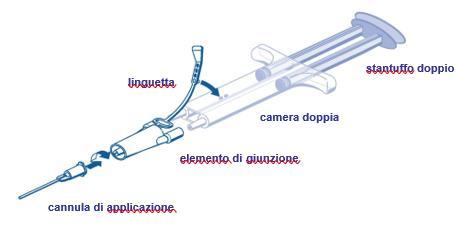
- Expel all air from the syringe before connecting any application device.
- Align the junction element and attach it to the side of the syringe with the tab hole.
- Connect the nozzles of the ready-to-use dual-chamber syringe to the junction element, making sure they are securely attached. o Secure the junction element by attaching the tab to the dual-chamber syringe. o If the tab tears, use the replacement junction element provided in the kit. o If a replacement piece is not available, the system can still be used if care is taken to ensure that the connection is secure and leak-proof. o DO NOT expel any remaining air inside the junction element.
- Insert an application cannula into the junction element. o DO NOT expel any remaining air inside the junction element and inside the application cannula until you start the actual application as this may obstruct the application cannula.
Administration
Before applying ARTISS, the wound surface must be dried using standard techniques
(e.g. intermittent application of compresses, swabs, use of suction devices). Do not use air or pressurized gas to dry the site.
- Apply the mixed protein-thrombin sealant solution to the receiving surface or the surfaces of the parts to be glued by slowly pressing on the back of the common plunger.
- In surgical procedures that require the use of minimal volumes of fibrin-based sealant, it is recommended to expel and discard the first drops of product.
- After applying ARTISS, wait at least 3 minutes to achieve sufficient polymerization
Important note:
If the application of the fibrin-based sealant components is interrupted, blockages may occur in the application cannula. In this case, replace the application cannula with a new one immediately before resuming application. If the openings
of the junction element are blocked, use the junction element provided in the
package.
Application is also possible with other accessories provided by BAXTER that are
particularly suitable, e.g. application to large or difficult-to-reach areas. When using
these application devices, strictly follow the instructions for use of the
devices.
For further instructions regarding preparation, please refer to the responsible nurse/or the doctor.
Spray application
The pressure regulator must be used according to the manufacturer's instructions.
When applying ARTISS using a spray device, make sure to use the pressure and
distance from the tissue within the ranges recommended by the manufacturer as indicated below:
| Recommended pressure, distance and devices for spray application of ARTISS | |||||
| Spray to use | a Tips n applicators to use | Pressure regulator to use | Distance recommended from target tissue | Spray pressure recommended | |
| Open wound due to surgery on subcutaneou s tissue | Tisseel / Artiss Spray Set | a i n.a. l | EasySpray |
|
|
| Tisseel / Artiss Spray t Set 10 pack | a n.a. | EasySpray | |||
When spraying ARTISS, any changes in blood pressure, pulse, oxygen saturation and CO concentration must be
monitored, as air or gas embolism may occur (see
sections 4.2 and 4.4 of the Summary of Product Characteristics).
When using accessory tips with this product, the instructions for use of the tips must be followed.
Disposal
Unused medicine and waste derived from such medicine must be disposed of in
accordance with local regulations

Zacząłeś przyjmować lek i masz pytania?
Omów swoje objawy i leczenie z lekarzem online.
- Kraj rejestracji
- Postać farmaceutycznaTissue adhesive, 1 ML
- Kod ATCB02BC30
- Substancja czynna
- Wymaga receptyTak
- Producent
- Te treści mają charakter wyłącznie informacyjny i nie zastępują konsultacji lekarskiej.
- Zamienniki ARTISSPostać farmaceutyczna: Tissue adhesive, 9.5 CM X 4.8 CMSubstancja czynna: combinationsProducent: CORZA MEDICAL GMBHWymaga receptyPostać farmaceutyczna: Tissue adhesive, 2 MLSubstancja czynna: combinationsProducent: BAXTER S.P.A.Wymaga receptyPostać farmaceutyczna: Powder and solvent for injectable solution, 250 IUSubstancja czynna: coagulation factor VIIIProducent: TAKEDA MANUFACTURING AUSTRIA AGWymaga recepty
Odpowiedniki ARTISS w innych krajach
Leki z tą samą substancją czynną dostępne w innych krajach.
Odpowiednik ARTISS w Hiszpania
Odpowiednik ARTISS w Ukraina
Lekarze online w sprawie ARTISS
Omów stosowanie ARTISS, bezpieczeństwo i ocenę zasadności recepty zgodnie z obowiązującymi przepisami.









Uzyskaj receptę na ARTISS online
Wypełnij 2-minutowy formularz
Opisz swoje objawy, historię choroby i lek, o który prosisz.
Wybierz lekarza lub pozwól nam przydzielić
Wybierz specjalistę lub dopasujemy Cię do najbliższego dostępnego lekarza.
Lekarz analizuje Twój przypadek
Zazwyczaj w ciągu 30 minut. Może zadawać dodatkowe pytania przez czat.
Odbierz w dowolnej aptece
Recepta elektroniczna wysłana na Twój e-mail — ważna w całej Polsce.
Często zadawane pytania
ARTISS wymaga recepty w Włochy. Możesz skonsultować się z lekarzem online, aby sprawdzić, czy ten lek może być odpowiedni w Twojej sytuacji.
Substancją czynną w ARTISS jest combinations. Informacja ta pomaga rozpoznać leki o tym samym składzie, ale pod różnymi nazwami handlowymi.
ARTISS jest produkowany przez BAXTER S.P.A.. Nazwy handlowe i opakowania mogą się różnić w zależności od dystrybutora.
Lekarze, tacy jak Lekarze rodzinni, Psychiatrzy, Dermatolodzy, Kardiolodzy, Endokrynolodzy, Gastroenterolodzy, Pulmonolodzy, Nefrolodzy, Reumatolodzy, Hematolodzy, Zakaźnicy, Alergolodzy, Geriatrzy, Pediatrzy, Onkolodzy, mogą ocenić, czy stosowanie ARTISS jest odpowiednie w Twoim przypadku, w zależności od sytuacji klinicznej i lokalnych przepisów. Możesz umówić konsultację online, aby omówić objawy i możliwe dalsze kroki.
Polska posiada dobrze rozwiniętą infrastrukturę ochrony zdrowia w dużych miastach, takich jak Warszawa, Kraków, Wrocław i Gdańsk. Apteki są łatwo dostępne i działają zgodnie z obowiązującymi przepisami, zapewniając dostęp do leków na receptę.
Możesz kupić ARTISS w Warszawie, Krakowie, Wrocławiu lub Gdańsku w każdej aptece, posiadając ważną receptę.
Aby uzyskać receptę, możesz skorzystać z Oladoctor:
Inne leki zawierające tę samą substancję czynną (combinations) to m.in. TAKOSIL, TISSEEL, ADVATE. Mogą one różnić się nazwą handlową lub postacią, ale zawierają ten sam składnik terapeutyczny. Przed zmianą lub rozpoczęciem nowego leku skonsultuj się z lekarzem.
