



ALKINDI 0.5 MG Granulki w kapsułkach do otwarcia

Ocena recepty online
Lekarz przeanalizuje Twój przypadek i zdecyduje, czy wystawienie recepty jest medycznie uzasadnione.

Porozmawiaj z lekarzem o tym leku
Omów swoje objawy i opcje leczenia podczas szybkiej konsultacji online.



Jak stosować ALKINDI
Treść ulotki
Alkindi 0.5 mg granules in openable capsules, 1 mg granules in openable capsules, 2 mg granules in openable capsules, 5 mg granules in openable capsules
hydrocortisone
WarningAlkindi granules are
contained in a capsule that must be
opened before use. Discard the empty capsule
after use, keeping it out of reach of
children. DO NOT ingest the capsule – small
children may choke.

Read this leaflet carefully before administering this medicine as it contains
important information for you.
- Keep this leaflet. You may need to read it again.
- If you have any questions, ask your doctor or pharmacist.
- This medicine has been prescribed only for your child. Do not give it to other people, even if their symptoms are the same as those of your child for whom this medicine was prescribed, as it may be dangerous.
- If your child experiences any side effects, including those not listed in this leaflet, ask your doctor or pharmacist. See section 4.
Contents of this leaflet
- 1. What Alkindi is and what it is used for
- 2. What you need to know before administering Alkindi
- 3. How to administer Alkindi
- 4. Possible side effects
- 5. How to store Alkindi
- 6. Contents of the pack and other information
1. What is Alkindi and what is it used for
Alkindi contains the active ingredient hydrocortisone. Hydrocortisone belongs to a group of medicines
known as corticosteroids.
Hydrocortisone is a synthetic version of the natural hormone cortisol. Cortisol is produced by the
adrenal glands of the body. Alkindi is intended for use in children and adolescents from birth
up to 18 years of age when the body does not produce enough cortisol, because part of the adrenal
gland is not functioning (adrenal insufficiency, often caused by a hereditary condition defined as
congenital adrenal hyperplasia).
2. What you need to know before giving Alkindi
Do not give Alkindi:
- if the child is allergic to hydrocortisone or any of the other ingredients of this medicine (listed in section 6);
- if the child has difficulty swallowing food or is premature and cannot yet be fed orally.
Warnings and precautions
Consult your endocrinologist or pharmacist before giving Alkindi:
- if the child is unwell or has an infection. The endocrinologist will likely need to increase the dose of Alkindi temporarily; consult the endocrinologist if the child is unwell;
- if the child has an adrenal crisis. If the child vomits or is very unwell, they may need an injection of hydrocortisone. The endocrinologist will teach you how to do this in case of emergency;
- if the child needs to be vaccinated. Taking Alkindi should not interrupt the child's vaccination schedule. Inform the endocrinologist if the child needs to be vaccinated;
- if the child needs to undergo surgery. Inform the anesthesiologist that the child is taking Alkindi before surgery;
- if the child is fed through a nasogastric tube. Alkindi granules are not suitable for administration via nasogastric tube as they may cause blockage;
- in the event that the child switches to Alkindi from another hydrocortisone-based preparation. Differences between hydrocortisone-based preparations when switching to Alkindi may imply a risk for the child of receiving an incorrect dose of hydrocortisone in the first week after switching to Alkindi. This could entail a risk of adrenal crisis. The child needs to be carefully observed in the week after switching to Alkindi. The doctor will tell you when you can increase the dose of Alkindi in the presence of symptoms of adrenal crisis such as unusual fatigue, headache, high or low temperature, or vomiting. If this should happen, you should consult a doctor immediately.
Do not stop giving Alkindi without consulting the endocrinologist because
this could cause a rapid and serious illness in the child.
Since Alkindi replaces the normal hormone that the child is missing, side effects are less
likely, however:
- excessive intake of Alkindi may affect the child's growth. Therefore, the endocrinologist will adjust the dose according to the child's size and will carefully monitor their growth. Inform the endocrinologist of any concerns about the child's growth (see section 4);
- excessive intake of Alkindi may affect the child's bones; therefore, the endocrinologist will adjust the dose according to the child's size;
- some adult patients taking hydrocortisone become anxious, depressed or confused. It is not known if this occurs in children, but inform the endocrinologist if the child develops unusual behavior after starting Alkindi (see section 4);
- in some patients with allergies to other medicines, an allergy to hydrocortisone has been observed. Immediately inform the endocrinologist if the child presents any reaction such as swelling or difficulty breathing after administering Alkindi;
- contact the endocrinologist if the child has blurred vision or other visual disturbances.
Sometimes Alkindi granules may appear in the child's diaper or stool after
taking Alkindi. This happens because the central part of the granule is not absorbed in the intestine
after the medicine is released. This does not mean that the medicine is not effective and that you need to
give the child another dose.
Other medicines and Alkindi
Tell your doctor or pharmacist if the child is taking, has recently taken or might
take any other medicine.
Some medicines can affect the action of Alkindi and this may require the
endocrinologist to modify the dose for the child.
The endocrinologist may need to increase the dose of Alkindi for the child if they take some
medicines, including:
- medicines used to treat epilepsy - phenytoin, carbamazepine and oxcarbazepine;
- medicines used to treat infections (antibiotics) - rifampicin and rifabutin;
- medicines called barbiturates, which can be used to treat convulsions (including phenobarbital and primidone);
- medicines used to treat AIDS - efavirenz and nevirapine.
The endocrinologist may need to reduce the dose of Alkindi for the child if they take some medicines,
including:
- medicines used to treat fungal diseases - itraconazole, posaconazole and voriconazole;
- medicines used to treat infections (antibiotics) - erythromycin and clarithromycin;
- medicine used to treat human immunodeficiency virus (HIV) and AIDS - ritonavir.
Alkindi with food and drink
Some foods and drinks can affect the action of Alkindi and the doctor may need to reduce the
dose of Alkindi for the child. These foods and drinks include:
- grapefruit juice,
- licorice.
Pregnancy, breastfeeding and fertility
Hydrocortisone can be used during pregnancy and breastfeeding when the body does not produce
enough cortisol.
There are no data on any effects of Alkindi on fertility.
Driving and operating machinery
Alkindi does not affect a child's ability to perform actions requiring particular skill
(e.g. riding a bicycle) or operate machinery.
3. How to administer Alkindi
Use this medicine following the instructions of your doctor, nurse or pharmacist exactly. If you have any doubts, ask them.
The endocrinologist will decide the correct dose of Alkindi based on the child's weight or size (body surface area) and then adjust the dose of Alkindi during the child's growth. In case of illness, surgery and severe stress, the endocrinologist may recommend additional doses of Alkindi, also advising that the child receive another corticosteroid instead of or in addition to Alkindi.
How to administer the medicine
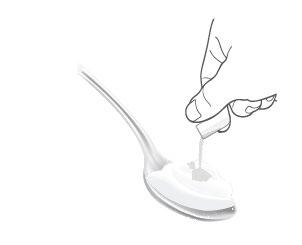
The granules must be placed in the mouth without being chewed. The capsule shell must not be swallowed, but should be opened carefully as follows:
How to open the Alkindi capsule and administer the granules
Hold the capsule so that the text appears on the top and tap it with your finger to allow the granules to settle at the bottom.
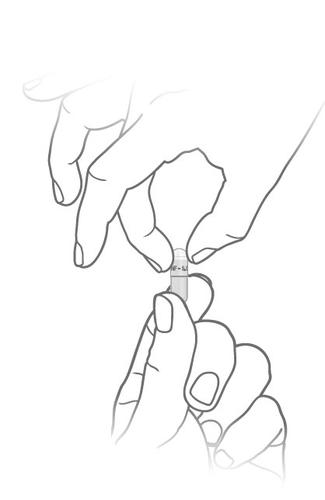
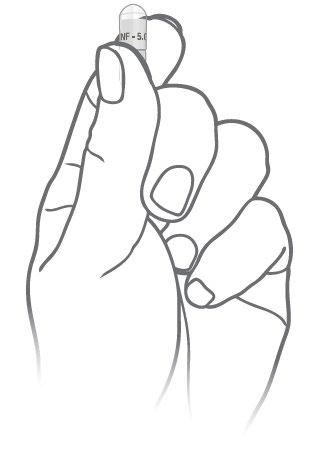
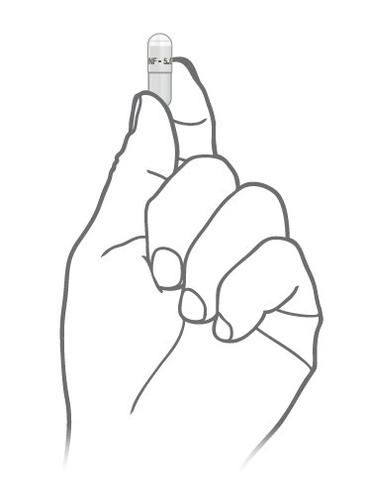
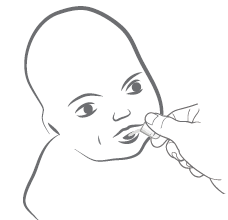
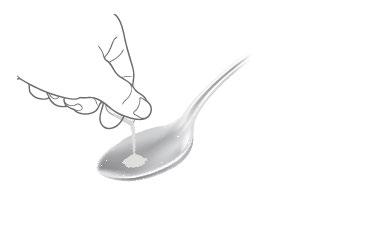
ORpour all the granules directly into a spoon and place them in the mouth.
DO NOTadd the granules to liquids before administration as this may result in a lower intake than the full dose and may also eliminate the masking of the granules’ taste and bring out the bitter flavour of hydrocortisone.
OR, for children who are able to take soft foods, distribute the granules in a spoon containing soft, cold or room temperature food (e.g. yogurt or fruit puree) and administer immediately.
WarningAlkindi granules are contained in a capsule that must be opened before use. Dispose of the empty capsule after use, keeping it out of the reach of children. DO NOT swallow the capsule – small children may choke.

If you administer more Alkindi than you should
If you administer more Alkindi than you should to the child, contact your endocrinologist or pharmacist as soon as possible for further advice.
If you forget to administer Alkindi or if the child has received an incomplete dose
If the child does not take a full dose of Alkindi, administer it as soon as you remember and administer the next dose at the usual time, even if this means taking two doses at the same time.
Contact your healthcare provider if the child regurgitates, vomits or spits out most of the granules in the administered dose, as it may be necessary to repeat the administration to avoid adrenal insufficiency.
If you stop taking Alkindi
Do not stop administering Alkindi without first consulting your endocrinologist.
Sudden discontinuation of the medicine may cause the child to become rapidly and seriously ill.
If the child feels unwell
Report to your endocrinologist or pharmacist if the child becomes ill, suffers severe stress, is injured or needs to undergo surgery, as in these circumstances, the endocrinologist may need to increase the dose of Alkindi (see paragraph 2).
If you have any further questions about the use of this medicine, ask your doctor or pharmacist.
4. Possible side effects
Like all medicines, this medicine can cause side effects, although not everyone will experience them.
The following side effects have been reported for medicines containing hydrocortisone used to
replace cortisol.
Frequency not known (cannot be estimated based on the available data):
- changes in behaviour, including:
- loss of contact with reality (psychosis) with sensations that are not real (hallucinations) and mental confusion (delirium);
- overexcitement and hyperactivity (mania);
- intense feeling of happiness and excitement (euphoria).
If the child experiences a drastic change in behaviour, contact the endocrinologist
(see section 2).
- Stomach pain (gastritis) or nausea.
If the child complains of any of these symptoms, contact the endocrinologist.
- Changes in blood potassium levels causing excessive alkalinity of tissues or body fluids (hypokalemic alkalosis).
The endocrinologist will monitor the child's potassium levels to check for any changes.
Long-term treatment with hydrocortisone may be associated with changes in bone development
and reduced growth. The endocrinologist will monitor the child's growth and bones (see
section 2).
Reporting of side effects
If the child experiences any side effect, including those not listed in this
leaflet, please inform your doctor or pharmacist. You can also report side effects directly
through the national reporting system detailed in Annex V. By reporting side effects
you can help to provide more information on the safety of this medicine.
5. How to store Alkindi
Keep this medicine out of the sight and reach of children.
Do not use this medicine after the expiry date which is stated on the bottle and the packaging after
“EXP.” The expiry date refers to the last day of that month.
Do not store at a temperature above 30°C and keep the medicine in the original bottle to
protect it from light.
Once opened, use the capsules within 60 days.
Do not dispose of any medicine in wastewater or household waste. Ask your pharmacist how to
dispose of medicines you no longer use. This will help protect the environment.
6. Package contents and other information
What Alkindi contains
- The active ingredient is hydrocortisone.
- Alkindi 0.5 mg granules in capsules to open: each capsule contains 0.5 mg of hydrocortisone
- Alkindi 1 mg granules in capsules to open: each capsule contains 1 mg of hydrocortisone
- Alkindi 2 mg granules in capsules to open: each capsule contains 2 mg of hydrocortisone
- Alkindi 5 mg granules in capsules to open: each capsule contains 5 mg of hydrocortisone
- The other ingredients are microcrystalline cellulose, hypromellose, magnesium stearate and ethylcellulose.
- The capsule is made of hypromellose.
- The printing ink on the 0.5 mg capsules contains shellac, propylene glycol, concentrated ammonia solution, potassium hydroxide and red iron oxide (E172).
- The printing ink on the capsule relating to the 1 mg dosage contains shellac, propylene glycol, concentrated ammonia solution and indigotine (E132).
- The printing ink on the capsule relating to the 2 mg dosage contains shellac, propylene glycol, concentrated ammonia solution, indigotine (E132), yellow iron oxide (E172), and titanium dioxide (E171).
- The printing ink on the capsule relating to the 5 mg dosage contains shellac, propylene glycol, concentrated ammonia solution, potassium hydroxide, titanium dioxide (E171), and black iron oxide (E172).
Description of the appearance of Alkindi and contents of the pack
White/off-white granules contained in a rigid, colorless and transparent capsule to open; the
dosage is printed on the capsule.
- Alkindi 0.5 mg granules in capsules to open: the inscription "INF-0.5" with red ink is printed on the capsule (approximately 25.3 mm long).
- Alkindi 1 mg granules in capsules to open: the inscription "INF-1.0" with blue ink is printed on the capsule (approximately 25.3 mm long).
- Alkindi 2 mg granules in capsules to open: the inscription "INF-2.0" with green ink is printed on the capsule (approximately 25.3 mm long).
- Alkindi 5 mg granules in capsules to open: the inscription "INF-5.0" with grey ink is printed on the capsule (approximately 25.3 mm long).
Alkindi is packaged in high-density polyethylene plastic bottles. Pack size:
1 bottle containing 50 capsules.
Marketing Authorisation Holder
Diurnal Europe B.V.
Van Heuven Goedhartlaan 935 A
1181LD Amstelveen
Netherlands
Tel. +31 (0)20 6615 072
[email protected]
Manufacturer
Delpharm Lille SAS
Parc d'Activités Roubaix-Est
22 rue de Toufflers CS 50070
Lys Lez Lannoy, 59 452
France
Wasdell Europe Limited
IDA Dundalk Science and Technology Park
Mullagharlin
Dundalk
Co. Louth, A91 DET0
Ireland
Other sources of information
More detailed information on this medicine is available on the website of the European
Medicines Agency: http://www.ema.europa.eu .

Nie jesteś pewien, czy ten lek jest odpowiedni dla ciebie?
Omów swoje objawy i leczenie z lekarzem online.

Zacząłeś przyjmować lek i masz pytania?
Omów swoje objawy i leczenie z lekarzem online.
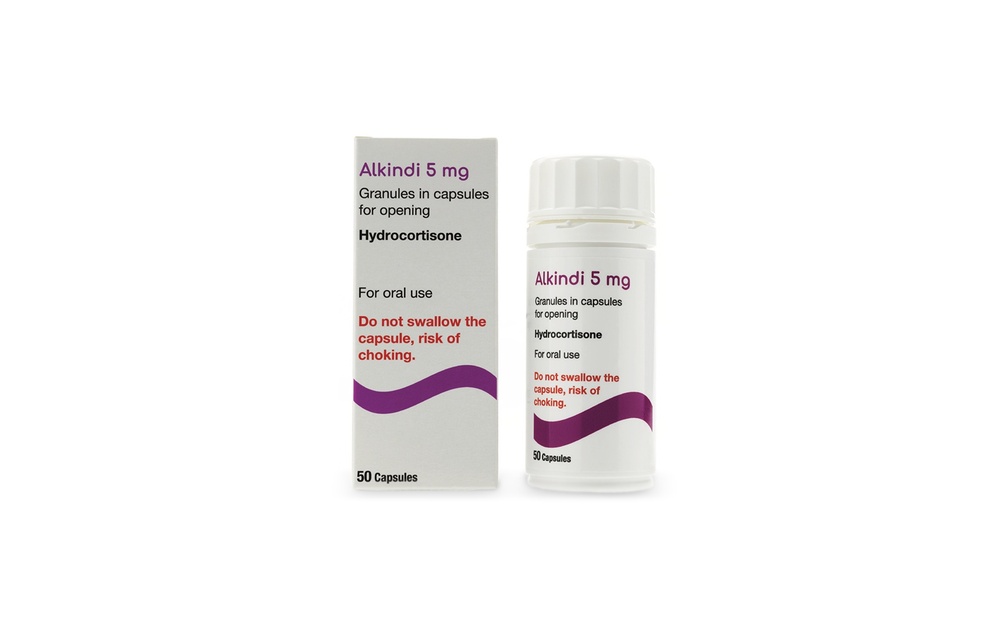
- Kraj rejestracji
- Postać farmaceutycznaCapsule granules for opening, 0.5 MG
- Kod ATCH02AB09
- Substancja czynna
- Wymaga receptyTak
- Producent
- Te treści mają charakter wyłącznie informacyjny i nie zastępują konsultacji lekarskiej.
- Zamienniki ALKINDIPostać farmaceutyczna: Modified-release hard capsule, 5 MGSubstancja czynna: hydrocortisoneProducent: NEUROCRINE NETHERLANDS B.V.Wymaga receptyPostać farmaceutyczna: Powder and solvent for injectable solution, 100 MG/2 MLSubstancja czynna: hydrocortisoneProducent: FIDIA FARMACEUTICI S.P.A.Wymaga receptyPostać farmaceutyczna: Modified-release tablet, 5MGSubstancja czynna: hydrocortisoneWymaga recepty
Odpowiedniki ALKINDI w innych krajach
Leki z tą samą substancją czynną dostępne w innych krajach.
Odpowiednik ALKINDI w Hiszpania
Odpowiednik ALKINDI w Polska
Odpowiednik ALKINDI w Ukraina
Lekarze online w sprawie ALKINDI
Omów stosowanie ALKINDI, bezpieczeństwo i ocenę zasadności recepty zgodnie z obowiązującymi przepisami.


Uzyskaj receptę na ALKINDI online
Wypełnij 2-minutowy formularz
Opisz swoje objawy, historię choroby i lek, o który prosisz.
Wybierz lekarza lub pozwól nam przydzielić
Wybierz specjalistę lub dopasujemy Cię do najbliższego dostępnego lekarza.
Lekarz analizuje Twój przypadek
Zazwyczaj w ciągu 30 minut. Może zadawać dodatkowe pytania przez czat.
Odbierz w dowolnej aptece
Recepta elektroniczna wysłana na Twój e-mail — ważna w całej Polsce.
Często zadawane pytania
ALKINDI wymaga recepty w Włochy. Możesz skonsultować się z lekarzem online, aby sprawdzić, czy ten lek może być odpowiedni w Twojej sytuacji.
Substancją czynną w ALKINDI jest hydrocortisone. Informacja ta pomaga rozpoznać leki o tym samym składzie, ale pod różnymi nazwami handlowymi.
ALKINDI jest produkowany przez NEUROCRINE NETHERLANDS B.V.. Nazwy handlowe i opakowania mogą się różnić w zależności od dystrybutora.
Lekarze, tacy jak Lekarze rodzinni, Psychiatrzy, Dermatolodzy, Kardiolodzy, Endokrynolodzy, Gastroenterolodzy, Pulmonolodzy, Nefrolodzy, Reumatolodzy, Hematolodzy, Zakaźnicy, Alergolodzy, Geriatrzy, Pediatrzy, Onkolodzy, mogą ocenić, czy stosowanie ALKINDI jest odpowiednie w Twoim przypadku, w zależności od sytuacji klinicznej i lokalnych przepisów. Możesz umówić konsultację online, aby omówić objawy i możliwe dalsze kroki.
Polska posiada dobrze rozwiniętą infrastrukturę ochrony zdrowia w dużych miastach, takich jak Warszawa, Kraków, Wrocław i Gdańsk. Apteki są łatwo dostępne i działają zgodnie z obowiązującymi przepisami, zapewniając dostęp do leków na receptę.
Możesz kupić ALKINDI w Warszawie, Krakowie, Wrocławiu lub Gdańsku w każdej aptece, posiadając ważną receptę.
Aby uzyskać receptę, możesz skorzystać z Oladoctor:
Inne leki zawierające tę samą substancję czynną (hydrocortisone) to m.in. EFMODY, FLEBOKORTID RIKTER, PLENADREN. Mogą one różnić się nazwą handlową lub postacią, ale zawierają ten sam składnik terapeutyczny. Przed zmianą lub rozpoczęciem nowego leku skonsultuj się z lekarzem.
