



ALGOLIDER 100 mg Granulki Do Sporządzania Zawiesiny Doustnej

Ocena recepty online
Lekarz przeanalizuje Twój przypadek i zdecyduje, czy wystawienie recepty jest medycznie uzasadnione.

Porozmawiaj z lekarzem o tym leku
Omów swoje objawy i opcje leczenia podczas szybkiej konsultacji online.



Jak stosować ALGOLIDER
Treść ulotki
ALGOLIDER 100 mg granules for oral suspension
Nimesulide
Generic medicine
Read this leaflet carefully before taking this medicine as it contains important
information for you.
- Keep this leaflet. You may need to read it again.
- If you have any questions, ask your doctor or pharmacist.
- This medicine has been prescribed for you only. Do not pass it on to others, even if they have the same symptoms as you, as it may be harmful.
- If you get any side effects, even those not listed in this leaflet, tell your doctor or pharmacist. See section 4.
Contents of this leaflet:
- 1. What ALGOLIDER is and what it is used for
- 2. What you need to know before you take ALGOLIDER
- 3. How to take ALGOLIDER
- 4. Possible side effects
- 5. How to store ALGOLIDER
- 6. Contents of the pack and other information
1. What is ALGOLIDER and what is it used for
ALGOLIDER contains the active ingredient nimesulide which is a non-steroidal anti-inflammatory drug
(“NSAID”), with analgesic properties. It is used for the treatment of acute pain and menstrual pain.
Before prescribing ALGOLIDER, the doctor will assess the potential benefits this medicine can
give you compared to the risk of developing side effects.
Contact your doctor if you do not feel better or if you feel worse.
2. What you need to know before taking ALGOLIDER
Do not take ALGOLIDER
- If you are allergic to nimesulide or any of the other ingredients of this medicine (listed in section 6).
- If you have had allergic reactions (e.g. shortness of breath, runny nose, blocked nose, nasal polyps, urticaria) after taking aspirin or other non-steroidal anti-inflammatory drugs;
- If you have had a reaction to nimesulide in the past that affected your liver;
- If you are taking other medicines known to have an effect on the liver, e.g. paracetamol or any other analgesic or treatment with non-steroidal anti-inflammatory drugs;
- If you are taking drugs or have developed a dependence on drugs or other substances;
- If you are a heavy habitual drinker (alcohol);
- If you have a liver disease or an increase in liver enzymes (liver);
- If you have, or have had in the past, a peptic ulcer (gastric or duodenal ulcer);
- If you have had bleeding in the stomach or intestine or a perforation
- If you have had a brain haemorrhage (stroke);
- If you have any other bleeding problems or blood coagulation defect;
- If you have heart problems (heart failure)
- If you have severe kidney failure (poorly functioning kidneys)
- If you have liver failure (poorly functioning liver);
- If you have a fever or flu (general aching sensation, malaise, chills or shivering or high temperature);
- If you are in the last trimester of pregnancy;
- If you are breastfeeding.
Do not give ALGOLIDER to a child under 12 years of age.
Warnings and precautions
Talk to your doctor or pharmacist before taking ALGOLIDER.
- If symptoms indicative of a liver disorder appear during treatment with nimesulide, you must stop taking nimesulide and immediately inform your doctor. These symptoms are loss of appetite, nausea, vomiting, abdominal pain, persistent fatigue, dark urine and abnormal liver function tests (see also section “Possible side effects”).
- If you have suffered from peptic ulcers, gastric or intestinal bleeding, ulcerative colitis or Crohn's disease, you should inform your doctor before taking ALGOLIDER; your conditions may worsen with treatment with ALGOLIDER.
- If fever and/or flu-like symptoms (general aching sensation, malaise, chills or shivering) appear during treatment with ALGOLIDER, you should stop taking the product and inform your doctor.
- If you suffer from heart or kidney disease, you should inform your doctor before taking ALGOLIDER; kidney function may worsen with treatment with ALGOLIDER.
- If you are elderly, your doctor may subject you to regular checks to ensure that ALGOLIDER does not cause problems with the stomach, kidneys, heart or liver.
- If you are taking any of the following medicines, which may increase the risk of ulceration and bleeding (see also section “Other medicines and ALGOLIDER”):
- Corticosteroids (medicines used for the treatment of inflammatory states)
- Anticoagulants, e.g. Warfarin or antiplatelet agents such as Aspirin (medicines that prevent blood clotting)
- Selective serotonin reuptake inhibitors (medicines used in the treatment of depression) Make sure your doctor or pharmacist knows that you are taking these medicines before taking ALGOLIDER
- If you develop a severe skin reaction that is potentially fatal (exfoliative dermatitis, Stevens-Johnson syndrome and toxic epidermal necrolysis) you should stop taking ALGOLIDER at the first appearance of rash, skin peeling, blisters and bleeding of lips, eyes, mouth, nose and genitals or any other symptom of an allergic reaction. Do not take ALGOLIDER or inform your doctor before taking ALGOLIDER if you have developed a fixed drug eruption (round or oval patches with redness and swelling of the skin, skin rash with blisters, urticaria and itching) in the past after taking nimesulide (see also section “Possible side effects”).
- If gastrointestinal symptoms such as stomach pain, gastric bleeding or black stools develop, stop treatment immediately and consult your doctor.
- If you do not notice any benefit, tell your doctor.
- If you plan to become pregnant, inform your doctor because ALGOLIDER may reduce fertility. Medicines like ALGOLIDER may be associated with an increased risk of heart attack (myocardial infarction) or stroke. Any risk is more likely with high doses and prolonged treatments. Do not exceed the recommended dose or duration of treatment. If you have heart problems, a history of stroke or think you may be at risk of these conditions (e.g. if you have high blood pressure, diabetes or high cholesterol or if you smoke), you should discuss your therapy with your doctor or pharmacist.
Children and adolescents
ALGOLIDER should not be given to children under 12 years of age.
Other medicines and ALGOLIDER.
Tell your doctor or pharmacist if you are taking, have recently taken or might take any
other medicine.
In particular if you are taking any of the following medicines, which may interact with ALGOLIDER, make
sure your doctor or pharmacist knows that you are taking these medicines before taking
ALGOLIDER:
- Other non-steroidal anti-inflammatory drugs (NSAIDs)
- Corticosteroids (used for the treatment of inflammatory states)
- Anticoagulants, e.g. warfarin or similar agents, antiplatelet drugs such as acetylsalicylic acid (medicines used to thin the blood)
- Selective serotonin reuptake inhibitors SSRIs (medicines used in the treatment of depression)
- Antihypertensives or diuretics (used for the control of blood pressure or heart disorders),
- Lithium, used for the treatment of depression and similar disorders
- Methotrexate (medicine used for the treatment of rheumatoid arthritis and cancer treatment)
- Cyclosporine (medicine used after a transplant or for the treatment of immune system disorders)
Pregnancy, breastfeeding and fertility
If you are pregnant, suspect you are pregnant or are planning to become pregnant, or if you are breastfeeding
ask your doctor or pharmacist for advice before taking this medicine.
Pregnancy
Do not take ALGOLIDER during the last trimester of pregnancy. It may cause problems for the baby and
delivery. It may cause problems with the kidneys and heart in the unborn baby. It may affect your and your
baby's tendency to bleed and cause a late or prolonged labour.
You should not take ALGOLIDER during the first 6 months of pregnancy unless absolutely
necessary and recommended by your doctor. If you need treatment during this period or while
planning a pregnancy, the lowest dose should be used for the shortest possible time. If taken
for more than a few days from the 20th week of pregnancy onwards, ALGOLIDER may cause kidney problems
to your unborn baby which may lead to low levels of amniotic fluid surrounding the baby
(oligohydramnios) or narrowing of a blood vessel (ductus arteriosus) in the baby's heart. If you need
treatment for more than a few days, your doctor may recommend additional monitoring.
If you are in the first or second trimester of pregnancy, do not take ALGOLIDER unless in cases considered by
the doctor strictly necessary.
Breastfeeding
Do not take ALGOLIDER while breastfeeding.
Fertility
If you are planning a pregnancy, inform your doctor as ALGOLIDER may decrease fertility.
Driving and using machines
If you experience dizziness or drowsiness after taking ALGOLIDER, you should not drive vehicles or use
machinery.
ALGOLIDER 100 mg granules for oral suspension contains sucrose.
If you have been diagnosed with an intolerance to certain sugars, contact your doctor before taking this
medicine.
3. How to take ALGOLIDER.
Take this medicine following exactly the instructions of your doctor or pharmacist. If you have any
doubts, consult your doctor or pharmacist.
The recommended dose is one sachet of 100 mg of granules for oral suspension, twice
a day after meals.
Take ALGOLIDER for the shortest possible period and for no more than 15 days.
If you take more ALGOLIDER than you should
In case of accidental intake/ingestion of an excessive dose of this medicine, immediately notify
your doctor or go to the Emergency Room of the nearest hospital. Bring all the remaining
medicine with you.
The symptoms of an overdose are as follows: drowsiness, lethargy, nausea, vomiting, stomach
problems (pain, gastric ulcer, gastrointestinal bleeding), high blood pressure,
kidney problems, difficulty breathing and coma.
If you forget to take ALGOLIDER
Do not take a double dose to make up for the missed dose.
If you have any doubts about the use of this medicine, consult your doctor or pharmacist.
4. Possible side effects
Like all medicines, this medicine can cause side effects, although not everyone will experience them.
If any of the following symptoms occur, stop taking the medicine and immediately inform your doctor as it may indicate a rare but serious side effect that requires urgent medical attention:
- stomach discomfort or pain, loss of appetite, nausea (feeling unwell), vomiting, gastric or intestinal bleeding, or black stools;
- skin reactions such as rashes or redness;
- wheezing or shortness of breath;
- yellowing of the skin or eyes (jaundice);
- unexpected change in the amount or color of urine;
- swelling of the face, feet or legs;
- persistent fatigue Side effects of a general nature of non-steroidal anti-inflammatory drugs(NSAIDs):Medicines, as well as ALGOLIDER, may be associated with a modest increase in the risk of heart attack (myocardial infarction) or stroke.
Common (may affect more than 1 in 100 patients):
- diarrhea;
- nausea;
- vomiting;
- increased values in blood tests / liver enzymes (liver function). Side effects that may occur with ALGOLIDER are:
Uncommon (may affect up to 1 in 100 patients):
- bleeding from the stomach or intestines;
- ulcers of the duodenum or stomach and perforated ulcers.
- shortness of breath (dyspnea);
- dizziness;
- increased blood pressure;
- constipation;
- presence of gas in the intestines (flatulence);
- itching;
- skin rashes;
- increased sweating;
- swelling (edema);
Rare (may affect up to 1 in 1,000 patients):
- lack of hemoglobin in the blood (anemia);
- decrease in white blood cells, increase in some white blood cells (eosinophils) in the blood;
- hypersensitivity reactions;
- changes in blood pressure;
- bleeding;
- pain during urination or urinary retention, blood in the urine;
- increased potassium in the blood;
- feeling of anxiety or nervousness, nightmares, blurred vision;
- increased heart rate;
- hot flashes;
- redness of the skin (erythema), skin inflammation (dermatitis);
- difficulty urinating, blood in the urine;
- malaise, fatigue.
Very rare (may affect up to 1 in 10,000 patients):
- reduction in the number of platelets in the blood, which causes bleeding under the skin or in other parts of the body, black stools due to bleeding, gastric or intestinal bleeding (thrombocytopenia), decrease in all blood cells (pancytopenia), purpura (diseases characterized by reddish skin spots), sudden allergic reaction potentially fatal;
- sudden allergic reaction potentially fatal (anaphylaxis);
- severe skin reactions (known as erythema multiforme, Stevens-Johnson syndrome, toxic epidermal necrolysis) causing skin rashes and severe discomfort;
- inability of the bladder to empty (urinary retention), altered kidney function (renal failure), decreased urine output, interstitial nephritis (a kidney disease);
- disorders of brain function (encephalopathy);
- ulcers of the duodenum or stomach, perforating ulcers;
- inflammation of the liver (hepatitis), sometimes very serious, causing jaundice and blockage of the bile flow;
- difficulty breathing, asthma, bronchospasm;
- reduction in body temperature;
- vertigo;
- headache, drowsiness, Reye's syndrome (a brain disease),
- stomach pains, indigestion; heartburn, inflammation (gastritis);
- burning mouth;
- urticaria;
- swelling of the face, lips, mouth, tongue or throat that can cause difficulty swallowing and breathing (angioedema), facial swelling;
- visual disturbances.
Not known
- fixed drug eruption (may manifest with round or oval patches with redness and swelling of the skin), skin rash with blisters (urticaria), sensation of itching.
Reporting of side effects
If you experience any side effects, including those not listed in this leaflet, please tell your
doctor, pharmacist or nurse. You can also report side effects directly through the
national reporting system at: https://www.aifa.gov.it/content/segnalazioni-reazioni-
avverse . By reporting side effects you can help provide more information on the safety of
this medicine.
5. How to store ALGOLIDER
Keep this medicine out of the sight and reach of children.
Do not use this medicine after the expiry date which is stated on the pack and the sachet. The expiry date refers to the last day of that month.
Do not dispose of any medicine in wastewater or household waste. Ask your pharmacist how to dispose of medicines you no longer use. This will help protect the environment.
6. Contents of the pack and other information
What ALGOLIDER contains
- The active ingredient is Nimesulide. Each sachet contains 100 mg of nimesulide
- The other ingredients are: Sucrose, maltodextrins, citric acid, orange flavour.
Description of the appearance of ALGOLIDER and contents of the pack
ALGOLIDER is an oral suspension granules. It is available in packs of 30 sachets
containing 100 mg.
Marketing Authorisation Holder
Siar Pharma Srl, Via Verdi 33 - Bussero (Milan)
Manufacturer
Fine Foods & Pharmaceuticals NTM Spa, Via Grignano 43 – Brembate (Bergamo)

Nie jesteś pewien, czy ten lek jest odpowiedni dla ciebie?
Omów swoje objawy i leczenie z lekarzem online.

Zacząłeś przyjmować lek i masz pytania?
Omów swoje objawy i leczenie z lekarzem online.
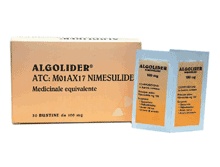
- Kraj rejestracji
- Postać farmaceutycznaGranules for oral suspension, 100 MG
- Kod ATCM01AX17
- Substancja czynna
- Wymaga receptyNie
- Producent
- Te treści mają charakter wyłącznie informacyjny i nie zastępują konsultacji lekarskiej.
- Zamienniki ALGOLIDERPostać farmaceutyczna: Tablet, 100 MGSubstancja czynna: nimesulideProducent: HELSINN BIREX PHARMACEUTICALS LTDWymaga receptyPostać farmaceutyczna: Granules for oral suspension, 100 MGSubstancja czynna: nimesulideBez receptyPostać farmaceutyczna: Tablet, 100 MGSubstancja czynna: nimesulideProducent: AESCULAPIUS FARMACEUTICI SRLWymaga recepty
Odpowiedniki ALGOLIDER w innych krajach
Leki z tą samą substancją czynną dostępne w innych krajach.
Odpowiednik ALGOLIDER w Polska
Odpowiednik ALGOLIDER w Ukraina
Odpowiednik ALGOLIDER w Hiszpania
Lekarze online w sprawie ALGOLIDER
Omów stosowanie ALGOLIDER, bezpieczeństwo i ocenę zasadności recepty zgodnie z obowiązującymi przepisami.









Uzyskaj receptę na ALGOLIDER online
Wypełnij 2-minutowy formularz
Opisz swoje objawy, historię choroby i lek, o który prosisz.
Wybierz lekarza lub pozwól nam przydzielić
Wybierz specjalistę lub dopasujemy Cię do najbliższego dostępnego lekarza.
Lekarz analizuje Twój przypadek
Zazwyczaj w ciągu 30 minut. Może zadawać dodatkowe pytania przez czat.
Odbierz w dowolnej aptece
Recepta elektroniczna wysłana na Twój e-mail — ważna w całej Polsce.
Często zadawane pytania
ALGOLIDER nie wymaga recepty w Włochy. Możesz skonsultować się z lekarzem online, aby sprawdzić, czy ten lek może być odpowiedni w Twojej sytuacji.
Substancją czynną w ALGOLIDER jest nimesulide. Informacja ta pomaga rozpoznać leki o tym samym składzie, ale pod różnymi nazwami handlowymi.
ALGOLIDER jest produkowany przez SIAR PHARMA S.R.L.. Nazwy handlowe i opakowania mogą się różnić w zależności od dystrybutora.
Lekarze, tacy jak Lekarze rodzinni, Psychiatrzy, Dermatolodzy, Kardiolodzy, Endokrynolodzy, Gastroenterolodzy, Pulmonolodzy, Nefrolodzy, Reumatolodzy, Hematolodzy, Zakaźnicy, Alergolodzy, Geriatrzy, Pediatrzy, Onkolodzy, mogą ocenić, czy stosowanie ALGOLIDER jest odpowiednie w Twoim przypadku, w zależności od sytuacji klinicznej i lokalnych przepisów. Możesz umówić konsultację online, aby omówić objawy i możliwe dalsze kroki.
Polska posiada dobrze rozwiniętą infrastrukturę ochrony zdrowia w dużych miastach, takich jak Warszawa, Kraków, Wrocław i Gdańsk. Apteki są łatwo dostępne i działają zgodnie z obowiązującymi przepisami, zapewniając dostęp do leków na receptę.
Możesz kupić ALGOLIDER w Warszawie, Krakowie, Wrocławiu lub Gdańsku w każdej aptece, posiadając ważną receptę.
Aby uzyskać receptę, możesz skorzystać z Oladoctor:
Inne leki zawierające tę samą substancję czynną (nimesulide) to m.in. AULIN, DOMES, EFRIDOL. Mogą one różnić się nazwą handlową lub postacią, ale zawierają ten sam składnik terapeutyczny. Przed zmianą lub rozpoczęciem nowego leku skonsultuj się z lekarzem.
