



YESINTEK 45 mg Injectable Solution

Запит на рецепт онлайн
Лікар розгляне ваш випадок і визначить, чи є рецепт медично доцільним.

Поговоріть з лікарем про ці ліки
Обговоріть симптоми та можливі подальші кроки під час короткої онлайн-консультації.



Інструкція із застосування YESINTEK
Зміст інструкції
- Yesintek 130 mg concentrate for solution for infusion
- Yesintek 45 mg injectable solution
- What is Yesintek and what is it for?
- What you need to know before using Yesintek
- How to use Yesintek
- Possible side effects
- How to store Yesintek
- Contents of the pack and other information
- Check the number of vials and prepare the materials
- Choose the injection site and prepare it
- Prepare the dose:
- Inject the dose
- After the injection
- Disposal
- Yesintek 45 mg solution for injection in pre-filled syringe
- What you need to know before using Yesintek
- How to use Yesintek
- Possible side effects
- How to store Yesintek
- OTHER INFORMATION
- Check the number of pre-filled syringes and prepare the materials
- Choose the injection site and prepare it
- Remove the protective cap from the needle (see Figure 5)
- Inject the dose
- After the injection
- Disposal
- Yesintek 90 mg solution for injection in pre-filled syringe
- What is Yesintek and what is it for?
- What you need to know before using Yesintek
- How to use Yesintek
- Possible side effects
- How to store Yesintek
- Contents of the pack and other information
- Check the number of prefilled syringes and prepare the materials
- Choose the injection site and prepare it
- Remove the protective cap from the needle (see Figure 5)
- Inject the dose
- After the injection
- Disposal
Yesintek 130 mg concentrate for solution for infusion
ustekinumab
This medicine is subject to additional monitoring. This will allow the rapid
identification of new safety information. You are invited to contribute by reporting any
side effects you experience. For details on how to report side effects, see the end of
section 4.
Read this leaflet carefully before using this medicine as it contains important
information for you.
This leaflet is written for people who are taking this medicine.
- Keep this leaflet. You may need to read it again.
- If you have any questions, ask your doctor or pharmacist.
- If you experience any side effects, including those not listed in this leaflet, tell your doctor or pharmacist. See section 4.
Contents of this leaflet
- 1. What Yesintek is and what it is used for
- 2. What you need to know before you use Yesintek
- 3. How Yesintek will be used
- 4. Possible side effects
- 5. How to store Yesintek
- 6. Contents of the pack and other information
1. What is Yesintek and what is it for
What is Yesintek
Yesintek contains the active substance “ustekinumab”, a monoclonal antibody.
Monoclonal antibodies are proteins that recognize and bind to specific proteins
present in the body.
Yesintek belongs to a group of medicines called “immunosuppressants”. These medicines
reduce the activity of the immune system to some extent.
What is Yesintek used for
Yesintek is used to treat moderate to severe Crohn’s disease in adults.
Crohn’s disease is an inflammatory bowel disease. If you have Crohn’s disease, you will
first be treated with other medications. If you do not respond well enough or are intolerant to these
medicines, you may be given Yesintek to reduce the signs and symptoms of your disease.
2. What you need to know before you use Yesintek
Do not use Yesintek
- If you are allergic to ustekinumabor to any of the other ingredients of this medicine (listed in section 6)
- If you have an active infectionthat your doctor considers significant. If you are not sure if any of the above conditions apply to you, talk to your doctor or pharmacist before using Yesintek.
Warnings and precautions
Talk to your doctor or pharmacist before using Yesintek. Your doctor will check your health
before treatment. Make sure to tell your doctor about any illnesses
you have before treatment. Also, tell your doctor if you have recently been in contact with people who
may have had tuberculosis. Your doctor will examine you and perform tests for tuberculosis,
before giving you Yesintek. If your doctor believes you are at risk of tuberculosis, they may
give you medicines to treat tuberculosis.
Pay attention to serious side effects
Yesintek can cause serious side effects, including allergic reactions and infections. You should pay
attention to certain signs of illness while taking Yesintek. See “Serious side effects
” in section 4 for a complete list of these side effects.
Contact your doctor before using Yesintek
- If you have ever had an allergic reaction to Yesintek. Ask your doctor if you are not sure.
- If you have ever had any type of cancer- this is because immunosuppressants like Yesintek partially weaken the immune system. This can increase the risk of cancer.
- If you have been treated for psoriasis with other biologic medicines (a medicinal productderived from a biological source and usually administered by injection)- the risk of cancer may be higher.
- If you have or have had a recent infection or if you have abnormal openings in your skin (fistulas).
- If you have ever had any new or changed skin lesionwithin the area of psoriasis or on normal skin.
- If you are taking any other type of treatment for psoriasis and/or psoriatic arthritis- such as another immunosuppressant or phototherapy (when the body is treated with a type of ultraviolet (UV) light). These treatments can also partially reduce the activity of the immune system. The simultaneous use of these therapies with Yesintek has not been studied. However, it is possible that it may increase the possibility of conditions related to a weakened immune system.
- If you are using or have ever used injections for the treatment of allergies- it is not known whether Yesintek can have an effect on them.
- If you are 65 years of age or older- you may have a greater chance of getting infections.
If you are not sure whether any of the conditions mentioned above may apply to you, talk to your doctor
or pharmacist before undergoing treatment with Yesintek.
During treatment with ustekinumab, some patients have developed reactions similar to lupus,
including cutaneous lupus or lupus-like syndrome. Contact your doctor immediately if you develop a red, raised, and scaly rash, sometimes with a darker edge, in areas of skin exposed to the sun or with joint pain.
Heart attack and stroke
In a study of patients with psoriasis treated with Yesintek, heart attack and
stroke were observed. Your doctor will regularly check your risk factors for heart disease and stroke to
ensure they are treated appropriately. Contact a doctor immediately if you develop
chest pain, weakness or an unusual sensation on one side of your body, facial drooping, or
abnormalities in speech or vision.
Children and adolescents
Yesintek is not recommended for the treatment of children under 18 years of age with Crohn's disease because it has not been studied in this age group.
Other medicines, vaccines and Yesintek
Tell your doctor or pharmacist:
- if you are taking, have recently taken or might take any other medicines
- if you have recently been vaccinated or are about to be vaccinated. Some types of vaccines (live vaccines) should not be given while you are using Yesintek.
- if you received Yesintek during pregnancy, inform your child’s pediatrician about the Yesintek treatment before your child receives any vaccines, including live vaccines such as the BCG vaccine (used for the prevention of tuberculosis). If you received Yesintek during pregnancy, live vaccines are not recommended for your child in the first twelve months after birth, unless your child’s pediatrician recommends otherwise.
Pregnancy and breastfeeding
- If you are pregnant, suspect you may be pregnant, or are planning to become pregnant, ask your doctor for advice before taking this medicine.
- No increased risk of birth defects has been observed in newborns exposed to Yesintek in the womb. However, there is limited experience with Yesintek in pregnant women. Therefore, it is preferable to avoid the use of Yesintek during pregnancy.
- If you are of childbearing potential, it is advisable to avoid becoming pregnant; you should use adequate contraception during use of Yesintek and for at least 15 weeks after stopping treatment with Yesintek.
- Ustekinumab can reach the unborn child through the placenta. If you have received Yesintek during pregnancy, your child may have an increased risk of infection.
- If you received Yesintek during pregnancy, it is important to inform your pediatrician and other healthcare professionals before your child receives any vaccines. If you received Yesintek during pregnancy, live vaccines such as the BCG vaccine (used for the prevention of tuberculosis) are not recommended for your child in the first twelve months after birth, unless your pediatrician recommends otherwise.
- Ustekinumab can be excreted in small amounts in breast milk. If you are breastfeeding or planning to breastfeed, ask your doctor for advice. You and your doctor will decide whether to breastfeed or use Yesintek. You cannot do both. Driving and using machinesYesintek does not impair or negligibly impairs the ability to drive vehicles or use machines.
Yesintek contains sodium
Yesintek contains less than 1 mmol of sodium (23 mg) per dose, that is to say it is essentially "sodium-free". However, before Yesintek is administered, it is mixed with a solution
that contains sodium. Talk to your doctor if you are on a low-salt diet.
Yesintek contains Polysorbate 80
This medicine contains 10.4 mg of polysorbate 80 (E 433) in each 130
mg/26 mL vial, equivalent to 0.4 mg/mL (0.6 mg/kg/day). Polysorbates can cause allergic
reactions. Inform your doctor if you have known allergies.
3. How Yesintek will be used
Yesintek is intended for use under the guidance and supervision of a doctor experienced in the diagnosis
and treatment of Crohn's disease.
Yesintek 130 mg concentrate for solution for infusion will be administered to you by the doctor, through
an intravenous drip in the arm vein (intravenous infusion) for at least one hour. Discuss with the doctor
when you will need to undergo the injections and subsequent follow-up visits.
How much Yesintek is administered
The doctor will decide how much Yesintek you need and for how long.
Adults aged 18 years and over
- The doctor will calculate the recommended intravenous infusion dose for you based on your body weight.
Your body weight Dose
≤ 55 kg
> 55 kg to ≤ 85 kg
> 85 kg
260 mg
390 mg
520 mg
- After the initial intravenous dose, you will take the next dose of 90 mg Yesintek with an injection under the skin (subcutaneous injection) 8 weeks later, and then every 12 weeks. How Yesintek is administered
- The first dose of Yesintek for the treatment of Crohn's disease is administered by the doctor via an intravenous drip in a vein in your arm (intravenous infusion). Inform the doctor if you have any questions about the use of Yesintek.
If you forget to use Yesintek
If you forget or miss the appointment for administering the dose, contact your doctor to
schedule a new appointment.
If you stop using Yesintek
It is not dangerous to stop using Yesintek. However, if you stop treatment, the symptoms
may recur.
If you have further questions about the use of this medicine, ask your doctor or
pharmacist.
4. Possible side effects
Like all medicines, this medicine can cause side effects, although not everybody gets them.
Serious side effects
Some patients may experience serious side effects that may require urgent treatment.
Allergic reactions – these may require urgent treatment, so contact your doctor or seek urgent medical attention if you notice any of the following signs.
- Severe allergic reactions (“anaphylaxis”) are rare in patients taking Yesintek (affecting up to 1 in 1,000 patients). Signs include: o difficulty breathing or swallowing o low blood pressure, which can cause dizziness or feeling lightheaded o swelling of the face, lips, mouth or throat.
- Common signs of an allergic reaction include skin rash and hives (affecting up to 1 in 100 patients). Infusion-related reactions - If you are being treated for Crohn’s disease, the first dose ofYesintek is given through an intravenous drip (intravenous infusion). Some patientshave experienced severe allergic reactions during the infusion.
In rare cases, allergic lung reactions and lung inflammation have been reported in
patients receiving ustekinumab. Tell your doctor immediately if you develop symptoms such as
cough, shortness of breath, and fever.
If you have a severe allergic reaction, your doctor may decide that you should not use Yesintek
again.
Infections – these may require urgent treatment, so contact your doctor immediately
if you notice any of the following signs.
- Infections of the nose and throat and the common cold are common (affecting up to 1 in 10 patients).
- Chest infections are uncommon (can affect up to 1 in 100 patients)
- Inflammation of the tissue under the skin (‘cellulitis’) is uncommon (affects up to 1 in 100 patients).
- Herpes zoster (a type of painful rash with blisters) is uncommon (affects up to 1 in 100 patients).
Yesintek may decrease your ability to fight infections. Some infections may become
serious and may include infections caused by viruses, fungi, bacteria (including tuberculosis) or parasites, including infections that occur mainly in people with weakened immune systems (opportunistic infections). Opportunistic infections of the brain (encephalitis, meningitis), lungs and eyes have been
reported in patients treated with ustekinumab.
You should be careful to watch for signs of infection while using Yesintek. These include:
- fever, flu-like symptoms, night sweats, weight loss
- feeling tired or short of breath, persistent cough
- warm, red and painful skin, or a painful, blistering rash
- burning when urinating
- diarrhea
- blurred vision or loss of vision
- headache, stiff neck, sensitivity to light, nausea or confusion
Tell your doctor immediately if you notice any of these signs of infection. These may
be signs of infection such as chest infections, skin infections, herpes zoster or opportunistic
infections that may have serious complications. See your doctor if you have any type of
infection that persists or keeps coming back. Your doctor may decide to stop Yesintek until
the infection is resolved. Also tell your doctor if you have any cuts or open wounds that
could become infected.
Skin peeling – increased redness and scaling of the skin over a large
area of the body may be symptoms of erythrodermic psoriasis or exfoliative dermatitis, which
are serious skin conditions. If you notice any of these signs you should tell
your doctor immediately.
Other side effects
Common side effects(affecting up to 1 in 10 patients)
- Diarrhea
- Nausea
- Vomiting
- Feeling tired
- Feeling dizzy
- Headache
- Itching
- Back, muscle or joint pain
- Sore throat
- Redness and pain at the injection site
- Sinusitis
Uncommon side effects(affecting up to 1 in 100 patients)
- Dental infection
- Vaginal fungal infection
- Depression
- Stuffy or runny nose
- Bleeding, bruising, stiffness, swelling and itching at the injection site
- Feeling weak
- Drooping eyelid and muscle weakness on one side of the face (“facial palsy” or “Bell’s palsy”), which is usually temporary
- A change in psoriasis with redness and new small, yellow or white bumps, sometimes accompanied by fever (pustular psoriasis)
- Skin peeling (exfoliation of the skin)
- Acne
Rare side effects(affecting up to 1 in 1,000 patients)
- Redness and scaling of the skin over a large area of the body, which may be itchy or painful (exfoliative dermatitis). Similar symptoms sometimes develop as a natural progression in the type of symptoms of psoriasis (erythrodermic psoriasis)
- Inflammation of small blood vessels, which can lead to a rash with small red or purple bumps, fever or joint pain (vasculitis)
Very rare side effects(affecting up to 1 in 10,000 patients)
- Blistering skin with possible redness, itching and pain (bullous pemphigoid).
- Cutaneous lupus or lupus-like syndrome (red, raised and scaly rash on areas of skin exposed to the sun, sometimes with joint pain). Reporting of side effectsIf you get any side effects, talk to your doctor or pharmacist. This includes any possible side effects not listed in this leaflet. You can also report side effects directly through the national reporting system listed in Annex V . By reporting side effects you can help provide more information on the safety of this medicine.
5. How to store Yesintek
- Yesintek 130 mg concentrate for infusion solution is administered in hospital or clinic and patients do not need to handle or store it.
- Keep this medicine out of the sight and reach of children.
- Store in a refrigerator (2°C - 8°C). Do not freeze.
- Keep the vial in the outer packaging to protect the medicine from light.
- Do not shake the vials of Yesintek. Prolonged vigorous shaking may damage the medicine.
Do not use this medicine
- After the expiry date that is stated on the label and the outer packaging after “Exp.”. The expiry date refers to the last day of the month.
- If the liquid has a changed colour, is cloudy or if you see foreign particles floating (see section 6 “Description of Yesintek and contents of the pack”).
- If you know or believe that the medicine has been exposed to extreme temperatures (for example accidentally frozen or heated).
- If the product has been shaken vigorously.
- If the seal is broken.
Yesintek is for single use. The unused diluted solution for infusion remaining in the vial and the
syringe must be disposed of in accordance with current local regulations.
6. Contents of the pack and other information
What Yesintek contains
- The active substance is ustekinumab. Each vial contains 130 mg of ustekinumab in 26 mL.
- The excipients are: Disodium edetate dihydrate, L-histidine, L-histidine monohydrochloride monohydrate, L-methionine, Polysorbate 80 (E433), Sucrose, Sodium hydroxide (pH adjustment), Hydrochloric acid (pH adjustment), Water for injections.
- This medicine contains 10.4 mg of Polysorbate 80 (E 433) in each 130 mg/26 mL vial, equivalent to 0.4 mg/mL (0.6 mg/kg/day). Polysorbates can cause allergic reactions. Inform your doctor if you have known allergies. Description of Yesintek and contents of the packYesintek is a clear, colorless to pale yellow concentrate for infusion solution. It is supplied in a carton containing 1 single-dose vial of 30 mL glass. Each vial contains 130 mg of ustekinumab in 26 mL of concentrate for infusion solution.
Marketing Authorisation Holder
Biosimilar Collaborations Ireland Limited
Unit 35/36 Grange Parade,
Baldoyle Industrial Estate,
Dublin 13, DUBLIN
Ireland, D13
R20R
Manufacturer
Biosimilar Collaborations Ireland Limited
Block B, The Crescent Building, Santry Demesne
Dublin
D09 C6X8
Ireland
For further information on this medicine, contact the local representative of the Marketing Authorisation Holder:
Lietuva
Biosimilar Collaborations Ireland Limited
Tel: 0080008250910
България
Biosimilar Collaborations Ireland Limited
Тел: 0080008250910
België/Belgique/Belgien
Biocon Biologics Belgium BV
Tél/Tel: 0080008250910
Luxembourg/Luxemburg
Biocon Biologics France S.A.S
Tél/Tel: 0080008250910
(Belgique/Belgien)
Česká republika
Biocon Biologics Germany GmbH
Tel: 0080008250910
Magyarország
Biosimilar Collaborations Ireland Limited
Tel.: 0080008250910
Danmark
Biocon Biologics Finland OY
Tlf: 0080008250910
Malta
Biosimilar Collaborations Ireland Limited
Tel.: 0080008250910
Deutschland
Biocon Biologics Germany GmbH
Tel: 0080008250910
Nederland
Biocon Biologics France S.A.S
Tel: 0080008250910
Eesti
Biosimilar Collaborations Ireland Limited
Tel: 0080008250910
Norge
Biocon Biologics Finland OY
Tlf: +47 800 62 671
ΕλλάδαÖsterreich
Biocon Biologics Greece ΜΟΝΟΠΡΟΣΩΠΗ
Ι.Κ.Ε
Τηλ.: 0080008250910
Biocon Biologics Germany GmbH
Tel: 0080008250910
España
Biocon Biologics Spain S.L.
Tel: 0080008250910
Polska
Biosimilar Collaborations Ireland Limited
Tel: 0080008250910
France
Biocon Biologics France S.A.S
Tel: 0080008250910
Portugal
Biocon Biologics Spain S.L.
Tel: 0080008250910
Hrvatska
Biocon Biologics Germany GmbH
Tel: 0080008250910
România
Biosimilar Collaborations Ireland Limited
Tel: 0080008250910
Ireland
Biosimilar Collaborations Ireland Limited
Tel: 1800 777 794
Slovenija
Biosimilar Collaborations Ireland Limited
Tel: 0080008250910
Ísland
Biocon Biologics Finland OY
Sími: +345 800 4316
Slovenskárepublika
Biocon Biologics Germany GmbH
Tel: 0080008250910
Italia
Biocon Biologics Spain S.L .
Tel: 0080008250910
Suomi/Finland
Biocon Biologics Finland OY
Puh/Tel: 99980008250910
Κύπρος
Biosimilar Collaborations Ireland Limited
Τηλ: 0080008250910
Sverige
Biocon Biologics Finland OY
Tel: 0080008250910
Latvija
Biosimilar Collaborations Ireland Limited
Tel: 0080008250910
Other sources of informationMore detailed information on this medicine is available on the website of the European Medicines Agency: http://www.ema.europa.eu
The following information is intended exclusively for healthcare professionals.
Traceability
In order to improve the traceability of biological medicines, the trade name and batch number
of the administered product must be clearly recorded.
Instructions for dilution.
Yesintek concentrate for solution for infusion must be diluted, prepared and infused by a
healthcare professional using aseptic technique.
- 1. Calculate the dose and the number of Yesintek vials needed based on the patient's weight (see section 3, Table 1). Each 26 mL vial of Yesintek contains 130 mg of ustekinumab.
- 2. Withdraw and discard a volume of 9 mg/mL (0.9%) sodium chloride solution from the 250 mL infusion bag equal to the volume of Yesintek to be added (discard 26 mL of sodium chloride for each Yesintek vial needed, for 2 vials discard 52 mL, for 3 vials discard 78 mL, for 4 vials discard 104 mL).
- 3. Withdraw 26 mL of Yesintek from each vial needed and add it to the 250 mL infusion bag. The final volume in the infusion bag should be 250 mL. Mix gently.
- 4. Visually inspect the diluted solution before infusion. Do not use if visible opaque particles, discoloration or foreign particles are observed.
- 5. Infuse the diluted solution over a period of at least one hour. Once diluted, the infusion must be completed within eight hours of dilution in the infusion bag.
- 6. Use only one sterile, non-pyrogenic, low-protein-binding infusion set with an in-line filter (pore size 0.2 micrometers).
- 7. Each vial is for single use and unused medicine must be disposed of in accordance with current local regulations.
Storage
If necessary, the diluted infusion solution may be stored at room temperature.
The infusion must be completed within 12 hours of dilution in the infusion bag. Do not
freeze. Do not refrigerate after dilution.
Yesintek 45 mg injectable solution
ustekinumab
This medicine is subject to additional monitoring. This will allow the rapid
identification of new safety information. You are invited to contribute by reporting any
side effects you experience. For details on how to report side effects, see the end of
section 4.
Read this leaflet carefully before using this medicine as it contains important
information for you.
This leaflet is intended for people taking this medicine. If you are the parent or
carer of a child to whom Yesintek is to be administered, read
this information carefully before administration.
- Keep this leaflet. You may need to read it again.
- If you have any questions, ask your doctor or pharmacist.
- This medicine has been prescribed for you only. Do not give it to other people, even if they have the same symptoms as you, as it may be harmful.
- If any side effects occur, including those not listed in this leaflet, tell your doctor or pharmacist. See section 4.
Contents of this leaflet
- 1. What Yesintek is and what it is used for
- 2. What you need to know before you use Yesintek
- 3. How to use Yesintek
- 4. Possible side effects
- 5. How to store Yesintek
- 6. Contents of the pack and other information
1. What is Yesintek and what is it for?
What is Yesintek
Yesintek contains the active substance “ustekinumab”, a monoclonal antibody.
Monoclonal antibodies are proteins that recognise and bind to specific proteins
present in the body.
Yesintek belongs to a group of medicines called “immunosuppressants”. These medicines
reduce the activity of the immune system to some extent.
What is Yesintek for
Yesintek is used to treat the following inflammatory diseases:
- plaque psoriasis (in adults and children starting from 6 years of age)
- psoriatic arthritis (in adults)
- moderate to severe Crohn’s disease in adults
Plaque psoriasis
Plaque psoriasis is a skin condition that causes inflammation of the skin and nails.
Yesintek will reduce inflammation and other signs of the disease.
Yesintek is used in adults with moderate to severe plaque psoriasis, who cannot use
cyclosporine, methotrexate or phototherapy, or in whom these treatments do not work.
Yesintek is used in children and adolescents starting from 6 years of age with moderate
to severe plaque psoriasis, who cannot tolerate phototherapy or other systemic therapies or when these treatments
have not worked.
Psoriatic arthritis
Psoriatic arthritis is an inflammatory disease of the joints, usually accompanied by
psoriasis. If you have active psoriatic arthritis you will first be treated with other medicines. If you should
not respond adequately to these medicines, you may take Yesintek to:
- reduce the signs and symptoms of the disease
- improve physical function
- slow down joint damage.
Crohn’s disease
Crohn’s disease is an inflammatory disease of the intestine. If you have Crohn’s disease, you will
first be treated with other drugs. If you do not respond well enough or are intolerant to these
medicines, you may be given Yesintek to reduce the signs and symptoms of your disease.
2. What you need to know before using Yesintek
Do not use Yesintek
- If you are allergic to ustekinumabor to any of the other ingredients of this medicine (listed in section 6).
- If you have an active infectionthat your doctor considers important.
If you are not sure whether any of the above conditions apply to you, talk to your doctor or pharmacist before using Yesintek.
Warnings and precautions
Talk to your doctor or pharmacist before using Yesintek. Your doctor will check your health status
before each treatment. Make sure to tell your doctor about any illnesses you have before each treatment. Also, tell your doctor if you have recently been in contact with people
who may have had tuberculosis. Your doctor will examine you and perform tests for
tuberculosis before giving you Yesintek. If your doctor believes you are at risk of tuberculosis, you may
be given medicines to treat tuberculosis.
Pay attention to serious side effects
Yesintek can cause serious side effects, including allergic reactions and infections. You should pay
attention to certain signs of illness while taking Yesintek. See “Serious side effects” in section 4 for a complete list of these side effects.
Contact your doctor before using Yesintek:
- If you have ever had an allergic reaction to Yesintek. Ask your doctor if you are not sure.
- If you have ever had any type of cancer- this is because immunosuppressants like Yesintek partially weaken the immune system. This can increase the risk of cancer.
- If you have been treated for psoriasis with other biologic medicines (a medicinal productderived from a biological source and usually administered by injection)- the risk of cancer may be higher.
- If you have or have had a recent infection.
- If you have ever had any new or changed lesionwithin the area of psoriasis or on normal skin.
- If you are taking any other type of treatment for psoriasis and/or psoriatic arthritis- such as another immunosuppressant or phototherapy (when the body is treated with a type of ultraviolet (UV) light). These treatments can also partially reduce the activity of the immune system. The simultaneous use of these therapies with Yesintek has not been studied. However, it is possible that it may increase the possibility of conditions related to a weakening of the immune system.
- If you are using or have ever used injections for the treatment of allergies- it is not known whether Yesintek can have an effect on them.
- If you are 65 years of age or older- you may have a greater chance of contracting infections.
If you are not sure whether any of the conditions mentioned above may apply to you, talk to your doctor
or pharmacist before undergoing treatment with Yesintek.
During treatment with ustekinumab, some patients have developed reactions similar to lupus,
including cutaneous lupus or lupus-like syndrome. Contact your doctor immediately if you develop a red, raised, and scaly rash, sometimes with a darker edge, in areas of skin exposed to the sun or with joint pain.
Heart attack and stroke
In a study of patients with psoriasis treated with Yesintek, heart attack and
stroke were observed. Your doctor will regularly check risk factors for heart disease and stroke to
ensure they are treated appropriately. Contact a doctor immediately if you develop
chest pain, weakness, or an unusual sensation on one side of the body, facial drooping, or
speech or vision abnormalities.
Children and adolescents
Yesintek is not recommended for the treatment of children with psoriasis under the age of 6, or for
the treatment of children under the age of 18 with psoriatic arthritis, Crohn's disease because it has not
been studied in this age group.
Other medicines, vaccines and Yesintek
Tell your doctor or pharmacist:
- if you are taking, have recently taken, or might take any other medicines
- if you have recently been vaccinated or are about to be vaccinated. Some types of vaccines (live vaccines) should not be given while you are using Yesintek.
- if you received Yesintek during pregnancy, inform your child's pediatrician about the treatment with Yesintek before your child receives any vaccines, including live vaccines such as the BCG vaccine (used for the prevention of tuberculosis). If you received Yesintek during pregnancy, live vaccines are not recommended for your child in the first twelve months after birth, unless your child's pediatrician recommends otherwise.
Pregnancy and breastfeeding
- If you are pregnant, suspect you may be pregnant, or are planning to become pregnant, ask your doctor for advice before taking this medicine.
- No increased risk of birth defects has been observed in newborns exposed to Yesintek in the womb. However, there is limited experience with Yesintek in pregnant women. Therefore, it is preferable to avoid using Yesintek during pregnancy.
- If you are of childbearing potential, it is advisable to avoid becoming pregnant; you should use adequate contraception during use of Yesintek and for at least 15 weeks after stopping treatment with Yesintek.
- Ustekinumab can reach the newborn through the placenta. If you have received Yesintek during pregnancy, your child may have an increased risk of contracting an infection.
- If you received Yesintek during pregnancy, it is important to inform your pediatrician and other healthcare professionals before your child receives any vaccines. If you received Yesintek during pregnancy, live vaccines such as the BCG vaccine (used for the prevention of tuberculosis) are not recommended for your child in the first twelve months after birth, unless your pediatrician recommends otherwise.
- Ustekinumab can be excreted in breast milk in very small amounts. If you are breastfeeding or plan to breastfeed, ask your doctor for advice. You and your doctor will decide whether to breastfeed or use Yesintek. You cannot do both.
Driving and using machines
Yesintek does not alter or negligibly alters the ability to drive vehicles or use machines.
Yesintek contains Polysorbate 80 (E433)
This medicine contains 0.02 mg of polysorbate 80 (E 433) in each 45 mg/0.5 ml vial,
equivalent to 0.02 mg/0.5 ml (0.0003 mg/kg/day). Polysorbates can cause allergic reactions. Tell
your doctor if you have any known allergies, yours or your child's.
3. How to use Yesintek
Yesintek is intended for use under the guidance and supervision of a doctor experienced in the treatment of the conditions for which Yesintek is indicated.
Use this medicine following the doctor's instructions exactly. If you have any doubts, consult your
doctor. Discuss with your doctor when you will need to have injections and subsequent follow-up visits.
How much Yesintek is administered
Your doctor will decide how much Yesintek you need and for how long.
Adults starting from 18 years of age
Psoriasis and psoriatic arthritis
- The recommended initial dose is 45 mg of Yesintek. Patients with a weight greater than 100 kilograms (kg) may start with a dose of 90 mg instead of 45 mg.
- After the initial dose, you will take the next dose 4 weeks later, and then every 12 weeks. Subsequent doses are usually the same as the initial dose.
Crohn’s Disease
- During treatment, the first dose of approximately 6 mg / kg of Yesintek will be administered to you by your doctor via an intravenous infusion into a vein in your arm. After the initial dose, you will receive the next dose of 90 mg of Yesintek after 8 weeks, then every 12 weeks with an injection under the skin (subcutaneous route).
- In some patients, after the first subcutaneous injection, the 90 mg dose of Yesintek may be administered every 8 weeks. Your doctor will decide when you should receive the next dose.
Children and adolescents starting from 6 years of age
Psoriasis
- The doctor will calculate the correct dose, including the amount (volume) of Yesintek that must be injected to ensure the administration of the correct dose. The correct dose will depend on the child's body weight at the time of each dose.
- If the body weight is less than 60 kg, the recommended dose is 0.75 mg of Yesintek per kg of body weight.
- If the body weight is between 60 kg and 100 kg, the recommended dose is 45 mg of Yesintek.
- If the weight exceeds 100 kg, the recommended dose is 90 mg of Yesintek.
- After the initial dose, you will need to receive the next dose after 4 weeks, and then every 12 weeks.
How Yesintek is administered
- Yesintek is administered by a subcutaneous injection (“by the subcutaneous route”). At the beginning of treatment, medical or nursing staff may inject Yesintek for you.
- However, you and your doctor can decide whether you can inject Yesintek yourself. In this case, you will be taught how to inject Yesintek yourself.
- For instructions on how to inject Yesintek, see “Instructions for Use” in the
Inform your doctor if you have any questions about performing the injection yourself.
If you use more Yesintek than you should
If you have used or received too much Yesintek, inform your doctor or pharmacist immediately. Always
bring the outer packaging of the medicine with you, even if it is empty.
If you forget to use Yesintek
If you forget a dose, contact your doctor or pharmacist. Do not take a double dose to make up for
the missed dose.
If you stop using Yesintek
It is not dangerous to stop using Yesintek. However, if you stop treatment, the symptoms
may return.
If you have any further questions about the use of this medicine, ask your doctor or
pharmacist.
4. Possible side effects
Like all medicines, this medicine can cause side effects, although not everybody gets them.
Serious side effects
Some patients may experience serious side effects that may require urgent treatment.
Allergic reactions – these may require urgent treatment, so contact your doctor or seek urgent medical attention if you notice any of the following signs.
- Severe allergic reactions (“anaphylaxis”) are rare in patients taking Yesintek (affecting up to 1 in 1,000 patients). Signs include: o difficulty breathing or swallowing o low blood pressure, which can cause dizziness or feeling lightheaded o swelling of the face, lips, mouth or throat.
- Common signs of an allergic reaction include skin rash and hives (affecting up to 1 in 100 patients). In rare cases, allergic lung reactions and lung inflammation have been reported in patients receiving ustekinumab. Tell your doctor immediately if you develop symptoms such as cough, shortness of breath and fever.
If you experience a severe allergic reaction, your doctor may decide that you should not use Yesintek again.
Infections – these may require urgent treatment, so contact your doctor immediately if you notice any of the following signs.
- Infections of the nose and throat and the common cold are common (affecting up to 1 in 10 patients).
- Chest infections are uncommon (may affect up to 1 in 100 patients)
- Inflammation of the tissue under the skin (‘cellulitis’) is uncommon (affects up to 1 in 100 patients).
- Herpes zoster (a type of painful blistering rash) is uncommon (affects up to 1 in 100 patients).
Yesintek may decrease your ability to fight infections. Some infections may become serious and may include infections caused by viruses, fungi, bacteria (including tuberculosis) or parasites, including infections that occur mainly in people with weakened immune systems (opportunistic infections). Opportunistic infections of the brain (encephalitis, meningitis), lungs and eyes have been reported in patients treated with ustekinumab.
You should be careful to look for signs of infection while using Yesintek. These include:
- fever, flu-like symptoms, night sweats, weight loss
- feeling tired or short of breath, persistent cough
- warm, red and painful skin, or a painful blistering rash
- burning when you urinate
- diarrhea
- blurred vision or loss of vision
- headache, stiff neck, sensitivity to light, nausea or confusion
Tell your doctor immediately if you notice any of these signs of infection. These may be signs of infections such as chest infections, skin infections, herpes zoster or opportunistic infections that can have serious complications. See your doctor if you have any type of infection that persists or keeps recurring. Your doctor may decide to stop Yesintek until the infection resolves. Also tell your doctor if you have any cuts or open wounds that may become infected.
Skin peeling – increased redness and peeling of the skin over a large area of the body may be symptoms of erythrodermic psoriasis or exfoliative dermatitis, which are serious skin conditions. If you notice any of these signs, you should tell your doctor immediately.
Other side effects
Common side effects(affecting up to 1 in 10 patients)
- Diarrhea
- Nausea
- Vomiting
- Feeling tired
- Feeling dizzy
- Headache
- Itching
- Back, muscle or joint pain
- Sore throat
- Redness and pain at the injection site
- Sinusitis
Uncommon side effects(affecting up to 1 in 100 patients)
- Dental infection
- Vaginal fungal infection
- Depression
- Stuffy or runny nose
- Bleeding, bruising, stiffness, swelling and itching at the place where the injection is given
- Feeling weak
- Drooping eyelid and muscle weakness on one side of the face (“facial palsy” or “Bell’s palsy”), which is usually temporary
- A change in psoriasis with redness and small, yellow or white bumps, sometimes accompanied by fever (pustular psoriasis)
- Skin peeling (exfoliation of the skin)
- Acne Rare side effects(affecting up to 1 in 1,000 patients)
- Redness and peeling of the skin over a large area of the body, which may be itchy or painful (exfoliative dermatitis). Similar symptoms sometimes develop as a natural progression in the type of psoriasis symptoms (erythrodermic psoriasis)
- Inflammation of small blood vessels, which can lead to a rash with small red or purple bumps, fever or joint pain (vasculitis)
Very rare side effects(affecting up to 1 in 10,000 patients)
- Blistering skin with possible redness, itching and pain
(bullous pemphigoid).
- Cutaneous lupus or lupus-like syndrome (red, raised and scaly rash on areas of skin exposed to the sun, sometimes with joint pain). Reporting of side effectsIf you get any side effects, talk to your doctor or pharmacist. This includes any possible side effects not listed in this leaflet. You can also report side effects directly through the national reporting system listed in Annex V . By reporting side effects you can help provide more information on the safety of this medicine.
5. How to store Yesintek
- Keep this medicine out of the sight and reach of children.
- Store in a refrigerator (2°C - 8°C). Do not freeze.
- Keep the vial in the outer packaging to protect the medicine from light.
- Do not shake the vials of Yesintek. Prolonged vigorous shaking may damage the medicine.
Do not use this medicine
- After the expiry date that is stated on the label and the outer packaging after “Exp.”. The expiry date refers to the last day of the month.
- If the liquid has a changed colour, is cloudy or if you see foreign particles floating (see section 6 “Description of Yesintek and contents of the pack”).
- If you know or believe that the medicine has been exposed to extreme temperatures (e.g. accidentally frozen or heated).
- If the product has been shaken vigorously.
- If the seal is broken.
Yesintek is for single use. Any unused product remaining in the vial and syringe must be
discarded. Do not dispose of any medicine in wastewater or household waste. Ask your
pharmacist how to dispose of medicines you no longer use. This will help protect the environment.
6. Contents of the pack and other information
What Yesintek contains
- The active substance is ustekinumab. Each vial contains 45 mg of ustekinumab in 0.5 mL.
- The excipients are: L-histidine, L-histidine monohydrochloride monohydrate, polysorbate 80 (E433), sucrose, water for injections.
- This medicine contains 0.02 mg of polysorbate 80 (E 433) in each 45 mg/0.5 ml vial, equivalent to 0.02 mg/0.5 ml (0.0003 mg/kg/day). Polysorbates can cause allergic reactions. Tell your doctor if you or your child have any known allergies. Description of Yesintek and contents of the packYesintek is a clear, injectable solution, from colourless to pale yellow. It is supplied in a carton containing 1 single-dose vial, a glass vial of 2 mL. Each vial contains a dose of ustekinumab 45 mg in 0.5 mL of solution for injection.
Marketing Authorisation Holder
Biosimilar Collaborations Ireland Limited
Unit 35/36 Grange Parade,
Baldoyle Industrial Estate,
Dublin 13, DUBLIN
Ireland, D13
R20R
Manufacturer
Biosimilar Collaborations Ireland Limited
Block B, The Crescent Building, Santry Demesne
Dublin
D09 C6X8
Ireland
For further information on this medicine, contact the local representative of the marketing authorisation holder:
België/Belgique/Belgien
Biocon Biologics Belgium BV
Tél/Tel: 0080008250910
Lietuva
Biosimilar Collaborations Ireland Limited
Tel: 0080008250910
България
Biosimilar Collaborations Ireland Limited
Тел: 0080008250910
Luxembourg/Luxemburg
Biocon Biologics France S.A.S
Tél/Tel: 0080008250910
(Belgique/Belgien)
Česká republika
Biocon Biologics Germany GmbH
Tel: 0080008250910
Magyarország
Biosimilar Collaborations Ireland Limited
Tel.: 0080008250910
Danmark
Biocon Biologics Finland OY
Tlf: 0080008250910
Malta
Biosimilar Collaborations Ireland Limited
Tel.: 0080008250910
Deutschland
Biocon Biologics Germany GmbH
Tel: 0080008250910
Nederland
Biocon Biologics France S.A.S
Tel: 0080008250910
Eesti
Biosimilar Collaborations Ireland Limited
Tel: 0080008250910
Norge
Biocon Biologics Finland OY
Tlf: +47 800 62 671
Ελλάδα
Biocon Biologics Greece ΜΟΝΟΠΡΟΣΩΠΗ
Ι.Κ.Ε
Τηλ.: 0080008250910
Österreich
Biocon Biologics Germany GmbH
Tel: 0080008250910
España
Biocon Biologics Spain S.L.
Tel: 0080008250910
Polska
Biosimilar Collaborations Ireland Limited
Tel: 0080008250910
France
Biocon Biologics France S.A.S
Tel: 0080008250910
Portugal
Biocon Biologics Spain S.L.
Tel: 0080008250910
Hrvatska
Biocon Biologics Germany GmbH
Tel: 0080008250910
România
Biosimilar Collaborations Ireland Limited
Tel: 0080008250910
Ireland
Biosimilar Collaborations Ireland Limited
Tel: 1800 777 794
Slovenija
Biosimilar Collaborations Ireland Limited
Tel: 0080008250910
Ísland
Biocon Biologics Finland OY
Sími: +345 800 4316
Slovenskárepublika
Biocon Biologics Germany GmbH
Tel: 0080008250910
Italia
Biocon Biologics Spain S.L .
Tel: 0080008250910
Suomi/Finland
Biocon Biologics Finland OY
Puh/Tel: 99980008250910
Κύπρος
Biosimilar Collaborations Ireland Limited
Τηλ: 0080008250910
Sverige
Biocon Biologics Finland OY
Tel: 0080008250910
Latvija
Biosimilar Collaborations Ireland Limited
Tel: 0080008250910
Other sources of information
More detailed information on this medicine is available on the website of the European Medicines Agency: http://www.ema.europa.eu .
Instructions for administration
At the beginning of treatment, your doctor will assist you during the first injection. However, you and your doctor may decide if you can inject Yesintek yourself. In this case, you will be taught how to inject Yesintek yourself. Tell your doctor if you have any questions about self-injection.
- Do not mix Yesintek with other injection liquids.
- Do not shake the Yesintek vials, as vigorous shaking may damage the medicine. Do not use the medicine if it has been shaken vigorously.
1. Check the number of vials and prepare the materials
Remove the vial or vials from the refrigerator. Leave the vial out of the refrigerator for
about half an hour. This will allow the liquid to reach a comfortable temperature for
injection (room temperature).
Check that:
- the number of vials and the dose are correct or if your dose is 45 mg or less you will take a 45 mg vial of Yesintek or if your dose is 90 mg you will take two 45 mg vials of Yesintek and you will need to perform two injections. Choose two different body sites for these injections (for example, one injection on the right thigh and the other injection on the left thigh), and proceed with the injections one after the other. Use a new needle and a new syringe for each injection or The vial must not be used and must be discarded if:
- it is not the correct medicine
- it has exceeded the expiration date
- the vial is damaged and the seal is broken
- the solution contained in the vial does not appear clear, from colorless to pale yellow
- the solution is discolored or cloudy and contains foreign particles
- the solution is frozen.
Children with a body weight less than 60 kg require a dose lower than 45 mg. You must
be certain of the appropriate amount (volume) to remove from the vial and the type of syringe
needed for dosing. If you do not know the amount of medicine or the type of syringe to use,
contact your doctor for further instructions.
Take everything you need and place it on a clean surface. There should be a syringe, needle,
antiseptic wipes, a cotton ball or gauze and a sharps container (see
Figure 1).
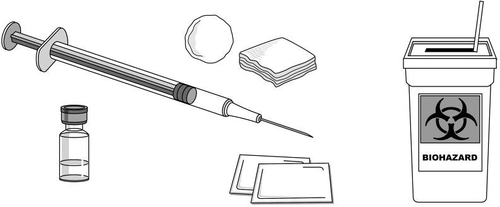
Figure 1
2. Choose the injection site and prepare it
Choose a site for the injection (see Figure 2).
- Yesintek is administered by subcutaneous injection (under the skin).
- A good place for the injection is the upper thigh or around the abdomen (belly) at least 5 cm away from the navel.
- If possible, do not choose areas of skin with signs of psoriasis.
- If someone assists you during the injection, you can also choose the upper arms as the injection site.
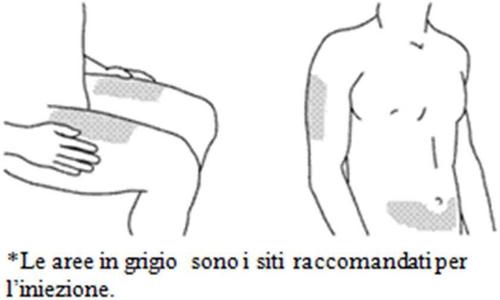
Figure 2
Prepare the injection site
- Wash your hands very well with soap and warm water.
- Rub the injection site on the skin with an antiseptic wipe.
- Do not touch this area again before performing the injection.
3. Prepare the dose:
- Remove the cap on the top of the vial (see Figure 3).
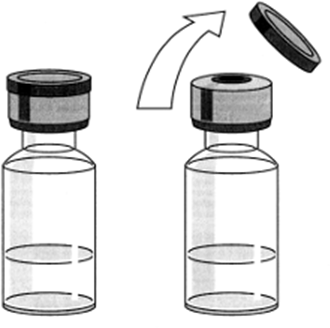
Figure 3
- Do not remove the stopper.
- Clean the stopper with an antiseptic swab.
- Place the vial on a flat surface.
- Take the syringe and remove the protective cap from the needle.
- Do not touch the needle, nor allow the needle to touch anything.
- Push the needle through the rubber stopper.
- Invert the vial and the syringe.
- Pull the syringe plunger to fill the syringe with the amount of liquid, as prescribed by the doctor.
- It is important that the needle is always inside the liquid, so that no air bubbles form in the syringe (see Figure 4).
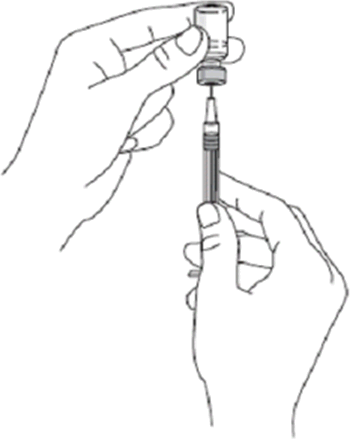
Figure 4
- Remove the needle from the vial.
- Hold the syringe with the needle pointing upwards, to see if there are any bubbles inside.
- If there are air bubbles, gently tap the side of the syringe until the air bubbles reach the top of the syringe (see Figure 5).
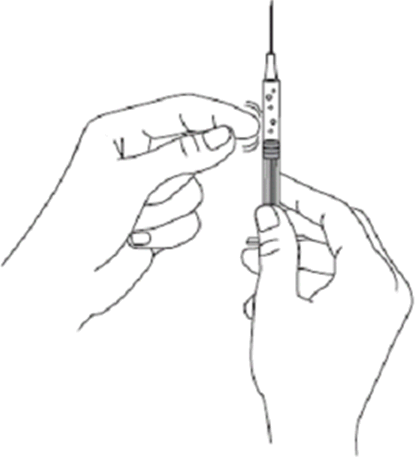
Figure 5
- Then press the plunger until all the air has been eliminated (but not the liquid).
- Do not lay the syringe down and avoid letting the needle touch anything.
4. Inject the dose
- Gently pinch the cleaned skin area between your thumb and index finger. Do not pinch too hard.
- Push the needle into the pinched skin.
- Push the plunger with your thumb until all the liquid has been injected. Press slowly and steadily, keeping the skin gently pinched.
- When the plunger reaches the end of the syringe, remove the needle and release the skin.
5. After the injection
- Press an antiseptic swab onto the injection site for a few seconds after the injection.
- There may be a small amount of blood or fluid at the injection site. This is normal.
- You can press a cotton ball or gauze onto the injection site and hold it for 10 seconds.
- Do not rub the skin at the injection site: you can cover the injection site with a small bandage if necessary.
6. Disposal
- Used syringes and needles must be placed in a puncture-resistant container, such as a sharps container. For your health and safety and the safety of others, never reuse needles or syringes. Dispose of the sharps container in accordance with local regulations.
- Empty vials, antiseptic wipes and other devices can be disposed of in the waste.

Не впевнені, чи підходить вам цей лікарський засіб?
Обговоріть симптоми та можливі варіанти лікування з лікарем онлайн.
Yesintek 45 mg solution for injection in pre-filled syringe
ustekinumab
This medicine is subject to additional monitoring. This will allow the rapid
identification of new safety information. Please contribute by reporting any
side effects you experience. For details on how to report side effects, see the end
of section 4
Read this leaflet carefully before using this medicine as it contains important
information for you.
This leaflet is written for people taking this medicine. If you are the parent or
guardian of a child to whom Yesintek is to be administered, read
this information carefully before administration.
- Keep this leaflet. You may need to read it again.
- If you have any questions, ask your doctor or pharmacist.
- This medicine has been prescribed for you only. Do not give it to other people, even if their symptoms are the same as yours, as it could be dangerous.
- If any side effects occur, including those not listed in this leaflet, tell your doctor or pharmacist. See section 4.
Contents of this leaflet
- 1. What Yesintek is and what it is used for
- 2. What you need to know before you use Yesintek
- 3. How to use Yesintek
- 4. Possible side effects
- 5. How to store Yesintek
- 6. Contents of the pack and other information
What Yesintek is and what it is used for
Yesintek contains the active substance “ustekinumab”, a monoclonal antibody.
Monoclonal antibodies are proteins that recognize and bind to specific proteins
present in the body.
Yesintek belongs to a group of medicines called “immunosuppressants”. These medicines
partially reduce the activity of the immune system.
What Yesintek is used for
Yesintek is used to treat the following inflammatory diseases:
- plaque psoriasis (in adults and children starting from 6 years of age)
- psoriatic arthritis (in adults)
- moderate to severe Crohn’s disease in adults
Plaque psoriasis
Plaque psoriasis is a skin condition that causes inflammation of the skin and nails.
Yesintek will reduce inflammation and other signs of the disease.
Yesintek is used in adults with moderate to severe plaque psoriasis who cannot use
cyclosporine, methotrexate or phototherapy, or in whom these treatments do not work.
Yesintek is used in children and adolescents starting from 6 years of age with moderate to severe plaque psoriasis, who cannot tolerate phototherapy or other systemic therapies or when these treatments
have not worked.
Psoriatic arthritis
Psoriatic arthritis is an inflammatory disease of the joints, usually accompanied by
psoriasis. If you have active psoriatic arthritis, you will first be treated with other medicines. If you do not
respond adequately to these medicines, you may take Yesintek to:
- reduce the signs and symptoms of the disease.
- improve physical function.
- slow down damage to the joints.
Crohn’s disease
Crohn’s disease is an inflammatory disease of the intestine. If you have Crohn’s disease, you will
first be treated with other medications. If you do not respond well enough or are intolerant to these
medicines, you may be given Yesintek to reduce the signs and symptoms of your disease.
2. What you need to know before using Yesintek
Do not use Yesintek
- If you are allergic to ustekinumabor to any of the other ingredients of this medicine (listed in section 6).
- If you have an active infectionthat your doctor considers important.
If you are not sure whether any of the above conditions apply to you, talk to your doctor or pharmacist before using Yesintek.
Warnings and precautions
Talk to your doctor or pharmacist before using Yesintek. Your doctor will check your health status before each treatment. Make sure to tell your doctor about any illnesses you have before each treatment. Also, tell your doctor if you have recently been in contact with people who may have had tuberculosis. Your doctor will examine you and perform tests for tuberculosis before giving you Yesintek. If your doctor believes you are at risk of tuberculosis, they may give you medicines to treat tuberculosis.
Pay attention to serious side effects
Yesintek can cause serious side effects, including allergic reactions and infections. You should pay attention to certain signs of illness while taking Yesintek. See “Serious side effects” in section 4 for a complete list of these side effects.
Contact your doctor before using Yesintek
- If you have ever had an allergic reaction to Yesintek. Ask your doctor if you are not sure.
- If you have ever had any type of cancer- this is because immunosuppressants like Yesintek partially weaken the immune system. This can increase the risk of cancer.
- If you have been treated for psoriasis with other biologic medicines (a medicinal product derived from a biological source and usually administered by injection)- the risk of cancer may be higher.
- If you have or have had a recent infection.
- If you have ever had any new or changed lesionwithin the area of psoriasis or on normal skin.
- If you are taking any other type of treatment for psoriasis and/or psoriatic arthritis- such as another immunosuppressant or phototherapy (when the body is treated with a type of ultraviolet (UV) light). These treatments can also partially reduce the activity of the immune system. The simultaneous use of these therapies with Yesintek has not been studied. However, it is possible that it may increase the possibility of conditions related to a weakened immune system.
- If you are using or have ever used injections for the treatment of allergies- it is not known whether Yesintek can have an effect on them.
- If you are 65 years of age or older- you may be more likely to contract infections.
If you are not sure whether any of the conditions mentioned above apply to you, talk to your doctor or pharmacist before undergoing treatment with Yesintek.
During treatment with ustekinumab, some patients have developed reactions similar to lupus, including cutaneous lupus or lupus-like syndrome. Contact your doctor immediately if you develop a red, raised, and scaly rash, sometimes with a darker edge, in areas of skin exposed to the sun or with joint pain.
Heart attack and stroke
In a study of patients with psoriasis treated with Yesintek, heart attack and stroke were observed. Your doctor will regularly check your risk factors for heart disease and stroke to ensure they are treated appropriately. Contact a doctor immediately if you develop chest pain, weakness or an unusual sensation on one side of your body, facial drooping, or speech or vision abnormalities.
Children and adolescents
Yesintek is not recommended for the treatment of children with psoriasis under the age of 6, or for the treatment of children under the age of 18 with psoriatic arthritis, Crohn's disease because it has not been studied in this age group.
Other medicines, vaccines and Yesintek
Tell your doctor or pharmacist:
- if you are taking, have recently taken or might take any other medicines
- if you have recently been vaccinated or are about to be vaccinated. Some types of vaccines (live vaccines) should not be given while you are using Yesintek.
- if you received Yesintek during pregnancy, inform your child's pediatrician about the Yesintek treatment before your child receives any vaccines, including live vaccines such as the BCG vaccine (used for the prevention of tuberculosis). If you received Yesintek during pregnancy, live vaccines are not recommended for your child in the first twelve months after birth, unless your child's pediatrician recommends otherwise.
Pregnancy and breastfeeding
- If you are pregnant, suspect you may be pregnant, or are planning to become pregnant, ask your doctor for advice before taking this medicine.
- No increased risk of birth defects has been observed in newborns exposed to Yesintek in the womb. However, there is limited experience with Yesintek in pregnant women. Therefore, it is preferable to avoid the use of Yesintek during pregnancy.
- If you are of childbearing potential, it is advisable to avoid becoming pregnant; you should use adequate contraception during the use of Yesintek and for at least 15 weeks after stopping treatment with Yesintek.
- Ustekinumab can pass through the placenta to the unborn child. If you received Yesintek during pregnancy, your child may be at increased risk of infection. If you received Yesintek during pregnancy, it is important to inform your pediatrician and other healthcare professionals before your child receives any vaccines. If you received Yesintek during pregnancy, live vaccines such as the BCG vaccine (used for the prevention of tuberculosis) are not recommended for your child in the first twelve months after birth, unless your pediatrician recommends otherwise.
- Ustekinumab can be excreted in small amounts in breast milk. If you are breastfeeding or planning to breastfeed, ask your doctor for advice. You and your doctor will decide whether to breastfeed or use Yesintek. You cannot do both. Driving and using machinesYesintek does not alter or negligibly alters the ability to drive vehicles or use machines.
Yesintek contains Polysorbate 80 (E433)
This medicine contains 0.02 mg of polysorbate 80 (E 433) in each 45 mg/0.5 ml vial, equivalent to 0.02 mg/0.5 ml (0.0003 mg/kg/day). Polysorbates can cause allergic reactions. Tell your doctor if you or your child have any known allergies.
3. How to use Yesintek
Yesintek is intended for use under the guidance and supervision of a doctor experienced in the treatment of the conditions for which Yesintek is indicated.
Use this medicine following the doctor's instructions exactly. If you have any doubts, consult your
doctor. Discuss with your doctor when you will need to have the injections and subsequent check-up visits.
How much Yesintek is administered
The doctor will decide how much Yesintek you need and for how long.
Adults starting from 18 years of age
Psoriasis and psoriatic arthritis
- The recommended initial dose is 45 mg of Yesintek. Patients with a weight greater than 100 kilograms (kg) may start with a dose of 90 mg instead of 45 mg.
- After the initial dose, you will take the next dose 4 weeks later, and then every 12 weeks. Subsequent doses are usually the same as the initial dose. Crohn's Disease
- During treatment, the first dose of approximately 6 mg/kg of Yesintek will be administered to you by the doctor via an intravenous infusion in your arm. After the initial dose, you will receive the next dose of 90 mg of Yesintek after 8 weeks, then every 12 weeks with an injection under the skin (subcutaneous route).
- In some patients, after the first subcutaneous injection, the 90 mg dose of Yesintek may be administered every 8 weeks. The doctor will decide when you should receive the next dose.
Children and adolescents starting from 6 years of age
Psoriasis
- The doctor will calculate the correct dose, including the amount (volume) of Yesintek that must be injected to ensure the administration of the correct dose. The correct dose will depend on the child's body weight at the time of each dose.
- A 45 mg vial is available if you need a dose less than 45 mg.
- If the body weight is less than 60 kg, the recommended dose is 0.75 mg of Yesintek per kg of body weight.
- If the body weight is between 60 kg and 100 kg, the recommended dose is 45 mg of Yesintek.
- If the weight exceeds 100 kg, the recommended dose is 90 mg of Yesintek.
- After the initial dose, you will need to receive the next dose after 4 weeks, and subsequently every 12 weeks. How Yesintek is administered
- Yesintek is administered by a subcutaneous injection (“subcutaneously”). At the beginning of treatment, medical or nursing staff may inject Yesintek for you.
- However, you and your doctor can decide whether you can inject Yesintek yourself. In this case, you will be taught how to inject Yesintek yourself.
- For instructions on how to inject Yesintek, see “Instructions for administration” in the
Inform your doctor if you have any questions about the injection to be performed yourself.
If you use more Yesintek than you should
If you have used or received too much Yesintek, inform your doctor or pharmacist immediately. Always
bring the outer packaging of the medicine with you, even if it is empty.
If you forget to use Yesintek
If you forget a dose, contact your doctor or pharmacist. Do not take a double dose to make up for
the missed dose.
If you stop using Yesintek
It is not dangerous to stop using Yesintek. However, if you stop treatment, the symptoms
may reappear.
If you have further questions on the use of this medicine, ask your doctor or
pharmacist.
4. Possible side effects
Like all medicines, this medicine can cause side effects, although not everybody gets them.
li manifestino.
Serious side effects
Some patients may experience serious side effects that may require treatment.
Allergic reactions – these may require urgent medical attention, so contact your
doctor or seek urgent medical help if you notice any of the following signs.
- Severe allergic reactions (“anaphylaxis”) are rare in patients taking Yesintek (affecting up to 1 in 1,000 patients). Signs include: o difficulty breathing or swallowing o low blood pressure, which can cause dizziness or feeling lightheaded o swelling of the face, lips, mouth or throat.
- Common signs of an allergic reaction include skin rash and hives (affecting up to 1 in 100 patients). In rare cases, allergic lung reactions and lung inflammation have been reported inpatients receiving ustekinumab. Tell your doctor immediately if you develop symptoms such ascough, shortness of breath, and fever.
If you have a severe allergic reaction, your doctor may decide that you should not use Yesintek
again.
Infections – these may require urgent medical attention, so contact your doctor immediately if you notice any of the following signs.
- Infections of the nose and throat and the common cold are common (affecting up to 1 in 10 patients).
- Chest infections are uncommon (can affect up to 1 in 100 patients)
- Inflammation of the tissue under the skin (‘cellulitis’) is uncommon (affects up to 1 in 100 patients).
- Herpes zoster (a type of painful skin rash with blisters) is uncommon (affects up to 1 in 100 patients).
Yesintek may decrease your ability to fight infections. Some infections may become
serious and may include infections caused by viruses, fungi, bacteria (including those of tuberculosis)
or parasites, including infections that occur mainly in people with weakened immune systems
(opportunistic infections). Opportunistic infections of the brain (encephalitis, meningitis), lungs and eyes have been reported
in patients treated with ustekinumab.
You should be watchful for signs of infection while using Yesintek. These include:
- fever, flu-like symptoms, night sweats, weight loss
- feeling tired or short of breath, persistent cough
- warm, red and painful skin, or a painful, blistering rash
- burning when urinating
- diarrhea
- blurred vision or loss of vision
- headache, stiff neck, sensitivity to light, nausea or confusion
Tell your doctor immediately if you notice any of these signs of infection. These may
be signs of infections such as chest infections, skin infections, herpes zoster or opportunistic
infections that can have serious complications. See your doctor if you have any type of
infection that persists or keeps recurring. Your doctor may decide to stop Yesintek
until the infection resolves. Also tell your doctor if you have any cuts or open wounds
that may become infected.
Skin peeling – increased redness and peeling of the skin over a large
area of the body may be symptoms of erythrodermic psoriasis or exfoliative dermatitis, which
are serious skin conditions. If you notice any of these signs you should tell
your doctor immediately.
Other side effects
Common side effects(affecting up to 1 in 10 patients)
- Diarrhea
- Nausea
- Vomiting
- Feeling tired
- Feeling dizzy
- Headache
- Itching
- Back, muscle or joint pain
- Sore throat
- Redness and pain at the injection site
- Sinusitis
Uncommon side effects(affecting up to 1 in 100 patients)
- Dental infection
- Vaginal fungal infection
- Depression
- Stuffy or runny nose
- Bleeding, bruising, stiffness, swelling and itching at the place where the injection is given
- Feeling weak
- Drooping eyelid and muscle weakness on one side of the face (“facial paralysis” or “Bell’s palsy”), which is usually temporary
- A change in psoriasis with redness and new small, yellow or white bumps, sometimes accompanied by fever (pustular psoriasis)
- Skin peeling (shedding of the skin)
- Acne Rare side effects(affecting up to 1 in 1,000 patients)
- Redness and peeling of the skin over a large area of the body, which may be itchy or painful (exfoliative dermatitis). Similar symptoms sometimes develop as a natural progression in the type of psoriasis symptoms (erythrodermic psoriasis)
- Inflammation of small blood vessels, which can lead to a skin rash with small red or purple bumps, fever or joint pain (vasculitis) Very rare side effects(affecting up to 1 in 10,000 patients)
- Blistering skin with possible redness, itching and pain (bullous pemphigoid).
- Cutaneous lupus or lupus-like syndrome (red, raised and scaly rash on areas of skin exposed to the sun, sometimes with joint pain). Reporting of side effectsIf you get any side effects, even if not listed in this leaflet, tell your doctor or pharmacist. You can also report side effects directly through the national reporting system listed in Annex V . By reporting side effects you can help provide more information on the safety of this medicine.
5. How to store Yesintek
- Keep this medicine out of the sight and reach of children.
- Store in a refrigerator (2°C - 8°C). Do not freeze.
- Keep the pre-filled syringe in the outer packaging to protect the medicine from light.
- If necessary, individual pre-filled syringes of Yesintek can also be stored at room temperature up to 30°C for a single period of no more than 30 days, in the outer packaging in order to protect them from light. Record the date on which the pre-filled syringe is first removed from the refrigerator and the date on which it should be discarded in the space provided on the outer packaging. The discard date must not exceed the original expiry date printed on the packaging. Once a syringe has been stored at room temperature (up to 30°C), it must not be returned to the refrigerator. Discard the syringe if not used within 30 days at room temperature or by the original expiry date, whichever is earlier.
- Do not shake the pre-filled syringes of Yesintek. Prolonged vigorous shaking may damage the medicine.
Do not use this medicine
- After the expiry date that is stated on the label and the outer packaging after EXP or Scad. The expiry date refers to the last day of the month.
- After the disposal date stated on the packaging; after storage at room temperature within 30°C for more than 30 days.
- If the liquid has a discoloured appearance, is cloudy, or if you see foreign particles floating (see section 6 “Description of Yesintek and contents of the pack”).
- If you know or believe that the medicine has been exposed to extreme temperatures (e.g. accidentally frozen or heated).
- If the product has been shaken vigorously.
Yesintek is for single use. Any unused product remaining in the syringe must be discarded.
Do not dispose of any medicine in wastewater or household waste. Ask your pharmacist how to
dispose of medicines you no longer use. This will help protect the environment.
6. OTHER INFORMATION
What Yesintek contains
- The active ingredient is ustekinumab. Each pre-filled syringe contains 45 mg of ustekinumab in 0.5 mL.
- The excipients are: L-histidine, L-histidine monohydrochloride monohydrate, polysorbate 80 (E433), sucrose Sodium hydroxide (for pH adjustment), Hydrochloric acid (for pH adjustment) and water for injections.
- This medicine contains 0.02 mg of polysorbate 80 (E 433) in each 45 mg/0.5 ml vial, equivalent to 0.02 mg/0.5 ml (0.0003 mg/kg/day). Polysorbates can cause allergic reactions. Tell your doctor if you or your child have any known allergies. Description of the appearance of Yesintek and contents of the pack
Yesintek is a clear injectable solution, from colourless to pale yellow. It is supplied in a
cardboard pack containing 1 single-dose, 1 mL glass pre-filled syringe. Each
pre-filled syringe contains a dose of ustekinumab 45 mg in 0.5 mL of solution for injection.
Marketing Authorisation Holder
Biosimilar Collaborations Ireland Limited
Unit 35/36 Grange
Parade,
Baldoyle Industrial Estate,
Dublin 13, DUBLIN
Ireland, D13
R20R
Manufacturer
Biosimilar Collaborations Ireland Limited
Block B, The Crescent Building, Santry Demesne
Dublin
D09 C6X8
Ireland
For further information on this medicine, contact the local representative of the marketing authorisation holder:
België/Belgique/Belgien
Biocon Biologics Belgium BV
Tél/Tel: 0080008250910
Lietuva
Biosimilar Collaborations Ireland Limited
Tel: 0080008250910
България
Biosimilar Collaborations Ireland Limited
Тел: 0080008250910
Luxembourg/Luxemburg
Biocon Biologics France S.A.S
Tél/Tel: 0080008250910
(Belgique/Belgien)
Česká republika
Biocon Biologics Germany GmbH
Tel: 0080008250910
Magyarország
Biosimilar Collaborations Ireland Limited
Tel.: 0080008250910
Danmark
Biocon Biologics Finland OY
Tlf: 0080008250910
Malta
Biosimilar Collaborations Ireland Limited
Tel.: 0080008250910
Deutschland
Biocon Biologics Germany GmbH
Tel: 0080008250910
Nederland
Biocon Biologics France S.A.S
Tel: 0080008250910
Eesti
Biosimilar Collaborations Ireland Limited
Tel: 0080008250910
Norge
Biocon Biologics Finland OY
Tlf: +47 800 62 671
Ελλάδα
Biocon Biologics Greece ΜΟΝΟΠΡΟΣΩΠΗ
Ι.Κ.Ε
Τηλ.: 0080008250910
Österreich
Biocon Biologics Germany GmbH
Tel: 0080008250910
España
Biocon Biologics Spain S.L.
Tel: 0080008250910
Polska
Biosimilar Collaborations Ireland Limited
Tel: 0080008250910
France
Biocon Biologics France S.A.S
Tel: 0080008250910
Portugal
Biocon Biologics Spain S.L.
Tel: 0080008250910
Hrvatska
Biocon Biologics Germany GmbH
Tel: 0080008250910
România
Biosimilar Collaborations Ireland Limited
Tel: 0080008250910
Ireland
Biosimilar Collaborations Ireland Limited
Tel: 1800 777 794
Slovenija
Biosimilar Collaborations Ireland Limited
Tel: 0080008250910
Ísland
Biocon Biologics Finland OY
Sími: +345 800 4316
Slovenskárepublika
Biocon Biologics Germany GmbH
Tel: 0080008250910
Italia
Biocon Biologics Spain S.L .
Tel: 0080008250910
Suomi/Finland
Biocon Biologics Finland OY
Puh/Tel: 99980008250910
Κύπρος
Biosimilar Collaborations Ireland Limited
Τηλ: 0080008250910
Sverige
Biocon Biologics Finland OY
Tel: 0080008250910
Latvija
Biosimilar Collaborations Ireland Limited
Tel: 0080008250910
Other sources of information
More detailed information on this medicine is available on the European Medicines Agency website: http://www.ema.europa.eu .
Instructions for administration
Figure 1 shows the appearance of the pre-filled syringe
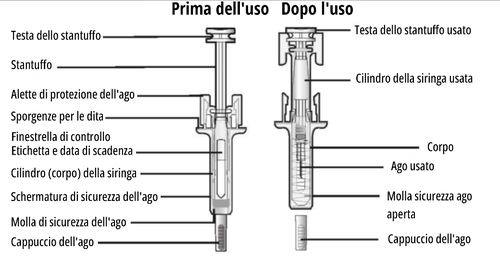
Instructions for administering a Yesintek injection.
At the start of treatment, your doctor will assist you with the first injection. However, you and
your doctor can decide if you can inject Yesintek yourself. If so, you will be taught how
to inject Yesintek yourself. Tell your doctor if you have any questions
about self-injection.
- Do not mix Yesintek with other liquids for injection.
- Do not shake the pre-filled syringes of Yesintek, as vigorous shaking can damage the medicine. Do not use the medicine if it has been shaken vigorously.
1. Check the number of pre-filled syringes and prepare the materials
Prepare for the use of the pre-filled syringes.
- Remove the pre-filled syringe or pre-filled syringes from the refrigerator. Leave the pre-filled syringe out of its packaging for about half an hour. This will allow the liquid to reach a comfortable temperature for injection (room temperature). Do not remove the needle protective cap while waiting to reach room temperature.
- Hold the pre-filled syringe by the body of the syringe with the covered needle pointing upwards.
- Do not hold by the plunger head, the plunger, the needle shield, or the needle protective cap.
- Do not pull back the plunger under any circumstances.
- Do not attempt to remove the needle shield from the pre-filled syringe
- Do not remove the needle cap from the pre-filled syringe until it is necessary.
- Check the pre-filled syringe to ensure that the number of pre-filled syringes and the dose are correct. If your dose is 45 mg, you will take a 45 mg pre-filled syringe of Yesintek. If your dose is 90 mg, you will take two 45 mg pre-filled syringes of Yesintek and you will need to administer two injections. Choose two different body sites for these injections (for example, one injection on the right thigh and the other injection on the left thigh), and proceed with the injections one after the other
- the medicine is the correct one
- the medicine has not expired
- the pre-filled syringe is not damaged
- The solution contained in the pre-filled syringe is clear, from colorless to pale yellow
- the liquid in the pre-filled syringe does not have an altered or cloudy color and does not contain foreign particles
- the solution in the pre-filled syringe is not frozen
- Gather everything needed and place it on a well-lit, clean, and flat surface. There should be antiseptic wipes, a cotton ball or gauze, and a sharps container.
Storage information
Yesintek pre-filled syringes must be stored in a refrigerator at a temperature between
2 °C and 8 °C (between 36 °F and 46 °F) in the original packaging to protect them from light until the time
of use.
- Do not freeze. Do not shake.
- If necessary, individual pre-filled syringes can be stored at room temperature up to 30 °C (86 °F) for a single period of no more than 30 days in the original packaging to protect them from light.
- Once stored at room temperature, the syringe should not be returned to the refrigerator.
- Discard the syringe if it is not used within 30 days of storage at room temperature.
Gather the materials
Gather everything needed and place it on a well-lit, clean, and flat surface. This includes:
- antiseptic wipes,
- a cotton ball or gauze,
- a sharps container
- the prescribed dose for the Yesintek injection ( see Figure 2 )
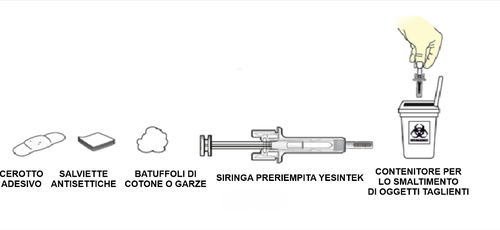
Figure 2
2. Choose the injection site and prepare it
Choose a site for the injection (see Figure 3)
- Yesintek is administered by injection under the skin (subcutaneously).
- A good place for the injection is the upper thigh or around the abdomen (belly) at least 5 cm away from the navel.
- If possible, do not choose areas of skin with signs of psoriasis.
- If someone assists you during the injection, you can also choose the upper arms as the injection site.
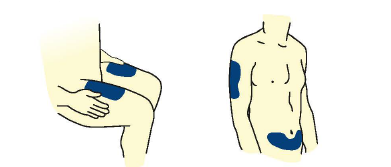
Figure 3
*The blue areas are the recommended injection sites.
Prepare the injection site
- Choose a well-lit, clean and flat work surface.
- Wash your hands thoroughly with soap and warm water.
- Rub the injection site on the skin with an antiseptic wipe.
- Do nottouch this area again before performing the injection. Wait for the skin to dry before performing the injection.
- Remove the tray of the pre-filled syringe from the packaging
- Open the tray by peeling back the cover to remove it. Hold the needle shield (as shown in Figure 4) to remove the pre-filled syringe from the tray.
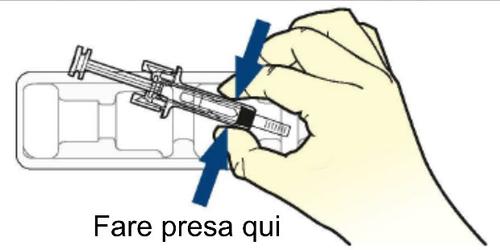
Figure 4
- Hold the pre-filled syringe with the needle covered facing upwards.
3. Remove the protective cap from the needle (see Figure 5)
- The protective cap of the needle must notbe removed until you are ready to inject the dose.
- Take the pre-filled syringe, hold the syringe by its body with one hand.
- Remove the protective cap from the needle and discard it. Do not touch the plunger while performing this operation.
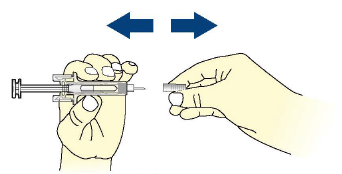
Figure 5
- If you should notice an air bubble in the pre-filled syringe or a drop of liquid on the tip of the needle, this is normal. They should not be removed.
- Do not touch the needle and avoid letting the needle touch any surface
- Do not use the pre-filled syringe if it is pulled out without the protective cap of the needle in place. If this should happen, contact your doctor or pharmacist.
- Inject the contents immediately after removing the protective cap from the needle.
4. Inject the dose
- Hold the pre-filled syringe in one hand between your middle and index fingers and place your thumb on top of the plunger head. Use your other hand to gently pinch the cleaned skin area, holding it between your thumb and index finger. Do not pinch too hard.
- Do not squeeze the syringe forcefully.
- Do not pull back the plunger in any way.
- With one quick motion, insert the needle into the skin until it is fully inserted (see Figure 6).
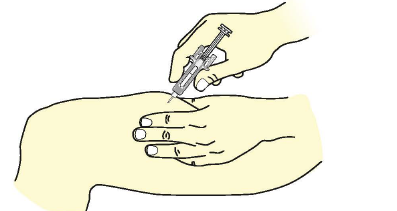
Figure 6
Inject all of the liquid by pushing the plunger until the plunger head is
completely between the needle shield wings (see Figure 7).
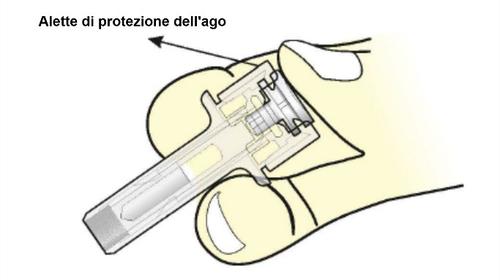
Figure 7
Push the plunger until it reaches the end of its stroke and continue to
hold down the plunger head while withdrawing the needle and gently releasing the
skin (see Figure 8).
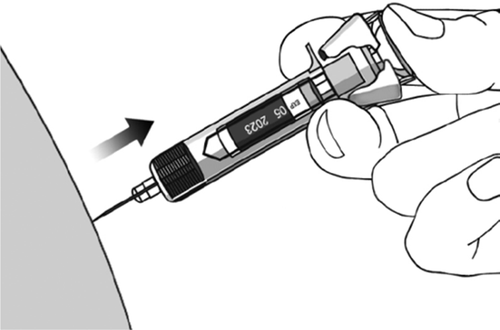
Figure 8
Slowly remove your thumb from the plunger head to allow the
empty syringe to rise upwards and the needle to be completely covered by the
shield wings, as shown in Figure 9.
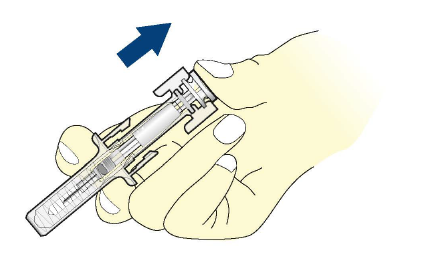
Figure 9
5. After the injection
- Press an antiseptic swab on the injection site for a few seconds after the injection.
- There may be a small amount of blood or fluid at the injection site. This is normal.
- You can press a cotton ball or gauze on the injection site and hold it for 10 seconds.
- Do not rub the skin at the injection site: you can cover the injection site with a small bandage, if necessary.
6. Disposal
- Used syringes must be placed in a puncture-resistant container, such as a sharps container (see figure 10). For your health and safety and the safety of others, never reuse the syringe. Dispose of the sharps container in accordance with local regulations.
- Antiseptic swabs and other devices can be disposed of in the waste.
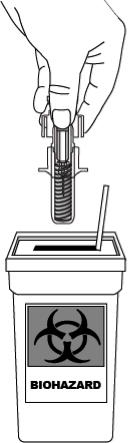
Figure 10
Produced by:
Biosimilar Collaborations Ireland Limited
Block B, The Crescent Building, Santry Demesne
Dublin
D09 C6X8
Ireland
Marketed by:
Biosimilar Collaborations Ireland Limited
Unit 35/36
Grange Parade,
Baldoyle Industrial Estate,
Dublin 13, DUBLIN
Ireland, D13 R20R
Revision: MM/AAAA
Yesintek 90 mg solution for injection in pre-filled syringe
ustekinumab
This medicine is subject to additional monitoring. This will allow the rapid
identification of new safety information. You are invited to contribute by reporting any
side effects you experience. For details on how to report side effects, see the end of
section 4.
Read this leaflet carefully before using this medicine as it contains important
information for you.
This leaflet is written for people who are taking this medicine. If you are the parent or
carer of a child to whom Yesintek needs to be administered, read
this information carefully before administration.
- Keep this leaflet. You may need to read it again.
- If you have any questions, ask your doctor or pharmacist.
- This medicine has been prescribed for you only. Do not pass it on to others, even if their symptoms are the same as yours, as it could be harmful.
- If you get any side effects, even those not listed in this leaflet, tell your doctor or pharmacist. See section 4. Contents of this leaflet:
- 1. What Yesintek is and what it is used for
- 2. What you need to know before you use Yesintek
- 3. How to use Yesintek
- 4. Possible side effects
- 5. How to store Yesintek
- 6. Contents of the pack and other information
1. What is Yesintek and what is it for?
What is Yesintek
Yesintek contains the active substance “ustekinumab”, a monoclonal antibody.
Monoclonal antibodies are proteins that recognize and bind to specific proteins
present in the body.
Yesintek belongs to a group of medicines called “immunosuppressants”. These medicines
reduce the activity of the immune system to some extent.
What is Yesintek for
Yesintek is used to treat the following inflammatory diseases:
- plaque psoriasis (in adults and children from 6 years of age)
- psoriatic arthritis (in adults)
- moderate to severe Crohn's disease in adults
Plaque psoriasis
Plaque psoriasis is a skin condition that causes inflammation of the skin and nails.
Yesintek will reduce inflammation and other signs of the disease.
Yesintek is used in adults with moderate to severe plaque psoriasis, who cannot use
cyclosporine, methotrexate or phototherapy, or in whom these treatments do not work.
Yesintek is used in children and adolescents from 6 years of age with moderate to severe plaque psoriasis
who cannot tolerate phototherapy or other systemic therapies or when these treatments
have not worked.
Psoriatic arthritis
Psoriatic arthritis is an inflammatory disease of the joints, usually accompanied by
psoriasis. If you have active psoriatic arthritis you will first be treated with other medicines. If you should
not respond adequately to these medicines, you may take Yesintek to:
- reduce the signs and symptoms of the disease
- improve physical function
- slow down joint damage
Crohn's disease
Crohn's disease is an inflammatory disease of the intestine. If you have Crohn's disease you will
be treated first with other drugs. If you do not respond well enough or are intolerant to these
medicines, you may be given Yesintek to reduce the signs and symptoms of your disease.
2. What you need to know before using Yesintek
Do not use Yesintek
- If you are allergic to ustekinumabor to any of the other ingredients of this medicine (listed in section 6).
- If you have an active infectionthat your doctor considers important.
If you are not sure whether any of the above conditions apply to you, talk to your doctor or pharmacist before using Yesintek.
Warnings and precautions
Talk to your doctor or pharmacist before using Yesintek. Your doctor will check your health before each treatment. Make sure to tell your doctor about any illnesses you have before each treatment. Also, tell your doctor if you have recently been in contact with people who may have had tuberculosis. Your doctor will examine you and perform tests for tuberculosis before giving you Yesintek. If your doctor believes you are at risk of tuberculosis, they may give you medicines to treat tuberculosis.
Pay attention to serious side effects
Yesintek can cause serious side effects, including allergic reactions and infections. You should pay attention to certain signs of illness while taking Yesintek. See “Serious side effects” in section 4 for a complete list of these side effects.
Contact your doctor before using Yesintek
- If you have ever had an allergic reaction toYesintek. Ask your doctor if you are not sure.
- If you have ever had any type of cancer- because immunosuppressants like Yesintek partially weaken the immune system. This can increase the risk of cancer.
- If you have been treated for psoriasis with other biologic medicines (a medicinal productderived from a biological source and usually administered by injection)- the risk of cancer may be higher.
- If you have or have had a recent infection.
- If you have ever had any new or changed lesionwithin the area of psoriasis or on normal skin.
- If you are taking any other type of treatment for psoriasis and/or psoriatic arthritis- such as another immunosuppressant or phototherapy (when the body is treated with a type of ultraviolet (UV) light). These treatments can also partially reduce the activity of the immune system. The simultaneous use of these therapies with Yesintek has not been studied. However, it is possible that it may increase the possibility of conditions related to a weakened immune system.
- If you are using or have ever used injections for the treatment of allergies- it is not known whether Yesintek can have an effect on them.
- If you are 65 years of age or older- you may have a greater chance of getting infections.
If you are not sure whether any of the conditions mentioned above may apply to you, talk to your doctor or pharmacist before undergoing treatment with Yesintek.
During treatment with ustekinumab, some patients have experienced reactions similar to lupus, including cutaneous lupus or lupus-like syndrome. Contact your doctor immediately if you develop a red, raised, scaly rash, sometimes with a darker edge, in areas of skin exposed to the sun or with joint pain.
Heart attack and stroke
In a study of patients with psoriasis treated with Yesintek, heart attack and stroke were observed. Your doctor will regularly check your risk factors for heart disease and stroke to ensure they are treated appropriately. Contact a doctor immediately if you develop chest pain, weakness or an unusual sensation on one side of your body, facial drooping, or abnormalities in speech or vision.
Children and adolescents
Yesintek is not recommended for the treatment of children with psoriasis under the age of 6, or for the treatment of children under the age of 18 with psoriatic arthritis, Crohn’s disease because it has not been studied in this age group.
Other medicines, vaccines and Yesintek
Tell your doctor or pharmacist:
- if you are taking, have recently taken or might take any other medicines
- if you have recently been vaccinated or are about to be vaccinated. Some types of vaccines (live vaccines) should not be given while you are using Yesintek.
- if you received Yesintek during pregnancy, inform your child’s pediatrician about the Yesintek treatment before your child receives any vaccines, including live vaccines such as the BCG vaccine (used for the prevention of tuberculosis). If you received Yesintek during pregnancy, live vaccines are not recommended for your child in the first twelve months after birth, unless your child’s pediatrician recommends otherwise.
Pregnancy and breastfeeding
- If you are pregnant, suspect you may be pregnant or are planning to become pregnant, ask your doctor for advice before taking this medicine.
- No increased risk of birth defects has been observed in newborns exposed to Yesintek in the womb. However, there is limited experience with Yesintek in pregnant women. Therefore, it is preferable to avoid the use of Yesintek during pregnancy.
- If you are of childbearing potential, it is advisable to avoid becoming pregnant; you should use adequate contraception during use of Yesintek and for at least 15 weeks after stopping treatment with Yesintek.
- Ustekinumab can reach the unborn child through the placenta. If you received Yesintek during pregnancy, your child may have an increased risk of infection.
- If you received Yesintek during pregnancy, it is important to inform your pediatrician and other healthcare professionals before your child receives any vaccines. If you received Yesintek during pregnancy, live vaccines such as the BCG vaccine (used for the prevention of tuberculosis) are not recommended for your child in the first twelve months after birth, unless your pediatrician recommends otherwise.
- Ustekinumab may be excreted in small amounts in breast milk. If you are breastfeeding or planning to breastfeed, ask your doctor for advice. You and your doctor will decide whether to breastfeed or use Yesintek. You cannot do both.
Driving and using machines
Yesintek does not alter or negligibly alters the ability to drive vehicles or use machines.
Yesintek contains Polysorbate 80 (E433)
This medicine contains 0.04 mg of polysorbate 80 (E 433) in each 90 mg/1mL PFS, which is equivalent to 0.04 mg/mL (0.0004 mg/kg/day). Polysorbates can cause allergic reactions. Tell your doctor if you have known allergies to it or your child.
3. How to use Yesintek
Yesintek is intended for use under the guidance and supervision of a doctor experienced in the treatment of the conditions for which Yesintek is indicated.
Use this medicine following the doctor's instructions exactly. If you have any doubts, consult your
doctor. Discuss with your doctor when you will need to have the injections and subsequent check-up visits.
How much Yesintek is administered
Your doctor will decide how much Yesintek you need and for how long.
Adults starting from 18 years of age
Psoriasis and psoriatic arthritis
- The recommended starting dose is 45 mg of Yesintek. Patients with a weight greater than 100 kilograms (kg) may start with a dose of 90 mg instead of 45 mg.
- After the initial dose, you will receive the next dose 4 weeks later, and then every 12 weeks. Subsequent doses are usually the same as the initial dose.
Crohn's Disease
- During treatment, the first dose of approximately 6 mg/kg of Yesintek will be administered to you by your doctor via an intravenous infusion into a vein in your arm. After the initial dose, you will receive the next dose of 90 mg of Yesintek after 8 weeks, then every 12 weeks with an injection under the skin (subcutaneous route).
- In some patients, after the first subcutaneous injection, the 90 mg dose of Yesintek may be administered every 8 weeks. Your doctor will decide when you should receive the next dose.
Children and adolescents starting from 6 years of age
Psoriasis
- The doctor will calculate the correct dose, including the amount (volume) of Yesintek that must be injected to ensure the administration of the correct dose. The correct dose will depend on the child's body weight at the time of each dose.
- A 45 mg vial is available if you need a dose less than 45 mg.
- If the body weight is less than 60 kg, the recommended dose is 0.75 mg of Yesintek per kg of body weight.
- If the body weight is between 60 kg and 100 kg, the recommended dose is 45 mg of Yesintek.
- If the weight exceeds 100 kg, the recommended dose is 90 mg of Yesintek.
- After the initial dose, you will need to receive the next dose after 4 weeks, and subsequently every 12 weeks.
How Yesintek is administered
- Yesintek is administered by a subcutaneous injection (“subcutaneously”). At the beginning of treatment, medical or nursing staff may inject Yesintek for you.
- However, you and your doctor can decide whether you can inject Yesintek yourself. In this case, you will be taught how to inject Yesintek yourself.
- For instructions on how to inject Yesintek, see “Instructions for Use” at
Inform your doctor if you have any questions about the injection to be performed yourself.
If you use more Yesintek than you should
If you have used or received too much Yesintek, inform your doctor or pharmacist immediately. Always
bring the outer packaging of the medicine with you, even if it is empty.
If you forget to use Yesintek
If you forget a dose, contact your doctor or pharmacist. Do not take a double dose to make up for
the missed dose.
If you stop using Yesintek
It is not dangerous to stop using Yesintek. However, if you stop treatment, the symptoms
may reappear. If you have further questions about the use of this medicine, ask your
doctor or pharmacist.
4. Possible side effects
Like all medicines, this medicine can cause side effects, although not everyone will experience them.
Serious side effects
Some patients may experience serious side effects that may require treatment.
Allergic reactions – these may require urgent medical attention, so contact your doctor or seek urgent medical assistance if you notice any of the following signs.
- Severe allergic reactions (“anaphylaxis”) are rare in patients taking Yesintek (affecting up to 1 in 1,000 patients). Signs include: o difficulty breathing or swallowing o low blood pressure, which can cause dizziness or lightheadedness o swelling of the face, lips, mouth or throat.
- Common signs of an allergic reaction include skin rash and hives (affecting up to 1 in 100 patients). In rare cases, allergic lung reactions and pulmonary inflammation have been reported in patients receiving ustekinumab. Immediately inform your doctor if you develop symptoms such as cough, shortness of breath, and fever.
If you experience a severe allergic reaction, your doctor may decide that you should not use Yesintek again.
Infections – these may require urgent medical attention, so contact your doctor immediately if you notice any of the following signs.
- Infections of the nose and throat and the common cold are common (affecting up to 1 in 10 patients).
- Chest infections are uncommon (may affect up to 1 in 100 patients)
- Inflammation of the subcutaneous tissue (‘cellulitis’) is uncommon (affecting up to 1 in 100 patients).
- Herpes zoster (a type of painful skin rash with blisters) is uncommon (affecting up to 1 in 100 patients).
Yesintek may decrease your ability to fight infections. Some infections may become serious and may include infections caused by viruses, fungi, bacteria (including tuberculosis) or parasites, including infections that occur mainly in people with weakened immune systems (opportunistic infections). Opportunistic infections of the brain (encephalitis, meningitis), lungs, and eyes have been reported in patients treated with ustekinumab.
You should be attentive to signs of infection while using Yesintek. These include:
- fever, flu-like symptoms, night sweats, weight loss
- feeling tired or short of breath, persistent cough
- warm, red, and painful skin, or a painful, blistering rash
- burning when urinating
- diarrhea
- vision disturbance or loss of vision
- headache, stiff neck, sensitivity to light, nausea, or confusion
Immediately inform your doctor if you notice any of these signs of infection. These may be signs of infections such as chest infections, skin infections, herpes zoster, or opportunistic infections that may have serious complications. See your doctor if you have any type of infection that persists or continues to recur. Your doctor may decide to stop Yesintek until the infection resolves. Also, inform your doctor if you have any cuts or open wounds that may become infected.
Skin peeling – increased redness and scaling of the skin over a large area of the body may be symptoms of erythrodermic psoriasis or exfoliative dermatitis, which are serious skin conditions. If you notice any of these signs, you should immediately inform your doctor.
Other side effects
Common side effects(affecting up to 1 in 10 patients)
- Diarrhea
- Nausea
- Vomiting
- Feeling tired
- Feeling dizzy
- Headache
- Itching
- Back, muscle, or joint pain
- Sore throat
- Redness and pain at the injection site
- Sinusitis
Uncommon side effects(affecting up to 1 in 100 patients)
- Dental infection
- Vaginal fungal infection
- Depression
- Stuffy or runny nose
- Bleeding, bruising, stiffness, swelling, and itching at the injection site
- Feeling weak
- Drooping eyelid and muscle relaxation on one side of the face (“facial paralysis” or “Bell's palsy”), which is usually temporary
- A change in psoriasis with redness and small, yellow or white pustules, sometimes accompanied by fever (pustular psoriasis)
- Skin peeling (exfoliation of the skin)
- Acne Rare side effects(affecting up to 1 in 1,000 patients)
- Redness and scaling of the skin over a large area of the body, which may be itchy or painful (exfoliative dermatitis). Similar symptoms sometimes develop as a natural progression in the type of psoriasis symptoms (erythrodermic psoriasis)
- Inflammation of small blood vessels, which can lead to a rash with small
bumps that are red or purple, fever, or joint pain (vasculitis)
Very rare side effects(affecting up to 1 in 10,000 patients)
- Blistering skin with possible redness, itching, and pain (bullous pemphigoid).
- Cutaneous lupus or lupus-like syndrome (red, raised, and scaly rash on areas of skin exposed to the sun, sometimes with joint pain). Reporting of side effectsIf you get any side effect, talk to your doctor or pharmacist. This includes any possible side effects not listed in this leaflet. You can also report side effects directly through the national reporting system listed in Annex V. By reporting side effects you can help provide more information on the safety of this medicine.
5. How to store Yesintek
- Keep this medicine out of the sight and reach of children.
- Store in a refrigerator (2°C - 8°C). Do not freeze.
- Keep the pre-filled syringe in the outer packaging, to protect the medicine from light.
- If necessary, individual pre-filled syringes of Yesintek can also be stored at room temperature up to 30°C, for a single period of a maximum of 30 days, in the outer packaging in order to protect them from light. Record the date on which the pre-filled syringe is removed from the refrigerator for the first time and the date it should be discarded in the space provided on the outer packaging. The discard date must not exceed the original expiry date printed on the packaging. Once a syringe has been stored at room temperature (up to 30°C), it must not be returned to the refrigerator. Discard the syringe if not used within 30 days at room temperature or by the original expiry date, whichever is earlier.
- Do not shake the pre-filled syringes of Yesintek. Prolonged vigorous shaking may damage the medicine.
Do not use this medicine
- After the expiry date that is stated on the label and the outer packaging after EXP or Scad. The expiry date refers to the last day of the month.
- After the disposal date stated on the packaging; after storage at room temperature within 30 °C for more than 30 days.
- If the liquid has a changed colour, is cloudy or if you see foreign particles floating (see section 6 “Description of Yesintek and contents of the pack”).
- If you know or suspect that the medicine has been exposed to extreme temperatures (e.g. accidentally frozen or heated).
- If the product has been shaken vigorously.
Yesintek is for single use. Any unused product remaining in the syringe must be discarded.
Do not dispose of any medicines via wastewater or household waste. Ask your pharmacist how to
dispose of medicines you no longer use. This will help protect the environment.
6. Contents of the pack and other information
What Yesintek contains
- The active substance is ustekinumab. Each pre-filled syringe contains 90 mg of ustekinumab in 1 mL.
- The excipients are: L-histidine, L-histidine monohydrochloride monohydrate, polysorbate 80 (E433), sucrose, Sodium Hydroxide (for pH adjustment), Hydrochloric Acid (for pH adjustment) and water for injections.
- This medicine contains 0.04 mg of polysorbate 80 (E 433) in each 90 mg/1mL PFS, which is equivalent to 0.04 mg/mL (0.0004 mg/kg/day). Polysorbates can
cause allergic reactions. Tell your doctor if you or your child have any known allergies.
Description of the appearance ofYesintek and contents of the pack
Yesintek is a clear, colorless to pale yellow injectable solution. It is supplied in a
cardboard pack containing 1 single-dose, 1 mL glass pre-filled syringe. Each
pre-filled syringe contains a dose of ustekinumab 90 mg in 1 mL of solution for injection.
Marketing Authorisation Holder
Biosimilar Collaborations Ireland Limited
Unit 35/36 Grange Parade,
Baldoyle Industrial Estate,
Dublin 13, DUBLIN
Ireland, D13
R20R
Manufacturer
Biosimilar Collaborations Ireland Limited
Block B, The Crescent Building, Santry Demesne
Dublin
D09 C6X8
Ireland
For further information on this medicine, contact the local representative of the marketing authorisation holder:
België/Belgique/Belgien
Biocon Biologics Belgium BV
Tél/Tel: 0080008250910
Lietuva
Biosimilar Collaborations Ireland Limited
Tel: 0080008250910
България
Biosimilar Collaborations Ireland Limited
Тел: 0080008250910
Luxembourg/Luxemburg
Biocon Biologics France S.A.S
Tél/Tel: 0080008250910
(Belgique/Belgien)
Česká republika
Biocon Biologics Germany GmbH
Tel: 0080008250910
Magyarország
Biosimilar Collaborations Ireland Limited
Tel.: 0080008250910
Danmark
Biocon Biologics Finland OY
Tlf: 0080008250910
Malta
Biosimilar Collaborations Ireland Limited
Tel.: 0080008250910
Deutschland
Biocon Biologics Germany GmbH
Tel: 0080008250910
Nederland
Biocon Biologics France S.A.S
Tel: 0080008250910
Eesti
Biosimilar Collaborations Ireland Limited
Tel: 0080008250910
Norge
Biocon Biologics Finland OY
Tlf: +47 800 62 671
Ελλάδα
Biocon Biologics Greece ΜΟΝΟΠΡΟΣΩΠΗ
Österreich
Biocon Biologics Germany GmbH
Ι.Κ.Ε
Τηλ.: 0080008250910
Tel: 0080008250910
España
Biocon Biologics Spain S.L.
Tel: 0080008250910
Polska
Biosimilar Collaborations Ireland Limited
Tel: 0080008250910
France
Biocon Biologics France S.A.S
Tel: 0080008250910
Portugal
Biocon Biologics Spain S.L.
Tel: 0080008250910
Hrvatska
Biocon Biologics Germany GmbH
Tel: 0080008250910
România
Biosimilar Collaborations Ireland Limited
Tel: 0080008250910
Ireland
Biosimilar Collaborations Ireland Limited
Tel: 1800 777 794
Slovenija
Biosimilar Collaborations Ireland Limited
Tel: 0080008250910
Ísland
Biocon Biologics Finland OY
Sími: +345 800 4316
Slovenskárepublika
Biocon Biologics Germany GmbH
Tel: 0080008250910
Italia
Biocon Biologics Spain S.L .
Tel: 0080008250910
Suomi/Finland
Biocon Biologics Finland OY
Puh/Tel: 99980008250910
Κύπρος
Biosimilar Collaborations Ireland Limited
Τηλ: 0080008250910
Sverige
Biocon Biologics Finland OY
Tel: 0080008250910
Latvija
Biosimilar Collaborations Ireland Limited
Tel: 0080008250910
More detailed information on this medicine is available on the website of the European Medicines Agency: http://www.ema.europa.eu .
Instructions for administration
Figure 1 shows the appearance of the pre-filled syringe.
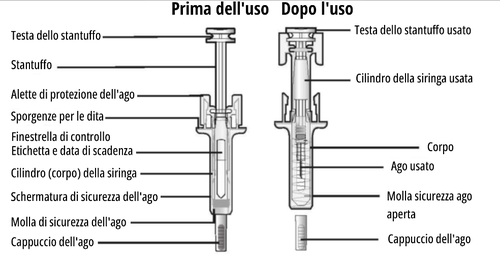
Instructions for administration
At the beginning of treatment, your doctor will assist you with the first injection. However, you and your doctor
may decide if you can inject Yesintek yourself. In this case, you will be taught how to inject Yesintek yourself.
Tell your doctor if you have any questions about the injection to be performed yourself.
- Do not mix Yesintek with other liquids for injection.
- Do not shake the pre-filled syringes of Yesintek, as vigorous shaking can damage the medicine. Do not use the medicine if it has been shaken vigorously.
1. Check the number of prefilled syringes and prepare the materials
Prepare for the use of the prefilled syringes.
- Remove the prefilled syringe or prefilled syringes from the refrigerator. Leave the prefilled syringe out of its packaging for about half an hour. This will allow the liquid to reach a comfortable temperature for injection (room temperature). Do not remove the needle protective cap while waiting to reach room temperature.
- Hold the prefilled syringe by the body of the syringe with the covered needle pointing upwards.
- Do not hold by the plunger head, the plunger, the needle shield, or the needle protective cap.
- Do not pull back the plunger under any circumstances.
- Do not attempt to remove the needle shield from the prefilled syringe
- Do not remove the needle cap from the prefilled syringe until it is necessary.
- Check the prefilled syringe to ensure that the number of prefilled syringes and the dose are correct. If your dose is 90 mg, you will take a 90 mg prefilled syringe of Yesintek
- the medicine is the correct one
- the medicine has not expired
- the prefilled syringe is not damaged
- The solution contained in the prefilled syringe is clear, from colorless to pale yellow
- the liquid in the prefilled syringe does not have an altered or cloudy color and does not contain foreign particles
- the solution in the prefilled syringe is not frozen.
- Gather everything you need and place it on a well-lit, clean, and flat surface. There should be antiseptic wipes, a cotton ball or gauze, and a sharps container. Storage information
The prefilled syringes must be stored in a refrigerator at a temperature between 2 °C and 8 °C
(36 °F and 46 °F) in the original packaging to protect them from light until the time of use.
- Do not freeze. Do not shake.
- If necessary, individual prefilled syringes can be stored at room temperature up to 30 °C (86 °F) for a single period of no more than 30 days in the original packaging to protect them from light.
- Once stored at room temperature, the syringe should not be returned to the refrigerator.
- Discard the syringe if it is not used within 30 days of storage at room temperature.
Gather the materials
Gather everything you need and place it on a well-lit, clean, and flat surface. This includes:
- antiseptic wipes,
- a cotton ball or gauze,
- a sharps container
- the prescribed dose for the Yesintek injection (see Figure 2)
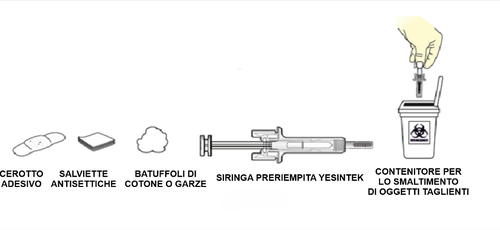
Figure 2
2. Choose the injection site and prepare it
Choose a site for the injection (see Figure 3).
- Yesintek is administered by injection under the skin (subcutaneously).
- A good place for the injection is the upper thigh or around the abdomen (belly) at least 5 cm away from the navel.
- If possible, do not choose areas of skin with signs of psoriasis.
- If someone assists you during the injection, you can also choose the upper arms as the injection site.
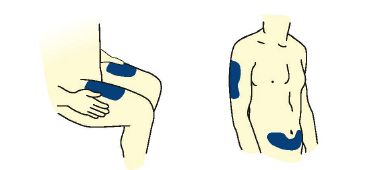
Figure 3
*The blue areas are the recommended injection sites.
Prepare the injection site.
- Wash your hands thoroughly with soap and warm water. Do not touch your face or hair after washing your hands.
- Rub the injection site on the skin with an antiseptic wipe.
- Do nottouch this area again before performing the injection.
- Remove the tray of the prefilled syringe from the packaging.
- Open the tray by peeling back the cover to remove it. Hold the needle shield (as shown in Figure 4) to remove the prefilled syringe from the tray.
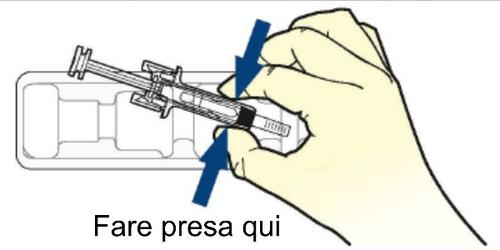
Figure 4
- Hold the prefilled syringe with the needle covered pointing upwards.
3. Remove the protective cap from the needle (see Figure 5)
- The protective cap of the needle must notbe removed until you are ready to inject the dose.
- Take the pre-filled syringe, hold the syringe by its body with one hand.
- Remove the protective cap from the needle and discard it. Do not touch the plunger while performing this operation.
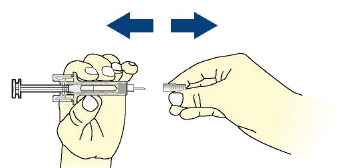
Figure 5
- If you should notice an air bubble in the pre-filled syringe or a drop of liquid on the needle tip, this is normal. They should not be removed.
- Do not touch the needle and avoid letting the needle touch any surface.
- Do not use the pre-filled syringe if it is pulled out without the protective cap of the needle in place. If this should happen, contact your doctor or pharmacist.
- Inject the contents immediately after removing the protective cap from the needle.
4. Inject the dose
- Hold the pre-filled syringe in one hand between your middle finger and index finger and place your thumb on top of the plunger head and use the other hand to gently pinch the cleaned skin area, holding it between your thumb and index finger. Do not pinch too hard.
- Do not pull back on the plunger in any way.
- With one quick motion, insert the needle into the skin until it is as far as it will go (see Figure 6).
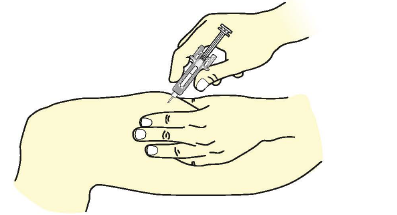
Figure 6
Inject all of the liquid by pushing the plunger until the plunger head is
completely between the needle’s safety wings (see Figure 7).
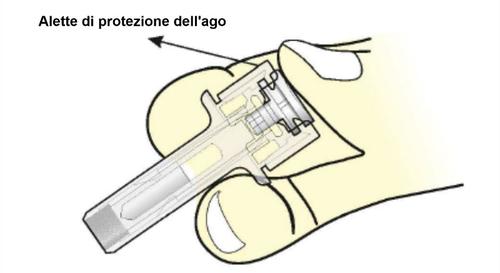
Figure 7
Push the plunger until it reaches the end of its travel and continue to hold
the plunger head pressed down while you withdraw the needle and gently release the skin
(see Figure 8).
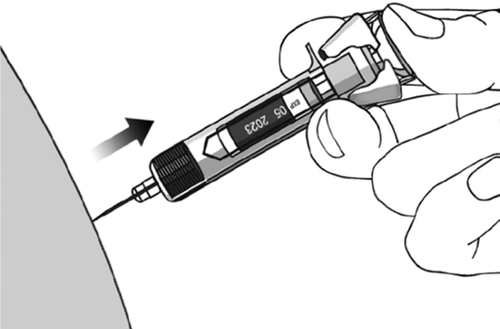
Figure 8
Slowly remove your thumb from the plunger head to allow the empty syringe
to rise back up and the needle to be completely covered by the safety wings, as
shown in Figure 9.
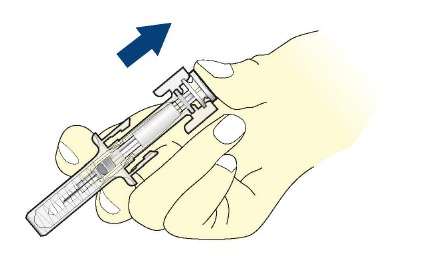
Figure 9
5. After the injection
- Press an antiseptic swab on the injection site for a few seconds after the injection.
- There may be a small amount of blood or fluid at the injection site. This is normal.
- You can press a cotton ball or gauze on the injection site and hold it for 10 seconds.
- Do not rub the skin at the injection site: you can cover the injection site with a small bandage, if necessary.
6. Disposal
- Used syringes must be placed in a puncture-resistant container, such as a sharps container (see Figure 10). For your health and safety and the safety of others, never reuse the syringe. Dispose of the sharps container in accordance with local regulations.
- Antiseptic swabs and other devices can be disposed of in the waste.
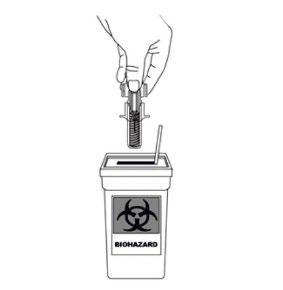
Figure 10
Manufactured by:
Biosimilar Collaborations Ireland Limited
Block B, The Crescent Building, Santry Demesne
Dublin
D09 C6X8
Ireland
Marketed by:
Biosimilar Collaborations Ireland Limited
Unit 35/36 Grange Parade,
Baldoyle Industrial Estate,
Dublin 13, DUBLIN
Ireland, D13 R20R
Revision: MM/AAAA

Виникли питання під час прийому ліків?
Обговоріть свої симптоми та лікування з лікарем онлайн.
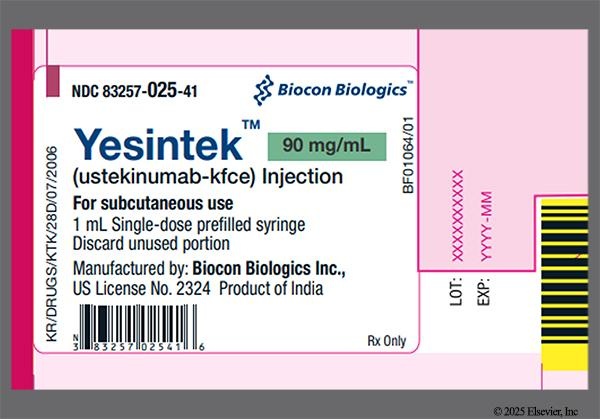
- Країна реєстрації
- Лікарська формаInjectable solution, 45 mg
- Код АТХL04AC05
- Діюча речовина
- Потрібен рецептТак
- Виробник
- Ця інформація надана лише для ознайомлення і не є медичною порадою. Рішення щодо лікування завжди приймає лікар.
- Альтернативи до YESINTEKЛікарська форма: Injectable solution in pre-filled syringe, 45 mgДіюча речовина: УстекинумабВиробник: ACCORD HEALTHCARE, S.L.U.Потрібен рецептЛікарська форма: Injectable solution in pre-filled syringe, 45 mgДіюча речовина: УстекинумабВиробник: FORMYCON AGПотрібен рецептЛікарська форма: Injectable solution in pre-filled syringe, 45 mgДіюча речовина: УстекинумабВиробник: ACCORD HEALTHCARE, S.L.U.Потрібен рецепт
Аналоги YESINTEK в інших країнах
Препарати з тією самою діючою речовиною, доступні в інших країнах.
Аналог YESINTEK у Іспанія
Лікарі онлайн щодо YESINTEK
Застосування, безпека та можливість призначення рецепта — за результатами медичної оцінки.
Отримайте рецепт на YESINTEK онлайн
Заповніть форму за 2 хвилини
Розкажіть про симптоми, історію хвороби та потрібний препарат.
Оберіть лікаря або ми призначимо
Оберіть спеціаліста або ми підберемо найближчого доступного лікаря.
Лікар розглядає ваш випадок
Зазвичай протягом 30 хвилин. Може ставити уточнювальні запитання в чаті.
Отримайте в будь-якій аптеці
Електронний рецепт надсилається на вашу пошту — дійсний по всій Польщі.
Часті запитання
YESINTEK потребує рецепта в Італія. Ви можете обговорити з лікарем онлайн, чи підходить цей лікарський засіб для вашої ситуації.
Діюча речовина у YESINTEK — Устекинумаб. Це допомагає визначити препарати з тим самим складом, але під іншими торговими назвами.
YESINTEK виробляється компанією BIOSIMILAR COLLABORATIONS IRELAND LIMITED. Назва бренду та упаковка можуть відрізнятися залежно від дистрибʼютора.
Лікарі, зокрема Сімейні лікарі, Психіатри, Дерматологи, Кардіологи, Ендокринологи, Гастроентерологи, Пульмонологи, Нефрологи, Ревматологи, Гематологи, Інфекціоністи, Алергологи, Геріатри, Педіатри, Онкологи, можуть оцінити доцільність застосування YESINTEK з урахуванням вашого стану та місцевих правил. Ви можете записатися на онлайн-консультацію, щоб обговорити симптоми та можливі подальші кроки.
Польща має добре розвинену систему охорони здоров'я у великих містах, таких як Варшава, Краків, Вроцлав і Гданськ. Аптеки широко доступні та працюють відповідно до чинного законодавства, забезпечуючи доступ до рецептурних препаратів.
Ви можете придбати YESINTEK у Варшаві, Кракові, Вроцлаві або Гданську в будь-якій аптеці за наявності дійсного рецепта.
Щоб отримати рецепт, ви можете скористатися Oladoctor:
Інші препарати з тією самою діючою речовиною (Устекинумаб) включають ABSIMKY, FYMSKINA, IMULDOSA. Вони можуть відрізнятися торговою назвою або формою випуску, але містять той самий терапевтичний компонент. Перед зміною або початком прийому нового препарату варто проконсультуватися з лікарем.
