



VORTIOXETINA 5 mg Film-Coated Tablets

Запит на рецепт онлайн
Лікар розгляне ваш випадок і визначить, чи є рецепт медично доцільним.

Поговоріть з лікарем про ці ліки
Обговоріть симптоми та можливі подальші кроки під час короткої онлайн-консультації.



Інструкція із застосування VORTIOXETINA EG
Зміст інструкції
VORTIOXETINA EG 5 mg film-coated tablets, 10 mg film-coated tablets, 15 mg film-coated tablets, 20 mg film-coated tablets
Generic medicine
Read this leaflet carefully before taking this medicine, as it contains important information for you.
- Keep this leaflet. You may need to read it again.
- If you have any questions, ask your doctor or pharmacist.
- This medicine has been prescribed for you only. Do not pass it on to others, even if they have the same symptoms as you, as it may be harmful.
- If you get any side effects, even those not listed in this leaflet, tell your doctor or pharmacist (see section 4).
Contents of this leaflet:
- 1. What VORTIOXETINA EG is and what it is used for
- 2. What you need to know before you take VORTIOXETINA EG
- 3. How to take VORTIOXETINA EG
- 4. Possible side effects
- 5. How to store VORTIOXETINA EG
- 6. Contents of the pack and other information
1. What is VORTIOXETINA EG and what it is used for
VORTIOXETINA EG contains the active ingredient vortioxetine. It belongs to the group of medicines called
antidepressants.
This medicine is used for the treatment of major depressive episodes in adults.
Vortioxetina has been shown to reduce the numerous symptoms of depression, including sadness, inner tension
(feeling of anxiety), sleep disturbances (reduced sleep), decreased appetite, difficulty
concentrating, feeling worthless, lack of interest in favorite activities, feeling slowed down.
2. What you need to know before taking VORTIOXETINA EG
Do not take VORTIOXETINA EG:
- if you are allergic to vortioxetine or any of the other ingredients of this medicine (listed in section 6);
- if you are taking other medicines for depression known as non-selective monoamine oxidase inhibitors (MAOIs) or selective MAO-A inhibitors. Ask your doctor if you are not sure.
Warnings and precautions
Talk to your doctor or pharmacist before taking VORTIOXETINA EG:
- if you are taking medicines with a so-called serotonergic effect such as:
- tramadol and similar medicines (strong painkillers);
- sumatriptan and similar medicines with active substance names ending in “triptan” used for the treatment of migraine.
Taking these medicines together with VORTIOXETINA EG may increase the risk of Serotonin
Syndrome. This syndrome can be associated with hallucinations, involuntary contractions, accelerated
heartbeat, high blood pressure, fever, nausea and diarrhoea.
- If you have had seizures. Your doctor will treat you with caution if you have had previous seizures or if you suffer from unstable convulsive/epileptic disease. Seizures are a potential risk associated with medicines used in the treatment of depression. Treatment should be stopped in patients who develop seizures or in case of an increase in the frequency of seizures.
- If you have had manic episodes.
- If you have a tendency to bleed and bruise easily, or if you are pregnant (see section “Pregnancy, breastfeeding and fertility”).
- If you have a low level of sodium in your blood.
- If you are 65 years of age or older.
- If you have a severe kidney disease.
- If you have a severe liver disease or have a liver disease called cirrhosis.
- If you have or have had increased pressure in the eye or glaucoma. If you feel eye pain or your vision starts to become blurred during treatment, contact your doctor.
When you are being treated with antidepressants, including vortioxetine, you may also experience states of aggression,
agitation, anger and irritability. If this happens, talk to your doctor.
Suicidal thoughts and worsening of your depression
If you are depressed and/or suffer from anxiety disorders, you may sometimes think about harming yourself or committing suicide. These
thoughts may increase at the beginning of treatment with antidepressants, as these medicines need time to work, usually 2 weeks but sometimes even longer.
You are more likely to have these thoughts if:
- you have thought about killing yourself or harming yourself in the past,
- you are a young adult.
Data from clinical studies have shown an increase in the risk of suicidal behaviour in
adults under the age of 25 with psychiatric illnesses treated with antidepressants.
If at any time you should have thoughts of self-harm or suicide, contact your doctor or go
to hospital immediately. You may find help by telling a relative or a close friend that you are
if they think your depression or anxiety is getting worse, or if they are concerned about changes
in your behaviour.
Children and adolescents
Vortioxetina should not be used in paediatric patients (under the age of 18 years) as efficacy has not been
demonstrated. The safety of vortioxetina in children and adolescents aged between 7 and 17
years is described in section 4.
Other medicines and VORTIOXETINA EG
Tell your doctor or pharmacist if you are taking, have recently taken or might take any
other medicines.
Tell your doctor if you are taking any of the following medicines:
- phenelzine, iproniazide, isocarboxazide, nialamide, tranylcypromine (medicines for the treatment of depression called non-selective monoamine oxidase inhibitors, MAOIs); you must not take any of these medicines together with VORTIOXETINA EG. If you have used these medicines you must wait 14 days before using VORTIOXETINA EG. After stopping VORTIOXETINA EG you must wait 14 days before taking these medicines;
- moclobemide (a medicine for the treatment of depression);
- selegiline and rasagiline (medicines for the treatment of Parkinson's disease);
- linezolid (a medicine for the treatment of bacterial infections);
- medicines with a serotonergic effect, e.g. tramadol and similar medicines (strong painkillers) and sumatriptan and similar medicines with active substance names ending in “triptan” used for the treatment of migraine. Taking these medicines together with VORTIOXETINA EG may increase the risk of serotonin syndrome (see section Warnings and precautions);
- lithium (a medicine for the treatment of depression and mental illnesses) or tryptophan;
- medicines that cause lowering of sodium levels in the blood;
- rifampicin (a medicine used to treat tuberculosis and other infections);
- carbamazepine, phenytoin (medicines for the treatment of epilepsy and other diseases);
- warfarin, dipyridamole, phenprocoumone, some antipsychotics, phenothiazines, tricyclic antidepressants, low-dose acetylsalicylic acid and non-steroidal anti-inflammatory drugs (medicines used to make the blood more fluid and medicines used to relieve pain). These may increase the tendency to bleeding.
Medicines that increase the risk of seizures:
- sumatriptan and similar medicines with active substance names ending in “triptan”;
- tramadol (a strong painkiller);
- mefloquine (a medicine for preventing and treating malaria);
- bupropion (a medicine for the treatment of depression and for stopping smoking);
- fluoxetine, paroxetine and other medicines for the treatment of depression called SSRIs/SNRIs, tricyclics;
- St John's Wort (Hypericum perforatum) (a medicine for the treatment of depression);
- quinidine (a medicine for the treatment of heart rhythm disorders);
- chlorpromazine, chlorprothixene, haloperidol (medicines for the treatment of mental disorders that belong to the so-called phenothiazine, thioxanthene, butyrophenone groups).
Tell your doctor if you are taking any of the medicines listed above as they need to know if you are already at
risk of seizures.
Drug tests
If you undergo urine analysis for drug screening, taking VORTIOXETINA EG may
cause false positive results for methadone when certain analytical methods are used, even if you
are not taking methadone. If this happens, a more specific test can be performed.
VORTIOXETINA EG with alcohol
It is not recommended to take VORTIOXETINA EG with alcohol.
Pregnancy, breastfeeding and fertility
If you are pregnant, suspect you are pregnant, or are planning to become pregnant, ask your doctor for advice before taking this medicine.
Pregnancy
This medicine should not be used during pregnancy unless your doctor has said it is
absolutely necessary.
If you take medicines to treat depression, including VORTIOXETINA EG, during the last 3 months of
your pregnancy, you should know that the following effects may occur in the newborn: breathing problems,
bluish skin, seizures, changes in body temperature, difficulty feeding, vomiting,
low blood sugar levels, stiff or floppy muscles, brisk reflexes, tremor, nervousness, irritability,
lethargy, persistent crying, difficulty sleeping. Contact your doctor immediately if the newborn
should experience any of these symptoms.
Make sure that your midwife and/or doctor know that you are taking VORTIOXETINA EG. When
taken during pregnancy, particularly in the last 3 months of pregnancy, medicines such as
VORTIOXETINA EG may increase the risk of a serious condition in babies, called
persistent pulmonary hypertension of the newborn (PPHN), which makes the baby breathe faster and makes
them appear bluish. These symptoms normally start within the first 24 hours after birth. If this should
happen to your baby, you should contact your midwife and/or doctor immediately.
If you take this medicine close to the time of delivery, there may be an increased risk of
heavy vaginal bleeding shortly after delivery, especially if you have a history of bleeding disorders
(easy bleeding). Inform your doctor or midwife that you are taking this
medicine, so they can advise you on what to do.
Breastfeeding
It is expected that the components of this medicine will pass into breast milk. VORTIOXETINA EG should
not be taken during breastfeeding. Your doctor will decide whether to stop breastfeeding or
stop the treatment with this medicine based on an assessment of the benefits
of breastfeeding for the baby and the benefit of therapy for you.
Driving and using machines
This medicine has no or negligible influence on the ability to drive or use machines. In
any case, as side effects such as dizziness have been reported, caution is advised when performing such
activities when starting therapy with VORTIOXETINA EG or when changing the dose.
VORTIOXETINA EG contains sodium
This medicine contains less than 1 mmol (23 mg) of sodium per dose, that is to say essentially “sodium-free”.
3. How to take VORTIOXETINA EG
Take this medicine following exactly the instructions of your doctor. If you have any doubts, ask your
doctor or pharmacist.
The recommended dose of VORTIOXETINA EG, for adults under 65 years of age, is 10 mg of
vortioxetine taken in a daily dose. The dose may be increased by your doctor up to a maximum of
20 mg of vortioxetine per day or reduced to a minimum of 5 mg of vortioxetine per day, depending on
your response to treatment.
Use in elderly patients
In elderly patients 65 years of age or over, the initial dose is 5 mg of vortioxetine taken in a daily dose.
Method of administration
Take one tablet with a glass of water.
The tablet can be taken with or without food.
If you are unable to swallow the tablet whole, other medicines
containing vortioxetine in other pharmaceutical forms may be available on the market.
Duration of treatment
Take this medicine for as long as recommended by your doctor.
Continue to take this medicine even if it takes some time before you see any
improvement in your condition.
Treatment should be continued for at least 6 months after you have started to feel well again.
If you take more VORTIOXETINA EG than you should
If you take a dose of VORTIOXETINA EG greater than that prescribed, contact your
doctor or the emergency room of the nearest hospital immediately. Bring the container and any remaining tablets with you. Do
so even if there are no signs of discomfort. The signs of overdose are dizziness, nausea, diarrhea,
stomach discomfort, itching all over the body, drowsiness and redness.
Following the administration of doses several times higher than the prescribed dose, seizures (convulsions) and a rare condition called serotonin syndrome have been reported.
If you forget to take VORTIOXETINA EG
Take the next dose at the usual time. Do not take a double dose to make up for the missed dose.
If you stop taking VORTIOXETINA EG
Do not stop taking VORTIOXETINA EG without talking to your doctor.
Your doctor may decide to reduce the dose before stopping this treatment definitively.
Some patients who have stopped taking vortioxetine have reported symptoms such as dizziness, headache,
sensations similar to pins and needles or electric shocks (especially in the head), inability to sleep,
feeling unwell or vomiting, feeling anxious, irritability or agitation, fatigue or tremor. These
symptoms may appear within the first week after stopping this medicine.
If you have any doubts about the use of this medicine, ask your doctor or pharmacist.
4. Possible side effects
Like all medicines, this medicine can cause side effects, although not everybody gets them.
In general, the side effects observed have been mild to moderate and have occurred within the first
two weeks of treatment. The reactions were usually temporary and did not lead to
discontinuation of therapy.
The side effects listed below have been reported with the following frequencies.
Very common: may affect more than 1 in 10 people
- nausea.
Common: may affect up to 1 in 10 people
- diarrhoea, constipation, vomiting;
- dizziness;
- itching all over the body;
- abnormal dreams;
- increased sweating;
- indigestion.
Uncommon: may affect up to 1 in 100 people
- flushing;
- night sweats;
- blurred vision;
- involuntary shaking (tremor).
Rare: may affect up to 1 in 1,000 people
- dilated pupils (mydriasis), which may increase the risk of glaucoma (see section 2).
Not known: frequency cannot be estimated from the available data
- low levels of sodium in the blood (symptoms may include feeling dizzy, weak, confused, sleepy or very tired, or feeling sick or vomiting; more severe symptoms are fainting, convulsions or falls);
- serotonin syndrome (see section 2);
- allergic reactions, including severe ones, causing swelling of the face, lips, tongue and throat, difficulty breathing or swallowing and/or sudden drop in blood pressure (feeling dizzy or lightheaded);
- urticaria;
- excessive or unexplained bleeding (including bruising, nosebleeds, bleeding from the stomach and vagina);
- skin rash;
- sleep disorders (insomnia);
- agitation and aggressiveness. If you experience these side effects, contact your doctor (see section 2);
- headache;
- increase of a hormone called prolactin in the blood;
- a constant feeling of restlessness that urges you to move (akathisia);
- teeth grinding (bruxism);
- inability to open the mouth (trismus);
- restless legs syndrome (urge to move the legs to block painful or strange sensations, which often occur at night);
- abnormal secretion of milk from the breast (galactorrhoea).
An increased risk of bone fractures has been observed in patients who have taken this type of
medicine.
An increased risk of sexual dysfunction has been observed with the 20 mg dose and in some patients
this side effect has been observed with lower doses.
Additional side effects in children and adolescents
The side effects observed with vortioxetine in children and adolescents were similar to those
observed in adults, with the exception of events related to abdominal pain, which were observed more
often than in adults, and suicidal thoughts, which were observed more often in adolescents than in
adults.
Reporting of side effects
If you get any side effects, talk to your doctor or pharmacist. This includes any possible side effects not listed in this leaflet. You can also report side effects directly through the national
reporting system at https://www.aifa.gov.it/content/segnalazioni-reazioni-avverse.
By reporting side effects you can help provide more information on the safety of this
medicine.
5. How to store VORTIOXETINA EG
Keep this medicine out of the sight and reach of children.
Do not use this medicine after the expiry date which is stated on the package and blister after Exp. The
expiry date refers to the last day of that month.
This medicine does not require any special storage conditions.
Do not dispose of any medicine in waste water or household waste. Ask your pharmacist how to dispose of
medicines you no longer use. This will help protect the environment.
6. Package contents and other information
What VORTIOXETINA EG contains
VORTIOXETINA EG 5 mg film-coated tablets
- The active ingredient is vortioxetine. Each film-coated tablet contains 5 mg of vortioxetine (as vortioxetine hydrobromide).
- The other ingredients are mannitol (E421), microcrystalline cellulose, hydroxypropylcellulose, sodium carboxymethylcellulose and magnesium stearate in the tablet core and hypromellose, macrogol, titanium dioxide (E171) and red iron oxide (E172) in the tablet coating.
VORTIOXETINA EG 10 mg film-coated tablets
- The active ingredient is vortioxetine. Each film-coated tablet contains 10 mg of vortioxetine (as vortioxetine hydrobromide).
- The other ingredients are mannitol (E421), microcrystalline cellulose, hydroxypropylcellulose, sodium carboxymethylcellulose and magnesium stearate in the tablet core and hypromellose, macrogol, titanium dioxide (E171) and yellow iron oxide (E172) in the tablet coating.
VORTIOXETINA EG 15 mg film-coated tablets
- The active ingredient is vortioxetine. Each film-coated tablet contains 15 mg of vortioxetine (as vortioxetine hydrobromide).
- The other ingredients are mannitol (E421), microcrystalline cellulose, hydroxypropylcellulose, sodium carboxymethylcellulose and magnesium stearate in the tablet core and hypromellose, macrogol, titanium dioxide (E171), red iron oxide (E172) and yellow iron oxide (E172) in the tablet coating.
VORTIOXETINA EG 20 mg film-coated tablets
- The active ingredient is vortioxetine. Each film-coated tablet contains 20 mg of vortioxetine (as vortioxetine hydrobromide).
- The other ingredients are mannitol (E421), microcrystalline cellulose, hydroxypropylcellulose, sodium carboxymethylcellulose and magnesium stearate in the tablet core and hypromellose, macrogol, titanium dioxide (E171) and red iron oxide (E172) in the tablet coating.
Description of the appearance of VORTIOXETINA EG and package contents
VORTIOXETINA EG 5 mg film-coated tablets
Pink, oval (11 mm x 5 mm), biconvex film-coated tablet with “5” imprinted on one side.
VORTIOXETINA EG 10 mg film-coated tablets
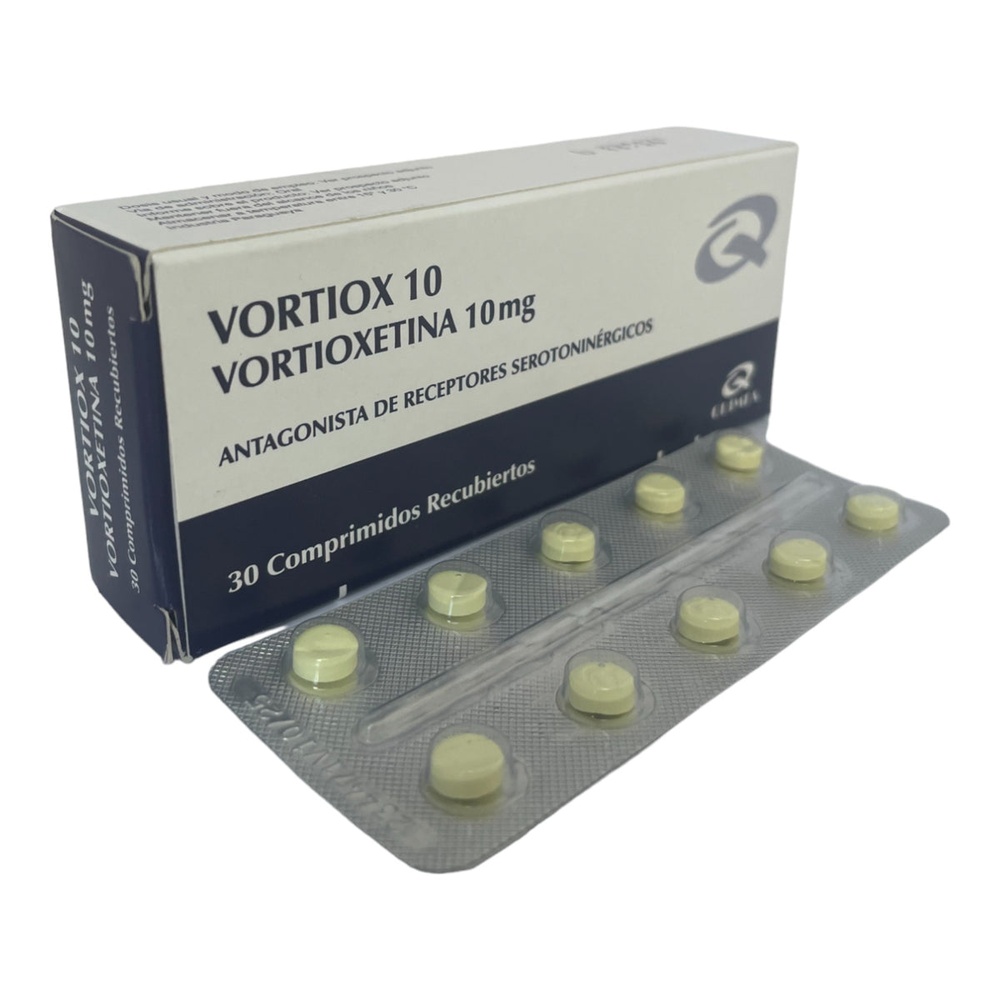
Yellow, oval (13 mm x 6 mm), biconvex film-coated tablet with “10” imprinted on one side.
VORTIOXETINA EG 15 mg film-coated tablets
Light orange, oval (15 mm x 7 mm), biconvex film-coated tablet with “15” imprinted on one side.
VORTIOXETINA EG 20 mg film-coated tablets
Dark red, oval (17 mm x 8 mm), biconvex film-coated tablet with “20” imprinted on one side.
VORTIOXETINA EG film-coated tablets are available in cardboard boxes containing
blisters in PVC/PVdC/Al.
Packs of 14, 28, 56 or 98 film-coated tablets.
Not all pack sizes may be marketed.
Marketing Authorisation Holder
EG S.p.A., via Pavia 6, 20136 Milano
Manufacturers
Pharmadox Healthcare Limited, KW20A Kordin Industrial Estate, Paola PLA 3000 - Malta
Adalvo Limited, Malta Life Sciences Park, Building 1, Level 4, Sir Temi Zammit Buildings, San Gwann,
SGN 3000 - Malta
STADA Arzneimittel AG, Stadastrasse 2 – 18 61118 Bad Vilbel - Germany
Clonmel Healthcare Limited, Waterford Road Clonmel, Co. Tipperary E91 D768 - Ireland
This medicinal product is authorised in the Member States of the European Economic Area with the following
names:
DE Vortioxetin STADA 5 mg; 10 mg; 15 mg; 20 mg Filmtabletten
DK Vortioxetin STADA
ES Vortioxetina STADA 5 mg; 10 mg; 15 mg; 20 mg comprimidos recubiertos con pelicula EFG
FI Vortioxetine STADA 5 mg; 10 mg; 15 mg; 20 mg kalvopäällysteinen tabletti
FR VORTIOXETINE EG, 5/10/15/20 mg, comprimé pelliculé
HR Vortioksetin STADA 5 mg; 10 mg; 15 mg; 20 mg filmom obložene tablete
IT Vortioxetina EG
IE Vortioxetine Clonmel 5 mg; 10 mg; 15 mg; 20 mg film-coated tablets
IS Vortioxetine STADA 5 mg; 10 mg; 15 mg; 20 mg filmuhúðaðar töflur
NO Vortioxetine STADA 5 mg; 10 mg; 15 mg; 20 mg filmdrasjerte tabletter
PT Vortioxetina STADA
PL Vortioxetine Stada
SK Vortioxetín STADA 5 mg; 10 mg; 15 mg; 20 mg filmom obalené tablety
SE Vortioxetine STADA 5 mg; 10 mg; 15 mg; 20 mg filmdragerade tabletter
SI Vortioksetin STADA AG 5 mg; 10 mg; 15 mg; 20 mg filmsko obložene tablete

Не впевнені, чи підходить вам цей лікарський засіб?
Обговоріть симптоми та можливі варіанти лікування з лікарем онлайн.

Виникли питання під час прийому ліків?
Обговоріть свої симптоми та лікування з лікарем онлайн.
- Країна реєстрації
- Лікарська формаFilm-coated tablet, 5 MG
- Код АТХN06AX26
- Діюча речовина
- Потрібен рецептТак
- Виробник
- Ця інформація надана лише для ознайомлення і не є медичною порадою. Рішення щодо лікування завжди приймає лікар.
- Альтернативи до VORTIOXETINA EGЛікарська форма: Film-coated tablet, 5 MGДіюча речовина: vortioxetineВиробник: H. LUNDBECK A/SПотрібен рецептЛікарська форма: Film-coated tablet, 5 MGДіюча речовина: vortioxetineВиробник: MYLAN S.P.A.Потрібен рецептЛікарська форма: Modified-release tablet, 150 MGДіюча речовина: bupropionВиробник: DOC GENERICI SRLПотрібен рецепт
Аналоги VORTIOXETINA EG в інших країнах
Препарати з тією самою діючою речовиною, доступні в інших країнах.
Аналог VORTIOXETINA EG у Іспанія
Аналог VORTIOXETINA EG у Польща
Аналог VORTIOXETINA EG у Україна
Лікарі онлайн щодо VORTIOXETINA EG
Застосування, безпека та можливість призначення рецепта — за результатами медичної оцінки.







Отримайте рецепт на VORTIOXETINA EG онлайн
Заповніть форму за 2 хвилини
Розкажіть про симптоми, історію хвороби та потрібний препарат.
Оберіть лікаря або ми призначимо
Оберіть спеціаліста або ми підберемо найближчого доступного лікаря.
Лікар розглядає ваш випадок
Зазвичай протягом 30 хвилин. Може ставити уточнювальні запитання в чаті.
Отримайте в будь-якій аптеці
Електронний рецепт надсилається на вашу пошту — дійсний по всій Польщі.
Часті запитання
VORTIOXETINA EG потребує рецепта в Італія. Ви можете обговорити з лікарем онлайн, чи підходить цей лікарський засіб для вашої ситуації.
Діюча речовина у VORTIOXETINA EG — vortioxetine. Це допомагає визначити препарати з тим самим складом, але під іншими торговими назвами.
VORTIOXETINA EG виробляється компанією EG S.P.A.. Назва бренду та упаковка можуть відрізнятися залежно від дистрибʼютора.
Лікарі, зокрема Сімейні лікарі, Психіатри, Дерматологи, Кардіологи, Ендокринологи, Гастроентерологи, Пульмонологи, Нефрологи, Ревматологи, Гематологи, Інфекціоністи, Алергологи, Геріатри, Педіатри, Онкологи, можуть оцінити доцільність застосування VORTIOXETINA EG з урахуванням вашого стану та місцевих правил. Ви можете записатися на онлайн-консультацію, щоб обговорити симптоми та можливі подальші кроки.
Польща має добре розвинену систему охорони здоров'я у великих містах, таких як Варшава, Краків, Вроцлав і Гданськ. Аптеки широко доступні та працюють відповідно до чинного законодавства, забезпечуючи доступ до рецептурних препаратів.
Ви можете придбати VORTIOXETINA EG у Варшаві, Кракові, Вроцлаві або Гданську в будь-якій аптеці за наявності дійсного рецепта.
Щоб отримати рецепт, ви можете скористатися Oladoctor:
Інші препарати з тією самою діючою речовиною (vortioxetine) включають BRINTELLIX, VORTIOXETINA VIATRIS, BUPROPIONE DOK. Вони можуть відрізнятися торговою назвою або формою випуску, але містять той самий терапевтичний компонент. Перед зміною або початком прийому нового препарату варто проконсультуватися з лікарем.
