



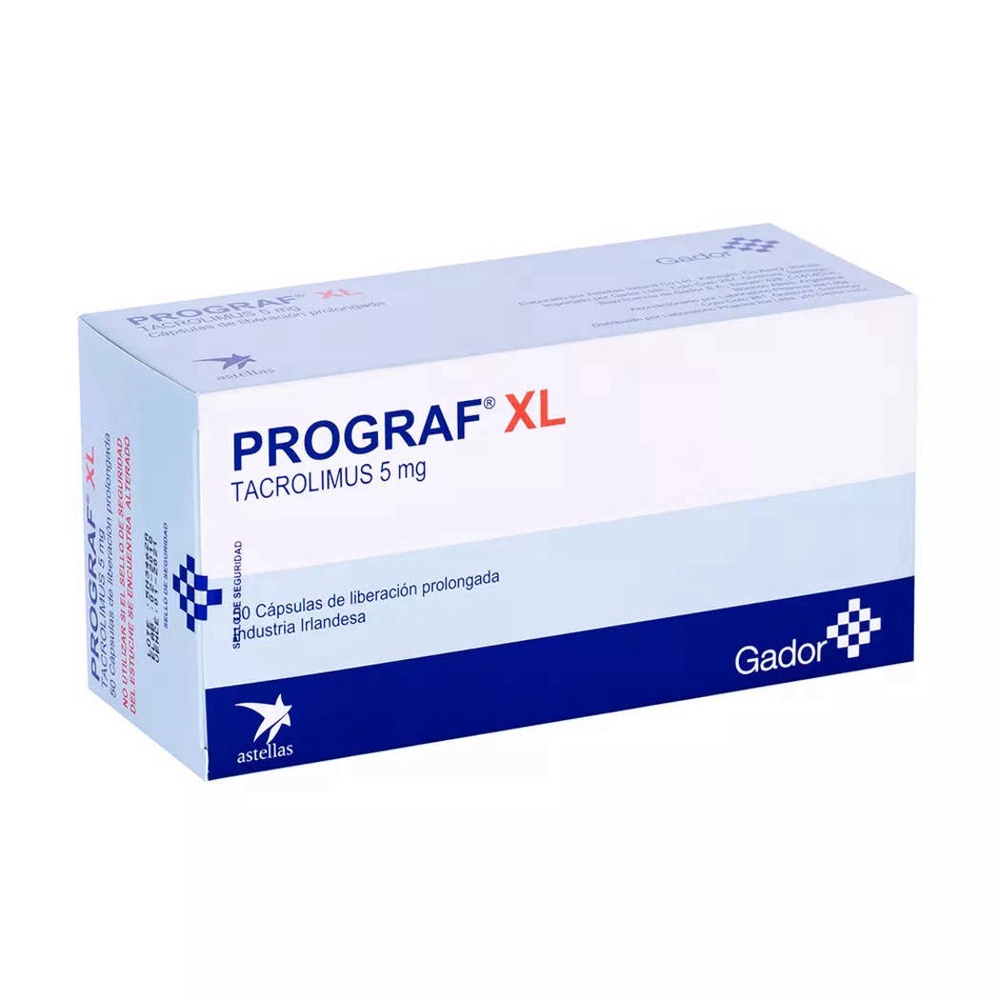
PROGRAF 1 mg Hard Capsule

Запит на рецепт онлайн
Лікар розгляне ваш випадок і визначить, чи є рецепт медично доцільним.

Поговоріть з лікарем про ці ліки
Обговоріть симптоми та можливі подальші кроки під час короткої онлайн-консультації.



Інструкція із застосування PROGRAF
Зміст інструкції
- Prograf 5 mg/ml concentrate for solution for infusion
- Prograf 0.5 mg hard capsules, 1 mg hard capsules, 5 mg hard capsules
Prograf 5 mg/ml concentrate for solution for infusion
Tacrolimus
Read this leaflet carefully before you use this medicine as it contains important
information for you.
- Keep this leaflet. You may need to read it again.
- If you have any questions, ask your doctor, pharmacist or nurse.
- This medicine has been prescribed for you only. Do not pass it on to others, even if their symptoms are the same as yours, as it could be harmful.
- If you get any side effects, even those not listed in this leaflet, tell your doctor, pharmacist or nurse. See section 4.
Contents of this leaflet:
- 1. What Prograf is and what it is used for
- 2. What you need to know before you use Prograf
- 3. How to use Prograf
- 4. Possible side effects
- 5. How to store Prograf
- 6. Contents of the pack and other information
1. What is Prograf and what it is used for
Prograf belongs to a group of medicines called immunosuppressants. Following organ transplantation
(e.g. of liver, kidney, heart) the body's immune system will try to reject the
new organ. Prograf is used to control the body's immune response by putting
the latter in a condition to accept the transplanted organ.
Prograf is often used in association with other medicines that also suppress the immune
system.
You may also receive Prograf for an ongoing rejection of liver, kidney, heart or other transplanted organ
or if one of the treatments you were taking has proven unable to control such immune
response after transplantation.
2. Cosa deve sapere prima di usare Prograf
Non usi Prograf
- Se è allergico (ipersensibile) a tacrolimus o a qualsiasi antibiotico appartenente alla sottoclasse degli antibiotici macrolidi (ad esempio, eritromicina, claritromicina, josamicina).
- Se è allergico (ipersensibile) ad uno qualsiasi degli eccipienti (elencati al paragrafo 6) - in particolare all’olio di ricino poliossidrilato idrogenato o a sostanze simili. Avvertenze e precauzioniSi rivolga al medico, al farmacista o all’infermiere prima di usare Prograf
- Mentre riceve Prograf il medico può richiederle di sottoporsi a una serie di esami (compresi quelli del sangue, delle urine, della funzionalità cardiaca, di controllo della vista e della funzionalità neurologica) di tanto in tanto. Tale procedura è abbastanza normale e aiuta il medico a decidere la dose più appropriata di Prograf per lei.
- Per favore eviti di assumere qualunque rimedio di origine vegetale, per es. l’erba di San Giovanni ( Hypericum perforatum) o qualsiasi altro prodotto di origine vegetale dal momento che esso può modificare l’efficacia e la dose di Prograf che lei necessita di ricevere. Se ha dei
dubbi consulti per favore il medico prima di assumere qualsiasi prodotto o rimedio di origine
vegetale.
- Se ha dei problemi epatici o ha avuto una malattia che può aver danneggiato il fegato, è pregato di farlo presente al medico dal momento che ciò può influenzare la dose di Prograf che deve assumere.
- Se ha forti dolori addominali accompagnati o meno da altri sintomi, quali brividi, febbre, nausea e vomito.
- Se ha diarrea per più di un giorno, lo riferisca al medico, perché può essere necessario adattare la dose di Prograf che le viene somministrata.
- Se ha un’alterazione dell’attività elettrica del cuore, denominata “prolungamento dell’intervallo QT”.
- Limiti l’esposizione al sole e ai raggi UV mentre è in terapia con Prograf indossando vestiti che la proteggono e utilizzando uno schermo solare con un fattore ad alta protezione. Tutto ciò a causa del rischio potenziale di variazioni maligne a livello della pelle causate dalla terapia immunosoppressiva.
- Se necessita di sottoporsi a qualsiasi vaccinazione, ne informi prima il medico. Il medico la consiglierà su come meglio procedere.
- È stato riportato che pazienti trattati con Prograf presentano un rischio aumentato di sviluppare disordini linfoproliferativi (vedere paragrafo 4). Chieda al medico informazioni specifiche relative a questi disordini.
- se ha o ha avuto danni ai vasi sanguigni più piccoli, noti come microangiopatia trombotica/porpora trombotica trombocitopenica/sindrome emolitica uremica. Informi il medico se insorgono febbre, lividi sotto la pelle (che possono apparire come puntini rossi), stanchezza inspiegabile, confusione, ingiallimento della pelle o degli occhi, ridotta produzione di urina, perdita della vista e crisi convulsive (vedere paragrafo 4). Quando tacrolimus viene assunto insieme a sirolimus o everolimus, il rischio di sviluppare questi sintomi può aumentare.
Precauzioni per la manipolazione:
Durante la preparazione, si deve evitare il contatto diretto con qualsiasi parte del corpo come la cute o
gli occhi oppure l’inalazione delle soluzioni iniettabili, della polvere o dei granuli contenuti nei
prodotti a base di tacrolimus. In caso di contatto, lavi la cute e gli occhi.
Altri medicinali e Prograf
Informi il medico o il farmacista se sta assumendo, ha recentemente assunto o potrebbe assumere
qualsiasi altro medicinale, compresi quelli senza prescrizione medica e prodotti di origine vegetale.
Prograf non deve essere usato insieme a ciclosporina.
In caso di visita da un medico diverso dallo specialista in trapianti, riferisca che sta prendendo
tacrolimus. Il medico potrebbe doversi consultare con lo specialista in trapianti nel caso in cui lei
debba usare un altro medicinale che può aumentare o diminuire le concentrazioni di tacrolimus
nel sangue.
Le concentrazioni di Prograf nel sangue possono essere influenzate da altri medicinali che lei sta
prendendo e le concentrazioni nel sangue di altri medicinali che sta prendendo possono essere variate
dall’uso di Prograf, cosa che può richiedere un‘interruzione, un aumento o una diminuzione nella dose
di Prograf. Alcuni pazienti hanno manifestato aumenti delle concentrazioni di tacrolimus nel sangue
mentre prendevano altri medicinali. Ciò può causare gravi effetti indesiderati, quali problemi renali,
problemi del sistema nervoso e disturbi del ritmo cardiaco (vedere paragrafo 4).
Un effetto sulle concentrazioni di Prograf nel sangue può verificarsi molto presto dopo l’inizio
dell’uso di un altro medicinale, pertanto può essere necessario un monitoraggio frequente e continuato
della concentrazione di Prograf nel sangue nei primi giorni dopo aver iniziato l’altro medicinale e
frequentemente durante il trattamento con l’altro medicinale. Alcuni altri medicinali possono causare
una diminuzione delle concentrazioni di tacrolimus nel sangue, che può aumentare il rischio di rigetto
dell’organo trapiantato. In particolare, deve far presente al medico se assume o ha recentemente fatto
uso di medicinali contenenti principi attivi quali:
- medicinali antifungini e antibiotici, in particolare i cosiddetti antibiotici macrolidi, utilizzati per trattare le infezioni, ad esempioketoconazolo, fluconazolo, itraconazolo, posaconazolo, voriconazolo, clotrimazolo, isavuconazolo, miconazolo, caspofungina, telitromicina, eritromicina, claritromicina, josamicina, azitromicina, rifampicina, rifabutina, isoniazide e flucloxacillina
- letermovir, utilizzato per prevenire una malattia causata da CMV (citomegalovirus umano)
- inibitori della proteasi HIV (ad esempio ritonavir, nelfinavir, saquinavir), il medicinale potenziatore cobicistat, e le combinazioni in compresse o gli inibitori non nucleosidici della trascrittasi inversa dell’HIV (efavirenz, etravirina, nevirapina), usati per trattare le infezioni da HIV
- inibitori della proteasi HCV (ad esempio telaprevir, boceprevir, la combinazione ombitasvir/paritaprevir/ritonavir con o senza dasabuvir, elbasvir/grazoprevir, e glecaprevir/pibrentasvir) utilizzati per trattare l’infezione da epatite C
- nilotinib e imatinib, idelalisib, ceritinib, crizotinib, apalutamide, enzalutamide o mitotano (utilizzati per il trattamento di determinati tipi di cancro)
- acido micofenolico, utilizzato per inibire il sistema immunitario e prevenire il rigetto del trapianto
- medicinali per l’ulcera gastrica o per il reflusso acido (ad esempio omeprazolo, lansoprazolo o cimetidina)
- medicinali antiemetici, usati per curare la nausea e il vomito (ad esempio metoclopramide)
- magnesio-alluminio-idrossido (antiacido), usato per trattare la pirosi gastrica
- trattamenti ormonali con etinilestradiolo (quali la pillola contraccettiva) o danazolo
- medicinali per la pressione sanguigna alta o per problemi cardiaci quali nifedipina, nicardipina, diltiazem e verapamil
- medicinali antiaritmici (amiodarone) utilizzati per controllare le aritmie (battito irregolare del cuore)
- medicinali noti come “statine’’ utilizzati per trattare colesterolo e trigliceridi alti
- i medicinali antiepilettici carbamazepina, fenitoina o fenobarbital
- metamizolo, utilizzato per il trattamento del dolore e della febbre
- i corticosteroidi prednisolone o metilprednisolone
- l’antidepressivo nefazodone
- preparazioni di origine vegetale contenenti l’iperico (erba di San Giovanni, Hypericumperforatum) o estratti di Schisandra sphenanthera
- cannabidiolo (gli usi includono, anche, il trattamento delle crisi convulsive).
Informi il medico se sta ricevendo un trattamento per l’epatite C. Il trattamento farmacologico per
l’epatite C può modificare la funzionalità del fegato e influire sulle concentrazioni di tacrolimus nel
sangue. Le concentrazioni di tacrolimus nel sangue possono diminuire o aumentare a seconda dei
medicinali prescritti per l’epatite C. Il medico potrebbe dover monitorare attentamente le
concentrazioni di tacrolimus nel sangue e apportare i necessari aggiustamenti della dose di Prograf
dopo l’inizio del trattamento per l’epatite C.
Riferisca al medico se sta prendendo o deve prendere ibuprofene, amfotericina B, antibiotici
(cotrimossazolo, vancomicina o antibiotici aminoglicosidici, come gentamicina), o antivirali (ad
esempio aciclovir, ganciclovir, cidofovir, foscarnet). L’uso di tali farmaci insieme a Prograf può
aggravare eventuali problemi renali o del sistema nervoso.
Informi il medico se sta assumendo sirolimus o everolimus. Quando tacrolimus viene assunto insieme
a sirolimus o everolimus, il rischio di sviluppare microangiopatia trombotica, porpora trombotica
trombocitopenica e sindrome emolitica uremica può aumentare (vedere paragrafo 4).
Il medico ha anche bisogno di sapere se lei sta assumendo integratori di potassio oppure diuretici
risparmiatori di potassio (ad esempio, amiloride, triamterene o spironolattone), o gli antibiotici
trimetoprim o cotrimossazolo che possono aumentare i livelli di potassio nel sangue, alcuni
antidolorifici (i cosiddetti antinfiammatori non steroidei (FANS), ad esempio ibuprofene), gli
anticoagulanti, o i farmaci assunti per via orale per la cura del diabete, mentre è sottoposto al
trattamento con Prograf.
Se deve sottoporsi a vaccinazioni per favore ne informi prima il medico.
Prograf con cibi e bevande
Il pompelmo e il succo di pompelmo devono essere evitati durante l’utilizzo di Prograf.
Gravidanza e allattamento
Se è in corso una gravidanza, se sospetta o sta pianificando una gravidanza, o se sta allattando con
latte materno chieda consiglio al medico o al farmacista prima di prendere questo medicinale.
Nel corso di uno studio sono stati valutati gli esiti della gravidanza in donne trattate con tacrolimus e
in donne trattate con altri immunosoppressori. Sebbene le evidenze raccolte in questo studio non siano
sufficienti per trarre conclusioni, sono stati segnalati tassi più elevati di aborto spontaneo tra le
pazienti riceventi trapianto di fegato e di rene trattate con tacrolimus, come pure tassi più elevati tra le
pazienti riceventi trapianto di rene, di ipertensione persistente associata a perdita di proteine nelle
urine, che si sviluppa durante la gravidanza o nel periodo post-parto (una condizione chiamata pre-
eclampsia). Non è stato rilevato un maggior rischio di difetti alla nascita importanti associati all’uso di
Prograf.
Prograf è escreto nel latte materno. È perciò sconsigliato l’allattamento al seno durante la terapia con
Prograf.
Prograf contiene olio di ricino poliossidrilato idrogenato e etanolo
- Prograf contiene olio di ricino poliossidrilato idrogenato che può portare a gravi reazioni allergiche in un limitato numero di pazienti. Se ha avuto in precedenza tale reazione, ne informi per favore il medico.
- Prograf contiene l’81% in volume di etanolo (alcol) cioè fino a 638 mg per dose, pari a 16 ml di birra, 7 ml di vino per dose. La piccola quantità di alcol in questo medicinale non produrrà effetti rilevanti.
3. How to use Prograf
The initial dose to prevent rejection of the organ you have received will be established by the doctor
and calculated based on body weight. The initial intravenous dose immediately after transplantation will be
generally between the following values:
0.01 - 0.10 mg per kg of weight per day
based on the transplanted organ.
Prograf must be used in continuous infusion only after its dilution. You will always receive
Prograf as a continuous infusion lasting 24 hours and never in the form of a rapid injection.
Prograf may cause mild irritation if it is not infused directly into a vein.
Treatment with Prograf should not continue for more than 7 days. The doctor will then prescribe you
Prograf in capsule form.
Your dose depends on your general condition and which other immunosuppressive medicine you
are taking. You will be asked for blood tests on a regular basis in order to determine the correct dose
and to adjust this dose from time to time.
If you receive more Prograf than you should
If you have received too much Prograf, the doctor will correct the subsequent dosage.
If you stop taking Prograf
Stopping treatment with Prograf may increase the risk of rejection of the organ you have
received. Do not stop treatment unless the doctor tells you to do so.
If you have any doubts about the use of this product, ask your doctor or pharmacist.
4. Possible side effects
Like all medicines, Prograf can cause side effects, although not everybody gets them.
Prograf reduces the body’s defenses to prevent it from rejecting the transplanted organ.
Consequently, the body will be less efficient than usual at fighting infections.
Therefore, if you are taking Prograf, you may contract more infections than usual, such as those of the
skin, mouth, stomach and intestines, lungs and urinary tract.
Some infections may be serious or fatal and can include infections caused by bacteria,
viruses, fungi, parasites or other infections.
Tell your doctor immediately if you experience signs of an infection, including:
- Fever, cough, sore throat, feeling weak or generally unwell
- Memory loss, difficulty thinking, difficulty walking or loss of vision - these may be due to a very rare and serious brain infection, which can be fatal (Progressive Multifocal Leukoencephalopathy or PML).
Serious side effects can occur, including those listed below.
Seek medical attention immediately if you have or think you may have any of the following serious side effects:
Common serious side effects (may affect up to 1 in 10 people):
- Gastrointestinal perforation: severe abdominal pain with or without other symptoms, such as chills, fever, nausea or vomiting.
- Insufficient function of the transplanted organ.
- Blurred vision.
Uncommon serious side effects (may affect up to 1 in 100 people):
- Thrombotic microangiopathy (damage to the smallest blood vessels) including hemolytic uremic syndrome, a condition with the following symptoms: reduced or no urine output (acute kidney failure), extreme fatigue, yellowing of the skin or eyes (jaundice) and unusual bruising (ecchymosis) or bleeding and signs of infection.
Rare serious side effects (may affect up to 1 in 1000 people):
- Thrombotic thrombocytopenic purpura, a condition that includes damage to the smallest blood vessels and is characterized by fever and skin bruising that may appear as red spots, with or without extreme unjustified fatigue, confusion, yellowing of the skin or eyes (jaundice), with symptoms of acute kidney failure (reduced or absent urine output), loss of vision and seizures
- Toxic epidermal necrolysis: erosion and blistering of the skin or mucous membranes, red and swollen skin that may detach from large areas of the body.
- Blindness.
Very rare serious side effects (may affect up to 1 in 10,000 people):
- Stevens-Johnson syndrome: widespread unexplained skin pain, facial swelling, severe illness with blistering on the skin, mouth, eyes and genitals, hives, swelling of the tongue, red or purple skin rash that spreads, skin peeling.
- Torsades de pointes: change in heart rate that may or may not be accompanied by symptoms such as chest pain (angina), fainting, dizziness or nausea, palpitations (strong awareness of your heartbeat) and difficulty breathing.
Serious side effects – frequency not known (frequency cannot be estimated from the available data):
- Opportunistic infections (bacterial, fungal, viral and protozoal): prolonged diarrhea, fever and sore throat.
- Benign and malignant tumors have been reported following treatment, resulting from immunosuppression, including skin cancers and a rare type of cancer that can include skin lesions, called Kaposi's sarcoma. Symptoms include changes in the skin, such as new or changing discoloration, lesions or nodules.
- Cases of pure red cell aplasia (a very severe decrease in red blood cell count), hemolytic anemia (reduced number of red blood cells due to their abnormal destruction accompanied by fatigue) and febrile neutropenia (a decrease in white blood cells that fight infections, accompanied by fever) have been reported. It is not known exactly how often these side effects occur. You may have no symptoms, or depending on the severity of the condition, you may experience: fatigue, apathy, abnormal paleness of the skin, shortness of breath, headache, chest pain and cooling of the hands and feet.
- Cases of agranulocytosis (a strongly reduced amount of white blood cells accompanied by mouth ulcers, fever and infections) have been reported. You may have no symptoms or may have sudden fevers, chills and sore throat.
- Allergic and anaphylactic reactions with the following symptoms: sudden itchy skin rash (hives), swelling of the hands, feet, ankles, face, lips, mouth or throat (which can cause difficulty swallowing or breathing) and may feel weak.
- Posterior reversible encephalopathy syndrome (PRES): headache, confusion, mood swings, seizures and visual disturbances. These may be signs of a condition called posterior reversible encephalopathy syndrome, which has been reported in some patients treated with tacrolimus.
- Optic neuropathy (abnormality of the optic nerve): vision problems, such as blurred vision, changes in color vision, difficulty seeing details or restriction of the visual field.
The following side effects can also occur after taking Prograf and may be serious:
Very common side effects (may affect more than 1 in 10 people):
Increased blood sugar, diabetes mellitus, increased potassium in the blood.
Difficulty sleeping.
Tremor, headache.
Increased blood pressure.
Abnormal results of liver function tests.
Diarrhea, nausea.
Kidney problems.
Common side effects (may affect up to 1 in 10 people):
Reduced number of blood cells (platelets, red blood cells or white blood cells),
increased number of white blood cells, abnormalities in the number of red blood cells (detected
in blood tests).
Decreased magnesium, phosphate, potassium, calcium or sodium in the blood,
fluid overload, increased uric acid or lipids in the blood, decreased
appetite, increased acidity in the blood, other changes in blood salt balance.
Symptoms of anxiety, confusion and disorientation, depression, mood swings, nightmares, hallucinations,
mental disorders.
Seizures, altered consciousness, tingling and numbness of hands and feet (sometimes
painful), dizziness, impaired ability to write, nervous system disorders.
Increased sensitivity to light, eye disorders.
Ringing in the ears.
Reduced blood flow in the heart vessels, increased heart rate.
Bleeding, complete or partial blockage of blood vessels, decreased blood pressure.
Shortness of breath, changes in lung tissue, fluid accumulation around the lung,
inflammation of the pharynx, cough, flu-like symptoms.
Inflammation or ulcers causing abdominal pain or diarrhea, bleeding in the
stomach, inflammation or ulcers in the mouth, fluid accumulation in the abdomen, vomiting, abdominal
pain, indigestion, constipation, excessive intestinal gas, bloating, soft stools, stomach
problems.
Changes in liver function and liver enzymes, yellowing of the skin due to
liver problems, damage to liver tissue and inflammation of the liver.
Itching, rash, hair loss, acne, increased sweating.
Joint pain, limb pain, back pain and foot pain, muscle spasms.
Impaired kidney function, reduced urine production, painful or reduced urination.
General weakness, fever, fluid retention in the body, pain and discomfort, increased
alkaline phosphatase in the blood, weight gain, feeling of altered temperature perception.
Uncommon side effects (may affect up to 1 in 100 people):
Alterations in blood clotting processes, reduced count of all blood cells.
Dehydration.
Decreased proteins or sugar in the blood, increased phosphate in the blood.
Coma, brain hemorrhages, stroke, paralysis, brain disorders, alterations in language and
speech ability, memory problems.
Cataract.
Impaired hearing.
Irregular heartbeat, heart stoppage, reduced heart output, thickening of the heart muscle,
abnormal ECG, altered heart rate and rhythm.
Thrombosis in a vein in the limbs, shock.
Difficulty breathing, respiratory system disorders, asthma.
Bowel obstruction, increased levels of amylase in the blood, reflux of stomach contents into the
throat, delayed gastric emptying.
Dermatitis, burning sensation when exposed to the sun.
Joint pain.
Inability to urinate, painful menstruation and abnormal menstrual bleeding.
Impairment of some organs, flu-like illness, increased sensitivity to heat and
cold, feeling of tightness in the chest, feeling of restlessness and discomfort,
increased lactate dehydrogenase in the blood, weight loss.
Rare side effects (may affect up to 1 in 1000 people):
Small skin hemorrhages caused by blood clots.
Increased muscle stiffness.
Deafness.
Fluid accumulation around the heart.
Acute respiratory distress syndrome.
Cyst formation in the pancreas.
Problems with blood circulation at the liver level.
Increased hair growth.
Thirst, fainting, feeling of chest constriction, decreased mobility, ulcer.
Very rare side effects (may affect up to 1 in 10,000 people):
Muscle weakness.
Abnormal echocardiogram.
Liver failure, narrowing of the bile duct.
Painful urination with blood in the urine.
Increased adipose tissue.
Reporting of side effects
If you get any side effects, even those not listed in this leaflet, please tell your
doctor or pharmacist. You can also report side effects directly through the national reporting system at: https://www.aifa.gov.it/content/segnalazioni-reazioni-avverse.
By reporting side effects you can help provide more information on the safety of
this medicine.
5. How to store Prograf
Keep Prograf out of the sight and reach of children.
Do not use Prograf after the expiry date which is stated on the cardboard box and on the vial after
“Exp”. The expiry date refers to the last day of the month.
Store the vial in the original package to protect the medicine from light.
Do not store at a temperature above 25°C.
6. Contents of the pack and other information
What Prograf contains
The active ingredient is tacrolimus. 1 ml of concentrate for solution for infusion contains 5 mg of
tacrolimus.
The excipients are: hydrogenated polyoxyl castor oil and anhydrous ethanol.
Description of the appearance of Prograf and contents of the pack
The concentrate consists of a clear, colorless solution contained in clear glass vials.
Each vial contains 1 ml of concentrate for solution for infusion, which must be diluted before
use.
Each pack contains 10 vials.
Marketing authorisation holder and manufacturer
Marketing authorisation holder:
Astellas Pharma S.p.A.
Viale Don Luigi Sturzo, 43
20154 Milan (MI)
Italy
Manufacturer:
Astellas Ireland Co. Ltd
Killorglin
County Kerry, V93FC86
Ireland
This medicinal product is authorised in the Member States of the European Economic Area
with the following denominations:
Prograf:
Austria, Cyprus, Czech Republic, Denmark, Germany, Greece, Spain, Finland, France, Hungary,
Iceland, Ireland, Italy, Malta, Norway, Poland, Portugal, Slovakia, Slovenia, Sweden.
Prograft:
Belgium, Luxembourg, Netherlands.
The following information is intended exclusively for doctors or healthcare professionals:
Prograf 5mg/ml concentrate for solution for infusion must be injected only after
dilution.
Prograf 5mg/ml concentrate for solution for infusion must be diluted in 5% w/v glucose solution or in saline solution in polyethylene, polypropylene or glass bottles, but not in
PVC containers. Only clear and colorless solutions must be used.
The concentration of an infusion solution must be within the range of 0.004 to 0.100
mg/ml. The total volume of infusion over 24 hours must be within the range of 20 to
500 ml.
Do not administer the diluted solution as a bolus.
The infusion solution must be used within 24 hours.
Unused concentrate for solution for infusion in an open vial or the reconstituted solution not used must be disposed of immediately to avoid contamination.
Prograf 0.5 mg hard capsules, 1 mg hard capsules, 5 mg hard capsules
Tacrolimus
Read this leaflet carefully before you start taking this medicine as it contains
important information for you.
- Keep this leaflet. You may need to read it again.
- If you have any questions, ask your doctor or pharmacist.
- This medicine has been prescribed for you only. Do not pass it on to others, even if their symptoms are the same as yours, as it may be harmful.
- If you get any side effects, even those not listed in this leaflet, tell your doctor or pharmacist. See section 4.
Contents of this leaflet:
- 1. What Prograf is and what it is used for
- 2. What you need to know before you take Prograf
- 3. How to take Prograf
- 4. Possible side effects
- 5. How to store Prograf
- 6. Contents of the pack and other information
1. What is Prograf and what it is used for
Prograf belongs to a group of medicines called immunosuppressants. Following organ transplantation
(e.g. of liver, kidney, heart) the body's immune system will try to reject the
new organ. Prograf is used to control the body's immune response by putting
the latter in a condition to accept the transplanted organ.
Prograf is often used in association with other medicines that also suppress the immune
system.
You may also receive Prograf for an ongoing rejection of liver, kidney, heart or other transplanted organ
or if one of the treatments you were taking has proven unable to control such immune
response after transplantation.
2. Cosa deve sapere prima di prendere Prograf
Non prenda Prograf
- Se è allergico (ipersensibile) a tacrolimus o ad uno qualsiasi degli altri componenti di Prograf (elencati al paragrafo 6).
- Se è allergico (ipersensibile) a qualsiasi antibiotico appartenente alla sottoclasse degli antibiotici macrolidi (ad esempio, eritromicina, claritromicina, josamicina). Avvertenze e precauzioniSi rivolga al medico o al farmacista prima di prendere Prograf
- Lei dovrà assumere Prograf ogni giorno finché ha bisogno di una azione immunosoppressiva per evitare il rigetto dell’organo che le è stato trapiantato. Si consiglia un contatto costante con il medico.
- Mentre sta prendendo Prograf il medico può richiederle di sottoporsi a una serie di esami (compresi quelli del sangue, delle urine, della funzionalità cardiaca, di controllo della vista e
della funzionalità neurologica) di tanto in tanto. Tale procedura è abbastanza normale e aiuterà
il medico a decidere la dose più appropriata di Prograf per lei.
- Per favore eviti di assumere qualunque rimedio di origine vegetale, per es. l’erba di San Giovanni ( Hypericum perforatum) o qualsiasi altro prodotto di origine vegetale dal momento che esso può modificare l’efficacia e la dose di Prograf che lei necessita di ricevere. Se ha dei dubbi consulti per favore il medico prima di assumere qualsiasi prodotto o rimedio di origine vegetale.
- Se ha dei problemi epatici o ha avuto una malattia che può aver danneggiato il fegato, è pregato di farlo presente al medico dal momento che ciò può influenzare la dose di Prograf che deve assumere.
- Se ha forti dolori addominali accompagnati o meno da altri sintomi, quali brividi, febbre, nausea e vomito.
- Se ha diarrea per più di un giorno, lo riferisca al medico, perché può essere necessario adattare la dose di Prograf che le viene somministrata.
- Se ha un’alterazione dell’attività elettrica del cuore, denominata “prolungamento dell’intervallo QT”.
- Limiti l’esposizione al sole e ai raggi UV mentre è in terapia con Prograf indossando vestiti che la proteggono e utilizzando uno schermo solare con un fattore ad alta protezione. Tutto ciò a causa del rischio potenziale di variazioni maligne a livello della pelle causate dalla terapia immunosoppressiva.
- Se necessita di sottoporsi a qualsiasi vaccinazione, ne informi prima il medico. Il medico la consiglierà su come meglio procedere.
- È stato riportato che pazienti trattati con Prograf presentano un rischio aumentato di sviluppare disordini linfoproliferativi (vedere paragrafo 4). Chieda al medico informazioni specifiche relative a questi disordini.
- se ha o ha avuto danni ai vasi sanguigni più piccoli, noti come microangiopatia trombotica/porpora trombotica trombocitopenica/sindrome emolitica uremica. Informi il medico se insorgono febbre, lividi sotto la pelle (che possono apparire come puntini rossi), stanchezza inspiegabile, confusione, ingiallimento della pelle o degli occhi, ridotta produzione di urina, perdita della vista e crisi convulsive (vedere paragrafo 4). Quando tacrolimus viene assunto insieme a sirolimus o everolimus, il rischio di sviluppare questi sintomi può aumentare.
Precauzioni per la manipolazione:
Durante la preparazione, si deve evitare il contatto diretto con qualsiasi parte del corpo come la cute o
gli occhi oppure l’inalazione delle soluzioni iniettabili, della polvere o dei granuli contenuti nei
prodotti a base di tacrolimus. In caso di contatto, lavi la cute e gli occhi.
Altri medicinali e Prograf
Informi il medico o il farmacista se sta assumendo, ha recentemente assunto o potrebbe assumere
qualsiasi altro medicinale, compresi quelli senza prescrizione medica e prodotti di origine vegetale.
Prograf non deve essere preso insieme a ciclosporina.
In caso di visita da un medico diverso dallo specialista in trapianti, riferisca che sta prendendo
tacrolimus. Il medico potrebbe doversi consultare con lo specialista in trapianti nel caso in cui lei
debba usare un altro medicinale che può aumentare o diminuire le concentrazioni di tacrolimus
nel sangue.
Le concentrazioni di Prograf nel sangue possono essere influenzate da altri medicinali che lei sta
prendendo e le concentrazioni del sangue di altri medicinali che sta prendendo possono essere variate
dall’assunzione di Prograf, cosa che può richiedere un’interruzione, un aumento o una diminuzione
nella dose di Prograf.
Alcuni pazienti hanno manifestato aumenti delle concentrazioni di tacrolimus nel sangue mentre
prendevano altri medicinali. Ciò può causare gravi effetti indesiderati, quali problemi renali, problemi
del sistema nervoso e disturbi del ritmo cardiaco (vedere paragrafo 4).
Un effetto sulle concentrazioni di Prograf nel sangue può verificarsi molto presto dopo l’inizio
dell’uso di un altro medicinale, pertanto può essere necessario un monitoraggio frequente e continuato
della concentrazione di Prograf nel sangue nei primi giorni dopo aver iniziato l’altro medicinale e
frequentemente durante il trattamento con l’altro medicinale. Alcuni altri medicinali possono causare
una diminuzione delle concentrazioni di tacrolimus nel sangue, che può aumentare il rischio di rigetto
dell’organo trapiantato. In particolare, deve far presente al medico se assume o ha recentemente fatto
uso di medicinali contenenti principi attivi quali:
- medicinali antifungini e antibiotici, in particolare i cosiddetti antibiotici macrolidi, utilizzati per trattare le infezioni, ad esempio ketoconazolo, fluconazolo, itraconazolo, posaconazolo, voriconazolo, clotrimazolo, isavuconazolo, miconazolo, caspofungina, telitromicina, eritromicina, claritromicina, josamicina, azitromicina, rifampicina, rifabutina, isoniazide e flucloxacillina
- letermovir, utilizzato per prevenire una malattia causata da CMV (citomegalovirus umano)
- inibitori della proteasi HIV (ad esempio, ritonavir, nelfinavir, saquinavir), il medicinale potenziatore cobicistat, e le combinazioni in compresse o gli inibitori non nucleosidici della trascrittasi inversa dell’HIV (efavirenz, etravirina, nevirapina), usati per trattare le infezioni da HIV
- inibitori della proteasi HCV (ad esempio, telaprevir, boceprevir, la combinazione ombitasvir/paritaprevir/ritonavir con o senza dasabuvir, elbasvir/grazoprevir, e glecaprevir/pibrentasvir) utilizzati per trattare l’epatite C
- nilotinib e imatinib, idelalisib, ceritinib, crizotinib, apalutamide, enzalutamide o mitotano (utilizzati per il trattamento di determinati tipi di cancro)
- acido micofenolico, utilizzato per inibire il sistema immunitario e prevenire il rigetto del trapianto
- medicinali per l’ulcera gastrica o per il reflusso acido (ad esempio omeprazolo, lansoprazolo o cimetidina)
- medicinali antiemetici, usati per curare la nausea e il vomito (ad esempio metoclopramide)
- magnesio-alluminio-idrossido (antiacido), usato per trattare la pirosi gastrica
- trattamenti ormonali con etinilestradiolo (quali la pillola contraccettiva) o danazolo
- medicinali per la pressione sanguigna alta o per problemi cardiaci quali nifedipina, nicardipina, diltiazem e verapamil
- medicinali antiaritmici (amiodarone) utilizzati per controllare le aritmie (battito irregolare del cuore)
- medicinali noti come ‘’statine’’ utilizzati per trattare colesterolo e trigliceridi alti
- i medicinali antiepilettici carbamazepina, fenitoina o fenobarbital
- metamizolo, utilizzato per il trattamento del dolore e della febbre
- i corticosteroidi prednisolone o metilprednisolone
- l’antidepressivo nefazodone
- preparazioni di origine vegetale contenenti l’iperico (erba di San Giovanni, Hypericumperforatum) o estratti di Schisandra sphenanthera
- cannabidiolo (gli usi includono, anche, il trattamento delle crisi convulsive).
Informi il medico se sta ricevendo un trattamento per l’epatite C. Il trattamento farmacologico per
l’epatite C può modificare la funzionalità del fegato e influire sulle concentrazioni di tacrolimus nel
sangue. Le concentrazioni di tacrolimus nel sangue possono diminuire o aumentare a seconda dei
medicinali prescritti per l’epatite C. Il medico potrebbe dover monitorare attentamente le
concentrazioni di tacrolimus nel sangue e apportare i necessari aggiustamenti della dose di Prograf
dopo l’inizio del trattamento per l’epatite C.
Riferisca al medico se sta prendendo o deve prendere ibuprofene, amfotericina B, antibiotici
(cotrimossazolo, vancomicina o antibiotici aminoglicosidici,come gentamicina), o antivirali (ad
esempio aciclovir, ganciclovir, cidofovir, foscarnet). L’uso di tali farmaci insieme a Prograf può
aggravare problemi renali o del sistema nervoso.
Informi il medico se sta assumendo sirolimus o everolimus. Quando tacrolimus viene assunto insieme
a sirolimus o everolimus, il rischio di sviluppare microangiopatia trombotica, porpora trombotica
trombocitopenica e sindrome emolitica uremica può aumentare (vedere paragrafo 4).
Il medico ha anche bisogno di sapere se lei sta assumendo integratori di potassio oppure diuretici
risparmiatori di potassio (ad esempio, amiloride, triamterene o spironolattone), o gli antibiotici
trimetoprim o cotrimossazolo che possono aumentare i livelli di potassio nel sangue, alcuni
antidolorifici (i cosiddetti antinfiammatori non steroidei (FANS), ad esempio ibuprofene), gli
anticoagulanti, o i farmaci assunti per via orale per la cura del diabete, mentre sta prendendo Prograf.
Se deve sottoporsi a vaccinazioni per favore ne informi prima il medico.
Prograf con cibi e bevande
Generalmente deve assumere Prograf a stomaco vuoto o almeno 1 ora prima oppure 2–3 ore dopo i pasti.
Il pompelmo e il succo di pompelmo devono essere evitati durante l’utilizzo di Prograf.
Gravidanza e allattamento
Se è in corso una gravidanza, se sospetta o sta pianificando una gravidanza, o se sta allattando con
latte materno chieda consiglio al medico o al farmacista prima di prendere questo medicinale.
Nel corso di uno studio sono stati valutati gli esiti della gravidanza in donne trattate con tacrolimus e
in donne trattate con altri immunosoppressori. Sebbene le evidenze raccolte in questo studio non siano
sufficienti per trarre conclusioni, sono stati segnalati tassi più elevati di aborto spontaneo tra le
pazienti riceventi trapianto di fegato e di rene trattate con tacrolimus, come pure tassi più elevati, tra le
pazienti riceventi trapianto di rene, di ipertensione persistente associata a perdita di proteine nelle
urine, che si sviluppa durante la gravidanza o nel periodo post-parto (una condizione chiamata pre-
eclampsia). Non è stato rilevato un maggior rischio di difetti alla nascita importanti associati all’uso di
Prograf.
Prograf è escreto nel latte materno. Perciò lei non deve allattare al seno durante la terapia con Prograf.
Guida di veicoli e utilizzo di macchinari
Non guidi e non usi strumenti o macchinari se avverte senso di instabilità o sonnolenza, oppure ha
problemi a vedere in maniera chiara dopo aver assunto Prograf. Questi effetti sono più frequentemente
osservati se Prograf viene assunto con bevande alcoliche.
Prograf contiene lattosio, sodio e lecitina (soia)
Prograf contiene lattosio. Se il medico le ha diagnosticato un’intolleranza ad alcuni zuccheri, lo
contatti prima di prendere questo prodotto medicinale.
Questo medicinale contiene meno di 1 mmol di sodio (23 mg) per capsula, cioè è essenzialmente
‘senza sodio’.
L’inchiostro di stampa usato nelle capsule di Prograf 0,5 mg e 1 mg contiene lecitina di soia. Se lei è
allergico alle arachidi o alla soia, chieda al medico per stabilire se può assumere questo medicinale.
3. How to take Prograf
Always take Prograf exactly as your doctor has told you. If you have any doubts, ask your doctor or
pharmacist.
Make sure you always receive the same formulation of tacrolimus when you pick up your prescription, unless
your transplant specialist has agreed to change the formulation of
tacrolimus.
This medicine must be taken twice a day. If the appearance of this medicine is not the
same as usual, or if the dosage instructions have changed, contact your doctor or pharmacist as soon as
possible to make sure you have received the correct medicine.
The initial dose to prevent organ rejection after transplantation will be determined by your doctor
and calculated based on your body weight. The initial dose immediately after transplantation will generally
be within the following range:
0.075-0.30 mg per kg of body weight per day
depending on the transplanted organ.
Your dose depends on your overall condition and any other immunosuppressant medicine you
are taking. You will be required to have regular blood tests to determine the correct dose
and to adjust this dose from time to time. Your doctor will generally reduce your dose of Prograf
once your condition has stabilized. Your doctor will tell you exactly how many capsules
to take and how often.
Prograf must be taken twice a day by mouth, usually in the morning and evening. Prograf
should generally be taken on an empty stomach or at least 1 hour before or 2-3 hours after meals.
The capsules must be swallowed whole with a glass of water. Grapefruit and grapefruit juice must be avoided during the use of Prograf. Do not swallow the desiccant contained
in the aluminum foil wrapper.
If you take more Prograf than you should
If you have accidentally taken too much Prograf, consult your doctor or contact the emergency room of your
nearest hospital immediately.
If you forget to take Prograf
Do not take a double dose to make up for a missed single dose.
If you have forgotten to take Prograf capsules, wait until the time of your next dose, and
then continue as usual.
If you stop taking Prograf
Stopping treatment with Prograf may increase the risk of rejection of your transplanted organ.
Do not stop treatment unless your doctor tells you to do so.
If you have any further questions on the use of this product, ask your doctor or pharmacist.
4. Possible side effects
Like all medicines, Prograf can cause side effects, although not everybody gets them.
Prograf reduces the body's defenses to prevent it from rejecting the transplanted organ.
Consequently, the body will be less efficient than usual at fighting off infections.
Therefore, if you are taking Prograf, you may get more infections than usual, such as those of the skin,
mouth, stomach and intestines, lungs and urinary tract.
Some infections may be serious or fatal and can include infections caused by bacteria,
viruses, fungi, parasites or other infections.
Tell your doctor immediately if you experience signs of an infection, including:
- Fever, cough, sore throat, feeling weak or generally unwell
- Memory loss, difficulty thinking, difficulty walking or loss of vision - these may be due to a very rare and serious brain infection, which can be fatal (Progressive Multifocal Leukoencephalopathy or PML)
Serious side effects can occur, including those listed below. Seek immediate medical attention if you have or think you have any of the following serious side effects:
Common serious side effects (may affect up to 1 in 10 people):
- Gastrointestinal perforation: severe abdominal pain with or without other symptoms such as chills, fever, nausea or vomiting.
- Insufficient function of the transplanted organ.
- Blurred vision.
Uncommon serious side effects (may affect up to 1 in 100 people):
- Thrombotic microangiopathy (damage to the smallest blood vessels) including hemolytic uremic syndrome, a condition with the following symptoms: reduced or absent urine output (acute kidney failure), extreme fatigue, yellowing of the skin or eyes (jaundice) and abnormal bruising (ecchymosis) or bleeding and signs of infection.
Rare serious side effects (may affect up to 1 in 1000 people):
- Thrombotic thrombocytopenic purpura: a condition that includes damage to the smallest blood vessels and is characterized by fever and skin bruising that may appear as red spots, with or without extreme unjustified fatigue, confusion, yellowing of the skin or eyes (jaundice), with symptoms of acute kidney failure (reduced or absent urine output), loss of vision and seizures.
- Toxic epidermal necrolysis: erosion and blistering of the skin or mucous membranes, reddened and swollen skin that may detach from large areas of the body.
- Blindness.
Very rare serious side effects (may affect up to 1 in 10000 people):
- Stevens-Johnson syndrome: unexplained widespread skin pain, facial swelling, severe illness with blistering on the skin, mouth, eyes and genitals, hives, swelling of the tongue, red or purple skin rash that spreads, skin peeling.
- Torsades de Pointes: change in heart rate that may or may not be accompanied by symptoms such as chest pain (angina), fainting, dizziness or nausea, palpitations (strong awareness of your heartbeat) and difficulty breathing.
Serious side effects – frequency not known (frequency cannot be estimated from the available data):
- Opportunistic infections (bacterial, fungal, viral and protozoal): prolonged diarrhea, fever and sore throat.
- Following treatment, benign and malignant tumors have been reported, resulting from immunosuppression, including skin cancers and a rare type of cancer that can include skin lesions, called Kaposi's sarcoma. Symptoms include changes in the skin, such as new or changing discoloration, lesions or nodules.
- Cases of pure red cell aplasia (a very severe decrease in red blood cell count), hemolytic anemia (reduced number of red blood cells due to their abnormal destruction accompanied by fatigue) and febrile neutropenia (a decrease in the number of white blood cells that fight infection, accompanied by fever) have been reported. It is not known exactly how often these side effects occur. You may have no symptoms, or depending on the severity of the condition, you may experience: fatigue, apathy, abnormal paleness of the skin, shortness of breath, headache, chest pain and cooling of the hands and feet.
- Cases of agranulocytosis (a strongly reduced number of white blood cells accompanied by mouth ulcers, fever and infections) have been reported. You may have no symptoms or may experience sudden fevers, chills and sore throat.
- Allergic and anaphylactic reactions with the following symptoms: sudden itchy skin rash (hives), swelling of the hands, feet, ankles, face, lips, mouth or throat (which can cause difficulty swallowing or breathing) and may feel weak.
- Reversible posterior encephalopathy syndrome (PRES): headache, confusion, mood swings, seizures and visual disturbances. These may be signs of a condition called reversible posterior encephalopathy syndrome, which has been reported in some patients treated with tacrolimus.
- Optic neuropathy (abnormality of the optic nerve): vision problems, such as blurred vision, changes in color vision, difficulty seeing details or restriction of the visual field.
The following side effects can also occur after taking Prograf and may be serious:
Very common side effects (may affect more than 1 in 10 people):
Increased blood sugar, diabetes mellitus, increased potassium in the blood.
Difficulty sleeping.
Tremor, headache.
Increased blood pressure.
Abnormal liver function test results.
Diarrhea, nausea.
Kidney problems.
Common side effects (may affect up to 1 in 10 people):
Reduced number of blood cells (platelets, red blood cells or white blood cells),
increased number of white blood cells, abnormalities in the number of red blood cells (highlighted
in blood tests).
Decreased magnesium, phosphate, potassium, calcium or sodium in the blood,
fluid overload, increased uric acid or lipids in the blood, decreased
appetite, increased acidity in the blood, other changes in blood salt balance.
Symptoms of anxiety, confusion and disorientation, depression, mood swings, nightmares, hallucinations,
mental disorders.
Seizures, altered consciousness, tingling and numbness in hands and feet (sometimes
painful), dizziness, impaired ability to write, nervous system disorders.
Increased sensitivity to light, eye disorders.
Ringing in the ears.
Reduced blood flow in the heart vessels, increased heart rate.
Bleeding, complete or partial blockage of blood vessels, decreased blood pressure.
Shortness of breath, changes in lung tissue, fluid accumulation around the lung,
inflammation of the pharynx, cough, flu-like symptoms.
Inflammation or ulcers causing abdominal pain or diarrhea, bleeding in the
stomach, inflammation or ulcers in the mouth, fluid accumulation in the abdomen, vomiting, abdominal
pain, indigestion, constipation, excess intestinal gas, bloating, soft stools, stomach
problems.
Changes in liver function and liver enzymes, yellowing of the skin due to
liver problems, liver tissue damage and liver inflammation.
Itching, rash, hair loss, acne, increased sweating.
Joint pain, limb pain, back pain and foot pain, muscle spasms.
Insufficient kidney function, reduced urine production, painful or reduced urination.
General weakness, fever, fluid retention in the body, pain and discomfort, increased
alkaline phosphatase in the blood, weight gain, feeling of altered temperature perception.
Uncommon side effects (may affect up to 1 in 100 people):
Alterations of the blood coagulation processes, reduction in the count of all blood cells.
Dehydration.
Decreased proteins or sugar in the blood, increased phosphate in the blood.
Coma, brain hemorrhages, stroke, paralysis, brain disorders, speech and
language disorders, memory problems.
Cataract.
Hearing impairment.
Irregular heartbeat, heart stoppage, reduced heart output, thickening of the heart muscle,
abnormal ECG, altered heart rate and rhythm.
Thrombus in a vein in the limbs, shock.
Difficulty breathing, respiratory system disorders, asthma.
Intestinal blockage, increased levels of the enzyme amylase in the blood, reflux of stomach
contents into the esophagus, delayed gastric emptying.
Dermatitis, burning sensation when exposed to the sun.
Joint pain.
Inability to urinate, painful menstruation and abnormal menstrual bleeding.
Impairment of some organs, flu-like illness, increased sensitivity to heat and
cold, feeling of tightness in the chest, feeling of restlessness and discomfort,
increased lactate dehydrogenase in the blood, weight loss.
Rare side effects (may affect up to 1 in 1000 people):
Small skin hemorrhages caused by blood clots.
Increased muscle stiffness.
Deafness.
Fluid accumulation around the heart.
Acute respiratory distress syndrome.
Cyst formation in the pancreas.
Problems with blood circulation at the liver.
Increased presence of hair.
Thirst, fainting, feeling of constriction in the chest, decreased mobility, ulcer.
Very rare side effects (may affect up to 1 in 10000 people):
Muscle weakness.
Abnormal echocardiogram.
Liver failure, narrowing of the bile duct.
Painful urination with blood in the urine.
Increased adipose tissue.
Reporting of side effects
If you get any side effects, talk to your doctor or pharmacist. This includes any side effects not listed in this leaflet. You can also report side effects directly through the national reporting system at the address: https://www.aifa.gov.it/content/segnalazioni-reazioni-avverse .
By reporting side effects you can help provide more information on the safety of
this medicine.
5. How to store Prograf
Keep Prograf out of the sight and reach of children.
The hard capsules must be taken immediately after removal from the blister.
Do not use Prograf after the expiry date which is stated on the cardboard box and on the blister after
‘’Exp.’’. The expiry date refers to the last day of the month.
Prograf capsules must be used within 1 year of opening the aluminium packaging.
This medicine does not require any special storage conditions.
Store in the original packaging to protect the medicine from moisture.
6. Package Contents and Other Information
What Prograf contains
Prograf 0.5 mg hard capsules
- The active ingredient is tacrolimus. Each capsule contains 0.5 mg of tacrolimus as tacrolimus monohydrate
- The other ingredients are: Capsule content: hypromellose, sodium croscarmellose, lactose monohydrate, magnesium stearate.
Capsule shell: titanium dioxide (E 171), yellow iron oxide (E 172), gelatin.
Ink for printing on the capsule shell: shellac, lecithin (soy),
hydroxypropylcellulose, simethicone, red iron oxide (E 172).
Prograf 1 mg hard capsules
- The active ingredient is tacrolimus. Each capsule contains 1 mg of tacrolimus as tacrolimus monohydrate
- The other ingredients are: Capsule content: hypromellose, sodium croscarmellose, lactose monohydrate, magnesium stearate. Capsule shell: titanium dioxide (E 171), gelatin. Ink for printing on the capsule shell: shellac, lecithin (soy), hydroxypropylcellulose, simethicone, red iron oxide (E 172).
Prograf 5 mg hard capsules
- The active ingredient is tacrolimus. Each capsule contains 5 mg of tacrolimus as tacrolimus monohydrate
- The other ingredients are: Capsule content: hypromellose, sodium croscarmellose, lactose monohydrate, magnesium stearate. Capsule shell: titanium dioxide (E 171), red iron oxide (E 172), gelatin. Ink for printing on the capsule shell: shellac, titanium dioxide (E 171) and propylene glycol. Description of the appearance of Prograf and package contents
Prograf 0.5 mg hard capsules:
Light yellow opaque capsules imprinted in red with ''0.5 mg'' and "[f] 607", containing white powder.
Prograf 0.5 mg hard capsules are packaged in blisters or unit-dose blisters containing 10 capsules inside a protective container with a desiccant to protect the capsules from moisture. The desiccant must not be ingested. Packs of 20, 30, 50, 60 and 100 hard capsules and packs of 20×1, 30×1, 50×1, 60×1 and 100×1 hard capsules in unit-dose blisters are available.
Prograf 1 mg hard capsules:
White opaque capsules imprinted in red with ''1 mg'' and "[f] 617", containing white powder.
Prograf 1 mg hard capsules are packaged in blisters or unit-dose blisters containing 10 capsules inside a protective container with a desiccant to protect the capsules from moisture. The desiccant must not be ingested. Packs of 20, 30, 50, 60, 90 and 100 hard capsules and packs of 20×1, 30×1, 50×1, 60×1, 90×1 and 100×1 hard capsules in unit-dose blisters are available.
Prograf 5 mg hard capsules:
Grayish-red opaque capsules imprinted in white with ''5 mg'' and "[f] 657", containing white powder. Prograf 5 mg hard capsules are packaged in blisters or unit-dose blisters containing 10 capsules inside a protective container with a desiccant to protect the capsules from moisture. The desiccant must not be ingested. Packs of 30, 50, 60 and 100 hard capsules and packs of 30×1, 50×1, 60×1 and 100×1 hard capsules in unit-dose blisters are available.
Not all pack sizes may be marketed.
Marketing Authorisation Holder and Manufacturer(s)
Marketing Authorisation Holder:
Astellas Pharma S.p.A.
Viale Don Luigi Sturzo, 43
20154 Milan (MI)
Italy
Manufacturer:
Astellas Ireland Co. Ltd
Killorglin
County Kerry, V93FC86
Ireland
This medicinal product is authorised in the Member States of the European Economic Area
under the following denominations:
Prograf:
Austria, Cyprus, Czech Republic, Denmark, Germany, Greece, Spain, Finland, France, Hungary,
Iceland, Ireland, Italy, Malta, Norway, Poland, Portugal, Slovakia, Slovenia, Sweden.
Prograft:
Belgium, Luxembourg, Netherlands.

Не впевнені, чи підходить вам цей лікарський засіб?
Обговоріть симптоми та можливі варіанти лікування з лікарем онлайн.

Виникли питання під час прийому ліків?
Обговоріть свої симптоми та лікування з лікарем онлайн.
- Країна реєстрації
- Лікарська формаHard capsule, 1 MG
- Код АТХL04AD02
- Діюча речовина
- Потрібен рецептТак
- Виробник
- Ця інформація надана лише для ознайомлення і не є медичною порадою. Рішення щодо лікування завжди приймає лікар.
- Альтернативи до PROGRAFЛікарська форма: Hard capsule, 0.5 MGДіюча речовина: ТакролимусВиробник: SANDOZ S.P.A.Потрібен рецептЛікарська форма: Hard capsule, prolonged release, 0.5 MGДіюча речовина: ТакролимусВиробник: ASTELLAS PHARMA EUROPE B.V.Потрібен рецептЛікарська форма: Extended-release tablet, 0.75 MGДіюча речовина: ТакролимусВиробник: CHIESI FARMACEUTICI S.P.A.Потрібен рецепт
Аналоги PROGRAF в інших країнах
Препарати з тією самою діючою речовиною, доступні в інших країнах.
Аналог PROGRAF у Іспанія
Аналог PROGRAF у Польща
Аналог PROGRAF у Україна
Лікарі онлайн щодо PROGRAF
Застосування, безпека та можливість призначення рецепта — за результатами медичної оцінки.
Отримайте рецепт на PROGRAF онлайн
Заповніть форму за 2 хвилини
Розкажіть про симптоми, історію хвороби та потрібний препарат.
Оберіть лікаря або ми призначимо
Оберіть спеціаліста або ми підберемо найближчого доступного лікаря.
Лікар розглядає ваш випадок
Зазвичай протягом 30 хвилин. Може ставити уточнювальні запитання в чаті.
Отримайте в будь-якій аптеці
Електронний рецепт надсилається на вашу пошту — дійсний по всій Польщі.
Часті запитання
PROGRAF потребує рецепта в Італія. Ви можете обговорити з лікарем онлайн, чи підходить цей лікарський засіб для вашої ситуації.
Діюча речовина у PROGRAF — Такролимус. Це допомагає визначити препарати з тим самим складом, але під іншими торговими назвами.
PROGRAF виробляється компанією ASTELLAS PHARMA S.P.A.. Назва бренду та упаковка можуть відрізнятися залежно від дистрибʼютора.
Лікарі, зокрема Сімейні лікарі, Психіатри, Дерматологи, Кардіологи, Ендокринологи, Гастроентерологи, Пульмонологи, Нефрологи, Ревматологи, Гематологи, Інфекціоністи, Алергологи, Геріатри, Педіатри, Онкологи, можуть оцінити доцільність застосування PROGRAF з урахуванням вашого стану та місцевих правил. Ви можете записатися на онлайн-консультацію, щоб обговорити симптоми та можливі подальші кроки.
Польща має добре розвинену систему охорони здоров'я у великих містах, таких як Варшава, Краків, Вроцлав і Гданськ. Аптеки широко доступні та працюють відповідно до чинного законодавства, забезпечуючи доступ до рецептурних препаратів.
Ви можете придбати PROGRAF у Варшаві, Кракові, Вроцлаві або Гданську в будь-якій аптеці за наявності дійсного рецепта.
Щоб отримати рецепт, ви можете скористатися Oladoctor:
Інші препарати з тією самою діючою речовиною (Такролимус) включають ADOPORT, ADVAGRAF, ENVARSUS. Вони можуть відрізнятися торговою назвою або формою випуску, але містять той самий терапевтичний компонент. Перед зміною або початком прийому нового препарату варто проконсультуватися з лікарем.
