



NERISONA 0.1% Cream

Запит на рецепт онлайн
Лікар розгляне ваш випадок і визначить, чи є рецепт медично доцільним.

Поговоріть з лікарем про ці ліки
Обговоріть симптоми та можливі подальші кроки під час короткої онлайн-консультації.



Інструкція із застосування NERISONA
Зміст інструкції
- Nerisona 0,1% cream
- What is Nerisona and what is it used for
- What you need to know before using Nerisona
- How to use Nerisona
- Possible side effects
- How to store Nerisona
- Package Contents and Other Information
- What is Nerisona and what is it used for
- What you need to know before using Nerisona
- How to use Nerisona
- Possible side effects
- How to store Nerisona
- Contents of the pack and other information
- Nerisona 0.1% cutaneous solution
- Nerisona 0,1% ointment
- Nerisona 0.3% hydrophobic cream
- Nerisona 0.3% ointment
Nerisona 0,1% cream
diflucortolone valerate
Read this leaflet carefully before using this medicine as it contains
important information for you.
- Keep this leaflet. You may need to read it again.
- If you have any questions, ask your doctor or pharmacist.
- This medicine has been prescribed only for you. Do not give it to other people, even if their symptoms are the same as yours, as it could be harmful.
- If any side effects occur, including those not listed in this leaflet, tell your doctor or pharmacist. See section 4.
Contents of this leaflet:
- 1. What Nerisona is and what it is used for
- 2. What you need to know before using Nerisona
- 3. How to use Nerisona
- 4. Possible side effects
- 5. How to store Nerisona
- 6. Contents of the pack and other information
1. What is Nerisona and what is it used for
Nerisona contains the active ingredient diflucortolone valerate which belongs to the group of glucocorticoids.
This cream is used for the treatment of skin conditions such as contact eczema, contact dermatitis
(of allergic or toxic origin such as hypersensitivity to detergents or other chemical agents),
vulgar eczema, microbial eczema, dermatoepidermitis, seborrheic eczema, varicose eczema (however
not directly on the ulcer), eczema in children, anal eczema.
2. What you need to know before using Nerisona
Do not use Nerisona
- if you are allergic to the active ingredient or to any of the other ingredients of this medicine (listed in section 6);
- if the area of skin to be treated is affected by tuberculosis or syphilis;
- if you suffer from viral diseases (chickenpox, herpes zoster);
- if you suffer from rosacea (severe flushing or redness of the skin and face) or perioral dermatitis (red skin rashes around the mouth);
- if you have had skin reactions after the administration of vaccines.
Warnings and precautions
Consult your doctor or pharmacist before using Nerisona:
- if there are extensive lesions, treat limited areas in succession, one at a time;
- if you are pregnant. In this case, use the cream only if absolutely necessary and under the direct supervision of your doctor (see “Pregnancy and breastfeeding”);
- if you suffer from a skin disease accompanied by bacterial infections, your doctor will also prescribe a treatment with local antibiotics; in case of fungal infections, your doctor will also prescribe a treatment with local antimycotics.
Contact your doctor if you experience blurred vision or other visual disturbances.
Children
Do not use the medicine for more than 5 – 7 days in infants and children if the areas to be treated are covered
by diapers or plastic pants.
The application of glucocorticoid drugs to the skin on extensive areas and/or for long periods of
time can cause undesirable effects due to absorption through the skin and passage into the
blood (systemic absorption). This is more frequent in case of occlusive (non-
breathable) dressings, with the use of diapers, and in the skin folds in children. Therefore, in the treatment of
chronic diseases requiring prolonged therapies, once improvement is achieved, your doctor should
reduce the dosage and frequency of applications to the minimum necessary to control the symptoms and
avoid recurrence of the disease (relapses), stopping the use of the cream as soon as possible.
Avoid contact with the eyes.
With the use of glucocorticoids for local use, the appearance of glaucoma (an eye disease in which there is an increase in pressure inside the eye) is possible, for example, after the use of
excessive doses or on extensive areas for prolonged periods, with occlusive dressing techniques or after
application to the skin around the eyes.
The use, especially if prolonged, of glucocorticoid medicines for local use can give rise to phenomena of
sensitization. In this case, stop the treatment and contact your doctor, who will
advise you on appropriate therapy.
If Nerisona is applied to the anal or genital region, some of its ingredients may cause
damage to latex products, such as condoms. Therefore, these may no longer be effective as
contraceptives or as protection against sexually transmitted diseases such as HIV infection.
Consult your doctor or pharmacist if you need more information.
Other medicines and Nerisona
Tell your doctor or pharmacist if you are taking, have recently taken or might take any other
medicines.
Pregnancy, breastfeeding, fertility
- If you are pregnant, think you may be pregnant or are planning to have a baby, or if you are breastfeeding, ask your doctor or pharmacist for advice before using this medicine. The doctor will carefully assess the benefit-risk ratio associated with the use of Nerisona.
- Glucocorticoids should not be applied during the first three months of pregnancy in order to avoid any risk to the development of the unborn child.
- If you are pregnant, you should particularly avoid applying Nerisona covered by an occlusive dressing, on large areas or using the cream for a long period.
- It is not known whether the active ingredient of Nerisona passes into breast milk. A risk to the baby cannot therefore be excluded.
If you are breastfeeding, you should
- not apply Nerisona to the breasts;
- avoid applying Nerisona covered by an occlusive dressing or on extensive areas of the body;
- avoid using Nerisona for a prolonged period of time.
There is no data to demonstrate that fertility is affected by the use of Nerisona.
Nerisona cream contains stearyl alcohol, methyl parahydroxybenzoate and propyl para-
hydroxybenzoate
Stearyl alcohol can cause localized skin reactions, such as contact dermatitis.
Methyl parahydroxybenzoate and propyl parahydroxybenzoate can cause allergic reactions
(even delayed).
Driving and operating machinery
No known effects.
3. How to use Nerisona
Use this medicine following exactly the instructions of your doctor or pharmacist. If you have
doubts, consult your doctor or pharmacist.
Due to its high water content and low fat content, Nerisona 0.1% cream is
particularly indicated in the treatment of seborrheic skin diseases and of moist skin areas,
such as the anal region and the armpits where it is appropriate to use preparations with a high water content.
Nerisona 0.1% cream allows the removal and reduction of secretions by inducing
skin drying. The cream does not leave a greasy residue on the skin and is therefore also suitable
for application to the face, on exposed skin areas and on those covered with hair.
Unless otherwise prescribed by your doctor, start treatment by spreading the cream in a thin layer 2-3 times a
day. Once improvement is achieved, a single daily application is sufficient.
Do not use this medicine for longer than 3 weeks. In particular, do not prolong therapy beyond 5-7
days in infants and children if the areas to be treated are covered with diapers or plastic underwear.
If there are extensive lesions, treat limited areas in succession, one at a time.
In particular cases resistant to therapy, your doctor may prescribe treatment under occlusive bandage.
The area of skin affected treated with the cream will be covered with a film of impermeable material fixed to the surrounding healthy skin. The duration of occlusion will be established by the doctor, but
it must not exceed 24 hours. The occlusive bandage can be repeated several times, replacing it every 12 hours. If infections should occur during treatment
it will be necessary to avoid occlusive bandages for a while.
If you use more Nerisona than you should
No risk of poisoning is predictable following a single local application of an
excessive amount of medicine (application to an extended area of skin under conditions that favor
absorption) or accidental ingestion of the entire contents of a package.
4. Possible side effects
Like all medicines, this medicine can cause side effects, although not everybody gets them.
During treatment with Nerisona, local side effects may occur:
in isolated casesthey may occur:
- itching,
- burning,
- erythema (redness of the skin), - blistering (formation of blisters);
in rare casesthey may occur:
- allergic skin reactions (allergic contact dermatitis),
- folliculitis (infection of the hair follicle),
- increased body hair growth (hypertrichosis),
- perioral dermatitis (red skin rashes around the mouth),
- skin discoloration.
Blurred vision may occur with an unknown frequency (frequency cannot be defined based on available data).
With the normal conditions of use of Nerisona 0.1% cream, it is very unlikely that side effects due to systemic absorption will occur.
During treatment with Nerisona cream of large areas of skin(about 10% or more of the
body surface) and/or prolonged use(more than 3 weeks), especially under occlusive dressing (whose application will be fixed by the doctor for a time not exceeding 1 day), the following side effects may occur:
- skin atrophies (diseases that make the skin thin, wrinkled and lacking in elasticity),
- skin discoloration,
- telangiectasias (visible dilation of small blood vessels on the surface of the skin),
- striae (stretch marks),
- acneiform manifestations (acne)
- effects due to systemic absorption whose symptoms include Cushing's syndrome (a condition in which the body produces high levels of the hormone cortisol), hyperglycemia (increased glucose in the blood) and glycosuria (presence of sugars in the urine). A higher incidence of these side effects can be observed with the use of glucocorticoid medicines on a large surface area, prolonged use and the addition of occlusive dressing. In occlusive treatments, keep in mind that the films used for the dressing may themselves cause sensitization phenomena. Prolonged application of Nerisona cream may induce dryness of the skin and in such a case, your doctor will prescribe you a pharmaceutical form with excipients with a higher fat content.
Reporting of side effects
If you get any side effects, even if not listed in this leaflet, tell your doctor or pharmacist. You can also report side effects directly through the national reporting system at:
http:// www.agenziafarmaco.gov.it/content/come-segnalare-una-sospetta-reazione-avversa .
By reporting side effects you can help provide more information on the safety of
this medicine.
5. How to store Nerisona
Keep this medicine out of the sight and reach of children.
Do not store at a temperature above 25°C.
Do not use this medicine after the expiry date which is stated on the packaging. The expiry date refers to the last day of that month.
The expiry date refers to the product in intact packaging correctly stored.
Validity after first opening: 3 months.
Do not dispose of any medicine in wastewater or household waste. Ask your pharmacist how to
dispose of medicines you no longer use. This will help protect the environment.
6. Package Contents and Other Information
What Nerisona Contains
- The active ingredient is diflucortolone valerate. 100 g of cream contains 0.1 g (0.1%) of diflucortolone valerate.
- The other ingredients are: macrogol stearate, stearyl alcohol, liquid paraffin, white soft paraffin, disodium edetate, polyacrylic acid, sodium hydroxide, methyl parahydroxybenzoate, propyl parahydroxybenzoate, purified water.
Description of the appearance of Nerisona and contents of the pack
Cream - tube of 30 g.
Marketing Authorisation Holder and Manufacturer
Marketing Authorisation Holder
LEO Pharma A/S, Industriparken 55, DK-2750 Ballerup, Denmark.
Manufacturer
LEO Pharma Manufacturing Italy S.r.l.
Via E. Schering, 21 - 20090 Segrate (MI), Italy.
Nerisona 0.1% hydrophobic cream
diflucortolone valerate
Read this leaflet carefully before you start using this medicine as it contains
important information for you.
- Keep this leaflet. You may need to read it again.
- If you have any questions, ask your doctor or pharmacist.
- This medicine has been prescribed for you only. Do not pass it on to others, even if their symptoms are the same as yours, as it could be harmful.
- If you get any side effects, even those not listed in this leaflet, tell your doctor or pharmacist. See section 4.
Contents of this leaflet:
- 1. What Nerisona is and what it is used for
- 2. What you need to know before you use Nerisona
- 3. How to use Nerisona
- 4. Possible side effects
- 5. How to store Nerisona
- 6. Contents of the pack and other information
1. What is Nerisona and what is it used for
Nerisona contains the active ingredient diflucortolone valerate which belongs to the group of glucocorticoids.
This hydrophobic cream is used for the treatment of skin conditions such as contact dermatitis and eczema,
occupational eczema, common eczema, nummular (microbial) eczema, varicose eczema
(however not directly on the ulcer), anal eczema, infantile eczema, neurodermatitis, first-degree burns,
sunburn, insect bites, chronic discoid lupus erythematosus, psoriasis, lichen ruber planus and
verrucosus.
2. What you need to know before using Nerisona
Do not use Nerisona
- if you are allergic to the active ingredient or to any of the other ingredients of this medicine (listed in section 6);
- if the area of skin to be treated is affected by tuberculosis or syphilis;
- if you suffer from viral diseases (chickenpox, herpes zoster);
- if you suffer from rosacea (severe flushing or redness of the skin and face) or perioral dermatitis (red skin rashes around the mouth);
- if you have had skin reactions after the administration of vaccines.
Warnings and precautions
Consult your doctor or pharmacist before using Nerisona:
- if there are extensive lesions, treat limited areas in succession, one at a time;
- if you are pregnant. In this case, use the hydrophobic cream only if absolutely necessary and under the direct control of the doctor (see “Pregnancy and breastfeeding”);
- if you suffer from a skin disease accompanied by bacterial infections, your doctor will also prescribe a treatment with local antibiotics; in case of fungal infections, your doctor will prescribe local antimycotics. Contact your doctor if you experience blurred vision or other visual disturbances.
Children
Do not use the medicine for more than 5 – 7 days in infants and children, if the areas to be treated are covered by
plastic diapers or briefs.
The application of glucocorticoid drugs to the skin on extensive body areas and/or for long periods of
time, may determine undesirable effects due to absorption through the skin and passage into the
blood (systemic absorption). This is more frequent in case of occlusive (non-
breathable) bandaging, with the use of diapers and in the skin folds in children. Therefore, in the treatment of
chronic diseases that require prolonged therapies, after improvement your doctor will
reduce the dosage and frequency of applications to the minimum necessary to control the symptoms and
avoid the recurrence of the disease (relapses), suspending the use of the hydrophobic cream as soon as possible.
Avoid contact with the eyes.
With the use of glucocorticoids for local use, the appearance of glaucoma (an eye disease in which there is an increase in pressure inside the eye) is possible, for example after the use of
excessive doses or on extensive areas for prolonged periods, with occlusive bandaging techniques or after
application to the skin around the eyes.
The use, especially if prolonged, of products for local use, can give rise to sensitization phenomena.
In this case, discontinue treatment and contact your doctor, who will advise you on
appropriate therapy.
If Nerisona is applied in the anal or genital region, some of its ingredients may cause
damage to latex products, such as condoms. Therefore, these may no longer be effective as
contraceptives or as protection against sexually transmitted diseases such as HIV infection.
Consult your doctor or pharmacist if you need more information.
Other medicines and Nerisona
Tell your doctor or pharmacist if you are taking, have recently taken or might take
any other medicine.
Pregnancy, breastfeeding, fertility
- If you are pregnant, think you may be pregnant or are planning to have a baby, or if you are breastfeeding, ask your doctor or pharmacist for advice before using this medicine. The doctor will carefully evaluate the benefit-risk ratio associated with the use of Nerisona.
- Glucocorticoids should not be applied during the first three months of pregnancy in order to avoid any risk to the development of the unborn child.
- If you are pregnant, you should particularly avoid applying Nerisona covered with an occlusive bandage, to large areas or using the hydrophobic cream for a long period.
- It is not known whether the active ingredient of Nerisona passes into breast milk. A risk to the baby cannot therefore be excluded.
If you are breastfeeding, you should
- not apply Nerisona to the breast;
- avoid applying Nerisona covered with a bandage or to extensive areas of the body;
- avoid using Nerisona for a prolonged period of time.
There is no data to demonstrate that fertility is affected by the use of Nerisona.
Driving and operating machinery
No known effects.
3. How to use Nerisona
Use this medicine following the instructions of your doctor or pharmacist exactly. If you have any
doubts, consult your doctor or pharmacist.
Due to its specific water and fat content, Nerisona 0.1% hydrophobic cream has a very wide range of
applications, from skin conditions that are not excessively weeping to those that are not
particularly dry. The hydrophobic cream ensures the skin with an appropriate lipid supply, without
blocking perspiration and heat exchange.
Unless otherwise prescribed by your doctor, start treatment by applying a thin layer of hydrophobic
cream 2-3 times a day. Once improvement is achieved, a single daily application is sufficient.
Do not use this medicine for longer than 3 weeks. In particular, in infants and children, it is
recommended not to prolong therapy for more than 5-7 days if the areas to be treated are covered by
diapers or plastic underwear.
If there are extensive lesions, treat limited areas in succession, one at a time.
In particular cases resistant to therapy, your doctor may prescribe treatment under occlusive
bandaging. The diseased skin area treated with the hydrophobic cream will be covered with a film of
waterproof material that is fixed to the surrounding healthy skin. The duration of occlusion will be
determined by the doctor, but must not exceed 24 hours. Occlusive bandaging can be repeated
several times, replacing it every 12 hours. If infections should occur during treatment, it will be
necessary to avoid occlusive bandaging for a while.
If you use more Nerisona than you should
There is no foreseeable risk of poisoning following a single local application of an
excessive amount of medicine (application to an extensive area of the skin under conditions that favor
absorption) or accidental ingestion of the entire contents of a package.
4. Possible side effects
Like all medicines, this medicine can cause side effects, although not everybody gets them.
During treatment with Nerisona, local side effects may occur:
In isolated cases, the following may occur:
- itching,
- burning,
- erythema (redness of the skin),
- vesiculation (blister formation).
In rare cases, the following may occur:
- allergic skin reactions (allergic contact dermatitis),
- folliculitis (hair follicle infection),
- increased body hair growth (hypertrichosis),
- perioral dermatitis (red skin rash around the mouth),
- skin discoloration.
Occurrence frequency is unknown (frequency cannot be estimated based on available data): Blurred vision.
With the use of Nerisona 0.1% hydrophobic cream under normal conditions of use, it is very unlikely
that side effects due to systemic absorption will occur.
During treatment with Nerisona of extensive areas of skin(approximately 10% or more of the body
surface area) and/or prolonged use(more than 3 weeks), especially under occlusive dressing (whose
application will be determined by the doctor for a period not exceeding 1 day), the following side effects
may occur:
- skin atrophy (diseases that make the skin thin, wrinkled and lacking in elasticity),
- skin discoloration,
- telangiectasias (visible dilation of small blood vessels on the skin surface),
- striae (stretch marks),
- acneiform manifestations (acne) and
- effects due to systemic absorption, whose symptoms include Cushing's syndrome (a condition in which the body produces high levels of the hormone cortisol), hyperglycemia (increased blood glucose) and glycosuria (presence of sugars in the urine). A higher incidence of these side effects may be observed with the use of glucocorticoid medicines on a large surface area, prolonged use, and addition of occlusive dressing. In occlusive treatments, it should be noted that the films used for the dressing may themselves cause sensitization phenomena.
Reporting of side effects
If you get any side effects, even those not listed in this leaflet, tell your doctor or pharmacist. You can also
report side effects directly through the national reporting system at:
http:// www.agenziafarmaco.gov.it/content/come-segnalare-una-sospetta-reazione-avversa .
By reporting side effects you can help provide more information on the safety of
this medicine.
5. How to store Nerisona
Keep this medicine out of sight and reach of children.
Do not store at a temperature above 25°C.
Do not use this medicine after the expiry date which is stated on the packaging. The expiry date refers to the last day of that month. The expiry date refers to the product in
intact packaging correctly stored.
Validity after first opening: 3 months.
Do not dispose of any medicine in wastewater or household waste. Ask your pharmacist how to
dispose of medicines you no longer use. This will help protect the environment.
6. Contents of the pack and other information
What Nerisona contains
- The active ingredient is: diflucortolone valerate. 100 g of hydrophobic cream contains 0.1 g (0.1%) of diflucortolone valerate.
- The other ingredients are: white beeswax, liquid paraffin, white petrolatum, aliphatic esters of high molecular weight, purified water.
Description of the appearance of Nerisona and contents of the pack
Hydrophobic cream.
Tube containing 30 g.
Marketing Authorisation Holder and Manufacturer
Marketing Authorisation Holder
LEO Pharma A/S, Industriparken 55, DK-2750 Ballerup, Denmark
Manufacturer
LEO Pharma Manufacturing Italy S.r.l.
Via E. Schering, 21 - 20090 Segrate (MI), Italy.
Distributor in Italy: LEO Pharma S.p.A., Via Elio Vittorini 129 - 00144 Rome.
Nerisona 0.1% cutaneous solution
diflucortolone valerate
Read this leaflet carefully before you start using this medicine as it contains important information for you.
- Keep this leaflet. You may need to read it again.
- If you have any questions, ask your doctor or pharmacist.
- This medicine has been prescribed for you only. Do not pass it on to others, even if they have the same symptoms as you, as it may be harmful.
- If you get any side effects, even those not listed in this leaflet, tell your doctor or pharmacist. See section 4.
Contents of this leaflet:
- 1. What Nerisona is and what it is used for
- 2. What you need to know before you use Nerisona
- 3. How to use Nerisona
- 4. Possible side effects
- 5. How to store Nerisona
- 6. Contents of the pack and other information
1. What is Nerisona and what is it used for
Nerisona contains the active ingredient diflucortolone valerate which belongs to the group of glucocorticoids.
This solution is used for the treatment of skin diseases (dermatoses) with hairy areas and
the warm and humid areas of the body sensitive to glucocorticoids such as: contact dermatitis and eczema,
atopic eczema of the scalp, atopic dermatitis, eczema of the external ear canal, neurodermatitis,
insect bites, chronic discoid lupus erythematosus, psoriasis, lichen planus and verrucous lesions.
It can also be used for the treatment of dry pityriasis including the seborrheic state with
greasy scaling of the scalp commonly known as dandruff.
2. What you need to know before using Nerisona
Do not use Nerisona
- if you are allergic to the active ingredient or any of the other ingredients of this medicine (listed in section 6);
- if the area of skin to be treated is affected by tuberculosis or syphilis;
- if you suffer from viral diseases (chickenpox, herpes zoster);
- if you suffer from rosacea (severe flushing or redness of the skin and face) or perioral dermatitis (red skin rashes around the mouth);
- if you have had skin reactions after the administration of vaccines.
Warnings and precautions
Consult your doctor or pharmacist before using Nerisona:
- if there are extensive lesions, limited areas, in succession, one at a time;
- if you are pregnant. In this case, use the solution only if absolutely necessary and under the direct control of the doctor (see “Pregnancy and breastfeeding”);
- if you suffer from a skin disease accompanied by bacterial infections, your doctor will also prescribe a treatment with local antibiotics; in case of fungal infections, your doctor will also prescribe a treatment with local antimycotics.
Contact your doctor if you experience blurred vision or other visual disturbances.
Children
Do not use the medicine for more than 5–7 days in infants and children if the areas to be treated are covered by
plastic diapers or briefs.
The application of glucocorticoid drugs to the skin on extensive body areas and/or for long periods of
time can cause undesirable effects due to absorption through the skin and passage into the
blood (systemic absorption). This is more frequent in case of occlusive (non-
breathable) dressings, with the use of diapers, and in the skin folds in children. Therefore, in the treatment of
chronic diseases that require prolonged therapies, once improvement is achieved, your doctor should
reduce the dosage and frequency of applications to the minimum necessary to control symptoms and
avoid recurrence of the disease (relapses), suspending the use of the solution as soon as possible.
Avoid contact with the eyes.
With the use of glucocorticoids for local use, it is possible the onset of glaucoma (an eye disease in which there is an increase in pressure inside the eye), for example after the use of
excessive doses or on extensive areas for prolonged periods, with occlusive dressing techniques or after
application to the skin around the eyes.
The use, especially if prolonged, of glucocorticoid medicines for local use can give rise to phenomena of
sensitization. In this case, discontinue treatment and contact your doctor, who will
advise you on appropriate therapy.
Other medicines and Nerisona
Tell your doctor or pharmacist if you are taking, have recently taken or might take any other
medicines.
Pregnancy, breastfeeding, fertility
- If you are pregnant, think you may be pregnant or are planning to have a baby, or if you are breastfeeding, ask your doctor or pharmacist for advice before using this medicine. The doctor will carefully assess the benefit-risk ratio associated with the use of Nerisona.
- Glucocorticoids should not be applied during the first three months of pregnancy in order to avoid any risk to the development of the unborn child.
- If you are pregnant, you should particularly avoid applying Nerisona covered with an occlusive dressing, on large areas or using the solution for a long period.
- It is not known whether the active ingredient of Nerisona passes into breast milk. A risk to the baby cannot therefore be excluded.
If you are breastfeeding, you should
- not apply Nerisona to the breast;
- avoid applying Nerisona covered with an occlusive dressing or to extensive areas of the body;
- avoid using Nerisona for a prolonged period of time.
There is no data to demonstrate that fertility is affected by the use of Nerisona.
Driving and operating machinery
No known effects.
3. How to use Nerisona
Use this medicine following the instructions of your doctor or pharmacist exactly. If you have any
doubts, consult your doctor or pharmacist.
Nerisona solution is particularly indicated in dermatoses of the scalp, hairy areas and on very oily and
fat-sensitive skin, allowing a uniform distribution and consequent penetration of the active substance.
Unless otherwise prescribed by your doctor, apply Nerisona solution initially twice a day to the
area to be treated and massage gently. Once improvement is achieved, a single daily application is
sufficient.
Do not use this medicine for longer than 3 weeks. In particular, do not prolong therapy beyond 5 –
7 days in infants and children if the areas to be treated are covered by diapers or plastic pants.
If there are extensive lesions, treat limited areas in succession, one at a time.
If you use more Nerisona than you should
No risk of intoxication is predictable following a single local application of an excessive amount of
medicine (application to an extensive area of skin under conditions that favor absorption) or accidental
ingestion of the entire contents of a package.
4. Possible side effects
Like all medicines, this medicine can cause side effects, although not everybody gets them.
During treatment with Nerisona, local side effects may occur:
In isolated cases, the following may occur:
- itching,
- burning,
- erythema (redness of the skin) or
- vesiculation (blister formation).
In rare cases, the following may occur:
- allergic skin reactions (allergic contact dermatitis),
- folliculitis (hair follicle infection),
- increased body hair growth (hypertrichosis),
- perioral dermatitis (red skin rash around the mouth),
- skin discoloration.
Blurred vision may occur with an unknown frequency (frequency cannot be defined based on available data).
With the normal conditions of use of Nerisona 0.1% solution, it is very unlikely that side effects due to systemic absorption will occur.
During treatment with Nerisona solution of extensive areas of skin(approximately 10% or more of the
body surface area) and/or with prolonged use(more than 3 weeks), the following
side effects may occur:
- skin atrophies (diseases that make the skin thin, wrinkled and lacking in elasticity),
- skin discoloration,
- telangiectasias (visible dilation of small blood vessels on the skin surface),
- striae (stretch marks),
- acneiform manifestations (acne) and
- effects due to systemic absorption, the symptoms of which include Cushing's syndrome (a condition in which the body produces high levels of the hormone cortisol), hyperglycemia (increased blood glucose) and glycosuria (presence of sugars in the urine). A higher incidence may be observed with the use of glucocorticoid drugs on a large surface area and with prolonged use. Prolonged application of Nerisona solution may induce skin dryness; in such a case, switch to using another pharmaceutical form with a higher fat content (Nerisona cream, hydrophobic cream or ointment).
Reporting of side effects
If you get any side effects, even those not listed in this leaflet, tell your
doctor or pharmacist. You can also report side effects directly through the national reporting system at: http:// www.agenziafarmaco.gov.it/content/come-segnalare-una-
sospetta-reazione-avversa . By reporting side effects you can help provide more
information on the safety of this medicine.
5. How to store Nerisona
Keep this medicine out of the sight and reach of children.
Do not use this medicine after the expiry date stated on the packaging. The expiry date refers to the last day of that month. The expiry date refers to the product in intact packaging correctly stored.
Validity after first opening: 80 days.
Do not dispose of any medicine in wastewater or household waste. Ask your pharmacist how to dispose of medicines you no longer use. This will help protect the environment.
6. Contents of the pack and other information
What Nerisona contains
- The active ingredient is: diflucortolone valerate. 100 g of solution contain 0.1 g (0.1%) of diflucortolone valerate.
- The other ingredients are: 96% ethanol, 85% glycerol, povidone, purified water.
Description of the appearance of Nerisona and contents of the pack
Cutaneous solution.
Bottle of 30 ml
Marketing authorisation holder and manufacturer
Marketing authorisation holder
LEO Pharma A/S, Industriparken 55, DK-2750 Ballerup, Denmark.
Manufacturer
Berlimed SA c/ Francisco Alonso s/n 28806 Alcalà de Henares - Madrid/Spain.
Distributor in Italy: LEO Pharma S.p.A., Via Elio Vittorini 129 - 00144 Roma.

Не впевнені, чи підходить вам цей лікарський засіб?
Обговоріть симптоми та можливі варіанти лікування з лікарем онлайн.
Nerisona 0,1% ointment
diflucortolone valerate
Read this leaflet carefully before using this medicine as it contains
important information for you.
- Keep this leaflet. You may need to read it again.
- If you have any questions, ask your doctor or pharmacist.
- This medicine has been prescribed for you only. Do not pass it on to others, even if they have the same symptoms as you, as it may be harmful.
- If you get any side effects, even those not listed in this leaflet, tell your doctor or pharmacist. See section 4.
Contents of this leaflet:
- 1. What Nerisona is and what it is used for
- 2. What you need to know before you use Nerisona
- 3. How to use Nerisona
- 4. Possible side effects
- 5. How to store Nerisona
- 6. Contents of the pack and other information
1. What is Nerisona and what is it used for
Nerisona contains the active ingredient diflucortolone valerate which belongs to the group of glucocorticoids.
This ointment is used for the treatment of skin conditions such as neurodermatitis, common eczema
(chronic phase), microbial eczema (dry), lichenified eczema, psoriasis, lichen ruber planus and
verrucosus.
2. What you need to know before using Nerisona
Do not use Nerisona
- if you are allergic to the active ingredient or to any of the other ingredients of this medicine (listed in section 6);
- if the area of skin to be treated is affected by tuberculosis or syphilis;
- if you suffer from viral diseases (chickenpox, herpes zoster);
- if you suffer from rosacea (severe flushing or redness of the skin and face) or perioral dermatitis (red skin eruptions around the mouth);
- if you have had skin reactions after the administration of vaccines.
Warnings and precautions
Talk to your doctor or pharmacist before using Nerisona:
- if there are extensive lesions, treat limited areas in succession, one at a time;
- if you are pregnant. In this case, use the ointment only if absolutely necessary and under the direct supervision of your doctor (see “Pregnancy and breastfeeding”);
- if you suffer from a skin disease accompanied by bacterial infections, your doctor will also prescribe a treatment with local antibiotics; in case of fungal infections, your doctor will also prescribe a treatment with local antimycotics.
Contact your doctor if you experience blurred vision or other visual disturbances.
Children
Do not use the medicine for more than 5 – 7 days in infants and children, if the areas to be treated are covered by
diapers or plastic pants.
The application of glucocorticoid drugs to the skin on extensive body areas and/or for long periods of
time, can cause undesirable effects due to absorption through the skin and passage into the
blood (systemic absorption).
This is more frequent in case of occlusive (non-breathable) bandaging, with the use of diapers and
in the skin folds in children. Therefore, in the treatment of chronic diseases that require prolonged therapies,
after improvement, your doctor should reduce the dosage and frequency of
applications to the minimum necessary to control the symptoms and avoid the recurrence of the disease
(relapses), stopping the use of the ointment as soon as possible.
Avoid contact with the eyes.
With the use of glucocorticoids for local use, the appearance of glaucoma (an eye disease in which there is an increase in pressure inside the eye) is possible, for example, after the use of
excessive doses or on extensive areas for prolonged periods, with occlusive bandaging techniques or after
application to the skin around the eyes.
The use, especially if prolonged, of glucocorticoid medicines for local use, can give rise to sensitization phenomena. In this case, stop the treatment and contact your treating doctor, who will
advise you on appropriate therapy.
If Nerisona is applied to the anal or genital region, some of its ingredients may cause
damage to latex products, such as condoms. Therefore, these may no longer be effective as
contraceptives or as protection against sexually transmitted diseases such as HIV infection.
Consult your doctor or pharmacist if you need more information.
Other medicines and Nerisona
Tell your doctor or pharmacist if you are taking, have recently taken or might take
any other medicine.
Pregnancy, breastfeeding, fertility
- If you are pregnant, think you may be pregnant or are planning to have a baby, or if you are breastfeeding, ask your doctor or pharmacist for advice before using this medicine. The doctor will carefully assess the benefit-risk ratio associated with the use of Nerisona.
- Glucocorticoids should not be applied during the first three months of pregnancy in order to avoid any risk to the development of the unborn child.
- If you are pregnant, you should particularly avoid applying Nerisona covered with an occlusive bandage, to large areas or using the ointment for a long period.
- It is not known whether the active ingredient of Nerisona passes into breast milk. A risk to the baby cannot therefore be excluded.
If you are breastfeeding, you should
- not apply Nerisona to the breast;
- avoid applying Nerisona covered with a bandage or to extensive areas of the body;
- avoid using Nerisona for a prolonged period of time.
There is no data to demonstrate that fertility is affected by the use of Nerisona.
Driving and using machines
No known effects.
3. How to use Nerisona
Use this medicine following the instructions of your doctor or pharmacist exactly. If you have any doubts, consult your doctor or pharmacist.
Due to its completely fatty composition, Nerisona 0.1% ointment is particularly indicated in dry forms and chronic stages. Nerisona 0.1% ointment maintains the skin's moisture and for this reason softens the thickened (superficial) stratum corneum and facilitates the penetration of the active ingredient.
Unless otherwise prescribed by your doctor, start treatment by applying a thin layer of ointment 2-3 times a day. Once improvement is achieved, a single daily application is sufficient.
Do not use this medicine for longer than 3 weeks. In particular, do not prolong therapy beyond 5–7 days in infants and children, if the areas to be treated are covered by diapers or plastic pants.
If there are extensive lesions, treat limited areas in succession, one at a time.
The ointment exerts an occlusive effect and therefore, in general, occlusive bandaging is not necessary.
In particular resistant cases, your doctor may prescribe treatment under occlusive bandaging. The diseased skin area treated with the ointment will be covered with a film of waterproof material fixed to the surrounding healthy skin. The duration of the occlusion will be established by the doctor, but it must not exceed 24 hours. Occlusive bandaging can be repeated several times, replacing it every 12 hours. If infections should occur during treatment, it will be necessary to avoid occlusive bandaging for a while.
If you use more Nerisona than you should
No risk of intoxication is predictable following a single local application of an excessive amount of medicine (application to an extensive area of the skin under conditions that favor absorption) or accidental ingestion of the entire contents of a package.
4. Possible side effects
Like all medicines, this medicine can cause side effects, although not everybody gets them.
During treatment with Nerisona, local side effects may occur:
in isolated casesthe following may occur:
- itching,
- burning,
- erythema (redness of the skin),
- vesiculation (formation of blisters);
in rare casesthe following may occur:
- allergic skin reactions (allergic contact dermatitis),
- folliculitis (infection of the hair follicle),
- increased body hair growth (hypertrichosis),
- perioral dermatitis (red skin rashes around the mouth),
- skin discoloration.
Blurred vision can occur with unknown frequency (frequency cannot be defined based on available data).
With the normal conditions of use of Nerisona 0.1% ointment, it is very unlikely that side effects due to systemic absorption will occur.
During treatment with Nerisona ointment of extensive areas of skin(approximately 10% or more of the
body surface area) and/or prolonged use(more than 3 weeks), especially under occlusive dressing
(whose application will be fixed by the doctor for a time not exceeding 1 day), the following side effects may
occur:
- skin atrophies (diseases that make the skin thin, wrinkled and lacking in elasticity),
- skin discoloration,
- telangiectasias (visible dilation of small blood vessels on the surface of the skin),
- striae (stretch marks),
- acneiform manifestations (acne) and
- effects due to systemic absorption whose symptoms include Cushing's syndrome (condition in which the body produces high levels of the hormone cortisol), hyperglycemia (increased blood glucose) and glycosuria (presence of sugars in the urine). A higher incidence of these side effects can be observed with the use of glucocorticoid drugs on a large surface area, prolonged use, and the addition of occlusive dressing. In occlusive treatments, it should be noted that the films used for the dressing may themselves cause sensitization phenomena.
Reporting of side effects
If you get any side effects, even those not listed in this leaflet, tell your doctor or pharmacist. You can also report side effects directly through the national reporting system, at:
http:// www.agenziafarmaco.gov.it/content/come-segnalare-una-sospetta-reazione-avversa .
By reporting side effects you can help provide more information on the safety of
this medicine.
5. How to store Nerisona
Keep this medicine out of the sight and reach of children.
Do not store at a temperature above 30°C.
Do not use this medicine after the expiry date which is stated on the packaging. The expiry date refers to the last day of that month.
The expiry date refers to the product in intact packaging correctly stored.
Validity after first opening: 3 months.
Do not dispose of any medicine in wastewater or household waste. Ask your pharmacist how to
dispose of medicines you no longer use. This will help protect the environment.
6. Contents of the pack and other information
What Nerisona contains
- The active ingredient is: diflucortolone valerate. 100 g of ointment contains 0.1 g (0.1%) of diflucortolone valerate.
- The other ingredients are: liquid paraffin, white petrolatum, microcrystalline wax, hydrogenated castor oil.
Description of the appearance of Nerisona and contents of the pack
Ointment - tube of 30 g.
Marketing authorisation holder and manufacturer
Marketing authorisation holder
LEO Pharma A/S, Industriparken 55, DK-2750 Ballerup, Denmark
Manufacturer
LEO Pharma Manufacturing Italy S.r.l.
Via E. Schering, 21 - 20090 Segrate (MI), Italy.
Distributor in Italy: LEO Pharma S.p.A., Via Elio Vittorini 129 - 00144 Rome
Nerisona 0.3% hydrophobic cream
diflucortolone valerate
Read this leaflet carefully before using this medicine as it contains
important information for you.
- Keep this leaflet. You may need to read it again.
- If you have any questions, ask your doctor or pharmacist.
- This medicine has been prescribed for you only. Do not pass it on to others, even if they have the same symptoms as you, as it may be harmful.
- If you get any side effects, even those not listed in this leaflet, tell your doctor or pharmacist. See section 4.
Contents of this leaflet:
- 1. What Nerisona is and what it is used for
- 2. What you need to know before you use Nerisona
- 3. How to use Nerisona
- 4. Possible side effects
- 5. How to store Nerisona
- 6. Contents of the pack and other information
1. What is Nerisona and what is it used for?
Nerisona contains the active ingredient diflucortolone valerate which belongs to the group of glucocorticoids.
This hydrophobic cream is used for the treatment of inflammatory skin conditions
caused by: psoriasis, lichenification, discoid lupus erythematosus, hypertrophic lichen.
It can also be used for the treatment of hypertrophic scars.
2. What you need to know before using Nerisona
Do not use Nerisona
- if you are allergic to the active ingredient or to any of the other ingredients of this medicine (listed in section 6);
- if the skin area to be treated is affected by tuberculosis or syphilis;
- if you suffer from viral diseases (chickenpox and herpes zoster);
- if you have had reactions on the skin after the administration of vaccines;
- in infants and children up to 4 years of age;
- on the face.
Warnings and precautions
Talk to your doctor or pharmacist before using Nerisona:
- if you are pregnant. In this case, use the hydrophobic cream only if absolutely necessary and under the direct supervision of your doctor (see “Pregnancy and breastfeeding”);
- if there are extensive lesions, treat limited areas, one at a time, in succession;
- if you suffer from a skin disease accompanied by bacterial infections, your doctor will also prescribe a treatment with local antibiotics; in case of fungal infections, your doctor will also prescribe a treatment with local antimycotics.
The application of glucocorticoid drugs to extensive and/or for long periods of
time, can cause undesirable effects due to absorption through the skin and passage into the
blood (systemic absorption). This is more frequent in case of occlusive (non-
breathable) bandaging. Therefore, in the treatment of chronic diseases requiring prolonged therapies, once
improvement is obtained, your doctor should reduce the dosage and frequency of applications to the minimum
necessary to control the symptoms and avoid recurrence of the disease (relapses), stopping the use
of the hydrophobic cream as soon as possible.
With the use of glucocorticoids for local use, the appearance of glaucoma (an eye disease
in which there is an increase in pressure inside the eye) is possible, for example, after the use of
excessive doses or on large areas for prolonged periods, with occlusive bandaging techniques.
The use, especially if prolonged, of glucocorticoid medicines for local use can give rise to phenomena of
sensitization. In this case, stop the treatment and contact your doctor, who will
advise you on appropriate therapy.
If Nerisona is applied to the anal or genital area, some of its ingredients may cause
damage to latex products, such as condoms. Therefore, these may no longer be effective as
contraceptives or as protection against sexually transmitted diseases such as HIV infection.
Contact your doctor if you experience blurred vision or other visual disturbances.
Consult your doctor or pharmacist if you need more information.
Other medicines and Nerisona
Tell your doctor or pharmacist if you are taking, have recently taken or might take any other
medicines.
Pregnancy, breastfeeding, fertility
- If you are pregnant, think you may be pregnant or are planning to have a baby, or are breastfeeding, ask your doctor or pharmacist for advice before using this medicine. The doctor will carefully assess the benefit-risk ratio associated with the use of Nerisona.
- Glucocorticoids should not be applied during the first three months of pregnancy in order to avoid any risk to the development of the unborn child.
- If you are pregnant, you should particularly avoid applying Nerisona covered with an occlusive bandage, to large areas or using the hydrophobic cream for a long period.
- It is not known whether the active ingredient of Nerisona passes into breast milk. A risk to the baby cannot therefore be excluded.
If you are breastfeeding, you should
- not apply Nerisona to the breast;
- avoid applying Nerisona covered with an occlusive bandage or to large areas of the body;
- avoid using Nerisona for a prolonged period of time.
There is no data to demonstrate that fertility is affected by the use of Nerisona.
Driving and using machines
No known effects.
3. How to use Nerisona
Use this medicine following the instructions of your doctor or pharmacist exactly. If you have
any doubts, consult your doctor or pharmacist.
Nerisona 0.3% hydrophobic cream is an oil-in-water emulsion type and, as such, allows
skin transpiration and heat exchange. The oily component, at the same time, protects against
undesirable skin drying. Therefore, the formulation of Nerisona 0.3% hydrophobic cream is
particularly indicated in conditions of skin that is neither dry nor moist.
Unless otherwise prescribed by your doctor, start treatment by applying the hydrophobic cream in a thin layer 2-3
times a day for a period of 1-2 weeks. After this treatment period, once an
improvement has been obtained, the dose during maintenance therapy is one application per day or you can
switch to the medicinal product with a lower concentration (Nerisona 0.1% hydrophobic cream).
This treatment with occlusive dressing on large body surfaces is not recommended.
If extensive lesions are present, treat limited areas in succession, one at a time.
If you use more Nerisona than you should
No risk of intoxication is predictable following a single local application of an
excessive amount of medicine (application to an extensive area of the skin under conditions that favor
absorption) or accidental ingestion of the entire contents of a package.
4. Possible side effects
Like all medicines, this medicine can cause side effects, although not everybody gets them.
During treatment with Nerisona, local side effects may occur:
In isolated cases, the following may occur during treatment:
- itching,
- burning,
- erythema (redness of the skin),
- vesiculation (blister formation).
In rare cases, the following may occur:
- folliculitis (infection of the hair follicle),
- skin discoloration,
- increased body hair growth (hypertrichosis),
- allergic skin reactions (allergic contact dermatitis).
The frequency of occurrence is unknown (frequency cannot be estimated based on available data): Blurred vision.
With the use of Nerisona 0.3% hydrophobic cream, the occurrence of side effects due to systemic absorption is very unlikely.
During treatment with Nerisona 0.3% hydrophobic cream of large areas of skin(approximately 10%
or more of the body surface) and/or prolonged use(more than 10 days), the following side effects may occur:
- skin atrophies (disease that makes the skin thin, wrinkled and lacking in elasticity),
- telangiectasias (visible dilation of small blood vessels on the skin surface),
- striae (stretch marks),
- acne
- effects due to systemic absorption, whose symptoms include Cushing's syndrome (a condition in which the body produces high levels of the hormone cortisol), hyperglycemia (increased blood glucose) and glycosuria (presence of sugars in the urine). A higher incidence may be observed with the use of glucocorticoids on a large surface area, prolonged use, and the addition of occlusive dressings.
In occlusive treatments, it should be noted that the films used for dressings may themselves be the cause of sensitization phenomena.
Reporting of side effects
If you get any side effects, even those not listed in this leaflet, tell your doctor or pharmacist. You can also report side effects directly through the national reporting system at http:// www.agenziafarmaco.gov.it/content/come-segnalare-una-
sospetta-reazione-avversa . By reporting side effects you can help provide more
information on the safety of this medicine.
5. How to store Nerisona
Keep this medicine out of sight and reach of children.
Do not store at a temperature above 25°C.
Do not use this medicine after the expiry date which is stated on the packaging. The expiry date refers to the last day of that month. The expiry date refers to the product in
intact packaging correctly stored.
Validity after first opening: 3 months.
Do not dispose of any medicine in wastewater or household waste. Ask your pharmacist how to
dispose of medicines you no longer use. This will help protect the environment.
6. Contents of the pack and other information
What Nerisona contains
- The active ingredient is: diflucortolone valerate. 100 g of hydrophobic cream contains 0.3 g (0.3%) of diflucortolone valerate.
- The other ingredients are: white beeswax, liquid paraffin, white petrolatum, aliphatic esters with high molecular weight, purified water.
Description of the appearance of Nerisona and contents of the pack
Hydrophobic cream.
Tube containing 20 g.
Marketing authorisation holder and manufacturer
Marketing authorisation holder
LEO Pharma A/S, Industriparken 55, DK-2750 Ballerup, Denmark
Manufacturer
LEO Pharma Manufacturing Italy S.r.l.
Via E. Schering, 21 - 20090 Segrate (MI), Italy
Distributor in Italy: LEO Pharma S.p.A., Via Elio Vittorini 129 - 00144 Rome

Виникли питання під час прийому ліків?
Обговоріть свої симптоми та лікування з лікарем онлайн.
Nerisona 0.3% ointment
diflucortolone valerate
Read this leaflet carefully before using this medicine as it contains
important information for you.
- Keep this leaflet. You may need to read it again.
- If you have any questions, ask your doctor or pharmacist.
- This medicine has been prescribed for you only. Do not pass it on to others, even if they have the same symptoms as you, as it may be harmful.
- If you get any side effects, even those not listed in this leaflet, tell your doctor or pharmacist. See section 4.
Contents of this leaflet:
- 1. What Nerisona is and what it is used for
- 2. What you need to know before using Nerisona
- 3. How to use Nerisona
- 4. Possible side effects
- 5. How to store Nerisona
- 6. Contents of the pack and other information
1. What is Nerisona and what is it used for?
Nerisona contains the active ingredient diflucortolone valerate which belongs to the group of glucocorticoids.
This ointment is used for the treatment of inflammatory skin conditions caused by:
psoriasis, lichenification, discoid lupus erythematosus, hypertrophic lichen.
It can also be used for the treatment of hypertrophic scars.
2. What you need to know before using Nerisona
Do not use Nerisona
- if you are allergic to the active ingredient or to any of the other ingredients of this medicine (listed in section 6);
- if the area of skin to be treated is affected by tuberculosis or syphilis;
- if you suffer from viral diseases (chickenpox, herpes zoster);
- if you have had reactions on the skin after the administration of vaccines;
- in infants and children up to 4 years of age;
- on the face.
Warnings and precautions
Talk to your doctor or pharmacist before using Nerisona:
- if you are pregnant. In this case, use the ointment only if absolutely necessary and under the direct supervision of the doctor (see “Pregnancy and breastfeeding”);
- if there are extensive lesions treat limited areas, one at a time, in succession;
- if you suffer from a skin disease accompanied by bacterial infections, your doctor will also prescribe a treatment with local antibiotics; in case of fungal infections, your doctor will also prescribe a treatment with local antimycotics.
The application of glucocorticoid drugs to the skin on extensive body areas and/or for long periods of
time, can determine undesirable effects due to absorption through the skin and passage into the
blood (systemic absorption). This is more frequent in case of occlusive (non-
breathable) dressing. Therefore, in the treatment of chronic diseases that require prolonged therapies, once the
improvement is obtained, your doctor should reduce the dosage and frequency of applications to the minimum
necessary to control the symptoms and avoid the recurrence of the disease (relapses), suspending the use
of the ointment as soon as possible.
With the use of glucocorticoids for local use, the appearance of glaucoma (an eye disease in which there is an increase in pressure inside the eye) is possible, for example, after the use of
excessive doses or on extensive areas for prolonged periods, with occlusive dressing techniques.
The use, especially if prolonged, of glucocorticoid medicines for local use can give rise to sensitization phenomena. In this case, stop the treatment and contact your treating doctor, who will
advise you on appropriate therapy.
If Nerisona 0.3% is applied in the anal or genital region, some of its ingredients can
damage latex products, such as condoms. Therefore, these may no longer be effective
as contraceptives or as protection against sexually transmitted diseases such as HIV infection.
Contact your doctor if you experience blurred vision or other visual disturbances.
Consult your doctor or pharmacist if you need more information.
Other medicines and Nerisona
Tell your doctor or pharmacist if you are taking, have recently taken or might take any other
medicines.
Pregnancy, breastfeeding, fertility
- If you are pregnant, think you may be pregnant or are planning to have a baby, or are breastfeeding, ask your doctor or pharmacist for advice before using this medicine. The doctor will carefully assess the benefit-risk ratio associated with the use of Nerisona.
- Glucocorticoids should not be applied during the first three months of pregnancy in order to avoid any risk to the development of the unborn child.
- If you are pregnant, you should particularly avoid applying Nerisona covered with an occlusive dressing, to large areas or using the ointment for a long period.
- It is not known whether the active ingredient of Nerisona passes into breast milk. A risk to the baby cannot therefore be excluded.
If you are breastfeeding, you should
- not apply Nerisona to the breast;
- avoid applying Nerisona covered with an occlusive dressing or to extensive areas of the body;
- avoid using Nerisona for a prolonged period of time.
There is no data to demonstrate that fertility is affected by the use of Nerisona.
Driving and operating machinery
No known effects.
3. How to use Nerisona
Use this medicine following the instructions of your doctor or pharmacist exactly. If you have any
doubts, consult your doctor or pharmacist.
Due to its completely fatty composition, Nerisona 0.3% ointment is particularly indicated
in dry forms as it is able to soften the superficial layers of the skin, promoting the
healing processes.
The occlusion carried out by the ointment helps the penetration of the active ingredient into the layers of the skin. Unless
otherwise prescribed by your doctor, start treatment by applying the ointment in a thin layer 2-3 times a day,
for a period of 1-2 weeks. After this treatment period, once an improvement has been obtained, the
dose during maintenance therapy is one application per day or you can switch to the
medicinal analogue with a lower concentration (Nerisona 0.1% ointment).
This treatment with occlusive bandaging on large body surfaces is not recommended.
If extensive lesions are present, treat limited areas in succession, one at a time.
If you use more Nerisona than you should
No risk of intoxication is predictable following a single local application of an
excessive amount of medicine (application to an extensive area of the skin under conditions that favor
absorption) or accidental ingestion of the entire contents of a package.
4. Possible side effects
Like all medicines, this medicine can cause side effects, although not everybody gets them.
During treatment with Nerisona, local side effects may occur:
In isolated cases, the following may occur during treatment:
- itching,
- burning,
- erythema (redness of the skin) or
- vesiculation (blister formation).
In rare casesthe following may occur:
- folliculitis (infection of the hair follicle),
- skin discoloration,
- increased body hair growth (hypertrichosis),
- allergic skin reactions (allergic contact dermatitis).
With an unknown frequency (frequency cannot be estimated based on available data): Blurred vision.
With the use of Nerisona 0.3% ointment, the occurrence of side effects due to systemic absorption is very unlikely.
During treatment with Nerisona 0.3% ointment of large areas of skin(approximately 10% or more
of the body surface area) and/or prolonged use(more than 10 days), the following
side effects may occur:
- skin atrophy (a condition that makes the skin thin, wrinkled and lacking in elasticity),
- telangiectasias (visible dilation of small blood vessels on the skin surface),
- striae (stretch marks),
- acne,
- effects due to systemic absorption, whose symptoms include Cushing's syndrome (a condition in which the body produces high levels of the hormone cortisol), hyperglycemia (increased blood glucose) and glycosuria (presence of sugars in the urine). A higher incidence may be observed with the use of glucocorticoid drugs on a large surface area, prolonged use, and the addition of an occlusive bandage. In occlusive treatments, it should be noted that the films used for bandaging can themselves cause sensitization phenomena.
Reporting of side effects
If you get any side effects, even those not listed in this leaflet, tell your
doctor or pharmacist. You can also report side effects directly through the national reporting system at: http:// www.agenziafarmaco.gov.it/content/come-segnalare-una-
sospetta-reazione-avversa . By reporting side effects you can help provide more
information on the safety of this medicine.
5. How to store Nerisona
Keep this medicine out of the sight and reach of children.
Do not store at a temperature above 30°C.
Do not use this medicine after the expiry date which is stated on the packaging. The expiry date refers to the last day of that month. The expiry date refers to the product in
intact packaging correctly stored.
Validity after first opening: 3 months.
Do not dispose of any medicine in wastewater or household waste. Ask your pharmacist how to
dispose of medicines you no longer use. This will help protect the environment.
6. Package Contents and Other Information
What Nerisona Contains
- The active ingredient is: diflucortolone valerate. 100 g of ointment contains 0.3 g (0.3%) of diflucortolone valerate.
- The other ingredients are: liquid paraffin, white petrolatum, microcrystalline wax, hydrogenated castor oil.
Description of the appearance of Nerisona and package contents
Ointment.
Tube of 20 g.
Marketing Authorisation Holder and Manufacturer
Marketing Authorisation Holder
LEO Pharma A/S, Industriparken 55, DK-2750 Ballerup, Denmark.
Manufacturer
LEO Pharma Manufacturing Italy S.r.l. Via E. Schering, 21 - 20090 Segrate (MI), Italy.
Distributor in Italy: LEO Pharma S.p.A., Via Elio Vittorini 129 - 00144 Rome
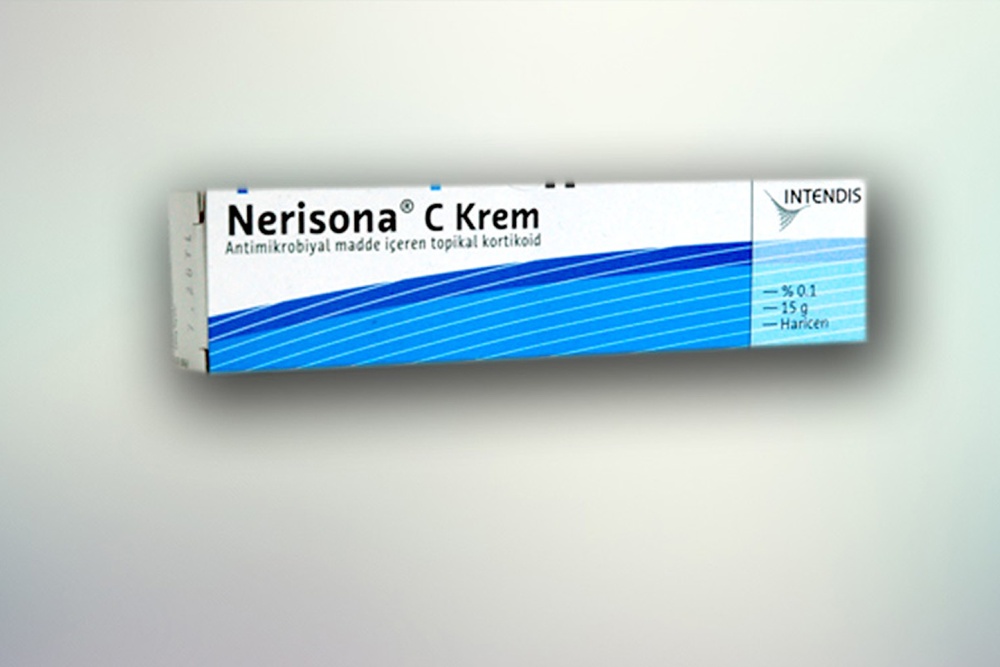
- Країна реєстрації
- Лікарська формаCream, 0.1%
- Код АТХD07AC06
- Діюча речовина
- Потрібен рецептТак
- Виробник
- Ця інформація надана лише для ознайомлення і не є медичною порадою. Рішення щодо лікування завжди приймає лікар.
- Альтернативи до NERISONAЛікарська форма: Cream, 30 GДіюча речовина: diflucortoloneВиробник: MORGAN S.R.L.Потрібен рецептЛікарська форма: Cream, 0.3%Діюча речовина: diflucortoloneВиробник: BIONATIVA S.P.A.Потрібен рецептЛікарська форма: Cream, 1 MG/GДіюча речовина: diflucortoloneВиробник: TEOFARMA S.R.L.Потрібен рецепт
Аналоги NERISONA в інших країнах
Препарати з тією самою діючою речовиною, доступні в інших країнах.
Аналог NERISONA у Іспанія
Лікарі онлайн щодо NERISONA
Застосування, безпека та можливість призначення рецепта — за результатами медичної оцінки.



Отримайте рецепт на NERISONA онлайн
Заповніть форму за 2 хвилини
Розкажіть про симптоми, історію хвороби та потрібний препарат.
Оберіть лікаря або ми призначимо
Оберіть спеціаліста або ми підберемо найближчого доступного лікаря.
Лікар розглядає ваш випадок
Зазвичай протягом 30 хвилин. Може ставити уточнювальні запитання в чаті.
Отримайте в будь-якій аптеці
Електронний рецепт надсилається на вашу пошту — дійсний по всій Польщі.
Часті запитання
NERISONA потребує рецепта в Італія. Ви можете обговорити з лікарем онлайн, чи підходить цей лікарський засіб для вашої ситуації.
Діюча речовина у NERISONA — diflucortolone. Це допомагає визначити препарати з тим самим складом, але під іншими торговими назвами.
NERISONA виробляється компанією LEO PHARMA A/S. Назва бренду та упаковка можуть відрізнятися залежно від дистрибʼютора.
Лікарі, зокрема Сімейні лікарі, Психіатри, Дерматологи, Кардіологи, Ендокринологи, Гастроентерологи, Пульмонологи, Нефрологи, Ревматологи, Гематологи, Інфекціоністи, Алергологи, Геріатри, Педіатри, Онкологи, можуть оцінити доцільність застосування NERISONA з урахуванням вашого стану та місцевих правил. Ви можете записатися на онлайн-консультацію, щоб обговорити симптоми та можливі подальші кроки.
Польща має добре розвинену систему охорони здоров'я у великих містах, таких як Варшава, Краків, Вроцлав і Гданськ. Аптеки широко доступні та працюють відповідно до чинного законодавства, забезпечуючи доступ до рецептурних препаратів.
Ви можете придбати NERISONA у Варшаві, Кракові, Вроцлаві або Гданську в будь-якій аптеці за наявності дійсного рецепта.
Щоб отримати рецепт, ви можете скористатися Oladoctor:
Інші препарати з тією самою діючою речовиною (diflucortolone) включають DERMAVAL, DERVIN, TEMETEX. Вони можуть відрізнятися торговою назвою або формою випуску, але містять той самий терапевтичний компонент. Перед зміною або початком прийому нового препарату варто проконсультуватися з лікарем.
