



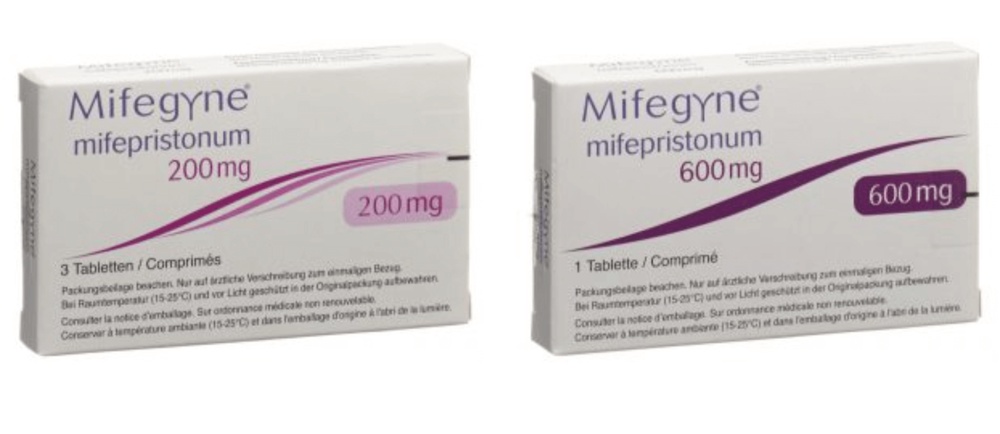
MIFEGYNE 200 mg Coated Tablet

Запит на рецепт онлайн
Лікар розгляне ваш випадок і визначить, чи є рецепт медично доцільним.

Поговоріть з лікарем про ці ліки
Обговоріть симптоми та можливі подальші кроки під час короткої онлайн-консультації.



Інструкція із застосування MIFEGYNE
Зміст інструкції
- What is Mifegyne and what is it used for
- What you need to know before taking Mifegyne
- How to take Mifegyne
- Possible side effects
- How to store Mifegyne
- Package Contents and Other Information
- What is Mifegyne and what is it used for
- What you need to know before taking Mifegyne
- How to take Mifegyne
- Possible side effects
- How to store Mifegyne
- Contents of the pack and other information
MIFEGYNE® 200 mg tablets
Mifepristone
Read this leaflet carefully before taking this medicine as it contains
important information for you.
- Keep this leaflet. You may need to read it again.
- If you have any questions, ask your doctor.
- This medicine has been prescribed for you only. Do not pass it on to others even if their symptoms are the same as yours, as it could be harmful.
- If you get any side effects, even those not listed in this leaflet, tell your doctor. See section 4.
Contents of this leaflet:
- 1. What MIFEGYNE is and what it is used for
- 2. What you need to know before you take MIFEGYNE
- 3. How to take MIFEGYNE
- 4. Possible side effects
- 5. How to store MIFEGYNE
- 6. Contents of the pack and other information
1. What is Mifegyne and what is it used for
Mifegyne tablets contain mifepristone which is an antihormone that works by blocking the effects
of progesterone, a hormone necessary to continue pregnancy. Mifegyne can therefore
cause termination of pregnancy. It can also be used to soften and widen
the access (the cervix) to the uterus .
Mifegyne is recommended for the following uses:
- 1) For the medical termination of an ongoing intrauterine pregnancy:
- no later than 63 days after the first day of the last menstrual period,
- in association with a second drug, a prostaglandin (a substance that activates uterine contraction and softens the cervix) to be taken 36-48 hours after taking Mifegyne.
- 2) To soften and dilate the cervix before surgical termination of pregnancy during the first trimester.
- 3) As a pre-treatment before the administration of prostaglandins for the therapeutic termination of pregnancy beyond the third month of gestation.
- 4) To induce labor in cases where the fetus is dead inside the uterus and in cases where other medical treatments (prostaglandin or oxytocin) cannot be used.
2. What you need to know before taking Mifegyne
Do not take Mifegyne:
- In all cases,
- if you are allergic to mifepristone or any of the other ingredients of this medicine (listed in section 6),
- if you suffer from adrenal insufficiency,
- if you suffer from severe asthma that cannot be adequately treated with medication,
Page 1 of 15
- if you have hereditary porphyria.
- Furthermore, For medical abortion up to the 63rd day after the first day of your last menstrual period:
- if the pregnancy has not been confirmed by laboratory tests or an ultrasound examination,
- if the first day of your last menstrual period was more than 63 days ago,
- if your doctor suspects an ectopic pregnancy (the egg is implanted outside the uterus),
- if you are unable to take the chosen prostaglandin analogue.
To soften and open the cervix before surgical abortion:
- if the pregnancy has not been confirmed by laboratory tests or an ultrasound examination,
- if your doctor suspects an ectopic pregnancy,
- if the first day of your last menstrual period was 84 days ago or more.
For medical abortion after the 3rd month of pregnancy:
If you are unable to take the chosen prostaglandin analogue.
Warnings and precautions
Speak to your doctor before taking Mifegyne:
- if you have a liver or kidney disease,
- if you are anemic or malnourished,
- if you have cardiovascular disease (heart or circulatory disease),
- if you are at increased risk of cardiovascular disease. Risk factors include being over 35 years of age and being a smoker or having high blood pressure, high cholesterol levels in the blood, or diabetes,
- if you suffer from a condition that may affect blood clotting,
- if you suffer from asthma.
If you are using an intrauterine device (IUD) it must be removed before taking Mifegyne.
Before taking Mifegyne, your blood Rh factor must be determined. If Rh negative, your
doctor will indicate the routine treatment required.
Severe skin reactions, including toxic epidermal necrolysis and acute generalized exanthematous pustulosis, have been reported in association with treatment with Mifegyne.
Stop using Mifegyne and contact your doctor immediately if you notice the appearance of any
symptom described in section 4. If you have a severe skin reaction, do not take mifepristone again
in the future.
Other medicines and Mifegyne
Tell your doctor or pharmacist if you are taking, have recently taken or might take
any other medicines, including those available without a prescription.
In particular, tell your doctor if you are taking any of the following medicines:
- corticosteroids (used in the treatment of asthma or other inflammations)
- ketoconazole, itraconazole (used against fungal infections)
- erythromycin, rifampicin (antibiotics)
- St John's wort (a herbal remedy used in the treatment of mild depression)
- phenytoin, phenobarbital, carbamazepine (used in the treatment of seizures; epilepsy)
- non-steroidal anti-inflammatory drugs (NSAIDs) such as acetylsalicylic acid or diclofenac.
Mifegyne with food and drink
Page 2 of 15
You must not drink grapefruit juice during treatment with Mifegyne.
Pregnancy, breastfeeding and fertility
Pregnancy
Failure of the abortion (continuation of the pregnancy) brought to term after taking Mifegyne alone or in combination with a prostaglandin has been associated with
congenital malformations.
The risk of failure increases:
- if the prostaglandin is not administered in accordance with its respective prescribing information (see section 3)
- with the duration of the pregnancy
- with the number of previous pregnancies
If the abortion is not successful after taking this medicine or
combination of medicines, there is an unknown risk to the fetus. If you decide to continue the
pregnancy you will need to undergo careful prenatal monitoring and repeated ultrasound examinations, with
particular attention to the limbs, at a specialized clinic. Your doctor will provide you with further
information.
If you decide to proceed with the abortion, another method will be used. Your doctor
will indicate the available options.
Breastfeeding
If you are breastfeeding, tell your doctor before using this medicine. Do not breastfeed
during the use of Mifegyne as the medicine passes into breast milk.
Fertility
This medicine does not affect fertility. You can become pregnant
immediately after completion of the abortion. Contraception must therefore be started immediately after confirmation of the abortion by
your doctor.
Driving and using machines
Dizziness may occur as an undesirable effect related to the abortion procedure. Take
particular care when driving or using machines after taking this medicine
until you know how Mifegyne affects you.

Не впевнені, чи підходить вам цей лікарський засіб?
Обговоріть симптоми та можливі варіанти лікування з лікарем онлайн.
3. How to take Mifegyne
Take this medicine following the instructions of your doctor exactly. If you have doubts
consult your doctor or pharmacist.
- 1)Medical termination of an ongoing intrauterine pregnancy (MTOP)
Termination of pregnancy up to 49 days after the last menstrual period
Dosage in adults
- 3 tablets to be taken orally
Taking the tablet
Page 3 of 15
- Swallow the tablet whole with a glass of water in the presence of a doctor or a member of their medical staff.
- Take the prostaglandin analogue, 36-48 hours after Mifegyne. The prostaglandin can be given as tablets to be swallowed with water (misoprostol 400 micrograms) or as a vaginal pessary (gemeprost 1mg).
- If you vomit within 45 minutes of taking the mifepristone tablet, contact your doctor immediately. You will need to take the tablets again.
Termination of pregnancy up to 50-63 days after the last menstrual period
Dosage in adults
3 tablets to be taken orally
Taking the tablet
- Swallow the tablets whole with a glass of water in the presence of a doctor or a member of their medical staff.
- Take the prostaglandin analogue, 36-48 hours after Mifegyne. The prostaglandin is a vaginal pessary (gemeprost 1 mg).
- If you vomit within 45 minutes of taking the mifepristone tablets, contact your doctor immediately. You will need to take the tablets again.
This method requires your active participation and therefore you must be informed that:
- It is necessary to take the second medicine (containing the prostaglandin) for the treatment to be effective.
- You must undergo a check-up visit (3rd visit) within 14 - 21 days of taking Mifegyne to verify that your pregnancy has been completely expelled and that you are well.
For medical termination of pregnancy, the following schedule will be followed.
- 1) Mifegyne will be delivered to you at the prescribing center and must be taken orally.
- 2) 36-48 hours later, you will be administered the prostaglandin analogue. You must remain at rest for 3 hours after taking the prostaglandin analogue.
- 3) The embryo may be expelled within a few hours of taking the prostaglandin analogue or in the days immediately following. After taking Mifegyne you will experience vaginal bleeding with an average duration of 12 days with a progressive decrease in intensity.
- 4)You must return to the center for a check-up visit within 14-21 days of takingMifegyne to verify that the expulsion is complete.
Contact the prescribing center immediately:
- if vaginal bleeding lasts more than 12 days and/or is very heavy (e.g.more than 2 pads are needed per hour for 2 hours)
- if you have severe abdominal pain
- if you have a fever or if you feel cold and are shivering.
Another important point to remember:
- Vaginal bleeding does not mean that the expulsion is complete.
Uterine bleeding usually begins 1-2 days after taking Mifegyne.
In rare cases, expulsion may occur before taking the prostaglandin. It is essential
that you have a check-up to confirm complete evacuation. For this you will have to return to the
center.
Page 4 of 15
If the pregnancy continues or the expulsion is incomplete, your doctor will indicate the options available
to complete the termination of pregnancy.
It is advisable not to move too far from the prescribing center until the check-up visit has been carried out.
In case of emergency, or if you have any questions, call or go to the prescribing center. Do not
wait for the check-up appointment.
- 2)To soften and open the cervix before surgical termination of pregnancy:
Dosage in adults
- 1 tablet to be taken orally
Taking the tablet
- Swallow the tablet whole with a glass of water.
- If you vomit within 45 minutes of taking the mifepristone tablet, contact your doctor. You will need to take another tablet.
For medical termination of pregnancy, the following schedule will be followed:
- 1) Mifegyne will be delivered to you at the prescribing center and must be taken orally.
- 2) 36-48 hours later, you will return to the prescribing center for the surgical procedure.
Your doctor will explain the procedure. Bleeding may occur after
taking Mifegyne, before the surgical procedure.
In rare cases, expulsion may also occur before surgery. It is essential that you return
to the center to confirm that the expulsion has been complete.
You must then return to the chosen center to undergo the surgical procedure.
In case of emergency, or if you have any questions, call or go to the prescribing center. Do not
wait for the check-up appointment.
- 3)For the termination of pregnancy beyond the first three months of pregnancy:
Dosage in adults
- 3 tablets to be taken orally
Taking the tablets
- Swallow the tablets whole with a glass of water.
- 36-48 hours after this medicine, take the prostaglandin analogue which may be repeated several times at regular intervals until the expulsion is complete.
- If you vomit within 45 minutes of taking the mifepristone tablets, contact your doctor immediately. You will need to take the tablets again.
- 4)For the induction of labor when the pregnancy has been terminated (intrauterine fetal death).
Dosage in adults
- 3 tablets to be taken orally every day for two days
Page 5 of 15
Taking the tablets
- Swallow the tablets whole with a glass of water.
- If you vomit within 45 minutes of taking the mifepristone tablets, contact your doctor immediately. You will need to take the tablets again.
Use in adolescents
Limited data are available on the use of Mifegyne in adolescents.
If you take more Mifegyne than you should
If you take too many tablets, contact your doctor or go to the nearest
emergency room immediately.
The doctor will give you the exact amount of Mifegyne; it is therefore unlikely that you will take an excessive number
of tablets. Taking too many tablets can cause symptoms of adrenal insufficiency. Symptoms of acute poisoning may require specialist treatment,
including the administration of dexamethasone.
If you forget to take Mifegyne
If you forget to take any part of the treatment, it is likely that the method will not be
fully effective. Talk to your doctor if you have forgotten to take Mifegyne or the prescribed part of
treatment.
If you have any further questions about the use of this medicine, ask your doctor or pharmacist.
4. Possible side effects
Like all medicines, this medicine can cause side effects, although not everybody gets them.
Serious side effects:
- Allergic reaction. Skin rash, localised swelling of the face and/or larynx also accompanied by hives.
- Reddish patches on the trunk; the patches are macules in the shape of a target or circular, often with central blisters, skin scaling, ulcers in the mouth, throat, nose, genitals and eyes. These serious skin rashes may be preceded by fever and flu-like symptoms (toxic epidermal necrolysis, frequency: rare).
- A red, scaly and widespread rash, with subcutaneous swellings and blisters accompanied by fever. Symptoms generally appear at the beginning of treatment (acute generalised exanthematous pustulosis, frequency: not known).
Other serious side effects:
- Cases of severe or fatal toxic or septic shock. Fever with muscle pain, tachycardia, dizziness, diarrhoea, vomiting or feeling weak. This side effect may occur if you do not take the second medicine, the misoprostol tablet, orally.
If you experience any of these side effects, contact your
doctor IMMEDIATELY or go to the nearest emergency room.
Page 6 of 15
Other side effects
Very common (may affect more than 1 in 10 people):
- uterine contractions or cramps
- diarrhoea
- feeling unwell (nausea) or urge to vomit
Common (may affect up to 1 in 10 people):
- heavy bleeding
- mild or moderate gastrointestinal cramps
- uterine infection (endometritis and pelvic inflammatory disease)
Uncommon (may affect up to 1 in 100 people):
- low blood pressure
Rare (may affect up to 1 in 1000 people):
- fever
- headache
- general malaise or feeling tired
- vagal symptoms (hot flushes, dizziness, chills)
- hives and skin reactions that can be severe
- uterine rupture following the administration of prostaglandin during the second and third trimester of pregnancy, particularly in multiparous women or women who had undergone a caesarean section
Reporting of side effects
If you get any side effects, talk to your doctor or pharmacist. You can also report side effects directly
through the national reporting system at www.aifa.gov.it/content/segnalazioni-reazioni-
avverse.
By reporting side effects you can help provide more information on the safety of
this medicine.

Виникли питання під час прийому ліків?
Обговоріть свої симптоми та лікування з лікарем онлайн.
5. How to store Mifegyne
Keep this medicine out of the sight and reach of children.
This medicine does not require any special storage conditions. Store in the
original packaging to protect the medicine from light.
Do not use this medicine after the expiry date which is stated on the pack after "EXP". The
expiry date refers to the last day of that month.
Do not use this medicine if you notice that the carton or blister shows signs of deterioration.
Do not dispose of any medicine in wastewater. Ask your pharmacist how to eliminate medicines that
you no longer use. This will help protect the environment.
6. Package Contents and Other Information
What Mifegyne contains
Page 7 of 15
The active ingredient is mifepristone.
One Mifegyne tablet contains 200 mg of mifepristone.
The other ingredients are anhydrous colloidal silica, corn starch, povidone, magnesium stearate,
microcrystalline cellulose.
Description of the appearance of Mifegyne and package contents
Mifegyne is available in the form of biconvex, yellow tablets with a diameter of 11 mm,
with the inscription "167 B" embossed on one side.
Mifegyne is available in packs of 1, 3 x 1, 15 x 1 or 30 x 1 tablets in divisible dose blisters of
PVC/aluminum.
Not all pack sizes may be marketed.
Marketing Authorisation Holder and Manufacturer
Marketing Authorisation Holder:
EXELGYN
216 boulevard Saint-Germain
75007 Paris
France
Manufacturer:
Laboratoires Macors
Rue des Caillotes
ZI Plaine des Isles
89000 Auxerre France.
This medicinal product is authorised in the Member States of the European Economic Area with the
following denominations: MIFEGYNE;
Page 8 of 15
MIFEGYNE® 600 mg tablets
Mifepristone
Read all of this leaflet carefully before you start taking this medicine because it contains
important information for you.
- Keep this leaflet. You may need to read it again.
- If you have any questions, ask your doctor.
- This medicine has been prescribed for you only. Do not pass it on to others, even if their symptoms are the same as yours, as it may harm them.
- If you get any side effects, even those not listed in this leaflet, tell your doctor. See section 4.
Contents of this leaflet:
- 1. What MIFEGYNE is and what it is used for
- 2. What you need to know before you take MIFEGYNE
- 3. How to take MIFEGYNE
- 4. Possible side effects
- 5. How to store MIFEGYNE
- 6. Contents of the pack and other information
1. What is Mifegyne and what is it used for
Mifegyne tablets contain mifepristone which is an antihormone that works by blocking the effects
of progesterone, a hormone necessary to continue pregnancy. Mifegyne can therefore
cause termination of pregnancy. It can also be used to soften and widen
the access (the cervix) to the uterus .
Mifegyne is recommended for the following uses:
- 1) For the medical termination of an ongoing intrauterine pregnancy:
- no later than 63 days after the first day of the last menstrual period,
- in association with a second drug, a prostaglandin (a substance that activates uterine contraction and softens the cervix) to be taken 36-48 hours after taking Mifegyne.
- 2) As a pre-treatment before the administration of prostaglandins for the therapeutic termination of pregnancy beyond the third month of gestation.
- 3) To induce labor in cases where the fetus is dead inside the uterus and in cases where other medical treatments (prostaglandin or oxytocin) cannot be used.
2. What you need to know before taking Mifegyne
Do not take Mifegyne:
- In all cases,
- if you are allergic to mifepristone or any of the other ingredients of this medicine (listed in section 6),
- if you suffer from adrenal insufficiency,
- if you suffer from severe asthma that cannot be adequately treated with medication,
- if you have hereditary porphyria.
Page 9 of 15
- Also, For the termination of pregnancy up to the 63rd day after the last menstrual period:
- if the pregnancy has not been confirmed by laboratory tests or an ultrasound examination,
- if the first day of your last menstrual period was more than 63 days ago,
- if your doctor suspects an ectopic pregnancy (the egg is implanted outside the uterus),
- if you are unable to take the chosen prostaglandin analogue.
For the termination of pregnancy beyond the 3rd month of pregnancy:
If you are unable to take the chosen prostaglandin analogue.
Warnings and precautions
Talk to your doctor before taking Mifegyne:
- if you have liver or kidney disease,
- if you are anemic or malnourished,
- if you have cardiovascular disease (heart or circulatory disease),
- if you are at increased risk of cardiovascular disease. Risk factors include being over 35 years old and being a smoker or having high blood pressure, high cholesterol levels in the blood, or diabetes,
- if you suffer from a condition that may affect blood clotting,
- if you suffer from asthma.
If you are using an intrauterine device (IUD) it must be removed before taking Mifegyne.
Before taking Mifegyne, your blood Rh factor must be determined. If Rh negative, your
doctor will indicate the required routine treatment.
Serious skin reactions, including toxic epidermal necrolysis and acute generalized exanthematous pustulosis, have been reported in association with Mifegyne treatment.
Stop using Mifegyne and contact your doctor immediately if you notice the appearance of any
symptom described in section 4. If you have a serious skin reaction, do not take
mifepristone again in the future.
Other medicines and Mifegyne
Tell your doctor or pharmacist if you are taking, have recently taken, or might take
any other medicines, including those available without a prescription.
In particular, tell your doctor if you are taking any of the following medicines:
- corticosteroids (used in the treatment of asthma or other inflammatory conditions)
- ketoconazole, itraconazole (used against fungal infections)
- erythromycin, rifampicin (antibiotics)
- St John's wort (a herbal remedy used in the treatment of mild depression)
- phenytoin, phenobarbital, carbamazepine (used in the treatment of seizures; epilepsy)
- non-steroidal anti-inflammatory drugs (NSAIDs) such as acetylsalicylic acid or diclofenac.
Mifegyne with food and drink
You must not take grapefruit juice during treatment with Mifegyne.
Pregnancy, breastfeeding and fertility
Pregnancy
Page 10 of 15
Failure of the termination of pregnancy (continuation of the pregnancy) brought to term
after taking Mifegyne alone or in combination with prostaglandin has been associated with
congenital malformations.
The risk of failure increases:
- if the prostaglandin is not administered in accordance with medical prescriptions (see section 3)
- with the duration of the pregnancy
- with the number of previous pregnancies
If the termination of the pregnancy is not successful after taking this medicine or
combination of medicines, there is an unknown risk to the fetus. If you decide to continue the
pregnancy you will need to undergo careful prenatal monitoring and repeated ultrasound examinations, with
particular attention to the limbs, at a specialized clinic. Your doctor will provide you with further
information.
If you decide to proceed with the termination of the pregnancy, another method will be used. Your doctor
will indicate the available options.
Breastfeeding
If you are breastfeeding, tell your doctor before using this medicine. Do not breastfeed
while taking Mifegyne as the medicine passes into breast milk.
Fertility
This medicine does not affect fertility. You can become pregnant
immediately after completing the termination of pregnancy. Contraception must therefore
be started immediately after confirmation of the termination of pregnancy by
your doctor.
Driving and using machines
Dizziness may occur as a side effect related to the abortion procedure. Take
particular care when driving or using machines until you know how Mifegyne affects you.
3. How to take Mifegyne
Take this medicine following exactly the instructions of your doctor. If you have doubts
consult your doctor or pharmacist.
- 5)Medical interruption of an ongoing intrauterine pregnancy (MIG)
Interruption of pregnancy up to 49 days after the last menstrual period
Dosage in adults
- 1 tablet to be taken orally
Taking the tablet
- Swallow the tablet whole with a glass of water in the presence of a doctor or a member of their medical team.
- Take the prostaglandin analogue 36-48 hours after Mifegyne. The prostaglandin is administered as tablets to be swallowed with water (misoprostol 400 micrograms) or inserted as a vaginal pessary (gameprost 1 mg).
Page 11 of 15
- If you vomit within 45 minutes after taking the mifepristone tablet, contact your doctor immediately. You will need to take another tablet.
Interruption of pregnancy 50-63 days after the last menstrual period
Dosage in adults
- 1 tablet to be taken orally
Taking the tablet
- Swallow the tablet whole with a glass of water in the presence of a doctor or a member of their medical team.
- Take the prostaglandin analogue 36-48 hours after Mifegyne. The prostaglandin is a vaginal pessary (gemeprost 1 mg).
- If you vomit within 45 minutes after taking the mifepristone tablet, contact your doctor immediately. You will need to take another tablet.
This method requires your active participation and you must be informed that:
- You will need to take the second medicine (containing prostaglandin) to ensure the effectiveness of the treatment.
- You will need to have a follow-up visit (3rd visit) within 14-21 days of taking Mifegyne to verify the interruption of the pregnancy, complete expulsion and your health conditions.
The medical interruption of pregnancy will follow the program outlined below.
- 1) Mifegyne will be given to you at the prescribing center and must be taken orally.
- 2) 36-48 hours later, you will be administered the prostaglandin analogue. You must remain at rest for 3 hours after taking the prostaglandin analogue.
- 3) The embryo may be expelled within a few hours after taking the prostaglandin analogue or in the days immediately following. After taking Mifegyne you will experience vaginal bleeding with an average duration of 12 days with a progressive decrease in intensity.
- 4)You must return to the center for a check-up visit within 14-21 days of takingMifegyne to verify that the expulsion is complete.
Contact the prescribing center immediately:
- if vaginal bleeding lasts more than 12 days and/or is very heavy(e.g. more than 2 pads are needed per hour for 2 hours)
- if you have severe abdominal pain
- if you have a fever or feel cold and have chills.
Another important point to remember:
- Vaginal bleeding does not mean that the expulsion is complete.
Uterine bleeding usually begins 1-2 days after taking Mifegyne.
In rare cases, expulsion may occur before taking the prostaglandin. It is essential
that you have a check-up to confirm complete evacuation. For this you will have to return to
the center.
If the pregnancy continues or the expulsion is incomplete, your doctor will indicate the options available
to complete the interruption of the pregnancy.
It is advisable not to move too far from the prescribing center until the
check-up visit has been performed.
Page 12 of 15
In case of emergency, or if you have any questions, call or go to the prescribing center. Do not
wait for the check-up appointment.
- 6)For the interruption of pregnancy beyond the first three months of pregnancy:
Dosage in adults
- 1 tablet to be taken orally
Taking the tablet
- Swallow the tablet whole with a glass of water.
- 36-48 hours after this medicine, take the prostaglandin analogue, which may be repeated several times at regular intervals until the expulsion is complete.
- If you vomit within 45 minutes after taking the mifepristone tablet, contact your doctor immediately. You will need to take another tablet.
- 7)For the induction of labor when the pregnancy has been interrupted (intrauterine fetal death).
Dosage in adults
- 1 tablet to be taken orally for two days each day
Taking the tablet
- Swallow the tablet whole with a glass of water.
- If you vomit within 45 minutes after taking the mifepristone tablet, contact your doctor immediately. You will need to take another tablet.
Use in adolescents
Limited data are available on the use of Mifegyne in adolescents.
If you take more Mifegyne than you should
If you take too many tablets, contact your doctor or go to the nearest
emergency room immediately.
The doctor will give you the exact amount of Mifegyne; it is therefore unlikely that you will take an excessive number of tablets. Taking too many tablets can cause symptoms of adrenal insufficiency. Symptoms of acute poisoning may require specialist treatment, including the administration of dexamethasone.
If you forget to take Mifegyne
If you forget to take any part of the treatment, it is likely that the method will not
be fully effective. Talk to your doctor if you have forgotten to take Mifegyne or the part of
the prescribed treatment.
If you have any further questions about the use of this medicine, ask your doctor or pharmacist.
4. Possible side effects
Like all medicines, this medicine can cause side effects, although not everybody gets them.
Serious side effects:
Page 13 of 15
- Allergic reaction. Skin rash, localised swelling of the face and/or larynx also accompanied by hives.
- Reddish patches on the trunk; the patches are target-shaped or circular macules, often with central blisters, skin scaling, ulcers in the mouth, throat, nose, genitals and eyes. These serious skin rashes may be preceded by fever and flu-like symptoms (toxic epidermal necrolysis, frequency: rare).
- A red, scaly and widespread rash, with subcutaneous swellings and blisters accompanied by fever. Symptoms generally appear at the beginning of treatment (acute generalised exanthematous pustulosis, frequency: not known).
Other serious side effects:
- Cases of severe or fatal toxic or septic shock. Fever with muscle pain, tachycardia, dizziness, diarrhoea, vomiting or feeling weak. This side effect may occur if you do not take the second medicine, the misoprostol tablet, orally.
If you experience any of these side effects, seek IMMEDIATE medical attention or go to the nearest emergency room.
Other side effects
Very common (may affect more than 1 in 10 people):
- uterine contractions or cramps
- diarrhoea
- nausea or vomiting
Common (may affect up to 1 in 10 people):
- heavy bleeding
- mild or moderate gastrointestinal cramps
- uterine infection (endometritis and pelvic inflammatory disease)
Uncommon (may affect up to 1 in 100 people):
- low blood pressure
Rare (may affect up to 1 in 1000 people):
- fever
- headache
- general malaise or feeling tired
- vagal symptoms (hot flushes, dizziness, chills)
- hives and skin reactions which may be severe.
- Uterine rupture following the administration of prostaglandin during the second and third trimester of pregnancy, particularly in multiparous women or women who had undergone a caesarean section.
Reporting of side effects
If you get any side effects, talk to your doctor or pharmacist. You can also report side effects directly through the national reporting system at https://www.aifa.gov.it/content/segnalazioni-reazioni-avverse .
By reporting side effects you can help provide more information on the safety of
this medicine.
5. How to store Mifegyne
Page 14 of 15
Keep this medicine out of the sight and reach of children.
Store at a temperature below 25°C. Store in the original packaging to protect the
medicine from light.
Do not use this medicine after the expiry date which is stated on the pack after "EXP". The expiry
date refers to the last day of that month.
Do not use this medicine if you notice that the carton or blister shows signs of deterioration.
Do not dispose of any medicine in wastewater. Ask your pharmacist how to dispose of medicines that
you no longer use. This will help protect the environment.
6. Contents of the pack and other information
What Mifegyne contains
The active ingredient is mifepristone.
One Mifegyne tablet contains 600 mg of mifepristone.
The other ingredients are: anhydrous colloidal silica, corn starch, povidone, magnesium stearate,
microcrystalline cellulose.
Description of the appearance of Mifegyne and contents of the pack
Mifegyne is available in the form of biconvex, light yellow tablets, almond-shaped, measuring
19 mm in length and 11 mm in width, with the inscription "γ " on one side and “600”
on the other.
Mifegyne is available in packs of 1, 8, 16 or 20 tablets in PVC/aluminium blisters.
Not all pack sizes may be marketed.
Marketing authorisation holder and manufacturer
Marketing authorisation holder:
EXELGYN
216 boulevard Saint-Germain
75007 Paris
France
Manufacturer:
Laboratoires MACORS
ZI Plaine des Isles
89000 Auxerre
France.
Nordic Pharma B.V.
Siriusdreef 41
2132 WT Hoofddorp
Netherlands
This medicinal product is authorised in the Member States of the European Economic Area under the
following denominations: MIFEGYNE;
Page 15 of 15
- Країна реєстрації
- Лікарська формаCoated tablet, 200 MG
- Код АТХG03XB01
- Діюча речовина
- Потрібен рецептТак
- Виробник
- Ця інформація надана лише для ознайомлення і не є медичною порадою. Рішення щодо лікування завжди приймає лікар.
- Альтернативи до MIFEGYNEЛікарська форма: Tablet, 5 MGДіюча речовина: ulipristalВиробник: GEDEON RICHTER PLCПотрібен рецептЛікарська форма: Film-coated tablet, 20 MGДіюча речовина: bazedoxifeneВиробник: PFIZER EUROPE MA EEIGПотрібен рецептЛікарська форма: Hard capsule, 200MGДіюча речовина: danazolВиробник: FIDIA FARMACEUTICI S.P.A.Потрібен рецепт
Аналоги MIFEGYNE в інших країнах
Препарати з тією самою діючою речовиною, доступні в інших країнах.
Аналог MIFEGYNE у Іспанія
Аналог MIFEGYNE у Україна
Лікарі онлайн щодо MIFEGYNE
Застосування, безпека та можливість призначення рецепта — за результатами медичної оцінки.


Отримайте рецепт на MIFEGYNE онлайн
Заповніть форму за 2 хвилини
Розкажіть про симптоми, історію хвороби та потрібний препарат.
Оберіть лікаря або ми призначимо
Оберіть спеціаліста або ми підберемо найближчого доступного лікаря.
Лікар розглядає ваш випадок
Зазвичай протягом 30 хвилин. Може ставити уточнювальні запитання в чаті.
Отримайте в будь-якій аптеці
Електронний рецепт надсилається на вашу пошту — дійсний по всій Польщі.
Часті запитання
MIFEGYNE потребує рецепта в Італія. Ви можете обговорити з лікарем онлайн, чи підходить цей лікарський засіб для вашої ситуації.
Діюча речовина у MIFEGYNE — Мифепристон. Це допомагає визначити препарати з тим самим складом, але під іншими торговими назвами.
MIFEGYNE виробляється компанією EXELGYN. Назва бренду та упаковка можуть відрізнятися залежно від дистрибʼютора.
Лікарі, зокрема Сімейні лікарі, Психіатри, Дерматологи, Кардіологи, Ендокринологи, Гастроентерологи, Пульмонологи, Нефрологи, Ревматологи, Гематологи, Інфекціоністи, Алергологи, Геріатри, Педіатри, Онкологи, можуть оцінити доцільність застосування MIFEGYNE з урахуванням вашого стану та місцевих правил. Ви можете записатися на онлайн-консультацію, щоб обговорити симптоми та можливі подальші кроки.
Польща має добре розвинену систему охорони здоров'я у великих містах, таких як Варшава, Краків, Вроцлав і Гданськ. Аптеки широко доступні та працюють відповідно до чинного законодавства, забезпечуючи доступ до рецептурних препаратів.
Ви можете придбати MIFEGYNE у Варшаві, Кракові, Вроцлаві або Гданську в будь-якій аптеці за наявності дійсного рецепта.
Щоб отримати рецепт, ви можете скористатися Oladoctor:
Інші препарати з тією самою діючою речовиною (Мифепристон) включають ESMYA, KONBRITSA, DANATROL. Вони можуть відрізнятися торговою назвою або формою випуску, але містять той самий терапевтичний компонент. Перед зміною або початком прийому нового препарату варто проконсультуватися з лікарем.
