



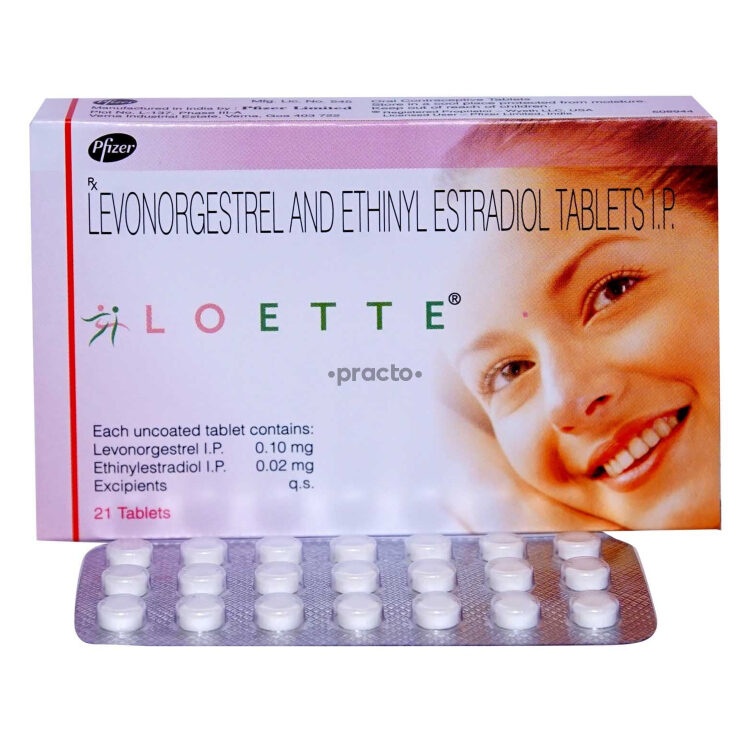
LOETTE 0.1 mg/0.02 mg Coated tablets

Запит на рецепт онлайн
Лікар розгляне ваш випадок і визначить, чи є рецепт медично доцільним.

Поговоріть з лікарем про ці ліки
Обговоріть симптоми та можливі подальші кроки під час короткої онлайн-консультації.



Інструкція із застосування LOETTE
Зміст інструкції
LOETTE 0.100 mg + 0.02 mg coated tablets
Levonorgestrel/Ethinylestradiol
Read this leaflet carefully before taking this medicine as it contains important
information for you.
- Keep this leaflet. You may need to read it again.
- If you have any questions, ask your doctor or pharmacist.
- This medicine has been prescribed only for you. Do not give it to other people, even if their symptoms are the same as yours, as it could be dangerous.
- If you experience any side effects, including those not listed in this leaflet, tell your doctor or pharmacist. See section 4.
Contents of this leaflet:
- 1. What LOETTE is and what it is used for
- 2. What you need to know before you take LOETTE
- 3. How to take LOETTE
- 4. Possible side effects
- 5. How to store LOETTE
- 6. Contents of the pack and other information
1. Cos’è LOETTE e a cosa serve
LOETTE is a contraceptive pill, meaning it is used to prevent pregnancy.
LOETTE is a combined pill, as each coated tablet contains a combination of two
different female hormones, namely levonorgestrel (a substance that counteracts progesterone) and
ethinylestradiol (estrogen).
2. Cosa deve sapere prima di prendere LOETTE
of the product or in which a reduction in the product’s effectiveness may occur. In such situations
sexual intercourse should be avoided or additional non-hormonal contraceptive precautions should be taken
such as the use of a condom or other barrier method. Do not use rhythm and basal temperature methods, which
may be unreliable, as the pill alters the normal variations in temperature and cervical mucus that occur during the
menstrual cycle.
Before starting or restarting the pill, it is advisable to have a thorough medical examination.
It is also advisable to have periodic check-ups, at least once a year, during use of the
product.
The frequency and type of check-up will be determined by the doctor and will focus in particular on monitoring blood
pressure, breast examination, abdominal and general gynecological examination including a Pap smear and related
blood tests.
You should have your first check-up 3 months after starting the combined oral contraceptive.
Like all contraceptive pills, LOETTE does not protect against HIV (AIDS) infection or any
other sexually transmitted disease.
LOETTE is prescribed for personal use and should not be available to multiple people
simultaneously.
Do not take LOETTE
Do not take LOETTE if you have any of the conditions listed below. If you have any of the
conditions listed below, consult your doctor. The doctor will discuss other birth control methods with you
that may be more suitable for your case.
- if you are allergic to any of the active ingredients (levonorgestrel or ethinylestradiol) or any of the other components of this medicine (listed in section 6);
- if you have (or have ever had) a blood clot in a leg vessel (deep vein thrombosis, DVT), in the lung (pulmonary embolism, PE) or in other organs;
- if you know you have a disorder that affects blood clotting, such as protein C deficiency, protein S deficiency, antithrombin-III deficiency, Factor V Leiden or antiphospholipid antibodies;
- if you have (or have ever had) a heart attack or stroke;
- if you have (or have had in the past) a disease that could be an indicator of a future heart attack (e.g., angina pectoris, which causes severe chest pain) or stroke (e.g., a mild transient stroke that leaves no residual effects);
- if you have any of the following diseases:
- very high blood pressure
- diseases related to high blood pressure
- kidney problems
- if you have (or have ever had) a type of migraine called “migraine with aura”;
- severe diabetes with damage to blood vessels;
- if you have or have ever had severe liver disease, until the liver returns to normal function;
- if you have or have ever had pancreatitis (inflammation of the pancreas) associated with a severe disorder of fat metabolism (hypertriglyceridemia);
- if you have or have ever had a liver tumor (benign or malignant);
- if you have a breast or uterine tumor sensitive to female hormones (estrogens and progestins) that accelerate its growth, or if you suspect you may have one of these tumors;
- if you have ever suffered from yellowing/yellowish discoloration of the skin and mucous membranes (jaundice)
- if you have vaginal bleeding of unknown cause;
- if you are or think you are pregnant;
- if you are being treated with ritonavir, a medicine used to treat HIV infection;
- if you have hepatitis C and are taking other medicines containing ombitasvir/paritaprevir/ritonavir, dasabuvir, glecaprevir/pibrentasvir or sofosbuvir/velpatasvir/voxilaprevir (see section “Other medicines and LOETTE”)
Warnings and precautions
Talk to your doctor or pharmacist before taking LOETTE.
Consult your doctor as soon as possible:
if you notice any change in your health condition;
if you feel a lump in your breast;
if you need to use other medicines (see also “Other medicines and LOETTE”);
if you are immobilized or need to undergo surgery (consult your doctor at least four
weeks before);
if you have heavy and unusual vaginal bleeding;
if you have forgotten tablets in the first week of use and have had sexual intercourse in the seven
days before the missed dose;
if you have not had a period for two consecutive cycles or suspect pregnancy, do not start a new
pack without your doctor’s authorization.
Tell your doctor if any of the following conditions apply to you, as your doctor will
monitor you closely. Your doctor may advise you to use a different, non-hormonal
contraceptive method.Also, tell your doctor if any of the following conditions appear or worsen
while you are using LOETTE:
- if you are a smoker;
- overweight;
- if you have reduced glucose tolerance, a sugar. If you have diabetes or have already had glucose intolerance, your doctor will monitor you carefully during treatment with this medicine;
- heart valve problems or heart rhythm disorders;
- if you have inflammation of the veins under the skin (superficial phlebitis);
- if your migraine (severe headache) occurs for the first time or worsens. Your doctor may advise you to stop treatment with this medicine;
- if you have varicose veins;
- if you notice changes in your mood (depression) or a worsening of pre-existing depression. LOETTE should be discontinued if severe depression occurs;
- high blood pressure. If your blood pressure rises, you should stop taking this medicine;
- suffering from epilepsy;
- if you have breast lumps;
- if a close family member has had breast cancer;
- liver and gallbladder diseases;
- if you have hearing loss due to a disease known as otosclerosis;
- if you have Crohn's disease or ulcerative colitis (chronic inflammatory bowel disease);
- if you have systemic lupus erythematosus (SLE, a disease that affects the body's defense system);
- if you have hemolytic uremic syndrome (HUS, a blood clotting disorder that causes kidney failure);
- if you have sickle cell anemia (an inherited red blood cell disease);
- if you have high levels of cholesterol and triglycerides in your blood or a family history of this condition. Hypertriglyceridemia has been associated with an increased risk of developing pancreatitis (inflammation of the pancreas);
- certain pathological conditions characterized by resistance to Activated Protein C, hyperhomocysteinemia, antithrombin III deficiency, protein C deficiency, protein S deficiency, antiphospholipid syndrome (anticardiolipin antibodies, lupus anticoagulant), which predispose to the development of venous or arterial thrombosis;
- if you need to undergo surgery or if you will be bedridden for a long period of time (see section 2 “Blood clots”);
- if you have just given birth, the risk of developing blood clots is higher. Ask your doctor when you can start taking LOETTE after giving birth;
- if you suffer from fluid retention within the body. Caution is necessary if you have other disorders that may worsen with increased fluid in the body;
- if you suffer from gallstones (small stones that develop in the gallbladder, a small organ involved in fat digestion);
- if you have a skin condition that causes itching, red spots and blisters (herpes gestationis). You may have had this problem during a previous pregnancy;
- if yellowish/brownish spots appear on the skin (chloasma). These spots are more likely to appear again during treatment with LOETTE if you have had them during a previous pregnancy. In this case, avoid direct exposure to sunlight or ultraviolet radiation (e.g. in a solarium) during use of this medicine;
- if you suffer from porphyria (a disease that manifests with attacks and affects the production of hemoglobin);
- if you suffer from a disease characterized by involuntary, irregular and sudden movements (Sydenham's chorea);
- if you have a decrease in folate (vitamin B) in your blood;
- if you notice the appearance of yellowing/yellowish discoloration of the skin and mucous membranes (jaundice) with or without itching. These symptoms may be caused by an incorrect flow of bile (a substance produced by the liver and involved in digestive processes) within the body and may be signs of a liver problem. If you experience this condition, stop taking this medicine;
- if blood tests show that the levels of certain substances normally produced by the liver are much higher than normal. In this case, treatment with LOETTE should be temporarily discontinued until these values return to normal;
- if you suffer from vision problems such as double vision, bulging eyes, changes in the retina.
- if you notice symptoms of angioedema such as swelling of the face, tongue and/or throat and/or difficulty swallowing or hives with difficulty breathing, contact a doctor immediately. Medicines containing estrogens can cause or worsen the symptoms of hereditary or acquired angioedema.
Psychiatric disorders
Some women using hormonal contraceptives including LOETTE have reported depression or depressed mood.
Depression can be severe and sometimes can lead to suicidal thoughts. If you experience
changes in mood and depressive symptoms, see your doctor as soon as possible for further medical advice.
LOETTE and blood clots in veins and arteries
The use of any combined pill, including LOETTE, increases the risk of developing a blood clot
in the veins (venous thrombosis)compared to those who do not use a contraceptive pill. The excess risk
is higher during the first year of use for a woman who has never used a combined pill before.
The risk of blood clots in the veins if you take the combined pill increases:
- if you need to undergo surgery, if you have had a serious accident or if you need to be immobile for a long period of time. It is important that you tell your doctor that you are taking LOETTE because they may need to stop you from using it. The doctor will tell you when to start using it again; usually you will be able to start again about two weeks after you have resumed moving.
The possibility of a blood clot increases with the use of the pill.
- Of 100,000 women who do not take the pill and are not pregnant, about 5-10 may have a blood clot in a year.
- Of 100,000 who take a pill like LOETTE, 30-40 may have a blood clot in a year; the exact number is not known.
- Of 100,000 pregnant women, about 60 may have a blood clot in a year.
A blood clot in the veins can reach the lungs and block blood vessels (pulmonary embolism). The
formation of blood clots in the veins can be fatal in 1-2% of cases.
The level of risk may vary depending on the type of pill you take. Talk to your doctor about the options
available.
The use of the combined pill has been associated with an increased risk of blood clot in the arteries
(arterial thrombosis), for example in the blood vessels of the heart (heart attack) or the brain (stroke).
The risk of having a heart attack or stroke increases:
- with advancing age
- with the number of cigarettes smoked. In particular, if you are over 35 years old and take the pill you shouldstop smoking.
- if the fat content in the blood is high (cholesterol or triglycerides)
- if you have high blood pressure
- if you are overweight
- if you have diabetes
Stop taking LOETTE and see your doctor immediately if you notice possible signs of
a blood clot, such as:
severe pain and/or swelling in one of your legs
sudden severe chest pain that may reach your left arm
sudden shortness of breath
sudden cough without an obvious cause
any unusual, severe or persistent headache or worsening of migraine
partial or complete loss of vision or double vision
difficulty or inability to speak
dizziness or fainting
weakness, strange sensation or numbness in any part of the body
LOETTE and tumor
Breast cancer has been observed slightly more frequently in women who use combined pills, but it is not known whether this is caused by the treatment. It could happen, for example, that more tumors are detected in women who use combined pills because they visit the doctor more often.
The frequency of breast cancer gradually decreases after discontinuation of combined hormonal contraceptives. It is important to undergo regular breast screenings and consult a doctor if you notice any lumps.
Cases of cervical cancer have been reported in those using combined oral contraceptives for a long time, but it is unclear whether this is partly attributable to sexual behavior and other factors such as the human papillomavirus (HPV).
In rare cases, benign liver tumors and, in even rarer cases, malignant liver tumors have been reported in those who use the pill. Consult your doctor if you experience unusual severe abdominal pain.
Irregular bleeding
During the first few months of taking LOETTE, unexpected bleeding may occur, i.e. outside of the days when you do not take the tablets. Consult your doctor if such irregular bleeding persists after 3 treatment cycles or if it recurs after a previous period of regularity.
Sometimes it is possible that menstruation does not occur during the days when you do not take the tablet. It is unlikely that you are pregnant if you have taken this medicine correctly. However, if you have realized that you have not taken the medicine correctly or if the withdrawal bleeding does not occur for the second time, you should make sure you are not pregnant before continuing to take LOETTE.
Reduction or loss of effectiveness
The contraceptive effect of LOETTE may be reduced if you forget to take a tablet, if you have vomiting or diarrhea, or if you take certain other medicines.
Preparations containing Hypericum perforatum (St. John's Wort) decrease the effectiveness of
oral contraceptives. Therefore, if you need to take these types of preparations, your doctor will advise you on an
alternative contraceptive method to LOETTE.
Unwanted pregnancies and resumption of the menstrual cycle have been reported. Preparations based on
Hypericum perforatum induce enzymes responsible for drug metabolism and this effect can persist for at least 2 weeks after discontinuation of treatment.
See also the paragraph “Other medicines and LOETTE” and paragraph 3 “What to do in case of vomiting and
diarrhea”.
Children
The safety and efficacy of LOETTE have only been established in women of childbearing potential. Therefore, the use of this medicine is contraindicated in girls before the onset of their first menstrual period.
Elderly
The safety and efficacy of LOETTE have only been established in women of childbearing potential. Therefore, the use of this medicine is not recommended in women after the onset of menopause.
Other medicines and LOETTE
Tell your doctor or pharmacist if you are taking, have recently taken, or might take any other medicine.
Interactions between LOETTE and other medicines can lead to irregular bleeding between
menstruations and a loss of contraceptive effectiveness, resulting in a risk of
unwanted pregnancies.
The following medicine should not be taken together with LOETTE (see paragraph “Do not take
LOETTE”):
ritonavir(medicine against HIV infection), because it reduces the effectiveness of LOETTE
The following medicines can reduce the effectiveness of LOETTE and therefore their concomitant use is not recommended:
- phenobarbital, phenytoin, primidone, carbamazepine, oxcarbazepine, topiramateand felbamate(medicines against convulsions and epilepsy);
- barbiturates(medicines used as sedatives and tranquilizers);
- rifabutinand rifampicin(antibiotics used to treat tuberculosis);
- griseofulvin(medicine against fungal infections);
- modafinil(medicine against excessive sleepiness);
- some protease inhibitorsand nevirapine(medicines used to treat HIV/AIDS);
- herbal preparations containing Hypericum perforatum(or St. John's Wort), a natural substance against depression.
Always inform the doctor who prescribes the pill about the medicines you are already taking, and also inform
all other doctors or dentists who prescribe you other medicines about the fact that you are using LOETTE, so
that they can establish whether and for how long you need to use additional contraceptive methods.
The following medicines can increase the effectiveness and/or the undesirable effects caused by LOETTE:
- atorvastatin(medicine used to reduce the level of fats in the blood);
- vitamin C;
- paracetamol(medicine used against pain and to lower fever);
- indinavir(medicine used to treat HIV infection);
- fluconazoleand voriconazole(medicines used against fungal infections);
- troleandomycin(antibiotic). The concomitant administration of LOETTE and troleandomycin may increase the risk of bile retention in the liver (intrahepatic cholestasis); LOETTE may interfere with the effectiveness and/or undesirable effects caused by the following medicines:
- cyclosporine(medicine against organ rejection after a transplant);
- theophylline(medicine against asthma);
- corticosteroids(medicines against inflammation and allergies);
- lamotrigine(medicine against epilepsy);
- levothyroxine(medicine against poor thyroid function);
- valproate(medicine against convulsions);
- flunarizine(medicine used for migraine). The concomitant administration of LOETTE and flunarizine increases the risk of milk leakage from the breasts of women who are not breastfeeding (galactorrhea).
If you are being treated with any of the medicines listed above, you should use a barrier method of contraception (e.g. condom) together with LOETTE, not only during concomitant use, but also in the subsequent period for another 7 days. In case of treatment with rifampicin, you should use a barrier method of contraception for up to 28 days after discontinuation of concomitant treatment.
If the concomitant treatment is to be continued even after you have finished taking all the tablets of LOETTE in a pack, you should start taking the next pack of LOETTE immediately, without respecting the pill-free period.
If you are prescribed prolonged treatment with any of the medicines listed above, your doctor will advise you to take another type of medicine or a barrier method of contraception to avoid unwanted pregnancies.
Interactions with laboratory tests
The use of LOETTE can affect the results of some laboratory tests, such as the values that measure the function of the liver, thyroid, adrenal glands and kidneys, as well as the amount of certain proteins in the blood, such as the proteins that affect the metabolism of lipids (fats), the metabolism of carbohydrates (sugars), blood coagulation and the mechanism of dissolving clots (fibrinolysis).
In addition, blood levels of folic acid may decrease. However, these values generally return to within the normal range.
Do not use LOETTE if you have hepatitis C and are taking other medicines containing ombitasvir /
paritaprevir/ritonavir, dasabuvir, glecaprevir/pibrentasvir or sofosbuvir/velpatasvir/voxilaprevir, as these
products may cause increases in liver function test results (increased liver enzyme ALT).
Your doctor will prescribe you another type of contraception before starting treatment with these medicines.
LOETTE can be resumed approximately 2 weeks after completion of this treatment. See the section "Do not use LOETTE".
Pregnancy and breastfeeding
If you are pregnant, suspect you are pregnant, or are planning a pregnancy, or if you are breastfeeding, ask your doctor or pharmacist for advice before taking this medicine.
Pregnancy
Do not take LOETTE if you are pregnant.
If you discover that you are pregnant while taking LOETTE, you should stop taking this medicine and consult your doctor.
If you have recently given birth and want to start/resume treatment with LOETTE, your doctor will take into account the increased risk of blood clots in the blood vessels.
Breastfeeding
The use of LOETTE during breastfeeding is not recommended because this medicine can alter breast milk and reduce its production. In addition, LOETTE passes into breast milk, although no adverse effects of this medicine on the health of the baby are currently known.
If you wish to breastfeed, your doctor will advise you on another suitable form of contraception.
Driving and using machines
There are no known effects of LOETTE on the ability to drive and operate machines.
LOETTE contains lactose
LOETTE contains lactose, a type of sugar. If you have been diagnosed with intolerance to certain sugars, contact your doctor before taking this medicine.
3. How to take LOETTE
Take this medicine always exactly as your doctor or pharmacist has told you. If you have
doubts, ask your doctor or pharmacist.
The LOETTE pack contains 21 tablets. You must take one tablet a day for 21 consecutive days.
Take the first tablet from the calendar pack box marked with the day of the week on which you start
treatment (if, for example, you start treatment on Friday, take the tablet marked with “Fri”). Continue
to take the subsequent tablets in the order indicated by the arrows until the end of the pack. This will
make it easier for you to check day by day if you have taken the tablets.
After taking all 21 tablets, you must stop taking them for 7 days. Your period usually
starts 2 or 3 days after taking the last tablet.
After the 7 days of stopping the tablets, start taking the tablets from the new calendar pack of LOETTE
starting from the box marked with the same day of the week as the first pack started (for example
“Fri”).
You must swallow the tablets whole, without chewing, preferably always at the same time,
preferably after the evening meal.
How to start taking LOETTE
- If you have not taken any hormonal contraceptive during the previous month:Start taking LOETTE on the first day of your cycle, i.e. the first day of your period. For example, if your period starts on Friday, take the pill marked Friday. Then continue in the order indicated by the arrows. If you start taking LOETTE between the 2nd and 5th day of your cycle, you must also use a barrier contraceptive method (e.g. condom) for the first 7 days of taking this medicine.
- If you were using another combined oral contraceptive (with two hormones as active ingredients):You can take the first LOETTE tablet:
- the day after the last active tablet (the last tablet containing the active ingredients) of the previous contraceptive. If the previous contraceptive pack also contains inactive tablets, you can take LOETTE the day after the last activetablet (if in doubt, ask your doctor) or
- the day after your usual pill-free interval or
- the day after the last placebo tablet (the last tablet that does not contain active ingredients) of the previous contraceptive.
- If you were using another progestin-only hormonal contraceptive method (the so-called mini-pill,an injectable method or an implant or an intrauterine device):
- If you were using the mini-pill: you can start taking LOETTE at any time, starting the day after you stop taking the mini-pill.
- If you were using an implant or an intrauterine device: start taking LOETTE on the same day the implant or intrauterine device is removed.
- If you were using an injectable contraceptive: start taking LOETTE on the day your next injection of the injectable contraceptive was due.
In any case, you must use a barrier contraceptive method (e.g. condom) for the first 7 days of
treatment with LOETTE.
- After an abortion occurring in the first 3 months of pregnancy:You can start taking LOETTE immediately and no further barrier contraceptive methods (e.g. condom) are necessary in the first few days of taking LOETTE.
- After childbirth or an abortion in the second trimester of pregnancy:The doctor will decide whether you should start treatment between the 21st and 28th day after delivery or later. If you are breastfeeding or after an abortion, the doctor will assess whether you can or cannot take LOETTE. The doctor will advise you to use a barrier contraceptive method (e.g. condom) during the first 7 days of taking this medicine. If you have had sexual intercourse before starting LOETTE, make sure you are not pregnant or wait for your first period.
If you take more LOETTE than you should
In case of accidental ingestion/intake of an excessive dose of LOETTE, immediately inform your
doctor or go to the nearest hospital.
If you take more tablets than you should, you may have problems with your stomach and intestines
(nausea and abdominal pain), breast pain, confusion, drowsiness/fatigue and vaginal bleeding.
If you forget to take LOETTE
If you forget to take one or more LOETTE tablets, there is a risk of unwanted pregnancies.
- If you realise you have not taken a tablet within 12 hoursof the time you normally take it, take the forgotten tablet immediately and continue taking the tablets at the usual time.
- If you realise you have not taken a tablet more than 12 hoursafter the time you normally take it or if you have forgotten 2 or more tablets, there is a risk that you may become pregnant. The risk of pregnancy is particularly high if you forget the pills at the beginning and end of the pack. In this case, you must follow the following rules:
If you forgot 1 tablet in the first week of taking LOETTE:
Take the forgotten tablet immediately as soon as you realise the omission, even if
this means taking two tablets on the same day, and take the subsequent tablets at the usual
time. For the next 7 days, you must also use a barrier contraceptive (e.g. condom).
If you have had sexual intercourse in the week before you forgot the tablet, there is a
possibility of pregnancy. Inform your doctor immediately.
If you forgot 1 tablet in the second week of taking LOETTE:
Take the forgotten tablet immediately as soon as you realise the omission, even if
this means taking two tablets on the same day, and take the subsequent tablets at the usual
time. LOETTE is still effective, provided you have taken the tablets correctly for the 7 days
before forgetting the tablet. Otherwise, or if you have forgotten more than 1 tablet, you must
use additional contraceptive protection for 7 days to avoid pregnancy.
If you forgot 1 tablet in the third week of taking LOETTE:
You can choose one of the following two options, without having to use additional contraception (e.g.
condom), provided you have taken the tablets correctly for the 7 days before
forgetting the tablet. Otherwise, you must follow the first option and use additional precautions
to avoid pregnancy for the next 7 days.
- 1. Take the forgotten tablet immediately as soon as you realise the omission, even if this means taking two tablets on the same day, and take the subsequent tablets at the usual time. After finishing the first pack, start taking the tablets from the next pack immediately without observing the pill-free interval between the two packs. This way, your period will not occur before the end of the second pack. However, some vaginal bleeding may occur during the taking of the tablets.
Or:
- 2. Do not take any further tablets from the pack in use. After a 7-day interval, including the day the tablet was forgotten, you can resume taking LOETTE by starting a new pack. If you have forgotten tablets and do not have a menstrual period during the first regular pill-free interval, there is a possibility of pregnancy. Therefore, consult your doctor before continuing treatment with LOETTE.
| g more than one tablet forgotten in a cycle | consult your doctor | |
| before | had sex in the week |
What to do in case of vomiting and diarrhoea
If you experience vomiting or diarrhoea within 3-4 hours of taking the tablet, the situation is similar to that which
occurs when you forget a tablet. The use of tablets from a new pack is required, as
described above (see paragraph “If you forget to take LOETTE”).
What to do in case ofunexpected bleeding
With all oral contraceptives, you may experience vaginal bleeding between periods in the first few months of taking them.
Irregular bleeding usually disappears once the body gets used to the pill (usually after about 3 cycles of taking it). It is always advisable to consult
your doctor, but especially if this bleeding persists, becomes heavy or recurs at intervals.
What to do in case ofmissed period
If you have taken all the tablets correctly, have not experienced vomiting and have not taken any other medications, it is very
unlikely that you have become pregnant. Continue using the product as usual.
If your period does not occur for two consecutive times, it is possible that you have become
pregnant. Consult your doctor immediately. Do not start the new pack until your doctor has
ruled out pregnancy.
If you stop taking LOETTE
You can stop using LOETTE at any time. If you do not want to become pregnant, consult
your doctor for advice on other methods of birth control.
After stopping treatment with LOETTE, you may not have a period for several months
(amenorrhoea). This is more frequent if you already had an irregular cycle before starting treatment with
this medicine.
Generally, this effect disappears spontaneously, but if it does not, you should inform your doctor.
If you stop taking LOETTE because you want to become pregnant, it is advisable to wait until
your periods return regularly before trying to conceive.
If you have any doubts about the use of this medicine, consult your doctor or pharmacist.
4. Possible side effects
Like all medicines, this medicine can cause side effects, although not everyone gets them.
If you experience any side effect, especially if serious or persistent, or if you notice any
change in your health that you think might be due to LOETTE, tell your doctor.
A higher risk of developing blood clots in the veins (venous thromboembolism (VTE)) or blood
clots in the arteries (arterial thromboembolism (ATE)) is present in all women who take
combined hormonal contraceptives. For more detailed information on the different risks resulting
from taking combined hormonal contraceptives, see section 2 “What you need to know before
taking LOETTE”.
STOPtaking LOETTE immediately and contact your doctor immediately if
you experience the following side effects because they are serious:
- any of the following symptoms of angioedema: swelling of the face, tongue and/or throat and/or difficulty swallowing or hives with possible difficulty breathing (see also “Warnings and precautions”).
- harmful blood clots in a vein or an artery, for example:
- in a leg or foot (DVT)
- in a lung (PE)
- heart attack
- stroke
- mini-stroke or temporary symptoms similar to those of a stroke, known as a transient ischemic attack (TIA)
- blood clots in the liver, stomach/intestine, kidneys or eye. The possibility of developing a blood clot may be higher if you have any other condition that increases this risk (see section 2 for more information on conditions that increase the risk of blood clots and the symptoms of a blood clot)
- inflammation of a vein (phlebitis)
- high blood pressure (hypertension)
- problems with the coronary arteries, the blood vessels that carry blood to the heart
- increased fats (cholesterol, triglycerides) in the blood
- formation of lumps in the breast (fibrocystic breast disease), severe breast pain (mastodynia)
- severe and unusual headache and migraine, as they may be symptoms that can precede a stroke
- dizziness
- changes in vision, as this may be a symptom preceding a stroke or vision loss
- worsening of seizures
- malignant or benign tumors of the liver (e.g., focal nodular hyperplasia or hepatic adenoma)
- yellowing/yellowish discoloration of the skin and mucous membranes (cholestatic jaundice)
- appearance of yellowish and/or brown spots on the skin (chloasma)
- inflammation of the optic nerve (optic neuritis)
- malignant tumor of the cervix
- breast cancer
The following side effects have been reported more frequently during the use of LOETTE. Consult your doctor who may advise you on an alternative medicineto LOETTE:
- nausea and feeling unwell
- headache, migraine
- increase or decrease in body weight
- irritability
- nervousness
- heavy legs
- feeling of tension in the breasts, such as pain to the touch and increased sensitivity, swelling or discharge
- bleeding between periods, infrequent bleeding (oligomenorrhea), absence of bleeding (amenorrhea) and painful menstrual cycle (dysmenorrhea)
- changes in vaginal discharge
- changes in sexual desire
- eye irritation after wearing contact lenses
- retention of fluids within the body and/or swelling (edema)
- vaginal infection, including vaginal candidiasis
- increased or decreased appetite
- depressed mood
The following side effects have been reported rarely:
- vomiting, abdominal pain, abdominal cramps
- feeling of bloating
- skin disorders: patchy hair loss (alopecia), acne, excessive and abnormal hair growth, oily skin (seborrhea), rash (exanthema), a type of skin reaction called “erythema nodosum”, a type of skin reaction called “erythema multiforme”
- inflammation of the pancreas (pancreatitis)
- chronic inflammatory bowel diseases (Crohn's disease and ulcerative colitis)
- severe abdominal pain which may be a symptom of serious problems at the intestinal level (ischemic colitis)
- very serious allergic reactions including very rare cases of hives, angioedema and severe reactions with respiratory and circulatory symptoms.
- worsening of systemic lupus erythematosus (an autoimmune disease)
- decreased levels of folates (vitamin B) in the blood
- worsening of varicose veins
- gallstones (stones that develop in the gallbladder, a small organ involved in the digestion of fats)
- worsening of porphyria, a disease that affects the production of hemoglobin
- depression
- worsening of pre-existing gallbladder diseases
Reporting of side effects
If you get any side effects, even if not listed in this leaflet, tell your
doctor or pharmacist. You can also report side effects directly through the national reporting system at: https://www.aifa.gov.it/content/segnalazioni-reazioni-avverse.
By reporting side effects you can help provide more information on the safety of
this medicine.
5. How to store LOETTE
Keep this medicine out of the sight and reach of children.
Do not use this medicine after the expiry date which is stated on the package and on the blister after “Exp.”.
The expiry date refers to the last day of that month.
Do not store at a temperature above 25°C.
Store in the original package to protect the medicine from light and moisture.
Do not dispose of any medicine in wastewater or household waste. Ask your pharmacist how to dispose of
medicines you no longer use. This will help protect the environment.
6. Contents of the pack and other information
What LOETTE contains
The active ingredients are levonorgestrel and ethinylestradiol.
Each coated tablet contains 0.100 mg of levonorgestrel and 0.02 mg of ethinylestradiol.
The other ingredients are: lactose(see section 2 “LOETTE contains lactose”), microcrystalline cellulose,
potassium polacrilin, magnesium stearate, macrogol, hypromellose, titanium dioxide, red iron oxide (E172), ethylene glycol monoester of montanic acid (wax E).
Description of the appearance of LOETTE and contents of the pack
Film-coated tablets for oral use.
Pack containing 1 calendar pack of 21 coated tablets.
Pack containing 3 calendar packs of 21 coated tablets.
Marketing authorisation holder and manufacturer
Pfizer Italia S.r.l.
Via Isonzo, 71
04100 Latina
Manufacturer
Pfizer Ireland Pharmaceuticals
Little Connell, Newbridge, County Kildare
Ireland

Не впевнені, чи підходить вам цей лікарський засіб?
Обговоріть симптоми та можливі варіанти лікування з лікарем онлайн.

Виникли питання під час прийому ліків?
Обговоріть свої симптоми та лікування з лікарем онлайн.
- Країна реєстрації
- Лікарська формаCoated tablet, 0.1 MG + 0.02 MG
- Код АТХG03AA07
- Діюча речовина
- Потрібен рецептТак
- Виробник
- Ця інформація надана лише для ознайомлення і не є медичною порадою. Рішення щодо лікування завжди приймає лікар.
- Альтернативи до LOETTEЛікарська форма: Coated tablet, 0.150 MG + 0.030 MGДіюча речовина: levonorgestrel and ethinylestradiolВиробник: BAYER AGПотрібен рецептЛікарська форма: Film-coated tablet, 100 MICROGRAMMI/20 MICROGRAMMIДіюча речовина: levonorgestrel and ethinylestradiolВиробник: GEDEON RICHTER PLCПотрібен рецептЛікарська форма: Film-coated tablet, 100 MICROGRAMS/20 MICROGRAMSДіюча речовина: levonorgestrel and ethinylestradiolВиробник: EXELTIS ITALIA S.R.L.Потрібен рецепт
Аналоги LOETTE в інших країнах
Препарати з тією самою діючою речовиною, доступні в інших країнах.
Аналог LOETTE у Іспанія
Аналог LOETTE у Польща
Аналог LOETTE у Україна
Лікарі онлайн щодо LOETTE
Застосування, безпека та можливість призначення рецепта — за результатами медичної оцінки.
Отримайте рецепт на LOETTE онлайн
Заповніть форму за 2 хвилини
Розкажіть про симптоми, історію хвороби та потрібний препарат.
Оберіть лікаря або ми призначимо
Оберіть спеціаліста або ми підберемо найближчого доступного лікаря.
Лікар розглядає ваш випадок
Зазвичай протягом 30 хвилин. Може ставити уточнювальні запитання в чаті.
Отримайте в будь-якій аптеці
Електронний рецепт надсилається на вашу пошту — дійсний по всій Польщі.
Часті запитання
LOETTE потребує рецепта в Італія. Ви можете обговорити з лікарем онлайн, чи підходить цей лікарський засіб для вашої ситуації.
Діюча речовина у LOETTE — levonorgestrel and ethinylestradiol. Це допомагає визначити препарати з тим самим складом, але під іншими торговими назвами.
LOETTE виробляється компанією PFIZER ITALIA S.R.L.. Назва бренду та упаковка можуть відрізнятися залежно від дистрибʼютора.
Лікарі, зокрема Сімейні лікарі, Психіатри, Дерматологи, Кардіологи, Ендокринологи, Гастроентерологи, Пульмонологи, Нефрологи, Ревматологи, Гематологи, Інфекціоністи, Алергологи, Геріатри, Педіатри, Онкологи, можуть оцінити доцільність застосування LOETTE з урахуванням вашого стану та місцевих правил. Ви можете записатися на онлайн-консультацію, щоб обговорити симптоми та можливі подальші кроки.
Польща має добре розвинену систему охорони здоров'я у великих містах, таких як Варшава, Краків, Вроцлав і Гданськ. Аптеки широко доступні та працюють відповідно до чинного законодавства, забезпечуючи доступ до рецептурних препаратів.
Ви можете придбати LOETTE у Варшаві, Кракові, Вроцлаві або Гданську в будь-якій аптеці за наявності дійсного рецепта.
Щоб отримати рецепт, ви можете скористатися Oladoctor:
Інші препарати з тією самою діючою речовиною (levonorgestrel and ethinylestradiol) включають EGOGYN, JADITSA, LASKA. Вони можуть відрізнятися торговою назвою або формою випуску, але містять той самий терапевтичний компонент. Перед зміною або початком прийому нового препарату варто проконсультуватися з лікарем.
