



JUNOD 60 mg /Ml Injectable Solution In Pre-Filled Syringe

Запит на рецепт онлайн
Лікар розгляне ваш випадок і визначить, чи є рецепт медично доцільним.

Поговоріть з лікарем про ці ліки
Обговоріть симптоми та можливі подальші кроки під час короткої онлайн-консультації.



Інструкція із застосування JUNOD
Зміст інструкції
Junod 60 mg injectable solution in pre-filled syringe
denosumab
Medicinal product subject to additional monitoring. This will allow the rapid identification of new safety information. You can contribute by reporting any adverse effects encountered during the use of this medicine. See the end of section 4 for information on how to report adverse effects.
Read this leaflet carefully before using this medicine as it contains important information for you.
- Keep this leaflet. You may need to read it again.
- If you have any questions, ask your doctor or pharmacist.
- This medicine has been prescribed for you only. Do not pass it on to others, even if their symptoms are the same as yours, as it could be harmful.
- If any side effects occur, including those not listed in this leaflet, tell your doctor or pharmacist. See section 4.
- Your doctor will give you a patient reminder card containing important safety information that you need to know before and during treatment with Junod.
Contents of this leaflet
- 1. What Junod is and what it is used for
- 2. What you need to know before you use Junod
- 3. How to use Junod
- 4. Possible side effects
- 5. How to store Junod
- 6. Contents of the pack and other information
1. What Junod is and what it is used for
What Junod is and how it works
Junod contains denosumab, a protein (monoclonal antibody) that interferes with the action of
another protein, for the treatment of bone loss and osteoporosis. Treatment with Junod
makes bones stronger and less likely to fracture.
Bone is a living tissue that is constantly being renewed. Estrogens help to keep bones
healthy. After menopause, a decrease in estrogen levels can make bones thin and fragile, which
can lead to the development of a condition called osteoporosis. Osteoporosis can also
occur in men for various reasons including aging and/or a low
level of the male hormone, testosterone. It can also occur in patients receiving
glucocorticoids. Many patients with osteoporosis do not have symptoms, but are still at
risk of bone fractures, especially in the spine, femur and wrists.
Surgical procedures or medications that stop the production of estrogen or testosterone,
used to treat patients with breast or prostate cancer, can also cause
bone loss. The bones thus become more fragile and fracture more easily.
What type of treatment Junod is used for
Junod is used for the treatment of:
- osteoporosis in women after menopause (postmenopausal osteoporosis) and in men who have an increased risk of fractures (broken bones), to reduce the risk of vertebral, non-vertebral and femoral fractures.
- bone loss in men resulting from a reduction in hormone (testosterone) levels due to surgery or drug therapy in patients with prostate cancer.
- bone loss due to long-term treatment with glucocorticoids in patients at increased risk of fracture
2. What you need to know before using Junod
Do not use Junod
- if you have reduced levels of calcium in the blood (hypocalcemia).
- if you are allergic to denosumab or to any of the other ingredients of this medicine (listed in section 6).
Warnings and precautions
Talk to your doctor or pharmacist before using Junod.
During treatment with denosumab you may develop a skin infection with symptoms such as
swelling, redness, most commonly in the lower leg, with a feeling of warmth and
pain (cellulitis) and with possible feverish symptoms. Tell your doctor immediately if you
experience any of these symptoms.
During treatment with Junod you must also take calcium and vitamin D supplements. Your doctor
will discuss this with you.
During treatment with denosumab you may have low levels of calcium in the blood. Tell your
doctor immediately if you notice any of the following symptoms: spasms, contractions or cramps in the
muscles, and/or numbness or tingling in the fingers, toes or around the mouth, and/or
convulsions, confusion or loss of consciousness.
In rare cases, severely low levels of calcium in the blood have been reported that have led
to hospitalization and even life-threatening reactions. Before each dose and in patients
predisposed to developing hypocalcemia within two weeks of the initial dose, blood calcium levels will therefore be checked (by blood test).
Tell your doctor if you suffer from or have ever suffered from severe kidney problems, kidney impairment or if you
have undergone dialysis or are taking medicines called glucocorticoids (such as prednisolone or
dexamethasone), which may increase your risk of having low levels of calcium in the blood if you do not
take calcium supplements.
Problems with the mouth, teeth or jaw/jawbone
An undesirable effect called osteonecrosis of the jaw/jawbone (severe degeneration of the
bone tissue of the jaw/jawbone) has been reported rarely (may occur in up to 1 in 1,000 patients) in patients receiving denosumab for osteoporosis. The risk of osteonecrosis of the
jaw/jawbone increases in patients treated for a long period (may occur in up to 1
in 200 if treated for 10 years). Osteonecrosis of the jaw/jawbone can also occur
even after stopping treatment. It is important to try to prevent the development of osteonecrosis
of the jaw/jawbone as it is a painful condition that can be difficult to treat. In order to reduce the risk of developing osteonecrosis of the
jaw/jawbone, take the following
precautions:
Before receiving treatment, tell your doctor or nurse (healthcare professional) if you:
- have any problems with your mouth or teeth, such as poor dental hygiene, gum problems, or are planning to have a tooth extracted;
- do not have regular dental care or have not had a dental check-up for a long period;
- are a smoker (as this may increase the risk of dental problems);
- have been treated previously with a bisphosphonate (used to treat or prevent bone disorders);
- are taking medicines called corticosteroids (such as prednisolone or dexamethasone);
- have cancer.
Your doctor may ask you to have a dental examination (from the dentist) before starting
treatment with Junod.
During treatment it is necessary to maintain good oral hygiene and undergo periodic dental
check-ups. If you wear dentures, you need to make sure they fit properly. If
you are undergoing dental treatment or are planning to have dental surgery (e.g. tooth extractions), tell your doctor about the dental treatment and tell your dentist that you are
being treated with Junod.
Contact your doctor and dentist immediately if you notice the appearance of problems with your mouth or teeth
such as tooth loss, pain or swelling or failure of mouth sores to heal or the presence of
discharge, as these may be signs of an undesirable effect called osteonecrosis of the
jaw/jawbone (ONJ).
Atypical femur fractures
Some people have developed atypical fractures of the femur during treatment with denosumab.
Contact your doctor if you experience new or unusual pain in the hip, groin or thigh.
Children and adolescents
Junod should not be used in children and adolescents under the age of 18 years.
Other medicines and Junod
Tell your doctor or pharmacist if you are taking, have recently taken or might take
any other medicines.
It is particularly important that you tell your doctor if you are taking other medicines that contain
denosumab. You should not take Junod together with other medicines that contain denosumab.
Tell your doctor if you are taking medicines called glucocorticoids (such as prednisolone or
dexamethasone), see also the section “Warnings and precautions”.
Pregnancy and breastfeeding
If you are pregnant, suspect you may be pregnant, are planning to become pregnant or are breastfeeding with breast
milk, ask your doctor or pharmacist for advice before taking this medicine.
Denosumab has not been studied in pregnant women. The use of Junod is not recommended if you are
pregnant. Women of childbearing potential should use effective contraceptive methods while
taking Junod and for at least 5 months after stopping treatment with Junod.
If you become pregnant during treatment with Junod or less than 5 months after stopping
treatment with Junod, please inform your doctor.
It is not known whether denosumab passes into breast milk. It is important that you inform your doctor if you are
breastfeeding or planning to breastfeed. Your doctor will then help you decide whether to stop
breastfeeding or taking Junod, considering the benefit of breastfeeding for the baby and the
benefit of taking Junod for the mother.
Driving and using machines
Junod does not alter or negligibly alters the ability to drive vehicles or use machines.
Junod contains sorbitol, polysorbate 20 and sodium
This medicine contains 46 mg of sorbitol per mL of solution.
This medicine contains 0.1 mg of polysorbate 20 per mL of solution. Polysorbates can
cause allergic reactions. Tell your doctor if you or your child have any known allergies.
This medicine contains less than 1 mmol of sodium (23 mg) per mL, that is to say, essentially ‘sodium-free’.
3. How to use Junod
Use this medicine following the instructions of your doctor exactly. If you have any doubts, consult your
doctor or pharmacist.
The recommended dose is one pre-filled syringe of 60 mg administered once every 6 months, as a
single injection under the skin (subcutaneous). The most suitable injection sites are the upper
thighs and the abdomen. If someone is assisting you with the injection, they can also use the upper
outer part of the arm. Discuss with your doctor the date of the possible next injection.
Each pack of Junod contains a reminder card, which can be removed from the
box and used to keep track of the date of the next injection.
During treatment with Junod, you must also take calcium and vitamin D supplements. Your doctor
will discuss this with you.
Your doctor may decide whether it is better for you or the person assisting you to administer the injection with
Junod. Your doctor or nursing staff will show you or the person assisting you how to
use Junod. For instructions on how to inject Junod, see the paragraph at the end of this leaflet.
Do not shake.
If you forget to use Junod
If you have forgotten a dose of Junod, the injection should be given as soon as possible. Subsequently,
injections should be given every 6 months from the date of the last injection.
If you stop using Junod
To get the maximum benefit from treatment in reducing the risk of fractures, it is important
to use Junod for the entire period prescribed by your doctor. Do not stop treatment without
consulting your doctor.
If you have any further questions on the use of this medicine, ask your doctor or pharmacist.
4. Possible side effects
Like all medicines, this medicine can cause side effects, although not everybody gets them.
Not commonly (may affect up to 1 in 100 people), patients treated with denosumab
may develop skin infections (especially cellulitis). Tell your doctor immediatelyif
you experience any of these symptoms while taking Junod: redness
and swelling of the skin, most commonly in the lower leg, with a feeling of warmth and
pain and with possible feverish symptoms.
Rarely (may affect up to 1 in 1,000 people), patients treated with denosumab may
develop pain in the mouth and/or jaw/mandible, swelling or sores that do not heal at
the level of the mouth or jaw/mandible, presence of discharge, numbness or sensation of
heaviness in the jaw/mandible, or loosening of a tooth. These could be signs of
severe degeneration of the bone tissue of the jaw/mandible (osteonecrosis). Tell your
doctor and dentist immediatelyif you experience these symptoms during treatment with Junod or
after stopping treatment.
Rarely (may affect up to 1 in 1,000 people), patients treated with denosumab may
have low levels of calcium in the blood (hypocalcemia); severely low levels of calcium in the blood
can lead to hospitalization and can also be life-threatening. Symptoms include spasms,
contractions or muscle cramps, and/or numbness or tingling in the fingers of the hands, feet or
around the mouth and/or convulsions, confusion, or loss of consciousness. Tell your doctor immediatelyif one of these symptoms occurs. Low levels of calcium in the blood can also lead to
a change in the heart rhythm called QT prolongation, which is detected with
an electrocardiogram (ECG).
Rarely (may affect up to 1 in 1,000 people), atypical fractures of the femur may occur in
patients treated with denosumab. Contact your doctorif you experience new or unusual pain
in the hip, groin or thigh, as this could be an early sign of a possible
femur fracture.
Rarely (may affect up to 1 in 1,000 people), allergic reactions may occur in patients
treated with denosumab. Symptoms include swelling of the face, lips, tongue, throat or other parts of the body; rash, itching, hives, wheezing or difficulty breathing.
Tell your doctorif you experience any of these symptoms while taking Junod.
Very common side effects (may affect more than 1 in 10 people):
- bone, joint and/or muscle pain sometimes severe,
- pain in the arms or legs (limb pain).
Common side effects(may affect up to 1 in 10 people):
- frequent and painful urination, blood in the urine, urinary incontinence,
- upper respiratory tract infections,
- pain, tingling or numbness radiating to the lower limbs (sciatica),
- constipation,
- abdominal discomfort,
- rash,
- itching, redness and/or dryness of the skin (eczema),
- hair loss (alopecia).
Uncommon side effects(may affect up to 1 in 100 people):
- fever, vomiting and abdominal pain or abdominal disorders (diverticulitis),
- ear infections,
- rash that may occur on the skin or ulcers in the mouth (drug-induced lichenoid eruptions).
Very rare side effects(may affect up to 1 in 10,000 people):
- allergic reaction that can damage blood vessels mainly at the skin level (e.g. purple or reddish-brown spots, hives or skin ulcers) (hypersensitivity vasculitis).
Not known(frequency cannot be estimated from available data):
- tell your doctor if you experience ear pain, ear discharge, and/or an ear infection. These could be signs of damage to the ear bone.
Reporting of side effects
If you get any side effects, talk to your doctor or pharmacist. This includes any side effects not listed in this leaflet. You can also report side effects directly through the national reporting system indicated in Annex V. By reporting side effects you can help provide more information on the safety of this medicine.
5. How to store Junod
Keep this medicine out of the sight and reach of children.
Do not use this medicine after the expiry date which is stated on the label after Exp. and on the
pack after Exp. The expiry date refers to the last day of that month.
Do not use this medicine if you notice that the solution contains particles, is cloudy or discoloured.
Store in a refrigerator (2 °C – 8 °C). Do not freeze.
Keep the pre-filled syringe in the outer packaging to protect the medicine from light.
Once removed from the refrigerator, Junod can be stored at room temperature (up to 25 °C) for
a maximum of 30 days in the original packaging and in the outer packaging to protect the
medicine from light. It must be used within this 30-day period.
Do not dispose of any medicine in waste water or household waste. Ask your pharmacist how to
dispose of medicines you no longer use. This will help protect the environment.
6. Contents of the pack and other information
What Junod contains
- The active ingredient is denosumab. Each pre-filled syringe of 1 mL contains 60 mg of denosumab.
- The other ingredients are glacial acetic acid, sodium hydroxide, sorbitol (E420), polysorbate 20 (E432) and water for injections.
Description of Junod and contents of the pack
Junod is a clear, injectable solution, from colourless to slightly yellow, in a pre-filled syringe
ready for use.
1 ml of Junod is presented in a single-use glass pre-filled syringe (Type I glass) with a
FluroTec plunger stopper, a needle with a guard (27 G × ½ IN) and a rigid needle shield (elastomer +
rigid polypropylene shell).
Each pack contains one pre-filled syringe with needle protection.
Marketing Authorisation Holder
Gedeon Richter Plc.
Gyömrői út 19-21.
1103 Budapest
Hungary
Manufacturers
Gedeon Richter Plc.
Gyömrői út 19-21.
1103 Budapest
Hungary
Chemical Works of Gedeon Richter Plc.
(Gedeon Richter Plc.)
Richter Gedeon utca 20.
Debrecen
4031
Hungary
Other sources of information
Detailed information on this product is also available by scanning the QR code included below or on the outer packaging with a smartphone. The same information is also available
at the following address: www.junodinfo.com
QR code to be included
More detailed information on this medicine is available on the website of the European
Medicines Agency: http://www.ema.europa.eu/
INSTRUCTIONS FOR USE
Guide to the parts
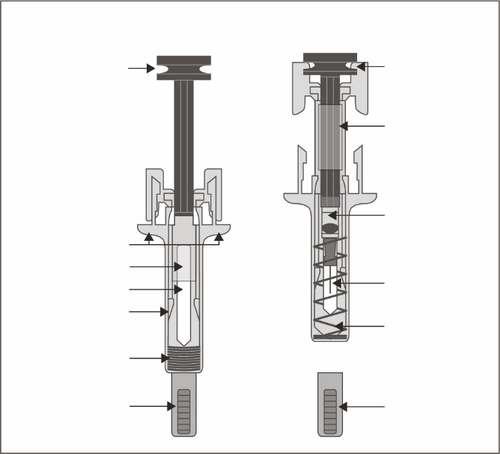
Before use After use
Used plunger
Syringe label
Used syringe barrel
Used needle
Needle safety spring
of the used needle
Removed grey cap
of the needle
Plunger
Finger support base
Syringe label
Syringe barrel
Syringe safety shield
Needle safety spring
Grey cap
of the inserted needle
Important
Before using a pre-filled Junod syringe with automatic needle protection, read
these important instructions.Follow the instructions for use of the syringe carefully.
o It is important that you do not attempt to administer the injection unless you have received
adequate instructions from your doctor or healthcare professional.
o Junod is administered as an injection into the tissue just below the skin (subcutaneous
injection).
o Do notremove the grey cap of the needle from the pre-filled syringe until you are ready
for the injection.
o Do notuse the pre-filled syringe if it has been dropped onto a hard surface. Use a new
pre-filled syringe and contact your doctor or healthcare professional.
o Do notattempt to activate the pre-filled syringe before the injection.
o Do notattempt to remove the transparent safety shield from the pre-filled syringe.
Contact your doctor or healthcare professional for any questions.
Step 1: Preparation
- A. Open the box containing the pre-filled syringe and prepare the materials needed for the injection: cotton balls soaked in alcohol, a cotton ball or gauze, a plaster and a sharps container (not included). For a more comfortable injection, leave the pre-filled syringe at room temperature for about 15 – 30 minutes before the injection. Wash your hands thoroughly with soap and water. Place the new pre-filled syringe and other necessary materials on a clean, well-lit surface. o Do notattempt to warm the syringe using a heat source such as hot water or a microwave oven. o Do notexpose the pre-filled syringe to direct sunlight. o Do notshake the pre-filled syringe.
Keep the pre-filled syringe out of the sight and reach of children.
- B. Grip the safety shield of the pre-filled syringe to remove the pre-filled syringe from the packaging.
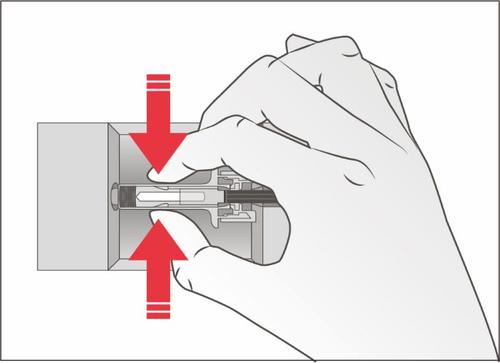
Grip here
For safety reasons:
o Do notgrip the plunger.
o Do notgrip the grey cap of the needle.
- C. Check the medicine and the pre-filled syringe.
Do notuse the pre-filled syringe if:
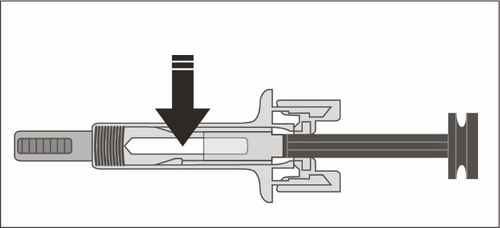
Medicine
o The medicine is cloudy or there are particles inside. It should be a transparent
solution, from colourless to slightly yellow.
o Some parts appear cracked or broken.
o The grey cap of the needle is missing or is not securely attached.
o The expiry date printed on the label has passed the last day of the month indicated.
In all cases, contact your doctor or healthcare professional.
Step 2: Getting ready
- A. Wash your hands thoroughly. Prepare and clean the injection site.
You can use:
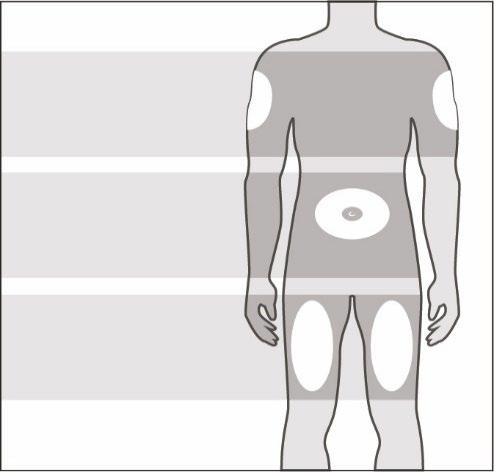
Upper arm
Abdomen
Upper thigh
o The upper thigh.
o The abdomen, except for an area of 5 centimetres around the navel.
o The outer upper arm (only if someone else is giving you the injection).
Clean the injection site with a cotton ball soaked in alcohol. Allow the skin to dry.
o Do nottouch the injection site before the injection.
o Do notinject into areas where the skin is sensitive, wounded, red or hardened. Avoid injecting
into areas with scars or stretch marks.
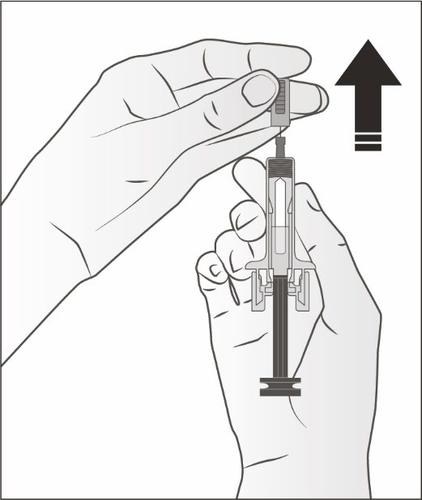
- B. Carefully remove the grey cap of the needle outwards and away from your body.
- C. Lift the skin at the injection site to create a firm surface.
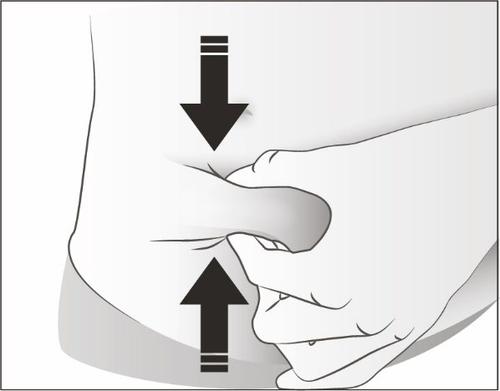
It is important to keep the skin lifted during the injection.
Step 3: Injection
- A. Keep the skin lifted. Insertthe needle into the skin at an angle between 45° and 90°.
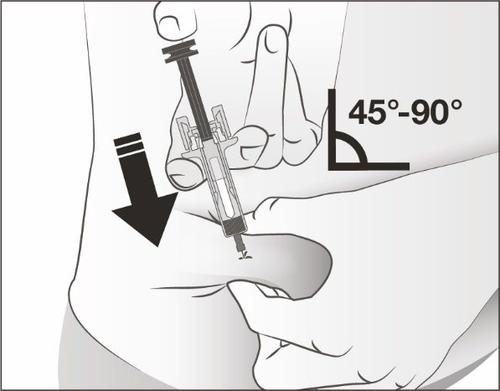
o Do nottouch the cleaned skin area.
- B. Pushthe plunger with a slow and steady pressure until you feel or hear a “click”. Push all the way down until it stops.
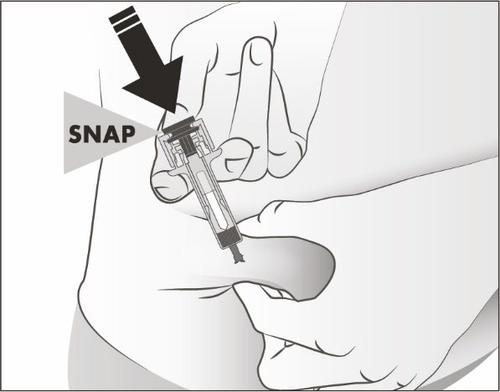
Note: It is important to push all the way down to the “click” to inject the entire dose.
- C. Releaseyour thumb. Then pullthe syringe away from the skin.
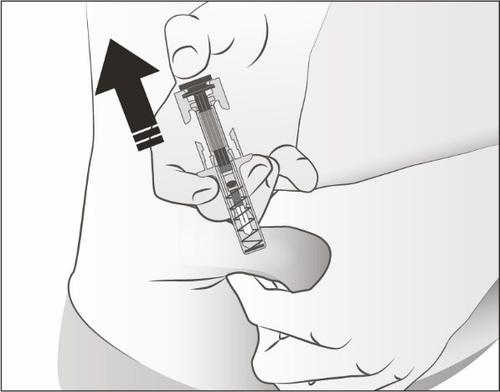
After releasing the plunger, the safety shield of the pre-filled syringe will safely cover the injection needle.
Do notput the grey cap of the needle back on used pre-filled syringes.
Step 4: Finish
- A. Dispose of the used pre-filled syringe and other materials in a sharps container.
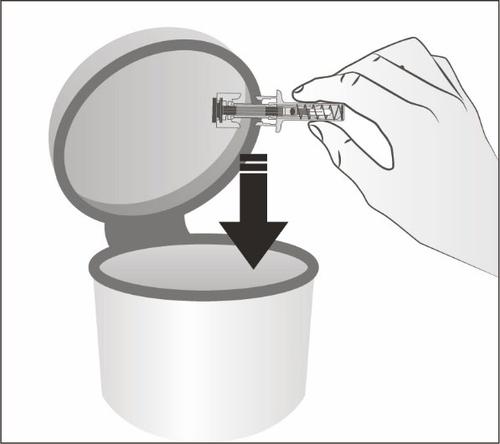
Do not dispose of any medicine in the wastewater or household waste. Ask your pharmacist how
to dispose of medicines you no longer use. These measures will help protect the environment.
Keep the syringe and sharps container out of the sight and
reach of children.
o Do notreuse the pre-filled syringe.
o Do notrecycle the pre-filled syringes or dispose of them in household waste.
- B. Examine the injection site.
If you notice blood, press a cotton ball or gauze onto the injection site. Do notrub the injection
site. If necessary, apply a plaster.

Не впевнені, чи підходить вам цей лікарський засіб?
Обговоріть симптоми та можливі варіанти лікування з лікарем онлайн.

Виникли питання під час прийому ліків?
Обговоріть свої симптоми та лікування з лікарем онлайн.
- Країна реєстрації
- Лікарська формаInjectable solution in pre-filled syringe, 60 mg/ml
- Код АТХM05BX04
- Діюча речовина
- Потрібен рецептТак
- Виробник
- Ця інформація надана лише для ознайомлення і не є медичною порадою. Рішення щодо лікування завжди приймає лікар.
- Альтернативи до JUNODЛікарська форма: Injectable solution in pre-filled syringe, 60 mg/mLДіюча речовина: ДеносумабВиробник: MABXIENCE RESEARCH SLПотрібен рецептЛікарська форма: Injectable solution in pre-filled syringe, 60 mg/mLДіюча речовина: ДеносумабВиробник: SANDOZ GMBHПотрібен рецептЛікарська форма: Injectable solution, 120 mgДіюча речовина: ДеносумабВиробник: ACCORD HEALTHCARE, S.L.U.Потрібен рецепт
Аналоги JUNOD в інших країнах
Препарати з тією самою діючою речовиною, доступні в інших країнах.
Аналог JUNOD у Іспанія
Аналог JUNOD у Україна
Аналог JUNOD у Польща
Лікарі онлайн щодо JUNOD
Застосування, безпека та можливість призначення рецепта — за результатами медичної оцінки.



Отримайте рецепт на JUNOD онлайн
Заповніть форму за 2 хвилини
Розкажіть про симптоми, історію хвороби та потрібний препарат.
Оберіть лікаря або ми призначимо
Оберіть спеціаліста або ми підберемо найближчого доступного лікаря.
Лікар розглядає ваш випадок
Зазвичай протягом 30 хвилин. Може ставити уточнювальні запитання в чаті.
Отримайте в будь-якій аптеці
Електронний рецепт надсилається на вашу пошту — дійсний по всій Польщі.
Часті запитання
JUNOD потребує рецепта в Італія. Ви можете обговорити з лікарем онлайн, чи підходить цей лікарський засіб для вашої ситуації.
Діюча речовина у JUNOD — Деносумаб. Це допомагає визначити препарати з тим самим складом, але під іншими торговими назвами.
JUNOD виробляється компанією GEDEON RICHTER PLC. Назва бренду та упаковка можуть відрізнятися залежно від дистрибʼютора.
Лікарі, зокрема Сімейні лікарі, Психіатри, Дерматологи, Кардіологи, Ендокринологи, Гастроентерологи, Пульмонологи, Нефрологи, Ревматологи, Гематологи, Інфекціоністи, Алергологи, Геріатри, Педіатри, Онкологи, можуть оцінити доцільність застосування JUNOD з урахуванням вашого стану та місцевих правил. Ви можете записатися на онлайн-консультацію, щоб обговорити симптоми та можливі подальші кроки.
Польща має добре розвинену систему охорони здоров'я у великих містах, таких як Варшава, Краків, Вроцлав і Гданськ. Аптеки широко доступні та працюють відповідно до чинного законодавства, забезпечуючи доступ до рецептурних препаратів.
Ви можете придбати JUNOD у Варшаві, Кракові, Вроцлаві або Гданську в будь-якій аптеці за наявності дійсного рецепта.
Щоб отримати рецепт, ви можете скористатися Oladoctor:
Інші препарати з тією самою діючою речовиною (Деносумаб) включають ITSAMBY, JUBBONTI, JUBEREQ. Вони можуть відрізнятися торговою назвою або формою випуску, але містять той самий терапевтичний компонент. Перед зміною або початком прийому нового препарату варто проконсультуватися з лікарем.
