



ISORIAC 10 mg Soft Capsule

Запит на рецепт онлайн
Лікар розгляне ваш випадок і визначить, чи є рецепт медично доцільним.

Поговоріть з лікарем про ці ліки
Обговоріть симптоми та можливі подальші кроки під час короткої онлайн-консультації.



Інструкція із застосування ISORIAK
Зміст інструкції
- ISORIAC 10 mg soft capsules, 20 soft capsules
- ISORIAC must be prescribed exclusively by or under the supervision of physicians who
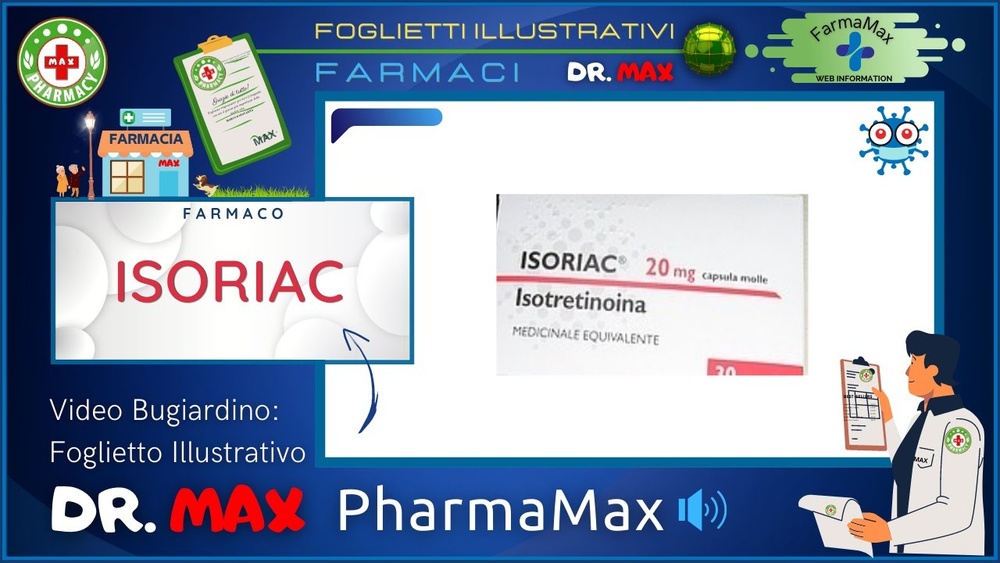
ISORIAC 10 mg soft capsules, 20 soft capsules
Isotretinoin
Equivalent medicine
WARNING
MAY CAUSE SERIOUS HARM TO THE FETUS.
Women must use effective contraceptive methods.
Do not use if you are or think you might be pregnant.
Medicine subject to additional monitoring. This will allow the rapid identification
of new safety information. You can contribute by reporting any adverse
effects experienced during the use of this medicine. See the end of
section 4 for information on how to report adverse effects.
Read this leaflet carefully before taking this medicine as it contains
important information for you.
- Keep this leaflet. You may need to read it again.
- If you have any questions, ask your doctor or pharmacist.
- This medicine has been prescribed for you only. Do not pass it on to others, even if their symptoms are the same as yours, as it may be harmful.
- If any side effects occur, including those not listed in this leaflet, tell your doctor or pharmacist. See section 4.
Contentsof this leaflet:
- 1 – What is ISORIAC 10 mg, 20 mg soft capsules (hereinafter referred to as ISORIAC) and what it is used for
- 2 – What you need to know before you take ISORIAC
- 3 – How to take ISORIAC
- 4 – Possible side effects
- 5 – How to store ISORIAC
- 6 – Contents of the pack and other information
1. What is ISORIAC and what is it used for
ISORIAC contains isotretinoin, which is the active ingredient, belonging to a class of
medicines known as retinoids.
ISORIAC is indicated for the treatment of severe forms of acne (such as nodular acne and conglobate acne or acne with a risk of permanent scarring) resistant to both standard therapy with oral antibiotics and topical treatment (cream, gel, ointment or
lotion).
ISORIAC must be prescribed exclusively by or under the supervision of physicians who
have experience in the use and control of retinoids in the treatment of severe acne.
ISORIAC is not indicated for the treatment of acne in pre-pubertal age and is not recommended
for patients under the age of 12 years.
2. What you need to know before taking ISORIAC
Do not take ISORIAC
- If you are pregnant or breastfeeding.
- If there is any possibility of becoming pregnant, you must take the precautions described in the “Pregnancy Prevention Program”, see section “Warnings and precautions”.
- If you are allergic to isotretinoin or any of the other ingredients of this medicine (listed in section 6), especially peanuts or soy.
- If you suffer from liver failure (severe liver disease).
- In case of hypervitaminosis A (very high level of vitamin A in the body).
- If you have high levels of lipids in the blood (cholesterol, triglycerides).
- If you are taking a tetracycline antibiotic.
- If you are taking vitamin A or other retinoids (acitretin, alitretinoin).
Warnings and precautions
Talk to your doctor or pharmacist before taking ISORIAC:
- If you have had mental health problems. This includes depression, aggressive tendencies or mood swings. This also includes thinking about harming yourself or ending your life. This is because your mood may change while you are taking ISORIAC.
- If you have kidney problems. The doctor may adjust the dose of isotretinoin.
- If you are overweight or suffer from diabetes mellitus, have high levels of cholesterol or triglycerides, or if you are a heavy drinker. In these cases, an increase in lipid and glyceride levels in the blood may be observed. If any of these conditions are present, your doctor may prescribe periodic blood tests. Carefully monitor your blood glucose levels throughout the treatment if you have diabetes mellitus.
- If you have liver problems.
ISORIAC can increase levels of transaminases (liver enzymes). The doctor
will prescribe periodic blood tests, before and during treatment, to check the
state of health of the liver.
A continued increase in these enzymes may lead the doctor to reduce the
dose of ISORIAC or to discontinue treatment.
- If you suffer from or have suffered from intestinal disorders.
Stop treatment immediately and quickly consult a doctor:
- If a pregnancy occurs during treatment or within one month after stopping treatment.
- If you have: o Difficulty breathing, itching and/or rash. These symptoms may be due to an allergic reaction. o Headache with nausea, vomiting or blurred vision. o Severe stomach pain, nausea or vomiting, or severe cases of diarrhea with blood in the stool. o Difficulty urinating or inability to urinate. o Reduced night vision and/or visual disturbances. o Mental health problems: in particular signs of depression (deep feeling of sadness or crying spells, thinking about harming yourself (self-harm) or isolating yourself (self-isolation) from family or friends).
- You may not notice some changes in your mood and behavior and it is very important that you tell your friends and family that you are taking this medicine. They may notice these changes and help you identify problems that need to be discussed with your doctor. If you notice yellowing of the eyes or skin and a feeling of dizziness.
Special warnings for female patients:
Pregnancy and breastfeeding, Important
Pregnancy Prevention Program
Pregnant women must not take ISORIAC.
This medicine can seriously harm the fetus (it is said to be “teratogenic”) – it
can cause
malformations of the unborn child in the brain, face, ear, eye, heart and some glands
(thymus and
parathyroid glands). It can also likely induce abortion. This can happen
even if ISORIAC is used for a short time during pregnancy.
- You must not take ISORIAC if you are pregnant or think you might be.
- You must not take ISORIAC if you are breastfeeding. The medicine can pass into the milk and harm the newborn.
- You must not take ISORIAC if you could become pregnant during treatment.
- You must not become pregnant for one month after finishing this treatment as some medicines may remain in your body.
For women who can become pregnant, ISORIAC is prescribed with very
strict rules. This is due to the risk of harm that can be caused to the fetus.
These are the rules:
- The doctor must explain the risk of harm to the fetus - you must understand that you must not become pregnant and what you need to do to prevent pregnancy.
- The doctor must have talked to you about contraception (birth control). The doctor will give you information on how not to become pregnant. The doctor may refer you to a specialist for contraceptive counseling.
- Before starting treatment, the doctor will tell you to take a pregnancy test. The test must show that you are not pregnant when you start treatment with ISORIAC.
Women must use an effective contraceptive method before, during and after
taking ISORIAC.
- You must agree to use at least one very reliable contraceptive method (for example an intrauterine device or a contraceptive implant) or, two effective methods that work in different ways (for example hormonal contraceptive pill and a condom). Talk to your doctor about which method may be suitable for you.
- You must use contraception for one month before taking ISORIAC, during treatment and for one month after the end of treatment.
- You must use contraception even if you do not have your period or are not sexually active (unless your doctor tells you that it is not necessary).
Women must agree to undergo pregnancy tests before, during and
after taking ISORIAC.
- You must agree to undergo regular check-up visits, preferably every month.
- You must agree to undergo regular pregnancy tests, preferably every month during treatment and, as some medicines may remain in your body, 1 month after stopping ISORIAC (unless the doctor decides that this is not necessary in your case).
- You must agree to perform additional pregnancy tests if the doctor asks you to.
- You must not become pregnant during treatment or within one month afterwards as some medicines may remain in your body.
- The doctor will discuss all these points with you, using a checklist and will ask you (or a relative/guardian) to sign it. This document will serve to confirm that you have been informed of the risks and that you will follow the above rules.
If you become pregnant while taking ISORIAC, stop taking
this medicine immediately, and consult a doctor. The doctor may refer you to a specialist for
a consultation.
Also, if you become pregnant within one month after stopping ISORIAC, you must
contact your doctor. The doctor may refer you to a specialist for a consultation.
Advice for men
Levels of oral retinoids in the semen of men using ISORIAC are too
low to harm the fetus of their partner. However, you should never share your
medicines with anyone.
Further precautions
You should never give this medicine to anyone else. At the end of treatment return the
unused capsules to the pharmacist.
You should not donate blood during treatment with this medicine and for 1 month after
stopping ISORIAC as if a pregnant patient were to receive your blood
it could harm her fetus.
Children
Do not administer this medicine to children under the age of 12, because it is not known whether it is
safe or effective in this age group and is not indicated in prepubertal acne.
Other medicines and ISORIAC
Tell your doctor or pharmacist if you are taking, have recently taken, or might take
any other medicines, including medicines obtained without a prescription.
Do not take a medicine containing vitamin A or tetracyclines during therapy with
ISORIAC.
The concomitant administration of isotretinoin and topical keratolytic agents or anti-acne exfoliating agents should be avoided because it may increase local irritation.
Pregnancy, breastfeeding and fertility
For further information on pregnancy and contraception, see section 2 of the “Pregnancy
Prevention Program”
Driving and using machines
Be careful when driving vehicles or using machinery at night; night vision
may be reduced during therapy, sometimes suddenly.
Visual impairment rarely persists after stopping therapy.
ISORIACcontains soy oil:
If you are allergic to peanuts or soy, do not use this medicine.
Tips for everyday life:
- Apply moisturizing ointments or creams to the skin and use a lip balm during therapy in case of dry skin or lips.
- In general, avoid applying irritating products to the skin (for example peeling creams) during therapy.
- Avoid excessive exposure to the sun: ISORIAC can increase sensitivity to the sun during treatment.
- However, if sun exposure cannot be avoided, apply a sunscreen (with a protection factor of at least 15).
- Do not use UV lamps or tanning beds or sun showers.
- Avoid waxing during treatment and for at least 6 months after stopping it. Also avoid surgical dermabrasion or laser therapy (cosmetic procedures to smooth the skin to reduce scars or signs of aging). These procedures may cause skin scarring, hypo/hyperpigmentation (discoloration or high coloration of the skin) or epidermal detachment.
- Wear glasses rather than contact lenses throughout the treatment period if your eyes are very dry.
- You may need to wear sunglasses to protect your eyes from glare.
- Be careful when driving vehicles or using machinery at night, as changes in vision (reduced night vision) occur suddenly.
- Refrain from intense physical activity during treatment with ISORIAC as joint or muscle pain may occur during therapy.
3. How to take ISORIAC
Dosage:
Take this medicine following exactly the instructions of your doctor. If you have any doubts
consult your doctor or pharmacist.
The usual initial dose is 0.5 mg per kilogram of body weight per day (0.5
mg/Kg/day).
For most patients the dose is between 0.5 and 1.0 mg/Kg/day.
If you think that the effect of ISORIAC is too strong or too weak, tell your doctor.
The capsules must be taken once or twice a day during meals. Swallow the capsules
whole without chewing or sucking them.
Patients with severe renal impairment
In patients with severe renal impairment, treatment should be started at a lower dose
(for example 10 mg/day).
Use in children
ISORIAC is not indicated for the treatment of prepubertal acne and is not recommended in
patients under the age of 12 years.
Patients with intolerance
In patients who show a severe intolerance to the recommended dose, the doctor may continue
treatment at the highest tolerated dose.
A cycle of ISORIAClasts from 16 to 24 weeks. The skin may continue to improve for up to
8 weeks after the end of treatment.
Therefore, wait at least until the end of this 8-week period before starting a new cycle
of treatment, if necessary. For most patients, one cycle is sufficient.
If you take more ISORIAC than you should
If you have taken more ISORIAC than you should, symptoms of hypervitaminosis A may appear,
which manifests with severe headaches, nausea or vomiting, drowsiness, irritability and itching.
Contact your doctor, pharmacist or the nearest hospital as soon as possible.
If you forget to take ISORIAC
Do not take a double dose to make up for a missed dose of Isoriac.
Subsequently resume the usual dosage schedule.
If you have further questions about the use of this medicine, ask your doctor or pharmacist.
4. Possible side effects
Like all medicines, this medicine can cause side effects, although not everyone will experience them.
These effects often subside during treatment or after stopping it, or after modifying the dosage (consult your doctor). Your doctor can help you cope with the situation.
Some side effects can be serious
Mental health problems
Rare effects (may affect up to 1 in 1,000 people):
- Depression or related disorders. Symptoms of this include sadness or altered mood, anxiety, feelings of emotional discomfort
- Worsening of existing depression
- Becoming violent or aggressive
Very rare effects (may affect up to 1 in 10,000 people):
- Some people have had thoughts or intentions of harming themselves or ending their lives (suicidal ideas), have tried to end their lives (suicide attempt), or have ended their lives (suicide). These people may not appear depressed.
- Unusual behavior.
- Signs of psychosis: loss of contact with reality, such as hearing voices or seeing things that are not there.
Contact your doctor immediately if you experience symptoms of any of these mental health problems.
Your doctor may tell you to stop taking ISORIAC. This may not be enough to end the effects: you may need further help and your doctor can arrange this.
- Sudden allergic reaction that is life-threatening (anaphylactic reactions)
- Severe skin rashes (erythema multiforme, Stevens-Johnson syndrome and toxic epidermal necrolysis), which are potentially life-threatening and require immediate medical attention. These initially appear as circular patches often with blisters in the center, usually on the arms and hands or on the legs and feet, more severe rashes may include the formation of blisters on the chest and back. Further symptoms such as eye infections (conjunctivitis) or ulcers in the mouth, throat or nose may occur. Severe forms of rashes can evolve into very extensive peeling which can be life-threatening. These severe rashes are often preceded by headache, fever, body aches (flu-like symptoms).
If you develop a rash or these skin symptoms, stop
therapy with Isoriac and contact your doctor immediately.
All other side effects are listed below according to their frequency.
Very common side effects: may affect more than 1 in 10 people
- Low red blood cell count (anemia), decreased platelet count, increased platelet count.
- Increased erythrocyte sedimentation rate (an indicator of acute inflammation).
- Increased fatty acids (increased triglycerides in the blood), decreased protein component of lipoproteins (decreased high-density lipoproteins - HDL).
- Increased liver enzymes (increased transaminases). In such cases, your doctor may need to prescribe blood tests and take necessary measures.
- Red or deep cracks at the corners of the mouth or on the lips, skin inflammation, dry skin, localized scaling, itching, reddish skin rash, fragile skin.
- Eye infection of the eyelids, eye discharge with itching and crusty eyelids (conjunctivitis), eye irritation and dry eyes.
- Back pain, muscle and joint pain. It is therefore advisable to reduce intense exercise during treatment. All these effects are reversible after discontinuation of treatment.
Common side effects: may affect up to 1 in 10 people
- Elevated blood glucose and a type of fat (cholesterol), presence of protein or blood in the urine.
- Low white blood cell count, which may make you more susceptible to infections.
- Headache.
- Dry nose, nosebleeds and nasopharyngitis.
Rare side effects: may affect up to 1 in 1,000 people
- Allergic skin reactions, hypersensitivity.
- Hair loss (alopecia).
Very rare side effects: may affect up to 1 in 10,000 people
- Inflammation of the pancreas or gastrointestinal bleeding or inflammatory bowel disease. In case of severe abdominal pain, with or without bloody diarrhea, nausea and vomiting, stop taking isotretinoin and contact your doctor as soon as possible.
- Liver diseases (hepatitis) including nausea, vomiting, loss of appetite, general feeling of unwellness, fever, itching, yellowing of the skin and eyes.
- Kidney diseases including severe fatigue, difficulty urinating or even inability to urinate and swollen eyelids. If you experience these symptoms while being treated with isotretinoin, stop treatment and contact your doctor.
- Too high levels of sugar in the blood (diabetes), with symptoms including excessive thirst, passing a significantly increased amount of urine, increased appetite with weight loss, feeling tired, sleepy, weak, depressed, irritable and generally unwell. In this case, contact your doctor.
- Benign intracranial hypertension has occurred in patients treated concomitantly with isotretinoin and some antibiotics (tetracyclines). This hypertension manifests with persistent headaches with nausea, vomiting or blurred vision. Stop taking ISORIAC and consult your doctor as soon as possible.
- Seizures (convulsions).
- Narrowing or blockage of blood vessels.
- Worsening of acne in the first weeks of treatment with inflammatory lesions on the skin, severe form of acne (fulminant acne). However, in general, continuation of treatment will be accompanied by attenuation of acne and other symptoms.
- Inflammation of the colon.
- Localized bacterial infections may occur.
- Facial erythema, skin rash.
- Hair disorders, abnormal hair growth, nail plate abnormalities, infected hangnails.
- Benign vascular lesions of the skin and mucous membranes.
- Increased sensitivity to the sun (photosensitivity reaction, see advice for everyday life in chapter 2). Increased pigmentation, excessive sweating.
- Increased volume of lymph nodes.
- High levels of uric acid in the blood that can cause gout.
- The medicine can impair night vision and sudden visual disturbances may occur. These effects rarely persist after the end of treatment.
- Altered color vision, intense eye irritation, corneal opacity, irritation or feeling of having something in the eye (keratitis), blurred vision, difficulty seeing (cataract), increased sensitivity to light, visual disturbances and poor tolerance to contact lenses. You may need sunglasses to prevent your eyes from being dazzled. If the medicine causes you even the slightest difficulty in seeing, inform your doctor quickly.
- Impaired hearing.
- Sudden chest tightness with shortness of breath and wheezing (bronchospasm), especially in patients with asthma, changes in voice (hoarseness).
- Dry throat, nausea.
- Feeling unwell.
- Disease affecting mainly the joints with pain and swelling, bone abnormalities, delayed growth and reduced bone density, calcification of soft tissues, inflammation of tendons. Blood levels of an enzyme (creatine phosphokinase), released during the degradation of muscle fibers, may be increased in the case of intense physical exertion in patients treated with isotretinoin, muscle tissue rupture which can lead to kidney problems.
- Drowsiness, dizziness.
Frequency not known: cannot be estimated from the available data
- Problems achieving or maintaining an erection
- Decreased libido
- Enlargement of the breasts with or without tenderness in men.
Reporting of side effects
If you get any side effects, even those not listed in this leaflet, tell your doctor or pharmacist. You can also report side effects directly through the national reporting system at
https://www.aifa.gov.it/content/segnalazioni-reazioni-avverse .
By reporting side effects you can help provide more information on the safety of this medicine.
5. How to store ISORIAC
Keep this medicine out of the sight and reach of children.
Do not use this medicine after the expiry date which is stated on the packaging. The expiry date
refers to the last day of that month.
Do not store at a temperature above 25°C. Store in the original container. Keep
the container tightly closed to protect the medicine from light.
At the end of treatment, return any remaining capsules to the pharmacist.
Do not dispose of any medicine in wastewater or household waste. Ask the pharmacist
how to dispose of medicines you no longer use. This will help protect the environment.
6. Package contents and other information
What ISORIAC contains
ISORIAC 10 mg, 20 mg, soft capsules
- The active ingredient is: For a 10 mg soft capsule: isotretinoin ..............................................10 mg For a 20 mg soft capsule: isotretinoin ..............................................20 mg
- The excipients are: refined soybean seed oil, hydrogenated vegetable oil, yellow beeswax.
Composition of the 10 mg capsule shell: gelatin, glycerol, purified water,
red iron oxide (E172).
Composition of the 20 mg capsule shell: gelatin, glycerol, purified water,
red iron oxide (E172), yellow iron oxide (E172), titanium dioxide 25% (E171) in glycerol.
Composition of the black ink: SDA 35 alcohol, propylene glycol, black iron oxide,
phthalate polyvinyl acetate, water, isopropyl alcohol, polyethylene glycol, ammonium hydroxide.
Description of the appearance of ISORIAC and contents of the pack
This medicine is supplied in the form of soft capsules in packs of 30.
Each 10 mg capsule has a red/brown gelatin shell with a
bright yellow/orange content and bears the logo “I 10” printed on one side.
Each 20 mg capsule has a two-color red/brown and cream gelatin shell with a
bright yellow/orange content and bears the logo “I 20” printed on one side.
Marketing Authorisation Holder and Manufacturer
Marketing Authorisation Holder
PIERRE FABRE ITALIA S.p.A.
Via G. Washington, 70
20146 Milan - Italy
Manufacturer
Catalent France Beinheim S.A.
74, rue Principale
67930 Beinheim, France
or
Catalent Germany Schorndorf GmbH
Steinbeisstrasse 2
73614 Schorndorf, Germany
or
Catalent Germany Eberbach Gmbh
Gammelsbacher Str. 2
Eberbach, Baden-Wuerttemberg
69412, Germany
This medicinal product is authorised in the Member States of the European Economic Area
with the following denominations:
- Belgium: ISOCURAL
- Czech Republic: CURACNE
- France: CURACNE
- Greece: CURACNE
- Italy: ISORIAC
- Luxembourg: CURACNE
- Poland: CURACNE
- Slovakia: CURACNE
- Spain: ISOACNE
Prescription and conditions of distribution:
ISORIAC is a prescription-only medicine; this is a medicine that requires
special monitoring during treatment.
For women of childbearing potential:
- Before prescribing, the patient's consent to care and contraception must be obtained.
- The duration of the prescription is limited to one month of therapy. Continuation of therapy requires a new prescription.
- The treatment must be dispensed, at the latest, 7 days after the date of prescription.
- The treatment will be dispensed only after verification of the presence of the following mandatory statements on the prescription: o For the first prescription:
- Signature of the consent form for care and contraception.
- Use of at least one effective method of contraception, established at least one month prior.
- Assessment of the patient's level of understanding.
- Date of pregnancy test (plasma hCG). o For subsequent prescriptions:
- Continuation of effective contraception.
- Assessment of the patient's level of understanding.
- Date of the last pregnancy test (plasma hCG).
For further information on ISORIAC, please contact your doctor or pharmacist.
Detailed and up-to-date information on this medicine is available by scanning the
QR code included in the package leaflet with a smartphone. The same information is also available at
the following URL: http://www.aifa.gov.it/content/medicinali-base-di-retinoidi .


Не впевнені, чи підходить вам цей лікарський засіб?
Обговоріть симптоми та можливі варіанти лікування з лікарем онлайн.

Виникли питання під час прийому ліків?
Обговоріть свої симптоми та лікування з лікарем онлайн.
- Країна реєстрації
- Лікарська формаSoft capsule, 10 MG
- Код АТХD10BA01
- Діюча речовина
- Потрібен рецептНі
- Виробник
- Ця інформація надана лише для ознайомлення і не є медичною порадою. Рішення щодо лікування завжди приймає лікар.
- Альтернативи до ISORIAKЛікарська форма: Soft capsule, 10 MGДіюча речовина: ИсотретиноинВиробник: FIDIA FARMACEUTICI S.P.A.Потрібен рецептЛікарська форма: Soft capsule, 5 MGДіюча речовина: ИсотретиноинВиробник: ISDIN S.R.L.Потрібен рецептЛікарська форма: Soft capsule, 5 MGДіюча речовина: ИсотретиноинВиробник: DIFA COOPER S.P.A.Потрібен рецепт
Аналоги ISORIAK в інших країнах
Препарати з тією самою діючою речовиною, доступні в інших країнах.
Аналог ISORIAK у Іспанія
Аналог ISORIAK у Польща
Аналог ISORIAK у Україна
Лікарі онлайн щодо ISORIAK
Застосування, безпека та можливість призначення рецепта — за результатами медичної оцінки.



Отримайте рецепт на ISORIAK онлайн
Заповніть форму за 2 хвилини
Розкажіть про симптоми, історію хвороби та потрібний препарат.
Оберіть лікаря або ми призначимо
Оберіть спеціаліста або ми підберемо найближчого доступного лікаря.
Лікар розглядає ваш випадок
Зазвичай протягом 30 хвилин. Може ставити уточнювальні запитання в чаті.
Отримайте в будь-якій аптеці
Електронний рецепт надсилається на вашу пошту — дійсний по всій Польщі.
Часті запитання
ISORIAK не потребує рецепта в Італія. Ви можете обговорити з лікарем онлайн, чи підходить цей лікарський засіб для вашої ситуації.
Діюча речовина у ISORIAK — Исотретиноин. Це допомагає визначити препарати з тим самим складом, але під іншими торговими назвами.
ISORIAK виробляється компанією PIERRE FABRE ITALIA S.P.A.. Назва бренду та упаковка можуть відрізнятися залежно від дистрибʼютора.
Лікарі, зокрема Сімейні лікарі, Психіатри, Дерматологи, Кардіологи, Ендокринологи, Гастроентерологи, Пульмонологи, Нефрологи, Ревматологи, Гематологи, Інфекціоністи, Алергологи, Геріатри, Педіатри, Онкологи, можуть оцінити доцільність застосування ISORIAK з урахуванням вашого стану та місцевих правил. Ви можете записатися на онлайн-консультацію, щоб обговорити симптоми та можливі подальші кроки.
Польща має добре розвинену систему охорони здоров'я у великих містах, таких як Варшава, Краків, Вроцлав і Гданськ. Аптеки широко доступні та працюють відповідно до чинного законодавства, забезпечуючи доступ до рецептурних препаратів.
Ви можете придбати ISORIAK у Варшаві, Кракові, Вроцлаві або Гданську в будь-якій аптеці за наявності дійсного рецепта.
Щоб отримати рецепт, ви можете скористатися Oladoctor:
Інші препарати з тією самою діючою речовиною (Исотретиноин) включають AISOSKIN, ISDIBEN, ISODIFA. Вони можуть відрізнятися торговою назвою або формою випуску, але містять той самий терапевтичний компонент. Перед зміною або початком прийому нового препарату варто проконсультуватися з лікарем.
