



FARYDAK 10 mg Hard Capsules

Запит на рецепт онлайн
Лікар розгляне ваш випадок і визначить, чи є рецепт медично доцільним.

Поговоріть з лікарем про ці ліки
Обговоріть симптоми та можливі подальші кроки під час короткої онлайн-консультації.



Інструкція із застосування FARYDAK
Зміст інструкції
Farydak 10 mg hard capsules, 15 mg hard capsules, 20 mg hard capsules
panobinostat
Read this leaflet carefully before you start taking this medicine because it contains
important information for you.
- Keep this leaflet. You may need to read it again.
- If you have any questions, ask your doctor, pharmacist or nurse.
- This medicine has been prescribed for you only. Do not pass it on to others, even if their symptoms are the same as yours, as it may be harmful.
- If you get any side effects, even those not listed in this leaflet, tell your doctor, pharmacist or nurse. See section 4.
Contents of this leaflet
- 1. What Farydak is and what it is used for
- 2. What you need to know before you take Farydak
- 3. How to take Farydak
- 4. Possible side effects
- 5. How to store Farydak
- 6. Contents of the pack and other information
1. What is Farydak and what is it used for
What is Farydak
Farydak is an antineoplastic medicine that contains the active substance panobinostat, which belongs to
a group of medicines called pan-deacetylase inhibitors.
What is Farydak used for
Farydak is used for the treatment of adult patients with a rare type of blood cancer called
multiple myeloma. Multiple myeloma is a disease of plasma cells (a type of blood cell) that grow uncontrollably in the bone marrow.
Farydak blocks the growth of cancerous plasma cells and reduces the number of tumor cells.
Farydak is always used together with two other medicines: bortezomib and dexamethasone.
If you have any questions about how Farydak works or why it has been prescribed to you, please ask your doctor or
pharmacist.
2. What you need to know before you take Farydak
Do not take Farydak:
- if you are allergic to panobinostat or any of the other ingredients of this medicine (listed in section 6).
- if you are breastfeeding.
Warnings and precautions
Follow all of your doctor's instructions carefully.
Talk to your doctor or pharmacist before taking Farydak:
- if you have liver problems or have had liver disease.
- if you have heart problems or an irregular heartbeat, such as an irregular heartbeat or a condition called prolonged QT interval.
- if you have a bacterial, viral or fungal infection.
- if you have gastrointestinal problems, such as diarrhoea, nausea or vomiting.
- if you have blood clotting problems (coagulation disorder).
Tell your doctor or pharmacist immediately during treatment with Farydak:
- if you notice any signs of a gastrointestinal problem.
- if you notice any signs of a liver problem.
- if you notice any signs of an infection.
- if you notice any signs of a heart problem. The list of symptoms associated with this is provided in section 4, Possible side effects.
Your doctor may need to adjust the dose, temporarily interrupt or completely stop
treatment with Farydak if side effects occur.
Monitoring during treatment with Farydak
During treatment with Farydak you will have regular blood tests. These are used to:
- check that your liver is working properly (by measuring blood levels of bilirubin and transaminases, which are substances produced by the liver).
- check the amount of certain blood cells (white blood cells, red blood cells, platelets).
- check the level of electrolytes (such as potassium, magnesium, phosphate) in the body.
- check that your thyroid and pituitary gland are working properly (by measuring the levels of thyroid hormones in the blood).
Your heart rate will also be checked using a device that measures the electrical activity of the
heart (called an ECG).
Children and adolescents
Farydak must not be used in children or adolescents under 18 years of age.
Other medicines and Farydak
Tell your doctor or pharmacist if you are taking, have recently taken or might take
any other medicines, including medicines obtained without a prescription, such as vitamins or
herbal supplements, as they may interact with Farydak.
In particular, tell your doctor or pharmacist if you are taking any of the following medicines:
- medicines used to treat infections, including fungal infections (such as ketoconazole, itraconazole, voriconazole or posaconazole) and some bacterial infections (such as antibiotics like clarithromycin or telithromycin). Medicines used to treat tuberculosis, such as rifabutin or rifampicin.
- medicines used to stop seizures or convulsions (antiepileptics such as carbamazepine, perphenazine, phenobarbital or phenytoin).
- medicines used to treat HIV, such as ritonavir or saquinavir.
- medicines used to treat depression, such as nefazodone.
- St John's wort, a herbal medicine used to treat depression.
- medicines to prevent blood clotting called anticoagulants, such as warfarin or heparin.
- medicines used to treat coughs, such as dextromethorphan.
- medicines used to treat irregular heartbeat, such as amiodarone, disopyramide, procainamide, quinidine, propafenone or sotalol.
- medicines that can have an unwanted effect on the heart (called prolonged QT interval), such as chloroquine, halofantrine, methadone, moxifloxacin, bepridil or pimozide.
- medicines used to treat high blood pressure, such as metoprolol or nebivolol.
- medicines used to treat serious mental health problems, such as risperidone.
- medicines used to treat breast cancer, such as tamoxifen.
- medicines used to treat nausea and vomiting such as dolasetron, granisetron, ondansetron or tropisetron; these can also have an unwanted effect on the heart (prolonged QT interval).
- atomoxetine, a medicine used to treat attention deficit hyperactivity disorder
These medicines must be used with caution or may need to be avoided during
treatment with Farydak. If you are taking any of these medicines, your doctor may
prescribe a different medicine during treatment with Farydak.
Ask your doctor or pharmacist if you are not sure whether the medicine you are taking is one of
the medicines listed above.
During treatment with Farydak, you should also tell your doctor or pharmacist if you have been
prescribed another medicine that you were not already taking.
Farydak with food and drink
You must not eat star fruit (carambola), pomegranate or grapefruit or drink pomegranate or grapefruit juiceduring treatment with Farydak as they can increase the amount
of medicine in the blood.
Pregnancy and breastfeeding
Due to the potential risk of death or malformation of the foetus, Farydak must not be taken
during:
- Pregnancy Farydak must not be taken during pregnancy, unless the potential benefit to the mother is greater than the potential risk to the baby. If you are pregnant, suspect you are pregnant or are planning to become pregnant, ask your doctor for advice. Your doctor will discuss the possible risks of taking Farydak during pregnancy with you.
- Breastfeeding You must not take Farydak if you are breastfeeding.
Contraception for women and men
Due to the potential risk of death or malformation of the foetus, the following
methods of contraception must be used during the intake of Farydak:
- For women taking Farydak If you are a sexually active woman, you must have a pregnancy test before starting treatment with Farydak and use a very effective method of contraception during treatment with Farydak. You should also use it for three months after stopping taking Farydak. Discuss with your doctor which is the best method for you to use. If you are using hormonal contraception you should also use a barrier method of contraception (such as a condom or diaphragm).
- For men taking Farydak If you are a sexually active man, you must use a condom during treatment with Farydak. You should also do this for six months after stopping taking Farydak. If your partner is able to become pregnant, they should use a very effective method of contraception during your treatment and for six months afterwards. Tell your doctor immediately if your partner becomes pregnant while you are taking Farydak or during the six months after treatment with Farydak.
Driving and using machines
Farydak may slightly impair the ability to drive and operate machines. If you experience
dizziness while taking this medicine, do not drive a vehicle or use tools or machinery.
3. How to take Farydak
Take this medicine following exactly the instructions of your doctor. If you have any doubts, ask your doctor or pharmacist.
How much to take
- Farydak is taken over 21 days (2 consecutive weeks followed by 1 week off) - this is called a treatment cycle.
- Do not take the medicine every day.
- Based on your doctor’s recommendation, the dose of Farydak is 20 mg or 15 mg or 10 mg, to be taken once a day on days 1, 3, 5, 8, 10 and 12 of the 21-day cycle.
- Do not take Farydak in Week 3.
- After Week 3 start a new cycle as indicated in Tables 1 and 2 below.
- Please refer to Table 1 for cycles 1 to 8 and to Table 2 for cycles 9 to 16.
Table 1Recommended Farydak treatment schedule in combination with bortezomib and
dexamethasone (cycles 1-8)
Cycles 1-8
(3-week cycles)
Week 1Week 2Week 3
DaysDays
Farydak1 3 5 8 10 12 Rest period
Bortezomib1 4 8 11 Rest period
Dexamethasone1 2 4 5 8 9 11 12 Rest period
Table 2Recommended Farydak treatment schedule in combination with bortezomib and
dexamethasone (cycles 9-16).
Cycles 9-16
(3-week cycles)
Week 1Week 2Week 3
DaysDays
Farydak1 3 5 8 10 12 Rest period
Bortezomib1 8 Rest period
Dexamethasone1 2 8 9 Rest period
Your doctor will tell you exactly how many Farydak capsules you need to take. Do not change the dose
without talking to your doctor.
Take Farydak once a day at the same time each day only on the days scheduled.
Taking the medicine
- Swallow the capsules whole with a glass of water.
- The medicine can be taken with or without food.
- Do not chew or crush the capsules.
If you should vomit after swallowing Farydak capsules, do not take any more capsules until the next
dose prescribed.
How to use the Farydak blister
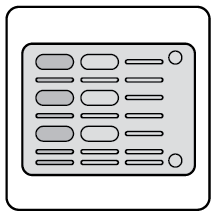 | o One Farydak blister = 3 weeks = 1 cycle c a |
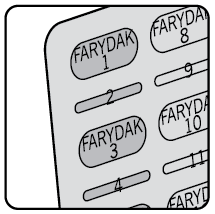 | m The days of the cycle are numbered on the blister. r Take Farydak on days 1, 3 and 5 and on days 8, 10 and 12. a F |
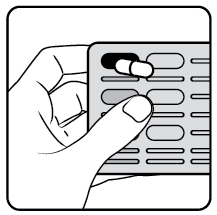 | Push the Farydak capsule out of the compartment on l days 1, 3 and 5 of week 1 and on days 8, 10 and 12 of e week 2. d |
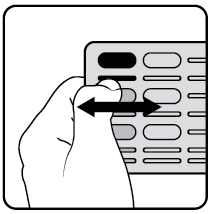 | a To help you keep track of the treatment schedule, on the days when you do not need to take Farydak, including the n rest period of week 3, mark the corresponding empty cavities a with your fingernail. i |
For how long to take Farydak
Continue to take Farydak for as long as it has been prescribed by your doctor. This is
a long-term treatment with 16 cycles (48 weeks). Your doctor will check your condition to
see if the treatment is working. If you have questions about how long to take Farydak, ask
your doctor or pharmacist.
If you take more Farydak than you should
If you have accidentally taken more capsules than you should, or if someone else has accidentally taken
the medicine, contact your doctor or go to hospital immediately. Take the
If you forget to take Farydak
- If less than 12 hours have passed since you should have taken the medicine, take the forgotten dose as soon as you remember. Then continue to take the medicine as usual.
- If more than 12 hours have passed since you should have taken the medicine, do not take the forgotten dose. Then continue to take the medicine as usual.
Do not take a double dose to make up for a missed dose.
Never take a forgotten dose of Farydak on one of the days when no dose of
Farydak is scheduled.
Tell your doctor about all doses you have missed during each 21-day treatment cycle.
If you have any doubts about using this medicine, ask your doctor or pharmacist.
4. Possible side effects
Like all medicines, this medicine can cause side effects, although not everybody gets them.
Some side effects may be serious
STOP taking Farydak and seek immediate medical help if you experience any of the
following:
- difficulty breathing or swallowing, swelling of the face, lips, tongue or throat, severe itching of the skin, with a red rash or skin bumps (potential signs of an allergic reaction)
- severe headache, weakness or paralysis of the limbs or face, difficulty speaking, sudden loss of consciousness (potential signs of problems with the nervous system such as bleeding or swelling in the skull and brain)
- rapid breathing, feeling dizzy
- sudden crushing chest pain, feeling tired, irregular heartbeat (potential signs of a heart attack)
- coughing up blood, nosebleeds (signs of bleeding in the lungs)
- vomiting blood, black or tarry stools, passing fresh blood from the anus, usually in or with stools (signs of gastrointestinal bleeding)
- difficulty breathing with bluish discoloration around the mouth, which may lead to loss of consciousness (sign of severe lung problems)
- fever, chest pain, increased heart rate, decreased blood pressure, shortness of breath or rapid breathing (signs of blood poisoning, also known as sepsis)
- chest pain or discomfort, changes in heartbeat (faster or slower), palpitations, dizziness, fainting, lightheadedness, bluish discoloration of the lips, shortness of breath, swelling of the lower legs or skin (signs of heart problems)
Tell your doctor or pharmacist immediately if you notice any of the following side
effects:
- stomach or abdominal pain, nausea, diarrhea, vomiting, black or tarry stools, constipation, heartburn, bloating or distension of the abdomen (signs of gastrointestinal problems)
- new or worsening symptoms such as cough, with or without mucus, fever, difficult or painful breathing, wheezing, chest pain during breathing, shortness of breath or difficulty breathing, pain or burning sensation during urination, exaggerated feeling of needing to urinate, blood in the urine (signs of infection in the lungs or urinary tract)
- fever, sore throat, or mouth sores due to infections (signs of a low level of white blood cells)
- sudden bleeding or bruising under the skin (signs of low levels of platelets in the blood)
- diarrhea, abdominal pain, fever (signs of inflammation of the colon)
- feeling lightheaded, especially when standing up (a sign of low blood pressure)
- feeling thirsty, decreased urination, weight loss, dry, reddened skin, irritability (signs of dehydration)
- swelling of the ankles (sign of a low level of albumin in the blood known as hypoalbuminemia)
- feeling tired, itching, yellowing of the skin and the white of the eyes, nausea or vomiting, loss of appetite, pain in the upper right side of the stomach, dark or brown urine, bleeding or bruising more easily than usual (signs of a liver problem)
- severely decreased urination, swelling of the legs (signs of a kidney problem)
- muscle weakness, muscle spasms, unusual heartbeat (signs of changes in blood potassium levels)
Other possible side effects
If any of the following side effects below becomes severe, tell your doctor or
pharmacist.
Very common (may affect more than 1 in 10 people)
- feeling tired (fatigue), pale skin. These may be signs of a low level of red blood cells.
- decreased appetite or weight loss
- difficulty falling asleep or staying asleep (insomnia)
- headache
- feeling dizzy, tired or weak
- vomiting, nausea, stomach discomfort, indigestion
- swelling of the legs or arms
- reduction in the level of phosphate or sodium in the blood
Common (may affect up to 1 in 10 people)
- eruption of small blisters filled with fluid on red skin, mouth or gums (signs of a potentially severe viral infection)
- inflamed ear, nosebleeds or bleeding in the white of the eyes, bruising, inflamed skin following infection (rash, reddened skin, also known as erythema)
- abdominal pain, diarrhea, bloating or distension of the abdomen (signs of inflammation of the lining of the stomach)
- oral thrush (candida infection of the mouth)
- feeling thirsty, increased urine production, increased appetite with weight loss (signs of high blood sugar levels)
- rapid weight gain, swelling of hands, ankles, feet or face (signs of fluid retention)
- reduction in the level of calcium in the blood, which sometimes causes cramps
- uncontrollable shaking of the body
- palpitations
- noises made by the lungs during breathing, such as crackles, crepitations, or wheezes
- dry and cracked lips
- dry mouth or changes in the sense of taste
- flatulence
- joint pain or inflammation
- blood in the urine (sign of a kidney problem)
- inability to control urination due to loss or weak control of the bladder
- chills
- increased weight, feeling tired, hair loss, muscle weakness, feeling cold (signs of reduced thyroid activity known as hypothyroidism)
- general feeling of being unwell
- increased level of uric acid in the blood
- reduction in the level of magnesium in the blood
- increased level of creatinine in the blood
- increased levels in the blood of liver enzymes alanine aminotransferase (ALT), aspartate aminotransferase (AST) or alkaline phosphatase (ALP).
Uncommon (may affect up to 1 in 100 people)
- flat, pinhead-sized, red or purple spots under the skin
Reporting of side effects
If you get any side effects, talk to your doctor, pharmacist or nurse. This includes any side effects not
listed in this leaflet. You can also report side effects directly through the national reporting system listed
in Annex V. By reporting side effects you can help provide more information on the safety of this
medicine.
5. How to store Farydak
- Keep this medicine out of the sight and reach of children.
- Do not use this medicine after the expiry date which is stated on the package and blister.
- Do not store at a temperature above 30°C.
- Store in the original package to protect the medicine from moisture.
- Do not use this medicine if you notice any damage to the packaging or if there are signs of tampering.
- Do not dispose of any medicine in wastewater. Ask your pharmacist how to dispose of medicines you no longer use. This will help protect the environment.
6. Package Contents and Other Information
What Farydak contains
- The active substance of Farydak is panobinostat.
- Each Farydak 10 mg hard capsule contains panobinostat lactose anhydrous equivalent to 10 mg of panobinostat. The other components are: magnesium stearate, mannitol, microcrystalline cellulose, pregelatinized starch, gelatin, titanium dioxide (E171), brilliant blue FCF (E133), yellow iron oxide (E172), black iron oxide (E172), propylene glycol (E1520), shellac.
- Each Farydak 15 mg hard capsule contains panobinostat lactose anhydrous equivalent to 15 mg of panobinostat. The other components are: magnesium stearate, mannitol, microcrystalline cellulose, pregelatinized starch, gelatin, titanium dioxide (E171), yellow iron oxide (E172), red iron oxide (E172), black iron oxide (E172), propylene glycol (E1520), shellac.
- Each Farydak 20 mg hard capsule contains panobinostat lactose anhydrous equivalent to 20 mg of panobinostat. The other components are: magnesium stearate, mannitol, microcrystalline cellulose, pregelatinized starch, gelatin, titanium dioxide (E171), red iron oxide (E172), black iron oxide (E172), propylene glycol (E1520), shellac.
Description of the appearance of Farydak and contents of the pack
Farydak 10 mg hard capsules are opaque light green (15.6–16.2 mm) capsules, containing white to off-white powder
with circular marking “LBH 10 mg” in black color on the cap and two
circular bands in black color on the body, supplied in blisters.
Farydak 15 mg hard capsules are opaque orange (19.1–19.7 mm) capsules, containing white to off-white powder
with circular marking “LBH 15 mg” in black color on the cap and two circular
bands in black color on the body, supplied in blisters.
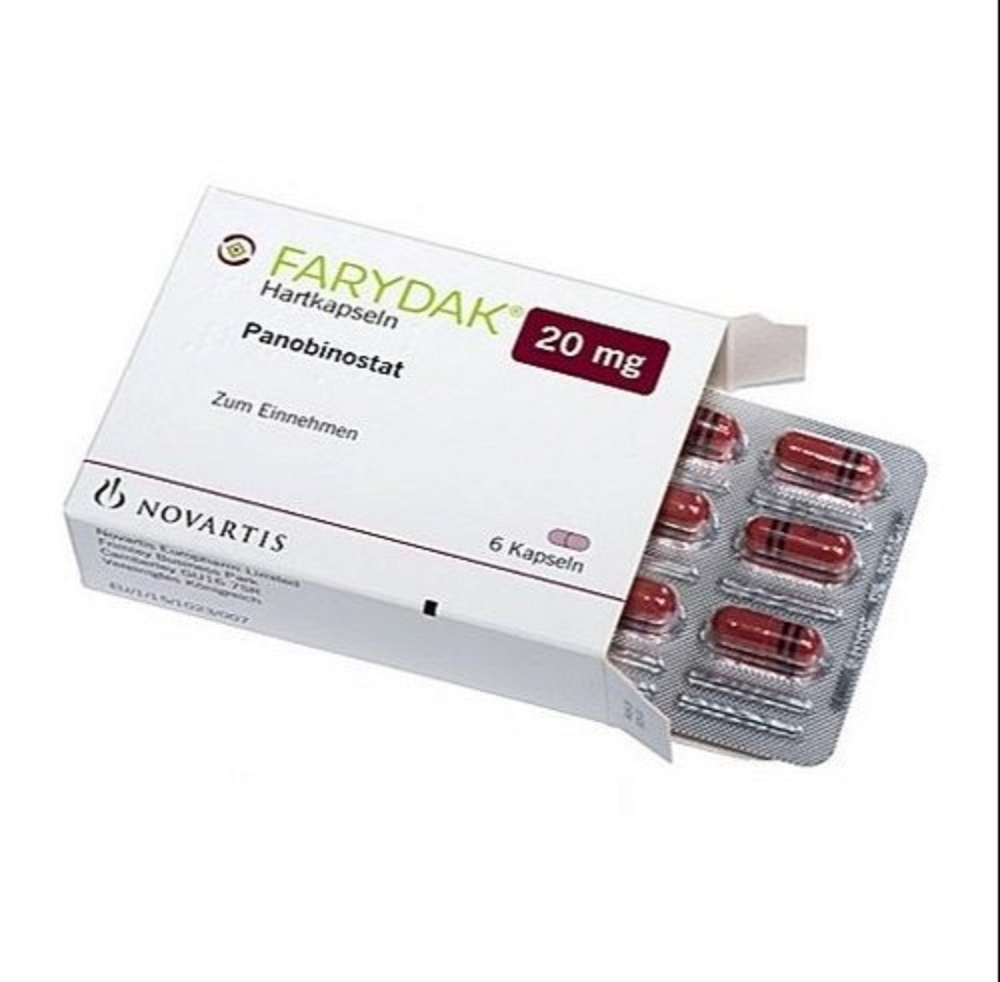
Farydak 20 mg hard capsules are opaque red (19.1–19.7 mm) capsules, containing white to off-white powder
with circular marking “LBH 20 mg” in black color on the cap and two circular
bands in black color on the body, supplied in blisters.
The following pack sizes are available: blister packs containing 6, 12 or 24 capsules.
Not all pack sizes may be marketed in your country.
Marketing Authorisation Holder
pharmaand GmbH
Taborstrasse 1
1020 Wien
Austria
Manufacturer
Siegfried Barbera, S.L.
1 Ronda de Santa Maria, 158
08210 Barberà del Vallès
Barcelona, Spain
Other sources of information
More detailed information on this medicine is available on the website of the European
Medicines Agency, http://www.ema.europa.eu

Не впевнені, чи підходить вам цей лікарський засіб?
Обговоріть симптоми та можливі варіанти лікування з лікарем онлайн.

Виникли питання під час прийому ліків?
Обговоріть свої симптоми та лікування з лікарем онлайн.
- Країна реєстрації
- Лікарська формаHard capsule, 10 MG
- Код АТХL01XH03
- Діюча речовина
- Потрібен рецептТак
- Виробник
- Ця інформація надана лише для ознайомлення і не є медичною порадою. Рішення щодо лікування завжди приймає лікар.
- Альтернативи до FARYDAKЛікарська форма: Infusion leak, 260 - 500 X 10^6Діюча речовина: Идекабтаген виклеуцелВиробник: BRISTOL-MYERS SQUIBB PHARMA EEIGПотрібен рецептЛікарська форма: Transdermal patch, 8 MGДіюча речовина: aminolevulinic acidВиробник: PHOTONAMIC GMBH & CO. KGПотрібен рецептЛікарська форма: Hard capsule, 0.5 MGДіюча речовина: АнагрелидВиробник: ACCORD HEALTHCARE, S.L.U.Потрібен рецепт
Аналоги FARYDAK в інших країнах
Препарати з тією самою діючою речовиною, доступні в інших країнах.
Аналог FARYDAK у Іспанія
Отримайте рецепт на FARYDAK онлайн
Заповніть форму за 2 хвилини
Розкажіть про симптоми, історію хвороби та потрібний препарат.
Оберіть лікаря або ми призначимо
Оберіть спеціаліста або ми підберемо найближчого доступного лікаря.
Лікар розглядає ваш випадок
Зазвичай протягом 30 хвилин. Може ставити уточнювальні запитання в чаті.
Отримайте в будь-якій аптеці
Електронний рецепт надсилається на вашу пошту — дійсний по всій Польщі.
Часті запитання
FARYDAK потребує рецепта в Італія. Ви можете обговорити з лікарем онлайн, чи підходить цей лікарський засіб для вашої ситуації.
Діюча речовина у FARYDAK — panobinostat. Це допомагає визначити препарати з тим самим складом, але під іншими торговими назвами.
FARYDAK виробляється компанією PHARMAAND GMBH. Назва бренду та упаковка можуть відрізнятися залежно від дистрибʼютора.
Лікарі, зокрема Сімейні лікарі, Психіатри, Дерматологи, Кардіологи, Ендокринологи, Гастроентерологи, Пульмонологи, Нефрологи, Ревматологи, Гематологи, Інфекціоністи, Алергологи, Геріатри, Педіатри, Онкологи, можуть оцінити доцільність застосування FARYDAK з урахуванням вашого стану та місцевих правил. Ви можете записатися на онлайн-консультацію, щоб обговорити симптоми та можливі подальші кроки.
Польща має добре розвинену систему охорони здоров'я у великих містах, таких як Варшава, Краків, Вроцлав і Гданськ. Аптеки широко доступні та працюють відповідно до чинного законодавства, забезпечуючи доступ до рецептурних препаратів.
Ви можете придбати FARYDAK у Варшаві, Кракові, Вроцлаві або Гданську в будь-якій аптеці за наявності дійсного рецепта.
Щоб отримати рецепт, ви можете скористатися Oladoctor:
Інші препарати з тією самою діючою речовиною (panobinostat) включають ABEKMA, ALAKARE, ANAGRELIDE AKKORD. Вони можуть відрізнятися торговою назвою або формою випуску, але містять той самий терапевтичний компонент. Перед зміною або початком прийому нового препарату варто проконсультуватися з лікарем.
