



ENTUMIN 40 mg Tablets

Запит на рецепт онлайн
Лікар розгляне ваш випадок і визначить, чи є рецепт медично доцільним.

Поговоріть з лікарем про ці ліки
Обговоріть симптоми та можливі подальші кроки під час короткої онлайн-консультації.



Інструкція із застосування ENTUMIN
Зміст інструкції

ENTUMIN 100 mg/ml oral drops, solution, 40 mg tablets, 40 mg/4 ml injectable solution
clotiapine
PHARMACOTHERAPEUTIC CATEGORY
Psycholeptic-antipsychotic.
THERAPEUTIC INDICATIONS
- Acute psychoses: acute schizophrenia, delusional episodes, manic attacks, confused states, states of psychomotor agitation;
- Acute exacerbation phases in chronic psychoses;
- Chronic psychoses: paranoid psychosis;
- Psychoreactive or neurotic syndromes, anxiety states.
CONTRAINDICATIONS
Hypersensitivity to the active ingredient or to any of the excipients or to other
substances closely related from a chemical point of view. Comatose states or
severe depressions of the C.N.S. caused by substances with a depressive action on the C.N.S.
(alcohol, barbiturates, opioids, etc.). Untreated epilepsy.
In patients with a tendency to convulsions, very high doses and
sudden changes in dosage are contraindicated.
The safety of clotiapine has not been demonstrated in subjects under the age of 16; therefore, the use of ENTUMIN is reserved, at the doctor's discretion, for cases of absolute
necessity.
The risk of harmful effects on the fetus and/or infant following the assumption of
clotiapine is not excluded; therefore, the use of ENTUMIN during pregnancy and/or
breastfeeding is reserved, at the doctor's discretion, for cases of absolute necessity.
Caution: intra-arterial injection must be strictly avoided.
PRECAUTIONS FOR USE
Caution: intra-arterial injections must be absolutely avoided.
In elderly patients, blood pressure should be carefully monitored.
Caution is recommended in patients with a history of thrombosis, as sedation and
immobilization of the patient caused by ENTUMIN may increase the risk
of thromboembolic events.
Particular caution is recommended in the treatment of patients with prostatic hypertrophy,
glaucoma, paralytic ileus, epilepsy or post-encephalitic states. Caution is recommended in patients with a history of convulsions and post-encephalitic states because
ENTUMIN may induce convulsive crises in these subjects.
The same caution must also be exercised in epileptic subjects who are in
anticonvulsant treatment (see "Interactions").
Caution is recommended in patients with cardiovascular diseases due to the
possibility that ENTUMIN may increase heart rate and/or cause hypotension.
For the treatment of hypotensive episodes, see the "Overdosage" and
"Interactions" sections.
Class effects
In a population of patients with dementia, treated with some atypical antipsychotics, an
increase in the risk of cerebrovascular adverse events has been observed. The
mechanism of this increased risk is not known.
An increased risk cannot be excluded for other antipsychotics or in other
patient populations. Entumin must be used with caution in patients with risk factors for stroke.
In elderly patients with dementia-related psychosis, the efficacy and safety of
Entumin have not been studied. Observational studies suggest that elderly patients with dementia-related psychosis, treated with antipsychotics, are at higher
risk of death. In the literature, risk factors that may predispose this
population of patients to a higher risk of death when treated with antipsychotics
include sedation, the presence of cardiac conditions (e.g., cardiac arrhythmia)
or pulmonary conditions (e.g., aspiration pneumonia and non-aspiration pneumonia). Caution should be exercised when treating patients with dementia with Entumin.
Cases of venous thromboembolism (VTE) have been reported with antipsychotics. Since
patients treated with antipsychotics often present with acquired risk factors
for VTE, all possible risk factors for VTE should be identified before and during treatment with Entumin and preventive measures should be taken.
As with other antipsychotics, use with caution in patients with cardiovascular disease or with a family history of QT prolongation and when Entumin is
prescribed with drugs known to increase the QTc interval.
Avoid concomitant therapy with other neuroleptics.
Leukopenia/neutropenia temporally related to antipsychotic agents have been reported in clinical studies and/or post-marketing experience. Agranulocytosis has also been reported. Possible risk factors for
leukopenia/neutropenia include a low white blood cell count (WBC) and a history of drug-induced neutropenia/leukopenia. In patients with a
clinically significant history of low WBC or drug-induced neutropenia/leukopenia, a complete blood count with differential should be monitored
frequently during the first months of therapy and at the first sign of a
clinically significant decrease in WBC, in the absence of other causal factors,
discontinuation of Entumin should be considered. Patients with
clinically significant neutropenia should be carefully monitored for fever and other symptoms or signs of infection and treated promptly if such symptoms
or signs appear. Patients with severe neutropenia (absolute neutrophil count
<1000/mm ) should discontinue Entumin and check WBC until
recovery.
ENTUMIN should be used with appropriate precautions in women with breast cancer.
The antiemetic effect of ENTUMIN may mask the signs of overdose of other
drugs or may make the diagnosis of concomitant conditions, especially of
the gastrointestinal tract or the C.N.S., such as intestinal obstruction, brain tumors, the
Reye's syndrome, more difficult.
Because the risk of tardive dyskinesia (see "Undesirable effects") has been
correlated with the duration of therapy, chronic treatment with ENTUMIN should
be reserved for those patients with conditions that respond to the drug and for whom
appropriate alternative therapy is not possible. Doses and duration of
treatment should be the minimum necessary to achieve a satisfactory clinical response. In the case of prolonged treatments, the possibility of
ocular toxicity (pigmentary retinopathy) cannot be excluded, therefore it is advisable to schedule a
periodic eye examination.
INTERACTIONS
Inform your doctor or pharmacist if you have recently taken any other
medicines, even those without a prescription.
When neuroleptics are administered concurrently with drugs that
prolong the QT interval, the risk of developing cardiac arrhythmias increases.
Therefore, caution should be used when Entumin is prescribed with such drugs.
Do not administer concurrently with drugs that cause electrolyte disturbances.
ENTUMIN may potentiate:
- the central effects of alcohol, sedatives, analgesics, narcotics, hypnotics, MAO inhibitors and antihistamines;
- the hypotensive action of antihypertensive drugs;
- the toxicity of lithium. Before taking any other medicine in addition to ENTUMIN, consult your doctor, as there are many medicines that interfere with ENTUMIN. A medicine, whether prescription or over-the-counter, may require a dosage adjustment when administered concurrently with ENTUMIN. The association of clotiapine with anticholinergics, including those with anticholinergic action used in the treatment of Parkinson's disease, requires caution as it may favor the appearance of characteristic undesirable effects such as: visual disturbances (blurred vision, etc.), constipation, dry mouth, urinary retention, etc. and possible increase in intraocular pressure. The association of ENTUMIN with Levodopa is not recommended. For the treatment of hypotension, do not use adrenaline, as its use may further lower blood pressure. In epileptic subjects, the use of clotiapine may require an adjustment of the specific therapy.
SPECIAL WARNINGS
Pregnancy and breastfeeding
Ask your doctor or pharmacist for advice before taking any medicine.
During therapy, inform your doctor if you become pregnant.
You should also consult him if you wish to start breastfeeding: you should decide whether to stop breastfeeding the infant and start
treatment or vice versa continue breastfeeding avoiding the administration of
the medicine.
The following symptoms have been observed in newborns of mothers who have taken
conventional or atypical antipsychotics, including ENTUMIN, during the last trimester
(the last three months of pregnancy): tremor, rigidity and/or muscle weakness,
drowsiness, agitation, breathing problems and difficulty feeding. If
your child shows any of these symptoms, contact your doctor.
Effects on the ability to drive and operate machinery
ENTUMIN may impair the ability to drive vehicles or operate
machinery.
Important information about some excipients
ENTUMIN 40 mg tablets contains lactose: if you have confirmed intolerance to
sugars, contact your doctor before taking the medicine.
ENTUMIN 100 mg/ml oral drops, solution contains small amounts of ethyl alcohol.
For those who play sports, the use of medicines containing ethyl alcohol may
result in a positive doping test in relation to the concentration limits
of alcohol in blood indicated by some sports federations.
DOSAGE, ADMINISTRATION AND DURATION OF TREATMENT
The first phase of treatment should be carried out, if possible, in a hospital setting, and
in any case under the continuous and rigorous control of the doctor.
The product should be taken on an empty stomach, for short periods of time and
with large intervals between said periods.
For the attack therapy of the acute phases of psychoses, daily doses of
100 - 120 mg by i.m. or i.v., or alternatively orally in fractured doses, are recommended, to
be reached gradually over 4 - 5 days. This dosage should be maintained
for several weeks, in relation to the evolution of the clinical picture. If
necessary, especially in acute agitation pictures, the daily dose may be
increased up to a maximum of 360 mg per day.
For maintenance therapy in psychoses, the dose is gradually reduced to 40 -
60 mg (12-18 drops) orally per day. In many cases, a lower maintenance dosage is effective
to prevent relapses, which can be prolonged for a very long time.
In clinical pictures of neurotic and psychoreactive nature, doses of 10 - 30
mg (3-9 drops) per day are sufficient.
In the treatment of elderly patients, the dosage must be carefully established
by the doctor who must assess a possible reduction of the dosages indicated above.
OVERDOSAGE
In case of accidental intake of an excessive dose of ENTUMIN, immediately warn
your doctor or go to the nearest hospital.
Symptoms:drowsiness, hypotension, tachycardia, arrhythmia, respiratory depression,
extrapyramidal symptoms, convulsions and coma.
Treatment: gastric lavage followed by administration of activated charcoal.
For hypotension: plasma expanders. If treatment with a
vasopressor (e.g. dopamine) is necessary, as happens in resistant cases, the patient must be carefully monitored, in particular the cardiovascular function. Never use
adrenaline as it could further lower blood pressure.
For convulsions: benzodiazepines.
UNDESIRABLE EFFECTS
Like all medicines, ENTUMIN can cause side effects, although not everyone
experiences them.
The adverse reactions (Table 1) are listed in decreasing order of frequency, as
follows: very common (≥ 1/10), common (≥ 1/100, < 1/10), uncommon (≥ 1/1.000, <
1/100), rare (≥ 1/10.000, < 1/1.000), very rare (< 1/10.000), not known (frequency cannot
be defined based on available data).
Table 1
Psychiatric disorders
Uncommon: Agitation, confusion
Nervous system disorders
Uncommon: Extrapyramidal symptoms, dystonia, akathisia,
parkinsonism, tardive dyskinesia, sedation
Rare Hypokinesia, tremors
Eye disorders
Uncommon: Blurred vision
Vascular disorders
Uncommon Orthostatic hypotension
Gastrointestinal disorders
Uncommon: Dry mouth, constipation
Pregnancy, puerperium and perinatal conditions
Neonatal abstinence syndrome, frequency not
known, extrapyramidal symptoms (See section 4.6)
Class effects
Events of leukopenia/neutropenia temporally related to
antipsychotic agents have been reported. Agranulocytosis has also been reported.
Cases of venous thromboembolism, including
cases of pulmonary embolism and cases of deep vein thrombosis have been reported with antipsychotic drugs – Frequency not known.
Rare cases of QT prolongation, ventricular arrhythmias such as torsade de pointes, ventricular tachycardia, ventricular fibrillation and cardiac arrest have been observed with ENTUMIN or other drugs of the same class.
Very rare cases of sudden death.
Like all other neuroleptics, ENTUMIN can induce postural hypotension,
tachycardia, syncope and anticholinergic effects, such as dry mouth,
visual disturbances, constipation, especially at the beginning of treatment.
Effects on the C.N.S. such as: sedation, agitation and
confusional states, extrapyramidal symptoms, paroxysmal dystonia, hypokinesia, tremor,
rigidity or akathisia are rarely manifested.
Dystonias and akathisia are more frequent in children, while parkinsonian signs prevail in the elderly, especially if they have organic brain lesions. Dystonias include spasms of the neck and trunk muscles up to
torticollis and opisthotonos, oculogyric crises, trismus, protrusion of the tongue and carpo-podalic spasms. These reactions appear very early and disappear within
- 24 - 48 hours from suspension of therapy. Very rarely dystonias can determine laryngospasm associated with cyanosis and asphyxia. Akathisia is characterized by motor restlessness and sometimes by insomnia. More frequent in the first days of therapy, it can also appear late. The disorders often regress spontaneously, if not they can be well controlled by reducing the dosage or associating an antiparkinsonian anticholinergic. Generally, the onset and severity of many of the extrapyramidal type symptoms (akinesia, rigidity, rest tremor, etc.) are related to the dose and require the administration of antiparkinsonian drugs. In persistent cases, a reduction in dosage or discontinuation of treatment may be necessary. Anticholinergic antiparkinsonian drugs should not be routinely prescribed as a prophylactic measure, as these can decrease the therapeutic efficacy of ENTUMIN. Persistent tardive dyskinesias manifest mostly during long-term therapy and with high dosages, even in the period following discontinuation of the drug. The elderly and women are more frequently affected. They consist of rhythmic movements of the tongue, lips and face, more rarely of the limbs and are generally preceded by fine vermicular movements of the tongue. Discontinuation of therapy can prevent the development of the symptoms, for which, however, a specific therapy is not known. Periodic reduction of the dosage of neuroleptics, if clinically possible, can help to recognize the onset of tardive dyskinesia early. Other possible adverse effects: galactorrhea (spontaneous leakage of milk from the breasts), amenorrhea (cessation of menstruation) gynecomastia (increase in breast volume), hyperprolactinemia. The product can induce neurotoxic manifestations, at doses higher than those recommended, in patients with renal insufficiency and in patients with disorders of the Central Nervous System. As with all antipsychotic drugs, Neuroleptic Malignant Syndrome (NMS) has been reported with Entumin during post-marketing experience as a very rare adverse effect. Clinical manifestations of such syndrome are: hyperpyrexia, muscle rigidity, akinesia, vegetative disorders (irregularity of pulse and blood pressure, sweating, tachycardia, arrhythmias); alterations of the state of consciousness that can progress to stupor and coma. The treatment of N.M.S. consists of immediately stopping the administration of antipsychotic drugs and other non-essential drugs and establishing intensive symptomatic therapy (particular care must be taken to reduce hyperthermia and correct
dehydration). If a resumption of treatment with
antipsychotics is deemed indispensable, the patient must be carefully monitored.
undesirable.
If any of the side effects worsen or if you notice the appearance of a
doctor or pharmacist.
EXPIRY AND STORAGE
Expiry: see the expiry date reported on the packaging.
The expiry date indicated refers to the product in intact packaging,
correctly stored.
Warning: do not use the medicine after the expiry date reported on the
packaging.
Keep the medicine out of the reach and sight of children.
Medicines should not be disposed of via drains and household waste.
Ask your pharmacist how to dispose of medicines you no longer use. This will help
to protect the environment.
COMPOSITION
ENTUMIN 100 mg/ml oral drops, solution
1 ml (= 30 drops) of solution contains:
Active ingredient:
clotiapine ......................................................................................................... 100 mg
Excipients:
benzoic acid, saccharin, soluble lemon essence, ethanol96%, tartaric acid,
soluble grapefruit essence, glycerol, propylene glycol, purified water.
ENTUMIN 40 mg tablets
1 tablet contains:
Active ingredient:
clotiapine .................................................................................................................. 40
mg
Excipients:
corn starch, lactose monohydrate, liquid paraffin, gelatin, colloidal anhydrous
silica, talc, magnesium stearate.
ENTUMIN 40 mg/4 ml injectable solution
1 ml of injectable solution contains:
Active ingredient:
clotiapine .................................................................................................................. 10
mg
Excipients:
concentrated hydrochloric acid, propylene glycol, water for injections.
PHARMACEUTICAL FORMS and CONTENT
ENTUMIN 100 mg/ml oral drops, solution
1 bottle of 10 ml
ENTUMIN 40 mg tablets
30 tablets of 40 mg
ENTUMIN 40 mg/4 ml injectable solution
10 vials of injectable solution for intramuscular or intravenous use
A.I.C. HOLDER
Laboratoires Juvisé Pharmaceuticals
69100 Villeurbanne - France
MANUFACTURER
ENTUMIN 40 mg/4 ml injectable solution:
Novartis Farma S.p.A. – Torre Annunziata - NA
ENTUMIN 40 mg tablets
ENTUMIN 100 mg/ml oral drops, solution
Mipharm S.p.A. - Milan - MI
February 2012

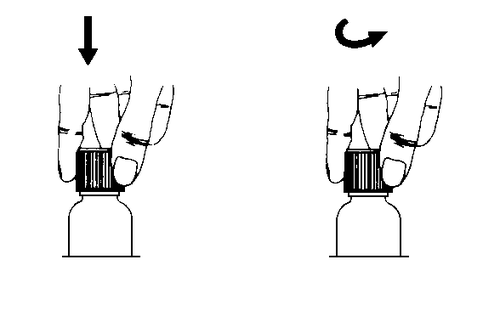
Instructions for opening the bottle:
Drop bottle equipped with a safety closure. Opening instructions.
______________________________________________________________________
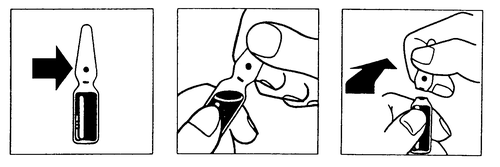
Instructions for opening the vials:
To open the vials correctly, follow these instructions:

Не впевнені, чи підходить вам цей лікарський засіб?
Обговоріть симптоми та можливі варіанти лікування з лікарем онлайн.

Виникли питання під час прийому ліків?
Обговоріть свої симптоми та лікування з лікарем онлайн.

- Країна реєстрації
- Лікарська формаTablet, 40 MG
- Код АТХN05AH06
- Діюча речовина
- Потрібен рецептТак
- Виробник
- Ця інформація надана лише для ознайомлення і не є медичною порадою. Рішення щодо лікування завжди приймає лікар.
- Альтернативи до ENTUMINЛікарська форма: Inhalation powder, pre-metered, 4.5 MGДіюча речовина: ЛоксапинВиробник: FERRER INTERNACIONAL S.A.Рецепт не потрібенЛікарська форма: Oral suspension, 25 MG/MLДіюча речовина: кветиапинВиробник: ITALFARMACO S.P.A.Рецепт не потрібенЛікарська форма: Coated tablet, 25 MGДіюча речовина: клозапинаВиробник: ACCORD HEALTHCARE, S.L.U.Потрібен рецепт
Аналоги ENTUMIN в інших країнах
Препарати з тією самою діючою речовиною, доступні в інших країнах.
Аналог ENTUMIN у Іспанія
Лікарі онлайн щодо ENTUMIN
Застосування, безпека та можливість призначення рецепта — за результатами медичної оцінки.







Отримайте рецепт на ENTUMIN онлайн
Заповніть форму за 2 хвилини
Розкажіть про симптоми, історію хвороби та потрібний препарат.
Оберіть лікаря або ми призначимо
Оберіть спеціаліста або ми підберемо найближчого доступного лікаря.
Лікар розглядає ваш випадок
Зазвичай протягом 30 хвилин. Може ставити уточнювальні запитання в чаті.
Отримайте в будь-якій аптеці
Електронний рецепт надсилається на вашу пошту — дійсний по всій Польщі.
Часті запитання
ENTUMIN потребує рецепта в Італія. Ви можете обговорити з лікарем онлайн, чи підходить цей лікарський засіб для вашої ситуації.
Діюча речовина у ENTUMIN — clotiapine. Це допомагає визначити препарати з тим самим складом, але під іншими торговими назвами.
ENTUMIN виробляється компанією LABORATOIRES JUVISE PHARMACEUTICALS. Назва бренду та упаковка можуть відрізнятися залежно від дистрибʼютора.
Лікарі, зокрема Сімейні лікарі, Психіатри, Дерматологи, Кардіологи, Ендокринологи, Гастроентерологи, Пульмонологи, Нефрологи, Ревматологи, Гематологи, Інфекціоністи, Алергологи, Геріатри, Педіатри, Онкологи, можуть оцінити доцільність застосування ENTUMIN з урахуванням вашого стану та місцевих правил. Ви можете записатися на онлайн-консультацію, щоб обговорити симптоми та можливі подальші кроки.
Польща має добре розвинену систему охорони здоров'я у великих містах, таких як Варшава, Краків, Вроцлав і Гданськ. Аптеки широко доступні та працюють відповідно до чинного законодавства, забезпечуючи доступ до рецептурних препаратів.
Ви можете придбати ENTUMIN у Варшаві, Кракові, Вроцлаві або Гданську в будь-якій аптеці за наявності дійсного рецепта.
Щоб отримати рецепт, ви можете скористатися Oladoctor:
Інші препарати з тією самою діючою речовиною (clotiapine) включають ADASUVE, AKELYA, KLOTSAPINA AKKORD. Вони можуть відрізнятися торговою назвою або формою випуску, але містять той самий терапевтичний компонент. Перед зміною або початком прийому нового препарату варто проконсультуватися з лікарем.
