



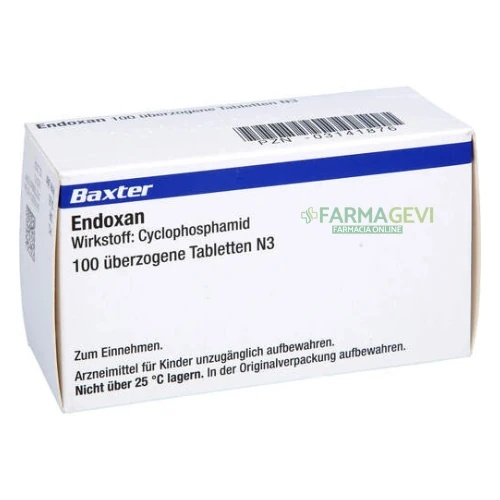
ENDOXAN 50 mg Coated Tablet

Запит на рецепт онлайн
Лікар розгляне ваш випадок і визначить, чи є рецепт медично доцільним.

Поговоріть з лікарем про ці ліки
Обговоріть симптоми та можливі подальші кроки під час короткої онлайн-консультації.



Інструкція із застосування ENDOXAN BAXTER
Зміст інструкції
Endoxan Baxter 50 mg Coated Tablets
Endoxan Baxter200 mg Powder for injectable solution
Endoxan Baxter500 mg Powder for injectable solution
Endoxan Baxter1g Powder for injectable solution
Cyclophosphamide
PHARMACOTHERAPEUTIC CATEGORY
Antineoplastic, nitrogen mustard analogues
THERAPEUTIC INDICATIONS
Cytostatic treatment.
CONTRAINDICATIONS
Endoxan Baxter should not be administered to patients with:
- hypersensitivity to the active substance, its metabolites or to any of the excipients
- severely compromised bone marrow function (particularly in patients who have undergone prior therapy with cytotoxic agents and/or radiotherapy),
- bladder inflammation (cystitis),
- urinary outflow obstruction,
- ongoing infections,
- during pregnancy and breastfeeding.
PRECAUTIONS FOR USE
Risk factors for cyclophosphamide toxicity and their consequences, as described in this and other
sections, may constitute contraindications if the medicinal product is not used to treat life-threatening
conditions. In these situations, an individual assessment of the expected risk/benefit ratio is necessary.
WARNINGS
renal and urinary tract
- During therapy with cyclophosphamide, hemorrhagic cystitis, pyelitis, urethritis and hematuria have been reported. Ulceration/necrosis of the bladder, fibrosis/contracture and secondary tumors can also develop.
- Urotoxicity may require discontinuation of treatment.
- In cases of fibrosis, bleeding or secondary tumors, cystectomy may be necessary.
- Cases of urotoxicity with fatal outcomes have been reported.
- Urotoxicity can occur with both short-term and long-term cyclophosphamide treatments. Hemorrhagic cystitis has been reported after a single dose of cyclophosphamide.
- Subsequent or concomitant radiotherapy or treatment with busulfan may increase the risk of cyclophosphamide-induced hemorrhagic cystitis.
- Generally, cystitis is initially sterile but secondary microbial colonization can occur.
- Before starting therapy, obstructions of the efferent urinary tract, cystitis and infections must be eliminated or corrected.
- Adequate therapy with Uromitexan (INN: mesna) or strong hydration can considerably reduce the frequency and severity of bladder toxicity. Ensure that patients empty the bladder at regular intervals.
- If cystitis associated with micro or macrohematuria should occur during treatment with Endoxan Baxter, discontinue Endoxan Baxter until normalization. Generally this happens a few days after discontinuation of the medicine but cystitis may also persist.
- Generally, in cases of severe hemorrhagic cystitis, treatment with Endoxan Baxter should be discontinued.
- Cyclophosphamide has also been associated with nephrotoxicity including tubular necrosis.
- In association with the administration of cyclophosphamide, hyponatremia associated with an increase in total body water, acute water intoxication and a syndrome similar to SIADH (syndrome of inappropriate antidiuretic hormone secretion) have been reported. Fatal outcomes have also been reported.
- Patients with impaired renal function should be carefully monitored during treatment with Endoxan Baxter for the presence of red blood cells and other signs of uro/nephrotoxicity (see also “Recommendations for dosage adjustment in patients with hepatic or renal insufficiency” in the section “Dosage, method and duration of administration”).
Myelosuppression, Immunosuppression, Infections
In general, Endoxan Baxter, like all other cytostatic agents, should be used with the utmost
caution in debilitated or elderly subjects, and in subjects who have previously undergone
radiotherapy.
Subjects with a weakened immune system, for example those with diabetes mellitus, chronic hepatic or renal
alterations, must also be kept under close observation.
- Treatment with cyclophosphamide can cause myelosuppression and significant suppression of the immune response.
- Severe myelosuppression is predictable, especially in patients who have previously undergone chemotherapy and/or radiotherapy or in patients with impaired renal function.
- The myelosuppression induced by cyclophosphamide can cause leukopenia, neutropenia, thrombocytopenia (associated with an increased risk of bleeding events) and anemia.
- Severe immunosuppression has led to serious, sometimes fatal infections. Sepsis and septic shock have also been reported. Infections reported with cyclophosphamide include both pneumonias and other infections of bacterial, fungal, viral, protozoal and parasitic origin.
- Latent infections can be reactivated. Reactivation has been reported for various infections of bacterial, fungal, viral, protozoal and parasitic origin.
- Infections must be treated appropriately.
- At the discretion of the treating physician, antimicrobial prophylaxis may be indicated in some cases of neutropenia.
- In case of febrile neutropenia and/or leukopenia, antibiotics and/or antimycotics should be administered as prophylaxis.
- If necessary, cyclophosphamide should be used with caution in patients with severe bone marrow function impairment and in patients with severe immunosuppression.
- Treatment with cyclophosphamide may not be indicated or should be discontinued or the dosage reduced in patients who have or develop a severe infection.
- Theoretically, the decrease in peripheral blood cells and platelets and the time required for recovery is greater the higher the dosage.
- The lowest count of leukocytes and platelets is normally observed one to two weeks after the start of treatment. The bone marrow recovers relatively quickly and blood values normally normalize after about 20 days.
- Therefore, it is advisable that, during treatment, all patients undergo careful hematological monitoring with a blood count performed regularly. o The white blood cell and platelet count and hemoglobin values should be checked before each administration and at appropriate intervals, if necessary daily. o Leukocyte counts should be performed regularly during treatment, at intervals of 5-7 days at the beginning of treatment and every 2 days if the count falls below 3000/mm (see also the section “Dosage, method and duration of administration”).
- If not strictly necessary, Endoxan Baxter should not be administered to patients with a leukocyte count below 2,500/ l and/or a platelet count below 50,000/ l.
- Regular monitoring of the urine sediment is also recommended to detect the possible presence of red blood cells.
Cardiotoxicity, Use in patients with heart disease
- Myocarditis and myopericarditis have been reported during treatment with cyclophosphamide, which may be accompanied by significant pericardial effusion and cardiac tamponade and which have led to severe congestive heart failure, sometimes fatal.
- Histopathological examination showed mainly hemorrhagic myocarditis. Hemopericardium occurred as a secondary effect to hemorrhagic myocarditis and myocardial necrosis.
- Acute cardiac toxicity has been detected with a single dose of less than 20 mg/kg of cyclophosphamide.
- Following exposure to treatment regimens including cyclophosphamide, supraventricular arrhythmias (including atrial fibrillation and flutter) as well as ventricular arrhythmias (including severe QT prolongation associated with ventricular tachycardia) have been reported in patients with or without other symptoms of cardiotoxicity.
- It has been shown that the use of high doses of cyclophosphamide in elderly patients and in patients who have undergone previous radiotherapy to the cardiac region and/or concomitant treatment with anthracyclines and pentostatin or other cardiotoxic agents (see section 4.5) can intensify the cardiotoxic effect of Endoxan Baxter. In this context, regular electrolyte monitoring and particular attention to patients with a history of heart disease will be necessary.
Pulmonary toxicity
- Pneumonitis and pulmonary fibrosis have been reported in association with or following treatment with cyclophosphamide. Veno-occlusive pulmonary disease and other forms of pulmonary toxicity have also been reported. Pulmonary toxicity leading to respiratory failure has been reported.
- While the incidence of cyclophosphamide-associated pulmonary toxicity is low, the prognosis of affected patients is unfavorable.
- Late-onset pneumonitis (more than 6 months after the start of cyclophosphamide treatment) appears to be associated with particularly high mortality. Pneumonia can occur even years after treatment with cyclophosphamide.
- Acute pulmonary toxicity has been reported after a single dose of cyclophosphamide.
Secondary tumors
- As with general cytostatic therapy, treatment with cyclophosphamide also carries the risk of secondary tumors and their precursors as late consequences.
- The risk of developing urinary tract carcinoma as well as myelodysplastic alterations progressing to acute leukemias is increased. Other tumors reported after the use of cyclophosphamide or treatments with cyclophosphamide include lymphoma, thyroid cancer and sarcomas.
- In some cases, the secondary tumor developed several years after the cyclophosphamide treatment had been terminated. Tumors have also been reported following in utero exposure.
- The risk of bladder cancer can be significantly reduced by preventing hemorrhagic cystitis.
Hepatic veno-occlusive disease
- Hepatic veno-occlusive disease (VOLD) has been reported in patients receiving cyclophosphamide.
- ..Cytoreductive treatment in preparation for bone marrow transplantation, consisting of cyclophosphamide in combination with total body irradiation, busulfan or other agents, has been identified as the major risk factor for the development of VOLD (see section 4.5). Following cytoreductive therapy, the clinical syndrome develops clinically 1 to 2 weeks after transplantation and is characterized by rapid weight gain, painful hepatomegaly, ascites and hyperbilirubinemia/jaundice.
- However, the gradual development of VOLD has been reported in patients treated long-term with low-dose immunosuppressive doses of cyclophosphamide.
- Hepatorenal syndrome and multi-organ failure can develop as a complication of VOLD. Fatal outcomes for cyclophosphamide-associated VOLD have been reported.
- Risk factors predisposing a patient to develop VOLD with high doses of cytoreductive therapies include: o pre-existing hepatic dysfunction o abdominal radiation therapy and o low performance score
Genotoxicity
- Endoxan Baxter is genotoxic and mutagenic in both somatic and male and female germ cells. Therefore, during treatment with Endoxan Baxter, women should avoid pregnancy and men should avoid conceiving children.
- Men should avoid conceiving children for up to 6 months after discontinuation of treatment.
- Animal studies indicate that exposure of oocytes during follicular development can result in a lower implantation rate and pregnancies at risk and an increased risk of malformations. This effect should be taken into consideration in case of voluntary fertilization or pregnancy after the end of cyclophosphamide treatment. The exact duration of follicular development in humans is not known, but may be longer than 12 months.
- Sexually active men and women should use effective methods of contraception during this period. See also section 4.6.
Effect on fertility
- Cyclophosphamide interferes with oogenesis and spermatogenesis. It may cause sterility in both sexes.
- The development of sterility appears to depend on the dose of cyclophosphamide, the duration of therapy and the state of gonadal function at the time of treatment.
- Cyclophosphamide-induced sterility may be irreversible in some patients.
Female patients
- In a significant proportion of women treated with cyclophosphamide, amenorrhea develops, transient or permanent, associated with decreased estrogen secretion and increased gonadotropin secretion.
- In particular for older women, amenorrhea may be permanent.
- Oligomenorrhea has also been reported in association with cyclophosphamide treatment.
- Girls treated with cyclophosphamide in prepubescence generally develop normal secondary sexual characteristics and have regular cycles.
- Girls treated with cyclophosphamide in prepubescence have subsequently conceived children.
- Girls treated with cyclophosphamide who maintained ovarian function after treatment cessation have an increased risk of developing premature menopause (cessation of the cycle before the age of 40).
Male patients
- Men treated with cyclophosphamide may develop oligospermia or azoospermia which are normally associated with increased gonadotropin secretion but with normal testosterone secretion.
- Sexual potency and libido are generally not impaired in these patients.
- Boys treated with cyclophosphamide in prepubescence may develop normal secondary sexual characteristics but may have oligospermia or azoospermia.
- Testicular atrophy can occur to varying degrees.
- Cyclophosphamide-induced azoospermia is reversible in some patients, although reversibility may not occur for several years after discontinuation of therapy.
- Men temporarily rendered sterile by cyclophosphamide have subsequently fathered children.
- Since treatment with Endoxan Baxter may increase the risk of permanent infertility in men, they should be informed about sperm preservation before treatment.
Anaphylactic reactions, cross-sensitivity with other alkylating agents
- Anaphylactic reactions, including those with fatal outcomes, have been reported in association with cyclophosphamide.
- Possible cross-sensitivity with other alkylating agents has been reported.
Impairment of the healing process
e ferite
- La ciclofosfamide può interferire con il normale processo di guarigione delle ferite.
PRECAUTIONS
Alopecia
- Alopecia has been reported which may occur more commonly with increasing dosage.
- The alopecia may progress to baldness.
- Hair should regrow after treatment with the medicine or even during treatment, although it may be different in texture and color.
Nausea and Vomiting
- The administration of cyclophosphamide may cause nausea and vomiting. Current guidelines regarding the use of antiemetics for the prevention and improvement of nausea and vomiting should be considered.
- Alcohol may increase the emetic effects and the feeling of nausea induced by cyclophosphamide; for these reasons, alcohol consumption should be avoided in patients treated with cyclophosphamide.
Stomatitis
- The administration of cyclophosphamide may cause stomatitis (oral mucositis)
- Current guidelines for the prevention and improvement of stomatitis should be considered.
- Pay particular attention to oral hygiene to reduce the incidence of stomatitis
Intravenous Administration
- Since the cytotoxic effect of Endoxan Baxter manifests after its activation, which takes place mainly in the liver, there is only a minimal risk of damaging tissues in the event of accidental intravenous administration. Note: In the event of accidental administration by intravenous injection, immediately stop the infusion, aspirate the infused fluid with the cannula applied, and take other appropriate measures, e.g., irrigate the area with saline solution and immobilize the limb.
Use in patients with renal insufficiency
In patients with renal insufficiency, especially if severe, the reduced renal elimination may result in an
increase in plasma levels of cyclophosphamide and its metabolites. This may result in an
increase in toxicity and should be considered when determining the dosage for
these types of patients. Also refer to section 4.2.
Use in patients with hepatic insufficiency
Severe hepatic insufficiency may be associated with reduced activation of cyclophosphamide.
This may alter the efficacy of cyclophosphamide therapy and should be considered
when determining the dosage and interpreting the response to the chosen dosage. Alcohol abuse may increase the risk of developing
liver dysfunction.
Use in adrenalectomized patients
Patients with adrenal insufficiency may require an increase in the replacement dosage of
corticosteroids if exposed to stress resulting from the toxicity of cytotoxic agents, including cyclophosphamide.
Diagnostic investigations
Blood sugar levels should be monitored regularly in diabetic patients to be able to
promptly adjust antidiabetic therapy (also refer to section “Interactions”)
INTERACTIONS
Inform your doctor or pharmacist if you have recently taken any other medicines, including those
available without a prescription.
The simultaneous or subsequent planned administration of other substances or treatments that could
increase the probability or severity of toxic effects (through pharmacodynamic or
pharmacokinetic interactions) requires careful individual assessment of the expected benefits and risks. Patients who
receive such combinations should be carefully monitored for signs of toxicity and
to allow for timely intervention. Patients treated with cyclophosphamide and agents that reduce its
activation should be monitored for a potential reduction in therapeutic efficacy and the
need for dosage adjustment.
Interactions that affect the pharmacokinetics of cyclophosphamide and its metabolites
- The hypoglycemic effect of sulfonylureas may be intensified, as well as the myelosuppressive action, when allopurinol or hydrochlorothiazide is administered simultaneously.
- Reduced activation of cyclophosphamide may alter the effectiveness of cyclophosphamide treatment. Substances that delay the activation of cyclophosphamide include: o Aprepitant o Bupropion o Busulfan: The administration of Endoxan Baxter at high doses within 24 hours of treatment with high doses of busulfan may cause decreased clearance and an extended elimination half-life of cyclophosphamide. o Ciprofloxacin: The administration of fluoroquinolone-based antibiotics (such as ciprofloxacin) before the start of treatment with Endoxan Baxter (especially in the case of conditioning prior to bone marrow transplantation) may reduce the effectiveness of Endoxan Baxter and therefore lead to a worsening of the primary disease. o Chloramphenicol: The concomitant administration of chloramphenicol leads to a prolonged half-life of cyclophosphamide and delayed metabolism. o Fluconazole, Itraconazole: It is known that azole antifungals (fluconazole, itraconazole) inhibit the metabolism of cyclophosphamide by cytochrome P450. Increased exposure to toxic metabolites of Endoxan Baxter has been detected in patients treated with itraconazole. o Prasugrel o Sulfonamides o Thiotepa: In high-dose chemotherapy regimens, a strong inhibition of the bioactivation of cyclophosphamide by thiotepa has been detected when it is administered one hour
before Endoxan Baxter. The sequence and timing of administration of these two agents may be
of fundamental importance.
- An increase in the concentration of cytotoxic metabolites may occur with: o Allopurinol o Choral hydrate o Cimetidine o Disulfiram o Glyceraldehyde o Inducers of human hepatic and extrahepatic microsomal enzymes (e.g. cytochrome P450 enzymes): The potential induction of hepatic and extrahepatic microsomal enzymes should be considered in the event of previous or concomitant treatment with substances known to induce an increase in the activity of these enzymes such as rifampicin, phenobarbital, carbamazepine, benzodiazepines, phenytoin, St. John's wort and corticosteroids. o Protease inhibitors: The concomitant use of protease inhibitors may increase the concentration of cytotoxic metabolites. In patients receiving cyclophosphamide, doxorubicin and etoposide (CDE), the use of treatments based on protease inhibitors has been associated with a higher incidence of infections and neutropenia compared to the use of NNRTI-based treatment. o Ondansetron: Pharmacokinetic interactions between ondansetron and Endoxan Baxter (at high doses) have been detected, resulting in a decrease in the AUC (area under the curve) for cyclophosphamide.
- Since grapefruit contains a compound capable of inhibiting the activation of cyclophosphamide and consequently its effectiveness, the patient should not consume grapefruit or grapefruit juice.
Pharmacodynamic interactions and interactions with unknown mechanism that affect the use of
cyclophosphamide
The combination or subsequent use of cyclophosphamide and other agents with similar toxicities may cause
combined toxic effects (greater).
- An increase in hematotoxicity and/or immunosuppression may result from the combination of the effects of cyclophosphamide and, for example: o ACE inhibitors: ACE inhibitors can cause leukopenia. o Natalizumab o Paclitaxel: An increase in hematotoxicity has been reported when cyclophosphamide was administered after an infusion with paclitaxel o Thiazide diuretics o Zidovudine
- An increase in cardiotoxicity may result from the combination of the effects of cyclophosphamide and, for example: o Anthracyclines o Pentostatin o Cytarabine - The administration of high doses of Endoxan Baxter and cytarabine on the same day, therefore within a very limited time interval, may lead to a potentiation
of the cardiotoxic effect, considering that each substance is already cardiotoxic in itself.
o Radiotherapy to the cardiac region.
o Trastuzumab
- An increase in pulmonary toxicity may result from the combination of the effects of cyclophosphamide and, for example: o Amiodarone o G-CSF o GM-CSF (granulocyte-macrophage colony stimulating factor and granulocyte colony stimulating factor): Reports suggest an increased risk of pulmonary toxicity (pneumonitis, pulmonary fibrosis) in patients undergoing chemotherapeutic treatment with cytotoxic agents including Endoxan Baxter and G-CSF or GM-CSF.
- An increase in nephrotoxicity may result from the combination of the effects of cyclophosphamide and, for example: o Amphotericin B o Indomethacin: The simultaneous administration of indomethacin should be carried out with the utmost caution, as acute water intoxication has been detected in a single case.
- Increased other toxicities: o Azathioprine: Increased risk of hepatotoxicity (liver necrosis) Busulfan: a higher incidence of veno-occlusive disease and mucositis. o Protease inhibitors: increased incidence of mucositis.
Other interactions:
- Alcohol: In tumor-bearing animals, a reduced antitumor activity was observed in the case of ethanol (alcohol) intake in conjunction with low oral doses of cyclophosphamide. In some patients, alcohol may increase the emetic effects and the feeling of nausea induced by cyclophosphamide.
- Etanercept: In patients with Wegener's granulomatosis, the addition of etanercept to standard treatment with cyclophosphamide has been associated with a higher incidence of non-cutaneous solid tumors.
- Metronidazole: Acute encephalopathy has been observed in a patient treated with cyclophosphamide and metronidazole. A causal association is unclear. In an animal study, the combination of cyclophosphamide and metronidazole was associated with increased cyclophosphamide toxicity.
- Tamoxifen: The simultaneous use of tamoxifen and chemotherapy may increase the risk of thromboembolic complications.
Interactions that influence the pharmacokinetics and/or action of other medicines
- Bupropion: The metabolism of cyclophosphamide by CYP2B6 may inhibit the metabolism of bupropion.
- Coumarins: Both an increase and a decrease in the effect of warfarin have been reported in patients treated with warfarin and cyclophosphamide.
- Cyclosporine: In patients treated with a combination of Endoxan Baxter and cyclosporine, a lower serum concentration of cyclosporine was found than detected in patients receiving only cyclosporine. The interaction may result in an increased incidence of rejection reactions.
- Depolarizing muscle relaxants: If depolarizing muscle relaxants (e.g. succinylcholine halides) are applied simultaneously, prolonged apnea may result due to a significant and persistent inhibition of cholinesterase activity. If the patient has been treated with cyclophosphamide within 10 days of general anesthesia, the anesthesiologist must be informed.
- Digoxin, -acetildigoxin: It has been reported that cytotoxic treatment alters the intestinal absorption of digoxin and -acetildigoxin tablets.
- Vaccines: Since cyclophosphamide has immunosuppressive effects, the patient may show a reduced response to concomitant vaccinations; vaccination with live vaccines may be associated with vaccine-induced infection.
- Verapamil: It has been reported that cytotoxic treatment alters the intestinal absorption of verapamil administered orally.
SPECIAL WARNINGS
Fertility, pregnancy and breastfeeding
Ask your doctor or pharmacist for advice before taking any medicine
- A possible passage of Endoxan Baxter through the maternal placenta should be considered. Treatment with cyclophosphamide can cause genotypic abnormalities in both men and women.
- If life-threatening risks to the patient arise during the first trimester of pregnancy, a doctor should absolutely be consulted for the purpose of terminating the pregnancy.
- Malformations have been reported in children born to mothers treated with cyclophosphamide during the first trimester of pregnancy. However, children without malformations born to women exposed during the first trimester have also been reported.
- After the first trimester of pregnancy, if therapy cannot be delayed and the patient wishes to continue the pregnancy, chemotherapy may be used after informing the patient of the lower but possible risk of teratogenic effects.
- In utero exposure to cyclophosphamide can cause pregnancy interruption, fetal growth retardation, and fetotoxic effects that manifest in the newborn, including leukopenia, anemia, pancytopenia, severe bone marrow hypoplasia, and gastroenteritis.
- During treatment with Endoxan Baxter and for up to 6 months after the end of treatment, women must avoid pregnancy and men must avoid conceiving children.
- The results of animal studies suggest that an increased risk of pregnancy interruption and malformations may persist after discontinuation of cyclophosphamide treatment as long as oocytes/follicles that have been exposed to cyclophosphamide in any stage of maturation are present.
- If cyclophosphamide is used during pregnancy or if the patient becomes pregnant while taking this medicine or after discontinuation of treatment, the patient should be informed of the potential risks to the fetus.
- Since cyclophosphamide passes into breast milk, mothers should not breastfeed during therapy. Neutropenia, thrombocytopenia, low hemoglobin levels, and diarrhea have been reported in breastfed infants of women treated with cyclophosphamide.
- Men who will be treated with Endoxan Baxter should be informed about sperm preservation before treatment.
Effects on the ability to drive and operate machinery
Due to the possibility of side effects resulting from the administration of cyclophosphamide, such as nausea, vomiting, dizziness, blurred vision, and altered vision, which can impair the ability to drive or operate machinery, the doctor must decide on an individual basis regarding the patient's ability to drive vehicles or operate machinery
Important information about certain excipients
The tablets contain lactose and sucrose, therefore in case of confirmed sugar intolerance, contact your treating physician before taking the medicine.
DOSAGE, ADMINISTRATION AND DURATION OF TREATMENT
- Endoxan Baxter must be administered only by medical personnel experienced in oncology.
- Treatment usually begins with intravenous injections. If the latter are not possible, Endoxan Baxter can be injected intramuscularly. In particular cases, intrapleural, intraperitoneal or local application is possible. For prolonged treatment or maintenance dose therapy, after the symptoms have subsided, administration by oral route is recommended.
- Activation of cyclophosphamide requires hepatic metabolism, therefore administration should preferably be done orally or intravenously. Parenteral use
- Medicines to be used parenterally must be visually inspected before administration to assess the presence of particulate matter and discoloration of the solution, when the solution and container allow.
- Intravenous administration should preferably be done as an infusion.
- To reduce the likelihood of adverse reactions that appear to be related to the rate of administration (e.g., facial swelling, headache, nasal congestion, scalp inflammation), the medicine should be injected or infused very slowly. In addition, the duration of the infusion should be adequate for the volume and type of infusion solution to be infused.
- If injected directly, the Endoxan Baxter solution must be reconstituted with physiological saline (0.9% sodium chloride). Follow the instructions in paragraph 6.6 to prepare the injectable solution.
- Before parenteral administration, the medicine must be completely dissolved.
The dosage must be adjusted to the needs of each individual patient, taking into account general reactions and blood count.
Unless otherwise prescribed, the following dosages are recommended:
a) continuous treatment: 3-6 mg/kg body weight (equivalent to 120 – 240 mg/m of body surface area) i.v.;
b) therapy at intervals of 2-5 days: 10-15 mg/kg body weight (equivalent to 400 – 600 mg/m of body surface area) i.v.;
c) therapy at intervals of 10-20 days: 20 to 40 mg/kg body weight (equivalent to 800 – 1600 mg/m of body surface area) i.v.
The duration of therapy and the intervals between administrations will depend on the indications, any oncological medicines associated with cyclophosphamide, the patient's general condition, and laboratory parameters, particularly the blood count.
For maintenance therapy, 50-200 mg per day (1-4 coated tablets) are administered, if necessary, higher doses may be administered.
During or immediately after taking, sufficient amounts of fluids should be ingested or infused to stimulate diuresis in order to reduce the risk of urinary tract toxicity. Therefore, the medicine should preferably be taken in the morning. It is important to ensure that the patient empties the bladder at regular intervals.
The dosages reported above are mainly referred to treatments in which the active substance cyclophosphamide is used as mono-therapy.
If Endoxan Baxter is combined with other cytostatic agents of similar toxicity, a reduction in dosage or an extension of the interval periods may be necessary.
It is believed that the use of agents that stimulate hematopoiesis (colony-stimulating factors and agents that stimulate erythropoiesis) reduces the risk of myelosuppressive complications and/or helps to facilitate the administration of the programmed dosage.
Recommendations for dosage reduction in patients with myelosuppression
Recommendations for dosage correction in patients with hepatic or renal insufficiency
- Severe hepatic or renal insufficiency requires a dosage reduction.
- Severe hepatic insufficiency may be associated with reduced activation of cyclophosphamide. This may alter the effectiveness of cyclophosphamide therapy and should be taken into consideration in determining the dosage and interpreting the response to the chosen dosage.
- In patients with renal insufficiency, especially if severe, the reduced renal elimination may result in increased plasma levels of cyclophosphamide and its metabolites. This may result in increased toxicity and should be taken into consideration in determining the dosage for these types of patients.
- A reduction of 25% is recommended for serum bilirubin values between 3.1 and 5 mg/100 ml and a reduction of 50% for a glomerular filtration rate of less than 10 ml/minute.
- Cyclophosphamide and its metabolites are dialyzable, although there may be differences in clearance depending on the type of dialysis technique used. In patients requiring dialysis, a significant interval between the administration of cyclophosphamide and the dialysis session should be maintained.
Elderly
- In the elderly, monitoring of toxicity and the need for dosage adjustment should reflect the higher frequency of alterations in hepatic, renal, cardiac or other organ function and the concomitant presence of other diseases or therapies with other medicines. Handling
- Handling and preparation of cyclophosphamide must always be carried out in accordance with current guidelines regarding the safe handling of cytotoxic agents.
- The coating of the tablets prevents direct contact with the active ingredient by people handling them. To prevent unintentional exposure of third parties to the active ingredient, the tablets should not be divided or crushed.
| White blood cell count [μl] | Platelet count [μl] | Dosage |
> 4000
| > 100 000 100 000 – 50 000 < 50 000 | F 100% of the programmed dosage 50% of the programmed dosage l Normalization of values or doctor's decision |
Preparation of the injectable solution:
Endoxan Baxter for intravenous use is prepared in type III glass vials. To prepare the injectable solution, add the following amount of physiological solution (0.9% sodium chloride) to the dry powder:
| Endoxan Baxter Type III glass vials | 200 mg | 500 mg | a 1 g |
| Dry substance corresponding to anhydrous cyclophosphamide | 213.8 mg 200.0 mg | 534.5 mg 500.0 mg | m 1069 mg 1000 mg |
| Physiological solution | 10 ml | 25 ml | 50 ml |
Before parenteral administration, the substance must be completely dissolved
The substance dissolves easily if the vials, after the solvent (physiological solution) has been added, are vigorously shaken for about a minute.
If the substance does not dissolve immediately without leaving residue, it is advisable to let the solution rest for a few minutes until it becomes clear. Injecting the solvent into the vial produces hyperpressure which can be avoided by inserting a second sterile needle into the rubber stopper, so that the air escapes from the vial.
Cyclophosphamide reconstituted in water is hypotonic and should not be injected directly.
If administered by infusion, cyclophosphamide can be reconstituted by adding sterile water and infused into the recommended solutions for intravenous use.
The medicine is compatible with the following infusion solutions: sodium chloride solution, glucose solution, sodium chloride and glucose solution, sodium chloride and potassium chloride solution, potassium chloride and glucose solution.
The solution must be injected as soon as possible after preparation. Solution stability: 2 to 3 hours.
OVERDOSE
- Serious consequences of overdose include severe dose-dependent toxicity manifestations such as myelosuppression, urotoxicity, cardiotoxicity (including heart failure), hepatic veno-occlusive disease, and stomatitis. Refer to section 4.4.
- Since there is no specific antidote for cyclophosphamide, extreme caution is advised whenever it is used.
- Cyclophosphamide can be dialyzed. Therefore, in case of overdose or accidental or suicidal poisoning, rapid hemodialysis is indicated. A dialysis clearance of 78 ml/min has been calculated on the concentration of unmetabolized cyclophosphamide in the dialysate (normal renal clearance is approximately 5-11 ml/min). A second working group reported a value of 194 ml/min. After 6 hours of dialysis, 72% of the administered dose of cyclophosphamide was found in the dialysate.
- An overdose can involve, among other reactions, myelosuppression, predominantly leukopenia. The severity and duration of myelosuppression depend on the extent of the overdose. Frequent blood count checks and patient monitoring are necessary. In case of neutropenia, perform infection prophylaxis and treat with antibiotics. If thrombocytopenia develops, ensure platelet replacement as needed.
- It is essential that prophylaxis of cystitis with Uromitexan (mesna) can help to prevent or limit the urototoxic effects due to an overdose of cyclophosphamide. In case of accidental ingestion/administration of an excessive dose of ENDOXAN BAXTER, immediately notify your doctor or go to the nearest hospital.
UNDESIRABLE EFFECTS
Like all medicines, ENDOXAN BAXTER can cause side effects, although not everyone
will experience them.
Adverse reactions from clinical studies
The list of adverse reactions related to cyclophosphamide is based on post-marketing data (see below).
Post-marketing adverse reactions
The frequency is based on the following scale: very common (≥1/10); common (≥1/100-<1/10), uncommon (≥1/1,000-<1/100), rare (≥1/10,000-<1/1,000), very rare (<1/10,000), not known (adverse reactions reported in post-marketing experience).
| Primary System Organ Classes (SOC) | Very common >1/10 | Common >1/100 - < 1/10 | Uncommon >1/1000
| Rare >1/10 000 - <1/1000 | Very rare >1/10 000 including isolated reports | Not known |
| Infections and infestations1 | Infections |
|
| |||
| Benign and malignant neoplasms and non-specified (including cysts and polyps) | t a l i a n |
| Tumor lysis syndrome |
| ||
| Blood and lymphatic system disorders |
| Febrile neutro- penia i | I
|
|
| |
| Immune system disorders | Immuno- suppression | z |
|
| ||
| Endocrine disorders | g e |
|
| Insufficient ADH secretion syndrome (SIADH) |
|
| Primary System Organ Classes (SOC) | Very common >1/10 | Commu n >1/100
| Uncommon >1/1000 - <1/100 | Rare >1/10 000 - <1/1000 | Very rare >1/10 000 including reports | Not known o |
| Metabolism and nutrition disorders | Anorexia | Dehydration |
| c
| ||
| Psychiatric disorders | r Confusion | |||||
| Nervous system disorders |
| Dizziness l e | a
|
| ||
| Eye disorders | n | Blurred vision |
|
| ||
| Ear and labyrinth disorders | a Deafness i |
| ||||
| Cardiac disorders7 | g e n | z i a | l a
|
|
|
|
| Primary System Organ Classes (SOC) | Very common >1/10 | Common >1/100 - < 1/10 | Uncommon >1/1000 - <1/100 | Rare >1/10 000 - <1/1000 | Very rare >1/10 000 including reports | Not known o |
| Vascular disorders8 | Hemorrhage |
| c
| |||
| Respiratory, thoracic and mediastinal disorders | i a | n a d e l | a
|
| ||
| Gastrointestinal disorders | z | i a I | t a l |
|
|
| Primary System Organ Classes (SOC) | Very common >1/10 | Common >1/100 - < 1/10 | Uncommon >1/1000 - <1/100 | Rare >1/10 000 - <1/1000 | Very rare >1/10 000 including reports | Not known o |
| Hepato- biliary disorders |
|
| c
| |||
| Skin and subcutaneous tissue disorders | Alopecia z | i a I | Baldness a i l a t | a
|
|
|
| Musculoskeletal and connective tissue disorders | e n |
|
|
| Primary System Organ Classes (SOC) | Very common >1/10 | Common >1/100 - < 1/10 | Uncommon >1/1000 - <1/100 | Rare >1/10 000 - <1/1000 | Very rare >1/10 000 including reports | Not known o |
| Renal and urinary disorders |
|
| d e l |
|
| |
| Pregnancy, puerperium and perinatal conditions | a |
| ||||
| Reproductive system and breast disorders |
|
| n Persistent:
|
| ||
| Congenital, familial and genetic disorders | z | i a |
|
| Primary System Organ Classes (SOC) | Very common >1/10 | Common >1/100 - < 1/10 | Uncommon >1/1000 - <1/100 | Rare >1/10 000 - <1/1000 | Very rare >1/10 000 including reports | Not known o |
| Systemic disorders and conditions related to the site of administration | Fever |
|
|
| c
| |
| Diagnostic tests |
| n a d e l | F
|
If any of these side effects become severe, or if you notice any side effects not listed in this leaflet, please tell your doctor or pharmacist.
EXPIRY DATE AND STORAGE:
Expiry date: see the expiry date printed on the packaging.
The expiry date refers to the product in intact packaging, stored correctly.
WARNING: do not use the medicine after the expiry date printed on the packaging.
Store the medicine at a temperature not exceeding + 25°C.
The vials must not be stored at a temperature higher than that indicated because in this case
degradation of the active ingredient may occur, identifiable by the yellowish color of the contents
of the vial which may take on the appearance of molten substance.
The doctor or healthcare professional must not use vials whose contents have the above-described appearance.
Medicines should not be disposed of via wastewater or household waste. Ask your pharmacist how to dispose of medicines you no longer use. This will help protect the environment.
KEEP THE MEDICINE OUT OF THE REACH AND SIGHT OF CHILDREN
COMPOSITION
Endoxan Baxter 50 mg coated tablets
One coated tablet contains:
Active ingredient: Cyclophosphamide monohydrate 53.5 mg corresponding to Cyclophosphamide anhydrous 50 mg;
Excipients: Glycerol 85%, Gelatin, Magnesium stearate, Talc, Dicalcium phosphate, Lactose, Corn starch;
Other components (coating): Ethylene glycol monoester of montanic acid, Polysorbate 20,
Sodium carboxymethylcellulose, Povidone, Colloidal silica, Macrogol 35000, Calcium carbonate, Talc, Sucrose,
Titanium dioxide.
Endoxan Baxter 200 mg Powder for injection solution
One type III glass vial contains:
Active ingredient: Cyclophosphamide monohydrate 213.8 mg corresponding to Cyclophosphamide anhydrous 200 mg;
Excipient: none.
Endoxan Baxter 500 mg Powder for injection solution
One type III glass vial contains:
Active ingredient: Cyclophosphamide monohydrate 534.5 mg corresponding to Cyclophosphamide anhydrous 500 mg;
Excipient: none.
Endoxan Baxter 1 g Powder for injection solution
One type III glass vial contains:
Active ingredient: Cyclophosphamide monohydrate 1.069 g corresponding to Cyclophosphamide anhydrous 1 g;
Excipient: none.
PHARMACEUTICAL FORM AND CONTENT
Coated tablets and powder for injectable solution.
Endoxan Baxter 50 mg Coated tablets: 50 tablets enclosed in 5 blisters of 10 tablets
Endoxan Baxter 200 mg Powder for injectable solution: 10 glass vials type III
Endoxan Baxter 500 mg Powder for injectable solution: 1 glass vial type III
Endoxan Baxter 1 g Powder for injectable solution: 1 glass vial type III
MARKETING AUTHORISATION HOLDER
Baxter S.p.A. – Piazzale dell’Industria, 20 - 00144 ROMA
MANUFACTURER
Coated tablets:
Baxter Oncology GmbH – D-33790 Halle (Germany)
Powder for injectable solution:
Baxter Oncology GmbH – D-33790 Halle (Germany)

Не впевнені, чи підходить вам цей лікарський засіб?
Обговоріть симптоми та можливі варіанти лікування з лікарем онлайн.

Виникли питання під час прийому ліків?
Обговоріть свої симптоми та лікування з лікарем онлайн.
- Країна реєстрації
- Лікарська формаCoated tablet, 50 MG
- Код АТХL01AA01
- Діюча речовина
- Потрібен рецептТак
- Виробник
- Ця інформація надана лише для ознайомлення і не є медичною порадою. Рішення щодо лікування завжди приймає лікар.
- Альтернативи до ENDOXAN BAXTERЛікарська форма: Concentrate for injectable/infusion solution, 200 MG/MLДіюча речовина: ЦиклофосфамидВиробник: ACCORD HEALTHCARE, S.L.U.Потрібен рецептЛікарська форма: Powder for injectable/infusion solution, 500 MGДіюча речовина: ЦиклофосфамидВиробник: SEACROSS PHARMA (EUROPE) LTDПотрібен рецептЛікарська форма: Powder and solvent for injectable solution, 50 MG/10 MLДіюча речовина: МелфаланВиробник: ASPEN PHARMA TRADING LIMITEDПотрібен рецепт
Аналоги ENDOXAN BAXTER в інших країнах
Препарати з тією самою діючою речовиною, доступні в інших країнах.
Аналог ENDOXAN BAXTER у Іспанія
Аналог ENDOXAN BAXTER у Польща
Аналог ENDOXAN BAXTER у Україна
Отримайте рецепт на ENDOXAN BAXTER онлайн
Заповніть форму за 2 хвилини
Розкажіть про симптоми, історію хвороби та потрібний препарат.
Оберіть лікаря або ми призначимо
Оберіть спеціаліста або ми підберемо найближчого доступного лікаря.
Лікар розглядає ваш випадок
Зазвичай протягом 30 хвилин. Може ставити уточнювальні запитання в чаті.
Отримайте в будь-якій аптеці
Електронний рецепт надсилається на вашу пошту — дійсний по всій Польщі.
Часті запитання
ENDOXAN BAXTER потребує рецепта в Італія. Ви можете обговорити з лікарем онлайн, чи підходить цей лікарський засіб для вашої ситуації.
Діюча речовина у ENDOXAN BAXTER — Циклофосфамид. Це допомагає визначити препарати з тим самим складом, але під іншими торговими назвами.
ENDOXAN BAXTER виробляється компанією BAXTER S.P.A.. Назва бренду та упаковка можуть відрізнятися залежно від дистрибʼютора.
Лікарі, зокрема Сімейні лікарі, Психіатри, Дерматологи, Кардіологи, Ендокринологи, Гастроентерологи, Пульмонологи, Нефрологи, Ревматологи, Гематологи, Інфекціоністи, Алергологи, Геріатри, Педіатри, Онкологи, можуть оцінити доцільність застосування ENDOXAN BAXTER з урахуванням вашого стану та місцевих правил. Ви можете записатися на онлайн-консультацію, щоб обговорити симптоми та можливі подальші кроки.
Польща має добре розвинену систему охорони здоров'я у великих містах, таких як Варшава, Краків, Вроцлав і Гданськ. Аптеки широко доступні та працюють відповідно до чинного законодавства, забезпечуючи доступ до рецептурних препаратів.
Ви можете придбати ENDOXAN BAXTER у Варшаві, Кракові, Вроцлаві або Гданську в будь-якій аптеці за наявності дійсного рецепта.
Щоб отримати рецепт, ви можете скористатися Oladoctor:
Інші препарати з тією самою діючою речовиною (Циклофосфамид) включають KIKLOFOSFAMIDE AKKORD, KIKLOFOSFAMIDE SEAKROSS, ALKERAN. Вони можуть відрізнятися торговою назвою або формою випуску, але містять той самий терапевтичний компонент. Перед зміною або початком прийому нового препарату варто проконсультуватися з лікарем.
