



COMETRIQ 20 mg Hard Capsule

Запит на рецепт онлайн
Лікар розгляне ваш випадок і визначить, чи є рецепт медично доцільним.

Поговоріть з лікарем про ці ліки
Обговоріть симптоми та можливі подальші кроки під час короткої онлайн-консультації.



Інструкція із застосування KOMETRIQ
Зміст інструкції
COMETRIQ 20 mg hard capsules, 80 mg hard capsules
cabozantinib
Read this leaflet carefully before you start taking this medicine because it contains
important information for you.
- Keep this leaflet. You may need to read it again.
- If you have any questions, ask your doctor or pharmacist.
- This medicine has been prescribed for you only. Do not pass it on to others, even if their symptoms are the same as yours, as it could be harmful.
- If you get any side effects, even those not listed in this leaflet, tell your doctor. See section 4.
Contents of this leaflet
- 1. What COMETRIQ is and what it is used for
- 2. What you need to know before you take COMETRIQ
- 3. How to take COMETRIQ
- 4. Possible side effects
- 5. How to store COMETRIQ
- 6. Contents of the pack and other information
1. What is COMETRIQ and what is it used for
What is COMETRIQ
COMETRIQ is a cancer medicine that contains the active substance cabozantinib (S)-malate.
It is a medicine used to treat medullary thyroid cancer, a rare type of thyroid cancer,
that cannot be removed by surgery or that has spread to other parts of the body.
How COMETRIQ works
COMETRIQ blocks the action of proteins called tyrosine kinase receptors (RTK), which are involved
in the growth of cells and the development of new blood vessels that feed them. These proteins
may be present in high amounts in cancer cells and COMETRIQ, by blocking their
action, can slow the rate of tumor growth and help block the blood supply that
the tumor needs.
COMETRIQ can slow down or stop the growth of medullary thyroid cancer. It can help to
reduce the size of tumors associated with this type of cancer.
2. What you need to know before taking COMETRIQ
Do not take COMETRIQ
- if you are allergic to cabozantinib or any of the other ingredients of this medicine (listed in section 6).
Warnings and precautions
Talk to your doctor or pharmacist before taking COMETRIQ if you:
- have high blood pressure
- have or have had an aneurysm (bulging and weakening of a blood vessel wall) or a tear in a blood vessel wall
- have diarrhoea
- have a recent history of coughing up blood or significant blood loss
- have had surgery in the last month (or if surgical procedures are planned), including dental procedures
- have had radiotherapy in the last 3 months
- have inflammatory bowel disease (e.g., Crohn’s disease, ulcerative colitis or diverticulitis)
- have been told that the cancer has spread to the airways or oesophagus
- have recently had a blood clot in the leg, a stroke or a heart attack
- are taking medicines to control your heart rhythm, have a slow heart rate, have heart problems or problems with calcium, potassium or magnesium levels in your blood
- have liver or kidney disease.
Tell your doctor if you have any of these conditions.Treatment may be needed for
these conditions, or your doctor may decide to change the dose of COMETRIQ, or even
stop treatment altogether. See also section 4 “Possible side effects”.
You should tell your dentist that you are taking COMETRIQ. It is important that you pay
particular attention to dental and mouth hygiene during treatment with COMETRIQ.
Children and adolescents
COMETRIQ is not recommended in children or adolescents. The effects of COMETRIQ in
people under the age of 18 years have not yet been known.
Other medicines and COMETRIQ
Tell your doctor or pharmacist if you are taking or have recently taken any other medicines,
including medicines obtained without a prescription. This is because COMETRIQ can affect
how other medicines work. Also, some medicines may affect how COMETRIQ works. This could
mean that your doctor needs to change the dose (the doses) you take.
- Medicines that treat fungal infections, such as itraconazole, ketoconazole and posaconazole
- Medicines used to treat bacterial infections (antibiotics) such as erythromycin, clarithromycin and rifampicin
- Medicines for allergies such as fexofenadine
- Medicines to treat angina pectoris (chest pain due to insufficient blood supply to the heart) such as ranolazine
- Medicines to treat epilepsy or seizures such as phenytoin, carbamazepine and phenobarbital
- Herbal preparations containing St John’s Wort (Hypericum perforatum),sometimes used to treat depression or conditions related to it, such as anxiety
- Medicines used to thin the blood, such as warfarin and dabigatran etexilate
- Medicines to treat high blood pressure or other heart conditions, such as aliskiren, ambrisentan, digoxin, talinolol and tolvaptan
- Medicines for diabetes, such as saxagliptin and sitagliptin
- Medicines used to treat gout, such as colchicine
- Medicines used to treat HIV or AIDS, such as ritonavir or maraviroc and emtricitabine
- Medicines used to treat viral infections such as efavirenz
- Medicines used to prevent transplant rejection (cyclosporine) and treatment regimens based on cyclosporine in the case of rheumatoid arthritis and psoriasis Oral contraceptives If you take COMETRIQ while taking oral contraceptives, the latter may not be effective. You should also use a barrier contraceptive (e.g. condom or diaphragm) while taking COMETRIQ and for at least 4 months after stopping treatment.
COMETRIQ with food
Avoid eating grapefruit or drinking grapefruit juice while taking this medicine,
as this could lead to an increase in the level of COMETRIQ in your blood.
Pregnancy, breastfeeding and fertility
Avoid becoming pregnant while taking COMETRIQ.If you, as a
woman, and your partner or you, as a man, and your partner are able to have a
child, use appropriate contraceptive methods during treatment and for at least 4 months after
stopping treatment. Talk to your doctor about which contraceptive methods are the
most appropriate while taking COMETRIQ. See section 2.
Talk to your doctor if you or your partner are planning to become pregnant during
treatment with COMETRIQ.
Talk to your doctor BEFORE taking COMETRIQif you, as a woman, and your partner or you, as
a man, and your partner are planning to have a child after treatment has ended. It
is possible that your fertility may be altered as a result of treatment with COMETRIQ.
Women taking COMETRIQ should not breastfeed during treatment and for at least
4 months after stopping treatment, as cabozantinib and/or its metabolites could
be excreted through breast milk and be harmful to the baby.
Driving and operating machinery
Be careful when driving or operating machinery. Remember that
treatment with COMETRIQ may cause you to feel tired or weak.
COMETRIQ contains sodium
This medicine contains less than 1 mmol of sodium (23 mg) per capsule, that is to say it is essentially
"sodium-free"
3. How to take COMETRIQ
Take this medicine exactly as your doctor or pharmacist has told you. If you
have any doubts, ask your doctor or pharmacist.
You will need to continue taking this medicine until your doctor decides to stop the
treatment. If serious side effects occur, your doctor may decide to change the dose or
to stop treatment sooner than initially planned. The doctor will decide whether the dose needs to
be changed, particularly during the first eight weeks of therapy with COMETRIQ.
COMETRIQ must be taken once a day. Depending on the dose prescribed for you, the
number of capsules to be taken is listed below:
- 140 mg (1 orange capsule of 80 mg and 3 grey capsules of 20 mg)
- 100 mg (1 orange capsule of 80 mg and 1 grey capsule of 20 mg)
- 60 mg (3 grey capsules of 20 mg) The doctor will decide the right dose for you.
The capsules will be placed in blisters organised according to the prescribed dose. Each blister contains
a sufficient number of capsules to last for seven days (one week). The capsules are also
available in packaging sufficient for 28 days, consisting of 4 blister packs each
containing capsules for seven days of therapy.
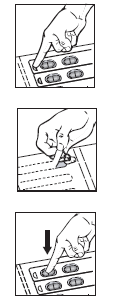
Each day, take all the capsules along a strip. More information about the blister, including
how many capsules you need to take and the total number of capsules contained in each blister, is
described below in section 6. To help you remember to take your therapy, write the date on which
you took the first dose in the space next to the capsule. To remove the capsule to be taken:
- 1. Press on the tab
- 2. Remove the backing paper
- 3. Extract the capsule through the foil
COMETRIQ must notbe taken during meals. You must not eat anything for at least 2 hours
before and 1 hour after taking COMETRIQ. Swallow the capsules one at a time with
water. Do not open the capsules.
If you take more COMETRIQ than you should
If you have taken more COMETRIQ than you have been prescribed, seek medical attention immediately
If you forget to take COMETRIQ
- If 12 or more hours are still to pass before your next dose, you should take the forgotten one as soon as you remember. Take the next dose at the scheduled time.
- If less than 12 hours are to pass before your next dose, you should not take the dose you forgot. Take the next dose at the scheduled time.
If you stop taking COMETRIQ
Stopping treatment may interrupt the effect of the medicine. Do not stop treatment
with COMETRIQ unless you have discussed it with your doctor. If you have any further questions about the use of
this medicine, ask your doctor
4. Possible side effects
Like all medicines, COMETRIQ can cause side effects, although not everybody gets them.
If side effects occur, your doctor may ask you to take a lower dose of COMETRIQ. Your doctor may prescribe additional medicines to help you
manage these side effects.
See your doctor immediately if you notice any of the side effects listed below –
you may need urgent medical attention:
- Symptoms such as abdominal pain, nausea, vomiting, constipation or fever. These symptoms may be signs of a gastrointestinal perforation, a hole that forms in the stomach or intestine which could be life-threatening.
- Swelling, pain in your hands and feet, or shortness of breath.
- Wounds that do not heal.
- Vomiting or coughing up blood, which may be bright red or look like coffee grounds.
- Pain in the mouth, teeth or jaw/lower jaw, swelling or sores inside the mouth, numbness or a feeling of heaviness in the jaw/lower jaw, or a tooth falling out. This could be signs of degeneration of the jaw bone (osteonecrosis).
- Convulsions, migraine, confusion or difficulty concentrating. These symptoms may be signs of a condition called posterior reversible encephalopathy syndrome (PRES). PRES is among the uncommon side effects (may affect less than 1 in 100 people).
- Severe diarrhoea that does not seem to settle.
Other side effects include:
Very common side effects(may affect more than 1 in 10 people)
- Stomach problems, including diarrhoea, nausea, vomiting, constipation, indigestion and abdominal pain
- Difficulty swallowing
- Blisters, pain in the hands or soles of the feet, skin rash or redness of the skin, dry skin
- Decreased appetite, weight loss, altered sense of taste
- Fatigue, weakness, migraine, dizziness
- Changes in hair colour (lightening), hair loss
- High blood pressure (increased blood pressure)
- Redness, swelling or pain in the mouth or throat, difficulty speaking, hoarseness
- Changes in blood tests performed to monitor your general health and liver function, low levels of electrolytes (such as magnesium, calcium or potassium)
- Low platelet count
- Joint pain, muscle spasms
- Swollen lymph nodes
- Pain in arms, hands, legs or feet
Common side effects(may affect up to 1 in 10 people)
- Anxiety, depression, confusion
- General feeling of pain, muscle pain or chest pain, ear pain, ringing in the ears
- Weakness, reduced sensitivity or tingling in the limbs
- Chills, tremors
- Dehydration
- Inflammation of the pancreas or abdomen
- Inflammation of the lips and corners of the mouth
- Inflammation of the hair roots, acne, blisters (on parts of the body other than the hands or feet)
- Swelling of the face and other parts of the body
- Loss or changes in taste
- Low blood pressure (decreased blood pressure)
- Atrial fibrillation (fast and irregular heartbeat)
- Skin lightening, scaly skin, unusual paleness
- Abnormal hair or hair growth
- Haemorrhoids
- Pneumonia (lung infection)
- Pain in the mouth, teeth or jaw/lower jaw, swelling or sores inside the mouth, numbness or a feeling of heaviness in the jaw/lower jaw, or loss of a tooth
- Reduced thyroid activity; these symptoms may include: fatigue, weight gain, constipation, feeling cold and dry skin
- Low white blood cell count
- Reduced levels of phosphate in the blood
- Tearing, perforation or bleeding of the stomach or intestine, inflammation or tearing of the anus, bleeding from the lungs or trachea (airways)
- Abnormal connection of the tissues of the digestive tract; symptoms may include sharp or persistent stomach pain
- Abnormal connection of the tissues of the trachea (airways), esophagus or lungs
- Abscess (collection of pus with swelling and inflammation) in the abdomen or pelvic area or in the teeth/gums
- Blood clots in blood vessels and lungs
- Stroke
- Fungal infections of the skin, mouth or genitals
- Wounds that do not heal
- Presence of protein or blood in the urine, gallstones, pain during urination
- Blurred vision
- Increased level of bilirubin in the blood (which can cause jaundice/yellowing of the skin or eyes)
- Decreased levels of proteins in the blood (albumin)
- Abnormalities in kidney function tests (increased amount of creatinine in the blood)
- Increased level of a serum protein called lipase.
Uncommon side effects(may affect up to 1 in 100 people)
- Inflammation of the esophagus; symptoms may include heartburn, chest pain, feeling unwell, altered sense of taste, bloated stomach, belching and indigestion
- Lung infection and inflammation, lung collapse
- Skin ulcers, cysts, red spots on the face or thighs
- Facial pain
- Changes in the results of tests that measure blood cells or blood clotting
- Loss of muscle coordination, damage to skeletal muscles
- Loss of attention, loss of consciousness, impaired speech, delirium, abnormal dreams
- Chest pain due to a blockage in the arteries, rapid heartbeat
- Liver damage, kidney failure
- Impaired hearing
- Inflammation of the eyes, cataracts
- Blood clot/embolus that has travelled through the arteries and become blocked
- Absence of menstruation, vaginal bleeding
- A condition called posterior reversible encephalopathy syndrome (PRES), whose symptoms may be convulsions, migraine, confusion or difficulty concentrating
- Severe increase in blood pressure (hypertensive crisis)
- Collapsed lung with air trapped in the space between the lung and the chest, which often causes shortness of breath (pneumothorax)
Not known (side effects with unknown frequency)
- Heart attack
- Widening and weakening of the wall of a blood vessel or a tear in the wall of a blood vessel (aneurysms and arterial dissections)
- Inflammation of the blood vessels of the skin (cutaneous vasculitis)
Reporting of side effects
If you get any side effects, talk to your doctor or pharmacist. This includes any side effects not listed in this leaflet. You can also report side effects directly through
the national reporting system listed in Annex V .
By reporting side effects you can help provide more information on the safety of
this medicine.
5. How to store COMETRIQ
Keep this medicine out of sight and reach of children.
Do not use this medicine after the expiry date that is reported on the blister after Exp. The expiry
date refers to the last day of that month.
Do not store at a temperature above 25°C. Store in the original package to protect
the medicine from moisture.
Do not dispose of any medicine in wastewater or household waste. Ask your pharmacist how
to dispose of medicines you no longer use. This will help protect the environment.
6. Package Contents and Other Information
What COMETRIQ contains
The active substance is cabozantinib (S)-malate.
The COMETRIQ 20 mg hard capsule contains cabozantinib (S)-malate equivalent to 20 mg of
cabozantinib.
The COMETRIQ 80 mg hard capsule contains cabozantinib (S)-malate equivalent to 80 mg of
cabozantinib.
The other ingredients are:
- Capsule contents:microcrystalline cellulose, sodium croscarmellose, sodium starch glycolate, anhydrous colloidal silicon dioxide and stearic acid
- Capsule shell:gelatin and titanium dioxide (E171)
- The 20 mg capsule also contains black iron oxide (E172)
- The 80 mg capsule also contains red iron oxide (E172)
- Printing ink:transparent shellac, black iron oxide (E172) and propylene glycol
Description of the appearance of COMETRIQ and package contents
COMETRIQ 20 mg hard capsules are grey in colour and have the inscription “XL184 20mg”
printed on one side.
COMETRIQ 80 mg hard capsules are orange in colour and have the inscription “XL184 80mg”
printed on one side.
COMETRIQ hard capsules are packaged in blisters and subdivided according to the dose. Each blister
contains sufficient medicine for 7 days. Each blister strip contains the daily dose.
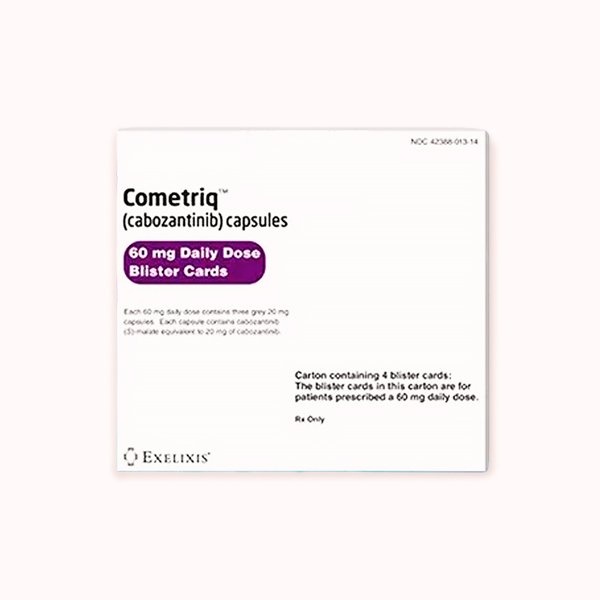
The daily dose blister of 60 mg contains twenty-one 20 mg capsules for 7 overall daily doses. Each daily dose is provided in a strip and contains three 20 mg capsules:
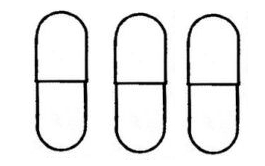
= 60 mg
Three 20 mg grey capsules
The daily dose blister of 100 mg contains seven 80 mg capsules and seven 20 mg capsules for 7 overall daily doses. Each daily dose is provided in a strip and
contains one 80 mg capsule and one 20 mg capsule:
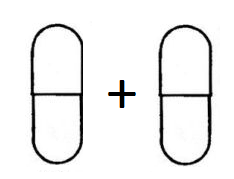
= 100 mg
One 80 mg orange capsule + one 20 mg grey capsule
The daily dose blister of 140 mg contains seven 80 mg capsules and twenty-one 20 mg capsules for 7 overall daily doses. Each daily dose is provided in a strip and
contains one 80 mg capsule and three 20 mg capsules:
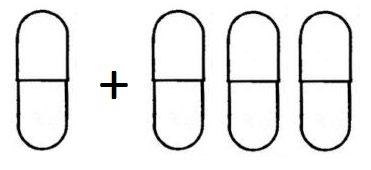
= 140 mg
One 80 mg orange capsule + three 20 mg grey capsules
COMETRIQ hard capsules are also available in packs of 28 days:
84 capsules (4 blister packs of 21 x 20 mg) (daily dose of 60 mg)
56 capsules (4 blister packs of: 7 x 20 mg and 7 x 80 mg) (daily dose of 100 mg)
112 capsules (4 blister packs of: 21 x 20 mg and 7 x 80 mg) (daily dose of 140 mg)
Each 28-day pack contains a quantity of medicine sufficient for 28 days.
Marketing Authorisation Holder
Ipsen Pharma
65 quai Georges Gorse
92100 Boulogne-Billancourt
France
Manufacturer
Catalent Germany Schorndorf GmbH
Steinbeisstr. 1 und 2
73614 Schorndorf
Germany
Tjoapack Netherlands B.V.
Nieuwe Donk 9
4879 AC Etten-Leur
Netherlands
For further information on this medicine, contact the local representative of the marketing authorisation holder.
België/Belgique/Belgien,Luxembourg/LuxemburgItalia
Ipsen NV Ipsen SpA
België /Belgique/Belgien Tel: + 39 02 39 22 41
Tél/Tel: + 32 9 243 96 00
France
Ipsen Pharma
Tél: + 33 1 58 33 50 00
Latvija
Ipsen Pharma representative office
Tel: +371 67622233
България, Slovenija
Biomapas, UAB
Литва, Litva
Tel: +370 37 366307
Hrvatska
Biomapas Zagreb d.o.o.
Tel: +385 17 757 094
Česká republikaLietuva
Ipsen Pharma, s.r.o. Ipsen Pharma SAS Lietuvos filialas
Tel: + 420 242 481 821 Tel. + 370 700 33305
Danmark, Norge, Suomi/Finland, Sverige, ÍslandMagyarország
Institut Produits Synthèse (IPSEN) AB Ipsen Pharma Hungary Kft.
Sverige/Ruotsi/Svíþjóð Tel.: +361 555 5930
Tlf/Puh/Tel/Sími: +46 8 451 60 00
Deutschland, ÖsterreichNederland
Ipsen Pharma GmbH Ipsen Farmaceutica B.V.
Deutschland Tel: + 31 (0) 23 554 1600
Tel.: +49 89 2620 432 89
EestiPolska
Centralpharma Communications OÜ Ipsen Poland Sp. z o.o.
Tel: +372 60 15 540 Tel.: + 48 (0) 22 653 68 00
Ελλάδα, Κύπρος, MaltaPortugal
Ipsen Μονοπρόσωπη EΠΕ Ipsen Portugal - Produtos Farmacêuticos S.A.
Ελλάδα/GreeceTel: + 351 21 412 3550
Τηλ: + 30 210 984 3324
EspañaRomânia
Ipsen Pharma, S.A. Ipsen Pharma România SRL
Tel: + 34 936 858 100 Tel: + 40 21 231 27 20
Ireland, United Kingdom (Northern Ireland)Slovenská republika
Ipsen Pharmaceuticals Limited Ipsen Pharma
Tel: + 44 (0)1753 62 77 77 Tel: + 420 242 481 821
Altre fonti d’informazioni
More detailed information on this medicine is available on the website of the European Medicines Agency: http://www.ema.europa.eu.

Не впевнені, чи підходить вам цей лікарський засіб?
Обговоріть симптоми та можливі варіанти лікування з лікарем онлайн.

Виникли питання під час прийому ліків?
Обговоріть свої симптоми та лікування з лікарем онлайн.
- Країна реєстрації
- Лікарська формаHard capsule, 20 MG
- Код АТХL01EX07
- Діюча речовина
- Потрібен рецептТак
- Виробник
- Ця інформація надана лише для ознайомлення і не є медичною порадою. Рішення щодо лікування завжди приймає лікар.
- Альтернативи до KOMETRIQЛікарська форма: Film-coated tablet, 20 MGДіюча речовина: КабозантинибВиробник: IPSEN PHARMAПотрібен рецептЛікарська форма: Hard capsule, 40 mgДіюча речовина: Other protein kinase inhibitorsВиробник: BRISTOL-MYERS SQUIBB PHARMA EEIGПотрібен рецептЛікарська форма: Film-coated tablet, 100 MGДіюча речовина: АвапритинибВиробник: BLUEPRINT MEDICINES (NETHERLANDS) BVПотрібен рецепт
Аналоги KOMETRIQ в інших країнах
Препарати з тією самою діючою речовиною, доступні в інших країнах.
Аналог KOMETRIQ у Іспанія
Отримайте рецепт на KOMETRIQ онлайн
Заповніть форму за 2 хвилини
Розкажіть про симптоми, історію хвороби та потрібний препарат.
Оберіть лікаря або ми призначимо
Оберіть спеціаліста або ми підберемо найближчого доступного лікаря.
Лікар розглядає ваш випадок
Зазвичай протягом 30 хвилин. Може ставити уточнювальні запитання в чаті.
Отримайте в будь-якій аптеці
Електронний рецепт надсилається на вашу пошту — дійсний по всій Польщі.
Часті запитання
KOMETRIQ потребує рецепта в Італія. Ви можете обговорити з лікарем онлайн, чи підходить цей лікарський засіб для вашої ситуації.
Діюча речовина у KOMETRIQ — Кабозантиниб. Це допомагає визначити препарати з тим самим складом, але під іншими торговими назвами.
KOMETRIQ виробляється компанією IPSEN PHARMA. Назва бренду та упаковка можуть відрізнятися залежно від дистрибʼютора.
Лікарі, зокрема Сімейні лікарі, Психіатри, Дерматологи, Кардіологи, Ендокринологи, Гастроентерологи, Пульмонологи, Нефрологи, Ревматологи, Гематологи, Інфекціоністи, Алергологи, Геріатри, Педіатри, Онкологи, можуть оцінити доцільність застосування KOMETRIQ з урахуванням вашого стану та місцевих правил. Ви можете записатися на онлайн-консультацію, щоб обговорити симптоми та можливі подальші кроки.
Польща має добре розвинену систему охорони здоров'я у великих містах, таких як Варшава, Краків, Вроцлав і Гданськ. Аптеки широко доступні та працюють відповідно до чинного законодавства, забезпечуючи доступ до рецептурних препаратів.
Ви можете придбати KOMETRIQ у Варшаві, Кракові, Вроцлаві або Гданську в будь-якій аптеці за наявності дійсного рецепта.
Щоб отримати рецепт, ви можете скористатися Oladoctor:
Інші препарати з тією самою діючою речовиною (Кабозантиниб) включають KABOMETYX, AUGTYRO, AYVAKYT. Вони можуть відрізнятися торговою назвою або формою випуску, але містять той самий терапевтичний компонент. Перед зміною або початком прийому нового препарату варто проконсультуватися з лікарем.
