



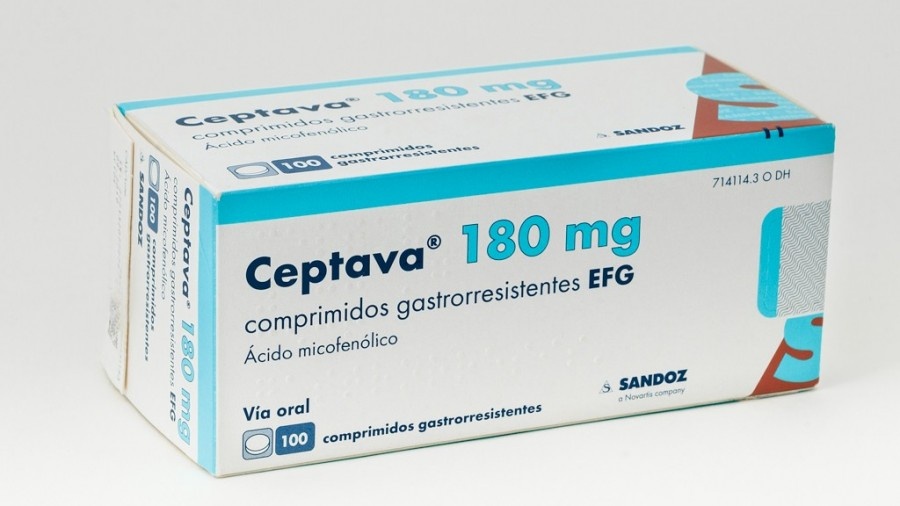
CEPTAVA 180 mg Enteric-Coated Tablet

Запит на рецепт онлайн
Лікар розгляне ваш випадок і визначить, чи є рецепт медично доцільним.

Поговоріть з лікарем про ці ліки
Обговоріть симптоми та можливі подальші кроки під час короткої онлайн-консультації.


Інструкція із застосування KEPTAVA
Зміст інструкції
Ceptava 360 mg gastro-resistant tablets
Mycophenolic acid
Equivalent medicine
Read this leaflet carefully before taking this medicine as it contains
important information for you.
- Keep this leaflet. You may need to read it again.
- If you have any questions, ask your doctor or pharmacist.
- This medicine has been prescribed for you only. Do not pass it on to others, even if their symptoms are the same as yours, as it could be harmful.
- If you get any side effects, even those not listed in this leaflet, tell your doctor or pharmacist. See section 4.
Contents of this leaflet:
- 1. What Ceptava is and what it is used for
- 2. What you need to know before you take Ceptava
- 3. How to take Ceptava
- 4. Possible side effects
- 5. How to store Ceptava
- 6. Contents of the pack and other information
1. What is Ceptava and what is it used for
Ceptava contains a substance called mycophenolic acid. It belongs to a group of
medicines called immunosuppressants.
Ceptava is used to prevent rejection of the transplanted kidney by the immune system. It is used
in combination with other medicines containing cyclosporine and corticosteroids.
2. What you need to know before you take Ceptava
WARNING
Mycophenolate causes birth defects and spontaneous abortion. If you are a woman who could become pregnant
you must have a negative pregnancy test before starting treatment and follow your
doctor’s advice regarding contraception.
Your doctor will talk to you and give you written information, especially about the effects of mycophenolate
on the unborn child. Read the information carefully and follow the instructions.
If you do not fully understand these instructions, ask your doctor to explain them again before
taking mycophenolate. Also read the information within this paragraph under the headings
“Warnings and precautions” and “Pregnancy and breastfeeding”.
Do not take Ceptava
- if you are allergic (hypersensitive) to mycophenolic acid, sodium mycophenolate, mycophenolate mofetil or any of the other ingredients of this medicine (listed in section 6).
- if you are a woman who could become pregnant and have not had a negative pregnancy test before the first prescription, as mycophenolate causes birth defects and spontaneous abortion
- if you are pregnant, suspect you are pregnant or are planning to become pregnant
- if you are not using any effective method of contraception (see Contraception in women and men)
- if you are breastfeeding (see also Pregnancy and breastfeeding).
If any of the above conditions apply to you, talk to your doctor before taking Ceptava.
Warnings and precautions
Talk to your doctor or pharmacist before taking Ceptava:
- if you have or have ever had severe digestive problems, such as a stomach ulcer.
- if you have a rare hereditary deficiency of the hypoxanthine-guanine-phosphoribosyl-transferase (HGPRT) enzyme, such as Lesch-Nyhan syndrome and Kelley-Seegmiller syndrome.
You should also be informed that:
- Ceptava reduces the level of protection of the epidermis from the sun. This increases the risk of skin cancer. You should limit exposure to the sun and ultraviolet (UV) rays, protecting exposed areas as much as possible and regularly applying high-protection sun creams. Ask your doctor for advice on how to protect yourself from the sun.
- If you have previously had hepatitis B or C, Ceptava may increase the risk of these diseases by causing them to reappear. Your doctor may perform blood tests and check for symptoms of these diseases. If you experience any symptoms (yellowing of the eyes and skin, nausea, loss of appetite, dark urine), you should inform your doctor immediately.
- If you have a persistent cough or shortness of breath, especially when taking other immunosuppressants, you should inform your doctor immediately.
- Your doctor may ask to check the level of antibodies in your blood during treatment with Ceptava, especially when infections are recurrent, especially if you are also taking other immunosuppressants, and will inform you if you can continue treatment with Ceptava.
- If you have signs of infection (such as fever or sore throat) or if you experience unexpected bruising or bleeding, you should inform your doctor immediately.
- Your doctor may ask to check your white blood cell counts during treatment with Ceptava and will inform you if you can continue treatment with Ceptava.
- The active ingredient, mycophenolic acid, is different from that of other medicines with a similar name such as mycophenolate mofetil. You should not switch from one medicine to another unless your doctor tells you to.
- The use of Ceptava during pregnancy can be harmful to the fetus (see also Pregnancy and breastfeeding) and may increase the risk of pregnancy loss (miscarriage).
Other medicines and Ceptava
Tell your doctor or pharmacist if you are taking, have recently taken or might take
any other medicines, including those obtained without a prescription.
In particular, tell your doctor if you are taking any of the following medicines:
- other immunosuppressant medicines such as azathioprine or tacrolimus.
- medicines used to treat high cholesterol levels in the blood such as cholestyramine.
- activated charcoal used to treat digestive disorders such as diarrhea, stomach upset and bloating.
- antacids containing magnesium and aluminum.
- medicines used to treat viral infections such as acyclovir or ganciclovir.
You should also tell your doctor if you are planning to have any vaccination.
You should not donate blood during treatment with Ceptava and for at least 6 weeks after
stopping treatment. Men should not donate sperm during treatment with
Ceptava and for at least 90 days after stopping treatment.
Ceptava with food and drink
Ceptava can be taken with or without food. You should choose whether to take the tablets with or without
food and then continue to take them every day in the same way. This ensures you absorb
the same amount of medicine each day.
Elderly
Elderly people (aged 65 years or older) can take Ceptava without needing to
adjust the usual recommended dose.
Paediatric population and adolescents
Due to the lack of data, the use of Ceptava is not recommended in children and adolescents.
Pregnancy and breastfeeding
If you are pregnant, suspect you are pregnant, are planning to become pregnant, or are breastfeeding
ask your doctor or pharmacist for advice before taking this medicine.
The doctor will discuss with you the risks in case of pregnancy and the alternative treatments you can
undergo to prevent rejection of the transplanted organ if:
- you are planning a pregnancy
- you miss a menstrual period or think you have missed it, if you have unusual menstrual bleeding or if you suspect you are pregnant
- you have had unprotected sexual intercourse. If you become pregnant during treatment with mycophenolate, you should inform your doctor immediately. In any case, continue to take mycophenolate until you see your doctor. Pregnancy Mycophenolate very frequently causes miscarriage (50%) and serious birth defects (23-27%) in the unborn child. The reported birth defects include abnormalities of the ears, eyes, face (cleft lip/palate), finger development, heart, esophagus (the tube connecting the throat and stomach), kidneys and nervous system (for example spina bifida [where the bones of the spine are not fully developed]). The baby may have one or more of these defects.
If you are a woman who is able to become pregnant, you must have a negative pregnancy test before
starting treatment and follow your doctor’s advice regarding contraception. Your doctor may
require more than one test to make sure you are not pregnant before starting the
treatment.
Breastfeeding
Do not take Ceptava if you are breastfeeding. Small amounts of the medicine can
pass into breast milk.
Contraception in women taking Ceptava
If you are a woman who is able to become pregnant you must always use two effective methods of
contraception with Ceptava. This means:
- before starting to take Ceptava
- during the entire treatment with Ceptava
- for 6 weeks after stopping treatment with Ceptava.
In addition, women, partners of male patients treated with Ceptava must use a highly effective method of
contraception during treatment and for a total of 90 days after the last dose
of Ceptava.
Talk to your doctor about the most suitable method of contraception for you. This will depend on your
individual situation. Contact your doctor as soon as possible if you think the contraception used may
not have been effective or if you have forgotten to take your contraceptive pill.
You are a woman who is unable to become pregnant if any of the following conditions apply to you:
- you are postmenopausal, i.e. you are at least 50 years old and your last menstrual period was more than a year ago (if your menstrual cycle has stopped because you have undergone cancer treatment, there is still a possibility that you may become pregnant).
- your fallopian tubes and both ovaries have been surgically removed (bilateral salpingo-oophorectomy).
- your uterus has been surgically removed (hysterectomy)
- your ovaries no longer function (premature ovarian insufficiency, which has been confirmed by a gynecologist).
- you were born with one of the following rare conditions that make pregnancy impossible: XY genotype, Turner syndrome or uterine agenesis.
- you are a girl or adolescent who has not yet had her first menstrual period.
Contraception in men taking Ceptava
You must always use a condom during treatment and for 90 days after stopping therapy
with Ceptava. The use of a condom applies to both men who are able to conceive and those
who have had a vasectomy, because the risks related to the transfer of seminal fluid also apply to the latter.
If you are planning a pregnancy, your doctor will explain the risks and alternative treatments you can
undergo to prevent rejection of the transplanted organ.
Driving and using machines
Ceptava has not been shown to impair the ability to drive or operate tools or
machinery.
Ceptava contains lactose
If you have been diagnosed with an intolerance to some sugars (including lactose, galactose, or
glucose), contact your doctor before taking this medicine.
3. How to take Ceptava
Take this medicine following exactly the instructions of your doctor. Ceptava will only be prescribed to you by doctors with experience in treating transplant patients. If you have any doubts, consult your doctor or pharmacist.
What dose to take
The recommended daily dose of Ceptava is 1440 mg (4 Ceptava 360 mg tablets). These are taken in 2 separate doses of 720 mg each (2 Ceptava 360 mg tablets).
Take your tablets in the morning and evening.
The first dose of 720 mg will be administered within 72 hours of the transplant.
If you have severe kidney problems
The daily dose should not exceed 1440 mg (4 Ceptava 360 mg tablets).
Taking Ceptava
Swallow the tablets whole with a glass of water.
The tablets should not be broken or crushed.
Do not take any broken or divided tablets.
Avoid inhaling the powder or direct contact of the powder with the skin or mucous membranes. If such contact occurs, wash thoroughly with soap and water; rinse your eyes with water.
Treatment will continue as long as immunosuppression is necessary to prevent rejection of the transplanted organ.
If you take more Ceptava than you should
If you have taken more Ceptava than you were told to take or if someone else has taken your tablets, contact your doctor or go to hospital immediately. Medical treatment may be necessary. Bring your tablets with you and show them to the doctor or hospital staff. If you have finished the tablets, bring the empty package with you.
If you forget to take Ceptava
If you forget to take Ceptava, take it as soon as you remember unless it is almost time to take your next dose. At that point, take your next dose when you are scheduled to take it.
Ask your doctor for advice. Do not take a double dose to make up for a missed dose.
If you stop taking Ceptava
Do not stop taking Ceptava unless you have been told to do so by your doctor. Stopping treatment with Ceptava may increase the risk of rejection of the transplanted kidney.
If you have any further questions on the use of this medicine, ask your doctor or pharmacist.
4. Possible side effects
Like all medicines, this medicine can cause side effects, although not everybody gets them.
Elderly patients may experience more side effects due to a reduced immune defense.
Immunosuppressants, including Ceptava, reduce your body's defense mechanisms to prevent it from
rejecting the transplanted organ. Consequently, your body will not be able to defend itself against infections
as well as under normal conditions. Therefore, if you are taking Ceptava, you may get more infections than usual
such as infections of the brain, skin, mouth, stomach and intestines, lungs and the
urinary tract.
You will be regularly monitored by your doctor with blood tests to check for changes in the number
of blood cells or levels of substances carried in the blood, such as sugar, fats and
cholesterol.
Some side effects can be serious:
- signs of infection including fever, chills, sweating, feeling tired, sleepy or lacking energy. If you are taking Ceptava you may have viral, bacterial and fungal infections more frequently than usual. These infections can affect different parts of the body but most commonly the kidneys, bladder, upper and/or lower airways.
- vomiting blood, dark or bloody stools, stomach or intestinal ulcer.
- swelling of the glands, proliferation of new skin formations, increase in the volume of existing formations or changes in an existing formation. As can happen in patients treated with immunosuppressants, a very small number of patients treated with Ceptava have developed skin or lymph node tumors.
If you experience any of the above side effects after taking Ceptava, contact your
doctor immediately.
Other side effects can include:
Very common( may affect more than 1 in 10 people)
- low levels of white blood cells.
- low levels of calcium in the blood (hypocalcemia)
- low levels of potassium in the blood (hypokalaemia)
- high levels of uric acid in the blood (hyperuricemia)
- high blood pressure (hypertension)
- anxiety
- diarrhoea
- joint pain (arthralgia)
Common( may affect up to 1 in 10 people)
- low levels of red blood cells which can cause tiredness, shortness of breath and paleness (anaemia)
- low levels of platelets in the blood which can cause bleeding and unexpected bruising (thrombocytopenia)
- high levels of potassium in the blood (hyperkalaemia)
- low levels of magnesium in the blood (hypomagnesaemia)
- dizziness
- headache
- cough
- low blood pressure (hypotension)
- shortness of breath (dyspnoea)
- pain in the abdomen or stomach, inflammation of the stomach wall, abdominal bloating, constipation, indigestion, flatulence, loose stools, feeling unwell (nausea), vomiting
- tiredness, fever
- abnormal results of liver or kidney function tests
- respiratory infections
- acne
- weakness (asthenia)
- muscle pain (myalgia)
- swelling of the hands, ankles or feet (peripheral oedema)
- itching
Uncommon( may affect up to 1 in 100 people)
- fast (tachycardia) or irregular (ventricular extrasystoles) heartbeat, fluid in the lungs (pulmonary oedema)
- formation of a cyst-like skin lesion containing fluid (lymphocele)
- tremor, difficulty falling asleep
- redness and swelling of the eyes (conjunctivitis), blurred vision
- wheezing
- belching, difficulty breathing, intestinal blockage (ileus), ulceration of the lips, heartburn, change in tongue colour, dry mouth, inflammation of the gums, inflammation of the pancreas causing severe pain in the upper abdomen (pancreatitis), blockage of the salivary glands, inflammation of the inner wall of the abdomen (peritonitis)
- infection of the bones, blood and skin
- blood in the urine, kidney damage, pain and difficulty urinating
- hair loss, bruising (ecchymosis on the skin)
- inflammation of the joints (arthritis), back pain, muscle cramps
- loss of appetite, increased levels of lipids (hyperlipidemia), sugar (diabetes), cholesterol (hypercholesterolaemia) or decreased levels of phosphates in the blood (hypophosphataemia)
- flu-like symptoms (such as tiredness, chills, sore throat, joint or muscle pain), swelling of ankles and feet, pain, stiffness, thirst or weakness
- abnormal dreams, believing things that are not true (delusion)
- inability to get or maintain an erection
- cough, difficulty breathing, painful breathing (possible symptoms of interstitial lung disease).
Not known( frequency cannot be estimated from available data)
- skin rash
- fever, sore throat, frequent infections (possible symptoms of a lack of white blood cells in the blood) (agranulocytosis)
Other side effects reported with medicines similar to Ceptava
Further side effects have been reported with the group of medicines to which Ceptava belongs:
inflammation of the colon (large intestine), inflammation of the stomach walls caused by
cytomegalovirus, formation of a lesion in the intestinal wall causing severe
abdominal pain with the possibility of bleeding, gastric or duodenal ulcer, low levels of white blood
cells specifically or of all blood cells, serious infections such as inflammation of the heart and
heart valves and the membranes lining the brain and spinal cord, shortness of breath,
cough, which can be caused by bronchiectasis (a condition in which the airways of the lungs are abnormally dilated
and other less common bacterial infections that usually cause serious
lung disorders ( tuberculosis and atypical mycobacterial infections). See your doctor if you develop a
persistent cough or shortness of breath.
Reporting of side effects
If you get any side effects, even those not listed in this leaflet, tell your
doctor or pharmacist. You can also report side effects directly through the national reporting system at
www.agenziafarmaco.gov.it/it/responsabili.
By reporting side effects you can help provide more information on the safety of
this medicine.
5. How to store Ceptava
Keep this medicine out of the sight and reach of children.
Do not use this medicine after the expiry date which is stated on the package and on the blister after Scad.
The expiry date refers to the last day of that month.
This medicine does not require any particular storage temperature.
Store in the original package to protect the medicine from moisture.
Do not use this medicine if you notice that the package is damaged or shows signs of tampering.
Do not dispose of any medicine in the wastewater or household waste. Ask your pharmacist how
to eliminate medicines that you no longer use. This will help protect the environment.
6. Package Contents and Other Information
What Ceptava contains
The active ingredient is mycophenolic acid (as mycophenolate sodium).
Each gastro-resistant tablet contains 360 mg of mycophenolic acid.
The other ingredients are:
Core
Anhydrous lactose, crospovidone (Type A), povidone K 30, corn starch/maize, colloidal anhydrous silica/colloidal silicon dioxide, magnesium stearate
Coating
Hypromellose phthalate HP50, titanium dioxide (E171), yellow iron oxide (E172)/iron oxide, iron oxide
red (E172)/iron oxide.
Description of Ceptava’s appearance and package contents
Film-coated tablets of oval shape, pale reddish-orange in color, with “CT” imprinted on one
side.
Dimensions: approximately 17.6 x 7.2 x 6.3 mm
PA/AL/PVC-aluminum blisters.
Packs: 50, 100, 120, 250 gastro-resistant tablets
Not all pack sizes may be marketed.
Marketing Authorisation Holder
Sandoz A/S, Edvard Thomsens, Vej 14, 2300 Copenhagen S,, Denmark
Legal Representative in Italy:Sandoz S.p.A., L.go U. Boccioni 1, 21040 Origgio (VA), Italy
Manufacturers
Novartis Pharma GmbH
Roonstraße 25, 90429 Nuernberg
Germany
LEK Pharmaceuticals d.d.
Verovškova ulica 57
1526 Ljubljana
Slovenia
Salutas Pharma GmbH
Otto-von-Guericke-Allee 1
Sachsen-Anhalt, 39179 Barleben
Germany
This medicinal product is authorised in the Member States of the European Economic Area with the
following denominations:
AustriaMycophenolsäure Sandoz 360 mg – magensaftresistente Tabletten
BelgiumMycophenolic Acid Sandoz 360 mg maagsapresistente tabletten
CyprusMycophenolate Sodium Sandoz
FranceAcide Mycophenolique Sandoz 360mg, comprimé gastro-résistant
GermanyMycophenolat - 1 A Pharma 360 mg magensaftresistente Tabletten
ItalyCeptava
NetherlandsMycofenolzuur Sandoz 360 mg, maagsapresistente tabletten
United KingdomCeptava 360 mg gastro-resistant tablets
Czech RepublicMycophenolic acid Sandoz 360 mg
Slovak RepublicKyselina mykofenolová Sandoz 360 mg gastrorezistentné tablety
RomaniaAcid micofenolic Sandoz 360mg comprimate gastrorezistente
SpainÁcido micofenólico Sandoz 360 mg comprimidos gastrorresistentes
EFG
Ceptava 180 mg gastro-resistant tablets
Mycophenolic acid
Generic medicine
Read this leaflet carefully before you start taking this medicine because it contains
important information for you.
- Keep this leaflet. You may need to read it again.
- If you have any questions, ask your doctor or pharmacist.
- This medicine has been prescribed for you only. Do not pass it on to others, even if their symptoms are the same as yours, as it could be harmful.
- If you get any side effects, even those not listed in this leaflet, tell your doctor or pharmacist. See section 4.
Contents of this leaflet:
- 1. What Ceptava is and what it is used for
- 2. What you need to know before you take Ceptava
- 3. How to take Ceptava
- 4. Possible side effects
- 5. How to store Ceptava
- 6. Contents of the pack and other information
1. What is Ceptava and what is it used for
Ceptava contains a substance called mycophenolic acid. It belongs to a group of
medicines called immunosuppressants.
Ceptava is used to prevent rejection by the immune system of a transplanted kidney. It is used
in combination with other medicines containing cyclosporine and corticosteroids.
2. What you need to know before you take Ceptava
WARNING
Mycophenolate causes birth defects and spontaneous abortion. If you are a woman who could
become pregnant, you must have a negative pregnancy test before starting treatment and follow your
doctor's advice regarding contraception.
Your doctor will talk to you and give you written information, especially about the effects of mycophenolate
on the unborn child. Read the information carefully and follow the instructions.
If you do not fully understand these instructions, ask your doctor to explain them again before
taking mycophenolate. Also read the information within this paragraph under the headings
“Warnings and precautions” and “Pregnancy and breastfeeding”.
Do not take Ceptava
- if you are allergic (hypersensitive) to mycophenolic acid, sodium mycophenolate, mycophenolate mofetil or any of the other ingredients of this medicine (listed in section 6).
- if you are a woman who could become pregnant and have not had a negative pregnancy test before your first prescription, as mycophenolate causes birth defects and spontaneous abortion
- if you are pregnant, if you suspect you are pregnant or are planning to become pregnant
- if you are not using any effective method of contraception (see Contraception in women and men)
- if you are breastfeeding with breast milk (see also Pregnancy and breastfeeding).
If any of the above conditions apply to you, talk to your doctor before taking Ceptava.
Warnings and precautions
Talk to your doctor or pharmacist before taking Ceptava:
- if you have or have ever had severe digestive problems, such as a stomach ulcer.
- if you have a rare hereditary deficiency of the hypoxanthine-guanine-phosphoribosyl-transferase (HGPRT) enzyme, such as Lesch-Nyhan syndrome and Kelley-Seegmille syndrome.
You should also be informed that:
- Ceptava reduces the level of protection of the epidermis from the sun. This increases the risk of skin cancer. You should limit exposure to the sun and ultraviolet (UV) rays, protecting exposed areas as much as possible and regularly applying high-protection sunscreens. Ask your doctor for advice on how to protect yourself from the sun.
- If you have had hepatitis B or C, Ceptava may increase the risk of these diseases by causing them to reappear. Your doctor may perform blood tests and check for symptoms of these diseases. If you experience any symptoms (yellowing of the eyes and skin, nausea, loss of appetite, dark urine), you should inform your doctor immediately.
- If you have a persistent cough or shortness of breath, especially when taking other immunosuppressants, you should inform your doctor immediately.
- Your doctor may ask to check the level of antibodies in your blood during treatment with Ceptava, especially when infections are recurrent, especially if you are also taking other immunosuppressants, and will inform you if you can continue treatment with Ceptava.
- If you have signs of infection (such as fever or sore throat) or if you experience unexpected bruising or bleeding, you should inform your doctor immediately.
- Your doctor may ask to check the values of white blood cells during treatment with Ceptava and will inform you if you can continue treatment with Ceptava.
- The active ingredient, mycophenolic acid, is different from that of other medicines with a similar name such as mycophenolate mofetil. Do not switch from one medicine to another unless your doctor tells you to.
- The use of Ceptava during pregnancy can be harmful to the fetus (see also Pregnancy and breastfeeding) and may increase the risk of pregnancy loss (miscarriage).
Other medicines and Ceptava
Tell your doctor or pharmacist if you are taking, have recently taken or might take
any other medicines, including those you obtained without a prescription.
In particular, tell your doctor if you are taking any of the following medicines:
- other immunosuppressant medicines such as azathioprine or tacrolimus.
- medicines used to treat high cholesterol levels in the blood such as colestyramine.
- activated charcoal used to treat digestive disorders such as diarrhea, stomach upset and bloating.
- antacids containing magnesium and aluminum.
- medicines used to treat viral infections such as acyclovir or ganciclovir.
You should also tell your doctor if you are planning to have any vaccination.
You should not donate blood during treatment with Ceptava and for at least 6 weeks after
stopping treatment. Men should not donate sperm during treatment with
Ceptava and for at least 90 days after stopping treatment.
Ceptava with food and drink
Ceptava can be taken with or without food. You should choose whether to take the tablets with or without
food and then continue to take them every day in the same way. This ensures you absorb
the same amount of medicine each day.
Elderly
Elderly people (aged 65 years or older) can take Ceptava without the need for
adjusting the usual recommended dose.
Paediatric population and adolescents
Due to the lack of data, the use of Ceptava is not recommended in children and adolescents.
Pregnancy and breastfeeding
If you are pregnant, if you suspect you are pregnant or are planning to become pregnant, or if you are
breastfeeding, ask your doctor or pharmacist for advice before taking this medicine.
Your doctor will discuss with you the risks in case of pregnancy and alternative treatments you can
undergo to prevent rejection of the transplanted organ if:
- you are planning a pregnancy
- you miss a menstrual period or think you have missed it, if you have unusual menstrual bleeding or if you suspect you are pregnant
- you have had unprotected sexual intercourse. If you become pregnant during treatment with mycophenolate, you should inform your doctor immediately. In any case, continue to take mycophenolate until you see your doctor.
Pregnancy
Mycophenolate very frequently causes abortion (50%) and serious birth defects (23-27%) in
the newborn. Reported birth defects include abnormalities of the ears, eyes, face
(cleft lip/palate), finger development, heart, esophagus (the tube that connects
the throat and stomach), kidneys and nervous system (for example spina bifida [where the bones of the spine
are not fully developed]). The baby may have one or more of these defects.
If you are a woman who could become pregnant, you must have a negative pregnancy test before
starting treatment and follow your doctor's advice regarding contraception. Your doctor may
request more than one test to make sure you are not pregnant before starting
treatment.
Breastfeeding
Do not take Ceptava if you are breastfeeding. Small amounts of the medicine can
pass into breast milk.
Contraception in women taking Ceptava
If you are a woman who could become pregnant, you should always use two effective methods of
contraception with Ceptava. This means:
- before starting to take Ceptava
- during the entire treatment with Ceptava
- for 6 weeks after stopping treatment with Ceptava.
In addition, women, partners of male patients treated with Ceptava must use a highly effective method of
contraception during treatment and for a total of 90 days after the last dose of
Ceptava.
Talk to your doctor about the most suitable method of contraception for you. This will depend on your
individual situation. Contact your doctor as soon as possible if you think the contraception you are using may
not have been effective or if you have forgotten to take your contraceptive pill.
You are a woman who is unable to become pregnant if any of the following conditions apply to you:
- you are postmenopausal, i.e. you are at least 50 years old and your last menstrual period was more than a year ago (if your menstrual cycle has stopped because you have undergone cancer treatment, there is still a possibility that you may become pregnant).
- your fallopian tubes and both ovaries have been surgically removed (bilateral salpingo-oophorectomy).
- your uterus has been surgically removed (hysterectomy)
- your ovaries no longer function (premature ovarian failure, which has been confirmed by a specialist gynecologist).
- you were born with one of the following rare conditions that make pregnancy impossible: XY genotype, Turner syndrome or uterine agenesis.
- you are a child or adolescent who has not yet had her first menstrual period.
Contraception in men taking Ceptava
You should always use a condom during treatment and for 90 days after stopping therapy
with Ceptava. The use of a condom applies to both men who are able to conceive and those
who have had a vasectomy, because the risks related to the transfer of seminal fluid also apply to the latter.
If you are planning a pregnancy, your doctor will explain the risks and alternative treatments you can
undergo to prevent rejection of the transplanted organ.
Driving and using machines
Ceptava has not been shown to impair the ability to drive vehicles or operate tools or
machinery.
Ceptava contains lactose
If your doctor has diagnosed you with intolerance to some sugars (including lactose, galactose, or
glucose), contact him before taking this medicine.
3. How to take Ceptava
Take this medicine following exactly the instructions of your doctor. Ceptava will only be prescribed to
doctors with experience in the treatment of transplant patients. If you have any doubts, consult your
doctor or pharmacist.
What dose to take
The recommended daily dose of Ceptava is 1440 mg (8 Ceptava 180 mg tablets). These
are taken in 2 separate doses of 720 mg each (4 Ceptava 180 mg tablets).
Take your tablets in the morning and evening.
The first dose of 720 mg will be administered within 72 hours of the transplant.
If you have severe kidney problems
The daily dose should not exceed 1440 mg (8 Ceptava 180 mg tablets).
Taking Ceptava
Swallow the tablets whole with a glass of water.
The tablets should not be broken or crushed.
Do not take any broken or divided tablets.
Avoid inhaling the dust or direct contact of the dust with the skin or mucous membranes. If this
occurs, wash thoroughly with soap and water; rinse your eyes with water.
Treatment will continue as long as immunosuppression is necessary to prevent rejection of the
transplanted organ.
If you take more Ceptava than you should
If you have taken more Ceptava than you were told to take or if someone else has taken your
tablets, contact your doctor or go to hospital immediately. Medical treatment may be necessary. Bring
your tablets with you and show them to the doctor or hospital staff. If you have
finished the tablets, bring the empty packaging with you.
If you forget to take Ceptava
If you forget to take Ceptava, take it as soon as you remember unless it is almost time to
take your next dose. In that case, take your next dose when you are scheduled to take it.
Ask your doctor for advice. Do not take a double dose to make up for a missed dose.
If you stop taking Ceptava
Do not stop taking Ceptava unless you are told to do so by your doctor. Stopping
treatment with Ceptava may increase the risk of rejection of the transplanted kidney.
If you have any doubts about the use of this medicine, ask your doctor or pharmacist.
4. Possible side effects
Like all medicines, this medicine can cause side effects, although not everybody gets them.
Elderly patients may experience more side effects due to a reduced immune defense.
Immunosuppressants, including Ceptava, reduce your body's defense mechanisms to prevent it from
rejecting the transplanted organ. Consequently, your body will not be able to defend itself against infections
as it would under normal conditions. Therefore, if you are taking Ceptava, you may get more infections than usual
such as infections of the brain, skin, mouth, stomach and intestines, lungs and the
urinary tract.
You will be regularly monitored by your doctor with blood tests to check for changes in the number
of blood cells or the levels of substances carried in the blood, such as sugar, fats and
cholesterol.
Some side effects can be serious:
- signs of infection including fever, chills, sweating, feeling tired, sleepy or lacking energy. If you are taking Ceptava you may have viral, bacterial and fungal infections more frequently than usual. These infections can affect different parts of the body but most commonly the kidneys, bladder, upper and/or lower airways.
- vomiting blood, black or bloody stools, stomach or intestinal ulcer.
- swelling of the glands, proliferation of new skin formations, increase in the volume of existing formations or changes in an existing formation. As can happen in patients treated with immunosuppressants, a very small number of patients treated with Ceptava have developed skin or lymph node tumors. If you experience any of the above side effects after taking Ceptava, contact your doctor immediately.
Other side effects can include:
Very common( may affect more than 1 in 10 people)
- low levels of white blood cells.
- low levels of calcium in the blood (hypocalcemia)
- low levels of potassium in the blood (hypokalaemia)
- high levels of uric acid in the blood (hyperuricaemia)
- high blood pressure (hypertension)
- anxiety
- diarrhoea
- joint pain (arthralgia)
Common( may affect up to 1 in 10 people)
- low levels of red blood cells which can cause fatigue, shortness of breath and paleness (anaemia)
- low levels of platelets in the blood which can cause bleeding and unexpected bruising (thrombocytopenia)
- high levels of potassium in the blood (hyperkalaemia)
- low levels of magnesium in the blood (hypomagnesaemia)
- dizziness
- headache
- cough
- low blood pressure (hypotension)
- shortness of breath (dyspnoea)
- pain in the abdomen or stomach, inflammation of the stomach wall, abdominal bloating, constipation, indigestion, flatulence, loose stools, feeling unwell (nausea), vomiting
- fatigue, fever
- abnormal results of liver or kidney function tests
- respiratory infections
- acne
- weakness (asthenia)
- muscle pain (myalgia)
- swelling of the hands, ankles or feet (peripheral oedema)
- itching
Uncommon( may affect up to 1 in 100 people)
- fast (tachycardia) or irregular (ventricular extrasystoles) heartbeat, fluid in the lungs (pulmonary oedema)
- formation of a cyst-like skin lesion containing fluid (lymphocele)
- tremor, difficulty falling asleep
- redness and swelling of the eyes (conjunctivitis), blurred vision
- wheezing
- belching, difficulty breathing, intestinal blockage (ileus), ulceration of the lips, heartburn, change in tongue colour, dry mouth, inflammation of the gums, inflammation of the pancreas causing severe pain in the upper abdomen (pancreatitis), blockage of the salivary glands, inflammation of the inner wall of the abdomen (peritonitis)
- infection of the bones, blood and skin
- blood in the urine, kidney damage, pain and difficulty urinating
- hair loss, bruising (ecchymosis on the skin)
- inflammation of the joints (arthritis), back pain, muscle cramps
- loss of appetite, increased levels of lipids (hyperlipidemia), sugar (diabetes), cholesterol (hypercholesterolaemia) or decreased levels of phosphates in the blood (hypophosphataemia)
- flu-like symptoms (such as fatigue, chills, sore throat, joint or muscle pain), swelling of ankles and feet, pain, stiffness, thirst or weakness
- abnormal dreams, believing things that are not true (delusion)
- inability to have or maintain an erection
- cough, difficulty breathing, painful breathing (possible symptoms of interstitial lung disease).
Not known( frequency cannot be estimated from the available data)
- skin rash
- fever, sore throat, frequent infections (possible symptoms of a lack of white blood cells in the blood) (agranulocytosis)
Other side effects reported with medicines similar to Ceptava
Further side effects have been reported with the group of medicines to which Ceptava belongs:
inflammation of the colon (large intestine), inflammation of the stomach walls caused by
cytomegalovirus, formation of a lesion in the intestinal wall causing severe pain
in the abdomen with possible bleeding, gastric or duodenal ulcer, low levels of white blood cells
specifically or of all blood cells, serious infections such as inflammation of the heart and
heart valves and the membranes lining the brain and spinal cord, shortness of breath,
cough, which can be caused by bronchiectasis (a condition in which the airways of the lungs are abnormally dilated
and other less common bacterial infections that usually cause serious lung disorders ( tuberculosis and atypical mycobacterial infections). Contact your doctor if you develop a persistent cough or shortness of breath.
Reporting of side effects
If you get any side effects, talk to your doctor or pharmacist. You can also report side effects directly through the national reporting system at www.agenziafarmaco.gov.it/it/responsabili.
By reporting side effects you can help provide more information on the safety of
this medicine.
5. How to store Ceptava
Keep this medicine out of the sight and reach of children.
Do not use this medicine after the expiry date which is stated on the package and on the blister after Exp.
The expiry date refers to the last day of that month.
This medicine does not require any particular storage temperature.
Store in the original package to protect the medicine from moisture.
Do not use this medicine if you notice that the package is damaged or shows signs of tampering.
Do not dispose of any medicine in wastewater or household waste. Ask your pharmacist how
to eliminate medicines that you no longer use. This will help protect the environment.
6. Package contents and other information
What Ceptava contains
The active ingredient is mycophenolic acid (as mycophenolate sodium).
Each gastro-resistant tablet contains 180 mg of mycophenolic acid.
The other ingredients are:
Core
Anhydrous lactose, crospovidone (Type A), povidone K 30, corn starch/maize, colloidal anhydrous silica/colloidal silicon dioxide, magnesium stearate
Coating
Hypromellose phthalate HP50, titanium dioxide (E171), yellow iron oxide (E172)/iron oxide,
indigotine (indigo carmine) (Blue 1, F, D & C No. 2, E132).
Description of Ceptava and package contents
Film-coated tablets of round shape, yellowish-green in color, with beveled edges and imprinted
“C” on one side.
Dimensions: approximately 10.4 x 4.2 mm
PA/AL/PVC-aluminum blisters.
Packs: 20, 50, 100, 120, 250 gastro-resistant tablets
Not all pack sizes may be marketed.
Marketing authorization holder
Sandoz A/S, Edvard Thomsens, Vej 14, 2300 Copenhagen S,, Denmark
Legal representative in Italy:Sandoz S.p.A., L.go U. Boccioni 1, 21040 Origgio (VA), Italy
Manufacturers
Novartis Pharma GmbH
Roonstraße 25, 90429 Nuernberg
Germany
LEK Pharmaceuticals d.d.
Verovškova ulica 57
1526 Ljubljana
Slovenia
Salutas Pharma GmbH
Otto-von-Guericke-Allee 1
Sachsen-Anhalt, 39179 Barleben
Germany
This medicinal product is authorised in the Member States of the European Economic Area with the
following denominations:
AustriaMycophenolsäure Sandoz 180 mg – magensaftresistente Tabletten
BelgiumMycophenolic Acid Sandoz 180 mg maagsapresistente tabletten
CyprusMycophenolate Sodium Sandoz
FranceAcide Mycophenolique Sandoz 180mg, comprimé gastro-résistant
GermanyMycophenolat - 1 A Pharma 180 mg magensaftresistente Tabletten
ItalyCeptava
NetherlandsMycofenolzuur Sandoz 180 mg, maagsapresistente tabletten
United KingdomCeptava 180 mg gastro-resistant tablets
Czech RepublicMycophenolic acid Sandoz 180 mg
Slovak RepublicKyselina mykofenolová Sandoz 180 mg gastrorezistentné tablety
RomaniaAcid micofenolic Sandoz 180mg comprimate gastrorezistente
SpainÁcido micofenólico Sandoz 180 mg comprimidos gastrorresistentes EFG

Не впевнені, чи підходить вам цей лікарський засіб?
Обговоріть симптоми та можливі варіанти лікування з лікарем онлайн.

Виникли питання під час прийому ліків?
Обговоріть свої симптоми та лікування з лікарем онлайн.
- Країна реєстрації
- Лікарська формаEnteric-coated tablet, 180 MG
- Код АТХL04AA06
- Діюча речовина
- Потрібен рецептТак
- Виробник
- Ця інформація надана лише для ознайомлення і не є медичною порадою. Рішення щодо лікування завжди приймає лікар.
- Альтернативи до KEPTAVAЛікарська форма: Enteric-coated tablet, 180 MGДіюча речовина: микофеноловой кислотыВиробник: ACCORD HEALTHCARE BVПотрібен рецептЛікарська форма: Hard capsule, 250 MGДіюча речовина: микофеноловой кислотыВиробник: ROCHE REGISTRATION GMBHПотрібен рецептЛікарська форма: Hard capsule, 250 MGДіюча речовина: микофеноловой кислотыВиробник: ACCORD HEALTHCARE BVПотрібен рецепт
Аналоги KEPTAVA в інших країнах
Препарати з тією самою діючою речовиною, доступні в інших країнах.
Аналог KEPTAVA у Іспанія
Аналог KEPTAVA у Польща
Аналог KEPTAVA у Україна
Лікарі онлайн щодо KEPTAVA
Застосування, безпека та можливість призначення рецепта — за результатами медичної оцінки.
Отримайте рецепт на KEPTAVA онлайн
Заповніть форму за 2 хвилини
Розкажіть про симптоми, історію хвороби та потрібний препарат.
Оберіть лікаря або ми призначимо
Оберіть спеціаліста або ми підберемо найближчого доступного лікаря.
Лікар розглядає ваш випадок
Зазвичай протягом 30 хвилин. Може ставити уточнювальні запитання в чаті.
Отримайте в будь-якій аптеці
Електронний рецепт надсилається на вашу пошту — дійсний по всій Польщі.
Часті запитання
KEPTAVA потребує рецепта в Італія. Ви можете обговорити з лікарем онлайн, чи підходить цей лікарський засіб для вашої ситуації.
Діюча речовина у KEPTAVA — микофеноловой кислоты. Це допомагає визначити препарати з тим самим складом, але під іншими торговими назвами.
KEPTAVA виробляється компанією SANDOZ A/S. Назва бренду та упаковка можуть відрізнятися залежно від дистрибʼютора.
Лікарі, зокрема Сімейні лікарі, Психіатри, Дерматологи, Кардіологи, Ендокринологи, Гастроентерологи, Пульмонологи, Нефрологи, Ревматологи, Гематологи, Інфекціоністи, Алергологи, Геріатри, Педіатри, Онкологи, можуть оцінити доцільність застосування KEPTAVA з урахуванням вашого стану та місцевих правил. Ви можете записатися на онлайн-консультацію, щоб обговорити симптоми та можливі подальші кроки.
Польща має добре розвинену систему охорони здоров'я у великих містах, таких як Варшава, Краків, Вроцлав і Гданськ. Аптеки широко доступні та працюють відповідно до чинного законодавства, забезпечуючи доступ до рецептурних препаратів.
Ви можете придбати KEPTAVA у Варшаві, Кракові, Вроцлаві або Гданську в будь-якій аптеці за наявності дійсного рецепта.
Щоб отримати рецепт, ви можете скористатися Oladoctor:
Інші препарати з тією самою діючою речовиною (микофеноловой кислоты) включають AKIDO MIKOFENOLIKO AKKORD, KELLKEPT, MIKOFENOLATO MOFETILE AKKORD. Вони можуть відрізнятися торговою назвою або формою випуску, але містять той самий терапевтичний компонент. Перед зміною або початком прийому нового препарату варто проконсультуватися з лікарем.
