



CARMUSTINA 100 mg Powder And Solvent For Intravenous Infusion Solution

Запит на рецепт онлайн
Лікар розгляне ваш випадок і визначить, чи є рецепт медично доцільним.

Поговоріть з лікарем про ці ліки
Обговоріть симптоми та можливі подальші кроки під час короткої онлайн-консультації.



Інструкція із застосування KARMUSTINA MEDAK
Зміст інструкції
Carmustine medac 100 mg powder and solvent for concentrate for solution for infusion
carmustine
Read this leaflet carefully before you use this medicine because it contains important
information for you.
- Keep this leaflet. You may need to read it again.
- If you have any questions, ask your doctor, pharmacist or nurse.
- If you get any side effects, even those not listed in this leaflet, tell your doctor or nurse. See section 4.
Contents of this leaflet
- 1. What Carmustine medac is and what it is used for
- 2. What you need to know before you use Carmustine medac
- 3. How to use Carmustine medac
- 4. Possible side effects
- 5. How to store Carmustine medac
- 6. Contents of the pack and other information
1. What is Carmustine medac and what it is used for
Carmustine medac is a medicine that contains carmustine. Carmustine belongs to a group of
anti-cancer drugs known as nitrosoureas, which work by slowing the growth of cancer cells.
Carmustine is indicated in adults in the following malignant neoplasms as a single agent or in
combination with other antineoplastic agents and/or other therapeutic measures (radiotherapy, surgery):
- Brain tumors (glioblastoma, brainstem gliomas, medulloblastoma, astrocytoma and ependymoma), brain metastases;
- Secondary therapy in non-Hodgkin lymphomas and Hodgkin's disease;
- Tumors of the gastrointestinal tract or digestive system
- Malignant melanoma (skin cancer)
- as conditioning treatment prior to autologous hematopoietic progenitor cell transplantation (HPTC) in malignant hematological diseases (Hodgkin's disease / non-Hodgkin's lymphoma).
2. What you need to know before using Carmustine medac
Do not use Carmustine medac:
- if you are allergic to carmustine or any of the other ingredients of this medicine (listed in section 6);
- if you suffer from inhibition of blood cell formation in the bone marrow and the number of platelets, white blood cells (leukocytes) or red blood cells (erythrocytes) is therefore reduced, following chemotherapy or for other reasons;
- if you suffer from severe renal dysfunction;
- in children and adolescents
- if you are breastfeeding.
Warnings and precautions
Talk to your doctor, pharmacist or nurse before taking Carmustine medac.
The main undesirable effect of this medicine is delayed myelosuppression, which can
manifest with fatigue, bleeding of the skin and mucous membranes as well as with infections and fever
due to changes in the blood. Therefore, after each dose, the doctor will monitor the blood count on a
weekly basis for at least 6 weeks. At the recommended dosages, administrations of Carmustine
medac would not occur with a frequency of less than 6 weeks. The dosage will be confirmed with
the blood count.
Liver, lung and kidney function will be checked before treatment and kept under
regular observation during treatment.
Since the use of Carmustine medac can cause lung damage, a chest X-ray will be performed and lung function tests will be carried out before starting treatment
(see also the section “Possible side effects”).
High-dose Carmustine medac treatment (up to 600 mg/m²) is only administered in
combination with subsequent stem cell transplantation. Such a high dose may increase the
frequency or severity of toxicity at the pulmonary, renal, hepatic, cardiac and gastrointestinal levels,
as well as infections and electrolyte imbalances (low levels of potassium, magnesium and phosphate in
the blood).
Stomach pain (neutropenic enterocolitis) may occur as an adverse reaction related to therapy
following treatment with chemotherapeutic agents.
The doctor will inform you about the possibility of lung damage and allergic reactions as well as their
symptoms. If these symptoms occur, contact your doctor immediately (see section 4).
Children and adolescents
Carmustine medac must not be used in children and adolescents under the age of 18 years.
Other medicines and Carmustine medac
Tell your doctor or pharmacist if you are taking, have recently taken or might take
any other medicines, including those available without a prescription, such as:
- phenytoin, used in epilepsy;
- dexamethasone, used as an immunosuppressant and anti-inflammatory agent;
- cimetidine, used for stomach problems such as indigestion;
- digoxin, used in case of arrhythmia;
- melphalan, an antineoplastic drug.
Carmustine medac in combination with alcohol
The amount of alcohol contained in this medicine may alter the effect of other medicines.
Pregnancy, breastfeeding and fertility
If you are pregnant, suspect you may be pregnant, or are planning to become pregnant, or if you are
breastfeeding, ask your doctor or pharmacist for advice before taking this medicine.
Pregnancy, breastfeeding and fertility
Carmustine medac must not be used during pregnancy because it can cause harm to the fetus.
This medicine should therefore normally not be given to pregnant women. If
used during pregnancy, the patient should be aware of the potential risks to the fetus. It is
recommended that women of childbearing potential use effective contraceptive methods to avoid becoming
pregnant during and for at least 6 months after the treatment period with this medicine.
Male patients should use adequate contraceptive methods during treatment with
Carmustine medac and for at least 6 months after the end of treatment to avoid pregnancy of the
partner.
Breastfeeding
Do not breastfeed during the period of taking the medicine and up to 7 days after treatment.
The risk to newborns/infants cannot be excluded.
Driving and using machines
Carmustine medac does not or negligibly alters the ability to drive vehicles or use
machinery. Ask your doctor for information before driving or using tools or machinery because the
amount of alcohol contained in this medicine may reduce the ability to drive vehicles or use
machinery.
Carmustine medac contains ethanol (ethyl alcohol)
This medicine contains 2.4 g of alcohol (ethanol) per vial, equivalent to 25.92 g per maximum dose (10% vol.). The amount in the maximum dose (600 mg/m² in a patient weighing 70 kg) of
this medicine is equivalent to 648 ml of beer or 259 ml of wine.
The amount of alcohol contained in this medicine may alter the ability to drive vehicles or use
machinery, as judgment and reaction time may be impaired.
If you have epilepsy or liver problems, consult your doctor or pharmacist before taking this
medicine.
The amount of alcohol contained in the medicine may alter the effects of other medicines. Consult your doctor
or pharmacist if you are taking other medicines.
If you are pregnant, consult your doctor or pharmacist before taking the medicine.
If you suffer from alcoholism, consult your doctor or pharmacist before taking the medicine.
3. How to use Carmustine medac
Carmustine medac will always be administered by a healthcare professional experienced in the use of
anticancer medicines.
Adults
The dosage depends on the medical condition, body size and response to treatment. It is
generally administered at least every 6 weeks. The recommended dose of Carmustine medac
as a single agent in patients not previously treated is between 150 and 200 mg/m² intravenously every 6 weeks. It can be administered as a single dose or divided into daily infusions of 75-100 mg/m² over two consecutive days. The dosage also varies depending on the possible
use of Carmustine medac in combination with other anticancer drugs.
The doses are adjusted based on the response to treatment.
The recommended dose of Carmustine medac administered in combination with other chemotherapeutic agents before hematopoietic progenitor cell transplantation is 300 – 600 mg/m²
intravenously.
The blood count is monitored frequently to avoid bone marrow toxicity and the dose is
adjusted if necessary.
Route of administration
After reconstitution and dilution, Carmustine medac is administered intravenously
via infusion for a period of 1-2 hours protected from light. The duration of the infusion should not be
less than one hour to avoid burning and pain at the injection site. The injection site is
monitored during administration.
The duration of treatment is established by the doctor and may vary for each patient.
If you use more Carmustine medac than you should
Since a doctor or nurse will administer this medicine, it is unlikely that you will be given an incorrect dose. Inform your doctor or nurse if you have any doubts regarding the
amount of medicine administered.
If you have any doubts about the use of this medicine, ask your doctor, pharmacist or
nurse.
4. Possible side effects
Like all medicines, this medicine can cause side effects, although not everybody will experience them.
Immediately inform your doctor or nurse if you notice any of the following:
sudden wheezing, difficulty breathing, swelling of the eyelids, face or lips, skin rash or feeling of itching (especially all over the body) and feeling of
fainting. These may be signs of a serious allergic reaction.
Carmustine medac may cause the following side effects:
very common(may affect more than 1 in 10 people)
- delayed myelosuppression (decrease in blood cells in the bone marrow) which may increase the likelihood of contracting infections if the number of white blood cells decreases;
- ataxia (lack of voluntary coordination of muscle movements);
- dizziness;
- headache;
- temporary redness of the eyes, blurred vision due to retinal bleeding;
- hypotension (low blood pressure);
- phlebitis (inflammation of the veins) associated with pain, swelling, redness, tenderness;
- respiratory disorders (lung problems) with breathing difficulties. This medicine can cause severe (even fatal) lung damage that can manifest years after treatment. See your doctor immediately if you notice any of the following symptoms: shortness of breath, persistent cough, chest pain, persistent weakness/fatigue;
- severe nausea and vomiting;
- if used on the skin, skin inflammation (dermatitis).
- Accidental contact with the skin can cause transient hyperpigmentation (darkening of an area of skin or nails);
common(may affect up to 1 in 10 people)
- acute leukemia and bone marrow dysplasia (abnormal development of the bone marrow). Symptoms may include bleeding gums, bone pain, fever, frequent infections, frequent or severe nosebleeds, lumps caused by swelling of the lymph nodes in the neck and surrounding area, armpits, abdomen or groin, pale skin, shortness of breath, weakness, fatigue or general decrease in energy;
- anemia (decrease in the amount of red blood cells in the blood);
- encephalopathies (brain disorder). Symptoms may include muscle weakness; in a specific area, impaired ability to make decisions or concentrate, involuntary contraction, tremor, difficulty speaking or swallowing, seizures;
- anorexia
- constipation
- diarrhea
- inflammation of the mouth and lips;
- reversible liver toxicity in high-dose therapy, which can cause an increase in liver enzymes and bilirubin (shown by blood tests);
- alopecia (hair loss);
- skin redness;
- reactions at the injection site;
rare(may affect up to 1 in 1,000)
- veno-occlusive disease (progressive obstruction of the veins) in which very small liver veins
(of microscopic size) become blocked. Symptoms may include: fluid accumulation
in the abdomen, enlargement of the spleen, severe bleeding from the esophagus, yellowing
of the skin and whites of the eyes;
- respiratory problems caused by interstitial fibrosis (with lower doses);
- kidney problems;
- gynecomastia (development of breasts in men);
not known(frequency cannot be estimated from available data)
- muscle pain;
- seizures (attacks) including status epilepticus;
- tissue damage due to leakage at the injection site;
- any sign of infection;
- infertility;
- confirmed impairment of fetal development;
- electrolyte abnormalities (and electrolyte imbalances (low levels of potassium, magnesium and phosphate in the blood)).
Reporting of side effects
If you get any side effects, talk to your doctor, pharmacist or nurse. You can also report side effects
directly through the national reporting system listed in Annex V. By reporting side effects you can
help provide more information on the safety of the medicine.
5. How to store Carmustine medac
This medicine will be stored by the doctor or qualified healthcare professional.
Keep the medicine out of the sight and reach of children.
Do not use the medicine after the expiry date which is stated on the vial and the packaging after
“EXP.”. The expiry date refers to the last day of that month.
Store and transport in a refrigerator (2°C - 8°C).
Keep the vial in the outer packaging to protect the medicine from light.
After reconstitution and dilution
After reconstitution Carmustine medac remains stable for 3 hours when stored in a glass container
protected from light.
The solution must be administered within 3 hours of reconstitution and dilution of the product. The
solution must be protected from light until administration is complete.
Do not dispose of any medicine in wastewater or household waste. Ask your pharmacist how to
dispose of medicines you no longer use: in this way you will help protect the environment.
6. Contents of the pack and other information
What Carmustine medac contains
- The active substance is carmustine. Each vial of powder for concentrate for solution for infusion contains 100 mg of carmustine. After reconstitution and dilution, 1 ml of solution contains 3.3 mg of carmustine.
- Excipients:
- powder: no excipients;
- solvent: anhydrous ethanol.
Description of the appearance of Carmustine medac and contents of the pack
Carmustine medac is a powder and a solvent for concentrate for solution for infusion.
The powder is a powder of colour from almost white to light yellow, supplied in a brown glass vial.
The solvent is a clear, colourless liquid, supplied in a transparent glass ampoule.
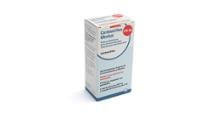
One pack of Carmustine medac contains one 100 mg glass vial of powder and one glass ampoule
with 3 ml of solvent.
Marketing authorisation holder and manufacturer
medac
Gesellschaft für klinische Spezialpräparate mbH
Theaterstr. 6
22880 Wedel
Germany
tel.: +49 4103 8006-0
fax: +49 4103 8006-100
e-mail: [email protected]
Other sources of information
Detailed information on this medicinal product is available on the website of the European Medicines
Agency: http://www.ema.europa.eu/ema/ .
The following information is intended exclusively for healthcare professionals.
A brief description of preparation and/or handling, interactions, dosage of the medicinal product,
overdosage or control measures and laboratory investigations
based on the current summary of product characteristics is provided.
Carmustine medac powder for concentrate for solution for infusion does not contain preservatives and is
not a multi-dose vial. Reconstitution and further dilutions must be carried out under aseptic conditions.
Following the instructions on product storage, deterioration of the intact vial can be avoided until the
expiry date indicated on the pack.
The lyophilised product does not contain preservatives and is for single use. The lyophilised product may
appear as a fine powder; however, after handling, it may assume a heavier and lumpier appearance than a
powder lyophilised product due to the mechanical instability of the lyophilised mass. The presence of an
oily film may indicate melting of the product. In such cases, it should not be used due to the risk of
temperature excursions exceeding 30°C. The medicinal product should no longer be used. If you are not
sure of adequate cooling of the product, each vial in the pack should be checked. To perform this check,
expose the vial to intense light.
Reconstitution and dilution of the powder for concentrate for solution for infusion
Dissolve 100 mg of Carmustine powder for concentrate for solution for infusion with 3 ml of
refrigerated sterile ethanol solvent provided in the main pack (brown glass vial).
Carmustine must dissolve completely in ethanol before sterile water for injections is added. Subsequently
add 27 ml of sterile water for injection to the alcoholic solution under aseptic conditions. The mother liquor of
30 ml must be mixed thoroughly. Reconstitution, as indicated, results in a clear, colourless to light
yellow solution.
The 30 ml mother liquor should be diluted immediately by adding it to 500 ml of glucose
50 mg/ml (5 %) solution for injection or to 500 ml of sodium chloride 9 mg/ml (0.9 %) solution for
injection in glass containers. The diluted 530 ml solution (i.e. the solution ready for use) must be
mixed for at least 10 seconds before administration.
pH and osmolarity of the ready-to-use infusion solutions
pH from 4.0 to 5.0 and 385-397 mOsm/l [when diluted in glucose 50 mg/ml (5 %) solution for injection] and
pH from 4.0 to 6.8 and 370-378 mOsm/l [when diluted in sodium chloride 9 mg/ml (0.9 %) solution for
injection].
Route of administration
The reconstituted and diluted solution (i.e. solution ready for use) must be administered intravenously
via a drip over 1-2 hours. Administration must be completed within 3 hours of reconstitution/dilution of
the medicinal product. A PE infusion set free of PVC must be used for administration of the infusion.
During administration of the drug, an appropriate glass container must be used. In addition, the
solution ready for use must be protected from light (e.g. by wrapping the solution container with
aluminium foil) and preferably kept at temperatures below 20-22°C as carmustine deteriorates more
quickly at higher temperatures.
A PE infusion set free of PVC must be used for administration of the infusion.
Infusion of Carmustine medac in shorter time intervals can cause severe pain and burning at the injection
site. The injection site must be monitored during administration.
Guidelines for the handling and safe disposal of antineoplastic agents must be followed.
Dosage and laboratory investigations
Initial doses
The recommended dose of Carmustine medac as a single agent in patients not previously treated
is between 150 and 200 mg/m² intravenously every 6 weeks. This dose should be taken as a single
administration or divided into daily infusions of 75-100 mg/m² over two consecutive days.
When Carmustine medac is used in combination with other myelosuppressive medicinal products or in
patients with depletion of the bone marrow reserve, the doses must be adjusted to the patient's
haematological profile as indicated below.
Monitoring and subsequent doses
A new cycle of Carmustine medac should not be administered until the blood counts have returned to
acceptable levels (platelets above 100,000/mm³, leukocytes above 4,000/mm³), which usually occurs
within six weeks. Blood values must be monitored frequently and repeated cycles should not be
administered before six weeks due to late haematological toxicity.
Subsequent doses after the initial dose must be adjusted based on the patient's haematological response
to the previous dose, both in monotherapy and in combination therapy with other myelosuppressive
medicinal products. The table below is provided as a guide for dosage adjustment.
In cases where the nadir after the initial dose does not fall into the same row for leukocytes and platelets (e.g.
leukocytes >4,000 and platelets <25,000), the value with the lowest percentage of
| e Nadir after the previous dose | Percentage of the previous dose to administer | |
| g Leukocytes/mm3 | Platelets/mm3 | |
| >4,000 | >100,000 | 100% |
|
| 100% |
A
|
| 70% |
| <2,000 | <25,000 | 50% |
dose previous (e.g. with platelets <25,000 a maximum of 50 % of the previous dose must be administered).
There are no limits to the duration of carmustine therapy. If the tumour remains incurable or serious or
intolerable adverse reactions occur, carmustine therapy must be discontinued.
Conditioning treatment prior to HSCT
Carmustine is administered intravenously in combination with other chemotherapeutic agents in patients
with malignant haematological diseases prior to HSCT at a dosage of 300 – 600 mg/m².
Special populations
Paediatric population
For safety reasons, carmustine should not be used in subjects under the age of 18 years.
Elderly
In general, the choice of dose for an elderly patient should be cautious, usually starting from the lower
end of the range, considering the increased frequency of decreased hepatic, renal or cardiac function and
taking into account any concomitant diseases or therapies with other medicinal products. Because elderly
patients are more likely to have reduced renal function, care should be taken in choosing the dosage and
monitoring glomerular filtration rate and therefore reducing the dose accordingly.
Renal impairment
For patients with renal impairment, the dose of Carmustine medac must be reduced if there is a
reduction in glomerular filtration rate.
Compatibility/Incompatibility with containers
The intravenous solution is unstable in polyvinyl chloride containers. All plastic components that come into
contact with the carmustine solution for infusion (e.g. infusion sets, etc.) must be made of PVC-free
polyethylene plastic; otherwise, use glass.

Не впевнені, чи підходить вам цей лікарський засіб?
Обговоріть симптоми та можливі варіанти лікування з лікарем онлайн.

Виникли питання під час прийому ліків?
Обговоріть свої симптоми та лікування з лікарем онлайн.
- Країна реєстрації
- Лікарська формаPowder and solvent for intravenous infusion solution, 100 MG
- Код АТХL01AD01
- Діюча речовина
- Потрібен рецептТак
- Виробник
- Ця інформація надана лише для ознайомлення і не є медичною порадою. Рішення щодо лікування завжди приймає лікар.
- Альтернативи до KARMUSTINA MEDAKЛікарська форма: Powder and solvent for concentrate for infusion solution, 100 MGДіюча речовина: КармустинВиробник: TILLOMED ITALIA SRLПотрібен рецептЛікарська форма: Powder and solvent for concentrate for infusion solution, 100 MGДіюча речовина: КармустинВиробник: Eugia Pharma (Malta) LimitedПотрібен рецептЛікарська форма: Infusion solution, 100 mgДіюча речовина: КармустинВиробник: WAYMADE B.V.Потрібен рецепт
Аналоги KARMUSTINA MEDAK в інших країнах
Препарати з тією самою діючою речовиною, доступні в інших країнах.
Аналог KARMUSTINA MEDAK у Іспанія
Аналог KARMUSTINA MEDAK у Польща
Аналог KARMUSTINA MEDAK у Україна
Отримайте рецепт на KARMUSTINA MEDAK онлайн
Заповніть форму за 2 хвилини
Розкажіть про симптоми, історію хвороби та потрібний препарат.
Оберіть лікаря або ми призначимо
Оберіть спеціаліста або ми підберемо найближчого доступного лікаря.
Лікар розглядає ваш випадок
Зазвичай протягом 30 хвилин. Може ставити уточнювальні запитання в чаті.
Отримайте в будь-якій аптеці
Електронний рецепт надсилається на вашу пошту — дійсний по всій Польщі.
Часті запитання
KARMUSTINA MEDAK потребує рецепта в Італія. Ви можете обговорити з лікарем онлайн, чи підходить цей лікарський засіб для вашої ситуації.
Діюча речовина у KARMUSTINA MEDAK — Кармустин. Це допомагає визначити препарати з тим самим складом, але під іншими торговими назвами.
KARMUSTINA MEDAK виробляється компанією MEDAC GESELLSCHAFT FUR KLINISCHE SPEZIALPRAPARATE MBH. Назва бренду та упаковка можуть відрізнятися залежно від дистрибʼютора.
Лікарі, зокрема Сімейні лікарі, Психіатри, Дерматологи, Кардіологи, Ендокринологи, Гастроентерологи, Пульмонологи, Нефрологи, Ревматологи, Гематологи, Інфекціоністи, Алергологи, Геріатри, Педіатри, Онкологи, можуть оцінити доцільність застосування KARMUSTINA MEDAK з урахуванням вашого стану та місцевих правил. Ви можете записатися на онлайн-консультацію, щоб обговорити симптоми та можливі подальші кроки.
Польща має добре розвинену систему охорони здоров'я у великих містах, таких як Варшава, Краків, Вроцлав і Гданськ. Аптеки широко доступні та працюють відповідно до чинного законодавства, забезпечуючи доступ до рецептурних препаратів.
Ви можете придбати KARMUSTINA MEDAK у Варшаві, Кракові, Вроцлаві або Гданську в будь-якій аптеці за наявності дійсного рецепта.
Щоб отримати рецепт, ви можете скористатися Oladoctor:
Інші препарати з тією самою діючою речовиною (Кармустин) включають BIKNU, KARMUSTINA AUROBINDO, KARMUSTINA WAYMADE. Вони можуть відрізнятися торговою назвою або формою випуску, але містять той самий терапевтичний компонент. Перед зміною або початком прийому нового препарату варто проконсультуватися з лікарем.
