



BUCCOLAM 2.5 MG Oral mucosal solution

Запит на рецепт онлайн
Лікар розгляне ваш випадок і визначить, чи є рецепт медично доцільним.

Поговоріть з лікарем про ці ліки
Обговоріть симптоми та можливі подальші кроки під час короткої онлайн-консультації.



Інструкція із застосування BUKKOLAM
Зміст інструкції
- BUCCOLAM 2.5 mg oral mucosa solution
- BUCCOLAM 5 mg oral mucosa solution
- BUCCOLAM 7.5 mg oral mucosa solution
BUCCOLAM 2.5 mg oral mucosa solution
For children from 3 months to less than 1 year of age
BUCCOLAM 5 mg oral mucosa solution
For children from 1 year to less than 5 years of age

Не впевнені, чи підходить вам цей лікарський засіб?
Обговоріть симптоми та можливі варіанти лікування з лікарем онлайн.
BUCCOLAM 7.5 mg oral mucosa solution
For children from 5 years to less than 10 years of age
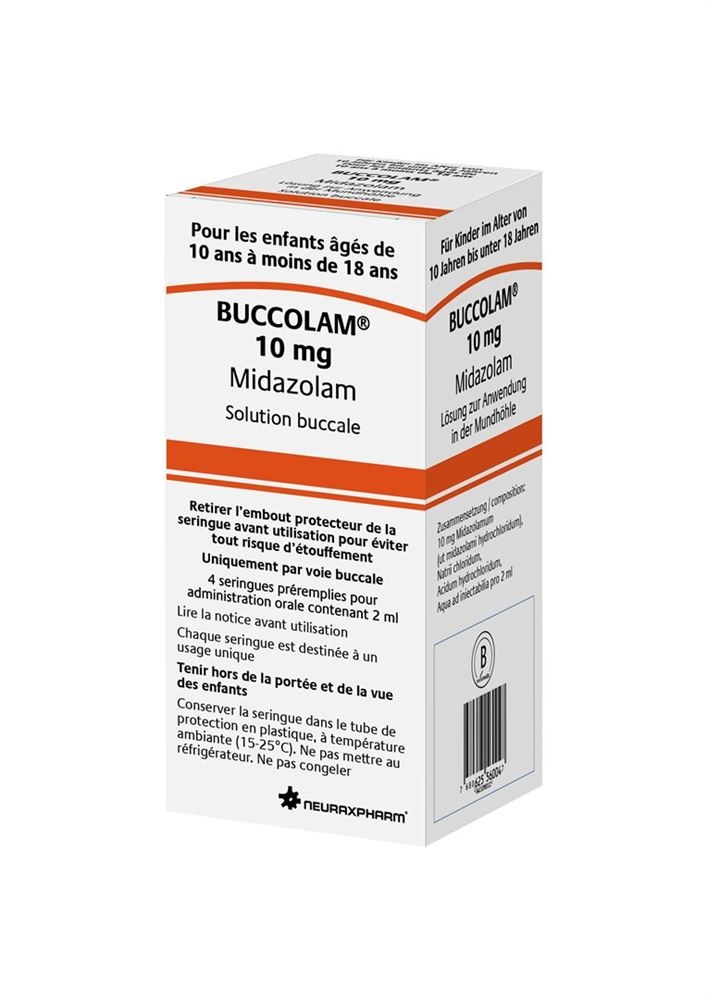
BUCCOLAM 10 mg oral mucosa solution
For children from 10 years to adults
Midazolam
Read this leaflet carefully before administering this medicine as it contains
important information for you.
- Keep this leaflet. You may need to read it again.
- If you have any questions, ask your doctor or pharmacist.
- This medicine has been prescribed only for you. Do not give it to other people, even if their symptoms are the same as yours, as it could be dangerous.
- If any undesirable effects occur, including those not listed in this leaflet, ask your doctor or pharmacist. See section 4.
Contents of this leaflet:
- 1. What BUCCOLAM is and what it is used for
- 2. What you need to know before administering BUCCOLAM
- 3. How to administer BUCCOLAM
- 4. Possible side effects
- 5. How to store BUCCOLAM
- 6. Contents of the pack and other information
1. What is BUCCOLAM and what is it used for
BUCCOLAM contains a medicine called midazolam. Midazolam belongs to a group of
medicines known as benzodiazepines.
BUCCOLAM is used to stop a sudden, prolonged convulsive seizure in children and adults.
In children aged between 3 and 6 months it should only be used in a hospital setting, where monitoring is possible and resuscitation equipment is available.
This medicine should only be used by parents/caregivers of patients who
have been diagnosed with epilepsy.
2. What you need to know before giving BUCCOLAM
Do not give BUCCOLAM if the patient has:
- An allergy to midazolam, benzodiazepines (such as diazepam) or any of the other ingredients of this medicine (listed in section 6)
- A disease of the nerves and muscles, which causes muscle weakness (myasthenia gravis)
- Severe difficulty breathing at rest (BUCCOLAM may worsen breathing difficulties)
- A condition that causes frequent interruptions of breathing during sleep (sleep apnea syndrome)
- Severe liver problems.
Warnings and precautions
Children
Consult your doctor or pharmacist before giving BUCCOLAM if the patient:
- Has kidney, liver or heart disease
- Has a lung disorder that periodically causes difficulty breathing.
Adults:
Consult your doctor or pharmacist before taking BUCCOLAM if:
- You are over 60 years of age.
- You have a long-term illness (such as breathing problems or problems with the kidneys, liver or heart).
- You are debilitated (have an illness that makes you feel very weak, exhausted and without energy).
This medicine can cause people to forget what happened after it was given to them. Patients should be kept under close observation after the medicine is given.
This medicine should be avoided in patients with a history of alcohol or drug abuse.
Potentially fatal incidents are more likely in patients with breathing difficulties or heart problems, especially when high doses of BUCCOLAM are given.
Children under 3 months of age: BUCCOLAM should not be given to children under 3 months of age, because there is not enough information in this age group.
Elderly: the elderly are more sensitive to the effects of benzodiazepines.
If you have any doubts as to whether the patient falls into any of the above cases, consult your doctor or pharmacist before giving this medicine.
Other medicines and BUCCOLAM
Tell your doctor or pharmacist if the patient is taking, has recently taken or might take any other medicines. If you have any doubts as to whether a medicine taken by the patient may affect the use of BUCCOLAM, consult your doctor or pharmacist.
This is extremely important, because using more than one medicine at the same time can strengthen or weaken the effect of the medicines themselves.
The effects of BUCCOLAM may be intensified by medicines such as:
- antiepileptics (for the treatment of epilepsy), e.g. phenytoin
- antibiotics, e.g. erythromycin, clarithromycin
- antifungals, e.g. ketoconazole, voriconazole, fluconazole, itraconazole, posaconazole
- medicines for ulcers, e.g. cimetidine, ranitidine and omeprazole
- medicines used to treat blood pressure, e.g. diltiazem, verapamil
- some medicines used to treat HIV and AIDS, e.g. saquinavir, lopinavir/ritonavir combination
- narcotic analgesics (very potent painkillers), e.g. fentanyl
- medicines used to reduce blood fats, e.g. atorvastatin
- medicines used to treat nausea, e.g. nabilone
- hypnotics (medicines that induce sleep)
- sedative antidepressants (medicines for the treatment of depression that cause drowsiness)
- sedatives (medicines that relax)
- anaesthetics (for pain relief)
- antihistamines (for the treatment of allergies).
The effects of BUCCOLAM may be reduced by medicines such as:
- rifampicin (used to treat tuberculosis)
- xanthines (used to treat asthma)
- St John's wort (a herbal medicine). It should be avoided in patients taking BUCCOLAM.
BUCCOLAM can increase the effect of some muscle relaxants, e.g. baclofen (causing increased drowsiness). This medicine may also prevent some medicines from doing their job, e.g. levodopa (used to treat Parkinson's disease).
Consult your doctor or pharmacist about the medicines that the patient should avoid during treatment with BUCCOLAM.
BUCCOLAM with food and drink
The patient should not drink alcohol during treatment with BUCCOLAM. Alcohol can increase the sedative effects of this medicine and cause severe drowsiness.
The patient should not drink grapefruit juice during treatment with BUCCOLAM. Grapefruit juice can increase the sedative effects of this medicine and cause severe drowsiness.
Pregnancy
If the patient to whom this medicine is to be given is pregnant, suspects she may be pregnant or is planning a pregnancy, or if she is breastfeeding, ask your doctor for advice before taking this medicine.
Giving high doses of BUCCOLAM during the last 3 months of pregnancy can cause irregular heartbeat in the unborn baby. Babies born after this medicine has been given during labour may also experience poor sucking, breathing difficulties and poor muscle tone at birth.
Breastfeeding
Tell your doctor if the patient is breastfeeding. Although small amounts of BUCCOLAM may pass into breast milk, it may not be necessary to stop breastfeeding. Your doctor will advise the patient whether to breastfeed after giving this medicine.
Driving and using machines
BUCCOLAM can cause drowsiness, forgetfulness or affect concentration and coordination. This can affect the performance of tasks that require skill, such as driving vehicles, riding a bicycle or using machinery.
After giving this medicine, the patient should not drive vehicles, ride a bicycle or use machinery until fully recovered. Consult your doctor if you need further advice.
BUCCOLAM contains sodium
The medicine contains less than 1 mmol of sodium (23 mg) per oral syringe, i.e. essentially ‘sodium-free’.
3. How to administer BUCCOLAM
Administer this medicine following the doctor's instructions exactly at all times. If you have any doubts
consult your doctor or pharmacist.
Dosage
The doctor will prescribe the correct dose of BUCCOLAM that the patient needs, generally based
on the patient's age. The different doses each have a different colour, indicated on the carton
packaging, on the tube and on the syringe containing the medicine.
Based on age, the patient will have been prescribed one of the following doses, contained in packaging
identified by different colours:
from 3 months to less than 1 year: 2.5 mg - packaging with a yellow label
from 1 year to less than 5 years: 5 mg - packaging with a blue label
from 5 years to less than 10 years: 7.5 mg - packaging with a purple label
from 10 years to adults: 10 mg - packaging with an orange label
The dose is the complete contents of one oral administration syringe. Do not administer
more than one dose.
For children aged from 3 to less than 6 months, treatment must be carried out exclusively in
a hospital setting, where monitoring is possible and resuscitation equipment is available.
How to prepare to administer this medicine
If the patient has a convulsive crisis, allow the body to move freely and do not try to
restrain it. Move them only if they are in danger, for example, deep water, fire or sharp objects.
Support the patient's head with something soft, such as a pillow or your lap.
Check that the medicine is the correct dose for the patient, based on their age.
How to administer this medicine
Ask a doctor, pharmacist or nurse to show you how to take or administer
this medicine. Always consult them if you have any doubts.
Information on how to administer this medicine is also provided on the tube label.
BUCCOLAM must not be injected. Do not attach a needle to the syringe.
Step 1
Step 2
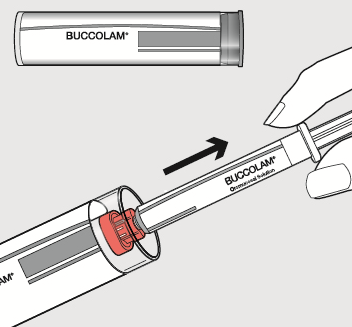 | Hold the plastic tube and remove the cap. Remove the syringe from the tube. c a m r |
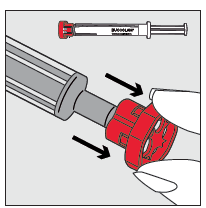 | F Remove the red cap from the tip of the syringe and dispose of it safely. l e d a |
Step 3
i a I t a l i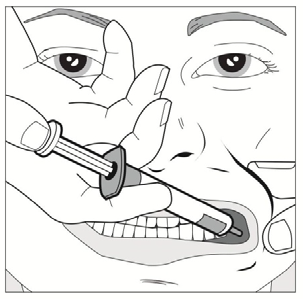 | a With your index finger and thumb gently pinch the patient's cheek and pull it back. Insert the tip of the syringe into the back of the space between the inside of the cheek and the lower gum. |
Step 4
A g e n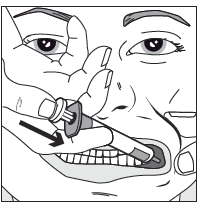 | Slowly press the syringe plunger down until it stops. The entire amount of solution must be inserted slowly into the space between the gum and the cheek (buccal cavity). If prescribed by the doctor (for high volumes and/or smaller patients), approximately half the dose can be administered slowly to one side of the patient's mouth and then the other half to the other side. |
When to call an ambulance
ALWAYS FOLLOW the treatment advice provided by the patient's doctor or explained by a
healthcare professional. If in doubt, seek immediate medical assistance if:
- The crisis does not stop within 10 minutes.
- You are unable to empty the syringe or some of the contents leak out.
- The patient's breathing slows down or stops, e.g. slow breathing, shallow breathing or blue lips.
- You observe symptoms of a heart attack, which may include chest pain or pain spreading to the neck and shoulders and down the left arm.
- The patient vomits and the crisis does not stop within 10 minutes.
- You administer an excessive amount of BUCCOLAM and there are signs of overdose, such as: drowsiness, fatigue, tiredness, confusion or disorientation, absence of knee reflex or response to a pinch, difficulty breathing (slow or shallow breathing), low blood pressure (dizziness and feeling faint), coma
Keep the syringe to show to ambulance personnel or the doctor.
Do not administer a quantity of medicine greater than that prescribed by the doctor for the patient.
If the patient vomits
- Do not give the patient another dose of BUCCOLAM.
- If the crisis does not stop within 10 minutes, call an ambulance.
If you have any further questions on the use of this medicine, ask your doctor or pharmacist.
4. Possible side effects
Like all medicines, this medicine can cause side effects, although not everybody gets them.
Serious side effects
Consult your doctor immediately or call an ambulance if the patient presents:
- Severe difficulty breathing, e.g. slow breathing, shallow breathing or blue lips. In very rare cases breathing may stop.
- Heart attack. Symptoms may include chest pain, which may spread to the patient's neck and shoulders and down the left arm.
- Swelling of the face, lips, tongue or throat that makes it difficult to swallow or breathe, or paleness, weak and rapid heartbeat or feeling of loss of consciousness. This could be a serious allergic reaction.
Other side effects
If the patient experiences any side effect, including those not listed in this leaflet,
consult your doctor, pharmacist or nurse.
Common side effects (may affect up to 1 in 10 people):
- Nausea and vomiting
- Drowsiness or loss of consciousness
Uncommon side effects (may affect up to 1 in 100 people):
- Skin rash, urticaria (skin rash with swelling), itching
Very rare side effects (may affect up to 1 in 10,000 people):
- Agitation, restlessness, hostility, anger or aggression, excitement, confusion, euphoria (an excessive feeling of happiness or excitement) or hallucinations (seeing and in some cases hearing things that do not exist)
- Muscle spasms and muscle tremors (trembling of the muscles that cannot be controlled)
- Reduced alertness
- Headache
- Dizziness
- Difficulty with muscle coordination
- Seizures (convulsions)
- Temporary memory loss. The duration of this effect depends on the dose of BUCCOLAM administered.
- Low blood pressure, slowed heart rate or flushing of the face and neck (hot flushes)
- Laryngospasm (stiffening of the vocal cords, which causes difficult and noisy breathing)
- Constipation
- Dry mouth
- Fatigue
- Hiccups
Reporting of side effects
If you get any side effects, including those not listed in this leaflet, tell your
doctor, pharmacist or nurse. You can also report side effects directly
through the national reporting system detailed in Appendix V. By reporting side
effects you can help provide more information on the safety of this medicine.
5. How to store BUCCOLAM
Keep this medicineout of the sight and reach of children.
Do not administer this medicine after the expiry date which is stated on the package, on the
labels of the tube and the oral administration syringe after Exp. The expiry date refers to the last day of
that month.
Do not refrigerate or freeze.
Keep the oral administration syringe in the protective plastic tube.
Do not use this medicine if the packaging has been opened or damaged.
Disposal of oral administration syringes
Do not dispose of any medicine in wastewater or household waste. Ask your pharmacist how to
dispose of medicines you no longer use. This will help protect the environment.
6. Package contents and other information
What BUCCOLAM contains
- The active ingredient is midazolam
- Each pre-filled syringe for oral administration of 2.5 mg contains 2.5 mg of midazolam (as hydrochloride) in 0.5 ml of solution.
- Each pre-filled syringe for oral administration of 5 mg contains 5 mg of midazolam (as hydrochloride) in 1 ml of solution.
- Each pre-filled syringe for oral administration of 7.5 mg contains 7.5 mg of midazolam (as hydrochloride) in 1.5 ml of solution.
- Each pre-filled syringe for oral administration of 10 mg contains 10 mg of midazolam (as hydrochloride) in 2 ml of solution.
The other ingredients are sodium chloride, water for injections, hydrochloric acid and sodium
hydroxide (for pH adjustment).
Description of the appearance of BUCCOLAM and package contents
from 3 months to less than 1 year: 2.5 mg - package with a yellow label
from 1 year to less than 5 years: 5 mg - package with a blue label
from 5 years to less than 10 years: 7.5 mg - package with a purple label
from 10 years to adults: 10 mg - package with an orange label
BUCCOLAM oral mucosal solution is a clear liquid, from colorless to yellowish. It is available
in a pre-filled syringe for oral administration of amber color, for single use. Each syringe for
oral administration is individually packaged in a protective plastic tube. BUCCOLAM is
available in cardboard boxes containing 2 and 4 pre-filled syringes for oral administration
/tubes (of the same dose).
Not all pack sizes may be marketed.
Marketing Authorisation Holder
Neuraxpharm Pharmaceuticals, S.L.
Avda. Barcelona 69
08970 Sant Joan Despí - Barcelona
Spain
Tel: +34 93 475 96 00
E-mail: [email protected]
Manufacturer
Neuraxpharm Pharmaceuticals, S.L.
Avda. Barcelona 69
08970 Sant Joan Despí
Barcelona – Spain
neuraxpharm Arzneimittel GmbH
Elisabeth-Selbert-Str. 23
40764 Langenfeld
Germany
For further information on this medicine, contact the local representative of the Marketing
Authorisation Holder:
België/Belgique/Belgien
Neuraxpharm Belgium
Tél/Tel: +32 (0)2 732 56 95
Lietuva
Neuraxpharm Pharmaceuticals, S.L.
Tel:+34 93 475 96 00
България
Direct Pharma Logistics BG LTD.
Тел.: +40 217 961 566
Luxembourg/Luxemburg
Neuraxpharm France
Tél/Tel: +32 474 62 24 24
Česká republika
Neuraxpharm Bohemia s.r.o.
Tel: +420 739 232 258
Magyarország
Neuraxpharm Hungary Kft.
Tel.: +3630 464 6834
Danmark
Neuraxpharm Sweden AB
Tlf:+46 (0)8 30 91 41
(Sverige)
Malta
Neuraxpharm Pharmaceuticals, S.L.
Tel.:+34 93 475 96 00
Deutschland
neuraxpharm Arzneimittel GmbH
Tel: +49 2173 1060 0
Nederland
Neuraxpharm Netherlands B.V.
Tel.: +31 70 208 5211
Eesti
Neuraxpharm Pharmaceuticals, S.L.
Tel: +34 93 475 96 00
Norge
Neuraxpharm Sweden AB
Tlf:+46 (0)8 30 91 41
(Sverige)
Ελλάδα
Brain Therapeutics IKE
Τηλ: +302109931458
Österreich
Neuraxpharm Austria GmbH
Tel.:+ 43 (0) 1 208 07 40
España
Neuraxpharm Spain, S.L.U.
Tel: +34 93 475 96 00
Polska
Neuraxpharm Polska Sp. z.o.o.
Tel.: +48 783 423 453
France
Neuraxpharm France
Tél: +33 1.53.62.42.90
Portugal
Neuraxpharm Portugal, Unipessoal Lda
Tel: +351 910 259 536
Hrvatska
Salvus d.o.o.
T +385 49 326 550
Ireland
Neuraxpharm Ireland Ltd
Tel: +353 (0)1 428 7777
România
Direct Pharma Logistics SRL
Telefon/Fax: +40 217 961 566
Slovenija
Salvus MED d.o.o.
T +386 51 334 197
Ísland
Neuraxpharm Sweden AB
Sími: +46 (0)8 30 91 41
(Svíþjóð)
Slovenská republika
Neuraxpharm Slovakia a.s.
Tel: +421 255 425 562
Italia
Neuraxpharm Italy S.p.A.
Tel: +39 0736 980619
Suomi/Finland
Neuraxpharm Sweden AB
Puh/Tel: +46 (0)8 30 91 41
(Ruotsi/Sverige)
Κύπρος
Brain Therapeutics IKE
Τηλ: +302109931458
Sverige
Neuraxpharm Sweden AB
Tel: +46 (0)8 30 91 41
Latvija
Neuraxpharm Pharmaceuticals, S.L.
Tel: +34 93 475 96 00
More detailed information on this medicine is available on the website of the European Medicines
Agency: http://www.ema.europa.eu.

Виникли питання під час прийому ліків?
Обговоріть свої симптоми та лікування з лікарем онлайн.
- Країна реєстрації
- Лікарська формаOral mucosal solution, 2.5 MG
- Код АТХN05CD08
- Діюча речовина
- Потрібен рецептТак
- Виробник
- Ця інформація надана лише для ознайомлення і не є медичною порадою. Рішення щодо лікування завжди приймає лікар.
- Альтернативи до BUKKOLAMЛікарська форма: Injectable solution, 15 MG/3 MLДіюча речовина: МидазоламВиробник: CHEPLAPHARM ARZNEIMITTEL GMBHПотрібен рецептЛікарська форма: Injectable solution, 1 MG/MLДіюча речовина: МидазоламВиробник: ACCORD HEALTHCARE, S.L.U.Потрібен рецепт
Аналоги BUKKOLAM в інших країнах
Препарати з тією самою діючою речовиною, доступні в інших країнах.
Аналог BUKKOLAM у Іспанія
Аналог BUKKOLAM у Польща
Аналог BUKKOLAM у Україна
Лікарі онлайн щодо BUKKOLAM
Застосування, безпека та можливість призначення рецепта — за результатами медичної оцінки.







Отримайте рецепт на BUKKOLAM онлайн
Заповніть форму за 2 хвилини
Розкажіть про симптоми, історію хвороби та потрібний препарат.
Оберіть лікаря або ми призначимо
Оберіть спеціаліста або ми підберемо найближчого доступного лікаря.
Лікар розглядає ваш випадок
Зазвичай протягом 30 хвилин. Може ставити уточнювальні запитання в чаті.
Отримайте в будь-якій аптеці
Електронний рецепт надсилається на вашу пошту — дійсний по всій Польщі.
Часті запитання
BUKKOLAM потребує рецепта в Італія. Ви можете обговорити з лікарем онлайн, чи підходить цей лікарський засіб для вашої ситуації.
Діюча речовина у BUKKOLAM — Мидазолам. Це допомагає визначити препарати з тим самим складом, але під іншими торговими назвами.
BUKKOLAM виробляється компанією NEURAXPHARM PHARMACEUTICALS, S.L. Назва бренду та упаковка можуть відрізнятися залежно від дистрибʼютора.
Лікарі, зокрема Сімейні лікарі, Психіатри, Дерматологи, Кардіологи, Ендокринологи, Гастроентерологи, Пульмонологи, Нефрологи, Ревматологи, Гематологи, Інфекціоністи, Алергологи, Геріатри, Педіатри, Онкологи, можуть оцінити доцільність застосування BUKKOLAM з урахуванням вашого стану та місцевих правил. Ви можете записатися на онлайн-консультацію, щоб обговорити симптоми та можливі подальші кроки.
Польща має добре розвинену систему охорони здоров'я у великих містах, таких як Варшава, Краків, Вроцлав і Гданськ. Аптеки широко доступні та працюють відповідно до чинного законодавства, забезпечуючи доступ до рецептурних препаратів.
Ви можете придбати BUKKOLAM у Варшаві, Кракові, Вроцлаві або Гданську в будь-якій аптеці за наявності дійсного рецепта.
Щоб отримати рецепт, ви можете скористатися Oladoctor:
Інші препарати з тією самою діючою речовиною (Мидазолам) включають EPISTATUS, IPNOVEL, MIDATSOLAM AKKORD EALTKARE. Вони можуть відрізнятися торговою назвою або формою випуску, але містять той самий терапевтичний компонент. Перед зміною або початком прийому нового препарату варто проконсультуватися з лікарем.
