



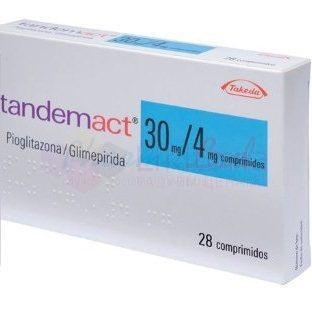
TANDEMACT 30 mg/4 mg Таблетки

Рассмотрение рецепта онлайн
Врач рассмотрит ваш случай и примет решение о назначении рецепта, если это медицински оправдано.

Поговорите с врачом об этом лекарстве
Обсудите симптомы и возможные дальнейшие шаги на онлайн-консультации.



Инструкция по применению TANDEMAKT
Содержание инструкции
Tandemact 30 mg/2 mg compresse, 30 mg/4 mg compresse
pioglitazone/glimepiride
Read this leaflet carefully before you start taking this medicine because it contains
important information for you.
- Keep this leaflet. You may need to read it again.
- If you have any questions, ask your doctor or pharmacist.
- This medicine has been prescribed for you only. Do not pass it on to others, even if they have the same symptoms as you, as it may be harmful.
- If you get any side effects, even those not listed in this leaflet, tell your doctor or pharmacist. See section 4.
Contents of this leaflet:
- 1. What Tandemact is and what it is used for
- 2. What you need to know before you take Tandemact
- 3. How to take Tandemact
- 4. Possible side effects
- 5. How to store Tandemact
- 6. Contents of the pack and other information
1. What is Tandemact and what is it used for
Tandemact contains pioglitazone and glimepiride, which are medicines for diabetes, used to
control blood sugar levels.
It is used in adults to treat type 2 diabetes mellitus (non-insulin dependent), when
metformin is not suitable. This type of diabetes usually occurs in adults, when the body does not
produce enough insulin (a hormone that controls blood sugar levels) or cannot use
the insulin it produces effectively.
Tandemact helps to control the level of sugar in your blood in patients who suffer from type 2
diabetes by increasing the amount of insulin available and helping your body to make better use of it. The doctor will check if Tandemact is working 3-6 months after the start of treatment.
2. What you need to know before taking Tandemact
Do not take Tandemact
- if you are allergic to pioglitazone, glimepiride, other sulfonylureas or sulfonamides or to any of the other ingredients of this medicine (listed in section 6)
- if you have heart failure or have had heart failure in the past
- if you have liver problems
- if you have diabetic ketoacidosis (a complication of diabetes with rapid weight loss, nausea or vomiting)
- if you have severe kidney problems
- if you have or have ever had bladder cancer (bladder tumor)
- if you have blood in your urine for which your doctor has not yet carried out investigations
- if you have insulin-dependent diabetes (type 1)
- if you are in a diabetic coma
- if you are pregnant
- if you are breastfeeding
Warnings and precautions
Talk to your doctor or pharmacist before taking Tandemact (see also section 4)
- if you have a problem with your heart. Some patients with type 2 diabetes for a long time and heart disease or a previous stroke, treated with pioglitazone and insulin together have developed heart failure. Tell your doctor as soon as possible if you experience signs of heart failure, such as unusually shortness of breath or a rapid increase in weight or localized swelling (edema).
- if you retain water (fluid retention) or have problems with heart failure, especially if you are over 75 years old. You should also tell your doctor if you are taking anti-inflammatory medicines, which can also cause water retention and swelling.
- if you have a special type of eye disease called macular edema (swelling of the back of the eye), talk to your doctor if you notice any changes in your vision.
- if you have a problem with your liver. Before starting to take Tandemact you should undergo a blood test to check your liver function. This test should be repeated periodically. Tell your doctor as soon as possible if you develop symptoms that suggest a liver problem (such as feeling unwell for no reason, vomiting, stomach pain, fatigue, loss of appetite and/or dark urine) because liver function must be checked.
- if you have cysts on the ovaries (polycystic ovary syndrome). The chances of getting pregnant may increase, because ovulation may be restored when you take Tandemact. If this is the case, use appropriate contraception to avoid the risk of an unwanted pregnancy.
- if you are already taking other medicines to treat diabetes.
- if you have problems with an enzyme called glucose-6-phosphate dehydrogenase, as it may reduce the number of red blood cells.
You may also experience a decrease in the number of blood cells (anemia). The doctor may
take blood samples to monitor blood cell levels and liver function.
Hypoglycemia
When you take Tandemact, your blood sugar may drop below normal levels (hypoglycemia). If you experience symptoms of hypoglycemia such as cold sweat, fatigue, headache, rapid heartbeat, hunger attacks, irritability, nervousness or nausea, you should take sugar to raise your blood sugar level. Ask your doctor or
pharmacist for more information if you are not sure how to recognize them. It is advisable to carry sugar cubes, sweets, biscuits or sugary fruit juices with you.
Bone fractures
A higher number of bone fractures have been observed in patients, especially women, who
were taking pioglitazone. Your doctor will take this into account when treating your diabetes.
Children and adolescents
Use in children and adolescents under 18 years of age is not recommended.
Other medicines and Tandemact
Tell your doctor or pharmacist if you are taking, have recently taken or might take
any other medicines. This is because some medicines can weaken or strengthen the effect of
Tandemact on blood sugar levels.
The following medicines can increase the effect of Tandemact which lowers blood sugar
levels. This can put you at risk of hypoglycemia (low blood sugar):
- gemfibrozil and fibrates (to lower high cholesterol levels in the blood)
- insulin, metformin or other medicines to treat diabetes mellitus
- phenylbutazone, azapropazone, oxyphenbutazone, medicines like aspirin (to treat pain and inflammation)
- long-acting sulfonamides, tetracyclines, chloramphenicol, fluconazole, miconazole, quinolones, clarithromycin (to treat bacterial or fungal infections)
- anabolic steroids (that promote muscle growth) or male sex hormone replacement therapy
- fluoxetine, MAO inhibitors (to treat depression)
- angiotensin converting enzyme (ACE) inhibitors, sympatholytics, disopyramide, pentoxifylline, coumarin derivatives such as warfarin (to treat heart or blood problems)
- allopurinol, probenecid, sulfinpyrazone (to treat gout)
- cyclophosphamide, ifosfamide, trofosfamide (to treat cancer)
- fenfluramine (to reduce weight)
- tritoqualine (to treat allergies)
The following medicines can reduce the effect of Tandemact which lowers blood sugar
levels. This may be associated with a risk of hyperglycemia (high blood sugar):
- estrogens, progestins (female sex hormones)
- thiazide diuretics and saluretics also called water pills (to treat high blood pressure)
- levothyroxine (to stimulate the thyroid gland)
- glucocorticoids (to treat allergies and inflammation)
- chlorpromazine and other phenothiazine derivatives (to treat severe mental disorders)
- adrenaline and sympathomimetics (to increase the heartbeat, to treat asthma or nasal congestion, cough and cold, or used for life-threatening emergencies)
- nicotinic acid (to treat high cholesterol levels)
- long-term use of laxatives (to treat constipation)
- phenytoin (to treat seizures)
- barbiturates (to treat nervousness and sleep disorders)
- acetazolamide (to treat increased pressure in the eye also called glaucoma)
- diazoxide (to treat high blood pressure or low blood sugar levels)
- rifampicin (to treat infections, tuberculosis)
- glucagon (to treat severely low blood sugar levels)
The following medicines can increase or decrease the effect of Tandemact which lowers blood sugar
levels:
- H receptor antagonists (to treat stomach ulcers)
- beta-blockers, clonidine, guanethidine and reserpine (to treat high blood pressure or heart failure). These can also mask the signs of hypoglycemia, and therefore caution should be exercised when taking these medicines
Tandemact can increase or weaken the effects of the following medicines:
- coumarin derivatives, such as warfarin (to slow down or stop blood clotting)
Talk to your doctor or pharmacist if you are taking any of these medicines. Your blood sugar level will be checked and the dose of Tandemact may need to be changed.
Tandemact with alcohol
Avoid drinking alcohol while taking Tandemact because alcohol can increase or reduce, in an
unpredictable way, the effect of Tandemact which lowers blood sugar levels.
Pregnancy and breastfeeding
Do not take Tandemact if you are pregnant. If you are pregnant, suspect or
are planning a pregnancy, ask your doctor for advice. Your doctor will advise you to stop
treatment with this medicine.
Do not use Tandemact if you are breastfeeding or intend to breastfeed (see section
“Do not take Tandemact”).
Driving and using machines
Attention and reaction time may be decreased due to decreased or increased
amount of blood sugar due to glimepiride, especially at the beginning or after changing the
treatment, or when Tandemact is not taken regularly. This medicine may affect your
ability to drive or operate machinery.
Be careful if you experience abnormal vision.
Tandemact contains lactose monohydrate
If your doctor has diagnosed you with an intolerance to some sugars, contact him before taking
Tandemact.
Tandemact contains sodium
This medicine contains less than 1 mmol (23 mg) of sodium per tablet, i.e. essentially
‘sodium-free’.
3. How to take Tandemact
Take this medicine following exactly the instructions of your doctor or pharmacist. If you have any
doubts, ask your doctor or pharmacist.
The recommended dose is one tablet to be taken once a day shortly before or during the main
meal. Your doctor will tell you the dose to take or if it is necessary to switch to a different dose. You must
swallow the tablets with a glass of water.
If you feel that the effect of Tandemact is too weak, consult your doctor.
If you are following a special diet for diabetics, you should continue it while taking Tandemact.
Your weight should be checked at regular intervals; if your weight increases, inform your doctor.
Your doctor will ask you to have blood tests periodically during treatment with
Tandemact.
If you take more Tandemact than you should
If you accidentally take too many tablets, or if another person or a child takes your
tablets, contact your doctor or pharmacist immediately. The sugar level may
decrease below normal levels. Symptoms may include cold sweat, fatigue, headache, fast
heartbeat, hunger cramps, irritability, nervousness, nausea, coma or
convulsions. The blood sugar level can be increased by taking sugar. It is recommended
to carry some sugar cubes, sweets, biscuits or a sugary fruit juice with you.
If you forget to take Tandemact
Take Tandemact every day as prescribed. However, if you forget to take a dose, skip the
missed dose and continue normally with the next dose. Do not take a double dose to
make up for the missed tablet.
If you stop taking Tandemact
Tandemact must be taken every day for it to work properly. If you stop using
Tandemact, your blood sugar level may increase. Consult your doctor before stopping
treatment.
If you have any further questions on the use of this medicine, ask your doctor or pharmacist.
4. Possible side effects
Like all medicines, this medicine can cause side effects, although not everybody gets them.
In particular, patients have experienced the following serious side effects:
Uncommon cases of bladder carcinoma (bladder cancer) (may affect up to 1 in 100 patients) have occurred in patients treated with Tandemact. Signs and symptoms include
blood in the urine, pain during urination, or the sudden need to urinate. If you experience
any of these symptoms, talk to your doctor as soon as possible.
Hypoglycemia (low blood sugar) has been reported uncommonly (may affect up to 1 in
100 people) in patients treated with Tandemact. Symptoms may include cold sweat, fatigue, headache, rapid heartbeat, stomach cramps from hunger, irritability,
nervousness, or nausea. It is important to know what symptoms to expect when hypoglycemia
(low blood sugar) occurs. Ask your doctor or pharmacist for more information if
you are not sure how to recognize hypoglycemia and what to do if you experience these symptoms.
Decreases in platelets (which increase the risk of bleeding or bruising), red blood cells (which make the skin pale and cause weakness or shortness of breath), and white blood cells (which make infections more likely) have been rarely reported (may affect up to 1 in 1,000 people)
in patients treated with Tandemact. If you experience these side effects, contact
your doctor as soon as possible. These problems generally improve after stopping
Tandemact.
Localized swelling (edema) has commonly occurred (may affect up to 1 in 10 people) in
patients treated with Tandemact and insulin. If you experience this side effect, talk to
your doctor as soon as possible.
Common cases (may affect up to 1 in 10 people) of bone fractures have been reported in female patients and also in male patients taking Tandemact (available data
do not allow an estimate of the frequency). If you experience this side effect, inform your
doctor as soon as possible.
Blurred vision due to swelling (edema) in the back of the eye (macular edema) has also been reported in patients treated with Tandemact (the frequency cannot be defined
based on available data). Tell your doctor as soon as possible if you notice the onset of these
symptoms for the first time. Also, tell your doctor as soon as possible if you already suffer from
blurred vision and these symptoms worsen.
Allergic reactions of unknown frequency (the frequency cannot be defined
based on available data) have been reported in patients taking Tandemact. If you have a serious allergic
reaction, including hives and swelling of the face, lips, tongue, or throat that may
cause difficulty breathing or swallowing, stop taking this medicine and talk to your
doctor immediately.
Some patients have experienced the following side effects while taking pioglitazone and
sulfonylureas including glimepiride:
Common: (may affect up to 1 in 10 people)
- weight gain
- dizziness
- gas
- respiratory infections
- lethargy
Uncommon: (may affect up to 1 in 100 people)
- headache
- inflammation of the sinuses (sinusitis)
- vertigo
- abnormal vision
- sweating
- fatigue
- difficulty sleeping (insomnia)
- decreased blood sugar
- sugar in the urine
- protein in the urine
- increased appetite
- increase in an enzyme called lactic dehydrogenase (LDH)
Rare: (may affect up to 1 in 1,000 people)
- significant changes in blood values
Very rare (may affect up to 1 in 10,000):
liver disease
- allergic reactions including anaphylactic shock
- discomfort (nausea), vomiting and diarrhea
- stomach pain
- abdominal pressure
- feeling of fullness
- sensitivity to light
- reduction in sodium (salt) concentration in the blood
Not known (the frequency cannot be defined based on available data)
- increased liver enzymes
- skin itching
- increased and itchy skin irritation (urticaria)
Reporting of side effects
If you get any side effects, talk to your doctor or pharmacist. This includes any side effects not listed in this leaflet. You can also report side effects directly through the national reporting system detailed in Annex V. By reporting side effects you can help provide more information on the safety of this medicine.
5. How to store Tandemact
Keep this medicine out of the sight and reach of children.
Do not use this medicine after the expiry date which is stated on the cardboard box and blister
after “Expiry/EXP”. The expiry date refers to the last day of that month.
This medicine does not require special storage conditions.
Do not dispose of any medicine in wastewater or household waste. Ask your pharmacist how to
dispose of medicines you no longer use. This will help protect the environment.
6. Package Contents and Other Information
What Tandemact Contains
- The active ingredients are pioglitazone and glimepiride. Each Tandemact 30 mg/2 mg tablet contains 30 mg of pioglitazone (as hydrochloride) and 2 mg of glimepiride. Each Tandemact 30 mg/4 mg tablet contains 30 mg of pioglitazone (as hydrochloride) and 4 mg of glimepiride.
- The other ingredients are microcrystalline cellulose, sodium croscarmellose, hydroxypropylcellulose, lactose monohydrate (see section 2 “Tandemact contains lactose monohydrate”), magnesium stearate and polysorbate 80.
Description of the Appearance of Tandemact and Package Contents
- Tandemact 30 mg/2 mg tablets are white to off-white, round, convex, with ‘4833 G’ imprinted on one side and “30/2” on the other.
- Tandemact 30 mg/4 mg tablets are white to off-white, round, convex, with ‘4833 G’ imprinted on one side and “30/4” on the other. The tablets are supplied in aluminium/aluminium blisters, in packs containing 28 tablets.
Marketing Authorisation Holder
CHEPLAPHARM Arzneimittel GmbH
Ziegelhof 24
17489 Greifswald
Germany
Manufacturer
Takeda Ireland Limited, Bray Business Park, Kilruddery, County Wicklow, Ireland
Delpharm Novara S.r.l., Via Crosa 86, 28065 Cerano (NO), Italy
Takeda GmbH, Production Site Oranienburg, Lehnitzstrasse 70 – 98, 16515 Oranienburg, Germany
Other Sources of Information
More detailed information on this medicine is available on the website of the European
Medicines Agency. http://www.ema.europa.eu .

Не уверены, подходит ли вам это лекарство?
Обсудите симптомы и варианты лечения с врачом онлайн.

Уже начали прием и появились вопросы?
Обсудите свое состояние и дальнейшие шаги с врачом онлайн.
- Страна регистрации
- Форма выпускаTablet, 30 MG/4 MG
- Код АТХA10BD06
- Действующее вещество
- Отпускается по рецептуДа
- Производитель
- Информация на этой странице носит справочный характер и не является медицинской консультацией. Перед началом приема лекарства обязательно проконсультируйтесь с врачом.
- Аналоги TANDEMAKTФорма выпуска: Film-coated tablet, 50 MG/850 MGДействующее вещество: metformin and sitagliptinПроизводитель: PHARMEXTRACTA S.P.A.Отпускается по рецептуФорма выпуска: Film-coated tablet, 15/850 MGДействующее вещество: metformin and pioglitazoneПроизводитель: CHEPLAPHARM ARZNEIMITTEL GMBHОтпускается по рецептуФорма выпуска: Film-coated tablet, 5 MG + 500 MGДействующее вещество: metformin and sulfonylureasПроизводитель: ABIOGEN PHARMA S.P.A.Отпускается по рецепту
Аналоги TANDEMAKT в других странах
Лекарства с тем же действующим веществом, доступные в других странах.
Аналог TANDEMAKT в Испания
Врачи онлайн по TANDEMAKT
Обсудите применение TANDEMAKT и возможные следующие шаги — по оценке врача.


Получите рецепт на TANDEMAKT онлайн
Заполните форму за 2 минуты
Расскажите о симптомах, истории болезни и нужном препарате.
Выберите врача или мы назначим
Выберите специалиста или мы подберём ближайшего доступного врача.
Врач рассматривает ваш случай
Обычно в течение 30 минут. Может задать уточняющие вопросы в чате.
Получите в любой аптеке
Электронный рецепт отправляется на вашу почту — действителен по всей Польше.
Часто задаваемые вопросы
TANDEMAKT требует рецепта в Италия. Вы можете уточнить у врача онлайн, подходит ли это лекарство для вашей ситуации.
Действующее вещество TANDEMAKT — glimepiride and pioglitazone. Эта информация помогает определить лекарства с тем же составом под другими торговыми названиями.
TANDEMAKT производится компанией CHEPLAPHARM ARZNEIMITTEL GMBH. Упаковка и торговое название могут отличаться в зависимости от дистрибьютора.
Врачи, включая Семейные врачи, Психиатры, Дерматологи, Кардиологи, Эндокринологи, Гастроэнтерологи, Пульмонологи, Нефрологи, Ревматологи, Гематологи, Инфекционисты, Аллергологи, Гериатры, Педиатры, Онкологи, могут оценить целесообразность применения TANDEMAKT с учетом вашей ситуации и местных правил. Вы можете записаться на онлайн-консультацию, чтобы обсудить возможные варианты.
Польша имеет хорошо развитую систему здравоохранения в крупных городах, таких как Варшава, Краков, Вроцлав и Гданьск. Аптеки широко доступны и работают в соответствии с действующим законодательством, обеспечивая доступ к рецептурным препаратам.
Вы можете купить TANDEMAKT в Варшаве, Кракове, Вроцлаве или Гданьске в любой аптеке при наличии действующего рецепта.
Чтобы получить рецепт, вы можете воспользоваться Oladoctor:
Другие лекарства с тем же действующим веществом (glimepiride and pioglitazone) включают ADIABIN, KOMPETAKT, DIALYMET. Они могут отличаться торговым названием или формой выпуска, но содержат одинаковый терапевтический компонент. Перед изменением лечения рекомендуется проконсультироваться с врачом.
