



SOLU 125 mg /2 Мл Порошок И Раствор Для Инъекционного Раствора

Рассмотрение рецепта онлайн
Врач рассмотрит ваш случай и примет решение о назначении рецепта, если это медицински оправдано.

Поговорите с врачом об этом лекарстве
Обсудите симптомы и возможные дальнейшие шаги на онлайн-консультации.



Инструкция по применению SOLU MEDROL
Содержание инструкции
- SOLU MEDROL 125 mg/2 ml powder and solvent for injectable solution, 500 mg/7.8 ml powder and solvent for injectable solution, 1000 mg/15.6 ml powder and solvent for injectable solution
- SOLU MEDROL 1000 mg/15.6 ml contains 116.8 mg of sodium (the main component of table salt) per vial. This is equivalent to 5.84% of the maximum recommended daily intake with the diet of an adult.
SOLU MEDROL 125 mg/2 ml powder and solvent for injectable solution, 500 mg/7.8 ml powder and solvent for injectable solution, 1000 mg/15.6 ml powder and solvent for injectable solution
Methylprednisolone sodium succinate
Read this leaflet carefully before using this medicine as it contains important information for you.
- Keep this leaflet. You may need to read it again.
- If you have any questions, ask your doctor or the doctor treating the child, or your pharmacist.
- This medicine has been prescribed only for you and/or for the child. Do not give it to other people, even if their symptoms are the same as yours, as it could be dangerous.
- If you and/or the child experience any side effects, including those not listed in this leaflet, tell your doctor or the doctor treating the child, or your pharmacist. See section 4.
Contents of this leaflet:
- 1. What SOLU MEDROL is and what it is used for
- 2. What you need to know before you use SOLU MEDROL
- 3. How to use SOLU MEDROL
- 4. Possible side effects
- 5. How to store SOLU MEDROL
- 6. Contents of the pack and other information
1. What is SOLU MEDROL and what is it used for
SOLU MEDROL contains the active ingredient methylprednisolone sodium succinate. Methylprednisolone sodium
succinate belongs to a category of medicines called corticosteroids. Corticosteroids are
substances produced naturally by the body and are important for many body functions.
SOLU MEDROL is used in adultsand childrenover three years of age for the treatment of:
- diseases in which the body is unable to produce a sufficient amount of natural corticosteroids, for example due to problems with the adrenal glandssuch as adrenal insufficiency;
- skin diseases(pemphigus, severe erythema multiforme, exfoliative dermatitis);
- allergic diseases(bronchial asthma, contact dermatitis, serum sickness, drug allergies, angioedema, urticaria, anaphylactic shock);
- intestinal diseases(ulcerative colitis, segmental ileitis);
- blood cancers(e.g., leukemia in adults and children);
- brain diseases(e.g., conditions caused by a tumor or trauma);
- lung diseasesin patients with AIDS;
- cancers affecting the lymph glands(lymphomas in adults);
- diseases characterized by fluid accumulation(edematous states);
- very advanced stage cancers (palliative therapy)
SOLU MEDROL can also be used for exacerbations of symptoms of multiple sclerosis and
systemic lupus erythematosus or for other stressful conditions.
- 1 -
SOLU MEDROL can also be used in the following diseases:
- generalized skin disease (neurodermatitis)
- acute rheumatic fever (an acute inflammatory diseasethat affects the joints, heart, skin and central nervous system)
- esophageal burns
- prevention of nausea and vomiting associated with chemotherapy for cancer treatment
- severe Pneumocystis jiroveci lung diseases in patients with AIDS (adjunctive therapy)
Consult your doctor if you are unsure why this medicine has been prescribed to you or to your
child.
2. What you need to know before using SOLU MEDROL
Do not use SOLU MEDROL if you and/or the child:
- are allergicto methylprednisolone sodium succinate or to any of the other ingredients of this medicine (listed in section 6).
- have an infectioncaused by fungithat has spread to some organs or throughout the body;
- if the child was born prematurely, is a newborn or a child under three years of age.
SOLU MEDROL will notbe administered to you/the child through injections into the spine
(administration via the intrathecal/epidural route).
You and/or the child must not be vaccinated with “live” or “live attenuated” vaccinesduring treatment
with SOLU MEDROL.
Warnings and precautions
Consult your doctor or pharmacist BEFOREusing this medicine if:
- you are going to undergo skin sensitivity tests;
- you have or have had in the past tuberculosis;
- you are experiencing particular situations of stress. In this case, the doctor will prescribe a higher dose of this medicine to you or your child;
- you have Cushing's syndrome, a disease characterized by excessive production of natural corticosteroids in the body. SOLU MEDROL may worsen your or your child's condition;
- your thyroid gland is functioning less than normal (hypothyroidism). In this case, the doses of SOLU MEDROL must be reduced;
- you have diabetes;
- you suffer from epileptic seizures;
- you suffer from myasthenia gravis, a disease that causes muscle weakness and fatigue, or are going to undergo general anesthesiathat involves the use of drugs that block the muscles (e.g. pancuronium). In this case, there is a greater risk that SOLU MEDROL may cause muscle problems;
- you have an eye infectioncaused by the Herpes simplexvirus;
- you suffer from high blood pressure (hypertension);
- you have high levels of fats in the blood (dyslipidemia);
- you have heart problems (heart failure);
- you suffer from or are predisposed to developing blood clotsin the veins;
- you have a stomach ulceror other serious problems with the stomach or intestines (see “How to use SOLU MEDROL”);
- you have kidney problems;
- 2 -
- you have scleroderma(also known as systemic sclerosis, an autoimmune disease), as the use of corticosteroids may increase the risk of a serious complication called scleroderma renal crisis;
- you have a brain injurycaused by trauma;
- you have liver cirrhosis, a liver disease;
- you are being treated with non-steroidal anti-inflammatory drugs(e.g. acetylsalicylic acid) (see section “Other medicines and SOLU MEDROL”) and suffer from reduced activity of prothrombin, a protein that helps the blood to clot;
- you have a type of tumor called pheochromocytoma;
- you suffer from peritonitis or other gastrointestinal diseases because glucocorticoid therapy may mask symptoms such as perforation, obstruction, or pancreatitis.
If you have cancer, have a high risk of developing tumor lysis syndrome, which can occur
when corticosteroids are used during cancer treatment. Tell your doctor if you have
cancer and experience symptoms of tumor lysis syndrome such as muscle cramps, muscle weakness,
confusion, irregular heartbeat, vision loss or visual disturbances, and shortness of
breath.
Tell the doctor or the doctor caring for your child if any of the following conditions occur or worsen DURINGtreatment with this medicine (see also section 4
“Possible side effects”):
- infections. This medicine may increase susceptibility to infections or worsen ongoing infections. For example, chickenpox and measles may have a more serious course, sometimes fatal;
- Kaposi's sarcoma, a skin tumor. In this case stoptreatment with SOLU MEDROL;
- severe allergic reactions;
- the onset or worsening of mental disorders(e.g. depression). Inform people who live with you about the possible effects of this medicine;
- fat accumulationthat compresses the spinal cord;
- eye problems;
- alterations in the rhythm of the heartbeat (cardiac arrhythmias), slowing of the heart rate (bradycardia), circulatory collapseand cardiac arrest;
- severe inflammation of the pancreasor liver;
- hepatobiliary diseases(reversible after discontinuation)
- osteoporosis(fragile bones);
- swellingin different parts of the body, especially in the legs and ankles, or changes in normal levels of blood minerals.
- blurred vision or other visual disturbances.
You or your child must not be vaccinated with “live” or “live attenuated” vaccines during
treatment with SOLU MEDROL (see section “Do not use SOLU MEDROL if you and/or the child”).
You can, however, be vaccinated with killedor inactivated vaccines, even if the effectiveness of these
vaccines may be reduced.
For athletes
The use of the drug without therapeutic need constitutes doping and may still result in a positive
doping test.
Children
- 3 -
This medicine should not be given to premature babies, newborns or children under three years of
age. Long-term or high-dose treatments with SOLU MEDROL can cause
growth delays in children, increased pressure inside the skull, inflammation of the
pancreas.
The use of methylprednisolone in premature newborns may induce the onset of hypertrophic
cardiomyopathy (thickening of the heart walls).
Benzyl alcohol, one of the ingredients of SOLU MEDROL 500 mg/7.8 ml and 1000 mg/15.6 ml, can
cause serious, even fatal, side effects in children and newborns, such as a disease called
“gasping syndrome”, characterized by agonistic breathing (gasping characterized by a reduction
in breathing to its arrest).
It is recommended to use this medicine only if strictly necessary and if there are no other
possible alternatives.
Elderly
If you are elderly, long-term treatment with SOLU MEDROL may increase the
risk of developing osteoporosis, excessive fluid retention in the body, and increased
blood pressure. The doctor will assess your condition and administer this medicine with
caution.
Other medicines and SOLU MEDROL
Tell your doctor or pharmacist if you and/or the child are taking, have recently taken or
may take any other medicines, including medicines obtained without a prescription.
Some medicines may increase the effects of SOLU MEDROL and the doctor may want to keep
you under close observation if you are taking these medicines.
The following medicines can affect the activity of SOLU MEDROL or SOLU MEDROL can
affect the effectiveness and/or toxicity of the following medicines:
- isoniazid, troleandomycin, clarithromycinand erythromycin(antibiotics);
- methotrexate, used for the treatment of tumors and autoimmune diseases;
- rifampicin(antibiotic against tuberculosis);
- phenobarbital, phenytoinand carbamazepine(medicines against seizures);
- aprepitantand fosaprepitant(medicines against vomiting);
- itraconazole, ketoconazoleand amphotericin B(medicines against fungal infections);
- medicines for the treatment of HIVsuch as indinavir, ritonavirand cobicistat(medicines against the HIV virus);
- aminoglutethimide(medicine against the excessive production of natural corticosteroids);
- diltiazem(medicine used for the treatment of heart problems or high blood pressure);
- ethinylestradiol/norethindrone(hormones used in combination as oral contraceptives);
- cyclosporine, cyclophosphamideand tacrolimus, medicines against rejection after organ transplantation and against autoimmune diseases;
- oral anticoagulants, medicines used to thin the blood;
- neuromuscular blocking agentssuch as pancuroniumand vecuronium(medicines that cause muscle relaxation);
- anticholinesterases, such as pyridostigmineand neostigmine(medicines against muscle diseases, such as myasthenia gravis, and Alzheimer's);
- antidiabetics(medicines against diabetes);
- aspirin(acetylsalicylic acid);
- diuretics(medicines that increase urine production);
- 4 -
- xanthines(e.g. theophylline) and beta-2-agonists(e.g. salbutamol), medicines against asthma;
- antihypertensives, medicines used to lower blood pressure;
- digoxin, used for the treatment of heart failure and/or irregular heartbeat;
- psychotropic drugs(anxiolytics and antipsychotics), medicines used to treat anxiety and mental illness.
SOLU MEDROL with beverages
You and/or the child must notdrink grapefruit juiceduring treatment with SOLU MEDROL,
because the effectiveness and toxicity of this medicine may increase.
Pregnancy, breastfeeding and fertility
If you are pregnant, suspect you are pregnant or are planning a pregnancy, or if you are breastfeeding,
ask your doctor or pharmacist for advice before using/being given this
medicine.
Pregnancy
If you use this medicine during pregnancy, especially at high doses and for a long period of
time, the baby may experience side effects at birth. Therefore, if you are
pregnant, the doctor will prescribe SOLU MEDROL only if strictly necessary.
SOLU MEDROL 500 mg/7.8 ml and 1000 mg/15.6 ml contain benzyl alcohol (see section
“SOLU MEDROL 500 mg/7.8 ml and 1000 mg/15.6 ml contain benzyl alcohol”)
Breastfeeding
SOLU MEDROL passes into breast milk and this may cause side effects in the baby.
If
you are breastfeeding, the doctor will prescribe SOLU MEDROL only if strictly necessary.
SOLU MEDROL 500 mg/7.8 ml and 1000 mg/15.6 ml contain benzyl alcohol (see section
“SOLU MEDROL 500 mg/7.8 ml and 1000 mg/15.6 ml contain benzyl alcohol”)
Fertility
Based on the information available so far, this medicine may reduce fertility.
Driving and operating machinery
Do not drivevehicles or operate machinery if you experience
dizziness, vertigo, visual disturbances, fatigue, euphoria or mood disorders during treatment with SOLU MEDROL.
SOLU MEDROL 500 mg/7.8 ml and 1000 mg/15.6 ml contain benzyl alcohol
SOLU MEDROL contains 9 mg of benzyl alcohol per 1 ml of solution, which is equivalent to 9 mg/ml of benzyl
alcohol. Benzyl alcohol can cause allergic reactions. Benzyl alcohol has been associated with
the risk of serious side effects, including breathing problems (the so-called "gasping syndrome") in newborns and young children. Do not use medicines containing benzyl alcohol in newborns
(up to 4 weeks of age) and do not use these medicines for more than one week in young children (less
than 3 years of age), unless otherwise recommended by the doctor. Ask your doctor or
pharmacist if you have a liver or kidney disease, or if you are pregnant or breastfeeding. This is because
large amounts of benzyl alcohol can accumulate in the body and cause side effects such as an
increase in the amount of acid in the blood (called "metabolic acidosis").
SOLU MEDROL contains sodium
SOLU MEDROL 125 mg/2 ml contains less than 1 mmol of sodium (23 mg) per vial, i.e.
essentially ‘sodium-free’.
SOLU MEDROL 500 mg/7.8ml contains 58.3 mg of sodium (the main component of table salt)
per vial. This is equivalent to 2.92% of the recommended daily intake with the diet
of an adult.
- 5 -
SOLU MEDROL 1000 mg/15.6 ml contains 116.8 mg of sodium (the main component of table salt) per vial. This is equivalent to 5.84% of the maximum recommended daily intake with the diet of an adult.
Use this medicine following exactly the instructions of your doctor or pharmacist. If you have any doubts, consult your doctor or pharmacist.
The doctor will establish the dose of SOLU MEDROL that will be administered to you after evaluating the severity of the clinical condition to be treated and your state of health (yours or your child's).
During treatment, your response to treatment will be monitored, therefore, the dose may be modified. The doctor will explain how to reduce the dose before stopping SOLU MEDROL.
Adults
The initial dose is 10 mg - 40 mg, to be administered intravenously (into a vein) over several minutes.
Subsequent doses may be administered intravenously or intramuscularly (into a muscle).
SOLU MEDROL can be administered at high doses for up to a maximum of 48-72 hours. In this case, the recommended dose is 30 mg/kg of body weight administered intravenously over an interval of 30 minutes. The dose may be repeated every 4-6 hours over 48 hours.
Children over 3 years of age
The doctor will establish the dose based on the severity of the child's condition, their response to therapy, their age and their body weight.
The recommended dose should not be less than 0.5 mg/kg of body weight per day.
Method of administration
SOLU MEDROL is administered intravenously (through injection into a vein), intramuscularly (into a muscle), by fleboclisis (infusion into a vein) or through an infusion pump (infusion into a vein with an electronic device).
In case of emergency, prefer the intravenous route of administration.
Administration into a vein will be performed by a specialized healthcare professional.
If you use/are given too much SOLU MEDROL
If you use/are given a dose of this medicine much higher than that prescribed, you may experience, although rarely, acute toxicity and death.
Seek immediate medical attention or go to the nearest hospital if you and/or the child have accidentally used excessive doses of SOLU MEDROL.
If you forget to use SOLU MEDROL
Do not use a double dose to make up for a missed dose.
If you realize you have forgotten a dose, consult your doctor.
If you stop taking SOLU MEDROL
You or your child must not suddenly stop taking SOLU MEDROL. SOLU MEDROL can cause a reduction in the functioning of the adrenal glands that produce natural corticosteroids, and abrupt discontinuation can lead to death.
Furthermore, in case of abrupt discontinuation of treatment with SOLU MEDROL, you or the child may develop withdrawal symptomssuch as: anorexia, nausea, vomiting, excessive drowsiness, headache, fever, muscle and joint pain, skin flaking, weight loss, low blood pressure, and mental disorders.
- 6 -
In case of suspension, the doses must be reduced gradually. The doctor will advise you on the correct way to do this (see “How to use SOLU MEDROL”).
If you have any doubts about the use of this medicine, ask your doctor or pharmacist.
4. Possible side effects
Like all medicines, this medicine can cause side effects, although not everybody gets them.
Contact your doctor if you experience any of the following side effects:
Frequency not known(frequency cannot be estimated from available data):
- infections, including infections that occur when the body's immune defenses are very low
- increased number of white blood cells in the blood
- hypersensitivity to the medicine
- severe allergic reaction, e.g. swelling of the face, tongue and throat with difficulty swallowing and breathing (angioedema)
- urticaria
- round or moon-shaped face (cushingoid appearance)
- reduced hormone secretion from the pituitary gland (a gland located at the base of the brain)
- withdrawal syndrome (see section 3 “If you stop taking SOLU MEDROL”)
- metabolic acidosis
- glucose metabolism abnormality and worsening of existing diabetes
- increased or loss of acidic substances from the body
- high levels of fat in the blood
- retention of fluids and sodium in the body
- increased urea levels in the blood
- increased appetite and body weight
- accumulation of adipose tissue in localized parts of the body
- increased body fat
- mental disorders such as: depression, euphoria, manic behavior, delirium, hallucinations, schizophrenia, altered perception of reality and thought disorders, disorders in experiencing emotions (e.g. mood swings, emotional dependence, suicidal ideation), personality changes, confusion, anxiety, abnormal behavior, insomnia, irritability
- increased pressure of fluid in the skull
- convulsions
- difficulty remembering
- disorders of thought that allow awareness of reality
- dizziness
- headache
- accumulation of fat compressing the spinal cord
- cataract
- increased pressure inside the eye
- protruding eyes
- reduced vision in the central part of the visual field
- retinal and choroidal membrane disease
- heart problems (heart failure), in susceptible patients
- 7 -
- irregular heartbeat
- formation of blood clots in the veins and lungs
- increased blood coagulation
- increase or decrease in blood pressure
- heat and redness of the skin (flushing)
- hiccups
- ulcer of the stomach and intestines with possible bleeding and perforation
- inflammation of the pancreas
- inflammation of the abdomen (peritonitis)
- inflammation of the esophagus with or without ulcers
- abdominal distension and pain
- difficulty digesting
- nausea, vomiting and diarrhea
- inflammation of the liver
- delayed wound healing
- thinning and fragility of the skin
- skin patches of unusual color
- atrophy of the skin and appendages (hair, nails)
- pus formation
- swelling
- bruising
- appearance of small red spots or fine purple lines on the skin
- increased hair growth
- redness of the skin, skin rashes
- itching
- acne
- excessive sweating
- fragility of bones (osteoporosis), death and loss of bone tissue
- muscle and joint pain, muscle diseases, reduction of muscle mass
- muscle weakness
- joint rupture (especially of the foot) causing pain and/or swelling
- irregular menstruation
- reaction at the injection site
- fatigue, malaise
- alteration of laboratory tests to assess liver function
- possible liver damage, hepatitis, increased liver enzymes
- decreased potassium levels in the blood
- increased calcium levels in the urine
- reduced response to skin tests
- fractures of the vertebrae (from trauma or spontaneous), rupture of tendons, in particular the Achilles tendon
- blurred vision
Additional side effects in children
Frequency not known(frequency cannot be estimated from available data):
- growth retardation
Reporting of side effects
- 8 -
If you or your child experience any side effect, including those not listed in this
leaflet, please tell your doctor or pharmacist. You can also report side effects
directly through the national reporting system at:
https://www.aifa.gov.it/content/segnalazioni-reazioni-avverse .
By reporting side effects you can help provide more information on the safety of
this medicine.
5. How to store SOLU MEDROL
Keep this medicine out of the sight and reach of children.
Do not use this medicine after the expiry date which is stated on the package and vial after
“Exp.”. The expiry date refers to the last day of that month.
SOLU MEDROL 125mg/2ml, 500 mg/7.8 ml, and 1000 mg/15.6 ml: Do not store at a temperature
above 25°C.
Shelf life after reconstitution: the reconstituted solution must be used immediately.
Do not dispose of any medicine in wastewater or household waste. Ask your pharmacist how to
dispose of medicines you no longer use. This will help protect the environment.
6. Contents of the pack and other information
What SOLU MEDROL containsThe active ingredient is methylprednisolone (as methylprednisolone sodium
succinate).
SOLU MEDROL125 mg/2 ml powder and solvent for injectable solution
Each 2 ml double-chamber vial contains 125 mg of methylprednisolone (equivalent to 165.72 mg
of methylprednisolone sodium succinate).
The other ingredients are:
The powder vial contains: sodium biphosphate, sodium phosphate(see section 2 “SOLU MEDROL
contains sodium”).
The solvent vial contains: water for injections.
SOLU MEDROL500 mg/7.8 ml powder and solvent for injectable solution
Each 7.8 ml vial contains 500 mg of methylprednisolone (equivalent to 662.88 mg of
methylprednisolone sodium succinate).
The other ingredients are:
The powder vial contains: sodium biphosphate, sodium phosphate(see section 2 “SOLU MEDROL
contains sodium”) .
The solvent vial contains: benzyl alcohol(E1519) (see section 2 “SOLU MEDROL 500
mg/7.8 ml and 1000 mg/15.6 ml contain benzyl alcohol”), water for injections.
SOLU MEDROL 1000 mg/15.6 ml powder and solvent for injectable solution
Each 15.6 ml vial contains 1000 mg of methylprednisolone (equivalent to 1325.77 mg of
methylprednisolone sodium succinate).
The other ingredients are:
The powder vial contains: sodium biphosphate, sodium phosphate(see section 2 “SOLU MEDROL
contains sodium”).
The solvent vial contains: benzyl alcohol(E1519) (see section 2 “SOLU MEDROL 500
mg/7.8 ml and 1000 mg/15.6 ml contain benzyl alcohol”), water for injections.
- 9 -
Description of the appearance of SOLU MEDROL and contents of the pack
SOLU MEDROL 125 mg/2 ml powder and solvent for injectable solution is available in packs
containing 1 double-chamber vial.
SOLU MEDROL 500 mg/7.8 ml powder and solvent for injectable solution is available in packs
containing 1 glass vial with a rubber stopper containing the powder + 1 solvent vial of 7.8
ml.
SOLU MEDROL 1000 mg/15.6 ml powder and solvent for injectable solution is available in packs
containing 1 glass vial with a rubber stopper containing the powder + 1 solvent vial of 15.6
ml.
Not all pack sizes may be marketed.
Marketing Authorisation Holder
Pfizer Italia S.r.l.
via Isonzo, 71
04100 Latina
Manufacturer
PFIZER MANUFACTURING BELGIUM N.V.
Rijksweg 12 - 2870 Puurs
Belgium
---------------------------------------------------------------------------------------------------------------------------
The following information is intended exclusively for doctors and healthcare professionals.
INCOMPATIBILITIES
To avoid compatibility and stability problems, it is recommended to administer methylprednisolone
sodium succinate separately from other substances that are administered intravenously. Drugs that are physically incompatible in solution with methylprednisolone sodium succinate
include, but are not limited to: sodium allopurinol, doxapram hydrochloride, tigecycline, diltiazem
hydrochloride, but also include calcium gluconate, vecuronium bromide, rocuronium bromide, cisatracurium besilate, glycopyrrolate, propofol.
POSOLOGY
The dose should be established in consideration of the clinical condition to be treated and its severity.
It is recommended to use the minimum effective dose and for the shortest possible time.
Treatment should be adjusted to the observed response and maintenance should be established with a
gradual titration that allows to obtain an adequate clinical response.
In case of long-term treatment, the medicine should be discontinued gradually (see
“Warnings and Precautions”).
After completion of emergency treatment, consider the use of an injectable formulation with a longer duration of action or an oral formulation.
- 10 -
In case of treatment with high doses, the recommended dose of SOLU MEDROL is 30 mg/kg, administered
intravenously over at least 30 minutes. The dose can be repeated every 4-6 hours over a period of 48 hours. Treatment with high doses should be continued until clinical conditions stabilize; however, it should not be prolonged beyond 48-72 hours. The use of high doses for a short period of time
may lead to the onset of peptic ulcer; therefore, prophylactic treatment is recommended (see “Warnings and Precautions” and “Undesirable Effects”).
Episodes of exacerbation of systemic lupus erythematosus and edematous states caused by
glomerulonephritis or lupus nephritis:
pulsed intravenous administration of 250 - 1000 mg per day for 1-3 days is recommended.
In case of exacerbation of pathological states or in the absence of response to standard therapies, the following intravenous boluses are recommended:
Multiple sclerosis:
1 g per day intravenously for 3 - 5 days
Acute spinal cord injuries:
Treatment should be started within 8 hours of trauma with a bolus of 30 mg/kg to be administered
over 15 minutes, followed by a 45-minute interval and a maintenance infusion of 5.4 mg/kg
per hour for the next 23 hours.
The choice of treatment must be made on a case-by-case basis, with careful assessment of the risk/benefit ratio, and
with reference to official Guidelines.
Rigorous monitoring of the traumatized patient is also necessary, given the high risk of toxicity associated with
the high dose of methylprednisolone administered.
Palliative therapy in very advanced stage cancer:
The recommended dose is 125 mg per day; careful evaluation of each case is necessary before resorting to
short-term treatment.
Prophylaxis of nausea and vomiting associated with mildly or moderately
emetogenic chemotherapy:
125-250 mg of SOLU MEDROL, also in association with a phenothiazine, one hour before
chemotherapy.
Followed by a second dose of SOLU MEDROL at the time of chemotherapy and a final dose to be
administered before discharge.
Prophylaxis of nausea and vomiting associated with highly emetogenic chemotherapy:
250 mg of SOLU MEDROL associated with 1 - 2.5 mg of droperidol or 1.5 - 2 mg/kg of metoclopramide
one hour before chemotherapy.
Followed by a second dose of SOLU MEDROL at the time of chemotherapy and a final dose to be
administered before discharge.
In any case, short treatment duration is recommended.
Adjuvant therapy for severe Pneumocystis jiroveci pneumonia in patients with A.I.D.S.:
0.5 mg/kg every 6 hours for 10 days.
Administration must occur within 72 hours of starting antimicrobial therapy.
For other indications, the initial dose is 10 - 40 mg of methylprednisolone depending on the severity of
the clinical condition to be treated.
- 11 -
In case of acute and severe conditions, higher doses may be necessary. In such cases, short treatment duration is strongly
recommended.
The initial dose should be administered intravenously over several minutes.
Subsequent doses can be administered intravenously or intramuscularly; the choice of the route of administration should take into account the condition to be treated and the response obtained.
Corticosteroid therapy is an adjuvant and not a substitute for conventional therapy.
If, during the treatment of a chronic disease, remission is noted, the medicine should be
discontinued (see “Warnings and Precautions”).
Paediatric population
In children over 3 years of age, the dose should be guided, rather than by age and weight, by the
severity of the condition to be treated and the response obtained.
The dose should not be less than 0.5 mg/kg per day.
The dosage should be gradually reduced if the treatment has been prolonged for more than a few days.
Route of administration
SOLU MEDROL can be administered by intravenous injection, intramuscular injection, by infusion and
through an infusion pump.
In case of emergency, prefer the intravenous route of administration.
For instructions on reconstituting and diluting the medicine before administration, see
“Instructions for Use”.
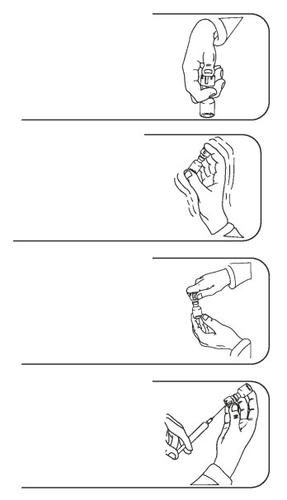
INSTRUCTIONS FOR USE
DOUBLE-CHAMBER VIAL
- 1.Press firmly on the cap to inject the solvent into the lower compartment of the vial containing the powder.
- 2.Shake the vial until the powder is completely dissolved.
- 3.Remove the plastic cap protecting the central part of the rubber stopper and sterilize.
- 4.Insert the needle into the central part of the stopper until you see the tip in the vial. Turn the vial upside down and aspirate the contents.
VIALS WITH POWDER AND SOLVENT
Remove the protective cap of the powder vial and dissolve the powder with the solvent
aspirated.
For intramuscular and intravenous injections, no further dilution is necessary. For
infusions, dilute in a volume of 100 to 1000 ml of 5% glucose solution or saline solution.
The reconstituted solution must be used immediately.
UNDESIRABLE EFFECTS
The following adverse reactions have been reported with the contraindicated intrathecal/epidural routes of administration: arachnoiditis, gastrointestinal/vesical dysfunction, headache, meningitis, paraparesis/paraplegia,
seizures, sensory disturbances. The frequency of these adverse reactions is not known.
- 12 -
For further information, consult the SmPC (Summary of Product Characteristics).
- 13 -

Не уверены, подходит ли вам это лекарство?
Обсудите симптомы и варианты лечения с врачом онлайн.

Уже начали прием и появились вопросы?
Обсудите свое состояние и дальнейшие шаги с врачом онлайн.

- Страна регистрации
- Форма выпускаPowder and solvent for injectable solution, 125 MG/2 ML
- Код АТХH02AB04
- Действующее вещество
- Отпускается по рецептуДа
- Производитель
- Информация на этой странице носит справочный характер и не является медицинской консультацией. Перед началом приема лекарства обязательно проконсультируйтесь с врачом.
- Аналоги SOLU MEDROLФорма выпуска: Injectable suspension, 40 MG/MLДействующее вещество: МетилпреднизолонПроизводитель: PFIZER ITALIA S.R.L.Отпускается без рецептаФорма выпуска: Powder and solvent for injectable solution, 20 MG/2 MLДействующее вещество: МетилпреднизолонОтпускается по рецептуФорма выпуска: Coated tablet, 4 MGДействующее вещество: МетилпреднизолонПроизводитель: PFIZER ITALIA S.R.L.Отпускается по рецепту
Аналоги SOLU MEDROL в других странах
Лекарства с тем же действующим веществом, доступные в других странах.
Аналог SOLU MEDROL в Испания
Аналог SOLU MEDROL в Польша
Аналог SOLU MEDROL в Украина
Врачи онлайн по SOLU MEDROL
Обсудите применение SOLU MEDROL и возможные следующие шаги — по оценке врача.


Получите рецепт на SOLU MEDROL онлайн
Заполните форму за 2 минуты
Расскажите о симптомах, истории болезни и нужном препарате.
Выберите врача или мы назначим
Выберите специалиста или мы подберём ближайшего доступного врача.
Врач рассматривает ваш случай
Обычно в течение 30 минут. Может задать уточняющие вопросы в чате.
Получите в любой аптеке
Электронный рецепт отправляется на вашу почту — действителен по всей Польше.
Часто задаваемые вопросы
SOLU MEDROL требует рецепта в Италия. Вы можете уточнить у врача онлайн, подходит ли это лекарство для вашей ситуации.
Действующее вещество SOLU MEDROL — Метилпреднизолон. Эта информация помогает определить лекарства с тем же составом под другими торговыми названиями.
SOLU MEDROL производится компанией PFIZER ITALIA S.R.L.. Упаковка и торговое название могут отличаться в зависимости от дистрибьютора.
Врачи, включая Семейные врачи, Психиатры, Дерматологи, Кардиологи, Эндокринологи, Гастроэнтерологи, Пульмонологи, Нефрологи, Ревматологи, Гематологи, Инфекционисты, Аллергологи, Гериатры, Педиатры, Онкологи, могут оценить целесообразность применения SOLU MEDROL с учетом вашей ситуации и местных правил. Вы можете записаться на онлайн-консультацию, чтобы обсудить возможные варианты.
Польша имеет хорошо развитую систему здравоохранения в крупных городах, таких как Варшава, Краков, Вроцлав и Гданьск. Аптеки широко доступны и работают в соответствии с действующим законодательством, обеспечивая доступ к рецептурным препаратам.
Вы можете купить SOLU MEDROL в Варшаве, Кракове, Вроцлаве или Гданьске в любой аптеке при наличии действующего рецепта.
Чтобы получить рецепт, вы можете воспользоваться Oladoctor:
Другие лекарства с тем же действующим веществом (Метилпреднизолон) включают DEPO MEDROL, LISAMETYLE, MEDROL. Они могут отличаться торговым названием или формой выпуска, но содержат одинаковый терапевтический компонент. Перед изменением лечения рекомендуется проконсультироваться с врачом.
