



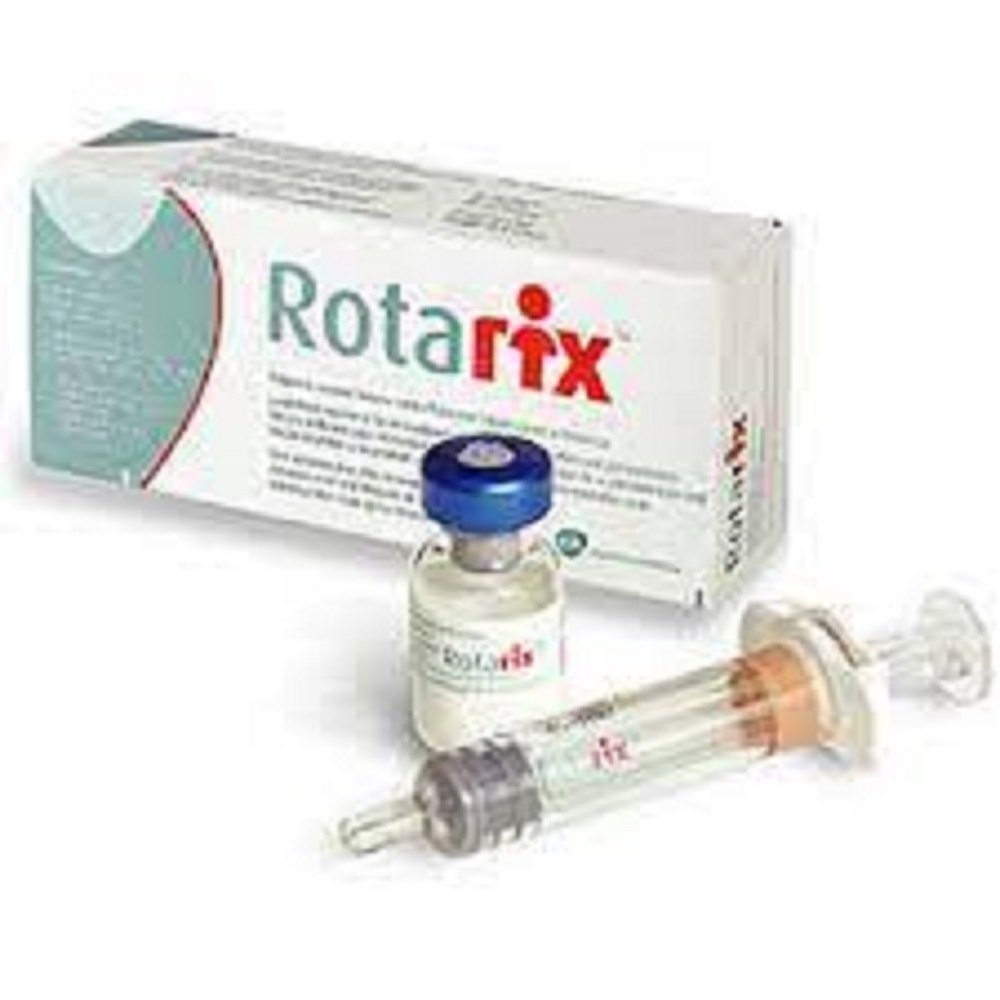
ROTARIX 1 ML Оральная суспензия

Рассмотрение рецепта онлайн
Врач рассмотрит ваш случай и примет решение о назначении рецепта, если это медицински оправдано.

Поговорите с врачом об этом лекарстве
Обсудите симптомы и возможные дальнейшие шаги на онлайн-консультации.



Инструкция по применению ROTARIX
Содержание инструкции
- Rotarix oral suspension in prefilled oral applicator
- Rotarix oral suspension in squeezable tubes
- What is Rotarix and what is it used for
- What you need to know before your child receives Rotarix
- How Rotarix is administered
- Possible side effects
- How to store Rotarix
- Package Contents and Other Information
- What is Rotarix and what is it used for
- What you need to know before your child receives Rotarix
- How Rotarix is administered
- Possible side effects
- How to store Rotarix
- Package Contents and Other Information
Rotarix oral suspension in prefilled oral applicator
live vaccine against rotavirus
Read this leaflet carefully before the child is vaccinated as it contains
important information for you.
- Keep this leaflet. You may need to read it again.
- If you have any questions, ask your doctor or pharmacist.
- This vaccine has been prescribed only for the child. Never give it to others.
- If any side effects occur, including those not listed in this leaflet, tell your doctor or pharmacist. See section 4.
Contents of this leaflet:
- 1. What Rotarix is and what it is used for
- 2. What you need to know before your child receives Rotarix
- 3. How Rotarix is administered
- 4. Possible side effects
- 5. How to store Rotarix
- 6. Contents of the pack and other information
1. What is Rotarix and what is it used for
Rotarix is a viral vaccine containing live attenuated human rotavirus, which helps to protect the
child, starting from the age of 6 weeks, from gastroenteritis (diarrhea and vomiting) caused by rotavirus
infection.
How Rotarix works
Rotavirus infection is the most common cause of severe diarrhea in infants and young children.
Rotavirus spreads easily through hand-to-mouth contact after contact with
the stool of an infected person. Most children with rotavirus diarrhea recover
spontaneously. However, some children become seriously ill with frequent vomiting, diarrhea and
loss of fluids that is life-threatening, requiring hospitalisation.
When a child is vaccinated, the immune system (the body's natural defenses) will develop
antibodies against the most common types of rotavirus. These antibodies protect against the disease caused by
these types of rotavirus.
As with all vaccines, Rotarix may not fully protect all children who have been
vaccinated against rotavirus infections.
2. What you need to know before your child receives Rotarix
Rotarix should not be given
- If your child has previously had an allergic reaction to rotavirus vaccines or to any of the other ingredients of this vaccine (listed in section 6). Signs of an allergic reaction can include itchy skin rash, wheezing and swelling of the face or tongue;
- If your child has previously had intussusception (a blockage of the intestine in which one part of the intestine slides into another part of the intestine);
- If your child was born with an intestinal malformation that could lead to intussusception;
- If your child has a rare inherited disease that affects their immune system called severe combined immunodeficiency (SCID);
- If your child has a serious infection with a high temperature, it may be necessary to postpone vaccination until after recovery. A mild infection such as a cold should not be a problem, but you should still discuss it with your doctor;
- If your child has diarrhea or vomiting, it may be necessary to postpone vaccination until after recovery.
Warnings and precautions
Talk to your doctor or healthcare professional before your child receives Rotarix if the child to
be vaccinated:
- is in close contact with a family member who has a weakened immune system, i.e. a person with cancer or who is taking medicines that could weaken the immune system
- has any gastrointestinal condition
- has not gained weight or has not grown as expected
- has any illness or is taking any medicine that reduces their resistance to infections or if their mother received any medicine during pregnancy that could weaken the immune system.
After your child has received Rotarix, contact your doctor/healthcare professional immediately if your child
experiences stomach pain, persistent vomiting, blood in the stool, a swollen abdomen and/or high fever
(see also section 4 “Possible side effects”).
As always, please be sure to wash your hands thoroughly after changing dirty diapers.
Other medicines and Rotarix
Tell your doctor if your child is taking, has recently taken or might take any other
medicines or if they have recently received any other vaccinations.
Rotarix can be given to your child at the same time as other vaccines usually
recommended, such as vaccines against diphtheria, tetanus, pertussis (whooping cough), Haemophilus influenzaetype b, oral or inactivated polio, hepatitis B, as well as conjugated vaccines against pneumococcus and
meningococcus serogroup C.
Rotarix with food and drink
There are no restrictions on food or drink for your child either before or after
vaccination.
Breastfeeding
Based on evidence generated in clinical studies, breastfeeding does not reduce the protection
offered by Rotarix against rotavirus gastroenteritis. Therefore, breastfeeding can be
continued during the vaccination schedule.
Rotarix contains sucrose, glucose, phenylalanine and sodium
If your doctor has diagnosed your child who is about to be vaccinated with an intolerance to certain sugars,
contact your doctor before the vaccine is given to your child.
This vaccine contains 0.15 micrograms of phenylalanine per dose. Phenylalanine can be harmful
if your child suffers from phenylketonuria, a rare genetic disease that causes a build-up of phenylalanine
because the body is unable to eliminate it properly.
This vaccine contains 32 mg of sodium (the main component of table salt) per dose.
3. How Rotarix is administered
The doctor or nurse will administer the recommended dose of Rotarix to the child. The vaccine (1.5 mL
of liquid) will be administered orally. Under no circumstances should this vaccine be administered
by injection.
The child will receive two doses of this vaccine. Each dose will be administered separately, with a
minimum interval of 4 weeks between the two doses. The first dose can be administered starting from
6 weeks of age. The two doses of the vaccine must be administered within 24 weeks of age,
however, it would be preferable that they are administered before 16 weeks of age.
Rotarix can be administered to children who were born prematurely, according to the same vaccination
schedule, provided that the pregnancy lasted at least 27 weeks.
If the child refuses or regurgitates most of the vaccine dose, an additional dose may be
administered during the same vaccination session.
When Rotarix is administered to the child as the first dose, it is recommended that Rotarix (and not another anti-rotavirus vaccine) also be administered as the second dose.
It is important that you follow the doctor's or nurse's instructions regarding follow-up visits.
If you forget to return to the doctor as scheduled, ask your doctor for advice.
4. Possible side effects
Like all medicines, this vaccine can cause side effects, although these do not occur in all children.
The following side effects may occur with this vaccine:
- Common (these may occur in up to 1 in 10 doses of vaccine):
- diarrhea
- irritability
- Uncommon (these may occur in up to 1 in 100 doses of vaccine):
- abdominal pain (see also below for signs of very rare side effects of intestinal intussusception)
- flatulence
- skin inflammation
Side effects that have been reported during the marketing of Rotarix include:
- Very rare: urticaria
- Very rare: intestinal intussusception (when a part of the intestine becomes blocked or twisted). Signs may include severe stomach pain, persistent vomiting, blood in the stool, swollen abdomen and/or high fever. Contact a doctor/healthcare professional immediately ifthe child shows any of these symptoms.
- blood in the stool.
- in very premature infants (at 28 weeks of gestation or earlier), longer than normal intervals between breaths may occur for 2-3 days after vaccination.
- children with a rare inherited disease called severe combined immunodeficiency (SCID) may have inflammation of the stomach or intestines (gastroenteritis) and transmit the vaccine virus in the stool. Signs of gastroenteritis may include nausea, vomiting, stomach cramps or diarrhea.
Reporting of side effects
If your child experiences any side effects, including those not listed in this
leaflet, please inform your doctor or pharmacist. You can also report side effects
directly through the national reporting system as detailed in Annex V.
By reporting side effects you can help to provide more information on the safety
of this medicine.
5. How to store Rotarix
Keep this vaccine out of the sight and reach of children.
Do not use this vaccine after the expiry date which is stated on the pack. The expiry date refers to the last day of the month.
Store in a refrigerator (2 C – 8 C).
Do not freeze.
Store in the original packaging to protect it from light.
The vaccine must be used immediately after opening.
Do not dispose of any medicine in waste water or household waste. Ask your pharmacist how to
dispose of medicines you no longer use. This will help protect the environment.
6. Contents of the pack and other information
What Rotarix contains
- The active substances are:
Human rotavirus strain RIX4414 (live, attenuated)* not less than 10 CCID
*Produced on Vero cell lines
- The other excipients of Rotarix are: sucrose, disodium adipate, modified Dulbecco's medium (DMEM) (containing phenylalanine, sodium, glucose and other substances), sterile water (see also section 2, “Rotarix contains sucrose, glucose, phenylalanine and sodium” )
Description of the appearance of Rotarix and contents of the pack
Oralsuspension in a prefilled oralapplicator.
Rotarix is supplied as a clear and colourless liquid in a single dose in an oralapplicator
prefilled (1.5 mL).
Rotarix is available in packs of 1, 5, 10 or 25 doses.
Not all pack sizes may be marketed.
Marketing Authorisation Holder and Manufacturer
GlaxoSmithKline Biologicals SA
Rue de l’Institut 89
B-1330 Rixensart
Belgium
For further information on Rotarix, contact the local representative of the marketing authorisation
holder:
België/Belgique/Belgien
GlaxoSmithKline Pharmaceuticals SA/NV
Tél/Tel: + 32 10 85 52 00
Lietuva
GlaxoSmithKline Biologicals SA
Tel: +370 80000334
България
GlaxoSmithKline Biologicals SA
Тел. +359 80018205
Luxembourg/Luxemburg
GlaxoSmithKline Pharmaceuticals SA/NV
Tél/Tel: + 32 10 85 52 00
Česká republika
GlaxoSmithKline s.r.o.
Tel: + 420 2 22 00 11 11
[email protected]
Magyarország
GlaxoSmithKline Biologicals SA
Tel.: +36 80088309
Danmark
GlaxoSmithKline Pharma A/S
Tlf: + 45 36 35 91 00
[email protected]
Malta
GlaxoSmithKline Biologicals SA
Tel: +356 80065004
Deutschland
GlaxoSmithKline GmbH & Co. KG
Tel: + 49 (0)89 360448701
[email protected]
Nederland
GlaxoSmithKline BV
Tel: + 31 (0)33 2081100
Eesti
GlaxoSmithKline Biologicals SA
Tel: +372 8002640
Norge
GlaxoSmithKline AS
Tlf: + 47 22 70 20 00
Ελλάδα
GlaxoSmithKline Μονοπρόσωπη A.E.B.E.
Tηλ: + 30 210 68 82 100
Österreich
GlaxoSmithKline Pharma GmbH.
Tel: + 43 (0)1 97075 0
[email protected]
España
GlaxoSmithKline, S.A.
Tel: + 34 900 202 700
[email protected]
Polska
GSK Services Sp. z o.o.
Tel.: + 48 (22) 576 9000
France
Laboratoire GlaxoSmithKline
Tél: + 33 (0) 1 39 17 84 44
[email protected]
Portugal
Smith Kline & French Portuguesa - Produtos
Farmacêuticos, Lda.
Tel: + 351 21 412 95 00
[email protected]
Hrvatska
GlaxoSmithKline Biologicals SA
Tel.: +385 800787089
România
GlaxoSmithKline Biologicals SA
Tel: +40 800672524
Ireland
GlaxoSmithKline (Ireland) Ltd
Tel: + 353 (0)1 495 5000
Slovenija
GlaxoSmithKline Biologicals SA
Tel: +386 80688869
Ísland
Vistor hf.
Sími: +354 535 7000
Slovenská republika
GlaxoSmithKline Biologicals SA
Tel: +421 800500589
Italia
GlaxoSmithKline S.p.A.
Tel:+ 39 (0)45 7741 111
Suomi/Finland
GlaxoSmithKline Oy
Puh/Tel: + 358 10 30 30 30
Κύπρος
GlaxoSmithKline Biologicals SA
Τηλ: +357 80070017
Sverige
GlaxoSmithKline AB
Tel: + 46 (0)8 638 93 00
[email protected]
United Kingdom (Northern Ireland)
GlaxoSmithKline Biologicals SA
Tel: + 44 (0)800 221 441
[email protected]
This leaflet was last updated on
Other sources of information
More detailed information on this medicine is available on the European Medicines Agency website: http://www.ema.europa.eu
-------------------------------------------------------------------------------------------------------------------------
The following information is intended for healthcare professionals:
For oraladministration, the vaccine is presented as a clear and colourless liquid, free from
visible particles.
The vaccine is ready for use (no reconstitution or dilution is required).
The vaccine must be administered orallywithout mixing it with any other vaccine or solution.
The vaccine must be visually inspected for the presence of foreign matter and/or changes
in physical appearance. If any of these is observed, discard the vaccine.
Unused vaccine and waste materials derived from such vaccine must be disposed of in
accordance with local regulations.
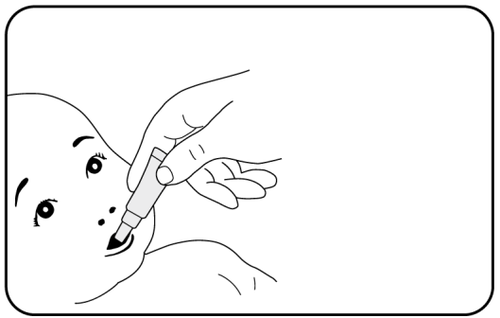
Instructions for administering the vaccine:
Latvija
GlaxoSmithKline Biologicals SA
Tel: +371 8002640
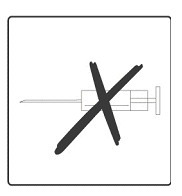
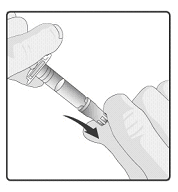
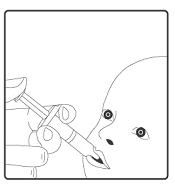
Dispose of the empty oralapplicator and its cap in approved biological waste containers in accordance with
local regulations.
Rotarix oral suspension in squeezable tubes
live vaccine against rotavirus
Read this leaflet carefully before the child is vaccinated as it contains
important information for you.
- Keep this leaflet. You may need to read it again.
- If you have any questions, ask your doctor or pharmacist.
- This vaccine has been prescribed only for the child. Never give it to anyone else.
- If any side effects occur, including those not listed in this leaflet, tell your doctor or pharmacist. See section 4.
Contents of this leaflet:
- 1. What Rotarix is and what it is used for
- 2. What you need to know before your child receives Rotarix
- 3. How Rotarix is administered
- 4. Possible side effects
- 5. How to store Rotarix
- 6. Contents of the pack and other information
1. What is Rotarix and what is it used for
Rotarix is a viral vaccine containing live attenuated human rotavirus, which helps to protect the
child, from the age of 6 weeks, from gastroenteritis (diarrhea and vomiting) caused by rotavirus
infection.
How Rotarix works
Rotavirus infection is the most common cause of severe diarrhea in infants and young children.
Rotavirus spreads easily through hand-to-mouth contact after contact with
the stool of an infected person. Most children with rotavirus diarrhea recover
spontaneously. However, some children become seriously ill with frequent vomiting, diarrhea and
loss of fluids that is life-threatening, requiring hospitalisation.
When a child is vaccinated, the immune system (the body's natural defenses) will develop
antibodies against the most common types of rotavirus. These antibodies protect against the disease caused by
these types of rotavirus.
As with all vaccines, Rotarix may not fully protect all children who have been
vaccinated against rotavirus infections.
2. What you need to know before your child receives Rotarix
Rotarix should not be administered
- If the child has previously had an allergic reaction to rotavirus vaccines or to any of the other ingredients of this vaccine (listed in section 6). Signs of an allergic reaction may include itchy rash, wheezing, and swelling of the face or tongue;
- If the child has previously had intussusception (an intestinal obstruction in which one part of the intestine is wrapped around another part of the intestine);
- If the child was born with an intestinal malformation that could lead to intussusception;
- If the child has a rare hereditary disease that affects their immune system called severe combined immunodeficiency (SCID);
- If the child has a serious infection with a high temperature, it may be necessary to postpone vaccination until after recovery. A mild infection such as a cold should not be a problem, but still discuss it with your doctor;
- If the child has diarrhea or vomiting, it may be necessary to postpone vaccination until after recovery.
Warnings and precautions
Consult your doctor or healthcare professional before your child receives Rotarix if the child to
be vaccinated:
- is in close contact with a family member who has a weakened immune system, i.e. a person with cancer or who is taking medicines that could weaken the immune system
- has any gastrointestinal disorder
- has not gained weight or has not grown as expected
- has any illness or is taking any medicine that reduces their resistance to infections or if their mother received any medicine during pregnancy that could weaken the immune system.
After the child has received Rotarix, contact your doctor/healthcare professional immediately if the child
experiences stomach pain, persistent vomiting, blood in the stool, a swollen abdomen and/or high fever
(see also section 4 “Possible side effects”).
As always, please be sure to wash your hands thoroughly after changing dirty diapers.
Other medicines and Rotarix
Tell your doctor if the child is taking, has recently taken or may take any other
medicines or if they have recently received any other vaccinations.
Rotarix can be given to the child at the same time as other vaccines usually
recommended, such as vaccines against diphtheria, tetanus, pertussis (whooping cough), Haemophilus influenzaetype b, oral or inactivated polio, hepatitis B, as well as pneumococcal and
meningococcal serogroup C conjugate vaccines.
Rotarix with food and drink
There are no restrictions on food or drink intake for the child either before or after
vaccination.
Breastfeeding
Based on the evidence generated in clinical studies, breastfeeding does not reduce the protection
offered by Rotarix against rotavirus gastroenteritis. Therefore, breastfeeding can be
continued during the vaccination schedule.
Rotarix contains sucrose, glucose, phenylalanine and sodium
If your doctor has diagnosed the child who is about to be vaccinated with an intolerance to certain sugars,
contact your doctor before the vaccine is administered to the child.
This vaccine contains 0.15 micrograms of phenylalanine per dose. Phenylalanine may be harmful
if the child suffers from phenylketonuria, a rare genetic disease that causes a buildup of phenylalanine
because the body is unable to eliminate it properly.
This vaccine contains 32 mg of sodium (the main component of table salt) per dose.
3. How Rotarix is administered
The doctor or nurse will administer the recommended dose of Rotarix to the child. The vaccine (1.5 mL
of liquid) will be administered orally. Under no circumstances should this vaccine be administered
by injection.
The child will receive two doses of this vaccine. Each dose will be administered separately, with a
minimum interval of 4 weeks between the two doses. The first dose can be administered starting from
6 weeks of age. The two doses of the vaccine must be administered within 24 weeks of age,
however, it would be preferable if they were administered before 16 weeks of age.
Rotarix can be administered to children, who were born prematurely, according to the same vaccination schedule, provided that the pregnancy lasted at least 27 weeks.
If the child refuses or regurgitates most of the vaccine dose, an additional dose may be
administered during the same vaccination session.
When Rotarix is administered to the child as a first dose, it is recommended that Rotarix (and not another anti-rotavirus vaccine) also be administered as the second dose.
It is important that you follow the doctor's or nurse's instructions regarding follow-up visits.
If you forget to return to the doctor as scheduled, ask your doctor for advice.
4. Possible side effects
Like all medicines, this vaccine can cause side effects, although these do not occur in all children.
The following side effects may occur with this vaccine:
- Common (these may occur in up to 1 in 10 doses of vaccine):
- diarrhea
- irritability
- Uncommon (these may occur in up to 1 in 100 doses of vaccine):
- abdominal pain (see also below for signs of very rare side effects of intestinal intussusception)
- flatulence
- skin inflammation
Side effects that have been reported during the marketing of Rotarix include:
- Very rare: urticaria
- Very rare: intestinal intussusception (when a part of the intestine becomes blocked or twisted). Signs may include severe stomach pain, persistent vomiting, blood in the stool, a swollen abdomen and/or high fever. Contact a doctor/healthcare professional immediately ifthe child shows any of these symptoms.
- blood in the stool.
- in very premature babies (at 28 weeks of gestation or earlier) may experience, for 2-3 days after vaccination, longer than normal intervals between breaths.
- children with a rare inherited disease called severe combined immunodeficiency (SCID) may have inflammation of the stomach or intestine (gastroenteritis) and transmit the vaccine virus in the stool. Signs of gastroenteritis may include nausea, vomiting, stomach cramps or diarrhea.
Reporting of side effects
If your child experiences any side effects, including those not listed in this
leaflet, please inform your doctor or pharmacist. You can also report side effects
directly through the national reporting system as detailed in Annex V.
By reporting side effects you can help to provide more information on the safety
of this medicine.
5. How to store Rotarix
Keep this vaccine out of the sight and reach of children.
Do not use this vaccine after the expiry date stated on the pack. The expiry date refers to the last day of the month.
Store in a refrigerator (2 C – 8 C).
Do not freeze.
Store in the original packaging to protect it from light.
The vaccine must be used immediately after opening.
Medicines should not be disposed of via wastewater or household waste. Ask your
pharmacist how to dispose of medicines you no longer use. This will help protect the environment.
6. Package Contents and Other Information
What Rotarix contains
- The active substances are:
Human rotavirus strain RIX4414 (live, attenuated)* not less than 10 CCID
*Produced on Vero cell lines
- The other excipients of Rotarix are: sucrose, Disodium adipate, modified Dulbecco’s medium (DMEM) (containing phenylalanine, sodium, glucose and other substances), sterile water (see also in paragraph 2, “Rotarix contains sucrose, glucose, phenylalanine and sodium”)
Description of the appearance of Rotarix and contents of the pack
Oralsuspension.
Rotarix is supplied as a clear and colorless liquid in a single dose squeeze tube (1.5 mL).
Rotarix is available in packs of 1, 10 or 50 doses.
Not all pack sizes may be marketed.
Marketing Authorisation Holder and Manufacturer
GlaxoSmithKline Biologicals SA
Rue de l’Institut 89
B-1330 Rixensart
Belgium
For further information on Rotarix, contact the local representative of the marketing authorisation holder:
België/Belgique/Belgien
GlaxoSmithKline Pharmaceuticals SA/NV
Tél/Tel: + 32 10 85 52 00
Lietuva
GlaxoSmithKline Biologicals SA
Tel: +370 80000334
България
GlaxoSmithKline Biologicals SA
Тел. +359 80018205
Luxembourg/Luxemburg
GlaxoSmithKline Pharmaceuticals SA/NV
Tél/Tel: + 32 10 85 52 00
Česká republika
GlaxoSmithKline s.r.o.
Tel: + 420 2 22 00 11 11
[email protected]
Magyarország
GlaxoSmithKline Biologicals SA
Tel.: +36 80088309
Danmark
GlaxoSmithKline Pharma A/S
Tlf: + 45 36 35 91 00
[email protected]
Malta
GlaxoSmithKline Biologicals SA
Tel: +356 80065004
Deutschland
GlaxoSmithKline GmbH & Co. KG
Tel: + 49 (0)89 360448701
[email protected]
Nederland
GlaxoSmithKline BV
Tel: + 31 (0)33 2081100
Eesti
GlaxoSmithKline Biologicals SA
Tel: +372 8002640
Norge
GlaxoSmithKline AS
Tlf: + 47 22 70 20 00
Ελλάδα
GlaxoSmithKline Μονοπρόσωπη A.E.B.E.
Τηλ: + 30 210 68 82 100
Österreich
GlaxoSmithKline Pharma GmbH.
Tel: + 43 (0)1 97075 0
[email protected]
España
GlaxoSmithKline, S.A.
Tel: + 34 900 202 700
[email protected]
Polska
GSK Services Sp. z o.o.
Tel.: + 48 (22) 576 9000
France
Laboratoire GlaxoSmithKline
Tél: + 33 (0) 1 39 17 84 44
[email protected]
Portugal
Smith Kline & French Portuguesa - Produtos
Farmacêuticos, Lda.
Tel: + 351 21 412 95 00
[email protected]
Hrvatska
GlaxoSmithKline Biologicals SA
Tel.: +385 800787089
România
GlaxoSmithKline Biologicals SA
Tel: +40 800672524
Ireland
GlaxoSmithKline (Ireland) Ltd
Tel: + 353 (0)1 495 5000
Slovenija
GlaxoSmithKline Biologicals SA
Tel: +386 80688869
Ísland
Vistor hf.
Sími: +354 535 7000
Slovenská republika
GlaxoSmithKline Biologicals SA
Tel: +421 800500589
Italia
GlaxoSmithKline S.p.A.
Tel:+ 39 (0)45 7741 111
Suomi/Finland
GlaxoSmithKline Oy
Puh/Tel: + 358 10 30 30 30
Κύπρος
GlaxoSmithKline Biologicals SA
Τηλ: +357 80070017
Sverige
GlaxoSmithKline AB
Tel: + 46 (0)8 638 93 00
[email protected]
Latvija
GlaxoSmithKline Biologicals SA
Tel: +371 8002640
United Kingdom(Northern Ireland)
GlaxoSmithKline Biologicals SA
Tel: + 44 (0)800 221 441
[email protected]
This leaflet was last updated on
Other sources of information
More detailed information on this medicine is available on the website of the European Medicines
Agency: http://www.ema.europa.eu
-------------------------------------------------------------------------------------------------------------------------
The following information is intended for healthcare professionals only:
For oraladministration, the vaccine presents as a clear and colorless liquid, free from
visible particles.
The vaccine is ready for use (no reconstitution or dilution is required).
The vaccine must be administered orallywithout mixing it with any other vaccine or solution.
The vaccine must be visually inspected for the presence of foreign particles and/or changes
in physical appearance. If any of these are observed, discard the vaccine.
Unused vaccine and waste materials derived from such vaccine must be disposed of in
accordance with local regulations.
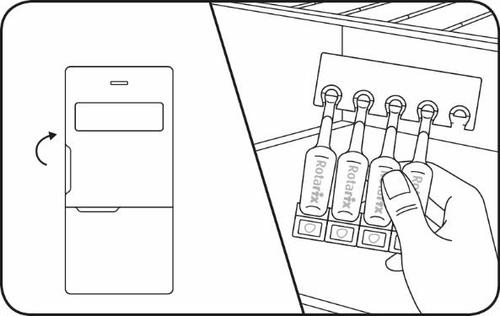
Instructions for administering the vaccine:
Read the instructions for use carefully in their entirety before starting to administer the vaccine
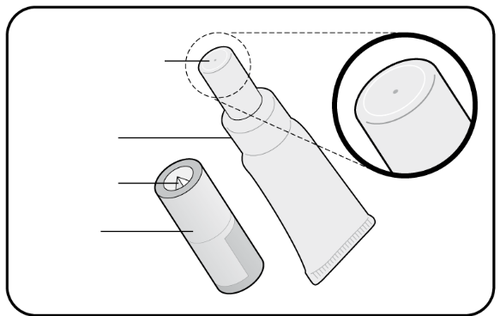
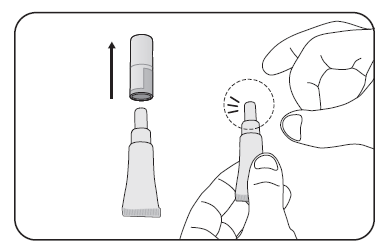
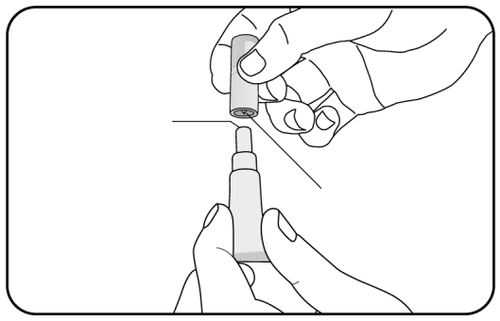
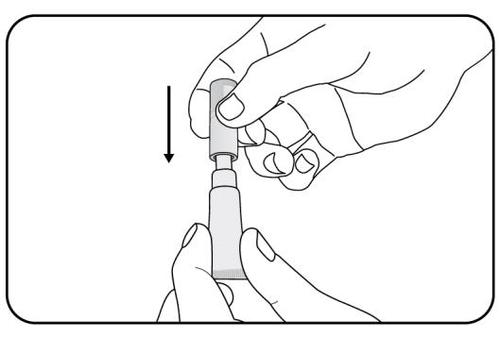
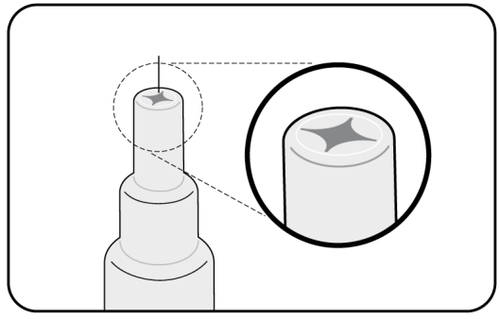
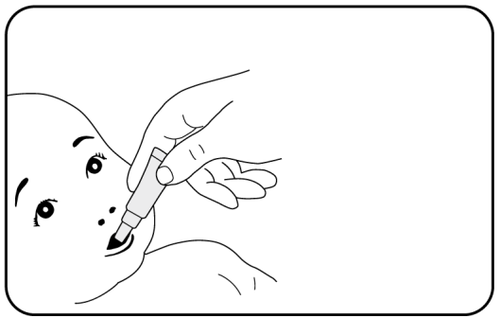
Dispose of the empty tube and cap in approved biological waste containers in accordance with local regulations.
Rotarix oral suspension in multiple presentation of squeeze tubes single dose (5 single doses)
connected by a strip
live vaccine against rotavirus
Read this leaflet carefully before the child is vaccinated as it contains
important information for you.
- Keep this leaflet. You may need to read it again.
- If you have any questions, ask your doctor or pharmacist.
- This vaccine has been prescribed only for your child. Do not give it to anyone else.
- If any side effects occur, including those not listed in this leaflet, tell your doctor or pharmacist. See section 4.
Contents of this leaflet:
- 1. What Rotarix is and what it is used for
- 2. What you need to know before Rotarix is given to your child
- 3. How Rotarix is given
- 4. Possible side effects
- 5. How to store Rotarix
- 6. Contents of the pack and other information
1. What is Rotarix and what is it used for
Rotarix is a viral vaccine containing live attenuated human rotavirus, which helps to protect the
child, from the age of 6 weeks, from gastroenteritis (diarrhea and vomiting) caused by rotavirus
infection.
How Rotarix works
Rotavirus infection is the most common cause of severe diarrhea in infants and young children.
Rotavirus spreads easily through hand-to-mouth contact after contact with
the stool of an infected person. Most children with rotavirus diarrhea recover
spontaneously. However, some children become seriously ill with frequent vomiting, diarrhea and
life-threatening fluid loss, which requires hospitalisation.
When a child is vaccinated, the immune system (the body's natural defenses) will develop
antibodies against the most common types of rotavirus. These antibodies protect against disease caused by
these types of rotavirus.
As with all vaccines, Rotarix may not fully protect all children who have been
vaccinated against rotavirus infections.
2. What you need to know before your child receives Rotarix
Rotarix should not be given
- If your child has previously had an allergic reaction to rotavirus vaccines or to any of the other ingredients of this vaccine (listed in section 6). Signs of an allergic reaction can include itchy rash, difficulty breathing and swelling of the face or tongue;
- If your child has previously had intussusception (a blockage of the intestine where one part of the intestine slides into another part);
- If your child was born with an intestinal malformation that could lead to intussusception;
- If your child has a rare inherited disease that affects their immune system called severe combined immunodeficiency (SCID);
- If your child has a serious infection with a high temperature, it may be necessary to postpone vaccination until after recovery. A mild infection such as a cold should not be a problem, but you should still discuss it with your doctor;
- If your child has diarrhoea or vomiting, it may be necessary to postpone vaccination until after recovery.
Warnings and precautions
Talk to your doctor or healthcare professional before your child receives Rotarix if your child is to
be vaccinated:
- is in close contact with a family member who has a weakened immune system, i.e. a person with cancer or who is taking medicines that could weaken the immune system
- has any gastrointestinal condition
- has not gained weight or has not grown as expected
- has any illness or is taking any medicine that reduces their resistance to infections or if their mother received any medicine during pregnancy that could weaken the immune system.
After your child has received Rotarix, contact your doctor/healthcare professional immediately if your child
experiences stomach pain, persistent vomiting, blood in the stool, a swollen abdomen and/or high fever
(see also section 4 “Possible side effects”).
As always, please be sure to wash your hands thoroughly after changing dirty diapers.
Other medicines and Rotarix
Tell your doctor if your child is taking, has recently taken or might take any other
medicines or if they have recently received any other vaccinations.
Rotarix can be given to your child at the same time as other vaccines usually
recommended, such as vaccines against diphtheria, tetanus, pertussis (whooping cough), Haemophilus influenzaetype b, oral or inactivated polio, hepatitis B, as well as pneumococcal and
meningococcal serogroup C conjugate vaccines.
Rotarix with food and drink
There are no restrictions on food or drink for your child either before or after
vaccination.
Breastfeeding
Based on evidence generated in clinical studies, breastfeeding does not reduce the protection
offered by Rotarix against rotavirus gastroenteritis. Therefore, breastfeeding can be
continued during the vaccination schedule.
Rotarix contains sucrose, glucose, phenylalanine and sodium
If your doctor has diagnosed your child who is about to be vaccinated with an intolerance to certain sugars,
contact your doctor before the vaccine is given to your child.
This vaccine contains 0.15 micrograms of phenylalanine per dose. Phenylalanine can be harmful
if your child suffers from phenylketonuria, a rare genetic disease that causes the accumulation of phenylalanine
because the body cannot dispose of it properly.
This vaccine contains 32 mg of sodium (the main component of table salt) per dose.
3. How Rotarix is administered
The doctor or nurse will administer the recommended dose of Rotarix to the child. The vaccine (1.5 mL
of liquid) will be administered orally. Under no circumstances should this vaccine be administered
by injection.
The child will receive two doses of this vaccine. Each dose will be administered separately, with a
minimum interval of 4 weeks between the two doses. The first dose can be administered starting from
6 weeks of age. The two doses of the vaccine must be administered within 24 weeks of age,
however, it would be preferable that they are administered before 16 weeks of age.
Rotarix can be administered to children, who were born prematurely, according to the same vaccination schedule, provided that the pregnancy lasted at least 27 weeks.
If the child refuses or regurgitates most of the vaccine dose, an additional dose may be
administered during the same vaccination session.
When Rotarix is administered to the child as the first dose, it is recommended that Rotarix (and not another anti-rotavirus vaccine) is also administered as the second dose.
It is important that you follow the doctor's or nurse's instructions regarding follow-up visits.
If you forget to return to the doctor as scheduled, ask your doctor for advice.
4. Possible side effects
Like all medicines, this vaccine can cause side effects, although these do not occur in all children.
The following side effects may occur with this vaccine:
- Common (these may occur in up to 1 in 10 doses of vaccine):
- diarrhea
- irritability
- Uncommon (these may occur in up to 1 in 100 doses of vaccine):
- abdominal pain (see also below for signs of very rare side effects of intestinal intussusception)
- flatulence
- skin inflammation
Side effects that have been reported during the marketing of Rotarix include:
- Very rare: urticaria
- Very rare: intestinal intussusception (when a part of the intestine becomes blocked or twisted). Signs may include severe stomach pain, persistent vomiting, blood in the stool, swollen abdomen and/or high fever. Contact a doctor/healthcare professional immediately ifthe child shows any of these symptoms.
- blood in the stool.
- in very premature babies (at 28 weeks of gestation or earlier) may experience, for 2-3 days after vaccination, longer than normal intervals between breaths.
- children with a rare inherited disease called severe combined immunodeficiency (SCID) may have inflammation of the stomach or intestines (gastroenteritis) and transmit the vaccine virus in the stool. Signs of gastroenteritis may include nausea, vomiting, stomach cramps or diarrhea.
Reporting of side effects
If your child experiences any side effects, including those not listed in this
leaflet, please inform your doctor or pharmacist. You can also report side effects
directly through the national reporting system as detailed in Annex V.
By reporting side effects you can help provide more information on the safety
of this medicine.
5. How to store Rotarix
Keep this vaccine out of the sight and reach of children.
Do not use this vaccine after the expiry date which is stated on the pack. The expiry date refers to the last day of the month.
Store in a refrigerator (2 C – 8 C).
Do not freeze.
Store in the original package to protect it from light.
The vaccine must be used immediately after opening.
Medicines should not be disposed of via wastewater or household waste. Ask your
pharmacist how to dispose of medicines you no longer use. This will help protect the environment.
6. Package Contents and Other Information
What Rotarix contains
Human rotavirus strain RIX4414 (live, attenuated)* not less than 10 CCID
*Produced on Vero cell lines
- The other excipients of Rotarix are: sucrose, disodium adipate, modified Dulbecco's medium (DMEM) (containing phenylalanine, sodium, glucose and other substances), sterile water (see also paragraph 2, “Rotarix contains sucrose, glucose, phenylalanine and sodium”)
Description of the appearance of Rotarix and contents of the pack
Oralsuspension.
Rotarix is supplied as a clear and colorless liquid in 5 single doses in a squeezable tube (5 x 1.5 mL)
connected by a bar.
Rotarix is available in packs of 50 tubes.
Not all pack sizes may be marketed.
Marketing Authorisation Holder and Manufacturer
GlaxoSmithKline Biologicals SA
Rue de l’Institut 89
B-1330 Rixensart
Belgium
For further information on Rotarix, contact the local representative of the marketing authorisation
holder:
België/Belgique/Belgien
GlaxoSmithKline Pharmaceuticals SA/NV
Tél/Tel: + 32 10 85 52 00
Lietuva
GlaxoSmithKline Biologicals SA
Tel: +370 80000334
България
GlaxoSmithKline Biologicals SA
Тел. +359 80018205
Luxembourg/Luxemburg
GlaxoSmithKline Pharmaceuticals SA/NV
Tél/Tel: + 32 10 85 52 00
Česká republika
GlaxoSmithKline s.r.o.
Tel: + 420 2 22 00 11 11
[email protected]
Magyarország
GlaxoSmithKline Biologicals SA
Tel.: +36 80088309
Danmark
GlaxoSmithKline Pharma A/S
Tlf: + 45 36 35 91 00
[email protected]
Malta
GlaxoSmithKline Biologicals SA
Tel: +356 80065004
Deutschland
GlaxoSmithKline GmbH & Co. KG
Tel: + 49 (0)89 360448701
[email protected]
Nederland
GlaxoSmithKline BV
Tel: + 31 (0)33 2081100
Eesti
GlaxoSmithKline Biologicals SA
Tel: +372 8002640
Norge
GlaxoSmithKline AS
Tlf: + 47 22 70 20 00
Ελλάδα
GlaxoSmithKline Μονοπρόσωπη A.E.B.E.
Tηλ: + 30 210 68 82 100
Österreich
GlaxoSmithKline Pharma GmbH.
Tel: + 43 (0)1 97075 0
[email protected]
España
GlaxoSmithKline, S.A.
Tel: + 34 900 202 700
[email protected]
Polska
GSK Services Sp. z o.o.
Tel.: + 48 (22) 576 9000
France
Laboratoire GlaxoSmithKline
Tél: + 33 (0) 1 39 17 84 44
[email protected]
Portugal
Smith Kline & French Portuguesa - Produtos
Farmacêuticos, Lda.
Tel: + 351 21 412 95 00
[email protected]
Hrvatska
GlaxoSmithKline Biologicals SA
Tel.: +385 800787089
România
GlaxoSmithKline Biologicals SA
Tel: +40 800672524
Ireland
GlaxoSmithKline (Ireland) Ltd
Tel: + 353 (0)1 495 5000
Slovenija
GlaxoSmithKline Biologicals SA
Tel: +386 80688869
Ísland
Vistor hf.
Sími: +354 535 7000
Slovenská republika
GlaxoSmithKline Biologicals SA
Tel: +421 800500589
Italia
GlaxoSmithKline S.p.A.
Tel:+ 39 (0)45 7741 111
Suomi/Finland
GlaxoSmithKline Oy
Puh/Tel: + 358 10 30 30 30
Κύπρος
GlaxoSmithKline Biologicals SA
Τηλ: +357 80070017
Sverige
GlaxoSmithKline AB
Tel: + 46 (0)8 638 93 00
[email protected]
Latvija
GlaxoSmithKline Biologicals SA
Tel: +371 80205045
United Kingdom(Northern Ireland)
GlaxoSmithKline Biologicals SA
Tel: + 44 (0)800 221 441
[email protected]
This leaflet was last updated on
Other sources of information
More detailed information on this medicine is available on the European Medicines Agency website: http://www.ema.europa.eu
-------------------------------------------------------------------------------------------------------------------------
The following information is intended exclusively for healthcare professionals:
For oraladministration, the vaccine is presented as a clear and colorless liquid, free of
visible particles.
The vaccine is ready for use (no reconstitution or dilution is required).
The vaccine must be administered orallywithout mixing it with any other vaccine or solution.
The vaccine must be visually inspected for the presence of foreign matter and/or changes
in physical appearance. If any of these phenomena are observed, discard the vaccine.
Unused vaccine and waste materials derived from such vaccine must be disposed of in
accordance with local regulations.
Instructions for administering the vaccine:
Read the instructions for use carefully in their entirety before starting to administer the vaccine
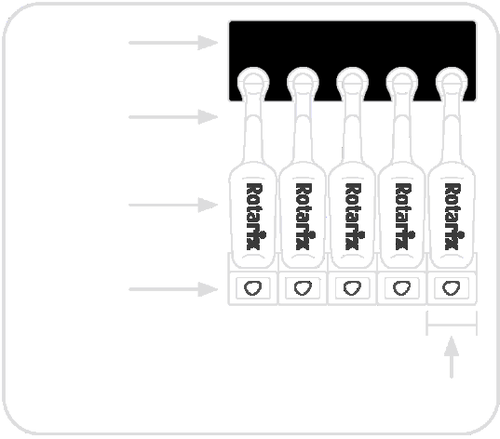
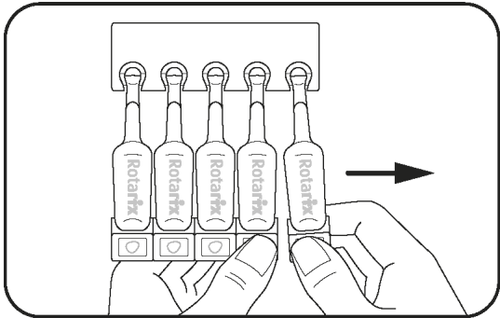
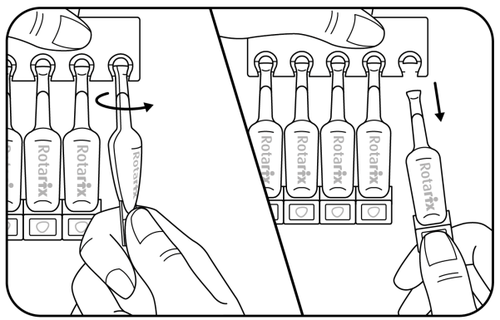
Dispose of the empty tube and cap in approved biological waste containers in accordance with local regulations.

Не уверены, подходит ли вам это лекарство?
Обсудите симптомы и варианты лечения с врачом онлайн.

Уже начали прием и появились вопросы?
Обсудите свое состояние и дальнейшие шаги с врачом онлайн.
- Страна регистрации
- Форма выпускаOral suspension, 1 ML
- Код АТХJ07BH01
- Действующее вещество
- Отпускается по рецептуНет
- Производитель
- Информация на этой странице носит справочный характер и не является медицинской консультацией. Перед началом приема лекарства обязательно проконсультируйтесь с врачом.
- Аналоги ROTARIXФорма выпуска: Powder and solvent for injectable solution, 0.5 mlДействующее вещество: respiratory syncytial virus vaccinesПроизводитель: PFIZER EUROPE MA EEIGОтпускается по рецептуФорма выпуска: Injectable suspension in pre-filled syringe, 720 U. + 20 MCGДействующее вещество: combinationsПроизводитель: GLAXOSMITHKLINE BIOLOGICALS S.A.Отпускается без рецептаФорма выпуска: Powder and suspension for injectable suspension, 0.5 mlДействующее вещество: respiratory syncytial virus vaccinesПроизводитель: GLAXOSMITHKLINE BIOLOGICALS S.A.Отпускается без рецепта
Аналоги ROTARIX в других странах
Лекарства с тем же действующим веществом, доступные в других странах.
Аналог ROTARIX в Испания
Аналог ROTARIX в Украина
Врачи онлайн по ROTARIX
Обсудите применение ROTARIX и возможные следующие шаги — по оценке врача.









Получите рецепт на ROTARIX онлайн
Заполните форму за 2 минуты
Расскажите о симптомах, истории болезни и нужном препарате.
Выберите врача или мы назначим
Выберите специалиста или мы подберём ближайшего доступного врача.
Врач рассматривает ваш случай
Обычно в течение 30 минут. Может задать уточняющие вопросы в чате.
Получите в любой аптеке
Электронный рецепт отправляется на вашу почту — действителен по всей Польше.
Часто задаваемые вопросы
ROTARIX не требует рецепта в Италия. Вы можете уточнить у врача онлайн, подходит ли это лекарство для вашей ситуации.
Действующее вещество ROTARIX — ротавирус человека, живой аттенуированный. Эта информация помогает определить лекарства с тем же составом под другими торговыми названиями.
ROTARIX производится компанией GLAXOSMITHKLINE BIOLOGICALS S.A.. Упаковка и торговое название могут отличаться в зависимости от дистрибьютора.
Врачи, включая Семейные врачи, Психиатры, Дерматологи, Кардиологи, Эндокринологи, Гастроэнтерологи, Пульмонологи, Нефрологи, Ревматологи, Гематологи, Инфекционисты, Аллергологи, Гериатры, Педиатры, Онкологи, могут оценить целесообразность применения ROTARIX с учетом вашей ситуации и местных правил. Вы можете записаться на онлайн-консультацию, чтобы обсудить возможные варианты.
Польша имеет хорошо развитую систему здравоохранения в крупных городах, таких как Варшава, Краков, Вроцлав и Гданьск. Аптеки широко доступны и работают в соответствии с действующим законодательством, обеспечивая доступ к рецептурным препаратам.
Вы можете купить ROTARIX в Варшаве, Кракове, Вроцлаве или Гданьске в любой аптеке при наличии действующего рецепта.
Чтобы получить рецепт, вы можете воспользоваться Oladoctor:
Другие лекарства с тем же действующим веществом (ротавирус человека, живой аттенуированный) включают ABRYSVO, AMBIRIX, AREXVY. Они могут отличаться торговым названием или формой выпуска, но содержат одинаковый терапевтический компонент. Перед изменением лечения рекомендуется проконсультироваться с врачом.
