



РОПИВАКАИНА 2 мг/мл Инъекционный раствор

Рассмотрение рецепта онлайн
Врач рассмотрит ваш случай и примет решение о назначении рецепта, если это медицински оправдано.

Поговорите с врачом об этом лекарстве
Обсудите симптомы и возможные дальнейшие шаги на онлайн-консультации.



Инструкция по применению ROPIVAKAINA B. BRAUN
Содержание инструкции
- WHAT IS ROPIVACAINE B. BRAUN AND WHAT IS IT USED FOR
- WHAT YOU NEED TO KNOW BEFORE YOU RECEIVE ROPIVACAINE B. BRAUN
- HOW TO USE ROPIVACAINA B. BRAUN
- POSSIBLE SIDE EFFECTS
- HOW TO STORE ROPIVACAINA B. BRAUN
- CONTENTS OF THE PACK AND OTHER INFORMATION
- Ropivacaina B. Braun 5 mg/ml injectable solution
- What is Ropivacaine B. Braun and what is it used for
- What you need to know before you receive Ropivacaina B. Braun
- How Ropivacaina B. Braun will be administered to you
- Possible side effects
- How Ropivacaina B. Braun is stored
- Package Contents and Other Information
- What is Ropivacaina B. Braun and what is it used for
- What you need to know before you receive Ropivacaina B. Braun
- How Ropivacaina B. Braun will be administered to you
- Possible side effects
- How Ropivacaina B. Braun is stored
- Package Contents and Other Information
- Ropivacaine B. Braun 10 mg/ml injectable solution
Ropivacaina B. Braun 2 mg/ml injectable solution or for infusion
Ropivacaine hydrochloride
Read this leaflet carefully before you receive this medicine as it contains important
information for you.
- Keep this leaflet. You may need to read it again.
- If you have any questions, ask your doctor or pharmacist.
- If any side effects occur, including any not listed in this leaflet, tell your doctor or pharmacist. See section 4.
Contents of this leaflet:
- 1. What Ropivacaina B. Braun is and what it is used for.
- 2. What you need to know before you receive Ropivacaina B. Braun.
- 3. How Ropivacaina B. Braun will be administered to you.
- 4. Possible side effects.
- 5. How to store Ropivacaina B. Braun.
- 6. Contents of the pack and other information.
1. WHAT IS ROPIVACAINE B. BRAUN AND WHAT IS IT USED FOR
The active ingredient is ropivacaine hydrochloride.
Ropivacaina B. Braun belongs to a group of medicines called local anesthetics (medicines for
numbing).
Ropivacaina B. Braun injectable or infusion solution is used in adults and childrenof all
ages for the control of acute pain. It numbs (anesthetizes) parts of the body, e.g. after surgical
procedures.
2. WHAT YOU NEED TO KNOW BEFORE YOU RECEIVE ROPIVACAINE B. BRAUN
Ropivacaina B. Braun must not be given to you
- Ifyou are allergicto ropivacaine hydrochlorideor to any of the otheringredients of this medicine (listed in section 6). An allergic reaction can manifest with skin rash, itching, difficulty breathing, swelling of the face, lips, throat or tongue.
- If you are allergic to another local anesthetic of the same class (e.g. lidocaine or bupivacaine).
- For injection into a blood vessel to numb a specific area of the body or into the cervix to control pain during childbirth.
- If you have been told that you have a reduced blood volume (hypovolemia)
If you are not sure if any of these conditions apply to you, consult your doctor before you
receive Ropivacaina B. Braun.
Warnings and precautions
Before you receive Ropivacaina B. Braun, consult your doctor. Talk to your doctor:
- If you have problems with your heart, liver or kidneys. The doctor may need to adjust the dose of Ropivacaina B. Braun.
- If you have been told that you have a rare blood pigment disease called "porphyria" or if someone in your family has it. The doctor may need to give you a different anesthetic.
- If you are in poor health due to advanced age or for other reasons.
- For illnesses or conditions that you may have or have had in the past.
Children
Your doctor will pay particular attention:
- With newborn babies as they are more sensitive to ropivacaine.
- With children under 12 years of age because some ropivacaine injections given to numb parts of the body have not yet been established in younger children. The doctor will adjust the necessary dose for your child and monitor them carefully. Other medicines and Ropivacaina B. BraunTell your doctor or pharmacist if you are taking, have recently taken or might take any other medicines. This is particularly important with the following medicines, which can increase the effect of Ropivacaina B. Braun:
- other local anesthetics (e.g. lidocaine);
- strong painkillers (e.g. morphine);
- medicines used to treat irregular heartbeat (e.g. amiodarone, mexiletine). Prolonged use of ropivacaine should be avoided if you are taking:
- medicines used to treat depression (e.g. fluvoxamine);
- antibiotics used to treat infections caused by bacteria (e.g. enoxacin). Even in these cases you may still receive Ropivacaina B. Braun. The doctor must be informed about these medicines in order to be able to decide what is right for you. Pregnancy and breastfeedingIf you are pregnant or breastfeeding, if you think you may be pregnant or are planning to become pregnant, ask your doctor for advice before you are given any medicine. It is not known whether ropivacaine is excreted in breast milk or whether it can cause harm to breastfeeding babies. Driving and operating machineryRopivacaina B. Braun can cause drowsiness and affect reaction speed. If you have been given this medicine, do not drive, use machinery or work in dangerous situations until the next day. Ropivacaina B. Braun contains sodiumThis medicine contains 3.3 mg of sodium (the main component of kitchen/table salt) per ml. This is equivalent to 0.17% of the maximum daily recommended intake of sodium for an adult.
3. HOW TO USE ROPIVACAINA B. BRAUN
This medicine will be administered to you by a doctor or under the supervision of an experienced doctor.
Ropivacaina B. Braun will be administered to you by injection or as an infusion. The part of the body
where it will be used depends on the reason why you are being given this medicine.
It will be injected by the doctor into one of the following areas:
- The part of the body that needs to be numbed.
- Near the part of the body that needs to be numbed.
- In an area distant from the part of the body that needs to be numbed. This is the case with epidural injection or infusion performed in the lower or middle of the back near the spinal cord. You will be carefully monitored by healthcare professionals while you are given Ropivacaina B. Braun. This medicine blocks nerves preventing them from sending pain messages to the brain. It prevents you from feeling pain, heat or cold in the area where the drug is used, but you will continue to feel other sensations to pressure or touch. DosageThe doctor will determine the dose of Ropivacaina B. Braun to be administered to you. The dosage depends on the type of pain that needs to be controlled or other factors, such as body size, age, physical condition. If you receive more Ropivacaina B. Braun than you should
Because this medicine is generally administered by a doctor under carefully controlled conditions,
it is unlikely that you will be given too much medication or that a dose will be forgotten.
Side effects from an excessive administration of Ropivacaina B. Braun require
special treatment and the treating doctor is prepared to manage these situations.
The first signs that prove you have been given too much Ropivacaina B. Braun are usually the
following:
- dizziness or lightheadedness;
- numbness of the lips and around the mouth;
- numbness of the tongue;
- hearing problems;
- vision problems. The doctor will stop administering this medicine as soon as these symptoms appear to reduce the risk of serious side effects. This means that if any of these occur, or you think you have received too much Ropivacaina B. Braun, tell your doctor immediately. More serious side effects resulting from overdoses of this medicine include problems with speech, muscle spasms, tremor, seizures (convulsions) and loss of consciousness. In case of acute toxicity, appropriate corrective actions will be taken by healthcare professionals. If you have any doubts about the use of this medicine, ask your doctor.
4. POSSIBLE SIDE EFFECTS
Like all medicines, this medicine can cause side effects, although not everybody gets them.
All medicines, including Ropivacaina B. Braun, can rarely cause life-threatening allergic reactions
(may affect more than 1 in 1000 people). Tell your doctor immediatelyif you experience any of the
following symptoms after administration of this medicine:
- sudden onset of skin rashes, itching or hives,
- swelling of the eyes, face, lips, tongue, throat or any other part of the body,
- difficulty breathing, sudden wheezing, dizziness. Other possible side effectsVery common (may affect more than 1 in 10 people)
- low blood pressure (hypotension) (you may feel dizzy or lightheaded);
- feeling unwell (nausea). Common (may affect up to 1 in 10 people)
- paraesthesia;
- dizziness;
- feeling unwell (vomiting);
- slow or fast heartbeat (bradycardia, tachycardia);
- high blood pressure (hypertension);
- elevated body temperature (fever) or chills
- back pain;
- headache;
- difficulty urinating. Uncommon (may affect up to 1 in 100 people)
- anxiety;
- fainting;
- difficulty breathing;
- low body temperature (hypothermia);
- some symptoms may occur if the injection is accidentally given into a blood vessel or if too much Ropivacaina B. Braun is administered (see also "If you receive too much Ropivacaina B. Braun" above). These include convulsions (seizures), dizziness or lightheadedness, numbness of the lips, around the mouth and tongue, hearing problems, vision problems (blurred vision), speech problems, muscle contractions, decreased sensation or feeling in the skin and tremors. Rare (may affect up to 1 in 1000 people)
- heart attack (cardiac arrest);
- irregular heartbeat (arrhythmia).
Not Known (frequency cannot be estimated from available data)
- jerky movements (dyskinesia)
Possible side effects seen with other local anaesthetics that may be caused by
Ropivacaina B. Braun
- Nerve damage. Rarely this causes permanent problems.
- It is possible for the whole body to become numb (anaesthetized) if too high a dose of Ropivacaina B. Braun has been injected into the spinal fluid. ChildrenIn infants and children, the side effects are the same as those seen in adults, except for low blood pressure, which is less common in infants and children (may affect up to 1 in 10 children) and vomiting which is more common in children (may affect more than 1 in 10 children). Reporting of side effectsIf you get any side effects, talk to your doctor or pharmacist. This includes any possible side effects not listed in this leaflet. You can also report side effects directly through the national reporting system at www.agenziafarmaco.gov.it/content/come- segnalare-una-sospetta-reazione-avversa Reporting side effects helps to make more information available on the safety of this medicine.
5. HOW TO STORE ROPIVACAINA B. BRAUN
Keep this medicine out of the sight and reach of children.
Do not use this medicine after the expiry date which is stated on the package and label after
“Exp.”. The expiry date refers to the last day of that month.
Do not freeze..
Your doctor or pharmacist is responsible for the storage of this medicine. They are also
responsible for the correct disposal of any unused medicine.
.
6. CONTENTS OF THE PACK AND OTHER INFORMATION
What Ropivacaina B. Braun contains
The active ingredient is ropivacaine hydrochloride.
1 ml of Ropivacaina B. Braun contains 2 mg of ropivacaine hydrochloride (as ropivacaine hydrochloride
monohydrate).
1 vial of 10 ml injectable solution/infusion contains 20 mg of ropivacaine hydrochloride as
ropivacaine hydrochloride monohydrate.
1 vial of 20 ml injectable solution/infusion contains 40 mg ropivacaine hydrochloride as
ropivacaine hydrochloride monohydrate.
1 bottle of 100 ml injectable solution/infusion contains 200 mg ropivacaine hydrochloride as
ropivacaine hydrochloride monohydrate.
1 bottle of 200 ml injectable solution/infusion contains 400 mg ropivacaine hydrochloride as
ropivacaine hydrochloride monohydrate.
1 bottle of 400 ml injectable solution/infusion contains 800 ropivacaine hydrochloride as
ropivacaine hydrochloride monohydrate.
1 bottle of 500 ml injectable solution/infusion contains 1000 mg ropivacaine hydrochloride as
ropivacaine hydrochloride monohydrate.
The other components are sodium chloride, hydrochloric acid 0.36% (for pH adjustment) and sodium
hydroxide 0.4% (for pH adjustment) and water for injections.
Description of the appearance of Ropivacaina B. Braun and contents of the pack
Ropivacaina B. Braun is a clear and colourless injectable or infusion solution, available in.
- vials made of polyethylene of 10 ml in packs of 20;
- vials made of polyethylene of 20 ml in packs of 20;
- bottles made of polyethylene of 100 ml in packs of 1 and 10
- bottles made of polyethylene of 200 ml in packs of 1 and 10
- bottles made of polyethylene of 400 ml in packs of 1 and 10
- bottles made of polyethylene of 500 ml in packs of 1 and 10
Not all pack sizes may be marketed.
Marketing Authorisation Holder and Manufacturer
- B. Braun Melsungen AG Carl-Braun Strasse, 1 34212, Melsungen Germany Manufacturer
- B. Braun Melsungen AG Mistelweg, 2 12357 Berlin Germany
- B. Braun Medical S.A. Crta. de Terrassa, 121. (Rubí (Barcelona))
- 08191 – Spain
This medicinal product is authorised in the Member States of the European Economic Area with the
following denominations:
Austria, Germany, Luxembourg: Ropivacain-HCl B. Braun 2 mg/ml Injektions-/Infusionslösung;
Belgium: Ropivacaïn HCl B. Braun 2 mg/ml, solution for injection or
infusion;
Denmark: Ropivacain B. Braun 2 mg/ml;
Estonia: Ropivacaine B. Braun 2 mg/ml, süste-/infusioonilahus;
Finland: Ropivacaine B. Braun 2 mg/ml injektio-/infuusioneste, liuos;
France: Ropivacaine B Braun 2 mg/ml, solution injectable/pour
perfusion;
Greece: Ropivacain HCI B. Braun 2 mg/ml, solution for
injection/infusion
Hungary: Ropivacain B. Braun 2 mg/ml oldatos injekció;
Italy: Ropivacaina B. Braun 2 mg/ml, injectable solution or for
infusion;
Latvia: Ropivacaine B. Braun 2 mg/ml šķīdums injekcijām/infūzijām;
Lithuania: Ropivacaine B. Braun 2 mg/ml injekcinis ar infuzinis tirpalas;
Netherlands: Ropivacaïne HCl B. Braun 2 mg/ml, oplossing for injection or
infusion;
Portugal: Ropivacaína B. Braun 2 mg/ml, solução injetável ou para
perfusão;
Spain: Ropivacaina B.Braun 2 mg/ml solución inyectable y para
perfusión.
Sweden: Ropivacaine B. Braun 2 mg/ml injektions-/infusionsvätska,
lösning
This leaflet was last approved on 06/2018.
The following information is intended exclusively for healthcare professionals:
Method of administration
Careful aspiration should be performed before and during injection to prevent intravascular
injection. When a large dose is to be injected, a test dose of lidocaine with epinephrine
is recommended. Unexpected intravascular injection can be recognised by a temporary increase in
heart rate and accidental intrathecal injection by signs of a spinal block.
Ropivacaine hydrochloride should be injected slowly or in incremental doses, at a rate of
25-50 mg/min, while carefully monitoring the patient's vital functions and maintaining
verbal contact. If toxic symptoms occur, the injection should be stopped immediately.
Warnings
Regional anaesthetic procedures must always be performed in appropriately equipped areas and with
personnel.
Equipment and medicinal products necessary for monitoring and emergency resuscitation must be
immediately available.
Patients receiving major blocks must be in optimal condition and have an intravenous line inserted
before the block procedure.
The clinical responsible must take the necessary precautions to avoid intravascular injection
(see Summary of Product Characteristics paragraph 4.2) and be adequately trained and
experienced in the diagnosis and treatment of adverse effects, systemic toxicity, and other
complications (see Summary of Product Characteristics paragraphs 4.8 and 4.9) such as accidental
subarachnoid injection can cause a high spinal block with apnea and hypotension.
Seizures can occur very frequently after brachial plexus block and epidural block. This is probably
the result of both accidental intravascular injection or rapid absorption from the injection site.
Major peripheral nerve blocks may involve the administration of large volumes of local anaesthetic in
highly vascularized areas, often near large vessels where there is a high risk of intravascular
injection and/or rapid systemic absorption which can lead to high plasma concentrations.
Patients with hypovolemia due to any cause may develop immediate and severe hypotension during
epidural anaesthesia, regardless of the local anaesthetic used.
Handling
Unused or waste medicinal product should be disposed of in accordance with local requirements.
For single use.
This medicinal product must be visually inspected before use.
Only use if the solution is clear and transparent and the container and its closure are intact.
Validity after first opening of the container
From a microbiological point of view, even if the opening method precludes the risk of
microbial contamination, the product must be used immediately. If not used
immediately, the storage times and conditions in use are the responsibility
of the user.
See the Summary of Product Characteristics for provisions regarding
incompatibilities and complete prescribing information.
Ropivacaina B. Braun 5 mg/ml injectable solution
Ropivacaine hydrochloride
Read this leaflet carefully before you receive this medicine as it contains
important information for you.
- Keep this leaflet. You may need to read it again.
- If you have any questions, ask your doctor or pharmacist.
- If any side effects occur, including those not listed in this leaflet, ask your doctor or pharmacist. See section 4.
Contents of this leaflet:
- 7. What Ropivacaina B. Braun is and what it is used for.
- 8. What you need to know before you receive Ropivacaina B. Braun.
- 9. How Ropivacaina B. Braun will be administered to you.
- 10. Possible side effects.
- 11. How Ropivacaina B. Braun is stored.
- 12. Contents of the pack and other information.
1. What is Ropivacaine B. Braun and what is it used for
The active substance is ropivacaine hydrochloride.
Ropivacaine B. Braun belongs to a group of medicines called local anesthetics (medicines for
numbing).
Ropivacaine B. Braun is given as an injection into the area around the spinal cord
(intrathecal injection). It is used to numb (anesthetize) the part of the body where surgery will be
performed. It is injected into the lower part of the spine. This
procedure immediately blocks the sensation of pain from the waist down, for a short period of time (usually
from 1 to 2 hours). This condition is known as “spinal block” (or “spinal anesthesia”).
2. What you need to know before you receive Ropivacaina B. Braun
Do not use Ropivacaina B. Braun
- If you are allergic to ropivacaine hydrochloride or any of the other ingredients of this medicine (listed in section 6). An allergic reaction can manifest with skin rash, itching, difficulty breathing, swelling of the face, lips, throat or tongue.
- If you are allergic to another local anesthetic of the same class (e.g. lidocaine or bupivacaine).
- For injection into a blood vessel to numb a specific area of the body or into the cervix to control pain during childbirth.
- If you have been told you have a decrease in blood volume (hypovolemia).
If you are not sure if any of these conditions apply to you, you should consult your doctor before
you are given Ropivacaina B. Braun.
Warnings and precautions
Talk to your doctor before you are given Ropivacaina B. Braun. Consult your doctor:
- If you have problems with your heart, liver or kidneys. Your doctor may need to adjust the dose of Ropivacaina B. Braun. If you have been told you have a rare blood pigment disease called "porphyria" or if someone in your family has it. Your doctor may need to give you a different anesthetic.
- If you are in poor health due to advanced age or for other reasons.
- For illnesses or medical conditions that you may have or have had in the past.
Children
Injections of Ropivacaina B. Braun into the lower part of the spinal cord have not been
experienced in infants, toddlers and children.
Caution is recommended when administering Ropivacaina B. Braun to children under
1 year of age, as the use of ropivacaine in injections to numb certain parts of the body has not yet been determined in younger children.
Other medicines and Ropivacaina B. Braun
Tell your doctor or pharmacist if you are taking, have recently taken or might take
any other medicine.
This is particularly important with the following medicines, which can increase the effect of
Ropivacaina B. Braun:
- other local anesthetics (e.g. lidocaine);
- strong painkillers (e.g. morphine);
- medicines used to treat irregular heartbeat (e.g. amiodarone, mexiletine).
Prolonged use of ropivacaine should be avoided if you are taking:
- medicines used to treat depression (e.g. fluvoxamine);
- antibiotics used to treat infections caused by bacteria (e.g. enoxacin). Even in these cases, you may still receive Ropivacaina B. Braun. The doctor should be informed about these medicines in order to be able to decide what is right for you.
Pregnancy and breastfeeding
If you are pregnant, suspect you are pregnant or are planning a pregnancy, or if you are breastfeeding
ask your doctor for advice before taking this medicine. It is not known whether ropivacaine is
excreted in breast milk or whether it can cause harm to breastfeeding babies.
Driving and operating machinery
Ropivacaina B. Braun can cause drowsiness and affect reaction time. If you have been
given this medicine, do not drive, use machinery and do not work in dangerous situations until the next day.
Ropivacaina B. Braun contains sodium
This medicine contains 3.1 mg of sodium (the main component of kitchen/table salt) per
ml. This is equivalent to 0.16% of the maximum daily intake of sodium for an adult.
3. How Ropivacaina B. Braun will be administered to you
This medicine will be administered to you by a doctor or under the supervision of an experienced doctor.
Ropivacaina B. Braun will be administered to you by injection.
The injection will be administered via the intrathecal route, i.e. through a needle in an area of the lower or middle back near the spinal column.
You will be closely monitored by healthcare professionals while Ropivacaina B. Braun is administered. This medicine blocks nerves preventing them from sending pain messages to the
brain. It prevents you from feeling pain, heat or cold in the area where the medicine is used, but
you will continue to feel other sensations to pressure or touch.
Dosage
The doctor will determine the dose of Ropivacaina B. Braun to be administered to you. The dosage depends on
body size, age and physical condition.
If you receive too much Ropivacaina B. Braun
Because this medicine is generally administered by a doctor in carefully controlled conditions, it is unlikely that you will be given too much medicine or that a dose will be forgotten.
Serious side effects from an excessive administration of Ropivacaina B. Braun require
special treatment and the treating doctor is prepared to manage these situations.
The first signs of receiving too much Ropivacaina B. Braun are generally as follows:
- dizziness or lightheadedness;
- numbness of the lips and around the mouth;
- numbness of the tongue;
- hearing problems;
- vision problems. The doctor will stop administering this medicine as soon as these symptoms appear to reduce the risk of serious side effects. This means that if you experience any of these symptoms or if you think you have received too much Ropivacaina B. Braun, you should inform the doctor immediately. More serious side effects resulting from overdoses of this medicine include problems with speech, muscle spasms, tremors, seizures (convulsions) and loss of consciousness. In case of acute toxicity, healthcare personnel will immediately take appropriate corrective action.
If you have any further questions about the use of this medicine, ask your doctor.
4. Possible side effects
Like all medicines, this medicine can cause side effects, although not everybody gets them.
All medicines, including Ropivacaina B. Braun, can rarely cause life-threatening allergic reactions
(may occur in up to 1 in 1,000 people). Tell your doctor immediately if you experience any of the
following symptoms after administration of this medicine:
- sudden onset of skin rashes, itching or hives,
- swelling of the eyelids, face, lips, tongue, throat or any other part of the body,
- difficulty breathing, sudden wheezing, dizziness.
Other possible side effects:
Very common (affects more than 1 in 10 people)
- low blood pressure (hypotension) (you may feel dizzy or lightheaded);
- feeling unwell (nausea);
Common (affects up to 1 in 10 people)
- paresthesia;
- dizziness;
- feeling unwell (vomiting)*;
- slow or fast heartbeat (bradycardia*, tachycardia);
- high blood pressure (hypertension);
- elevated body temperature (fever) or chills;
- back pain;
- headache*;
- difficulty urinating*.
Uncommon (affects up to 1 in 100 people)
- anxiety;
- fainting*;
- difficulty breathing*;
- low body temperature (hypothermia);
- Some symptoms may occur if the injection is accidentally administered into a blood vessel or if too much Ropivacaina B. Braun is administered (see also "If you receive too much Ropivacaina B. Braun" above). These include convulsions, seizures (convulsive attacks), dizziness or lightheadedness, numbness of the lips, around the mouth and tongue, hearing problems, vision problems (vision), speech problems, reduced sensitivity or sensations on the skin*, muscle twitching and muscle spasm.
Rare (affects up to 1 in 1,000 people)
- heart attack (cardiac arrest);
- irregular heartbeat (arrhythmia); Not known (frequency cannot be estimated from the available data)
- jerky movements (dyskinesia)
*These reactions are more frequent than indicated after intrathecal administration.
Possible side effects of other local anesthetics that may also be caused by
Ropivacaina B. Braun
- Nerve damage. Rarely causes permanent problems.
- It is possible for the whole body to become numb (anesthetized) if too high a dose of Ropivacaina B. Braun has been injected into the spinal fluid. ChildrenIn infants and children, the side effects are the same as those in adults, except for low blood pressure, which is less common in infants and children (affects less than 1 in 10 children) and vomiting, which is more common in children (affects more than 1 in 10 children).
Reporting of side effects
If you get any side effects, talk to your doctor or pharmacist. This includes any side effects not listed
in this leaflet. You can also report side effects directly through the national reporting system at
www.agenziafarmaco.gov.it/it/responsabili.
Reporting side effects helps to provide more information on the safety of this medicine.
5. How Ropivacaina B. Braun is stored
Keep this medicine out of the sight and reach of children.
Do not use this medicine after the expiry date which is stated on the pack and on the label after
“Exp.”. The expiry date refers to the last day of that month.
Do not freeze.
The doctor or pharmacist are responsible for the storage of this medicine. They are also
responsible for the correct disposal of any unused medicine.
6. Package Contents and Other Information
What Ropivacaine B. Braun Contains
The active ingredient is ropivacaine hydrochloride.
1 ml of Ropivacaine B. Braun contains 5 mg of ropivacaine hydrochloride (as ropivacaine hydrochloride
monohydrate).
1 vial of 10 ml injectable solution contains 50 mg of ropivacaine hydrochloride (as ropivacaine
hydrochloride).
1 vial of 20 ml injectable solution contains 100 mg of ropivacaine hydrochloride (as ropivacaine
hydrochloride).
The excipients are sodium chloride, hydrochloric acid 0.36% (for pH adjustment) and sodium hydroxide
0.4% (for pH adjustment) and water for injections.
Description of the Appearance of Ropivacaine B. Braun and Package Contents
Ropivacaine B. Braun is a clear and colorless injectable solution.
Ropivacaine B. Braun 5 mg/ml injectable solution is available in:
- 10 ml polyethylene vials in packs of 20;
- 20 ml polyethylene vials in packs of 20.
Not all pack sizes may be marketed.
Marketing Authorisation Holder and Manufacturer
- B. Braun Melsungen AG Carl-Braun Strasse, 1 34212, Melsungen Germany
Manufacturer
- B. Braun Melsungen AG
Mistelweg, 2
12357 Berlin
Germany
This medicinal product is authorised in the Member States of the European Economic Area with the
following denominations:
Austria, Germany, Luxembourg: Ropivacain-HCl B. Braun 5 mg/ml Injektionslösung;
Belgium: Ropivacaïne HCl B. Braun x mg/ml, oplossing voor injectie;
Bulgaria: Ropivacain HCI B. Braun 5 mg/ml solution for injection;
Denmark: Ropivacain B. Braun 5 mg/ml;
Finland: Ropivacaine B. Braun 5 mg/ml injektioneste, liuos;
Greece: Ropivacain HCI B. Braun 5 mg/ml solution for injection;
Italy: Ropivacaina B. Braun 5 mg/ml soluzione iniettabile;
Spain: Ropivacaina B.Braun 5 mg/ml solución inyectable;
Sweden: Ropivacaine 5 mg/ml injektionsvätska, lösning
This leaflet was last revised in 06/2018
---------------------------------------------------------------------------------------------------------------------------
The following information is intended exclusively for doctors or healthcare professionals:
Route of Administration
Intrathecal injection must be performed after the subarachnoid space has been identified and
cerebrospinal fluid emerges or is aspirated with the spinal needle.
To avoid intravascular injection, careful aspiration is recommended before and during
injection. Accidental intravascular injection can be recognised by a temporary increase
in heart rate.
Warnings
Regional anaesthesia procedures must always be performed in adequately equipped areas and
by qualified personnel. The instruments and medicinal products necessary for monitoring and emergency resuscitation must be immediately available.
Patients undergoing major block should be in optimal condition and have an intravenous
catheter inserted before the block procedure.
The responsible anaesthetist must take appropriate precautions to avoid intravascular
injection (see section 4.2 of the SmPC), must have adequate experience and knowledge
regarding diagnosis and treatment of side effects, systemic toxicity and other
complications (see sections 4.8 and 4.9 of the SmPC). No systemic toxicity is expected after intrathecal administration, due to the low dose administered. An overdose
administered into the subarachnoid space may induce a spinal block (see section 4.9
of the SmPC).
Patients with hypovolemia, for any reason, may
develop sudden and severe hypotension during intrathecal anaesthesia, of the local anaesthetic
used
Handling
Unused or waste product must be disposed of in accordance with local regulations.
The product is for single use only. The product must be visually inspected before use.
Use only if the solution is clear, colorless, free from visible particles and the container and its
closure are intact.
Validity after first opening
From a microbiological point of view, unless the opening method precludes the risk of
microbial contamination, the product must be used immediately.
If not used immediately, the storage times and conditions in use are the
responsibility of the user.
Refer to the summary of product characteristics for incompatibilities and complete prescribing information.
Ropivacaine B. Braun 7.5 mg/ml injectable solution
Ropivacaine hydrochloride
Read this leaflet carefully before receiving this medicine as it contains
important information for you.
- Keep this leaflet. You may need to read it again.
- If you have any questions, ask your doctor or pharmacist.
- If you get any side effects, see your doctor or pharmacist. See section 4.
Contents of this leaflet:
- 13. What is Ropivacaine B. Braun and what is it used for.
- 14. What you need to know before you receive Ropivacaine B. Braun.
- 15. How you will receive Ropivacaine B. Braun.
- 16. Possible side effects.
- 17. How to store Ropivacaine B. Braun.
- 18. Contents of the pack and other information.
1. What is Ropivacaina B. Braun and what is it used for
The active substance is ropivacaine hydrochloride.
Ropivacaina B. Braun belongs to a group of medicines called local anesthetics (medicines for
numbing).
Ropivacaina B. Braun injectable solution is used in adults and adolescents (over 12 years) to
numb (anesthetize) parts of the body. It is used to prevent the onset of pain or to
stop pain that is already present. It can be used for:
- Numbing parts of the body during a surgical procedure, including a Cesarean section.
- Reducing pain during childbirth, after a surgical procedure or after an accident.
2. What you need to know before you receive Ropivacaina B. Braun
Do not receive Ropivacaina B. Braun
- Ifyou are allergicto ropivacaine hydrochlorideor to any of the other ingredientsof this medicine (listed in section 6). An allergic reaction can manifest with skin rash, itching, difficulty breathing, swelling of the face, lips, throat or tongue.
- If you are allergic to another local anesthetic of the same class (e.g. lidocaine or bupivacaine).
- For injection into a blood vessel to numb a specific area of the body or into the cervix to control pain during childbirth.
- If you have been told that you have a decrease in blood volume (hypovolemia).
If you are not sure whether any of these conditions apply to you, consult your doctor before you
receive Ropivacaina B. Braun.
Warnings and precautions
Talk to your doctor before you receive Ropivacaina B. Braun. Consult your doctor:
- If you have problems with your heart, liver or kidneys. Your doctor may need to adjust the dose of Ropivacaina B. Braun.
- If you have been told that you have a rare blood pigment disease called "porphyria" or if someone in your family has it. Your doctor may need to give you a different anesthetic.
- If you are in poor health due to advanced age or for other reasons.
- For illnesses or medical conditions that you may have or have had in the past.
Children
In children aged 12 years or younger, lower concentrations (2
mg/ml, 5 mg/ml) may be more suitable.
Other medicines and Ropivacaina B. Braun
Tell your doctor or pharmacist if you are taking, have recently taken or might take
any other medicine.
This is particularly important with the following medicines, which can increase the effect of
Ropivacaina B. Braun:
- other local anesthetics (e.g. lidocaine);
- strong painkillers (e.g. morphine);
- medicines used to treat irregular heartbeat (e.g. amiodarone, mexiletine).
Prolonged use of ropivacaine should be avoided if you are taking:
- medicines used to treat depression (e.g. fluvoxamine);
- antibiotics used to treat infections caused by bacteria (e.g. enoxacin). Even in these cases, you may still receive Ropivacaina B. Braun. The doctor must be informed about these medicines in order to be able to decide what is right for you.
Pregnancy and breastfeeding
If you are pregnant or breastfeeding, if you think you may be pregnant or if you are planning a pregnancy,
ask your doctor before receiving this medicine.
It is not known whether ropivacaine is excreted in breast milk or whether it can cause harm to breastfed babies.
Driving and using machines
Ropivacaina B. Braun can cause drowsiness and affect reaction speed. If you have been
given this medicine, do not drive, use machines and do not work in dangerous situations until the next day.
Ropivacaina B. Braun contains sodium
This medicine contains 2.9 mg of sodium (the main component of table salt/cooking salt)
per ml. This is equivalent to 0.15% of the recommended maximum daily intake of sodium for
an adult.
3. How Ropivacaina B. Braun will be administered to you
This medicine will be given to you by a doctor or under the supervision of an experienced doctor.
Ropivacaina B. Braun will be administered to you by injection. The part of the body in which it will be used
depends on the reason why you are being given the medicine. The doctor will administer the
medicine in one of the following areas:
- The part of the body that needs to be numbed.
- Near the part of the body that needs to be numbed.
- In an area away from the part of the body that needs to be numbed. This is the case with epidural injection or infusion performed in the lower or middle back near the spinal cord.
You will be closely monitored by healthcare professionals while Ropivacaina B.
Braun is administered to you. This medicine blocks nerves preventing them from sending pain messages to the
brain. It prevents you from feeling pain, heat or cold in the area where the medicine is used, but
you will continue to feel other sensations to pressure or touch.
Dosage
The doctor will decide the dose of Ropivacaina B. Braun to be administered to you. The dosage depends on the type of
pain that needs to be controlled or other factors, such as body size, age, and physical condition.
If you receive more Ropivacaina B. Braun than you should
Because this medicine is administered by a doctor under carefully controlled conditions, it is
unlikely that you will be given too much medicine or that a dose will be forgotten.
Side effects caused by an excessive administration of Ropivacaina B. Braun require special
treatment and the attending physician is prepared to manage these situations.
The first signs of receiving too much Ropivacaina B. Braun are generally the following :
- dizziness or lightheadedness;
- numbness of the lips and around the mouth;
- numbness of the tongue;
- hearing problems;
- vision problems.
The doctor will stop administering this medicine as soon as these
symptoms appear to reduce the risk of serious side effects. This means that if you experience any of these
symptoms or if you think you have received too much Ropivacaina B. Braun, you must inform
the doctor immediately.
More serious side effects resulting from overdoses of this medicine
include problems with speech, muscle spasms, tremor, seizures (convulsions) and loss of
consciousness.
In case of acute toxicity, healthcare personnel will immediately take appropriate corrective
action.
If you have further questions about the use of this medicine, ask your doctor.
4. Possible side effects
Like all medicines, this medicine can cause side effects, although not everybody gets them.
All medicines, including Ropivacaina B. Braun, can rarely cause potentially life-threatening allergic reactions
(may occur in up to 1 in 1,000 people). Tell your doctor immediately if you experience any of the
following symptoms after administration of this medicine:
- sudden onset of skin rashes, itching or hives,
- swelling of the eyes, face, lips, tongue, throat or any other part of the body,
- difficulty breathing, sudden wheezing, dizziness.
Other possible side effects
Very common (affects more than 1 in 10 people)
- low blood pressure (hypotension) (you may feel dizzy or lightheaded);
- feeling unwell (nausea).
Common (affects up to 1 in 10 people)
- paresthesia;
- dizziness;
- feeling unwell (vomiting);
- slow or fast heartbeat (bradycardia, tachycardia);
- high blood pressure (hypertension);
- elevated body temperature (fever) or chills;
- back pain;
- headache;
- difficulty urinating.
Uncommon (affects up to 1 in 100 people)
- anxiety;
- fainting;
- difficulty breathing;
- low body temperature (hypothermia);
- Some symptoms may occur if the injection is accidentally given into a blood vessel or if too much Ropivacaina B. Braun is administered (see also "If you receive too much Ropivacaina B. Braun" above). These include convulsions, seizures (convulsive attacks), dizziness or lightheadedness, numbness of the lips, around the mouth and tongue, hearing problems, vision problems (vision), speech problems, stiffness, reduced sensitivity or sensations on the skin and muscle spasm.
Rare (affects up to 1 in 1,000 people)
- heart attack (cardiac arrest);
- irregular heartbeat (arrhythmia). Not known (frequency cannot be estimated from the available data)
- jerky movements (dyskinesia)
Possible side effects observed with other local anesthetics which may also be caused by
Ropivacaina B. Braun
- Damage to nerves. Rarely causes permanent problems.
- It is possible for the whole body to become numb (anesthetized) if too high a dose has been injected
Children
In infants and children, the side effects are the same as those seen in adults,
except for low blood pressure, which is less common in infants and children (affects up to 1
child in 10) and vomiting which is more common in children (affects more than 1 in 10 children).
Reporting of side effects
If you get any side effects, talk to your doctor or pharmacist. This includes any possible side effects
not listed in this leaflet. You can also report side effects directly through the national reporting system
at www.agenziafarmaco.gov.it/it/responsabili.
By reporting side effects you can help provide more information on the safety of this medicine.
5. How Ropivacaina B. Braun is stored
Keep this medicine out of the sight and reach of children.
Do not use this medicine after the expiry date which is stated on the pack and label after
“Exp.”. The expiry date refers to the last day of that month.
Do not freeze.
The doctor or pharmacist are responsible for the storage of this medicine. They are also
responsible for the correct disposal of any unused medicine.
6. Package Contents and Other Information
What Ropivacaine B. Braun contains
The active ingredient is ropivacaine hydrochloride.
1 ml of Ropivacaine B. Braun contains 7.5 mg of ropivacaine hydrochloride (as ropivacaine hydrochloride
monohydrate).
1 vial of 10 ml injectable solution contains 75 mg of ropivacaine hydrochloride as ropivacaine
hydrochloride monohydrate.
1 vial of 20 ml injectable solution contains 150 mg of ropivacaine hydrochloride as ropivacaine
hydrochloride monohydrate.
The excipients are sodium chloride, hydrochloric acid 0.36% (for pH adjustment), sodium hydroxide
0.4% (for pH adjustment) and water for injections.
Description of the appearance of Ropivacaine B. Braun and contents of the pack
Ropivacaine B. Braun is a clear and colourless injectable solution.
Ropivacaine B. Braun 7.5 mg/ml injectable solution is available in:
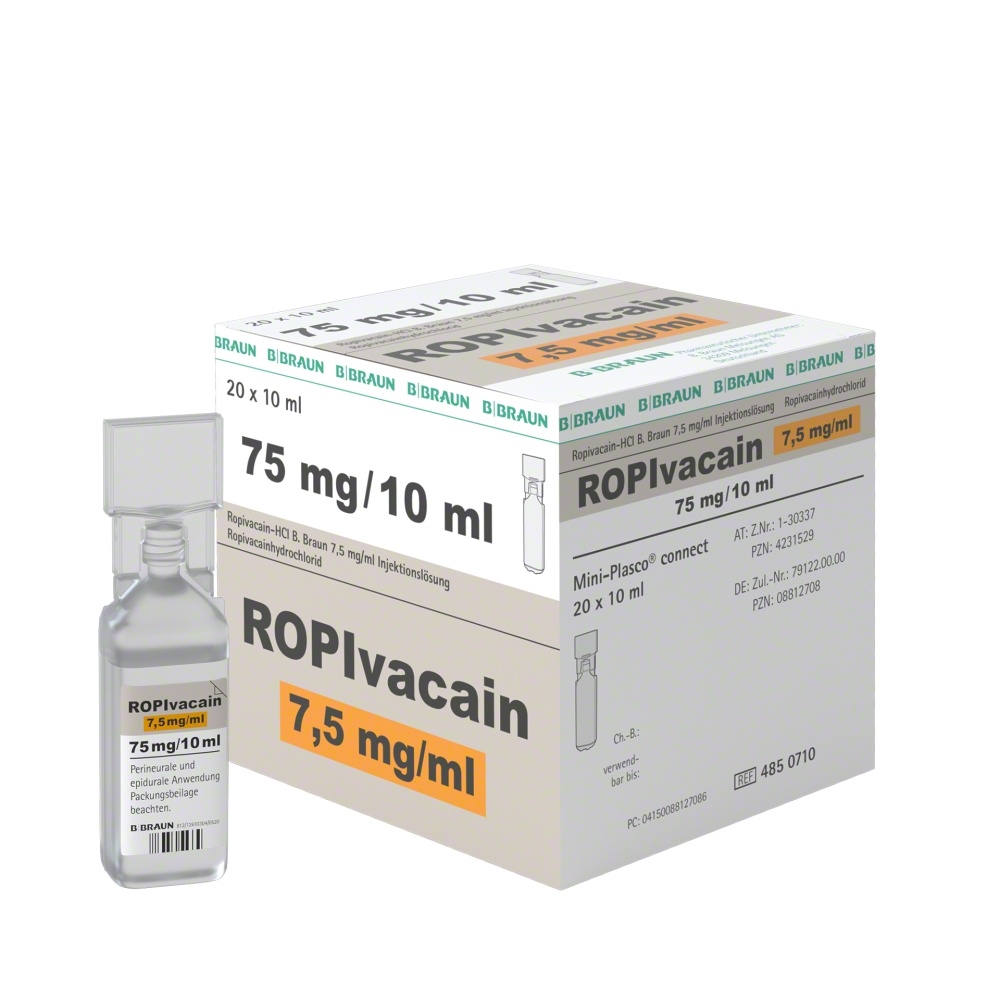
- 10 ml polyethylene vials in packs of 20;
- 20 ml polyethylene vials in packs of 20. Not all pack sizes may be marketed.
Marketing Authorisation Holder and Manufacturer
- B. Braun Melsungen AG Carl-Braun Strasse, 1 34212, Melsungen Germany
Manufacturer
- B. Braun Melsungen AG Mistelweg, 2 12357 Berlin Germany
This medicinal product is authorised in the Member States of the European Economic Area under the
following denominations:
Austria, Germany, Luxembourg: Ropivacain-HCl B. Braun 7,5 mg/ml Injektionslösung,
Belgium: Ropivacaïn HCl B. Braun 7.5 mg/ml, solution for injection;
Bulgaria: Ropivacain HCI B. Braun 7,5 mg/ml solution for injection;
Denmark: Ropivacain B. Braun 7,5 mg/ml;
Estonia: Ropivacaine B. Braun 7,5 mg/ml;
Finland: Ropivacaine B. Braun 7,5 mg/ml injektioneste, liuos;
France: Ropivacaine B. Braun 7,5 mg/ml, solution injectable en ampoule;
Greece: Ropivacain HCI B. Braun 7,5 mg/ml solution for injection;
Italy: Ropivacaina B. Braun 7,5 mg/ml;
Latvia: Ropivacaine B. Braun 7,5 mg/ml šķīdums injekcijām;
Lithuania: Ropivacaine B. Braun 7.5 mg/ml injekcinis tirpalas;
Netherlands, Ropivacaïne HCl B. Braun 7,5 mg/ml, oplossing voor injectie;
Portugal: Ropivacaína B. Braun 7,5 mg/ml solução injetável;
Spain: Ropivacaina B.Braun 7,5 mg/ml solución inyectable.
Sweden: Ropivacain 7,5 mg/ml injektionsvätska, lösning
This leaflet was last revised in 06/2018.
---------------------------------------------------------------------------------------------------------------------------
The following information is intended exclusively for doctors or healthcare professionals:
Method of administration
To avoid intravascular administration, careful aspiration is recommended before and during
injection. When a high dose is to be injected, it is advisable to perform a test dose of
lidocaine with epinephrine (adrenaline). Accidental intravascular injection can be recognised
by a temporary increase in heart rate, while accidental intrathecal injection by signs
of spinal block.
Ropivacaine hydrochloride should be injected slowly or in fractional doses, at a rate of
25-50 mg/minute, closely monitoring the patient's vital signs and maintaining
verbal contact. If symptoms of toxicity occur, administration must be
immediately interrupted.
Warnings
Regional anaesthesia procedures must always be performed in adequately equipped areas and
by qualified personnel. The instruments and medicinal products necessary for monitoring and resuscitation of
emergencies must be immediately available.
Patients undergoing major block should be in optimal condition and have an intravenous
catheter inserted before the block procedure.
The responsible anaesthetist must take appropriate precautions to avoid intravascular
injection (see section 4.2 of the SmPC), must have adequate experience and knowledge
relating to diagnosis and treatment of side effects, systemic toxicity and other
complications (see sections 4.8 and 4.9 of the SmPC) such as accidental subarachnoid injection which
can lead to a high spinal block with apnea and hypotension. Convulsions may occur
more frequently after brachial plexus block and epidural block. This is likely
due to accidental intravascular injection or rapid absorption from the injection site.
Blocking of major peripheral nerves may involve the administration of a larger volume of
local anaesthetic in a highly vascularised area, often near large blood vessels,
where there is an increased risk of intravascular injection and/or rapid systemic absorption, which
can lead to high plasma concentrations.
Patients with hypovolaemia, for any reason, may develop sudden and severe hypotension
during epidural anaesthesia, regardless of the local anaesthetic used.
Handling
Unused or waste product must be disposed of in accordance with local regulations.
The product is for single use only.
The product must be visually inspected before use.
Use only if the solution is clear and colourless and the container and its closure are intact.
Validity after first opening of the container
From a microbiological point of view, unless the opening method precludes the risk of
microbial contamination, the product must be used immediately.
If not used immediately, storage conditions and times of use are the responsibility
of the user.
Refer to the summary of product characteristics for instructions on incompatibilities and
complete prescribing information.
Ropivacaine B. Braun 10 mg/ml injectable solution
Ropivacaine hydrochloride
Read this leaflet carefully before you receive this medicine as it contains
important information for you.
- Keep this leaflet. You may need to read it again.
- If you have any questions, ask your doctor or pharmacist.
- If any side effects occur, including any not listed in this leaflet, tell your doctor or pharmacist. See section 4.
Contents of this leaflet:
- 19. What Ropivacaine B. Braun is and what it is used for.
- 20. What you need to know before you receive Ropivacaine B. Braun.
- 21. How Ropivacaine B. Braun will be administered to you.
- 22. Possible side effects.
- 23. How to store Ropivacaine B. Braun.
- 24. Contents of the pack and other information.
1. What is Ropivacaina B. Braun and what is it used for
The active substance is ropivacaine hydrochloride.
Ropivacaina B. Braun belongs to a group of medicines called local anesthetics (medicines for
numbing).
Ropivacaina B. Braun injectable solution is used in adults and adolescents (over 12 years of age) to
numb (anesthetize) parts of the body. It is used to prevent the onset of pain or to
stop pain that is already present. It can be used for:
- Numbing parts of the body during a surgical procedure, including a Cesarean section.
- Reducing pain during childbirth, after a surgical procedure, or after an accident.
2. What you need to know before you receive Ropivacaina B. Braun
You must not receive Ropivacaina B. Braun if:
- You are allergic to ropivacaine hydrochloride or any of the other ingredients of this medicine (listed in section 6). An allergic reaction may manifest with skin rash, itching, difficulty breathing, swelling of the face, lips, throat or tongue.
- You are allergic to another local anesthetic of the same class (e.g. lidocaine or bupivacaine).
- For injection into a blood vessel to numb a specific area of the body or into the cervix to control pain during childbirth.
- You have been told that you have a decrease in blood volume (hypovolemia).
If you are not sure whether any of these conditions apply to you, consult your doctor before you receive Ropivacaina B. Braun.
Warnings and precautions
Talk to your doctor before you receive Ropivacaina B. Braun. Consult your doctor:
- If you have problems with your heart, liver or kidneys. Your doctor may need to adjust the dose of Ropivacaina B. Braun.
- If you have been told that you have a rare disease of blood pigments called "porphyria" or if someone in your family has it. Your doctor may need to give you a different anesthetic.
- If you are in poor health due to advanced age or for other reasons.
- For illnesses or medical conditions that you may have or have had in the past.
Children
In children aged 12 years or younger, lower concentrations (2
mg/ml, 5 mg/ml) may be more appropriate.
Other medicines and Ropivacaina B. Braun
Tell your doctor or pharmacist if you are taking, have recently taken or might take
any other medicine.
This is particularly important with the following medicines, which can increase the effect of
Ropivacaina B. Braun:
- other local anesthetics (e.g. lidocaine);
- strong painkillers (e.g. morphine);
- medicines used to treat irregular heartbeat (e.g. amiodarone, mexiletine).
Prolonged use of ropivacaine should be avoided if you are taking:
- medicines used to treat depression (e.g. fluvoxamine);
- antibiotics used to treat infections caused by bacteria (e.g. enoxacin). Even in these cases you may still receive Ropivacaina B. Braun. Your doctor should be informed about these medicines in order to be able to decide what is suitable for you.
Pregnancy and breastfeeding
Before receiving this medicine, tell your doctor if you are pregnant or planning a pregnancy or if you are breastfeeding. It is not known whether ropivacaine is excreted in breast milk or if
it can cause harm to breastfeeding babies.
Driving and operating machinery
Ropivacaina B. Braun can cause drowsiness and affect reaction time. If you have been
given this medicine, do not drive, operate machinery and do not work in dangerous
situations until the next day.
Ropivacaina B. Braun contains sodium
This medicine contains 2.7 mg of sodium (the main component of table salt/cooking salt) per
ml. This is equivalent to 0.14% of the maximum recommended daily intake of sodium for an
adult.
3. How Ropivacaina B. Braun will be administered to you
This medicine will be given to you by a doctor or under the supervision of an experienced doctor.
Ropivacaina B. Braun will be administered to you by injection. The part of the body where it will be used
depends on the reason why you are being given the medicine. The doctor will administer the
medicine in one of the following areas:
- The part of the body that needs to be numbed.
- Near the part of the body that needs to be numbed.
- In an area away from the part of the body that needs to be numbed. This is the case with an epidural injection or an infusion performed in the lower or middle of the back near the spinal cord.
You will be carefully monitored by healthcare professionals while Ropivacaina B.
Braun is administered to you. This medicine blocks nerves preventing them from sending pain messages to the
brain. It prevents you from feeling pain, heat or cold in the area where the medicine is used, but
you will continue to feel other sensations to pressure or touch.
Dosage
The doctor will decide the dose of Ropivacaina B. Braun to be administered to you. The dosage depends on the type of
pain that needs to be controlled or other factors, such as body size, age, and physical condition.
If you receive more Ropivacaina B. Braun than you should
Because this medicine is administered by a doctor under carefully controlled conditions, it is
unlikely that you will be given too much medicine or that a dose will be forgotten.
Serious side effects caused by an excessive administration of Ropivacaina B. Braun
require special treatment and the treating doctor is prepared to manage these situations.
The first signs of receiving too much Ropivacaina B. Braun are generally the following :
- dizziness or lightheadedness;
- numbness of the lips and around the mouth;
- numbness of the tongue;
- hearing problems;
- vision problems.
The doctor will stop administering this medicine as soon as these
symptoms appear to reduce the risk of serious side effects. This means that if you experience any of these
symptoms or if you think you have received too much Ropivacaina B. Braun, you must inform
the doctor immediately.
More serious side effects resulting from overdoses of this medicine
include problems with speech, muscle spasms, tremors, seizures (convulsions) and loss of
consciousness.
In case of acute toxicity, healthcare personnel will immediately take appropriate corrective
action.
If you have any further questions about the use of these medicines, ask your doctor.
4. Possible side effects
Like all medicines, this medicine can cause side effects, although not everybody gets them.
All medicines, including Ropivacaina B. Braun, can rarely cause potentially life-threatening allergic reactions
(may occur in up to 1 in 1,000 people). Tell your doctor immediately if you experience any of the
following symptoms after administration of this medicine:
- sudden onset of skin rashes, itching or hives,
- swelling of the eyes, face, lips, tongue, throat or any other part of the body,
- difficulty breathing, sudden wheezing, dizziness.
Other possible side effects
Very common (may affect more than 1 in 10 people)
- low blood pressure (hypotension) (you may feel dizzy or lightheaded);
- feeling unwell (nausea).
Common (may affect up to 1 in 10 people)
- paresthesia;
- dizziness;
- feeling unwell (vomiting);
- slow or fast heartbeat (bradycardia, tachycardia);
- high blood pressure (hypertension);
- elevated body temperature (fever) or chills;
- back pain;
- headache;
- difficulty urinating.
Uncommon (may affect up to 1 in 100 people)
- anxiety;
- fainting;
- difficulty breathing;
- low body temperature (hypothermia);
- Some symptoms may occur if the injection is accidentally administered into a blood vessel or if too much Ropivacaina B. Braun is given (see also "If you receive more Ropivacaina B. Braun than you should" above). These include convulsions, seizures (convulsive attacks), dizziness or lightheadedness, numbness of the lips, around the mouth and tongue, hearing problems, vision problems (vision), speech problems, stiffness, reduced sensitivity or sensations on the skin and muscle spasm.
Rare (may affect up to 1 in 1,000 people)
- heart attack (cardiac arrest);
- irregular heartbeat (arrhythmia).
Not known (frequency cannot be estimated from available data)
- jerky movements (dyskinesia)
Possible side effects observed with other local anesthetics that may also be caused by
Ropivacaina B. Braun
- Nerve damage. Rarely causes permanent problems.
- It is possible for the whole body to become numb (anesthetized) if too high a dose of Ropivacaina B. Braun has been injected into the spinal fluid.
Children
In infants and children, the side effects are the same as those in adults,
except for low blood pressure, which is less common in infants and children (affects less
than 1 in 10 children) and vomiting which is more common in children (affects more than 1 in
10 children).
Reporting of side effects
If you get any side effects, talk to your doctor or pharmacist. This includes any side effects not listed
in this leaflet. You can also report side effects directly through the national reporting system at
www.agenziafarmaco.gov.it/content/come-segnalare-una-sospetta-reazione-avversa .
Reporting side effects helps to provide more information on the safety of this medicine.
5. How to store Ropivacaina B. Braun
Keep this medicine out of sight and reach of children.
Do not use this medicine after the expiry date which is stated on the packaging and label after
“Exp.”. The expiry date refers to the last day of that month.
Do not freeze.
The doctor or pharmacist are responsible for the storage of this medicine. They are also
responsible for the correct disposal of unused medicine.
6. Contents of the pack and other information
What Ropivacaine B. Braun contains
The active ingredient is ropivacaine hydrochloride.
1 ml of Ropivacaine B. Braun contains 10 mg of ropivacaine hydrochloride (as ropivacaine hydrochloride
monohydrate).
1 vial of 10 ml of injectable solution contains 100 mg of ropivacaine hydrochloride as ropivacaine
hydrochloride monohydrate.
1 vial of 20 ml of injectable solution contains 200 mg of ropivacaine hydrochloride as ropivacaine
hydrochloride monohydrate.
The other ingredients are sodium chloride, hydrochloric acid 0.36% (for pH adjustment), sodium
hydroxide 0.4% (for pH adjustment) and water for injections.
Description of the appearance of Ropivacaine B. Braun and contents of the pack
Ropivacaine B. Braun is a clear and colourless injectable solution.
Ropivacaine B. Braun 10 mg/ml injectable solution is available in:
- vials made of polyethylene of 10 ml in packs of 20;
- vials made of polyethylene of 20 ml in packs of 20. Not all pack sizes may be marketed.
Marketing Authorisation Holder and Manufacturer
- B. Braun Melsungen AG Carl-Braun Strasse, 1 34212, Melsungen Germany Manufacturer
- B. Braun Melsungen AG Mistelweg, 2 12357 Berlin Germany
This medicinal product is authorised in the Member States of the European Economic Area with the
following denominations:
Austria, Germany, Luxembourg: Ropivacain-HCl B. Braun 10 mg/ml Injektionslösung;
Belgium: Ropivacaïn HCl B. Braun 10 mg/ml, solution for injection;
Denmark: Ropivacain B. Braun 10 mg/ml;
Finland: Ropivacaine B. Braun 10 mg/ml injektioneste, liuos;
France: Ropivacaine B. Braun 10 mg/ml, solution injectable en ampoule;
Greece: Ropivacain HCI B. Braun 10 mg/ml solution for injection;
Italy: Ropivacaina B. Braun 10 mg/ml soluzione iniettabile;
Netherlands: Ropivacaïne HCl B. Braun 10 mg/ml, oplossing voor injectie;
Portugal: Ropivacaína B. Braun 10 mg/ml solução injetável;
Spain: Ropivacaína B.Braun 10 mg/ml solución inyectable.
Sweden: Ropivacain 10 mg/ml injektionsvätska, lösning
This leaflet was last revised in 06/2018
---------------------------------------------------------------------------------------------------------------------------
The following information is intended exclusively for doctors or healthcare professionals:
Method of administration
To avoid intravascular administration, careful aspiration is recommended before and during
injection. When a high dose needs to be injected, it is advisable to perform a test dose of
lidocaine with epinephrine (adrenaline). Accidental intravascular injection can be recognised
by a temporary increase in heart rate, while accidental intrathecal injection by signs
of spinal block.
Ropivacaine hydrochloride should be injected slowly or in fractional doses, at a rate of
25-50 mg/minute, keeping the patient's vital parameters under close observation and maintaining
verbal contact. If symptoms of toxicity occur, administration must be
immediately stopped.
Warnings
Regional anaesthesia procedures must always be carried out in adequately equipped areas and
by qualified personnel. The instruments and medicines necessary for monitoring and emergency resuscitation must be immediately available.
Patients undergoing major block should be in optimal condition and have an intravenous catheter inserted before the block procedure.
The responsible anaesthetist must take appropriate precautions to avoid intravascular injection (see section 4.2 of the SmPC), must have adequate experience and knowledge
relating to diagnosis and treatment of side effects, systemic toxicity and other
complications (see sections 4.8 and 4.9 of the SmPC) such as an accidental subarachnoid injection which
can lead to a high spinal block with apnea and hypotension. Seizures may occur
more frequently after brachial plexus block and epidural block. This is likely to
be due to an accidental intravascular injection or rapid absorption from the injection site.
Blocking major peripheral nerves may involve administering a larger volume of
local anaesthetic in a highly vascularized area, often near large blood vessels,
where there is an increased risk of intravascular injection and/or rapid systemic absorption, which
can lead to high plasma concentrations.
During epidural anaesthesia, patients with hypovolaemia, due to any cause, may be
subject to sudden and severe hypotension, regardless of the local anaesthetic used.
Handling
Unused or waste product must be disposed of in accordance with current local regulations.
The product is for single use only.
The medicinal product must be visually inspected before use.
Use only if the solution is clear, colourless and the container and its closure are intact.
Validity after first opening of the containerFrom a microbiological point of view, unless the
opening method precludes the risk of contamination, the product must be used
immediately.
If not used immediately, the storage times and conditions in use are the
responsibility of the user.
Refer to the summary of product characteristics for instructions on, incompatibilities and
complete prescribing information.

Не уверены, подходит ли вам это лекарство?
Обсудите симптомы и варианты лечения с врачом онлайн.

Уже начали прием и появились вопросы?
Обсудите свое состояние и дальнейшие шаги с врачом онлайн.
- Страна регистрации
- Форма выпускаInjectable solution, 2 MG/ML
- Код АТХN01BB09
- Действующее вещество
- Отпускается по рецептуДа
- Производитель
- Информация на этой странице носит справочный характер и не является медицинской консультацией. Перед началом приема лекарства обязательно проконсультируйтесь с врачом.
- Аналоги ROPIVAKAINA B. BRAUNФорма выпуска: Injectable solution, 2 MG/MLДействующее вещество: ropivacaineПроизводитель: SANDOZ S.P.A.Отпускается по рецептуФорма выпуска: Infusion solution, 2 MG/MLДействующее вещество: ropivacaineПроизводитель: ALTAN PHARMACEUTICALS S.A.Отпускается по рецептуФорма выпуска: Injectable solution, 2 MG/MLДействующее вещество: ropivacaineПроизводитель: ALTAN PHARMACEUTICALS S.A.Отпускается по рецепту
Аналоги ROPIVAKAINA B. BRAUN в других странах
Лекарства с тем же действующим веществом, доступные в других странах.
Аналог ROPIVAKAINA B. BRAUN в Испания
Аналог ROPIVAKAINA B. BRAUN в Польша
Аналог ROPIVAKAINA B. BRAUN в Украина
Врачи онлайн по ROPIVAKAINA B. BRAUN
Обсудите применение ROPIVAKAINA B. BRAUN и возможные следующие шаги — по оценке врача.









Получите рецепт на ROPIVAKAINA B. BRAUN онлайн
Заполните форму за 2 минуты
Расскажите о симптомах, истории болезни и нужном препарате.
Выберите врача или мы назначим
Выберите специалиста или мы подберём ближайшего доступного врача.
Врач рассматривает ваш случай
Обычно в течение 30 минут. Может задать уточняющие вопросы в чате.
Получите в любой аптеке
Электронный рецепт отправляется на вашу почту — действителен по всей Польше.
Часто задаваемые вопросы
ROPIVAKAINA B. BRAUN требует рецепта в Италия. Вы можете уточнить у врача онлайн, подходит ли это лекарство для вашей ситуации.
Действующее вещество ROPIVAKAINA B. BRAUN — ropivacaine. Эта информация помогает определить лекарства с тем же составом под другими торговыми названиями.
ROPIVAKAINA B. BRAUN производится компанией B. BRAUN MELSUNGEN AG. Упаковка и торговое название могут отличаться в зависимости от дистрибьютора.
Врачи, включая Семейные врачи, Психиатры, Дерматологи, Кардиологи, Эндокринологи, Гастроэнтерологи, Пульмонологи, Нефрологи, Ревматологи, Гематологи, Инфекционисты, Аллергологи, Гериатры, Педиатры, Онкологи, могут оценить целесообразность применения ROPIVAKAINA B. BRAUN с учетом вашей ситуации и местных правил. Вы можете записаться на онлайн-консультацию, чтобы обсудить возможные варианты.
Польша имеет хорошо развитую систему здравоохранения в крупных городах, таких как Варшава, Краков, Вроцлав и Гданьск. Аптеки широко доступны и работают в соответствии с действующим законодательством, обеспечивая доступ к рецептурным препаратам.
Вы можете купить ROPIVAKAINA B. BRAUN в Варшаве, Кракове, Вроцлаве или Гданьске в любой аптеке при наличии действующего рецепта.
Чтобы получить рецепт, вы можете воспользоваться Oladoctor:
Другие лекарства с тем же действующим веществом (ropivacaine) включают NAROPINA, ROPIVAKAINA KLORIDRATO ALTAN PARMA, ROPIVAKAINA KLORIDRATO ALTAN. Они могут отличаться торговым названием или формой выпуска, но содержат одинаковый терапевтический компонент. Перед изменением лечения рекомендуется проконсультироваться с врачом.
