



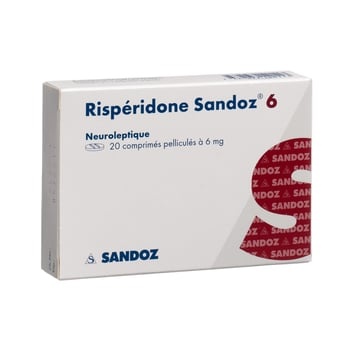
RISPERIDONE 1 мг Фильм-coated таблетки

Рассмотрение рецепта онлайн
Врач рассмотрит ваш случай и примет решение о назначении рецепта, если это медицински оправдано.

Поговорите с врачом об этом лекарстве
Обсудите симптомы и возможные дальнейшие шаги на онлайн-консультации.



Инструкция по применению RISPERIDONE SANDOTS
Содержание инструкции
Risperidone Sandoz 1 mg film-coated tablets, 2 mg film-coated tablets, 3 mg film-coated tablets, 4 mg film-coated tablets
Generic medicine
Read this leaflet carefully before you start taking this medicine as it contains important information for you
- Keep this leaflet. You may need to read it again.
- If you have any questions, ask your doctor or pharmacist.
- This medicine has been prescribed for you only. Do not pass it on to others, even if their symptoms are the same as yours, as it could be harmful.
- If you get any side effects, even those not listed in this leaflet, tell your doctor or pharmacist. See section 4.
Contents of this leaflet:
- 1. What Risperidone Sandoz is and what it is used for
- 2. What you need to know before you take Risperidone Sandoz
- 3. How to take Risperidone Sandoz
- 4. Possible side effects
- 5. How to store Risperidone Sandoz
- 6. Contents of the pack and other information
1. What is Risperidone Sandoz and what is it used for
Risperidone Sandoz contains the active substance risperidone. It belongs to a group of medicines
called “antipsychotics”.
Risperidone Sandoz is used to treat the following disorders:
- schizophrenia, which may cause you to see, hear or feel things that are not there, to believe things that are not true or to feel unusually suspicious or confused
- mania, which may cause you to feel very excited, euphoric, agitated, enthusiastic or hyperactive. Mania occurs in an illness called “bipolar disorder”
- short-term treatment (up to 6 weeks) of long-term aggression in people with Alzheimer's dementia, who harm themselves or others. Alternative treatments (non-pharmacological) should have been tried first.
- short-term treatment (up to 6 weeks) of long-term aggression in children with intellectual disability (aged 5 years and over) and adolescents with conduct disorder
Risperidone Sandoz can relieve the symptoms of your illness and prevent the symptoms from
recurring.
2. Cosa deve sapere prima di prendere Risperidone Sandoz
Non prenda Risperidone Sandoz:
- se è allergico a risperidone o a uno qualsiasi degli altri componenti di questo medicinale (elencati al paragrafo 6).
Se non è sicuro che quanto sopra sia pertinente al suo caso, consulti il medico o il farmacista prima
di prendere Risperidone Sandoz.
Avvertenze e precauzioni
Si rivolga al medico o al farmacista prima di prendere Risperidone Sandoz se:
- soffre di disturbi cardiaci. Per esempio se presenta un ritmo cardiaco irregolare o se è incline a soffrire di bassa pressione arteriosa o se utilizza medicinali per la pressione. Risperidone Sandoz può causare un abbassamento della pressione. Potrebbe rendersi necessario un aggiustamento del dosaggio
- è a conoscenza di fattori che potrebbero favorire un ictus, come pressione alta, disturbi cardiovascolari o disturbi dei vasi sanguigni nel cervello
- ha mai avuto movimenti involontari della lingua, della bocca e del viso
- ha mai sofferto di una condizione i cui sintomi includono alta temperatura corporea, rigidità muscolare, sudorazione o livello ridotto di coscienza (nota anche come sindrome neurolettica maligna)
- ha morbo o la demenza di Parkinson
- sa di avere avuto in passato bassi livelli di globuli bianchi (che può essere causato o essere stato causato da altri medicinali)
- è diabetico
- soffre di epilessia
- è di sesso maschile e ha sofferto in qualsiasi momento di un’erezione dolorosa o prolungata.
- soffre di problemi di controllo della temperatura corporea o di surriscaldamento
- soffre di disturbi renali
- soffre di disturbi epatici
- presenta un livello anormalmente elevato dell’ormone prolattina nel sangue o ha un tumore, che potrebbe dipendere dalla prolattina.
- Lei o qualcun altro nella sua famiglia ha una storia di coaguli di sangue, poichè gli antipsicotici sono stati associati alla formazione di coaguli di sangue.
Se non è sicuro che uno qualsiasi di questi disturbi sia pertinente al suo caso, consulti il medico o il
farmacista prima di prendere Risperidone Sandoz.
Poiché sono stati osservati molto raramente con pazienti che assumevano Risperidone Sandoz
numeri pericolosamente bassi di un certo tipo di globuli bianchi necessari per combattere
l'infezione nel sangue, il medico può controllare la conta leucocitaria.
Risperidone Sandoz può causare un aumento del peso corporeo. Un significativo aumento di peso
può influire negativamente sulla sua salute. Il medico deve misurare regolarmente il suo peso
corporeo.
Poiché sono stati osservati diabete mellito o peggioramento di diabete mellito preesistente in
pazienti che prendono Risperidone Sandoz, il medico deve verificare la presenza di alti livelli di
zucchero nel sangue.
Nei pazienti con preesistente diabete mellito deve essere controllato regolarmente il glucosio nel
sangue.
Durante un'operazione all'occhio per un'opacità del cristallino (cataratta), la pupilla (il cerchio nero
al centro dell'occhio) non può aumentare di dimensione come necessario. Inoltre, l'iride (la parte
colorata dell'occhio) può diventare flaccida durante l'intervento chirurgico e può recare danni
all’occhio. Se ha in programma un intervento all’occhio, informi l’oculista che sta assumendo
questo medicinale.
Pazienti anziani con demenza
Nei pazienti anziani con demenza sussiste un aumento del rischio di ictus. Non deve prendere
risperidone se soffre di demenza causata da ictus.
Durante il trattamento con risperidone deve consultare frequentemente il medico.
È necessario ricorrere a un immediato trattamento medico se lei o chi si prende cura di lei nota un
improvviso cambiamento del suo stato mentale o un’improvvisa debolezza o intorpidimento di
viso, braccia o gambe, in particolare da un lato, o una cattiva articolazione della parola, anche per
un breve periodo di tempo. Questi possono essere i segni di un ictus.
Bambini e adolescenti
Prima dell’inizio del trattamento per il disturbo del comportamento devono essere escluse le altre
possibili cause di un comportamento aggressivo.
Se durante il trattamento con risperidone si manifesta stanchezza, un cambiamento nell’orario di
somministrazione potrebbe migliorare i problemi relativi all’attenzione.
Prima dell’inizio del trattamento si deve misurare il suo peso corporeo, o quello del suo bambino,
il quale deve essere regolarmente monitorato durante il trattamento.
Altri medicinali e Risperidone Sandoz
Informi il medico o il farmacista se sta assumendo, ha recentemente assunto o potrebbe assumere
qualsiasi altro medicinale.
È particolarmente importante che informi il medico o il farmacista se sta prendendo uno dei
seguenti medicinali:
- medicinali che agiscono sul cervello, allo scopo di calmare il paziente (benzodiazepine) o alcuni medicinali per il dolore (oppiacei), medicinali per le allergie (alcuni antistaminici), poiché risperidone può aumentare il loro effetto sedativo
- medicinali che possono modificare l’attività elettrica del cuore, come i medicinali per la malaria, per i disturbi del ritmo cardiaco, per le allergie (antistaminici), alcuni antidepressivi o altri medicinali usati per trattare i disturbi mentali
- medicinali che causano un rallentamento del battito cardiaco
- medicinali che determinano bassi livelli di potassio nel sangue (come alcuni diuretici)
- medicinali usati per trattare la pressione sanguigna elevata. Risperidone Sandoz può abbassare la pressione sanguigna
- medicinali utilizzati per trattare il morbo di Parkinson (come levodopa)
- diuretici, utilizzati per i disturbi cardiaci o per trattare il gonfiore di alcune parti del corpo dovuto a un accumulo di liquidi in eccesso (come furosemide o clorotiazide). Risperidone Sandoz preso da solo o con furosemide può determinare un aumento del rischio di ictus o di morte nei pazienti anziani con demenza.
I seguenti medicinali possono ridurre l’effetto di risperidone
- rifampicina (un medicinale usato per il trattamento di alcune infezioni)
- carbamazepina, fenitoina (medicinali usati per il trattamento dell’epilessia)
- fenobarbital
Se inizia o interrompe il trattamento con tali medicinali può aver bisogno di una dose diversa di
risperidone.
I seguenti medicinali possono aumentare l’effetto di risperidone
- chinidina (usata per alcuni tipi di malattie cardiache)
- antidepressivi, come paroxetina, fluoxetina, antidepressivi triciclici
- medicinali chiamati beta-bloccanti (usati per trattare la pressione alta)
- fenotiazine (come medicinali usati per trattare la psicosi o per calmarsi)
- cimetidina, ranitidina (bloccanti dell’acidità di stomaco).
Se inizia o interrompe il trattamento con tali medicinali può aver bisogno di una dose diversa di
risperidone.
Se non è sicuro che una qualsiasi di queste situazioni sia pertinente al suo caso, consulti il medico
o il farmacista prima di prendere Risperidone Sandoz.
Risperidone Sandoz con cibi, bevande e alcol
Può prendere Risperidone Sandoz con o senza cibo. In corso di trattamento con Risperidone
Sandoz eviti le bevande alcoliche.
Gravidanza, allattamento e fertilità
- Se è in corso una gravidanza, se sospetta o sta pianificando una gravidanza, o se sta allattando con latte materno chieda consiglio al medico o al farmacista prima di prendere questo medicinale. Il medico deciderà se può prendere questo medicinale.
- I seguenti sintomi possono verificarsi in neonati di madri che hanno preso Risperidone Sandoz durante l'ultimo trimestre (ultimi tre mesi di gravidanza): tremori, rigidità muscolare e/o debolezza, sonnolenza, agitazione, problemi respiratori, e difficoltà di alimentazione. Se il suo bambino sviluppa uno di questi sintomi, potrebbe essere necessario rivolgersi al medico.
- Risperidone Sandoz può aumentare i livelli di un ormone chiamato “prolattina” che può influenzare la fertilità (vedere paragrafo 4 Possibili effetti indesiderati).
Guida di veicoli e utilizzo di macchinari
In corso di trattamento con Risperidone Sandoz possono verificarsi capogiri, stanchezza e disturbi
della vista. Non guidi né utilizzi strumenti o macchinari senza aver prima consultato il medico.
Risperidone Sandoz contiene lattosio
Se il medico le ha diagnosticato un’intolleranza ad alcuni zuccheri, lo contatti prima di prendere
questo medicinale.
3. How to take Risperidone Sandoz
Take this medicine exactly as your doctor has told you. If you have any doubts, consult your doctor or pharmacist.
Your doctor will tell you how much medicine to take and for how long. These factors depend on
your condition and vary from person to person.
The recommended dose is as follows:
For the treatment of schizophrenia
Adults
- The usual starting dose is 2 mg per day; this may be increased to 4 mg per day on the second day.
- The dose may then be adjusted by your doctor, depending on how you respond to treatment.
- Most people feel better with daily doses of 4-6 mg.
- This total daily dose may be divided into one or two doses per day. Your doctor will tell you which dosage is most suitable for your case.
Elderly
- The starting dose is usually 0.5 mg twice a day.
- The dose may be gradually increased by your doctor to 1-2 mg twice a day.
- Your doctor will tell you which dosage is most suitable for your case.
For the treatment of mania
Adults
- The usual starting dose is 2 mg once a day.
- The dose may then be adjusted by your doctor, depending on how you respond to treatment.
- Most people feel better with doses of 1-6 mg once a day.
Elderly
- The starting dose is usually 0.5 mg twice a day.
- The dose may be gradually increased by your doctor to 1-2 mg twice a day, depending on how you respond to treatment.
For the treatment of long-term aggression in people with Alzheimer's dementia
Adults (including the elderly)
- The usual starting dose is 0.25 mg twice a day.
- The dose may then be adjusted by your doctor, depending on how you respond to treatment.
- Most people feel better with 0.5 mg twice a day. Some patients may need 1 mg twice a day.
- The duration of treatment in patients with Alzheimer's dementia should not exceed 6 weeks.
Use in children and adolescents
- Children and adolescents under 18 years of age should not be treated with Risperidone Sandoz for schizophrenia or mania.
- For the treatment of behavioural disordersthe dose will depend on the child's weight:
For children weighing less than 50 kg
- The starting dose is usually 0.25 mg once a day.
- The dose may be increased every other day, in increments of 0.25 mg per day.
- The usual maintenance dose is 0.25-0.75 mg once a day.
For children weighing 50 kg or more
- The starting dose is usually 0.5 mg once a day.
- The dose may be increased every other day, in increments of 0.5 mg per day.
- The usual maintenance dose is 0.5-1.5 mg once a day.
The duration of treatment in patients with conduct disorder should not exceed 6
weeks.
Children under 5 years of age should not be treated with Risperidone Sandoz for behavioural disorders.
People with kidney or liver problems
Regardless of the condition being treated, all initial and subsequent doses of risperidone
must be halved. In these patients, any dose increases should be
made more gradually. Risperidone should be used with
caution in this group of patients.
How to administer
For oral use
You should swallow the tablet with a glass of water.
If you take more Risperidone Sandoz than you should
- Consult a doctor immediately. Bring the medicine packaging with you.
- In case of overdose, you may experience drowsiness or fatigue, abnormal body movements, problems standing and walking, a feeling of dizziness due to low blood pressure, irregular heartbeats or convulsions.
If you forget to take Risperidone Sandoz
- If you forget to take a dose, take it as soon as you remember. However, if it is almost time to take the next dose, skip the missed dose and continue as usual. If you forget two or more doses, consult your doctor.
- Do not take a double dose (two doses at the same time) to make up for the missed dose.
If you stop taking Risperidone Sandoz
- Do not stop treatment unless your doctor tells you to. Your symptoms may return.
If your doctor decides to stop the medicine, they will do so by gradually reducing the dose
over a few days.
If you have any further questions on the use of this medicine, ask your doctor or pharmacist.
4. Possible side effects
Like all medicines, this medicine can cause side effects, although not everyone will experience them.
Immediately inform your doctor if
- you develop blood clots in the veins, especially in the legs (symptoms include swelling, pain, and redness in the legs), which can move through the blood vessels to the lungs causing chest pain and difficulty breathing. If you notice any of these symptoms, inform your doctor immediately.
- you develop dementia and a sudden change in mental status or sudden weakness or numbness in the face, arms, or legs, especially on one side, or difficulty speaking, even for a short period of time. These may be signs of a stroke
- you develop fever, muscle rigidity, sweating, or decreased level of consciousness (a condition called "neuroleptic malignant syndrome"). Immediate medical treatment may be necessary
- you are male and develop a prolonged and painful erection. This phenomenon is called priapism. Immediate medical treatment may be necessary
- you develop rhythmic involuntary movements of the tongue, mouth, and face. Discontinuation of risperidone therapy may be necessary.
- you develop a severe allergic reaction characterized by fever, swelling of the mouth, face, lips, or tongue, shortness of breath, itching, rash, or low blood pressure.
The following side effects may occur:
Very common (may affect more than 1 in 10 people):
- Difficulty falling asleep or staying asleep
- Parkinsonism. This condition includes: slow or altered movement, a feeling of stiffness or tension in the muscles (leading to jerky movements), and sometimes also a feeling of being "frozen" and then restarting. Other signs of parkinsonism include a slow shuffling gait when walking, resting tremor, increased saliva and/or drooling, and loss of facial expression.
- Feeling sleepy or lacking alertness
- Headache.
Common (may affect up to 1 in 10 people)
- Pneumonia, chest infection (bronchitis), common cold symptoms, sinusitis, urinary tract infection, ear infections, flu-like feeling
- Risperidone may increase the levels of a hormone called "prolactin" seen in a blood test (which may or may not cause symptoms). When symptoms of high prolactin occur, these may include breast enlargement in men, difficulty achieving or maintaining an erection, or other sexual dysfunction. In women, they may include breast pain, milk leakage from the breasts, absence of menstrual periods, or other problems with the menstrual cycle.
- Weight gain, increased appetite, decreased appetite
- Sleep disturbances, irritability, depression, anxiety, agitation
- Dystonia: this is a condition that includes a slow or sustained involuntary contraction of muscles. While it can involve any part of the body (and can cause abnormal posture), dystonia often involves the muscles of the face, including abnormal movements of the eyes, mouth, tongue, or jaw.
- Dizziness
- Dyskinesia: this is a condition that includes involuntary muscle movements, and may include repetitive, jerky, or contorted movements, or contractions.
- Tremor (shaking)
- Blurred vision, eye infections or conjunctivitis
- Rapid heart rate, high blood pressure, shortness of breath
- Sore throat, cough, nosebleed, stuffy nose
- Abdominal pain, abdominal discomfort, vomiting, nausea, constipation, diarrhea, indigestion, dry mouth, toothache
- Rash, skin redness
- Muscle spasms, bone or muscle pain, back pain, joint pain
- Incontinence (loss of bladder control)
- Swelling of the body, arms, or legs, chest pain, weakness, fatigue (tiredness), pain
- Falls
Uncommon (may affect up to 1 in 100 people)
- Respiratory tract infection, bladder infection, eye infections, tonsillitis, fungal nail infections, skin infections, an infection confined to a single area of skin or part of the body, viral infection, skin inflammation caused by mites
- Decreased number of white blood cells that help protect against infections, decreased white blood cell count, decreased platelets (blood cells that help stop bleeding), anemia, decreased red blood cells, increased eosinophils (a type of white blood cells) in the blood
- Allergic reaction
- Diabetes or worsening of diabetes, high blood sugar, drinking excessive amounts of water
- Weight loss, loss of appetite leading to malnutrition and low body weight
- Increased cholesterol in the blood
- Elevated mood (mania), confusion, decreased sexual drive, nervousness, nightmares
- Tardive dyskinesia (spasms or twitching of the face, tongue, or other parts of the body that you cannot control). Contact your doctor immediately if you experience rhythmic involuntary movements of the tongue, mouth, and face. Discontinuation of risperidone treatment may be necessary.
- Sudden loss of blood flow to the brain (stroke or "mini" stroke)
- Loss of responsiveness, loss of consciousness, low level of consciousness
- Seizures (convulsions), fainting
- A restless desire to move parts of the body, balance disorders, abnormal coordination, dizziness when standing up, attention problems, speech problems,
loss or abnormal sense of taste, reduced sensation of the skin to pain and touch, a
tingling, prickling, or numbness of the skin
- Light sensitivity of the eyes, dry eyes, increased tearing, red eyes
- Feeling of spinning (vertigo), ringing in the ears, ear pain
- Atrial fibrillation (an abnormal heart rhythm), an interruption in the conduction between the upper and lower parts of the heart, abnormal electrical conduction of the heart, prolongation of the QT interval from the heart, slow heart rate, abnormal heart tracing (electrocardiogram or ECG), pounding or racing heartbeat (palpitations)
- Low blood pressure, low blood pressure when standing up (as a result, some people taking risperidone may feel weak, dizzy, or faint when getting up or sitting down suddenly), hot flashes
- Pneumonia caused by inhalation of food, congestion of the lungs, congestion of the airways, crackling sound of the lung, shortness of breath, voice disorder, breathing difficulty
- Stomach or intestinal infections, fecal incontinence, very hard stools, difficulty swallowing, excessive passing of gas or air
- Hives, itching, hair loss, thickened skin, eczema, dry skin, skin discoloration, acne, itchy scalp or skin, skin disorders, skin lesions
- Increased CPK (creatine phosphokinase) in the blood, an enzyme that is sometimes released with muscle breakdown
- Abnormal posture, stiff joints, swelling, muscle weakness, pain in the neck
- Frequent urination, inability to urinate, pain during urination
- Erectile dysfunction, ejaculation disorders
- Loss of menstrual periods, missed menstrual periods, or other problems with the cycle (females)
- Development of breast tissue in men, milk leakage from the breasts, sexual dysfunction, breast pain, breast disorder, vaginal discharge
- Swelling of the face, mouth, eyes, or lips
- Chills, increased body temperature
- Change in the way you walk
- Feeling of thirst, feeling unwell, chest pain, low mood, discomfort
- Increased liver transaminases in the blood, increased GGT (an enzyme of the liver called gamma-glutamyl transferase) in the blood, increased liver enzymes in the blood
- Procedural pain
Rare (may affect up to 1 in 1,000 people)
- Infection
- Inappropriate secretion of a hormone that controls urine volume
- Sugar in the urine, low blood sugar, high levels of triglycerides in the blood (a fat)
- Lack of emotions, inability to reach orgasm
- Neuroleptic malignant syndrome (confusion, reduction or loss of consciousness, high fever, and severe muscle rigidity).
- Problems with blood vessels in the brain
- Coma due to uncontrolled diabetes
- Dizziness
- Glaucoma (increased pressure inside the eyeball), problems with eye movement, feeling of spinning of the eyes, formation of crusts on the eyelid margin
- Dangerous low number of a certain type of white blood cells needed to fight infection in the blood
- Severe allergic reaction characterized by fever, mouth, face, lips, or tongue swelling, shortness of breath, itching, rash, and sometimes low blood pressure
- Dangerous excessive intake of water
- Irregular heartbeat
- Blood clots in the legs, blood clots in the lungs
- Breathing problems during sleep (sleep apnea), rapid breathing, shallow breathing
- Inflammation of the pancreas, intestinal blockage
- Swelling of the tongue, chapped lips, drug rash on the skin
- Dandruff
- Breakdown of muscle fibers and muscle pain (rhabdomyolysis)
- Delay in menstrual periods, enlargement of the mammary glands, increased breast size, breast secretion
- Increased insulin (a hormone that controls blood sugar levels) in the blood
- • Priapism (a prolonged erection that may require surgical treatment)
- Hardening of the skin
- Decreased body temperature, cold arms and legs
- Withdrawal symptoms
- Yellowing of the skin and eyes (jaundice).
Very rare (may affect up to 1 in 10,000 people)
- Life-threatening complications of uncontrolled diabetes
- Severe allergic reactions with swelling that can involve the throat and lead to difficulty breathing Intestinal immobility causing a blockage
The following side effect has been reported with the use of another medicine called
paliperidone which is very similar to risperidone, so it may also be expected with
this medicine: rapid heartbeat when standing up.
Other side effects in children and adolescents
In general, side effects in children should be similar to those of adults.
The following side effects have been reported more frequently in children and adolescents (5-
17 years) than in adults: feeling sleepy or lacking alertness, fatigue
(tiredness), headache, increased appetite, vomiting, common cold symptoms, nasal
congestion, abdominal pain, dizziness, cough, fever, tremor (agitation), diarrhea, and
incontinence (loss of control) of urine.
Reporting of side effects
If you get any side effects, talk to your doctor or pharmacist. This includes any side effects not
listed in this leaflet. You can also report side effects directly through the national reporting
system at
www.agenziafarmaco.gov.it/it/responsabili. By reporting side effects you can help provide
more information on the safety of this medicine.
5. How to store Risperidone Sandoz
Keep this medicine out of the sight and reach of children.
Do not use this medicine after the expiry date, which is stated on the outer packaging, on the
blister and on the tablet container, after the wording EXP. The expiry date refers to
the last day of that month.
This medicine does not require any particular storage conditions.
Do not dispose of any medicine in wastewater or household waste. Ask your pharmacist how to
dispose of medicines you no longer use. This will help protect the environment.
6. Contents of the pack and other information
What Risperidone Sandoz contains
The active ingredient is risperidone.
Each film-coated tablet of Risperidone Sandoz contains 1, 2, 3 or 4 mg of risperidone.
The excipients are as follows
Core
Lactose monohydrate, microcrystalline cellulose (E460), pregelatinized corn starch,
sodium croscarmellose, sodium lauryl sulfate, anhydrous colloidal silica, magnesium stearate (E470b).
Coating
Risperidone Sandoz 1 mg film-coated tablets:
hypromellose (E464), titanium dioxide (E171), macrogol (400)
Risperidone Sandoz 2 mg film-coated tablets:
hypromellose (E464), titanium dioxide (E171), macrogol (400), iron oxide red (E172)
Risperidone Sandoz 3 mg film-coated tablets:
hypromellose (E464), titanium dioxide (E171), macrogol (400), quinoline yellow aluminium lake (E104)
Risperidone Sandoz 4 mg film-coated tablets:
hydroxypropylcellulose (E463), hypromellose (E464), titanium dioxide (E171), iron oxide red (E172),
iron oxide black (E172)
Description of the appearance of Risperidone Sandoz and contents of the pack
Risperidone Sandoz 1 mg film-coated tablets: white, biconvex, oblong tablets,
with a score line on one side.
Risperidone Sandoz 2 mg film-coated tablets: pink, biconvex, oblong tablets, with
a score line on both sides.
Risperidone Sandoz 3 mg film-coated tablets: yellow, biconvex, oblong tablets,
with a score line on one side.
Risperidone Sandoz 4 mg film-coated tablets: dark pink, biconvex,
oblong tablets, with a score line on both sides.
Risperidone Sandoz may be packaged in blisters made of PVC/PE/PVDC/Alu or in
tablette containers made of PP with a lid made of LDPE.
Pack sizes
Blister: 6, 10, 20, 30, 50, 60, 100, 100x1 and 250 film-coated tablets
Bottle: 6, 10, 20, 30, 50, 60, 100 and 250 film-coated tablets
Not all pack sizes may be marketed
Marketing Authorisation Holder
Sandoz S.p.A. – Largo U. Boccioni, 1 – 21040 Origgio (VA)
Manufacturer responsible for batch release
Lek Pharmaceuticals d.d. - Verovskova 57 - 1526 Ljubljana – Slovenia
Sandoz GmbH - Biochemiestrasse 10 - 6250 Kundl – Austria
S.C. Sandoz S.r.l - 7a Livezeni street - 540472 Targu Mures – Romania
This medicinal product is authorised in the member states of the EEA under the following
denominations:
Denmark: Risperidon Sandoz 1/2/3/4 mg film-coated tablets
Finland: Risperidon Sandoz 1/2/3/4 mg tablets, film-coated
Italy: Risperidone Sandoz 1/2/3/4 mg film-coated tablets
Norway: Risperidon Sandoz 1/2/3/4 mg film-coated tablet
Sweden: Risperidon Sandoz 1/2/3/4 mg film-coated tablet
United Kingdom: Risperidone 1 mg/2 mg/3 mg/4 mg Tablets

Не уверены, подходит ли вам это лекарство?
Обсудите симптомы и варианты лечения с врачом онлайн.

Уже начали прием и появились вопросы?
Обсудите свое состояние и дальнейшие шаги с врачом онлайн.
- Страна регистрации
- Форма выпускаFilm-coated tablet, 1 MG
- Код АТХN05AX08
- Действующее вещество
- Отпускается по рецептуДа
- Производитель
- Информация на этой странице носит справочный характер и не является медицинской консультацией. Перед началом приема лекарства обязательно проконсультируйтесь с врачом.
- Аналоги RISPERIDONE SANDOTSФорма выпуска: Powder and solvent for prolonged-release injectable suspension, 75 mgДействующее вещество: РисперидонПроизводитель: LABORATORIOS FARMACEUTICOS ROVI S.A.Отпускается без рецептаФорма выпуска: Film-coated tablet, 1 MGДействующее вещество: РисперидонПроизводитель: JANSSEN CILAG S.P.A.Отпускается по рецептуФорма выпуска: Film-coated tablet, 1 MGДействующее вещество: РисперидонПроизводитель: AUROBINDO PHARMA (ITALIA) S.R.L.Отпускается по рецепту
Аналоги RISPERIDONE SANDOTS в других странах
Лекарства с тем же действующим веществом, доступные в других странах.
Аналог RISPERIDONE SANDOTS в Испания
Аналог RISPERIDONE SANDOTS в Польша
Аналог RISPERIDONE SANDOTS в Украина
Врачи онлайн по RISPERIDONE SANDOTS
Обсудите применение RISPERIDONE SANDOTS и возможные следующие шаги — по оценке врача.







Получите рецепт на RISPERIDONE SANDOTS онлайн
Заполните форму за 2 минуты
Расскажите о симптомах, истории болезни и нужном препарате.
Выберите врача или мы назначим
Выберите специалиста или мы подберём ближайшего доступного врача.
Врач рассматривает ваш случай
Обычно в течение 30 минут. Может задать уточняющие вопросы в чате.
Получите в любой аптеке
Электронный рецепт отправляется на вашу почту — действителен по всей Польше.
Часто задаваемые вопросы
RISPERIDONE SANDOTS требует рецепта в Италия. Вы можете уточнить у врача онлайн, подходит ли это лекарство для вашей ситуации.
Действующее вещество RISPERIDONE SANDOTS — Рисперидон. Эта информация помогает определить лекарства с тем же составом под другими торговыми названиями.
RISPERIDONE SANDOTS производится компанией SANDOZ S.P.A.. Упаковка и торговое название могут отличаться в зависимости от дистрибьютора.
Врачи, включая Семейные врачи, Психиатры, Дерматологи, Кардиологи, Эндокринологи, Гастроэнтерологи, Пульмонологи, Нефрологи, Ревматологи, Гематологи, Инфекционисты, Аллергологи, Гериатры, Педиатры, Онкологи, могут оценить целесообразность применения RISPERIDONE SANDOTS с учетом вашей ситуации и местных правил. Вы можете записаться на онлайн-консультацию, чтобы обсудить возможные варианты.
Польша имеет хорошо развитую систему здравоохранения в крупных городах, таких как Варшава, Краков, Вроцлав и Гданьск. Аптеки широко доступны и работают в соответствии с действующим законодательством, обеспечивая доступ к рецептурным препаратам.
Вы можете купить RISPERIDONE SANDOTS в Варшаве, Кракове, Вроцлаве или Гданьске в любой аптеке при наличии действующего рецепта.
Чтобы получить рецепт, вы можете воспользоваться Oladoctor:
Другие лекарства с тем же действующим веществом (Рисперидон) включают OKEDI, RISPERDAL, RISPERIDONE AUROBINDO. Они могут отличаться торговым названием или формой выпуска, но содержат одинаковый терапевтический компонент. Перед изменением лечения рекомендуется проконсультироваться с врачом.
