



RABIPUR 1 ML Порошок и раствор для инъекционного раствора

Рассмотрение рецепта онлайн
Врач рассмотрит ваш случай и примет решение о назначении рецепта, если это медицински оправдано.

Поговорите с врачом об этом лекарстве
Обсудите симптомы и возможные дальнейшие шаги на онлайн-консультации.



Инструкция по применению RABIPUR
Содержание инструкции
Rabipur
Powder and solvent for injectable solution in pre-filled syringe
Rabies virus (inactivated, Flury LEP strain)
Read this leaflet carefully before you or your child receive Rabipur as it contains
important information for you.
- Keep this leaflet. You may need to read it again.
- If you have any questions, ask your doctor, pharmacist or nurse.
- This vaccine has been prescribed for you personally or for your child. Do not give it to other people.
- If any side effects occur, including those not listed in this leaflet, tell your doctor, pharmacist or nurse. See section 4.
Contents of this leaflet:
- 1. What Rabipuris and what it is used for
- 2. What you need to know before you or your child are vaccinated with Rabipur
- 3. How to use Rabipur
- 4. Possible side effects
- 5. How to store Rabipur
- 6. Contents of the pack and other information
1WHAT RABIPUR IS AND WHAT IT IS USED FOR
What Rabipur is
Rabipur is a vaccine containing inactivated rabies virus. After administration of the vaccine, the immune system (the body's natural defense system) produces antibodies against the rabies virus. These
antibodies protect against infections or diseases caused by the rabies virus. None of the components of the
vaccine can cause rabies.
What Rabipur is used for
Rabipur can be used in people of all ages.
Rabipur can be used to prevent rabies:
- before a possible risk of exposure to the rabies virus (pre-exposure prophylaxis) or
- after suspected or confirmed exposure to the rabies virus (post-exposure prophylaxis) Rabies is an infection that can be transmitted when a person is bitten, scratched or even licked by an infected animal, especially when the skin is not intact. Contact with animal traps that have been licked or bitten by infected animals can also cause infection in humans.
2. WHAT YOU NEED TO KNOW BEFORE YOU OR YOUR CHILD ARE VACCINATED WITH
RABIPUR
You or your child should not receive Rabipur before a possible risk of exposure to the rabies virus if:
- You have a history of severe allergic reaction to the active ingredient or to any of the other ingredients of the vaccine listed in section 6.
- You have an acute illness requiring treatment.
Due to the severity of rabies infection, Rabipur can be administered to anyone who has been exposed to rabies, including pregnant women.
Severe allergic (hypersensitivity) reactions
If you or your child are known to be at risk of a severe allergic reaction to the vaccine or to any of its components, you may receive a different rabies vaccine that does not contain these components. If an alternative vaccine is not available, the doctor or nurse will discuss the risks of vaccination and rabies virus infection with you before you or your child receive the vaccine.
Warnings and precautions
In case of an acute illness requiring treatment, vaccination is generally postponed for at least two weeks after recovery. The presence of a minor infection does not require postponing vaccination, but consult your doctor or nurse first.
Inform your doctor or nurse before you or your child receive Rabipur for post-exposure prophylaxis if:
- You have a severe allergy to eggs or egg-derived products (see section 4of this
- You have a severe allergy to the antibiotics neomycin, chlorotetracycline or amphotericin B. These antibiotics may be present in very small quantities in the vaccine.
- You have a severe allergy to polygelin. Fainting can occur after, or even before, any injection with a needle, so inform your doctor or nurse if you have fainted with previous injections. Cases of very rare, but serious, conditions affecting the nervous system have been reported after vaccination with Rabipur. See section 4. Anti-inflammatory drugs (steroids), often used to treat these conditions, may interfere with the effectiveness of the vaccine (see below Other medicines and Rabipur). The doctor or nurse will decide how to proceed in this case. As with all vaccines, it is possible that Rabipur will not fully protect all vaccinated people. The vaccine should not be injected into the buttocks, under the skin or into a blood vessel. Other medicines and RabipurInform your doctor or nurse if you or your child are taking or have recently taken or may take any other medicines, including those available without a prescription. Unless otherwise instructed by your doctor, you or your child should continue to take all prescribed medicines as usual. If you or your child have a weakened immune system or are already taking medicines that reduce immunity to infections, Rabipur may still be administered, but the protection conferred by the vaccine to you or your child may not be as effective as in other individuals. In this case, the doctor may decide to perform blood tests after administering the vaccine to verify that the body has produced a sufficient amount of antibodies against the virus. If necessary, you or your child will receive doses
Rabipur can be administered at the same time as other inactivated vaccines. A different injection site will be used for each type of vaccine.
You may also need to receive the administration ofantibodies against rabies(known as “anti-rabies immunoglobulins”) if you have not received the complete vaccination cycle against rabies and if you are very likely to have been infected with the virus. In this case, the anti-rabies immunoglobulins (which are administered only onceand generally with the first dose of vaccine) and the vaccine will be administered in different areasof the body.
Pregnancy and breastfeeding
If you are pregnant, suspect or are planning a pregnancy, or if you are breastfeeding, you should still receive the rabies vaccine if you have had, or are likely to have had, contact with the virus.
You may also receive Rabipur during pregnancy or breastfeeding before exposure to the virus, if the risk of contact with the virus has been assessed as considerable. In this case, the doctor will discuss the risks of vaccination and rabies virus infection with you and advise you on the best time for vaccination with Rabipur.
Driving and using machines
of driving vehicles or using machines.
Rabipur contains:
Less than 23 mg of sodium per dose and is therefore essentially "sodium-free".
3. HOW TO USE RABIPUR
Rabipur will be administered to you or your child by a doctor or a nurse trained to administer v
vaccines. Treatment that may be necessary to treat very severe allergic reactions must be available
it must be administered to you or your child in a hospital or medical office equipped with the necessary equipment
for the treatment of such reactions.
Instructions for doctors and medical personnel for the reconstitution of the vaccine are provided at the end of this
The recommended dose for adults and children of any age is one milliliter (1.0 ml) for each injection.
The doctor will determine the number of doses that you or your child need to receive, depending on whether the administration
of Rabipur to you or your child is carried out before or after any possible contact with the virus.
The vaccine is administered by injection into a muscle (usually in the upper arm or, in
small children, in the thigh muscle).
P
If you or your child have neverbeen vaccinated against rabies:
- initially you need to receive 3 doses. The first dose is administered at the first visit, the second dose is administered 7 days later and the third dose 21 or 28 days after the first dose
- if you are an adult between the ages of 18 and 65 who needs rapid protection, Rabipur can also be administered to you in a total of three doses over 7 days. The first dose is administered at the first visit, the second dose is administered 3 days later and the third dose 4 days after the second dose.
- alternatively, if you are a person with a normal immune response, Rabipur can be administered to you in two doses over 7 days. The first dose is administered at the first visit and the second dose is administered 7 days later. If you or your child miss an appointment for an injection, you must make sure to reschedule it as soon as possible after the scheduled date.
The need for booster doses depends on the risk of contact with the rabies virus. The doctor will consult the
official recommendations on rabies vaccination and will tell you when a booster dose will be needed.
If you are at continuous high riskof infection, the doctor may also ask you to undergo blood tests at
regular intervals to measure the amount of antibodies against rabies present in the blood, so that boosters
can be administered as soon as necessary. Experience shows that booster doses are usually needed every 2-5 years.
AFTER SUSPECTED OR CONFIRMED CONTACT WITH THE VIRUS
Vaccinated people
If you or your child have already been vaccinated against rabies and have received boosters, and you have come into
contact with a rabid or suspected animal, normally 2 more doses of vaccine (1.0 ml
each) will be needed. The first dose is administered as soon as possible after contact and the second dose is
administered after 3 days.
Unvaccinated people
If you or your child have never been vaccinated in the past or have received insufficient basic immunization,
you will be given 4 or 5 doses (1.0 ml each) according to one of the following schedules:
- If a 4-dose vaccination schedule is used, the first 2 doses of vaccine are administered as soon as possible after contact on day 0 and then single doses are administered on days 7 and 21 after the first dose
- For healthy people with a known good immune response, an alternative 4-dose schedule can be adopted, administering the first dose of vaccine as soon as possible after contact on day 0 and the others on days 3, 7 and 14 after the first dose
- If a 5-dose vaccination schedule is used, the first dose of vaccine is administered as soon as possible after contact on day 0 and the others are administered on days 3, 7, 14 and 28 after the first dose. After any possible contactwith the rabies virus, the doctor will assess the risk of infection based on the type of contact that you or your child have had. For example, if you have been bitten or scratched by an animal that may have the virus or have been in contact with bats, you are at a much higher risk of rabies infection than someone who has been licked but has no skin lesions.
People with a compromised immune system (poor immunity to infections)
If you or your child have a higher riskof rabies infection because your immune system
is not functioning properly, you will need five or six doses (1.0 ml each) of rabies vaccine after
contact with a rabid or suspected animal. Vaccination is carried out in combination with
local wound treatment and the administration of rabies immunoglobulin.
If six doses are administered, the first two are administered as soon as possible after contact and then
single doses are administered on days 3, 7, 14 and 28 after the first dose.
If five doses are administered, the first is administered as soon as possible after contact and the others are
administered on days 3, 7, 14 and 28 after the first dose.
You may also need to undergo blood tests to determine the amount
of antibodies against the rabies virus present in the blood, so that additional doses
of vaccine can be administered if necessary. The doctor will explain what needs to be done and will tell you when to undergo further tests or receive additional doses.
Like all medicines, this medicine can cause side effects, although not everyone
experience them.
g
| |
Following vaccination with Rabipur, severe allergic reactions involving the whole
body, sometimes associated with shock (dangerously low blood pressure)*, may occur. Appropriate medical treatment and supervision must always be readily available in the event of a rare severe allergic reaction
to the vaccine. Seek medical attention immediately if this happens.
The most commonly reported side effects with the use of Rabipur have been pain at the injection site,
especially pain due to the injection, or hardening of the skin at that site. These reactions are very common
(occur in more than 1 in 10 people). Most injection site reactions have not been severe and have
resolved within 24-48 hours after the injection.
Other side effects include:
Very common(may affect more than 1 in 10 people)
Headache
Dizziness
Skin rash
General discomfort
Fatigue
Weakness
Fever
Common(may affect up to 1 in 10 people)
Swollen glands
Decreased appetite
Nausea
Vomiting
Diarrhea
Pain/discomfort in the abdomen
Hives
Muscle pain
Joint pain
Rare(may affect up to 1 in 1,000)
Allergic reactions
Tingling or numbness
Sweating
Chills
Very Rare(may affect up to 1 in 10,000)
Brain inflammation (CNS), disorders affecting peripheral nerves that can cause weakness, inability
to move or loss of sensation in some parts of the body*
Fainting, instability with dizziness*
Severe allergic reaction causing swelling of the face or throat *
* Description of spontaneously reported adverse reactions
Additional side effects in children
The frequency, type and severity of adverse reactions in children are expected with the same trend observed
in adults.
Reporting of side effects
If you or your child experience any side effects, including those not listed in this leaflet,
contact your doctor or nurse. You can also report side effects directly through the national reporting system at: https://www.aifa.gov.it/content/segnalazioni-reazioni-avverse .
By reporting side effects you can help provide more information on the safety of this
medicine.
5. HOW TO STORE RABIPUR
Keep this vaccine out of the sight and reach of children.
Store protected from light in a refrigerator (2 °C - 8 °C). Do not freeze.
Keep the vial and syringe in the outer packaging to protect the medicine from light.
Do not use this vaccine after the expiry date which is stated on the outer packaging. The expiry date refers to
the last day of that month. Do not dispose of any medicine in wastewater. Ask your pharmacist
how to dispose of medicines you no longer use. This will help protect the environment.
6. CONTENT OF THE PACK AND OTHER INFORMATION
What Rabipur contains
The active substancecontained in the vaccine is rabies virus (inactivated, Flury LEP strain) 2.5 IU produced
on purified chick embryo cells (PCEC).
Other componentsare: trometamol, sodium chloride, disodium edetate, potassium L-glutamate, poligelina,
sucrose and water for injections.
Residuals of chicken proteins (e.g. ovalbumin), human serum albumin, neomycin, chlortetracycline,
amphotericin B are present.
Description of Rabipur’s appearance and content of the pack
Rabipur is a white, lyophilized powder to be reconstituted with the clear and colourless solvent. The reconstituted
vaccine appears from clear to slightly opalescent and from colourless to slightly pink.
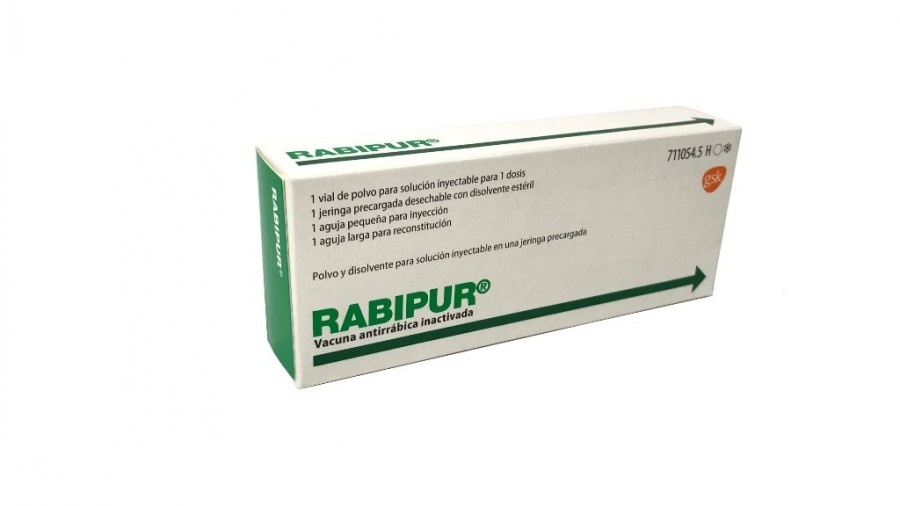
Rabipur is supplied in packs containing 1 vial of powder, 1 pre-filled single-use syringe with diluent
sterile with 2 identical needles (25 gauge, 25 mm), one for reconstitution and one for injection.
Marketing Authorisation Holder and Manufacturer
Marketing Authorisation Holder:
Bavarian Nordic A/S
Philip Heymans Alle 3
2900 Hellerup
Denmark
Manufacturer:
Bavarian Nordic A/S
Hejreskovvej 10A
3490 Kvistgaard
Denmark
or
GSK Vaccines GmbH
Emil-von-Behring-Str. 76
35041 Marburg
Germany
This medicinal product is authorised in the Member States of the European Economic Area with the following
denominations:
Austria Rabipur
Belgium Rabipur
Croatia Rabipur
Denmark Rabipur
France Rabipur
Germany Rabipur
Italy Rabipur
Luxembourg Rabipur
Norway Rabipur
Poland Rabipur
Portugal Rabipur
Netherlands Rabipur
Spain Rabipur
Sweden Rabipur
Hungary Rabipur
Other sources of information
The following information is intended exclusively for healthcare professionals:
Instructions for use of the pre-filled single-use syringe of Rabipur
Prefilled syringe
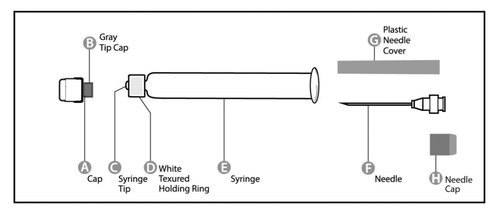
| Step 1: Hold the syringe (E) in one hand with the cap facing upwards. Make sure to hold the syringe by the white textured grip ring (D). | a c o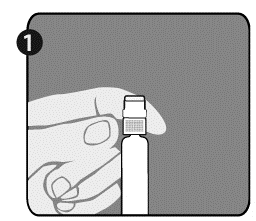 |
| Step 2: Hold the cap (A) with the other hand and swing it firmly back and forth to break the connection to the grip ring (D). Do not twist or rotate the cap. | a r m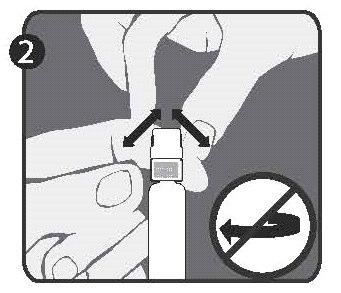 |
| Step 3: Lift to remove the cap (A) and the grey tip protector (B). Be careful not to touch the sterile tip of the syringe (C). | e l F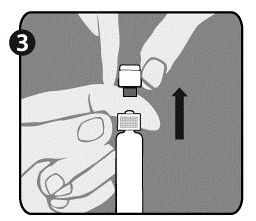 |
Needle application (these instructions apply to both needles supplied):
| Step 1: Rotate to remove the cap (H) from one of the two a identical needles. This needle will be used for reconstitution. Do not remove the plastic needle cover (G). n | d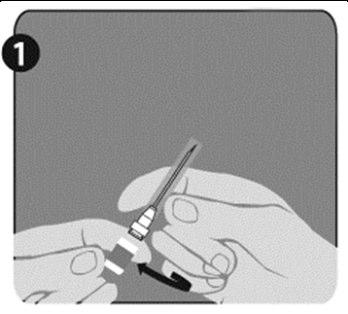 |
| a Step 2: Firmly grasp the syringe (E) with one hand holding it by the white textured grip ring (D). i With the other hand, insert this needle (F) and rotate clockwise until it clicks into place. Once the needle is a locked, remove the plastic needle cover (G). The syringe (E) is now ready for use. | 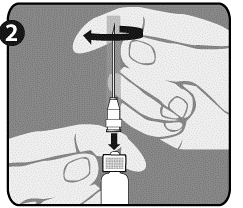 |
Instructions for reconstituting Rabipur using the pre-filled syringe:
The vaccine must be visually inspected before and after reconstitution for the presence of foreign particulate
matter and/or changes in physical appearance. The vaccine should not be used if any change in appearance has occurred. The reconstituted vaccine appears from clear to slightly opalescent and from
colourless to slightly pink.
The powder for solution must be reconstituted using the supplied solvent for solution and shaking carefully
before injection. The reconstituted vaccine must be used immediately.
The vaccine vial is under negative pressure. After reconstitution of the vaccine, it is recommended to unscrew the
syringe from the needle to eliminate the negative pressure. The vaccine can then be easily drawn up from the
vial. Excessive pressure should not be applied, as excessive pressurization creates problems
for drawing up the correct amount of vaccine.
The needle will not reach the bottom of the vial, so please turn the vial upside down and retract the needle close to
the stopper. This will allow you to aspirate the entire vaccine solution from the vial.
Once the vaccine has been reconstituted, remove the cap from the second needle (as illustrated in
step 1 for the needles) and replace the reconstitution needle with the second needle, to be used for
administration. Do not use the same needle for reconstitution and administration.

Не уверены, подходит ли вам это лекарство?
Обсудите симптомы и варианты лечения с врачом онлайн.

Уже начали прием и появились вопросы?
Обсудите свое состояние и дальнейшие шаги с врачом онлайн.
- Страна регистрации
- Форма выпускаPowder and solvent for injectable solution, 1 ML
- Код АТХJ07BG01
- Действующее вещество
- Отпускается по рецептуДа
- Производитель
- Информация на этой странице носит справочный характер и не является медицинской консультацией. Перед началом приема лекарства обязательно проконсультируйтесь с врачом.
- Аналоги RABIPURФорма выпуска: Powder and solvent for injectable suspension, 3.25 IUДействующее вещество: rabies, inactivated, whole virusПроизводитель: SANOFI WINTHROP INDUSTRIEОтпускается без рецептаФорма выпуска: Powder and solvent for injectable solution, 0.5 mlДействующее вещество: respiratory syncytial virus vaccinesПроизводитель: PFIZER EUROPE MA EEIGОтпускается по рецептуФорма выпуска: Injectable suspension in pre-filled syringe, 720 U. + 20 MCGДействующее вещество: combinationsПроизводитель: GLAXOSMITHKLINE BIOLOGICALS S.A.Отпускается без рецепта
Аналоги RABIPUR в других странах
Лекарства с тем же действующим веществом, доступные в других странах.
Аналог RABIPUR в Испания
Аналог RABIPUR в Польша
Аналог RABIPUR в Украина
Врачи онлайн по RABIPUR
Обсудите применение RABIPUR и возможные следующие шаги — по оценке врача.









Получите рецепт на RABIPUR онлайн
Заполните форму за 2 минуты
Расскажите о симптомах, истории болезни и нужном препарате.
Выберите врача или мы назначим
Выберите специалиста или мы подберём ближайшего доступного врача.
Врач рассматривает ваш случай
Обычно в течение 30 минут. Может задать уточняющие вопросы в чате.
Получите в любой аптеке
Электронный рецепт отправляется на вашу почту — действителен по всей Польше.
Часто задаваемые вопросы
RABIPUR требует рецепта в Италия. Вы можете уточнить у врача онлайн, подходит ли это лекарство для вашей ситуации.
Действующее вещество RABIPUR — rabies, inactivated, whole virus. Эта информация помогает определить лекарства с тем же составом под другими торговыми названиями.
RABIPUR производится компанией BAVARIAN NORDIC A/S. Упаковка и торговое название могут отличаться в зависимости от дистрибьютора.
Врачи, включая Семейные врачи, Психиатры, Дерматологи, Кардиологи, Эндокринологи, Гастроэнтерологи, Пульмонологи, Нефрологи, Ревматологи, Гематологи, Инфекционисты, Аллергологи, Гериатры, Педиатры, Онкологи, могут оценить целесообразность применения RABIPUR с учетом вашей ситуации и местных правил. Вы можете записаться на онлайн-консультацию, чтобы обсудить возможные варианты.
Польша имеет хорошо развитую систему здравоохранения в крупных городах, таких как Варшава, Краков, Вроцлав и Гданьск. Аптеки широко доступны и работают в соответствии с действующим законодательством, обеспечивая доступ к рецептурным препаратам.
Вы можете купить RABIPUR в Варшаве, Кракове, Вроцлаве или Гданьске в любой аптеке при наличии действующего рецепта.
Чтобы получить рецепт, вы можете воспользоваться Oladoctor:
Другие лекарства с тем же действующим веществом (rabies, inactivated, whole virus) включают VERORAB, ABRYSVO, AMBIRIX. Они могут отличаться торговым названием или формой выпуска, но содержат одинаковый терапевтический компонент. Перед изменением лечения рекомендуется проконсультироваться с врачом.
