



QUETIAPINA 50 mg Таблетки С Пролонгированным Высвобождением

Рассмотрение рецепта онлайн
Врач рассмотрит ваш случай и примет решение о назначении рецепта, если это медицински оправдано.

Поговорите с врачом об этом лекарстве
Обсудите симптомы и возможные дальнейшие шаги на онлайн-консультации.



Инструкция по применению QUETIAPINA LABORATORI ALTER
Содержание инструкции
Quetiapina Laboratori Alter 50 mg prolonged-release tablets
Generic medicine
Read this leaflet carefully before you start taking this medicine as it contains important information for you.
- Keep this leaflet. You may need to read it again.
- If you have any questions, ask your doctor or pharmacist.
- This medicine has been prescribed for you only. Do not pass it on to others, even if they have the same symptoms as you, as it could be harmful.
- If you get any side effects, even those not listed in this leaflet, tell your doctor or pharmacist. See section 4.
Contents of this leaflet
- 1. What Quetiapina Laboratori Alter is and what it is used for
- 2. What you need to know before you take Quetiapina Laboratori Alter
- 3. How to take Quetiapina Laboratori Alter
- 4. Possible side effects
- 5. How to store Quetiapina Laboratori Alter
- 6. Contents of the pack and other information
1. What is Quetiapina Laboratori Alter and what it is used for
Quetiapina Laboratori Alter contains a substance called quetiapine. This substance
belongs to a group of medicines called antipsychotics. Quetiapina Laboratori Alter can
be used to treat various diseases, such as the following:
- Bipolar depression and major depressive episodes associated with major depressive disorder: you may feel sad. You may notice that you feel depressed, with feelings of guilt, lacking energy, lacking appetite, or having difficulty sleeping.
- Mania: you may feel very excited, euphoric, agitated, enthusiastic or hyperactive, or have poor judgment, including states of aggression or destructiveness.
- Schizophrenia: you have the feeling of hearing or sensing things that are not actually present, you become convinced of things that are not true, or you feel unusually suspicious, anxious, confused, with feelings of guilt, tense or depressed.
When Quetiapina Laboratori Alter is used for the treatment of major depressive
episodes in major depressive disorder, it will be taken in addition to another medicine
used for the treatment of this condition.
The doctor may continue to prescribe Quetiapina Laboratori Alter even when you feel
better.
2. What you need to know before taking Quetiapina Laboratori Alter
Do not take Quetiapina Laboratori Alter:
- if you are allergic to quetiapine or any of the other ingredients of this medicine (listed in section 6)
- if you are taking any of the following medicines:
- some medicines for HIV infection
- azole medicines (for infections caused by fungi)
- erythromycin or clarithromycin (for infections)
- nefazodone (for depression).
If you have any doubts, ask your doctor or pharmacist before taking this medicine.
Warnings and precautions
Talk to your doctor or pharmacist before taking quetiapine:
- You or someone in your family has or has had heart problems, for example, irregular heartbeat, weakening of the heart muscle or inflammation of the heart, or if you are taking medicines that can affect your heartbeat.
- If your blood pressure is low.
- If you have had a stroke, especially if you are elderly.
- If you suffer from liver problems.
- If you have had seizures (convulsions).
- If you suffer from diabetes or are at risk of developing diabetes. In this case, your doctor may check your blood sugar levels while you are taking this medicine.
- If you are aware that you have had low levels of white blood cells in the past (caused or not by other medicines).
- If you are an elderly person suffering from dementia (loss of some brain functions). In this case, you should not take quetiapine, because this class of medicines, to which quetiapine belongs, can increase the risk of stroke, or in some cases the risk of death.
- if you are an elderly person suffering from Parkinson's disease/parkinsonism.
- If you or someone in your family has a history of disorders related to the presence of blood clots, as these types of medicines can promote the formation of blood clots.
- If you have or have had a condition ("sleep apnea") in which you stop breathing for short periods during normal sleep and are taking medicines that slow down normal brain activity ("depressants").
- If you have or have had a condition in which you cannot completely empty your bladder (urinary retention), have an enlarged prostate, a blockage of the intestine, or increased pressure inside the eye. These conditions are sometimes caused by medicines ("anticholinergics") that affect how nerve cells work and are used to treat certain medical conditions.
- If you have a history of alcohol or drug abuse.
Immediately inform your doctor if you experience any of the following effects after
taking quetiapine:
- A combination of fever, severe muscle stiffness, sweating, or a reduced level of consciousness (a condition called “neuroleptic malignant syndrome”). You may need immediate medical treatment.
- Uncontrollable movements, mainly of the face or tongue.
- Dizziness or feeling very sleepy. This can increase the risk of accidental injuries (falls) in elderly patients.
- Seizures (convulsions).
- A prolonged and painful erection (priapism).
- Fast and irregular heartbeat, even at rest, palpitations, breathing problems, chest pain, or unexplained fatigue. Your doctor should examine your heart and, if necessary, refer you immediately to a cardiologist. These disorders can be caused by this type of medicine.
Inform your doctor as soon as possible if you:
- Have a fever, flu-like symptoms, sore throat, or any other infection, as these may be a consequence of a very low count of white blood cells, which may require quetiapine to be stopped and/or additional treatment;
- Have constipation along with persistent abdominal pain or constipation that has not responded to treatment, as this may lead to a more serious intestinal blockage.
Thoughts of suicide and worsening of depression
- If you are depressed, you may sometimes feel the need to harm yourself or kill yourself. These feelings may be more intense at the beginning of treatment, as these medicines need time to work, usually about two weeks but sometimes even longer. These thoughts may also intensify if you suddenly stop taking the medicine. You are more likely to have these feelings if you are a young adult. Information from clinical studies has shown an increased risk of suicidal thoughts and/or suicidal behavior in young adults with depression under the age of 25.
- If at any time you realize you are having thoughts of self-harm or suicide, contact your doctor or go to the hospital immediately. It may be helpful to tell a relative or close friend that you are suffering from depression, inviting them to
depressive state is worsening or if they are concerned about changes in your
behavior
Weight gain
Weight gain has been reported in patients treated with quetiapine. It is necessary that
your body weight is checked regularly by you and your doctor.
Children and adolescents
Quetiapine should not be used in children and adolescents under the age of 18.
Other medicines and Quetiapina Laboratori Alter
Tell your doctor if you are taking, have recently taken, or might take any
other medicines.
Tell your doctor if you are using any of the following medicines:
- Medicines for epilepsy (such as phenytoin or carbamazepine).
- Medicines for high blood pressure.
- Barbiturates (for sleep disorders).
- Thioridazine or Lithium (other antipsychotic medicines).
- Medicines that affect the heartbeat, for example, medicines that can cause an imbalance in electrolytes (low levels of potassium or magnesium) such as diuretics (medicines for urination) or some antibiotics (medicines for treating infections).
- Medicines that can cause constipation.
- Medicines ("anticholinergics") that affect how nerve cells work and are used to treat certain medical conditions. Consult your doctor before stopping treatment with any of these medicines
Quetiapina Laboratori Alter with food, drinks and alcohol
- Quetiapine may be affected by food and therefore you should take the tablets at least one hour before a meal or before going to bed.
- Be careful about the amount of alcohol you consume. This is important because the combined effect of quetiapine and alcohol can promote drowsiness.
- Do not drink grapefruit juice while taking quetiapine, as it may affect the action of the drug.
Pregnancy and breastfeeding
If you are pregnant, suspect you may be pregnant, or are planning a pregnancy, ask your doctor for advice before taking this medicine. You should not
take quetiapine during pregnancy without first discussing it with your doctor.
Quetiapine should not be taken during breastfeeding.
The following symptoms, which may represent withdrawal, have been observed in newborns of mothers
who have taken quetiapine during the last trimester (the last three months of pregnancy):
tremor, muscle stiffness and/or weakness, drowsiness, agitation, breathing problems and
difficulty feeding. If your baby shows any of these symptoms
contact your doctor.
Driving and using machines
The tablets can cause drowsiness. Do not drive or use any tools or machinery
until you know what effect the tablets have on you.
Quetiapina Laboratori Alter contains lactose
Quetiapina Laboratori Alter contains lactose, a type of sugar. If your doctor has
diagnosed you with intolerance to certain sugars, contact him before taking this
medicine.
Effect on urine screening tests
If you need to undergo a urine screening test, taking Quetiapina Laboratori Alter
may lead to false positive results for methadone or some antidepressants called tricyclic antidepressants (TCAs), even if you are not taking methadone or TCAs, when certain testing methods
are used. If this happens
more specific tests must be performed.
3. How to take Quetiapina Laboratori Alter
Take this medicine following exactly the instructions of your doctor. If you have doubts
consult your doctor or pharmacist.
The doctor will decide your initial dose. The maintenance dose (daily dose) will depend
on the type of illness and individual needs, but is usually between 150 mg and 800
mg.
- You will take the tablets once a day.
- Do not divide, chew or crush the tablets.
- Swallow the tablets whole with a sip of water.
- Take the tablets away from meals (at least one hour before a meal or at bedtime, your doctor will tell you when).
- Do not drink grapefruit juice while taking this medicine, as it may affect the action of the medicine.
- Do not stop taking the tablets even if you feel better, unless your doctor tells you that you can.
Liver problems
If you have liver problems, your doctor may adjust the dose.
Elderly patients
If you are elderly, your doctor may adjust the dose.
Use in children and adolescents
Quetiapina must not be used in children and adolescents under 18 years of age.
If you take more Quetiapina Laboratori Alter than you should
In case of overdose or accidental ingestion, consult your doctor or
pharmacist immediately or call the toxicology information service, indicating the medicine and
the amount ingested.
If you take more quetiapina than prescribed by your doctor, you may experience drowsiness,
dizziness and irregular heartbeats.
If you forget to take Quetiapina Laboratori Alter
If you forget to take a dose, take it as soon as you remember. If it is almost time to
take the next dose, wait until the scheduled time. Do not take a double dose to
compensate for the forgotten tablet.
If you stop taking Quetiapina Laboratori Alter
If you suddenly stop treatment with quetiapina, you may have difficulty
sleeping (insomnia), feel unwell (nausea), or experience headache,
diarrhea, vomiting, dizziness or irritability. Your doctor may suggest gradually reducing the dose
before stopping treatment.
If you have any doubts about the use of this medicine, ask your doctor or pharmacist .
4. Possible side effects
Like all medicines, this medicine can cause side effects, although not everyone gets them.
Very common: may affect more than 1 in 10 people
- Dizziness (which can lead to falls), headache, dry mouth.
- Feeling sleepy (which disappears over time, continuing treatment with quetiapine) (which can lead to falls).
- Withdrawal symptoms (symptoms that appear when you stop taking quetiapine, which include inability to sleep (insomnia), feeling unwell, headache, diarrhea, vomiting, dizziness and irritability. Gradual discontinuation of the drug is recommended, over a period of at least 1 or 2 weeks.
- Weight gain.
- Abnormal muscle movements, including difficulty starting a muscle movement, tremor, feeling restless or muscle stiffness without pain.
- Changes in the amount of certain fats (triglycerides and total cholesterol).
Common: may affect up to 1 in 10 people
- Fast heartbeat.
- Feeling that the heart is racing, beating strongly or feeling skipped beats.
- Constipation, stomach discomfort (indigestion).
- Feeling of weakness.
- Swelling of the arms or legs.
- Low blood pressure when getting up to a standing position. This can cause dizziness or fainting (which can lead to falls).
- Increased blood sugar levels.
- Blurred vision.
- Abnormal dreams and nightmares.
- Increased feeling of hunger.
- Irritability.
- Speech and language disorders.
- Suicidal thoughts and worsening of depression.
- Shortness of breath.
- Vomiting (especially in elderly patients).
- Fever.
- Changes in the amount of thyroid hormones in the blood.
- Decreases in the number of certain types of blood cells.
- Increases in the amount of liver enzymes measured in the blood.
- Increases in the amount of the hormone prolactin in the blood. Increases in the hormone prolactin which may in rare cases lead to the following: o Men and women may experience breast enlargement and unexpected milk production. o Women may experience absent or irregular menstrual cycles.
Uncommon: may affect up to 1 in 100 people
- Convulsions or seizures.
- Allergic reactions including swelling (hives), skin swelling and swelling around the mouth.
- Unpleasant sensation in the legs (also called restless legs syndrome).
- Difficulty swallowing.
- Uncontrollable movements, mainly of the face or tongue.
- Sexual dysfunction.
- Diabetes.
- Alteration of the electrical activity of the heart detected on an ECG (prolongation of the QT interval).
- A slowing of the normal heartbeat can occur when starting treatment and may be associated with low blood pressure and fainting.
- Difficulty urinating.
- Fainting (can cause falls).
- Stuffy nose.
- Reduction in the number of red blood cells
- Reduction in the amount of sodium in the blood
- Worsening of pre-existing diabetes.
Rare: may affect up to 1 in 1,000 people
- High body temperature (fever) associated with sweating, muscle stiffness, accentuated feeling of lethargy or fainting (a condition called “neuroleptic malignant syndrome”).
- Yellowing of the skin and eyes (jaundice).
- Inflammation of the liver (hepatitis).
- Prolonged and painful erection (priapism).
- Breast enlargement and unexpected milk production from the mammary gland (galactorrhea).
- Menstrual disorders.
- Blood clots in the veins, especially in the legs (symptoms include swelling, pain and redness of the legs), which can move through the blood vessels to the lungs, causing chest pain and difficulty breathing. If you notice any of these symptoms, contact your doctor immediately.
- Sleepwalking and other related events (such as talking in your sleep and sleep-related eating disorders)
- Decrease in body temperature (Hypothermia)
- Inflammation of the pancreas
- A condition (“metabolic syndrome”) in which you may have a combination of 3 or more of the following symptoms: increased fat around the abdomen, decreased “good” cholesterol (HDL-C), increased type of fat in the blood called triglycerides, high blood pressure and increased blood sugar levels.
- Association of fever, flu-like symptoms, sore throat or any other infection with a very low white blood cell count, a condition defined as agranulocytosis;
- Bowel obstruction.
- Increase in the blood of creatine phosphokinase (a substance in the muscles).
Very rare: may affect up to 1 in 10,000 people
- Severe skin rash, blisters or red patches on the skin.
- Severe allergic reaction (called anaphylaxis) that can cause difficulty breathing or shock.
- Rapid swelling of the skin, usually in the area around the eyes, lips and throat (angioedema).
- Severe condition characterized by blistering of the skin, in the mouth, eyes and genitals (Stevens-Johnson syndrome).
- Inappropriate secretion of the hormone that controls urine volume.
- Damage to muscle fibers and muscle pain (rhabdomyolysis).
Not known (frequency cannot be estimated from available data):
- Skin rash associated with the appearance of irregular red patches (erythema multiforme).
- Severe sudden allergic reaction with symptoms such as fever, blistering of the skin and skin peeling (toxic epidermal necrolysis).
- Withdrawal symptoms may appear in newborns of mothers who have used quetiapine during pregnancy.
- Stroke.
- Heart muscle disorder (cardiomyopathy).
- Inflammation of the heart muscle (myocarditis).
- Inflammation of blood vessels (Vasculitis), often with a rash with small red or purple bumps.
The class of medicines to which quetiapine belongs can cause problems with the heart rhythm, which can also be serious and life-threatening in some cases.
Some side effects are only visible after a blood test. These include changes in the amount of certain fats (triglycerides and total cholesterol) or sugars in the blood, changes in blood levels of thyroid hormones, increased liver enzymes, decreased number of certain types of blood cells, decreased amount of red blood cells, increased serum creatine phosphokinase (a substance present in muscles), decreased amount of sodium in the blood, and increases in the amount of the hormone prolactin in the blood. Increases in prolactin levels may, in rare cases, have the following consequences:
- Enlargement of the breasts and unexpected milk production from the mammary gland in both men and women.
- Absence or irregularity of the menstrual cycle in women.
The doctor will therefore prescribe you blood tests from time to time.
Additional side effects in children and adolescents
The same side effects observed in adults can also occur in children and adolescents.
The following side effects have been reported more frequently in children and adolescents or have not been reported in adults:
Very common: may affect more than 1 in 10 people
- Increased levels in the blood of a hormone called prolactin. In rare cases, these increases in the amount of prolactin can cause the following conditions: o Enlargement of the breasts and unexpected milk production from the mammary gland in boys and girls o Absence or irregularity of the menstrual cycle in girls
- Increased appetite
- Vomiting
- Abnormal muscle movements, including difficulty starting a muscle movement, tremor, feeling restless or muscle stiffness without pain
- Increased blood pressure.
Common: may affect up to 1 in 10 people
- Weakness, fainting (can cause falls).
- Stuffy nose.
- Irritability.
Reporting of side effects
If you get any side effects, even those not listed in this leaflet, tell your doctor or pharmacist. You can also report side effects directly through the national reporting system at
https://www.aifa.gov.it/content/segnalazioni-reazioni-avverse . By reporting side effects you can help provide more information on the safety of this medicine.
5. How to store Quetiapina Laboratori Alter
Keep this medicine out of the sight and reach of children.
Do not use this medicine after the expiry date which is stated on the packaging after
EXP. The expiry date refers to the last day of that month.
Quetiapina Laboratori Alter does not require any special storage conditions.
Do not dispose of any medicine in wastewater or household waste. Ask your pharmacist
how to dispose of medicines you no longer use. These measures will help protect
the environment.
6. Contents of the pack and other information
What Quetiapina Laboratori Alter contains
- The active ingredient is quetiapine. Quetiapina Laboratori Alter tablets contain 50 mg of quetiapine (as quetiapine fumarate).
- The other ingredients are: Tablet core: methacrylic acid-ethyl acrylate copolymer (1:1), anhydrous lactose (lactose), crystalline maltose, powdered talc, magnesium stearate Tablet coating: methacrylic acid-ethyl acrylate copolymer (1:1), triethyl citrate
Description of the appearance of Quetiapina Laboratori Alter and contents of the pack
Quetiapina Laboratori Alter 50 mg tablets are white to off-white in color,
round, biconvex with “50” imprinted on one side.
Blisters in polyvinyl chloride and polychlorotrifluoroethylene with aluminum.
The pack sizes are:
Quetiapina Laboratori Alter 50 mg: 10 or 60 tablets
Not all pack sizes may be marketed.
Marketing Authorisation Holder and Manufacturer
Marketing Authorisation Holder:
Laboratori Alter s.r.l.
Via Egadi 7
20144 Milano
Manufacturer:
Pharmathen International S.A
Industrial Park Sapes,
Rodopi Prefecture, Block No 5,
Rodopi 69300,
Greece
or
Pharmathen S.A.
Dervenakion 6
Pallini 15351
Attiki,
Greece
This medicinal product is authorised in the Member States of the European Economic Area with
the following denominations:
Italy Quetiapina Laboratori Alter 50 mg prolonged-release tablets
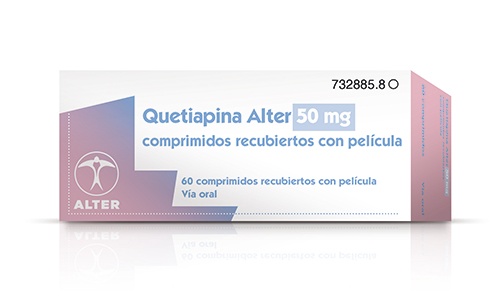
Spain Quetiapina Alter 50 mg comprimidos de liberación prolongada EFG

Не уверены, подходит ли вам это лекарство?
Обсудите симптомы и варианты лечения с врачом онлайн.

Уже начали прием и появились вопросы?
Обсудите свое состояние и дальнейшие шаги с врачом онлайн.
- Страна регистрации
- Форма выпускаExtended-release tablet, 50 MG
- Код АТХN05AH04
- Действующее вещество
- Отпускается по рецептуДа
- Производитель
- Информация на этой странице носит справочный характер и не является медицинской консультацией. Перед началом приема лекарства обязательно проконсультируйтесь с врачом.
- Аналоги QUETIAPINA LABORATORI ALTERФорма выпуска: Oral suspension, 25 MG/MLДействующее вещество: кветиапинПроизводитель: ITALFARMACO S.P.A.Отпускается без рецептаФорма выпуска: Film-coated tablet, 25 MGДействующее вещество: кветиапинПроизводитель: FAIRMED HEALTHCARE GMBHОтпускается по рецептуФорма выпуска: Extended-release tablet, 200 MGДействующее вещество: кветиапинПроизводитель: ACCORD HEALTHCARE, S.L.U.Отпускается по рецепту
Аналоги QUETIAPINA LABORATORI ALTER в других странах
Лекарства с тем же действующим веществом, доступные в других странах.
Аналог QUETIAPINA LABORATORI ALTER в Испания
Аналог QUETIAPINA LABORATORI ALTER в Польша
Аналог QUETIAPINA LABORATORI ALTER в Украина
Врачи онлайн по QUETIAPINA LABORATORI ALTER
Обсудите применение QUETIAPINA LABORATORI ALTER и возможные следующие шаги — по оценке врача.







Получите рецепт на QUETIAPINA LABORATORI ALTER онлайн
Заполните форму за 2 минуты
Расскажите о симптомах, истории болезни и нужном препарате.
Выберите врача или мы назначим
Выберите специалиста или мы подберём ближайшего доступного врача.
Врач рассматривает ваш случай
Обычно в течение 30 минут. Может задать уточняющие вопросы в чате.
Получите в любой аптеке
Электронный рецепт отправляется на вашу почту — действителен по всей Польше.
Часто задаваемые вопросы
QUETIAPINA LABORATORI ALTER требует рецепта в Италия. Вы можете уточнить у врача онлайн, подходит ли это лекарство для вашей ситуации.
Действующее вещество QUETIAPINA LABORATORI ALTER — кветиапин. Эта информация помогает определить лекарства с тем же составом под другими торговыми названиями.
QUETIAPINA LABORATORI ALTER производится компанией LABORATORI ALTER S.R.L.. Упаковка и торговое название могут отличаться в зависимости от дистрибьютора.
Врачи, включая Семейные врачи, Психиатры, Дерматологи, Кардиологи, Эндокринологи, Гастроэнтерологи, Пульмонологи, Нефрологи, Ревматологи, Гематологи, Инфекционисты, Аллергологи, Гериатры, Педиатры, Онкологи, могут оценить целесообразность применения QUETIAPINA LABORATORI ALTER с учетом вашей ситуации и местных правил. Вы можете записаться на онлайн-консультацию, чтобы обсудить возможные варианты.
Польша имеет хорошо развитую систему здравоохранения в крупных городах, таких как Варшава, Краков, Вроцлав и Гданьск. Аптеки широко доступны и работают в соответствии с действующим законодательством, обеспечивая доступ к рецептурным препаратам.
Вы можете купить QUETIAPINA LABORATORI ALTER в Варшаве, Кракове, Вроцлаве или Гданьске в любой аптеке при наличии действующего рецепта.
Чтобы получить рецепт, вы можете воспользоваться Oladoctor:
Другие лекарства с тем же действующим веществом (кветиапин) включают AKELYA, QUETAMED, QUETIAPINA AKKORD. Они могут отличаться торговым названием или формой выпуска, но содержат одинаковый терапевтический компонент. Перед изменением лечения рекомендуется проконсультироваться с врачом.
