



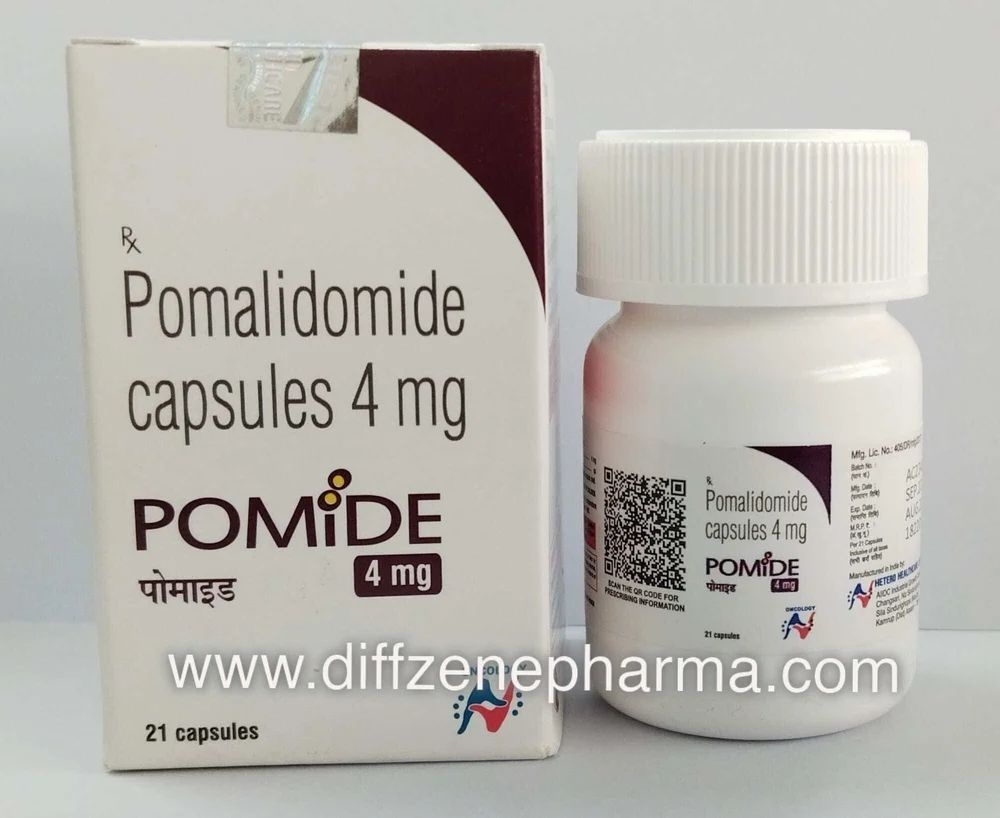
POMALIDOMIDE 1 мг Капсулы

Рассмотрение рецепта онлайн
Врач рассмотрит ваш случай и примет решение о назначении рецепта, если это медицински оправдано.

Поговорите с врачом об этом лекарстве
Обсудите симптомы и возможные дальнейшие шаги на онлайн-консультации.



Инструкция по применению POMALIDOMIDE GRINDEKS
Содержание инструкции
- Pomalidomide Grindeks 1 mg hard capsules, 2 mg hard capsules, 3 mg hard capsules, 4 mg hard capsules
Pomalidomide Grindeks 1 mg hard capsules, 2 mg hard capsules, 3 mg hard capsules, 4 mg hard capsules
pomalidomide
Generic medicine
Pomalidomide Grindeks is expected to cause birth defects and may cause fetal death.
- Do not take this medicine if you are pregnant or might become pregnant.
- You must follow the advice on contraceptive methods described in this leaflet.
Read this leaflet carefully before taking this medicine as it contains important information for you.
- Keep this leaflet. You may need to read it again.
- If you have any questions, ask your doctor or pharmacist.
- This medicine has been prescribed for you only. Do not pass it on to others, even if their symptoms are the same as yours, as it could be harmful.
- If you get any side effects, even those not listed in this leaflet, tell your doctor or pharmacist. See section 4.
Contents of this leaflet
- 1. What Pomalidomide Grindeks is and what it is used for
- 2. What you need to know before you take Pomalidomide Grindeks
- 3. How to take Pomalidomide Grindeks
- 4. Possible side effects
- 5. How to store Pomalidomide Grindeks
- 6. Contents of the pack and other information
1. What is Pomalidomide Grindeks and what it is used for
What is Pomalidomide Grindeks
Pomalidomide Grindeks contains the active substance “pomalidomide”. This medicine is related to
thalidomide and belongs to a group of medicines that act on the immune system (the body’s natural
defenses).
What is Pomalidomide Grindeks used for
Pomalidomide Grindeks is used in the treatment of adults with a type of cancer called
“multiple myeloma”.
Pomalidomide Grindeks is used together with:
- two other medicines- called ‘bortezomib’ (a chemotherapy medicine) and ‘dexamethasone’ (an anti-inflammatory medicine) in people who have had at least one other treatment - including lenalidomide. Or
- one other medicine- called ‘dexamethasone’ in people whose myeloma has worsened despite having had at least two other treatments - including lenalidomide and bortezomib.
What is multiple myeloma
Multiple myeloma is a type of cancer that affects a certain type of white blood cells (called
“plasma cells”). These cells grow uncontrollably and accumulate in the bone marrow. This
causes damage to the bones and kidneys.
Multiple myeloma is generally incurable. However, treatment can reduce the signs and symptoms of the
disease or make them disappear for a certain period of time. When this happens, it is referred to as “response”.
How does Pomalidomide Grindeks work
Pomalidomide Grindeks works in several ways:
- stopping the development of myeloma cells
- stimulating the immune system to attack cancer cells
- stopping the formation of blood vessels that feed cancer cells.
Benefit of using Pomalidomide Grindeks with bortezomib and dexamethasone
When pomalidomide is used with bortezomib and dexamethasone, in people who have had at least one other treatment, it can prevent multiple myeloma from getting worse.
On average, pomalidomide used with bortezomib and dexamethasone, prevented the return of multiple myeloma for a period of up to 11 months, compared to 7 months for patients treated with bortezomib and
dexamethasone alone.
Benefit of using Pomalidomide Grindeks with dexamethasone
When Pomalidomide Grindeks is used with dexamethasone, in people who have had at least two other treatments, it can prevent multiple myeloma from getting worse.
On average, Pomalidomide Grindeks used with dexamethasone, prevented the return of multiple myeloma for a period of up to 4 months, compared to 2 months for patients treated with dexamethasone alone.
2. What you need to know before taking Pomalidomide Grindeks
Do not take Pomalidomide Grindeks:
- if you are pregnant or think you may be pregnant, or if you are planning a pregnancy, as Pomalidomide Grindeks is expected to harm the fetus. (Men and women taking this medicine must read the “Pregnancy, contraception and breastfeeding – information for women and men” section below).
- if there is a possibility that you might become pregnant unless you follow all the necessary measures to avoid pregnancy (see “Pregnancy, contraception and breastfeeding – information for women and men”). If there is a possibility that you might become pregnant, on each prescription your doctor will record that the necessary measures have been taken and will provide you with this confirmation.
- if you are allergic to pomalidomide or to any of the other ingredients of this medicine (listed in section 6). If you think you may be allergic, ask your doctor for advice.
If you are not sure whether any of the above conditions apply to you, consult your doctor, your
pharmacist or your nurse before taking Pomalidomide Grindeks.
Warnings and precautions
Talk to your doctor, pharmacist or nurse before taking Pomalidomide Grindeks if:
- you have had episodes of blood clots in the past. During treatment with Pomalidomide Grindeks there is a higher risk of blood clots forming in the veins and arteries. Your doctor may recommend additional treatments (e.g. warfarin) or decrease the dose of Pomalidomide Grindeks to reduce the likelihood of blood clots forming.
- if you have had an allergic reaction in the past, such as skin rash, itching, swelling, dizziness or difficulty breathing, during treatment with related medicines called “thalidomide” or “lenalidomide”.
- you have had a heart attack, have heart failure, have difficulty breathing, smoke, have high blood pressure or high levels of cholesterol.
- you have a high tumor burden throughout your body, including in the bone marrow. This could cause a condition in which tumors break down and cause the presence of unusual levels of chemicals in the blood, which can lead to kidney failure. An irregular heartbeat may also appear. This condition is called tumor lysis syndrome.
- you have or have had neuropathy (nerve damage that causes tingling or pain in the hands or feet).
- you have or have had hepatitis B infection in the past. Treatment with Pomalidomide Grindeks can cause reactivation of the hepatitis B virus in patients carrying this virus, leading to a recurrence of the infection. Your doctor should check if you have ever had a hepatitis B infection.
- you have or have had any combination of the following symptoms: a rash on your face or more widespread, skin redness, high fever, flu-like symptoms, swollen lymph nodes (these are signs of a severe skin reaction, called drug reaction with eosinophilia and systemic symptoms (DRESS), or drug hypersensitivity syndrome, toxic epidermal necrolysis (TEN) or Stevens-Johnson syndrome (SJS). See also section 4 “Possible side effects”).
It is important to note that patients with multiple myeloma treated with pomalidomide may develop
other types of cancer; therefore, the doctor must carefully assess the benefit and risk when
prescribing this medicine.
At any time during or after treatment, immediately inform your doctor or nurse
if: you experience blurred vision, loss of vision or double vision, difficulty speaking, weakness in an
arm or leg, a change in the way you walk or problems with balance, persistent numbness, decreased
sensation or loss of sensation, memory loss or confusion. These can all be symptoms of a serious and potentially fatal
brain disease known as progressive multifocal leukoencephalopathy (PML). If you have had these symptoms before
treatment with Pomalidomide Grindeks, tell your doctor about any changes in those symptoms.
At the end of treatment, you must return all unused capsules to the pharmacist.
Pregnancy, contraception and breastfeeding – information for women and men
The following instructions must be followed, as indicated in the Pomalidomide Grindeks Pregnancy
Prevention Program. Women and men taking Pomalidomide Grindeks
must not start a pregnancy or conceive a child. This is because pomalidomide
is expected to be harmful to the fetus. You and your partner must use effective contraceptive measures during
treatment with this medicine.
Women
Do not take Pomalidomide Grindeks if you are currently pregnant, if you suspect or are planning a
pregnancy, because this medicine is expected to be harmful to the fetus. Before starting
treatment, you must inform your doctor if there is a possibility of becoming pregnant, even if
you think it is unlikely.
If there is a possibility of becoming pregnant:
- you must use effective contraceptive methods for at least 4 weeks before starting treatment, throughout the duration of treatment and for 4 weeks after stopping treatment. Consult your doctor about the best contraceptive method for you.
- on each prescription, your doctor will make sure that you understand what measures you need to take to prevent pregnancy.
- your doctor will arrange pregnancy tests before treatment, at least every 4 weeks during treatment and at least 4 weeks after the end of treatment.
If you become pregnant despite preventive measures:
- you must stop treatment immediately and consult your doctor immediately.
Breastfeeding
It is not known whether Pomalidomide Grindeks passes into breast milk. Tell your doctor if you are breastfeeding or
intend to breastfeed. Your doctor will advise you whether to stop or continue breastfeeding.
Men
Pomalidomide Grindeks passes into human seminal fluid.
- If your partner is pregnant or there is a possibility that she may become pregnant, you must use condoms throughout treatment and for 7 days after the end of treatment.
- If your partner becomes pregnant during treatment with Pomalidomide Grindeks, inform your doctor immediately. Your partner should also inform her doctor immediately. You should not donate seminal fluid or sperm during treatment and for 7 days after the end of treatment.
Blood donation and blood tests
You must not donate blood during treatment and for 7 days after the end of treatment.
Before and during treatment with Pomalidomide Grindeks you will undergo regular blood tests,
because this medicine can cause a decrease in blood cells that fight infections
(white blood cells) and cells that stop bleeding (platelets).
Your doctor will ask you to have blood tests:
- before treatment
- every week for the first 8 weeks of treatment
- thereafter at least once a month, for the entire duration of treatment with Pomalidomide Grindeks.
Based on the results of these tests, your doctor may change the dose of Pomalidomide Grindeks or
stop treatment. Your doctor may also change the dose or stop treatment based on
your overall health condition.
Children and adolescents
The use of Pomalidomide Grindeks is not recommended in children and adolescents under
18 years of age.
Other medicines and Pomalidomide Grindeks
Tell your doctor, pharmacist or nurse if you are taking, have recently taken or might
take any other medicines. This is because Pomalidomide Grindeks can affect
the way other medicines work. Also, some other medicines can affect the mechanism
of action of Pomalidomide Grindeks.
In particular, tell your doctor, pharmacist or nurse before taking Pomalidomide Grindeks
if you are taking any of the following medicines:
- some antifungal medicines, such as ketoconazole
- some antibiotics (e.g. ciprofloxacin, enoxacin)
- some antidepressants, such as fluvoxamine.
Driving and operating machinery
Some people may experience fatigue, dizziness, feeling faint, confusion or reduced
alertness when taking Pomalidomide Grindeks. If this happens, do not drive vehicles and do not use
tools or machinery.
Pomalidomide Grindeks contains sodium
This medicine contains less than 1 mmol of sodium (23 mg) per capsule, therefore, it is considered
essentially sodium-free.
Pomalidomide Grindeks contains azo dyes.
The capsules contain the azo dyes brilliant black PN (all strengths), azorubine - carmoisine (all
strengths) and sunset yellow FCF (only 2 mg capsules). These dyes may cause allergic
reactions.
3. How to take Pomalidomide Grindeks
Pomalidomide Grindeks must be administered by a doctor experienced in the treatment of multiple myeloma.
Take the medicine following the doctor's instructions exactly. If you have any doubts, consult your
doctor, pharmacist or nurse.
When to take Pomalidomide Grindeks with other medicines
Pomalidomide Grindeks with bortezomib and dexamethasone
- Read the package leaflets of bortezomib and dexamethasone for more information on their use and effects.
- Pomalidomide Grindeks, bortezomib and dexamethasone are taken in "treatment cycles". Each cycle lasts 21 days (3 weeks).
- Consult the following table to see what to take each day of the 3-week cycle. o Every day look at the table and find the right day to see which medicines to take. o On some days you will take all 3 medicines, on some days only 2 or 1 medicine and on some days none. PMD:Pomalidomide Grindeks; BOR: Bortezomib; DEX: Dexamethasone Cycle 1 to 8Cycle 9 onwards
Medicine name
DayPMDBORDEX
1 √ √ √
2 √ √
3 √
4 √ √ √
5 √ √
6 √
7 √
8 √ √ √
9 √ √
10 √
11 √ √ √
12 √ √
13 √
14 √
15
16
17
18
19
20
21
Medicine name
DayPMDBORDEX
1 √ √ √
2 √ √
3 √
4 √
5 √
6 √
7 √
8 √ √ √
9 √ √
10 √
11 √
12 √
13 √
14 √
15
16
17
18
19
20
21
When you have completed each 3-week cycle, start a new one.
Pomalidomide Grindeks with dexamethasone alone
effects.
- Pomalidomide Grindeks and dexamethasone are taken in "treatment cycles". Each cycle lasts 28 days (4 weeks).
- Consult the following table to see what to take each day of the 4-week cycle. o Every day look at the table and find the right day to see which medicines to take. o On some days you will take both medicines, on some only 1 medicine, and in
some days none.
PMD:Pomalidomide Grindeks; DEX: Dexamethasone
Medicine name
DayPMDDEX
1 √ √
2 √
3 √
4 √
5 √
6 √
7 √
8 √ √
9 √
10 √
11 √
12 √
13 √
14 √
15 √ √
16 √
17 √
18 √
19 √
20 √
21 √
22 √
23
24
25
26
27
28
When you have completed each 4-week cycle, start a new one.
How much Pomalidomide Grindeks to take with other medicines
Pomalidomide Grindeks with bortezomib and dexamethasone
- The recommended initial dose of Pomalidomide Grindeks is 4 mg per day.
- The recommended initial dose of bortezomib will be calculated by the doctor based on your height and weight (1.3 mg/m² body surface area).
- The recommended initial dose of dexamethasone is 20 mg per day. However, if you are over 75 years old, the recommended initial dose is 10 mg per day.
Pomalidomide Grindeks with dexamethasone alone
- The recommended dose of Pomalidomide Grindeks is 4 mg per day.
- The recommended initial dose of dexamethasone is 40 mg per day. However, if you are over 75 years old, the recommended initial dose is 20 mg per day.
The doctor may need to reduce the dose of Pomalidomide Grindeks, bortezomib or dexamethasone or
stop treatment with one or more of these medicines based on the results of blood tests, your general condition, other medicines you are taking (e.g. ciprofloxacin,
enoxacin and fluvoxamine) and if side effects occur (particularly skin rash or swelling)
due to treatment.
If you have liver or kidney problems, the doctor will monitor your condition very carefully
during treatment with this medicine.
How to take Pomalidomide Grindeks
- Do not break, open or chew the capsules. If the powder from a broken Pomalidomide Grindeks capsule comes into contact with the skin, wash the skin immediately and thoroughly with water and soap.
- Healthcare professionals, caregivers and family members must wear disposable gloves when handling the blister or capsule. The gloves should then be carefully removed to prevent skin exposure and should be placed in a sealable polyethylene plastic bag and disposed of in accordance with local requirements. Hands should be washed thoroughly with water and soap. Pregnant or suspecting pregnancy women should not handle the blister or capsule.
- Swallow the capsules whole, preferably with water.
- The capsules can be taken with or without food.
- Take Pomalidomide Grindeks every day at about the same time.
To remove the capsule from the blister, press only on one side of the capsule, pushing it through the
aluminum foil. Do not press on the center of the capsule, otherwise there is a risk of breaking it.

The doctor will inform you how and when to take Pomalidomide Grindeks if you have kidney problems and
are undergoing dialysis.
Duration of treatment with Pomalidomide Grindeks
You must continue the treatment cycles until the doctor tells you to stop.
If you take more Pomalidomide Grindeks than you should
If you take more Pomalidomide Grindeks than you should, consult your doctor or go to hospital
immediately. Bring the medicine packaging with you.
If you forget to take Pomalidomide Grindeks
If you forget to take Pomalidomide Grindeks on the prescribed day, take the next capsule
as usual the next day. Do not increase the number of capsules to be taken to make up for the
forgotten Pomalidomide Grindeks the previous day.
If you have any questions about using this medicine, ask your doctor or pharmacist.
4. Possible side effects
Like all medicines, this medicine can cause side effects, although not everybody gets them.
Serious side effects
Stop taking Pomalidomide Grindeks and contact your doctor immediately if you notice any of the
following serious side effects – urgent medical treatment may be needed:
- Fever, chills, sore throat, cough or any other sign of infection (due to a reduced number of white blood cells, which fight infections).
- Bleeding or bruising easily, including nosebleeds and bleeding from the intestine or stomach (due to effects on blood cells called “platelets”).
- Fast breathing, increased pulse, fever and chills, decreased or no urination, nausea and vomiting, confusion, loss of consciousness (due to blood infection called sepsis or septic shock).
- Severe and persistent diarrhea or with blood present (stomach pain or fever may also be present), caused by a bacterium called Clostridium difficile.
- Chest pain or pain and swelling in the legs, especially the lower leg or calf (caused by blood clots).
- Shortness of breath (due to severe chest infection, lung inflammation, heart failure or blood clot).
- Swelling of the face, lips, tongue and throat, which can cause difficulty breathing (due to a severe allergic reaction, called angioedema, and anaphylactic reaction).
- Some types of skin cancer (squamous cell carcinoma and basal cell carcinoma), which can cause changes in the appearance or growths on the skin. If you notice any skin changes during treatment with Pomalidomide Grindeks, tell your doctor as soon as possible.
- Reappearance of hepatitis B infection, which can cause yellowing of the skin and eyes, dark brown urine, pain in the upper right side of the abdomen, fever and nausea or vomiting. Tell your doctor immediately if you notice any of these symptoms.
- Widespread rash, high body temperature, swollen lymph nodes and involvement of other organs (drug reaction with eosinophilia and systemic symptoms, also known as DRESS, or drug hypersensitivity syndrome, toxic epidermal necrolysis or Stevens-Johnson syndrome). Stop taking pomalidomide if these symptoms occur and see your doctor or seek immediate medical attention. See also paragraph 2.
Stop taking Pomalidomide Grindeks and contact your doctor immediatelyif you notice any of the
serious side effects listed above – urgent medical treatment may be needed.
Other side effects
Very common(may affect more than 1 in 10 people):
- Shortness of breath (dyspnea),
- Lung infections (pneumonia and bronchitis).
- Infections of the nose, sinuses and throat caused by bacteria or viruses.
- Flu-like symptoms (influenza).
- Reduced number of red blood cells, which can cause anemia with resulting fatigue and weakness.
- Low levels of potassium in the blood (hypokalaemia) which can cause weakness, muscle cramps, muscle pain, palpitations, tingling or numbness, shortness of breath, mood changes.
- High levels of sugar in the blood.
- Fast and irregular heartbeat (atrial fibrillation).
- Loss of appetite.
- Constipation, diarrhea or nausea.
- Feeling unwell (vomiting).
- Abdominal pain.
- Lack of energy.
- Difficulty falling asleep or staying asleep.
- Dizziness, tremor.
- Muscle spasms, muscle weakness.
- Bone pain, back pain.
- Numbness, tingling or burning sensation on the skin, pain in the hands or feet (peripheral sensory neuropathy).
- Swelling of the body, including swelling of the arms and legs.
- Skin rashes.
- Urinary tract infection, which can cause a burning sensation when urinating or the need to urinate more frequently.
Common(may affect up to 1 in 10 people):
- Falls.
- Bleeding inside the skull.
- Reduced ability to move or feel in the hands, arms, feet and legs due to nerve damage (peripheral sensorimotor neuropathy).
- Numbness, itching and tingling on the skin (paresthesia).
- Dizziness, difficulty standing and walking normally.
- Swelling caused by fluid retention.
- Hives.
- Itchy skin.
- Shingles (herpes zoster).
- Heart attack (chest pain radiating to the arms, neck, jaw, feeling of sweating and shortness of breath, nausea or vomiting).
- Chest pain, chest infection.
- Increased blood pressure.
- Simultaneous reduction in the number of red blood cells, white blood cells and platelets (pancytopenia) which will make you more prone to bleeding and bruising. You may also feel tired, weak and short of breath. You are also more likely to develop infections.
- Reduced number of lymphocytes (a type of white blood cells) often caused by infection (lymphopenia).
- Low levels of magnesium in the blood (hypomagnesaemia) which can cause fatigue, general weakness, muscle cramps, irritability and can lead to low levels of calcium in the blood (hypocalcaemia), which can cause numbness and/or tingling of the hands, feet or lips, muscle cramps, muscle weakness, dizziness, confusion.
- Low levels of phosphate in the blood (hypophosphataemia) which can cause muscle weakness and irritability or confusion.
- High levels of calcium in the blood (hypercalcaemia) which can cause slowed reflexes and musculoskeletal weakness.
- High levels of potassium in the blood, which can cause an abnormal heart rhythm.
- Low levels of sodium in the blood, which can cause fatigue and confusion, muscle spasms, seizures or coma.
- High levels of uric acid in the blood, which can cause a form of arthritis called gout.
- Low blood pressure which can cause dizziness or fainting.
- Mouth sores or dry mouth.
- Altered sense of taste
- Abdominal bloating.
- Confusion.
- Feeling down (depressed mood).
- Loss of consciousness, fainting.
- Blurred vision (cataracts).
- Kidney damage.
- Inability to urinate.
- Abnormal liver tests.
- Pelvic pain.
- Weight loss.
Uncommon(may affect up to 1 in 100 people):
- Stroke.
- Inflammation of the liver (hepatitis), which can cause itching, yellowing of the skin and the whites of the eyes (jaundice), pale stools, dark urine and abdominal pain.
- Breakdown of cancer cells, causing the release of toxic substances into the bloodstream (tumour lysis syndrome). This can cause kidney problems.
- Reduced activity of the thyroid gland, which can cause symptoms such as fatigue, sluggishness, muscle weakness, slowed heart rate, weight gain.
Frequency not known (frequency cannot be estimated from available data):
- Rejection of solid organ transplant (such as heart or liver).
Reporting of side effects
If you get any side effects, even those not listed in this leaflet, tell your
doctor, pharmacist or nurse. You can also report side effects directly
through the national reporting system at https://www.aifa.gov.it/content/segnalazioni-
reazioni-avverse. By reporting side effects you can help provide more information
on the safety of this medicine.
5. How to store Pomalidomide Grindeks
Keep this medicine out of the sight and reach of children.
Do not use this medicine after the expiry date which is stated on the blister and the carton after Exp.
The expiry date refers to the last day of that month.
This medicine does not require any special storage conditions.
Do not use Pomalidomide Grindeks if you notice damage or signs of tampering with the packaging of the
medicine.
Do not dispose of any medicine in wastewater or household waste. Unused medicine should
be returned to the pharmacist at the end of treatment. This will help protect the environment.
6. Contents of the pack and other information
What Pomalidomide Grindeks contains
Pomalidomide Grindeks 1 mg hard capsules:
- The active ingredient is pomalidomide. Each capsule contains 1 mg of pomalidomide.
- The other ingredients are: pregelatinized starch, maltodextrin, crospovidone, anhydrous colloidal silica, sodium stearyl fumarate.
- The capsule shell contains: gelatin, titanium dioxide (E171), colorants (yellow iron oxide (E172), black iron oxide (E172), brilliant black PN (E151), patent blue V (E131), azo rubine - carmoisine (E122), brilliant blue FCF (E133)) and white ink (shellac, titanium dioxide (E171) sodium hydroxide, propylene glycol (E1520) and povidone (E1201)).
Pomalidomide Grindeks 2 mg hard capsules:
- The active ingredient is pomalidomide. Each capsule contains 2 mg of pomalidomide.
- The other ingredients are: pregelatinized starch, maltodextrin, crospovidone, anhydrous colloidal silica, sodium stearyl fumarate.
- The capsule shell contains: gelatin, titanium dioxide (E171), colorants (sunset yellow FCF (E110), brilliant black PN (E151), patent blue V (E131), azo rubine - carmoisine (E122)) and white ink (shellac, titanium dioxide (E171) sodium hydroxide, propylene glycol (E1520) and povidone (E1201)).
Pomalidomide Grindeks 3 mg hard capsules:
- The active ingredient is pomalidomide. Each capsule contains 3 mg of pomalidomide.
- The other ingredients are: pregelatinized starch, maltodextrin, crospovidone, anhydrous colloidal silica, sodium stearyl fumarate.
- The capsule shell contains: gelatin, titanium dioxide (E171), colorants (brilliant black PN (E151), patent blue V (E131), azo rubine - carmoisine (E122), brilliant blue FCF (E133), erythrosine (E127)) and white ink (shellac, titanium dioxide (E171) sodium hydroxide, propylene glycol (E1520) and povidone (E1201)).
Pomalidomide Grindeks 4 mg hard capsules:
- The active ingredient is pomalidomide. Each capsule contains 4 mg of pomalidomide.
- The other ingredients are: pregelatinized starch, maltodextrin, crospovidone, anhydrous colloidal silica, sodium stearyl fumarate.
- The capsule shell contains: gelatin, titanium dioxide (E171), colorants (brilliant blue FCF (E133), brilliant black PN (E151), patent blue V (E131), azo rubine - carmoisine (E122), erythrosine (E127)) and white ink (shellac, titanium dioxide (E171) sodium hydroxide, propylene glycol (E1520) and povidone (E1201)).
Description of the appearance of Pomalidomide Grindeks and contents of the pack
Pomalidomide Grindeks 1 mg hard capsules are gelatin hard capsules, size 4 (approximately 14 mm x
5 mm), with a light grey body, imprinted P1 with white ink and an opaque dark blue cap.
Pomalidomide Grindeks 2 mg hard capsules are gelatin hard capsules, size 3 (approximately 16 mm x
6 mm), with an opaque orange body, imprinted P2 with white ink and an opaque dark blue cap.
Pomalidomide Grindeks 3 mg hard capsules are gelatin hard capsules, size 2 (approximately 18 mm x
6 mm), with a light blue body, imprinted P3 with white ink and an opaque dark blue cap.
Pomalidomide Grindeks 4 mg hard capsules are gelatin hard capsules, size 1 (approximately 19 mm x
7 mm), with an opaque blue body, imprinted P4 with white ink and an opaque dark blue cap.
The capsules are supplied in packs of 21 capsules (3 blisters per pack, with 7 capsules in each
blister).
Marketing Authorisation Holder and Manufacturer
AS GRINDEKS
Krustpils iela 53,
Rīga, LV-1057,
Latvia
This medicinal product is authorised in the Member States of the European Economic Area with the
following designations:
Austria Pomalidomid Grindeks 1 mg, 2 mg, 3 mg, 4 mg Hartkapseln
Belgium Pomalidomide Grindeks 1 mg, 2 mg, 3 mg, 4 mg gélules
Bulgaria Помалидомид Гриндекс 1 mg, 2 mg, 3 mg, 4 mg твърди капсули
Pomalidomide Grindeks 1 mg, 2 mg, 3 mg, 4 mg hard capsules
Czech Republic Pomalidomide Grindeks
Denmark Pomalidomid Grindeks
Estonia Pomalidomide Grindeks
Finland Pomalidomide Grindeks 1 mg, 2 mg, 3 mg, 4 mg kovat kapselit
France POMALIDOMIDE GRINDEKS 1 mg, gélule
POMALIDOMIDE GRINDEKS 2 mg, gélule
POMALIDOMIDE GRINDEKS 3 mg, gélule
POMALIDOMIDE GRINDEKS 4 mg, gélule
Germany Pomalidomid Grindeks 1 mg, 2 mg, 3 mg, 4 mg Hartkapseln
Greece Pomalidomide/Grindeks
Hungary Pomalidomide Grindeks 1 mg, 2 mg, 3 mg, 4 mg kemény kapszula
Ireland Pomalidomide Grindeks 1 mg, 2 mg, 3 mg, 4 mg hard capsule
Italy Pomalidomide Grindeks
Latvia Pomalidomide Grindeks 1 mg, 2 mg, 3 mg, 4 mg cietās kapsulas
Lithuania Pomalidomide Grindeks 1 mg, 2 mg, 3 mg, 4 mg kietosios kapsulės
Netherlands Pomalidomide Grindeks 1 mg harde capsules
Pomalidomide Grindeks 2 mg harde capsules
Pomalidomide Grindeks 3 mg harde capsules
Pomalidomide Grindeks 4 mg harde capsules
Norway Pomalidomide Grindeks
Poland Pomalidomide Grindeks
Portugal Pomalidomida Grindeks 1 mg, 2 mg, 3 mg, 4 mg cápsula
Romania Pomalidomidă Grindeks 1 mg capsule
Pomalidomidă Grindeks 2 mg capsule
Pomalidomidă Grindeks 3 mg capsule
Pomalidomidă Grindeks 4 mg capsule
Slovenia Pomalidomid Grindeks 1 mg, 2 mg, 3 mg, 4 mg trde kapsule
Slovakia Pomalidomid Grindeks 1 mg tvrdé kapsuly
Pomalidomid Grindeks 2 mg tvrdé kapsuly
Pomalidomid Grindeks 3 mg tvrdé kapsuly
Pomalidomid Grindeks 4 mg tvrdé kapsuly
Spain Pomalidomide Grindeks 1 mg, 2 mg, 3 mg, 4 mg cápsula dura
Sweden Pomalidomide Grindeks 1 mg, 2 mg, 3 mg, 4 mg hårda kapslar

Не уверены, подходит ли вам это лекарство?
Обсудите симптомы и варианты лечения с врачом онлайн.

Уже начали прием и появились вопросы?
Обсудите свое состояние и дальнейшие шаги с врачом онлайн.
- Страна регистрации
- Форма выпускаHard capsule, 1 MG
- Код АТХL04AX06
- Действующее вещество
- Отпускается по рецептуДа
- Производитель
- Информация на этой странице носит справочный характер и не является медицинской консультацией. Перед началом приема лекарства обязательно проконсультируйтесь с врачом.
- Аналоги POMALIDOMIDE GRINDEKSФорма выпуска: Hard capsule, 1 MGДействующее вещество: ПомалидомидПроизводитель: BRISTOL-MYERS SQUIBB PHARMA EEIGОтпускается по рецептуФорма выпуска: Hard capsule, 1 mgДействующее вещество: ПомалидомидПроизводитель: ACCORD HEALTHCARE, S.L.U.Отпускается по рецептуФорма выпуска: Hard capsule, 1 MGДействующее вещество: ПомалидомидПроизводитель: Eugia Pharma (Malta) LimitedОтпускается по рецепту
Аналоги POMALIDOMIDE GRINDEKS в других странах
Лекарства с тем же действующим веществом, доступные в других странах.
Аналог POMALIDOMIDE GRINDEKS в Испания
Аналог POMALIDOMIDE GRINDEKS в Польша
Аналог POMALIDOMIDE GRINDEKS в Украина
Врачи онлайн по POMALIDOMIDE GRINDEKS
Обсудите применение POMALIDOMIDE GRINDEKS и возможные следующие шаги — по оценке врача.
Получите рецепт на POMALIDOMIDE GRINDEKS онлайн
Заполните форму за 2 минуты
Расскажите о симптомах, истории болезни и нужном препарате.
Выберите врача или мы назначим
Выберите специалиста или мы подберём ближайшего доступного врача.
Врач рассматривает ваш случай
Обычно в течение 30 минут. Может задать уточняющие вопросы в чате.
Получите в любой аптеке
Электронный рецепт отправляется на вашу почту — действителен по всей Польше.
Часто задаваемые вопросы
POMALIDOMIDE GRINDEKS требует рецепта в Италия. Вы можете уточнить у врача онлайн, подходит ли это лекарство для вашей ситуации.
Действующее вещество POMALIDOMIDE GRINDEKS — Помалидомид. Эта информация помогает определить лекарства с тем же составом под другими торговыми названиями.
POMALIDOMIDE GRINDEKS производится компанией AS GRINDEKS. Упаковка и торговое название могут отличаться в зависимости от дистрибьютора.
Врачи, включая Семейные врачи, Психиатры, Дерматологи, Кардиологи, Эндокринологи, Гастроэнтерологи, Пульмонологи, Нефрологи, Ревматологи, Гематологи, Инфекционисты, Аллергологи, Гериатры, Педиатры, Онкологи, могут оценить целесообразность применения POMALIDOMIDE GRINDEKS с учетом вашей ситуации и местных правил. Вы можете записаться на онлайн-консультацию, чтобы обсудить возможные варианты.
Польша имеет хорошо развитую систему здравоохранения в крупных городах, таких как Варшава, Краков, Вроцлав и Гданьск. Аптеки широко доступны и работают в соответствии с действующим законодательством, обеспечивая доступ к рецептурным препаратам.
Вы можете купить POMALIDOMIDE GRINDEKS в Варшаве, Кракове, Вроцлаве или Гданьске в любой аптеке при наличии действующего рецепта.
Чтобы получить рецепт, вы можете воспользоваться Oladoctor:
Другие лекарства с тем же действующим веществом (Помалидомид) включают IMNOVID, POMALIDOMIDE AKKORD, POMALIDOMIDE AUROBINDO. Они могут отличаться торговым названием или формой выпуска, но содержат одинаковый терапевтический компонент. Перед изменением лечения рекомендуется проконсультироваться с врачом.
