



PLASIL 10 mg /2 Ml Инъекционный Раствор

Рассмотрение рецепта онлайн
Врач рассмотрит ваш случай и примет решение о назначении рецепта, если это медицински оправдано.

Поговорите с врачом об этом лекарстве
Обсудите симптомы и возможные дальнейшие шаги на онлайн-консультации.



Инструкция по применению PLASIL
Содержание инструкции
PLASIL
10 mg/10 ml syrup
metoclopramide
Read this leaflet carefully before taking this medicine as it contains
important information for you.
- Keep this leaflet. You may need to read it again.
- If you have any questions, ask your doctor, pharmacist or nurse.
- This medicine has been prescribed for you only. Do not pass it on to others, even if they have the same symptoms as you, as it may be harmful.
- If you get any side effects, even those not listed in this leaflet, tell your doctor or pharmacist. See section 4.
Contents of this leaflet:
- 1. What Plasil is and what it is used for
- 2. What you need to know before you take Plasil
- 3. How to take Plasil
- 4. Possible side effects
- 5. How to store Plasil
- 6. Contents of the pack and other information
1. What Plasil is and what it is used for
Plasil is a medicine used against vomiting (antiemetic). It contains a medicine called
“metoclopramide” and belongs to a category of medicines called "Medicines for functional
gastrointestinal disorders – Prokinetics".
It acts on a part of the brain that prevents the feeling of nausea or vomiting.
Adult population
Plasil is indicated in adults:
- for the prevention of nausea and vomiting that may occur after chemotherapy
- for the prevention of nausea and vomiting caused by radiotherapy
- for the treatment of nausea and vomiting, including nausea and vomiting that may accompany an acute migraine. Metoclopramide can be taken together with oral analgesics (pain relievers) in case of acute migraine, to improve absorption and therefore to help analgesics act more effectively.
Paediatric population
Plasil is indicated in children (aged between 1 and 18 years) if other treatments are not effective or
cannot be used to prevent nausea and vomiting that may occur after
chemotherapy.
2. What you need to know before taking Plasil
Do not take Plasil
- if you are allergic to metoclopramide or any of the other ingredients of this medicine (listed in section 6);
- if you have a bleeding, obstruction or perforation in the stomach or intestine;
- if you have or may have a rare tumour of the adrenal glands, located next to the kidneys (pheochromocytoma);
- if you have ever had involuntary (spasmodic) muscle contractions (tardive dyskinesia) when treated with metoclopramide or with neuroleptic drugs;
- if you suffer from epilepsy (with an increase in the frequency and intensity of seizures);
- if you suffer from Parkinson's disease;
- if you are taking levodopa (a medicine for Parkinson's disease) or other drugs called dopaminergic agonists (see below “Other medicines and Plasil”);
- if you have ever had a blood haemoglobin disorder (methemoglobinemia) or a deficiency of a substance called NADH cytochrome-b5;
- if you suffer from glaucoma (high pressure inside the eyeball).
Do not use Plasil in children under 1 year of age (see below “Children and adolescents”).
Warnings and precautions
Talk to your doctor, pharmacist or nurse before taking Plasil
- if you suffer from disturbances of cardiac conduction (prolongation of the QT interval) or any other heart problem (severe bradycardia, cardiac arrest);
- if you have problems with the amount of salts in your blood, such as potassium, sodium and magnesium;
- if you are using other medicines known to affect the heartbeat;
- if you suffer from neurological diseases and are taking other medicines that act on the central nervous system;
- if you have problems with your liver or kidneys (renal failure or severe hepatic failure). In these cases, your doctor may reduce the dose (see section 3).
The doctor may perform blood tests. In case of a blood haemoglobin disorder
(methemoglobinemia), treatment must be immediately and permanently stopped.
You must wait at least 6 hours between each dose of metoclopramide, even in case of vomiting and rejection
of the dose, in order to avoid an overdose.
Treatment should not exceed 3 months, due to the risk of involuntary muscle spasms. If
such symptoms occur, you should stop treatment.
With the use of Plasil, an increase in a substance called "prolactin" may occur. The doctor will consider
this possibility, especially if you have a breast tumour or a benign tumour of the gland called
"pituitary gland" (pituitary adenoma) that causes prolactin production.
Children and adolescents
In children and young adults, uncontrollable movements (extrapyramidal disorders) may be observed. The medicine should not be used in children under 1 year of age, due to the
increased risk of uncontrollable movements (see above “Do not take Plasil”).
Other medicines and Plasil
Tell your doctor or pharmacist if you are taking, have recently taken or might take any other
medicines.
It is important because some medicines can affect the way Plasil works or Plasil can affect the way other medicines work. These medicines include:
- levodopa or other medicines used to treat Parkinson's disease (Dopaminergic Agonists) (see above “Do not take Plasil”);
- anticholinergics (medicines used to relieve stomach cramps or spasms);
- morphine derivatives (medicines used to treat severe pain);
- drugs that depress the central nervous system (morphine derivatives, anxiolytics, sedative H1 antihistamines, sedative antidepressants, barbiturates, clonidine and related drugs);
- medicines used to treat psychiatric disorders (neuroleptics) and serotonergic drugs;
- digoxin (a medicine used to treat heart failure);
- cyclosporine (a medicine used to treat some problems of the immune system);
- mivacurium and suxamethonium (medicines used to relax muscles);
- fluoxetine and paroxetine (medicines used to treat depression);
- cisplatin: for a possible increase in renal toxicity;
- insulin: the doctor may modify the dose;
- rifampicin: a medicine used in the treatment of tuberculosis and other infections, if taken simultaneously, may reduce the amount of metoclopramide in the blood;
- a medicine called apomorphine, as Plasil reduces its effects on the nervous system.
Plasil with alcohol
You should not consume alcohol during treatment with metoclopramide, as it increases the sedative
effect of Plasil.
Pregnancy and breastfeeding
If you are pregnant, suspect you are pregnant or are planning a pregnancy, or if you are breastfeeding
with breast milk, ask your doctor or pharmacist for advice before taking this medicine.
Pregnancy
If necessary, Plasil can be used during pregnancy, but administration should be avoided at the end of pregnancy, as it may cause problems with movements in the newborn
(extrapyramidal syndrome). If you are using Plasil, your doctor will monitor your baby using
neonatal monitoring.
The doctor will decide whether you can take the medicine or not.
Breastfeeding
Plasil is not recommended during breastfeeding, as it is present in breast milk at low
levels and adverse effects in the breastfed infant cannot be excluded. Therefore, if you
are breastfeeding, your doctor will consider stopping Plasil.
Driving and using machines
You may feel sleepy, dizzy or have uncontrollable spasms, contractions or convulsive movements and unusual muscle tone causing distortion of the body after taking Plasil.
These symptoms can affect your vision and also interfere with your ability to drive and
use machines.
Plasil contains methyl parahydroxybenzoate and propyl parahydroxybenzoatewhich may cause
allergic reactions (including delayed reactions).
Plasil syrup contains ethanol.
This medicine contains 286.2 mg of alcohol (ethanol) per dose of 30 mg of metoclopramide. The
amount in each dose of 30 mg of this medicine is equivalent to less than 7 ml of beer or 3 ml of
wine.
The small amount of alcohol in this medicine will not produce significant effects.
Plasil syrup contains propylene glycol
This medicine contains 84.5 mg of propylene glycol per 10 ml dose of syrup.
Plasil contains sodium
This medicine contains less than 1 mmol (23 mg) of sodium per 10 ml dose of syrup, i.e.
essentially “sodium-free”.
3. How to take Plasil
Take this medicine following exactly the instructions of your doctor or pharmacist. If you
have any doubts, ask your doctor or pharmacist.
All indications (adult patients)
The single recommended dose is 10 mg, repeated up to three times a day.
The maximum daily recommended dose is 30 mg or 0.5 mg/kg of body weight.
The maximum recommended duration of treatment is 5 days.
For the prevention of delayed nausea and vomiting induced by chemotherapy (children between 1
and 18 years of age)
The recommended dose is from 0.1 to 0.15 mg/kg of body weight, repeated up to 3 times a day and
taken orally. The maximum dose in a 24-hour period is 0.5 mg/kg of body weight.
Dosage table
The dosing syringe for administering the medicine orally, included in the syrup packaging, is
graduated in mg and allows you to administer the correct amount of metoclopramide. The correspondence to
body weight is detailed in the dosage table. The dose is obtained by pulling the plunger to the
corresponding mark in mg.
The use of the oral syringe is limited to the administration of this syrup.
The dosing syringe must be rinsed after each use.
Do not keep the dosing syringe immersed in the bottle.
Treatment should not exceed 5 days in case of prevention of delayed nausea and vomiting
that may occur after chemotherapy.
It is recommended to administer the medicine at the indicated doses, preferably before meals.
Method of administration
You must wait at least 6 hours between each dose of metoclopramide, even in case of vomiting and rejection
of the dose, in order to avoid an overdose.
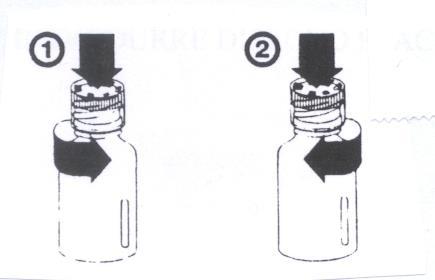
Instructions for use
To open the bottle, press and simultaneously unscrew the cap (1); to close, press the cap and
screw it on tightly (2).
| Age | Body weight | e Dose | Frequency |
| 1-3 years | 10-14 kg | 1 mg | Up to 3 times a day |
| 3-5 years | 15-19 kg | d 2 mg | Up to 3 times a day |
| 5-9 years | 20-29 kg | 2.5 mg | Up to 3 times a day |
| 9-18 years | 30-60 kg | 5 mg | Up to 3 times a day |
| 15-18 years | Over 60 kg | a 10 mg | Up to 3 times a day |
Elderly
The dose may need to be reduced based on kidney problems, liver problems and general health.
Adults with kidney problems
Talk to your doctor if you have kidney problems. The dose must be reduced in case of moderate or severe
kidney problems and with end-stage renal disease.
Adults with liver problems
Discuss with your doctor if you have liver problems. The dose must be reduced in case of severe
liver problems.
Children and adolescents
Metoclopramide should not be used in children under 1 year of age (see
paragraph 2).
If you take more Plasil than you should
Seek immediate medical advice or contact your pharmacist. You may experience uncontrollable
movements (extrapyramidal disorders), feel sleepy, have some disturbances of consciousness, be confused,
have hallucinations and heart problems. Your doctor may prescribe treatment for these
symptoms, if necessary.
In case of accidental ingestion/intake of an excessive dose of Plasil, immediately inform
your doctor or go to the nearest hospital.
If you forget to take Plasil
Do not take a double dose to make up for a missed dose.
If you have any doubts about the use of this medicine, ask your doctor, nurse or
pharmacist.
4. Possible side effects
Like all medicines, this medicine can cause side effects, although not everybody gets them.
Stop treatment and speak immediately with your doctor, pharmacist or nurse if
during therapy with this medicine you experience any of the following symptoms:
- uncontrollable movements (often affecting the head or neck). These can occur in children or young adults, especially if high doses are used. These symptoms usually appear at the beginning of treatment and can also occur after a single dose. The movements disappear if treated appropriately,
- high fever, high blood pressure, convulsions, sweating, increased saliva production. These may be signs of a condition called neuroleptic malignant syndrome,
- itching or skin rash, swelling of the face, lips or throat, difficulty breathing. These may be signs of an allergic reaction, which can be severe.
The following side effects may occur with the frequency indicated:
Very common(may affect more than 1 in 10 people)
- feeling sleepy.
Common(may affect up to 1 in 10 people)
- depression
- uncontrollable movements such as tics, tremors, twisting movements (extrapyramidal disorders) or muscle contractions (rigidity)
- symptoms similar to Parkinson's disease (rigidity, tremors)
- feeling restless and agitated (akathisia)
- low blood pressure (particularly with intravenous administration)
- diarrhoea
- feeling weak.
Uncommon(may affect up to 1 in 100 people)
- increase of a hormone called prolactin, which can cause production of milk in men and women who are not breastfeeding
- irregular menstrual cycle
- hallucinations
- reduced level of consciousness
- slow heartbeat (particularly with intravenous administration)
- allergy
- movement disorders (dyskinesia)
- assuming abnormal positions (dystonia)
- visual disturbances and involuntary eye deviation.
Rare(may affect up to 1 in 1000 people)
- confusional state
- convulsions (especially in patients with epilepsy)
- abnormal secretion of milk or milky fluid from the breasts in women who are not breastfeeding or in men (galactorrhoea).
Not known(frequency cannot be estimated from available data)
- allergic reactions (such as anaphylaxis, angioedema and urticaria) which can be severe (particularly with intravenous administration). Symptoms may include skin rash, itching, difficulty breathing, shortness of breath, swelling of the face, lips, throat or tongue, cold and clammy skin, palpitations, dizziness, weakness and fainting. Contact your doctor or other healthcare professional immediately or go immediately to the nearest hospital emergency room.
- abnormal levels of blood pigment, which can change the color of the skin (sulfhemoglobinemia)
- abnormal levels of methemoglobin (a protein similar to hemoglobin) (methemoglobinemia)
- abnormal development of breast tissue in men (gynecomastia)
- involuntary muscle contractions (spasms) after prolonged use, particularly in elderly patients (dyskinesia)
- high fever, high blood pressure, convulsions, sweating, increased saliva production. These may be symptoms of a condition called neuroleptic malignant syndrome
- prolongation of the QT interval on the electrocardiogram and torsades de pointes
- cardiac arrest (particularly with injection)
- atrioventricular block and sinus arrest (particularly with injection)
- shock (severe drop in blood pressure) (particularly with injection)
- fainting (particularly with intravenous administration)
- very high blood pressure
- suicidal thoughts (suicidal ideation).
If you get any side effects, talk to your doctor, pharmacist or nurse.
The following reactions, sometimes associated, occur more frequently when
high doses are administered:
- problems with movements (extrapyramidal disorders: acute dystonia and dyskinesia, parkinsonian syndrome, akathisia), even after the administration of a single dose of the medicine, particularly in children and young adults,
- sleepiness,
- reduced level of consciousness,
- confusion,
- hallucinations.
Reporting of side effects
If you get any side effects, talk to your doctor or pharmacist. You can also report side effects directly through
the national reporting system at https://www.aifa.gov.it/content/segnalazioni-reazioni-
avverse.
By reporting side effects you can help provide more information on the safety
of this medicine.
5. How to store Plasil
Keep this medicine out of the sight and reach of children.
Do not use this medicine after the expiry date which is stated on the pack after “Scad.”. The expiry
date refers to the last day of that month.
Do not dispose of any medicine in waste water or household waste. Ask your pharmacist how to
dispose of medicines you no longer use. This will help protect the environment.
6. Contents of the pack and other information
What Plasil contains
- The active ingredient is metoclopramide. 100 ml of syrup contains metoclopramide hydrochloride monohydrate 105 mg (equivalent to 100 mg of anhydrous substance).
- The other ingredients are: methyl parahydroxybenzoate,propyl parahydroxybenzoate,sorbic acid, hydroxyethylcellulose, saccharin, propylene glycol, ethanol,mandarin essence, caramel essence, vanilla essence (containing ethanol), sodium hydroxide, purified water.
Description of the appearance of Plasil and contents of the pack
Plasil 10 mg/10 ml is presented as a syrup.
The pack contains a 120 ml bottle with a dosing syringe for oral use.
Marketing Authorisation Holder
SANOFI S.r.l.
Viale L. Bodio 37/b – IT-20158 Milan
Manufacturer
SANOFI S.r.l.
Via Valcanello, 4 - 03012 Anagni (FR) - Italy

Не уверены, подходит ли вам это лекарство?
Обсудите симптомы и варианты лечения с врачом онлайн.

Уже начали прием и появились вопросы?
Обсудите свое состояние и дальнейшие шаги с врачом онлайн.
- Страна регистрации
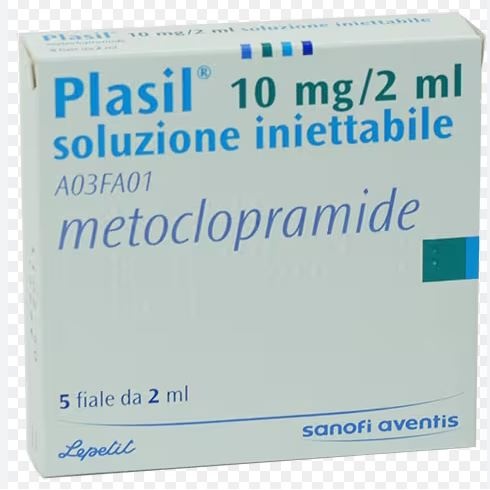
- Форма выпускаInjectable solution, 10 MG/2 ML
- Код АТХA03FA01
- Действующее вещество
- Отпускается по рецептуДа
- Производитель
- Информация на этой странице носит справочный характер и не является медицинской консультацией. Перед началом приема лекарства обязательно проконсультируйтесь с врачом.
- Аналоги PLASILФорма выпуска: Effervescent tablet, 5 MGДействующее вещество: metoclopramideПроизводитель: OPELLA HEALTHCARE ITALY S.R.L.Отпускается без рецептаФорма выпуска: Coated tablet, 10 MGДействующее вещество: metoclopramideПроизводитель: ACCORD HEALTHCARE, S.L.U.Отпускается по рецептуФорма выпуска: Injectable solution, 5 MG/MLДействующее вещество: metoclopramideПроизводитель: NORIDEM ENTERPRISES LTDОтпускается по рецепту
Аналоги PLASIL в других странах
Лекарства с тем же действующим веществом, доступные в других странах.
Аналог PLASIL в Испания
Аналог PLASIL в Польша
Аналог PLASIL в Украина
Врачи онлайн по PLASIL
Обсудите применение PLASIL и возможные следующие шаги — по оценке врача.









Получите рецепт на PLASIL онлайн
Заполните форму за 2 минуты
Расскажите о симптомах, истории болезни и нужном препарате.
Выберите врача или мы назначим
Выберите специалиста или мы подберём ближайшего доступного врача.
Врач рассматривает ваш случай
Обычно в течение 30 минут. Может задать уточняющие вопросы в чате.
Получите в любой аптеке
Электронный рецепт отправляется на вашу почту — действителен по всей Польше.
Часто задаваемые вопросы
PLASIL требует рецепта в Италия. Вы можете уточнить у врача онлайн, подходит ли это лекарство для вашей ситуации.
Действующее вещество PLASIL — metoclopramide. Эта информация помогает определить лекарства с тем же составом под другими торговыми названиями.
PLASIL производится компанией SANOFI S.R.L.. Упаковка и торговое название могут отличаться в зависимости от дистрибьютора.
Врачи, включая Семейные врачи, Психиатры, Дерматологи, Кардиологи, Эндокринологи, Гастроэнтерологи, Пульмонологи, Нефрологи, Ревматологи, Гематологи, Инфекционисты, Аллергологи, Гериатры, Педиатры, Онкологи, могут оценить целесообразность применения PLASIL с учетом вашей ситуации и местных правил. Вы можете записаться на онлайн-консультацию, чтобы обсудить возможные варианты.
Польша имеет хорошо развитую систему здравоохранения в крупных городах, таких как Варшава, Краков, Вроцлав и Гданьск. Аптеки широко доступны и работают в соответствии с действующим законодательством, обеспечивая доступ к рецептурным препаратам.
Вы можете купить PLASIL в Варшаве, Кракове, Вроцлаве или Гданьске в любой аптеке при наличии действующего рецепта.
Чтобы получить рецепт, вы можете воспользоваться Oladoctor:
Другие лекарства с тем же действующим веществом (metoclopramide) включают MAALOX NAUSEA, METOKLOPRAMIDE AKKORD, METOKLOPRAMIDE KLORIDRATO NORIDEM. Они могут отличаться торговым названием или формой выпуска, но содержат одинаковый терапевтический компонент. Перед изменением лечения рекомендуется проконсультироваться с врачом.
