



PALEXIA 4 mg /Ml Оральный Раствор

Рассмотрение рецепта онлайн
Врач рассмотрит ваш случай и примет решение о назначении рецепта, если это медицински оправдано.

Поговорите с врачом об этом лекарстве
Обсудите симптомы и возможные дальнейшие шаги на онлайн-консультации.



Инструкция по применению PALEXIA
Содержание инструкции
- Palexia 25 mg prolonged-release tablets
- Palexia 50 mg prolonged-release tablets, 100 mg prolonged-release tablets, 150 mg prolonged-release tablets, 200 mg prolonged-release tablets, 250 mg prolonged-release tablets
- Palexia 50 mg film-coated tablets, 75 mg film-coated tablets, 100 mg film-coated tablets
- Palexia 4 mg/ml oral solution
- Palexia 20 mg/ml oral solution
Palexia 25 mg prolonged-release tablets
Tapentadol
Read this leaflet carefully before taking this medicine, as it contains important information for you.
- Keep this leaflet. You may need to read it again.
- If you have any questions, ask your doctor or pharmacist.
- This medicine has been prescribed for you only. Do not pass it on to others, even if they have the same symptoms as you, as it may be harmful.
- If you get any side effects, even those not listed in this leaflet, tell your doctor or pharmacist (see section 4).
Contents of this leaflet:
- 1. What Palexia prolonged-release tablets are and what they are used for
- 2. What you need to know before you use Palexia prolonged-release tablets
- 3. How to use Palexia prolonged-release tablets
- 4. Possible side effects
- 5. How to store Palexia prolonged-release tablets
- 6. Contents of the pack and other information
1. What is Palexia prolonged-release tablets and what are they used for
Tapentadol, the active substance of Palexia prolonged-release tablets is a strong painkiller that
belongs to the class of opioids. Palexia prolonged-release tablets is used for the treatment of
severe chronic pain in adults who can be adequately treated only with opioid painkillers.
2. What you need to know before you use Palexia prolonged-release tablets
Do not use Palexia prolonged-release tablets:
- if you are allergic to tapentadol or any of the other ingredients of this medicine (listed in section 6),
- if you have asthma or if your breathing is dangerously slow or shallow (respiratory depression, hypercapnia),
- if you have intestinal paralysis,
- if you have an acute poisoning with alcohol, sleeping pills, painkillers or other psychotropic drugs (drugs that affect mood and emotions) (see “Other medicines and Palexia prolonged-release tablets”).
Warnings and precautions
Talk to your doctor or pharmacist before taking Palexia prolonged-release tablets:
- if you have short or weak breathing,
- if you suffer from increased pressure inside your head or disturbances of consciousness, up to coma,
- if you have had a head injury or a brain tumor,
- if you suffer from liver or kidney disorders (see “How to use Palexia prolonged-release tablets”),
- if you suffer from disorders of the pancreas or biliary tract, including pancreatitis,
- if you are taking medicines called opioid mixed agonists/antagonists (such as pentazocine, nalbuphine) or partial opioid mu-receptor agonists (such as buprenorphine)
- if you are prone to epilepsy or seizures or if you are taking other medicines known to increase the risk of seizures because the risk of a seizure may increase.
Palexia prolonged-release tablets can lead to physical and psychological dependence. If you are prone to
drug abuse or if you are drug dependent, you should take this medicine only for short periods of time
and under strict medical supervision.
Breathing-related sleep disorders
Palexia prolonged-release tablets contains an active substance that belongs to the group of opioids.
Opioids can cause breathing-related sleep disorders, such as central sleep apnea (shallow/pauses in breathing during sleep) and sleep-related hypoxemia (low
blood oxygen levels).
The risk of developing central sleep apnea depends on the dose of opioids. The doctor may consider
reducing the total opioid dosage in case of central sleep apnea.
Other medicines and Palexia prolonged-release tablets
Tell your doctor or pharmacist if you are taking, have recently taken or might take any
other medicines.
The risk of side effects increases if you are taking medicines that can cause seizures
(attacks), such as certain antidepressants or antipsychotics. The risk of having a seizure may increase if you take
Palexia at the same time as these medicines. The doctor will tell you if you can take Palexia.
The concomitant use of Palexia and sedatives such as benzodiazepines or similar medicines (some medicines
for sleeping or with a calming effect (such as barbiturates), painkillers such as opioids, morphine and
codeine (also used in cough preparations), antipsychotics, H1 antihistamines, alcohol) increases the
risk of drowsiness, difficulty breathing (respiratory depression), coma and can be life-threatening. For this reason, concomitant use should only be considered if other therapeutic options are not possible.
However, if your doctor prescribes Palexia together with sedatives, they will also establish the
reduction of the dose and duration of concomitant treatment.
Tell your doctor about all the sedatives you are taking and strictly follow their
recommendations on dosage. It may be helpful to inform relatives or friends to pay attention to the signs and
symptoms above. Contact your doctor if you experience these symptoms.
If you are taking a type of medicine that affects serotonin levels (such as certain medicines for the
treatment of depression), talk to your doctor before taking Palexia, because there have been cases of
“serotonin syndrome”. Serotonin syndrome is rare but is a life-threatening condition. Symptoms include uncontrollable rhythmic muscle contractions including the muscles that control the
eye movements, agitation, excessive sweating, tremors, exaggerated reflexes, increased muscle tension and body temperature above 38°. The doctor can inform you about this.
Taking Palexia prolonged-release tablets with other types of medicines indicated as
mu-receptor agonists/antagonists (such as pentazocine, nalbuphine) or mu-opioid receptor partial agonists (such as buprenorphine) has not been studied. It is possible that Palexia prolonged-release tablets
may not be effective if taken together with one of these medicines. Tell your doctor if you are taking one of
these medicines.
Taking Palexia prolonged-release tablets together with some medicines (such as rifampicin,
phenobarbital, St. John's wort), strong inhibitors or inducers of some enzymes that are needed to
eliminate tapentadol from the body, can affect the effectiveness of tapentadol and can cause adverse
effects, especially at the beginning or end of therapy with these medicines. Keep your doctor informed about
every medicine you are taking.
Palexia prolonged-release tablets should not be taken together with MAO inhibitors (a type of medicine
for the treatment of depression). Tell your doctor if you are taking MAO inhibitors or have taken them
during the last 14 days.
Palexia prolonged-release tablets with food, beverages and alcohol
Do not drink alcohol during therapy with Palexia prolonged-release tablets because some side
effects, such as drowsiness, may increase. Food does not affect the effectiveness of this medicine.
Pregnancy and breastfeeding
If you are pregnant or breastfeeding, if you suspect or are planning a pregnancy, ask
your doctor or pharmacist for advice before using this medicine.
Do not take these tablets:
- if you are pregnant, unless your doctor has told you to do so, if used for prolonged periods during pregnancy tapentadol can lead to withdrawal symptoms in the newborn which can be life-threatening to the newborn if not recognized and treated by a doctor.
- during childbirth because the breathing of the newborn may slow down or weaken dangerously (respiratory failure),
- during breastfeeding, because the medicine may be excreted in breast milk.
Driving and using machines
Palexia prolonged-release tablets can cause drowsiness, dizziness and blurred vision and can reduce the
reaction time. This can happen especially when you start therapy with Palexia prolonged-release tablets, when the doctor changes your dosage or when you drink alcohol or take tranquillizers.
Ask your doctor if you can drive a car or use machines.
Palexia prolonged-release tabletscontains lactose
If your doctor has diagnosed you with an intolerance to certain sugars, contact them before taking this
medicine.
3. How to use Palexia prolonged-release tablets
Take this medicine exactly as your doctor or pharmacist has told you. If you have any doubts
consult your doctor or pharmacist.
The doctor will decide the dosage based on the intensity of the pain and your personal sensitivity to pain. In
general, you should use the lowest dose that can relieve the pain.
Adults
The usual dose is 1 tablet every 12 hours. Total daily doses of Palexia prolonged-release tablets
exceeding 500 mg of tapentadol are not recommended. Your doctor may prescribe a
different or more appropriate dose or interval between doses, if necessary. If you think that the effect of these
tablets is too strong or too weak, consult your doctor or pharmacist.
Elderly patients
In elderly patients (over 65 years of age) it is generally not necessary to modify the dose. In any case, the excretion
of tapentadol may be slowed down in some patients in this group. If this is your case, your doctor may
prescribe a different dosage.
Liver and kidney problems (insufficiency)
Patients with severe liver problems should not take these tablets. If you have mild liver
problems, your doctor will prescribe a different dosage. In case of mild liver problems, it is not necessary
to modify the normal dosage.
Patients with severe kidney problems should not take these tablets. In case of mild or
moderate kidney problems it is not necessary to modify the normal dosage.
Use in children and adolescents
Palexia prolonged-release tablets are not suitable for children and adolescents under 18 years of age.
How and when should you take Palexia prolonged-release tablets?
Palexia prolonged-release tablets are for oral use.
Always swallow the tablets whole with a sufficient amount of liquid.
Do not chew, break or crush them, as this could lead to an overdose because the medicine
would be released into the body too quickly.
You can take the tablets on an empty stomach or during meals.
The empty coating of the tablet may not be completely digested and therefore may be found
in the stool. This should not worry you because the medicine (active substance) of the tablet has already been absorbed
by your body and what you see is only the empty coating.
How long does the treatment last
Do not take the tablets for longer than your doctor has told you.
If you take more Palexia prolonged-release tabletsthan you should
After taking very high doses, the following may occur:
- pinpoint pupils, vomiting, low blood pressure, fast heartbeat, collapse, disturbances of consciousness or coma (profound unconsciousness), seizures, breathing that becomes dangerously slow and shallow or respiratory arrest. In this case, a doctor should be called immediately.
If you forget to take Palexia prolonged-release tablets
If you forget to take the tablets, the pain is likely to return. Do not take a double dose to
make up for the missed tablet, simply continue taking the tablets as
before.
If you stop taking Palexia prolonged-release tablets
If you stop or end the treatment too soon, the pain is likely to return. If you want
to stop the treatment, consult your doctor.
Generally, when treatment is stopped, no withdrawal effects occur, however, in rare cases
people who have taken the tablets for a certain period of time may not feel well if
they suddenly stop treatment.
The symptoms may be:
- nervousness, tearing, runny nose, yawning, sweating, chills, muscle pain and dilated pupils,
- irritability, anxiety, back pain, joint pain, weakness, abdominal cramps, difficulty sleeping, nausea, loss of appetite, vomiting, diarrhea and increased blood pressure, breathing or heart rate. If you experience any of these symptoms after stopping therapy, consult your doctor. Do not suddenly stop taking this medicine unless your doctor has told you to do so. If your doctor tells you to stop taking the tablets, they will also tell you how to do so and this may include a gradual reduction in the dose.
If you have any further questions on the use of this medicine, ask your doctor or pharmacist.
4. Possible side effects
Like all medicines, this medicine can cause side effects, although not everybody gets them.
Important side effects or symptoms to watch out for and what to do if they occur:
this medicine can cause allergic reactions. Symptoms may include shortness of breath, wheezing, swelling of the eyelids, face or lips, skin rash or itching, especially all over the body. Another serious side effect is a slowing down or more pronounced shortness of breath than expected. This occurs mainly in elderly or debilitated patients.
In these cases, contact your doctor immediately.
Other possible side effects are:
Very common (may affect more than 1 in 10 people) :nausea, constipation, dizziness, drowsiness, headache.
Common(may affect up to 1 in 10 people): decreased appetite, anxiety, depressed mood,
sleep disorders, nervousness, restlessness, attention disorders, tremor, muscle contraction,
flushing, shortness of breath, vomiting, diarrhea, indigestion, itching, increased sweating, rash,
feeling of weakness, fatigue, sensation of temperature fluctuations, dryness of the
mucous membranes, fluid retention (edema).
Uncommon(may affect up to 1 in 100 people): allergic reactions to the medicine (including swelling under
the skin, urticaria and, in severe cases, difficulty breathing, low blood pressure, collapse or shock),
weight loss, disorientation, confusion, excitability (agitation), perceptual disturbances, strange dreams,
euphoria, reduced level of consciousness, impaired memory, mental impairment,
fainting, sedation, balance disorders, difficulty speaking, numbness, abnormal sensations
of the skin (e.g. tingling, prickling), distorted vision, increased heart rate, decreased heart rate, palpitations, low blood pressure, abdominal discomfort, urticaria,
difficulty urinating, increased urinary frequency, sexual dysfunction, withdrawal syndrome (see
“When to stop treatment with Palexia), feeling strange, irritability.
Rare(may affect up to 1 in 1,000): drug dependence, abnormal thoughts, seizures,
feeling faint, abnormal coordination, dangerously slowed breathing or shortness of breath
(respiratory depression), problems with gastric emptying, feeling drunk, feeling relaxed.
Frequency not known delirium.
Generally, the possibility of having suicidal thoughts or behaviors increases in patients suffering from
chronic pain. In addition, some drugs for the treatment of depression (which therefore have an impact on the brain's neurotransmitter system) may increase this risk, especially at the beginning of therapy.
Although tapentadol also acts on neurotransmitters, clinical use data do not demonstrate an
increased risk.
Reporting of side effects
If you get any side effects, talk to your doctor or pharmacist. This includes any side effects not listed in this leaflet. You can also report side effects directly through the national
reporting system at https://www.aifa.gov.it/content/segnalazioni-reazioni-avverse .
By reporting side effects, you can help provide more information on the safety of this
medicine.
5. How to store Palexia prolonged-release tablets
Keep this medicine out of the sight and reach of children.
Do not use this medicine after the expiry date stated on the pack and blister. The expiry date refers to the last day of that month.
This medicine does not require any particular storage conditions.
Do not dispose of any medicine in waste water or household waste. Ask your pharmacist how to dispose of
medicines you no longer use. This will help protect the environment.
6. Package contents and other information
What Palexia prolonged-release tablets contain
The active ingredientis: tapentadol
Each tablet contains 25 mg of tapentadol (equivalent to 29.12 mg of tapentadol hydrochloride)
The otheringredients are:
Tablet core: hypromellose, microcrystalline cellulose, anhydrous colloidal silica, magnesium stearate.
Tablet coating: hypromellose, lactose monohydrate, talc, macrogol 400, macrogol 6000, titanium
dioxide (E 171), yellow iron oxide (E 172), red iron oxide (E 172).
Description of the appearance of Palexia 25 mg prolonged-release tabletsand package contents
Oblong, film-coated tablets, light brown-orange in color (5.5 mm x 10 mm),
marked with the Grünenthal logo on one side and “H9” on the other.
Palexia prolonged-release tablets are packaged in blisters, in packs of 7, 10, 10x1, 14, 14x1,
20, 20x1, 24, 28, 28x1, 30, 30x1, 40, 50, 50x1, 54, 56, 56x1, 60, 60x1, 90, 90x1, 100 and 100x1 tablets.
Not all pack sizes may be marketed.
Marketing authorisation holder and manufacturer
GRŰNENTHAL ITALIA S.r.l. Via Vittor Pisani, 16 Milan
Manufacturer
Grünenthal GmbH Zieglerstrasse 6, 52078 Aachen, Germany
Farmaceutici Formenti S.p.A. via Di Vittorio 2 Origgio - Italy
This medicinal product is authorised in the Member States of the European Economic Area under the following
names:
Austria, Belgium, Croatia, Cyprus, Czech Republic, Germany, Greece, Luxembourg, Netherlands, Poland,
Portugal, Slovakia, Spain: PALEXIA retard
Denmark, Finland, Norway, Sweden: PALEXIA Depot
France: PALEXIA LP
Ireland, United Kingdom, Slovenia: PALEXIA SR
Italy: Palexia
Palexia 50 mg prolonged-release tablets, 100 mg prolonged-release tablets, 150 mg prolonged-release tablets, 200 mg prolonged-release tablets, 250 mg prolonged-release tablets
Tapentadol
Read this leaflet carefully before taking this medicine, as it contains important information for you.
- Keep this leaflet. You may need to read it again.
- If you have any questions, ask your doctor or pharmacist.
- This medicine has been prescribed for you only. Do not pass it on to others, even if their symptoms are the same as yours, as it could be harmful.
- If any side effects occur, including those not listed in this leaflet, tell your doctor or pharmacist (see section 4).
Contents of this leaflet:
- 1. What Palexia prolonged-release tablets are and what they are used for
- 2. What you need to know before you use Palexia prolonged-release tablets
- 3. How to use Palexia prolonged-release tablets
- 4. Possible side effects
- 5. How to store Palexia prolonged-release tablets
- 6. Contents of the pack and other information
1. What is Palexia prolonged-release tablets and what are they used for
Tapentadol, the active substance of Palexia prolonged-release tablets is a strong painkiller that
belongs to the class of opioids. Palexia prolonged-release tablets is used for the treatment of
severe chronic pain in adults who can be adequately treated only with opioid painkillers.
2. What you need to know before you use Palexia prolonged-release tablets
Do not use Palexia prolonged-release tablets
- if you are allergic to tapentadol or to any of the other ingredients of this medicine (listed in section 6),
- if you have asthma or if your breathing is dangerously slow or shallow (respiratory depression, hypercapnia),
- if you have intestinal paralysis,
- if you have an acute poisoning with alcohol, sleeping pills, painkillers or other psychotropic drugs (drugs that affect mood and emotions) (see “Other medicines and Palexia prolonged-release tablets”).
Warnings and precautions
Talk to your doctor or pharmacist before taking Palexia prolonged-release tablets:
- if you have short or weak breathing,
- if you suffer from increased pressure inside your head or disturbances of consciousness, up to coma,
- if you have had a head injury or a brain tumor,
- if you suffer from liver or kidney disorders (see “How to use Palexia prolonged-release tablets”),
- if you suffer from disorders of the pancreas or biliary tract, including pancreatitis,
- if you are taking medicines called opioid agonists/antagonists (such as pentazocine, nalbufine) or partially agonistic opioid mu-receptor drugs (such as buprenorphine)
- if you are prone to epilepsy or seizures or if you are taking other medicines known to increase the risk of convulsions because the risk of a seizure may increase.
Palexia prolonged-release tablets can lead to physical and psychological tolerance. If you are prone to
drug abuse or if you are drug dependent, you should take this medicine only for short periods of time
and under strict medical supervision.
Sleep-related breathing disorders
Palexia contains an active substance that belongs to the group of opioids. Opioids can cause
sleep-related breathing disorders, such as central sleep apnea (shallow/pauses in breathing during sleep) and
sleep-related hypoxemia (low blood oxygen levels).
The risk of central sleep apnea occurring depends on the dose of opioids. Your doctor may consider
reducing the total opioid dose if central sleep apnea occurs.
Other medicines and Palexia prolonged-release tablets
Tell your doctor or pharmacist if you are taking, have recently taken or might take
any other medicines.
The risk of side effects increases if you are taking medicines that can cause convulsions
(seizures), such as certain antidepressants or antipsychotics. The risk of having a seizure may increase if you take
Palexia at the same time as these medicines. Your doctor will tell you if you can take Palexia.
The concomitant use of Palexia and sedatives such as benzodiazepines or similar medicines (some medicines
for sleeping or with a calming effect (such as barbiturates), painkillers such as morphine and codeine (also used
in preparations to soothe coughs), antipsychotics, antihistamines H1, alcohol) increases the risk of
drowsiness, difficulty breathing (respiratory depression), coma and can be life-threatening. For
this reason, concomitant use should only be considered if other therapeutic options are not possible.
However, if your doctor prescribes Palexia together with sedatives, they will also establish the
reduction of the dose and duration of concomitant treatment. Tell your doctor about all the sedatives
you are taking and strictly follow their recommendations on dosage. It may be helpful to
inform relatives or friends to pay attention to the signs and symptoms mentioned above. Contact your doctor if
you experience these symptoms.
If you are taking a type of medicine that affects serotonin levels (such as certain medicines for the
treatment of depression), talk to your doctor before taking Palexia, because there have been cases of
“serotonin syndrome”. Serotonin syndrome is rare but is a life-threatening condition. Symptoms include uncontrollable rhythmic muscle contractions including the muscles that control the
eye movements, agitation, excessive sweating, tremors, exaggerated reflexes, increased muscle tension and body temperature above 38°. Your doctor can inform you about this.
Taking Palexia prolonged-release tablets with other types of medicines known as
mu-receptor agonists/antagonists (such as pentazocine, nalbufine) or mu-opioid receptor partial agonists (such as buprenorphine) has not been studied. It is possible that Palexia prolonged-release tablets
may not be effective if taken together with one of these medicines. Tell your doctor if you are taking one of
these medicines.
Taking Palexia prolonged-release tablets together with some medicines (such as rifampicin,
phenobarbital, St. John's wort), strong inhibitors or inducers of some enzymes that are needed to
eliminate tapentadol from the body, can affect the effectiveness of tapentadol and can cause adverse effects, especially at the beginning or end of therapy with these medicines. Keep your doctor informed about
every medicine you are taking.
Palexia prolonged-release tablets should not be taken together with MAO inhibitors (a type of medicine
for the treatment of depression). Tell your doctor if you are taking MAO inhibitors or have taken them
during the last 14 days.
Palexia prolonged-release tablets with food, beverages and alcohol
Do not drink alcohol during therapy with Palexia prolonged-release tablets because some side effects, such
as drowsiness, may be increased. Food does not affect the effectiveness of this medicine.
Pregnancy and breastfeeding
If you are pregnant or breastfeeding, if you suspect or are planning a pregnancy, ask
your doctor or pharmacist for advice before using this medicine.
Do not take these tablets:
- if you are pregnant, unless your doctor has told you to do so, if used for prolonged periods during pregnancy tapentadol may lead to withdrawal symptoms in the newborn which may be life-threatening to the newborn if not recognized and treated by a doctor.
- during childbirth because the breathing of the newborn may slow down or weaken dangerously (respiratory failure),
- during breastfeeding, because the drug may be excreted in breast milk.
Driving and using machines
Palexia prolonged-release tablets can cause drowsiness, dizziness and blurred vision and can reduce
reaction time. This can happen especially when you start therapy with Palexia prolonged-release tablets, when your doctor changes your dose or when you drink alcohol or take tranquillizers.
Ask your doctor if you can drive a car or use machines.
Palexia prolonged-release tabletscontains lactose
If you have been diagnosed with an intolerance to certain sugars, contact your doctor before taking this
medicine.
3. How to use Palexia prolonged-release tablets
Take this medicine exactly as your doctor or pharmacist has told you. If you have any doubts
consult your doctor or pharmacist .
The doctor will decide the dosage based on the intensity of the pain and your personal sensitivity to pain. In
general, you should use the lowest dose that can relieve the pain.
Adults
The usual dose is 1 tablet every 12 hours. Total daily doses of Palexia prolonged-release tablets
exceeding 500 mg of tapentadol are not recommended. Your doctor may prescribe a different
or more appropriate dosage or interval between doses, if necessary. If you think that the effect of these
tablets is too strong or too weak, consult your doctor or pharmacist.
Elderly patients
In elderly patients (over 65 years of age), it is generally not necessary to modify the dosage. In any case,
the excretion of tapentadol may be slowed down in some patients in this group. If this is your case, your
doctor may prescribe a different dosage.
Liver and kidney problems (insufficiency)
Patients with severe liver problems cannot take these tablets. If you have mild liver
problems, your doctor will prescribe a different dosage. In case of mild liver problems, it is not necessary
to modify the normal dosage.
Patients with severe kidney problems should not take these tablets. In case of mild or
moderate kidney problems, it is not necessary to modify the normal dosage.
Use in children and adolescents
Palexia prolonged-release tablets are not suitable for children and adolescents under 18 years of age.
How and when should you take Palexia prolonged-release tablets?
Palexia prolonged-release tablets are for oral use.
Always swallow the tablets whole with sufficient liquid.
Do not chew, break or crush them, as this could lead to an overdose because the medicine
would be released into the body too quickly.
You can take the tablets on an empty stomach or during meals.
The empty coating of the tablet may not be completely digested and therefore may be found
in the stool. This should not worry you because the medicine (active substance) of the tablet has already been absorbed
by your body and what you see is only the empty coating.
How long does the treatment last
Do not take the tablets for longer than your doctor has told you.
If you take more Palexia prolonged-release tabletsthan you should:
After taking very high doses, the following may occur:
- pinpoint pupils, vomiting, low blood pressure, fast heartbeat, collapse, disturbances of consciousness or coma (deep unconsciousness), seizures, breathing that becomes dangerously slow and shallow or respiratory arrest. In this case, call your doctor immediately!
If you forget to take Palexia prolonged-release tablets
If you forget to take the tablets, the pain is likely to return. Do not take a double dose to
make up for the missed tablet, simply continue taking the tablets as
before.
If you stop taking Palexia prolonged-release tablets
If you stop or end the treatment too soon, the pain is likely to return. If you wish to
stop treatment due to side effects, consult your doctor.
Generally, no withdrawal effects occur when treatment is terminated, however, in rare cases
people who have taken the tablets for a certain period of time may not feel well if
they suddenly stop treatment.
Symptoms may include:
- nervousness, tearing, runny nose, yawning, chills, muscle pain and dilated pupils,
- irritability, anxiety, back pain, joint pain, weakness, abdominal cramps, difficulty sleeping, nausea, loss of appetite, vomiting, diarrhea and increased blood pressure, breathing or heart rate. If you experience any of these symptoms after stopping therapy, consult your doctor. You should not suddenly stop taking this medicine unless your doctor has told you to do so. If your doctor tells you to stop taking the tablets, they will also tell you how to do so and this may include a gradual reduction in doses.
If you have any further questions on the use of this medicine, ask your doctor or pharmacist.
4. Possible side effects
Like all medicines, this medicine can cause side effects, although not everyone will experience them.
Serious side effects or symptoms to watch out for and what to do if they occur:
this medicine can cause allergic reactions. Symptoms may include shortness of breath, wheezing,
swelling of the eyelids, face or lips, skin rash or itching, especially all over the body. Another
serious side effect is a slowing of breathing or shortness of breath more pronounced than expected.
This occurs mainly in elderly or debilitated patients.
In these cases, contact your doctor immediately.
Other possible side effects are:
Very common (may affect more than 1 in 10 people) :nausea, constipation, dizziness, drowsiness, headache.
Common(may affect up to 1 in 10 people): decreased appetite, anxiety, depression, sleep disorders,
nervousness, restlessness, attention disorders, tremor, involuntary muscle contractions,
hot flashes, shortness of breath, vomiting, diarrhea, indigestion, itching, increased sweating, rash, feeling of
weakness, fatigue, sensation of temperature fluctuations, dryness of the mucous membranes, fluid accumulation
in the tissues (edema).
Uncommon(may affect up to 1 in 100 people): allergic reactions to the medicine (including swelling under
the skin, hives and in severe cases, difficulty breathing, low blood pressure, collapse or shock),
weight loss, disorientation, confusion, excitability (agitation), perceptual disturbances, strange dreams,
euphoria, reduced level of consciousness, impaired memory, mental weakening, feeling of
fainting, sedation, balance disorders, difficulty speaking, numbness, abnormal skin sensations
(e.g. tingling, prickling), distorted vision, increased heart rate, slowed heart rate, palpitations, low blood pressure, abdominal disorders, hives, difficulty
urinating, increased urinary frequency, sexual dysfunction, withdrawal syndrome (see “When to stop treatment with Palexia), abnormal sensations, irritability.
Rare(may affect up to 1 in 1,000): drug dependence, abnormal thoughts, seizures,
feeling faint, abnormal coordination, dangerously slowed breathing or shortness of breath
(respiratory depression), problems with gastric emptying, feeling drunk, feeling relaxed.
Frequency not known: delirium.
Generally, the possibility of having suicidal thoughts or behaviors increases in patients suffering from
chronic pain. In addition, some drugs for the treatment of depression (which therefore have an impact on the brain's neurotransmitter system) can increase this risk, especially at the beginning of therapy.
Although tapentadol acts on neurotransmission, clinical use data do not demonstrate an increase
in risk.
Reporting of side effects
If you experience any side effects, including those not listed in this leaflet, tell your
doctor or pharmacist. You can also report side effects directly through the national
reporting system at https://www.aifa.gov.it/content/segnalazioni-reazioni-avverse .
By reporting side effects, you can help provide more information on the safety of this
medicine.
5. How to store Palexia prolonged-release tablets
Keep this medicine out of the sight and reach of children.
Do not use this medicine after the expiry date stated on the package and blister. The expiry date
refers to the last day of that month indicated.
This medicine does not require particular storage conditions.
Do not dispose of any medicine in wastewater or household waste. Ask your pharmacist how to dispose of
medicines you no longer use. This will help protect the environment.
6. Package Contents and Other Information
What Palexia prolonged-release tablets contain
The active ingredientis: tapentadol
Each tablet contains 50 mg of tapentadol (equivalent to 58.24 mg of tapentadol hydrochloride)
Each tablet contains 100 mg of tapentadol (equivalent to 116.48 mg of tapentadol hydrochloride)
Each tablet contains 150 mg of tapentadol (equivalent to 174.72 mg of tapentadol hydrochloride)
Each tablet contains 200 mg of tapentadol (equivalent to 232.96 mg of tapentadol hydrochloride)
Each tablet contains 250 mg of tapentadol (equivalent to 291.20 mg of tapentadol hydrochloride)
The otheringredients are:
[50 mg]:
Tablet core: hypromellose, microcrystalline cellulose, anhydrous colloidal silica, magnesium stearate.
Tablet coating: hypromellose, lactose monohydrate, talc, macrogol 6000, propylene glycol,
titanium dioxide (E 171)
[100 mg]:
Tablet core: hypromellose, microcrystalline cellulose, anhydrous colloidal silica, magnesium stearate.
Tablet coating: hypromellose, lactose monohydrate, talc, macrogol 6000, propylene glycol,
titanium dioxide (E 171), yellow iron oxide (E 172)
[150 mg]:
Tablet core: hypromellose, microcrystalline cellulose, anhydrous colloidal silica, magnesium stearate.
Tablet coating: hypromellose, lactose monohydrate, talc, macrogol 6000, propylene glycol,
titanium dioxide (E 171), yellow iron oxide (E 172), red iron oxide (E 172)
[200 mg]:
Tablet core: hypromellose, microcrystalline cellulose, anhydrous colloidal silica, magnesium stearate.
Tablet coating: hypromellose, lactose monohydrate, talc, macrogol 6000, propylene glycol,
titanium dioxide (E 171), yellow iron oxide (E 172), red iron oxide (E 172)
[250 mg]:
Tablet core: hypromellose, microcrystalline cellulose, anhydrous colloidal silica, magnesium stearate.
Tablet coating: hypromellose, lactose monohydrate, talc, macrogol 6000, propylene glycol,
titanium dioxide (E 171), yellow iron oxide (E 172), red iron oxide (E 172), black iron oxide (E
172)
Description of the appearance of Palexia prolonged-release tablets and package contents
[50 mg]: oblong-shaped, film-coated tablets, white in color (6.5 mm x 15 mm), marked
with the Grünenthal logo on one side and “H1” on the other.
[100 mg]: oblong-shaped, film-coated tablets, light yellow in color (6.5 mm x 15 mm),
marked with the Grünenthal logo on one side and “H2” on the other.
[150 mg]: oblong-shaped, film-coated tablets, light pink in color (6.5 mm x 15 mm),
marked with the Grünenthal logo on one side and “H3” on the other.
[200 mg]: oblong-shaped, film-coated tablets, light orange in color (7 mm x 17 mm),
marked with the Grünenthal logo on one side and “H4” on the other.
[250 mg]: oblong-shaped, film-coated tablets, reddish-brown in color (7 mm x 17 mm),
marked with the Grünenthal logo on one side and “H5” on the other.
Palexia prolonged-release tablets are packaged in blisters, in packs of 7, 10, 10x1, 14, 14x1,
20, 20x1, 24, 28, 28x1, 30, 30x1, 40, 50, 50x1, 54, 56, 56x1, 60, 60x1, 90, 90x1, 100 and 100x1 tablets
Not all pack sizes may be marketed.
Marketing Authorisation Holder and Manufacturer
Grünenthal Italia S.r.l. Via Carlo Bo, 11 20143 Milan
Manufacturer responsible for batch release:
Grünenthal GmbH, Zieglerstrasse, 6 Aachen Germany
Farmaceutici Formenti S.p.A. via Di Vittorio 2 Origgio - Italy
This medicinal product is authorised in the Member States of the European Economic Area with the following
denominations:
Austria, Belgium, Croatia, Cyprus, Czech Republic, Germany, Greece, Luxembourg, Netherlands, Poland,
Portugal, Slovakia, Spain: PALEXIA retard
Denmark, Finland, Norway, Sweden: PALEXIA Depot
France: PALEXIA LP
Ireland, United Kingdom, Slovenia: PALEXIA SR
Italy: Palexia

Не уверены, подходит ли вам это лекарство?
Обсудите симптомы и варианты лечения с врачом онлайн.
Palexia 50 mg film-coated tablets, 75 mg film-coated tablets, 100 mg film-coated tablets
Tapentadol
Read this leaflet carefully before you start taking this medicine, as it contains important
information for you.
- Keep this leaflet. You may need to read it again.
- If you have any questions, ask your doctor or pharmacist.
- This medicine has been prescribed for you only. Do not pass it on to others, even if their symptoms are the same as yours, as it could be harmful.
- If you get any side effects, even those not listed in this leaflet, tell your doctor or pharmacist (see section 4).
Contents of this leaflet:
- 1. What Palexia is and what it is used for
- 2. What you need to know before you use Palexia
- 3. How to use Palexia
- 4. Possible side effects
- 5. How to store Palexia
- 6. Contents of the pack and other information
1. What is Palexia and what is it used for
Tapentadol, the active substance of Palexia, is a strong painkiller that belongs to the class of opioids.
Palexia is used for the treatment of acute pain from moderate to severe in adults who can be treated
adequately only with opioid painkillers.
2. What you need to know before you use Palexia
Do not usePalexia
- If you are allergic to tapentadol or to any of the other ingredients of this medicine (listed in section 6)
- if you have asthma or if your breathing is dangerously slow or shallow (respiratory depression, hypercapnia)
- If you have intestinal paralysis
- if you have an acute poisoning with alcohol, sleeping pills, painkillers or other psychotropic drugs (drugs that affect mood and emotions) (see “Other medicines and Palexia”)
Warnings and precautions
Talk to your doctor or pharmacist before taking Palexia:
- if you have shortness of breath or weak breathing,
- if you suffer from increased pressure inside your head or disturbances of consciousness, up to coma,
- if you have had a head injury or a brain tumor,
- if you suffer from liver or kidney disorders (see “How to use Palexia”)
- if you suffer from disorders of the pancreas or biliary tract, including pancreatitis,
- if you are taking medicines called opioid agonists/antagonists (such as pentazocine, nalbufine) or partially agonistic opioid mu receptor drugs (such as buprenorphine)
- if you are prone to epilepsy or seizures or if you are taking other medicines known to increase the risk of seizures because the risk of a seizure may increase.
Palexia can lead to physical and psychological dependence. If you have a tendency to abuse drugs or if you are drug
dependent, you should take this medicine only for short periods of time and under strict medical supervision.
Breathing-related sleep disorders
Palexia contains an active ingredient that belongs to the group of opioids. Opioids can cause
breathing-related sleep disorders, such as central sleep apnea (shallow/pauses in breathing during sleep) and sleep-related hypoxemia (low oxygen levels in the blood).
The risk of central sleep apnea occurring depends on the dose of opioids. The doctor may consider reducing the total opioid dosage in case of central sleep apnea.
Other medicines and Palexia
Tell your doctor or pharmacist if you are taking, have recently taken any other medicine.
The risk of side effects increases if you are taking medicines that can cause seizures
(attacks), such as certain antidepressants or antipsychotics. The risk of having a seizure may increase if you take
Palexia at the same time as these medicines. The doctor will tell you if you can take Palexia.
The concomitant use of Palexia and sedatives such as benzodiazepines or similar drugs (some drugs
for sleeping or with a calming effect (such as barbiturates), painkillers such as opioids, morphine and codeine
(also used in cough syrups), antipsychotics, H1 antihistamines, alcohol) increases the risk of
drowsiness, difficulty breathing (respiratory depression), coma and can be life-threatening. For
this reason, concomitant use should only be considered if other therapeutic options are not possible.
However, if your doctor prescribes Palexia together with sedatives, they will also establish the
reduction of the dose and duration of concomitant treatment.
Tell your doctor about all the sedatives you are taking and strictly follow their
recommendations on dosage. It may be helpful to inform relatives or friends to pay attention to the signs and
symptoms mentioned above. Contact your doctor if you experience these symptoms.
If you are taking a type of medicine that affects serotonin levels (such as certain medicines for the
treatment of depression), talk to your doctor before taking Palexia, because there have been cases of
"serotonin syndrome". Serotonin syndrome is rare but is a life-threatening condition. Symptoms include uncontrollable rhythmic muscle contractions including the muscles that control the
eye movements, agitation, excessive sweating, tremors, exaggerated reflexes, increased muscle tension and body temperature above 38°. The doctor will be able to inform you about this.
Taking Palexia with other types of medicines indicated as μ receptor agonists/antagonists (such as
pentazocine, nalbufine) or μ opioid receptor partial agonists (such as buprenorphine) has not been
studied. It is possible that Palexia may not be effective if taken together with one of these medicines. Tell your
doctor if you are taking one of these medicines.
Taking Palexia together with some medicines (such as rifampicin, phenobarbital, St. John's wort),
strong inhibitors or inducers of some enzymes that are needed to eliminate tapentadol from the body, can
affect the effectiveness of tapentadol and can cause side effects, especially at the beginning or end
of therapy with these medicines. Keep your doctor informed about every medicine you are taking.
Palexia should not be taken together with MAO inhibitors (a type of medicine for the treatment of
depression). Tell your doctor if you are taking MAO inhibitors or have taken them during the last 14
days.
Palexia with food, drinks and alcohol
Do not drink alcohol during therapy with Palexia because some side effects, such as drowsiness,
may increase. Food does not affect the effectiveness of this medicine.
Pregnancy and breastfeeding
If you are pregnant or breastfeeding, if you suspect or are planning a pregnancy, ask
your doctor or pharmacist for advice before using this medicine
Do not take these tablets:
- if you are pregnant, unless your doctor has told you to do so, if used for prolonged periods during pregnancy tapentadol can lead to withdrawal symptoms in the newborn which may be life-threatening to the newborn if not recognised and treated by a doctor.
- during childbirth because the newborn's breathing may slow down or weaken dangerously (respiratory failure),
- during breastfeeding, because the drug may be excreted in breast milk.
Driving and using machines:
Palexia can cause drowsiness, dizziness and blurred vision and can reduce reaction time. This can
happen especially when you start therapy with Palexia, when the doctor changes your dosage or
when you drink alcohol or take tranquilizers. Ask your doctor if you can drive a car or use
machinery.
Palexia contains lactose
If your doctor has diagnosed you with an intolerance to certain sugars, contact them before taking this
medicine.
3. How to use Palexia
Take this medicine exactly as your doctor or pharmacist has told you. If you have any doubts
consult your doctor or pharmacist .
The doctor will decide the dosage based on the intensity of the pain and your personal sensitivity to pain. In
general, you should use the lowest dose that is able to relieve the pain.
Adults
The usual dose is 1 tablet every 4-6 hours. Total daily doses of Palexia greater than 700 mg of
tapentadol during the first day of therapy and greater than 600 mg of tapentadol on subsequent days, are not
recommended. Your doctor may prescribe a different or more appropriate dosage or interval between
doses, if necessary. If you think that the effect of these tablets is too strong or too weak, consult your
doctor or pharmacist.
Elderly patients
In elderly patients (over 65 years of age) it is generally not necessary to modify the dosage. In any case
the excretion of tapentadol may be slowed down in some patients in this group. If this is the case, your
doctor may prescribe a different dosage.
Liver and kidney problems (insufficiency)
Patients with severe liver problems cannot take these tablets. If you have mild liver problems, your doctor will
prescribe a different dosage. In case of mild liver problems, it is not necessary to
modify the normal dosage.
Patients with severe kidney problems should not take these tablets. In case of mild or
moderate kidney problems it is not necessary to modify the normal dosage.
Use in children and adolescents
Palexia is not suitable for children and adolescents under the age of 18 years
How and when to take Palexia
Palexia is for oral use.
Always swallow the tablets with sufficient liquid.
You can take the tablets on an empty stomach or during meals.
Duration of treatment
Do not take the tablets for longer than your doctor has told you
If you take more Palexia than you should
After taking very high doses, the following may occur:
- pinpoint pupils, vomiting, low blood pressure, fast heartbeat, collapse, disturbances of consciousness or coma (deep unconsciousness), seizures, breathing that becomes dangerously slow and shallow or respiratory arrest. In this case, call your doctor immediately.
If you forget to take Palexia
If you forget to take the tablets, the pain is likely to return. Do not take a double dose to
make up for the missed tablet, simply continue to take the tablets as
before.
If you stop taking Palexia
If you stop or end treatment too soon, the pain is likely to return. If you want to
stop treatment due to side effects, consult your doctor.
Generally, when treatment is stopped, no withdrawal effects occur, however, in rare cases
people who have taken the tablets for a certain period of time may not feel well if
they suddenly stop treatment.
The symptoms may be:
- nervousness, tearing, runny nose, yawning, chills, muscle pain and dilated pupils,
- irritability, anxiety, back pain, joint pain, weakness, abdominal cramps, difficulty sleeping, nausea, loss of appetite, vomiting, diarrhea and increased blood pressure, breathing or heartbeat. If you experience any of these symptoms after stopping therapy, consult your doctor. You should not suddenly stop taking this medicine unless your doctor has told you otherwise. If your doctor tells you to stop taking the tablets, they will also tell you how to do so, and this may include a gradual reduction of the doses.
If you have any further questions on the use of this medicine, ask your doctor or pharmacist.
4. Possible side effects
Like all medicines, this medicine can cause side effects, although not everybody gets them.
manifest.
Serious side effects or symptoms to watch out for and what to do if they occur:
this medicine can cause allergic reactions. Symptoms may include shortness of breath, wheezing,
swelling of the eyelids, face or lips, skin rash or itching, especially all over the body. Another
serious side effect is a slowing of breathing or shortness of breath more pronounced than expected.
This occurs mainly in elderly or debilitated patients.
In these cases, contact your doctor immediately.
Other possible side effects are
Very common (may affect more than 1 in 10 people) :nausea, vomiting, dizziness, drowsiness, headache
Common(may affect up to 1 in 10 people): decreased appetite, anxiety, confusion, hallucinations,
sleep disorders, strange dreams, tremors, hot flushes, constipation, diarrhea, indigestion, dry mouth, itching,
increased sweating, rash, muscle cramps, feeling of weakness, fatigue, sensation of temperature
swings.
Uncommon(may affect up to 1 in 100 people): depression, disorientation, excitability
(agitation), nervousness, restlessness, euphoria, attention disorders, impaired memory, feeling
of fainting, sedation, difficulty controlling movements, difficulty speaking, numbness,
abnormal skin sensations (e.g. tingling, prickling), involuntary muscle contractions, distorted
vision, increased heart rate, palpitations, decreased blood pressure, dangerous slowing of
breathing or shortness of breath (respiratory depression), reduced blood oxygen,
slowed breathing, abdominal discomfort, urticaria, feeling of heaviness, difficulty urinating, increased
urinary frequency, withdrawal syndrome (see “if you stop taking Palexia”),
fluid retention in tissues (edema), strange sensations, feeling drunk, irritability, feeling of
relaxation.
Rare(may affect up to 1 in 1000): allergic reactions to the drug, including swelling under the skin,
and urticaria and, in severe cases, difficulty breathing, drop in blood pressure, collapse or shock),
strange thoughts, seizures, reduced level of consciousness, abnormal coordination, slowed
heart rate, problems with gastric emptying.
Frequency not known: delirium
In general, the possibility of having suicidal thoughts or behaviors increases in patients suffering from
chronic pain. Furthermore, some drugs for the treatment of depression (which therefore have an impact on the
brain neurotransmitter system) can increase this risk, especially at the beginning of therapy.
Although tapentadol acts on neurotransmission, clinical use data of tapentadol do not demonstrate an
increased risk.
Reporting of side effects
If you get any side effects, even those not listed in this leaflet, tell your
doctor or pharmacist. You can also report side effects directly through the national
reporting system at https://www.aifa.gov.it/content/segnalazioni-reazioni-avverse Reporting side
effects can help provide more information on the safety of this medicine.
5. How to store Palexia
Keep out of sight and reach of children.
Do not use this medicine after the expiry date stated on the package and blister. The expiry date
refers to the last day of the month indicated.
This medicine does not require particular storage conditions.
Do not dispose of any medicine in wastewater or household waste. Ask your pharmacist how to dispose of the
medicine you no longer use. These precautions help to preserve the environment.
6. Package Contents and Other Information
What Palexia contains
The active ingredientis: tapentadol
Each tablet contains 50 mg of tapentadol (equivalent to 58.24 mg of tapentadol hydrochloride)
Each tablet contains 75 mg of tapentadol (equivalent to 87.36 mg of tapentadol hydrochloride)
Each tablet contains 100 mg of tapentadol (equivalent to 116.48 mg of tapentadol hydrochloride)
The other ingredients are:
[50 mg]:
Tablet core: microcrystalline cellulose, lactose monohydrate, sodium carboxymethylcellulose, povidone K30,
magnesium stearate. Tablet coating: polyvinyl alcohol, titanium dioxide, macrogol 3350, talc
[75 mg]:
Tablet core: microcrystalline cellulose, lactose monohydrate, sodium carboxymethylcellulose, povidone K30,
magnesium stearate. Tablet coating: polyvinyl alcohol, titanium dioxide, macrogol 3350, talc,
yellow iron oxide (E172), red iron oxide (E172)
[100 mg]:
Tablet core: microcrystalline cellulose, lactose monohydrate, sodium carboxymethylcellulose, povidone K30,
magnesium stearate. Tablet coating: polyvinyl alcohol, titanium dioxide, macrogol 3350, talc,
yellow iron oxide (E172), red iron oxide (E172), black iron oxide (E172)
Description of Palexia and package contents
[50 mg]: white, round, film-coated tablets with a diameter of 7 mm,
marked with the Grünenthal logo on one side and “H6” on the other.
[75 mg]: light yellow, round, film-coated tablets with a diameter of 8 mm,
marked with the Grünenthal logo on one side and “H7” on the other.
[100 mg]: light pink, round, film-coated tablets with a diameter of 9 mm,
marked with the Grünenthal logo on one side and “H8” on the other.
Palexia prolonged-release tablets are packaged in blisters, in packs of 5, 10, 10x1, 14, 14x1,
20, 20x1, 24, 28, 28x1, 30, 30x1, 40, 50, 50x1, 54, 56, 56x1, 60, 60x1, 90, 90x1, 100 and 100x1 tablets
Not all pack sizes may be marketed.
Marketing Authorisation Holder and Manufacturer
Marketing Authorisation Holder: Grűnenthal Italia S.r.l. Via Carlo Bo, 11 20142 Milan
Manufacturer responsible for batch release:
Grünenthal GmbH, Zieglerstrasse, 6 Aachen Germany
Farmaceutici Formenti S.p.A. via Di Vittorio 2 Origgio - Italy
This medicinal product is authorised in the Member States of the European Economic Area under the following
names:
Germany: Palexia Akutschmerz
Austria, Belgium, Croatia, Cyprus, Denmark, Finland, France, Greece, Ireland, Italy, Luxembourg, Norway,
Netherlands, Poland, Portugal, United Kingdom, Czech Republic, Slovakia, Slovenia, Spain, Sweden:
PALEXIA
This leaflet was last updated on:
Palexia 4 mg/ml oral solution
Tapentadol
Read this leaflet carefully before you start taking this medicine because it contains important
information for you.
- Keep this leaflet. You may need to read it again.
- If you have any questions, ask your doctor or pharmacist.
- This medicine has been prescribed for you. Do not pass it on to others, even if their symptoms are the same as yours, as it could be harmful.
- If you get any side effects, even those not listed in this leaflet, tell your doctor or pharmacist (see section 4).
Contents of this leaflet:
- 1. What Palexia is and what it is used for
- 2. What you need to know before you take Palexia
- 3. How to take Palexia
- 4. Possible side effects
- 5. How to store Palexia
- 6. Contents of the pack and other information
1. Cos’è PALEXIA e a cosa serve
Tapentadol, the active substance of Palexia is a strong painkiller that belongs to the class of opioids.
Palexia is used for the treatment of acute pain from moderate to severe in children and adolescents from 2 years of
age and in adults who can be adequately treated only with opioid painkillers.
2. Cosa deve sapere prima di prendere PALEXIA
Do not takePalexia
- If you are allergic to tapentadol or to any of the other ingredients of this medicine (see section 6)
- if you have asthma or if your breathing is dangerously slow or shallow (respiratory depression, hypercapnia)
- if you have intestinal paralysis
- if you have an acute poisoning with alcohol, sleeping pills, painkillers or other psychotropic medicines (medicines that act on mood and emotions) (see “Other medicines and Palexia”)
Warnings and precautions
Talk to your doctor or pharmacist before taking Palexia if:
- you have short or weak breathing
- you suffer from increased pressure in the brain or disorders of consciousness, up to coma
- you have had head injuries or a brain tumor
- you suffer from liver or kidney disorders (see “How to take Palexia”)
- you suffer from disorders of the pancreas or biliary tract, including pancreatitis
- you are taking medicines called opioid agonists/antagonists (such as pentazocine, nalbuphine) or partial mu-opioid receptor agonists (such as buprenorphine).
- you are prone to epilepsy or seizures or if you are taking other medicines known to increase the risk of convulsions because the risk of a seizure may increase.
- you or a family member has ever abused or been dependent on alcohol, prescription medicines or illegal substances (“addiction”);
- you are a smoker;
- you have had mood disorders (depression, anxiety or a personality disorder) or have been treated by a psychiatrist for other mental illnesses.
This medicine contains tapentadol, which is an opioid medicine. Repeated use of opioid painkillers can lead to a decrease in the effectiveness of the drug (you get used to it). It can also cause
dependence and abuse, which can lead to an overdose that is potentially life-threatening. Ask
your doctor if you are afraid of developing a dependence on Palexia. Use (even at therapeutic doses)
can lead to physical dependence, with resulting withdrawal effects and a relapse of problems if the
treatment with this medicine is stopped abruptly.
Palexia can lead to physical and psychological dependence. If you are prone to abusing medicines or if
you are dependent on medicines, you should only take this medicine for short periods of time and under strict
medical supervision.
Children with obesity should be closely monitored and the maximum recommended dose should not be exceeded.
Do not give this medicine to children under the age of 2 years.
Breathing-related sleep disorders
Palexia can cause breathing-related sleep disorders, such as sleep apnea (pauses in
breathing during sleep) and sleep-related hypoxemia (low levels of oxygen in the blood). Symptoms
may include pauses in breathing during sleep, nighttime awakenings due to labored breathing,
difficulty maintaining sleep, or excessive daytime sleepiness. If you or another person observes
these symptoms, see a doctor. The doctor may consider reducing the dose.
Other medicines and Palexia
Tell your doctor or pharmacist if you are taking, have recently taken or might take any
other medicines.
- The risk of side effects increases if you are taking medicines that can cause seizures (attacks), such as certain antidepressants or antipsychotics. The risk of having a seizure may increase if you take Palexia at the same time as these medicines. The doctor will tell you if you can take Palexia.
- The concomitant use of Palexia and sedatives such as benzodiazepines or similar medicines (some sleeping pills or tranquilizing drugs (such as barbiturates), painkillers such as opioids, morphine and codeine (also used in cough preparations), antipsychotics, H1 antihistamines, alcohol) increases the risk of drowsiness, difficulty breathing (respiratory depression), coma and can be life-threatening. For this reason, concomitant use should only be considered if other therapeutic options are not possible. However, if your doctor prescribes Palexia together with sedatives, they will also establish a reduction in the dose and duration of concomitant treatment.
The simultaneous use of opioids and medicines for the treatment of epilepsy, nerve pain or anxiety
(gabapentin and pregabalin) increases the risk of opioid overdose, respiratory depression and
can be potentially life-threatening.
Tell your doctor if you are taking gabapentin or pregabalin or other sedatives and follow
their recommendations on dosage carefully. It may be helpful to inform relatives or friends to
pay attention to the signs and symptoms above. Contact your doctor if you experience these symptoms.
- If you are taking a type of medicine that affects serotonin levels (such as certain medicines for the treatment of depression), talk to your doctor before taking Palexia because there have been cases of
“serotonin syndrome”. Serotonin syndrome is rare but is a life-threatening condition. Symptoms include uncontrollable rhythmic muscle contractions including the muscles that
control eye movements, agitation, excessive sweating, tremors, exaggerated reflexes,
increased muscle tension and body temperature above 38°. The doctor will be able to inform you about
this.
- Taking Palexia together with other types of medicines indicated as mixed mu-opioid receptor agonists/antagonists (such as pentazocine and nalbuphine) or opioid mu receptor partial agonists (such as buprenorphine) has not been studied. It is possible that Palexia will not be effective if taken together with one of these medicines. Tell your doctor if you are taking one of these medicines.
- Taking Palexia together with some medicines (such as rifampicin, phenobarbital, St. John's wort), strong inhibitors or inducers of some enzymes that are needed to eliminate tapentadol from the body, can affect the effectiveness of tapentadol or can cause side effects, especially at the beginning or end of therapy with these medicines. Keep your doctor informed about any medicine you are taking.
- Palexia must not be taken together with MAO inhibitors (a type of medicine for the treatment of depression). Tell your doctor if you are taking MAO inhibitors or have taken them during the last 14 days.
Palexia with food, drinks and alcohol
Do not drink alcohol during therapy with Palexia because some side effects, such as drowsiness,
may be increased. Food does not affect the effectiveness of this medicine.
Pregnancy and breastfeeding
If you are pregnant, suspect you may be pregnant, are planning to become pregnant, or are breastfeeding
ask your doctor or pharmacist for advice before taking this medicine.
Do not take this medicine:
- if you are pregnant, unless your doctor has told you to do so, if used for prolonged periods during pregnancy tapentadol can lead to withdrawal symptoms in the newborn, which can be life-threatening to the newborn if not recognized and treated by a doctor.
The use of Palexia is not recommended
- during childbirth because the newborn's breathing may slow down or weaken dangerously (respiratory failure)
- during breastfeeding, because tapentadol may be excreted in breast milk.
Driving and operating machinery
Palexia can cause drowsiness, dizziness and blurred vision and can impair reaction time. This
can happen especially when you start therapy with Palexia, if your doctor changes your dosage or if
you drink alcohol or take tranquilizers. Ask your doctor if you can drive or operate machinery.
Palexia 4 mg/ml contains sodium
This medicine contains less than 1 mmol of sodium (23 mg) per maximum single dose, i.e.
essentially sodium-free.
Palexia 4 mg/ml contains sodium benzoate
This medicine contains 59 mg of sodium benzoate per each unit of volume, equivalent to 2.4 mg/ml. Sodium benzoate can increase jaundice (yellowing of the skin and eyes) in newborns (up to 4 weeks
of age).
Palexia 4 mg/ml contains propylene glycol
This medicine contains 48 mg of propylene glycol in 25 ml of solution (maximum single dose)
equivalent to 2 mg/ml
3. How to take PALEXIA
Take this medicine following exactly the instructions of your doctor or pharmacist. If you have
doubts, consult your doctor or pharmacist .
The doctor will decide the dosage based on the intensity of the pain and your personal sensitivity to pain. In
general, it is necessary to use the lowest dose capable of relieving the pain.
Adults
The usual dose is 50 mg of tapentadol (12.5 ml of oral solution). 75 mg of tapentadol (18.75 ml of
oral solution) or 100 mg of tapentadol (25 ml of oral solution) every 4-6 hours.
Total daily doses greater than 700 mg of tapentadol during the first day of therapy and greater than 600
mg of tapentadol on subsequent days are not recommended.
The doctor may prescribe a different dosage or interval between doses, if necessary. If you
feel that the effect of this medicine is too strong or too weak, consult your doctor or pharmacist.
Elderly patients
In elderly patients (over 65 years) it is generally not necessary to modify the dosage. In any case
the excretion of tapentadol may be slowed down in some patients of this age group. If this is the case, your
doctor may prescribe a different dosage.
Liver and kidney disorders (insufficiency)
Patients with severe liver problems cannot take this medicine. If you have mild disorders, the
doctor will prescribe a different dosage. In case of mild liver disorders, it is not necessary to modify the
normal dosage.
Patients with severe kidney problems should not take this medicine. In case of mild or
moderate kidney disorders it is not necessary to modify the dosage.
Use in children and adolescents
Palexia should only be administered to children in a hospital setting.
The dosage of Palexia in children and adolescents from 2 years up to less than 18 years is 1.25 mg/Kg every 4
hours. .
Always wait 4 hours before administering the next dose. The dose may be decreased as the
acute pain diminishes.
The correct administration will be established by the doctor
Liver and kidney disorders (insufficiency)
Children and adolescents with liver or kidney problems should not take this medicine
How and when to take Palexia
Palexia is for oral use.
You can take the oral solution on an empty stomach or during meals.
The package includes a dosing syringe with an inserted adapter, which must be used to
extract from the bottle the exact amount (volume) corresponding to the prescribed dose of tapentadol.
Instructions for opening the bottle and using the dosing syringe
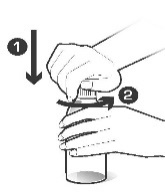
The bottle is equipped with a child-resistant cap. To remove the cap, push down with
force and rotate counterclockwise. (Fig.1). Remove the cap and discard the
seal from the bottle opening. If the seal is damaged, do not use the medicine and
contact your pharmacist.
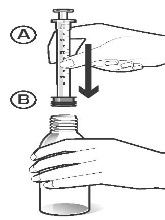
Place the bottle on a stable and flat surface. Open the plastic bag containing the
dosing syringe / adapter, following the perforated line and remove the dosing syringe (A) with
the inserted adapter (B). Firmly insert the dosing syringe from the adapter side
into the neck of the bottle (Fig.2)
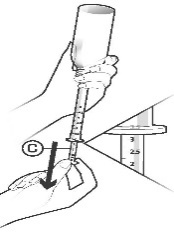
To fill the dosing syringe, turn the bottle upside down. Keeping the dosing syringe firm,
pull down the plunger (C) to the line corresponding to the dose prescribed by
the doctor (see paragraph “How to use Palexia”). Do not removethe dosing syringe at this
moment! (fig.3)
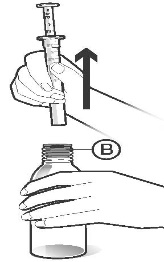
Turn the bottle upside down again, holding it upright,remove the dosing syringe
from the bottle carefully. After removing the dosing syringe, carefully check that you have
taken the correct dose of solution. The adapter (B), which was previously inserted on the syringe
will now remain attached to the bottle (Fig.4).
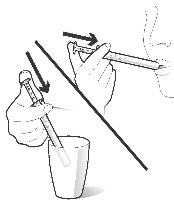
Take the medicine by putting the dosing syringe in your mouth and pressing the plunger. Press
the plunger all the way down to make sure you have used all the solution. If you prefer,
you can dilute the medicine in a glass of water or non-alcoholic beverage before
taking it; in this case, drink the entire glass to make sure you have taken the correct dose of
medicine. (Fig.5).
Leave the adapter on the bottle, close the cap tightly and store the bottle upright. Rinse the
dosing syringe with water after using it and let it dry well. When you take the medicine the
next time, insert the dosing syringe into the adapter on the bottle neck and follow the instructions above
reported.
For how long to take Palexia
Do not take this medicine for longer than your doctor has told you.
If you take more Palexia than you should:
After taking very high doses, the following may occur:
- pinpoint pupils, vomiting, low blood pressure, rapid heartbeat, collapse, loss of consciousness or coma (profound unconsciousness), seizures, breathing that becomes dangerously slow and shallow, or respiratory arrest.
In this case, call your doctor immediately.
If you forget to take Palexia
If you forget to take this medicine, the pain is likely to return. Do not take a double dose
to make up for the missed dose, simply continue to take the medicine as before.
If you stop taking Palexia
If you stop or end treatment too soon, the pain is likely to return. If you want to
stop treatment, consult your doctor first.
Generally, no withdrawal effects occur when treatment is stopped, however, in uncommon
cases, people who have taken the medicine for a certain period of time may feel unwell if
they suddenly stop treatment.
The symptoms may be:
- restlessness, tearing, runny nose, yawning, sweating, chills, muscle pain and dilated pupils
- irritability, anxiety, back pain, joint pain, weakness, abdominal cramps, difficulty sleeping, nausea, loss of appetite, vomiting, diarrhea and increased blood pressure, breathing rate or heart rate. If you experience any of these symptoms after stopping therapy, consult your doctor. Do not suddenly stop taking this medicine unless your doctor has told you to do so. If the doctor tells you to stop taking this medicine, they will also tell you how to do so and this may include a gradual reduction in doses.
If you have any doubts about the use of this medicine, ask your doctor or pharmacist.
4. Possible side effects
Like all medicines, this medicine can cause side effects, although not everybody gets them.
manifest.
Serious side effects or symptoms to watch out for and what to do if they occur:
This medicine can cause allergic reactions. Symptoms may include shortness of breath, wheezing,
swelling of the eyelids, face or lips, skin rash or itching, especially all over the body. Another
serious side effect is a condition in which you are very sleepy and breathe more slowly or
shallower than expected. This mainly occurs in elderly or debilitated patients.
In this case, contact your doctor immediately.
Other possible side effects are:
Very common(may affect more than 1 in 10 people) :nausea, vomiting, dizziness, drowsiness, headache
Common(may affect up to 1 in 10 people): decreased appetite, anxiety, confusion, hallucinations,
sleep disorders, strange dreams, tremors, hot flushes, constipation, diarrhea, indigestion, dry mouth, itching,
increased sweating, rash, muscle cramps, feeling of weakness, fatigue, sensation of temperature fluctuations.
Uncommon(may affect up to 1 in 100 people): depression, disorientation, excitability
(agitation), nervousness, restlessness, euphoria, attention disorders, impaired memory, feeling
of fainting, sedation, difficulty controlling movements, difficulty speaking, numbness,
abnormal skin sensations (e.g. tingling, prickling), involuntary muscle contractions, distorted vision,
fast heartbeat, palpitations, low blood pressure, dangerously slowed breathing or shallow breathing (respiratory depression), reduced oxygen in the blood,
slowed breathing, abdominal discomfort, urticaria, feeling of heaviness, difficulty urinating, increased
urination frequency, withdrawal syndrome (see “If you stop taking Palexia”),
fluid retention in the tissues (edema), strange sensations, feeling drunk, irritability, feeling
of relaxation.
Rare(may affect up to 1 in 1000): allergic reactions to the medicine (including swelling under the
skin, urticaria and, in severe cases, difficulty breathing, low blood pressure, collapse or shock),
strange thoughts, seizures, reduced level of consciousness, abnormal coordination, slower heartbeat,
problems with stomach emptying.
Frequency not known: delirium.
Generally, the possibility of having suicidal thoughts or behaviors increases in patients suffering from chronic pain.
In addition, some medicines for the treatment of depression (which therefore have an impact on
the brain neurotransmission system) can increase this risk, especially at the beginning of
therapy. Although tapentadol also acts on neurotransmission, clinical use data of tapentadol do not
demonstrate an increase in risk.
In children and adolescents, no further side effects have been observed
Reporting of side effects
If you get any side effects, even those not listed in this leaflet, tell your
doctor or pharmacist. You can also report side effects directly through the national
reporting system at https://www.aifa.gov.it/content/segnalazioni-reazioni-avverse . By reporting
side effects, you can help provide more information on the safety of this medicine.
5. How to store PALEXIA
Keep this medicine out of the sight and reach of children.
Do not use this medicine after the expiry date stated on the package and the bottle after SCAD.
The expiry date refers to the last day of that month.
Closed package: this medicine does not require any particular storage conditions.
After the first opening of the bottle, the solution should not be used for more than 6 weeks.
Keep the bottle in an upright position after the first opening.
Medicines should not be disposed of via wastewater or household waste. Ask your pharmacist how
to dispose of medicines you no longer use. These measures will help protect the environment.
6. Contents of the pack and other information
What Palexia contains
The active substance is tapentadol.
1 ml of Palexia 4 mg/ml oral solution contains 4 mg of tapentadol (as hydrochloride)
The otheringredients are:
sodium benzoate (E 211),
citric acid monohydrate,
sucralose (E 955),
raspberry flavour, containing propylene glycol (E 1520),
purified water.
Description of Palexia and contents of the pack
Palexia is a clear, colourless oral solution
Palexia 4 mg/ml oral solution is packaged in a plastic bottle containing 100 millilitres of
solution, with an attached 5 ml dosing syringe with a graduated scale of 0.1 ml and an adapter inserted into the
dosing syringe.
Not all pack sizes may be marketed.
Marketing Authorisation Holder
Holder: GRÜNENTHAL ITALIA S.r.l. via Vittor Pisani, 16 20124 Milan (Italy)
Manufacturer responsible for batch release
Grünenthal GmbH,
Zieglerstrasse, 6 Aachen
Germany
This medicinal product is authorised in the Member States of the European Economic Area and in the United Kingdom
(Northern Ireland) with the following denominations:
Belgium, Croatia, Cyprus, Germany, Greece, Ireland, Italy, Luxembourg, Norway, Netherlands, Poland,
Portugal, United Kingdom (Northern Ireland), Czech Republic, Slovakia, Slovenia, Spain: PALEXIA
This leaflet was last updated on:

Уже начали прием и появились вопросы?
Обсудите свое состояние и дальнейшие шаги с врачом онлайн.
Palexia 20 mg/ml oral solution
Tapentadol
Read this leaflet carefully before taking this medicine as it contains important
information for you.
- Keep this leaflet, you may need to read it again.
- If you have any questions, ask your doctor or pharmacist.
- This medicine has been prescribed for you. Do not give it to other people, even if their symptoms are the same as yours, as it could be harmful.
- If any side effects occur, including those not listed in this leaflet, tell your doctor or pharmacist (see section 4).
Contents of this leaflet:
- 1. What Palexia is and what it is used for
- 2. What you need to know before you take Palexia
- 3. How to take Palexia
- 4. Possible side effects
- 5. How to store Palexia
- 6. Contents of the pack and other information
1. Cos’è PALEXIA e a cosa serve
Tapentadol, the active substance of Palexia is a strong painkiller that belongs to the class of opioids.
Palexia is used for the treatment of acute pain from moderate to severe in children and adolescents from 2 years of
age with a body weight greater than 16 Kg and in adults who can be adequately treated only with
opioid painkillers.
2. Cosa deve sapere prima di prendere PALEXIA
Do not takeP alexia
- If you are allergic to tapentadol or to any of the other ingredients of this medicine (see section 6)
- if you have asthma or if your breathing is dangerously slow or shallow (respiratory depression, hypercapnia)
- if you have intestinal paralysis
- if you have an acute poisoning with alcohol, sleeping pills, painkillers or other psychotropic medicines (medicines that act on mood and emotions) (see “Other medicines and Palexia”)
Warnings and precautions
Talk to your doctor or pharmacist before taking Palexia if:
- you have shortness of breath or weak breathing
- you suffer from increased pressure in the brain or disorders of consciousness, up to coma
- you have had head injuries or a brain tumor
- you suffer from liver or kidney disorders (see “How to take Palexia”)
- you suffer from disorders of the pancreas or biliary tract, including pancreatitis
- - you are taking medicines called opioid agonists/antagonists (such as pentazocine, nalbufine) or partial opioid mu receptor agonists (such as buprenorphine)
- you are prone to epilepsy or seizures or if you are taking other medicines known to increase the risk of seizures because the risk of a seizure may increase.
- you or a family member has ever abused or been dependent on alcohol, prescription drugs or illegal substances (“dependence”);
- you are a smoker;
- you have had mood disorders (depression, anxiety or a personality disorder) or have been treated by a psychiatrist for other mental illnesses.
This medicine contains tapentadol, which is an opioid medicine. Repeated use of opioid painkillers can lead to a decrease in the effectiveness of the drug (you get used to it). It can also cause
dependence and abuse which can lead to a potentially life-threatening overdose. Ask
your doctor if you are afraid of developing a dependence on Palexia. Use (even at therapeutic doses)
can lead to physical dependence, with resulting withdrawal effects and a relapse of problems if the
treatment with this medicine is stopped abruptly.
Palexia can lead to physical and psychological dependence. If you are prone to abusing medicines or if
you are dependent on medicines, you should only take this medicine for short periods of time and under close
medical supervision.
Children with obesity should be closely monitored and the maximum recommended dose should not be exceeded.
Do not give this medicine to children under the age of 2 years or with a body weight of less than 16 kg.
Breathing-related sleep disorders
Palexia can cause breathing-related sleep disorders, such as sleep apnea (pauses in
breathing during sleep) and sleep-related hypoxemia (low levels of oxygen in the blood). Symptoms
may include pauses in breathing during sleep, nighttime awakenings due to labored breathing,
difficulty maintaining sleep, or excessive daytime sleepiness. If you or another person observes
these symptoms, contact your doctor. The doctor may consider reducing the dose.
Other medicines and Palexia
Tell your doctor or pharmacist if you are taking, have recently taken or might take any
other medicines.
- The risk of side effects increases if you are taking medicines that can cause seizures (seizures), such as certain antidepressants or antipsychotics. The risk of having a seizure may increase if you take Palexia at the same time as these medicines. The doctor will tell you if you can take Palexia.
- The concomitant use of Palexia and sedatives such as benzodiazepines or similar drugs (some sleeping pills or tranquilizing drugs (such as barbiturates), painkillers such as opioids, morphine and codeine (also used in cough remedies), antipsychotics, H1 antihistamines, alcohol) increases the risk of drowsiness, difficulty breathing (respiratory depression), coma and can be life-threatening. For this reason, concomitant use should only be considered if other therapeutic options are not possible. However, if your doctor prescribes Palexia together with sedatives, they will also establish a reduction in the dose and duration of concomitant treatment.
The simultaneous use of opioids and medicines for the treatment of epilepsy, nerve pain or anxiety
(gabapentin and pregabalin) increases the risk of opioid overdose, respiratory depression and
can be potentially life-threatening.
- Tell your doctor if you are taking gabapentin or pregabalin or other sedatives and carefully follow their recommendations on dosage. It may be helpful to inform relatives or friends to pay attention to the signs and symptoms above. Contact your doctor if you experience these symptoms If you are taking a type of medicine that affects serotonin levels (such as certain medicines for the treatment of depression), talk to your doctor before taking Palexia because there have been cases of
“serotonin syndrome”. Serotonin syndrome is rare but is a life-threatening condition. Symptoms include uncontrollable rhythmic contractions of the muscles including the muscles that
control eye movements, agitation, excessive sweating, tremors, exaggerated reflexes,
increased muscle tension and body temperature above 38°C. The doctor can inform you about
this.
- Taking Palexia together with other types of medicines indicated as mixed mu receptor agonists/antagonists (such as pentazocine and nalbufine) or opioid mu receptor partial agonists (such as buprenorphine) has not been studied. It is possible that Palexia will not be effective if taken together with one of these medicines. Tell your doctor if you are taking one of these medicines.
- Taking Palexia together with certain medicines (such as rifampicin, phenobarbital, St. John's wort), strong inhibitors or inducers of certain enzymes that are needed to eliminate tapentadol from the body, can affect the effectiveness of tapentadol or can cause side effects, especially at the beginning or end of therapy with these medicines. Keep your doctor informed about any medicine you are taking.
- Palexia should not be taken together with MAO inhibitors (a type of medicine for the treatment of depression). Tell your doctor if you are taking MAO inhibitors or have taken them in the last 14 days.
Palexia with food, drinks and alcohol
Do not drink alcohol during therapy with Palexia because some side effects, such as drowsiness,
may increase. Food does not affect the effectiveness of this medicine.
Pregnancy and breastfeeding
If you are pregnant, suspect you are pregnant or are planning to become pregnant, or if you are breastfeeding, ask your doctor or pharmacist for advice before taking this medicine.
Do not take this medicine:
- if you are pregnant, unless your doctor has told you to do so, if used for prolonged periods during pregnancy tapentadol can lead to withdrawal symptoms in the newborn which can be life-threatening to the newborn if not recognized and treated by a doctor.
The use of Palexia is not recommended
- during childbirth because the newborn's breathing may slow down or weaken dangerously (respiratory failure)
- during breastfeeding, because tapentadol may be excreted in breast milk.
Driving and operating machinery
Palexia can cause drowsiness, dizziness and blurred vision and can impair reaction time. This
can happen especially when you start therapy with Palexia, if your doctor changes your dosage or if
you drink alcohol or take tranquilizers. Ask your doctor if you can drive a car or operate machinery.
Palexia 20 mg/ml contains sodium
This medicine contains less than 1 mmol of sodium (23 mg) per maximum single dose, i.e.
essentially sodium-free.
Palexia 20 mg/ml contains sodium benzoate
This medicine contains 5.9 mg of sodium benzoate in 5 ml of solution (maximum single dose) equivalent
to 1.18 mg/ml.
Sodium benzoate may increase jaundice (yellowing of the skin and eyes) in newborns (up to 4 weeks
of age).
Palexia 20 mg/ml contains propylene glycol
This medicine contains 10 mg of propylene glycol in 5 ml of solution (maximum single dose)
equivalent to 2 mg/ml.
3. How to take PALEXIA
Take this medicine always exactly as your doctor or pharmacist has told you. If you have
doubts, ask your doctor or pharmacist .
The doctor will decide the dosage based on the intensity of the pain and your personal sensitivity to pain. In
general, you should use the lowest dose that can relieve the pain.
Adults
The usual dose is 50 mg of tapentadol (2.5 ml of oral solution). 75 mg of tapentadol (3.75 ml of
oral solution) or 100 mg of tapentadol (5 ml of oral solution) every 4-6 hours.
Total daily doses greater than 700 mg of tapentadol during the first day of therapy and greater than 600
mg of tapentadol on subsequent days are not recommended.
The doctor may prescribe you a different dosage or interval between doses if necessary. If you
feel that the effect of this medicine is too strong or too weak, consult your doctor or pharmacist.
Elderly patients
In elderly patients (over 65 years) it is generally not necessary to change the dosage. In any case
the excretion of tapentadol may be slowed down in some patients of this age group. If this is the case, your
doctor may prescribe you a different dosage.
Liver and kidney disorders (insufficiency)
Patients with severe liver problems cannot take this medicine. If you have mild disorders, your
doctor will prescribe you a different dosage. In case of mild liver disorders, it is not necessary to change the
normal dosage.
Patients with severe kidney problems should not take this medicine. In case of mild or
moderate kidney disorders it is not necessary to change the dosage.
Use in children and adolescents
Palexia should only be administered to children in a hospital setting.
Palexia should only be administered to children weighing more than 16 Kg.
The dosage of Palexia in children and adolescents from 2 years up to less than 18 years is 1.25 mg/Kg every 4
hours.
Always wait 4 hours before administering the next dose. The dose may be reduced as the
acute pain decreases.
The correct administration will be established by the doctor
Liver and kidney disorders (insufficiency)
Children and adolescents with liver or kidney problems should not take this medicine
How and when to take Palexia
Palexia is for oral use.
You can take the oral solution on an empty stomach or during meals.
The package includes a dosing syringe with an adapter inserted, which must be used to
extract from the bottle the exact amount (volume) corresponding to the prescribed dose of tapentadol.
Instructions for opening the bottle and using the dosing syringe
The bottle is provided with a child-resistant cap. To remove the cap, push with
force downwards and rotate counterclockwise. (Fig.1). Remove the cap and discard the
seal from the bottle opening. If the seal is damaged, do not use the medicine and
contact your pharmacist
Place the bottle on a stable and flat surface. Open the plastic bag containing the
dosing syringe / adapter, following the perforated line and remove the dosing syringe (A) with
the adapter inserted (B). Firmly insert the dosing syringe from the adapter side
into the neck of the bottle (Fig.2)
To fill the dosing syringe, turn the bottle upside down. Keeping the dosing syringe firm,
pull down the plunger (C) to the line corresponding to the dose prescribed by
the doctor (see paragraph “How to use Palexia”). Do notremove the dosing syringe at this
moment !(Fig.3)
Turn the bottle upside down again, holding it upright,remove the dosing syringe
from the bottle carefully. After removing the dosing syringe, carefully check that you have
taken the correct dose of solution. The adapter (B), which was previously inserted on the syringe
will now remain attached to the bottle (Fig.4)
Take the medicine by placing the dosing syringe in your mouth and pressing the plunger. Press
the plunger all the way down to make sure you have used all the solution. If you prefer,
you can dilute the medicine in a glass of water or a non-alcoholic beverage before
taking it; in this case, drink the entire glass to make sure you have taken the correct dose of
medicine. (Fig. 5).
Leave the adapter on the bottle, close the cap tightly and store the bottle upright. Rinse the
dosing syringe with water after use and let it dry well. When you take the medicine the
next time, insert the dosing syringe into the adapter on the bottle neck and follow the instructions above
reported.
How long to take Palexia
Do not take this medicine for longer than your doctor has told you.
If you take more Palexia than you should:
After taking very high doses, the following may occur:
- pinpoint pupils, vomiting, low blood pressure, rapid heartbeat, collapse, loss of consciousness or coma (deep unconsciousness), seizures, breathing that becomes dangerously slow and shallow, or respiratory arrest. In this case, call your doctor immediately.
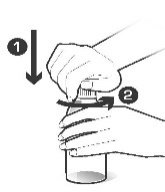
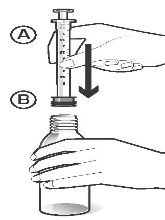
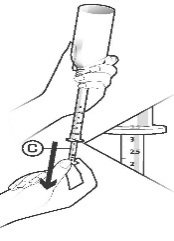
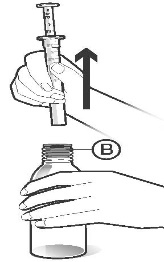
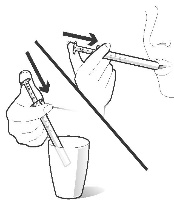
If you forget to take Palexia
If you forget to take this medicine, the pain is likely to return. Do not take a double dose
to make up for the missed dose, simply continue to take the medicine as before.
If you stop taking Palexia
If you stop or end the treatment too early, the pain is likely to return. If you want to
stop treatment, consult your doctor first.
Generally, no withdrawal effects occur when treatment is stopped, however, in rare
cases, people who have taken the medicine for a certain period of time may not feel well if
they suddenly stop treatment.
The symptoms may be:
- restlessness, tearing, runny nose, yawning, sweating, chills, muscle pain and dilated pupils
- irritability, anxiety, back pain, joint pain, weakness, abdominal cramps, difficulty sleeping, nausea, loss of appetite, vomiting, diarrhea and increased blood pressure, breathing rate or heart rate. If you experience any of these symptoms after stopping therapy, consult your doctor. You should not suddenly stop taking this medicine unless your doctor has told you to do so. If the doctor tells you to stop taking this medicine, they will also tell you how to do so and this may include a gradual reduction in doses.
If you have any doubts about the use of this medicine, ask your doctor or pharmacist.
4. Possible side effects
Like all medicines, this medicine can cause side effects, although not everybody gets them.
manifest.
Serious side effects or symptoms to watch out for and what to do if they occur:
This medicine can cause allergic reactions. Symptoms may include shortness of breath, wheezing,
swelling of the eyelids, face or lips, skin rash or itching, especially all over the body. Another
serious side effect is a condition in which you are very sleepy and breathe more slowly or
shallower than expected. This occurs mainly in elderly or debilitated patients.
In this case, contact your doctor immediately.
Other possible side effects are:
Very common(may affect more than 1 in 10 people) :nausea, vomiting, dizziness, drowsiness, headache.
Common(may affect up to 1 in 10 people): decreased appetite, anxiety, confusion, hallucinations,
sleep disorders, strange dreams, tremors, hot flushes, constipation, diarrhea, indigestion, dry mouth, itching,
increased sweating, rash, muscle cramps, feeling of weakness, fatigue, sensation of temperature
fluctuations.
Uncommon(may affect up to 1 in 100 people): depression, disorientation, excitability
(agitation), nervousness, restlessness, euphoria, attention disorders, impaired memory, feeling
of fainting, sedation, difficulty controlling movements, difficulty speaking, numbness,
abnormal skin sensations (e.g., tingling, prickling), involuntary muscle contractions, distorted
vision, fast heartbeat palpitations, low blood pressure, dangerously slow breathing or shallow breathing (respiratory depression), reduced oxygen in the blood,
slowed breathing, abdominal discomfort, urticaria, feeling of heaviness, difficulty urinating, increased
urinary frequency, withdrawal syndrome (see “If you stop taking Palexia”),
fluid retention in the tissues (edema), strange sensations, feeling drunk, irritability, feeling of
relaxation.
Rare(may affect up to 1 in 1000): allergic reactions to the medicine (including swelling under the
skin, urticaria and in severe cases, difficulty breathing, low blood pressure, collapse or shock),
strange thoughts, seizures, reduced level of consciousness, abnormal coordination, slower
heartbeat, problems with stomach emptying.
Frequency not known: delirium.
Generally, the possibility of having suicidal thoughts or behaviors increases in patients suffering from
chronic pain. In addition, some medicines for the treatment of depression (which therefore have an impact on
the brain neurotransmitter system) can increase this risk, especially at the beginning of
therapy.
Although tapentadol also acts on neurotransmission, clinical use data of tapentadol do not
demonstrate an increase in risk.
In children and adolescents, no further side effects have been observed
Reporting of side effects
If you get any side effects, even those not listed in this leaflet, tell your
doctor or pharmacist. You can also report side effects directly through the national
reporting system at https://www.aifa.gov.it/content/segnalazioni-reazioni-avverse . By reporting
side effects you can help provide more information on the safety of this medicine.
5. How to store PALEXIA
Keep this medicine out of the sight and reach of children.
Do not use this medicine after the expiry date stated on the pack and the bottle after SCAD.
The expiry date refers to the last day of that month.
Closed package: this medicine does not require any particular storage conditions.
After the first opening of the bottle, the solution should not be used for more than 6 weeks.
Keep the bottle in an upright position after the first opening.
Medicines should not be disposed of via wastewater or household waste. Ask your pharmacist how
to dispose of medicines you no longer use. These measures will help protect the environment.
6. Contents of the pack and other information
What Palexia contains
The active substance is tapentadol.
1 ml of Palexia 20 mg/ml oral solution contains 20 mg of tapentadol (as hydrochloride)
The otheringredients are:
sodium benzoate (E 211),
citric acid monohydrate,
sucralose (E 955),
raspberry flavour, containing propylene glycol (E 1520),
sodium hydroxide (for pH adjustment),
purified water
Description of Palexia and contents of the pack
Palexia is a clear, colourless oral solution.
Palexia 20 mg/ml oral solution is packaged in a plastic bottle containing 100 millilitres or 200
millilitres of solution, with an attached 5 ml dosing syringe with a graduated scale of 0.1 ml and an adapter
inserted into the dosing syringe. Furthermore, the right-hand graduated scale indicates the single dose for adults.
Not all pack sizes may be marketed.
Marketing Authorisation Holder
Holder: GRÜNENTHAL ITALIA S.r.l. via Vittor Pisani, 16 - 20124 Milan (Italy)
Manufacturer responsible for batch release
Grünenthal GmbH,
Zieglerstrasse, 6 Aachen
Germany
This medicinal product is authorised in the Member States of the European Economic Area and in the United Kingdom
(Northern Ireland) with the following denominations:
Austria, Belgium, Croatia, Cyprus, Germany, Greece, Ireland, Italy, Luxembourg, Norway, Netherlands, Poland,
Portugal, United Kingdom (Northern Ireland), Czech Republic, Slovakia, Slovenia, Spain: PALEXIA
This leaflet was last updated on:
- Страна регистрации
- Форма выпускаOral solution, 4 MG/ML
- Код АТХN02AX06
- Действующее вещество
- Отпускается по рецептуДа
- Производитель
- Информация на этой странице носит справочный характер и не является медицинской консультацией. Перед началом приема лекарства обязательно проконсультируйтесь с врачом.
- Аналоги PALEXIAФорма выпуска: Film-coated tablet, 50 MGДействующее вещество: tapentadolПроизводитель: GRUNENTHAL ITALIA S.R.L.Отпускается по рецептуФорма выпуска: Film-coated tablet, 50 MGДействующее вещество: tapentadolПроизводитель: GRUNENTHAL ITALIA S.R.L.Отпускается по рецептуФорма выпуска: Film-coated tablet, 25 MGДействующее вещество: tapentadolПроизводитель: G.L. PHARMA GMBHОтпускается по рецепту
Аналоги PALEXIA в других странах
Лекарства с тем же действующим веществом, доступные в других странах.
Аналог PALEXIA в Испания
Аналог PALEXIA в Польша
Аналог PALEXIA в Украина
Врачи онлайн по PALEXIA
Обсудите применение PALEXIA и возможные следующие шаги — по оценке врача.









Получите рецепт на PALEXIA онлайн
Заполните форму за 2 минуты
Расскажите о симптомах, истории болезни и нужном препарате.
Выберите врача или мы назначим
Выберите специалиста или мы подберём ближайшего доступного врача.
Врач рассматривает ваш случай
Обычно в течение 30 минут. Может задать уточняющие вопросы в чате.
Получите в любой аптеке
Электронный рецепт отправляется на вашу почту — действителен по всей Польше.
Часто задаваемые вопросы
PALEXIA требует рецепта в Италия. Вы можете уточнить у врача онлайн, подходит ли это лекарство для вашей ситуации.
Действующее вещество PALEXIA — tapentadol. Эта информация помогает определить лекарства с тем же составом под другими торговыми названиями.
PALEXIA производится компанией GRUNENTHAL ITALIA S.R.L.. Упаковка и торговое название могут отличаться в зависимости от дистрибьютора.
Врачи, включая Семейные врачи, Психиатры, Дерматологи, Кардиологи, Эндокринологи, Гастроэнтерологи, Пульмонологи, Нефрологи, Ревматологи, Гематологи, Инфекционисты, Аллергологи, Гериатры, Педиатры, Онкологи, могут оценить целесообразность применения PALEXIA с учетом вашей ситуации и местных правил. Вы можете записаться на онлайн-консультацию, чтобы обсудить возможные варианты.
Польша имеет хорошо развитую систему здравоохранения в крупных городах, таких как Варшава, Краков, Вроцлав и Гданьск. Аптеки широко доступны и работают в соответствии с действующим законодательством, обеспечивая доступ к рецептурным препаратам.
Вы можете купить PALEXIA в Варшаве, Кракове, Вроцлаве или Гданьске в любой аптеке при наличии действующего рецепта.
Чтобы получить рецепт, вы можете воспользоваться Oladoctor:
Другие лекарства с тем же действующим веществом (tapentadol) включают PALEXIA, PALEXIA, TABOXEA. Они могут отличаться торговым названием или формой выпуска, но содержат одинаковый терапевтический компонент. Перед изменением лечения рекомендуется проконсультироваться с врачом.
