



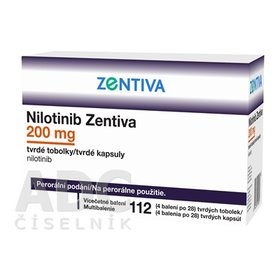
NILOTINIB 150 mg Капсулы

Рассмотрение рецепта онлайн
Врач рассмотрит ваш случай и примет решение о назначении рецепта, если это медицински оправдано.

Поговорите с врачом об этом лекарстве
Обсудите симптомы и возможные дальнейшие шаги на онлайн-консультации.



Инструкция по применению NILOTINIB TSENTIVA
Содержание инструкции
Nilotinib Zentiva 150 mg and 200 mg hard capsules
Generic medicine
Read this leaflet carefully before taking this medicine as it contains important information for you.
- Keep this leaflet. You may need to read it again.
- If you have any questions, ask your doctor or pharmacist.
- This medicine has been prescribed for you only. Do not pass it on to others, even if their symptoms are the same as yours, as it could be harmful.
- If you get any side effects, even those not listed in this leaflet, tell your doctor or pharmacist. See section 4.
Contents of this leaflet
- 1. What Nilotinib Zentiva is and what it is used for
- 2. What you need to know before you take Nilotinib Zentiva
- 3. How to take Nilotinib Zentiva
- 4. Possible side effects
- 5. How to store Nilotinib Zentiva
- 6. Contents of the pack and other information
1. What is Nilotinib Zentiva and what is it for
What is Nilotinib Zentiva
Nilotinib Zentiva is a medicine containing an active substance called nilotinib.
What is Nilotinib Zentiva for
Nilotinib Zentiva is used for the treatment of a type of leukemia called chronic myeloid leukemia
Philadelphia chromosome positive (Ph+ CML). CML is a cancer of the blood that
causes the body to produce too many abnormal white blood cells.
Nilotinib Zentiva is used in adult and pediatric patients with newly diagnosed CML or in patients
with CML who no longer benefit from previous treatments including imatinib. It is also used
in adult and pediatric patients who have experienced serious side effects following
previous treatments and are no longer able to continue taking them.
How does Nilotinib Zentiva work
In patients with CML, a change in DNA (genetic material) triggers a signal that tells the
body to produce abnormal white blood cells. Nilotinib Zentiva blocks this signal, and therefore
stops the production of these cells.
Monitoring during treatment with Nilotinib Zentiva
During treatment, regular checks will be performed, including blood tests. These tests
will allow to check:
- the amount of blood cells (white blood cells, red blood cells and platelets) to see how Nilotinib Zentiva is tolerated.
- the function of the pancreas and liver to check how Nilotinib Zentiva is tolerated.
- the electrolytes in the body (potassium, magnesium). These electrolytes are important for the functioning of the heart.
- the level of sugar and fats in the blood.
- The heart rate will also be checked using an instrument that measures the electrical activity of the heart (an examination called “ECG”).
The doctor will regularly evaluate the treatment and decide whether you need to continue taking
Nilotinib Zentiva. If you are told to stop this medicine, the doctor will continue to
monitor the CML and may tell you to resume Nilotinib Zentiva if your condition indicates that this
is necessary.
If you have questions about how Nilotinib Zentiva works or why it has been prescribed for you or for your
child, ask your doctor.
2. What you need to know before taking Nilotinib Zentiva
Follow all of your doctor's instructions carefully. These instructions may be different from the
Do not take Nilotinib Zentiva
- if you are allergic to nilotinib or to any of the other ingredients of this medicine (listed in section 6).
- If you think you may be allergic, tell your doctor before taking Nilotinib Zentiva.
Warnings and precautions
Talk to your doctor or pharmacist before taking Nilotinib Zentiva:
- if you have had previous cardiovascular events such as a heart attack, chest pain (angina), problems with blood flow to the brain (stroke) or problems with blood flow to the leg (claudication) or if you have risk factors for cardiovascular disease such as high blood pressure (hypertension), diabetes or problems with blood fat levels (dyslipidemia).
- if you have heart problems, such as an abnormal electrical signal called “QT prolongation”.
- if you are taking medicinesthat lower your blood cholesterol (statins) or affect your heart rhythm (antiarrhythmics) or your liver (see Other medicines andNilotinib Zentiva).
- if you suffer from low potassium or magnesium levels.
- if you have liver or pancreas problems.
- if you have symptoms such as a tendency to bruise easily, feeling tired or short of breath or have had repeated infections.
- if you have had surgery that involved the removal of your entire stomach (total gastrectomy).
- if you have ever had or may have an hepatitis B infection. This is because Nilotinib Zentiva can cause hepatitis B to become active again, which can be fatal in some cases. Patients will be carefully examined by the doctor for signs of this infection before starting treatment.
If any of these conditions apply to you or your child, tell your doctor.
During treatment with Nilotinib Zentiva
- if you faint (loss of consciousness) or have an irregular heartbeat during treatment with this medicine, tell your doctor immediatelyas this may be a sign of a serious heart condition. QT prolongation or an irregular heartbeat can lead to sudden death. Uncommon cases of sudden death have been reported in patients treated with Nilotinib Zentiva.
- if you experience sudden palpitations, severe muscle weakness or paralysis, seizures or sudden changes in thinking or level of consciousness, tell your doctor immediatelyas this may be a sign of a rapid breakdown of cancer cells called tumor lysis syndrome. Rare cases of tumor lysis syndrome have been reported in patients treated with Nilotinib Zentiva.
- if you experience chest pain or discomfort, numbness or weakness, problems walking or speaking, pain, color change or coldness in an arm or leg, tell your doctor immediatelyas this may be a sign of a cardiovascular event. Serious cardiovascular events, including problems with blood flow to the leg (obstructive peripheral arterial disease), ischemic heart disease and problems with blood flow to the brain (ischemic cerebrovascular disease) have been reported in patients treated with Nilotinib Zentiva. The doctor should check your fat (lipid) and blood sugar levels before starting treatment with Nilotinib Zentiva and during treatment.
- if you experience swelling of your feet or hands, generalized swelling or rapid weight gain, tell your doctor as these may be signs of serious fluid retention. Uncommon cases of severe fluid retention have been reported in patients treated with Nilotinib Zentiva.
If you are the parent of a child who is being treated with Nilotinib Zentiva, tell the doctor if
any of the above conditions apply to them.
Children and adolescents
Nilotinib Zentiva is a treatment for children and adolescents with CML. There is no experience with the use
of this medicine in children under 2 years of age. There is no experience with the use of Nilotinib
Zentiva in children newly diagnosed and under 10 years of age and there is limited experience in patients
under 6 years of age who no longer benefit from previous treatment for CML.
Some children and adolescents taking Nilotinib Zentiva may experience slower growth than normal. The doctor will monitor growth with regular visits.
Other medicines and Nilotinib Zentiva
Nilotinib Zentiva can interfere with other medicines.
Tell your doctor or pharmacist if you are taking, have recently taken or might take
any other medicines. This includes in particular:
- antiarrhythmics - used to treat irregular heartbeat;
- chloroquine, halofantrine, clarithromycin, haloperidol, methadone, moxifloxacin - medicines that can have an undesirable effect on the electrical activity of the heart;
- ketoconazole, itraconazole, voriconazole, clarithromycin, telithromycin - used to treat infections;
- ritonavir - a medicine of the “protease inhibitor” class used to treat HIV;
- carbamazepine, phenobarbital, phenytoin - used to treat epilepsy;
- rifampicin - used to treat tuberculosis;
- St John's wort - a herbal product used to treat depression and other conditions (also known as Hypericum perforatum);
- midazolam - used for anxiety relief before surgery;
- alfentanil and fentanyl - used to treat pain and as sedatives before or during surgery or medical procedures;
- cyclosporine, sirolimus and tacrolimus - drugs that suppress the body's “defense” capabilities and fight infections and are commonly used to prevent rejection of transplanted organs, such as liver, heart and kidneys;
- dihydroergotamine and ergotamine - used to treat dementia;
- lovastatin, simvastatin - used to treat high levels of fats in the blood;
- warfarin - used to treat blood clotting disorders (such as blood clots or thrombosis);
- astemizole, terfenadine, cisapride, pimozide, quinidine, bepridil or ergot alkaloids (ergotamine, dihydroergotamine).
These medicines must be avoided during treatment with Nilotinib Zentiva. If you are
taking any of these medicines, your doctor may prescribe other medicines as an alternative.
If you are taking a statin (a medicine that lowers your blood cholesterol), talk to your
doctor or pharmacist. When taken with some statins, Nilotinib Zentiva may increase the risk of
muscle problems related to statins, which in rare cases can lead to severe muscle injury
(rhabdomyolysis) with resulting kidney damage.
Also, tell your doctor or pharmacist before taking Nilotinib Zentiva if you are taking any
antacid, that is, a medicine for heartburn. These medicines must be taken separately from Nilotinib Zentiva:
- H2 blockers, which decrease acid production in the stomach. H2 blockers should be taken about 10 hours before and about 2 hours after taking Nilotinib Zentiva;
- Antacids such as those containing aluminum hydroxide, magnesium hydroxide and simethicone, which neutralize high acidity in the stomach. These antacids should be taken about 2 hours before or about 2 hours after taking Nilotinib Zentiva.
You should also tell your doctor if you are already taking Nilotinib Zentivaand you have been prescribed a
new medicine that you have not taken before during treatment with Nilotinib Zentiva.
Nilotinib Zentiva with food and drink
Do not take Nilotinib Zentiva with food.Food can increase the absorption of Nilotinib
Zentiva and therefore increase the amount of Nilotinib Zentiva in the blood, up to a dangerous level.
Do not drink grapefruit juice or eat grapefruit. It can increase the amount of Nilotinib Zentiva
in the blood, up to a dangerous level.
Pregnancy and breastfeeding
- Nilotinib Zentiva is not recommended during pregnancyunless strictly necessary.If you are pregnant or think you may be, tell your doctor who will discuss with you whether you can take this medicine during pregnancy.
- Women who may become pregnantare advised to use a very effective method of contraception during treatment and for two weeks after the end of treatment.
- Breastfeeding is not recommendedduring treatment with Nilotinib Zentiva and for two weeks after the last dose. Tell your doctor if you are breastfeeding.
If you are pregnant, suspect you are pregnant, are planning to become pregnant, or are breastfeeding
ask your doctor or pharmacist for advice before taking this medicine.
Driving and using machines
If you experience side effects (such as dizziness or vision problems) with a potential impact
on your ability to drive safely vehicles or use tools or machines after
taking this medicine, you should stop these activities until the effect has disappeared.
Nilotinib Zentiva contains lactose
This medicine contains lactose (also known as milk sugar). If your doctor has
diagnosed you with intolerance to certain sugars, contact him before taking this medicine.
Nilotinib Zentiva 200 mg hard capsules
Nilotinib Zentiva contains sodium
This medicine contains less than 1 mmol of sodium (23 mg) per capsule, that is to say essentially sodium-free.
3. How to take Nilotinib Zentiva
Take this medicine exactly as your doctor or pharmacist has told you.
If you have any doubts, ask your doctor or pharmacist.
How much Nilotinib Zentiva to take
Use in adults
- Patients with newly diagnosed CML: The recommended dose is 600 mg per day. This dose is achieved by taking two 150 mg hard capsules twice a day.
- Patients who no longer benefit from previous CML treatment: The recommended dose is 800 mg per day. This dose is achieved by taking two 200 mg hard capsules twice a day.
Use in children and adolescents
- The dose given to your child will depend on the child's weight and height. The doctor will calculate the correct dose to use and will tell you which and how many Nilotinib Zentiva capsules to give to your child. The total daily dose to be given to your child must not exceed 800 mg.
Your doctor may prescribe a lower dosage depending on how you respond to treatment.
Elderly people (65 years and over)
Nilotinib Zentiva can be used by people 65 years and over at the same dose as for other
adults.
When to take Nilotinib Zentiva
Take the hard capsules:
- twice a day (approximately every 12 hours);
- at least 2 hours after any food;
- then wait 1 hour before eating again.
If you have questions about when to take this medicine, talk to your doctor or pharmacist.
Taking Nilotinib Zentiva at the same time each day will help you remember when to take the
hard capsules.
How to take Nilotinib Zentiva
- Swallow the hard capsules whole with water.
- Do not take food together with the hard capsules.
Do not open the hard capsules. If you or your child are unable to swallow the entire capsule,
other medicines with nilotinib must be used instead of Nilotinib Zentiva.
For how long to take Nilotinib Zentiva
Continue to take Nilotinib Zentiva every day for as long as it has been prescribed to you
by your doctor. This is a long-term treatment. The doctor will regularly check your
condition to verify that the treatment is having the desired effect.
The doctor may consider stopping treatment with Nilotinib Zentiva based on
specific criteria. If you have questions about how long to take Nilotinib Zentiva, talk to your
doctor.
If you take more Nilotinib Zentiva than you should
If you have taken more Nilotinib Zentiva than you should, or if someone else has accidentally taken your
capsules, contact a doctor or hospital immediately for advice. Show them the
medicine.
If you forget to take Nilotinib Zentiva
If you forget to take a dose, take the next dose as scheduled. Do not take a
double dose to make up for the missed hard capsule.
If you stop taking Nilotinib Zentiva
Do not stop taking this medicine unless your doctor tells you to.
Stopping Nilotinib Zentiva without your doctor's recommendation puts you at risk of
worsening of the disease which may have life-threatening consequences. Make sure you
discuss with your doctor, nurse, and/or pharmacist if you are considering
stopping Nilotinib Zentiva.
If your doctor recommends stopping treatment with Nilotinib Zentiva
The doctor will regularly assess the treatment with a specific diagnostic test and decide whether you
should continue to take this medicine. If you are told to stop Nilotinib Zentiva,
the doctor will continue to monitor CML carefully before, during and after stopping
Nilotinib Zentiva and may tell you to restart Nilotinib Zentiva if your condition indicates that this is
necessary.
If you have any doubts about the use of this medicine, ask your doctor or pharmacist.
4. Possible side effects
Like all medicines, this medicine can cause side effects, although not everyone gets them. Most side effects are mild to moderate and usually disappear after a treatment period of a few days to a few weeks.
Some side effects can be serious.
- signs of musculoskeletal pain: joint and muscle pain
- signs of heart disorders: chest pain or discomfort, high or low blood pressure, irregular heartbeat (fast or slow), palpitations (feeling of a rapid heartbeat) fainting, bluish discoloration of the lips, tongue or skin
- signs of artery blockage: pain, discomfort, weakness or cramps in the leg muscles, which may be due to reduced blood flow, ulcers on the legs or arms that do not heal or heal slowly, and obvious changes in color (bluish or paleness) or temperature (coldness) of the affected leg, arm, toes or hands
- signs of thyroid gland underactivity: weight gain, fatigue, hair loss, muscle weakness, feeling cold
- signs of thyroid gland overactivity: fast heartbeat, bulging eyes, weight loss, swelling in the front of the neck
- signs of kidney or urinary tract disorders: thirst, dry skin, irritability, dark urine, decreased amount of urine, difficulty and pain when urinating, urgent need to urinate, blood in the urine, abnormal urine color
- signs of a high blood sugar level: excessive thirst, increased amount of urine, increased appetite with weight loss, fatigue
- signs of dizziness: dizziness or a spinning sensation
- signs of pancreatitis: severe upper abdominal pain (in the center or on the left)
- signs of skin disorders: painful red nodules, skin pain, skin redness, scaling or blisters
- signs of fluid retention: rapid weight gain, swelling of the hands, ankles, feet or face
- signs of migraine: severe headache often accompanied by nausea, vomiting and sensitivity to light
- signs of blood disorders: fever, tendency to bruise or unexplained bleeding, severe or frequent infections, unexplained weakness
- signs of venous thrombosis: swelling and pain in a part of the body
- signs of nervous system disorders: weakness or paralysis of the limbs or face, difficulty speaking, severe headache, seeing, hearing, or sensing things that are not there, changes in vision, loss of consciousness, confusion, disorientation, tremors, tingling, pain or numbness in the fingers of the hands and feet
- signs of lung disorders: difficulty breathing or painful breathing, cough, wheezing with or without fever, swelling of the feet or legs
- signs of gastrointestinal disorders: abdominal pain, nausea, vomiting blood, black or bloody stools, constipation, heartburn, acid reflux, bloated abdomen
- signs of liver disorders: yellowing of the skin and eyes, nausea, loss of appetite, dark urine
- signs of liver infection: recurrence (reactivation of hepatitis B infection)
- signs of eye disorders: vision disturbances including blurred vision, double vision or perception of flashes of light, decreased visual acuity or vision loss, blood in the eye, increased sensitivity of the eyes to light, eye pain, redness, itching or irritation, dry eyes, swelling or itching of the eyelids
- signs of electrolyte imbalance: nausea, shortness of breath, irregular heartbeat, cloudy urine, fatigue and/or joint disorders associated with abnormal blood test results (such as high levels of potassium, uric acid and phosphorus and low levels of calcium)
Contact your doctor immediately if you notice any of the above side effects.
Some side effects are very common(may affect more than 1 in 10 people)
- diarrhea
- headache
- lack of energy
- muscle pain
- itching, rash
- nausea
- constipation
- vomiting
- hair loss
- pain in the limbs, bone pain and spinal pain after stopping treatment with Nilotinib Zentiva
- slowed growth in children and adolescents
- upper respiratory tract infection including sore throat and runny or blocked nose
- low level of blood cells (red blood cells, platelets) or hemoglobin
- high level of lipase in the blood (pancreas function)
- high level of bilirubin in the blood (liver function)
- high level of alanine aminotransferase in the blood (liver enzymes)
Some side effects are common(may affect up to 1 in 10 people)
- pneumonia
- abdominal pain, stomach discomfort after meals, intestinal gas, bloating or abdominal distension
- bone pains, muscle spasms
- pain (including neck pain)
- dry skin, acne, decreased skin sensitivity
- decrease or increase in weight
- insomnia, depression, anxiety
- night sweats, excessive sweating
- general feeling of being unwell
- nosebleeds
- signs of gout: painful and swollen joints
- inability to achieve or maintain an erection
- flu-like symptoms
- sore throat
- bronchitis
- ear pain, hearing noises (e.g. ringing, buzzing) in the ears that have no external source (also called tinnitus)
- hemorrhoids
- heavy menstrual bleeding
- itching of hair follicles
- oral or vaginal thrush
- signs of conjunctivitis: eye discharge with itching, redness and swelling
- eye irritation, red eyes
- signs of hypertension: high blood pressure, headache, dizziness
- flushing
- signs of occlusive peripheral arterial disease: pain, discomfort, weakness or cramps in the leg muscles, which may be due to reduced blood flow, ulcers on the legs or arms that do not heal or heal slowly, and obvious changes in color (bluish or paleness) or temperature (coldness) of the legs or arms (possible signs of blockage of an artery in the leg, arm, toes or hands affected)
- shortness of breath (also called dyspnea)
- mouth ulcers with inflammation of the gums (also called stomatitis)
- high level of amylase in the blood (pancreas function)
- high level of creatinine in the blood (kidney function)
- high level of alkaline phosphatase or creatine phosphokinase in the blood
- high level of aspartate aminotransferase in the blood (liver enzymes)
- high level of gamma-glutamyl transferase in the blood (liver enzymes)
- signs of leukopenia or neutropenia: low level of white blood cells
- increased number of platelets or white blood cells in the blood
- low levels in the blood of magnesium, potassium, sodium, calcium or phosphorus
- increased level of potassium, calcium and phosphorus in the blood
- high level of fats in the blood (including cholesterol)
- high level of uric acid in the blood
Some side effects are uncommon(may affect up to 1 in 100 people)
- allergy (hypersensitivity to Nilotinib Zentiva)
- dry mouth
- breast pain
- pain or discomfort in the side
- increased appetite
- enlargement of the breast gland in men
- herpes virus infection
- stiffness of muscles and joints, swelling of the joints
- feeling of change in body temperature (including feeling of heat, feeling of cold)
- taste disturbance
- frequent urge to urinate
- signs of inflammation of the stomach lining: abdominal pain, nausea, vomiting, diarrhea, abdominal distension
- memory loss
- skin cysts, thinning or thickening of the skin, thickening of the outermost layer of the skin, change in skin color
- signs of psoriasis: thickened areas of red/silvery skin
- increased skin sensitivity to light
- difficulty hearing
- joint inflammation
- urinary incontinence
- inflammation of the intestine (also called enterocolitis)
- anal abscess
- nipple swelling
- symptoms of restless legs syndrome (an irresistible urge to move a
part of the body, usually the legs, associated with uncomfortable sensations)
- signs of sepsis: fever, chest pain, elevated heart rate/increased heart rate, shortness of breath or rapid breathing
- skin infection (subcutaneous abscess)
- skin wart
- increase of specific types of white blood cells (called eosinophils) in the blood
- signs of lymphopenia: low level of white blood cells
- high level of parathyroid hormone in the blood (a hormone that regulates calcium and phosphorus levels)
- high level of lactate dehydrogenase in the blood (an enzyme)
- signs of low blood sugar: nausea, sweating, weakness, dizziness, tremor, headache
- dehydration
- abnormal level of fats in the blood
- involuntary tremor (also called tremor)
- difficulty concentrating
- unpleasant and abnormal sensation to the touch (also called dysesthesia)
- fatigue (also called asthenia)
- feeling of numbness or tingling in the fingers of the hands and feet (also called peripheral neuropathy)
- paralysis of any muscle of the face
- red spot in the white of the eye caused by rupture of blood vessels (also called subconjunctival hemorrhage)
- blood in the eyes (also called eye hemorrhage)
- eye irritation
- signs of heart attack (also called myocardial infarction): sudden and crushing chest pain, fatigue, irregular heartbeat
- signs of heart murmur: fatigue, chest discomfort, dizziness, pain, palpitations
- fungal infection of the feet
- signs of heart failure: shortness of breath, difficulty breathing when lying down, swelling of the feet or legs
- pain behind the breastbone (also called pericarditis)
- signs of hypertensive crisis: severe headache, dizziness, nausea
- leg pain and weakness caused by walking (called intermittent claudication)
- signs of narrowing of the arteries in the limbs: possible high blood pressure, painful cramps in one or both hip, thigh or calf muscles after some activity such as walking or climbing stairs, numbness or weakness of the legs
- bruising (when you haven't hurt yourself)
- deposits of fat in the arteries that can cause blockage (called arteriosclerosis)
- signs of low blood pressure (also called hypotension): dizziness, lightheadedness or fainting
- signs of pulmonary edema: shortness of breath
- signs of pleural effusion: accumulation of fluid between the layers of tissue lining the lungs and the chest cavity (which, if severe, can reduce the heart's ability to pump blood), cough from chest pain, hiccups, rapid breathing
- signs of interstitial lung disease: cough, difficulty breathing, painful breathing
- signs of pleuritic pain: chest pain
- signs of pleurisy: cough, painful breathing
- hoarse voice
- signs of pulmonary hypertension: high blood pressure in the arteries of the lungs
- wheezing
- sensitive teeth
- signs of inflammation (also called gingivitis): bleeding gums, sensitive or swollen gums
- high level of urea in the blood (kidney function)
- change of blood proteins (low level of globulins or presence of paraprotein)
- high level of unconjugated bilirubin in the blood
- high level of troponin in the blood
Some side effects are rare(may affect up to 1 in 1,000 people)
- redness and/or swelling and possible peeling of the palms of the hands and soles of the feet (so-called hand-foot syndrome)
- warts in the mouth
- feeling of hardening or stiffness of the breast
- inflammation of the thyroid gland (also called thyroiditis)
- disturbed or depressed mood
- signs of secondary hyperparathyroidism: bone and joint pain, excessive urination, abdominal pain, weakness, fatigue
- signs of narrowing of the arteries in the brain: partial or total loss of vision in both eyes, double vision, dizziness (feeling of spinning), numbness or tingling, loss of coordination, dizziness or confusion
- brain swelling (possible headache and/or changes in mental status)
- signs of optic neuritis: blurred vision, vision loss
- signs of heart failure (reduced ejection fraction): fatigue, chest discomfort, dizziness, pain, palpitations
- low or high level of insulin in the blood (a hormone that regulates blood sugar levels)
- low level of C-peptide in the blood (pancreas function)
- sudden death
The following other side effects have been reported with unknown frequency (cannot be
defined based on available data):
- signs of heart failure (ventricular dysfunction): shortness of breath, exertion at rest, irregular heartbeat, chest discomfort, dizziness, pain, palpitations, excessive urination, swelling of the feet, ankles and abdomen.
Reporting of undesirable effects
If you experience any undesirable effect, including those not listed in this leaflet, please
contact your doctor or pharmacist. You can also report undesirable effects directly through
the national reporting system at https://www.aifa.gov.it/content/segnalazioni-
reazioni-avverse .
By reporting undesirable effects, you can help provide more information on the safety of
this medicine.
5. How to store Nilotinib Zentiva
- Keep this medicine out of the sight and reach of children.
- Do not use this medicine after the expiry date which is stated on the package and on the blister after Exp. The expiry date refers to the last day of that month.
- Do not store above 30°C.
- Do not use this medicine if you notice that the packaging is damaged or tampered with.
- Do not dispose of any medicine in wastewater or household waste. Ask your pharmacist how to dispose of medicines you no longer use. This will help protect the environment.
6. Package contents and other information What Nilotinib Zentiva contains
information What Nilotinib Zentiva contains
- Each 150 mg hard capsule contains 150 mg of nilotinib.
- Other ingredients are: Capsule content: Lactose monohydrate, Crospovidone (E1202), Polysorbate 80, Magnesium aluminometasilicate, colloidal silicon dioxide (E551), Magnesium stearate (E572); Capsule shell: Gelatin (E441), titanium dioxide (E171), Red iron oxide (E172), Yellow iron oxide (E172); Printing ink: Shellac (E904), Black iron oxide (E172), Potassium hydroxide (E525)
- Each 200 mg hard capsule contains 200 mg of nilotinib.
- Other ingredients are: Capsule content: Lactose monohydrate, Crospovidone, Polysorbate 80, Magnesium aluminometasilicate, silicon dioxide, Magnesium stearate (E470b); Capsule shell: Gelatin (E441), Titanium dioxide (E171), Yellow iron oxide (E172); Printing ink: Shellac (E904), Sodium hydroxide (E524), titanium dioxide(E171), Povidone (E1201), Allura Red AC aluminum lake (E129)
Description of the appearance of Nilotinib Zentiva and package contents
Nilotinib Zentiva 150 mg hard capsules
Hard gelatin capsule (size 1) with an opaque red cap and opaque red body imprinted with
black ink "SML" on the cap and "26" on the body containing off-white to gray granular powder.
Nilotinib Zentiva 200 mg hard capsules
Hard gelatin capsule (size 0) with a light yellow opaque cap and light yellow opaque body
imprinted with red ink "SML" on the cap and "27" on the body containing
off-white to gray granular powder.
Nilotinib Zentiva is available in the following packs:
Nilotinib Zentiva 150 mg and 200 mg hard capsules
PVC/PVDC/aluminum blisters or unit-dose divisible blisters.
- Packs containing 28 hard capsules.
- Packs containing 28x1 hard capsules in unit-dose divisible blisters.
- Multipacks containing 112 (4 packs of 28 hard capsules) or 392 (14 packs of 28 hard capsules) hard capsules in blisters.
- Multipacks containing 112x1 (4 packs of 28x1) or 392 (14 packs of 28x1) hard capsules in unit-dose divisible blisters.
Not all pack sizes may be marketed.
Marketing Authorisation Holder and Manufacturer
Marketing Authorisation Holder
Zentiva Italia S.r.l.
Via P. Paleocapa, 7
20121 Milano
Manufacturer
APIS Labor GmbH
Resslstraβe 9
9065 Ebenthal in Kärnten, Austria
This medicinal product is authorised in the Member States of the European Economic Area with the
following denominations:
Germany: Nilotinib Zentiva 150 mg Hartkapseln, Nilotinib Zentiva 200 mg Hartkapseln
France: Nilotinib Zentiva 150 mg, gélule, Nilotinib Zentiva 200 mg, gélule
Italy, Denmark, Iceland, Finland, Norway, Sweden: Nilotinib Zentiva
Spain: Nilotinib Zentiva 150 mg/200 mg cápsulas duras EFG
Hungary: Nilotinib Zentiva k.s.

Не уверены, подходит ли вам это лекарство?
Обсудите симптомы и варианты лечения с врачом онлайн.

Уже начали прием и появились вопросы?
Обсудите свое состояние и дальнейшие шаги с врачом онлайн.
- Страна регистрации
- Форма выпускаHard capsule, 150 MG
- Код АТХL01EA03
- Действующее вещество
- Отпускается по рецептуДа
- Производитель
- Информация на этой странице носит справочный характер и не является медицинской консультацией. Перед началом приема лекарства обязательно проконсультируйтесь с врачом.
- Аналоги NILOTINIB TSENTIVAФорма выпуска: Hard capsule, 50 mgДействующее вещество: НилотинибПроизводитель: ACCORD HEALTHCARE, S.L.U.Отпускается по рецептуФорма выпуска: Hard capsule, 50 MGДействующее вещество: НилотинибПроизводитель: MYLAN S.P.A.Отпускается по рецепту
Аналоги NILOTINIB TSENTIVA в других странах
Лекарства с тем же действующим веществом, доступные в других странах.
Аналог NILOTINIB TSENTIVA в Испания
Аналог NILOTINIB TSENTIVA в Польша
Аналог NILOTINIB TSENTIVA в Украина
Получите рецепт на NILOTINIB TSENTIVA онлайн
Заполните форму за 2 минуты
Расскажите о симптомах, истории болезни и нужном препарате.
Выберите врача или мы назначим
Выберите специалиста или мы подберём ближайшего доступного врача.
Врач рассматривает ваш случай
Обычно в течение 30 минут. Может задать уточняющие вопросы в чате.
Получите в любой аптеке
Электронный рецепт отправляется на вашу почту — действителен по всей Польше.
Часто задаваемые вопросы
NILOTINIB TSENTIVA требует рецепта в Италия. Вы можете уточнить у врача онлайн, подходит ли это лекарство для вашей ситуации.
Действующее вещество NILOTINIB TSENTIVA — Нилотиниб. Эта информация помогает определить лекарства с тем же составом под другими торговыми названиями.
NILOTINIB TSENTIVA производится компанией ZENTIVA ITALIA S.R.L.. Упаковка и торговое название могут отличаться в зависимости от дистрибьютора.
Врачи, включая Семейные врачи, Психиатры, Дерматологи, Кардиологи, Эндокринологи, Гастроэнтерологи, Пульмонологи, Нефрологи, Ревматологи, Гематологи, Инфекционисты, Аллергологи, Гериатры, Педиатры, Онкологи, могут оценить целесообразность применения NILOTINIB TSENTIVA с учетом вашей ситуации и местных правил. Вы можете записаться на онлайн-консультацию, чтобы обсудить возможные варианты.
Польша имеет хорошо развитую систему здравоохранения в крупных городах, таких как Варшава, Краков, Вроцлав и Гданьск. Аптеки широко доступны и работают в соответствии с действующим законодательством, обеспечивая доступ к рецептурным препаратам.
Вы можете купить NILOTINIB TSENTIVA в Варшаве, Кракове, Вроцлаве или Гданьске в любой аптеке при наличии действующего рецепта.
Чтобы получить рецепт, вы можете воспользоваться Oladoctor:
Другие лекарства с тем же действующим веществом (Нилотиниб) включают NILOTINIB AKKORD, NILOTINIB EG, NILOTINIB MYLAN. Они могут отличаться торговым названием или формой выпуска, но содержат одинаковый терапевтический компонент. Перед изменением лечения рекомендуется проконсультироваться с врачом.
