



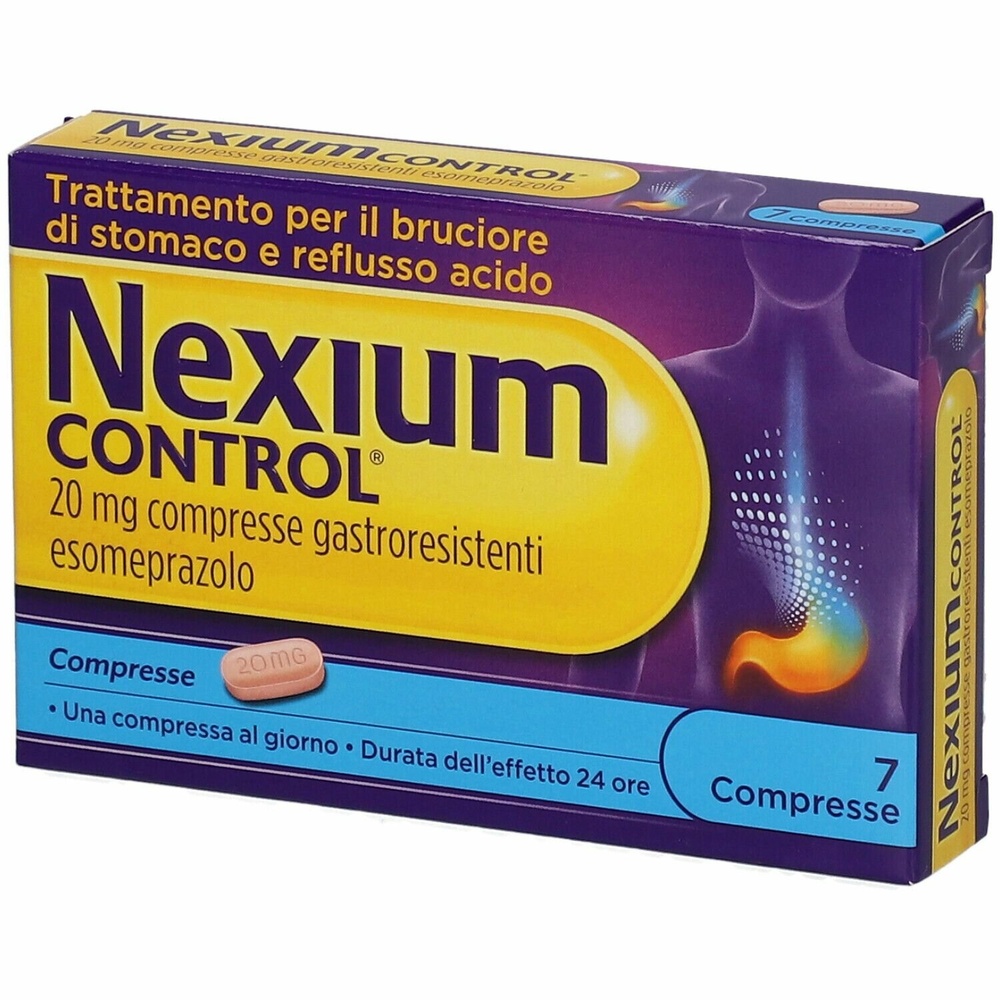
NEXIUM 20 мг Энтеросолирующие таблетки

Рассмотрение рецепта онлайн
Врач рассмотрит ваш случай и примет решение о назначении рецепта, если это медицински оправдано.

Поговорите с врачом об этом лекарстве
Обсудите симптомы и возможные дальнейшие шаги на онлайн-консультации.



Инструкция по применению NEXIUM
Содержание инструкции
- NEXIUM 40 mg powder for injectable solution/for infusion
- Nexium 10 mg gastro-resistant granules for oral suspension, in a sachet
- Nexium 20 mg gastro-resistant tablets, 40 mg gastro-resistant tablets
NEXIUM 40 mg powder for injectable solution/for infusion
esomeprazole
Read this leaflet carefully before you start to use this medicine.
- Keep this leaflet. You may need to read it again.
- If you have any questions, ask your doctor, nurse or pharmacist.
- If any side effect gets worse, or if you notice any side effect not listed in this leaflet, tell your doctor, nurse or pharmacist.
Contents of this leaflet:
- 1. What Nexium is and what it is used for
- 2. Before you use Nexium
- 3. How to use Nexium
- 4. Possible side effects
- 5. How to store Nexium
- 6. Further information
1. WHAT NEXIUM IS AND WHAT IT IS USED FOR
Nexium contains a medicine called esomeprazole. It belongs to a group of medicines
called “proton pump inhibitors”, which work by reducing the amount of acid produced by the
stomach.
Nexium is used for the short-term treatment of certain conditions, when the patient is unable to
take treatment by mouth. It is used for the treatment of:
- “Gastro-oesophageal reflux disease” (GORD). This occurs when acid from the stomach leaks back into the oesophagus (the tube that connects the throat to the stomach), causing pain, inflammation and heartburn.
- Stomach ulcers caused by medicines called NSAIDs (Non-Steroidal Anti-Inflammatory Drugs). Nexium can also be used to prevent stomach ulcers from forming during treatment with NSAIDs.
- Prevention of re-bleeding after endoscopic treatment of acute bleeding from gastric or duodenal ulcers.
2. BEFORE USING NEXIUM
Do not use Nexium:
- if you are allergic (hypersensitive) to esomeprazole or any of the excipients of this medicine (listed in section 6: Further information).
- if you are allergic to other medicines that are proton pump inhibitors (e.g. pantoprazole, lansoprazole, rabeprazole, omeprazole).
- if you are taking a medicine containing nelfinavir (used for the treatment of HIV). Nexium should not be given to you if any of the above apply. If in doubt, consult your doctor or nurse before using this medicine.
Take particular care with Nexium
Consult your doctor or nurse before using Nexium if:
- You have serious liver problems.
- You have serious kidney problems.
- You have ever had a skin reaction after treatment with a medicine similar to Nexium that reduces stomach acid.
- You need to undergo a specific blood test (Chromogranin A)
Nexium can mask the symptoms of other diseases. Therefore, if any of the following occur before or after treatment with Nexium, inform your doctor immediately:
- You lose a lot of weight without reason and have difficulty swallowing.
- You experience stomach pain or indigestion.
- You start vomiting food or blood.
- Your stools are black (stools with blood in them).
If you are taking a proton pump inhibitor such as Nexium, especially for a period longer than one year, there may be a slight increase in the risk of fractures of the hip, wrist or spine. If you suffer from osteoporosis or are taking corticosteroids (which can increase the risk of osteoporosis) consult your doctor.
Skin rash and skin reactions
If you notice the appearance of a skin rash, especially in areas exposed to sunlight, contact your doctor as soon as possible, as you may need to stop treatment with Nexium. Remember to also report any other undesirable effects such as joint pain.
Severe skin rashes have occurred in patients taking esomeprazole (see also section 4). The rash may involve blisters of the mouth, throat, nose, genitals and conjunctivitis (red and swollen eyes). These severe rashes often occur after flu-like symptoms such as fever, headache, muscle pain. The rash may cover large areas of the body with the formation of blisters and peeling of the skin.
If at any time during treatment (even after several weeks) you develop a rash or any of these skin symptoms, stop taking this medicine and contact your doctor immediately.
TAKING NEXIUM WITH OTHER MEDICINES
Tell your doctor or nurse if you are taking or have recently taken any other medicines, including those available without a prescription. In fact, Nexium can affect the way some medicines work and some medicines can have an effect on Nexium.
Nexium should not be given to you if you are taking a medicine containing nelfinavir (used for the treatment of HIV).
Tell your doctor or nurse if you are taking any of the following medicines:
- Atazanavir (used for the treatment of HIV).
- Clopidogrel (used to prevent blood clots).
- Ketoconazole, itraconazole or voriconazole (used for the treatment of fungal infections).
- Erlotinib (used for the treatment of cancer).
- Citalopram, imipramine or clomipramine (used for the treatment of depression).
- Diazepam (used for the treatment of anxiety, for muscle relaxation or in epilepsy).
- Phenytoin (used in epilepsy). If you are taking phenytoin, your doctor will need to monitor you when you start or stop treatment with Nexium.
- Medicines used to thin the blood, such as warfarin. Your doctor may monitor you when you start or stop treatment with Nexium.
- Cilostazol (used for the treatment of intermittent claudication - a pain in the legs when walking, which is caused by insufficient blood supply).
- Cisapride (used for indigestion and heartburn).
- Digoxin (used for heart problems).
- Methotrexate (a medicine used in high-dose chemotherapy to treat cancer) - if you are taking a high dose of methotrexate, your doctor may temporarily interrupt your treatment with Nexium.
- Tacrolimus (used in organ transplantation).
- Rifampicin (used for the treatment of tuberculosis).
- St John's Wort ( Hypericum perforatum) (used in the treatment of depression).
Pregnancy and breastfeeding
Before using Nexium, tell your doctor if you are pregnant, or if you are planning to become pregnant. The doctor will decide whether you can be given Nexium during this period.
It is not known whether Nexium passes into breast milk, therefore you should not receive Nexium if you are breastfeeding.
Driving and using machines
It is unlikely that Nexium will affect your ability to drive vehicles or use tools or machines.
3. HOW TO USE NEXIUM
- Nexium can be administered to adults, including the elderly.
- Do notadminister to children or people under the age of 18 years.
Administration of Nexium
- Nexium will be administered to you by a doctor, who will decide the necessary amount of medication.
- The usual dose is 20 mg or 40 mg once a day.
- If you have severe liver problems, the maximum dose is 20 mg per day (Gastro-esophageal reflux disease).
- The medicine will be administered to you as an injection or infusion into a vein. The procedure will last a maximum of 30 minutes.
- The usual dose for preventing re-bleeding of gastric or duodenal ulcers is 80 mg administered by intravenous infusion for 30 minutes followed by a continuous infusion of 8 mg/h for 3 days. If you have severe liver problems, a continuous infusion of 4 mg/h for 3 days may be sufficient.
If you use more Nexium than you should
If you think that you have been administered an excessive amount of Nexium, immediately inform your
doctor.
4. POSSIBLE SIDE EFFECTS
Like all medicines, Nexium can cause side effects, although not everybody gets them.
If you notice any of the following serious side effects, stop taking Nexium and
contact your doctor immediately:
- Yellowing of the skin, dark urine, and fatigue can be symptoms of liver problems. These effects are rare and may affect up to 1 in 1,000 people.
- Sudden wheezing, swelling of the lips, tongue and throat or body, rash, fainting or difficulty swallowing (severe allergic reaction). These effects are rare and may affect up to 1 in 1,000 people.
- Sudden onset of a severe rash or reddening of the skin with blisters or peeling can occur even after several weeks of treatment. Severe blisters and bleeding may also appear on the lips, eyes, mouth, nose and genitals. The rashes may progress to serious widespread skin damage (epidermal and mucous membrane peeling) with potentially fatal consequences. This may be “erythema multiforme”, “Stevens-Johnson syndrome”, “toxic epidermal necrolysis” or “drug reaction with eosinophilia and systemic symptoms”. These effects
are very rare and may affect up to 1 in 10,000.
Other side effects include:
Common (affect less than 1 in 10 people)
- Headache.
- Effects on the stomach or intestines: diarrhea, stomach pain, constipation, flatulence.
- Nausea or vomiting.
- Reactions at the site of administration.
- Benign polyps in the stomach.
Uncommon (affect less than 1 in 100 people)
- Swelling of the feet and ankles.
- Disturbed sleep (insomnia).
- Dizziness, tingling, drowsiness.
- Vertigo.
- Vision problems, such as blurred vision.
- Dry mouth.
- Changes in blood tests that check how your liver is working.
- Rash, hives and itching.
- Fracture of the hip, wrist or spine (if Nexium is used at high doses and for prolonged periods).
Rare (affect less than 1 in 1,000 people)
- Blood problems, for example, a reduced number of white blood cells or platelets. This can cause weakness, bruising or increased susceptibility to infections.
- Low levels of sodium in the blood. This can cause weakness, vomiting and cramps.
- Feeling agitated, confused or depressed.
- Altered sense of taste.
- Sudden feeling of breathlessness or shortness of breath (bronchospasm).
- Inflammation of the inside of the mouth.
- Infection called “candidiasis”, which can affect the intestines and is caused by a fungus.
- Liver problems, including jaundice, which can cause yellowing of the skin, dark urine and fatigue.
- Hair loss (alopecia).
- Rash on exposure to sunlight.
- Joint pain (arthralgia) or muscle pain (myalgia).
- General feeling of being unwell and lack of strength.
- Increased sweating.
Very rare (affect less than 1 in 10,000 people)
- Changes in the number of blood cells, including agranulocytosis (lack of white blood cells).
- Aggression.
- Seeing, feeling or hearing things that are not there (hallucinations).
- Serious liver problems leading to liver failure and brain inflammation.
- Sudden onset of a severe rash or blisters or peeling of the skin. This may be associated with high fever and joint pain (erythema multiforme, Stevens-Johnson syndrome, toxic epidermal necrolysis, drug reaction with eosinophilia and systemic symptoms).
- Muscle weakness.
- Serious kidney problems.
- Enlargement of the breasts in men.
Not known (frequency cannot be estimated from the available data)
- If you take Nexium for more than three months, your blood magnesium levels may decrease. Low magnesium levels can manifest as fatigue, involuntary muscle contractions, disorientation, convulsions, dizziness, increased heart rate. If you have any of these symptoms, consult your doctor immediately. Low magnesium levels can also lead to decreased blood levels of potassium or calcium. Your doctor should decide whether to check your blood magnesium levels periodically.
- Inflammation of the intestine (which can lead to diarrhea).
- Erythema, with possible joint pain.
Nexium, in very rare cases, can affect white blood cells leading to immunodeficiency.
If you have an infection with symptoms such as fever with severegeneral worsening of health or
fever with symptoms of local infection, such as sore throat, sore throat or mouth or difficulty urinating,
you should consult a doctor as soon as possible so that the lack of white blood cells (agranulocytosis) can be
excluded through a blood test. It is important for you
to provide information about the medicines you are taking.
Do not be worried by the list of possible side effects above. It is possible that none of them
will appear. If any of the side effects worsen, or if you notice the appearance of any
side effect not listed in this leaflet, inform your doctor or pharmacist.
Reporting of side effects
If you get any side effects, even those not listed in this leaflet, tell your
doctor or pharmacist. You can also report side effects directly through the national
reporting system at: https://www.aifa.gov.it/content/segnalazioni-reazioni-avverse.
By reporting side effects you can help provide more information on the safety of
this medicine.
5. HOW TO STORE NEXIUM
- The doctor and hospital pharmacist are responsible for the correct storage, use and disposal of Nexium.
- Do not use this medicine after the expiry date (Exp.) which is reported on the carton or vial. The expiry date refers to the last day of the month.
- This medicine must be stored in a safe place, out of the reach and sight of children.
- Do not store at a temperature above 30°C.
- Keep the vial in the outer packaging to protect the medicine from light.
6. FURTHER INFORMATION
What Nexium contains
The active ingredient is esomeprazole sodium. Each vial of powder for solution for injection/for
infusion contains 42.5 mg of esomeprazole sodium, equivalent to 40 mg of esomeprazole.
The excipients are sodium edetate and sodium hydroxide.
Description of the appearance of Nexium and contents of the pack
Nexium is a “lyophilized” or powder of white or off-white color. It is transformed into a solution before
administration.
Packs: 1 vial, 10 vials.
Not all pack sizes may be marketed.
Marketing authorization holder and manufacturer
The marketing authorization holder for Nexium is:
GRÜNENTHAL ITALIA S.r.l.
Via Vittor Pisani 16 -20124 Milan
Nexium is released by AstraZeneca AB, Södertälje, Sweden, AstraZeneca UK Ltd, Macclesfield, UK,
AstraZeneca GmbH, Wedel, Germany.
GRÜNENTHAL GmbH -Zieglerstraβe 6, 52078 Aachen - Germany
This medicinal product is authorised in the Member States of the European Economic Area with the
following denominations:
Austria (AT) Nexium
Belgium (BE) Nexiam
Denmark (DK) Nexium
Finland (FI) Nexium
France (FR) Inexium
Germany (DE) Nexium
Greece (EL) Nexium
Iceland (IS) Nexium
Ireland (IE) Nexium
Italy (IT) Nexium
Luxembourg (LU) Nexiam
Netherlands (NL) Nexium
Norway (NO) Nexium
Poland (PL) Nexium
Portugal (PT) Nexium I.V.
Spain (ES) Nexium
Sweden (SE) Nexium
United Kingdom (NI) Nexium
Nexium 10 mg gastro-resistant granules for oral suspension, in a sachet
esomeprazole
Read this leaflet carefully before taking this medicine.
- Keep this leaflet. You may need to read it again.
- If you have any questions, ask your doctor or pharmacist.
- This medicine has been prescribed for you. Do not give it to other people, even if their symptoms are the same as yours, as it could be harmful.
- If any of the side effects gets worse, or if you notice any side effects not listed in this leaflet, tell your doctor or pharmacist.
Contents of this leaflet:
- 1. What Nexium is and what it is used for
- 2. Before you take Nexium
- 3. How to take Nexium
- 4. Possible side effects
- 5. How to store Nexium
- 6. Further information
1. WHAT IS NEXIUM AND WHAT IT IS USED FOR
Nexium contains a substance called esomeprazole, which belongs to a group of medicines
called proton pump inhibitors. These medicines work by reducing the amount of acid produced
by your stomach.
Nexium is used for the treatment of “gastro-oesophageal reflux disease”.
- Gastro-oesophageal reflux disease occurs when acid from the stomach leaks back into the oesophagus causing pain, inflammation and heartburn. Heartburn consists of a burning sensation that rises from the stomach or chest to the neck.
- In children, symptoms may include the return of stomach contents into the mouth (regurgitation), feeling unwell (vomiting) and poor weight gain.
2. BEFORE TAKING NEXIUM
Do not take Nexium
- if you are allergic (hypersensitive) to esomeprazole or other similar proton pump inhibitors (e.g. pantoprazole, lansoprazole, rabeprazole, omeprazole), or to any of the excipients of Nexium gastro-resistant granules.
- if you are taking a medicine containing nelfinavir (used to treat HIV).
Take special care with Nexium
- if you have liver problems, tell your doctor, as they may prescribe a lower dose.
- if you have kidney problems, tell your doctor.
- if you have ever had a skin reaction after treatment with a medicine similar to Nexium that reduces stomach acid.
- you are to undergo a specific blood test (Chromogranin A)
Nexium can mask the symptoms of other diseases. Therefore, if any of the following occur while you are taking Nexium, inform your doctor immediately:
- You lose a lot of weight without reason.
- You have stomach pain or indigestion.
- You start vomiting repeatedly.
- You have problems swallowing.
- You vomit blood or have black stools (stools with blood stains).
If Nexium has been prescribed to you “as needed”, contact your doctor if the symptoms should persist or if the characteristics change. “As needed” treatment has not been studied in children and therefore is not recommended in this patient group. If you are taking a proton pump inhibitor such as Nexium, especially for a period longer than one year, there may be a slight increase in the risk of fractures of the hip, wrist or spine. If you suffer from osteoporosis or are taking corticosteroids (which can increase the risk of osteoporosis), consult your doctor. Skin rash and skin reactions
If you notice the appearance of a skin rash, especially in areas exposed to sunlight, contact your doctor as soon as possible, as it may be necessary to stop therapy with Nexium. Remember to also report any other unwanted effects such as joint pain. Severe skin rashes have occurred in patients taking esomeprazole (see also paragraph 4). The rash may involve ulcers of the mouth, throat, nose, genitals and conjunctivitis (red and swollen eyes). These severe skin rashes often occur after flu-like symptoms such as fever, headache, muscle pain. The rash can cover large areas of the body with blistering and peeling of the skin. If at any time during treatment (even after several weeks) you develop a rash or any of these skin symptoms, stop taking this medicine and contact your doctor immediately.
Taking Nexium with other medicines
Tell your doctor or pharmacist if you are taking or have recently taken any other medicines, including those without a prescription. Nexium can affect the way other medicines work and some medicines can have an effect on Nexium. In particular, tell your doctor or pharmacist if you are taking any of the following medicines:
- Atazanavir (used to treat HIV). Do not take Nexium if you are taking nelfinavir.
- Clopidogrel (used to prevent blood clots).
- Ketoconazole, itraconazole or voriconazole (used to treat fungal infections).
- Erlotinib (used to treat cancer).
- Diazepam (used to treat anxiety or muscle relaxation).
- Citalopram, imipramine or clomipramine (used to treat depression).
- Phenytoin (used in epilepsy).
- Warfarin or coumarin (drugs called anticoagulants that are used to thin the blood).
- Cilostazol (used to treat intermittent claudication - a pain in the legs when walking, which is caused by insufficient blood supply).
- Cisapride (used for indigestion and heartburn).
- Clarithromycin (used to treat infections).
- Digoxin (used for heart problems).
- Methotrexate (a medicine used in high-dose chemotherapy to treat cancer) - if you are taking a high dose of methotrexate, your doctor may temporarily stop your treatment with Nexium.
- Tacrolimus (used in organ transplantation).
- Rifampicin (used to treat tuberculosis).
- St. John's Wort ( Hypericum perforatum) (used to treat depression).
Taking Nexium gastro-resistant granules with food and drink
Nexium gastro-resistant granules can be taken with or without food.
Pregnancy and breastfeeding
Before taking Nexium, tell your doctor or pharmacist if you are pregnant or trying to become pregnant. Your doctor will tell you if you can take Nexium during this period. Nexium should not be taken during breastfeeding.
Driving and operating machinery
It is unlikely that Nexium will affect your ability to drive vehicles or use tools or machinery.
Important information about some of the excipients of Nexium
Nexium contains sucrose and glucose which are both types of sugars. It is therefore important to maintain good oral hygiene and brush your teeth regularly. If your doctor has diagnosed you with an intolerance to certain sugars, contact them before taking Nexium.
3. HOW TO TAKE NEXIUM
Always take Nexium exactly as your doctor has instructed. If you have any doubts, consult your
doctor or pharmacist.
Your medicine is presented as granules contained in a sachet. Each sachet contains 10 mg of
esomeprazole. Your doctor will tell you how many sachets to take each day. Your doctor will also tell you for
how long to take them.
- Empty the contents of the sachet or sachets into a glass containing water. Do not use sparkling water. The amount of water depends on the number of sachets your doctor has told you to take at a time.
- Use 15 millilitres (ml) of water (3 teaspoons) for each sachet. This means you will need 15 ml for one sachet and 30 ml for two sachets.
- Mix the granules in the water.
- Allow the contents to thicken for a few minutes.
- Stir again and drink the contents. The granules must not be chewed or crushed. Do not leave the contents for more than 30 minutes before drinking it.
- If any traces of product remain in the glass after taking it, add more water, stir and drink the contents immediately. Nexium gastro-resistant granules can be taken with or without food.
If you are fed through a tube (gastric), your doctor or nurse will administer Nexium through the
tube. Information for the doctor or nurse is at the end of this leaflet.
Children
- Nexium is not recommended for children under 1 year of age.
- Children between 1 and 11 years of age can take Nexium. The usual dose is one sachet (10 mg) or two sachets (20 mg) once a day. The dose for children is calculated based on the child's weight and the doctor will decide the correct dose.
Adults and adolescents from 12 years of age
The usual dose is two sachets (20 mg) or 4 sachets (40 mg) once a day.
Elderly
There is no need to adjust the dose if you are elderly.
Patients with liver or kidney problems
- In patients with severe liver problems, the maximum daily dose of Nexium is 2 sachets (20 mg). In children aged 1-11 years with severe liver problems, the maximum daily dose of 10 mg must not be exceeded.
- In patients with kidney problems, no particular dose reductions are necessary. However, if you have severe kidney problems, your doctor may decide to subject you to some tests.
If you take more Nexium than you should
If you have taken more Nexium than prescribed by your doctor, contact your doctor for advice.
If you forget to take Nexium
If you forget to take a dose of Nexium, take it as soon as you remember. If it is almost time to
take the next dose, wait until the usual time. Do not take a double dose to make up for the
forgotten dose.
If you have any doubts about the use of Nexium, ask your doctor or pharmacist.
4. POSSIBLE SIDE EFFECTS
Like all medicines, Nexium can cause side effects, although not everybody gets them.
If you notice any of the following serious side effects, stop taking
Nexium and contact your doctor immediately:
- Yellowing of the skin, dark urine, and fatigue can be symptoms of liver problems. These effects are rare and may affect up to 1 in 1,000 people.
- Sudden wheezing, swelling of the lips, tongue and throat or body, rash, feeling faint or difficulty swallowing (severe allergic reaction). These effects are rare and may affect up to 1 in 1,000 people.
- Sudden onset of a severe rash or blistering and peeling of the skin can occur even after several weeks of treatment. Severe blisters and bleeding can also occur on the lips, eyes, mouth, nose and genitals. The rashes can develop into widespread severe skin damage (epidermal and mucosal superficial peeling) with potentially fatal consequences. This may be “multiforme erythema”, “Stevens-Johnson syndrome”, “toxic epidermal necrolysis” or “drug reaction with eosinophilia and systemic symptoms”. These effects are very rare and may affect up to 1 in 10,000 people.
Other side effects include:
Common (affect less than 1 in 10 people):
- Headache.
- Effects on the stomach or intestines: diarrhea, stomach pain, constipation, flatulence.
- Nausea or vomiting.
- Benign polyps in the stomach.
Uncommon (affect less than 1 in 100 people):
- Swelling of the feet and ankles.
- Disturbed sleep (insomnia).
- Dizziness, tingling, drowsiness.
- Vertigo.
- Dry mouth.
- Changes in blood tests that check how the liver is working.
- Rash, hives and itching.
- Fracture of the hip, wrist or spine (if Nexium is used at high doses and for prolonged periods).
Rare (affect less than 1 in 1,000 people):
- Blood problems such as reduced number of white blood cells and platelets. This can cause weakness, bruising or increased susceptibility to infections.
- Low levels of sodium in the blood. This can cause weakness, vomiting and cramps.
- Feeling agitated, confused or depressed.
- Changes in taste.
- Eye problems such as blurred vision.
- Sudden shortness of breath or wheezing (bronchospasm).
- Inflammation of the inside of the mouth.
- An infection called “candidiasis” that can affect the intestines and is caused by a fungus.
- Liver problems, including jaundice, which can cause yellowing of the skin, dark urine and fatigue.
- Hair loss (alopecia).
- Rash upon exposure to the sun.
- Joint pain (arthralgia) or muscle pain (myalgia).
- General feeling of unwellness and lack of strength.
- Increased sweating.
Very rare (affect less than 1 in 10,000 people):
- Changes in the number of blood cells, including agranulocytosis (lack of white blood cells).
- Aggression.
- Seeing, feeling or hearing things that are not there (hallucinations).
- Serious liver problems leading to liver failure and brain inflammation.
- Sudden onset of severe rash or blisters or peeling of the skin. This may be associated with high fever and joint pain (multiforme erythema, Stevens-Johnson syndrome, toxic epidermal necrolysis, drug reaction with eosinophilia and systemic symptoms).
- Muscle weakness.
- Serious kidney problems.
- Enlargement of the breasts in men.
Not known (frequency cannot be estimated from the available data)
- If you take Nexium for more than three months, your blood magnesium levels may decrease. Low levels of magnesium can manifest with fatigue, involuntary muscle contractions, disorientation, seizures, dizziness, increased heart rate. If you
have any of these symptoms, consult your doctor immediately. Low levels of magnesium can
also lead to a decrease in blood levels of potassium or calcium. The doctor should decide
whether to periodically check magnesium levels in the blood.
- Inflammation of the intestine (which can lead to diarrhea).
- Erythema, with possible joint pain.
Nexium, in very rare cases, can affect white blood cells leading to immunodeficiency.
If you have an infection with symptoms such as fever with severeworsening of general physical
condition or fever with symptoms of local infection such as sore throat, sore throat or mouth, or difficulty
urinating, you should consult your doctor as soon as possible, so that the lack of white blood cells
(agranulocytosis) can be ruled out through a blood test. It is important for you to provide
information about the medicines you are taking.
Do not worry about the list of possible side effects above. It is possible that none of them
will occur. If any of the side effects worsen, or if you notice the appearance of a
Reporting of side effects
If you experience any side effects, including those not listed in this leaflet, tell
your doctor or pharmacist. You can also report side effects directly through the national
reporting system at: https://www.aifa.gov.it/content/segnalazioni-reazioni-avverse.
By reporting side effects you can help provide more information on the safety of
this medicine.
5. HOW TO STORE NEXIUM
This medicine does not require special storage conditions.
- Keep out of the reach and sight of children.
- Do not use Nexium after the expiry date which is stated on the carton and the sachet. The expiry date refers to the last day of the month.
- The reconstituted suspension must be taken within 30 minutes.
Medicines should not be disposed of via wastewater or household waste. Ask your pharmacist
how to dispose of medicines you no longer use. This will help protect the environment.
6. OTHER INFORMATION
What Nexium gastro-resistant granules for oral suspension contains
The active ingredient is esomeprazole. Each sachet contains 10 mg of esomeprazole (as magnesium
trihydrate).
The excipients are:
Esomeprazole granules:
Glycerol monostearate 40-55
Hydroxypropyl cellulose
Hypromellose
Magnesium stearate
Ethyl acrylate methyl methacrylate copolymer (1:1) dispersion 30%
Polysorbate 80
Sucrose in spheres (sucrose and corn starch)
Talc
Triethyl citrate
Inert granules:
Anhydrous citric acid (for pH adjustment)
Crospovidone
Glucose
Hydroxypropyl cellulose
Yellow iron oxide (E 172)
Xanthan gum.
Description of Nexium and contents of the pack
Each sachet of Nexium contains fine, pale yellow granules. Brown granules may be visible. The
oral suspension is a yellow, dense liquid containing suspended granules.
Each pack contains 28 or 30 sachets. Not all pack sizes may be marketed.
Marketing Authorisation Holder
GRÜNENTHAL ITALIA S.r.l.
Via Vittor Pisani 16 -20124 Milan
Manufacturer
AstraZeneca AB
Gartunavagen SE-151 85 Södertälje
Sweden
GRÜNENTHAL GmbH -Zieglerstraβe 6, 52078 Aachen - Germany
This medicinal product is authorised in the Member States of the European Economic Area with the
following denominations:
Nexium, Nexiam, Inexium.
Austria (AT) Nexium
Belgium (BE) Nexiam
Cyprus (CY) Nexium
Czech Republic (CZ) Nexium
Denmark (DK) Nexium
Finland (FI) Nexium
France (FR) Inexium
Germany (DE) Nexium
Greece (EL) Nexium
Hungary (HU) Nexium
Iceland (IS) Nexium
Ireland (IE) Nexium
Italy (IT) Nexium
Latvia (LV) Nexium
Lithuania (LT) Nexium
Luxembourg (LU) Nexiam
Netherlands (NL) Nexium
Norway (NO) Nexium
Poland (PL) Nexium
Portugal (PT) Nexium
Romania (RO) Nexium
Slovakia (SK) Nexium
Slovenia (SL) Nexium
Spain (ES) Nexium
United Kingdom (NI) Nexium.
This leaflet was last revised on:
-------------------------------------------------------------------------------------------------------------------------
- -
The following information is intended exclusively for physicians or healthcare professionals
Information on administration to patients with a nasogastric or gastric tube:
- 1) To administer the 10 mg dose, add the contents of one 10 mg sachet to 15 ml of water.
- 2) To administer the 20 mg dose, add the contents of two 10 mg sachets to 30 ml of water.
- 3) Mix.
- 4) Allow to thicken for a few minutes.
- 5) Mix again.
- 6) Draw the suspension into a syringe.
- 7) Inject through the tube, with a diameter of 6 French or greater, into the stomach within 30 minutes of reconstitution.
- 8) Refill the syringe with 15 ml of water for the 10 mg dose and with 30 ml of water for the 20 mg dose.
- 9) Shake and inject the remaining contents from the nasogastric or gastric tube into the stomach. Unused suspension must be discarded.

Не уверены, подходит ли вам это лекарство?
Обсудите симптомы и варианты лечения с врачом онлайн.
Nexium 20 mg gastro-resistant tablets, 40 mg gastro-resistant tablets
esomeprazole
Read this leaflet carefully before you start taking this medicine.
- Keep this leaflet. You may need to read it again.
- If you have any questions, ask your doctor or pharmacist.
- This medicine has been prescribed for you. Do not pass it on to others, even if their symptoms are the same as yours, as it may be harmful.
- If any side effect gets worse, or if you notice any side effect not listed in this leaflet, tell your doctor or pharmacist.
Contents of this leaflet:
- 1. What Nexium is and what it is used for
- 2. Before you take Nexium
- 3. How to take Nexium
- 4. Possible side effects
- 5. How to store Nexium
- 6. Further information
1. WHAT IS NEXIUM AND WHAT IT IS USED FOR
Nexium contains a medicine called esomeprazole. It belongs to a group of medicines called
“proton pump inhibitors”, which work by reducing the amount of acid produced by the stomach.
Nexium is used for the treatment of the following conditions:
- “Gastroesophageal Reflux Disease” (GERD). This occurs when acid from the stomach leaks back into the esophagus (the tube that connects the throat to the stomach), causing pain, inflammation and heartburn.
- Stomach or upper intestinal ulcers with infection by bacteria called “ Helicobacter pylori”. If you have these conditions, your doctor may also prescribe antibiotics to treat the infection and allow the ulcer to heal.
- Stomach ulcers caused by medicines called NSAIDs (Non-Steroidal Anti-Inflammatory Drugs). Nexium can also be used to prevent the formation of stomach ulcers while taking NSAIDs.
- Excess acid in the stomach caused by a tumor in the pancreas (Zollinger-Ellison syndrome).
- Prolonged treatment of re-bleeding ulcers, after prevention with intravenous administration of Nexium.
2. BEFORE TAKING NEXIUM
Do not take Nexium:
- if you are allergic (hypersensitive) to esomeprazole or any of the other ingredients of this medicine (listed in section 6: Further information).
- if you are allergic to other medicines that are proton pump inhibitors (e.g. pantoprazole, lansoprazole, rabeprazole, omeprazole).
- if you are taking a medicine containing nelfinavir (used for the treatment of HIV).
Do not take Nexium if any of the above apply to you. If you are unsure, ask your doctor or pharmacist before taking Nexium.
Take particular care with Nexium
Consult your doctor or pharmacist before taking Nexium if:
- You have severe liver problems.
- You have severe kidney problems.
- you have ever had a skin reaction after treatment with a medicine similar to Nexium that reduces stomach acid.
- You need to undergo a specific blood test (Chromogranin A)
Nexium can mask the symptoms of other diseases. Therefore, if any of the following occur before starting to take or while you are taking Nexium, inform your doctor immediately:
- You lose a lot of weight without reason or have difficulty swallowing.
- You experience stomach pain or indigestion.
- You start to vomit food or blood.
- Your stools are black (stools with blood in them).
If you have been prescribed Nexium “as needed”, contact your doctor if the symptoms should persist or change in nature.
If you take a proton pump inhibitor such as Nexium, especially for a period longer than one year, there may be a slight increase in the risk of fractures of the hip, wrist or spine.
If you suffer from osteoporosis or are taking corticosteroids (which can increase the risk of osteoporosis) consult your doctor.
Skin rash and skin reactions
If you notice the appearance of a skin rash, especially in areas exposed to sunlight, consult your doctor as soon as possible, as you may need to stop treatment with Nexium. Remember to also report any other side effects such as joint pain.
Severe skin rashes have occurred in patients taking esomeprazole (see also section 4). The rash may involve ulcers of the mouth, throat, nose, genitals and conjunctivitis (red and swollen eyes). These severe rashes often occur after flu-like symptoms such as fever, headache, muscle pain. The rash may cover large parts of the body with blistering and peeling of the skin.
If at any time during treatment (even after several weeks) you develop a rash or any of these skin symptoms, stop taking this medicine and contact your doctor immediately.
Taking Nexium with other medicines
Tell your doctor or pharmacist if you are taking or have recently taken any other medicines, including those available without a prescription. This is because Nexium can affect the way some medicines work and some medicines can affect Nexium.
You must not take Nexium tablets if you are taking a medicine containing nelfinavir(used for the treatment of HIV).
Tell your doctor or pharmacist if you are taking any of the following medicines:
- Atazanavir (used for the treatment of HIV).
- Clopidogrel (used to prevent blood clots).
- Ketoconazole, itraconazole or voriconazole (used for the treatment of fungal infections).
- Erlotinib (used for the treatment of cancer).
- Citalopram, imipramine or clomipramine (used for the treatment of depression).
- Diazepam (used for the treatment of anxiety, for muscle relaxation or in epilepsy).
- Phenytoin (used in epilepsy). If you are taking phenytoin, your doctor will need to monitor you when you start or stop treatment with Nexium.
- Medicines used to thin the blood, such as warfarin. Your doctor may monitor you when you start or stop treatment with Nexium.
- Cilostazol (used for the treatment of intermittent claudication - a pain in the legs when walking, which is caused by insufficient blood supply).
- Cisapride (used for indigestion and heartburn).
- Digoxin (used for heart problems).
- Methotrexate (a medicine used in high-dose chemotherapy to treat cancer) - if you are taking a high dose of methotrexate, your doctor may temporarily interrupt your treatment with Nexium.
- Tacrolimus (used in organ transplantation).
- Rifampicin (used for the treatment of tuberculosis).
- St John's Wort ( Hypericum perforatum) (used in the treatment of depression).
If your doctor has prescribed you antibiotics such as amoxicillin and clarithromycin with Nexium for the treatment of ulcers caused by Helicobacter pyloriinfection, it is very important that you inform your doctor about the intake of other drugs.
Pregnancy and breastfeeding
Before taking Nexium, tell your doctor if you are pregnant or if you are planning to become pregnant. Ask your doctor or pharmacist for advice before taking any medicine. The doctor will decide if you can take Nexium during this period.
It is not known whether Nexium passes into breast milk, so you should not take Nexium if you are breastfeeding.
Taking Nexium with food and drink
The tablets can be taken with or without food.
Driving and using machines
It is unlikely that Nexium will affect your ability to drive or operate tools or machines.
Nexium contains sucrose
Nexium gastro-resistant tablets contain sucrose, which is a type of sugar. If your doctor has told you that you have an intolerance to certain sugars, consult him before taking the medicine.
Nexium contains Sodium
This medicine contains less than 1 mmol (23 mg) of sodium per tablet, i.e. essentially ‘sodium-free’.
3. HOW TO TAKE NEXIUM
Always take Nexium exactly as your doctor has told you. If you have any questions, ask your doctor or pharmacist.
- Nexium gastro-resistant tablets are not recommended for children under 12 years of age.
- If you are taking this medicine for a long time, your doctor will monitor you (especially if you are taking the medicine for more than one year).
- If your doctor has told you to take the medicine only when needed, inform your doctor if your symptoms change.
Taking the medicine
- You can take the tablets at any time of the day.
- You can take the tablets with or without food.
- Swallow the tablets whole with a glass of water. Do not chew or crush the tablets as they contain granules coated to protect the medicine from stomach acid. It is therefore important not to damage the granules.
What to do if you have difficulty swallowing the tablets
- If you have difficulty swallowing the tablets:
- Place the tablets in a glass of still water. No other liquids should be used.
- Mix until the tablets dissolve (the mixture will not look clear). Drink immediately or within 30 minutes. Always mix before drinking.
- To make sure you have taken all the medicine, rinse the glass thoroughly by filling it halfway with water and drink. Solid particles contain the medicine and should not be chewed or crushed.
- If you are absolutely unable to swallow, the tablet can be mixed with a little water, placed in a syringe and administered directly into the stomach through a tube (gastric tube).
How much medicine to take
- Your doctor will tell you how many tablets to take and for how long. This depends on your physical condition, age and liver condition.
- The usual doses are listed below.
Treatment of heartburn caused by gastroesophageal reflux disease (GERD):
Adults and children 12 years of age and over:
- If your doctor has found your esophagus to be slightly damaged, the usual dose is one 40 mg gastro-resistant tablet of Nexium once a day for 4 weeks. Your doctor may tell you to continue treatment, taking the same dose, for another 4 weeks if the esophagus has not healed.
- After the esophagus has healed, the usual dose is one 20 mg gastro-resistant tablet of Nexium once a day.
- If the esophagus is not damaged, the usual dose is one 20 mg gastro-resistant tablet of Nexium every day. When your symptoms are under control, your doctor will tell you that you can take the medicine when needed, up to a maximum of one 20 mg gastro-resistant tablet of Nexium a day.
- If you have severe liver problems, your doctor will give you a lower dose.
Treatment of ulcers caused byHelicobacter pyloriinfection and prevention of their
recurrence:
- Adults 18 years of age and over: the usual dose is one 20 mg gastro-resistant tablet of Nexium twice a day for one week.
- Your doctor will also tell you to take antibiotics called amoxicillin and clarithromycin.
Treatment of gastric ulcers caused by NSAIDs (Non-Steroidal Anti-Inflammatory
Drugs):
- Adults 18 years of age and over: the usual dose is one 20 mg gastro-resistant tablet of Nexium once a day for 4 to 8 weeks.
Prevention of gastric ulcers if you are taking NSAIDs (Non-Steroidal Anti-Inflammatory
Drugs):
- Adults 18 years of age and over: the usual dose is one 20 mg gastro-resistant tablet of Nexium once a day.
Treatment of excess acid in the stomach caused by a growth in the pancreas
(Zollinger-Ellison syndrome):
- Adults 18 years of age and over: the usual dose is 40 mg Nexium tablets twice a day.
- The doctor will adjust the dose according to your needs and also decide how long to continue treatment. The maximum dose is 80 mg twice a day.
Prolonged treatment of re-bleeding ulcers, after prevention with
intravenous administration of Nexium:
The usual dose is one 40 mg tablet of Nexium once a day for 4 weeks.
If you take more Nexium than you should
If you have taken more Nexium than prescribed by your doctor, tell your doctor or pharmacist immediately.
If you forget to take Nexium
- If you forget to take a dose of Nexium, take it as soon as you remember. If it is almost time to take your next dose, skip the missed dose.
- Do not take a double dose (two doses at the same time) to make up for the missed dose.
4. POSSIBLE SIDE EFFECTS
Like all medicines, Nexium can cause side effects, although not everybody gets them.
If you notice any of the following serious side effects, stop taking
Nexium and contact your doctor immediately:
- Yellowing of the skin, dark urine, and fatigue can be symptoms of liver problems. These effects are rare and may affect up to 1 in 1,000 people.
- Sudden wheezing, swelling of the lips, tongue and throat or body, rash, feeling faint or difficulty swallowing (severe allergic reaction). These effects are rare and may affect up to 1 in 1,000 people.
- Sudden onset of a severe rash or reddening of the skin with blisters or peeling can occur even after several weeks of treatment. Severe blisters and bleeding may also appear on the lips, eyes, mouth, nose and genitals. The rashes may develop into severe widespread skin damage (peeling of the epidermis and superficial mucous membranes) with potentially life-threatening consequences. This may be “erythema multiforme”, “Stevens-Johnson syndrome”, “toxic epidermal necrolysis” or “drug reaction with eosinophilia and systemic symptoms”. These effects are very rare and may affect up to 1 in 10,000 people.
Other side effects include:
Common (affect less than 1 in 10 people):
- Headache.
- Effects on the stomach or intestines: diarrhea, stomach pain, constipation, flatulence.
- Nausea or vomiting.
- Benign polyps in the stomach.
Uncommon (affect less than 1 in 100 people):
- Swelling of the feet and ankles.
- Disturbed sleep (insomnia).
- Dizziness, tingling, drowsiness.
- Vertigo.
- Dry mouth.
- Changes in blood tests that check how your liver is working.
- Rash, hives and itching.
- Fracture of the hip, wrist or spine (if Nexium is used at high doses and for prolonged periods).
Rare (affect less than 1 in 1,000 people):
- Blood problems, such as a reduced number of white blood cells and platelets. This can cause weakness, bruising or increased susceptibility to infections.
- Low levels of sodium in the blood. This can cause weakness, vomiting and cramps.
- Feeling agitated, confused or depressed.
- Changes in taste.
- Problems with vision, such as blurred vision.
- Sudden feeling of wheezing or shortness of breath (bronchospasm).
- Inflammation of the inside of the mouth.
- Infection called “candidiasis” which can affect the intestines and is caused by a fungus.
- Liver problems, including jaundice which can cause yellowing of the skin, dark urine and fatigue.
- Hair loss (alopecia).
- Rash on exposure to the sun.
- Joint pain (arthralgia) or muscle pain (myalgia).
- General feeling of unwellness and lack of strength.
- Increased sweating.
Very rare (affect less than 1 in 10,000 people):
- Changes in the number of blood cells, including agranulocytosis (lack of white blood cells).
- Aggression.
- Seeing, sensing or hearing things that are not there (hallucinations).
- Severe liver problems leading to liver failure and brain inflammation.
- Sudden onset of severe rash or blisters or peeling of the skin. This may be associated with high fever and joint pain (erythema multiforme, Stevens-Johnson syndrome, toxic epidermal necrolysis, drug reaction with eosinophilia and systemic symptoms).
- Muscle weakness.
- Severe kidney problems.
- Enlargement of the breasts in men.
Not known (frequency cannot be estimated from the available data)
- If you take Nexium for more than three months, it is possible that your blood magnesium levels may decrease. Low levels of magnesium can manifest as fatigue, involuntary muscle contractions, disorientation, convulsions, dizziness, increased heart rate. If you have any of these symptoms, consult your doctor immediately. Low levels of magnesium can also lead to a decrease in blood levels of potassium or calcium. Your doctor should decide whether to check your blood magnesium levels periodically.
- Inflammation of the intestine (which can lead to diarrhea).
- Erythema, with possible joint pain.
Nexium, in very rare cases, can affect white blood cells leading to immunodeficiency.
If you have an infection with symptoms such as fever with severeworsening of general condition or
fever with symptoms of local infection, such as sore throat, sore throat or mouth or difficulty urinating,
you should consult a doctor as soon as possible, so that a lack of white blood cells (agranulocytosis) can be
excluded through a blood test. It is important for you
to provide information about the medicines you are taking.
Do not be concerned about the list of possible side effects above. It is possible that none of them
will appear. If any of the side effects worsen, or if you notice the appearance of a
Reporting of side effects
If you get any side effects, even those not listed in this leaflet, tell your
doctor or pharmacist. You can also report side effects directly through the national
reporting system at: https://www.aifa.gov.it/content/segnalazioni-reazioni-avverse .
By reporting side effects you can help provide more information on the safety of
this medicine.
5. HOW TO STORE NEXIUM
- Keep out of the reach and sight of children.
- Do not store at a temperature above 30°C.
- Store in the original package (blister) or keep the container tightly closed (bottle) to protect the medicine from moisture.
- Do not use the tablets after the expiry date (EXP.) which is reported on the carton, the wallet or the blister. The expiry date refers to the last day of the month.
- Medicines should not be disposed of via wastewater or household waste. Ask your pharmacist how to dispose of medicines you no longer use. This will help protect the environment.
6. FURTHER INFORMATION
What Nexium contains
The active ingredient is esomeprazole. Nexium gastroresistant tablets are available in 2 dosages
containing 20 mg or 40 mg of esomeprazole (as magnesium trihydrate).
The excipients are: monostearate glycerol 40-55, hypromellose, hydroxypropyl cellulose, iron oxide (red-brown, yellow)
(E172, only for 20 mg tablets), magnesium stearate, ethyl acrylate-methyl methacrylate copolymer
(1:1) dispersion 30%, microcrystalline cellulose, synthetic paraffin, macrogols, polysorbate 80,
crospovidone, sodium stearyl fumarate, sucrose spheres (sucrose and corn starch), talc, titanium dioxide (E171), triethyl citrate.
Description of the appearance of Nexium and contents of the pack
- Nexium 20 mg gastroresistant tablets are light pink with the inscription A/EH on one side and 20 mg on the other.
- Nexium 40 mg gastroresistant tablets are pink with the inscription A/EI on one side and 40 mg on the other.
- The tablets are in blister packs, wallets and/or bottles containing
- 20 mg, 40 mg: bottles of 2-5-7-14-15-28-30-56-60-100-140 (28x5) tablets.
- 20 mg, 40 mg: blisters or wallet blisters of 3-7-7x1-14-15-25x1-28-30-50x1-56-60-90-98- 100x1-140 tablets.
Not all pack sizes may be marketed.
Marketing Authorisation Holder and Manufacturer
The Marketing Authorisation Holder for Nexium is:
GRÜNENTHAL ITALIA S.r.l.
Via Vittor Pisani 16 -20124 Milan
Nexium is manufactured by AstraZeneca AB, S-151 85, Södertälje, Sweden, AstraZeneca UK Ltd,
Macclesfield, United Kingdom, AstraZeneca GmbH, Wedel, Germany, Corden Pharma GmbH,
Plankstadt, Germany, Recipharm Monts, Monts, France.
GRÜNENTHAL GmbH -Zieglerstraβe 6, 52078 Aachen -Germany
This medicinal product is authorised in the Member States of the European Economic Area under the
following denominations:
Austria Nexium
Belgium Nexiam
Denmark Nexium
Finland Nexium
France Inexium
Germany Nexium mups
Greece Nexium
Iceland Nexium
Ireland Nexium
Italy Nexium
Luxembourg Nexiam
Netherlands Nexium
Norway Nexium
Portugal Nexium
Spain Nexium mups
Sweden Nexium
United Kingdom (NI) Nexium

Уже начали прием и появились вопросы?
Обсудите свое состояние и дальнейшие шаги с врачом онлайн.
- Страна регистрации
- Форма выпускаEnteric-coated tablet, 20 MG
- Код АТХA02BC05
- Действующее вещество
- Отпускается по рецептуДа
- Производитель
- Информация на этой странице носит справочный характер и не является медицинской консультацией. Перед началом приема лекарства обязательно проконсультируйтесь с врачом.
- Аналоги NEXIUMФорма выпуска: Enteric-coated tablet, 20 MGДействующее вещество: ЭзомепразолПроизводитель: S.F. GROUP S.R.L.Отпускается без рецептаФорма выпуска: Enteric-coated tablet, 20 MGДействующее вещество: ЭзомепразолПроизводитель: S.F. GROUP S.R.L.Отпускается по рецептуФорма выпуска: Enteric-coated hard capsule, 20 MGДействующее вещество: ЭзомепразолПроизводитель: AUROBINDO PHARMA (ITALIA) S.R.L.Отпускается без рецепта
Аналоги NEXIUM в других странах
Лекарства с тем же действующим веществом, доступные в других странах.
Аналог NEXIUM в Испания
Аналог NEXIUM в Польша
Аналог NEXIUM в Украина
Врачи онлайн по NEXIUM
Обсудите применение NEXIUM и возможные следующие шаги — по оценке врача.









Получите рецепт на NEXIUM онлайн
Заполните форму за 2 минуты
Расскажите о симптомах, истории болезни и нужном препарате.
Выберите врача или мы назначим
Выберите специалиста или мы подберём ближайшего доступного врача.
Врач рассматривает ваш случай
Обычно в течение 30 минут. Может задать уточняющие вопросы в чате.
Получите в любой аптеке
Электронный рецепт отправляется на вашу почту — действителен по всей Польше.
Часто задаваемые вопросы
NEXIUM требует рецепта в Италия. Вы можете уточнить у врача онлайн, подходит ли это лекарство для вашей ситуации.
Действующее вещество NEXIUM — Эзомепразол. Эта информация помогает определить лекарства с тем же составом под другими торговыми названиями.
NEXIUM производится компанией GRUNENTHAL ITALIA S.R.L.. Упаковка и торговое название могут отличаться в зависимости от дистрибьютора.
Врачи, включая Семейные врачи, Психиатры, Дерматологи, Кардиологи, Эндокринологи, Гастроэнтерологи, Пульмонологи, Нефрологи, Ревматологи, Гематологи, Инфекционисты, Аллергологи, Гериатры, Педиатры, Онкологи, могут оценить целесообразность применения NEXIUM с учетом вашей ситуации и местных правил. Вы можете записаться на онлайн-консультацию, чтобы обсудить возможные варианты.
Польша имеет хорошо развитую систему здравоохранения в крупных городах, таких как Варшава, Краков, Вроцлав и Гданьск. Аптеки широко доступны и работают в соответствии с действующим законодательством, обеспечивая доступ к рецептурным препаратам.
Вы можете купить NEXIUM в Варшаве, Кракове, Вроцлаве или Гданьске в любой аптеке при наличии действующего рецепта.
Чтобы получить рецепт, вы можете воспользоваться Oladoctor:
Другие лекарства с тем же действующим веществом (Эзомепразол) включают KOLLETSOES, ESODOR, ESOMEFLUX. Они могут отличаться торговым названием или формой выпуска, но содержат одинаковый терапевтический компонент. Перед изменением лечения рекомендуется проконсультироваться с врачом.
