



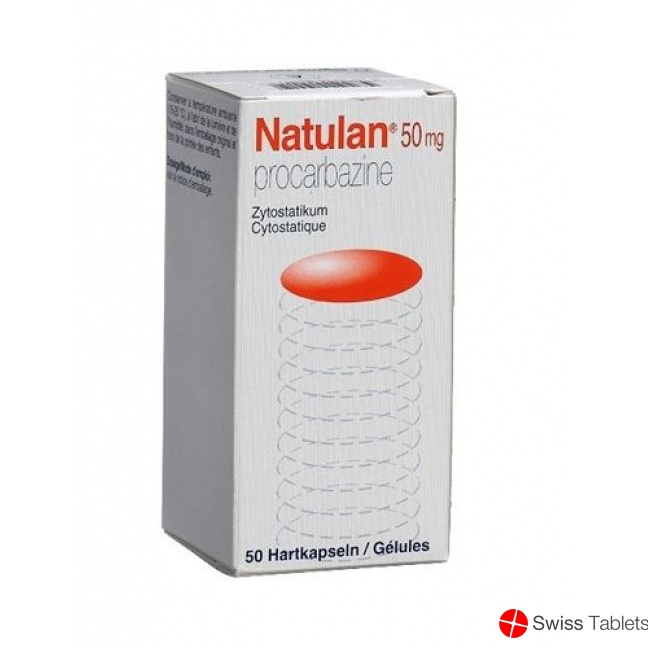
NATULAN 50 mg Капсулы

Рассмотрение рецепта онлайн
Врач рассмотрит ваш случай и примет решение о назначении рецепта, если это медицински оправдано.

Поговорите с врачом об этом лекарстве
Обсудите симптомы и возможные дальнейшие шаги на онлайн-консультации.



Инструкция по применению NATULAN
Содержание инструкции
Natulan 50 mg hard capsules
procarbazine
Read this leaflet carefully before you start taking this medicine as it contains important
information for you.
- Keep this leaflet. You may need to read it again.
- If you have any questions, ask your doctor or pharmacist.
- This medicine has been prescribed for you only. Do not pass it on to others, even if they have the same symptoms as you, as it may be harmful.
- If you get any side effects, even those not listed in this leaflet, tell your doctor or pharmacist. See section 4.
Contents of this leaflet:
- 1. What Natulan is and what it is used for
- 2. What you need to know before you take Natulan
- 3. How to take Natulan
- 4. Possible side effects
- 5. How to store Natulan
- 6. Contents of the pack and other information
1. What is Natulan and what is it used for
Natulan contains the active substance procarbazine, a substance that belongs to the class of cytostatic medicinal products. Procarbazine acts against the growth of some types of cells and is used to treat some types of cancers.
Adults
Natulan is indicated for the treatment of some types of tumors:
o Hodgkin's lymphoma
o lymphosarcoma
o reticulosarcoma
o Brill-Symmers disease
Children and adolescents aged between 2 and 18 years
Natulan is indicated for the treatment of Hodgkin's lymphoma only when administered together with other anti-cancer medicinal products according to an appropriate medical protocol.
2. What you need to know before taking Natulan
Do not take Natulan
- if you are allergic to procarbazine or any of the other ingredients of this medicine (listed in section 6)
- if you have a certain serious blood problem due to any cause (including previous treatment with chemotherapy or radiotherapy) such as: o a reduction in the number of white blood cells in the blood (leucopenia) o a reduction in the number of platelets in the blood (thrombocytopenia)
- if you have severe liver problems
- if you have severe kidney problems
- if you are pregnant or breastfeeding (see section “Pregnancy, breastfeeding and fertility”)
Warnings and precautions
Consult your doctor or pharmacist before taking Natulan. Natulan will only be administered to you by doctors
experienced in chemotherapy treatments.
Tell your doctor before taking Natulan:
- if you have liver or kidney problems because Natulan may not be suitable for you (see section “Do not take Natulan”) or you may need to start treatment with Natulan in hospital.
- if you have had or will have a vaccine with live, attenuated microorganisms
During treatment with Natulan, your doctor will perform the following tests:
- blood tests: before each cycle of therapy and then twice a week.
- liver and kidney function tests: before each cycle of therapy and then once a week. If the following situations occur: consult your doctor because treatment with Natulan should be stopped:
- Decrease in white blood cells and platelets (leucopenia, thrombocytopenia)
- Feeling of numbness or tingling in the hands or feet (paresthesia), peripheral nerve disease (neuropathy), confusion
- Allergic reactions
- Diarrhea
- Inflammation of the oral mucosa (stomatitis)
- Vomiting
Take special care:
- procarbazine can cause absence of spermatozoa in semen (azoospermia) and permanent sterility (see section “Pregnancy, breastfeeding and fertility”).
- Natulan (when used in combination with other medicines and/or radiotherapy) can cause the appearance of other tumors such as lung cancer and acute leukemia.
Children and adolescents
Natulan is usually administered to children and adolescents at the same dosage as adults in
combination with other antitumor drugs. Natulan can cause excessive toxicity in children with
the appearance of tremors, coma and convulsions. Consequently, the doctor will carefully evaluate the dose and
carefully monitor the child's condition during treatment.
Other medicines and Natulan
Tell your doctor or pharmacist if you are taking, have recently taken or might take any other
medicines.
Do not take Natulan with:
- medicines that stimulate the nervous system (sympathomimetics)
- medicines that reduce nasal congestion (decongestants)
Tell your doctor, who will pay particular attention, if you are taking or need to take:
- medicines that inhibit the central nervous system for example: o medicines used to induce anesthesia (anesthetics) o medicines used to relieve pain (narcotic analgesics) o medicines used for epilepsy (barbiturates)
- medicines used against depression (tricyclic antidepressants)
- phenothiazines (psychotropic drugs)
- medicines used against high blood pressure (antihypertensives)
Natulan with food and alcohol
Do not take Natulan with alcohol or foods that contain high amounts of tyramine such as
cheeses, yogurt and bananas.
Pregnancy,breastfeeding and fertility
If you are pregnant, suspect you are pregnant, are planning a pregnancy, or are breastfeeding with breast
milk, ask your doctor or pharmacist for advice before taking this medicine.
Pregnancy
Do not take Natulan during pregnancy because miscarriages, premature births, low birth weight babies and
birth defects have been observed in children of pregnant women treated with procarbazine.
If you are a woman of childbearing potential, you should avoid becoming pregnant during treatment with Natulan. Contact
your doctor immediately if you discover or suspect you are pregnant.
Both men and women treated with Natulan should be informed about methods of contraception.
Women should use contraceptive measures for up to 6 months after the end of treatment with Natulan and men for up to 3 months.
Breastfeeding
The use of Natulan during breastfeeding should be avoided.
Fertility
Procarbazine can cause absence of spermatozoa in semen (azoospermia) and permanent sterility
(see section “Warnings and precautions”). Both men and women treated with Natulan,
should be informed about the risk of infertility.
Driving and operating machinery
Natulan can cause dizziness and drowsiness. If you feel dizzy or drowsy, do not drive or operate
machinery until these effects have worn off.
3. How to take Natulan
Take this medicine following exactly the instructions of your doctor. If you have any doubts, consult your
doctor or pharmacist.
Use in adults
Take Natulan by mouth.
At the beginning of treatment, your doctor will prescribe low doses of the medicine and then will gradually increase
the dose up to a maximum of 250-300 mg per day according to the following
treatment schedule:
1st day 50 mg
2nd day 100 mg
3rd day 150 mg
4th day 200 mg
5th day 250 mg
6th day 250-300 mg
following days 250-300 mg
You must take Natulan until the most complete possible remission of the disease. Afterwards, your doctor will
prescribe a maintenance dose of 50-150 mg per day.
Use in children and adolescents
The doctor will carefully assess the most appropriate dose.
Use in the elderly
Procarbazine must be used with caution in elderly patients. During treatment, your doctor will perform
regular checks to assess signs of early ineffectiveness or intolerance to treatment.
Impairment of hepatic function
Procarbazine must be administered with caution in patients with impaired hepatic
function. During treatment, your doctor will have you undergo blood tests and liver function tests.
Impairment of renal function
Procarbazine must be administered with caution in patients with impaired renal
function. During treatment, your doctor will have you undergo blood tests and kidney function tests.
Caution is also advised in patients affected by a type of tumor of the adrenal glands
(pheochromocytoma), epilepsy, or diseases of the heart and brain vessels.
If you take more Natulan than you should
In case of accidental ingestion of an excessive dose of Natulan, immediately inform your doctor or
go to the nearest hospital.
Ingestion of an excessive dose may cause:
- dizziness
- nausea
- vomiting
- diarrhea
- reduction of blood pressure
- rapid heartbeat (tachycardia)
- tremors
- hallucinations
- depression
- convulsions
The doctor will treat the ingestion of an excessive dose of Natulan based on your condition.
If you forget to take Natulan
Do not take a double dose to make up for a missed dose.
If you stop taking Natulan
It is important that you never stop treatment without consulting your doctor.
If you have any doubts about the use of this medicine, ask your doctor or pharmacist.
4. Possible side effects
Like all medicines, this medicine can cause side effects, although not everyone gets them.
During the first few days of treatment, patients often experience decreased appetite and nausea, which generally disappear after a short time.
Immediately inform your doctor if you notice any of the following symptoms:
- Decreased white blood cells and platelets (leukopenia, thrombocytopenia)
- Feeling of numbness or tingling in the hands or feet (paresthesia), peripheral nerve disease (neuropathy), confusion
- Allergic reactions
- Diarrhea
- Inflammation of the oral mucosa (stomatitis)
- Vomiting
Side effects reported after the use of Natulan
Common(in more than 1 in 100, but in less than 1 in 10 patients);
Reduction in the number of red blood cells in the blood (anemia); reduction in the number of white blood cells in the blood (leukopenia); reduction in the number of platelets in the blood (thrombocytopenia); hair loss;
infection; decrease in white blood cells (granulocytopenia, neutropenia); diseases and toxicity affecting the
blood; brain dysfunction (neurotoxicity); shortness of breath; nausea; vomiting; inflammation of the stomach or
intestine (gastrointestinal toxicity); inflammation of the mucous membranes; respiratory disease;
Uncommon(in more than 1 in 1000, but in less than 1 in 100 patients);
;;; allergic reactions, including severe and sudden allergic reaction that can be fatal (anaphylaxis) and
swelling of the skin or mucous membranes (angioedema); loss or decrease of appetite; a nerve disease
that can cause weakness, tingling or numbness (peripheral neuropathy); feeling of numbness or
tingling in the hands or feet (paresthesia); cardiac and vascular toxicity; respiratory infections;
pulmonary toxicity; lung diseases; skin rash; drug-related skin toxicity;
redness (skin rashes); disorders of the urinary and genital organs (urogenital pathology); increased
liver enzymes (gamma-glutamyl transferase, transaminases).
Rare(in more than 1 in 10,000, but in less than 1 in 1,000 patients);
Redness in the white of the eye or inner eyelid (conjunctivitis), burning sensation during
urination and urgent need to urinate (cystitis); lung infections; pneumocystis jirovecii infection,
pneumocystis jirovecii pneumonia; an extremely serious and potentially fatal condition that
occurs in the presence of infections involving the whole body (septic shock), reduction in the number of
all blood cells (pancytopenia); decrease in a certain type of white blood cells (lymphopenia);
increased glucose in the blood (hyperglycemia, diabetes mellitus); iron accumulation in the organs
(hemosiderosis); headache; problems with the nerves that control involuntary bodily functions, these
can affect blood pressure, temperature control, digestion, bladder function and even sexual function (autonomic neuropathy); damage to the ear (ototoxicity);
heart failure due to cardiovascular disorders (cardiovascular disorder); cardiac arrest (myocardial infarction); recurrent dysfunction of blood flow (vasospasm) to the fingers of the hands and feet that usually occurs in response to stress or exposure to cold (Raynaud's phenomenon); respiratory failure; pulmonary embolism and pulmonary infarction; diarrhea; inflammation of the lining of the esophagus
(esophagitis); inflammation of the liver (hepatitis); liver pathology; liver problems (hepatic necrosis;
fatty liver); hives; drug-related skin rashes; toxic effects on the kidneys; kidney damage; increased
levels of creatinine in the blood to indicate impaired kidney function.
Very rare(in less than 1 in 10,000 patients).
Esophageal infection by fungi (esophageal candidiasis); acquired immunodeficiency syndrome;
lung infection caused by atypical organisms other than common bacteria (atypical pneumonia); a
medical condition characterized by fever, enlargement of the liver and/or spleen with alterations of the
blood cells (hemophagocytic histiocytosis); metabolic alterations that occur following the start of
cancer treatment (tumor lysis syndrome); psychotic disorder characterized by personality change (personality alteration); affective disorder; poor blood flow due to blockage or
rupture of an artery in the brain (stroke); multiple progressive or
inflammation of the brain due to a viral infection (progressive multifocal leukoencephalopathy);
fainting (syncope); brain disease (encephalopathy); alterations in heart rate (sinus arrhythmia); inflammation of the thin membrane surrounding the heart (pericarditis); inflammation of the
veins (phlebitis), respiratory distress, pulmonary inflammation caused by inhalation of bacteria or
toxic substances present in oral and gastric contents (aspiration pneumonia); pulmonary fibrosis;
gastric bleeding, yellowing of the skin, mucous membranes and eye (jaundice); acne;
inflammation of one or more vertebral joints (spondylitis); weakened bones with a greater likelihood of
fractures (osteoporosis); sudden cardiac arrest usually as a result of an electrical disturbance of the heart
(sudden cardiac death).
Not known (frequency cannot be estimated based on available data).
Infections involving the whole body and potentially fatal (sepsis); Herpes zoster; reduced
activity of the bone marrow (bone marrow failure); reduction in the number of red blood cells in the blood
due to their destruction (hemolytic anemia); increase in the number of a type of white blood cells in the blood
(eosinophilia); bleeding from damaged blood vessels (hemorrhage); lung disease (interstitial pneumonia); inflammation of the oral mucosa (stomatitis); constipation; muscle pain; death of the
bone and ligament cells; pain; fever; fatigue; hepatic toxicity; formation of new tumors
such as lung cancer* and acute myeloid leukemia*; Leukemia*; altered production, by
the bone marrow, of red blood cells, white blood cells and platelets (myelodysplasia)*; dehydration, low levels
of potassium in the blood (hypokalemia), hallucination; depression; confused state; severe psychiatric disorders (psychotic disorder); alterations in taste (dysgeusia); altered vision, difficulty breathing
(dyspnea); abdominal pain; acute allergic reactions involving the skin and mucous membranes potentially
fatal (toxic epidermal necrolysis, Stevens-Johnson syndrome); absence of sperm in semen (azoospermia)*; malaise; disease progression; drug ineffectiveness; feeling strange;
weight loss; cough.
*: late toxicity includes secondary tumors and some organ toxicities. The number of patients affected by
late toxicity may increase over time.
Further side effects in adolescents and children
Common(in more than 1 in 100, but in less than 1 in 10 patients);
Nervous system disorders.
Uncommon(in more than 1 in 1000, but in less than 1 in 100 patients);
Chickenpox; lung infections; painful pus collection (abscess); blood infections (pneumococcal bacteremia); inflammation of the stomach and intestine (gastroenteritis); inflammation of the colon causing rectal bleeding, diarrhea, abdominal pain, and abdominal cramps (colitis); insufficient thyroid hormone (hypothyroidism); convulsive crisis; difficulty breathing (dyspnea); respiratory arrest; redness
of the urine with a burning sensation during urination (hemorrhagic cystitis); abnormal calcium and
magnesium levels in the blood.
Rare(in more than 1 in 10,000, but in less than 1 in 1,000 patients);
Pus collection in the abdomen (subdiaphragmatic abscess); inflammation of the brain (tuberculous meningitis); severe bacterial infection; hepatitis B, reduction in the number of red blood cells in the blood due
to their destruction by the immune system (autoimmune hemolytic anemia); toxic diffuse goiter
(Basedow's disease); increased sodium in the blood (hypernatremia); abnormal behavior; confused state; weakness of one side of the body (hemiparesis) or a single limb (monoparesis); state of
fatigue or lack of energy (lethargy); absence of reflexes (areflexia); vision problems; redness;
vomiting with blood (hematemesis); insufficient liver function; skin rash or irritation (allergic dermatitis); muscle weakness; abnormalities in eye movement; need to receive blood transfusions.
Not known (frequency cannot be estimated based on available data)
acute myeloid leukemia*, Leukemia*, Myelodysplastic syndrome*, secondary neoplasms*; Azoospermia*
*: late toxicity includes secondary tumors and some organ toxicities. The number of patients affected by
late toxicity may increase over time.
Reporting of side effects
If you get any side effects, even those not listed in this leaflet, tell your
doctor or pharmacist. You can also report side effects directly through the national
reporting system at http://www.aifa.gov.it/content/segnalazioni-reazioni-avverse .
By reporting side effects you can help provide more information on the safety of this
medicine.
5. How to store Natulan
Do not store at a temperature above 25°C.
Keep this medicine out of the sight and reach of children.
Do not use this medicine after the expiry date which is stated on the packaging after “Exp.”.
The expiry date refers to the last day of that month.
Do not dispose of any medicine in waste water or household waste. Ask your pharmacist how to dispose of
medicines you no longer use. This will help protect the environment.
6. Contents of the pack and other information
What Natulan contains
- The active ingredient is procarbazine. Each hard capsule contains 58.3 mg of procarbazine hydrochloride equivalent to 50 mg of procarbazine base.
- The other ingredients are:
- Capsule content: mannitol (E421), corn starch, talc (E553b), magnesium stearate (E572)
- Capsule shell: yellow iron oxide (E172), titanium dioxide (E171), gelatin
- .
Description of the appearance of Natulan and contents of the pack
Each pack contains 50 hard capsules in a dark glass bottle with a screw cap or 50 capsules
hard capsules in a blister.
Marketing authorisation holder and manufacturer
Leadiant GmbH
Liebherrstr. 22
80538 Munich
Germany
Manufacturer
Haupt Pharma Amareg GmbH
Donaustaufer Str. 378
93055 Regensburg
Germany

Не уверены, подходит ли вам это лекарство?
Обсудите симптомы и варианты лечения с врачом онлайн.

Уже начали прием и появились вопросы?
Обсудите свое состояние и дальнейшие шаги с врачом онлайн.
- Страна регистрации
- Форма выпускаHard capsule, 50 MG
- Код АТХL01XB01
- Действующее вещество
- Отпускается по рецептуДа
- Производитель
- Информация на этой странице носит справочный характер и не является медицинской консультацией. Перед началом приема лекарства обязательно проконсультируйтесь с врачом.
- Аналоги NATULANФорма выпуска: Infusion leak, 260 - 500 X 10^6Действующее вещество: Идекабтаген виклеуцелПроизводитель: BRISTOL-MYERS SQUIBB PHARMA EEIGОтпускается по рецептуФорма выпуска: Transdermal patch, 8 MGДействующее вещество: aminolevulinic acidПроизводитель: PHOTONAMIC GMBH & CO. KGОтпускается по рецептуФорма выпуска: Hard capsule, 0.5 MGДействующее вещество: АнагрелидПроизводитель: ACCORD HEALTHCARE, S.L.U.Отпускается по рецепту
Аналоги NATULAN в других странах
Лекарства с тем же действующим веществом, доступные в других странах.
Аналог NATULAN в Испания
Получите рецепт на NATULAN онлайн
Заполните форму за 2 минуты
Расскажите о симптомах, истории болезни и нужном препарате.
Выберите врача или мы назначим
Выберите специалиста или мы подберём ближайшего доступного врача.
Врач рассматривает ваш случай
Обычно в течение 30 минут. Может задать уточняющие вопросы в чате.
Получите в любой аптеке
Электронный рецепт отправляется на вашу почту — действителен по всей Польше.
Часто задаваемые вопросы
NATULAN требует рецепта в Италия. Вы можете уточнить у врача онлайн, подходит ли это лекарство для вашей ситуации.
Действующее вещество NATULAN — procarbazine. Эта информация помогает определить лекарства с тем же составом под другими торговыми названиями.
NATULAN производится компанией LEADIANT GMBH. Упаковка и торговое название могут отличаться в зависимости от дистрибьютора.
Врачи, включая Семейные врачи, Психиатры, Дерматологи, Кардиологи, Эндокринологи, Гастроэнтерологи, Пульмонологи, Нефрологи, Ревматологи, Гематологи, Инфекционисты, Аллергологи, Гериатры, Педиатры, Онкологи, могут оценить целесообразность применения NATULAN с учетом вашей ситуации и местных правил. Вы можете записаться на онлайн-консультацию, чтобы обсудить возможные варианты.
Польша имеет хорошо развитую систему здравоохранения в крупных городах, таких как Варшава, Краков, Вроцлав и Гданьск. Аптеки широко доступны и работают в соответствии с действующим законодательством, обеспечивая доступ к рецептурным препаратам.
Вы можете купить NATULAN в Варшаве, Кракове, Вроцлаве или Гданьске в любой аптеке при наличии действующего рецепта.
Чтобы получить рецепт, вы можете воспользоваться Oladoctor:
Другие лекарства с тем же действующим веществом (procarbazine) включают ABEKMA, ALAKARE, ANAGRELIDE AKKORD. Они могут отличаться торговым названием или формой выпуска, но содержат одинаковый терапевтический компонент. Перед изменением лечения рекомендуется проконсультироваться с врачом.
