



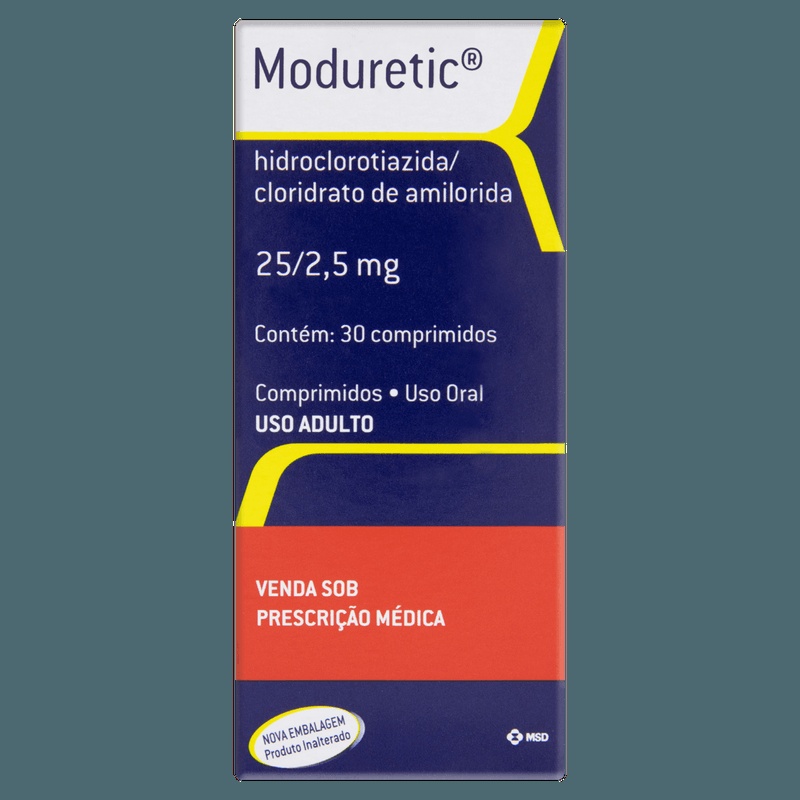
MODURETIC 5 мг/50 мг Коированная таблетка

Рассмотрение рецепта онлайн
Врач рассмотрит ваш случай и примет решение о назначении рецепта, если это медицински оправдано.

Поговорите с врачом об этом лекарстве
Обсудите симптомы и возможные дальнейшие шаги на онлайн-консультации.



Инструкция по применению MODURETIK
Содержание инструкции
MODURETIC 5 mg + 50 mg tablets
amiloride hydrochloride dihydrate + hydrochlorothiazide
Read this leaflet carefully before you start to take this medicine as it contains important
information for you.
- Keep this leaflet. You may need to read it again.
- If you have any questions, ask your doctor or pharmacist.
- This medicine has been prescribed for you only. Do not pass it on to others, even if their symptoms are the same as yours, as it could be harmful.
- If you get any side effects, even those not listed in this leaflet, tell your doctor or pharmacist. See section 4.
Contents of this leaflet:
- 1. What Moduretic is and what it is used for
- 2. What you need to know before you take Moduretic
- 3. How to take Moduretic
- 4. Possible side effects
- 5. How to store Moduretic
- 6. Contents of the pack and other information
1. What Moduretic is and what it is used for
Moduretic contains two active ingredients: hydrochlorothiazide and amiloride.
Hydrochlorothiazide is a diuretic that belongs to a group of medicines called thiazides. It works
by stimulating the kidneys to produce a greater quantity of urine (diuretic action) and in doing so reduces the
blood pressure (antihypertensive action).
Amiloride prevents the excessive loss of potassium that can occur in patients taking a
thiazide diuretic, and is therefore defined as a potassium-sparing diuretic.
Moduretic combines the diuretic and antihypertensive action of hydrochlorothiazide with the potassium-sparing effect of
amiloride.
Moduretic is indicated in the treatment of:
- patients with excessive fluid accumulation in the body tissues due to cardiovascular diseases (cardiac edema);
- patients suffering from a chronic and degenerative liver disease with fluid accumulation in the abdomen (cirrhosis with ascites);
- patients with high blood pressure (hypertension).
2. What you need to know before taking Moduretic
Do not take Moduretic if:
- you are allergic to the active ingredients (hydrochlorothiazide and amiloride) or to other medicines derived from sulfonamides (a chemically related substance to hydrochlorothiazide), or to any of the other components of this medicine (listed in section 6);
- you have high levels of potassium in your blood (hyperkalemia), are taking other potassium-sparing medicines or are taking potassium supplements;
- you have kidney disease;
- you have kidney disease caused by diabetes (diabetic nephropathy) with or without impaired kidney function (renal insufficiency).
Moduretic should not be used in children (see section “Children and adolescents”).
Warnings and precautions
Talk to your doctor or pharmacist before taking Moduretic if:
- you have blurred vision or eye pain. These could be symptoms of fluid accumulation in the vascular layer of the eye (choroidal effusion) or an increase in pressure in the eye and can occur within a period ranging from a few hours to weeks after taking Moduretic. This can lead to permanent vision loss if not treated. If you have had an allergy to penicillin or sulfonamides in the past, you may be at higher risk of developing these symptoms.
- you have had, or currently have, hypersensitivity reactions (allergic reactions) or asthma. Signs of an allergic reaction may include skin rashes, difficulty swallowing or breathing, swelling of the lips, face, throat or tongue;
- you normally have high levels of potassium in your blood, and especially if these are associated with heart, lung, liver or kidney disease, or if you are taking other diuretics. In these cases, your doctor may need to check your body's fluid and electrolyte balance more frequently and/or adjust the dose of your medicines;
- you are diabetic, as frequent monitoring of electrolytes in the blood and kidney function is necessary during treatment with Moduretic, and possible adjustment of the dose of diabetes medicines, including insulin; your doctor will suspend treatment at least three days before a glucose tolerance test
- you have a particular metabolic disorder that causes inflammation, redness and pain in the joints (gout);
- you have an inflammatory disease of the immune system that affects various organs and tissues of the body (lupus erythematosus);
- you are about to undergo anesthesia for surgery or dental procedures, as a sudden drop in blood pressure may occur;
- you need to have tests to check the function of the glands that regulate calcium levels in the blood (parathyroid glands). Consult your doctor who will tell you to stop taking Moduretic before performing this test;
- you have had skin cancer in the past or are developing an unexpected skin lesion during treatment. Treatment with hydrochlorothiazide, especially long-term use with high doses, may increase the risk of certain types of skin cancer and lip cancer (non-melanoma skin cancer). Protect your skin from exposure to the sun and UV rays while taking Moduretic.
It is possible that an electrolyte imbalance may occur during treatment with Moduretic, which manifests with signs and symptoms that may include: dry mouth, thirst, weakness, deep sleepiness (lethargy), drowsiness, agitation, involuntary muscle contractions (convulsions), confusion, cramps and muscle pain, muscle fatigue, low blood pressure, reduced urine production, increased heart rate and gastrointestinal disorders, such as nausea and vomiting. In these cases, promptly inform your doctor.
If you experience excessive vomiting during treatment with Moduretic, contact your doctor promptly, as an electrolyte imbalance may occur.
Children and adolescents
The use of Moduretic is not recommended in children due to the lack of safety and efficacy data.
Other medicines and Moduretic
Tell your doctor or pharmacist if you are taking, have recently taken or might take any other medicines.
In particular, tell your doctor or pharmacist if you are taking:
- medicines used to treat high blood pressure belonging to the categories of ACE-Inhibitors (angiotensin converting enzyme inhibitors) and angiotensin II receptor antagonists;
- medicines used to suppress the immune system's response (immunosuppressants), such as cyclosporine and tacrolimus;
- potassium-sparing medicines or potassium supplements;
- medicines that promote urine excretion (diuretics);
- insulin or other antidiabetic medicines taken orally;
- medicines used for muscle relaxation, such as tubocurarine;
- adrenaline or noradrenaline, known as pressor amines;
- corticosteroids (which modulate anti-inflammatory reactions) and adrenocorticotropic hormone ACTH (used to check if your adrenal glands are functioning properly);
- non-steroidal anti-inflammatory drugs (NSAIDs), used for the treatment of inflammation of the joints (arthritis) or muscle pain;
- lithium, used for the treatment of some depressive disorders;
- medicines used to reduce the amount of fat in the blood, such as colestyramine and cholestipol resins;
- barbiturates that have a sedative effect on the central nervous system, used for example to treat epilepsy;
- medicines that have an anesthetic effect and induce sleep (narcotics);
- medicines that help relieve pain (analgesics).
Moduretic with food, drinks and alcohol
Moduretic should not be taken with alcohol, as an excessive drop in blood pressure may occur.
Pregnancy and breastfeeding
If you are pregnant, suspect you are pregnant or are planning a pregnancy, or if you are breastfeeding, ask your doctor or pharmacist for advice before using this medicine.
Pregnancy
Moduretic is not recommended in pregnant women; if you need antihypertensive therapy, your doctor will assess the appropriateness of alternative treatment.
If you take Moduretic during confirmed or suspected pregnancy, inform your doctor who will assess whether the possible benefits of treatment for you outweigh the potential risks to the baby.
Breastfeeding
Moduretic is not recommended in women who are breastfeeding.
Hydrochlorothiazide, contained in Moduretic, is found in breast milk; if taking Moduretic is considered essential, your doctor will tell you to stop breastfeeding.
Driving and operating machinery
There is no data to suggest that Moduretic affects the ability to drive vehicles and operate machinery.
However, Moduretic can rarely cause side effects that may affect the ability to drive vehicles and operate machinery, such as drowsiness, dizziness and temporary visual disturbances (see section 4 "Possible side effects”). Therefore, be cautious when driving and operating machinery.
Moduretic contains lactose
If your doctor has diagnosed you with an intolerance to certain sugars, contact him before taking this medicine.
For athletes
The use of the medicine without therapeutic need constitutes doping and may still result in positive doping tests.
3. How to take Moduretic
Take this medicine following exactly the instructions of your doctor or pharmacist. If you have doubts
consult your doctor or pharmacist.
The optimal dose and duration of treatment with Moduretic will be established by the doctor based on your
clinical conditions and considering the medicines you are already taking.
Edema of cardiac origin
The recommended initial dose is 1 tablet a day. If necessary, your doctor may increase the dose
up to a maximum of 2 tablets a day. Once diuresis is achieved, your doctor may reduce the dose for
maintenance therapy. Maintenance therapy may be carried out intermittently.
Ascitic hepatic cirrhosis
The recommended minimum initial dose is 1 tablet a day. If necessary, your doctor may gradually
increase the dose until effective diuresis is achieved, up to a maximum of 2 tablets a day.
Maintenance therapy may be carried out at a dose lower than that required to initiate
diuresis.
Hypertension
The usual recommended dose is 1 tablet a day, in a single administration or in divided doses
(half a tablet twice a day). It may be sufficient to take only half a tablet of
Moduretic a day.
If you take more Moduretic than you should
In case of accidental intake of an excessive dose of Moduretic, immediately inform your doctor or
go to the nearest hospital.
The symptoms of an overdose may be: feeling of emptiness or dizziness, due to an
excessive lowering of blood pressure, excessive thirst, mental confusion, reduced
urine production, increased heart rate.
Treatment method in case of taking an excessive dose of Moduretic
There are no specific instructions for treatment in case of taking an excessive dose of Moduretic
and there is no substance specifically able to counteract the effect of Moduretic overdose.
It is not known whether Moduretic is removable by dialysis.
In case of taking an excessive dose of Moduretic, treatment should be suspended, symptoms should be
appropriately treated and the patient carefully monitored. The recommended measures in case of
overdose include induction of vomiting and/or gastric lavage and appropriate supportive therapy.
If you forget to use Moduretic
Do not take a double dose to compensate for forgetting the tablet. If in doubt, contact your
doctor.
If you stop taking Moduretic
To be effective, Moduretic must be taken regularly every day and for the entire duration of
treatment, as prescribed by your doctor.
If you have any doubts about the use of this medicine, ask your doctor or pharmacist.
4. Possible side effects
Like all medicines, this medicine can cause side effects, although not everyone gets them.
The side effects observed with Moduretic are generally those well known to be associated with thiazide therapy, or related to the underlying disease being treated, or to diuresis. Clinical studies have
shown that the combination of amiloride-hydrochlorothiazide does not increase the risk of side effects compared to
the separate administration of the two active ingredients.
Stop taking Moduretic and contact your doctor immediately if you notice the appearance of any
serious side effect, such as:
- severe allergic reaction (anaphylactic reaction);
- severe skin reactions including itchy rash (urticaria), a skin disease that causes peeling of the skin (toxic epidermal necrolysis). With Moduretic, the effects reported most frequently during clinical studies were:
- loss or lack of appetite (anorexia);
- dizziness, headache (cephalalgia);
- nausea;
- appearance of spots or bumps on the skin (rash);
- asthenia.
Other side effects include:
- altered appetite, dehydration, electrolyte imbalance, gout, reduced sodium levels in the blood (hyponatremia - see paragraph “Warnings and precautions”); hyponatremia with worsening of symptoms;
- depression, insomnia, mental confusion, nervousness, drowsiness;
- altered taste, tingling (paresthesia), decreased attention, disorientation and altered ability to understand (stupor), temporary loss of consciousness (syncope);
- visual disturbances;
- vertigo;
- chest pain caused by reduced oxygen and blood supply to the heart (angina pectoris), heart rhythm disturbances (arrhythmias), increased heart rate (tachycardia);
- flushing, decreased blood pressure when suddenly moving from a sitting or lying position to an upright position (orthostatic hypotension);
- cough and difficulty breathing (dyspnea), nasal congestion (nasal congestion);
- feeling of fullness in the abdomen, abdominal pain, difficulty passing stools (constipation), diarrhea, increased production of intestinal gas (flatulence), gastrointestinal bleeding, hiccups, vomiting;
- increased sweating (diaphoresis), itching;
- back pain (lumbago), joint pain, leg pain, involuntary muscle contractions (muscle cramps);
- difficulty urinating (dysuria), incontinence, needing to get up more often during the night to urinate (nocturia), kidney dysfunction including kidney failure;
- difficulty for men to achieve or maintain an erection (impotence);
- chest pain, decreased resistance to muscular effort (fatigue), malaise, thirst;
- high levels of potassium in the blood (> 5.5 mEq per liter);
- toxicity due to medicines used for the treatment of heart failure (digitalis medicines).
Side effects related to amiloride
- insufficient production of blood cells by the bone marrow (aplastic anemia), decreased number of specific blood cells called neutrophils (neutropenia);
- decreased sexual desire (decreased libido);
- brain dysfunction (encephalopathy), drowsiness, tremors;
- unpleasant sensation of sounds or whistling in the ears (tinnitus);
- partial cardiac arrest that turned into total cardiac arrest (in 1 patient), irregular or reinforced heartbeat (palpitations);
- cough;
- activation of lesions of the mucous membrane of the digestive tract (peptic ulcer) probably pre-existing, dry mouth, pain in the upper abdomen (dyspepsia);
- yellowing of the skin and whites of the eyes (jaundice), changes in liver function;
- hair loss (alopecia);
- neck/shoulder pain, limb pain;
- involuntary bladder contractions (vesical spasm), increased urine output (polyuria), increased frequency of urination in small amounts (pollachiuria);
- changes in kidney function, increased pressure inside the eye (intraocular pressure).
Side effects related to hydrochlorothiazide
- inflammation of the salivary glands (sialoadenitis);
- frequency “not known”: skin and lip cancer (non-melanoma skin cancer);
- severe reduction in the number of granulocytes (a type of white blood cells) in the blood (agranulocytosis), insufficient production of blood cells by the bone marrow (aplastic anemia), excessive destruction of red blood cells (hemolytic anemia), abnormal reduction of white blood cells (leukopenia), rupture of capillaries under the surface of the skin (purpura), reduction in the number of platelets in the blood (thrombocytopenia);
- increased blood sugar (hyperglycemia), high uric acid concentration in the blood (hyperuricemia), potassium deficiency in the blood (hypokalemia);
- restlessness;
- temporary blurring of vision, disturbance of color perception (xanthopsia);
- necrotic inflammatory disease of the wall of blood vessels (necrotizing angiitis, vasculitis);
- difficulty breathing even due to inflammation of the lungs (pneumonia) or due to the presence of fluid in the lungs (pulmonary edema);
- involuntary muscle contractions (cramps), gastric irritation, inflammation of the pancreas (pancreatitis);
- yellowing of the skin and whites of the eyes (jaundice), due primarily to liver disease (intrahepatic cholestatic jaundice);
- skin sensitivity to a light source (photosensitivity);
- presence of sugars in the urine (glycosuria), inflammatory disease of one of the tissues of the kidney (interstitial nephritis);
- fever;
- decreased vision or eye pain due to high pressure (possible signs of fluid accumulation in the vascular layer of the eye (choroidal effusion).
Reporting of side effects
If you get any side effects, even if not listed in this leaflet, tell your
doctor or pharmacist. You can also report side effects directly through the national reporting system at https://www.aifa.gov.it/content/segnalazioni-reazioni-avverse .
By reporting side effects you can help provide more information on the safety of this
medicine.
5. How to store Moduretic
Keep this medicine out of the sight and reach of children.
Store in the original package, to protect the medicine from light.
Do not use this medicine after the expiry date which is stated on the package and on the blister after “Exp”. The
expiry date refers to the last day of that month.
Do not dispose of any medicine in wastewater or household waste. Ask your pharmacist how to dispose of the
medicines you no longer use. This will help protect the environment.
6. Package contents and other information
What Moduretic contains
- The active ingredients are amiloride hydrochloride bihydrate and hydrochlorothiazide. Each tablet contains 5.7 mg of amiloride hydrochloride bihydrate (equivalent to 5.0 mg of anhydrous amiloride hydrochloride) and 50 mg of hydrochlorothiazide.
- The other ingredients are dibasic calcium phosphate dihydrate, lactose monohydrate, corn starch, pregelatinized starch, guar gum, magnesium stearate.
Description of the appearance of Moduretic and package contents
Moduretic is presented as tablets contained in PVC and aluminum blisters.
Each pack contains 20 tablets.
Marketing authorization holder and manufacturer
Marketing authorization holder
NEOPHARMED GENTILI S.p.A.
Via San Giuseppe Cottolengo, 15 – 20143 Milano
Manufacturer
Merck Sharp & Dohme B.V.
Waarderweg, 39
2031 BN Haarlem, Netherlands

Не уверены, подходит ли вам это лекарство?
Обсудите симптомы и варианты лечения с врачом онлайн.

Уже начали прием и появились вопросы?
Обсудите свое состояние и дальнейшие шаги с врачом онлайн.
- Страна регистрации
- Форма выпускаCoated tablet, 5 MG + 50 MG
- Код АТХC03EA01
- Действующее вещество
- Отпускается по рецептуДа
- Производитель
- Информация на этой странице носит справочный характер и не является медицинской консультацией. Перед началом приема лекарства обязательно проконсультируйтесь с врачом.
- Аналоги MODURETIKФорма выпуска: Coated tablet, 25 MG + 25 MGДействующее вещество: hydrochlorothiazide and potassium-sparing agentsПроизводитель: SPA SOCIETA' PRODOTTI ANTIBIOTICI S.P.A.Отпускается по рецептуФорма выпуска: Hard capsule, 25 MG + 25 MGДействующее вещество: hydrochlorothiazide and potassium-sparing agentsОтпускается по рецептуФорма выпуска: Film-coated tablet, 50 MG + 5 MGДействующее вещество: butizide and potassium-sparing agentsПроизводитель: NEOPHARMED GENTILI S.P.A.Отпускается по рецепту
Аналоги MODURETIK в других странах
Лекарства с тем же действующим веществом, доступные в других странах.
Аналог MODURETIK в Польша
Аналог MODURETIK в Украина
Аналог MODURETIK в Испания
Врачи онлайн по MODURETIK
Обсудите применение MODURETIK и возможные следующие шаги — по оценке врача.
Получите рецепт на MODURETIK онлайн
Заполните форму за 2 минуты
Расскажите о симптомах, истории болезни и нужном препарате.
Выберите врача или мы назначим
Выберите специалиста или мы подберём ближайшего доступного врача.
Врач рассматривает ваш случай
Обычно в течение 30 минут. Может задать уточняющие вопросы в чате.
Получите в любой аптеке
Электронный рецепт отправляется на вашу почту — действителен по всей Польше.
Часто задаваемые вопросы
MODURETIK требует рецепта в Италия. Вы можете уточнить у врача онлайн, подходит ли это лекарство для вашей ситуации.
Действующее вещество MODURETIK — hydrochlorothiazide and potassium-sparing agents. Эта информация помогает определить лекарства с тем же составом под другими торговыми названиями.
MODURETIK производится компанией NEOPHARMED GENTILI S.P.A.. Упаковка и торговое название могут отличаться в зависимости от дистрибьютора.
Врачи, включая Семейные врачи, Психиатры, Дерматологи, Кардиологи, Эндокринологи, Гастроэнтерологи, Пульмонологи, Нефрологи, Ревматологи, Гематологи, Инфекционисты, Аллергологи, Гериатры, Педиатры, Онкологи, могут оценить целесообразность применения MODURETIK с учетом вашей ситуации и местных правил. Вы можете записаться на онлайн-консультацию, чтобы обсудить возможные варианты.
Польша имеет хорошо развитую систему здравоохранения в крупных городах, таких как Варшава, Краков, Вроцлав и Гданьск. Аптеки широко доступны и работают в соответствии с действующим законодательством, обеспечивая доступ к рецептурным препаратам.
Вы можете купить MODURETIK в Варшаве, Кракове, Вроцлаве или Гданьске в любой аптеке при наличии действующего рецепта.
Чтобы получить рецепт, вы можете воспользоваться Oladoctor:
Другие лекарства с тем же действующим веществом (hydrochlorothiazide and potassium-sparing agents) включают ALDAKTATSIDE, SPIRIDATSIDE, KADIUR. Они могут отличаться торговым названием или формой выпуска, но содержат одинаковый терапевтический компонент. Перед изменением лечения рекомендуется проконсультироваться с врачом.
