



METOTHER 50 mg /Ml Инъекционный Раствор В Преднаполненном Шприце

Рассмотрение рецепта онлайн
Врач рассмотрит ваш случай и примет решение о назначении рецепта, если это медицински оправдано.

Поговорите с врачом об этом лекарстве
Обсудите симптомы и возможные дальнейшие шаги на онлайн-консультации.



Инструкция по применению METOTER
Содержание инструкции
Metother 50 mg/ml injectable solution in pre-filled syringe
methotrexate
Read this leaflet carefully before using this medicine as it contains important
information for you.
- Keep this leaflet. You may need to read it again.
- If you have any questions, ask your doctor, pharmacist or nurse.
- This medicine has been prescribed for you only. Do not pass it on to others, even if they have the same symptoms as you, as it could be harmful.
- If you get any side effects, even those not listed in this leaflet, tell your doctor, pharmacist or nurse. See section 4. Contents of this leaflet:
- 1. What Metother is and what it is used for
- 2. What you need to know before using Metother
- 3. How to use Metother
- 4. Possible side effects
- 5. How to store Metother
- 6. Contents of the pack and other information
1. What is Metother and what is it used for
Metother contains the active substance methotrexate.
Methotrexate is a substance with the following properties:
- interferes with the growth of particular cells of the body that reproduce quickly
- reduces the activity of the immune system (the body's own defense mechanism)
- has anti-inflammatory effects
Metother is indicated for the treatment of:
- active rheumatoid arthritis in adult patients.
- polyarticular forms of active severe juvenile idiopathic arthritis, when the response to non-steroidal anti-inflammatory drugs (NSAIDs) has been inadequate.
- severe disabling recalcitrant psoriasis, not adequately responsive to other forms of therapy, such as phototherapy, PUVA and retinoids, and severe psoriatic arthritis in adult patients.
- Mild to moderate Crohn's disease in adults when adequate treatment with other drugs is not possible. Rheumatoid arthritis (RA) is a chronic collagen disease, characterized by inflammation of the synovial membranes (joint membranes). These membranes produce a fluid that acts as a lubricant for many joints. Inflammation causes thickening of the membrane and swelling of the joint. Juvenile arthritis affects children and adolescents under 16 years of age. If 5 or more joints are affected within the first 6 months of the disease, polyarticular forms are indicated.
Psoriatic arthritis is a type of arthritis with psoriatic skin and nail lesions, especially in
correspondence with the joints of the hands and feet.
Psoriasis is a common chronic skin disease, characterized by red patches covered with dry, thick, silver-colored scales, difficult to remove.
Metother modifies and slows the progression of the disease.
Crohn's disease is a type of inflammatory bowel disease that can affect any part of the
gastrointestinal tract causing symptoms such as abdominal pain, diarrhea, vomiting or weight loss.
2. What you need to know before using Metother
Do not use Metother if:
- you are allergic to methotrexate or any of the other ingredients of this medicine (listed in section 6)
- you suffer from severe liver or kidney disease or blood disorders
- you regularly consume large amounts of alcohol
- you have serious infections, e.g. tuberculosis, HIV or other immunodeficiency syndromes
- you have ulcers in the mouth and throat or ulcers in the stomach and intestines
- you are receiving vaccinations with live vaccines at the same time
- if you are pregnant or breastfeeding (see the section “Pregnancy, breastfeeding and fertility”) Warnings and precautionsTell your doctor, pharmacist or nurse before taking Metother if:
- you are elderly or if you have general malaise and weakness.
- you have problems with liver function.
- you suffer from dehydration (loss of fluids)
Cases of acute pulmonary bleeding have been reported in patients with rheumatological disease and
treated with methotrexate. If you observe blood in your saliva or after coughing, contact
your doctor immediately.
Special precautions for treatment with Metother
Methotrexate temporarily affects the production of sperm and eggs, an effect that is
reversible in most cases. Methotrexate can cause miscarriage and serious birth defects.
While using methotrexate and for at least six months after the end of treatment, you should avoid pregnancy.
See also the section “Pregnancy, breastfeeding and fertility”.
Recommended follow-up tests and precautions:
Serious side effects can occur even when Methoter is used at low doses. In order to
recognize them in time, the doctor must prescribe laboratory tests and check-ups.
Before starting treatment:
Before starting treatment, your doctor may request blood tests to check that your blood cells are sufficient, verify the proper functioning of the liver, serum albumin (a blood protein) and kidney function. The doctor will also check if you suffer from tuberculosis (an infectious
disease combined with small nodules of the affected tissue) and a chest X-ray will be performed.
During treatment:
You will be subjected to the following tests at least once a month during the first six months and every three months
afterwards:
- Examination of the mouth and throat for changes in the mucous membranes
- Blood tests
- Monitoring of liver function
- Monitoring of kidney function
- Inspection of the respiratory tract and, if necessary, pulmonary function testing
Methotrexate can affect the immune system and the results of vaccination. It can also affect the
outcome of immunological tests. Inactive chronic infections (e.g. herpes zoster [shingles],
tuberculosis, hepatitis B or C) may reactivate. During therapy with Metother you should not be vaccinated with
live vaccines.
Radiation-induced dermatitis and sunburns may reappear during therapy with methotrexate (recall reaction). Psoriatic lesions may exacerbate during UV irradiation and simultaneous
administration of methotrexate.
Enlargement of the lymph nodes (lymphoma) may occur and therapy should therefore be discontinued.
Diarrhea can be a toxic effect of Metother and require discontinuation of therapy. If you suffer from
diarrhea, inform your doctor.
In oncological patients undergoing methotrexate therapy, encephalopathy (a brain disorder)/leukoencephalopathy (a particular disorder of white brain matter) have been reported and other pathologies following therapy with methotrexate cannot be
excluded.
Other medicines and Metother
Tell your doctor or pharmacist if you are taking, have recently taken or might take any
other medicines.
The effect of the treatment may be compromised if Metother is administered simultaneously with
some other drugs:
- Medicines that damage the liver or blood count, for example, leflunomide
- Antibiotics (medicines to prevent/fight some infections), such as: tetracyclines, chloramphenicol and broad-spectrum non-absorbable antibiotics, penicillins, glycopeptides, sulfonamides (sulfur-containing drugs that prevent/fight some infections), ciprofloxacin and cefalotin
- Non-steroidal anti-inflammatory drugs or salicylates (pain and/or inflammation medications)
- Probenecid (medicine for gout)
- Weak organic acids, such as loop diuretics ("water tablets") or some drugs used to treat inflammatory diseases and pain (e.g. acetylsalicylic acid, diclofenac and ibuprofen) and pyrazole (e.g. metamizole for pain treatment)
- Medicines that can have negative effects on the bone marrow, for example, trimethoprim-sulfamethoxazole (an antibiotic) and pyrimethamine
- Sulfasalazine (antirheumatic medicine)
- Azathioprine (an immunosuppressant sometimes used in severe rheumatoid arthritis)
- Mercaptopurine (a cytostatic agent)
- Retinoids (drugs for psoriasis and other dermatological diseases)
- Theophylline (drug for bronchial asthma and other lung diseases)
- Proton pump inhibitors (medicines for stomach disorders, such as omeprazole and pantoprazole)
- Hypoglycemic agents (drugs used to lower blood sugar)
Vitamins containing folic acid may reduce the effect of treatment and should only be taken
when recommended by your doctor.
Vaccination with live vaccine must be avoided.
Metother with food, drinks and alcohol
During treatment with Metother, excessive alcohol consumption, as well as large amounts of coffee,
caffeinated beverages and black tea should be avoided.
Pregnancy, breastfeeding and fertility
Pregnancy
Do not use Metother during pregnancy or if you are trying to become pregnant. Methotrexate can cause
birth defects, harm the fetus or cause miscarriage. It is associated with malformations of the skull,
face, heart and blood vessels, brain and limbs. Therefore, it is very important that patients who are pregnant or planning a pregnancy are not treated with methotrexate. In women of
childbearing age, every possibility of pregnancy must be excluded by using appropriate measures, for
example by performing a pregnancy test before starting treatment. During the intake of
methotrexate and for at least 6 months after the end of treatment, you should avoid pregnancy using
reliable contraceptive methods throughout the period (see also the section “Warnings and
precautions”).
If you become pregnant during treatment or suspect you are pregnant, contact your doctor as
soon as possible. You will receive advice on the risk of harmful effects on the baby due to treatment.
If you wish to become pregnant, you should consult your doctor, who will refer you to a specialist before the planned start
of treatment.
Male fertility
Available evidence does not indicate an increased risk of malformations or miscarriage if the
father takes a dose of methotrexate less than 30 mg/week. However, the risk cannot be
completely excluded. Methotrexate can be genotoxic. This means that the medicine can cause
genetic mutations. Methotrexate can affect sperm production with the possibility of causing
birth defects. Therefore, while taking methotrexate and for at least 6 months after the end of treatment,
you should avoid procreation or donating semen.
Breastfeeding must be discontinued before and during treatment with Metother.
Driving and operating machinery
Treatment with Metother can cause adverse reactions that affect the central nervous system, for
example, fatigue and dizziness. Therefore, in some cases, the ability to drive a vehicle and/or operate
machinery may be impaired. If you feel tired or drowsy, you should not drive or operate
machinery.
Metother contains sodium
This medicine contains less than 1 mmol of sodium (23 mg) per dose, i.e. it is essentially "sodium-free”.
3. How to use Metother
The doctor decides the dosage, which will be adjusted individually. Usually 4-8 weeks are necessary
before there is any effect of the treatment.
Metother is administered as a subcutaneous injection (under the skin) by or under the supervision of
a doctor or healthcare professional only once a week. Decide with your doctor a suitable weekday
to receive the injection each week.
Important warning regarding the dosage of Metother (methotrexate):
In the treatment of Rheumatoid arthritis, Juvenile arthritis, Psoriatic arthritis, Psoriasis, Crohn's disease,
Metother (methotrexate) must be taken only once a week. Excessive use of Metother
(methotrexate) can be fatal. Read paragraph 3 of this leaflet very carefully. If in doubt,
consult your doctor or pharmacist before taking this medicine.
Use in children and adolescents
The doctor decides the appropriate dose in children and adolescents with polyarticular forms of idiopathic
juvenile arthritis.
Metother is not recommended in children under 3 years of age due to the lack of experience in this
age group.
Method and duration of administration
Metother is injected only once a week!
The duration of treatment is determined by the attending physician. Treatment of rheumatoid arthritis, idiopathic
juvenile arthritis, plaque psoriasis, psoriatic arthritis and Crohn's disease with Metother is a
long-term treatment.
At the beginning of treatment, Metother will be injected by medical personnel. However, the doctor may consider
that you are able to learn how to administer Metother injections yourself. In this case, you will receive
adequate training. In no case should you attempt to administer the injection yourself without having received a
Please ensure that all of the contents are used.
Handling and disposal must be consistent with those of other cytostatic preparations
in accordance with current local regulations. Pregnant healthcare personnel should not handle and/or
administer Metother.
Methotrexate must not come into contact with the surface of the skin or mucous membranes. In case of
contamination, wash the affected area immediately with plenty of water.
If you use more Metother than you should
If you use more Metother than you should, contact your doctor immediately.
If you forget to use Metother
Do not take a double dose to make up for a missed dose.
If you stop using Metother
If you stop using Metother, contact your doctor immediately.
If you feel that the effect of Metother is too strong or too weak, inform your doctor or
pharmacist.
4. Possible side effects
Like all medicines, this medicine can cause side effects, although not everyone will experience them.
The frequency and severity of side effects depend on the type of dosage and the frequency of administration. Because serious side effects can occur even at low doses, it is important to be monitored regularly by your doctor. The doctor will prescribe tests to check for the presence of abnormalitiesemerging in the blood (such as a reduced number of white blood cells, low platelets, lymphoma) and changes in the kidneys and liver.
Immediately inform your doctorif you experience any of the following symptoms, as these may indicate a serious side effect potentially life-threatening, requiring specific treatment:
- Persistent dry cough, non-productive, shortness of breath and fever;these may be signs of lung inflammation [common - may affect up to 1 in 10 people]
- Blood in saliva or after coughing
- Symptoms of liver damage, such as yellowing of the skin and whites of the eyes; methotrexate can cause chronic liver damage (liver cirrhosis), formation of scar tissue in the liver (liver fibrosis), fatty degeneration of the liver [all uncommon - may affect up to 1 in 100 people], liver inflammation (acute hepatitis) [rare - may affect up to 1 in 1,000 people] and liver failure [very rare - may affect up to 1 in 10,000 people]
- Symptoms of allergy such as skin rashes including redness and itching of the skin, swelling of thehands, feet, ankles, face, lips, mouth or throat (which may cause difficulty swallowing orbreathing) and a feeling of fainting; these may be signs of severe allergic reactions or anaphylactic shock [rare - may affect up to 1 in 1,000 people]
- Symptoms of kidney damage, such as swelling of the hands, ankles or feet or changes infrequency of urination or decreased (oliguria) or absence (anuria) of urine;these may be signs of kidney failure [rare - may affect up to 1 in 1,000 people]
- Symptoms of infections, e.g. fever, chills, tenderness, sore throat;methotrexate can make you more susceptible to infections. Rarely [may affect up to 1 in 1,000 people] serious infections such as a certain type of pneumonia (Pneumocystis carinii pneumonia) or blood poisoning (sepsis) may occur
- Symptoms such as weakness on one side of the body (stroke) or pain, swelling, redness and unusualwarmth in a leg (deep vein thrombosis); this can happen when a blood clotblocks a blood vessel(thromboembolic event) [rare - may affect up to 1 in 1,000 people]
- Fever and severe deterioration of general condition, or sudden fever accompanied by sorethroat or mouth, or urinary problems;methotrexate can very rarely [may affect up to 1 in 10,000 people] cause a severe drop in certain white blood cells (agranulocytosis) and severe suppression of the bone marrow
- Unexpected bleeding, e.g. bleeding gums, blood in urine, vomiting bloodor bruising,these may be signs of a severe reduction in a certain number of platelets in the blood caused by severe bone marrow depression [very rare - may affect up to 1 in 10,000 people]
- Symptoms such as severe headache often in combination with fever, stiff neck, nausea, vomiting,disorientation and sensitivity to lightmay indicate inflammation of the membranes of the brain (acute aseptic meningitis) [very rare - may affect up to 1 in 10,000 people]
- Some brain disorders (encephalopathy/leukoencephalopathy) have been reported in cancer patients treated with methotrexate. Such adverse effects cannot be ruled out when methotrexate therapy is used for the treatment of other diseases. Signs of these types of brain disorders may be an altered mental state, movement disorders (ataxia), visual disturbances or memory disorders[frequency not known: cannot be estimated based on available data]
- Severe skin rash or blistering on the skin (may also affect the mouth, eyes and genitals); these may be signs of a very rare condition [may affect up to 1 in
- 10,000] called Stevens Johnson syndrome or toxic epidermal necrolysis/Lyell's syndrome. Below are other side effects that may occur: Very common:may affect more than 1 in 10 people
- inflammation of the lining of the mouth, indigestion, feeling unwell, loss of appetite, abdominal pain.
- abnormal liver function tests (ASAT, ALAT, bilirubin, alkaline phosphatase).
Common:may affect up to 1 in 10 people
- mouth ulcers, diarrhea
- skin rash, redness of the skin and itching
- headache, fatigue, drowsiness
- reduced formation of blood cells with a decrease in white blood cells and/or red blood cells and/or platelets Uncommon:may affect up to 1 in 100 people
- Inflammation of the throat.
- Inflammation of the intestine, vomiting, inflammation of the pancreas, black and tarry stools, gastrointestinal ulcers and bleeding.
- Increased sensitivity to light, hair loss, increased number of rheumatic nodules, skin ulcer, herpes zoster, inflammation of blood vessels, herpes-like rashes, urticaria.
- Onset of diabetes mellitus.
- Dizziness, confusion, depression.
- Decreased serum albumin.
- Reduction in the number of all blood cells and platelets.
- Inflammation and ulceration of the urinary bladder or vagina, reduced kidney function, difficulty in urination.
- Joint pain, muscle pain, decreased bone mass.
Rare:may affect up to 1 in 1,000 people
- Inflammation of the gum tissue.
- Increased skin pigmentation, acne, bruising of the skin due to bleeding from blood vessels (ecchymosis, petechiae).
- Allergic inflammation of blood vessels.
- Reduction in the number of antibodies in the blood.
- Infection (including reactivation of a chronic inactive infection), red eyes (conjunctivitis).
- Mood swings (changes in mood).
- Visual disturbances.
- Inflammation of the sac around the heart, accumulation of fluid in the sac around the heart, obstruction of cardiac filling due to fluid in the sac around the heart.
- Low blood pressure
- Formation of scar tissue in the lung (pulmonary fibrosis, shortness of breath and bronchial asthma, accumulation of fluid in the sac around the lung).
- Stress fracture.
- Electrolyte disturbances.
- Fever, difficulty healing wounds.
Very rare:may affect up to 1 in 10,000 people
- Toxic acute dilation of the intestine (toxic megacolon).
- Increased pigmentation of the nails, inflammation of the cuticles (acute paronychia), deep infection of hair follicles (furuncles), visible dilation of small blood vessels.
- Pain, loss of strength or numbness or tingling/decreased sensitivity to normal stimulation, changes in taste (metallic taste), convulsions, paralysis, meningitis.
- Altered vision, non-inflammatory eye disease (retinopathy).
- Loss of sexual desire, impotence, enlargement of the male breast, formation of defective sperm (oligospermia), menstrual disorders, vaginal discharge.
- Enlargement of lymph nodes (lymphoma).
- Lymphoproliferative disorders (excessive growth of white blood cells).
Not known:the frequency cannot be defined based on available data:
- Increase in the number of certain white blood cells.
- Nosebleeds.
- Protein in the urine.
- Feeling of weakness.
- Bleeding from the lungs.
- Bone damage in the jaw/maxilla (secondary to excessive growth of white blood cells)
- Destruction of tissues at the injection site.
- Redness and peeling of the skin.
- Swelling
Subcutaneous application of methotrexate is well tolerated locally. Only mild local skin reactions (such as burning sensations, erythema, swelling, alteration of color, severe itching, pain) have been observed, which decrease during therapy.
Reporting of side effects
If you experience any side effects, including those not listed in this leaflet, tell your doctor, pharmacist or nurse. You can also report side effects directly through the national reporting system at https://www.aifa.gov.it/content/segnalazioni-reazioni-avverse. By reporting side effects you can help provide more information on the safety of this medicine.
5. How to store Metother
Keep this medicine out of the sight and reach of children.
Store at a temperature below 30°C.
Keep the pre-filled syringes in the outer packaging to protect them from light.
Do not use this medicine after the expiry date which is stated on the label/box after Exp. The expiry
date refers to the last day of that month.
Do not use Metother if you notice any change in colour or if it contains visible particles.
Do not dispose of any medicine in wastewater or household waste. Ask your pharmacist how to
dispose of medicines you no longer use. This will help protect the environment.
6. Contents of the pack and other information
What Metother contains
- The active ingredient is methotrexate. 1 ml of solution contains methotrexate disodium corresponding to 50 mg of methotrexate.
- The other ingredients are sodium chloride, sodium hydroxide (for pH adjustment) and water for injections.
Description of the appearance of Metother and contents of the pack
Metother pre-filled syringe contains a clear solution from yellow to brown. The pre-filled syringes
are pre-fitted with a safety needle. The packs containing the pre-filled syringes are with or without
blisters and alcohol-soaked swabs. The blisters are for single syringes pre-fitted with a safety needle.
The following packs are available:
- For 0.15 ml, 0.20 ml, 0.30 ml and 0.40 ml: packs containing 1, 2, 4, 5, 6, 8, 10, 12 and 24 pre-filled syringes with a fixed needle covered with a rigid cap. Further pre-filled syringes pre-fitted with a safety needle.
- For 0.25 ml, 0.35 ml, 0.45 ml, 0.55 ml and 0.60 ml: packs containing 1, 4, 5, 6, 8 and 12 pre-filled syringes with a fixed needle covered with a rigid cap. Further pre-filled syringes pre-fitted with a safety needle.
- For 0.50 ml: packs containing 1, 2, 4, 5, 6, 8, 10 and 12 pre-filled syringes with a fixed needle covered with a rigid cap. Further pre-filled syringes pre-fitted with a safety needle. Not all pack sizes may be marketed.
Marketing Authorisation Holder
Accord Healthcare S.L.U.
World Trade Center,
Moll de Barcelona,
s/n, Edifici Est 6ª planta,
08039 Barcelona,
Spain
Manufacturer
Accord Healthcare Limited
Ground Floor, Sage House, 319 Pinner Road, Harrow, Middlesex,
HA1 4HF
United Kingdom
Wessling Hungary Kft
Fòti ùt 56., Budapest
1047
Hungary
This medicinal product is authorised in the Member States of the European Economic Area under the following
denominations:
| Member State Name | a Medicinal Product Name |
| Sweden | t I Injexate 50 mg/mL injection liquid, solution in pre-filled syringe |
| Austria | Injexate 50 mg/mL Injection solution in a pre-filled syringe |
| Belgium | Methofill 50 mg/ml solution for injection in a pre-filled syringe |
| Bulgaria | a Injexate 50 mg/mL solution for injection in pre-filled syringe |
| Cyprus | i Injexate 50 mg/mL solution for injection in pre-filled syringe |
| Czech Republic | z INJEXATE 50 MG/ML injection solution in a pre-filled syringe |
| Denmark | Injexate |
| Germany | n Methofill 50 mg/ml Injektionslösung in einer Fertigspritze |
| Finland | Injexate 50 mg/mL injection solution in a pre-filled syringe |
| e France | INJEXATE 50 mg/mL, Injectable solution in pre-filled syringe |
| g Hungary | METHOFILL 50 mg/ml solution for injection in pre-filled syringe |
| Ireland | Methofill 50 mg/mL solution for injection in pre-filled syringe |
| Italy | Metother |
| A Lithuania | Metother 50 mg/mL injection solution in pre-filled syringe |
| Netherlands | Injexate 7.5 mg = 0.15 ml/10 mg = 0.20 ml/ 12.5 mg = 0.25 ml/15 mg = 0.30 ml/17.5 mg = 0.35 ml/20 mg = 0.40 ml/22.5 mg = 0.45 ml/25 mg = 0.50 ml/27.5 mg = 0.55 ml/30 mg solution for injection in pre-filled syringe |
Instructions for use
Read the following instructions carefully before starting the injection and always use the injection technique
recommended by your doctor, pharmacist or nurse.
If you have any problems or questions, ask your doctor, pharmacist or nurse.
Preparation
Select a clean, well-lit and flat surface.
Gather everything you need before you start:
- 1 pre-filled syringe of Metother with safety needle. Wash your hands thoroughly. Before use, check the Metother syringe for any defects (or cracks).
Injection site
The most appropriate sites for injection are:
- upper thighs,
- abdomen except around the navel.
| Norway | Methofill |
| Poland | Methofill |
| Slovak Republic | o Injexate 50 mg/ml injection solution filled in an injection syringe |
| United Kingdom | c Methofill 7.5 mg/10 mg/12.5 mg/15 mg/17.5 mg/20 mg/22.5 mg/25 mg/27.5 mg/30 mg solution for injection in pre-filled syringe |
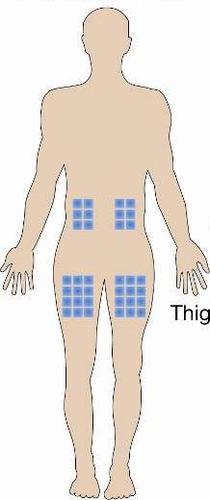
- If someone is helping you with the injection, they can also inject into the back of your arms, just below the shoulder. Abdomen
- Change the injection site with each injection. This can reduce the risk of developing injection site irritation.
- Do not inject into skin that is sensitive, bruised, red, hard, with Thighscars or where you have stretch marks. If you have psoriasis, try not to inject directly into any patches or raised, thick, red or scaly lesions.
Injecting the solution
Remove the pre-filled syringe with pre-fitted safety needle from the pack at room temperature.
- 2. Disinfection

Choose an injection site and disinfect with an
alcohol-soaked swab. Wait at least 60
seconds to allow the disinfectant to
dry.
- 3. Ensure the system is intact/undamaged
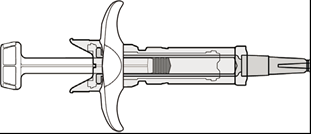
Do not use the product:
- If you notice damage (breakage of the syringe or safety needle) or leakage of components;
- If the safety needle is in the safety position before use as shown in figure 7 because this indicates that the system has already been used. In general, the product should not be used if it does not conform to the figure on the left side. In this case, dispose of the product in appropriate containers for sharp biological hazard waste.
- 4. Remove the protective cap
- Hold the body of the safety needle in one hand with the needle pointing away from you and without touching the plunger;
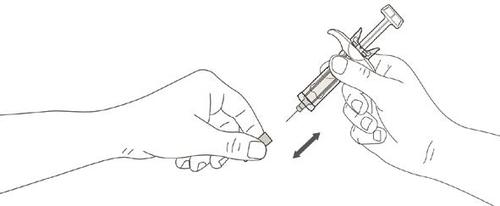
- Pull the needle cap straight off with the other hand;
- After removal, throw the needle cap into a suitable container for sharp biological hazard waste
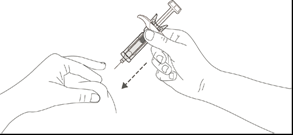
- 5. Insert the needle
- Pinch the skin at the injection site lightly with one hand;
- With the other hand, insert the needle into the injection site without touching the plunger head (90-degree angle)
- 6. Injection
- Place your thumb on the plunger head;
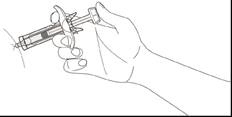
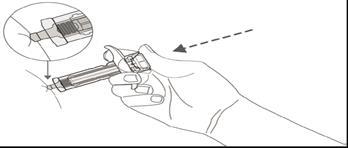
- Press the plunger and push firmlyto the end of the injection to ensure that the syringe is completely emptied. Hold the skin firmly until the injection is finished.
- 7. Plunger protection
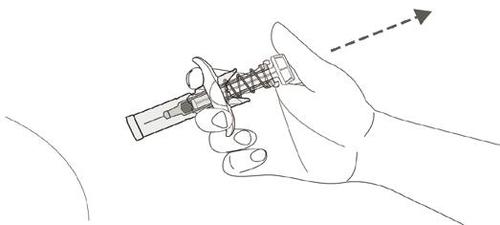
The safety system will be activated once the
plunger is fully depressed:
- Still hold the syringe and slowly lift your thumb off the plunger head;
- The plunger rod moves with the thumb and the spring retracts the needle from the site, into the needle safety casing
- 8. Disposal of the safety needle
Once the syringe has been used, immediately discard the safety device for the needle
in appropriate containers for sharp
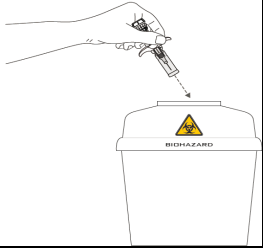
Methotrexate must not come into contact with the surface of the skin or mucous membranes. In case of
contamination, immediately wash the affected area with plenty of water.
If you or someone near you is injured by the needle, consult a doctor immediately and do not use
this pre-filled syringe.
Use and handling
The handling and disposal of the medicine and the pre-filled syringe must be in line with
those of other cytostatic preparations in accordance with local regulations. Pregnant healthcare personnel should not handle and/or administer Metother.

Не уверены, подходит ли вам это лекарство?
Обсудите симптомы и варианты лечения с врачом онлайн.

Уже начали прием и появились вопросы?
Обсудите свое состояние и дальнейшие шаги с врачом онлайн.
- Страна регистрации
- Форма выпускаInjectable solution in pre-filled syringe, 50 MG/ML
- Код АТХL04AX03
- Действующее вещество
- Отпускается по рецептуДа
- Производитель
- Информация на этой странице носит справочный характер и не является медицинской консультацией. Перед началом приема лекарства обязательно проконсультируйтесь с врачом.
- Аналоги METOTERФорма выпуска: Injectable solution, 2.5 MGДействующее вещество: МетотрексатПроизводитель: S.F. GROUP S.R.L.Отпускается по рецептуФорма выпуска: Coated tablet, 2.5 MGДействующее вещество: МетотрексатПроизводитель: PFIZER ITALIA S.R.L.Отпускается по рецептуФорма выпуска: Coated tablet, 2.5 MGДействующее вещество: МетотрексатПроизводитель: Eugia Pharma (Malta) LimitedОтпускается по рецепту
Аналоги METOTER в других странах
Лекарства с тем же действующим веществом, доступные в других странах.
Аналог METOTER в Испания
Аналог METOTER в Польша
Аналог METOTER в Украина
Получите рецепт на METOTER онлайн
Заполните форму за 2 минуты
Расскажите о симптомах, истории болезни и нужном препарате.
Выберите врача или мы назначим
Выберите специалиста или мы подберём ближайшего доступного врача.
Врач рассматривает ваш случай
Обычно в течение 30 минут. Может задать уточняющие вопросы в чате.
Получите в любой аптеке
Электронный рецепт отправляется на вашу почту — действителен по всей Польше.
Часто задаваемые вопросы
METOTER требует рецепта в Италия. Вы можете уточнить у врача онлайн, подходит ли это лекарство для вашей ситуации.
Действующее вещество METOTER — Метотрексат. Эта информация помогает определить лекарства с тем же составом под другими торговыми названиями.
METOTER производится компанией ACCORD HEALTHCARE, S.L.U.. Упаковка и торговое название могут отличаться в зависимости от дистрибьютора.
Врачи, включая Семейные врачи, Психиатры, Дерматологи, Кардиологи, Эндокринологи, Гастроэнтерологи, Пульмонологи, Нефрологи, Ревматологи, Гематологи, Инфекционисты, Аллергологи, Гериатры, Педиатры, Онкологи, могут оценить целесообразность применения METOTER с учетом вашей ситуации и местных правил. Вы можете записаться на онлайн-консультацию, чтобы обсудить возможные варианты.
Польша имеет хорошо развитую систему здравоохранения в крупных городах, таких как Варшава, Краков, Вроцлав и Гданьск. Аптеки широко доступны и работают в соответствии с действующим законодательством, обеспечивая доступ к рецептурным препаратам.
Вы можете купить METOTER в Варшаве, Кракове, Вроцлаве или Гданьске в любой аптеке при наличии действующего рецепта.
Чтобы получить рецепт, вы можете воспользоваться Oladoctor:
Другие лекарства с тем же действующим веществом (Метотрексат) включают IMMUTREX, METOTREXATE, METOTREXATO AUROBINDO. Они могут отличаться торговым названием или формой выпуска, но содержат одинаковый терапевтический компонент. Перед изменением лечения рекомендуется проконсультироваться с врачом.
