



LITAK 2 мг/мл Инъекционный раствор

Рассмотрение рецепта онлайн
Врач рассмотрит ваш случай и примет решение о назначении рецепта, если это медицински оправдано.

Поговорите с врачом об этом лекарстве
Обсудите симптомы и возможные дальнейшие шаги на онлайн-консультации.



Инструкция по применению LITAK
Содержание инструкции
LITAK 2 mg/ml injectable solution
cladribina
Read this leaflet carefully before using this medicine as it contains important
information for you.
- Keep this leaflet. You may need to read it again.
- If you have any questions, ask your doctor or pharmacist.
- If any side effects occur, including those not listed in this leaflet, tell your doctor or pharmacist. See section 4.
Contents of this leaflet
- 1. What LITAK is and what it is used for
- 2. What you need to know before using LITAK
- 3. How to use LITAK
- 4. Possible side effects
- 5. How to store LITAK
- 6. Contents of the pack and other information
1. What is LITAK and what is it used for
LITAK contains the active ingredient cladribine. Cladribine is a cytostatic agent that acts on the
growth of malignant white blood cells (cancerous), which play a role in hairy cell leukemia. LITAK is used to treat this disease.
2. What you need to know before you use LITAK
Do not use LITAK
- if you are allergic to cladribine or any of the other ingredients of LITAK (listed in section 6)
- in case of pregnancy and during breastfeeding
- if you are under 18 years of age
- if you have moderate to severe kidney or liver failure
- if you are using other medicines that affect the production of blood cells in the bone marrow (myelosuppression).
Warnings and precautions
Talk to your doctor or pharmacist before using LITAK.
At any time during or after treatment, immediately inform your doctor or
nurseif:
you experience blurred vision, loss of vision or diplopia, difficulty speaking, weakness in an arm
or leg, changes in the way you walk or problems with balance, persistent numbness, decreased
sensitivity or loss of sensation, memory loss or confusion. These
may be symptoms of a serious brain disease that can be life-threateningknown
as progressive multifocal leukoencephalopathy (PML).
If you had these symptoms before treatment with cladribine, tell your doctorabout any
change in these symptoms.
Tell your doctor if you have or have had:
- problems with the liver or kidneys
- infections
- if you develop an infection, it will be treated before you start using LITAK.
- if you notice symptoms of infection (such as flu-like symptoms or fever) during or after treatment with LITAK, tell your doctor immediately.
- fever
Before and during treatment with LITAK, you should be regularly subjected to blood tests
to decide whether to continue treatment safely. Your doctor may decide to
give you blood transfusions to improve blood cell levels. Kidney and liver function must also be
monitored.
If you are planning to have children, tell your doctor before starting treatment with
LITAK. Use effective contraception during treatment and for up to 6 months after
treatment with LITAK. Your doctor can advise you on the possibility of freezing
(cryopreserving) sperm.
Other medicines and LITAK
Tell your doctor if you are taking or have recently taken any other medicines, including
those available without a prescription. In particular, tell your doctor if you are using any medicine
containing:
- corticosteroids, commonly used for the treatment of inflammation
- antiviral agents, used for the treatment of viral infections
You should not use LITAK with other medicines that affect the production of blood cells in the
bone marrow (myelosuppression).
Pregnancy and breastfeeding
You must not use LITAK if you are pregnant. Use adequate methods of contraception during therapy
with LITAK and for at least 6 months after the last dose of LITAK. If
pregnancy occurs during treatment, tell your doctor immediately.
Do not breastfeed during treatment with LITAK and for at least six months after the last dose of LITAK.
Driving and using machines
LITAK impairs the ability to drive vehicles or use machines. If you experience drowsiness, which
may be due to a low number of red blood cells caused by treatment with LITAK, or if you feel
dizzy, do not drive or operate machinery.
3. How to use LITAK
Use LITAK following the doctor's instructions exactly at all times. If you have any doubts, consult your doctor or
pharmacist.
Your doctor will calculate the dose based on your body weight and will explain the treatment schedule in detail. The recommended daily dose is 0.14 mg/kg of body weight for 5
consecutive days (single treatment cycle).
LITAK must be injected under the skin (subcutaneous injection), approximately at the same time each
day.
If you inject LITAK yourself, you must first have been adequately trained by your doctor or
You may also receive another medicine containing the active ingredient allopurinol, in order to
reduce excess uric acid.
If you use more LITAK than you should
If you inject an incorrect dose, inform your doctor immediately.
If you forget to use LITAK
Do not inject a double dose to make up for a missed dose. If you forget to inject a
dose, inform your doctor immediately.
If you have any further questions on the use of LITAK, ask your doctor or pharmacist.
4. Possible side effects
Like all medicines, LITAK can cause side effects, although not everybody gets them.
Tell your doctor immediately if you notice any of the following symptoms during or after
treatment with LITAK:
- any sign of infection (e.g. flu-like symptoms)
- fever
The repeated occurrence of malignant diseases (cancer) cannot be ruled out. This means that your
risk of developing a malignant disease in the future is slightly higher than the risk of healthy
individuals. This slightly increased risk may be due to hairy cell leukemia or to the
therapies used to treat the disease, including LITAK.
The following side effects may occur:
Very common side effects (may affect more than 1 in 10 people)
- Infections.
- Fever.
- Low number of certain white blood cells (neutrophils and lymphocytes) and platelets in blood tests.
- Low number of red blood cells, which can cause anemia, with symptoms such as fatigue and drowsiness.
- Reduced function of the immune system.
- Headache, dizziness.
- Abnormal breathing and chest sounds, cough.
- Nausea, vomiting, constipation and diarrhea.
- Skin rash, swelling, redness and tenderness around the injection site, sweating. Skin reactions are generally mild to moderate and usually resolve within a few days.
- Fatigue, chills, loss of appetite.
- Weakness.
Common side effects (may affect up to 1 in 10 people)
- Repeated occurrence of malignant diseases (cancer).
- Low number of platelets, which can cause unusual bleeding (e.g. nosebleeds or skin bleeding).
- Insomnia, anxiety.
- Increased heart rate, abnormal heart sounds, low blood pressure, reduced blood supply to the heart muscle.
- Shortness of breath, fluid accumulation in the lungs due to infection, inflammation of the mouth and tongue.
- Abdominal pain and presence of an excessive amount of gas in the stomach or intestines, generally mild increases in liver laboratory values (bilirubin, transaminases), which return to normal values after the end of treatment.
- Itching, itchy skin rash (urticaria), redness of the skin and pain in the skin.
- Swelling of tissues (edema), malaise, pain (in muscles, joints and bones).
Uncommon side effects (may affect up to 1 in 100 people)
- Anemia caused by the destruction of red blood cells.
- Drowsiness, numbness and tingling on the skin, weakness, inactivity, peripheral nerve disorders, confusion, insufficient ability to coordinate movements.
- Inflammation of the eye.
- Sore throat.
- Inflammation of a vein.
- Severe weight loss.
Rare side effects (may affect up to 1 in 1,000 people)
- Reduced liver function.
- Reduced kidney function.
- Complications caused by cancer treatment, due to the destruction of cancer cells.
- Rejection reaction to blood transfusions.
- Increased number of certain white blood cells (eosinophils).
- Stroke.
- Speech and swallowing disorders.
- Heart failure.
- Abnormal heart rhythm.
- Inability of the heart to maintain adequate blood circulation.
- Intestinal obstruction.
- Severe allergic skin reaction (Stevens-Johnson syndrome or Lyell's syndrome).
Very rare side effects (may affect up to 1 in 10,000 people)
- Depression, epileptic seizure.
- Swelling of the eyelid.
- Blood clot in the lung.
- Inflammation of the gallbladder.
- Reduced organ function due to the presence of large amounts of a certain substance produced by the body (a glycoprotein).
Reporting of side effects
If you get any side effects, talk to your doctor or pharmacist. This includes any side effects not listed
in this leaflet. You can also report side effects directly through the national reporting system detailed in
Appendix V. By reporting side effects you can help provide more information on the safety of this medicine.
5. How to store LITAK
Keep out of the sight and reach of children.
Store in a refrigerator (2°C - 8°C). Do not freeze.
Do not use LITAK after the expiry date which is stated on the label of the vial and on the carton
after Exp. The expiry date refers to the last day of that month.
From a microbiological point of view, unless the method of opening excludes the risk of
microbiological contamination, the medicine must be used immediately. If the product is not
used immediately, the storage times and conditions before use are
the responsibility of the user.
Do not use LITAK if you notice that the vial is damaged or that the solution is not clear or contains
particles.
Any unused medicine and waste derived from this medicine must be disposed of in accordance with
current local regulations.
6. Package Contents and Other Information
What LITAK contains
- The active ingredient is cladribine. Each ml of solution contains 2 mg of cladribine. Each vial contains 10 mg of cladribine in 5 ml of solution.
- The other ingredients are sodium chloride, sodium hydroxide (to adjust the pH), hydrochloric acid (to adjust the pH) and water for injections.
Description of the appearance of LITAK and contents of the pack
LITAK is available in glass vials containing 5 ml of clear and colourless solution.
Packs of 1 or 5 vials. Not all pack sizes may be marketed.
Marketing Authorisation Holder and Manufacturer
Lipomed GmbH
Hegenheimer Strasse 2
D-79576 Weil/Rhein
Germany
For further information on this medicinal product, contact the marketing authorisation holder.
More detailed information on this medicinal product is available on the website of the European
Medicines Agency, http://www.ema.europa.eu .
INSTRUCTIONS FOR INJECTION
This section contains information on how to inject LITAK. It is important that you do not attempt to
inject the medicine yourself before being specifically trained by your doctor or
nurse. Your doctor will tell you how much, how often and when you should inject LITAK.
LITAK must be injected into the tissue located directly under the skin (subcutaneous injection). If
you have any questions about self-injection, ask your doctor or nurse.
LITAK is a cytotoxic medicine and must therefore be handled with caution. If LITAK is not self-
injected by the patient, the use of disposable gloves and protective clothing is recommended during the
handling and administration of LITAK. If LITAK comes into contact with the skin or eyes, immediately
flush the affected area with plenty of water. Pregnant women
should avoid contact with LITAK.
What do I need for the injection?
To perform the subcutaneous self-injection you need:
- a vial of LITAK (or two vials if you need to inject more than 5 ml) Do not use the medicine if the vials are damaged, the solution is not clear or contains particles.
- a sterile syringe (e.g. 10 ml LUER syringe),
- a sterile injection needle (e.g. 0.5 x 19 mm, 25 G x ¾’’),
- cotton balls soaked in alcohol,
- a puncture-proof container for the safe disposal of the used syringe.
What to do before giving yourself a subcutaneous injection of LITAK?
- 1. Before administration, bring LITAK to room temperature.
- 2. Wash your hands thoroughly.
- 3. Find a comfortable and well-lit place and have everything you need at hand.
How should you prepare the injection?
Before giving yourself an injection of LITAK, you must perform the following operations:
- 1. Remove the red protective cap from the LITAK vial. Do not remove the rubber stopper from the vial. Clean the rubber stopper of the vial with a cotton ball soaked in alcohol. Remove the syringe from its packaging without touching the tip. Remove the injection needle from its packaging and firmly attach it to the end of the syringe. Remove the needle protection without touching it.
- 2. Insert the needle and push it through the rubber stopper of the vial and turn the vial and syringe upside down. Make sure the needle tip reaches the solution.
- 3. Draw the correct amount of LITAK into the syringe by pulling back the plunger (your doctor will tell you how many ml of LITAK you need to inject).
- 4. Remove the needle from the vial.
- 5. Make sure there is no residual air in the syringe: point the needle upwards and let the air escape.
- 6. Check that you have drawn up the exact amount.
- 7. Inject immediately.
Where should you give yourself the injection?
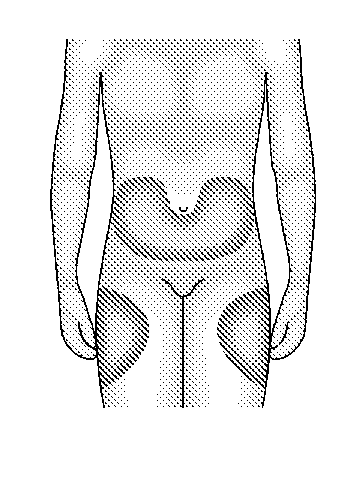
The most suitable places to give yourself an injection
are: the upper thighs and the abdomen,
except for the area around the navel. If another
person is giving you the injection, they can also use
the upper outer arms or the buttocks.
How should you give yourself the injection?
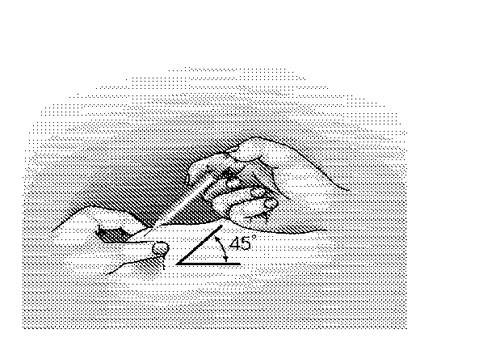
- 1. Disinfect the skin using a cotton ball soaked in alcohol, wait for the area to dry, then lift the skin between your thumb and index finger without compressing it.
- 2. Fully insert the needle into the skin, holding it at an angle of approximately 45°, as shown in the figure.
- 3. Gently pull back the plunger to make sure you have not hit a blood vessel. If there is blood in the syringe, remove the needle and insert it into another place.
- 4. Inject the liquid slowly and evenly for about one minute, keeping the skin lifted between your thumb and index finger.
- 5. After injecting the liquid, remove the needle.
- 6. Place the used syringe in a puncture-proof container. Use a new syringe and needle for each injection. The vials are for single use only. Return any remaining contents after use to your doctor or pharmacist for appropriate disposal.
Disposal of used syringes
Place used syringes in a puncture-proof container and keep them out of the reach and sight of
children.
Dispose of the puncture-proof container according to the instructions given by your doctor, nurse or
pharmacist.
Never throw used syringes into ordinary household waste containers.
ANNEX IV
SCIENTIFIC CONCLUSIONS AND JUSTIFICATION FOR VARIATIONS TO THE
MARKETING AUTHORISATION TERMS
Scientific conclusions
In light of the assessment by the Pharmacovigilance and Risk Assessment Committee
(PRAC) of the Periodic Safety Update Reports (PSUR) for cladribine (except for products indicated for
multiple sclerosis), the PRAC’s scientific conclusions are as follows:
In light of the available data on the excretion of cladribine into human breast milk from the
literature, the PRAC considers that excretion of cladribine into breast milk is at least a
reasonable possibility. The PRAC concluded that the product information for products containing
cladribine (except for products indicated for multiple sclerosis) should be amended accordingly.
Having examined the PRAC recommendation, the Committee for Human Medicinal Products
(CHMP) agrees with the related overall conclusions and with the justification for the recommendation.
Justification for variations to the marketing authorisation terms
Based on the scientific conclusions on cladribine (except for products indicated for multiple
sclerosis), the CHMP considers that the benefit-risk ratio of the medicinal products containing cladribine (except
for products indicated for multiple sclerosis) remains unchanged, subject to the proposed changes to
the product information.
The CHMP recommends the variation of the terms of the marketing authorisations.

Не уверены, подходит ли вам это лекарство?
Обсудите симптомы и варианты лечения с врачом онлайн.

Уже начали прием и появились вопросы?
Обсудите свое состояние и дальнейшие шаги с врачом онлайн.

- Страна регистрации
- Форма выпускаInjectable solution, 2MG/ML
- Код АТХL01BB04
- Действующее вещество
- Отпускается по рецептуДа
- Производитель
- Информация на этой странице носит справочный характер и не является медицинской консультацией. Перед началом приема лекарства обязательно проконсультируйтесь с врачом.
- Аналоги LITAKФорма выпуска: Solution, 10 MG/10 MLДействующее вещество: КладрибинПроизводитель: ATNAHS PHARMA NETHERLANDS BVОтпускается по рецептуФорма выпуска: Infusion solution, 5 MG/MLДействующее вещество: НеларабинПроизводитель: SANDOZ PHARMACEUTICALS D.D.Отпускается по рецептуФорма выпуска: Concentrate for infusion solution, 1 MG/MLДействующее вещество: КлофарабинПроизводитель: MEDAC PHARMA SRLОтпускается по рецепту
Аналоги LITAK в других странах
Лекарства с тем же действующим веществом, доступные в других странах.
Аналог LITAK в Польша
Аналог LITAK в Украина
Аналог LITAK в Испания
Получите рецепт на LITAK онлайн
Заполните форму за 2 минуты
Расскажите о симптомах, истории болезни и нужном препарате.
Выберите врача или мы назначим
Выберите специалиста или мы подберём ближайшего доступного врача.
Врач рассматривает ваш случай
Обычно в течение 30 минут. Может задать уточняющие вопросы в чате.
Получите в любой аптеке
Электронный рецепт отправляется на вашу почту — действителен по всей Польше.
Часто задаваемые вопросы
LITAK требует рецепта в Италия. Вы можете уточнить у врача онлайн, подходит ли это лекарство для вашей ситуации.
Действующее вещество LITAK — Кладрибин. Эта информация помогает определить лекарства с тем же составом под другими торговыми названиями.
LITAK производится компанией LIPOMED GMBH. Упаковка и торговое название могут отличаться в зависимости от дистрибьютора.
Врачи, включая Семейные врачи, Психиатры, Дерматологи, Кардиологи, Эндокринологи, Гастроэнтерологи, Пульмонологи, Нефрологи, Ревматологи, Гематологи, Инфекционисты, Аллергологи, Гериатры, Педиатры, Онкологи, могут оценить целесообразность применения LITAK с учетом вашей ситуации и местных правил. Вы можете записаться на онлайн-консультацию, чтобы обсудить возможные варианты.
Польша имеет хорошо развитую систему здравоохранения в крупных городах, таких как Варшава, Краков, Вроцлав и Гданьск. Аптеки широко доступны и работают в соответствии с действующим законодательством, обеспечивая доступ к рецептурным препаратам.
Вы можете купить LITAK в Варшаве, Кракове, Вроцлаве или Гданьске в любой аптеке при наличии действующего рецепта.
Чтобы получить рецепт, вы можете воспользоваться Oladoctor:
Другие лекарства с тем же действующим веществом (Кладрибин) включают LEUSTATIN, ATRIANKE, KLOFARABINA MEDAK. Они могут отличаться торговым названием или формой выпуска, но содержат одинаковый терапевтический компонент. Перед изменением лечения рекомендуется проконсультироваться с врачом.
