



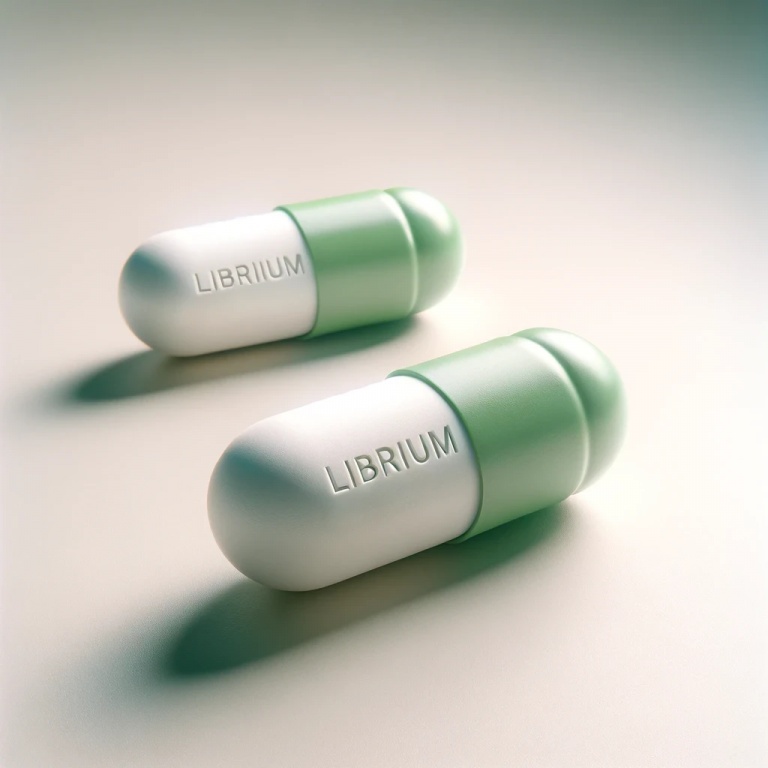
LIBRIUM 10 mg Hard Capsule

Рассмотрение рецепта онлайн
Врач рассмотрит ваш случай и примет решение о назначении рецепта, если это медицински оправдано.

Поговорите с врачом об этом лекарстве
Обсудите симптомы и возможные дальнейшие шаги на онлайн-консультации.



Инструкция по применению LIBRIUM
Содержание инструкции
Librium 10 mg hard capsules
clordiazepoxide hydrochloride
Read this leaflet carefully before taking this medicine as it contains important
information for you.
- Keep this leaflet. You may need to read it again.
- If you have any questions, ask your doctor or pharmacist.
- This medicine has been prescribed for you only. Do not pass it on to others, even if they have the same symptoms as you, as it may be harmful.
- If you get any side effects, even those not listed in this leaflet, tell your doctor or pharmacist. See section 4.
Contents of this leaflet:
- 1. What Librium is and what it is used for
- 2. What you need to know before you take Librium
- 3. How to take Librium
- 4. Possible side effects
- 5. How to store Librium
- 6. Contents of the pack and other information
1. What is Librium and what is it used for
Librium contains the active substance clordiazepoxide hydrochloride, belonging to the class of medicines called
“benzodiazepines”. It has calming properties, reduces states of anxiety, tension and excitement.
Librium is used in adultsfor the treatment of anxiety, tension and the physical and mental manifestations
associated with anxiety. Benzodiazepines are indicated only when the disorder is severe, disabling and
causes the subject severe discomfort.
See your doctor if you do not feel better or if you feel worse.
2. What you need to know before taking Librium
Do not take Librium
- if you are allergic to chlordiazepoxide hydrochloride or any of the other ingredients of this medicine (listed in section 6);
- if you suffer from mental disorders without manifesting anxiety;
- if you suffer from myasthenia gravis (a serious disease that affects the muscles and manifests with weakness and fatigue);
- if you suffer from severe pulmonary insufficiency (a serious reduction in lung function);
- if you are in a coma;
- if you suffer from severe respiratory failure (a serious reduction in the activity of the respiratory system);
- if respiratory depression is present (a serious condition characterized by slow and ineffective breathing);
- if you suffer from severe hepatic insufficiency (a serious liver disease);
- if you suffer from sleep apnea syndrome (temporary cessation of breathing during sleep);
- if you have suffered from alcohol, drug or substance dependence;
- if you suffer from spinal or cerebral ataxia (a movement disorder with loss of coordination of muscles and joints);
- if you have had intoxication from substances or medicines that reduce the activity of the nervous system (alcohol, medicines used to relieve pain, medicines used to treat some disorders of the nervous system).
Do not giveLibrium to children and adolescents (0-18 years of age).
Warnings and precautions
Consult your doctor or pharmacist before taking Librium.
In particular, consult your doctor or pharmacist before taking Librium if you think that one of the following
conditions applies to you:
- suffer from chronic respiratory insufficiency;
- suffer from mental disorders (psychotic illness, phobia, obsessive-compulsive disorders);
- suffer from personality disorders;
- suffer from depression, because Librium may worsen your condition and increase the tendency to suicide (attempting to kill yourself);
- suffer from a decrease in albumin, a substance contained in the blood;
- suffer from hepatic insufficiency (liver disease);
- suffer from renal insufficiency (kidney disease).
If you have to take Librium for a long time, your doctor will periodically check your blood pressure
and will prescribe blood tests to check if there are alterations of the blood cells and the state of
functionality of the liver and kidneys.
Development of tolerance
Following repeated use of this medicine for a few weeks, a decrease in its effectiveness (tolerance) may occur.
Development of dependence
The use of high doses and/or for prolonged periods of chlordiazepoxide can cause physical and psychic dependence, as
happens with other medicines similar to chlordiazepoxide.
This risk is greater if you have previously abused drugs or alcohol, as you are more likely to develop
habit and dependence on this medicine.
When physical dependence has developed, the sudden interruption of taking chlordiazepoxide can
cause withdrawal symptoms and/or rebound symptoms (for more details see section 3 “How to take
Librium”).
Memory disorders (amnesia)
The use of chlordiazepoxide can cause memory disorders. This is more likely to occur several hours after
taking the medicine. Therefore, to reduce the risk, before taking this medicine you must
make sure you can have a sufficient period of uninterrupted sleep of 7-8 hours (see section “How to
take Librium”).
Behavioral reactions (Psychiatric and paradoxical-type reactions)
When using chlordiazepoxide or any benzodiazepine, unexpected behavioral reactions of an anxious or aggressive type may occur (see section 4. Possible side effects). In
this case, immediately stop taking the medicine and consult your doctor. Such reactions
are more frequent in children and the elderly.
If you are elderly
If you are elderly, take Librium as prescribed by your doctor.
This medicine may increase the risk of falls and fractures due to a relaxing effect on the
muscles.
Children and adolescents
Do not giveLibrium to children and adolescents (0-18 years of age).
Other medicines and Librium
Tell your doctor or pharmacist if you are taking, have recently taken or might take any
other medicines.
Tell your doctor or pharmacist if you are taking any of the following medicines because they may increase the
side effects of Librium:
- medicines that reduce the activity of the central nervous systembecause Librium may increase their effect:
- antipsychotics(medicines used for some mental illnesses);
- tranquilizers,because they can increase the relaxing effects and increase the risk of falls, especially if you are elderly;
- anxiolytics/sedatives(medicines that cause physical and mental torpor);
- hypnotics(calming and sleep-inducing medicines);
- antidepressants(medicines used to treat depression);
- narcotic analgesics (medicines for the treatment of acute or chronic pain of high intensity). Furthermore, these medicines taken together with Librium can increase euphoria and physical and psychic dependence;
- antiepileptics(medicines used to treat epilepsy), especially with hydantoins and barbiturates. In this case, the doctor may adjust the dose of Librium in the initial phases of treatment;
- anesthetics;
- antihistamines(medicines used to counteract allergic reactions) with sedative activity.
Tell your doctor or pharmacist if you are taking
- medicines that affect how the liver workssuch as:
- cimetidine(a medicine used for stomach ulcers);
- omeprazole;
- macrolide antibiotics(such as erythromycin);
- disulfiram;
- contraceptives(medicines used to prevent conception), because they can increase the effects of Librium;
- rifampicin, because it decreases the effects of Librium.
- sodium oxybate(medicine used to treat narcolepsy, a nervous system disease), because it increases respiratory depression.
- opioidsThe concomitant use of Librium and opioids (strong painkillers, medicines for substitution therapy for dependence and some medicines for cough) may increase the risk of drowsiness, difficulty breathing (respiratory depression), coma and may be life-threatening. For this reason, concomitant use should be considered only when other treatment options are not possible. However, if your doctor prescribes Librium together with opioids, the dose and duration of concomitant treatment must be limited by the doctor. Tell your doctor about all opioid medicines you are taking and carefully follow your doctor's recommendations on dosage. It may be helpful to inform friends or family to be aware of the signs and symptoms listed above. See a doctor if you experience such symptoms.
Also, tell your doctor if you will have to take one of the following medicines for a long time:
- antihypertensive medicines(medicines used to lower blood pressure);
- beta-blockers, cardiac glycosides(medicines that slow down the heart rate and heart problems);
- anticoagulants(medicines used to thin the blood).
Librium with food, drinks and alcohol
Do notdrink alcohol while taking Librium because the simultaneous intake of alcohol and Librium can
increase the sedative (physical and mental relaxation) effect of this medicine. If you have previously abused
alcohol, the doctor will monitor you during treatment with Librium, as you are more likely to
develop dependence on this medicine.
Taking alcohol with Librium can also lead to a serious impairment of the ability to drive
vehicles and operate machinery (see “Driving and using machines”).
Pregnancy, breastfeeding and fertility
If you are pregnant, suspect you are pregnant or are planning a pregnancy, or if you are breastfeeding, ask your doctor or
pharmacist for advice before taking this medicine.
Pregnancy
Avoid takingLibrium during pregnancy, especially during the first 3 months and the last 3 months of
pregnancy.
The doctor may still prescribe this medicine only if absolutely necessary.
If, for serious health reasons, the doctor decides to prescribe this medicine during the last 3 months
of pregnancy or during labor at high doses, the newborn may experience undesirable effects such as
irregularities in the heart rate, difficulty sucking milk, lowering of the temperature,
reduction of muscle tone and reduction of breathing.
If Librium has been taken for a prolonged and continuous period during the last stages of pregnancy, your
baby may experience physical dependence and withdrawal symptoms (see section 2. What you need to
know before taking Librium).
The risk of malformations with the administration of therapeutic doses of chlordiazepoxide at the beginning of
pregnancy is low. However, some studies report an increased risk of cleft palate malformations. In
case of excessive dosage and chlordiazepoxide poisoning, malformations and mental retardation have been observed in children exposed during the prenatal period.
Breastfeeding
Avoid takingLibrium if you are breastfeeding, as this medicine passes into breast milk.
Fertility
If you intend to become pregnant or suspect you are pregnant, you should contact your doctor who will assess
suspending treatment with this medicine.
Driving and using machines
Do notdrive or operate machinery if you experience side effects such as
sedation (physical and mental relaxation), amnesia (memory disorders), difficulty concentrating and
alteration of muscle function during treatment with Librium. Your vigilance may be altered, especially if you have not slept for
a sufficient time (7-8 hours) after taking Librium.
Librium contains lactose (milk sugar)
If your doctor has diagnosed you with intolerance to some sugars, contact him before taking this
medicine.
3. How to take Librium
Take this medicine following exactly the instructions of your doctor or pharmacist. If you have doubts
consult your doctor or pharmacist.
The doctor will establish the dose and frequency most suitable for you, in order to avoid the possible intake of an
excessive dose of this medicine.
How much to take
The recommended dose is 1 capsule (10 mg) 2-3 times a day, up to 3 capsules (30 mg) a day.
In severe cases, your doctor may prescribe 2 capsules (20 mg) 2-4 times a day.
The doctor may prescribe a higher dose based on the severity of the illness.
Do not exceed the maximum dose, equal to 8 capsules a day (80 mg).
At the doctor's discretion, this dose may be increased up to 300 mg per day.
How
Swallow the tablet with some liquid without chewing.
After taking this medicine, you should plan for a period of about 7-8 hours to rest or sleep.
If you are elderly and/or debilitated or suffer from brain damage or kidney or liver or respiratory disorders
The recommended dose is 1 capsule 1 to 2 times a day.
Duration of treatment
The doctor will prescribe the shortest possible duration of treatment.
Generally, the duration of treatment should not exceed 4 weeks, including a period of gradual withdrawal.
At the beginning of treatment with Librium, the doctor will explain how to gradually reduce the dose of this
medicine in order to reduce the risk of withdrawal and rebound symptoms (see “If you stop taking Librium” and paragraph 4 “Possible side effects”).
In certain cases, the doctor may decide to extend the treatment duration above indicated, after
re-evaluating your health status.
If you take more Librium than you should
In case of ingestion/accidental intake of an excessive dose of Librium, immediately inform
your doctor or go to the nearest hospital.
Symptoms
If you accidentally take a dose of medicine higher than that prescribed, you may be in danger
of life, especially if you also take alcohol or other medicines at the same time.
In mild cases of accidental ingestion/intake of an excessive dose of Librium, the symptoms you may
manifest are:
- drowsiness;
- mental confusion;
- continuous sleep and reduced response to normal stimuli (lethargy).
In more severe cases, the symptoms may be:
- reduced motor and gait coordination (ataxia);
- reduction of muscle tone (hypotonia);
- low blood pressure (hypotension);
- reduced breathing (respiratory depression);
- coma;
- death.
Treatment
The doctor, after evaluating the symptoms, will perform the appropriate supportive therapy (performing gastric
lavage, administration of activated charcoal). Induction of vomiting is not recommended. Due to
the high protein binding and high volume of distribution of chlordiazepoxide, forced diuresis
or hemodialysis appear to be of little value.
The doctor may consider the use of flumazenil (a medicine that works by blocking
the effect of benzodiazepines).
If you are taking medicines to treat depression or suffer from epilepsy, inform your doctor, as in
these cases flumazenil must be used with extreme caution.
In case of excitement, barbiturates should not be used.
If you forget to take Librium
Do not take a double dose to make up for the missed capsule. Take the next dose normally,
as prescribed by your doctor.
If you stop taking Librium
- Do notstop treatment with Librium without first consulting your doctor.
- The doctor will gradually reduce the dose during the phase of discontinuation of therapy.
- Abrupt discontinuation of this medicine can cause:
- withdrawal symptomssuch as depression, headache, muscle pain, muscle weakness, nervousness, extreme anxiety, tension, restlessness, confusion and irritability, mood changes, sweating, diarrhea. In severe cases, you may experience a feeling of detachment or estrangement from yourself or from the outside world, increased sensitivity to sounds, numbness and tingling in the legs or arms, hypersensitivity to light, noise and physical contact, perception of things that do not exist in reality, seizures;
- rebound symptoms(when the symptoms that led to treatment with this medicine reappear in a more severe form after stopping treatment) such as mood changes, anxiety, restlessness or sleep disturbances.
If you have any doubts about the use of Librium, consult your doctor or pharmacist.
4. Possible side effects
Like all medicines, this medicine can cause side effects, although not everybody gets them.
Contact your doctor immediately if you experience the following serious side effects during treatment with Librium; your doctor will explain how to stop using the medicine:
- restlessness, agitation, irritability
- aggression
- delirium
- anger
- nightmares, hallucinations
- psychosis
- inappropriate behaviour, changes in behaviour, manifestation of depression that had not previously appeared
- memory problems (amnesia). This effect occurs more often several hours after taking the medicine and therefore, to reduce the risk, before taking this medicine you should ensure you can have a sufficient period of uninterrupted sleep of 7-8 hours (see “How to take Librium”)
- physical and psychological dependence (see “If you stop taking Librium” and the section “Warnings and precautions”)
- reduced level of consciousness
- emotional disturbances
- depression
- unexpected reactions (paradoxical reactions) for example:
- anxiety
- sleep disturbances, insomnia
- suicidal tendencies
These reactions are more frequent if you are elderly.
The following side effects have been observed and reported during treatment with Librium with the following
frequencies:
Common (may affect up to 1 in 10 people)
- sedation
- dizziness
- drowsiness
- movement disorder with loss of coordination of muscles and joints (ataxia)
- balance disorders
- confusion
- fatigue
Rare (may affect up to 1 in 1,000 people)
- decreased bone marrow function that produces blood cells (e.g. thrombocytopenia, leucopenia, agranulocytosis, pancytopenia)
- headache
- vertigo
- visual disturbances, including double vision
- low blood pressure
- stomach and intestinal disorders
- skin reactions (e.g. skin rash)
- inability of the urinary bladder to empty completely (urinary retention)
- sexual desire disorders (libido disorders), erectile dysfunction
- menstrual problems
Not known (frequency cannot be estimated based on available data)
- allergy
- increased appetite
- difficulty articulating words (dysarthria)
- walking disorders
- extrapyramidal disorders (e.g. tremor, movement difficulties)
- depression of breathing
- yellowing of the skin and whites of the eyes
- increased bilirubin in the blood, a substance that causes a yellowish colour of the skin and eyes
- increased transaminases, substances present in the liver whose increase may indicate liver damage
- increased alkaline phosphatase, a substance present in the blood whose increase may indicate bone damage
- muscle weakness
In addition, you may experience the following side effects for which the frequency is unknown:
- instability
- changes in salivation
- incontinence
Cases of benzodiazepine abuse have been reported.
Reporting of side effects
If you get any side effects, talk to your doctor or pharmacist. This includes any side effects not listed in this leaflet. You can also report side effects directly through the national reporting system at https://www.aifa.gov.it/content/segnalazioni-reazioni-avverse.
By reporting side effects you can help provide more information on the safety of this
medicine.
5. How to store Librium
Keep this medicine out of the sight and reach of children.
Do not store at a temperature above 30 °C.
Do not use this medicine after the expiry date which is stated on the pack after “Exp”. The expiry date refers to the last day of that month.
Do not dispose of any medicine in waste water or household waste. Ask your pharmacist how to dispose of medicines you no longer use. This will help protect the environment.
6. Contents of the pack and other information
What Librium contains
- The active ingredient is clordiazepoxide hydrochloride. Each capsule contains 10 mg of clordiazepoxide hydrochloride.
- The other ingredients are: lactose(see “Librium contains lactose”), talc, starch, gelatin, titanium dioxide, iron oxide (E172).
Description of the appearance of Librium and contents of the packs
It is presented in hard capsules andfor oral use, packaged in blisters of 30 capsules.
Marketing authorisation holder and manufacturer
Marketing authorisation holder
Viatris Italia S.r.l., Via Vittor Pisani, 20 - 20124 Milano - Italy
Manufacturer
Labiana Pharmaceuticals, S.L.U. - Corbera de Llobregat Plant - Barcelona (Spain)

Не уверены, подходит ли вам это лекарство?
Обсудите симптомы и варианты лечения с врачом онлайн.

Уже начали прием и появились вопросы?
Обсудите свое состояние и дальнейшие шаги с врачом онлайн.
- Страна регистрации
- Форма выпускаHard capsule, 10 MG
- Код АТХN05BA02
- Действующее вещество
- Отпускается по рецептуДа
- Производитель
- Информация на этой странице носит справочный характер и не является медицинской консультацией. Перед началом приема лекарства обязательно проконсультируйтесь с врачом.
- Аналоги LIBRIUMФорма выпуска: Tablet, <0.25 mgДействующее вещество: алпразоламПроизводитель: LABORATORI BALDACCI S.P.A.Отпускается по рецептуФорма выпуска: Tablet, 0.25 MGДействующее вещество: алпразоламПроизводитель: AUROBINDO PHARMA (ITALIA) S.R.L.Отпускается по рецептуФорма выпуска: Oral drops, solution, 750 MICROGRAMMI/1 MLДействующее вещество: алпразоламПроизводитель: AUROBINDO PHARMA (ITALIA) S.R.L.Отпускается по рецепту
Аналоги LIBRIUM в других странах
Лекарства с тем же действующим веществом, доступные в других странах.
Аналог LIBRIUM в Польша
Аналог LIBRIUM в Испания
Аналог LIBRIUM в Украина
Врачи онлайн по LIBRIUM
Обсудите применение LIBRIUM и возможные следующие шаги — по оценке врача.







Получите рецепт на LIBRIUM онлайн
Заполните форму за 2 минуты
Расскажите о симптомах, истории болезни и нужном препарате.
Выберите врача или мы назначим
Выберите специалиста или мы подберём ближайшего доступного врача.
Врач рассматривает ваш случай
Обычно в течение 30 минут. Может задать уточняющие вопросы в чате.
Получите в любой аптеке
Электронный рецепт отправляется на вашу почту — действителен по всей Польше.
Часто задаваемые вопросы
LIBRIUM требует рецепта в Италия. Вы можете уточнить у врача онлайн, подходит ли это лекарство для вашей ситуации.
Действующее вещество LIBRIUM — chlordiazepoxide. Эта информация помогает определить лекарства с тем же составом под другими торговыми названиями.
LIBRIUM производится компанией VIATRIS ITALIA S.R.L.. Упаковка и торговое название могут отличаться в зависимости от дистрибьютора.
Врачи, включая Семейные врачи, Психиатры, Дерматологи, Кардиологи, Эндокринологи, Гастроэнтерологи, Пульмонологи, Нефрологи, Ревматологи, Гематологи, Инфекционисты, Аллергологи, Гериатры, Педиатры, Онкологи, могут оценить целесообразность применения LIBRIUM с учетом вашей ситуации и местных правил. Вы можете записаться на онлайн-консультацию, чтобы обсудить возможные варианты.
Польша имеет хорошо развитую систему здравоохранения в крупных городах, таких как Варшава, Краков, Вроцлав и Гданьск. Аптеки широко доступны и работают в соответствии с действующим законодательством, обеспечивая доступ к рецептурным препаратам.
Вы можете купить LIBRIUM в Варшаве, Кракове, Вроцлаве или Гданьске в любой аптеке при наличии действующего рецепта.
Чтобы получить рецепт, вы можете воспользоваться Oladoctor:
Другие лекарства с тем же действующим веществом (chlordiazepoxide) включают ALPRATSIG, ALPRATSOLAM AUROBINDO ITALIA, ALPRATSOLAM AUROBINDO PARMA ITALIA. Они могут отличаться торговым названием или формой выпуска, но содержат одинаковый терапевтический компонент. Перед изменением лечения рекомендуется проконсультироваться с врачом.
