



LATANOSTILL 50 МКГ/МЛ Капли глазные, раствор

Рассмотрение рецепта онлайн
Врач рассмотрит ваш случай и примет решение о назначении рецепта, если это медицински оправдано.

Поговорите с врачом об этом лекарстве
Обсудите симптомы и возможные дальнейшие шаги на онлайн-консультации.



Инструкция по применению LATANOSTILL
Содержание инструкции
Package leaflet: information for the user
Latanostill 50 micrograms/ml eye drops, solution
Latanoprost
Generic medicine
Read this leaflet carefully before you start using this medicine. Even
if you have already used Latanostill or a similar medicine, it is advisable to read
this leaflet carefully. The information may have been modified.
- Keep this leaflet. You may need to read it again.
- If you have any questions, ask your doctor or the doctor treating your child, or your pharmacist.
- This medicine has been prescribed only for you or your child. Do not give it to other people. It may be dangerous for other individuals, even if their symptoms are the same as yours.
- If any of the side effects gets worse, or if you notice any side effect not listed in this leaflet, tell your doctor or the doctor treating your child, or your pharmacist. See section 4.
Contents of this leaflet:
- 1. What Latanostill is and what it is used for
- 2. Before using Latanostill
- 3. How to use Latanostill
- 4. Possible side effects
- 5. How to store Latanostill
- 6. Further information
1. What is LATANOSTILL and what is it used for
Latanostill belongs to the category of medicines known as prostaglandin analogues. Latanostill works by increasing the natural outflow of fluid from inside the eye into the bloodstream.
Latanostill is used in the treatment of conditions known as open-angle glaucomaand ocular hypertension. Both of these conditions are linked to an increase in intraocular pressure, ultimately altering vision.
Latanostill is also used in the treatment of elevated intraocular pressure and glaucoma in children of all ages and in infants.
2. Before using LATANOSTILL
Latanostill can be used in adult women and men (including the elderly) and in children from birth to 18 years. The use of Latanostill in premature infants (with a gestational age of less than 36 weeks) has not been investigated.
Do not use Latanostill
- if you are allergic (hypersensitive) to the active ingredient or to any of the other ingredients of Latanostill (see section 6 for the complete list of excipients)
- if you are pregnant or planning a pregnancy
- if you are breastfeeding.
Take special care with Latanostill
Talk to your doctor or the doctor caring for your child, or your pharmacist before using Latanostill or before giving this medicine to your child if you think that any of the following conditions apply to you or your child:
- if you or your child are about to undergo or have undergone eye surgery (including cataract surgery);
- if you or your child have eye problems (such as eye pain, irritation or inflammation, blurred vision);
- if you or your child suffer from dry eyes;
- if you or your child have severe asthma or if asthma is not well controlled;
- if you or your child use contact lenses. You can still use Latanostill following the instructions for contact lens wearers in section 3;
- if you have suffered or are currently suffering from a viral eye infection caused by the Herpes Simplex virus (HSV).
Using Latanostill with other medicines
Latanostill can interact with other medicines. Tell your doctor or the doctor caring for your child, or your pharmacist if you or your child are taking or have recently taken any other medicines, including medicines (or eye drops) without a prescription.
Pregnancy
Do not use Latanostill during pregnancy. Tell your doctor immediately if you are pregnant, if you think you may be pregnant, or if you are planning a pregnancy.
Breastfeeding
Do not useLatanostill during breastfeeding.
Driving and using machines
When using Latanostill you may experience transient blurred vision.
If this happens, do not drive or use equipment or machinery until your vision is clear again.
Important information about some ingredients of Latanostill
Latanostill contains a preservative called benzalkonium chloride. This preservative can cause eye irritation or abrasion of the eye surface.
Benzalkonium chloride can be absorbed by contact lenses and is known to cause a change in the colour of soft contact lenses. You should therefore avoid contact of the medicine with soft contact lenses.
If you or your child wear contact lenses, you should remove them before applying Latanostill. After applying Latanostill, you should wait 15 minutes before putting your contact lenses back in. For instructions for contact lens wearers, see section 3.
3. How to use LATANOSTILL
Use Latanostill following always exactly the instructions of your doctor or the
doctor who is treating your child. If you have doubts consult your doctor or the
doctor who is treating your child or the pharmacist.
The usual dose in adults (including the elderly) and in children is one drop
once a day in the eye(s) to be treated. The optimal time for
administration is in the evening.
Do not use Latanostill more than once a day, as the effectiveness of the treatment
may be reduced if the medicine is administered more frequently.
Use Latanostill as your doctor, or the doctor who is treating your
child, has indicated, until the doctor tells you to stop the treatment.
Contact lens wearers
If you or your child wear contact lenses, you must remove them before
applying Latanostill. After applying Latanostill, you must
wait 15 minutes before re-applying the contact lenses.
Instructions for use
Latanostill is intended for ocular use.
The steps below are intended for correct use of Latanostill:
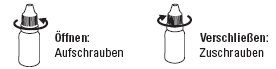
- 1. To open the container, unscrew the cap.
- 2. Wash your hands and sit or assume a comfortable position
- 3. Tilt your head back and lower your lower eyelid slightly to
form a pocket between eyelid and eye.
- 4. Gently press the inverted bottle until it dispenses a single drop into the eye. Avoid touching the eye, eyelid or any other object with the tip of the dropper. Keep the affected eye closed, and press with your finger against the corner of the closed eye (the point where the eye touches the nose) for one minute.
- 5. Repeat steps 3 and 4 with the other eye if the doctor has prescribed it.
Immediately close the bottle after use by screwing the cap back on until
it adheres firmly to the container. Do not overtighten.
The dropper tip is designed to deliver a drop of volume
preset; therefore do not enlarge the hole of the dropper. After instilling all
doses, some Latanostill will remain in the bottle. You should not worry about this. The
bottle actually contains an excess of Latanostill in addition to the amount prescribed by
the doctor. Do not attempt to remove the excess medicine from the bottle.
If you use Latanostill with another eye drop
Wait at least 5 minutes between administering Latanostill and
administering another eye drop.
If you use more Latanostill than you shouldPutting too many drops in your eyes can
lead to mild irritation, tearing and redness of the eyes. These
effects should be transient, but if you are concerned, contact your doctor or the
doctor who is treating your child for advice.
Contact your doctor as soon as possible if you or your child have accidentally ingested
Latanostill.
If you forget to use Latanostill
Continue taking the usual dose at the usual time. Do not use a
double dose to make up for a missed dose.
If you have doubts, consult your doctor or pharmacist.
If you stop treatment with Latanostill
You should inform your doctor or the doctor who is treating your child if
you intend to stop treatment with Latanostill.
4. Possible side effects
Like all medicines, Latanostill can cause side effects, although not everyone gets them.
The following are known side effects with the use of Latanostill:
Very common (may affect more than 1 in 10 people):
Effects on the eye(s)
- Gradual change in eye color due to an increase in the amount of brown pigment in the colored part of the eye called the iris. This change is more likely if your eyes have a mixed color (blue-brown, gray-brown, yellow-brown, or green-brown) rather than a uniform color (blue, gray, green, or brown eyes). Any change in eye color may occur after years, although it generally appears within the first 8 months of treatment. The color change may be permanent and may be more noticeable
if you use Latanostill in only one eye. It appears that there are no problems
associated with the change in eye color. After stopping the
treatment with Latanostill, no further change in eye color has been observed
- Redness of the eyes.
- Eye irritation [burning sensation, feeling of grit, itching, stinging pain (pinprick sensation) or a feeling of something in the eyes].
- Gradual change in the eyelashes of the treated eye and change in the fluff around the treated eye, observed mostly in people of Japanese origin. These changes include an increase in darkening, lengthening, thickening and densification of the eyelashes.
Common (may affect up to 1 in 10 people):
Effects on the eye(s)
Irritation or abrasion of the eye surface, inflammation of the eyelid margin (blepharitis), eye pain and sensitivity to light (photophobia).
Uncommon (may affect up to 1 in 100 people):
Effects on the eye(s)
Swelling of the eyelids, dry eyes, inflammation or irritation of the
eye surface (keratitis), blurred vision and conjunctivitis.
Effects on the skin
Skin rash.
Rare (may affect up to 1 in 1,000 people):
Effects on the eye(s):
Inflammation of the iris, the colored part of the eye (iritis/uveitis), swelling
of the retina (macular edema), symptoms related to swelling or
abrasion/damage to the eye surface, swelling of the area
around the eyes (periorbital edema), altered orientation of the eyelashes or
abnormal eyelash growth.
Skin reactions on the eyelids, darkening of the skin of the eyelids.
Effects on the respiratory tract:asthma, worsening of asthma and shortness of breath
(dyspnea).
Very rare (may affect up to 1 in 10,000 people):
Effects on the eye(s):sunken appearance of the eye (hollowing of the
eye socket)
Effects on the heart: worsening of angina in patients already suffering from a heart
disease
Systemic effects:chest pain.
Patients have also reported the following side effects:
Development of a viral eye infection caused by the herpes simplex
virus (HSV)
Effects on the eye(s): area filled with fluid in the colored
part of the eye (iris cyst).
Effects on the heart: awareness of heartbeat (palpitations).
Infections/infestations:herpetic keratitis.
Effects on the nervous system: headache, dizziness.
Effects on muscles and connective tissue: muscle pain, joint pain.
The side effects observed more frequently in children compared to
adults have been: runny and itchy nose, fever.
In very rare cases, some patients with severe damage to the transparent layer in the
front part of the eye (the cornea) have developed cloud-like spots on the cornea, due to calcium accumulation during treatment.
Reporting of side effects
If you get any side effects, even those not listed in
this leaflet, tell your doctor or pharmacist. You can also report side effects directly
through the national reporting system
at www.agenziafarmaco.gov.it/content/come-segnalare-
una-sospetta-reazione-avversa .
By reporting side effects you can help provide more
information on the safety of this medicine.
5. How to store Latanostill
KEEP OUT OF THE SIGHT AND REACH OF CHILDREN.
Do not use Latanostill after the expiry date which is reported on the bottle and
on the packaging. The expiry date refers to the last day of that month.
Store the unopened bottle in a refrigerator at a temperature
between +2° and +8°C. Once opened, store the bottle at room
temperature up to 25°C for 4 weeks. Do not use Latanostill for a period
longer than 4 weeks from the date of first opening.
Do not dispose of any medicine in waste water or household waste. Ask your
pharmacist how to dispose of medicines you no longer use. In this way
you will contribute to protecting the environment.
6. Other information
What Latanostill contains
- The active ingredient is latanoprost. Each ml contains 50 micrograms of latanoprost
- The other components are: Sodium chloride, Benzalkonium chloride, 10% p/p solution
Disodium hydrogen phosphate dihydrate
Disodium phosphate dodecahydrate
Sodium hydroxide solution 10% p/v and/or phosphoric acid solution 10%
p/v
Purified water.
Description of the appearance of Latanostill and contents of the pack
Latanostill is an aqueous ophthalmic solution (eye drops), buffered, isotonic and
sterile containing latanoprost for exclusive ophthalmic use. It is available in sterile
bottles with droppers and plastic caps. Each bottle contains 2.5 ml of
solution and is packaged in a cardboard box. Each bottle with
dropper contains 2.5 ml of eye drops. Each box contains a single
bottle.
Marketing Authorisation Holder and manufacturer
BRUSCHETTINI SRL VIA ISONZO, 6 - 16147 GENOVA ITALIA
This medicinal product is authorised in the Member States of the European
Economic Area with the following denominations:
Portugal: Latanoprost Bruschettini
Italy: Latanostill

Не уверены, подходит ли вам это лекарство?
Обсудите симптомы и варианты лечения с врачом онлайн.

Уже начали прием и появились вопросы?
Обсудите свое состояние и дальнейшие шаги с врачом онлайн.
- Страна регистрации
- Форма выпускаEye drops, solution, 50 MICROGRAMMI/ML
- Код АТХS01EE01
- Действующее вещество
- Отпускается по рецептуДа
- Производитель
- Информация на этой странице носит справочный характер и не является медицинской консультацией. Перед началом приема лекарства обязательно проконсультируйтесь с врачом.
- Аналоги LATANOSTILLФорма выпуска: Emulsion eye drops, 50 ?g / mlДействующее вещество: ЛатанопростПроизводитель: SANTEN OYОтпускается по рецептуФорма выпуска: Eye drops, solution, 50 MICROGRAMMI/MLДействующее вещество: ЛатанопростПроизводитель: OMNIVISION ITALIA SRLОтпускается по рецептуФорма выпуска: Eye drops, solution, 0.005 %Действующее вещество: ЛатанопростПроизводитель: ALFA INTES INDUSTRIA TERAPEUTICA SPLENDORE S.R.L.Отпускается по рецепту
Аналоги LATANOSTILL в других странах
Лекарства с тем же действующим веществом, доступные в других странах.
Аналог LATANOSTILL в Испания
Аналог LATANOSTILL в Польша
Аналог LATANOSTILL в Украина
Врачи онлайн по LATANOSTILL
Обсудите применение LATANOSTILL и возможные следующие шаги — по оценке врача.









Получите рецепт на LATANOSTILL онлайн
Заполните форму за 2 минуты
Расскажите о симптомах, истории болезни и нужном препарате.
Выберите врача или мы назначим
Выберите специалиста или мы подберём ближайшего доступного врача.
Врач рассматривает ваш случай
Обычно в течение 30 минут. Может задать уточняющие вопросы в чате.
Получите в любой аптеке
Электронный рецепт отправляется на вашу почту — действителен по всей Польше.
Часто задаваемые вопросы
LATANOSTILL требует рецепта в Италия. Вы можете уточнить у врача онлайн, подходит ли это лекарство для вашей ситуации.
Действующее вещество LATANOSTILL — Латанопрост. Эта информация помогает определить лекарства с тем же составом под другими торговыми названиями.
LATANOSTILL производится компанией BRUSCHETTINI S.R.L.. Упаковка и торговое название могут отличаться в зависимости от дистрибьютора.
Врачи, включая Семейные врачи, Психиатры, Дерматологи, Кардиологи, Эндокринологи, Гастроэнтерологи, Пульмонологи, Нефрологи, Ревматологи, Гематологи, Инфекционисты, Аллергологи, Гериатры, Педиатры, Онкологи, могут оценить целесообразность применения LATANOSTILL с учетом вашей ситуации и местных правил. Вы можете записаться на онлайн-консультацию, чтобы обсудить возможные варианты.
Польша имеет хорошо развитую систему здравоохранения в крупных городах, таких как Варшава, Краков, Вроцлав и Гданьск. Аптеки широко доступны и работают в соответствии с действующим законодательством, обеспечивая доступ к рецептурным препаратам.
Вы можете купить LATANOSTILL в Варшаве, Кракове, Вроцлаве или Гданьске в любой аптеке при наличии действующего рецепта.
Чтобы получить рецепт, вы можете воспользоваться Oladoctor:
Другие лекарства с тем же действующим веществом (Латанопрост) включают KATIOLANTSE, DROPLATAN, GALAXIA. Они могут отличаться торговым названием или формой выпуска, но содержат одинаковый терапевтический компонент. Перед изменением лечения рекомендуется проконсультироваться с врачом.
