



KLEDER 2.5 мг Капсулы

Рассмотрение рецепта онлайн
Врач рассмотрит ваш случай и примет решение о назначении рецепта, если это медицински оправдано.

Поговорите с врачом об этом лекарстве
Обсудите симптомы и возможные дальнейшие шаги на онлайн-консультации.



Инструкция по применению KLEDER
Содержание инструкции
KLEDER 2.5 mg hard capsules, 5 mg hard capsules, 7.5 mg hard capsules, 10 mg hard capsules, 15 mg hard capsules, 20 mg hard capsules
KLEDER 25 mg hard capsules
Lenalidomide
Generic medicine
Read this leaflet carefully before you start taking this medicine because it contains important information for you.
- Keep this leaflet. You may need to read it again.
- If you have any questions, ask your doctor or pharmacist.
- This medicine has been prescribed for you only. Do not pass it on to others, even if they have the same symptoms as you, as it may be harmful.
- If you get any side effects, even those not listed in this leaflet, tell your doctor or pharmacist. See section 4.
Contents of this leaflet
- 1. What KLEDER is and what it is used for
- 2. What you need to know before you take KLEDER
- 3. How to take KLEDER
- 4. Possible side effects
- 5. How to store KLEDER
- 6. Contents of the pack and other information
1. What is KLEDER and what is it used for
What is KLEDER
KLEDER contains the active ingredient “lenalidomide”. This medicine belongs to a group of
medicines that affect the functioning of the immune system.
What is KLEDER used for
KLEDER is used in adults for the treatment of:
- Multiple myeloma
- Follicular lymphoma
Multiple myeloma
Multiple myeloma is a type of cancer that affects a certain type of white blood cells, called plasma cells.
These cells collect in the bone marrow and divide uncontrollably. This can damage the
bones and kidneys.
Multiple myeloma is generally incurable. However, the signs and symptoms can be significantly reduced or
disappear for a certain period. This result is called “response”.
Newly diagnosed multiple myeloma in patients who have undergone bone marrow transplantation
KLEDER is used alone as maintenance therapy in patients who have adequately recovered after bone marrow transplantation.
Newly diagnosed multiple myeloma - in patients who cannot undergo bone marrow transplantation
KLEDER is taken with other medicines: These include:
- a chemotherapy medicine called “bortezomib”,
- an anti-inflammatory medicine called “dexamethasone”,
- a chemotherapy medicine called “melphalan” and
- an immunosuppressant medicine called “prednisone”. You will take these other medicines at the beginning of treatment and then continue to take KLEDER alone. If you are 75 years of age or older or have moderate to severe kidney problems, your doctor will monitor you closely before starting treatment.
Multiple myeloma - in patients already treated
KLEDER is taken together with an anti-inflammatory medicine called “dexamethasone”.
KLEDER can stop the worsening of the signs and symptoms of multiple myeloma. It has also
been shown to delay the recurrence of multiple myeloma after treatment.
Follicular lymphoma (FL)
FL is a slow-growing form of cancer that affects B lymphocytes, a type of white blood cell that helps the
body fight infections. In the presence of FL, an excessive number of these B lymphocytes can accumulate in the blood, bone marrow, lymph nodes, and spleen.
KLEDER is taken together with another medicine called “rituximab” for the treatment of adult patients with previously treated follicular lymphoma.
How KLEDER works
KLEDER acts on the body's immune system and directly on the tumor, in several ways:
- stopping the development of cancer cells
- stopping the growth of blood vessels in the tumor
- stimulating part of the immune system to attack cancer cells
2. What you need to know before taking KLEDER
you must take in association with KLEDER.
Do not take KLEDER:
- if you are pregnant, think you may be, or are planning a pregnancy, because it is expectedthat KLEDER is harmful to the fetus(see paragraph 2, ‘Pregnancy, breastfeeding and contraception – information for women and men’).
- If there is a possibility that you may become pregnant unless you follow all the necessary measures to avoid pregnancy (see paragraph 2 ‘Pregnancy, breastfeeding and contraception - information for women and men’). If there is a possibility that you may become pregnant, on each prescription the doctor will take note and confirm to you that the necessary measures to avoid pregnancy have been adopted.
- If you are allergic to lenalidomide or any of the other ingredients of this medicine listed in paragraph 6. If you think you are allergic, ask your doctor for advice.
If you think you fall into any of these cases do not take KLEDER If you have doubts consult your doctor.
Warnings and precautions
Talk to your doctor, pharmacist or nurse before taking KLEDER if:
- you have had episodes of blood clot formation in the past - because during treatment the risk of blood clot formation in the veins and arteries increases;
- you have any signs of infection, such as cough or fever;
- you have or have had in the past a viral infection, in particular: hepatitis B infection, shingles, HIV. If in doubt, consult your doctor. Treatment with KLEDER may cause reactivation of the virus in patients carrying the virus, resulting in recurrence of the infection. The doctor must check if you have had a hepatitis B infection in the past;
- you have kidney problems - the doctor may adjust the dose of KLEDER;
- you have had a heart attack, have had a blood clot, or if you smoke, have high blood pressure or high cholesterol levels;
- you have had an allergic reaction during treatment with thalidomide (another medicine for the treatment of multiple myeloma), such as rash, itching, swelling, dizziness or difficulty breathing;
- you have had in the past any combination of the following symptoms: widespread rash, skin redness, high body temperature, flu-like symptoms, increased liver enzymes, blood abnormalities (eosinophilia), swollen lymph nodes; these are signs of a serious skin reaction called drug reaction with eosinophilia and systemic symptoms, also known as DRESS or drug hypersensitivity syndrome (see also paragraph 4 “Possible side effects”). If any of these conditions apply to you, tell your doctor, pharmacist or nurse before starting treatment.
At any time during or after treatment, immediately inform your doctor or nurse if:
- you experience blurred vision, loss of vision or diplopia, difficulty speaking, weakness in an arm or leg, changes in the way you walk or problems with balance, persistent numbness, decreased sensitivity or loss of sensation, memory loss or confusion. These may be symptoms of a serious brain condition that can be fatal, known as progressive multifocal leukoencephalopathy (PML). If you had these symptoms before treatment with lenalidomide, tell your doctor of any changes in these symptoms;
- you experience shortness of breath, fatigue, dizziness, chest pain, rapid heartbeat or swelling in the legs or ankles. These may be symptoms of a serious condition known as pulmonary hypertension (see paragraph 4).
Tests and checks
Before and during treatment with KLEDER you will undergo regular blood tests This is because
KLEDER can cause a reduction in blood cells that defend you from infections (white blood cells) and those that promote blood clotting (platelets). The doctor will ask you to undergo blood tests:
- before treatment
- every week for the first 8 weeks of treatment
- then at least once a month thereafter
You may be evaluated for signs of cardiopulmonary problems before and during treatment with lenalidomide.
For patients with MDS who are taking KLEDER
If you suffer from MDS, you are more likely to develop a more advanced disease called acute myeloid leukemia (AML). Furthermore, the role of KLEDER in the probability of developing AML is not known. The doctor may ask you for some tests to check the signs that could more accurately predict the probability that you will develop AML during treatment with KLEDER.
For patients with MCL who are taking KLEDER
The doctor will ask you to undergo a blood test:
- before treatment;
- once a week for the first 8 weeks (2 cycles) of treatment;
- then every 2 weeks in cycles 3 and 4 (for further information see paragraph 3 “Treatment cycle”);
- subsequently at the start of each cycle and
- at least once a month.
For patients with LF who are taking KLEDER
The doctor will ask you to undergo blood tests:
- before treatment
- every week for the first 3 weeks (1 cycle) of treatment
- then every 2 weeks in cycles 2 to 4 (for further information see paragraph 3 “Treatment cycle”)
- subsequently at the start of each cycle and
- at least once a month.
The doctor may check if you have a high tumor burden throughout the body, including in the bone marrow.
This may cause a disease in which tumors break down and cause the presence of unusual levels of
chemicals in the blood, which can lead to kidney failure (this disease is called
“tumor lysis syndrome”).
The doctor may check for changes on the skin, such as red spots or rashes.
The doctor may decide to adjust the dose of KLEDER or stop treatment depending on the
results of blood tests and your overall condition. If you are a newly diagnosed patient, the
doctor may also assess the treatment based on your age and any other conditions you may already
have.
Blood donation
You must not donate blood during treatment and for one week after stopping treatment.
Children and adolescents
KLEDER is not recommended for use in children and adolescents under 18 years of age.
Elderly and people with kidney problems
If you are 75 years of age or older or have moderate to severe kidney problems, your doctor will subject you to
careful checks before starting treatment.
Other medicines and KLEDER
Tell your doctor or nurse if you are taking or have recently taken any other medicines. This is because
KLEDER can affect the mechanism of action of other medicines. Some other medicines can also affect the
mechanism of action of KLEDER.
In particular, tell your doctor or nurse if you are taking any of the following medicines:
- some medicines used to prevent pregnancy, such as oral contraceptives, because they may no longer be effective;
- some medicines used for heart problems, such as digoxin;
- some medicines used to thin the blood, such as warfarin.
Pregnancy, breastfeeding and contraception – information for women and men
Pregnancy
For women taking KLEDER
- You must not take KLEDER if you are pregnant, as this medicine is expected to be harmful to the fetus.
- During treatment with KLEDER you must not become pregnant. If there is a possibility of becoming pregnant, you must use effective contraceptive methods (see the “Contraception” paragraph).
- If you become pregnant during treatment with KLEDER, you must stop treatment immediately and inform your doctor.
For men taking KLEDER
- If your partner becomes pregnant while you are taking KLEDER, immediately inform your doctor. Your partner is also recommended to contact the doctor.
- In addition, you must use effective contraceptive methods (see the “Contraception” paragraph).
Breastfeeding
You must not breastfeed while taking KLEDER, as it is not known whether KLEDER passes into breast milk.
Contraception
For women taking KLEDER
Before starting treatment, ask your doctor if there is a possibility for you to become pregnant,
even if you think it is unlikely.
If there is a possibility of becoming pregnant
- you will have to undergo pregnancy tests under the supervision of your doctor (before each treatment, at least every 4 weeks during treatment and at least 4 weeks after the end of treatment) except in cases where it has been confirmed that the fallopian tubes have been cut and closed to prevent eggs from reaching the uterus (sterilization by tubal ligation) AND
- you must use effective contraceptive methods for at least 4 weeks before starting treatment, during treatment and for at least 4 weeks after stopping treatment. Your doctor will provide you with all the information on appropriate contraceptive methods
For men taking KLEDER
KLEDER passes into human seminal fluid. If there is a possibility that your partner is pregnant or
becomes pregnant and she does not use effective contraceptive methods, you must use condoms
during treatment and for at least 7 days after stopping treatment, even if you have undergone
a vasectomy.
Driving and using machines
Do not drive or use machines if you experience dizziness, fatigue, drowsiness, vertigo or blurred vision after
taking KLEDER.
KLEDER contains lactose and sodium
KLEDER contains lactose. If your doctor has diagnosed you with intolerance to certain sugars, contact him
before taking this medicine.
This medicine contains less than 1 mmol (23 mg) of sodium per capsule, i.e. essentially ’sodium-free’.
[For the 2.5 mg dosage]
KLEDER contains Allura Red AC
KLEDER contains Allura Red AC (E129) which may cause allergic reactions.
[For the 5 mg dosage]
KLEDER contains Sunset Yellow FCF
KLEDER contains Sunset Yellow FCF (E110) which may cause allergic reactions.
[For the 7.5 mg dosage]
KLEDER contains Sunset Yellow FCF
KLEDER contains Sunset Yellow FCF (E110) which may cause allergic reactions.
[For the 10 mg dosage]
KLEDER contains tartrazine, Sunset Yellow FCF and Allura Red AC
KLEDER contains tartrazine (E102), Sunset Yellow FCF (E110) and Allura Red AC (E129) which may
cause allergic reactions.
[For the 15 mg dosage]
KLEDER contains tartrazine and Allura Red AC
KLEDER contains tartrazine (E102) and Allura Red AC (E129) which may cause allergic reactions.
[For the 20 mg dosage]
KLEDER contains Allura Red AC
KLEDER contains Allura Red AC (E129) which may cause allergic reactions.
3. How to take KLEDER
KLEDER must be administered by healthcare professionals experienced in the treatment of multiple myeloma and LF.
- When KLEDER is used for the treatment of multiple myeloma in patients who are not eligible for bone marrow transplantation or who have received prior treatments, it is taken with other medicines (see section 1 “What KLEDER is for”).
- When KLEDER is used for the treatment of multiple myeloma in patients who have undergone bone marrow transplantation, it is taken alone.
- When KLEDER is used to treat follicular lymphoma, it is taken with another medicine called “rituximab”. Always take KLEDER exactly as your doctor has instructed you. If you have any doubts, ask your doctor or pharmacist.
medicines for further information on their use and effects.
Treatment cycle
KLEDER is taken on some days within a 3-week (21-day) period.
- Each 21-day period is called a “treatment cycle”.
- Depending on the day of the cycle, you will take one or more of the medicines. However, there will be some days when you will not take any medicine.
- Once each 21-day cycle is completed, you will need to start a new “cycle” within the next 21 days, or KLEDER is taken on some days within a 4-week (28-day) period.
- Each 28-day period is called a “treatment cycle”.
- Depending on the day of the cycle, you will take one or more of the medicines. However, there will be some days when you will not take any medicine.
- Once each 28-day cycle is completed, you will need to start a new “cycle” within the next 28 days
How much KLEDER to take
Before starting treatment, your doctor will tell you:
- the dose of KLEDER to take
- the dose of the other medicines to take in combination with KLEDER, if prescribed
- on which days of the treatment cycle to take each medicine.
How and when to take KLEDER
- The capsules should be swallowed whole, preferably with water.
- Do not break, open or chew the capsules. If powder from a broken KLEDER capsule comes into contact with the skin, wash the skin immediately and thoroughly with water and soap.
- Healthcare professionals, those providing care to the patient, and family members must wear disposable gloves when handling the blister or the capsule. The gloves should then be carefully removed to avoid skin exposure, placed in a sealable polyethylene bag, and disposed of in accordance with local regulations. Then wash your hands thoroughly with water and soap. Pregnant or potentially pregnant women should not handle the blister or the capsule.
- The capsules can be taken with or without food.
- You should take KLEDER on the scheduled days at approximately the same time.
How to take the medicine
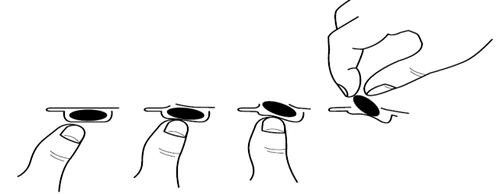
To remove the capsule from the blister:
- press on one side of the capsule only, pushing it through the aluminum foil
- do not press on the center of the capsule, otherwise you risk breaking it.
Duration of treatment with KLEDER
KLEDER is taken in treatment cycles, each lasting 21 or 28 days (see above ‘Treatment cycle’). You should continue the treatment cycles until your doctor tells you to stop treatment.
If you take more KLEDER than you should
If you have taken more KLEDER than you have been prescribed, inform your doctor immediately.
If you forget to take KLEDER
If you forget to take KLEDER at the usual time and
- less than 12 hours have passed - take your capsule immediately.
- more than 12 hours have passed - do not take the forgotten capsule, but take your next capsule the following day at the usual time. If you have any doubts about using this medicine, ask your doctor or pharmacist.
4. Possible side effects
Like all medicines, this medicine can cause side effects, although not everyone gets them.
manifest them.
Stop taking KLEDER and consult your doctor immediately if you experience any of the
following serious side effects – urgent medical treatment may be needed:
- Hives, skin rashes, swelling of the eyes, mouth or face, difficulty breathing or itching, which may be symptoms of severe types of allergic reactions called angioedema and anaphylactic reaction.
- Severe allergic reaction, which may start as a rash in one area but spread with extensive skin loss all over the body (Stevens-Johnson syndrome and/or toxic epidermal necrolysis).
- Extensive rash, high body temperature, increased liver enzymes, blood abnormalities (eosinophilia), enlarged lymph nodes and involvement of other organs (drug reaction with eosinophilia and systemic symptoms, also known as DRESS or drug hypersensitivity syndrome). See also paragraph 2.
Contact your doctor immediately if you experience any of the following side effects:
- fever, chills, sore throat, cough, mouth ulcers or any other symptoms of infection (even within the bloodstream (sepsis));
- bleeding or bruising without injury;
- chest or leg pain;
- shortness of breath;
- bone pain, muscle weakness, confusion or fatigue, which may be due to a high level of calcium in the blood. KLEDER may reduce the number of white blood cells that fight infections and also blood cells that help blood clot (platelets), which can cause bleeding disorders such as nosebleeds and bruising. KLEDER may also cause blood clots in the veins (thrombosis).
Other side effects
It is important to note that a small number of patients may develop other types of cancer and it is possible that
this risk may increase with treatment with KLEDER. Therefore, the doctor must carefully evaluate
the risk/benefit ratio when prescribing KLEDER.
Very commonside effects (may affect more than 1 in 10 people):
- decrease in the number of red blood cells, which can cause anemia and consequently fatigue and weakness;
- skin rashes, itching;
- muscle cramps, muscle weakness, muscle pain, muscle tenderness, bone pain, joint pain, back pain, limb pain;
- generalized swelling, including swelling of the arms and legs;
- weakness, fatigue;
- fever and flu-like symptoms, including fever, muscle pain, headache, earache, cough and chills;
- numbness, tingling or burning sensation on the skin, pain in the hands or feet, dizziness, tremor;
- decreased appetite, altered sense of taste;
- increased pain, size of the tumor or redness around the tumor;
- weight loss;
- constipation, diarrhea, nausea, vomiting, stomach pain, heartburn;
- low levels of potassium or calcium and/or sodium in the blood;
- thyroid insufficiency;
- leg pain (which may be a symptom of thrombosis), chest pain or shortness of breath (which may be symptoms of blood clots in the lungs, so-called pulmonary embolism);
- infections of any kind, including infections of the sinuses surrounding the nose, lungs and upper respiratory tract;
- shortness of breath;
- blurred vision;
- clouding of the vision (cataract);
- kidney problems, including improper functioning of the kidneys or the inability of the kidneys to maintain normal function;
- abnormalities in liver function tests;
- increased values in liver function tests;
- changes in a protein in the blood that can cause inflammation of the arteries (vasculitis);
- increased blood sugar levels (diabetes);
- decreased blood sugar levels;
- headache;
- nosebleeds;
- dry skin;
- depression, mood changes, difficulty sleeping;
- cough;
- low blood pressure;
- vague feeling of discomfort, unwell;
- inflammation of the oral cavity, dry mouth;
- dehydration.
Commonside effects (may affect up to 1 in 10 people):
- destruction of red blood cells in the blood (hemolytic anemia);
- some types of skin cancer;
- bleeding from the gums, stomach or intestines;
- increased blood pressure, slow, fast or irregular heartbeat;
- increased amount of a substance that comes from the normal and abnormal breakdown of red blood cells;
- increase in a type of protein that indicates inflammation in the body;
- darkening of the skin; changes in skin color due to bleeding under the skin, typically caused by bruising; skin swelling due to the presence of blood; bruising;
- increased uric acid in the blood;
- skin rashes, redness of the skin, cracking of the skin, scaling or peeling, hives;
- increased sweating, night sweats;
- difficulty swallowing, sore throat, problems with voice quality or changes in voice;
- runny nose;
- producing much more or less urine than usual or being unable to control the urge to urinate;
- blood in the urine;
- shortness of breath, especially when lying down (which may be a symptom of heart failure);
- difficulty getting an erection;
- stroke, fainting, vertigo (inner ear problem that causes a sensation that everything is spinning), temporary loss of consciousness;
- chest pain that radiates to the arms, neck, jaw, back or stomach, with a feeling of sweating and shortness of breath, nausea or vomiting, which may be symptoms of a heart attack (myocardial infarction);
- muscle weakness, lack of energy;
- neck pain, chest pain;
- chills;
- swelling of the joints;
- slowing or blockage of bile flow from the liver;
- low levels of phosphate or magnesium in the blood;
- difficulty speaking;
- liver damage;
- balance disorders, difficulty moving;
- hearing loss, ringing in the ears (tinnitus);
- nerve pain, altered sensitivity especially to touch;
- excess iron in the blood;
- thirst;
- confusion;
- toothache;
- falls, which can cause injury.
Uncommonside effects (may affect up to 1 in 100 people):
- bleeding inside the skull;
- circulatory problems;
- loss of vision;
- loss of sexual drive (libido);
- abundant urinary flow with pain and bone weakness, which may be symptoms of a kidney disorder (Fanconi syndrome);
- yellowing of the skin, mucous membranes or eyes (jaundice), pale stools, dark urine, itchy skin, skin rash, pain or swelling of the stomach - these may be symptoms of liver damage (liver failure);
- stomach pain, bloating or diarrhea, which may be symptoms of inflammation of the large intestine (called colitis or typhlitis);
- damage to kidney cells (called tubular renal necrosis);
- changes in skin color, sensitivity to sunlight;
- tumor lysis syndrome - metabolic complications that can occur during cancer treatment and sometimes even in the absence of treatment. These complications are caused by the products of the decomposition of cancer cells that are dying and can consist of: changes in hematological parameters; high values of potassium, phosphorus and uric acid; and low values of calcium leading, consequently, to alterations in kidney function, heartbeat, seizures and sometimes death;
- increased blood pressure in the vessels that carry blood to the lungs (pulmonary hypertension).
Side effects with unknown frequency(frequency cannot be estimated on the basis of
available data):
- sudden, or mild but worsening, pain in the upper abdomen and/or back, which persists for several days, with possible nausea, vomiting, fever and rapid pulse; these symptoms may be due to inflammation of the pancreas;
- wheezing, shortness of breath or dry cough, which may be symptoms caused by inflammation of lung tissue;
- rare cases of muscle breakdown (pain, weakness or swelling of the muscles) have been observed, which can cause kidney problems (rhabdomyolysis), some of which when KLEDER is administered with a statin (a type of drug that lowers cholesterol);
- a disease affecting the skin that is caused by inflammation of small blood vessels, with joint pain and fever (leucocytoclastic vasculitis);
- deterioration of the wall of the stomach or intestine, which can cause very serious infections. Tell your doctor if you have severe stomach pain, fever, nausea, vomiting, blood in your stools or changes in bowel habits;
- viral infections, including herpes zoster (also known as “shingles”, a viral disease that causes painful skin rash with blisters) and recurrence of hepatitis B infection (which can cause yellowing of the skin and eyes, brown-colored urine, pain in the stomach on the right side, fever and nausea or vomiting);
- rejection of solid organ transplant (such as kidney, heart).
Reporting of side effects
If you get any side effects, even those not listed in this leaflet, tell your
doctor, pharmacist or nurse. You can also report side effects directly through
the national reporting system at https://www.aifa.gov.it/content/segnalazioni-reazioni-
avverse . By reporting side effects you can help provide more information on the safety of
this medicine.
5. How to store KLEDER
Keep this medicine out of the sight and reach of children.
Do not use this medicine after the expiry date that is stated on the blister or the box after the wording
“EXP.” The expiry date refers to the last day of that month.
This medicine does not require special storage conditions.
Do not use this medicine if the packaging is damaged or shows signs of tampering.
Do not dispose of any medicine in wastewater or household waste. Return any unused medicine
to the pharmacist. This will help protect the environment.
6. Contents of the pack and other information
What KLEDER contains
KLEDER 2.5 mg hard capsules:
- The active ingredient is lenalidomide. Each capsule contains 2.5 mg of lenalidomide.
- The other ingredients are:
- Capsule content: lactose (see section 2), microcrystalline cellulose, sodium croscarmellose and magnesium stearate.
- Capsule shell: Brilliant Blue FCF (E133), Erythrosine (E127), Allura Red AC (E129) (see section 2), red iron oxide (E172), yellow iron oxide (E172), titanium dioxide (E171) and gelatin.
- Printing ink: shellac, propylene glycol (E1520), black iron oxide (E172) and potassium hydroxide.
KLEDER 5 mg hard capsules:
- The active ingredient is lenalidomide. Each capsule contains 5 mg of lenalidomide.
- The other ingredients are:
- Capsule content: lactose (see section 2), microcrystalline cellulose, sodium croscarmellose and magnesium stearate.
- Capsule shell: Brilliant Blue FCF (E133), Sunset Yellow FCF (E110) (see section 2), black iron oxide (E172), red iron oxide (E172), yellow iron oxide (E172), titanium dioxide (E171) and gelatin.
- Printing ink: shellac, propylene glycol (E1520), black iron oxide (E172) and potassium hydroxide.
KLEDER 7.5 mg hard capsules:
- The active ingredient is lenalidomide. Each capsule contains 7.5 mg of lenalidomide.
- The other ingredients are:
- Capsule content: lactose (see section 2), microcrystalline cellulose, sodium croscarmellose and magnesium stearate.
- Capsule shell: Brilliant Blue FCF (E133), Erythrosine (E127), Sunset Yellow FCF (E110) (see section 2), titanium dioxide (E171) and gelatin.
- Printing ink: shellac, propylene glycol (E1520), black iron oxide (E172) and potassium hydroxide.
KLEDER 10 mg hard capsules:
- The active ingredient is lenalidomide. Each capsule contains 10 mg of lenalidomide.
- The other ingredients are:
- Capsule content: lactose (see section 2), microcrystalline cellulose, sodium croscarmellose and magnesium stearate.
- Capsule shell: Brilliant Blue FCF (E133), Allura Red AC (E129) (see section 2), Tartrazine (E102) (see section 2), Sunset Yellow FCF (E110) (see section 2), titanium dioxide (E171) and gelatin.
- Printing ink: shellac, propylene glycol (E1520), black iron oxide (E172) and potassium hydroxide.
KLEDER 15 mg hard capsules:
- The active ingredient is lenalidomide. Each capsule contains 15 mg of lenalidomide.
- The other ingredients are:
- Capsule content: lactose (see section 2), microcrystalline cellulose, sodium croscarmellose and magnesium stearate.
- Capsule shell: Brilliant Blue FCF (E133), Allura Red AC (E129) (see section 2), Tartrazine (E102) (see section 2), black iron oxide (E172), red iron oxide (E172), yellow iron oxide (E172), titanium dioxide (E171) and gelatin.
- Printing ink: shellac, propylene glycol (E1520), black iron oxide (E172) and potassium hydroxide.
KLEDER 20 mg hard capsules:
- The active ingredient is lenalidomide. Each capsule contains 20 mg of lenalidomide.
- The other ingredients are:
- Capsule content: lactose (see section 2), microcrystalline cellulose, sodium croscarmellose and magnesium stearate.
- Capsule shell: Brilliant Blue FCF (E133), Allura Red AC (E129) (see section 2), red iron oxide (E172), yellow iron oxide (E172), titanium dioxide (E171) and gelatin.
- Printing ink: shellac, propylene glycol (E1520), black iron oxide (E172) and potassium hydroxide.
KLEDER 25 mg hard capsules:
- The active ingredient is lenalidomide. Each capsule contains 25 mg of lenalidomide.
- The other ingredients are:
- Capsule content: lactose (see section 2), microcrystalline cellulose, sodium croscarmellose and magnesium stearate.
- Capsule shell: titanium dioxide (E171) and gelatin.
- Printing ink: shellac, propylene glycol (E1520), black iron oxide (E172) and potassium hydroxide.
Description of the appearance of KLEDER and contents of the pack
KLEDER 2.5 mg hard capsules have a dark blue opaque cap and a light orange opaque body, the shell is size No. 4, 14-15 mm, with the inscription "LP" printed with black ink on the cap and "637" on the body.
KLEDER 5 mg hard capsules have a green opaque cap and a brownish opaque body, the shell is size No. 2, 18-19 mm, with the inscription "LP" printed with black ink on the cap and "638" on the body.
KLEDER 7.5 mg hard capsules have a violet opaque cap and a pink opaque body, the shell is size No. 1, 19-20 mm, with the inscription "LP" printed with black ink on the cap and "643" on the body.
KLEDER 10 mg hard capsules have a yellow opaque cap and a grey opaque body, the shell is size No. 0, 21-22 mm, with the inscription "LP" printed with black ink on the cap and "639" on the body.
KLEDER 15 mg hard capsules have a brown opaque cap and a grey opaque body, the shell is size No. 2, 18-19 mm, with the inscription "LP" printed with black ink on the cap and "640" on the body.
KLEDER 20 mg hard capsules have a dark red opaque cap and a light grey opaque body, the shell is size No. 1, 19-20 mm, with the inscription "LP" printed with black ink on the cap and "641" on the body.
KLEDER 25 mg hard capsules have a white opaque cap and a white opaque body, the shell is size No. 0, 21-22 mm, with the inscription "LP" printed with black ink on the cap and "642" on the body.
Cardboard box containing blisters made of polyvinyl chloride (PVC)/polychlorotrifluoroethylene (PCTFE)/aluminium with 7 capsules each.
KLEDER 2.5 mg and 5 mg
Pack of 7 or 21 capsules. Not all pack sizes may be marketed.
KLEDER 7.5 mg, 20 mg and 25 mg
Pack of 21 capsules.
KLEDER 10 mg and 15 mg
Pack of 7 or 21 capsules. Not all pack sizes may be marketed.
Marketing Authorisation Holder and Manufacturers
Marketing Authorisation Holder
EG S.p.A., Via Pavia 6 20136 Milano
Manufacturers
Pharmadox Healthcare Ltd, KW20A Kordin Industrial Park, Paola PLA 3000, Malta
Pharmacare Premium Ltd, HHF003 Hal Far Industrial Estate, Hal Far Birzebbugia BBG 3000, Malta
Alvogen Malta (Out-Licensing) Ltd, Malta Life Sciences Park Building 1, Level 4 Sir Temi Zammit Buildings San Gwann Industrial Estate, San Gwann SGN 3000, Malta
STADA Arzneimittel AG, Stadastrasse 2 – 18 61118 Bad Vilbel, Germany
STADAPHARM GmbH, Feodor-Lynen-Str. 35 30625 Hannover, Germany
This medicinal product is authorised in the Member States of the European Economic Area with the following denominations:
IS Kleder 2.5 mg hard hylki
Kleder 5 mg hard hylki
Kleder 7.5 mg hard hylki
Kleder 10 mg hard hylki
Kleder 15 mg hard hylki
Kleder 20 mg hard hylki
Kleder 25 mg hard hylki
IT Kleder
PL Kleder

Не уверены, подходит ли вам это лекарство?
Обсудите симптомы и варианты лечения с врачом онлайн.

Уже начали прием и появились вопросы?
Обсудите свое состояние и дальнейшие шаги с врачом онлайн.
- Страна регистрации
- Форма выпускаHard capsule, 2.5 MG
- Код АТХL04AX04
- Действующее вещество
- Отпускается по рецептуДа
- Производитель
- Информация на этой странице носит справочный характер и не является медицинской консультацией. Перед началом приема лекарства обязательно проконсультируйтесь с врачом.
- Аналоги KLEDERФорма выпуска: Hard capsule, 2.5 MGДействующее вещество: Леналидомид.Производитель: ACCORD HEALTHCARE, S.L.U.Отпускается по рецептуФорма выпуска: Hard capsule, 2.5 MGДействующее вещество: Леналидомид.Производитель: Eugia Pharma (Malta) LimitedОтпускается по рецептуФорма выпуска: Hard capsule, 2.5 MGДействующее вещество: Леналидомид.Производитель: biocon pharma malta i limitedОтпускается по рецепту
Аналоги KLEDER в других странах
Лекарства с тем же действующим веществом, доступные в других странах.
Аналог KLEDER в Испания
Аналог KLEDER в Польша
Аналог KLEDER в Украина
Получите рецепт на KLEDER онлайн
Заполните форму за 2 минуты
Расскажите о симптомах, истории болезни и нужном препарате.
Выберите врача или мы назначим
Выберите специалиста или мы подберём ближайшего доступного врача.
Врач рассматривает ваш случай
Обычно в течение 30 минут. Может задать уточняющие вопросы в чате.
Получите в любой аптеке
Электронный рецепт отправляется на вашу почту — действителен по всей Польше.
Часто задаваемые вопросы
KLEDER требует рецепта в Италия. Вы можете уточнить у врача онлайн, подходит ли это лекарство для вашей ситуации.
Действующее вещество KLEDER — Леналидомид.. Эта информация помогает определить лекарства с тем же составом под другими торговыми названиями.
KLEDER производится компанией EG S.P.A.. Упаковка и торговое название могут отличаться в зависимости от дистрибьютора.
Врачи, включая Семейные врачи, Психиатры, Дерматологи, Кардиологи, Эндокринологи, Гастроэнтерологи, Пульмонологи, Нефрологи, Ревматологи, Гематологи, Инфекционисты, Аллергологи, Гериатры, Педиатры, Онкологи, могут оценить целесообразность применения KLEDER с учетом вашей ситуации и местных правил. Вы можете записаться на онлайн-консультацию, чтобы обсудить возможные варианты.
Польша имеет хорошо развитую систему здравоохранения в крупных городах, таких как Варшава, Краков, Вроцлав и Гданьск. Аптеки широко доступны и работают в соответствии с действующим законодательством, обеспечивая доступ к рецептурным препаратам.
Вы можете купить KLEDER в Варшаве, Кракове, Вроцлаве или Гданьске в любой аптеке при наличии действующего рецепта.
Чтобы получить рецепт, вы можете воспользоваться Oladoctor:
Другие лекарства с тем же действующим веществом (Леналидомид.) включают LENALIDOMIDE AKKORD, LENALIDOMIDE AUROBINDO, LENALIDOMIDE BIOKON. Они могут отличаться торговым названием или формой выпуска, но содержат одинаковый терапевтический компонент. Перед изменением лечения рекомендуется проконсультироваться с врачом.
