



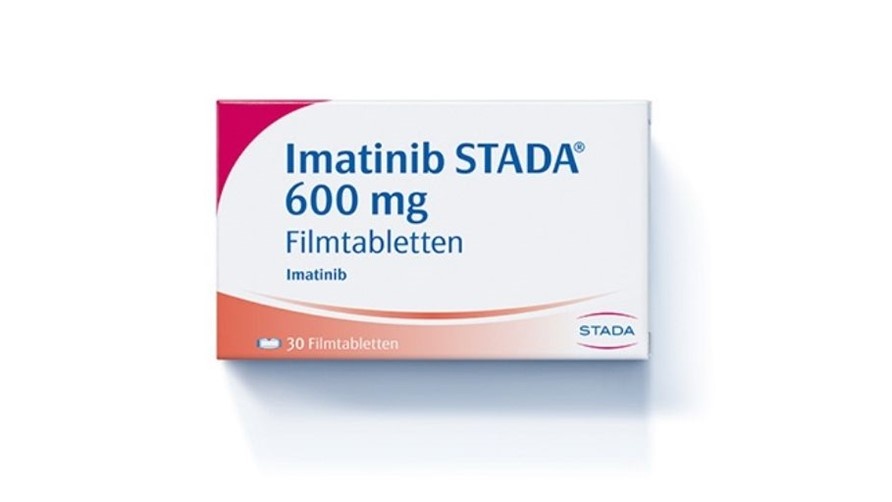
IMATINIB 100 mg Фильм-Coated Таблетки

Рассмотрение рецепта онлайн
Врач рассмотрит ваш случай и примет решение о назначении рецепта, если это медицински оправдано.

Поговорите с врачом об этом лекарстве
Обсудите симптомы и возможные дальнейшие шаги на онлайн-консультации.



Инструкция по применению IMATINIB EG STADA
Содержание инструкции
Imatinib EG STADA 100 mg film-coated tablets, 400 mg film-coated tablets
Generic medicine
Read this leaflet carefully before taking this medicine, as it contains important information for you.
- Keep this leaflet. You may need to read it again.
- If you have any questions, ask your doctor, pharmacist or nurse.
- This medicine has been prescribed for you only. Do not pass it on to others, even if their symptoms are the same as yours, as it could be harmful.
- If you get any side effects, even those not listed in this leaflet, tell your doctor, pharmacist or nurse. See section 4.
Contents of this leaflet
- 1. What is Imatinib EG STADA and what it is used for
- 2. What you need to know before you take Imatinib EG STADA
- 3. How to take Imatinib EG STADA
- 4. Possible side effects
- 5. How to store Imatinib EG STADA
- 6. Contents of the pack and other information
1What is Imatinib EG STADA and what it is used for
Imatinib EG STADA is a medicine containing an active substance called imatinib. In the diseases listed below, this medicine works by inhibiting the growth of abnormal cells. These include some types of cancer.
Imatinib EG STADA is indicated in adult and paediatric patients for the treatment of:
- Chronic myeloid leukaemia (CML). Leukaemia is a cancer of the white blood cells. White blood cells normally help the body to fight infections. Chronic myeloid leukaemia is a form of leukaemia in which certain abnormal white blood cells (called myeloid cells) begin to grow out of control.
- Philadelphia chromosome positive acute lymphoblastic leukaemia (Ph+ ALL). Leukaemia is a cancer of the white blood cells. White blood cells normally help the body to fight infections. Acute lymphoblastic leukaemia is a form of leukaemia in which certain abnormal white blood cells (called lymphoblasts) begin to grow out of control. Imatinib EG STADA inhibits the growth of these cells.
Imatinib EG STADA is also indicated in adult patients for the treatment of:
- Myelodysplastic/myeloproliferative diseases (MDS/MPD). These are a group of blood diseases in which some blood cells begin to grow out of control. Imatinib EG STADA inhibits the growth of these cells in certain subtypes of these diseases.
- Hypereosinophilic syndrome (HES) and/or chronic eosinophilic leukaemia (CEL). These are blood diseases where blood cells (called eosinophils) begin to grow out of control. Imatinib EG STADA inhibits the growth of these cells in a certain subtype of these diseases.
- Gastrointestinal stromal tumours (GIST). GIST is a neoplasm of the stomach and intestine. It originates from the uncontrolled growth of cells that support the tissues of these organs.
- Dermatofibrosarcoma protuberans (DFSP). DFSP is a tumour of the subcutaneous tissue in which some cells begin to grow out of control. Imatinib EG STADA inhibits the growth of these cells.
If you have any questions about how Imatinib EG STADA works or why it has been prescribed for you, ask your doctor.
2. What you need to know before taking Imatinib EG STADA
Imatinib EG STADA will only be prescribed by doctors with experience in medicines for the treatment of
blood cancers and solid tumors.
Follow all the doctor's instructions carefully, even if they differ from the general information contained
in this leaflet.
DO NOT take Imatinib EG STADA
- if you are allergic to imatinib or to any of the other ingredients of this medicine (listed in section 6).
If you are in this situation, consult your doctor before taking Imatinib EG STADA.
If you think you may be allergic but are not sure, ask your doctor for advice.
Warnings and precautions
Talk to your doctor before taking Imatinib EG STADA:
- if you have or have had liver, kidney or heart problems.
- if you are taking the medicine levothyroxine because your thyroid has been removed.
- if you have ever had or may have an ongoing hepatitis B infection. This is because Imatinib EG STADA may cause reactivation of hepatitis B, which in some cases can be fatal. Patients will be carefully examined by the doctor for signs of this infection before starting treatment.
- if you experience bruising, bleeding, fever, fatigue and confusion while taking Imatinib EG STADA, contact your doctor. This may be a sign of blood vessel damage known as thrombotic microangiopathy (TMA). If you are in any of these situations, consult your doctor before taking Imatinib EG STADA.
During treatment with Imatinib EG STADA you may become more sensitive to the sun. It is important to cover the
areas of skin exposed to the sun and use a sunscreen with a high sun protection factor (SPF).
These precautions also apply to children.
During treatment with Imatinib EG STADA, immediately inform your doctorif you gain weight
very quickly. Imatinib EG STADA may cause your body to retain water (severe fluid retention).
While you are taking Imatinib EG STADA, your doctor will need to regularly check if the medicine is
effective. You will also have blood tests and be weighed regularly.
Children and adolescents
Imatinib EG STADA is also a treatment for children with CML. There is no experience in children with
CML under the age of 2 years. There is limited experience in children with Ph+ ALL and very limited experience
in children with MDS/MPD, DFSP, GIST and HES/LEC.
Some children and adolescents taking Imatinib EG STADA may experience slower growth than
normal. The doctor will check growth at regular intervals.
Other medicines and Imatinib EG STADA
Tell your doctor or pharmacist if you are taking, have recently taken or might take any
other medicines, including those available without a prescription (such as paracetamol) and including herbal medicines (such as St. John's wort). Some medicines may interfere with the effect of Imatinib EG
STADA when taken together. They may increase or decrease the effect of Imatinib EG STADA leading to
an increase in side effects or making Imatinib EG STADA less effective. Imatinib EG STADA may
do the same for other medicines.
Tell your doctor if you are using medicines that prevent blood clots from forming.
Pregnancy, breastfeeding and fertility
If you are pregnant, suspect you are pregnant, are planning a pregnancy, or are breastfeeding
ask your doctor for advice before taking this medicine.
- Imatinib EG STADA is not recommended during pregnancy unless it is strictly necessary as it may harm the baby. The doctor will discuss the possible risks of taking Imatinib EG STADA during pregnancy with you.
- Women who may become pregnant are advised to use effective contraception during treatment and for 15 days after the end of treatment.
- Do not breastfeed during treatment with Imatinib EG STADA and for 15 days after the end of treatment, as it may harm the baby.
- Patients who are concerned about their fertility during treatment with Imatinib EG STADA are advised to consult their doctor.
Driving and operating machinery
You may experience dizziness, drowsiness or blurred vision while taking this medicine. If this
happens, do not drive a vehicle or use tools or machinery until you feel well again.
3. How to take Imatinib EG STADA
Your doctor has prescribed Imatinib EG STADA because you suffer from a serious condition. Imatinib EG STADA
can help you fight this condition.
Take this medicine following exactly the instructions of your doctor or pharmacist. It is important
that you do this for the entire time prescribed by your doctor or pharmacist. If you have doubts, consult your doctor or the
pharmacist.
How much Imatinib EG STADA to take
Use in adults
Your doctor will tell you exactly how many tablets of Imatinib EG STADA you will need to take.
- If you are being treated for CML: Depending on your condition, the recommended initial dose is 400 mgor 600 mgto be taken oncea day.
- If you are being treated for GIST:The initial dose is 400 mg, to be taken oncea day.
For CML and GIST, your doctor may prescribe a higher or lower dosage depending on how you respond to the
treatment. If the daily dose is 800 mg, you will need to take 400 mg in the morning and 400 mg in the evening.
- If you are being treated for Ph+ ALL:The initial dose is 600 mg to be taken oncea day.
- If you are being treated for MSD/MPD:The initial dose is 400 mg, to be taken oncea day.
- If you are being treated for HES/LEC:The initial dose is 100 mg, to be taken oncea day. The doctor may decide to increase the dosage to 400 mg, to be taken oncea day, based on your response to treatment.
- If you are being treated for DFSP:The dose is 800 mg per day, to be taken as 400 mg in the morning and 400 mg in the evening.
A dose of 400 mg can be taken as one 400 mg tablet or 4 tablets of 100 mg.
A dose of 600 mg can be taken as one 400 mg tablet plus 2 tablets of 100 mg or as
one 400 mg tablet plus half a 400 mg tablet.
The tablets can be divided in half by breaking them along the fracture line.
Use in children and adolescents
Your doctor will tell you how many tablets of Imatinib EG STADA should be given to the child. The amount of
Imatinib EG STADA given will depend on the child's condition, weight and height. The total daily dose should not exceed 800 mg in children with CML and 600 mg in children with Ph+ ALL. The
treatment can be given to the child as a single daily dose or, alternatively, the daily dose can be divided into two administrations (half in the morning and half in the evening).
When and how to take Imatinib EG STADA
- Take Imatinib EG STADA during a meal.This will help protect your stomach when you take Imatinib EG STADA.
- Swallow the tablets whole with a large glass of water.
If you are unable to swallow the tablets, you can dissolve them in a glass of non-carbonated water or apple juice:
- Use about 50 mL for each 100 mg tablet or 200 ml for each 400 mg tablet.
- Stir with a spoon until the tablets are completely dissolved.
- Once the tablet has dissolved, drink the entire contents of the glass immediately. Residues of the dissolved tablets can be left in the glass.
How long to take Imatinib EG STADA
Continue to take Imatinib EG STADA every day for as long as your doctor tells you.
If you take more Imatinib EG STADA than you should
If you have accidentally taken too many tablets, contact your doctor immediately. You may need
medical assistance. Bring the medicine packaging with you.
If you forget to take Imatinib EG STADA
- If you forget a dose, take it as soon as you remember. However, if it is almost time for the next dose, skip the forgotten dose.
- Then continue with the normal dosage.
- Do not take a double dose to make up for the forgotten dose.
If you stop taking Imatinib EG STADA
Do not stop taking Imatinib EG STADA unless your doctor tells you to. If you are unable to
take the medicine as prescribed by your doctor or if you feel you no longer need it, contact
your doctor immediately.
If you have any doubts about the use of this medicine, ask your doctor, pharmacist or nurse.
4. Possible side effects
Like all medicines, this medicine can cause side effects, although not everyone gets them.
These are generally mild to moderate.
Some side effects can be serious. Tell your doctor immediately if you experience any of the
following effects:
Very common(may affect more than 1 in 10 people) or common(may affect up to 1 in
10 people):
- Rapid weight gain. Imatinib EG STADA can cause your body to retain fluid (severe fluid retention).
- Signs of infection such as fever, severe chills, sore throat or mouth sores. Imatinib EG STADA can reduce the number of white blood cells, so you may be more likely to get infections.
- Unexpected bleeding or bruising (when you haven't injured yourself).
Uncommon(may affect up to 1 in 100) or rare(may affect up to 1 in 1
000):
- Chest pain, irregular heartbeat (signs of heart problems).
- Cough, difficulty breathing or painful breathing (signs of lung problems).
- Feeling lightheaded, dizzy or fainting (signs of low blood pressure).
- Feeling unwell (nausea), with loss of appetite, dark urine, yellowing of the skin or eyes (signs of liver problems).
- Skin rash, red skin with blisters on the lips, eyes, skin or mouth, peeling skin, fever, raised red or purple spots on the skin, itching, burning sensation, pustular rash (signs of skin problems).
- Severe abdominal pain, blood in vomit, stools or urine, black stools (signs of gastrointestinal disorders).
- Significant decrease in the amount of urine, feeling thirsty (signs of kidney problems).
- Feeling unwell (nausea) with diarrhea and vomiting, abdominal pain or fever (signs of intestinal problems).
- Severe headache, weakness or paralysis of the limbs or face, difficulty speaking, sudden loss of consciousness (signs of nervous system problems such as bleeding or swelling in the skull/brain).
- Paleness, feeling tired and short of breath, and dark urine (signs of low red blood cell counts).
- Eye pain or worsening vision, bleeding in the eyes.
- Bone or joint pain (signs of osteonecrosis).
- Blisters on the skin or mucous membranes (signs of pemphigus).
- Numb or cold toes or fingers (signs of Raynaud's syndrome).
- Sudden swelling and redness of the skin (signs of a skin infection called cellulitis).
- Hearing problems.
- Muscle weakness and muscle spasms with an abnormal heartbeat (signs of changes in potassium levels in the blood).
- Bruising (lividi).
- Stomach pain with feeling unwell (nausea).
- Muscle spasms with fever, reddish-brown urine, muscle pain or weakness (signs of muscle problems).
- Pelvic pain sometimes with nausea and vomiting, unexpected vaginal bleeding, feeling dizzy or fainting due to low blood pressure (signs of problems with the ovaries and uterus).
- Nausea, shortness of breath, irregular heartbeat, cloudy urine, fatigue and/or joint disorders associated with abnormal laboratory test results (e.g. high levels of potassium, uric acid and calcium and low levels of phosphorus in the blood).
- Blood clots in small blood vessels (thrombotic microangiopathy).
Not known(frequency cannot be estimated from available data):
- Combination of widespread severe skin reaction, feeling unwell, fever, increased number of certain types of white blood cells or yellowing of the skin or eyes (signs of jaundice) with shortness of breath, chest pain/discomfort, significant decrease in urine production and feeling thirsty, etc. (signs of an allergic reaction related to treatment).
- Chronic kidney failure.
- Recurrence (reactivation) of hepatitis B infection if you have had hepatitis B in the past (a liver infection).
If you experience any of the effects described above, tell your doctor immediately.
Other side effects may include:
Very common(may affect more than 1 in 10 people):
- Headache or feeling tired.
- Feeling unwell (nausea), feeling sick (vomiting), diarrhea or indigestion.
- Skin rash.
- Muscle cramps or joint pain, muscle or bone pain, during treatment with Imatinib EG STADA or after stopping taking Imatinib EG STADA.
- Swelling for example around the ankles or swollen eyes.
- Weight gain. If any of these effects occur severely, tell your doctor.
Common(may affect up to 1 in 10 people)
- Anorexia, weight loss or altered sense of taste.
- Feeling dizzy or weak.
- Sleep disorders (insomnia).
- Eye discharge with itching, redness and swelling (conjunctivitis), increased tearing or blurred vision.
- Nosebleeds.
- Abdominal pain or bloating, flatulence, heartburn or constipation.
- Itching.
- Unusual hair loss or thinning.
- Numbness of the hands or feet.
- Mouth sores.
- Joint pain with swelling.
- Dry mouth, dry skin or dry eyes.
- Decreased or increased skin sensitivity.
- Hot flushes, chills or night sweats. If any of these effects occur severely, tell your doctor.
Uncommon(may affect up to 1 in 100):
- Red, painful nodules on the skin, skin pain, skin redness (inflammation of the subcutaneous fatty tissue).
- Cough, runny or blocked nose, feeling of fullness or pain when pressing on the area above the eyes or on the sides of the nose, nasal congestion, sneezing, sore throat, with or without headache (signs of upper respiratory tract infection).
- Severe headache felt as a throbbing or pulsating pain, usually on one side of the head and often accompanied by nausea, vomiting and sensitivity to light or sound (signs of migraine).
- Flu-like symptoms (influenza).
- Pain or burning sensation when urinating, increased body temperature, groin or pelvic pain, red or brown or cloudy urine (signs of urinary tract infection).
- Pain and swelling of the joints (signs of arthralgia).
- A constant feeling of sadness and loss of interest, preventing you from carrying out your normal activities (signs of depression).
- A feeling of apprehension and worry along with physical symptoms such as palpitations, sweating, trembling, dry mouth (signs of anxiety).
- Drowsiness/torpor/excessive sleepiness.
- Tremor or shaky movements.
- Memory problems.
- Irresistible urge to move the legs (restless legs syndrome).
- Hearing noises in the ears (e.g. ringing, buzzing) that have no external source (tinnitus).
- High blood pressure (hypertension).
- Burping.
- Inflammation of the lips.
- Difficulty swallowing.
- Increased sweating.
- Changes in skin color.
- Fragile nails.
- Red bumps or pimples with a white tip around the hair roots, possibly with pain, itching or burning sensation (signs of inflammation of the hair follicles also called folliculitis).
- Skin rash with scaling or flaking (exfoliative dermatitis).
- Breast enlargement (may occur in men or women).
- Dull and/or heavy feeling in the testicles or lower abdomen, pain when urinating, during sexual intercourse or ejaculation, blood in the urine (signs of testicular edema).
- Inability to get or maintain an erection (erectile dysfunction).
- Heavy or irregular periods.
- Difficulty reaching/maintaining sexual arousal.
- Decreased sexual desire.
- Breast pain.
- General feeling of being unwell (malaise).
- Viral infection such as cold sores.
- Lower back pain from kidney disease.
- Increased frequency of urination.
- Increased appetite.
- Pain or burning sensation in the upper abdomen and/or chest (heartburn), nausea, vomiting, acid reflux, feeling of fullness and bloating, dark stools (signs of stomach ulcer).
- Stiffness of joints and muscles.
- Abnormal laboratory test results. If any of these effects occur severely, tell your doctor.
Rare(may affect up to 1 in 1,000):
- Confusion.
- Changes in nail color.
Not known(frequency cannot be estimated from available data):
- Redness and/or swelling of the palms of the hands and soles of the feet which may be accompanied by a tingling and burning painful sensation.
- Painful and/or blistering skin lesions.
- Slowed growth in children and adolescents. If any of these effects occur severely, tell your doctor.
Reporting of side effects
If you get any side effects, even those not listed in this leaflet, tell your
doctor, pharmacist or nurse. You can also report side effects directly through the
national reporting system located at https://www.aifa.gov.it/content/segnalazioni-reazioni-
avverse. By reporting side effects you can help provide more information on the safety of
this medicine.
5. How to store Imatinib EG STADA
- Keep this medicine out of the sight and reach of children.
- Do not use this medicine after the expiry date which is stated on the package or blister after Exp. The expiry date refers to the last day of that month.
- Do not dispose of any medicine in wastewater or household waste. Ask your pharmacist how to dispose of medicines you no longer use. This will help protect the environment.
- Do not use the package if damaged or if there are signs of tampering.
6. Contents of the pack and other information
What Imatinib EG STADA contains
The active ingredient is imatinib mesylate.
Imatinib EG STADA 100 mg film-coated tablets
Each film-coated tablet contains imatinib mesylate equivalent to 100 mg of imatinib.
Imatinib EG STADA 400 mg film-coated tablets
Each film-coated tablet contains imatinib mesylate equivalent to 400 mg of imatinib.
The other ingredients are: microcrystalline cellulose, hypromellose (E464), crospovidone, colloidal anhydrous
silica and magnesium stearate (E572).
The tablet coating consists of: hypromellose (E464), yellow iron oxide (E172), red iron oxide (E172) and talc (E553b).
Description of the appearance of Imatinib EG STADA and contents of the pack
Imatinib EG STADA 100 mg are film-coated tablets, biconvex, round, in a colour ranging from dark yellow
to brownish-yellow, with a break notch on one side and an average thickness of approximately 3.5 mm and a diameter of
approximately 9.2 mm.
Imatinib EG STADA 100 mg film-coated tablets are available in blisters
PVC/PE/PVDC/Aluminium containing 30x1, 60x1, 90x1, 120x1 or 180x1 film-coated tablets.
Imatinib EG STADA 400 mg are film-coated tablets in a colour ranging from dark yellow to brownish-yellow,
biconvex, oval, with a break notch on one side and an average thickness of approximately 7.3 mm, a length of
approximately 18.4 mm and a width of approximately 7.3 mm.
Imatinib EG STADA 400 mg film-coated tablets are available in blisters
PVC/PE/PVDC/Aluminium containing 30x1, 60x1 or 90x1 film-coated tablets.
Not all pack sizes may be marketed.
Marketing Authorisation Holder
EG S.p.A., via Pavia 6, 20136 Milano
Manufacturer
STADA Arzneimittel AG, Stadastrasse 2-18 Bad Vilbel 61118 – Germany
This medicinal product is authorised in the Member States of the European Economic Area under the following
names:
DE Imatinib STADA 100 mg Filmtabletten
Imatinib STADA 400 mg Filmtabletten
IT Imatinib EG STADA
NL Imatinib STADA 100 mg, filmomhulde tabletten
Imatinib STADA 400 mg, filmomhulde tabletten

Не уверены, подходит ли вам это лекарство?
Обсудите симптомы и варианты лечения с врачом онлайн.

Уже начали прием и появились вопросы?
Обсудите свое состояние и дальнейшие шаги с врачом онлайн.
- Страна регистрации
- Форма выпускаFilm-coated tablet, 100 MG
- Код АТХL01EA01
- Действующее вещество
- Отпускается по рецептуДа
- Производитель
- Информация на этой странице носит справочный характер и не является медицинской консультацией. Перед началом приема лекарства обязательно проконсультируйтесь с врачом.
- Аналоги IMATINIB EG STADAФорма выпуска: Hard capsule, 50 MGДействующее вещество: ИматинибПроизводитель: NOVARTIS EUROPHARM LIMITEDОтпускается по рецептуФорма выпуска: Film-coated tablet, 100 MGДействующее вещество: ИматинибПроизводитель: ACCORD HEALTHCARE, S.L.U.Отпускается по рецептуФорма выпуска: Hard capsule, 100 MGДействующее вещество: ИматинибПроизводитель: DR. REDDY'S S.R.L.Отпускается по рецепту
Аналоги IMATINIB EG STADA в других странах
Лекарства с тем же действующим веществом, доступные в других странах.
Аналог IMATINIB EG STADA в Испания
Аналог IMATINIB EG STADA в Польша
Аналог IMATINIB EG STADA в Украина
Получите рецепт на IMATINIB EG STADA онлайн
Заполните форму за 2 минуты
Расскажите о симптомах, истории болезни и нужном препарате.
Выберите врача или мы назначим
Выберите специалиста или мы подберём ближайшего доступного врача.
Врач рассматривает ваш случай
Обычно в течение 30 минут. Может задать уточняющие вопросы в чате.
Получите в любой аптеке
Электронный рецепт отправляется на вашу почту — действителен по всей Польше.
Часто задаваемые вопросы
IMATINIB EG STADA требует рецепта в Италия. Вы можете уточнить у врача онлайн, подходит ли это лекарство для вашей ситуации.
Действующее вещество IMATINIB EG STADA — Иматиниб. Эта информация помогает определить лекарства с тем же составом под другими торговыми названиями.
IMATINIB EG STADA производится компанией EG S.P.A.. Упаковка и торговое название могут отличаться в зависимости от дистрибьютора.
Врачи, включая Семейные врачи, Психиатры, Дерматологи, Кардиологи, Эндокринологи, Гастроэнтерологи, Пульмонологи, Нефрологи, Ревматологи, Гематологи, Инфекционисты, Аллергологи, Гериатры, Педиатры, Онкологи, могут оценить целесообразность применения IMATINIB EG STADA с учетом вашей ситуации и местных правил. Вы можете записаться на онлайн-консультацию, чтобы обсудить возможные варианты.
Польша имеет хорошо развитую систему здравоохранения в крупных городах, таких как Варшава, Краков, Вроцлав и Гданьск. Аптеки широко доступны и работают в соответствии с действующим законодательством, обеспечивая доступ к рецептурным препаратам.
Вы можете купить IMATINIB EG STADA в Варшаве, Кракове, Вроцлаве или Гданьске в любой аптеке при наличии действующего рецепта.
Чтобы получить рецепт, вы можете воспользоваться Oladoctor:
Другие лекарства с тем же действующим веществом (Иматиниб) включают LYVEK, IMATINIB AKKORD, IMATINIB DR. REDDY'S. Они могут отличаться торговым названием или формой выпуска, но содержат одинаковый терапевтический компонент. Перед изменением лечения рекомендуется проконсультироваться с врачом.
