



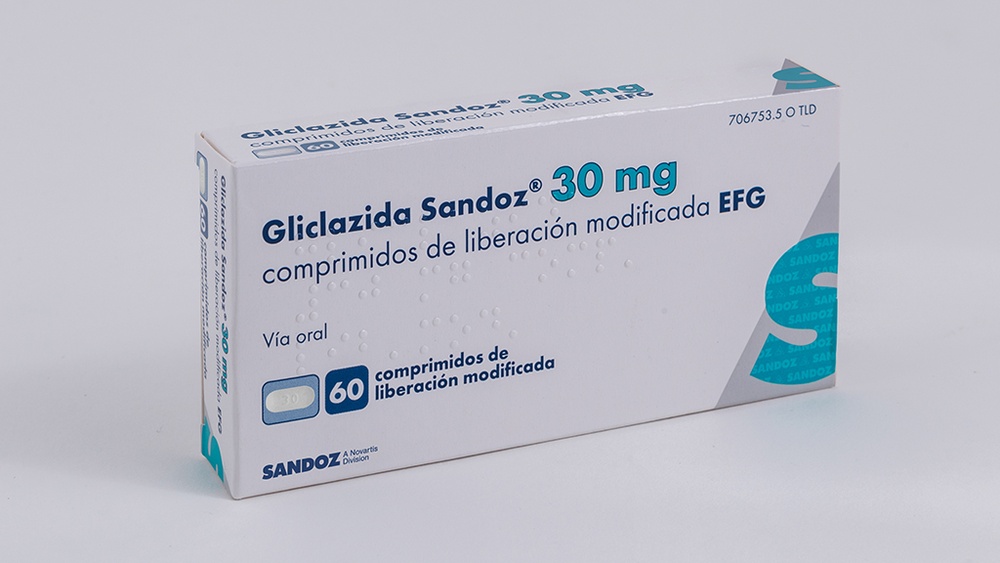
GLICLAZIDE 30 mg Модифицированные Таблетки

Рассмотрение рецепта онлайн
Врач рассмотрит ваш случай и примет решение о назначении рецепта, если это медицински оправдано.

Поговорите с врачом об этом лекарстве
Обсудите симптомы и возможные дальнейшие шаги на онлайн-консультации.



Инструкция по применению LYKLATSIDE SANDOTS
Содержание инструкции
Gliclazide Sandoz 30 mg modified-release tablets
Generic medicine
Read this leaflet carefully before taking this medicine because it contains
important information for you.
- Keep this leaflet. You may need to read it again.
- If you have any questions, ask your doctor or pharmacist.
- This medicine has been prescribed for you only. Do not pass it on to others, even if they have the same symptoms as you, as it could be harmful.
- If you get any side effects, even those not listed in this leaflet, tell your doctor or pharmacist. See section 4.
Contents of this leaflet
- 1. What Gliclazide Sandoz is and what it is used for
- 2. What you need to know before you take Gliclazide Sandoz
- 3. How to take Gliclazide Sandoz
- 4. Possible side effects
- 5. How to store Gliclazide Sandoz
- 6. Contents of the pack and other information
1. What is Gliclazide Sandoz and what is it used for?
Gliclazide Sandoz is a medicine that reduces blood sugar levels (an oral antidiabetic medicine belonging to the sulfonylurea group).
Gliclazide Sandoz is indicated for the treatment of some types of diabetes (type 2 diabetes mellitus) in
adults when diet, exercise and weight loss alone are not sufficient to maintain a
correct blood sugar level.
2. What you need to know before you take Gliclazide Sandoz
Do not take Gliclazide Sandoz
- if you are allergicto gliclazide or any of the other ingredients of this medicine (listed in section 6), or to other medicines of the same group (sulfonylureas), or to other related medicines (hypoglycemic sulfonamides)
- if you have insulin-dependent diabetes (type I)
- if you have ketone bodiesand sugar in your urine(this means you may have diabetic ketoacidosis), if you are in a state of pre-comaor diabetic coma
- if you have a severe kidney or liver disease
- if you are taking medicines for the treatment of fungal infections(miconazole) (see section “Other medicines and Gliclazide Sandoz);
- if you are breastfeeding(see section “Pregnancy and breastfeeding”).
Warnings and precautions
Talk to your doctor or pharmacist before taking Gliclazide Sandoz.
Follow the treatment plan prescribed by your doctor to achieve appropriate blood sugar levels.
In addition to regularly taking the tablet, this means following a diet,
getting exercise and, if necessary, losing weight.
During treatment with gliclazide, regular monitoring of blood sugar levels
(and possibly urine) and also of glycosylated hemoglobin (HbA1c) is necessary.
In the very first weeks of treatment, the risk of having low blood sugar levels(hypoglycemia)may increase. Therefore, particularly careful medical monitoring is necessary.
Low blood sugar levels (hypoglycemia)can occur:
- if you eat meals irregularly or skip them completely,
- if you are fasting,
- if you are malnourished,
- if you change your eating habits,
- if you increase your physical activity and carbohydrate intake is not adequate for this increase,
- if you drink alcohol, especially while fasting,
- if you are taking other medicines or natural remedies at the same time
- if you take too high doses of gliclazide,
- if you suffer from particular hormonal disorders (thyroid gland dysfunction, or pituitary gland or adrenal cortex dysfunction),
- if your kidney or liver function is severely impaired.
In case of low blood sugar levels, you may experience the following symptoms: headache, intense hunger, nausea, vomiting, weakness, sleep disturbances, agitation, aggression, difficulty
concentrating, reduced attention and reaction time, depression, confusion, speech or vision disorders, tremor, sensory disturbances, dizziness and feeling of powerlessness.
The following signs and symptoms may also occur: sweating, clammy skin, anxiety,
increased or irregular heartbeat, increased blood pressure, sudden
acute chest pain radiating to surrounding areas (angina pectoris).
If blood sugar levels continue to drop, you may experience severe confusion
(delirium), convulsions, loss of control, shortness of breath and slowed heartbeat or
loss of consciousness.
In most cases, the symptoms of low blood sugar disappear very
quickly by taking sugar in various forms, for example glucose tablets, sugar lumps,
juices or sweetened tea.
You should therefore always carrysome sugar with you (glucose tablets, sugar lumps).
Remember that artificial sweeteners are not effective. Contact your doctor or the nearest hospital
if taking sugar does not help or if symptoms recur.
Symptoms due to low blood sugar levels may not occur, be less noticeable
or appear slowly, or you may not notice in time that your blood sugar level is
decreased. This can happen if you are an elderly patient taking certain medicines (e.g.
those that act on the central nervous system and beta-blockers).
High blood sugar levels (hyperglycemia)symptoms can appear when
gliclazide has not yet sufficiently reduced blood sugar levels, when you have not
followed the treatment prescribed by your doctor, if you take preparations based on St. John's Wort ( Hypericum perforatum) (see section ‘’Other medicines and Gliclazide Sandoz’’), or
in particular stressful situations.
These symptomsmay include:
- thirst, frequent urination, dry mouth, dry and itchy skin, skin infections and reduced performance.
If these symptoms occur, you should contact your doctor or pharmacist.
Changes in blood glucose levels (low blood sugar and
high blood sugar) may occur when gliclazide is prescribed in conjunction with antibiotics
belonging to a class called fluoroquinolones, especially in elderly patients. In
this case, your doctor will remind you of the importance of monitoring your blood glucose level.
If you have a family history or know you have an inherited condition of glucose-6-phosphate
dehydrogenase (G6PD) deficiency ( red blood cell disorder), you may experience a decrease in hemoglobin levels and red blood cell breakdown (hemolytic anemia). Contact your doctor before taking
this medicine.
Children and adolescents
The use of Gliclazide Sandoz is not recommendedin children and adolescentsdue to the lack of data
regarding it.
Other medicines and Gliclazide Sandoz
Tell your doctor or pharmacist if you are taking, have recently taken or might take
any other medicines.
The blood sugar lowering effect of gliclazide may be increased and
signs of low blood sugar may appear when you take one of the following
medicines:
- other medicines for treating high blood sugar levels (oral antidiabetics, GLP-1 receptor agonists or insulin),
- antibiotics (e.g. sulfonamides and clarithromycin),
- medicines for treating high blood pressure or heart failure (beta-blockers, ACE inhibitors such as captopril or enalapril),
- medicines for treating fungal infections (miconazole, fluconazole),
- medicines for treating stomach or duodenal ulcers (H2 receptor antagonists),
- medicines for treating depression (monoamine oxidase inhibitors),
- painkillers or anti-rheumatic drugs (phenylbutazone, ibuprofen),
- medicines containing alcohol.
The blood sugar lowering effect of gliclazide may be
weakened and blood sugar levels may increase with the intake of one
of the following medicines:
- medicines for treating nervous system disorders (chlorpromazine),
- medicines for reducing inflammation (corticosteroids),
- medicines for treating asthma or used during labor (salbutamol intravenously, ritodrine and terbutaline),
- medicines for treating breast disorders, heavy menstrual bleeding and endometriosis (danazol),
- preparations based on St. John's Wort ( Hypericum perforatum)
Changes in blood glucose levels (low blood sugar and
high blood sugar) may occur when a medicine belonging to a class of antibiotics called fluoroquinolones is
prescribed in conjunction with Gliclazide Sandoz, especially in elderly patients.
Gliclazide Sandoz may increase the effects of medicines that reduce blood clotting
(e.g. warfarin).
Consult your doctor before starting to take other medicines. If you are hospitalized, inform
the medical staff that you are taking Gliclazide Sandoz.
Gliclazide Sandoz with food, drinks and alcohol
Gliclazide Sandoz can be taken with foodand non-alcoholic beverages.
Drinking alcohol is not recommended as it can unpredictably alter diabetes control.
Pregnancy and breastfeeding
If you are pregnant or breastfeeding, if you suspect you are pregnant or are planning a pregnancy, ask
your doctor or pharmacist for advice before taking this medicine
Glicazide Sandoz is not recommendedduring pregnancy.
You must not takeGliclazide Sandoz during breastfeeding.
Driving and using machines
Your ability to concentrate or react may be impaired if your blood sugar levels are too low (hypoglycemia), too high (hyperglycemia) or if you develop vision problems
as a result of these conditions. Keep in mind that you may harm yourself or others (e.g. when
driving vehicles or using machinery). Ask your doctor if you can drive if you have:
3. How to take Gliclazide Sandoz
Dosage
Take this medicine following exactly the instructions of your doctor or pharmacist. If you
have any doubts, ask your doctor or pharmacist.
Only adults can take this medicine.
The dose is established by the doctor based on your blood sugar levels and possibly in the
urine. A change in external factors (e.g. weight loss, change in lifestyle,
stress) or improvements in blood sugar control may mean that the dose needs to
be adjusted.
The recommended doseis from 1 to 4 tablets (maximum 120 mg) taken in a single administration
at breakfast time. This depends on the response to treatment.
In case of combined therapy of Gliclazide Sandoz with metformin, an alpha-glucosidase inhibitor,
a thiazolidinedione, a dipeptidyl peptidase-4 inhibitor, a GLP-1 receptor agonist or insulin, the
doctor will determine the appropriate dose of each medicine for you.
If you notice that your blood sugar levels are high even while taking the medicine as
prescribed, you should contact your doctor or pharmacist.
Method and route of administration
Oral use.
Swallow the tablets whole without chewing.
Take the tablet(s) with a glass of water, at breakfast time (and
preferably every day at the same time).
You must always take a meal after taking the tablet(s).
If you take more Gliclazide Sandoz than you should
If you take too many tablets, contact your doctor or the nearest hospital emergency room
immediately.
The signs of overdose are those of a lowering of blood sugar levels
(hypoglycemia) described in paragraph 2. These symptoms can be improved by immediately taking some
sugar (from 4 to 6 lumps) or sugary drinks followed by a substantial snack or meal. If the
patient is unconscious, contact your doctor immediately and call an ambulance.
The same must be done if someone, for example a child, has taken the medicine
accidentally.
Do not administer food or drinks to unconscious patients.
Make sure there is always a person informed in advance who can call a
doctor in case of emergency.
If you forget to take Gliclazide Sandoz
It is important to take the medicine every day as regular treatment works best.
However, if you forget to take a dose of Gliclazide Sandoz, take the next dose at the
usual time. Do not take a double dose to make up for a missed dose.
If you stop taking Gliclazide Sandoz
Since diabetes treatment usually lasts a lifetime, you should consult your doctor before
stopping treatment with this medicine. Discontinuation may cause an increase in blood sugar levels
(hyperglycemia) which increases the risk of developing diabetes complications.
If you have any doubts about the use of this medicine, ask your doctor or pharmacist.
4. Possible side effects
Like all medicines, this medicine can cause side effects, although not everybody gets them.
The most commonly observed side effect is a low blood sugar level
(hypoglycemia). For symptoms and signs see section “Warnings and precautions” paragraph 2 “What
you need to know before taking Gliclazide Sandoz”.
If not treated, these symptoms can progress to drowsiness, loss of consciousness or possible coma.
If an episode of low blood sugar is severe or prolonged, even if
temporarily controlled with the intake of sugar, contact your doctor immediately.
Other side effects that may occur during the intake of this medicine are:
Rare: may affect up to 1 in 1000 patients
- decrease in the number of blood cells (e.g. platelets, red blood cells and white blood cells) which may cause paleness, prolonged bleeding, bruising, sore throat and fever. These symptoms usually disappear when treatment is stopped.
Not known:frequency cannot be estimated based on available data
- abnormal liver function, which can cause yellowing of the skin and eyes. If this happens, contact your doctor immediately. Generally the symptoms disappear if the medicine is stopped. The doctor will decide whether to discontinue treatment.
- skin reactions such as rash, redness, itching, hives and angioedema (rapid swelling of tissues such as eyelids, face, lips, mouth, tongue or throat which can cause difficulty breathing). The rash may progress to a spread of blisters all over the body or to peeling of the skin. Signs of severe hypersensitivity reactions (DRESS) have been reported exceptionally: initially as flu-like symptoms and rash on the face, followed by widespread rash with high temperature.
- Stomach pain or discomfort, nausea, indigestion, diarrhea and constipation. These effects are reduced when Gliclazide Sandoz is taken with a meal, as recommended, see paragraph 3 “How to take Gliclazide Sandoz”.
- Visual disturbances. Visual ability may be impaired for a short period, especially at the beginning of treatment. This effect is due to changes in blood sugar levels. As with other sulfonylureas, the following adverse events have been observed:
- severe changes in the number of blood cells
- allergic inflammation of the walls of blood vessels
- reduction of sodium levels in the blood (hyponatremia)
- symptoms of liver failure (e.g. jaundice) which in most cases disappeared after discontinuation of sulfonylureas, but which in isolated cases can lead to life-threatening liver failure.
Reporting of side effects
If you get any side effects, talk to your doctor, pharmacist or nurse. This includes any possible side effects not listed in this leaflet. You can also report side effects directly through
the national reporting system at www.aifa.gov.it/content/segnalazioni-reazioni-avverse .
By reporting side effects you can help provide more information on the safety
of this medicine.
5. How to store Gliclazide Sandoz
Keep this medicine out of the sight and reach of children.
Do not use this medicine after the expiry date which is stated on the package and on the blister. The expiry date refers to the last day of that month.
Do not store at a temperature above 25°C
Do not dispose of any medicine in waste water or household waste. Ask your pharmacist how to dispose of medicines you no longer use. This will help protect the environment.
6. Package contents and other information
What Gliclazide Sandoz contains
The active ingredient is gliclazide. The other components are calcium hydrogen phosphate dihydrate, povidone
(E1201), hypromellose (E464) and magnesium stearate (E572).
Description of the appearance of Gliclazide Sandoz and package contents
Modified-release tablet.
Uncoated tablets from white to off-white in colour, capsule-shaped, biconvex, with imprinted
‘30’ on one side and smooth on the other side.
Gliclazide Sandoz is available in clear transparent PVC / Aclar-ALU or clear
transparent PVC-ALU blisters containing 10, 30, 60, 90, 120 or 180 tablets.
Not all pack sizes may be marketed.
Marketing authorisation holder
Sandoz Spa, Largo U. Boccioni 1, 21040 Origgio (VA)
Manufacturer
Lek Pharmaceuticals d.d. Verovškova 57, 1526Ljubljana, Slovenia
Lek S.A., ul. Domaniewska 50 C, 02-672 Warsaw, Poland
This medicinal product is authorised in the Member States of the European Economic Area with the
following denominations:
Netherlands Gliclazide Sandoz 30 mg, tablets with modified release
Belgium Gliclazide Sandoz 30 mg tablets with modified release
Estonia Dizirel
Spain Gliclazida Lek 30 mg modified release tablets EFG
Greece Gliclazide / Sandoz
Croatia Gliklazid Sandoz 30 mg tablets with modified release
Hungary DYACLID 30 mg modified release tablet
Italy Gliclazide Sandoz
Luxembourg Gliclazide Sandoz 30 mg prolonged-release tablet
Portugal Gliclazida Mesiproc
Slovenia Gliklazid Lek 30 mg tablets with prolonged release

Не уверены, подходит ли вам это лекарство?
Обсудите симптомы и варианты лечения с врачом онлайн.

Уже начали прием и появились вопросы?
Обсудите свое состояние и дальнейшие шаги с врачом онлайн.
- Страна регистрации
- Форма выпускаModified-release tablet, 30 MG
- Код АТХA10BB09
- Действующее вещество
- Отпускается по рецептуДа
- Производитель
- Информация на этой странице носит справочный характер и не является медицинской консультацией. Перед началом приема лекарства обязательно проконсультируйтесь с врачом.
- Аналоги LYKLATSIDE SANDOTSФорма выпуска: Modified-release tablet, 30 MGДействующее вещество: гликлазидПроизводитель: LES LABORATOIRES SERVIERОтпускается по рецептуФорма выпуска: Modified-release tablet, 30 MGДействующее вещество: гликлазидПроизводитель: IST.FARM.BIOL.STRODER S.R.L.Отпускается по рецептуФорма выпуска: Modified-release tablet, 30 MGДействующее вещество: гликлазидПроизводитель: S.F. GROUP S.R.L.Отпускается по рецепту
Аналоги LYKLATSIDE SANDOTS в других странах
Лекарства с тем же действующим веществом, доступные в других странах.
Аналог LYKLATSIDE SANDOTS в Испания
Аналог LYKLATSIDE SANDOTS в Польша
Аналог LYKLATSIDE SANDOTS в Украина
Врачи онлайн по LYKLATSIDE SANDOTS
Обсудите применение LYKLATSIDE SANDOTS и возможные следующие шаги — по оценке врача.


Получите рецепт на LYKLATSIDE SANDOTS онлайн
Заполните форму за 2 минуты
Расскажите о симптомах, истории болезни и нужном препарате.
Выберите врача или мы назначим
Выберите специалиста или мы подберём ближайшего доступного врача.
Врач рассматривает ваш случай
Обычно в течение 30 минут. Может задать уточняющие вопросы в чате.
Получите в любой аптеке
Электронный рецепт отправляется на вашу почту — действителен по всей Польше.
Часто задаваемые вопросы
LYKLATSIDE SANDOTS требует рецепта в Италия. Вы можете уточнить у врача онлайн, подходит ли это лекарство для вашей ситуации.
Действующее вещество LYKLATSIDE SANDOTS — гликлазид. Эта информация помогает определить лекарства с тем же составом под другими торговыми названиями.
LYKLATSIDE SANDOTS производится компанией SANDOZ S.P.A.. Упаковка и торговое название могут отличаться в зависимости от дистрибьютора.
Врачи, включая Семейные врачи, Психиатры, Дерматологи, Кардиологи, Эндокринологи, Гастроэнтерологи, Пульмонологи, Нефрологи, Ревматологи, Гематологи, Инфекционисты, Аллергологи, Гериатры, Педиатры, Онкологи, могут оценить целесообразность применения LYKLATSIDE SANDOTS с учетом вашей ситуации и местных правил. Вы можете записаться на онлайн-консультацию, чтобы обсудить возможные варианты.
Польша имеет хорошо развитую систему здравоохранения в крупных городах, таких как Варшава, Краков, Вроцлав и Гданьск. Аптеки широко доступны и работают в соответствии с действующим законодательством, обеспечивая доступ к рецептурным препаратам.
Вы можете купить LYKLATSIDE SANDOTS в Варшаве, Кракове, Вроцлаве или Гданьске в любой аптеке при наличии действующего рецепта.
Чтобы получить рецепт, вы можете воспользоваться Oladoctor:
Другие лекарства с тем же действующим веществом (гликлазид) включают DIAMIKRON, DRAMION, LEUKOS. Они могут отличаться торговым названием или формой выпуска, но содержат одинаковый терапевтический компонент. Перед изменением лечения рекомендуется проконсультироваться с врачом.
