



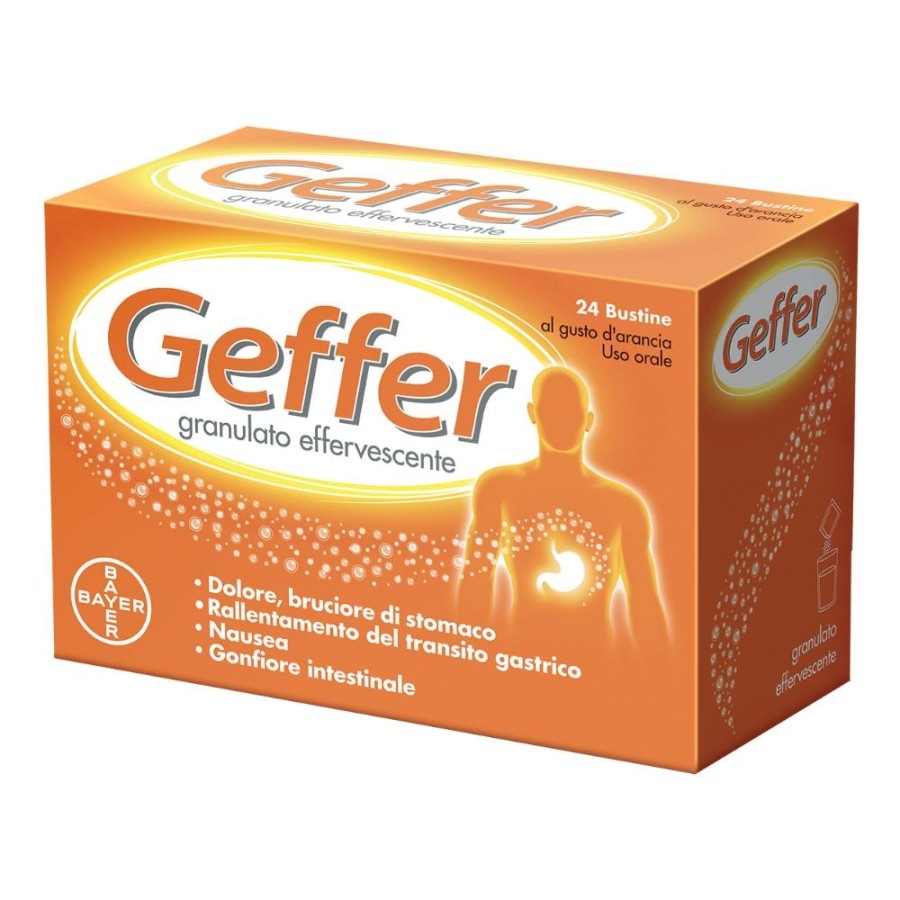
GEFFER 5 G Эффервесцентные гранулы

Рассмотрение рецепта онлайн
Врач рассмотрит ваш случай и примет решение о назначении рецепта, если это медицински оправдано.

Поговорите с врачом об этом лекарстве
Обсудите симптомы и возможные дальнейшие шаги на онлайн-консультации.



Инструкция по применению JEFFER
Содержание инструкции
Geffer effervescent granules
Read this leaflet carefully before taking this medicine as it contains
important information for you.
Always take this medicine exactly as described in this leaflet or as your doctor
or pharmacist has told you.
- Keep this leaflet. You may need to read it again.
- If you want more information or advice, ask your pharmacist.
- If any side effects occur, including those not listed in this leaflet, tell your doctor or pharmacist. See section 4.
- See a doctor if you do not feel better or if your symptoms worsen after 3 days.
Contents of this leaflet:
- 1. What Geffer is and what it is used for
- 2. What you need to know before you take Geffer
- 3. How to take Geffer
- 4. Possible side effects
- 5. How to store Geffer
- 6. Contents of the pack and other information
1. What is Geffer and what is it for
Geffer belongs to the therapeutic category of prokinetics (medicines that accelerate gastric
emptying): it is a combination medicine intended for the treatment of disorders resulting
from gastric hyperacidity (excess acid in the stomach), overeating, abnormal presence of
air and gas in the stomach and digestive difficulties.
Geffer is used for the treatment of symptoms of hyperacidity (stomach pain and heartburn), when
accompanied by slowed gastric transit (slow digestion), nausea, aerophagia and
flatulence (conditions characterized by abnormal accumulation of gas in the stomach or intestine
which determines eructation, tension and abdominal bloating).
See your doctor if you do not feel better or if you feel worse after 3 days.
2. What you need to know before taking Geffer
Do not take Geffer
- if you are allergic to the active ingredients or to any of the other ingredients of this medicine (listed in section 6);
- if you are pregnant or breastfeeding (see “Pregnancy and breastfeeding”);
- if you are under 16 years of age (see “Children and adolescents”);
- if you are taking medicines belonging to the group of anticholinergics (medicines that inhibit the effects of acetylcholine, a neurotransmitter);
- in cases where stimulation of intestinal motility may prove dangerous, for example in the presence of gastrointestinal bleeding, perforation, mechanical obstruction (blockage of the intestinal tract).
- If you suffer from any of the following conditions: glaucoma (an eye disease characterized by increased intraocular pressure), pheochromocytoma (adrenal gland tumor),
epilepsy,
Parkinson's disease and other extrapyramidal disorders (involuntary movement disorders),
porphyria, a rare disease in which the activity of particular enzymes is altered,
metabolic or respiratory alkalosis (conditions in which the pH of the blood reaches a value
higher than normal),
hypocalcemia (low levels of calcium in the blood)
Warnings and precautions
Talk to your doctor or pharmacist before taking Geffer.
If you are an elderly person, you should not exceed 3 consecutive days of treatment and must adhere
to the minimum dosages indicated (see “How to take Geffer” and “Possible side effects”).
Stop treatment and immediately consult your doctor or pharmacist if you experience any of the following symptoms during
therapy with Geffer: high fever, high blood pressure, convulsions, sweating, increased salivation. These may be signs of a
disorder called neuroleptic malignant syndrome.
High doses or prolonged use of Geffer can cause metabolic or respiratory alkalosis
(alterations in blood pH).
Consult your doctor before taking Geffer:
- if you suffer from hypokalemia (low levels of potassium in the blood), because this medicine may worsen alkalosis;
- if you suffer from conditions that cause edema (fluid retention in the body) such as congestive heart failure and reduced kidney function;
- if you suffer from hyperaldosteronism (excess production of the hormone aldosterone);
- if you have kidney problems (renal insufficiency) Children and adolescentsGeffer should not be given to children under 16 years of age (see “Do not take Geffer”).
Other medicines and Geffer
Tell your doctor or pharmacist if you are taking, have recently taken or might
take any other medicines.
Avoid taking neuroleptics(antipsychotic drugs, e.g. phenothiazines,
butyrophenones, thioxanthenes, etc.) and sedatives(tranquilizers) at the same time as Geffer .
The sedative effects of medicines that depress the central nervous system(morphine derivatives,
sleeping pills, anxiolytics, sedative antihistamines, sedative antidepressants, barbiturates, etc.) and metoclopramide are potentiated.
The metoclopramide contained in Geffer increases the effects of monoamine oxidase inhibitors(used in depression), sympathomimetics(used, for example, to raise
blood pressure) and tricyclic antidepressants.
Due to the effect of accelerating intestinal transit of metoclopramide
contained in Geffer, the absorption of some medicines may be altered.
Metoclopramide can reduce the amount of digoxin(used
in heart failure) in the blood, while increasing that of cyclosporine(used against
organ transplant rejection).
Reduces the central nervous system effects of apomorphine(used in Parkinson's disease and
erectile dysfunction).
Reduces the amount of cimetidine(medicine for ulcers) in the blood, but does not modify it in
an appreciable way its effectiveness.
Metoclopramide interacts with serotoninergic medicines(e.g. the
selective serotonin reuptake inhibitors, used for depression),
increasing the risk of serotonin syndrome (a severe form of
intoxication).
The sodium bicarbonate contained in Geffer can:
- reduce the absorption of antibiotics such as tetracyclines(especially doxycycline) and ketoconazole(antifungal medicine) .
- increase the elimination through the kidneys of salicylates (such as acetylsalicylic acid), barbiturates andlithium(medicines that act on the nervous system).
- reduce the elimination through the kidneys of ephedrine, amphetamines(medicines that act on the nervous system), quinidine and flecainide(medicines that regulate the heart rate).
The citrate salts contained in Geffer can increase the absorption of aluminum from the gastrointestinal tract.
This should be taken into account particularly in patients with reduced
kidney function who are taking aluminum salts (antacids).
Take Geffer 2 hours apart from taking any other medicine to avoid
affecting its activity.
Geffer with food, drinks and alcohol
Do not drink alcoholic beverages during treatment with Geffer because the sedative effects of
metoclopramide are potentiated by alcohol.
During treatment with Geffer, do not consume large amounts of food (such as milk and dairy products) or products containing calcium due to the risk of milk-alkali syndrome (characterized by an
increase in calcium and pH of the body).
Pregnancy and breastfeeding
If you are pregnant, suspect you are pregnant or are planning a pregnancy, or if you are breastfeeding,
do not take this medicine.
Ask your doctor or pharmacist before taking any medicine.
Driving and using machines
The use of this medicine, especially at high doses, can cause disturbances that can
decrease the state of vigilance; keep this in mind when driving vehicles or operating potentially dangerous machinery.
Geffer contains sodium
This medicine contains 288 mg of sodium (the main component of table salt) per
sachet. This is equivalent to 14.4% of the maximum recommended daily intake of sodium with
the diet for an adult.
Geffer contains sucrose
If your doctor has diagnosed you with an intolerance to certain sugars, contact him before taking
this medicine.
3. How to take Geffer
Take this medicine following exactly the instructions in this leaflet or as indicated by your doctor or pharmacist. If you have any doubts, consult your doctor or pharmacist.
The use of the product is limited to adult patients.
The recommended doseis: 1 sachet dissolved in half a glass of water, 2-3 times a day.
Do not exceed the indicated doses without your doctor's advice. In particular, elderly patients should
adhere to the minimum dosages indicated above (see “Warnings and precautions” and “Possible side
effects”).
Geffer should be taken before meals or at the onset of symptoms.
Caution: after a maximum of 3 days of treatment without appreciable results, consult your doctor.
Consult your doctor if the disorder occurs repeatedly or if you have noticed any
recent change in its characteristics.
If you take more Geffer than you should
In case of accidental ingestion/intake of an excessive dose of Geffer, immediately
inform your doctor or go to the nearest hospital.
Metoclopramide may induce alterations in the state of consciousness such as drowsiness and
disorientation and involuntary movements may also appear, which manifest
mainly in the muscles of the limbs.
Prolonged use of metoclopramide may cause galactorrhea (milk secretion in male subjects or in women who are not breastfeeding) and amenorrhea (absence of menstruation).
An excessive dose of sodium bicarbonate may cause metabolic alkalosis which in severe cases is
accompanied by hyperirritability and/or tetany (muscle contractions and cramps).
If you have any doubts about the use of this medicine, ask your doctor or pharmacist.
4. Possible side effects
Like all medicines, this medicine can cause side effects, although not everybody gets them.
Side effects due to the presence of metoclopramidein the medicine:
- Uncommon(may affect up to 1 in 100 people):
- visual disturbances and involuntary eye deviation
- Rare(may affect up to 1 in 1,000 people):
- hyperprolactinemia (increased levels of prolactin in the blood, a hormone secreted by the endocrine glands);
- menstrual cycle disorders;
- galactorrhea (secretion of milk in males or in women who are not breastfeeding);
- gynecomastia (development of the breasts in men);
- drowsiness;
- fatigue;
- dizziness;
- porphyria (a rare disease in which the activity of particular enzymes is altered);
- extrapyramidal reactions of various types, normally of a dystonic type. These may include facial spasms, trismus (jaw spasm that prevents opening the mouth), abnormal head positions; these reactions usually resolve within 24 hours of stopping treatment.
In patients with pheochromocytoma (adrenal gland tumor), hypertensive crises sometimes with fatal outcome have been reported; therefore, the use of Geffer is contraindicated in these patients (see “Do not take Geffer”).
In some elderly patients treated for prolonged periods, the development of tardive dyskinesia (a serious extrapyramidal reaction characterized by involuntary movements of the body), potentially irreversible, has been reported; therefore, elderly patients must absolutely avoid therapies that exceed a duration of 3 days.
- Frequency not known(the frequency cannot be estimated on the basis of the available data):
- high fever, high blood pressure, convulsions, sweating, salivation. These may be symptoms of a condition called malignant neuroleptic syndrome (see “Warnings and precautions”)
- Very high blood pressure
Side effects due to the presence of citrate saltsin the medicine:
- Frequency not known(the frequency cannot be estimated on the basis of the available data): Gastrointestinal disordersOral administration of excessive doses of citrate salts can have a laxative effect. Effects due to the presence of sodium bicarbonatein the medicine:
- Frequency not known(the frequency cannot be estimated on the basis of the available data): Metabolism and nutrition disordersReduction of potassium levels in the blood (hypokalemia), increase of sodium levels in the blood (hypernatremia), metabolic alkalosis (symptoms may include shortness of breath, muscle effects such as weakness, muscle hypertonia, involuntary contractions, muscle spasms, especially with reduced calcium levels, and effects on the central nervous system).
These side effects are generally transient. However, when they occur it is advisable to consult your doctor or pharmacist.
Reporting of side effects
If you get any side effects, even those not listed in this leaflet, tell your doctor or pharmacist. You can also report side effects directly through the national reporting system at
https://www.aifa.gov.it/content/segnalazioni-reazioni-avverse. By reporting side effects you can help provide more information on the safety of this medicine.
5. How to store Geffer
Keep this medicine out of the sight and reach of children.
Do not use this medicine after the expiry date which is stated on the sachet and the carton.
The expiry date refers to the last day of that month.
Store at a temperature below 25°C.
Do not dispose of any medicine in waste water or household waste. Ask your pharmacist how
to eliminate medicines that you no longer use. This will help protect the environment.
6. Contents of the pack and other information
What Geffer contains
- The active ingredients are: metoclopramide hydrochloride,dimethicone, potassium citrate, citric acid, tartaric acid, sodium bicarbonate. One sachet of effervescent granules contains metoclopramide hydrochloride5 mg, dimethicone 50 mg, potassium citrate 94.45 mg, citric acid 670 mg, tartaric acid 152 mg, sodium bicarbonate1050 mg.
- The other ingredients are: orange flavour, saccharose.
Description of the appearance of Geffer and contents of the pack
Geffer is presented as effervescent granules with an orange flavour, packaged in
single-dose sachets.
The pack contains 24 sachets.
Marketing Authorisation Holder and Manufacturer
Marketing Authorisation Holder
Bayer S.p.A. -Viale Certosa 130 - 20156 Milan
Manufacturer
Doppel Farmaceutici S.r.l
Via Volturno 48 –Quinto De’ Stampi
20089 Rozzano (Mi)

Не уверены, подходит ли вам это лекарство?
Обсудите симптомы и варианты лечения с врачом онлайн.

Уже начали прием и появились вопросы?
Обсудите свое состояние и дальнейшие шаги с врачом онлайн.
- Страна регистрации
- Форма выпускаEffervescent granules, 5 G
- Отпускается по рецептуНет
- Производитель
- Информация на этой странице носит справочный характер и не является медицинской консультацией. Перед началом приема лекарства обязательно проконсультируйтесь с врачом.
- Аналоги JEFFERФорма выпуска: Tablet, 10 MGДействующее вещество: домперидонаПроизводитель: ABC FARMACEUTICI S.P.A.Отпускается по рецептуФорма выпуска: Coated tablet, 10 MGДействующее вещество: домперидонаПроизводитель: DOC GENERICI SRLОтпускается по рецептуФорма выпуска: Coated tablet, 10 MGДействующее вещество: домперидонаПроизводитель: EG S.P.A.Отпускается по рецепту
Аналоги JEFFER в других странах
Лекарства с тем же действующим веществом, доступные в других странах.
Аналог JEFFER в Польша
Аналог JEFFER в Украина
Аналог JEFFER в Испания
Врачи онлайн по JEFFER
Обсудите применение JEFFER и возможные следующие шаги — по оценке врача.









Получите рецепт на JEFFER онлайн
Заполните форму за 2 минуты
Расскажите о симптомах, истории болезни и нужном препарате.
Выберите врача или мы назначим
Выберите специалиста или мы подберём ближайшего доступного врача.
Врач рассматривает ваш случай
Обычно в течение 30 минут. Может задать уточняющие вопросы в чате.
Получите в любой аптеке
Электронный рецепт отправляется на вашу почту — действителен по всей Польше.
Часто задаваемые вопросы
JEFFER не требует рецепта в Италия. Вы можете уточнить у врача онлайн, подходит ли это лекарство для вашей ситуации.
JEFFER производится компанией BAYER S.P.A.. Упаковка и торговое название могут отличаться в зависимости от дистрибьютора.
Врачи, включая Семейные врачи, Психиатры, Дерматологи, Кардиологи, Эндокринологи, Гастроэнтерологи, Пульмонологи, Нефрологи, Ревматологи, Гематологи, Инфекционисты, Аллергологи, Гериатры, Педиатры, Онкологи, могут оценить целесообразность применения JEFFER с учетом вашей ситуации и местных правил. Вы можете записаться на онлайн-консультацию, чтобы обсудить возможные варианты.
Польша имеет хорошо развитую систему здравоохранения в крупных городах, таких как Варшава, Краков, Вроцлав и Гданьск. Аптеки широко доступны и работают в соответствии с действующим законодательством, обеспечивая доступ к рецептурным препаратам.
Вы можете купить JEFFER в Варшаве, Кракове, Вроцлаве или Гданьске в любой аптеке при наличии действующего рецепта.
Чтобы получить рецепт, вы можете воспользоваться Oladoctor:
Другие лекарства с тем же действующим веществом () включают DOMPERIDONE ABK, DOMPERIDONE DOK JENERIKI, DOMPERIDONE EG. Они могут отличаться торговым названием или формой выпуска, но содержат одинаковый терапевтический компонент. Перед изменением лечения рекомендуется проконсультироваться с врачом.
