



FLOXIGEN 3 мг/мл Глазные капли, раствор

Рассмотрение рецепта онлайн
Врач рассмотрит ваш случай и примет решение о назначении рецепта, если это медицински оправдано.

Поговорите с врачом об этом лекарстве
Обсудите симптомы и возможные дальнейшие шаги на онлайн-консультации.



Инструкция по применению FLOXIJEN
Содержание инструкции
- What is FLOXIGEN and what is it used for
- What you need to know before using FLOXIGEN
- How to use FLOXIGEN
- Possible side effects
- How to store FLOXIGEN
- Contents of the pack and other information
- FLOXIGEN 3 mg/ml eye drops, solution – 1 bottle
FLOXIGEN3 mg/ml eye drops, solution in single-dose container - 20 single-dose containers in LDPE
Ofloxacin
important information for you.
- Keep this leaflet. You may need to read it again.
- If you have any questions, ask your doctor or pharmacist.
- This medicine has been prescribed for you only. Do not pass it on to others, even if they have the same symptoms as you, as it may be harmful.
- If any side effects occur, including those not listed in this leaflet, tell your doctor or pharmacist.
Contents of this leaflet
- 1. What FLOXIGEN is and what it is used for
- 2. What you need to know before you use FLOXIGEN
- 3. How to use FLOXIGEN
- 4. Possible side effects
- 5. How to store FLOXIGEN
- 6. Contents of the pack and other information
1. What is FLOXIGEN and what is it used for
FLOXIGEN contains ofloxacin which belongs to a group of medicines called antibacterial fluorochinolone agents.
FLOXIGEN is an eye drop indicated for the treatment of external ocular infections, caused by germs sensitive
to ofloxacin, which lead to inflammation of the anterior lining of the eye (conjunctivitis) or to
inflammation of the eyelid (blepharitis), to simultaneous inflammation of the anterior lining of the eye and
of the eyelid (blepharoconjunctivitis), to simultaneous inflammation of the cornea and of the anterior
lining of the eye (keratoconjunctivitis), to inflammation of the tear sac (dacryocystitis), to inflammation of the
group of sebaceous glands present in the eyelid (meibomitis), to inflammation of the cornea (keratitis).
FLOXIGEN is also indicated for the treatment of ulcers on the surface of the eye caused by infections and
to prevent infections following surgical procedures.
2. What you need to know before using FLOXIGEN
Do not use FLOXIGEN
- If you are allergic (hypersensitive) to ofloxacin (or to other antibacterial quinolone agents), or to any of the other ingredients of this medicine (listed in section 6).
Warnings and Precautions
Consult your doctor or pharmacist before using FLOXIGEN
- if you have experienced an allergy to other antibacterial quinolone agents
- if you wear contact lenses
- if there are any imperfections or ulcerations on the surface of the eye, as the use of the product may increase the risk of corneal perforation.
- if you were born with or have a family history of prolonged QT interval (displayed on an ECG, an electrical recording of the heart),
- you have an electrolyte imbalance in the blood (especially a low level of potassium or magnesium in the blood),
- you have a very slow heart rate (called ‘bradycardia’),
- you have a weak heart (heart failure),
- you have a history of heart attack (myocardial infarction),
- if you are a woman or elderly patient,
- if you are taking other medicines that can cause abnormal changes in the ECG (see section ‘ Other medicines and Floxigen’).
Prolonged use may cause a new bacterial infection that cannot be treated with FLOXIGEN.
FLOXIGEN potentially increases sensitivity to sunlight. During the use of FLOXIGEN you should
avoid direct exposure to the sun or sunlight.
If you experience an allergic reaction to ofloxacin, stop taking the medicine. Patients who
have shown sensitivity to other antibacterial quinolone agents should use FLOXIGEN with caution.
Severe and rare allergic (anaphylactic/anaphylactoid) reactions with fatal outcome, some following
the first dose, have been reported in patients who have taken quinolones orally or intravenously, including ofloxacin.
Some reactions were accompanied by general circulatory failure, loss of
consciousness, rapid swelling of tissues (including swelling of the larynx, throat or face), airway obstruction, shortness of breath, urticaria and itching.
When using FLOXIGEN, consider the risk of the eye drops passing into the nose and the back of the
throat, which may cause the development of bacterial resistance. Like any other antibiotic, prolonged use can cause an excessive development of microorganisms that do not respond to ofloxacin; therefore
if you do not notice an improvement after 10 days, stop use and consult an ophthalmologist.
Stevens-Johnson syndrome (painful skin rash and blisters) and corneal precipitates (inflammatory
deposits on the surface of the eye) have been reported in patients who have received ofloxacin
eye drops, but it is not clear whether the eye drops were the cause.
Damage to the front of the eye has been reported in patients with pre-existing lesions/wounds or ulcers
on the surface of the eye when treated with fluoroquinolone antibiotic eye drops.
However, significant elements of confusion have been found in many of these reports, such as
advanced age, the presence of large ulcers, concomitant eye conditions (e.g. severe dry eye), systemic inflammatory diseases (e.g. rheumatoid arthritis), and concomitant use of ocular steroids or non-steroidal anti-
inflammatory drugs. However, caution is needed regarding the risk of
corneal perforation when using FLOXIGEN to treat patients with pre-existing lesions/wounds or ulcers
on the surface of the eye.
Swelling and rupture of tendons have occurred in people taking fluoroquinolones orally or
intravenously, especially in elderly patients and those treated concurrently with corticosteroids.
Stop taking FLOXIGEN if you start to experience pain or swelling of the tendons (tendinitis).
Children
The safety and efficacy of the product in infants under one year of age have not been established, therefore
use is not recommended.
Newborns (children up to 28 days of age)
Information on the use of FLOXIGEN in newborns in the treatment of conjunctivitis is very limited.
The use of FLOXIGEN in newborns with ophthalmia neonatorum caused by Neisseria
gonorrhoeae or Chlamydia trachomatis is not recommended as the use of the product in such patients has not been evaluated.
Ask your doctor for advice before using FLOXIGEN in newborns in order to determine the appropriateness of
treatment.
Other medicines and FLOXIGEN
Tell your doctor or pharmacist if you are taking or have recently taken, or might take
any other medicines.
Tell your doctor if you are taking other medicines that could alter your heart rhythm: medicines that
belong to the group of antiarrhythmics (e.g. quinidine, hydroquinidine, disopyramide, amiodarone, sotalol,
dofetilide, ibutilide), tricyclic antidepressants, some antimicrobial substances (belonging to the group of
macrolides), some antipsychotics.
It has been shown that the administration of drugs belonging to the same class as ofloxacin, when taken
systemically, inhibits the metabolic elimination of caffeine and theophylline, although interaction studies of the drug conducted with ofloxacin systemically demonstrate that ofloxacin does not have this
effect.
Although there has been an increase in reports of drowsiness, depression and seizures in
cases where drugs belonging to the same class as ofloxacin have been taken in conjunction with drugs
of the class of non-steroidal anti-inflammatory drugs (such as aspirin, ibuprofen, diclofenac, etc.), these have not
been reported with the use of ofloxacin.
Pregnancy and breastfeeding
If you are pregnant, suspect or are planning a pregnancy, or if you are breastfeeding with breast milk
ask your doctor or pharmacist for advice before using this medicine.
As there are no adequate and well-controlled clinical studies in pregnant women and since systemic use of
quinolones has caused joint problems in immature animals, it is not recommended to use the medicine in
pregnancy.
Since ofloxacin and other quinolones administered systemically are excreted in breast milk,
there may be a risk to the infant, so you should consider whether to discontinue breastfeeding or therapy,
taking into account the importance of the drug for the mother.
Driving and using machines
Your vision may be blurred for a short time immediately after applying
FLOXIGEN.
Therefore, you should not drive vehicles or use machinery until your vision returns to normal.
Important information regarding some components of FLOXIGEN
Contact lenses
You should usually not wear contact lenses during treatment with this product. However, there are
some situations where the use of contact lenses is unavoidable. In such cases, remove the contact lenses before
using FLOXIGEN. Wait at least 15 minutes after using the eye drops before putting the contact lenses
back in.
3. How to use FLOXIGEN
Use FLOXIGEN always following the instructions provided by your doctor carefully. If you have any doubts,
ask your doctor or pharmacist for advice.
The recommended dose is 1-2 drops 4-6 times a day. For the treatment of bacterial corneal keratitis and ulcers,
administration in the first two days of treatment may be more frequent (1-2 drops every 30 minutes), then in the
next 7 days the dose must be gradually reduced to 1-2 drops every hour, until the treatment is completed with 1-2
drops 4 times a day.
Treatment with FLOXIGEN should be limited to the period necessary to achieve clinical healing.
FLOXIGEN can only be used as an eye drop for ophthalmic use: do not use for injections or intraocular use.
Instructions for use
Apply the eye drop as follows:
- 1. Wash your hands. Tilt your head back and look at the ceiling.
- 2. Gently lower your lower eyelid to form a small “pocket”.
- 3. Turn the single-dose container upside down and press it to instill one or two drops into each eye to be treated.
- 4. Release your lower eyelid and close your eye for 30 seconds.
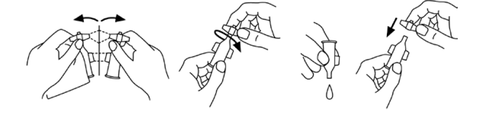
If a drop does not enter the eye, try again.
To avoid any contamination, make sure that the tip of the single-dose container does not come into contact with
the eye or with any other object.
The eye drop does not contain preservatives and must be used immediately after opening.
It is very important to apply the eye drop correctly. If you have any doubts, ask your doctor or pharmacist for advice.
If you use more FLOXIGEN than you should
If you apply an excessive number of drops, wash your eye(s) with clean water and apply the next dose at the
usual time.
If, accidentally, someone were to ingest this medicine, contact your doctor immediately or go to the nearest
hospital.
If you forget to use FLOXIGEN
If you forget a dose, apply it as soon as you remember, unless it is almost time for the next dose, in which case
omit the forgotten dose.
Then apply the next dose normally, continuing the usual treatment.
Do not use a double dose to make up for the forgotten dose.
If you stop the treatment with FLOXIGEN
FLOXIGEN must be used following the instructions provided by your doctor.
If you have any further doubts about the use of this product, ask your doctor or pharmacist.
4. Possible side effects
Like all medicines, FLOXIGEN can cause side effects, although not everybody gets them.
The occurrence of the following side effects has been reported, although the number of people affected has not
been established.
If any of these side effects become troublesome or persistent, please consult your doctor:
Common side effects(may affect up to 1 in 10 people)
Eye disorders
- eye irritation
- eye discomfort
Side effects with unknown frequency(frequency cannot be estimated from available data)
Eye disorders
- Visual disturbances (blurred vision)
- Tearing
- Mild stinging or burning sensation
- Eye redness
- Eye discomfort or pain
- Inflammation of the eye surface
- Redness and inflammation of the thin layer covering the white of the eye
- Allergic eye reactions (including itching of the eye and eyelid)
- Light sensitivity
- Feeling of having a foreign body in the eye
- Eye swelling (including eyelid swelling)
- Dry eye
Nervous system disorders
- Dizziness
Gastrointestinal disorders
- Nausea
Skin and subcutaneous tissue disorders
- Swelling around the face
- With the use of Floxigen, potentially life-threatening skin reactions (Stevens-Johnson syndrome, toxic epidermal necrolysis) have been reported which initially appear as reddish spots resembling a target or circular patches often with central blisters on the trunk.
Heart problems
Unknown frequency: fast heart rate, potentially fatal irregular heart rate, alteration of the
heart rhythm (defined as ‘prolongation of the QT interval’, observable on ECG, the electrical activity of the heart
recorded).
Rare side effects(may affect up to 1 in 10,000 people)
Immune system disorders
Allergic reactions including swelling under the skin which can occur in different areas such as the face, lips or other
parts of the body; skin rash, itching or hives; swelling of the mouth, tongue or throat which can
cause airway obstruction resulting in wheezing, difficulty swallowing, difficulty breathing or
shortness of breath; severe and sudden allergic reaction (potentially fatal).
Reporting of side effects
If you get any side effects, even those not listed in this leaflet, please tell your
doctor or pharmacist. You can also report side effects directly through the national reporting system at
https://www.aifa.gov.it/content/segnalazioni-reazioni-avverse. By reporting side effects you can help provide
more information on the safety of this medicine.
5. How to store FLOXIGEN
Keep this medicine out of the sight and reach of children.
Do not use FLOXIGEN after the expiry date which is stated on the package and on the single-dose container after the abbreviation “Exp”.
The expiry date refers to the last day of that month.
Keep the medicine in its original packaging to protect it from light.
Do not store the medicine at a temperature above 25°C.
The product must be used immediately after opening, discard any remaining solution
of the product after opening.
After the first opening of the aluminum sachet, the medicine must be used within 2 months; after this
period, any remaining medicine must be disposed of.
Do not dispose of any medicine in wastewater or household waste. Ask your pharmacist how to dispose of
medicines you no longer use. This will help protect the environment.
6. Contents of the pack and other information
What FLOXIGEN contains
- The active ingredient is Ofloxacin 3 mg/ml.
- The other ingredients are: sodium chloride, sodium hydroxide or hydrochloric acid (to adjust the pH), water for injections.
Description of the appearance of FLOXIGEN and contents of the pack
FLOXIGEN is an eye drop in single-dose containers made of low-density polyethylene of 0.5 ml. Each
pack contains 20 single-dose containers; strips of 5 single-dose containers are packaged in a
aluminium pouch.
Marketing Authorisation Holder and Manufacturer
Farmigea S.p.A.
Via G.B. Oliva, 6/8
56121 Pisa
Farmigea S.p.A.
Via G.B. Oliva, 8
56121 Pisa
Distributor for sales
POLIFARMA S.p.A.
Viale dell’Arte 69
00144 Roma
FLOXIGEN 3 mg/ml eye drops, solution – 1 bottle
Ofloxacin
important information for you.
- Keep this leaflet. You may need to read it again.
- If you have any questions, ask your doctor or pharmacist.
- This medicine has been prescribed for you only. Do not pass it on to others, even if their symptoms are the same as yours, as it could be harmful.
- If any side effects occur, including those not listed in this leaflet, tell your doctor or pharmacist.
Contents of this leaflet
- 1. What FLOXIGEN is and what it is used for
- 2. What you need to know before you use FLOXIGEN
- 3. How to use FLOXIGEN
- 4. Possible side effects
- 5. How to store FLOXIGEN
- 6. Contents of the pack and other information
1. What is FLOXIGEN and what is it used for
FLOXIGEN contains ofloxacin which belongs to a group of medicines called antibacterial fluorochinolone agents.
FLOXIGEN is an eye drop indicated for the treatment of external ocular infections, caused by germs sensitive
to ofloxacin, which lead to inflammation of the anterior lining of the eye (conjunctivitis) or to
inflammation of the eyelid (blepharitis), to simultaneous inflammation of the anterior lining of the eye and
of the eyelid (blepharoconjunctivitis), to simultaneous inflammation of the cornea and the anterior lining
of the eye (keratoconjunctivitis), to inflammation of the tear sac (dacryocystitis), to inflammation of the
group of sebaceous glands present in the eyelid (meibomitis), to inflammation of the cornea (keratitis).
FLOXIGEN is also indicated for the treatment of ulcers on the surface of the eye caused by infections and
to prevent infections following surgical procedures.
2. What you need to know before using FLOXIGEN
Do not use FLOXIGEN
- If you are allergic (hypersensitive) to ofloxacin, (or to other antibacterial quinolone agents), to benzalkonium chloride, or to any of the other ingredients of this medicine (listed in section 6)
Warnings and Precautions
Consult your doctor or pharmacist before using FLOXIGEN
- if you have experienced an allergy to other antibacterial quinolone agents
- if you wear contact lenses
- if there is any imperfection or ulceration on the surface of the eye, as use of the product may increase the risk of corneal perforation.
- if you were born with or have a family history of prolonged QT interval (displayed on an ECG, an electrical recording of the heart),
- you have a salt imbalance in the blood (especially a low level of potassium or magnesium in the blood),
- you have a very slow heart rate (called ‘bradycardia’),
- you have a weak heart (heart failure),
- you have a history of heart attack (myocardial infarction),
- if you are a woman or elderly patient,
- if you are taking other medicines that can cause abnormal changes in the ECG (see section ‘ Other medicines and Floxigen’).
Prolonged use may cause a new bacterial infection that is not treatable with FLOXIGEN. FLOXIGEN
potentially increases sensitivity to sunlight. During the use of FLOXIGEN, direct exposure to the sun or sunlight should be avoided.
If an allergic reaction to ofloxacin occurs, stop administering the medicine. Patients who have shown sensitivity to other antibacterial quinolone agents
should use FLOXIGEN with caution.
Severe and rare allergic (anaphylactic/anaphylactoid) reactions with fatal outcome, sometimes following the first dose, have been reported in patients who have taken quinolones orally or intravenously, including ofloxacin. Some reactions were accompanied by general circulatory failure, loss of
consciousness, rapid swelling of tissues (including swelling of the larynx, throat or face), obstruction of the airways, shortness of breath, urticaria and itching.
When using FLOXIGEN, consider the risk of the eye drops passing into the nose and the back of the throat, which can cause the development of bacterial resistance. Like any other antibiotic, prolonged use can cause an excessive development of microorganisms that do not respond to ofloxacin; therefore
if no improvement is noticed after 10 days, stop use and consult an ophthalmologist. Stevens-Johnson syndrome (painful skin rash and blisters) and corneal precipitates (inflammatory deposits on the surface of the eye) have been reported in patients who have received ofloxacin
eye drops, but it is not clear whether the eye drops were the cause. Damage to the front part of the eye has been reported in patients with pre-existing lesions/wounds or ulcers on the surface of the eye when treated with
fluoroquinolone antibiotic eye drops.
However, significant elements of confusion have been found in many of these reports, such as advanced age, presence of extensive ulcers, concomitant eye conditions (e.g. severe dry eye), systemic inflammatory diseases (e.g. rheumatoid arthritis), and concomitant use of ocular steroids or non-steroidal anti-inflammatory drugs. However, caution should be exercised regarding the risk of
corneal perforation when using FLOXIGEN to treat patients with pre-existing lesions/wounds or ulcers on the surface of the eye.
Swelling and rupture of tendons have occurred in people taking fluoroquinolones orally or intravenously, particularly in elderly patients and those treated concurrently with corticosteroids.
Stop taking FLOXIGEN if you develop tendon pain or swelling (tendinitis).
Children
The safety and efficacy of the product in infants under one year of age have not been established, so
use is not recommended
Newborns (children up to 28 days of age)
Information on the use of FLOXIGEN in newborns in the treatment of conjunctivitis is very limited.
The use of FLOXIGEN in newborns with ophthalmia neonatorum caused by Neisseria
gonorrhoeae or Chlamydia trachomatis is not recommended as the use of the product in these patients has not been evaluated.
Ask your doctor for advice before using FLOXIGEN in newborns to determine the appropriateness of
treatment.
Other medicines and FLOXIGEN
Tell your doctor or pharmacist if you are taking, have recently taken, or might take
any other medicines.
Tell your doctor if you are taking other medicines that could alter your heart rate: medicines that
belong to the group of antiarrhythmics (e.g. quinidine, hydroquinidine, disopyramide, amiodarone, sotalol,
dofetilide, ibutilide), tricyclic antidepressants, some antimicrobial substances (belonging to the group of
macrolides), some antipsychotics.
It has been shown that the administration of drugs belonging to the same class as ofloxacin, when taken
systemically, inhibits the metabolic elimination of caffeine and theophylline, although interaction studies of the drug conducted with ofloxacin systemically demonstrate that ofloxacin does not have this
effect.
Although there has been an increase in reports of drowsiness, depression and seizures in
cases where drugs belonging to the same class as ofloxacin have been taken concurrently with drugs
of the class of non-steroidal anti-inflammatory drugs (such as aspirin, ibuprofen, diclofenac, etc.), these have not
been reported with the use of ofloxacin.
Pregnancy and breastfeeding
If you are pregnant, suspect you are pregnant, or are planning a pregnancy, or if you are breastfeeding with breast milk
ask your doctor or pharmacist for advice before using this medicine. As there are no adequate and well
controlled clinical studies in pregnant women and since systemic use of quinolones has caused problems with
joints in immature animals, use of the drug is not recommended during pregnancy.
Since ofloxacin and other quinolones administered systemically are excreted in breast milk,
there may be a risk to the infant, so it is necessary to assess whether to discontinue breastfeeding or therapy,
taking into account the importance of the drug for the mother.
Driving and operating machinery
Your vision may be blurred for a short period of time immediately after applying
FLOXIGEN. You should therefore not drive vehicles or operate machinery until your vision returns
clear.
This medicine contains 0.005 mg of benzalkonium chloride per drop (with a theoretical drop volume of approximately 50 µL) equivalent to 0.1 mg/ml, which can cause eye irritation especially if you have dry eyes
or corneal disorders (the most superficial transparent layer of the eye). If you experience an abnormal
sensation in the eye, burning or pain after using this medicine, talk to your doctor. Benzalkonium chloride
can be absorbed by soft contact lenses and can lead to a change in their color. Remove the lenses
contact before using this medicine and wait 15 minutes before re-applying them.
Contact lenses
- Contact lenses should usually not be worn during treatment with this product. However, there are some situations where the use of contact lenses is unavoidable. In such cases, remove the contact lenses before using FLOXIGEN. Wait at least 15 minutes after using the eye drops before putting the contact lenses back in.
3. How to use FLOXIGEN
Use FLOXIGEN always following the instructions provided by your doctor carefully. If you have any doubts,
ask your doctor or pharmacist for advice.
The recommended dose is 1-2 drops 4-6 times a day. For the treatment of bacterial corneal keratitis and ulcers,
administration in the first two days of treatment may be more frequent (1-2 drops every 30 minutes), then in the
next 7 days the dose must be gradually reduced to 1-2 drops every hour, until the treatment is completed with 1-2
drops 4 times a day. Treatment with FLOXIGEN should be limited to the period necessary to achieve clinical
healing. FLOXIGEN can only be used as an ophthalmic eye drop: do not use for injections or intraocular use.
Instructions for use
Do not use the bottle if the guarantee seal on the cap is not intact before use.
Apply the eye drops as follows:
- 1. Wash your hands. Tilt your head back and look at the ceiling.
- 2. Gently lower the lower eyelid to form a small “pocket”.
- 3. Turn the bottle upside down and press it to instill one or two drops into each eye to be treated.
- 4. Release the lower eyelid and close your eye for 30 seconds.

If a drop does not enter the eye, try again.
To avoid any contamination, be careful that the tip of the dropper does not come into contact with the eye or
with any other object.
Replace the cap and close the bottle immediately after use.
It is very important to apply the eye drops correctly. If you have any doubts, ask your doctor or pharmacist for
advice.
If you use more FLOXIGEN than you should
If you apply an excessive number of drops, wash your eye(s) with clean water and apply the next dose at the
usual time.
If, accidentally, someone were to ingest this medicine, contact your doctor immediately or go to the nearest
hospital.
If you forget to use FLOXIGEN
If you forget a dose, apply it as soon as you remember, unless it is almost time for the next dose, in which case
omit the forgotten dose.
Then apply the next dose normally, continuing the usual treatment.
Do not use a double dose to make up for a forgotten dose.
If you stop using FLOXIGEN
FLOXIGEN must be used following the instructions provided by your doctor.
If you have any further doubts about the use of this product, ask your doctor or pharmacist.
4. Possible side effects
Like all medicines, FLOXIGEN can cause side effects, although not everybody gets them.
The occurrence of the following side effects has been reported, although the number of people affected has not
been established.
The following categories describe the possibility of having a side effect
Not known: the frequency cannot be estimated based on the available data
Very common: may affect more than 1 in 10 people
Common: may affect up to 1 in 10 people
Uncommon: may affect up to 1 in 100 people
Rare: may affect up to 1 in 1,000 people
Very rare: may affect up to 1 in 10,000 people
If any of these side effects become serious or troublesome, please tell your doctor:
Common side effects(may affect up to 1 in 10 people)
Eye disorders
- Eye irritation
- Eye discomfort
Side effects with unknown frequency(the frequency cannot be estimated based on the data
available)
Eye disorders
- Visual disturbances (blurred vision)
- Tearing
- Mild stinging or burning sensation
- Eye redness
- Eye discomfort or pain
- Inflammation of the eye surface
- Redness and inflammation of the thin layer covering the white of the eye
- Allergic eye reactions (including itching of the eye and eyelid)
- Light sensitivity
- Feeling of having a foreign body in the eye
- Eye swelling (including eyelid swelling)
- Dry eye
Nervous system disorders
- Dizziness
Gastrointestinal disorders
- Nausea
Skin and subcutaneous tissue disorders
- Swelling around the face
- With the use of Floxigen, potentially life-threatening skin reactions (Stevens-Johnson syndrome, toxic epidermal necrolysis) have been reported which initially appear as reddish patches resembling a target or circular patches often with central blisters on the trunk.
Heart problems
Frequency not known: fast heart rate, potentially fatal irregular heart rate, change in the
heart rhythm (defined as ‘prolongation of the QT interval’, observable on ECG, the electrical activity of the heart
recorded).
Very rare side effects(may affect up to 1 in 10,000 people)
Immune system disorders
Allergic reactions including swelling under the skin which may occur in different areas such as the face, lips or other
parts of the body; skin rash, itching or hives; swelling of the mouth, tongue or throat which may
cause airway obstruction causing wheezing, difficulty swallowing, difficulty breathing or
dyspnea; severe and sudden allergic reaction (potentially fatal).
Reporting of side effects
If you get any side effects, talk to your doctor or pharmacist. This includes any possible side effects not listed in this
leaflet. You can also report side effects directly through the national reporting system at https://www.aifa.gov.it/content/segnalazioni-reazioni-avverse. By reporting side effects you can help provide more information on the safety of this medicine.
5. How to store FLOXIGEN
Keep this medicine out of the sight and reach of children.
Once opened, do not use the bottle for more than 4 weeks, even if the bottle still contains medicine.
Do not use FLOXIGEN after the expiry date which is stated on the bottle label and on the package after the
abbreviation “Exp”. The expiry date refers to the last day of that month.
Keep the bottle in the outer packaging to protect it from light.
Do not use FLOXIGEN if you notice that the tamper-evident seal on the bottle is not intact.
Do not dispose of any medicine in wastewater or household waste. Ask your pharmacist how to dispose of medicines you
no longer use. This will help protect the environment.
6. Contents of the pack and other information
What FLOXIGEN contains
- The active ingredient is Ofloxacin 3 mg/ml.
- The other ingredients are: benzalkonium chloride, sodium chloride, sodium hydroxide or hydrochloric acid (to adjust the pH), water for injections.
Description of the appearance of FLOXIGEN and contents of the pack
FLOXIGEN is an eye drop solution in a 10 ml plastic bottle. Each pack contains 1 plastic bottle with a screw cap.
Marketing Authorisation Holder and Manufacturer
Farmigea S.p.A
Via G.B. Oliva, 6/8
56121 Pisa
Farmigea S.p.A.
Via G.B. Oliva, 8
56121 Pisa
Distributor
POLIFARMA S.p.A.
Viale dell’Arte 69
00144 Roma

Не уверены, подходит ли вам это лекарство?
Обсудите симптомы и варианты лечения с врачом онлайн.

Уже начали прием и появились вопросы?
Обсудите свое состояние и дальнейшие шаги с врачом онлайн.
- Страна регистрации
- Форма выпускаEye drops, solution, 3 MG/ML
- Код АТХS01AE01
- Действующее вещество
- Отпускается по рецептуДа
- Производитель
- Информация на этой странице носит справочный характер и не является медицинской консультацией. Перед началом приема лекарства обязательно проконсультируйтесь с врачом.
- Аналоги FLOXIJENФорма выпуска: Eye drops, solution, 3 MG/MLДействующее вещество: ОфлоксацинПроизводитель: BIONATIVA S.P.A.Отпускается по рецептуФорма выпуска: Ointment, 0.3%Действующее вещество: ОфлоксацинПроизводитель: ABBVIE S.R.L.Отпускается по рецептуФорма выпуска: Eye drops, solution, 3 MG/MLДействующее вещество: ОфлоксацинПроизводитель: GENETIC S.P.A.Отпускается по рецепту
Аналоги FLOXIJEN в других странах
Лекарства с тем же действующим веществом, доступные в других странах.
Аналог FLOXIJEN в Польша
Аналог FLOXIJEN в Украина
Аналог FLOXIJEN в Испания
Врачи онлайн по FLOXIJEN
Обсудите применение FLOXIJEN и возможные следующие шаги — по оценке врача.









Получите рецепт на FLOXIJEN онлайн
Заполните форму за 2 минуты
Расскажите о симптомах, истории болезни и нужном препарате.
Выберите врача или мы назначим
Выберите специалиста или мы подберём ближайшего доступного врача.
Врач рассматривает ваш случай
Обычно в течение 30 минут. Может задать уточняющие вопросы в чате.
Получите в любой аптеке
Электронный рецепт отправляется на вашу почту — действителен по всей Польше.
Часто задаваемые вопросы
FLOXIJEN требует рецепта в Италия. Вы можете уточнить у врача онлайн, подходит ли это лекарство для вашей ситуации.
Действующее вещество FLOXIJEN — Офлоксацин. Эта информация помогает определить лекарства с тем же составом под другими торговыми названиями.
FLOXIJEN производится компанией FARMIGEA S.P.A.. Упаковка и торговое название могут отличаться в зависимости от дистрибьютора.
Врачи, включая Семейные врачи, Психиатры, Дерматологи, Кардиологи, Эндокринологи, Гастроэнтерологи, Пульмонологи, Нефрологи, Ревматологи, Гематологи, Инфекционисты, Аллергологи, Гериатры, Педиатры, Онкологи, могут оценить целесообразность применения FLOXIJEN с учетом вашей ситуации и местных правил. Вы можете записаться на онлайн-консультацию, чтобы обсудить возможные варианты.
Польша имеет хорошо развитую систему здравоохранения в крупных городах, таких как Варшава, Краков, Вроцлав и Гданьск. Аптеки широко доступны и работают в соответствии с действующим законодательством, обеспечивая доступ к рецептурным препаратам.
Вы можете купить FLOXIJEN в Варшаве, Кракове, Вроцлаве или Гданьске в любой аптеке при наличии действующего рецепта.
Чтобы получить рецепт, вы можете воспользоваться Oladoctor:
Другие лекарства с тем же действующим веществом (Офлоксацин) включают DUNAFLOT, EXOKIN, LIAFLOX. Они могут отличаться торговым названием или формой выпуска, но содержат одинаковый терапевтический компонент. Перед изменением лечения рекомендуется проконсультироваться с врачом.
