



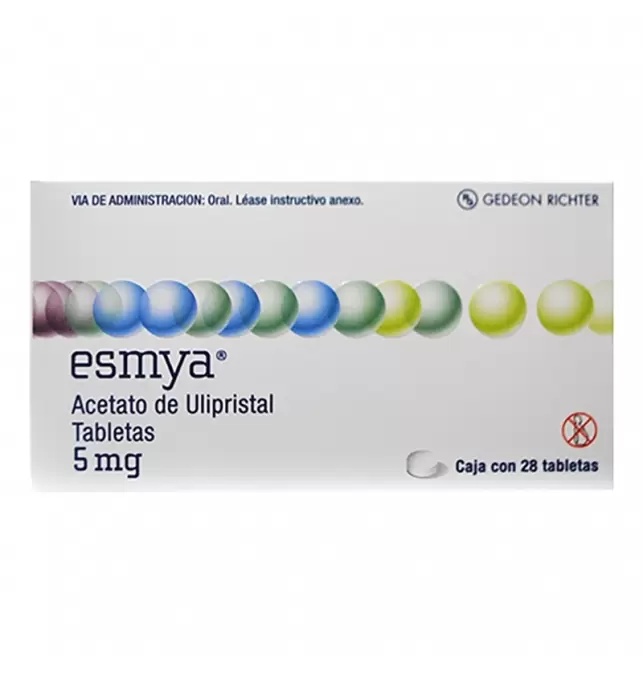
ESMYA 5 мг Таблетка

Рассмотрение рецепта онлайн
Врач рассмотрит ваш случай и примет решение о назначении рецепта, если это медицински оправдано.

Поговорите с врачом об этом лекарстве
Обсудите симптомы и возможные дальнейшие шаги на онлайн-консультации.



Инструкция по применению ESMYA
Содержание инструкции
Esmya 5 mg tablets
Ulipristal acetate
Read this leaflet carefully before you start taking this medicine as it contains
important information for you.
- Keep this leaflet. You may need to read it again.
- If you have any questions, ask your doctor or pharmacist.
- This medicine has been prescribed for you only. Do not pass it on to others, even if they have the same symptoms as you, as it may be harmful.
- If you get any side effects, even those not listed in this leaflet, tell your doctor or pharmacist. See section 4.
Contents of this leaflet
- 1. What Esmya is and what it is used for
- 2. What you need to know before you take Esmya
- 3. How to take Esmya
- 4. Possible side effects
- 5. How to store Esmya
- 6. Contents of the pack and other information
1. What is Esmya and what is it used for
Esmya contains the active substance ulipristal acetate. It is used to treat symptoms, from moderate to severe,
of uterine fibroids (also called myomas), which are benign tumors of the uterus.
Esmya is used in adult women (over 18 years of age) who have not reached menopause.
In some women, uterine fibroids can cause heavy menstrual bleeding (“periods”),
pelvic pain (discomfort in the lower abdomen) and pressure on other organs.
This medicine works by changing the activity of progesterone, a hormone naturally present
in the body. It is used for the long-term treatment of fibroids to reduce their size,
stop or reduce bleeding, and increase the number of red blood cells.
2. What you need to know before taking Esmya
You should know that most women do not experience menstrual bleeding (periods)
during treatment and for some weeks afterwards.
Do not take Esmya
- if you are allergic to ulipristal acetate or any of the other ingredients of Esmya (listed in section 6);
- if you have underlying liver disease;
- if you are pregnant or breastfeeding;
- if you have vaginal bleeding not caused by uterine fibroids;
- if you have a tumor of the uterus, cervix (the neck of the uterus), ovaries or breast.
Warnings and precautions
- Before starting treatment with Esmya, you will undergo blood tests to check your liver function. Based on the results of these tests, your doctor will decide whether treatment with Esmya is suitable for you. These tests will be repeated every month for the first 2 treatment cycles. For subsequent treatment cycles, liver function will be checked once before each new treatment cycle and if you should experience the symptoms described below.
Furthermore, a further liver check must be performed 2-4 weeks after
stopping treatment.
If you experience any signs related to the liver during treatment, such as a feeling of
illness (nausea or vomiting), fatigue, severe tiredness, jaundice (yellowing of the eyes or
skin), dark urine, itching or pain in the upper abdomen, stop treatment and
consult a doctor immediately, who will check your liver function and decide whether
you can continue treatment.
- If you are taking a hormonal contraceptive (e.g. the birth control pill) (see "Other medicines and Esmya"), you must use a reliable barrier method of contraception (such as a condom) while taking Esmya.
- If you have liver or kidney disease, tell your doctor or pharmacist before taking Esmya.
- If you suffer from severe asthma, Esmya may not be suitable for you. Discuss this with your doctor.
Treatment with Esmya generally causes a significant reduction in menstrual bleeding (periods) or may even stop it within the first 10 days of treatment. However, if
you continue to have heavy bleeding, tell your doctor.
Menstruation will generally resume within 4 weeks after the end of treatment with Esmya. The
uterine lining may thicken or change as a result of treatment with Esmya. These
changes disappear after the end of treatment and the return of menstruation.
Children and adolescents
Children under the age of 18 should not take Esmya, as the safety and efficacy of
ulipristal acetate in this age group have not been established.
Other medicines and Esmya
Tell your doctor or pharmacist if you are taking, have recently taken or might take
any other medicine.
If you are taking any of the medicines listed below, tell your doctor or
pharmacist, as these medicines may interact with Esmya:
- Some medicines used in the treatment of heart problems (e.g. digoxin).
- Some medicines used to prevent stroke and blood clots (e.g. dabigatran etexilate).
- Some medicines used in the treatment of epilepsy (e.g. phenytoin, fosphenytoin, phenobarbital, carbamazepine, oxcarbazepine, primidone).
- Some medicines used in the treatment of HIV infection (e.g. ritonavir, efavirenz, nevirapine).
- Medicines used in the treatment of some bacterial infections (e.g. rifampicin, telithromycin, clarithromycin, erythromycin, rifabutin).
- Some medicines used in the treatment of fungal infections (e.g. ketoconazole (except shampoo), itraconazole).
- Herbal remedies containing St John's Wort ( Hypericum perforatum), used in the treatment of depression or anxiety.
- Some medicines used in the treatment of depression (e.g. nefazodone).
- Some medicines used in the treatment of high blood pressure (e.g. verapamil).
Esmya is likely to reduce the effectiveness of some hormonal contraceptives. It is also likely that hormonal contraceptives and progestins (e.g. norethindrone or levonorgestrel) will reduce the effectiveness of
Esmya. Consequently, hormonal contraceptives are not recommended and you should use a reliable barrier method of contraception, such as a condom, during treatment with Esmya.
Esmya with food and drink
You should avoid drinking grapefruit juice during treatment with Esmya.
Pregnancy and breastfeeding
If you are pregnant, suspect you may be pregnant or are planning a pregnancy, or if you are breastfeeding, ask your doctor or pharmacist for advice before taking this medicine.
Do not take Esmya if you are pregnant. Treatment during pregnancy may affect its
course (we do not know if Esmya can harm the fetus or cause an abortion). If you become
pregnant during treatment with Esmya, you should stop taking Esmya immediately and contact
your doctor or pharmacist.
Esmya is likely to reduce the effectiveness of some hormonal contraceptives (see “Other medicines and
Esmya”). Esmya is excreted in breast milk. You should therefore not breastfeed while taking Esmya.
Driving and using machines
Esmya may cause mild dizziness (see section 4 “Possible side effects”). If you experience these
symptoms, do not drive or use machines.
3. How to take Esmya
Take this medicine following exactly the instructions of your doctor. If you have any doubts, ask your
doctor or pharmacist.
The recommended dose is one 5 mg tablet per day for treatment cycles of up to 3 months
each. If you have been prescribed several 3-month treatment cycles with Esmya, you should start
each cycle as soon as possible during the second menstrual cycle following completion of the
previous treatment.
You should always start taking Esmya within the first week of your menstrual cycle.
The tablet should be swallowed with water and can be taken with or without food.
If you take more Esmya than you should
Experience with taking different doses of Esmya at once is limited. No serious adverse effects have been
reported in case of concomitant intake of multiple doses of this medicine.
However, if you take more Esmya than you should, it is recommended to consult your doctor or pharmacist
about it.
If you forget to take Esmya
If you forget a dose that you were supposed to take less than 12 hours ago, take it as soon as you
remember. If more than 12 hours have passed, skip the missed dose and take only one tablet, as
usual. Do not take a double dose to make up for the forgotten tablet.
If you stop taking Esmya
Esmya must be taken daily during treatment cycles of up to 3 months. During
each treatment cycle, do not stop taking the tablets without your doctor's advice, even
if you feel better, as symptoms may recur afterwards.
If you have any questions about the use of this medicine, ask your doctor or pharmacist.
4. Possible side effects
Like all medicines, this medicine can cause side effects, although not everybody gets them.
Stop using Esmya and contact your doctor immediately if you experience any of the
following symptoms:
- swelling of the face, tongue or throat; difficulty swallowing; hives and difficulty
breathing. These are possible symptoms of angioedema (frequency not known).
- nausea or vomiting, severe fatigue, jaundice (yellowing of eyes or skin), dark urine, itching or pain in the upper part of the stomach. These symptoms may be signs of liver injury (frequency not known), which has led to liver transplantation in a small number of cases. See also section 2 Warnings and precautions. Very common side effects(affecting more than 1 in 10 people):
- reduction or absence of menstrual bleeding (amenorrhea)
- thickening of the uterine lining (endometrial thickening).
Common side effects(affecting up to 1 in 10 people):
- headache
- feeling of dizziness (vertigo)
- stomach pain, unwellness (nausea)
- acne
- muscle and bone pain (musculoskeletal)
- fluid-filled sac in the ovaries (ovarian cyst), breast tension/pain, lower abdominal (pelvic) pain
- hot flushes
- tiredness (fatigue)
- weight gain.
Uncommon side effects(affecting up to 1 in 100 people):
- drug allergy
- anxiety
- mood swings
- dizziness
- dry mouth, constipation
- hair loss, dry skin, increased sweating
- back pain
- urinary incontinence
- uterine bleeding (uterine hemorrhage), vaginal discharge, abnormal vaginal bleeding, breast discomfort
- swelling due to fluid retention (edema)
- extreme tiredness (asthenia)
- increased cholesterol in the blood detected with tests, increased fats in the blood (triglycerides) detected with tests.
Rare side effects(affecting up to 1 in 1,000 people):
- nosebleed
- indigestion, bloating
- rupture of fluid-filled sac in the ovaries (ovarian cyst rupture)
- breast swelling.
Reporting of side effects
If you get any side effects, talk to your doctor or pharmacist. This includes any possible side effects not listed in this leaflet. You can also report side effects directly through
the national reporting system listed in Annex V.
By reporting side effects you can help provide more information on the safety
of this medicine.
5. How to store Esmya
Keep this medicine out of the sight and reach of children.
Do not use this medicine after the expiry date which is stated on the pack and on the blister after
“Exp.” The expiry date refers to the last day of that month.
Keep the blister in the outer packaging to protect the medicine from light.
Do not dispose of any medicine in waste water or household waste. Ask your pharmacist how to
dispose of medicines you no longer use. This will help protect the environment.
6. Package contents and other information
What Esmya contains
- The active ingredient is ulipristal acetate. One tablet contains 5 mg of ulipristal acetate.
- The other ingredients are microcrystalline cellulose, mannitol, sodium croscarmellose, talc and magnesium stearate.
Description of the appearance of Esmya and contents of the pack
Esmya is a round, curved tablet of 7 mm in white-whitish color, with the inscription “ES5”
embossed on one side.
It is available in Al/PVC/PE/PVDC blisters in cardboard boxes containing 28, 30 and 84 tablets or in
Al/PVC/PVDC blisters in cardboard boxes containing 28 and 84 tablets.
Not all pack sizes may be marketed.
Marketing Authorisation Holder
Gedeon Richter Plc.
Gyömrői út 19-21.
1103 Budapest
Hungary
Manufacturer
Cenexi
17, rue de Pontoise
F-95520 Osny
France
Gedeon Richter Plc.
Gyömrői út 19-21.
1103 Budapest
Hungary
Other sources of information
More detailed information on this medicine is available on the website of the European
Medicines Agency: http://www.ema.europa.eu
ANNEX IV
SCIENTIFIC CONCLUSIONS
Scientific conclusions
Ulipristal acetate 5 mg (Esmya) was first authorised in all EU/EEA countries on 23
February 2012 by the centralised procedure. Since 2019, in several EU countries, generic medicines containing ulipristal acetate 5 mg with various
trade names have been authorised by national procedures. The post-authorisation exposure to ulipristal acetate 5 mg is
estimated to be 960,414 patients, cumulatively up to 29 February 2020.
Ulipristal acetate initially obtained marketing authorisation in the EU for the
pre-operative treatment of moderate to severe symptomatic uterine fibroids in adult women of reproductive age, with a treatment cycle duration limited to 3 months due to the lack of long-term safety data for a period longer than 3 months. In 2015, when long-term data became available, a second indication was approved to allow repeated cycles of intermittent treatment in women for whom surgery was not planned.
In May 2018, the PRAC completed a review of the benefit-risk balance of Esmya under
Article 20 of Regulation (EC) No 726/2004, initiated following the reporting of three cases of
serious liver injury resulting in liver transplantation. During the review, a further case relating to acute hepatic failure associated with the use of ulipristal acetate 5 mg was reported. Following the review, and considering all available data, the PRAC recommended a number of
measures to minimise the risk of serious liver injury associated with ulipristal acetate 5 mg,
including limitations of indications. The PRAC recommendations were approved by the
CHMP in May 2018. Currently, ulipristal acetate is approved in the EU/EEA for the following
indications:
- single cycle of therapyfor the pre-operative treatment of moderate to severe symptomatic uterine fibroids in adult women of reproductive age;
- intermittent treatment of moderate to severe symptomatic uterine fibroids in adult women of reproductive age who are not eligible for surgery. In December 2019, the EMA was informed of a new case of serious liver injury resulting in liver transplantation following exposure to ulipristal acetate (5th case overall). The severity of the reported case, the causal link between ulipristal acetate 5 mg and acute hepatic failure, and its occurrence despite adherence to the implemented risk minimisation measures were considered grounds for serious concern justifying an in-depth assessment of the impact on the benefit-risk balance of ulipristal acetate and a further evaluation of the effectiveness of the implemented risk minimisation measures. On 5 March 2020, the European Commission (EC) initiated a procedure under Article 31 of Directive 2001/83/EC, inviting the Agency to assess the aforementioned concerns and their impact on the benefit-risk balance of ulipristal acetate 5 mg and to provide an opinion on the maintenance, variation, suspension or revocation of the marketing authorisation of ulipristal acetate 5 mg. Furthermore, the EC requested the Agency to provide an opinion regarding the need to adopt provisional measures. On 12 March 2020, after reviewing the available data and in particular the 5th case overall of serious liver injury resulting in liver transplantation, the PRAC recommended, as a temporary measure, the suspension of the marketing authorisations of medicines containing ulipristal acetate 5 mg until a final decision could be reached. On 3 September 2020, the PRAC adopted a recommendation for the revocation of the marketing authorisations of the affected medicines, which was reviewed by the CHMP, pursuant to Article 107 duodecies of Directive 2001/83/CE.
Summary of the PRAC scientific assessment
The efficacy of ulipristal acetate 5 mg in the treatment of uterine fibroid symptoms has been demonstrated
at the time of initial marketing authorisation of Esmya. The clinical benefits of
pre-operative treatment can be considered limited as it is confined to a single
treatment cycle before surgery, and other short-term treatment alternatives exist. The benefits of ulipristal acetate are considered greater in the intermittent treatment indication, namely for patients who are not suitable for surgery, as treatment alternatives are limited for
these patients. Patients not suitable for surgery may include women who, for various reasons, represent a surgical risk, for example in cases of obesity, concomitant diseases, treatment with certain medications or in order to preserve fertility. Therefore, ulipristal acetate 5 mg can offer clinically
relevant benefits to women not suitable for surgery whose health and quality of life are affected by
the symptoms of uterine fibroids, particularly heavy bleeding.
In the previous Esmya review under Article 20, the risk of
drug-induced liver injury (DILI) associated with the use of ulipristal acetate 5 mg was carefully examined. Following this review, “hepatic failure” was declared as an adverse reaction and drug-induced liver injury (DILI) as an important identified risk of ulipristal acetate, both approved indications were limited and several risk minimisation measures were implemented. Furthermore,
the marketing authorisation holder of Esmya was requested to conduct
several studies, including on the mechanism of ulipristal acetate associated with liver injury, to further characterise
this risk. However, these studies did not contribute to further clarification of the
mechanism of liver injury associated with ulipristal acetate 5 mg and, based on the available evidence,
the hepatotoxicity associated with ulipristal acetate is considered to be of an idiosyncratic nature,
making it difficult to identify susceptible patients who would be at greater risk.
Since the previous review, Gedeon Richter has observed that patient exposure to Esmya has
recorded a significant decrease (over 50%). Between 1 March 2018 and 29 February 2020, 476 new cases were received within the SMQ liver disorders (serious and non-serious events); of these,
97 cases were serious with 7 cases containing sufficient/partially sufficient information for
causality assessment, including one case of severe liver injury resulting in liver transplantation (5th case overall). In this case, no confounding factors were identified and other plausible etiologies were excluded; consequently, the causality between ulipristal acetate and acute hepatitis
resulting in acute hepatic failure and liver transplantation was assessed as
probable/highly probable, i.e. with a significantly higher degree of certainty.
It was also observed that progression to liver failure with subsequent liver transplantation could not be avoided. This case therefore confirms that the
recommendations regarding liver monitoring included in the product information following the
previous referral were not able to prevent severe liver injury resulting in
liver transplantation in all patients.
In the context of the present review, the marketing authorisation holders were
asked to discuss the need for and feasibility of any new risk minimisation measures to further mitigate the risk of severe liver toxicity, including changes to
the product information, as well as proposals for monitoring their effectiveness.
To further reduce the risk, the marketing authorisation holder of
the originator medicine Esmya has proposed to withdraw the indication for pre-operative treatment,
specifying that pre-operative treatment could be replaced by the use of a GnRH agonist for short-term use. As highlighted by some experts consulted in the context of
the present review, the reduction in fibroid volume with ulipristal acetate 5 mg is not considered
very high and therefore the use of this medicine in a pre-operative setting does not have much
impact on the positive outcome of surgery. Most experts also observed that
alternatives exist for this indication in the pre-operative phase. In light of the above and
taking into account the risk of severe liver injury resulting in liver transplantation due to
ulipristal acetate 5 mg, the risk-benefit ratio of ulipristal acetate 5 mg in the pre-operative treatment of moderate to severe symptoms of uterine fibroids is considered unfavourable for this
indication, which therefore needs to be removed.
To further reduce the risk, the marketing authorisation holder of
Esmya has also proposed a limitation of the target population for the intermittent treatment indication to patients not suitable for hysterectomy. However, concerns were raised
regarding the definition of this subset of patients. From the discussions of the expert group,
convened in the context of the present review, it emerged that the proposed description/definition of
this subset of patients is very broad (e.g. women with evident medical contraindications to surgery, women for whom other therapeutic options have failed, women who want to preserve fertility, and women unwilling to undergo surgery). In clinical practice, depending on the interpretation of “patients unwilling to undergo surgery” or “patients not suitable for surgery/hysterectomy”,
this indication may apply to many patients, thereby weakening the limitation
of the indication to “not suitable for surgery/hysterectomy” as a risk minimisation measure. Experts also acknowledged that long-term data on the benefits of ulipristal acetate 5 mg beyond symptom relief, i.e. to avoid
surgery/hysterectomy, are currently lacking.
The experts consulted during the review recommended that the benefits and risks of ulipristal acetate be adequately communicated to patients, especially the risk of liver injury,
and stressed the importance of placing these benefits and risks in the context of the benefits and risks
of all other available options. The PRAC took into account the experts’ views that surgical treatment alternatives for intervening on moderate to severe symptoms of
uterine fibroids are not without risk. However, the PRAC considered that a fair comparison
between surgical and pharmacological treatments would be difficult, as it would require including
various types of short- and long-term outcomes of both treatments regarding health, preferably based on comparative studies. Surgical treatment can lead to immediate cure but may involve, in rare cases, a risk of short- or long-term sequelae, whereas
pharmacological treatments mainly result in symptom relief but can, in rare cases,
cause serious adverse events. Gedeon Richter, the marketing authorisation holder of Esmya, also acknowledged that the feasibility of ensuring equal opportunities for all
patients to make a sufficiently informed decision must be weighed, including
adequate sharing of information by the treating physician regarding the risks of the therapeutic options and their consequences, and that significant limitations can be identified based on the available communication tools and channels.
The PRAC was of the opinion that the proposed changes to the indications (i.e. the removal
of the pre-operative indication and the limitation of the intermittent indication to patients not suitable for surgery/hysterectomy) could further reduce the number of patients
exposed to ulipristal acetate 5 mg. However, as acknowledged by the marketing authorisation holder of Esmya, the patient group for which the therapy is suitable cannot be
scientifically well defined, which would make the decision to treat with ulipristal acetate 5 mg rather subjective. Furthermore, in view of the idiosyncratic nature of the risk and the
difficulty in predicting its occurrence (e.g. by identifying relevant risk factors), the PRAC considered that the risk of severe liver injury would not be sufficiently reduced in patients
who would still be exposed. In addition, the consulted experts were unable to identify a
population in which the risk could be predicted and therefore prevented. The PRAC also noted the
limitations in the feasibility of ensuring that adequate information is made available to all patients for informed decision-making and was of the opinion that further risk minimisation measures could not be implemented to avoid the risk of severe liver injury. In light of the above, the
PRAC concluded that the risk-benefit ratio of ulipristal acetate 5 mg was unfavourable as
intermittent treatment of moderate to severe symptoms of uterine fibroids.
Considering the severity and idiosyncratic nature of the risk of severe liver injury, the
occurrence of liver failure despite implemented risk minimisation measures, the fact
that no further measures to avoid and reduce the risk have been identified, nor a
subpopulation in which the risk-benefit ratio of ulipristal 5 mg could be positive, the PRAC has
concluded that this risk outweighs the benefits of ulipristal acetate 5 mg in all its
indications. Since no condition, if met in the future, would entail a positive risk-benefit ratio for these medicines, the PRAC recommended the revocation of the
marketing authorisations for medicines containing ulipristal acetate 5 mg.
Reasons for the PRAC recommendation
Considering that:
- the PRAC has examined the procedure under Article 31 of Directive 2001/83/EC resulting from the evaluation of pharmacovigilance data for medicines containing ulipristal acetate 5 mg;
- the PRAC has examined the information available to the Committee concerning ulipristal acetate 5 mg and the risk of severe liver injury, including the data provided by the marketing authorisation holders of ulipristal acetate 5 mg in writing and orally and the outcome of the consultation with the ad hoc expert group convened in the context of this procedure;
- the PRAC has examined all cases of severe liver injury reported among women treated with ulipristal acetate 5 mg for the treatment of uterine fibroid symptoms, including the report of a new case of severe liver injury resulting in liver transplantation (the 5th case overall) despite the agreed risk minimisation measures being followed, as a result of the previous referral under Article 20. The PRAC concluded that the causal association between ulipristal acetate 5 mg and severe liver injury was probable/highly probable and observed that progression to liver failure could not be avoided;
- the PRAC has analysed further risk minimisation proposals and was unable to identify new measures that would ensure an effective reduction of the risk to an acceptable level. In view of its severity and idiosyncratic nature, the PRAC concluded that this risk outweighs the benefits of ulipristal acetate 5 mg in the treatment of uterine fibroid symptoms. No sub-group of patients could be identified in which the benefits of ulipristal acetate 5 mg would outweigh the risks;
- furthermore, the PRAC was unable to identify any conditions which, if observed, could demonstrate a positive risk-benefit ratio of medicines containing ulipristal acetate 5 mg. Consequently, the Committee considers that the risk-benefit ratio of medicines containing ulipristal acetate 5 mg for the treatment of uterine fibroid symptoms is unfavourable and recommends, under Article 116 of Directive 2001/83/CE, the revocation of the marketing authorisations for all medicines containing ulipristal acetate 5 mg.
Detailed explanation from the CHMP regarding the scientific reasons for the divergences compared to the
PRAC recommendation
The CHMP has considered the PRAC recommendation and the additional information
provided by the marketing authorisation holders, as well as the outcome of the consultation
with the ad hoc expert group convened in the context of this procedure. Based on the above
data, the CHMP did not agree with the overall conclusions and the reasons for the PRAC recommendation.
Points of divergence compared to the PRAC recommendation and scientific justification of the
CHMP position
Safety aspects
In 2018, in the context of the review relating to Esmya under Article 20, the risk of serious liver injury due to ulipristal acetate 5 mg was evaluated and the PRAC and CHMP concluded that the medicine may carry a risk of serious liver injury. While uncertainty remained regarding causality, the PRAC and CHMP acknowledged the very serious outcome of the reported cases of liver injury and a series of risk minimisation measures were implemented for Esmya, including a limitation of the indication, the introduction of a contraindication in the case of patients with underlying liver disease, a recommendation to perform liver function tests before and during treatment and the adoption of educational material, including a patient card in each pack of ulipristal acetate 5 mg in order to adequately inform patients about the possible risks of liver injury. With the clear communication of the risk to patients and healthcare professionals, it was expected that if other cases of serious liver injury with resulting liver damage occurred, they would be reported.
An assessment of the effectiveness of the risk minimisation measures adopted in 2018 indicated that the restriction of the population through the limitation of the two indications had led to a notable reduction in the number of patients treated to approximately 25-30% of the percentage of patients before the referral under Article 20 in 2018. The CHMP observed that the reporting rate of serious liver injury resulting in liver transplantation, at 0.52/100,000 based on 4/765,000 patients exposed to ulipristal acetate 5 mg in the period preceding the previous procedure under Article 20 and at 0.51/100,000 based on 1/194,614 patients exposed to ulipristal acetate 5 mg in the period following the previous procedure under Article 20, remained unchanged. It was also observed that these incidences are in line with a conservative background incidence relating to liver death/transplantation of 0.55 cases per 100,000 inhabitants, as described by Ibañez in 2002.
The CHMP also highlighted that the results of a limited number of patients who presented increased liver function test results during the intake of ulipristal acetate 5 mg showed an improvement or normalisation of these liver function test (LFT) values following discontinuation of the medicine. Although these data are limited, they suggest that performing liver function tests is useful in preventing the progression of liver damage. The CHMP however acknowledged that the 5th case of serious liver injury reported in December 2019 had a probable/highly probable causal relationship with ulipristal acetate 5 mg and that this case occurred despite the risk minimisation measures in place and that progression to liver failure requiring liver transplantation could not be avoided.
Efficacy aspects
- Pre-operative treatment of moderate to severe symptomatic uterine fibroids At the end of a single treatment cycle (3 months), 73.4% and 75.3% of patients in two different phase III studies respectively reported that amenorrhoea and median fibroid volume had been reduced by 21.2% and 35.6% respectively compared to baseline. The reduction in fibroid size, which may facilitate surgery, as well as the reduction in blood loss and anaemia, which will improve the patient’s overall health, are considered clinically relevant. However, the clinical benefits of pre-operative treatment are considered limited, and there is another short-term pre-operative treatment alternative, namely the use of a GnRH agonist.
- Intermittent treatment of moderate to severe symptomatic uterine fibroids In a phase III study, at the end of the fourth treatment cycle, corresponding to approximately two years of treatment (4 cycles of 3 months with repeated treatment cycles starting from the first week of the second menstruation after completion of the previous treatment cycle), 69.6% of patients reported amenorrhoea and the median reduction in fibroid volume compared to baseline was 71.8%. The benefits of ulipristal acetate 5 mg are considered greater in the indication of intermittent treatment, i.e. for patients whose health and quality of life are affected by the symptoms of uterine fibroids, in particular heavy bleeding, but who are not suitable for surgery, as there are no other obvious pharmacological treatment alternatives for those patients who require longer treatment. Patients unsuitable for surgery may include women who, for various reasons, have a surgical risk, for example because they are obese, at higher risk of venous thrombosis, have a concomitant disease or are simultaneously treated with other medicines. Furthermore, surgery may not be suitable for women who want to maintain the possibility of becoming pregnant.
Risk-benefit ratio
The CHMP observed that the 5th case of serious liver injury reported with ulipristal acetate 5 mg had a probable/highly probable causal relationship with the medicine in question and acknowledged that this case occurred despite the risk minimisation measures in place and that progression to liver failure requiring liver transplantation could not be avoided. However, the CHMP found that the incidence of serious liver injury resulting in liver transplantation with the use of ulipristal acetate 5 mg is in line with a conservative background incidence relating to liver death/transplantation.
The CHMP also took into consideration the proposal of the marketing authorisation holder of Esmya to withdraw the indication for pre-operative treatment in order to limit exposure to ulipristal acetate and thus further minimise the risk. The indication of a single therapeutic cycle of pre-operative treatment reflects a situation where surgery is planned, however, the reduction in fibroid size and the reduction in blood loss and anaemia are considered clinically relevant. However, the CHMP observed that some experts consulted in the context of this review pointed out that the reduction in fibroid volume with ulipristal acetate 5 mg was not considered very high and therefore the use of this product in a pre-operative setting did not particularly affect the positive outcome of a surgical intervention. The CHMP also noted that experts highlighted the existence of alternatives for this indication in the pre-operative phase. In light of the above and taking into account the risk of serious liver injury resulting in liver transplantation with the use of ulipristal acetate 5 mg, the CHMP agreed with the PRAC that ulipristal acetate 5 mg should no longer be used as pre-operative treatment of moderate to severe symptomatic uterine fibroids and therefore this indication should be removed.
The CHMP found that the PRAC was also of the opinion that the risk-benefit ratio of ulipristal acetate 5 mg was negative as intermittent treatment of moderate to severe symptomatic uterine fibroids. The CHMP was however of the opinion that the benefits of ulipristal acetate 5 mg in the indication of intermittent treatment remain relevant for a subcategory of women with moderate to severe symptomatic uterine fibroids when uterine fibroid embolisation and/or surgical treatment options are not suitable or have failed, as there are only very limited treatment alternatives for such patients.
The experts consulted during an ad hoc expert group meeting agreed that, when considering ulipristal acetate 5 mg as intermittent treatment, it is very important to take into account the risks associated with alternative options (hysterectomy and less invasive alternative surgical treatments, such as abdominal myomectomy). An important aspect to consider is that each surgical option has its own risk, for example the mortality rate following hysterectomy ranges from 1 in 500 to 1 in 3,000; while major complications such as bleeding, intestinal perforations have a frequency of 1 in
- 100. Recurrence of fibroids following myomectomy is common and additional treatment may be necessary (American college of Obstetricians and gynaecologists, 2008). Abdominal myomectomy also carries substantial risks with regard to fertility, including a 3-4% risk of intraoperative conversion to hysterectomy and frequent development of postoperative intrauterine adhesions. The rates of major complications following embolisation are similar to those found following surgery, but embolisation is associated with a higher risk of minor complications and the need for further surgery (usually a hysterectomy). The expert group clarified that it is also important to consider the population of patients who do not intend to undergo surgery, such as younger patients for whom refusal of a hysterectomy would preserve the possibility of becoming pregnant. In this context, most of the experts consulted in the context of the ad hoc expert group meeting stressed the need to have ulipristal acetate 5 mg available as an option for the intermittent treatment of moderate to severe symptomatic uterine fibroids. It was also observed that the experts had remarked on the importance of a detailed analysis of the risks and a careful review of the individual case before making any treatment decision and that patient counselling should be at the heart of the decision-making process. The patient representative present at the meeting shared this view, stressing the importance of informed choice and decision-making by individuals taking into account all available options. The CHMP agreed that the decision as to whether surgery is the best option, including hysterectomy, must be made at the level of the treating physician and the patient in a context of informed decision-making. The CHMP also considered that, provided that the benefits and risks of ulipristal acetate 5 mg and other available therapeutic options are adequately communicated to both healthcare professionals and patients, ulipristal acetate 5 mg should remain available for the intermittent treatment of moderate to severe symptomatic uterine fibroids for adult women who have not reached menopause in the event that uterine fibroid embolisation and/or surgical treatment options are not suitable or have failed. To further minimise the risks and improve communication regarding the risks associated with ulipristal acetate 5 mg, the CHMP recommended updating the product information to reflect the fact that, in some cases of liver injury, a liver transplant has been necessary. The CHMP also recommended an update of the educational material for both prescribing physicians and patients for the purpose of raising awareness of the risk of serious liver injury as well as reiterating the need to inform patients about the risks and benefits of the therapeutic options available to enable them to make an informed decision.
Prescribing physicians and patients in order to raise awareness of the risk of serious liver injury as well as to reiterate the need to inform patients about the risks and benefits of the therapeutic options available to enable them to make an informed decision.
Summary of new recommended measures
Changes to product information
The CHMP considered that changes to paragraphs 4.1, 4.4 and 4.8 of the product characteristics summary were necessary to minimise the risk of serious liver injury associated with the use of
ulipristal acetate 5 mg.
The indication has been limited to the intermittent treatment of moderate to severe uterine fibroid symptoms in adult women who have not reached menopause, in cases where uterine fibroid embolisation and/or surgical treatment options are not suitable or have proven ineffective.
The indication for a single pre-operative treatment cycle has been removed as ulipristal
acetate 5 mg should no longer be used for this indication.
Furthermore, the paragraph relating to warnings and precautions for use in the product information (paragraph 4.4) and the description of the adverse reaction of hepatic failure in paragraph 4.8 have been amended to include the fact that a liver transplant has been necessary for some cases of liver injury and hepatic failure reported with ulipristal acetate 5 mg.
Additional risk minimisation measures
The marketing authorisation holders must adopt a risk management system described in a revised risk management plan with the following changes.
The CHMP considered that the existing physician’s guide to prescribing should be amended to reflect the revised indication and the fact that a liver transplant has been necessary for some cases of liver injury and hepatic failure reported with ulipristal acetate 5 mg, as well as to highlight that the frequency of hepatic failure and risk factors for patients are unknown.
Prescribing physicians must also inform patients about the risks and benefits of available therapeutic options to enable them to make an informed decision.
It was also considered that the existing patient alert card should be amended to clarify that a liver transplant has been necessary in a limited number of cases.
Direct communication to healthcare professionals and communication programme
The committee adopted the wording of a direct healthcare professional communication (DHPC) to inform healthcare professionals of the outcome of this review, including the limited indication for
ulipristal acetate, in order to provide background information on the risk of serious liver injury and
advise them to inform patients about the possible signs and symptoms of liver injury, as well as the risks and
benefits of all available alternatives to enable them to make an informed decision. The
committee also agreed on a communication programme.
Reasons for the CHMP opinion and divergences from the PRAC recommendation
Considering that:
- the CHMP has taken into account the PRAC recommendation on ulipristal acetate 5 mg and all the data provided by the marketing authorisation holders of ulipristal acetate 5 mg;
- the CHMP observed that the causal association between ulipristal acetate 5 mg and the 5 cases of serious liver injury resulting in liver transplantation was assessed as probable/highly probable, and acknowledged that progression to hepatic failure requiring liver transplantation could not be avoided despite the agreed risk minimisation measures resulting from the previous referral under Article 20;
- the CHMP agreed that the risk of serious liver injury outweighs the benefits of ulipristal acetate as a single cycle of therapy for pre-operative treatment of moderate to severe uterine fibroid symptoms in adult women of reproductive age and therefore this indication should be removed in conjunction with the marketing authorisation holders;
- the CHMP was however of the opinion that the benefit-risk ratio of ulipristal acetate in the intermittent treatment indication is considered favourable only in a subgroup of women with moderate to severe uterine fibroid symptoms who have not reached menopause and for whom uterine fibroid embolisation and/or surgical treatment options are not suitable or have proven ineffective, provided that the risks are adequately communicated to patients and prescribing physicians through wording in the product information and educational material to ensure that treatment decisions are made consciously, in addition to the risk minimisation measures already implemented as a result of the previous review. The CHMP therefore believes that the benefit-risk ratio of medicines containing ulipristal acetate 5 mg remains favourable, subject to the changes to the product information and the additional risk minimisation measures outlined above. The CHMP therefore recommends the variation of the terms of the marketing authorisations for medicines containing ulipristal acetate 5 mg.

Не уверены, подходит ли вам это лекарство?
Обсудите симптомы и варианты лечения с врачом онлайн.

Уже начали прием и появились вопросы?
Обсудите свое состояние и дальнейшие шаги с врачом онлайн.
- Страна регистрации
- Форма выпускаTablet, 5 MG
- Код АТХG03XB02
- Действующее вещество
- Отпускается по рецептуДа
- Производитель
- Информация на этой странице носит справочный характер и не является медицинской консультацией. Перед началом приема лекарства обязательно проконсультируйтесь с врачом.
- Аналоги ESMYAФорма выпуска: Coated tablet, 200 MGДействующее вещество: МифепристонПроизводитель: EXELGYNОтпускается по рецептуФорма выпуска: Film-coated tablet, 20 MGДействующее вещество: bazedoxifeneПроизводитель: PFIZER EUROPE MA EEIGОтпускается по рецептуФорма выпуска: Hard capsule, 200MGДействующее вещество: danazolПроизводитель: FIDIA FARMACEUTICI S.P.A.Отпускается по рецепту
Аналоги ESMYA в других странах
Лекарства с тем же действующим веществом, доступные в других странах.
Аналог ESMYA в Испания
Врачи онлайн по ESMYA
Обсудите применение ESMYA и возможные следующие шаги — по оценке врача.


Получите рецепт на ESMYA онлайн
Заполните форму за 2 минуты
Расскажите о симптомах, истории болезни и нужном препарате.
Выберите врача или мы назначим
Выберите специалиста или мы подберём ближайшего доступного врача.
Врач рассматривает ваш случай
Обычно в течение 30 минут. Может задать уточняющие вопросы в чате.
Получите в любой аптеке
Электронный рецепт отправляется на вашу почту — действителен по всей Польше.
Часто задаваемые вопросы
ESMYA требует рецепта в Италия. Вы можете уточнить у врача онлайн, подходит ли это лекарство для вашей ситуации.
Действующее вещество ESMYA — ulipristal. Эта информация помогает определить лекарства с тем же составом под другими торговыми названиями.
ESMYA производится компанией GEDEON RICHTER PLC. Упаковка и торговое название могут отличаться в зависимости от дистрибьютора.
Врачи, включая Семейные врачи, Психиатры, Дерматологи, Кардиологи, Эндокринологи, Гастроэнтерологи, Пульмонологи, Нефрологи, Ревматологи, Гематологи, Инфекционисты, Аллергологи, Гериатры, Педиатры, Онкологи, могут оценить целесообразность применения ESMYA с учетом вашей ситуации и местных правил. Вы можете записаться на онлайн-консультацию, чтобы обсудить возможные варианты.
Польша имеет хорошо развитую систему здравоохранения в крупных городах, таких как Варшава, Краков, Вроцлав и Гданьск. Аптеки широко доступны и работают в соответствии с действующим законодательством, обеспечивая доступ к рецептурным препаратам.
Вы можете купить ESMYA в Варшаве, Кракове, Вроцлаве или Гданьске в любой аптеке при наличии действующего рецепта.
Чтобы получить рецепт, вы можете воспользоваться Oladoctor:
Другие лекарства с тем же действующим веществом (ulipristal) включают MIFEGYNE, KONBRITSA, DANATROL. Они могут отличаться торговым названием или формой выпуска, но содержат одинаковый терапевтический компонент. Перед изменением лечения рекомендуется проконсультироваться с врачом.
