



EFFIPREV 2 mg /0.03 Mg Фильм-Coated Таблетки

Рассмотрение рецепта онлайн
Врач рассмотрит ваш случай и примет решение о назначении рецепта, если это медицински оправдано.

Поговорите с врачом об этом лекарстве
Обсудите симптомы и возможные дальнейшие шаги на онлайн-консультации.



Инструкция по применению EFFIPREV
Содержание инструкции
Effiprev 2 mg/0.03 mg film-coated tablets
dienogest and ethinylestradiol
EQUIVALENT MEDICINE
Important things to know about combined hormonal contraceptives (CHCs):
- They are one of the most reliable reversible methods of contraception, if used correctly
- They slightly increase the risk of blood clots forming in veins and arteries, especially during the first year of use or when restarting a combined hormonal contraceptive after a break of 4 or more weeks
- Pay attention and see a doctor if you think you have symptoms of a blood clot (see section 2 “Blood clots”)
- Read this leaflet carefully before taking this medicine because it contains important information for you
- Keep this leaflet. You may need to read it again.
- If you have any questions, ask your doctor or pharmacist.
- This medicine has been prescribed for you only. Do not pass it on to others, even if their symptoms are the same as yours, as it could be harmful.
- If any side effects occur, including those not listed in this leaflet, tell your doctor or pharmacist. See section 4
Contents of this leaflet:
- 1. What Effiprev is and what it is used for
- 2. What you need to know before you use Effiprev
- 3. How to take Effiprev
- 4. Possible side effects
- 5. How to store Effiprev
- 6. Contents of the pack and other information
1. What Effiprev is and what it is used for
Effiprev is a medicine for:
- Preventing pregnancy (contraceptive pill)
- The treatment of moderate acne in women who agree to take a contraceptive pill after the failure of suitable topical treatments or oral antibiotics. Effiprev film-coated tablets (briefly defined as Effiprev) is an oral contraceptive containing an association of two hormones.
Effiprev contains two types of female sex hormones in small quantities, namely ethinylestradiol (with
effects similar to those of estrogens) and dienogest (which produces effects similar to the natural luteal hormone, progesterone). Considering the low hormonal content, this medicine belongs to the family
of “micropills”, combined hormonal contraceptives, consisting of two types of hormones, monophasic,
containing that is the same amounts in all tablets.
2. Cosa deve sapere prima di usare Effiprev
Note generali
Prima di iniziare a usare Effiprev deve leggere le informazioni sui coaguli sanguigni al paragrafo 2. È
particolarmente importante che legga i sintomi di un coagulo sanguigno (vedere paragrafo 2 “Coaguli
sanguigni”).
l’assunzione di Effiprev o in quali situazioni l’azione contraccettiva può risultare ridotta. In questi casi
deve astenersi dai rapporti sessuali o utilizzare misure contraccettive non ormonali (ad es. il preservativo)
o un altro metodo contraccettivo non di barriera. Non utilizzi metodi basati sui ritmi biologici o sulla
rilevazione della temperatura corporea, poichè questi metodi possono essere inaffidabili.
Come con altri contraccettivi orali combinati, l’assunzione di Effiprev non protegge dalle infezioni da
HIV (AIDS) o da altre malattie a trasmissione sessuale.
Pillole contraccettive orali e rischio di cancro
Il cancro al seno è stato riscontrato con una frequenza leggermente superiore nelle donne che usano la
pillola rispetto a quelle che non la utilizzano, sebbene non vi sia certezza se questo sia da addebitare
all’assunzione della pillola. Le donne che usano la pillola sono soggette a controlli medici più frequenti,
quindi un eventuale cancro al seno viene notato ad uno stadio più precoce rispetto ad altre donne con lo
stesso tumore.
A distanza di 10 anni dall’interruzione della pillola, questa piccola differenza scompare.
In rari casi tumori epatici benigni – ed ancor più raramente tumori epatici maligni – sono stati riportati
nelle donne che utilizzano la pillola. Questi tumori possono causare un sanguinamento interno
(addominale). Se dovesse manifestare un forte dolore nella parte superiore dell’addome, deve contattare
immediatamente il medico.
Alcuni studi hanno evidenziato un numero superiore di tumori della cervice nelle donne che usano la
pillola per un lungo periodo di tempo. Tuttavia, non è del tutto certo che ciò sia causato dalla pillola,
perchè l’incidenza del tumore della cervice è influenzato da molti altri fattori, come il comportamento
sessuale (ad es. frequenti cambi di partner).
L’acne solitamente migliorerà dopo tre - sei mesi e può continuare a migliorare anche dopo sei mesi di
trattamento. Discuta con il medico la necessità di proseguire il trattamento tre - sei mesi dopo l’inizio della
terapia e successivamente con cadenza periodica.
Non usi Effiprev:
Non usi Effiprev se presenta una delle condizioni elencate sotto. Se presenta una qualsiasi delle condizioni
elencate sotto, si rivolga al medico. Il medico discuterà con lei degli altri metodi di controllo delle nascite
che potrebbero essere più adatti al suo caso.
- se ha (o ha mai avuto) un coagulo sanguigno in un vaso della gamba (trombosi venosa profonda, TVP), del polmone (embolia polmonare, EP) o di altri organi;
- se sa di avere un disturbo che colpisce la coagulazione del sangue, come carenza di proteina C, carenza di proteina S, carenza di antitrombina-III, fattore V di Leiden o anticorpi antifosfolipidi;
- se deve sottoporsi a un’operazione o se starà coricata per un lungo periodo (vedere paragrafo “Coaguli sanguigni”);
- se ha mai avuto un attacco cardiaco o un ictus;
- se ha (o ha mai avuto) un’angina pectoris (una condizione che causa un forte dolore al torace e che può rappresentare un primo segno di attacco cardiaco) o un attacco ischemico transitorio (TIA - sintomi di ictus temporaneo);
- se ha una delle seguenti malattie, che potrebbe aumentare il rischio che si formino coaguli nelle arterie: o diabete grave con lesione dei vasi sanguigni o pressione arteriosa molto alta o livello molto alto di grassi (colesterolo o trigliceridi) nel sangue o una malattia nota come iperomocisteinemia
- se ha (o ha mai avuto) un tipo di emicrania chiamata “emicrania con aura”;
- se è allergico a etinilestradiolo, dienogest o ad uno qualsiasi degli altri componenti di questo medicinale (elencati al paragrafo 6);
- grave malattia epatica in fase attiva, ittero in corso o presente nella sua storia familiare; ittero o prurito in tutto il corpo potrebbero rappresentare i primi segni di una malattia epatica;
- tumore epatico in fase attiva (benigno o maligno) o presente nella sua storia familiare;
- tumori accertati o sospetti degli organi genitali o del seno;
- sanguinamento vaginale di origine sconosciuta;
- pancreatite o storia di pancreatite se associata a grave ipertrigliceridemia;
- grave insufficienza renale o insufficienza renale acuta;
- se ha l'epatite C e sta assumendo prodotti medicinali contenenti ombitasvir / paritaprevir / ritonavir e dasabuvir (vedere anche il paragrafo “Altri medicinali e Effiprev”).
In presenza di una delle condizioni sopra elencate, informi il medico prima di iniziare a prendere Effiprev.
Il medico le suggerirà eventualmente un altro tipo di pillola contraccettiva orale o un altro metodo
contraccettivo non ormonale.
Avvertenze e precauzioni
Quando deve rivolgersi a un medico?
Si rivolga urgentemente a un medico
- se osserva segni possibili di un coagulo sanguigno che possono indicare che soffre di un coagulo sanguigno nella gamba (trombosi venosa profonda), di un coagulo sanguigno nel polmone (embolia polmonare), di un attacco cardiaco o di un ictus (vedere il paragrafo seguente "Coaguli sanguigni”). Per una descrizione dei sintomi di questi gravi effetti indesiderati vada al paragrafo “Come riconoscere un coagulo sanguigno”.
Informi il medico se una qualsiasi delle seguenti condizioni si applica al suo caso.
Se questa condizione compare o peggiora mentre sta usando Effiprev deve informare il medico.
- se ha la malattia di Crohn o la colite ulcerosa (malattia intestinale infiammatoria cronica);
- se ha il lupus eritematoso sistemico (LES, una malattia che colpisce il sistema di difese naturali);
- se ha la sindrome emolitica uremica (SEU, un disturbo della coagulazione del sangue che causa insufficienza renale);
- se ha l’anemia falciforme (una malattia ereditaria dei globuli rossi);
- se ha livelli elevati di grassi nel sangue (ipertrigliceridemia) o un'anamnesi familiare positiva per tale condizione. L’ipertrigliceridemia è stata associata a un maggior rischio di sviluppare pancreatiti (infiammazioni del pancreas);
- se deve sottoporsi a un’operazione o se starà coricata per un lungo periodo (vedere paragrafo 2 “Coaguli sanguigni ”);
- se ha appena partorito, il suo rischio di sviluppare coaguli sanguigni è maggiore. Chieda al medico quanto tempo dopo il parto può iniziare a prendere Effiprev;
- se ha un’infiammazione alle vene poste sotto la pelle (tromboflebite superficiale);
- se ha le vene varicose.
- se soffre di diabete mellito;
- se soffre di obesità (indice di massa corporea superiore a 30 kg/m );
- se non ha raggiunto l’altezza finale da adulto;
- se soffre di ipertensione;
- se soffre di malattie cardiache valvolari o disturbi del ritmo cardiaco;
- se uno dei suoi parenti stretti ha avuto trombosi, attacco di cuore o ictus;
- se soffre di emicrania;
- se soffre di crisi convulsive (epilessia, corea di Sydenham);
- se soffre di malattie del fegato o di disturbi alla bile;
- se soffre di ittero e / o prurito in tutto il corpo;
- se soffre di un raro disturbo del metabolismo dell’emoglobina (porfiria);
- se soffre di angioedema ereditario;
- se soffre di depressione endogena. Alcune donne che usano contraccettivi ormonali tra cui Effiprev hanno segnalato depressione o umore depresso. La depressione può essere grave e a volte può portare a pensieri suicidari. Se si verificano cambiamenti d’umore e sintomi depressivi, si rivolga al più presto al medico per ricevere ulteriori consigli medici;
- se ha avuto un’eruzione cutanea con vesciche nell’ultima fase della gravidanza (herpes gestazionale);
- se soffre di difficoltà uditiva nota come otosclerosi;
- se ha o ha avuto in passato macchie giallo-brunastre sulla pelle, specialmente sul viso (cloasma); se questo problema la riguarda, deve evitare l’esposizione alla luce diretta del sole o alla luce ultravioletta;
- se fuma. Il fumo di sigaretta aumenta il rischio di effetti collaterali gravi associato all’utilizzo di contraccettivi orali, come attacco di cuore ed ictus. Il rischio aumenta ulteriormente se si è forti fumatori e con l’avanzare dell’età.
Se utilizza la pillola, smetta di fumare, specialmente se ha più di 35 anni. Se non ha intenzione di smettere
di fumare deve usare altri metodi contraccettivi, specialmente se sono presenti anche altri fattori di rischio.
Quando è opportuno eseguire dei controlli medici
Il medico potrebbe raccomandarle di eseguire dei controlli medici regolari durante il periodo di
assunzione della pillola. In base al suo stato di salute e alle sue condizioni il medico deciderà la frequenza
di questi controlli ed il tipo di esami da effettuare.
Contatti il medico non appena possibile se si verifica una delle seguenti condizioni:
- se nota un qualsiasi cambiamento del suo stato di salute (controllare in particolare i sintomi descritti nella sua famiglia;
- se nota un nodulo alla palpazioni del seno;
- se deve assumere altri medicinali;
- prima di un intervento chirurgico programmato o in caso di immobilizzazione (si rivolga al medico almeno 4 settimane prima);
- se compare un sanguinamento vaginale insolitamente intenso ed irregolare;
- se ha dimenticato di prendere una o più pillole durante la prima settimana di trattamento o se ha avuto rapporti sessuali nei 7 giorni precedenti;
- se non si è verificato sanguinamento da sospensione per due volte consecutive, o se sospetta di essere in gravidanza (l’uso dei contraccettivi orali combinati può essere ripreso se il medico lo considera appropriato).
COAGULI SANGUIGNI
L’uso di un contraccettivo ormonale combinato come Effiprev causa un aumento del rischio di sviluppare
un coagulo sanguigno rispetto al non utilizzo. In rari casi un coagulo sanguigno può bloccare i vasi
sanguigni e causare problemi gravi.
I coaguli sanguigni possono svilupparsi
- nelle vene (condizione chiamata “trombosi venosa”, "tromboembolia venosa” o TEV)
- nelle arterie (condizione chiamata “trombosi arteriosa”, “tromboembolia arteriosa” o TEA). La guarigione dai coaguli sanguigni non è sempre completa. Raramente, si possono verificare effetti gravi di lunga durata o, molto raramente, tali effetti possono essere fatali.
È importante ricordare che il rischio globale di un coagulo sanguigno dannoso associato a Effiprev è
basso.
COME RICONOSCERE UN COAGULO SANGUIGNO
Si rivolga immediatamente a un medico se nota uno qualsiasi dei seguenti segni o sintomi.
Presenta uno di questi segni? Di cosa soffre
probabilmente?
- gonfiore a una gamba o lungo una vena della gamba o del piede, specialmente se accompagnato da:
- dolore o sensibilità alla gamba che può essere avvertito Trombosi venosa profonda
solo in piedi o camminando
- maggiore sensazione di calore nella gamba colpita
- variazione del colore della pelle della gamba, come pallore, colorazione rossastra o bluastra
- mancanza di respiro o respirazione accelerata improvvisi e inspiegabili;
- tosse improvvisa senza una causa evidente, con possibile emissione di sangue;
- dolore acuto al torace che può aumentare quando si respira profondamente;
- stordimento grave o capogiri;
- battito cardiaco accelerato o irregolare;
- forte dolore allo stomaco
Se non è sicura, informi il medico in quanto alcuni di questi
sintomi come la tosse o la mancanza di respiro possono essere
scambiati per una condizione più lieve come un’infezione delle
vie respiratorie (ad es. un “comune raffreddore”).
Embolia polmonare
Sintomi che si verificano più frequentemente in un occhio: Trombosi della vena retinica
| (coagulo sanguigno c nell’occhio) |
| a Attacco cardiaco m r a F |
| l Ictus e |
t I
| Coaguli sanguigni che bloccano altri vasi sanguigni |
BLOOD CLOTS IN A VEIN
What can happen if a blood clot forms in a vein?
- The use of combined hormonal contraceptives has been linked to an increased risk of blood clots in the veins (venous thrombosis). However, these side effects are rare. In most cases, they occur in the first year of using a combined hormonal contraceptive.
- If a blood clot forms in a vein in the leg or foot, it can cause deep vein thrombosis (DVT).
- If a blood clot moves from the leg and lodges in the lung, it can cause a pulmonary embolism.
- Very rarely, the clot can form in another organ such as the eye (retinal vein thrombosis).
When is the risk of developing a blood clot in a vein highest?
The risk of developing a blood clot in a vein is highest during the first year in which you
first use a combined hormonal contraceptive. The risk may also be higher if
you start using a combined hormonal contraceptive again (the same medicine or a different medicine)
after a break of 4 or more weeks.
After the first year, the risk decreases but is still slightly higher than if you were not using
a combined hormonal contraceptive.
When you stop taking Effiprev, the risk of developing a blood clot returns to
normal levels within a few weeks.
What is the risk of developing a blood clot?
The risk depends on your natural risk of VTE and the type of combined hormonal contraceptive you are
taking.
The overall risk of developing a blood clot in the leg or lung (DVT or PE) with Effiprev
is low.
- Out of 10,000 women who do not use any combined hormonal contraceptive and who are not pregnant, about 2 will develop a blood clot in a year. Out of 10,000 women who use a combined hormonal contraceptive containing levonorgestrel, norethisterone or norgestimate, about 5-7 will develop a blood clot in a year.
- It is not yet known how the risk of developing a blood clot with Effiprev compares to the risk associated with a combined hormonal contraceptive containing levonorgestrel.
- The risk of a blood clot forming depends on your medical history (see below “Factors that increase the risk of a blood clot forming”).
| a | Risk of developing a blood clot in one year |
| i l Women who do not use a pill/patch/hormonal ring combined and who are not pregnant | About 2 women out of 10,000 |
| a Women who use a hormonal combined contraceptive pill t containing levonorgestrel, norethisterone or norgestimate | About 5-7 women out of 10,000 |
| I Women who use Effiprev | Not yet known. |
Factors that increase the risk of developing a blood clot in a vein
The risk of developing a blood clot with Effiprev is low but some conditions increase it.
Your risk is higher:
- if you are severely overweight (body mass index or BMI greater than 30 kg/m²);
- if a close relative has had a blood clot in a leg, lung or other organ at a young age (under about 50 years). In this case you may have an inherited blood clotting disorder;
- if you need to undergo surgery or if you need to be bedridden for a long period due to an injury or illness or if you have a leg in a cast. You may need to stop taking Effiprev a few weeks before surgery or during the time you are less mobile. If you need to stop taking Effiprev, ask your doctor when you can start taking it again;
- as you get older (especially over 35 years of age);
- if you have given birth less than a few weeks ago.
The risk of developing a blood clot increases when you have more than one of these conditions.
Air travel (duration >4 hours) can temporarily increase the risk of a blood clot forming, especially if you have some of the other risk factors listed.
It is important that you tell your doctor if any of these conditions apply to you, even if
you are not sure. Your doctor may decide to stop you from taking Effiprev.
If any of the conditions mentioned above change while you are using Effiprev, for example if
a close relative develops thrombosis for no known reason or if you gain a lot of weight, contact
your doctor.
BLOOD CLOTS IN AN ARTERY
What can happen if a blood clot forms in an artery?
Like blood clots in a vein, clots in an artery can cause serious problems, for example,
they can cause a heart attack or stroke.
Factors that increase the risk of developing a blood clot in an artery
It is important to note that the risk of heart attack or stroke associated with the use of Effiprev is very
low but can be increased:
- with increasing age (over 35 years of age);
- if you smoke.When you use a combined hormonal contraceptive such as Effiprev, it is advisable to quit smoking. If you cannot quit smoking and you are over 35 years old, your doctor may advise you to use a different type of contraceptive;
- if you are overweight;
- if you have high blood pressure;
- if a close relative has had a heart attack or stroke at a young age (under about 50 years). In this case you may also be at high risk of heart attack or stroke;
- if you, or a close relative, have high levels of fats in the blood (cholesterol or triglycerides);
- if you suffer from migraine, especially migraine with aura;
- if you have heart problems (valve defect, a heart rhythm disorder called atrial fibrillation);
- if you have diabetes. If you have more than one of these conditions or if one of them is particularly serious, the risk of developing a blood clot may be even higher. If any of the conditions mentioned above change while you are using Effiprev, for example if you start smoking, if a close relative develops thrombosis for no known reason or if you gain a lot of weight, contact your doctor.
Other medicines and Effiprev
Do not use Effiprev if you have hepatitis C and are taking medicines containing ombitasvir /
paritaprevir / ritonavir and dasabuvir, as this may cause increases in laboratory test results of liver function (increased liver enzyme transaminase ALT).
Your doctor will prescribe you another type of contraceptive before starting treatment with these
medicines.
Effiprev can be restarted approximately 2 weeks after the end of treatment. See the
section "Do not take Effiprev".
Tell your doctor or pharmacist if you are taking, have recently taken or might take any
other medicines.
Some medicines can affect the effectiveness of combined oral contraceptives. One of the first
signs of this may be abnormal genital bleeding. These medicines include the
following:
- medicines used to treat epilepsy (e.g. phenytoin, phenobarbital, primidone, carbamazepine, oxcarbazepine, topiramate and felbamate);
- medicines used to treat tuberculosis (e.g. rifampicin);
- antibiotics used to treat fungal infections (for example griseofulvin);
- some medicines for the treatment of HIV and hepatitis C infections (so-called protease inhibitors and non-nucleoside reverse transcriptase inhibitors, such as ritonavir, nevirapine and efavirenz)
- the herbal preparation called St John's Wort (Hypericum perforatum). Some medicines and grapefruit juice can affect the plasma levels of dienogest (e.g. azole antifungals, cimetidine, verapamil, diltiazem, macrolides, antidepressants). Combined oral contraceptives can also affect the effectiveness of some medicines, e.g. medicines containing cyclosporine or lamotrigine. The progestin component can affect the effect of some antihypertensive medicines (medicines that lower blood pressure) and non-steroidal anti-inflammatory drugs.
Tell the doctor who is prescribing you other medicines and also the dentistthat you are taking
Effiprev. Your doctor will tell you whether you need to use other non-hormonal contraceptive methods and for how long
you need to use them.
Women undergoing short-term treatment (maximum duration of one week) with the medicines listed above
should adopt additional contraceptive measures, e.g. barrier method (condom) during the administration of the concomitant medicine and for 7 days after its
discontinuation
Concomitant treatment with rifampicinrequires the adoption of additional contraceptive measures
(e.g. a barrier method) during the administration of the concomitant medicine and for 28 days
after its discontinuation. If the concomitant administration of the medicine continues even after the end of
a pack, the next pack of the same medicine should be started without observing the usual
interval of no pill-free days.
Tell your doctor if you have been taking medicines that induce liver enzyme systems for a long time
(also read the package leaflets of other products). In some cases, you may need to choose a
non-hormonal method of contraception.
Pregnancy, breastfeeding and fertility
If you are pregnant or if you think you might be pregnant do not take Effiprev. If pregnancy occurs during
the use of Effiprev, the pill must be stopped immediately.
The use of Effiprev during breastfeeding may reduce the volume and alter the composition of breast
milk. Minimal amounts of active substances and/or excipients are excreted in breast milk, with
potential effects on the newborn. It is therefore recommended that breastfeeding mothers do not take
Effiprev.
Ask your doctor or pharmacist for advice before taking this medicine.
Driving and using machines
Effiprev does not affect the ability to drive and use machines.
Effiprevcontains lactose
This medicine contains lactose, glucose and lecithin (soy). If you are allergic to peanuts or soy,
do not use this medicine.
If your doctor has diagnosed you with intolerance to certain sugars, contact him before taking this
medicine.
This medicine contains less than 1 mmol (23 mg) of sodium per tablet, i.e. essentially ‘sodium-free’.
3. How to take Effiprev
Take Effiprev always exactly as your doctor or pharmacist has told you. If you have doubts
consult your doctor or pharmacist.
Each pack of Effiprev contains 21, 3x21, 6x21, 13 x 21 film-coated tablets. The days of the
week on which the film-coated tablets must be taken are indicated on the packaging.
Try to take the pill at the same time each day, if necessary with some liquid. Take one
pill a day, following the direction of the arrows, until you have finished the pack.
Then follow 7 days during which no pills are taken. During this 7-day interval
free from medication, a withdrawal bleeding should appear, usually 2-3 days after
taking the last pill.
Start the next pack of Effiprev on the 8th day after taking the last pill. You must
start taking the tablets from the next pack of Effiprev even if the bleeding is
still ongoing. Each new pack will be started on the same day of the week as the previous one,
so it will be easier to remember when to resume the tablets, and also your cycle will occur
always on the same days of the month.
If you follow the instructions exactly, the pill will be able to protect you from unwanted pregnancies from the
first day of treatment.
Taking the first pack of Effiprev
No hormonal contraceptive treatment in the last month:
One film-coated tablet, starting on the first day of your menstrual cycle (the first day
of your period, defined as Day 1), extracting the pill marked with the
correct day of the week from the blister.
Switching to Effiprev from a combined contraceptive ( combined oral contraceptive, vaginal ring,
transdermal patch):
The first film-coated tablet of Effiprev must be taken observing the usual
interval of not taking tablets or on the first day immediately following
taking the last tablet of the previous contraceptive (without the “tablet-free” interval).
If the previously taken product contained inactive tablets (without hormones), the intake
of Effiprev must begin observing the usual interval of taking placebo tablets
or after taking the last active tablet (containing hormones) of the previous
contraceptive. If you have any doubts about which tablets are active, consult your doctor or
pharmacist.
If you previously used a vaginal ring or a patch, the intake of
Effiprev must begin on the day of removal of the vaginal ring or patch, or at the
latest on the day the new application is due.
Switching from a progestin-only contraceptive (minipill):
Women taking progestin-only minipills can switch at any
time to Effiprev, which can be taken the day after taking the previous
contraceptive (at the usual time). It is necessary to use an additional method of contraception, e.g.
barrier methods (condom) for 7 days after taking the tablets.
If you previously used contraceptive injections or contraceptive implants or an intrauterine device releasing a progestin (IUS):
Those who used implants or IUS can start on the day the implant or IUS is
removed. Women who received injections can start taking the film-coated
tablets on the day the next injection is due. It is necessary to use an additional method of contraception, e.g. barrier methods (condom) for 7 days after
taking the tablets.
After having a baby:
If you have just had a baby, your doctor may advise you to take Effiprev after your first
menstrual period returns. However, in some cases, hormonal contraception can begin earlier:
consult your doctor for information. If you take Effiprev, do not breastfeed the baby,
unless your doctor tells you that you can.
After an abortion or a miscarriage: Follow your doctor's instructions.
If you take more Effiprevthan you should
No data are available regarding Effiprev overdose. Based on information from
the use of other combined oral contraceptives, toxicity following overdose is very low in both
adults and children. Overdose may cause nausea, vomiting, and, in girls, vaginal bleeding.
If you have taken more Effiprev tablets than you should, ask your doctor for advice.
If you have noticed that a child has probably ingested several tablets, contact your doctor without
hesitation.
If you forget to take Effiprev
If the forgotten tablet is taken within 12 hours, no further precautions are necessary; the
tablet must be taken as soon as you remember, and the subsequent tablets must be
taken at the usual time. The contraceptive protection of Effiprev is not compromised.
If the forgetfulness of the tablet lasts more than 12 hours, the contraceptive protection will be reduced. The
risk of an unwanted pregnancy is extremely high if you forgot to take the
pill at the beginning or end of the pack. In this case, follow the following
rules.
If you forgot to take onetablet during the first week:
You must take the last forgotten tablet, even if this means having to take two
tablets at once on the same day, and then continue to take the tablets according to the
usual schedule. It is necessary to adopt additional contraceptive measures (e.g. a condom) for the
next seven days. However, if you have had sexual intercourse in the seven days before, it is
not possible to rule out a pregnancy. In this case, inform your doctor without
hesitation.
If you forgot to take onetablet during the second week:
You must take the last forgotten tablet, even if this means having to take two
tablets at once on the same day, and then continue to take the tablets according to the
usual schedule. If you have taken the tablets regularly for the 7 days before, there is
no need to adopt additional contraceptive measures.
If you forgot to take onetablet during the third week:
By following the following procedures, it is not necessary to resort to additional contraceptive measures, provided
that the tablets have been taken regularly for the 7 days before.
There are two possible options:
- 1. You must take the last forgotten tablet, even if this means having to take two tablets at once on the same day, and then continue to take the tablets according to the usual schedule. The next pack must be started as soon as the previous one ends, i.e. you must not observe the usual time interval between packs. It is likely that the withdrawal bleeding will not appear before the end of the second pack, and you may notice spotting or withdrawal bleeding on the days of taking the tablets.
- 2. The second option is to stop taking the tablets from the pack in use, but observe an interval of not taking tablets for a maximum period of seven days (the days the tablet was skipped must be counted), and then continue with a new pack. If you want to start the pack on the usual day of the week, the “pill-free” interval can be less than 7 days!
If you forgot to take more than onetablet:
Consult your doctor. Do not forget that in this case effective contraception is not guaranteed.
If several tablets have been forgotten from the pack in use and no withdrawal bleeding occurs in the first interval of not taking tablets, the
possibility of pregnancy is high. It is therefore recommended to contact your doctor before starting
a new pack of Effiprev.
Gastrointestinal disorders
If you experience vomiting or severe diarrhea within 3-4 hours of taking the tablet, the latter
may not have been fully absorbed by the gastrointestinal tract. This situation is similar
to that in which you forgot to take a tablet. In this case, you should take a tablet
as soon as possible, preferably within 12 hours.
If more than 12 hours have passed, follow the recommendations given in the paragraph “If you forget to
take Effiprev” regarding taking forgotten tablets.
Delaying your period
You can delay the onset of your period if, after finishing the previous pack,
you continue to take Effiprev without observing the interval of not taking tablets. The
period can be delayed until the end of the second pack, or if necessary, for a longer
period. During the intake of the tablets from the second pack, spotting or
withdrawal bleeding may occur on the days of taking the tablets. After finishing the second
pack of tablets, the intake of Effiprev can be resumed regularly after a period of not
taking tablets of 7 days.
If you want your period to occur on a different day
If you have always followed the instructions on taking the tablets correctly, your period will occur
approximately on the same day every four weeks. If you want your period to start on
a different day of the week, the length of the interval of not taking tablets must be
reduced as needed. Do not lengthen the period of not taking tablets! For example, if
your period usually occurs on Friday, but you want it to occur on Tuesday
(i.e. three days earlier). To achieve this result, start taking the tablets from the next pack
three days earlier. However, if the interval of not taking tablets is shortened a lot
(3 days or less), there is no blocking of bleeding, but spotting or withdrawal bleeding
during the intake of the tablets from the second pack.
What to do if bleeding occurs between periods
In some cases, women taking combined oral contraceptives may experience some minor
withdrawal bleeding or spotting, especially during the first few months of using the product.
You may therefore need to use tampons or sanitary pads; however, you must continue to
take the pills. Once your body has adjusted to the effects of the film-coated
tablets, the irregular bleeding will stop: usually three cycles are needed for this to happen. If the
bleeding persists, becomes more intense or recurs, consult your doctor.
What to do if the withdrawal bleeding does not occur
If the tablets have been taken correctly, according to the instructions, and if you have not experienced vomiting
or diarrhea, pregnancy appears very unlikely. You must continue to take Effiprev as usual.
If your period does not occur for two consecutive times, you may be pregnant.
Contact your doctor without hesitation. You can continue to take Effiprev after performing the pregnancy test on the advice of your doctor.
If you stop taking Effiprev
You can stop taking Effiprev at any time you wish. If you still want to avoid
pregnancy, consult your doctor for any other reliable methods of contraception.
If you have any questions about the use of this medicine, ask your doctor or pharmacist.
4. Possible side effects
Like all medicines, this medicine can cause side effects, although not everyone will experience them.
If you experience any side effect, especially if severe or persistent, or if any change occurs in your health
that you think may be due to Effiprev, inform your doctor.
A greater risk of developing blood clots in the veins (venous thromboembolism (VTE)) or blood clots in the
arteries (arterial thromboembolism (ATE)) is present in all women taking combined hormonal contraceptives.
For more detailed information on the different risks associated with taking combined hormonal contraceptives,
see paragraph 2 “What you need to know before using Effiprev”.
The frequency of side effects has been classified as follows:
Very common: occurs in more than 1 case per 10 women treated
Common: occurs in 1 to 10 cases per 100 women treated
Uncommon: occurs in 1 to 10 cases per 1,000 women treated
Rare: occurs in 1 to 10 cases per 10,000 women treated
Very rare: occurs in less than 1 case per 10,000 women treated, including sporadic cases and those with
unknown frequency.
Women taking hormonal contraceptives have an increased risk of thromboembolism.
Certain factors may further increase this risk (see Paragraph 2).
Serious side effects
Regarding the most serious side effects in women taking combined oral contraceptives, see paragraph
“Warnings and precautions”. If necessary, seek immediate medical help.
Other possible side effects
In the following table, the side effects of Effiprev are listed in decreasing order of frequency.
The indicated frequencies relate to side effects possibly related to Effiprev observed during clinical trials.
None of the side effects manifested with a frequency of “very common”.
| Classification by system and organ | d Frequency of side effects | ||
| Common | a Uncommon | Rare | |
| Nervous system disorders | Headache | n Migraine, leg cramps | Ischemic stroke cerebrovascular disorders |
| Psychiatric disorders | i | a Depressed mood, nervousness | Anorexia, decreased libido, aggressive reactions, apathy |
| Eye disorders | a l | Ophthalmological disorders | Visual disturbances, conjunctivitis, intolerance to contact lenses |
| Ear and labyrinth disorders | I t | Hearing difficulties | |
| Cardiac disorders | a | Increased heart rate, cardiac disorders | |
| Vascular disorders and g A | n z i | Venous disorders High or low blood pressure |
|
| o temporary similar to c those of stroke, known as transient ischemic attack (TIA) m or blood clots in the liver, stomach/intestine, kidneys or r in the eye. | |||
| Blood and lymphatic system disorders | F | a Anemia | |
| Respiratory, thoracic and mediastinal disorders | l | Sinusitis, asthma, upper respiratory tract infections | |
| Gastrointestinal disorders | Abdominal pain | e Nausea, vomiting | Diarrhea |
| Skin and subcutaneous tissue disorders | d Acne/acneiform dermatitis, rash, a eczema, skin disorders, cloasma, hair loss | Erythema multiforme, pruritus | |
| Endocrine disorders | Hirsutism, hypertrichosis | ||
| Renal and urinary disorders | n Urinary tract infections | ||
| Reproductive system and breast disorders | Breast tension or pain l a t I | a Irregular bleeding, amenorrhea, dysmenorrhea, increased breast volume, development of ovarian cysts, dyspareunia, vaginitis/vulvovaginitis, changes in vaginal secretions | Hypomenorrhea, mastitis, fibrocystic breast disease, mammary secretions, leiomyoma, endometritis, salpingitis |
| Infections and infestations | Vaginal candidiasis or other fungal infections | ||
| Systemic disorders and conditions related to the site of administration | n z i a | Hot flashes, fatigue / weakness, malaise, back pain, changes in body weight, increased appetite, edema | Allergic reactions, flu-like symptoms |
The possibility of developing a blood clot may be higher if you have any other condition that increases this
risk (see paragraph 2 for more information on the conditions that increase the risk of blood clots and the
symptoms of a blood clot)
The following side effects have been observed in women taking combined oral contraceptives
(see paragraph 2. “Warnings and precautions”):
- hypertension;
- liver tumors;
- brownish-yellow spots on the face and body (cloasma);
- development or worsening of diseases whose origin is not fully understood, but which are correlated with the use of combined oral contraceptives:
- inflammatory bowel disease (Crohn's disease or ulcerative colitis);
- hemoglobin metabolism disorder (porphyria);
- some diseases of the immune system (systemic lupus erythematosus);
- blistering rash in the late stages of pregnancy (herpes gestationis);
- seizures, Sydenham's chorea;
- blood coagulation disorder associated with kidney disease (hemolytic uremic syndrome);
- hereditary angioedema;
- jaundice.
The pill and breast cancer
The risk of breast cancer is slightly higher in women who take combined oral contraceptives.
However, since the risk of developing breast cancer in women under 40 is low, the number of additional cases is
modest compared to the overall risk of breast cancer.
Sex hormones influence the mammary gland. Changes in the hormonal sphere (e.g. for the use of hormonal
contraceptives) can create situations in which the sensitivity of the mammary glands to other factors that favor
the development of the tumor is enhanced, with a consequent increase in the probability of developing cancer.
Several studies recognize that the development of breast cancer in middle-aged women is correlated with the early and extensive use of combined oral contraceptives.
If you experience any of the side effects, consult your doctor or pharmacist. This also applies
Reporting of side effects
If you experience any side effect, including those not listed in this leaflet, consult your doctor or pharmacist.
You can also report side effects directly through the national reporting system at http://www.agenziafarmaco.gov.it/content/come-segnalare-una-
sospetta-reazione-avversa. By reporting side effects, you can help provide more information on the safety of this medicine.
5. How to store Effiprev
Keep this medicine out of the sight and reach of children.
Do not use this medicine after the expiry date which is stated on the package and on the blister after SCAD.
The expiry date refers to the last day of that month.
This medicine does not require special storage conditions.
Do not dispose of any medicine in wastewater or household waste. Ask your pharmacist how
to eliminate medicines that you no longer use. This will help protect the environment.
6. Contents of the pack and other information
What Effiprev contains- The active ingredients are: dienogest and ethinylestradiol.
One film-coated tablet contains 2 mg of dienogest and 0.03 mg of ethinylestradiol.
- Other ingredients are: Tablet core:lactose monohydrate, magnesium stearate, corn starch, povidone 30, talc. Coating:Opaglos 2 Clear containing: sodium carboxymethylcellulose, glucose, maltodextrin, disodium citrate dihydrate, soybean lecithin.
Description of Effiprev and contents of the pack
Effiprev is presented in the form of film-coated tablets, white in colour, round in shape,
biconvex.
Effiprev is available in packs containing 21, 3x21, 6x21, 13 x21 film-coated tablets.
Not all pack sizes may be marketed.
Marketing Authorisation Holder
EFFIK ITALIA S.p.A
Via dei Lavoratori, 54 - 20092 Cinisello Balsamo (MI)
Manufacturers
Laboratorios León Pharma S.A.
La Vallina s/n, Polígono Industrial Navatejera, Villaquilambre 24008, León, Spain
This medicinal product is authorised in the Member States of the European Economic Area with the
following denominations:
CZ: Callet 2 mg/0.03 mg, coated tablet
ES: Donabel 2 mg/0.03 mg film-coated tablets
PT: Denille coated tablet
EE: Ammily 2 mg/0.03 mg
LT: Ammily 2 mg / 0.03 mg film-coated tablets
LV: Ammily 2 mg/0.03 mg coated tablets
IT: Effiprev 2mg / 0.03 mg
FR: Darelena 2mg / 0.03 mg
LU: Louise 2 mg / 0.03 mg
BE: Louise 2 mg / 0.03 mg

Не уверены, подходит ли вам это лекарство?
Обсудите симптомы и варианты лечения с врачом онлайн.

Уже начали прием и появились вопросы?
Обсудите свое состояние и дальнейшие шаги с врачом онлайн.
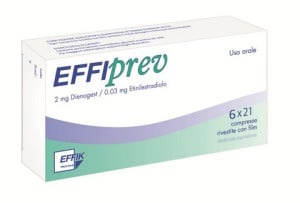
- Страна регистрации
- Форма выпускаFilm-coated tablet, 2 MG/0,03 MG
- Код АТХG03AA16
- Действующее вещество
- Отпускается по рецептуДа
- Производитель
- Информация на этой странице носит справочный характер и не является медицинской консультацией. Перед началом приема лекарства обязательно проконсультируйтесь с врачом.
- Аналоги EFFIPREVФорма выпуска: Film-coated tablet, 0.030 MG/2 MGДействующее вещество: dienogest and ethinylestradiolПроизводитель: SANDOZ S.P.A.Отпускается по рецептуФорма выпуска: Film-coated tablet, 2 MG/0,03 MGДействующее вещество: dienogest and ethinylestradiolПроизводитель: DOC GENERICI SRLОтпускается по рецептуФорма выпуска: Extended-release tablet, 2 MG/0.02 MGДействующее вещество: dienogest and ethinylestradiolПроизводитель: EXELTIS ITALIA S.R.L.Отпускается по рецепту
Аналоги EFFIPREV в других странах
Лекарства с тем же действующим веществом, доступные в других странах.
Аналог EFFIPREV в Испания
Аналог EFFIPREV в Польша
Аналог EFFIPREV в Украина
Врачи онлайн по EFFIPREV
Обсудите применение EFFIPREV и возможные следующие шаги — по оценке врача.
Получите рецепт на EFFIPREV онлайн
Заполните форму за 2 минуты
Расскажите о симптомах, истории болезни и нужном препарате.
Выберите врача или мы назначим
Выберите специалиста или мы подберём ближайшего доступного врача.
Врач рассматривает ваш случай
Обычно в течение 30 минут. Может задать уточняющие вопросы в чате.
Получите в любой аптеке
Электронный рецепт отправляется на вашу почту — действителен по всей Польше.
Часто задаваемые вопросы
EFFIPREV требует рецепта в Италия. Вы можете уточнить у врача онлайн, подходит ли это лекарство для вашей ситуации.
Действующее вещество EFFIPREV — dienogest and ethinylestradiol. Эта информация помогает определить лекарства с тем же составом под другими торговыми названиями.
EFFIPREV производится компанией EFFIK ITALIA S.P.A.. Упаковка и торговое название могут отличаться в зависимости от дистрибьютора.
Врачи, включая Семейные врачи, Психиатры, Дерматологи, Кардиологи, Эндокринологи, Гастроэнтерологи, Пульмонологи, Нефрологи, Ревматологи, Гематологи, Инфекционисты, Аллергологи, Гериатры, Педиатры, Онкологи, могут оценить целесообразность применения EFFIPREV с учетом вашей ситуации и местных правил. Вы можете записаться на онлайн-консультацию, чтобы обсудить возможные варианты.
Польша имеет хорошо развитую систему здравоохранения в крупных городах, таких как Варшава, Краков, Вроцлав и Гданьск. Аптеки широко доступны и работают в соответствии с действующим законодательством, обеспечивая доступ к рецептурным препаратам.
Вы можете купить EFFIPREV в Варшаве, Кракове, Вроцлаве или Гданьске в любой аптеке при наличии действующего рецепта.
Чтобы получить рецепт, вы можете воспользоваться Oladoctor:
Другие лекарства с тем же действующим веществом (dienogest and ethinylestradiol) включают KEMISIANA, DIENOJEST E ETINILESTRADIOLO DOK, KELSEE. Они могут отличаться торговым названием или формой выпуска, но содержат одинаковый терапевтический компонент. Перед изменением лечения рекомендуется проконсультироваться с врачом.
