



DZUVEO 30 MICROGRAMS Сублингвальная таблетка

Рассмотрение рецепта онлайн
Врач рассмотрит ваш случай и примет решение о назначении рецепта, если это медицински оправдано.

Поговорите с врачом об этом лекарстве
Обсудите симптомы и возможные дальнейшие шаги на онлайн-консультации.



Инструкция по применению DTSUVEO
Содержание инструкции
Dzuveo 30 micrograms sublingual tablet
sufentanil
Read this leaflet carefully before using this medicine as it contains important
information for you.
- Keep this leaflet. You may need to read it again.
- If you have any questions, ask your doctor, pharmacist or nurse.
- If you experience any side effects, including those not listed in this leaflet, tell your doctor, pharmacist or nurse. See section 4.
Contents of this leaflet
- 1. What Dzuveo is and what it is used for
- 2. What you need to know before using Dzuveo
- 3. How to use Dzuveo
- 4. Possible side effects
- 5. How to store Dzuveo
- 6. Contents of the pack and other information
1. What is Dzuveo and what is it used for
The active ingredient of Dzuveo is sufentanil, which belongs to a group of potent pain-relieving medicines called opioids.
Sufentanil is used to treat sudden, moderate to severe pain in adults, in medically controlled settings, such as a hospital.
2. What you need to know before you use Dzuveo
Do not use Dzuveo
- if you are allergic to sufentanil or any of the other ingredients of this medicine (listed in section 6).
- If you have severe lung or breathing problems.
Warnings and precautions
Talk to your doctor or nurse before using Dzuveo. Tell your doctor or nurse before treatment if:
- you suffer from a condition that affects your breathing (e.g. asthma, wheezing or shortness of breath). Because Dzuveo can affect your breathing, your doctor or nurse will monitor your breathing during treatment;
- you have a head injury or a brain tumor;
- you have heart and circulatory problems, especially if you have a slow heart rate, irregular heartbeat, low blood volume or low blood pressure;
- you have moderate to severe liver problems or severe kidney problems, because these organs affect how the body breaks down and eliminates the medicine;
- you have unusually slow bowel movements;
- you have a disease of the gallbladder or pancreas;
- you or a family member has ever suffered from alcohol abuse or dependence, prescription medicine abuse or illegal substance abuse (“addiction”);
- you are a smoker;
- you have ever had mental health problems (depression, anxiety or a personality disorder) or have been treated for other mental illnesses by a psychiatrist.
This medicine contains sufentanil, which is an opioid medicine. Repeated use of opioid pain relievers can reduce the effectiveness of the drug (you get used to it). It can also lead to dependence and abuse, which can cause a potentially life-threatening overdose. If you are afraid of developing a dependence on Dzuveo, it is important to consult your doctor.
Consult your doctor WHILE using Dzuveo if:
- you experience pain or increased sensitivity to pain (hyperalgesia) that does not respond to an increase in the dose of medicine as prescribed by your doctor.
What you need to know before taking Dzuveo:
Sleep-related breathing disorders
- Dzuveo can cause sleep-related breathing disorders, such as sleep apnea (pauses in breathing during sleep) and sleep-related hypoxemia (low oxygen levels in the blood). Symptoms may include pauses in breathing during sleep, nighttime awakenings caused by shortness of breath, difficulty staying asleep, or excessive daytime sleepiness. If you or another person observe these symptoms, contact your doctor. The doctor may consider reducing the dose.
Children and adolescents
Dzuveo must not be used in children and adolescents under 18 years of age.
Other medicines and Dzuveo
Tell your doctor if you are taking, have recently taken or might take any other medicines. In particular, tell your doctor if you are taking any of these medicines:
- ketoconazole, used to treat fungal infections; this medicine can affect how the body breaks down sufentanil;
- any medicine that can cause drowsiness (have a sedative effect), such as sleeping pills, medicines for anxiety (e.g. benzodiazepines), sedatives or other opioid medicines, because they can increase the risk of serious breathing problems and coma, and can be life-threatening;
- Medicines for the treatment of depression known as Monoamine Oxidase Inhibitors (MAOI). These medicines should not be taken within 2 weeks before or concurrently with taking Dzuveo.
- Medicines for the treatment of depression known as Selective Serotonin Reuptake Inhibitors (SSRI) and Serotonin-Norepinephrine Reuptake Inhibitors (SNRI). It is recommended not to use these medicines concurrently with Dzuveo.
- Medicines for the treatment of epilepsy, nerve pain or anxiety (gabapentin and pregabalin), as they can increase the risk of opioid overdose, respiratory depression and can be life-threatening
- other medicines also taken sublingually (to be placed under the tongue, where they dissolve) or medicines that have an effect in the mouth (e.g. nystatin, liquid or tablets, which is held in the mouth to treat fungal infections), as the effect on Dzuveo has not been studied;
- an opioid medicine prescribed regularly (e.g. morphine, codeine, fentanyl, hydromorphone, oxycodone);
- medicines used to treat high blood pressure or angina (chest pain), known as calcium channel blockers or beta-blockers, such as diltiazem and nifedipine.
Dzuveo with alcohol
Do not drink alcohol while taking Dzuveo because it can increase the risk of experiencing serious breathing problems.
Pregnancy and breastfeeding
If you are pregnant, suspect you may be pregnant or are planning a pregnancy, or if you are breastfeeding, ask your doctor for advice before taking this medicine.
Dzuveo must not be used during pregnancy and in women of childbearing potential who are not using effective contraception.
Dzuveo passes into breast milk and can have effects on the breastfed baby. Breastfeeding should be avoided while taking Dzuveo.
Driving and using machines
Dzuveo impairs the ability to drive vehicles or use machines because it causes drowsiness, dizziness or visual disturbances. If you experience any of these symptoms during or after treatment with sufentanil, you should not drive or use machines. You can only drive vehicles and use machines if a sufficient amount of time has passed after the last dose of Dzuveo.
Dzuveo contains sodium
This medicine contains less than 1 mmol (23 mg) of sodium per tablet, i.e. essentially “sodium-free”.
3. How to use Dzuveo
This medicine must be administered to you by a doctor or nurse using the
single-dose delivery device. You should not self-administer this medicine.
Dzuveo is used only in medically controlled environments, such as a hospital. It is prescribed only
by doctors experienced in the use of potent pain relievers such as sufentanil and who are familiar with the effects
it may have on you, particularly on your breathing (see the section “Warnings and
precautions” above).
The maximum recommended dose is one sublingual 30 microgram tablet every hour. The
sublingual tablet will be administered to you by a healthcare professional using the
single-dose, single-use applicator. The applicator will help the healthcare professional to position the tablet under the
tongue. The tablets dissolve under the tongue and should not be chewed or swallowed, as they are not
effective for pain relief if they do not dissolve under the tongue. You should not eat or
drink and should speak as little as possible for 10 minutes after each dose.
After you have received a dose, you will not be given another one for at least one hour. The maximum
daily dose is 720 micrograms (24 tablets per day).
Dzuveo should not be used for more than 48 hours.
After treatment, the medical staff will dispose of the applicator.
If you use more Dzuveo than you should
The symptoms of overdose include serious breathing problems such as slow and shallow breathing,
loss of consciousness, extremely low blood pressure, collapse and muscle stiffness. If you start to
notice these symptoms, inform a doctor or nurse immediately.
If you have any questions about using this medicine, ask your doctor or nurse.
4. Possible side effects
Like all medicines, this medicine can cause side effects, although not everyone will experience them.
Serious side effects
The most serious side effects are severe breathing problems such as slow and shallow breathing, which
can lead to respiratory arrest.
If you experience any of the side effects described above, inform your doctor
or nurse immediately.
Very common side effects (may affect more than 1 in 10 people):
Nausea or feeling unwell, vomiting or nausea and a general feeling of warmth.
Common side effects (may affect up to 1 in 10 people):
- Inability or difficulty sleeping, feeling anxious or confused, dizziness.
- Headache, drowsiness, feeling sleepy.
- Increased heart rate, high blood pressure, low blood pressure.
- Low levels of oxygen in the blood, feeling of pain in the lower throat, slow and shallow breathing.
- Dry mouth, flatulence, constipation, indigestion or reflux.
- Allergic reactions, itchy skin.
- Muscle contractions and spasms. Inability to urinate. This medicine may also change the levels of red blood cells, white blood cells, calcium, albumin, potassium and sodium in the blood, which can only be detected with a blood test. If you need to have a blood test, tell your doctor that you are taking this medicine.
Uncommon side effects (may affect up to 1 in 100 people):
Pneumonia, redness and inflammation of the eyes, inflammation of the throat.
Fatty deposits under the skin.
Inability to manage blood sugar (diabetes), increased cholesterol.
Feeling agitated, lack of interest or emotions, lack of energy,
disorientation, euphoria, hallucinations or seeing things that are not there, nervousness.
Problems with muscle movement coordination, muscle contractions, tremor or
excessive trembling, increased reflexes, burning sensation, feeling of fainting,
abnormal skin sensation (tingling, sensation of crawling on the skin),
general numbness, fatigue, forgetfulness, migraine, tension headache.
Vision disturbances, eye pain.
Decreased heart rate, irregular heartbeat, angina or other chest discomfort.
High or low blood pressure while standing, skin flushing.
- Slow or labored breathing (even during sleep), nosebleeds, hiccups. Chest pain and difficulty breathing caused by a blood clot in the lungs, fluid in the lungs, wheezing. Diarrhea, belching, inflammation of the stomach lining or gastritis, bloated stomach, acid reflux, nausea, stomach pain or discomfort.
- Blistering, excessive sweating, skin rash, dry skin, numbness of the mouth or face.
- Back pain, chest pain or pain in other parts of the body, limb pain.
- Difficulty urinating, strong smell of urine, pain during urination, kidney failure. Swelling, discomfort in the chest, chills and weakness (lack of energy). This medicine can also change the levels in the blood of platelets (which help blood to clot), magnesium, proteins, sugar, fats, phosphates and plasma, which can only be detected with a blood test. If you need to have a blood test, tell your doctor that you are taking this medicine.
Frequency not known (cannot be estimated from available data):
Severe allergic reactions (anaphylactic shock), seizures (fits), coma, constricted
pupils, reddened skin.
Withdrawal syndrome that may include symptoms such as agitation, anxiety, muscle pain,
insomnia, sweating and yawning.
Reporting of side effects
If you get any side effects, talk to your doctor, pharmacist or nurse. You can also report side effects directly
through the national reporting system listed in Annex V. By reporting side effects, you can help provide more
information on the safety of this medicine.
5. How to store Dzuveo
Keep this medicine out of the sight and reach of children. Your doctor or pharmacist will
ensure that this medicine:
- is not used after the expiry date that is reported on the package and on the box after “Exp.”. The expiry date refers to the last day of that month;
- is stored in the original packaging to protect it from light and oxygen;
- is not used if there are signs of deterioration.
Medicines should not be disposed of via wastewater or household waste. The healthcare
professional will dispose of the waste in accordance with hospital policies. This will help to protect
the environment.
6. Package Contents and Other Information
What Dzuveo Contains
- The active ingredient is sufentanil. Each sublingual tablet contains 30 micrograms of sufentanil (as citrate).
- The other ingredients are mannitol (E421), dibasic calcium phosphate, hypromellose, sodium croscarmellose, indigo carmine (E132), stearic acid and magnesium stearate.
Description of Dzuveo and Package Contents
Dzuveo is a sublingual tablet of blue colour with a flat surface and rounded edges. It has a
diameter of 3 mm and is contained in a single-dose applicator (labelled [sublingual tablet]).
The applicator, containing the tablet, is enclosed in a carton.
Each carton contains one applicator and one sufentanil 30 microgram tablet. Each
pack contains 5 or 10 cartons.
Not all pack sizes may be marketed.
Marketing Authorisation Holder
Laboratoire Aguettant
1, rue Alexander Fleming
69007 Lyon
France
Manufacturer
Laboratoire Aguettant
1, rue Alexander Fleming
69007 Lyon
France
Laboratoire Aguettant
Lieu Dit Chantecaille
07340 Champagne
France
<------------------------------------------------------------------------------------------------------------------------>
The following information is intended exclusively for healthcare professionals:
Instructions for use of the single-dose applicator
Single use only / Do not reuse.
Do not use if the carton seal is damaged. Do not use if the single-dose applicator is
damaged.
Tell the patient not to chew or swallow the tablet.
Tell the patient not to eat, drink, or talk for 10 minutes after taking the
tablet.
- 1. When administering the medicine, open the serrated carton by tearing along the top. The carton contains a transparent plastic single-dose applicator with a single blue tablet at one end and an oxygen absorber sachet. The oxygen absorber sachet must be discarded.
The contents of the carton are illustrated below:
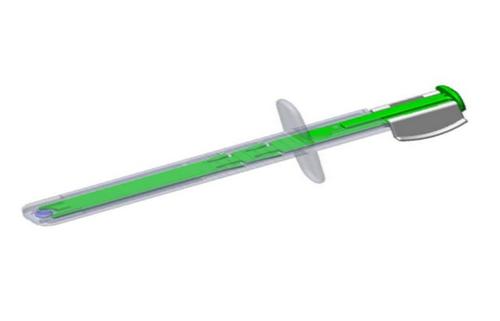
PlungerFo
Closure
Tablet
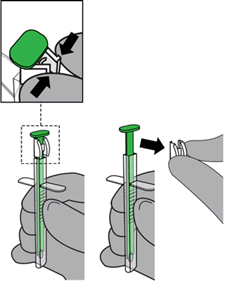
- 2. Remove the white closure from the green plunger by pressing the sides together and detaching it from the plunger. Discard the closure.
- 3. Ask the patient to touch the roof of their mouth with their tongue, if possible.
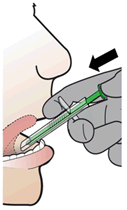
- 4. Gently rest the single-dose applicator on the patient's teeth or lips.
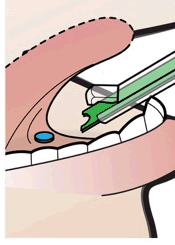
- 5. Position the tip of the single-dose applicator under the tongue and direct it towards the floor of the mouth. NOTE: avoid direct contact of the mucous membranes with the tip of the single-dose applicator.
- 6. Press the green plunger to release the tablet into the patient's sublingual space and confirm the tablet’s position.
The single-dose applicator must be disposed of in accordance with institutional policies and
local regulations.

Не уверены, подходит ли вам это лекарство?
Обсудите симптомы и варианты лечения с врачом онлайн.

Уже начали прием и появились вопросы?
Обсудите свое состояние и дальнейшие шаги с врачом онлайн.

- Страна регистрации
- Форма выпускаSublingual tablet, 30 MICROGRAMS
- Код АТХN01AH03
- Действующее вещество
- Отпускается по рецептуДа
- Производитель
- Информация на этой странице носит справочный характер и не является медицинской консультацией. Перед началом приема лекарства обязательно проконсультируйтесь с врачом.
- Аналоги DTSUVEOФорма выпуска: Injectable solution, 50 MCG/MLДействующее вещество: sufentanilПроизводитель: HAMELN PHARMA GMBHОтпускается по рецептуФорма выпуска: Injectable solution, 0.05 MG/MLДействующее вещество: sufentanilПроизводитель: PIRAMAL CRITICAL CARE ITALIA S.P.A.Отпускается по рецептуФорма выпуска: Injectable solution, 0.5 MG/MLДействующее вещество: alfentanilПроизводитель: PIRAMAL CRITICAL CARE ITALIA S.P.A.Отпускается по рецепту
Аналоги DTSUVEO в других странах
Лекарства с тем же действующим веществом, доступные в других странах.
Аналог DTSUVEO в Польша
Аналог DTSUVEO в Украина
Аналог DTSUVEO в Испания
Врачи онлайн по DTSUVEO
Обсудите применение DTSUVEO и возможные следующие шаги — по оценке врача.









Получите рецепт на DTSUVEO онлайн
Заполните форму за 2 минуты
Расскажите о симптомах, истории болезни и нужном препарате.
Выберите врача или мы назначим
Выберите специалиста или мы подберём ближайшего доступного врача.
Врач рассматривает ваш случай
Обычно в течение 30 минут. Может задать уточняющие вопросы в чате.
Получите в любой аптеке
Электронный рецепт отправляется на вашу почту — действителен по всей Польше.
Часто задаваемые вопросы
DTSUVEO требует рецепта в Италия. Вы можете уточнить у врача онлайн, подходит ли это лекарство для вашей ситуации.
Действующее вещество DTSUVEO — sufentanil. Эта информация помогает определить лекарства с тем же составом под другими торговыми названиями.
DTSUVEO производится компанией LABORATOIRE AGUETTANT. Упаковка и торговое название могут отличаться в зависимости от дистрибьютора.
Врачи, включая Семейные врачи, Психиатры, Дерматологи, Кардиологи, Эндокринологи, Гастроэнтерологи, Пульмонологи, Нефрологи, Ревматологи, Гематологи, Инфекционисты, Аллергологи, Гериатры, Педиатры, Онкологи, могут оценить целесообразность применения DTSUVEO с учетом вашей ситуации и местных правил. Вы можете записаться на онлайн-консультацию, чтобы обсудить возможные варианты.
Польша имеет хорошо развитую систему здравоохранения в крупных городах, таких как Варшава, Краков, Вроцлав и Гданьск. Аптеки широко доступны и работают в соответствии с действующим законодательством, обеспечивая доступ к рецептурным препаратам.
Вы можете купить DTSUVEO в Варшаве, Кракове, Вроцлаве или Гданьске в любой аптеке при наличии действующего рецепта.
Чтобы получить рецепт, вы можете воспользоваться Oladoctor:
Другие лекарства с тем же действующим веществом (sufentanil) включают SUFENTANIL AMELN, SUFENTANIL PIRAMAL, ALFENTANIL PIRAMAL. Они могут отличаться торговым названием или формой выпуска, но содержат одинаковый терапевтический компонент. Перед изменением лечения рекомендуется проконсультироваться с врачом.
