



DUOSOL 5000 ML Гемофильтрационное решение

Рассмотрение рецепта онлайн
Врач рассмотрит ваш случай и примет решение о назначении рецепта, если это медицински оправдано.

Поговорите с врачом об этом лекарстве
Обсудите симптомы и возможные дальнейшие шаги на онлайн-консультации.



Инструкция по применению DUOSOL
Содержание инструкции
- Duosol senza potassio solution for hemofiltration
- Duosol with 2 mmol/l of potassium solution for hemofiltration
- Duosol with 4 mmol/l of potassium solution for hemofiltration
Duosol senza potassio solution for hemofiltration
Read this leaflet carefully before you are given this medicine because
it contains important information for you.
- Keep this leaflet. You may need to read it again.
- If you have any questions, ask your doctor or pharmacist.
- If any side effects occur, including those not listed in this leaflet, ask your doctor or pharmacist. See section 4.
Contents of this leaflet:
- 1. What Duosol senza potassio is and what it is used for
- 2. What you need to know before you are given Duosol senza potassio
- 3. How to use Duosol senza potassio
- 4. Possible side effects
- 5. How to store Duosol senza potassio
- 6. Contents of the pack and other information
1. What is Duosol without potassium and what is it used for
Duosol without potassium is a solution for hemofiltration. This is used in patients with acute renal failure, when the kidneys are no longer able to remove waste products from the blood. Continuous hemofiltration is a procedure used to remove waste products from the body, which are normally excreted by the kidneys in urine. The solution corrects the fluid balance and ensures that missing salts (electrolytes) are replenished during treatment.
2. What you need to know before you are given Duosol without potassium
Duosol without potassium must not be given if
- the level of potassium in the blood is too low (hypokalaemia)
- the blood contains levels that are too low of acid (metabolic alkalosis).
The haemofiltration procedure itself must not be performed if
- renal insufficiency is associated with a high metabolic turnover (hypercatabolic condition), in which case the accumulation of waste products in the body cannot be corrected with haemofiltration
- the blood flow at the venous cannula insertion site is poor
- there is a high risk of bleeding because you are receiving drugs to prevent coagulation (systemic anticoagulation).
Warnings and precautions
Talk to your doctor or pharmacist before you are given Duosol without potassium.
Before and during haemofiltration therapy, blood pressure, fluid balance, electrolyte balance
(electrolytes), acid-base balance and renal function are monitored. Blood sugar and phosphate levels
will be checked regularly.
In addition, serum potassium concentration will be monitored before and during haemofiltration.
Other medicines and Duosol without potassium
Tell your doctor or pharmacist if you are taking, have recently taken or might take any
other medicines.
The level of other medicines in the blood may be reduced during haemofiltration and your doctor will take this into
account.
Interactions with other medicines can be avoided if a correct dose of haemofiltration solution is used and careful
monitoring is ensured.
The following interactions will be considered:
- Infusions given in intensive care can alter the composition of the blood and hydration status.
- It is possible that the toxic effects of certain medicines used to treat heart failure (medicines containing digitalis) may not manifest if potassium or magnesium levels are too high or if calcium levels are too low. If these levels are corrected by haemofiltration, the toxic effects may manifest and cause, for example, a cardiac arrhythmia. If you have low potassium levels or high calcium levels in the blood, digitalis may have toxic effects at doses lower than those normally used in therapy.
- Vitamin D and medicines containing calcium may increase the risk of a significant increase in blood calcium levels (hypercalcemia).
- Additional use of sodium hydrogen carbonate may increase the risk of levels that are too low of acid in the blood (metabolic alkalosis).
Pregnancy, breastfeeding and fertility
If you are pregnant, suspect you are pregnant or are planning to become pregnant, or if you are breastfeeding
ask your doctor or pharmacist for advice before you are given this medicine .
There are currently no data available on the use of haemofiltration solutions during pregnancy. However, since
all components of this medicine are natural substances intended only to replace the same substances that
are lost during haemofiltration, no risks are expected for the child during pregnancy and
breastfeeding or effects on fertility.
Driving and operating machinery
Normally, this medicine is given to immobile patients in a hospital/dialysis unit. This
excludes driving and operating machinery.
3. How to use Duosol without potassium
This medicine will be administered to you exclusively under the supervision of a doctor experienced in the
techniques of hem filtration.
The doctor will establish the appropriate dose for you taking into consideration your clinical condition, body weight and
metabolic conditions. Unless otherwise prescribed, a filtration rate of
20-25 ml/kg of body weight per hour is recommended in patients of any age for the removal of substances that are
normally excreted in the urine.
The hem filtration solution, ready for use, is administered to you with hem filtration devices
(called extracorporeal circuits) using an infusion pump.
The treatment of acute renal failure is carried out for a limited period of time and ends when the
renal function is fully restored.
If you are given more Duosol without potassium than recommended
There are no reports of life-threatening situations following the administration of prescribed doses of
this medicine. If necessary, administration can be stopped immediately.
An unbalanced administration may result from too much or too little fluid in the body
(hyperhydration or dehydration). This situation may become evident through changes in
blood pressure or pulse.
An overdose of hydrogen carbonate can occur if an excessively large volume of
hem filtration solution is administered. This can lead to levels of acid in the blood that are too low (metabolic alkalosis),
a lower amount of calcium dissolved in the blood (reduction of ionized calcium) or muscle cramps
(tetany).
An overdose may be the cause of cardiac failure and/or pulmonary congestion and
cause a change in salt (electrolyte) and acid-base balance.
The doctor will decide on the appropriate treatment.
If you have any doubts about the use of this medicine, consult your doctor or pharmacist.
4. Possible side effects
Like all medicines, this medicine can cause side effects, although not everybody gets them.
Currently, no side effects associated with this medicine have been reported, but the following side effects are
possible. The frequency of these side effects is not known (frequency cannot be estimated based on available
data):
Excess or deficiency of fluids in the body (hyperhydration or dehydration), incorrect amounts of salts (electrolytes),
low levels of phosphates in the blood (hypophosphataemia), high levels of sugars in the blood (hyperglycaemia), levels too
low of acids in the blood (metabolic alkalosis), high or low blood pressure (hypertension or
hypotension), nausea, vomiting and muscle cramps.
Reporting of side effects
If you get any side effects, even if not listed in this leaflet, tell your doctor or pharmacist. You can also report side effects directly through the national reporting system at www.agenziafarmaco.gov.it/it/responsabili”. By reporting side effects you
can help to provide more information on the safety of this medicine.
5. How to store Duosol without potassium
Keep this medicine out of the sight and reach of children.
This medicine must not be administered to you after the expiry date that is reported on the bag and
on the box after “Exp”. The expiry date refers to the last day of that month.
Storage conditions
Do not store at a temperature above 30 °C.
Do not refrigerate or freeze.
Storage conditions after preparation of the solution ready for use
The mixed product must be used immediately. The mixed product is physically and
chemically stable for 24 hours at 25 °C.
6. Contents of the pack and other information
What Duosol without potassium contains
| The active substances are: | Electrolyte solution in the small compartment | F Bicarbonate solution in the large compartment | ||
| 555 ml contain | per 1000 ml | 4445 ml contain | per 1000 ml | |
| Sodium chloride | 2.34 g | l 4.21 g | 27.47 g | 6.18 g |
| Calcium chloride dihydrate | 1.10 g | e 1.98 g | ||
| Magnesium chloride hexahydrate | 0.51 g | 0.91 g | ||
| Glucose monohydrate equivalent to anhydrous glucose | 5.49 g 5.0 g | d 9.90 g 9.0 g | ||
| Sodium hydrogen carbonate | 15.96 g | 3.59 g | ||
| a | ||||
| Electrolytes: | n [mmol/ bag] | [mmol/l] | [mmol/ bag] | [mmol/l] |
| Na+ | 40.0 | 72 | 660 | 149 |
| Ca2+ | a 7.5 | 13.5 | ||
| Mg2+ | i 2.5 | 4.5 | ||
| Cl- | l 75.0 | 135 | 470 | 106 |
| HCO - 3 | 190 | 42.8 | ||
| Theoretical osmolarity [mOsm/l] | a 275 | 297 | ||
Composition of the ready-to-use hemofiltration solution after mixing:
1000 ml of ready-to-use hemofiltration solution contains [mmol/l]:
Na 140
Ca 1.5
Mg 0.5
Cl 109
HCO 35.0
Anhydrous glucose 5.6 (equiv. to 1.0 g)
Theoretical osmolarity [mOsm/l] 292
pH 7.0-8.0
Other components are:
Electrolyte solution (small compartment)
Hydrochloric acid 25% (for pH adjustment), water for injections
Bicarbonate solution (large compartment)
Carbon dioxide (for pH adjustment), water for injections
Description of the appearance of Duosol without potassium and contents of the pack
Hemofiltration solution
Clear and colorless solution, free from visible particles
This medicinal product is supplied in a two-compartment bag. Mixing the two solutions following
opening of the seal between the two compartments produces the ready-to-use hemofiltration solution.
Two bags of 5000 ml (two-compartment bags, 4445 ml and 555 ml) per carton
Marketing authorization holder and manufacturer
Marketing authorization holder
- B. Braun Avitum AG Schwarzenberger Weg 73-79 34212 Melsungen Germany DE
Manufacturer
- B. Braun Avitum AG Kattenvenner Straße 32 49219 Glandorf Germany
This medicinal product is authorised in the Member States of the European Economic Area with the
following denominations:
Czech Republic: Duosol bez kalia
Estonia: Duosol ilma kaaliumita, hemofiltratsioonilahus
Finland: Duosol sine Kalium hemofiltraationeste
Italy: Duosol senza potassio solution for hemofiltration
Latvia: Duosol bez kālija šķīdums hemofiltrācijai
Lithuania: Duosol K 0 hemofiltracijos tirpalas
Germany, Luxembourg: Duosol ohne Kalium Hämofiltrationslösung
Poland: Duosol nie zawierający potasu
Slovenia: Duosol brez kalija raztopina za hemofiltracijo
Spain: Priosol sin Potasio solución para hemofiltración
Netherlands: Duosol zonder Kalium, oplossing voor hemofiltratie
United Kingdom: Duosol without Potassium solution for haemofiltration
03/2018
--------------------------------------------------------------------------------------------------------------------------------
---
The following information is intended exclusively for healthcare professionals:
Instructions for preparing the ready-to-use hemofiltration solution
The container and solution must be visually inspected before use. The hemofiltration solution
must only be used if the container (outer pouch and two-compartment bag), the intermediate seal
and the connectors are intact and undamaged, and if the solution is clear, colorless and free from visible particles.
Remove the outer pouch only immediately before use.
- 1. Remove the outer pouch.
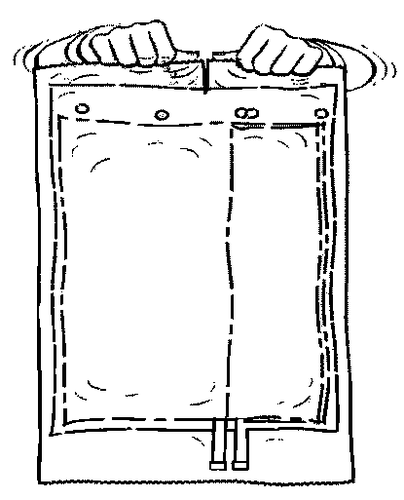

- 2. Lay the bag flat and place it on a clean, flat surface.
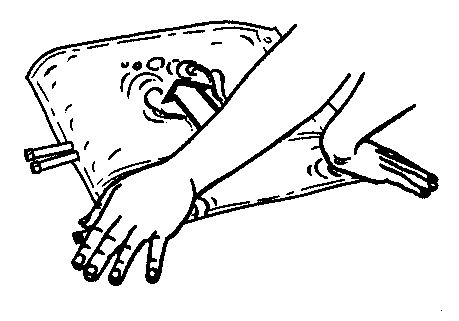
- 3. Apply pressure with both hands on the small compartment of the bag until the intermediate seal opens completely along its entire length.

- 4. Ensure that the contents are thoroughly mixed by turning the bag back and forth 5 times.
Administration of the ready-to-use hemofiltration solution
The hemofiltration solution must be warmed to approximately body temperature using an integrated or external heater. Under no circumstances should the solution be infused if its temperature is below
room temperature.
In rare cases, white calcium carbonate precipitates have been observed in the tubes during administration of the medicinal product, especially near the pump and the heating unit. Therefore, during hemofiltration,
the solution in the tubes must be carefully inspected visually every 30 minutes to ensure that
the solution in the tube system is clear and free from precipitate. Precipitates may also appear with
considerable delay after the start of treatment. If precipitate is present, the solution and tubes must be
replaced immediately and the patient must be carefully monitored.
For single use only. Any unused solution and any damaged containers must be disposed of.
Duosol with 2 mmol/l of potassium solution for hemofiltration
Read this leaflet carefully before you are administered this medicine because
it contains important information for you.
- Keep this leaflet. You may need to read it again.
- If you have any questions, ask your doctor or pharmacist.
- If any side effects occur, including those not listed in this leaflet, ask your doctor or pharmacist. See section 4.
Contents of this leaflet:
- 1. What Duosol with 2 mmol/l of potassium is and what it is used for
- 2. What you need to know before Duosol with 2 mmol/l of potassium is administered to you
- 3. How to use Duosol with 2 mmol/l of potassium
- 4. Possible side effects
- 5. How to store Duosol with 2 mmol/l of potassium
- 6. Contents of the pack and other information
1. What is Duosol with 2 mmol/l of potassium and what is it used for
Duosol with 2 mmol/l of potassium is a solution for hemofiltration. This is used in patients with
acute renal failure, when the kidneys are no longer able to remove waste products from the blood.
Continuous hemofiltration is a procedure used to remove waste products from the body, which
are normally excreted by the kidneys in urine. The solution corrects the fluid balance and ensures that the
missing salts (electrolytes) are replenished during treatment.
2. What you need to know before you are given Duosol with 2 mmol/l of potassium
Duosol with 2 mmol/l of potassium must not be given if
- the level of potassium in the blood is too low (hypokalaemia)
- the blood contains levels that are too low of acid (metabolic alkalosis).
The haemofiltration procedure itself must not be performed if
- renal insufficiency is associated with a high metabolic turnover (hypercatabolic condition), in which case the accumulation of waste products in the body cannot be corrected with haemofiltration
- the blood flow at the venous cannula insertion site is poor
- there is a high risk of bleeding because you are receiving drugs to prevent coagulation
(systemic anticoagulation).
Warnings and precautions
Consult your doctor or pharmacist before you are given Duosol with 2 mmol/l of potassium.
Before and during haemofiltration therapy, blood pressure, fluid balance, electrolyte balance
(electrolytes), acid-base balance and renal function are monitored. Blood sugar and phosphate levels
will be checked regularly.
In addition, serum potassium concentration will be monitored before and during haemofiltration.
Other medicines and Duosol with 2 mmol/l of potassium
Tell your doctor or pharmacist if you are taking, have recently taken or might take any
other medicines.
The level of other medicines in the blood may be reduced during haemofiltration and your doctor will take this into
account.
Interactions with other medicines can be avoided if a correct dose of haemofiltration solution is used and careful
monitoring is ensured.
The following interactions will be considered:
- Infusions administered in intensive care can alter blood composition and hydration status.
- It is possible that the toxic effects of certain medicines used for the treatment of heart failure (medicines containing digitalis) may not manifest if the levels of potassium or magnesium are too high or if the levels of calcium are too low. If these levels are corrected by haemofiltration, the toxic effects may manifest and cause, for example, a cardiac arrhythmia. If you have low potassium levels or high calcium levels in the blood, digitalis may have toxic effects at doses lower than those normally used in therapy.
- Vitamin D and medicines containing calcium may increase the risk of a significant increase in blood calcium level (hypercalcaemia).
- Additional use of sodium hydrogen carbonate may increase the risk of levels that are too low of acid in the blood (metabolic alkalosis).
Pregnancy, breastfeeding and fertility
If you are pregnant, suspect you are pregnant, are planning to become pregnant, or are breastfeeding with
breast milk, ask your doctor or pharmacist for advice before you are given this medicine .
There are currently no data available on the use of haemofiltration solutions during pregnancy. However, since
all components of this medicine are natural substances intended only to replace the same substances that
are lost during haemofiltration, no risks are expected for the child during pregnancy and
breastfeeding or effects on fertility.
Driving and operating machinery
Normally, this medicine is administered to immobile patients in a hospital/dialysis unit. This
excludes driving and operating machinery.
3. How to use Duosol with 2 mmol/l of potassium
This medicine will be administered to you exclusively under the supervision of a doctor experienced in
hemofiltration techniques.
The doctor will establish the appropriate dose for you taking into consideration your clinical condition, body weight and
metabolic conditions. Unless otherwise prescribed, a filtration rate of
20-25 ml/kg of body weight per hour is recommended in patients of any age for the removal of substances that are
normally excreted in the urine.
The ready-to-use hemofiltration solution is administered to you with hemofiltration devices
(called extracorporeal circuits) using an infusion pump.
The treatment of acute renal failure is carried out for a limited period of time and ends when the
renal function is fully restored.
If you are administered more Duosol with 2 mmol/l of potassium than recommended
There are no reports of life-threatening situations after the administration of prescribed doses of
this medicine. If necessary, the administration can be suspended immediately.
An unbalanced administration may result from too high or too low amounts of fluids in the body
(hyperhydration or dehydration). This situation may become evident through changes in
blood pressure or pulse.
An overdose of hydrogen carbonate may occur if an excessive volume of
hemofiltration solution is administered. This can lead to levels of acid in the blood that are too low (metabolic alkalosis),
to a lower amount of calcium dissolved in the blood (reduction of ionized calcium) or to muscle cramps
(tetany).
An overdose could be the cause of heart failure and/or pulmonary congestion and
cause a change in salt (electrolytic) and acid-base balance.
The doctor will decide on the appropriate treatment.
If you have any doubts about the use of this medicine, consult your doctor or pharmacist.
4. Possible side effects
Like all medicines, this medicine can cause side effects, although not everybody gets them.
Currently, no side effects associated with this medicine have been reported, but the following side effects are
possible. The frequency of these side effects is not known (frequency cannot be estimated based on available
data):
Excess or deficiency of fluids in the body (hyperhydration or dehydration), incorrect amounts of salts (electrolytes),
low levels of phosphates in the blood (hypophosphataemia), high levels of sugars in the blood (hyperglycaemia), levels too
low of acids in the blood (metabolic alkalosis), high or low blood pressure (hypertension or
hypotension), nausea, vomiting and muscle cramps.
Reporting of side effects
If you get any side effects, even if not listed in this leaflet, tell your doctor or pharmacist. You can also report
side effects directly through the national reporting system at www.agenziafarmaco.gov.it/it/responsabili. By
reporting side effects you can help provide more information on the safety of this medicine.
5. How to store Duosol with 2 mmol/l of potassium
Keep this medicine out of sight and reach of children.
This medicine must not be administered to you after the expiry date which is stated on the bag and
on the box after “Exp”. The expiry date refers to the last day of that month.
Storage conditions
Do not store at a temperature above 30 °C.
Do not refrigerate or freeze.
Storage conditions after preparation of the solution ready for use
The mixed product must be used immediately. The mixed product is physically and
chemically stable for 24 hours at 25 °C.
6. Contents of the pack and other information
What Duosol with 2 mmol/l of potassium contains
Composition of the ready-to-use hemofiltration solution after mixing:
1000 ml of ready-to-use hemofiltration solution contains [mmol/l]:
| The active ingredients are: | a Electrolyte solution in the small compartment | Bicarbonate solution in the large compartment | ||
| i 555 ml contain | per 1000 ml | 4445 ml contain | per 1000 ml | |
| Sodium chloride | l 2.34 g | 4.21 g | 27.47 g | 6.18 g |
| Potassium chloride | a 0.74 g | 1.34 g | ||
| Calcium chloride dihydrate | 1.10 g | 1.98 g | ||
| t Magnesium chloride hexahydrate | 0.51 g | 0.91 g | ||
| I Glucose monohydrate equivalent to anhydrous glucose | 5.49 g 5.0 g | 9.90 g 9.0 g | ||
| a Sodium hydrogen carbonate | 15.96 g | 3.59 g | ||
| i z Electrolytes: | [mmol/ bag] | [mmol/l] | [mmol/ bag] | [mmol/l] |
| Na+ | 40.0 | 72 | 660 | 149 |
| n K+ | 10.0 | 18.0 | ||
| Ca2+ | 7.5 | 13.5 | ||
| e Mg2+ | 2.5 | 4.5 | ||
| Cl- | 85.0 | 153 | 470 | 106 |
| g HCO - 3 | 190 | 42.8 | ||
| Theoretical osmolarity [mOsm/l] | 311 | 297 | ||
Na 140
K2.0
Ca 1.5
Mg 0.5
Cl 111
HCO
35.0
Anhydrous glucose 5.6 (equiv. to 1.0 g)
Theoretical osmolarity [mOsm/l] 296
pH 7.0-8.0
Other components are:
Electrolyte solution (small compartment)
Hydrochloric acid 25 % (for pH adjustment), water for injections
Bicarbonate solution (large compartment)
Carbon dioxide (for pH adjustment), water for injections
Description of the appearance of Duosol with 2 mmol/l of potassium and contents of the pack
Hemofiltration solution
Clear and colourless solution, free from visible particles
This medicinal product is supplied in a two-compartment bag. Mixing the two solutions following
opening of the seal between the two compartments results in the ready-to-use hemofiltration solution.
Two bags of 5000 ml (two-compartment bags, 4445 ml and 555 ml) per box
Marketing Authorisation Holder and Manufacturer
Marketing Authorisation Holder
- B. Braun Avitum AG Schwarzenberger Weg 73-79 34212 Melsungen Germany DE
Manufacturer
- B. Braun Avitum AG Kattenvenner Straße 32 49219 Glandorf Germany
This medicinal product is authorised in the Member States of the European Economic Areawith the
following denominations:
Czech Republic: Duosol s 2 mmol/l kalia
Estonia: Duosol koos 2 mmol/l kaaliumiga, hemofiltratsioonilahus
Finland: Duosol cum 2 mmol/l Kalium hemofiltraationeste
Italy: Duosol con 2 mmol/l di potassio soluzione per emofiltrazione
Latvia: Duosol ar 2 mmol/l kālija šķīdums hemofiltrācijai
Lithuania: Duosol K 2 hemofiltracijos tirpalas
Germany, Luxembourg: Duosol mit 2 mmol/l Kalium Hämofiltrationslösung
Poland: Duosol zawierający 2 mmol/l potasu
Slovenia: Duosol z 2 mmol/l kalija raztopina za hemofiltracijo
Spain: Priosol con 2 mmol/l de Potasio solución para hemofiltración
Netherlands: Duosol met 2 mmol/l Kalium, oplossing voor hemofiltratie
United Kingdom: Duosol with 2 mmol/l Potassium solution for haemofiltration
03/2018
--------------------------------------------------------------------------------------------------------------------------------
---
The following information is intended exclusively for healthcare professionals:
Instructions for preparing the ready-to-use hemofiltration solution
The container and solution must be visually inspected before use. The hemofiltration
solution must only be used if the container (outer wrapper and two-compartment bag), the intermediate
seal and the connectors are intact and if the solution is clear, colourless and free from visible particles.
Remove the outer wrapper only immediately before use.
- 1. Remove the outer wrapper.
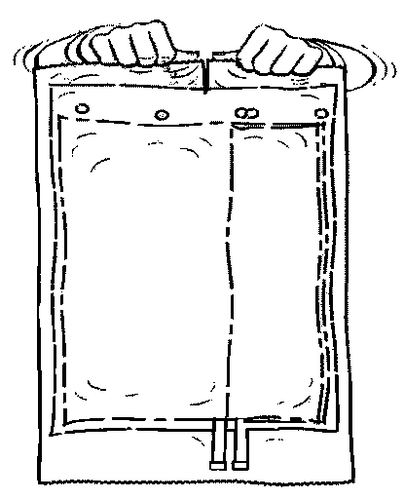

- 2. Lay the bag flat and place it on a clean, flat surface.
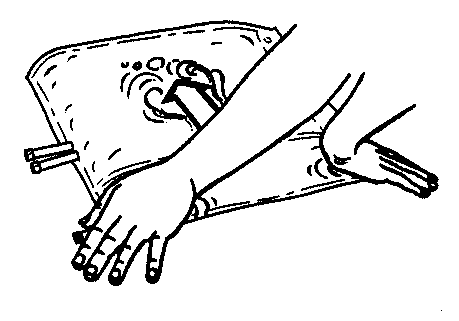
- 3. Apply pressure with both hands to the small compartment of the bag until the intermediate seal opens completely along its entire length.

- 4. Ensure that the contents are well mixed by turning the bag back and forth 5 times.
Administration of the ready-to-use hemofiltration solution
The hemofiltration solution must be warmed to approximately body temperature using an integrated or external heater. Under no circumstances should the solution be infused if its temperature is below
room temperature.
In rare cases, white calcium carbonate precipitates have been observed in the tubes during administration of the medicinal product, especially near the pump and the heating unit. Therefore, during hemofiltration,
the solution in the tubes must be carefully inspected visually every 30 minutes to ensure that
the solution in the tube system is clear and free from precipitate. Precipitates may also appear with
considerable delay after the start of treatment. If precipitate is present, the solution and tubes must be
replaced immediately and the patient must be carefully monitored.
For single use only. Any unused solution and any damaged containers must be disposed of.

Не уверены, подходит ли вам это лекарство?
Обсудите симптомы и варианты лечения с врачом онлайн.
Duosol with 4 mmol/l of potassium solution for hemofiltration
Read this leaflet carefully before you are given this medicine because
it contains important information for you.
- Keep this leaflet. You may need to read it again.
- If you have any questions, ask your doctor or pharmacist.
- If any side effects occur, including those not listed in this leaflet, ask your doctor or pharmacist. See section 4.
Contents of this leaflet:
- 1. What Duosol with 4 mmol/l of potassium is and what it is used for
- 2. What you need to know before you are given Duosol with 4 mmol/l of potassium
- 3. How to use Duosol with 4 mmol/l of potassium
- 4. Possible side effects
- 5. How to store Duosol with 4 mmol/l of potassium
- 6. Contents of the pack and other information
1. What is Duosol with 4 mmol/l of potassium and what is it used for
Duosol with 4 mmol/l of potassium is a solution for hemofiltration. This is used in patients with
acute renal failure, when the kidneys are no longer able to remove waste products from the blood.
Continuous hemofiltration is a procedure used to remove waste products from the body, which
are normally excreted by the kidneys in urine. The solution corrects the fluid balance and ensures that the
missing salts (electrolytes) are replenished during treatment.
2. What you need to know before you are given Duosol with 4 mmol/l of potassium
Duosol with 4 mmol/l of potassium must not be given if
- the level of potassium in the blood is too high (hyperkalaemia)
- the blood contains levels that are too low of acid (metabolic alkalosis).
The haemofiltration procedure itself must not be carried out if
- renal failure is associated with a high metabolic turnover (hypercatabolic condition), in which case the accumulation of waste products in the body cannot be corrected with haemofiltration
- the blood flow at the venous cannula insertion site is poor
- there is a high risk of bleeding because you are receiving drugs to prevent coagulation (systemic anticoagulation).
Warnings and precautions
Consult your doctor or pharmacist before you are given Duosol with 4 mmol/l of potassium.
Before and during haemofiltration therapy, blood pressure, fluid balance, electrolyte balance
(electrolytes), acid-base balance and renal function are monitored. Blood sugar and phosphate levels
will be checked regularly.
In addition, the potassium concentration in the serum will be monitored before and during haemofiltration.
Other medicines and Duosol with 4 mmol/l of potassium
Tell your doctor or pharmacist if you are taking, have recently taken or might take any
other medicines .
The level of other medicines in the blood may be reduced during haemofiltration and your doctor will take this into
account.
Interactions with other medicines can be avoided if a correct dose of haemofiltration solution is used and careful
monitoring is ensured.
The following interactions will be considered:
- Infusions administered in intensive care can alter the composition of the blood and the state of hydration.
- It is possible that the toxic effects of certain medicines used for the treatment of heart failure (medicines containing digitalis) will not manifest if the levels of potassium or magnesium are too high or if the levels of calcium are too low. If these levels are corrected by haemofiltration, the toxic effects may manifest and cause, for example, a cardiac arrhythmia. If you have low potassium levels or high calcium levels in the blood, digitalis may have toxic effects at doses lower than those normally used in therapy.
- Vitamin D and medicines containing calcium may increase the risk of a significant increase in blood calcium levels (hypercalcaemia).
- Additional use of sodium hydrogen carbonate may increase the risk of levels that are too low of acid in the blood (metabolic alkalosis).
Pregnancy, breastfeeding and fertility
If you are pregnant, suspect you are pregnant or are planning to become pregnant, or if you are breastfeeding
with breast milk, ask your doctor or pharmacist for advice before you are given this medicine .
There are currently no data available on the use of haemofiltration solutions during pregnancy. However, since
all components of this medicine are natural substances intended only to replace the same substances that
are lost during haemofiltration, no risks are expected for the child during pregnancy and
breastfeeding or effects on fertility.
Driving and operating machinery
Normally, this medicine is administered to immobilised patients in a hospital/dialysis unit. This
excludes driving and operating machinery.
3. How to use Duosol with 4 mmol/l of potassium
This medicine will be administered to you exclusively under the supervision of a doctor experienced in
hemofiltration techniques.
The doctor will establish the appropriate dose for you, taking into consideration your clinical condition, body weight and
metabolic conditions. Unless otherwise prescribed, a filtration rate of
20-25 ml/kg of body weight per hour is recommended in patients of any age for the removal of substances that are
normally excreted in the urine.
The ready-to-use hemofiltration solution is administered to you using hemofiltration devices
(called extracorporeal circuits) using an infusion pump.
The treatment of acute renal failure is carried out for a limited period of time and ends when the
renal function is fully restored.
If you are administered more Duosol with 4 mmol/l of potassium than recommended
There are no reports of life-threatening situations following the administration of prescribed doses of
this medicine. If necessary, administration may be stopped immediately.
An unbalanced administration may result from too much or too little fluid in the body
(hyperhydration or dehydration). This situation may become evident through changes in
blood pressure or pulse.
An overdose of hydrogen carbonate may occur if too large a volume of
hemofiltration solution is administered. This can lead to levels of acid in the blood that are too low (metabolic alkalosis),
to a lower amount of calcium dissolved in the blood (reduction of ionized calcium) or to muscle cramps
(tetany).
An overdose could be the cause of heart failure and/or pulmonary congestion and
cause a change in salt (electrolyte) and acid-base balance.
The doctor will decide on the appropriate treatment.
If you have any doubts about the use of this medicine, consult your doctor or pharmacist.
4. Possible side effects
Like all medicines, this medicine can cause side effects, although not everybody gets them.
Currently, no side effects associated with this medicine have been reported, but the following side effects are possible.
The frequency of these side effects is not known (frequency cannot be estimated based on available data):
Excess or deficiency of fluids in the body (hyperhydration or dehydration), incorrect amounts of salts (electrolytes)
such as too high levels of potassium in the blood (hyperkalaemia), low levels of phosphates in the blood (hypophosphataemia),
high levels of sugars in the blood (hyperglycaemia), too low levels of acids in the blood (metabolic alkalosis),
high or low blood pressure (hypertension or hypotension), nausea, vomiting and muscle cramps.
Reporting of side effects
If you get any side effects, even those not listed in this leaflet, tell your doctor or pharmacist. You can also report side effects directly through the national reporting system at www.agenziafarmaco.gov.it/it/responsabili. By reporting side effects you can help provide more information on the safety of this medicine.
5. How to store Duosol with 4 mmol/l of potassium
Keep this medicine out of sight and reach of children.
This medicine must not be administered to you after the expiry date which is reported on the bag and
on the box after “Exp”. The expiry date refers to the last day of that month.
Storage conditions
Do not store at a temperature above 30 °C.
Do not refrigerate or freeze.
Storage conditions after preparation of the solution ready for use
The mixed product must be used immediately. The mixed product is physically and
chemically stable for 24 hours at 25 °C.
6. Content of the pack and other information
What Duosol with 4 mmol/l of potassium contains
| The active ingredients are: | Electrolyte solution in the small compartment | in Bicarbonate solution in the large compartment | ||
| 555 ml contain | per 1000 ml | F 4445 ml contain | per 1000 ml | |
| Sodium chloride | 2.34 g | 4.21 g | 27.47 g | 6.18 g |
| Potassium chloride | 1.49 g | l 2.68 g | ||
| Calcium chloride dihydrate | 1.10 g | e 1.98 g | ||
| Magnesium chloride hexahydrate | 0.51 g | 0.91 g | ||
| Glucose monohydrate equivalent to anhydrous glucose | 5.49 g 5.0 g | d 9.90 g 9.0 g | ||
| Sodium hydrogen carbonate | 15.96 g | 3.59 g | ||
| a | ||||
| Electrolytes: | n [mmol/ bag] | [mmol/l] | [mmol/ bag] | [mmol/l] |
| Na+ | 40.0 | 72 | 660 | 149 |
| K+ | a 20.0 | 36.0 | ||
| Ca2+ | i 7.5 | 13.5 | ||
| Mg2+ | l 2.5 | 4.5 | ||
| Cl- | 95.0 | 171 | 470 | 106 |
| HCO - 3 | a | 190 | 42.8 | |
| t Theoretical osmolarity [mOsm/l] | 347 | 297 | ||
Composition of the solution for haemofiltration ready for use after mixing:
1000 ml of solution for haemofiltration ready for use contain [mmol/l]:
Na 140
K4.0
Ca 1.5
Mg 0.5
Cl 113
HCO 35.0
Anhydrous glucose 5.6 (equiv. to 1.0 g)
Theoretical osmolarity [mOsm/l] 300
pH 7.0-8.0
The other components are:
Electrolyte solution (small compartment)
Hydrochloric acid 25% (for pH adjustment), water for injections
Bicarbonate solution (large compartment)
Carbon dioxide (for pH adjustment), water for injections
Description of the appearance of Duosol with 4 mmol/l of potassium and content of the pack
Solution for haemofiltration
Clear and colourless solution, free from visible particles
This medicinal product is supplied in a two-compartment bag. Mixing the two solutions following
opening of the seal between the two compartments results in the solution for haemofiltration ready for use.
Two bags of 5000 ml (two-compartment bags, 4445 ml and 555 ml) per carton
Marketing authorisation holder and manufacturer
Marketing authorisation holder
- B. Braun Avitum AG Schwarzenberger Weg 73-79 34212 Melsungen Germany DE
Manufacturer
- B. Braun Avitum AG Kattenvenner Straße 32 49219 Glandorf Germany
This medicinal product is authorised in the Member States of the European Economic Area with the
following designations:
Czech Republic: Duosol s 4 mmol/l kalia
Greece: Duosol with 4 mmol/l Potassium Διάλυμα αιμοδιήθησης
Estonia: Duosol koos 4 mmol/l kaaliumiga, hemofiltratsioonilahus
Finland: Duosol cum 4 mmol/l Kalium hemofiltraationeste
Italy: Duosol con 4 mmol/l di potassio soluzione per emofiltrazione
Latvia: Duosol ar 4 mmol/l kālija šķīdums hemofiltrācijai
Lithuania: Duosol K 4 hemofiltracijos tirpalas
Germany, Luxembourg: Duosol mit 4 mmol/l Kalium Hämofiltrationslösung
Poland: Duosol zawierający 4 mmol/l potasu
Slovenia: Duosol s 4 mmol/l kalija raztopina za hemofiltracijo
Spain: Priosol con 4 mmol/l de Potasio solución para hemofiltración
Netherlands: Duosol met 4 mmol/l Kalium, oplossing voor hemofiltratie
United Kingdom: Duosol with 4 mmol/l Potassium solution for haemofiltration
03/2018
--------------------------------------------------------------------------------------------------------------------------------
---
The following information is intended exclusively for healthcare professionals:
Instructions for preparing the solution for haemofiltration ready for use
The container and the solution must be visually inspected before use. The solution for haemofiltration
must only be used if the container (outer packaging and two-compartment bag), the intermediate seal
and the connectors are intact and undamaged and if the solution is clear, colourless and free from visible particles.
Remove the outer packaging only immediately before use.
- 1. Remove the outer packaging.
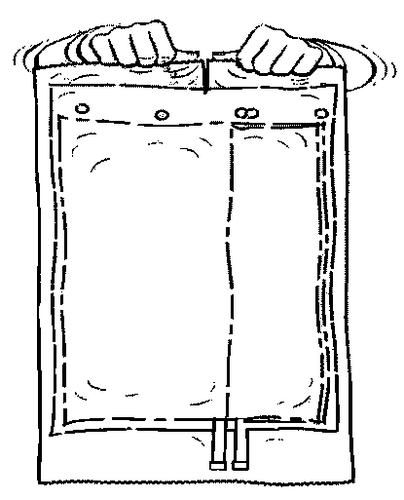

- 2. Spread out the bag and place it on a clean, flat surface.
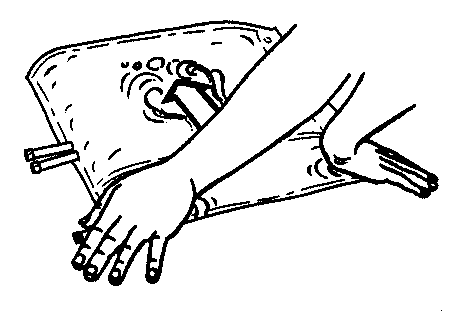
- 3. Apply pressure with both hands to the small compartment of the bag until the intermediate seal opens completely along its entire length.

- 4. Ensure that the contents are well mixed by turning the bag back and forth 5 times.
Administration of the solution for haemofiltration ready for use
The solution for haemofiltration must be warmed to approximately body temperature using an integrated or external heater. In no case must the solution be infused if its temperature is below
room temperature.
In rare cases, white calcium carbonate precipitates have been observed in the tubes during administration of the medicinal product, especially near the pump and the heating unit. Therefore, during haemofiltration,
the solution in the tubes must be carefully inspected visually every 30 minutes to ensure that
the solution in the tube system is clear and free from precipitate. Precipitates may also appear with
considerable delay after the start of treatment. If precipitate is present, the solution and the tubes must be
replaced immediately and the patient must be carefully monitored.
For single use only. Any unused solution and any damaged containers must be disposed of.

Уже начали прием и появились вопросы?
Обсудите свое состояние и дальнейшие шаги с врачом онлайн.
- Страна регистрации
- Форма выпускаHemofiltration solution, 5000 ML
- Отпускается по рецептуДа
- Производитель
- Информация на этой странице носит справочный характер и не является медицинской консультацией. Перед началом приема лекарства обязательно проконсультируйтесь с врачом.
- Аналоги DUOSOLФорма выпуска: Infusion solution, 5% (50G/L)Действующее вещество: АльбуминПроизводитель: BIOTEST PHARMA GMBHОтпускается по рецептуФорма выпуска: Infusion solution, 250 G/LДействующее вещество: АльбуминПроизводитель: KEDRION S.P.A.Отпускается по рецептуФорма выпуска: Infusion solution, 200 G/LДействующее вещество: АльбуминПроизводитель: CSL BEHRING S.P.A.Отпускается по рецепту
Аналоги DUOSOL в других странах
Лекарства с тем же действующим веществом, доступные в других странах.
Аналог DUOSOL в Польша
Аналог DUOSOL в Украина
Аналог DUOSOL в Испания
Врачи онлайн по DUOSOL
Обсудите применение DUOSOL и возможные следующие шаги — по оценке врача.









Получите рецепт на DUOSOL онлайн
Заполните форму за 2 минуты
Расскажите о симптомах, истории болезни и нужном препарате.
Выберите врача или мы назначим
Выберите специалиста или мы подберём ближайшего доступного врача.
Врач рассматривает ваш случай
Обычно в течение 30 минут. Может задать уточняющие вопросы в чате.
Получите в любой аптеке
Электронный рецепт отправляется на вашу почту — действителен по всей Польше.
Часто задаваемые вопросы
DUOSOL требует рецепта в Италия. Вы можете уточнить у врача онлайн, подходит ли это лекарство для вашей ситуации.
DUOSOL производится компанией B. BRAUN AVITUM AG. Упаковка и торговое название могут отличаться в зависимости от дистрибьютора.
Врачи, включая Семейные врачи, Психиатры, Дерматологи, Кардиологи, Эндокринологи, Гастроэнтерологи, Пульмонологи, Нефрологи, Ревматологи, Гематологи, Инфекционисты, Аллергологи, Гериатры, Педиатры, Онкологи, могут оценить целесообразность применения DUOSOL с учетом вашей ситуации и местных правил. Вы можете записаться на онлайн-консультацию, чтобы обсудить возможные варианты.
Польша имеет хорошо развитую систему здравоохранения в крупных городах, таких как Варшава, Краков, Вроцлав и Гданьск. Аптеки широко доступны и работают в соответствии с действующим законодательством, обеспечивая доступ к рецептурным препаратам.
Вы можете купить DUOSOL в Варшаве, Кракове, Вроцлаве или Гданьске в любой аптеке при наличии действующего рецепта.
Чтобы получить рецепт, вы можете воспользоваться Oladoctor:
Другие лекарства с тем же действующим веществом () включают ALBIOMIN, ALBITAL, ALBUMEON. Они могут отличаться торговым названием или формой выпуска, но содержат одинаковый терапевтический компонент. Перед изменением лечения рекомендуется проконсультироваться с врачом.
